ICP 17 Capital Adequacy Conor Donaldson IAIS Head


- Slides: 14
ICP 17: Capital Adequacy Conor Donaldson IAIS Head of Implementation Santo Domingo, Dominican Republic, 10 April
1. ICPs, Elements, and Hierarchy 2. Proportionality Principle 3. ICP 17 2
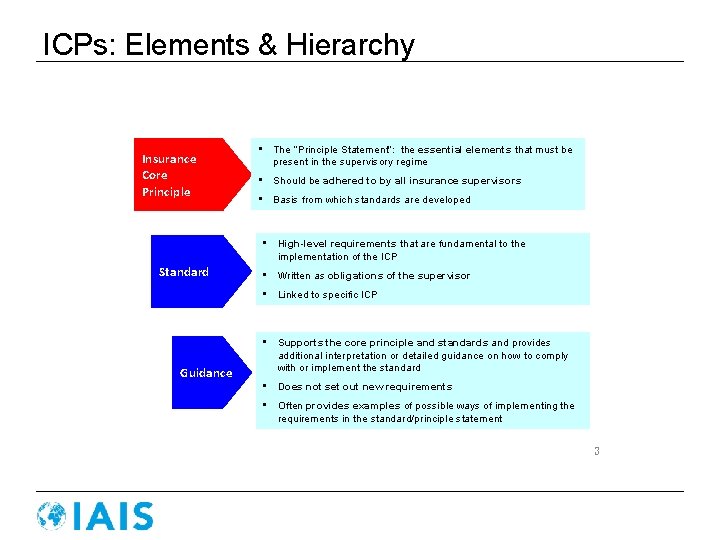
ICPs: Elements & Hierarchy Insurance Core Principle • The “Principle Statement”: the essential elements that must be present in the supervisory regime • Should be adhered to by all insurance supervisors • Basis from which standards are developed • High-level requirements that are fundamental to the implementation of the ICP Standard • Written as obligations of the supervisor • Linked to specific ICP Guidance • Supports the core principle and standards and provides additional interpretation or detailed guidance on how to comply with or implement the standard • Does not set out new requirements • Often provides examples of possible ways of implementing the requirements in the standard/principle statement 3
Thematic Organisation of ICPs 26 Insurance Core Principles Supervisory Objectives and the Supervisor Insurer Licensing, Suitability and Control Insurer Governance and Internal Control Supervisory Process, Preventive and Corrective Measures, and Winding- up Solvency Regime Market Conduct and Financial Integrity Group Supervision, Cross Border Cooperation and Crisis Management ICP 1 - Supervisory Objectives ICP 4 – Licensing ICP 7 – Corporate Governance ICP 9 - Supervisory Review and Reporting ICP 13 – Reinsurance ICP 18 – Intermediaries ICP 22 - AML – CFT ICP 2 – The Supervisor ICP 5 – Suitability of Persons ICP 8 – Risk Management and Internal Controls ICP 10 - Preventative and Corrective Measures ICP 14 – Valuation ICP 19 – Conduct of Business ICP 23 - Group Wide Supervision ICP 3 – Info. Exchange and Confidentiality ICP 6 - Control ICP 11 - Enforcement ICP 15 – Investment ICP 20 – Public Disclosure ICP 24 - Macro prudential Surveillance ICP 12 - Winding-up and Exit ICP 16 - ERM for Solvency Purposes ICP 21 Countering Fraud ICP 25 - Supervisory Cooperation and Coordination ICP 17 - Capital Adequacy ICP 26 – Cross Border Crisis Management 4
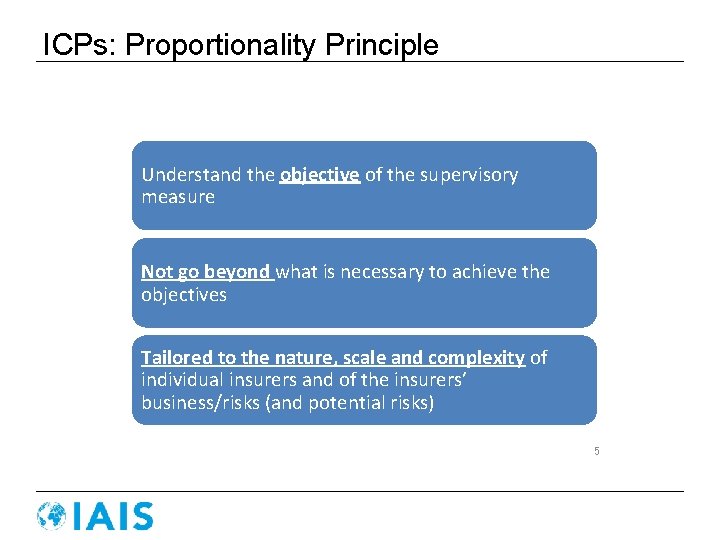
ICPs: Proportionality Principle Understand the objective of the supervisory measure Not go beyond what is necessary to achieve the objectives Tailored to the nature, scale and complexity of individual insurers and of the insurers’ business/risks (and potential risks) 5
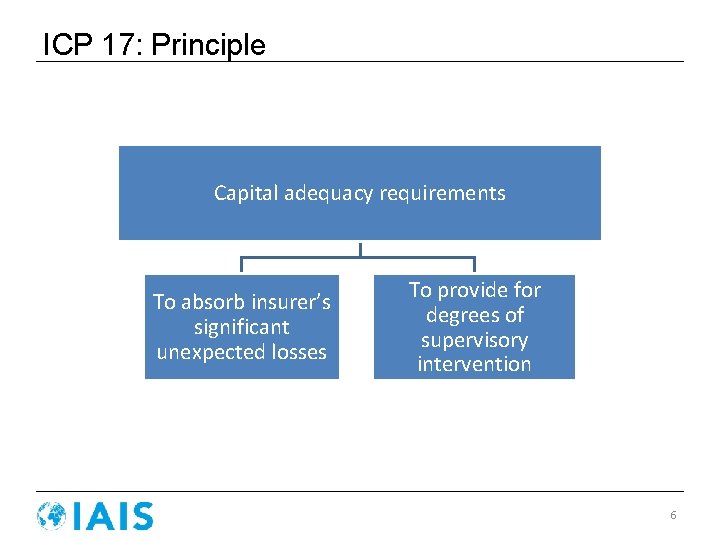
ICP 17: Principle Capital adequacy requirements To absorb insurer’s significant unexpected losses To provide for degrees of supervisory intervention 6
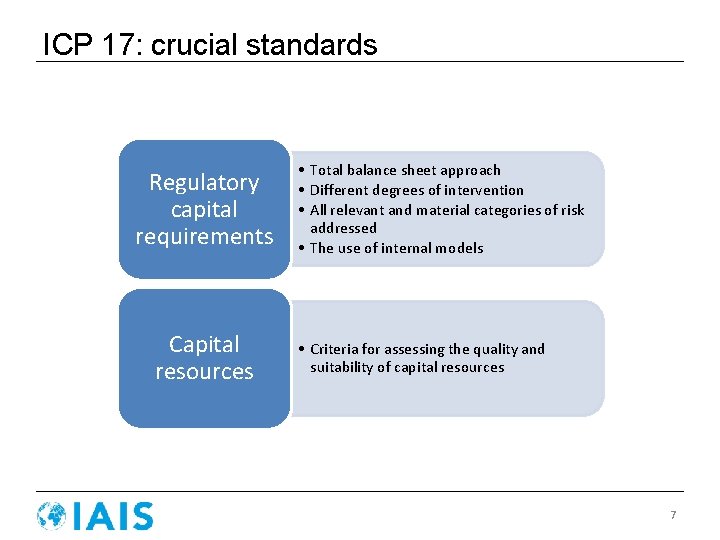
ICP 17: crucial standards Regulatory capital requirements Capital resources • Total balance sheet approach • Different degrees of intervention • All relevant and material categories of risk addressed • The use of internal models • Criteria for assessing the quality and suitability of capital resources 7
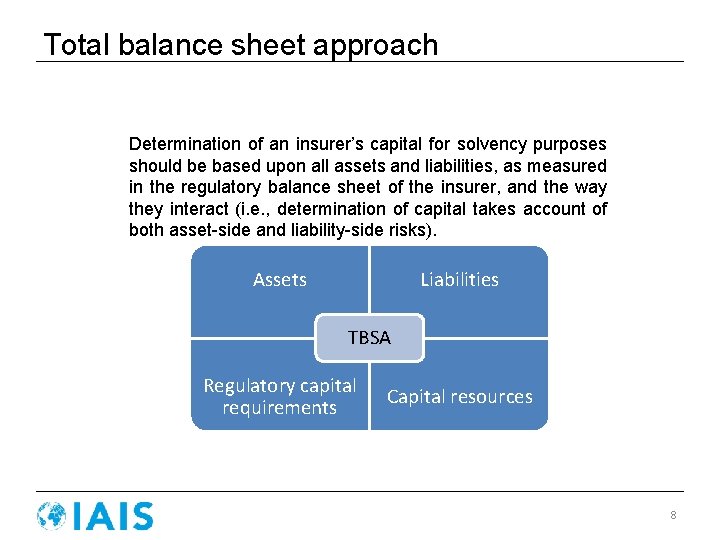
Total balance sheet approach Determination of an insurer’s capital for solvency purposes should be based upon all assets and liabilities, as measured in the regulatory balance sheet of the insurer, and the way they interact (i. e. , determination of capital takes account of both asset-side and liability-side risks). Assets Liabilities TBSA Regulatory capital requirements Capital resources 8
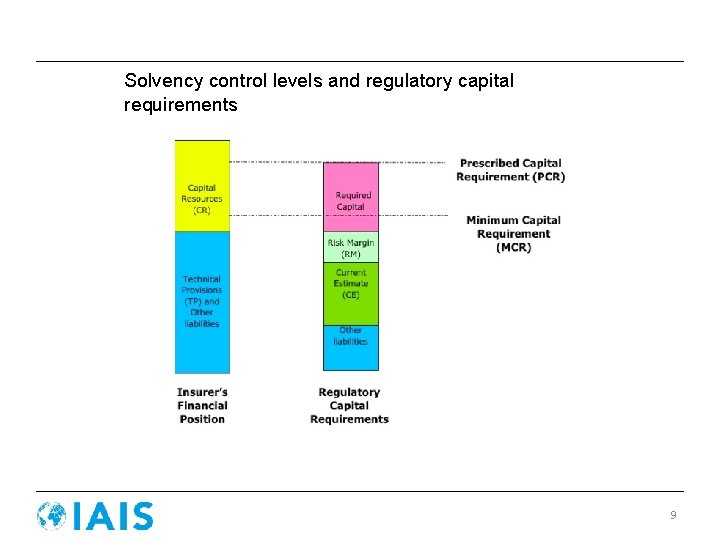
Solvency control levels and regulatory capital requirements 9
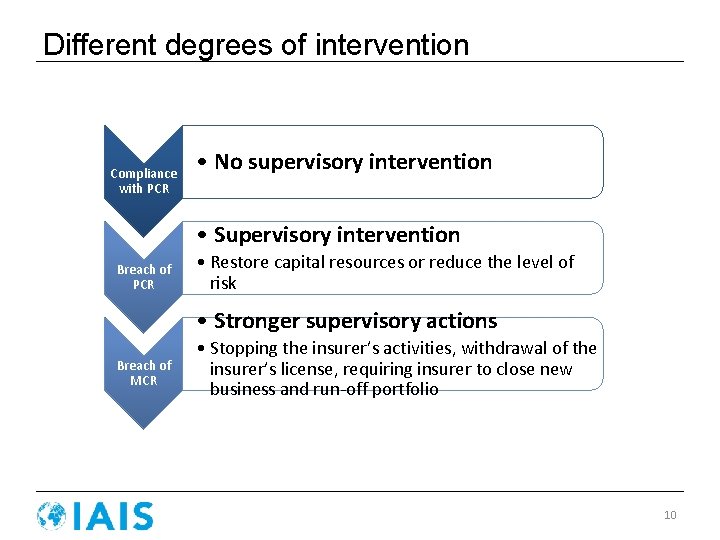
Different degrees of intervention Compliance with PCR • No supervisory intervention • Supervisory intervention Breach of PCR • Restore capital resources or reduce the level of risk • Stronger supervisory actions Breach of MCR • Stopping the insurer’s activities, withdrawal of the insurer’s license, requiring insurer to close new business and run-off portfolio 10
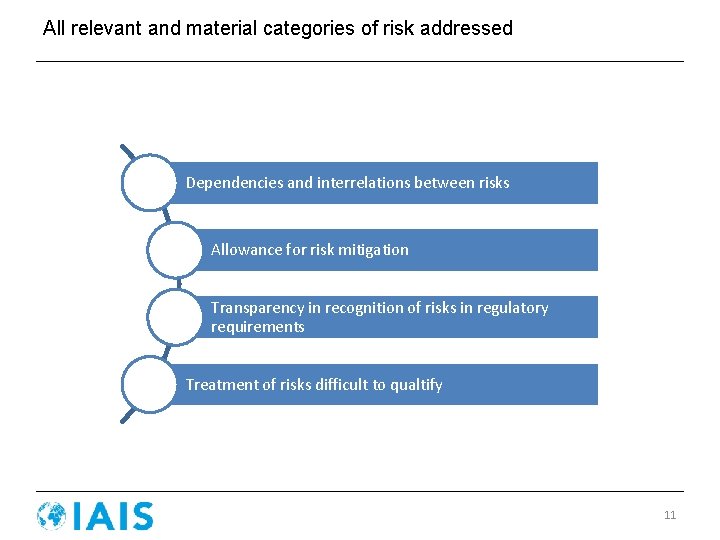
All relevant and material categories of risk addressed Dependencies and interrelations between risks Allowance for risk mitigation Transparency in recognition of risks in regulatory requirements Treatment of risks difficult to qualtify 11
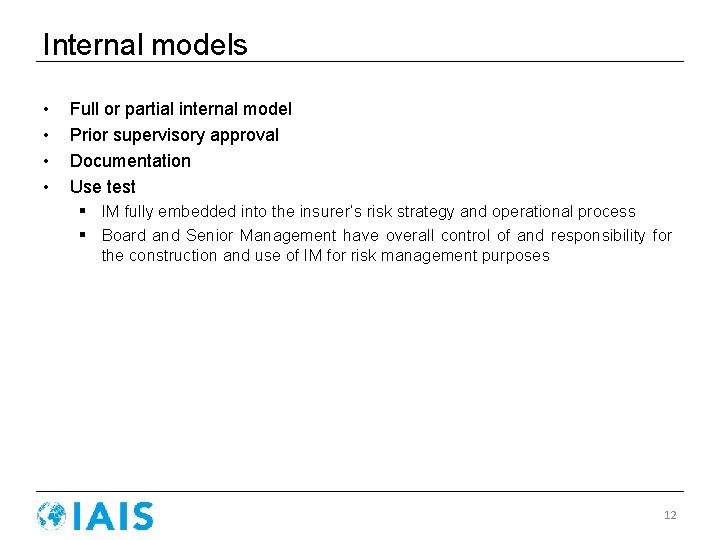
Internal models • • Full or partial internal model Prior supervisory approval Documentation Use test § IM fully embedded into the insurer’s risk strategy and operational process § Board and Senior Management have overall control of and responsibility for the construction and use of IM for risk management purposes 12
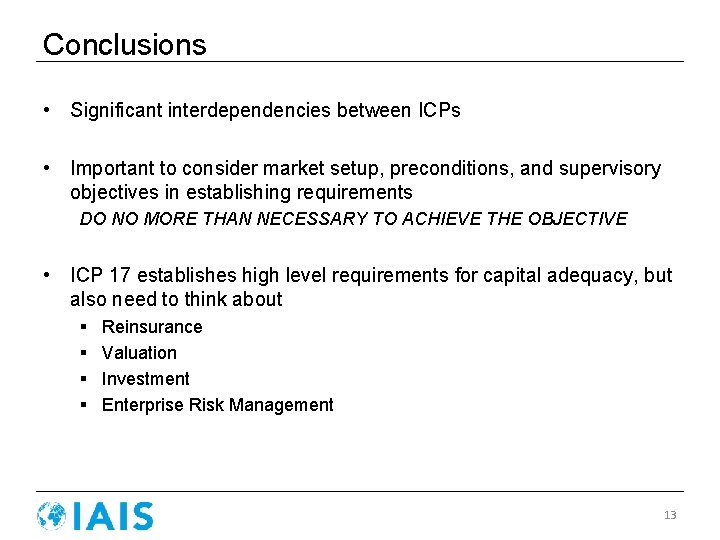
Conclusions • Significant interdependencies between ICPs • Important to consider market setup, preconditions, and supervisory objectives in establishing requirements DO NO MORE THAN NECESSARY TO ACHIEVE THE OBJECTIVE • ICP 17 establishes high level requirements for capital adequacy, but also need to think about § § Reinsurance Valuation Investment Enterprise Risk Management 13
Contact information Conor Donaldson Head of Implementation International Association of Insurance Supervisors Centralbahnplatz 2 c/o BIS tel: +41 61 280 8602 mobile: +41 76 350 8602 Skype: conordonaldson e-mail: conor. donaldson@bis. org 14