
Gerard Kelly ENT surgeon MD MEd FRCSEd FRCSORLHNS














- Slides: 94
Gerard Kelly ENT surgeon MD MEd FRCS(Ed) FRCS(ORL-HNS) 9 th July 2017 The Leeds Teaching Hospitals NHS Trust ENT red flags
aims to discuss the ENT red flag symptoms and associated conditions which will present in general practice
objectives give a differential diagnosis for the symptoms of dysphonia dysphagia odynophagia define the NICE guidelines for hoarseness list the differential diagnosis for a nasal condition resulting in nasal obstruction with other symptoms such as bleeding, epiphora and cranial nerve palsies make a management plan for someone presenting with a salivary gland / thyroid / neck mass with reference to the potential diagnosis plan the treatment and investigate a patient presenting with a facial paralysis describe the management in primary care of a person presenting with a sudden hearing loss
topics hoarseness persisting for > 3 weeks dysphagia persisting for > 3 weeks unilateral nasal obstruction particularly when associated with purulent discharge epistaxis cranial nerve palsies epiphora unresolved neck masses for > 3 weeks sudden change in existing neck mass / thyroid swelling stridor associated with neck or thyroid swelling parotid / salivary gland lesions sudden hearing loss facial paralysis
first though. . . history in ENT
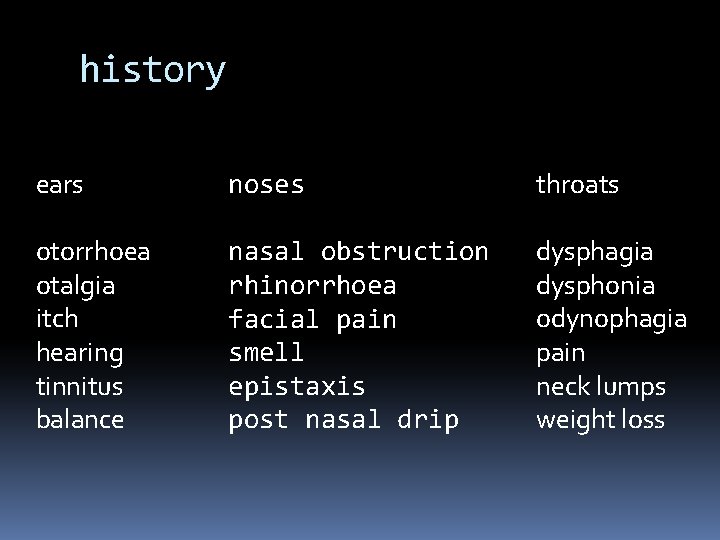
history ears noses throats otorrhoea otalgia itch hearing tinnitus balance nasal obstruction rhinorrhoea facial pain smell epistaxis post nasal drip dysphagia dysphonia odynophagia pain neck lumps weight loss
hoarseness
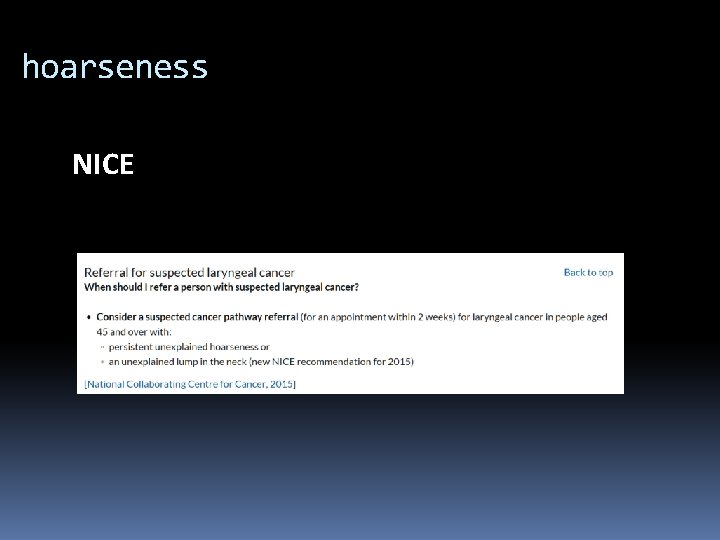
hoarseness NICE
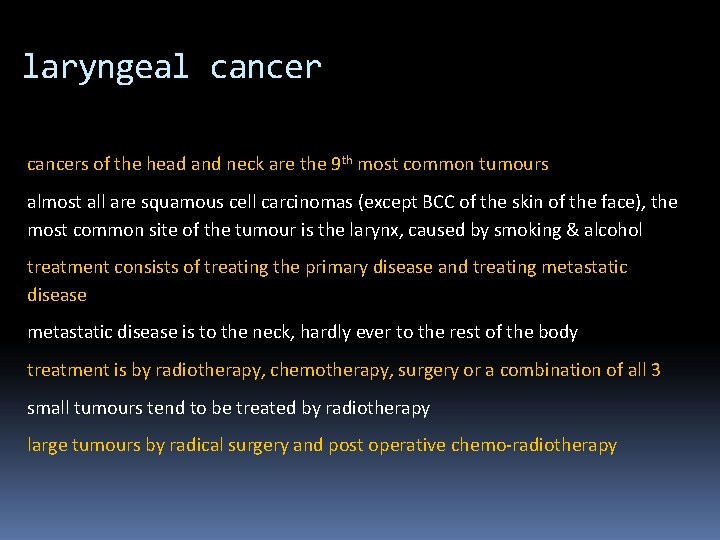
laryngeal cancers of the head and neck are the 9 th most common tumours almost all are squamous cell carcinomas (except BCC of the skin of the face), the most common site of the tumour is the larynx, caused by smoking & alcohol treatment consists of treating the primary disease and treating metastatic disease is to the neck, hardly ever to the rest of the body treatment is by radiotherapy, chemotherapy, surgery or a combination of all 3 small tumours tend to be treated by radiotherapy large tumours by radical surgery and post operative chemo-radiotherapy
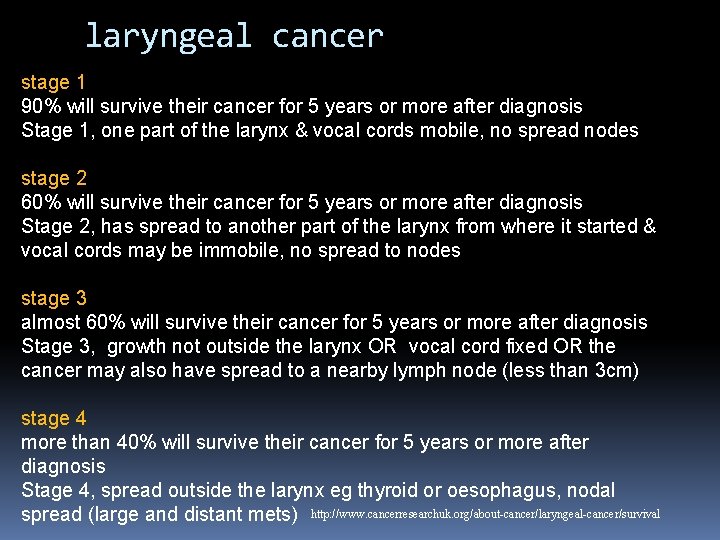
laryngeal cancer stage 1 90% will survive their cancer for 5 years or more after diagnosis Stage 1, one part of the larynx & vocal cords mobile, no spread nodes stage 2 60% will survive their cancer for 5 years or more after diagnosis Stage 2, has spread to another part of the larynx from where it started & vocal cords may be immobile, no spread to nodes stage 3 almost 60% will survive their cancer for 5 years or more after diagnosis Stage 3, growth not outside the larynx OR vocal cord fixed OR the cancer may also have spread to a nearby lymph node (less than 3 cm) stage 4 more than 40% will survive their cancer for 5 years or more after diagnosis Stage 4, spread outside the larynx eg thyroid or oesophagus, nodal spread (large and distant mets) http: //www. cancerresearchuk. org/about-cancer/laryngeal-cancer/survival
laryngeal cancer as the most common site of cancer of the head and neck is the larynx and in the larynx the glottis is most common symptom is dysphonia or hoarseness
head and neck cancer the narrowest part of the airway is the glottis and such tumours can also result in stridor – noisy breathing from the airway stertor is noisy breathing from the mouth / throat / area above the glottis
dysphagia is difficulty swallowing cancer of the larynx can extend into the pharynx and result in dysphagia but usually pain on swallowing ‘odynophagia’ cancer of the post cricoid area tends to cause dysphagia cancer of the oesophagus causes dysphagia
dysphagia the differential diagnosis of a patient with dysphagia (other than cancer) is: benign stricture, webs pharyngeal pouch dysmotility, motor disorders achalasia extrinsic compression (tumours, cervical osteophytes)
differential diagnosis? globus upper aerodigestive tract lesion laryngopharyngeal reflux disease ACE inhibitors cough variant asthma chronic rhinosinusitis
dysphagia the differential diagnosis of a patient with dysphagia (other than cancer) is: benign stricture, webs pharyngeal pouch dysmotility, motor disorders achalasia extrinsic compression (tumours, cervical osteophytes)
Pharyngeal pouch pharyngeal pouch (elderly) presents with dysphagia, regurgitation of undigested food, rarely a neck mass 100% seen on barium swallow endoscopic or open operation to remove may give left sided mass, with gurgling sensation or crepitus on palpation
unilateral nasal obstruction particularly when associated with purulent discharge epistaxis cranial nerve palsies epiphora
unilateral nasal obstruction particularly when associated with purulent discharge, epistaxis, cranial nerve palsies, epiphora sinister nasal lesions are rare, they include cancers (male 50 -60 y) 60% squamous cell cancers, 10% adenocarcinomas, adenoid cystic carcinomas, lymphomas, plasmacytoma, melanoma, olfactory neuroblastoma, sarcoma smoking HPV chemicals, wood & leather dust, nickel, chromium, formaldehyde
unresolved neck masses for > 3 weeks
neck lumps examination? examine throat
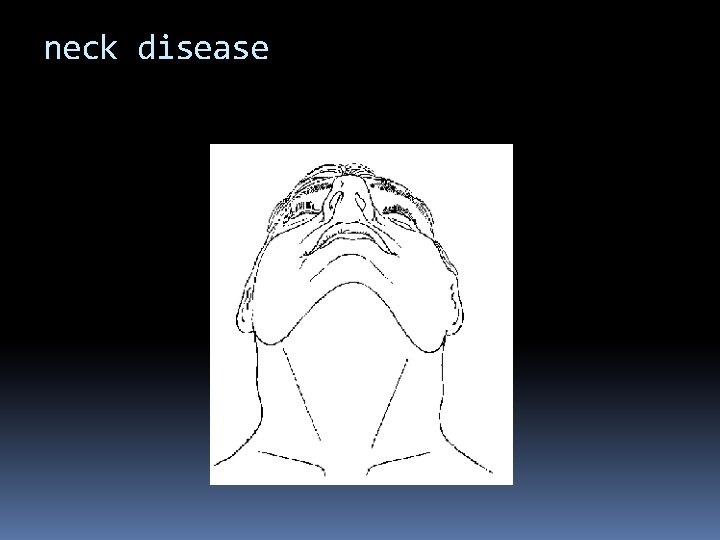
neck disease
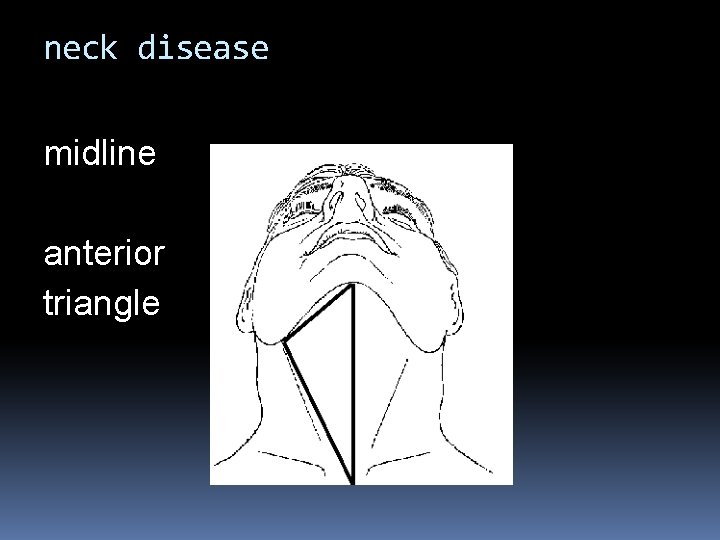
neck disease midline anterior triangle
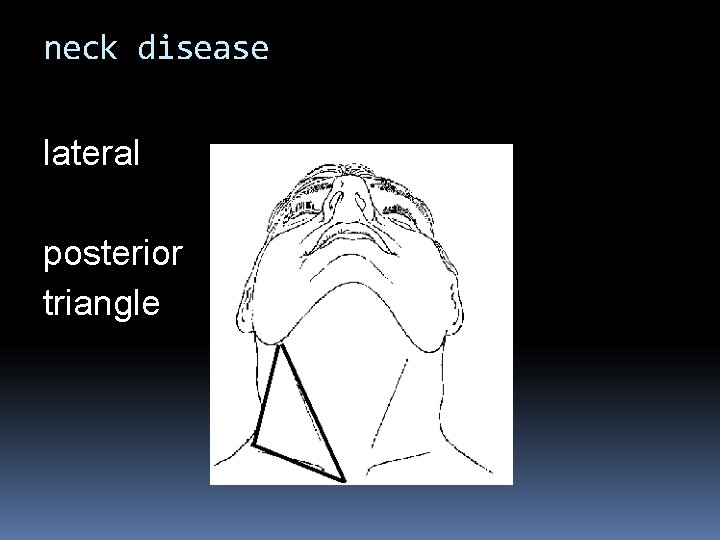
neck disease lateral posterior triangle
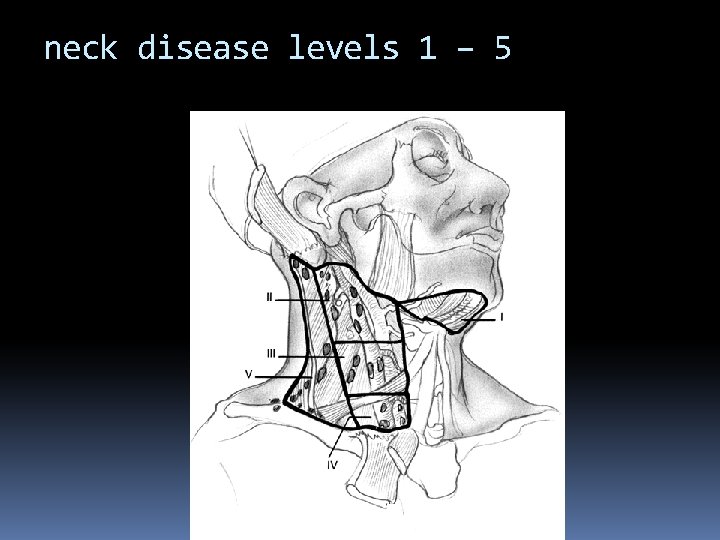
neck disease levels 1 – 5 levels 1 to 5
neck disease levels 1 – 5
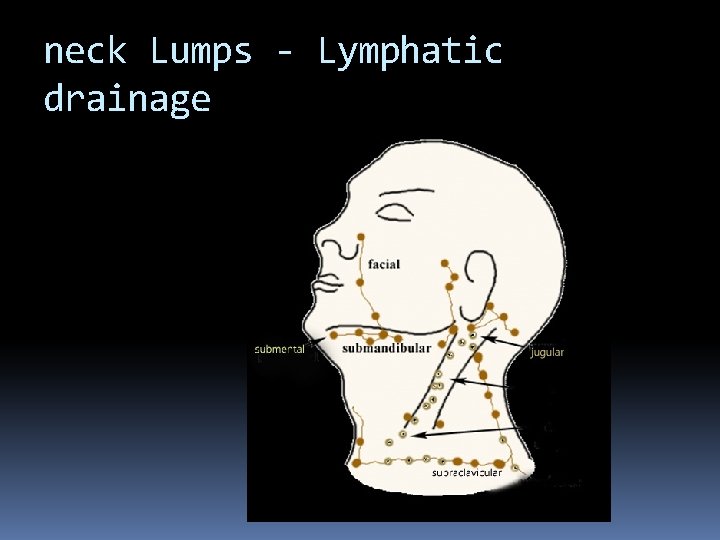
neck Lumps - Lymphatic drainage
midline thyroid gland submandibular salivary gland thyroglossal cyst midline dermoid ranula
lateral lymph node laryngocele branchial cyst pharyngeal pouch lymphangioma heamangioma carotid body tumour
thyroglossal cyst (5 year old, 90% midline) thyroid gland develops from the floor of the primitive pharynx and migrates down in the neck moves on tongue protrusion excision with body of the hyoid bone
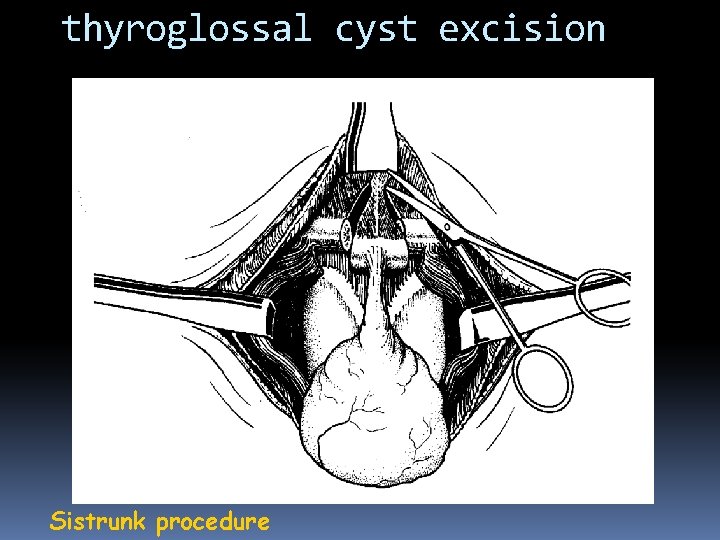
thyroglossal cyst excision Sistrunk procedure
midline dermoid epidermoid cyst (most common). Lined by squamous epithelium and contains cheesy keratinous material
ranula simple ranula. Retention cyst arising from a minor salivary gland in floor mouth. plunging ranula. Part of cystic hygroma.
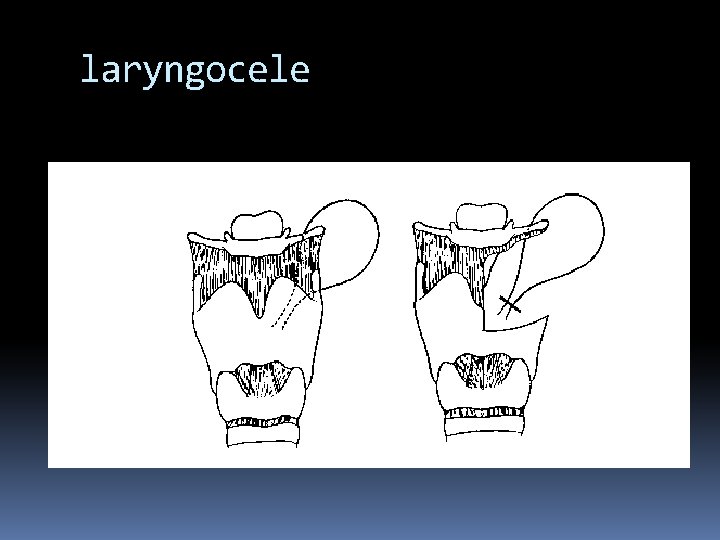
laryngocele (60 years, M: F = 5: 1) lnlarged laryngeal saccule. Can be internal or external and appears on valsalva.
laryngocele
lymph nodes reactive primary malignancy secondary malignancy
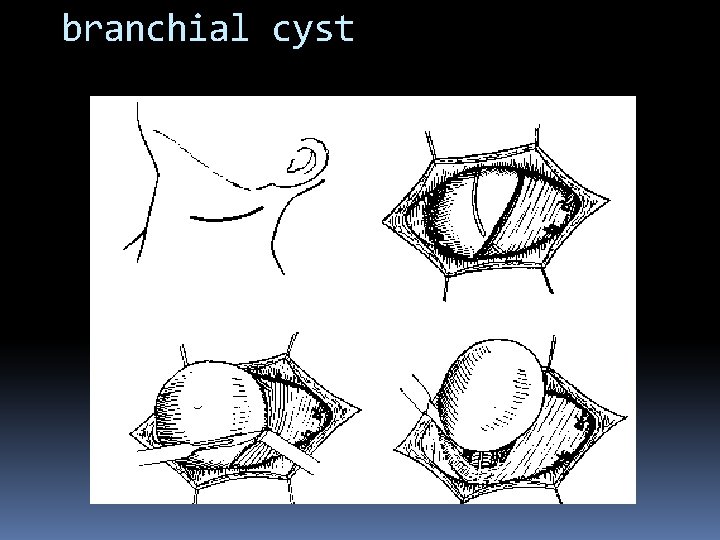
branchial cyst (30 years, M: F = 3: 2) probably arise from epithelial inclusions in a lymph node. Contain straw coloured fluid with cholesterol crystals. Most lie anterior to the sternomastoid in the upper third of the neck. ? second branchial arch derivative
branchial cyst
lymphangioma (3 types, 2/3 rds present at birth) slimple lymphangioma. Capillary sized lymph vessels. Lips, tongue, cheek, floor mouth. cavernous lymphangioma. Dilated lymphatic spaces. Lips, tongue, cheek, floor mouth cystic hygroma. Cysts of various sizes mainly arise in the neck. Recurrence after excision 15%
haemangioma most common tumour of infancy 15 -20% in head and neck masseter and trapezius 3 F: 1 M 50% may involute spontaneously
carotid body tumour (50 years, chemodectoma) slowly growing for years. One third present as parapharyngeal mass and push the tonsil medially. Pulsatile, refills after compression. diagnose by angiography. Excision in younger patients or radiotherapy.
vagal body tumours (chemodectoma) slowly growing but more malignant potential than carotid body tumours and may invade the cranial cavity or cause cranial nerve palsies surgery required
benign head and neck disease most present as a lump management history examination where is it? tender, moves with swallowing, pulsatile, cystic, transilluminates, red
sudden change in existing neck mass / thyroid swelling
thyroid gland goitre cysts adenoma (papillary and follicular) carcinoma papillary and follicular medullary anaplastic and lymphoma
thyroid gland management now is examine ultrasound FNA decide on excision or not
stridor associated with neck or thyroid swelling
stridor associated with neck or thyroid swelling 999
salivary glands
history most present as a lump
history how long growing bigger eating voice, swallowing smoker
examination inspection palpation (percussion) (auscultation)
examination where is it tender red moves with swallowing pulsatile cystic transilluminates
examination inspection oropharynx parotid (Stensen’s duct) opposite 2 nd upper molar
investigations FNAC Radiological imaging US CT / MRI
treatment operation vs no operation
acute infections mumps echo coxsackie viruses
diffuse chronic enlargement Sjögren’s myxoedema, diabetes, Cushing’s, hepatic cirrhosis, gout, bulimia, AIDS, alcoholism Drugs thiouracil, isoprenaline, paracetamol, oestrogen OCP sarcoidosis, TB, hydatid disease
sialectasis salivary gland equivalent of bronchiectasis congenital may mimic mumps but recurs enlarged gland after eating then regresses may form stones submandibular: mucinous (Calcium) parotid: serous
benign tumours pleomorphic salivary adenoma (psa) Warthin’s tumour
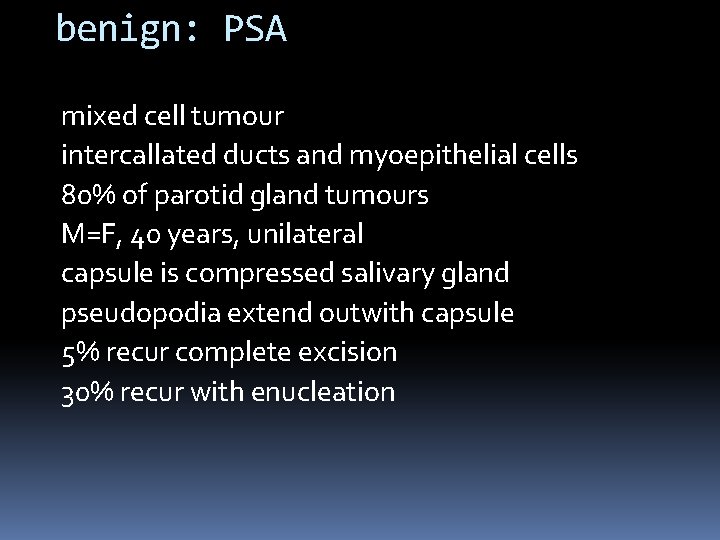
benign: PSA mixed cell tumour intercallated ducts and myoepithelial cells 80% of parotid gland tumours M=F, 40 years, unilateral capsule is compressed salivary gland pseudopodia extend outwith capsule 5% recur complete excision 30% recur with enucleation
tumours of variable malignancy mucoepidermoid acinic cell
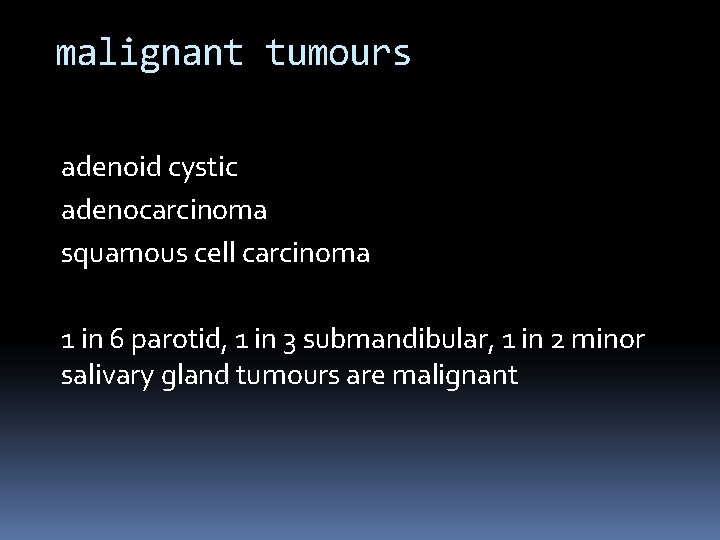
malignant tumours adenoid cystic adenocarcinoma squamous cell carcinoma 1 in 6 parotid, 1 in 3 submandibular, 1 in 2 minor salivary gland tumours are malignant
facial palsy
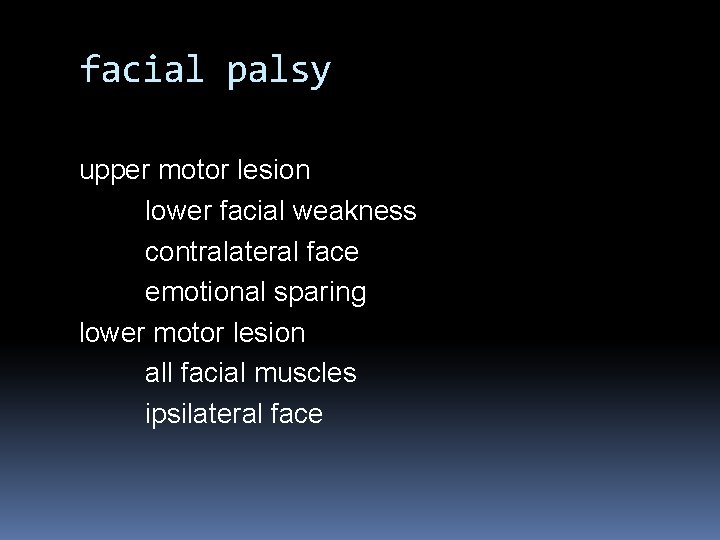
facial palsy upper motor lesion lower facial weakness contralateral face emotional sparing lower motor lesion all facial muscles ipsilateral face
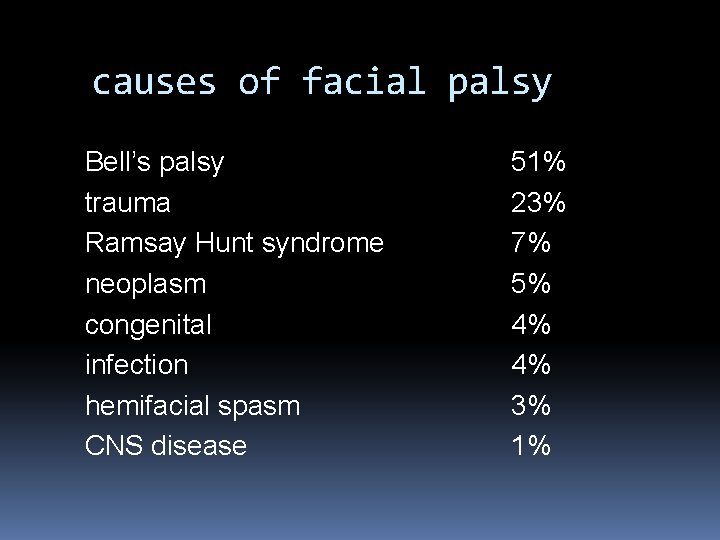
causes of facial palsy Bell’s palsy trauma Ramsay Hunt syndrome neoplasm congenital infection hemifacial spasm CNS disease 51% 23% 7% 5% 4% 4% 3% 1%
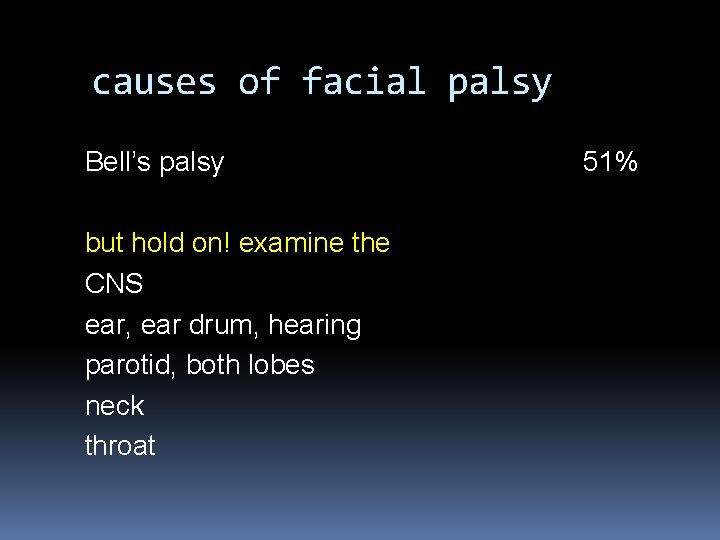
causes of facial palsy Bell’s palsy but hold on! examine the CNS ear, ear drum, hearing parotid, both lobes neck throat 51%
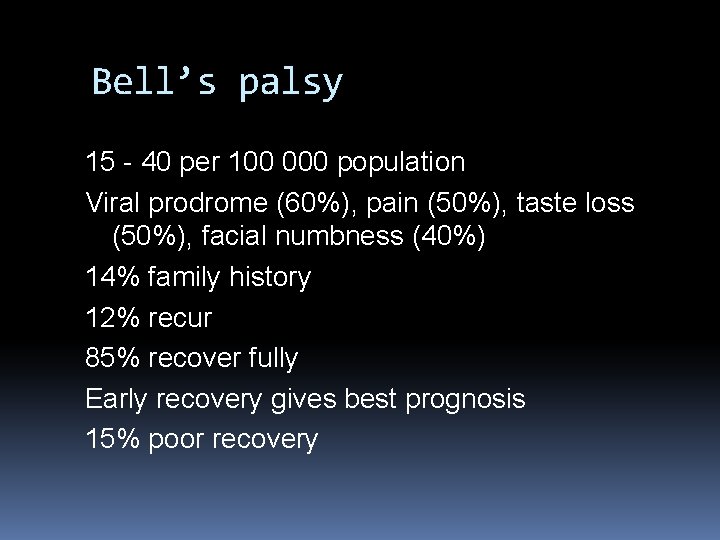
Bell’s palsy 15 - 40 per 100 000 population Viral prodrome (60%), pain (50%), taste loss (50%), facial numbness (40%) 14% family history 12% recur 85% recover fully Early recovery gives best prognosis 15% poor recovery
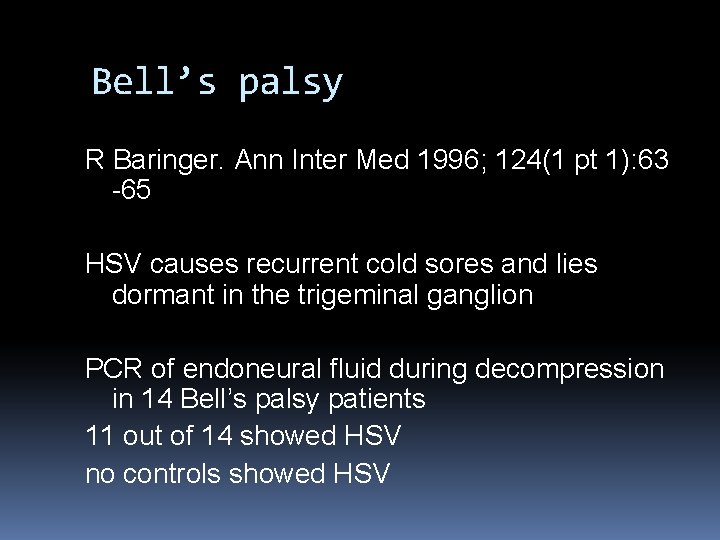
Bell’s palsy R Baringer. Ann Inter Med 1996; 124(1 pt 1): 63 -65 HSV causes recurrent cold sores and lies dormant in the trigeminal ganglion PCR of endoneural fluid during decompression in 14 Bell’s palsy patients 11 out of 14 showed HSV no controls showed HSV
Bell’s palsy Herpes simplex virus type 1
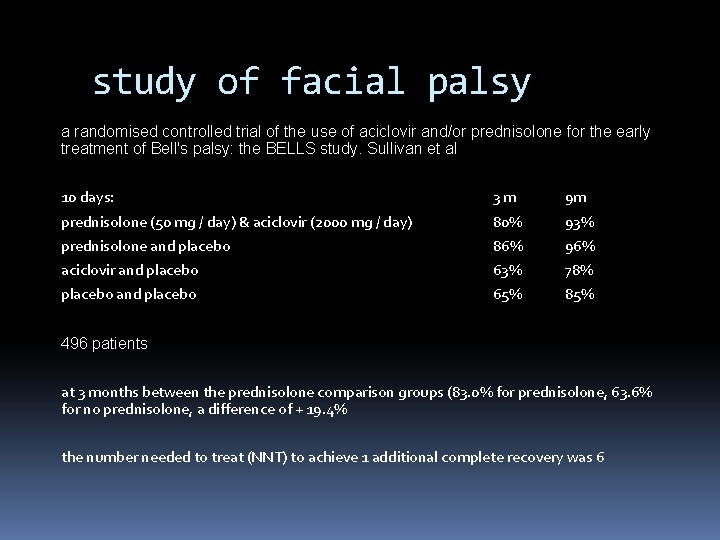
study of facial palsy a randomised controlled trial of the use of aciclovir and/or prednisolone for the early treatment of Bell's palsy: the BELLS study. Sullivan et al 10 days: 3 m 9 m prednisolone (50 mg / day) & aciclovir (2000 mg / day) 80% 93% prednisolone and placebo 86% 96% aciclovir and placebo 63% 78% placebo and placebo 65% 85% 496 patients at 3 months between the prednisolone comparison groups (83. 0% for prednisolone, 63. 6% for no prednisolone, a difference of + 19. 4% the number needed to treat (NNT) to achieve 1 additional complete recovery was 6
Ramsy Hunt syndrome Ear pain vesicles facial palsy SNHL vertigo encephalitis 60% recover does not recur acyclovir effective in controlling symptoms
Ramsy Hunt syndrome Varicella zoster virus
treatment of Ramsy Hunt syndrome antivirals steroids and anti-virals www. ncbi. nlm. nih. gov
Bell’s palsy 15 - 40 per 100 000 population viral prodrome (60%), pain (50%), taste loss (50%), facial numbness (40%) 14% family history 12% recur 85% recover fully early recovery gives best prognosis 15% poor recovery
conclusion Bell’s palsy is caused by HSV effective treatment is by steroids Ramsy-Hunt syndrome should be treated by anti-viral drugs
sudden hearing loss
64 year old woman presents 12 hour history of hearing loss in the right ear
64 year old woman presents 12 hour history of hearing loss in the right ear what do you ask?
64 year old woman examination? audiogram – but you don’t have access tuning fork!
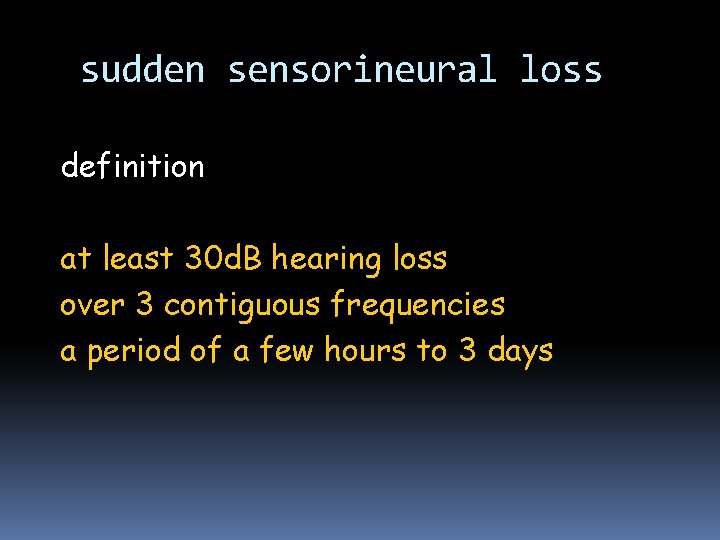
sudden sensorineural loss definition at least 30 d. B hearing loss over 3 contiguous frequencies a period of a few hours to 3 days
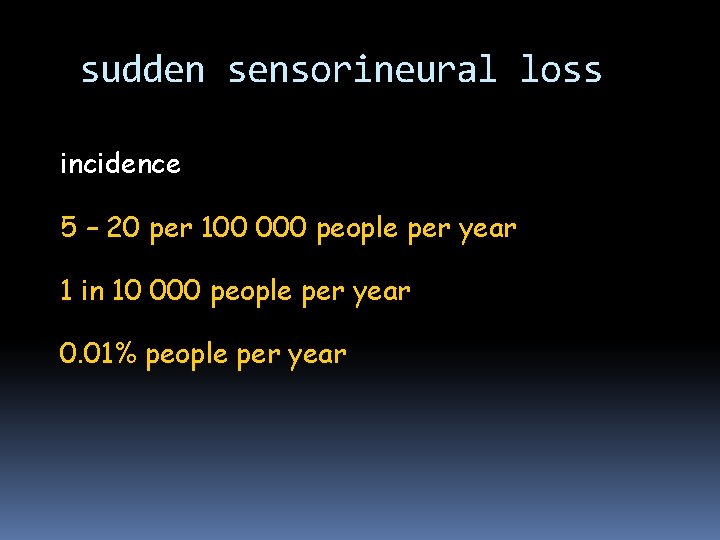
sudden sensorineural loss incidence 5 – 20 per 100 000 people per year 1 in 10 000 people per year 0. 01% people per year
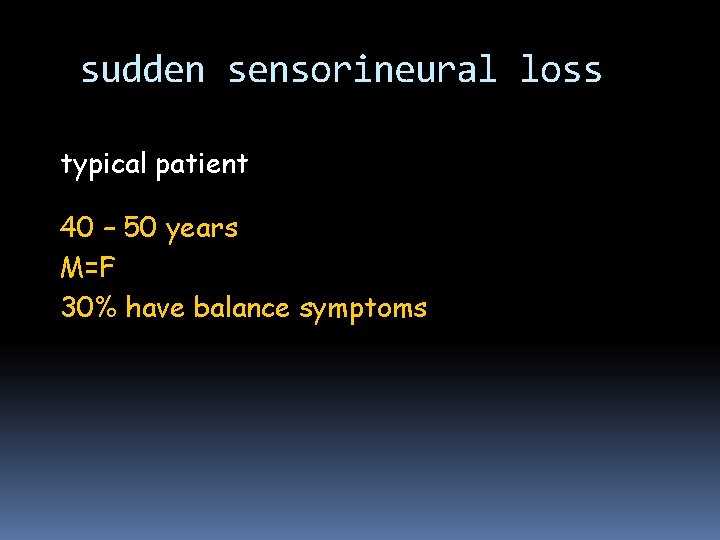
sudden sensorineural loss typical patient 40 – 50 years M=F 30% have balance symptoms
sudden sensorineural loss aetiology?
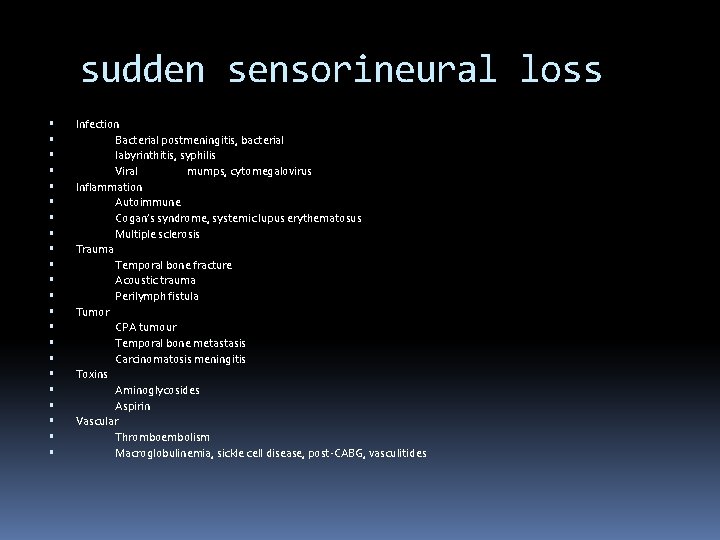
sudden sensorineural loss Infection Bacterial postmeningitis, bacterial labyrinthitis, syphilis Viral mumps, cytomegalovirus Inflammation Autoimmune Cogan’s syndrome, systemic lupus erythematosus Multiple sclerosis Trauma Temporal bone fracture Acoustic trauma Perilymph fistula Tumor CPA tumour Temporal bone metastasis Carcinomatosis meningitis Toxins Aminoglycosides Aspirin Vascular Thromboembolism Macroglobulinemia, sickle cell disease, post-CABG, vasculitides
topical papers
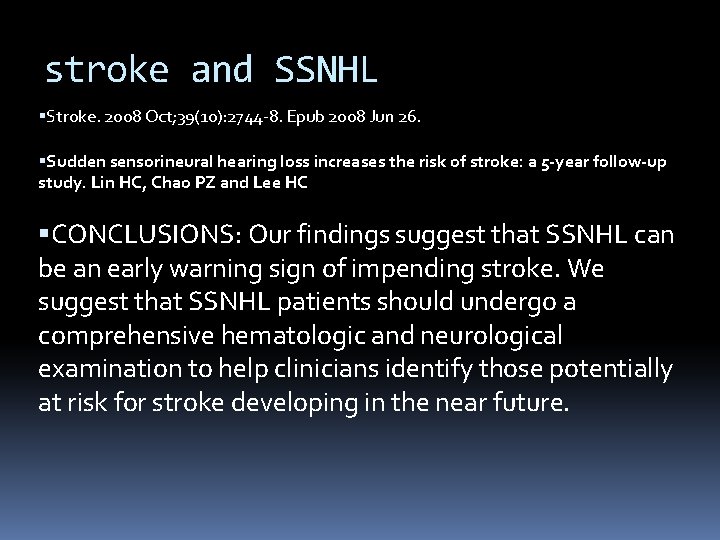
stroke and SSNHL Stroke. 2008 Oct; 39(10): 2744 -8. Epub 2008 Jun 26. Sudden sensorineural hearing loss increases the risk of stroke: a 5 -year follow-up study. Lin HC, Chao PZ and Lee HC CONCLUSIONS: Our findings suggest that SSNHL can be an early warning sign of impending stroke. We suggest that SSNHL patients should undergo a comprehensive hematologic and neurological examination to help clinicians identify those potentially at risk for stroke developing in the near future.
evidence based medicine evidence is lacking for the treatment of sudden sensorineural hearing loss, but most clinicians give steroids
aims to discuss the ENT red flag symptoms and associated conditions which will present in general practice
objectives give a differential diagnosis for the symptoms of dysphonia dysphagia odynophagia define the NICE guidelines for hoaresness
objectives list the differential diagnosis for a nasal condition resulting in nasal obstruction with other symptoms such as bleeding, epiphora and cranial nerve palsies make a management plan for someone presenting with a salivary gland / thyroid / neck mass with reference to the potential diagnosis plan the treatment and investigate a patient presenting with a facial paralysis
objectives describe the management in primary care of a person presenting with a sudden hearing loss
topics hoarseness persisting for > 3 weeks dysphagia persisting for > 3 weeks unilateral nasal obstruction particularly when associated with purulent discharge epistaxis cranial nerve palsies epiphora unresolved neck masses for > 3 weeks sudden change in existing neck mass / thyroid swelling stridor associated with neck or thyroid swelling parotid / salivary gland lesions sudden hearing loss facial paralysis
questions?