
Getting comfortable with VNS Programming Edward Maa MD
Getting comfortable with VNS Programming Edward Maa, MD Chief of the Comprehensive Epilepsy Program- DHMC Associate Professor of Neurology- University of Colorado and DVAMC
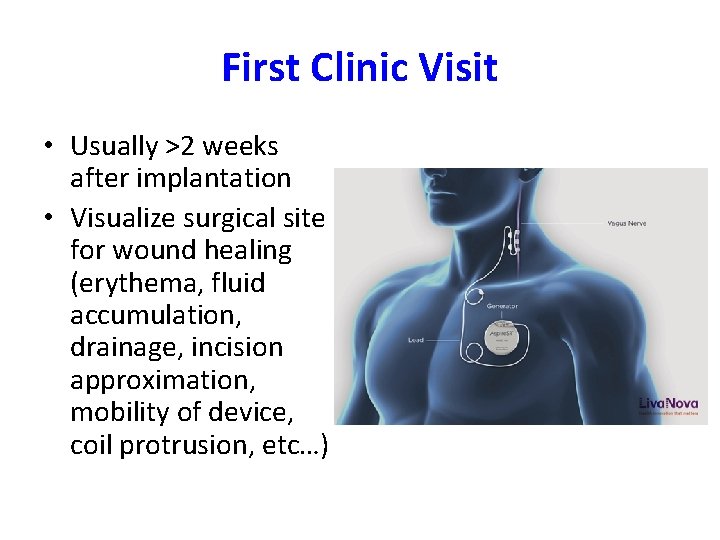
First Clinic Visit • Usually >2 weeks after implantation • Visualize surgical site for wound healing (erythema, fluid accumulation, drainage, incision approximation, mobility of device, coil protrusion, etc…)
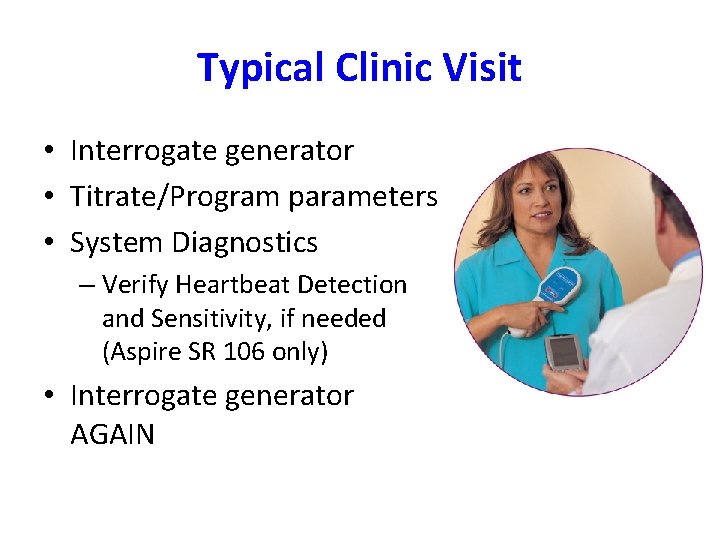
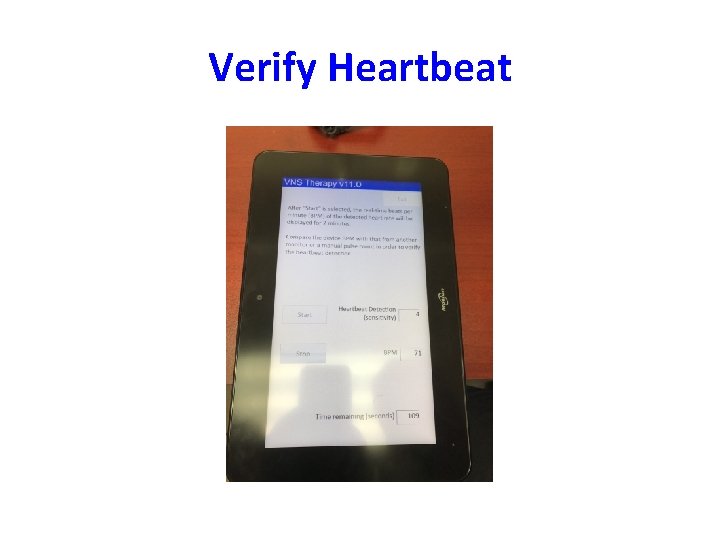
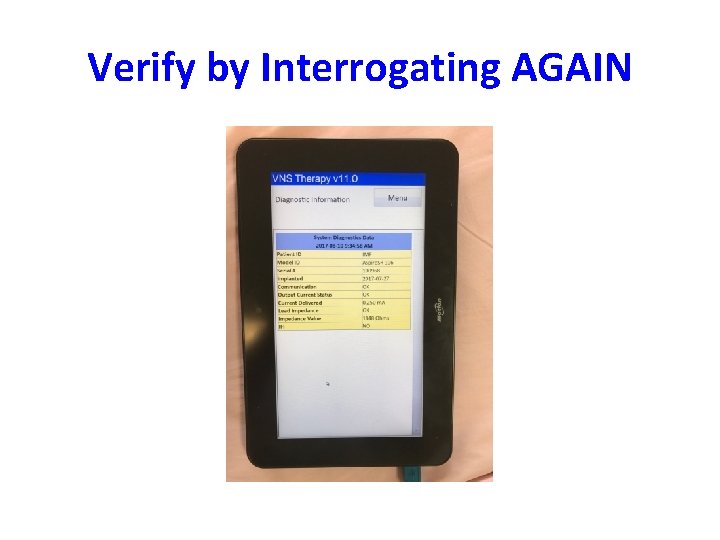
Typical Clinic Visit • Interrogate generator • Titrate/Program parameters • System Diagnostics – Verify Heartbeat Detection and Sensitivity, if needed (Aspire SR 106 only) • Interrogate generator AGAIN
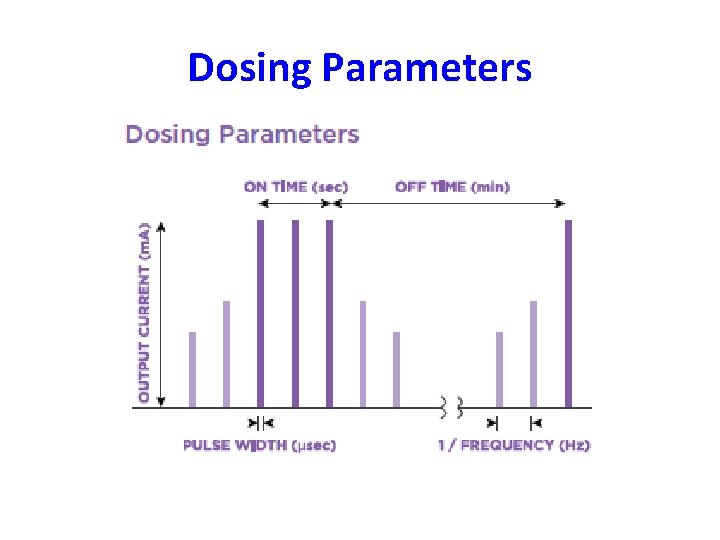
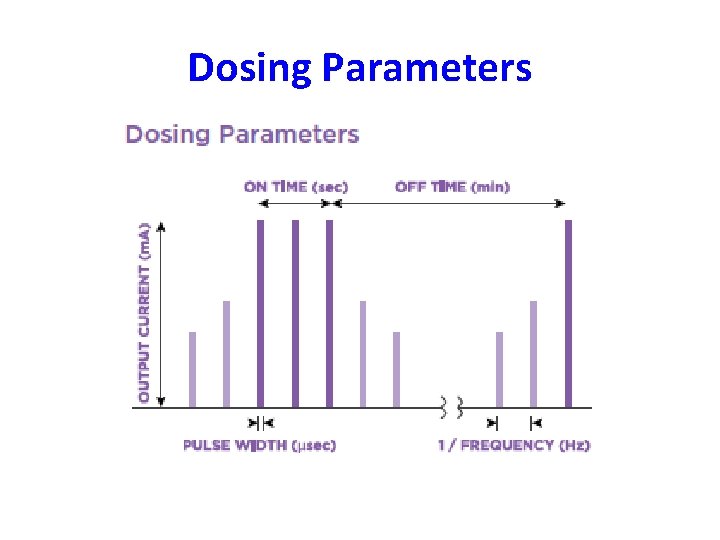
Dosing Parameters
FIRST GOAL: Ramp Output Current 1. Generate a compound action potential on the vagus nerve by creating a charge 2. Increase Output Current in 0. 25 m. A steps to therapeutic range (1. 5 - 2. 25 m. A) as quickly as tolerable
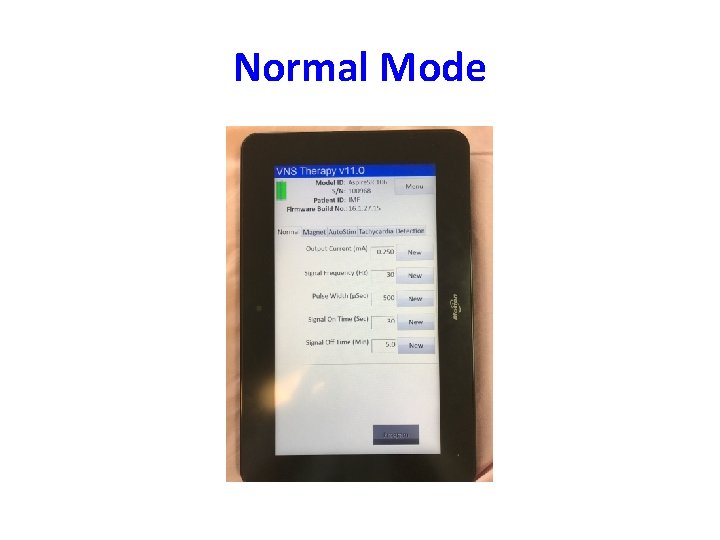
Normal Mode
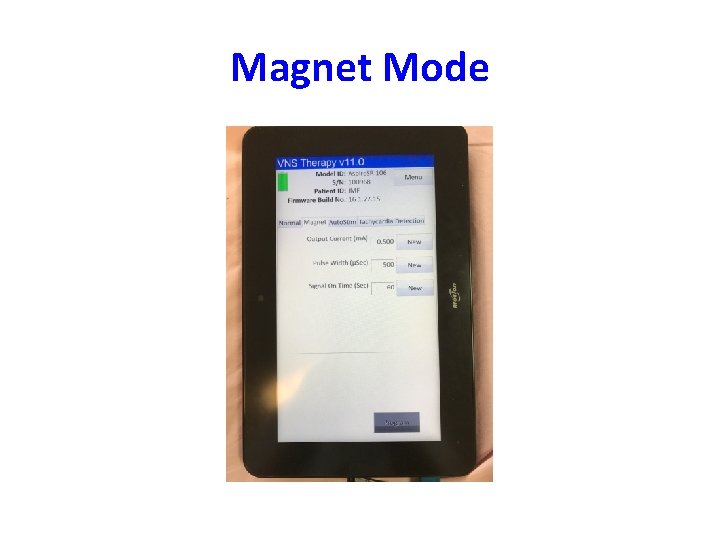
Magnet Mode
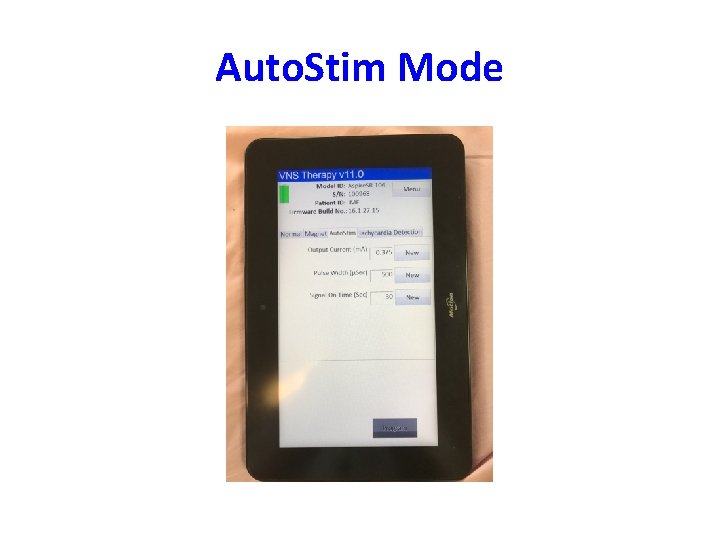
Auto. Stim Mode
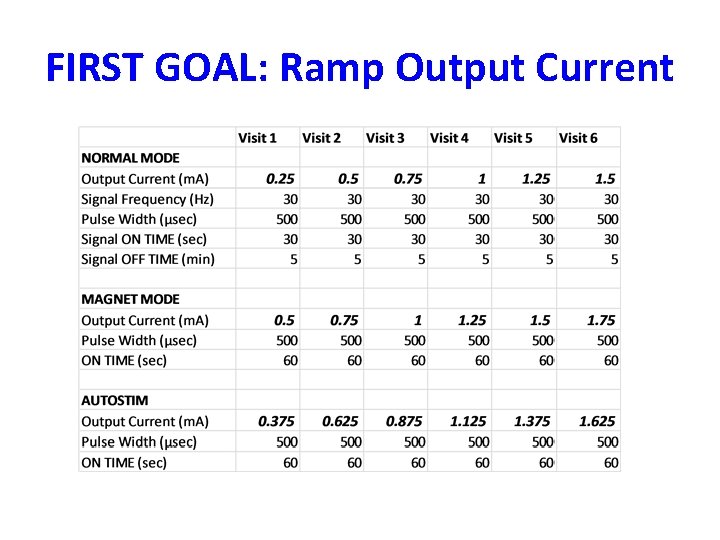
FIRST GOAL: Ramp Output Current
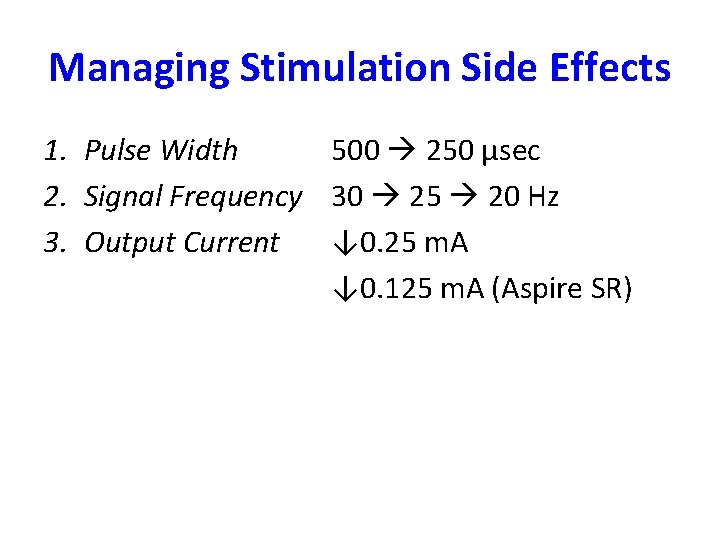
Managing Stimulation Side Effects 1. Pulse Width 500 250 µsec 2. Signal Frequency 30 25 20 Hz 3. Output Current ↓ 0. 25 m. A ↓ 0. 125 m. A (Aspire SR)
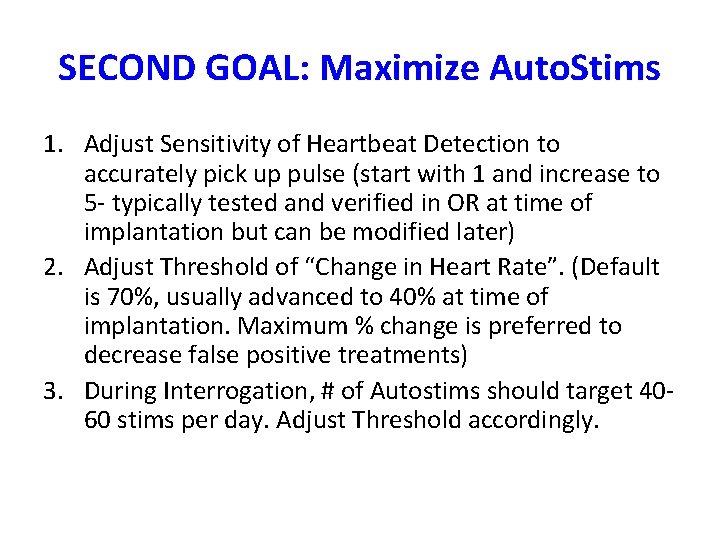
SECOND GOAL: Maximize Auto. Stims 1. Adjust Sensitivity of Heartbeat Detection to accurately pick up pulse (start with 1 and increase to 5 - typically tested and verified in OR at time of implantation but can be modified later) 2. Adjust Threshold of “Change in Heart Rate”. (Default is 70%, usually advanced to 40% at time of implantation. Maximum % change is preferred to decrease false positive treatments) 3. During Interrogation, # of Autostims should target 4060 stims per day. Adjust Threshold accordingly.
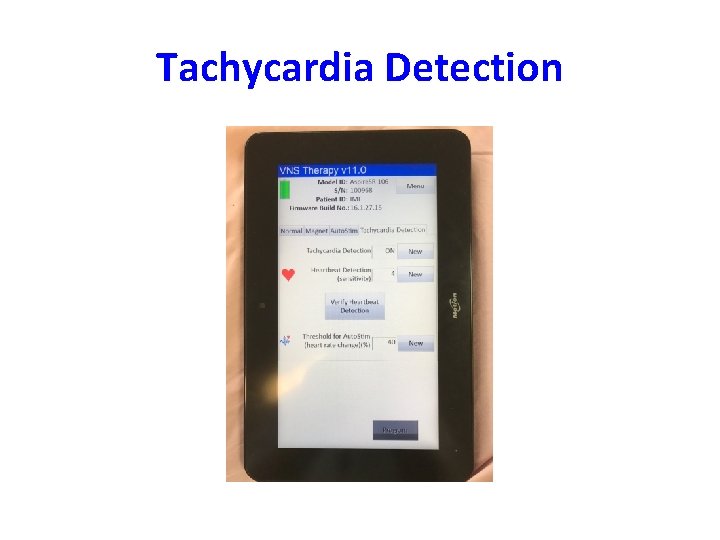
Tachycardia Detection
Verify Heartbeat
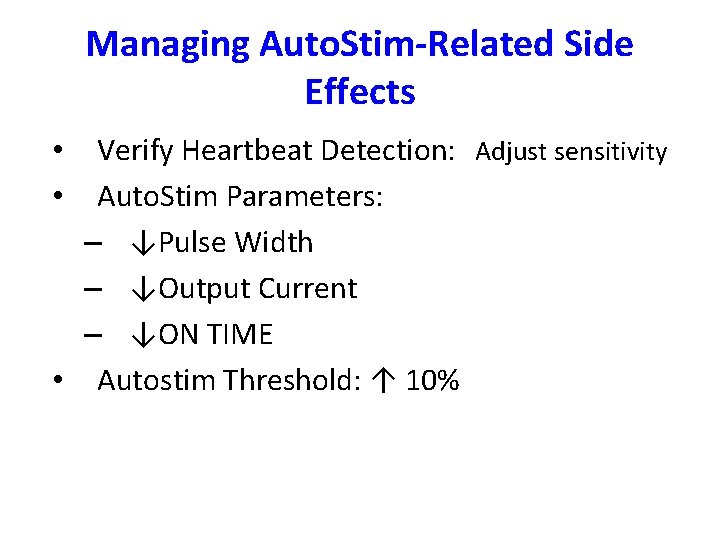
Managing Auto. Stim-Related Side Effects Verify Heartbeat Detection: Adjust sensitivity Auto. Stim Parameters: – ↓Pulse Width – ↓Output Current – ↓ON TIME • Autostim Threshold: ↑ 10% • •
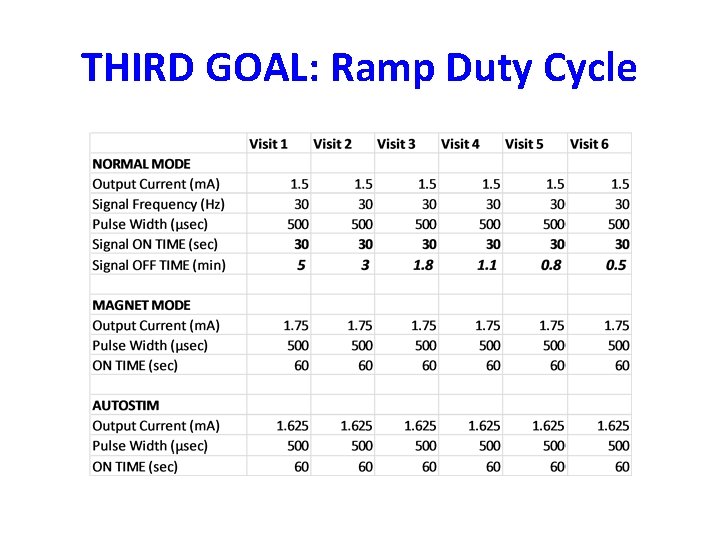
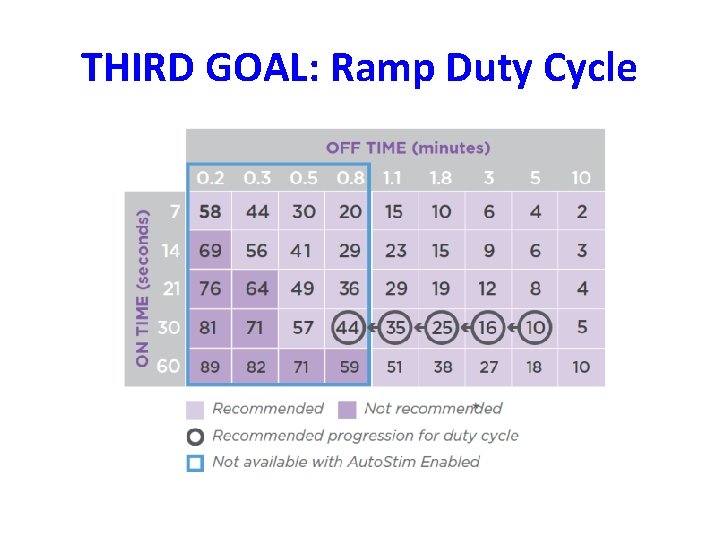
THIRD GOAL: Ramp Duty Cycle • Increase duty cycle over time and assess clinical outcome • Increase the amount of time stimulation is being delivered in a 24 -hour period
Dosing Parameters
THIRD GOAL: Ramp Duty Cycle
THIRD GOAL: Ramp Duty Cycle
Verify by Interrogating AGAIN
Personal Notes • Tailoring titration to tolerability is more important than rigid adherence to programming targets, especially early. • History of frequent/very brief events may require “Rapid Cycling” programming, even sacrificing Auto. Stim • Seizure frequency reduction post implant and prior to turning on device tends to suggest good response to therapy when therapeutic dosing is reached. • “ 0. 75 Syndrome” • Multistep dosing in same visit is common, especially when patient is remote to clinic • If patient keeps good seizure log, downloading VNS data may help verify if autostim or magnet activations were triggered at time of clinical seizure (default timestamps CST- Houston) • Watch for asthma and OSA exacerbation post implant; screen beforehand • Significant SOB with stimulation may be current leak to Phrenic nerve
- Slides: 20