Listening to the Universe through Einsteins Waves Stan





- Slides: 66
Listening to the Universe through Einstein’s Waves Stan Whitcomb Caltech The Universe, unveiled by Gravitational Waves 30 May 2009 1
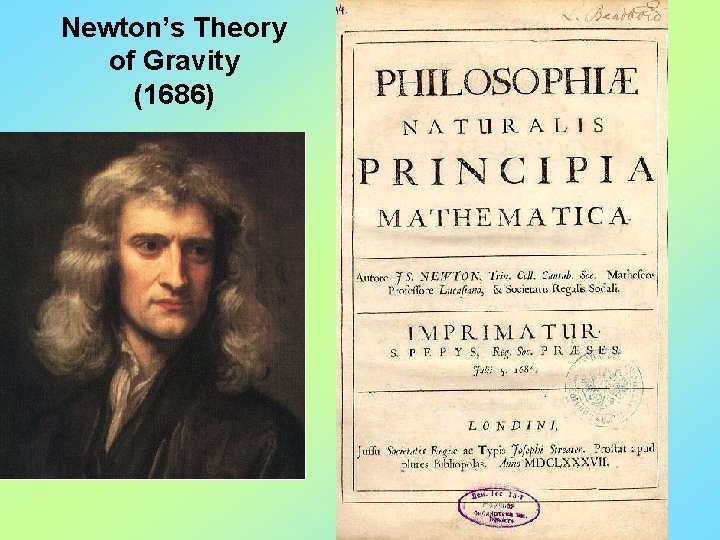
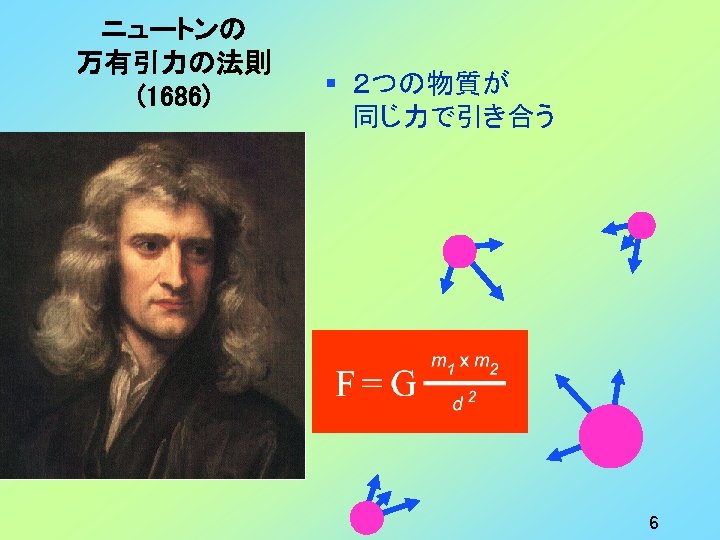
Newton’s Theory of Gravity (1686) 3
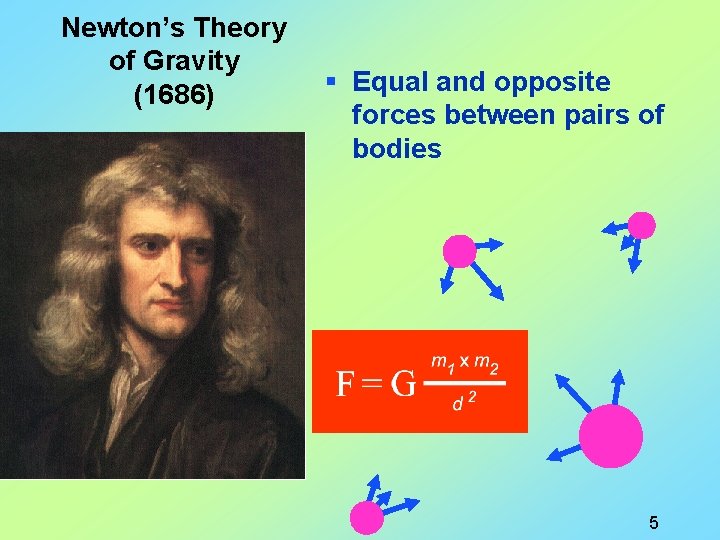
Newton’s Theory of Gravity (1686) § Equal and opposite forces between pairs of bodies 5
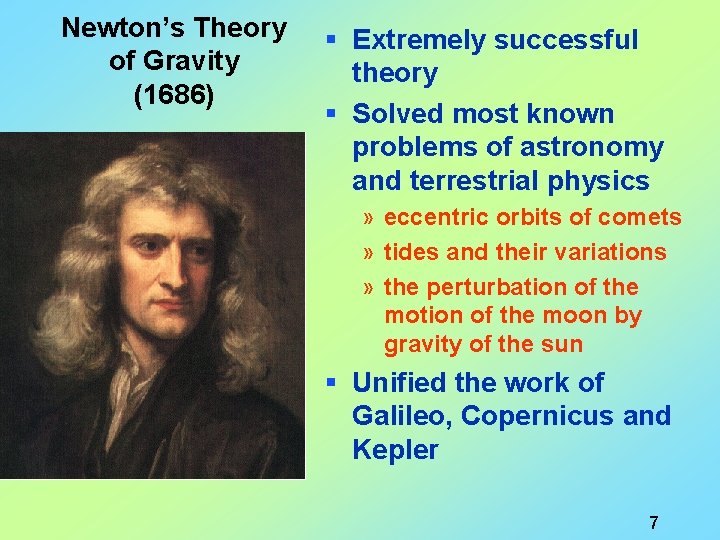
Newton’s Theory of Gravity (1686) § Extremely successful theory § Solved most known problems of astronomy and terrestrial physics » eccentric orbits of comets » tides and their variations » the perturbation of the moon by gravity of the sun § Unified the work of Galileo, Copernicus and Kepler 7
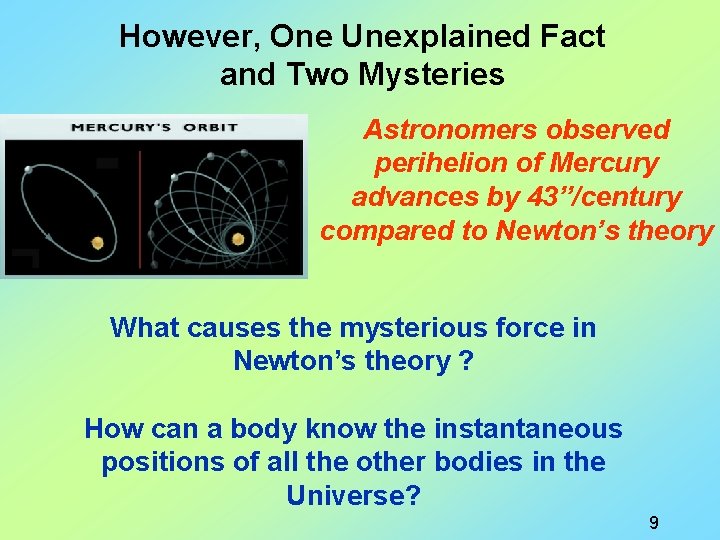
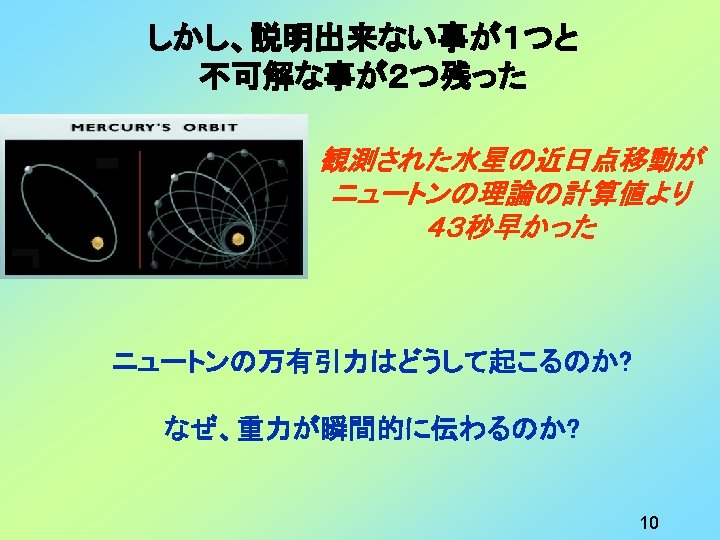
However, One Unexplained Fact and Two Mysteries Astronomers observed perihelion of Mercury advances by 43”/century compared to Newton’s theory What causes the mysterious force in Newton’s theory ? How can a body know the instantaneous positions of all the other bodies in the Universe? 9
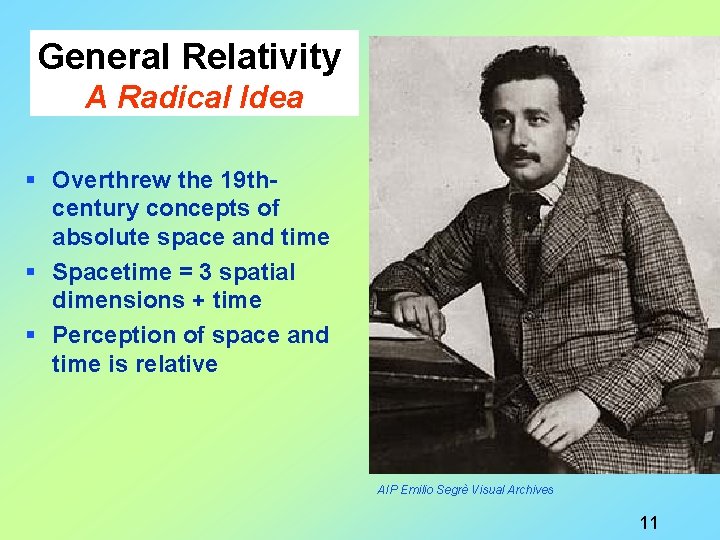
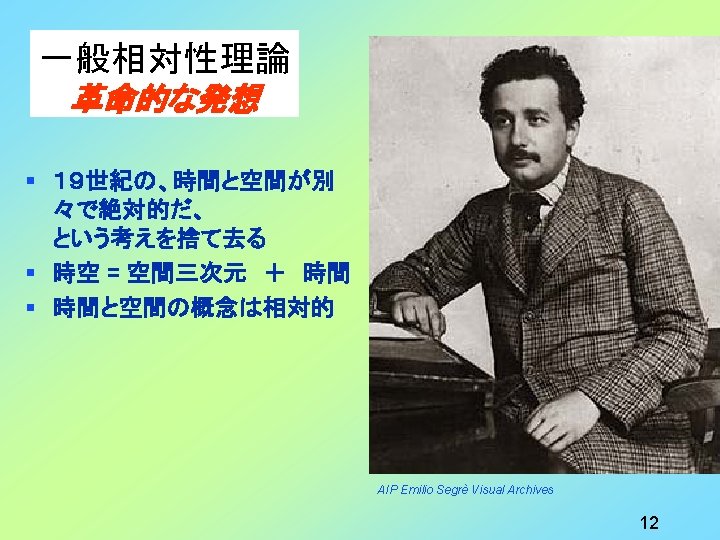
General Relativity A Radical Idea § Overthrew the 19 thcentury concepts of absolute space and time § Spacetime = 3 spatial dimensions + time § Perception of space and time is relative AIP Emilio Segrè Visual Archives 11
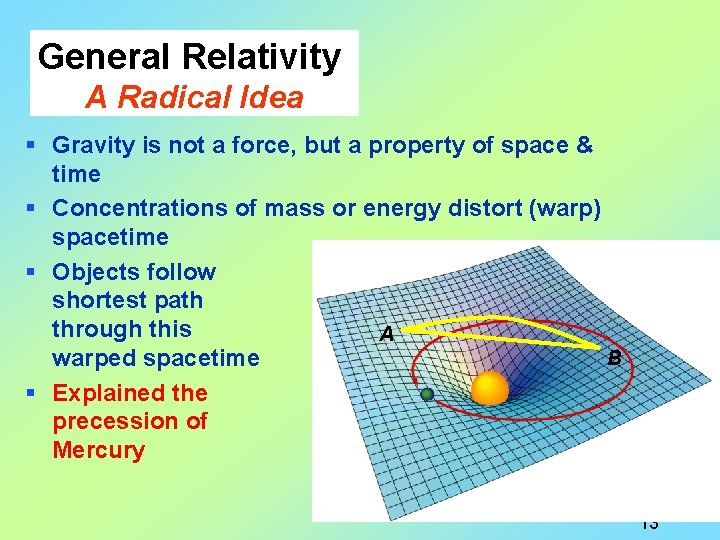
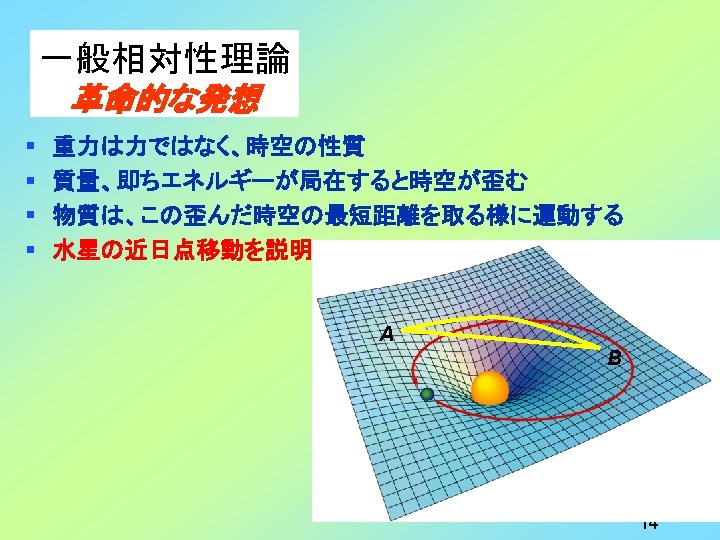
General Relativity A Radical Idea § Gravity is not a force, but a property of space & time § Concentrations of mass or energy distort (warp) spacetime § Objects follow shortest path through this A B warped spacetime § Explained the precession of Mercury 13
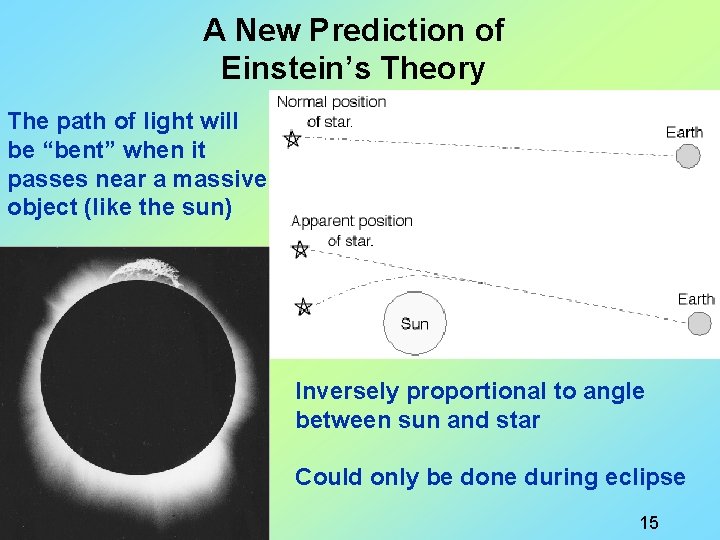
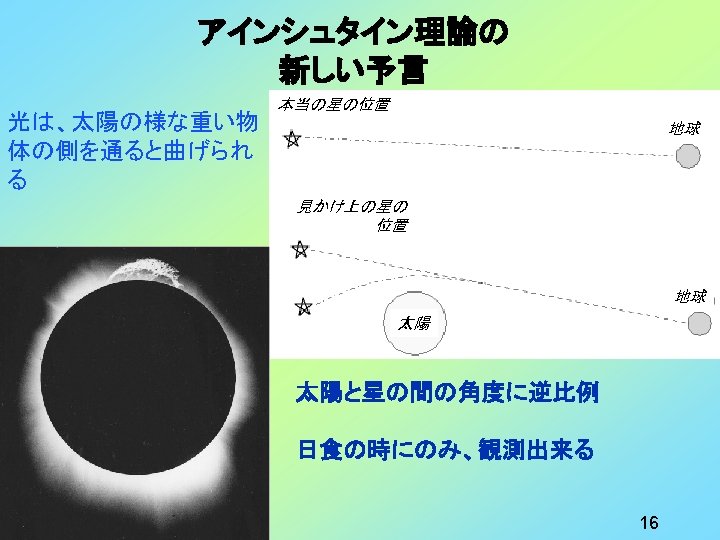
A New Prediction of Einstein’s Theory The path of light will be “bent” when it passes near a massive object (like the sun) © Royal Astronomical Society Inversely proportional to angle between sun and star Could only be done during eclipse 15
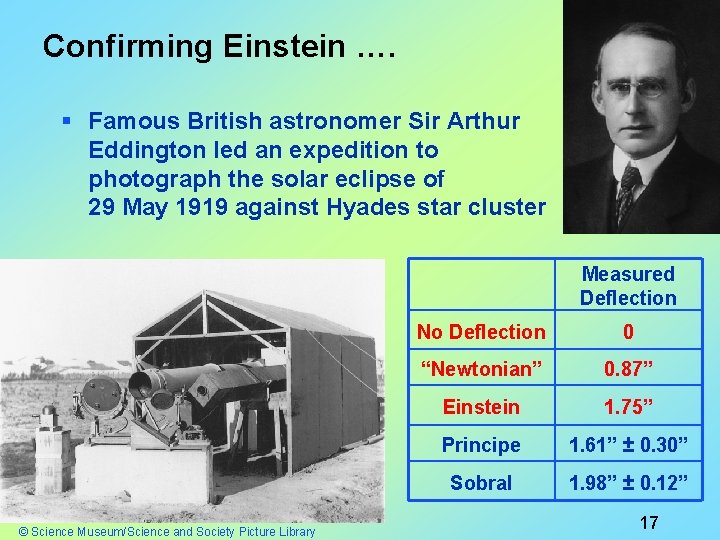
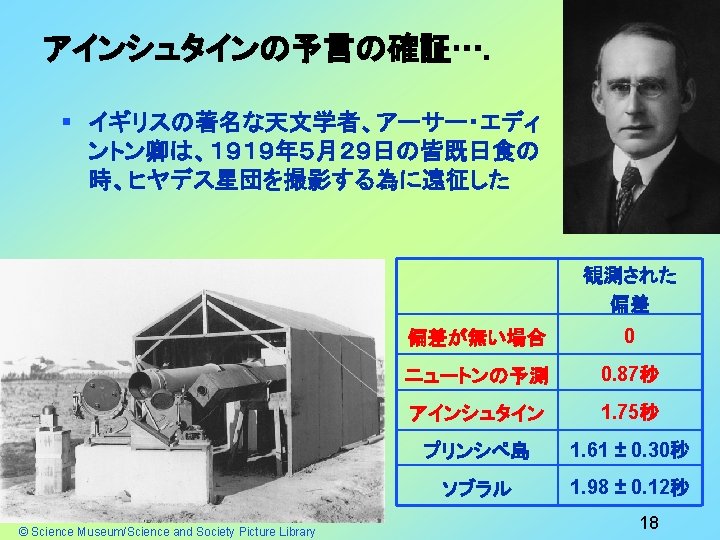
Confirming Einstein …. § Famous British astronomer Sir Arthur Eddington led an expedition to photograph the solar eclipse of 29 May 1919 against Hyades star cluster Measured Deflection © Science Museum/Science and Society Picture Library No Deflection 0 “Newtonian” 0. 87” Einstein 1. 75” Principe 1. 61” ± 0. 30” Sobral 1. 98” ± 0. 12” 17
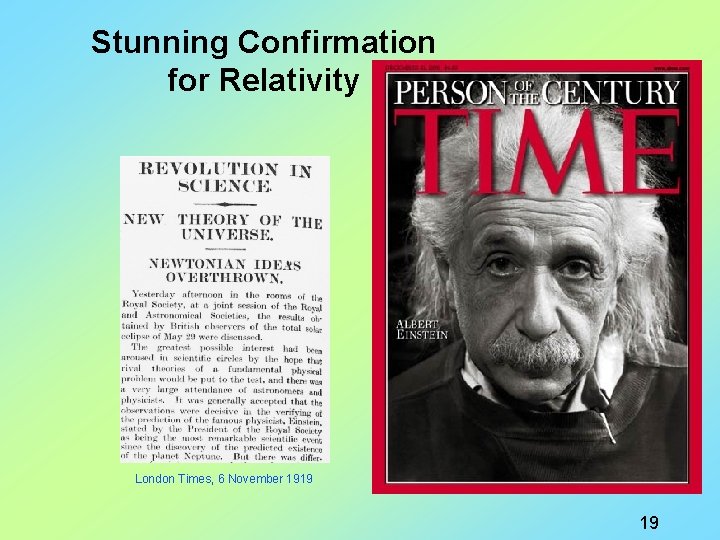
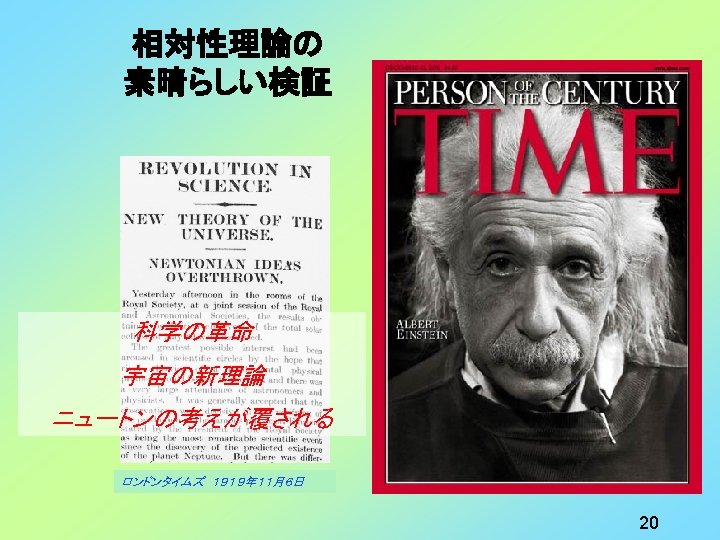
Stunning Confirmation for Relativity London Times, 6 November 1919 Illustrated London News 22 Nov 1919 19
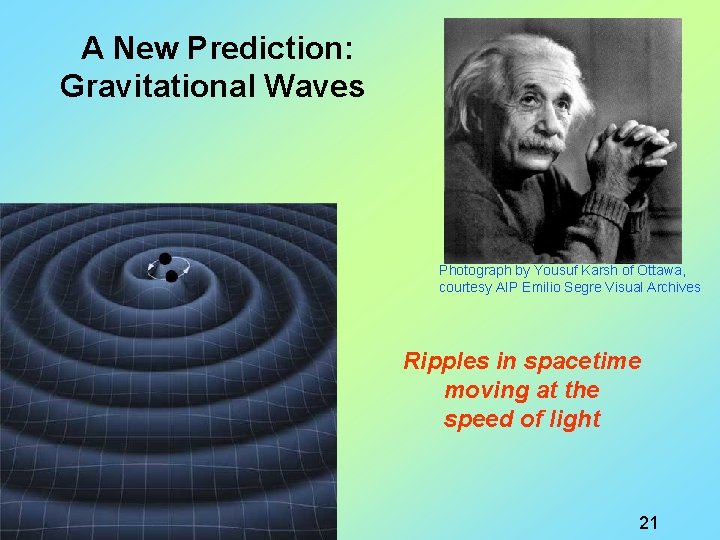
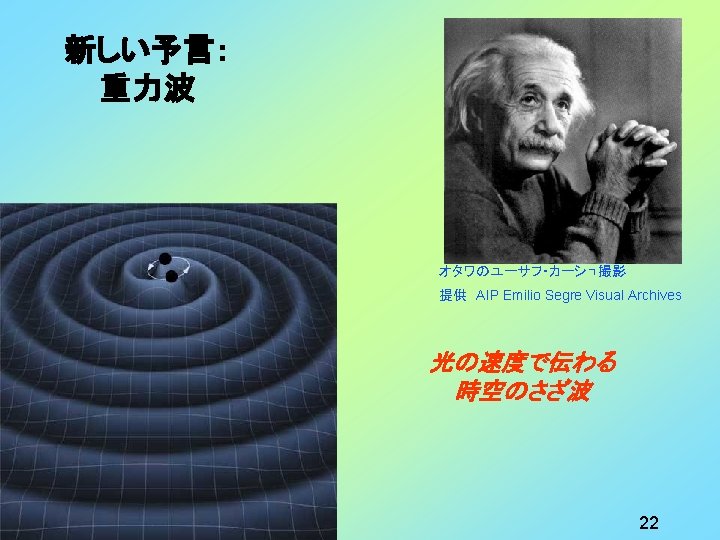
A New Prediction: Gravitational Waves Photograph by Yousuf Karsh of Ottawa, courtesy AIP Emilio Segre Visual Archives Ripples in spacetime moving at the speed of light 21
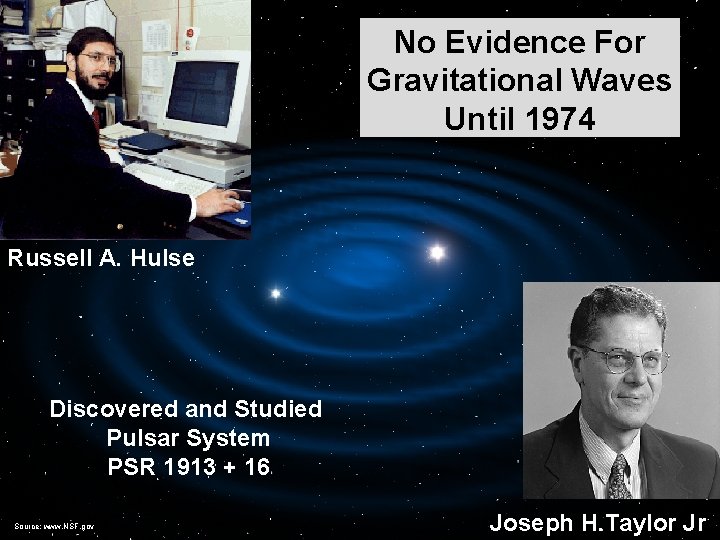
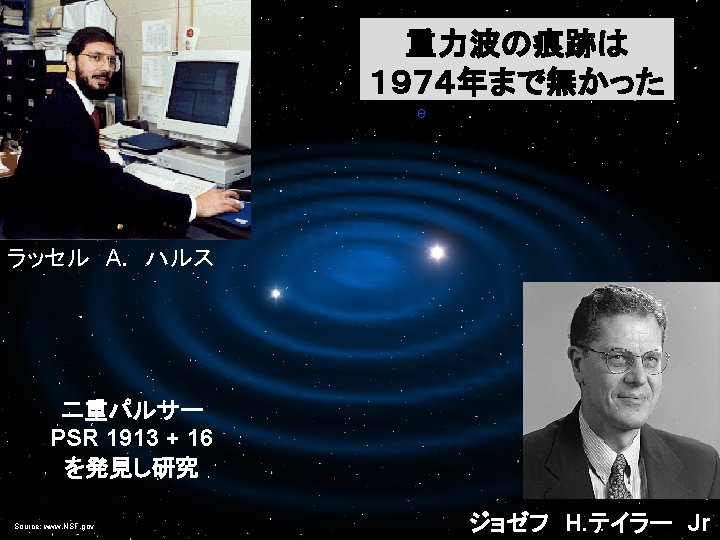
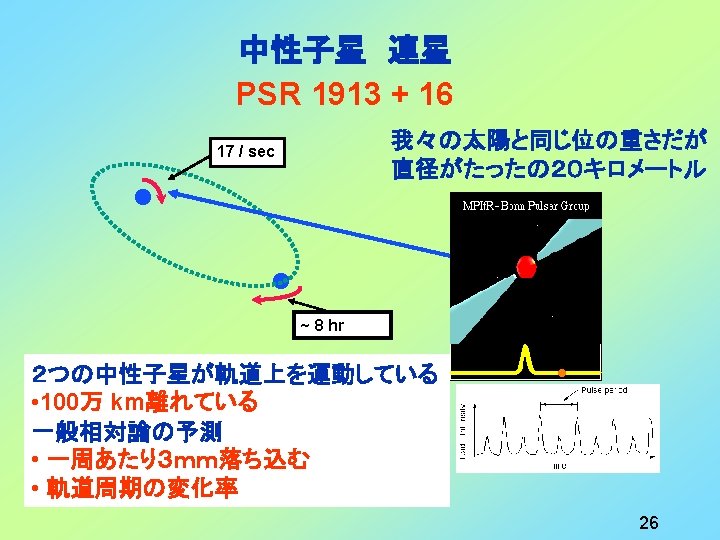
No Evidence For T Gravitational Waves h e Until 1974 Russell A. Hulse Discovered and Studied Pulsar System PSR 1913 + 16 Source: www. NSF. gov 23 Jr Joseph H. Taylor
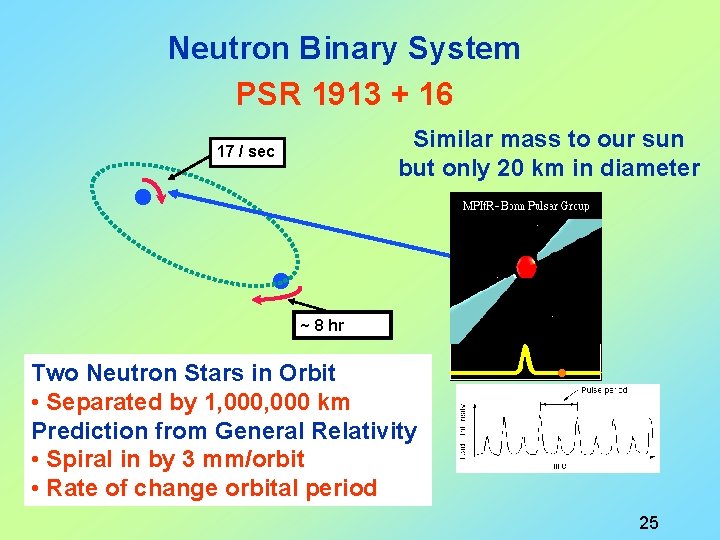
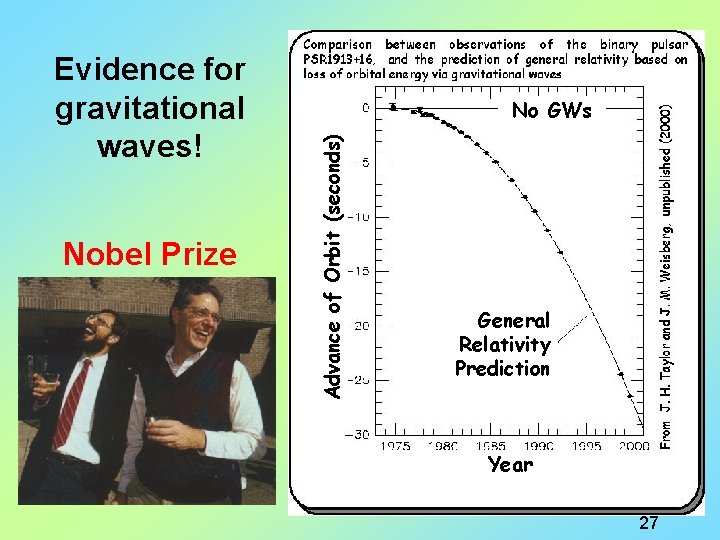
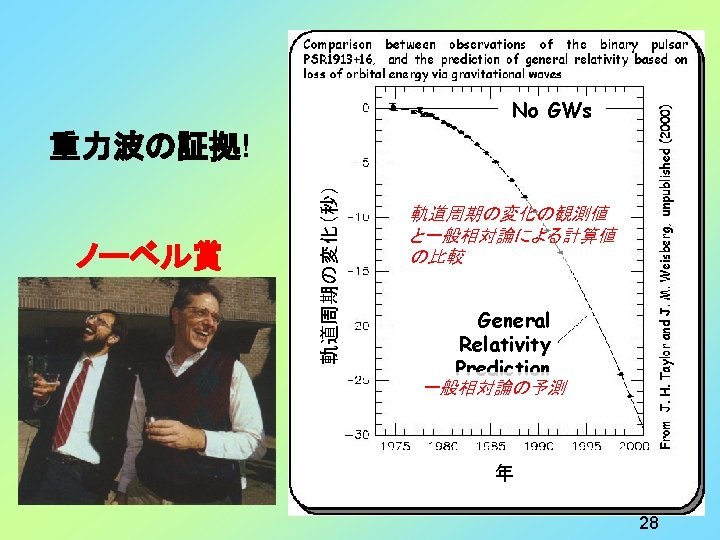
Neutron Binary System PSR 1913 + 16 Similar mass to our sun but only 20 km in diameter 17 / sec · · ~ 8 hr Two Neutron Stars in Orbit • Separated by 1, 000 km Prediction from General Relativity • Spiral in by 3 mm/orbit • Rate of change orbital period 25
Nobel Prize No GWs Advance of Orbit (seconds) Evidence for gravitational waves! General Relativity Prediction Year 27
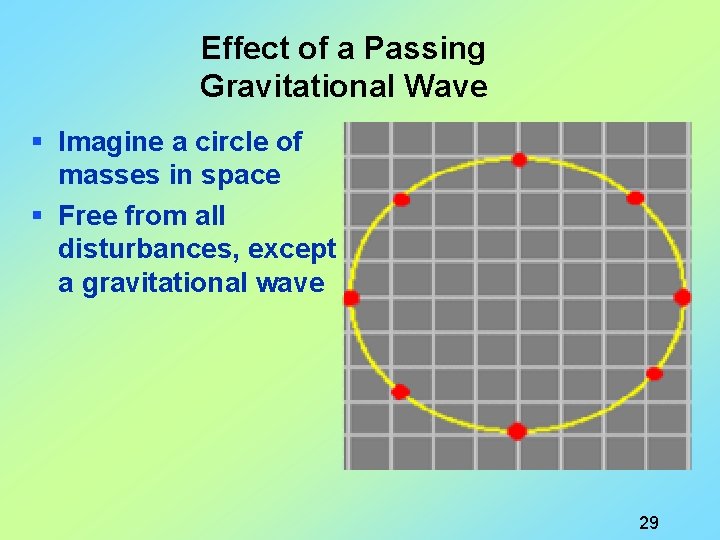
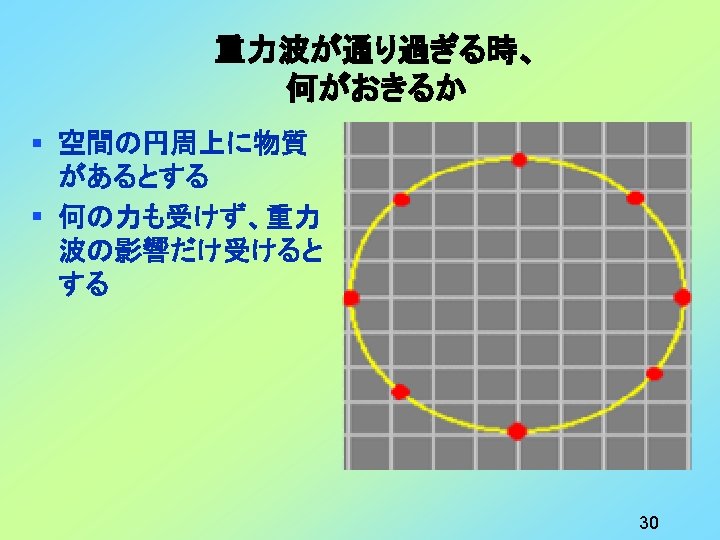
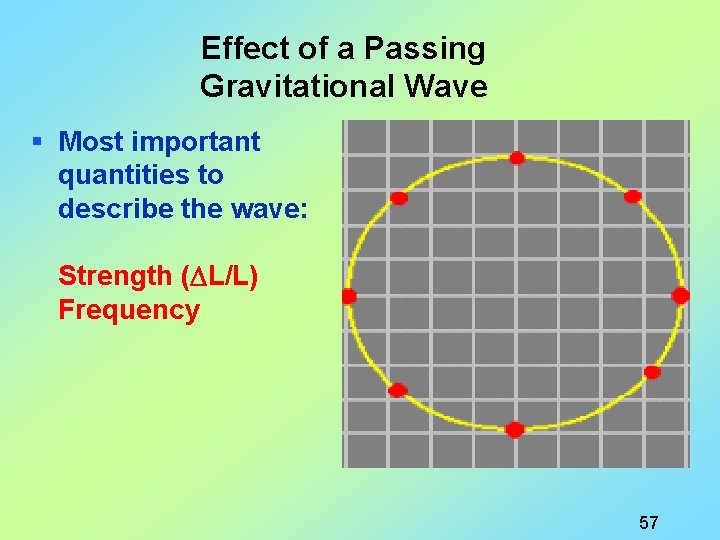
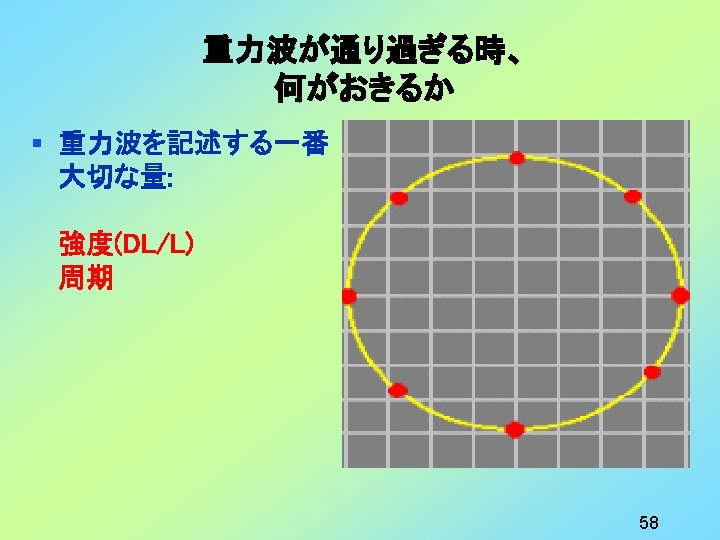
Effect of a Passing Gravitational Wave § Imagine a circle of masses in space § Free from all disturbances, except a gravitational wave 29
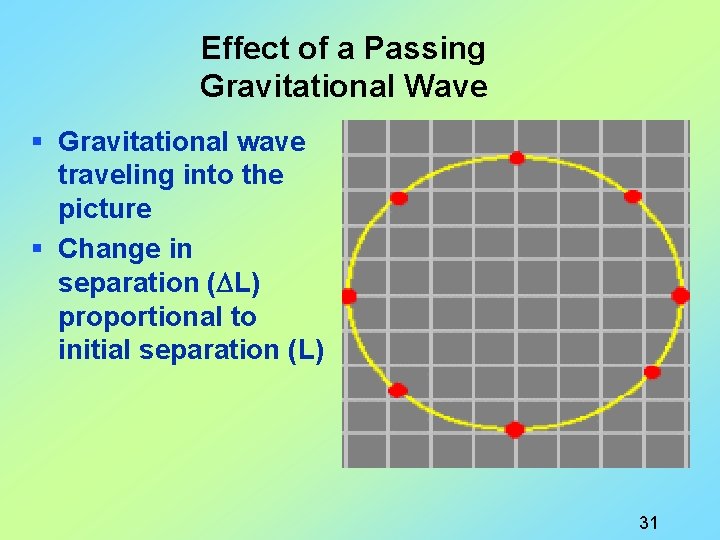
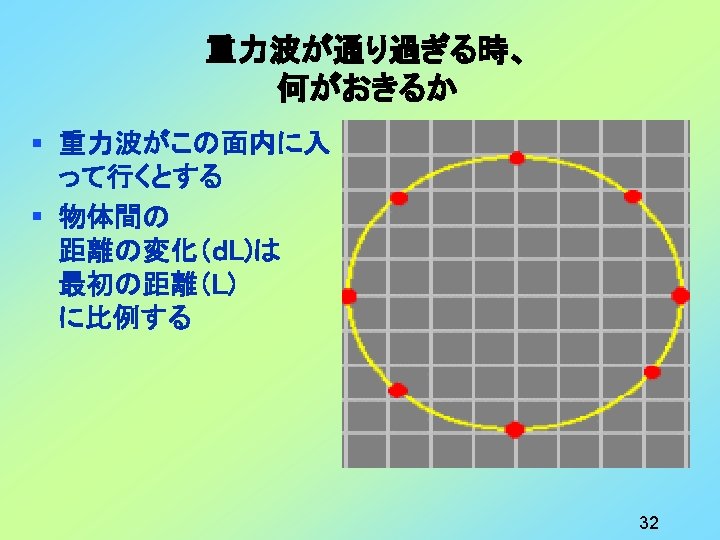
Effect of a Passing Gravitational Wave § Gravitational wave traveling into the picture § Change in separation (DL) proportional to initial separation (L) 31
Sources of Gravitational Waves 33
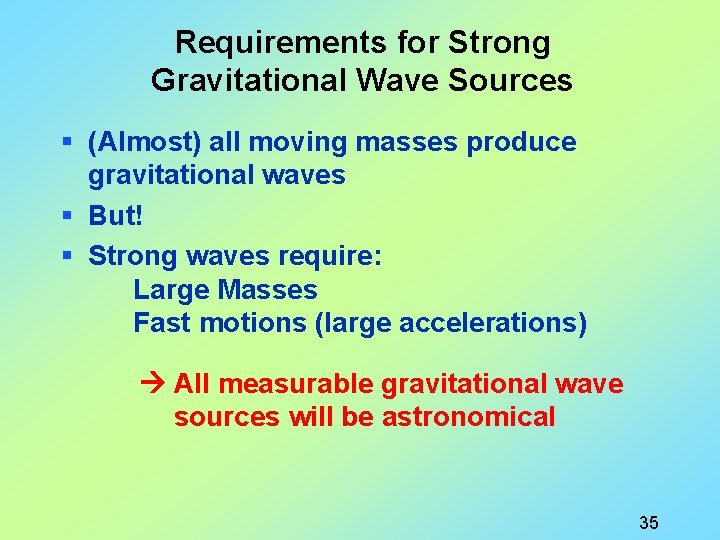
Requirements for Strong Gravitational Wave Sources § (Almost) all moving masses produce gravitational waves § But! § Strong waves require: Large Masses Fast motions (large accelerations) All measurable gravitational wave sources will be astronomical 35
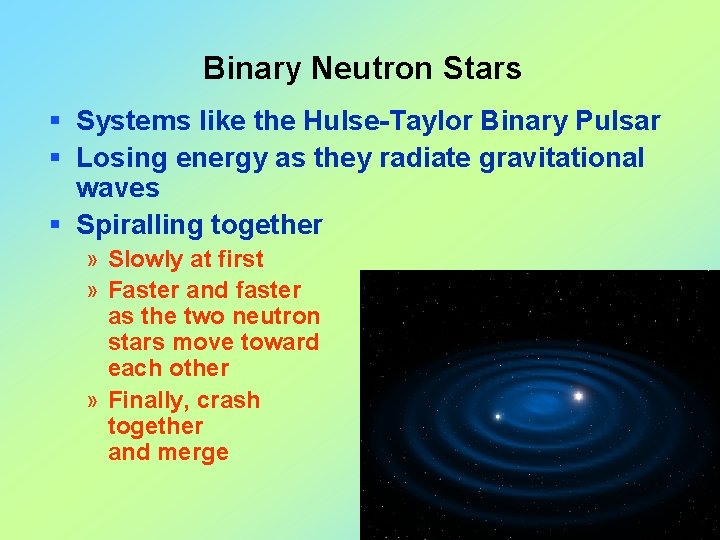
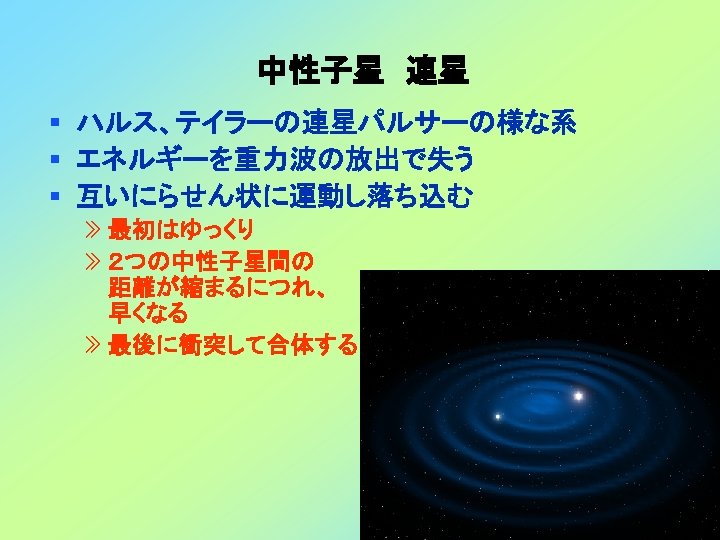
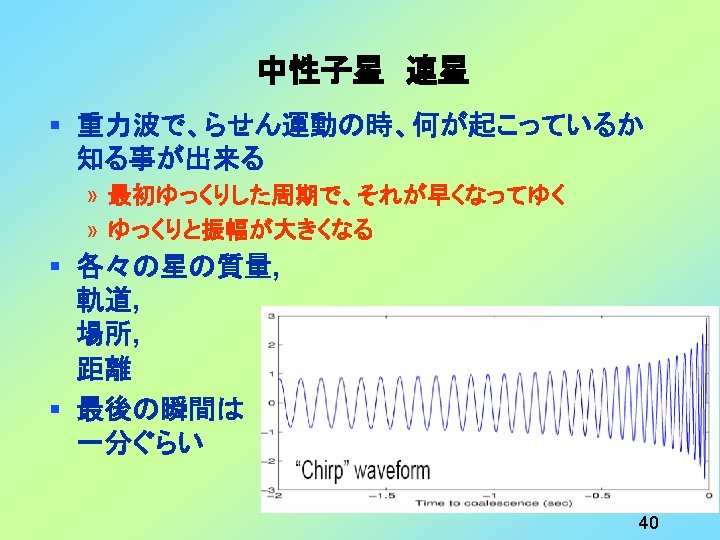
Binary Neutron Stars § Systems like the Hulse-Taylor Binary Pulsar § Losing energy as they radiate gravitational waves § Spiralling together » Slowly at first » Faster and faster as the two neutron stars move toward each other » Finally, crash together and merge 37
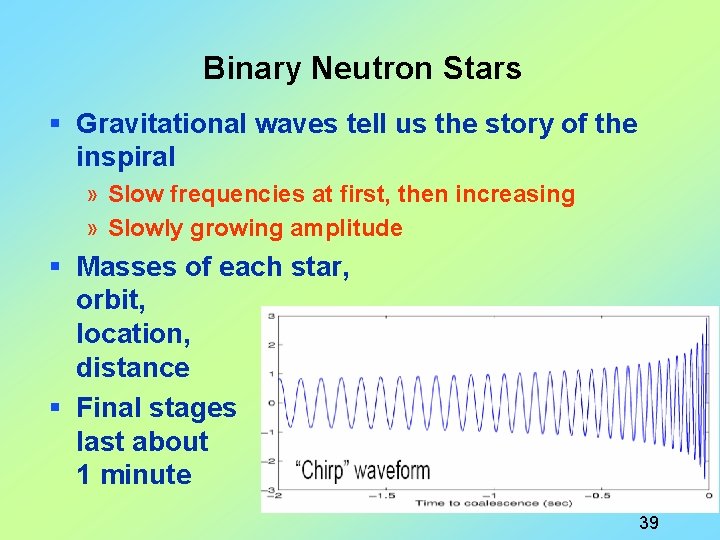
Binary Neutron Stars § Gravitational waves tell us the story of the inspiral » Slow frequencies at first, then increasing » Slowly growing amplitude § Masses of each star, orbit, location, distance § Final stages last about 1 minute 39
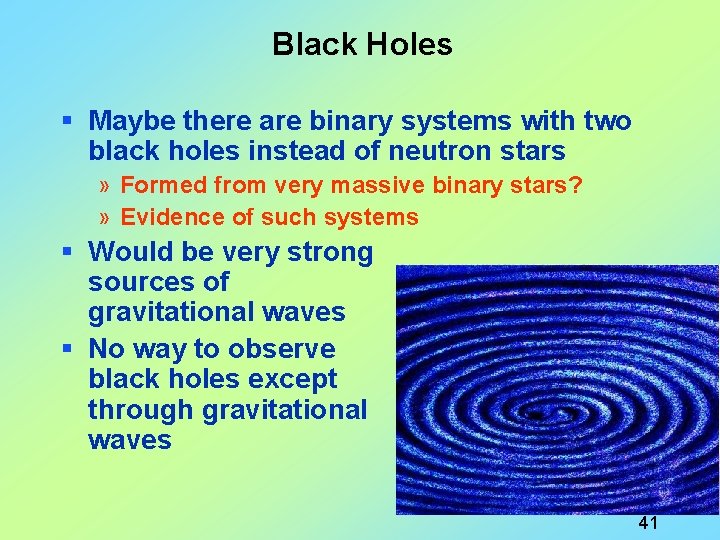
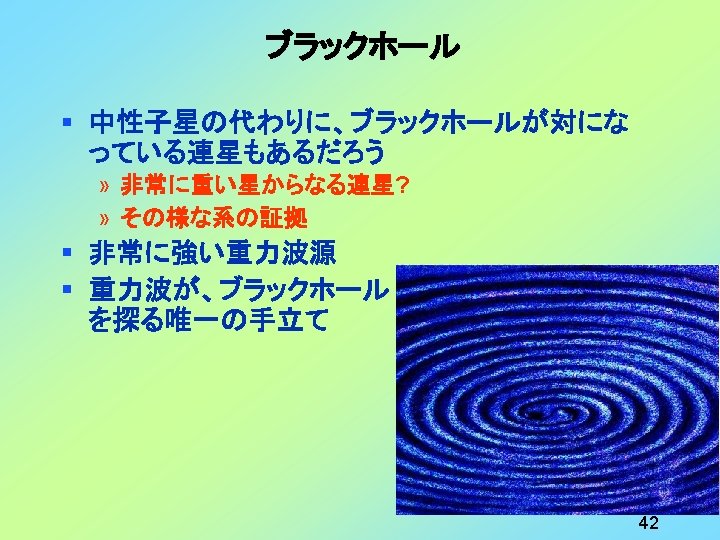
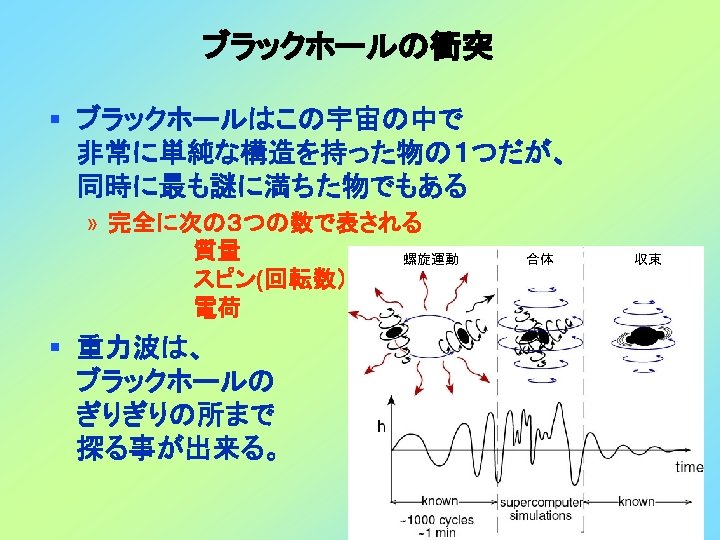
Black Holes § Maybe there are binary systems with two black holes instead of neutron stars » Formed from very massive binary stars? » Evidence of such systems § Would be very strong sources of gravitational waves § No way to observe black holes except through gravitational waves 41
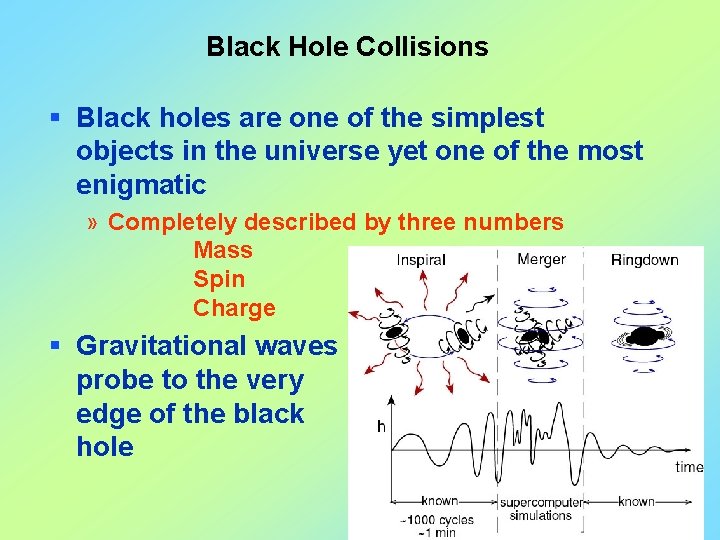
Black Hole Collisions § Black holes are one of the simplest objects in the universe yet one of the most enigmatic » Completely described by three numbers Mass Spin Charge § Gravitational waves probe to the very edge of the black hole 43
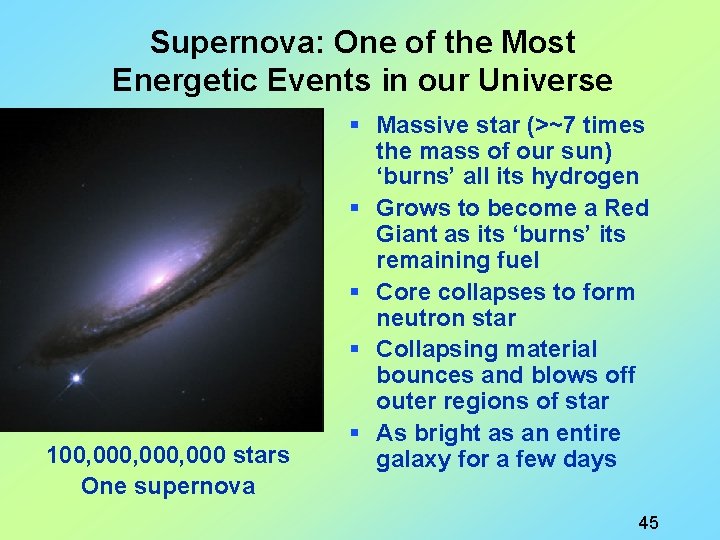
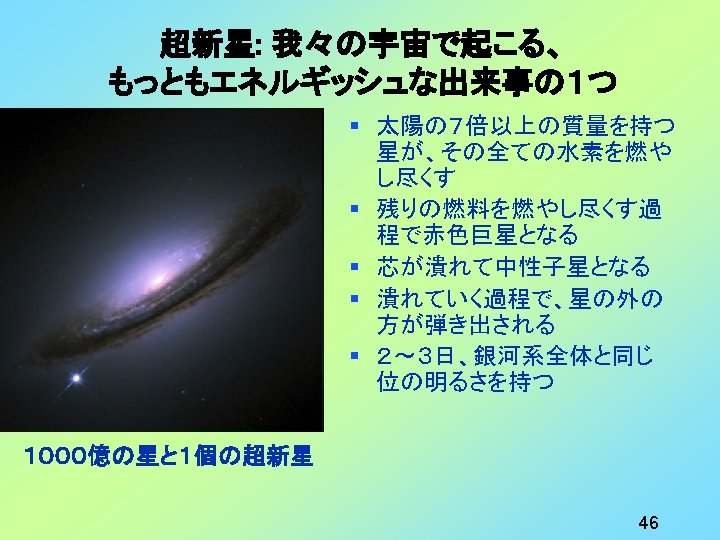
Supernova: One of the Most Energetic Events in our Universe 100, 000, 000 stars One supernova § Massive star (>~7 times the mass of our sun) ‘burns’ all its hydrogen § Grows to become a Red Giant as its ‘burns’ its remaining fuel § Core collapses to form neutron star § Collapsing material bounces and blows off outer regions of star § As bright as an entire galaxy for a few days 45
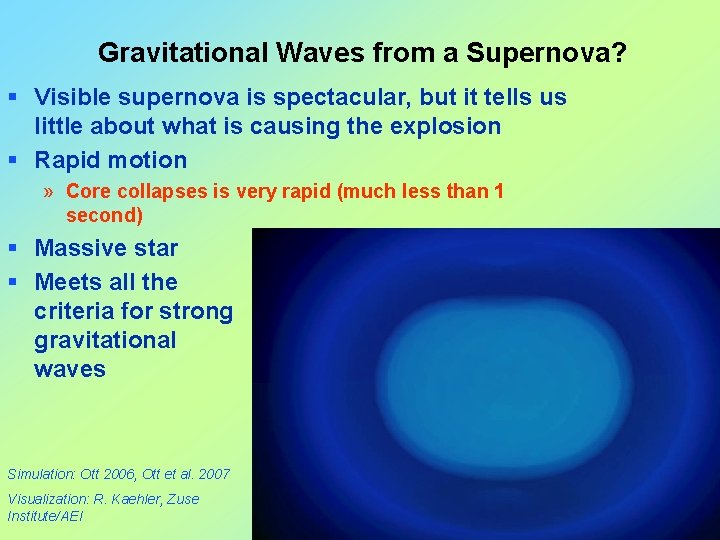
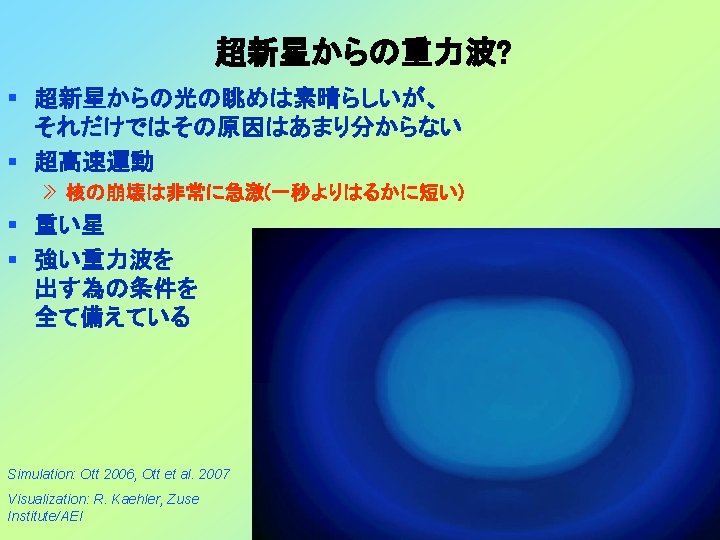
Gravitational Waves from a Supernova? § Visible supernova is spectacular, but it tells us little about what is causing the explosion § Rapid motion » Core collapses is very rapid (much less than 1 second) § Massive star § Meets all the criteria for strong gravitational waves Simulation: Ott 2006, Ott et al. 2007 Visualization: R. Kaehler, Zuse Institute/AEI 47
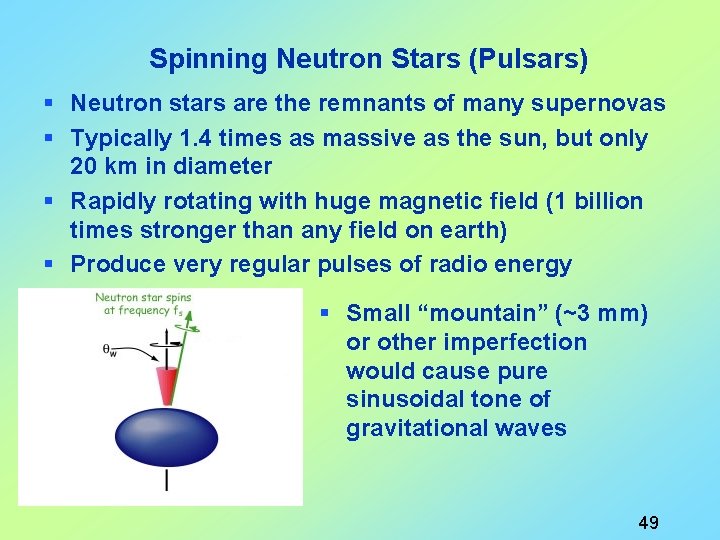
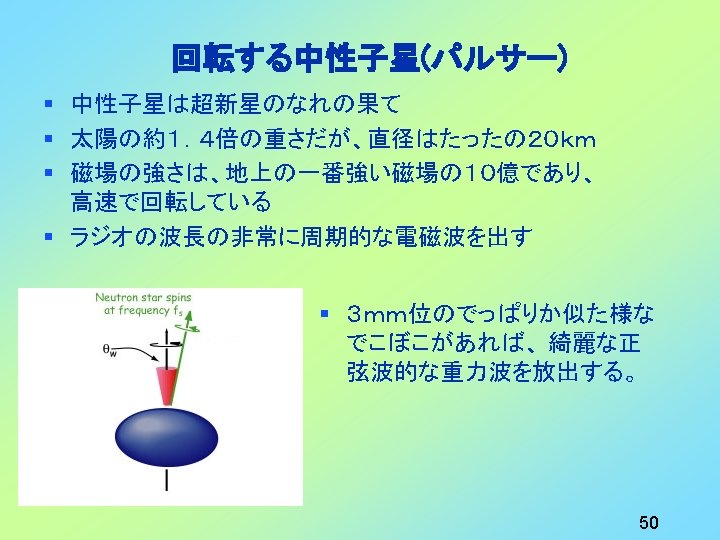
Spinning Neutron Stars (Pulsars) § Neutron stars are the remnants of many supernovas § Typically 1. 4 times as massive as the sun, but only 20 km in diameter § Rapidly rotating with huge magnetic field (1 billion times stronger than any field on earth) § Produce very regular pulses of radio energy § Small “mountain” (~3 mm) or other imperfection would cause pure sinusoidal tone of gravitational waves 49
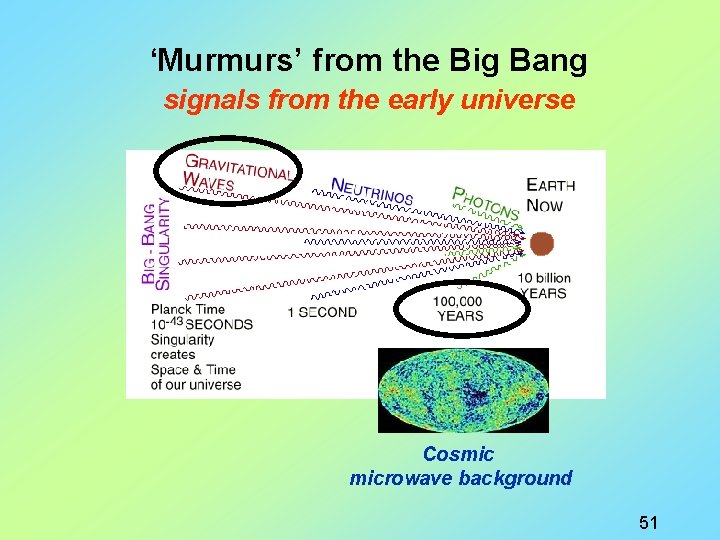
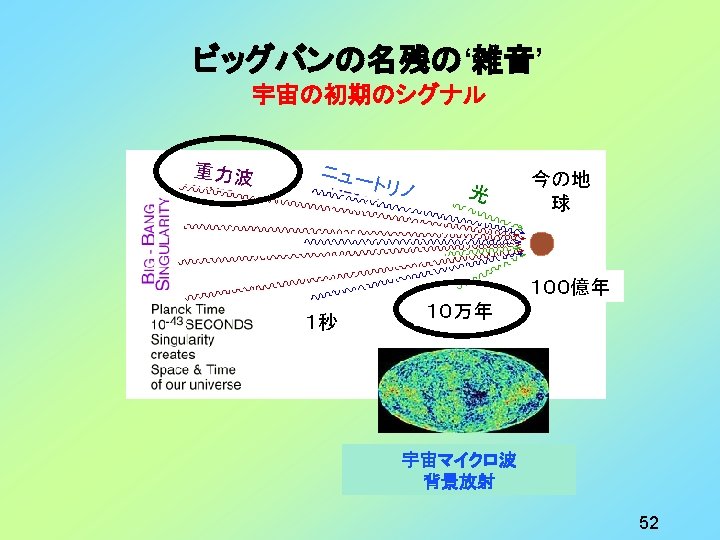
‘Murmurs’ from the Big Bang signals from the early universe Cosmic microwave background 51
‘Murmurs’ from the Big Bang signals from the early universe More from Professor Sato 53
Detecting Gravitational Waves 55
Effect of a Passing Gravitational Wave § Most important quantities to describe the wave: Strength (DL/L) Frequency 57
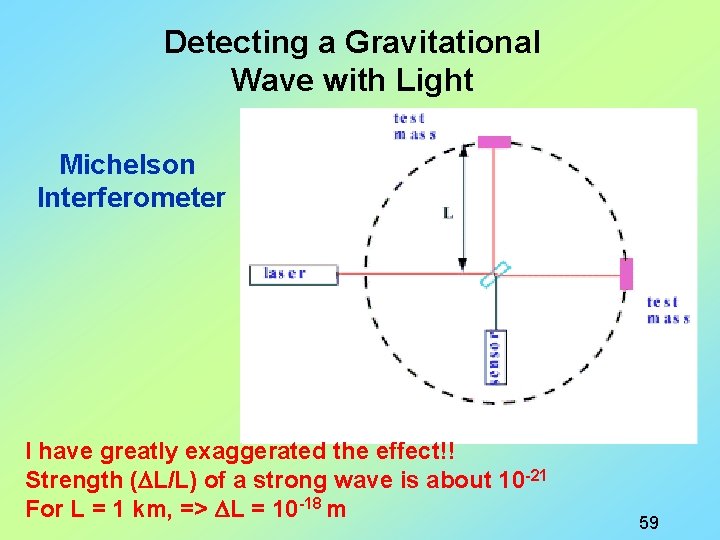
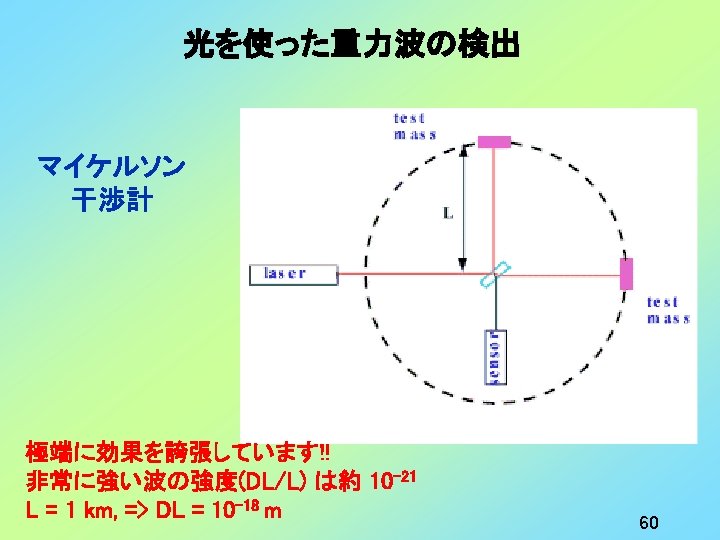
Detecting a Gravitational Wave with Light Michelson Interferometer I have greatly exaggerated the effect!! Strength (DL/L) of a strong wave is about 10 -21 For L = 1 km, => DL = 10 -18 m 59
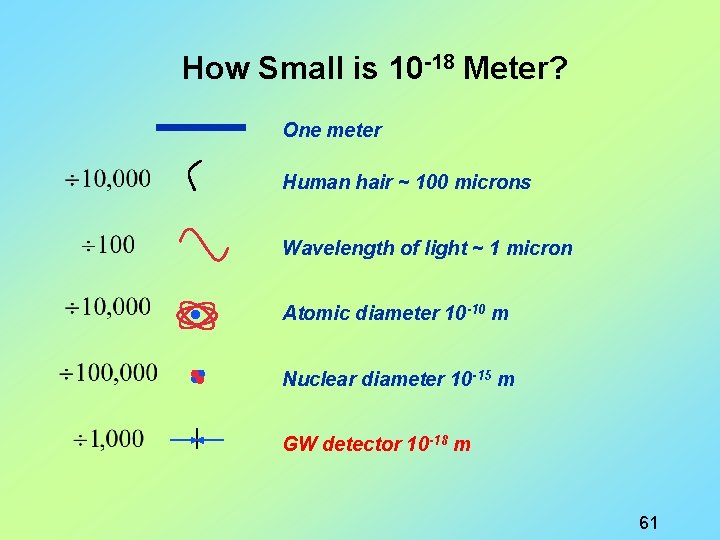
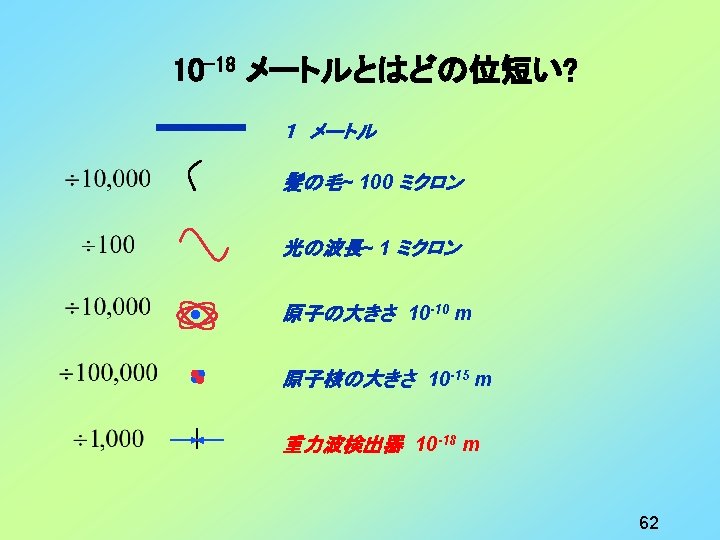
How Small is 10 -18 Meter? One meter Human hair ~ 100 microns Wavelength of light ~ 1 micron Atomic diameter 10 -10 m Nuclear diameter 10 -15 m GW detector 10 -18 m 61
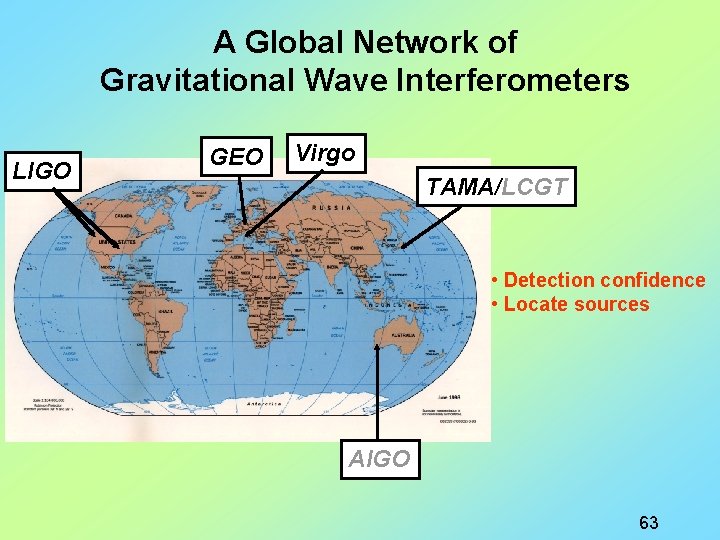
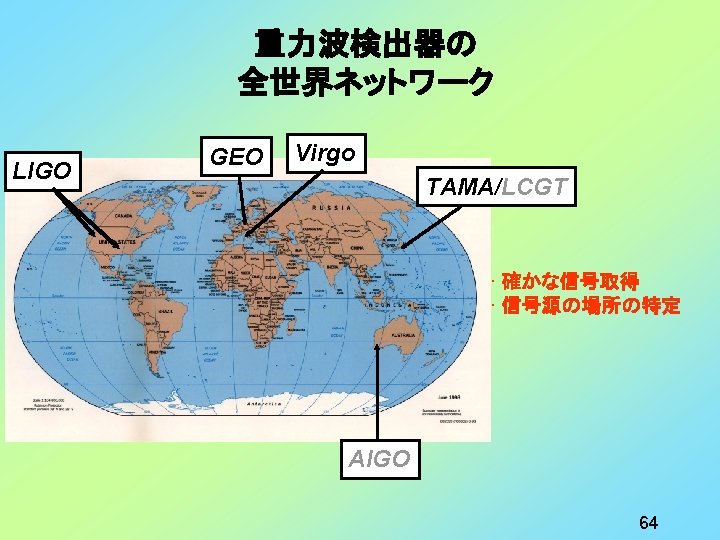
A Global Network of Gravitational Wave Interferometers LIGO GEO Virgo TAMA/LCGT • Detection confidence • Locate sources AIGO 63
Looking to the Future § The existence of gravitational waves is beyond any reasonable doubt § Their detection is one of the most challenging tasks ever undertaken by scientists § They promise to give us new insights into the world of astronomy § There will be surprises! 65