Clinical Epilepsy American Epilepsy Society CSlide 1 American
- Slides: 145
Clinical Epilepsy American Epilepsy Society C-Slide 1 American Epilepsy Society 2010
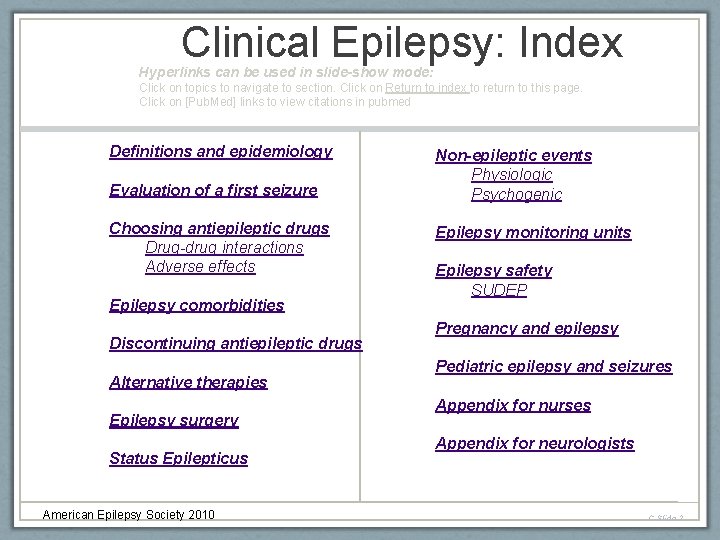
Clinical Epilepsy: Index Hyperlinks can be used in slide-show mode: Click on topics to navigate to section. Click on Return to index to return to this page. Click on [Pub. Med] links to view citations in pubmed Definitions and epidemiology Evaluation of a first seizure Choosing antiepileptic drugs Drug-drug interactions Adverse effects Epilepsy comorbidities Discontinuing antiepileptic drugs Alternative therapies Epilepsy surgery Status Epilepticus American Epilepsy Society 2010 Non-epileptic events Physiologic Psychogenic Epilepsy monitoring units Epilepsy safety SUDEP Pregnancy and epilepsy Pediatric epilepsy and seizures Appendix for nurses Appendix for neurologists C-Slide 2
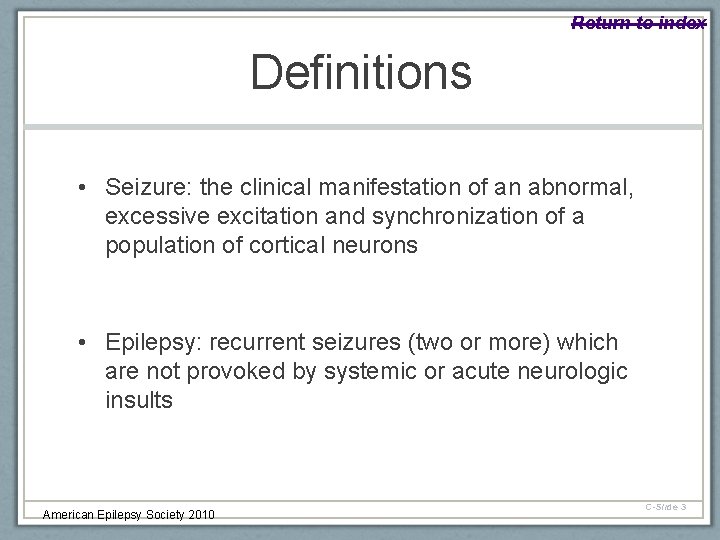
Return to index Definitions • Seizure: the clinical manifestation of an abnormal, excessive excitation and synchronization of a population of cortical neurons • Epilepsy: recurrent seizures (two or more) which are not provoked by systemic or acute neurologic insults American Epilepsy Society 2010 C-Slide 3
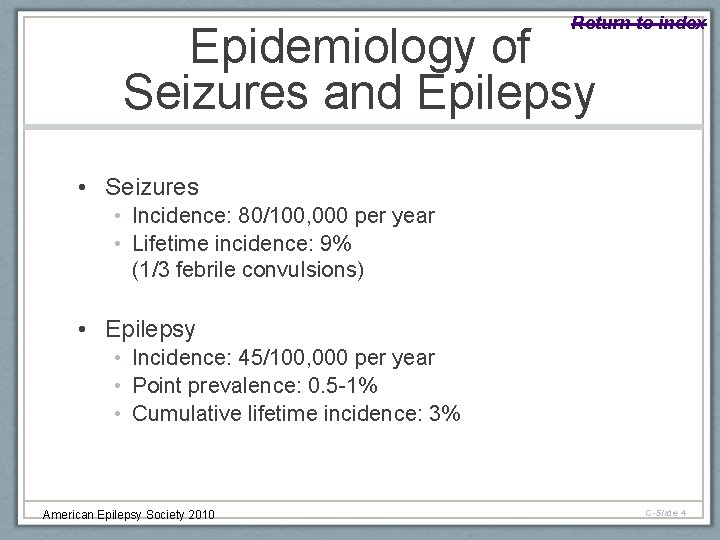
Return to index Epidemiology of Seizures and Epilepsy • Seizures • Incidence: 80/100, 000 per year • Lifetime incidence: 9% (1/3 febrile convulsions) • Epilepsy • Incidence: 45/100, 000 per year • Point prevalence: 0. 5 -1% • Cumulative lifetime incidence: 3% American Epilepsy Society 2010 C-Slide 4
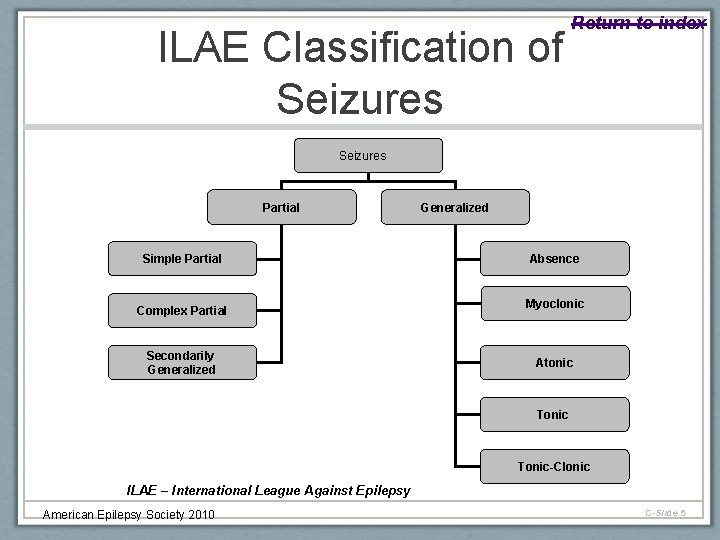
Return to index ILAE Classification of Seizures Partial Simple Partial Complex Partial Secondarily Generalized Absence Myoclonic Atonic Tonic-Clonic ILAE – International League Against Epilepsy American Epilepsy Society 2010 C-Slide 5
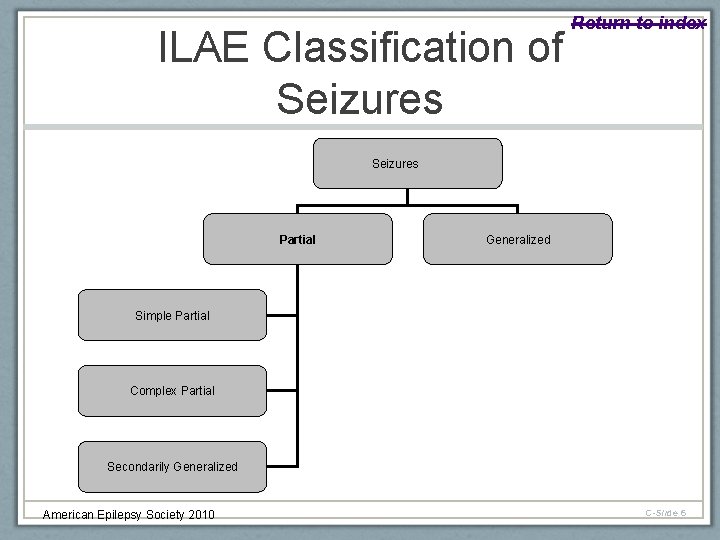
Return to index ILAE Classification of Seizures Partial Generalized Simple Partial Complex Partial Secondarily Generalized American Epilepsy Society 2010 C-Slide 6
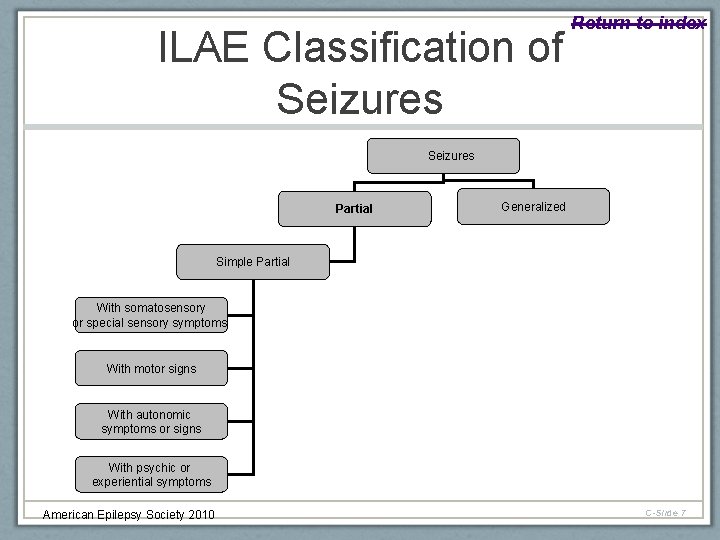
Return to index ILAE Classification of Seizures Partial Generalized Simple Partial With somatosensory or special sensory symptoms With motor signs With autonomic symptoms or signs With psychic or experiential symptoms American Epilepsy Society 2010 C-Slide 7
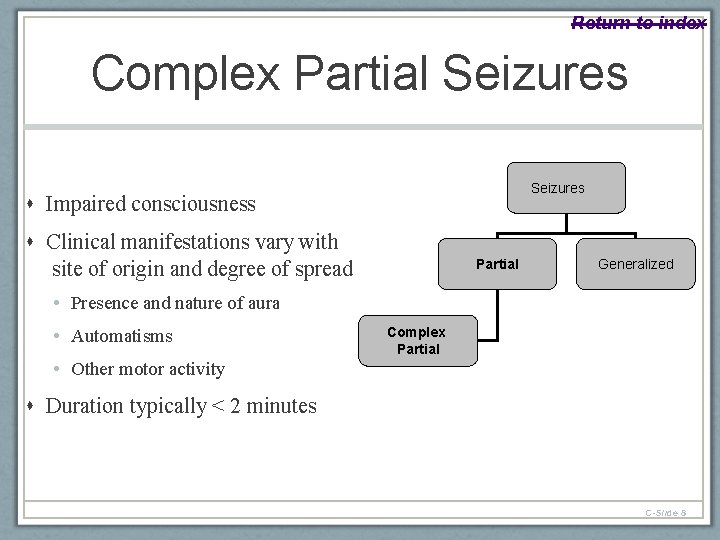
Return to index Complex Partial Seizures Impaired consciousness Clinical manifestations vary with site of origin and degree of spread Partial Generalized • Presence and nature of aura • Automatisms Complex Partial • Other motor activity Duration typically < 2 minutes American Epilepsy Society 2010 C-Slide 8
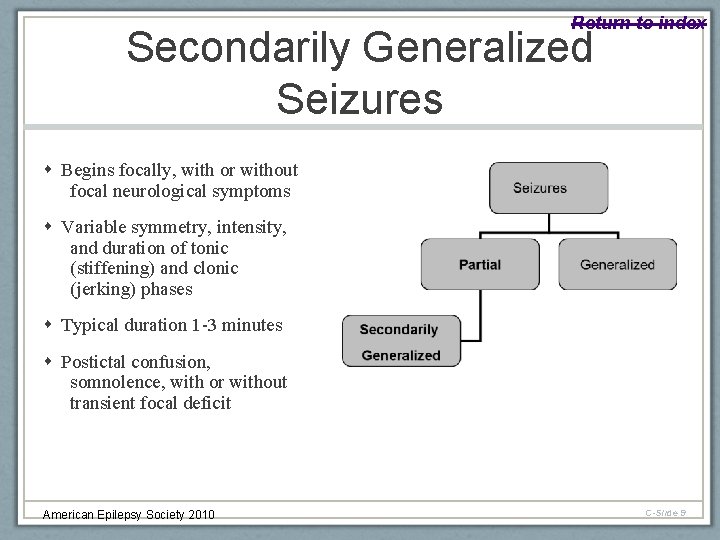
Return to index Secondarily Generalized Seizures Begins focally, with or without focal neurological symptoms Variable symmetry, intensity, and duration of tonic (stiffening) and clonic (jerking) phases Typical duration 1 -3 minutes Postictal confusion, somnolence, with or without transient focal deficit American Epilepsy Society 2010 C-Slide 9
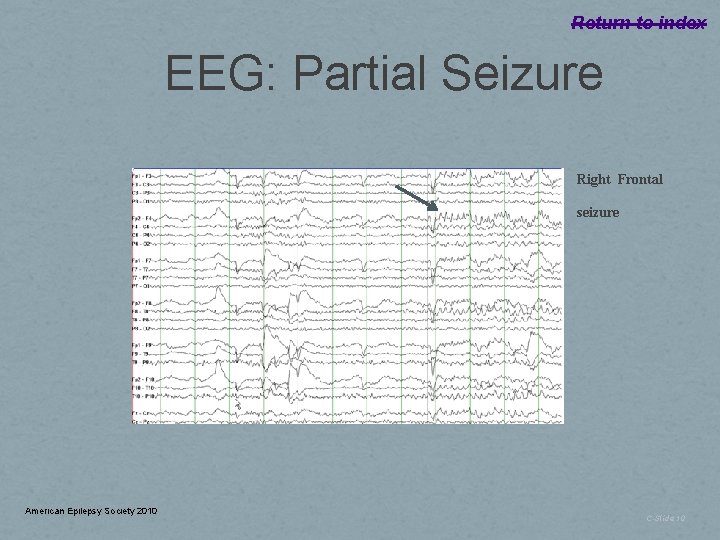
Return to index EEG: Partial Seizure Right Frontal seizure American Epilepsy Society 2010 C-Slide 10
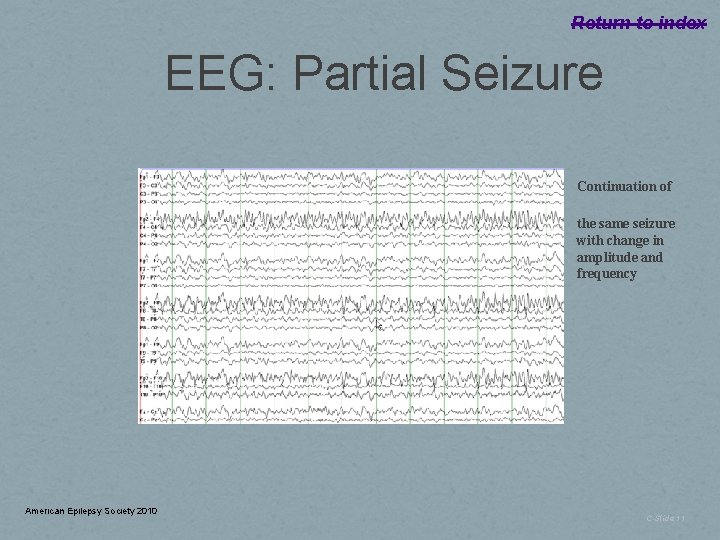
Return to index EEG: Partial Seizure Continuation of the same seizure with change in amplitude and frequency American Epilepsy Society 2010 C-Slide 11
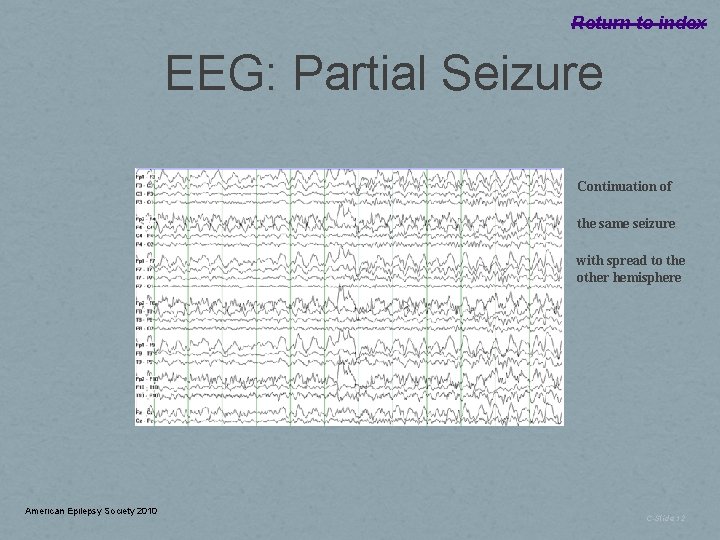
Return to index EEG: Partial Seizure Continuation of the same seizure with spread to the other hemisphere American Epilepsy Society 2010 C-Slide 12
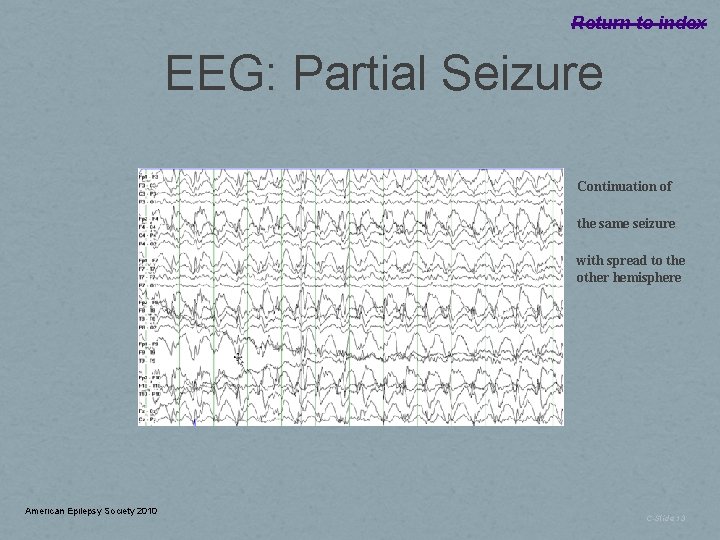
Return to index EEG: Partial Seizure Continuation of the same seizure with spread to the other hemisphere American Epilepsy Society 2010 C-Slide 13
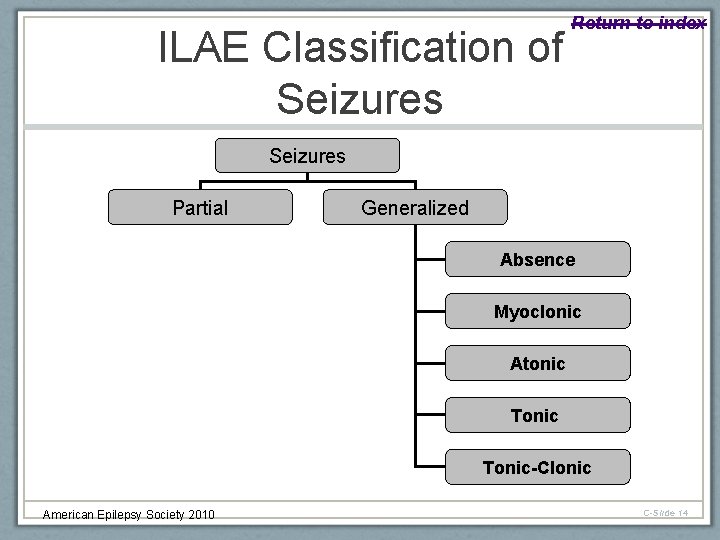
Return to index ILAE Classification of Seizures Partial Generalized Absence Myoclonic Atonic Tonic-Clonic American Epilepsy Society 2010 C-Slide 14
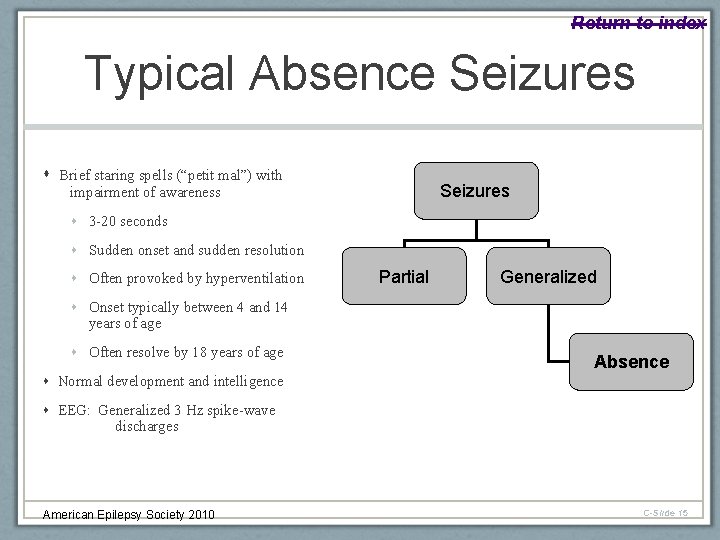
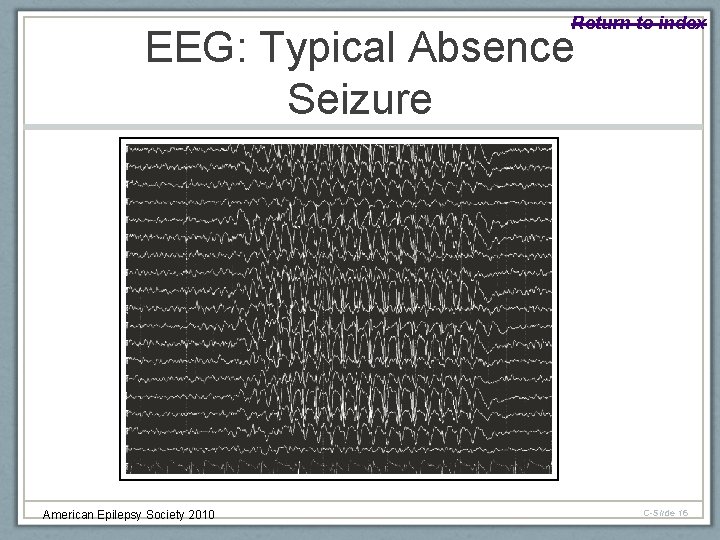
Return to index Typical Absence Seizures Brief staring spells (“petit mal”) with Seizures impairment of awareness 3 -20 seconds Sudden onset and sudden resolution Often provoked by hyperventilation Partial Generalized Onset typically between 4 and 14 years of age Often resolve by 18 years of age Absence Normal development and intelligence EEG: Generalized 3 Hz spike-wave discharges American Epilepsy Society 2010 C-Slide 15
Return to index EEG: Typical Absence Seizure American Epilepsy Society 2010 C-Slide 16
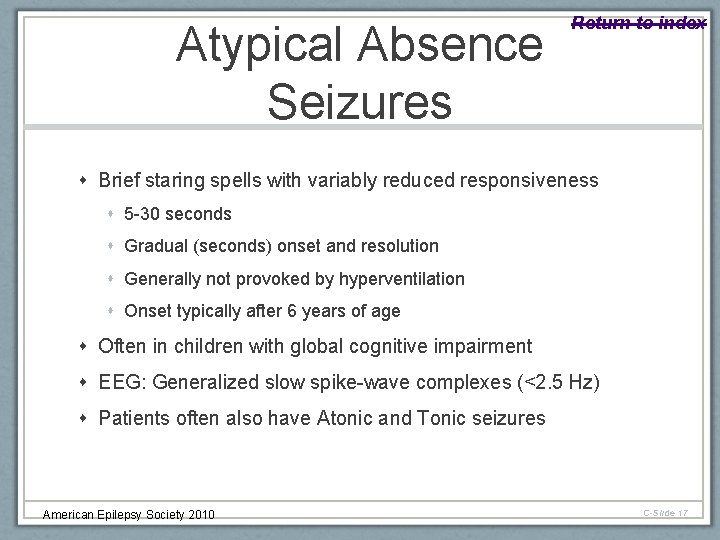
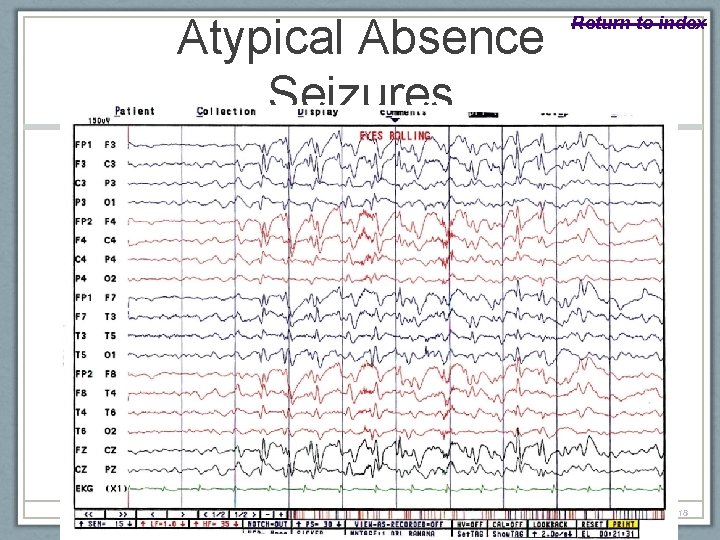
Atypical Absence Seizures Return to index Brief staring spells with variably reduced responsiveness 5 -30 seconds Gradual (seconds) onset and resolution Generally not provoked by hyperventilation Onset typically after 6 years of age Often in children with global cognitive impairment EEG: Generalized slow spike-wave complexes (<2. 5 Hz) Patients often also have Atonic and Tonic seizures American Epilepsy Society 2010 C-Slide 17
Atypical Absence Seizures American Epilepsy Society 2010 Return to index C-Slide 18
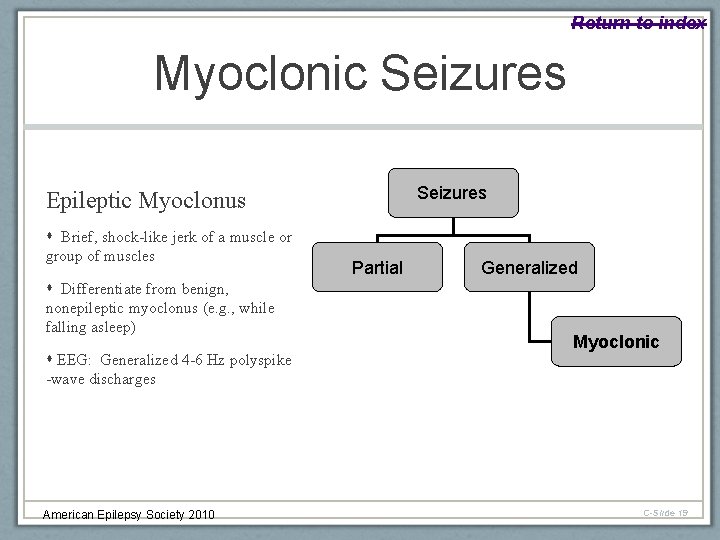
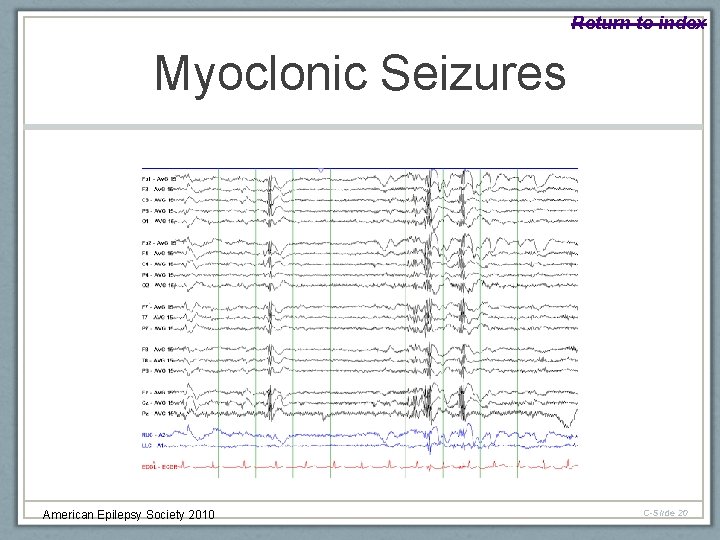
Return to index Myoclonic Seizures Epileptic Myoclonus Brief, shock-like jerk of a muscle or group of muscles Differentiate from benign, nonepileptic myoclonus (e. g. , while falling asleep) EEG: Generalized 4 -6 Hz polyspike -wave discharges American Epilepsy Society 2010 Partial Generalized Myoclonic C-Slide 19
Return to index Myoclonic Seizures American Epilepsy Society 2010 C-Slide 20
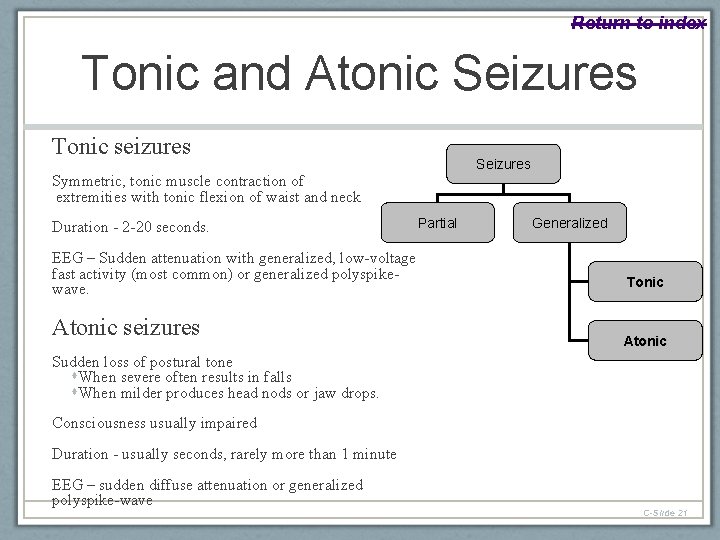
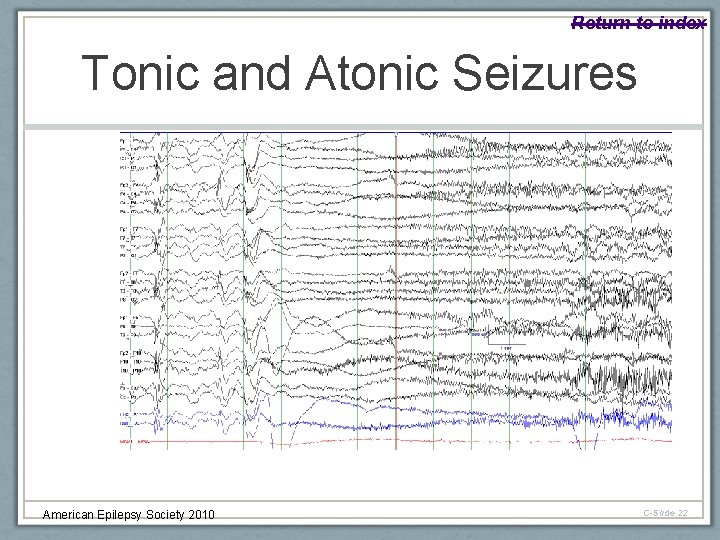
Return to index Tonic and Atonic Seizures Tonic seizures Symmetric, tonic muscle contraction of extremities with tonic flexion of waist and neck Duration - 2 -20 seconds. EEG – Sudden attenuation with generalized, low-voltage fast activity (most common) or generalized polyspikewave. Atonic seizures Partial Generalized Tonic Atonic Sudden loss of postural tone When severe often results in falls When milder produces head nods or jaw drops. Consciousness usually impaired Duration - usually seconds, rarely more than 1 minute EEG – sudden diffuse attenuation or generalized polyspike-wave American Epilepsy Society 2010 C-Slide 21
Return to index Tonic and Atonic Seizures American Epilepsy Society 2010 C-Slide 22
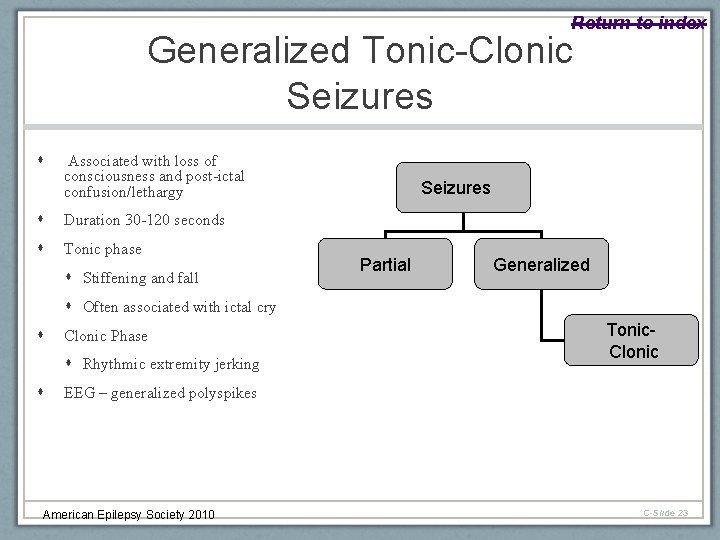
Return to index Generalized Tonic-Clonic Seizures Associated with loss of consciousness and post-ictal confusion/lethargy Duration 30 -120 seconds Tonic phase Stiffening and fall Seizures Partial Generalized Often associated with ictal cry Clonic Phase Rhythmic extremity jerking Tonic Clonic EEG – generalized polyspikes American Epilepsy Society 2010 C-Slide 23
Return to index Epilepsy Syndromes Epilepsy Syndrome Grouping of patients that share similar: • • • American Epilepsy Society 2010 Seizure type(s) Age of onset Natural history/Prognosis EEG patterns Genetics Response to treatment American Epilepsy Society 2010 C-Slide 24
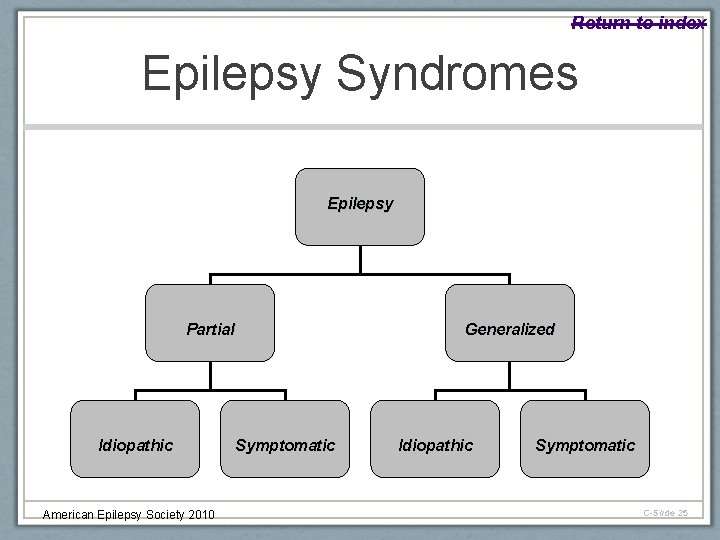
Return to index Epilepsy Syndromes Epilepsy Partial Idiopathic American Epilepsy Society 2010 Generalized Symptomatic Idiopathic Symptomatic C-Slide 25
Return to index Etiology of Seizures and Epilepsy Infancy and childhood • Prenatal or birth injury • Inborn error of metabolism • Congenital malformation Childhood and adolescence • Idiopathic/genetic syndrome • CNS infection • Trauma American Epilepsy Society 2010 C-Slide 26
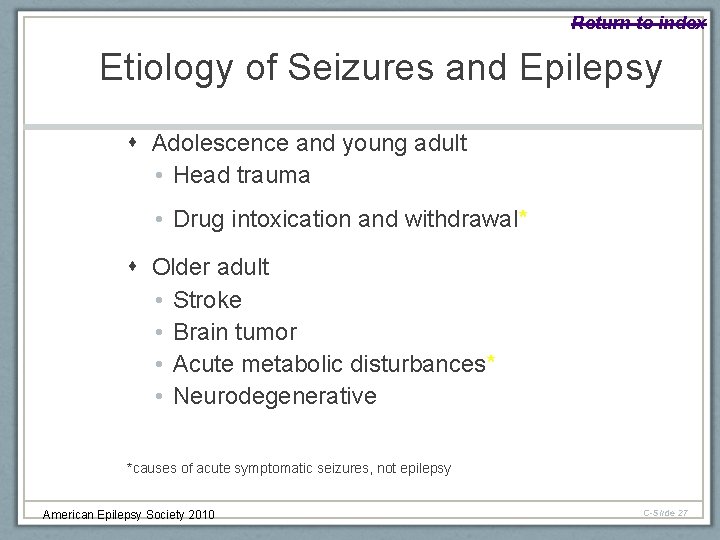
Return to index Etiology of Seizures and Epilepsy Adolescence and young adult • Head trauma • Drug intoxication and withdrawal* Older adult • Stroke • Brain tumor • Acute metabolic disturbances* • Neurodegenerative *causes of acute symptomatic seizures, not epilepsy American Epilepsy Society 2010 C-Slide 27
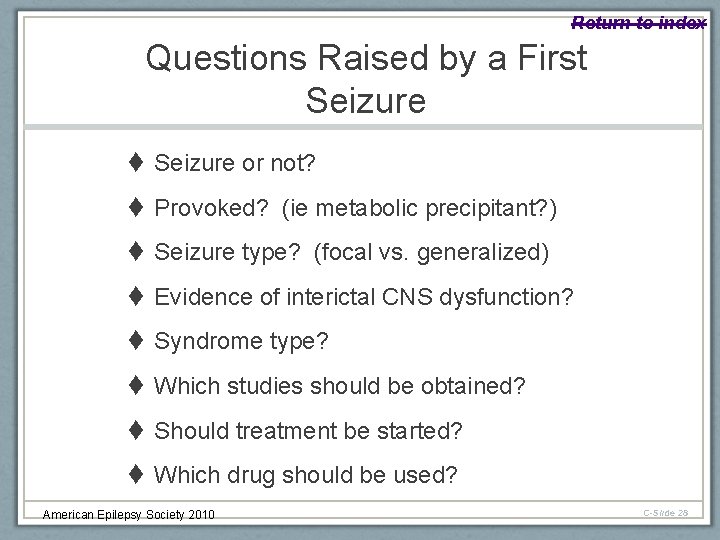
Return to index Questions Raised by a First Seizure or not? Provoked? (ie metabolic precipitant? ) Seizure type? (focal vs. generalized) Evidence of interictal CNS dysfunction? Syndrome type? Which studies should be obtained? Should treatment be started? Which drug should be used? American Epilepsy Society 2010 C-Slide 28
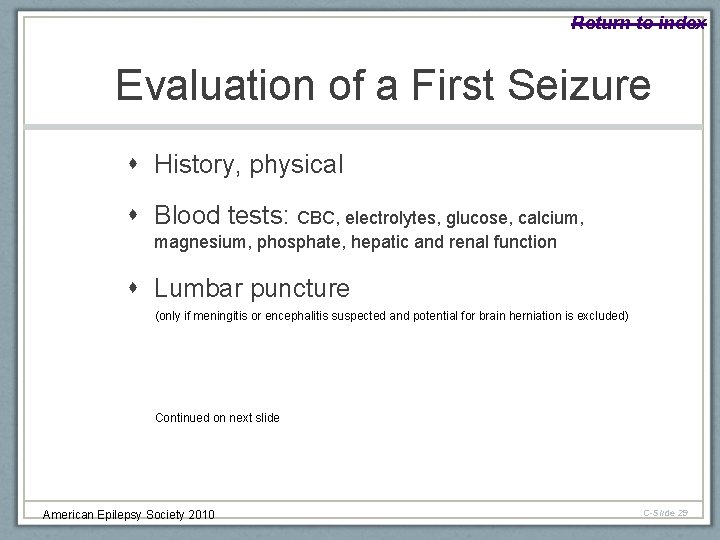
Return to index Evaluation of a First Seizure History, physical Blood tests: CBC, electrolytes, glucose, calcium, magnesium, phosphate, hepatic and renal function Lumbar puncture (only if meningitis or encephalitis suspected and potential for brain herniation is excluded) Continued on next slide American Epilepsy Society 2010 C-Slide 29
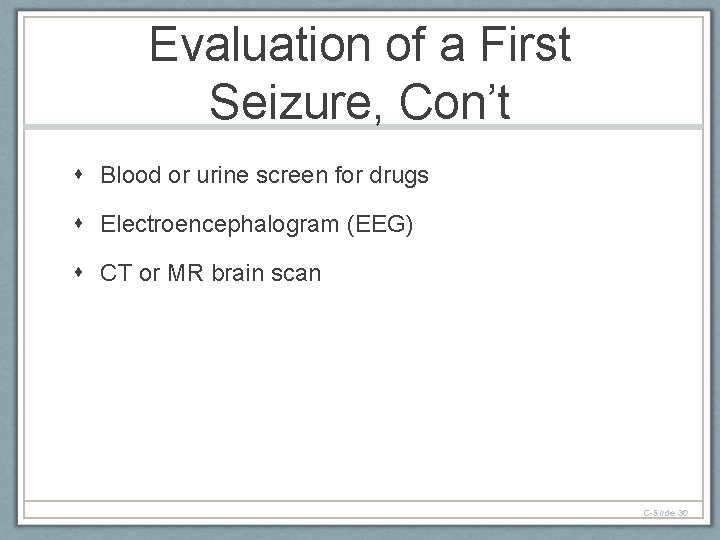
Evaluation of a First Seizure, Con’t Blood or urine screen for drugs Electroencephalogram (EEG) CT or MR brain scan American Epilepsy Society 2010 C-Slide 30
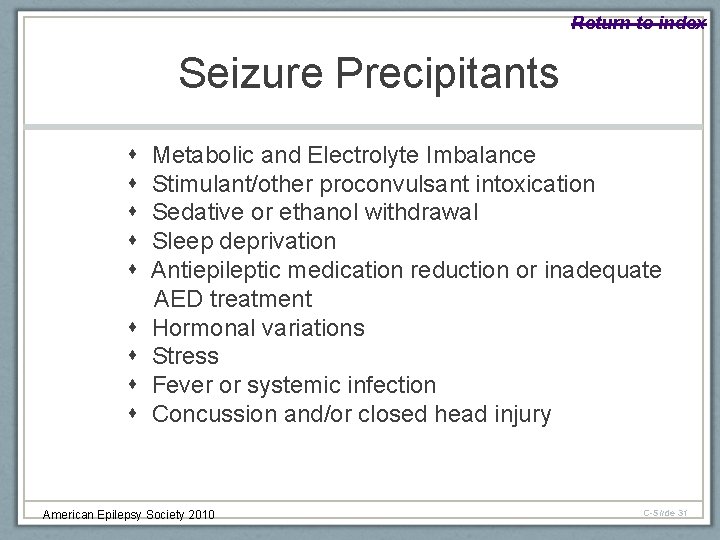
Return to index Seizure Precipitants Metabolic and Electrolyte Imbalance Stimulant/other proconvulsant intoxication Sedative or ethanol withdrawal Sleep deprivation Antiepileptic medication reduction or inadequate AED treatment Hormonal variations Stress Fever or systemic infection Concussion and/or closed head injury American Epilepsy Society 2010 C-Slide 31
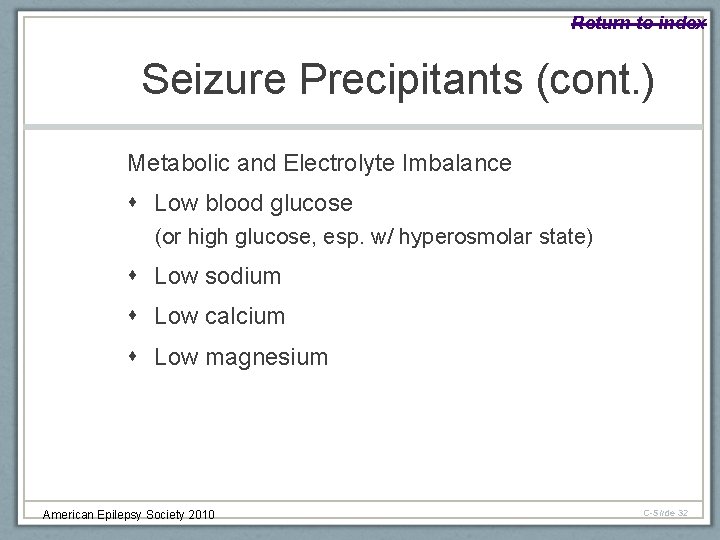
Return to index Seizure Precipitants (cont. ) Metabolic and Electrolyte Imbalance Low blood glucose (or high glucose, esp. w/ hyperosmolar state) Low sodium Low calcium Low magnesium American Epilepsy Society 2010 C-Slide 32
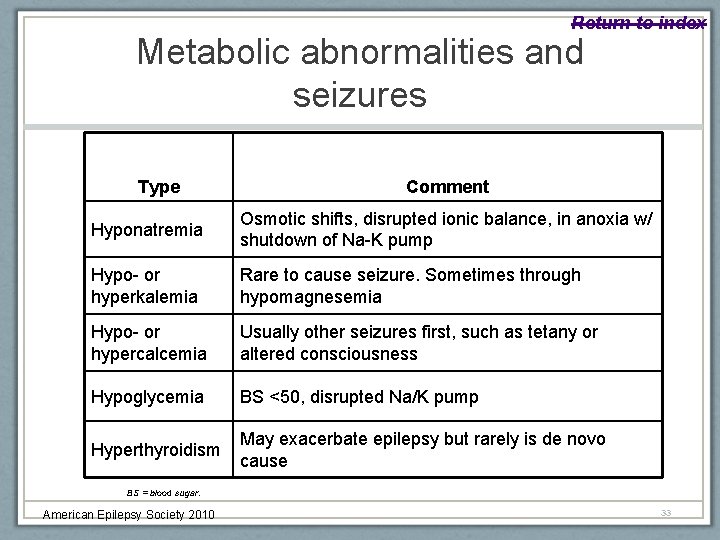
Return to index Metabolic abnormalities and seizures Type Comment Hyponatremia Osmotic shifts, disrupted ionic balance, in anoxia w/ shutdown of Na-K pump Hypo- or hyperkalemia Rare to cause seizure. Sometimes through hypomagnesemia Hypo- or hypercalcemia Usually other seizures first, such as tetany or altered consciousness Hypoglycemia BS <50, disrupted Na/K pump Hyperthyroidism May exacerbate epilepsy but rarely is de novo cause BS = blood sugar. American Epilepsy Society 2010 33
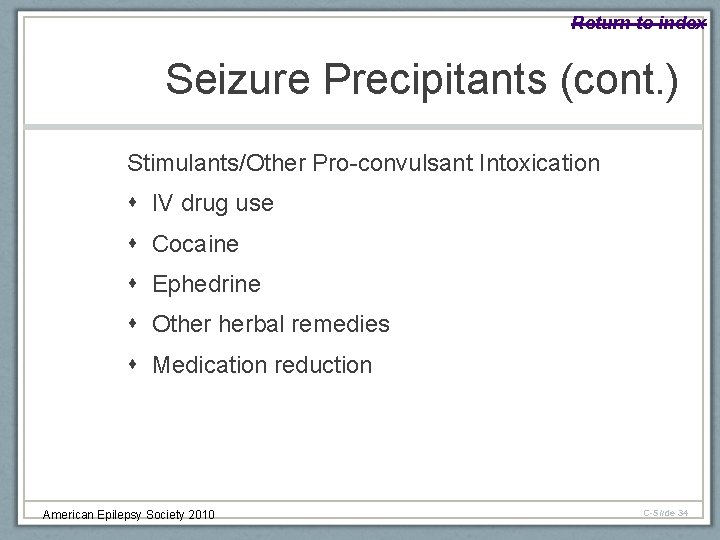
Return to index Seizure Precipitants (cont. ) Stimulants/Other Pro-convulsant Intoxication IV drug use Cocaine Ephedrine Other herbal remedies Medication reduction American Epilepsy Society 2010 C-Slide 34
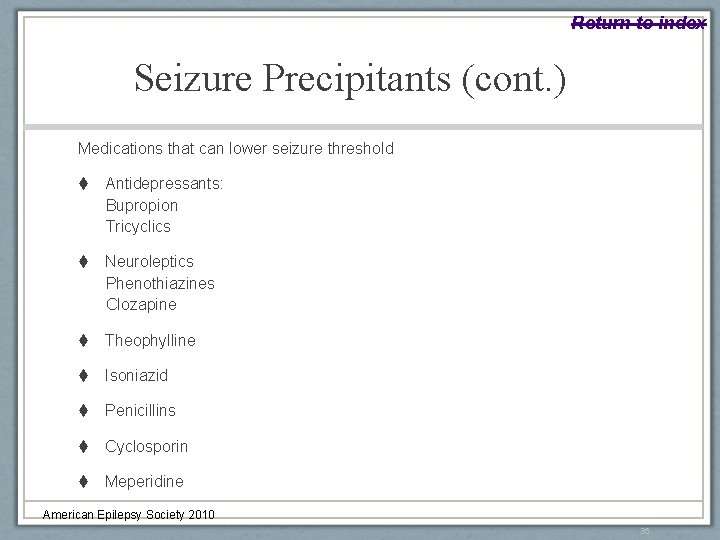
Return to index Seizure Precipitants (cont. ) Medications that can lower seizure threshold Antidepressants: Bupropion Tricyclics Neuroleptics Phenothiazines Clozapine Theophylline Isoniazid Penicillins Cyclosporin Meperidine American Epilepsy Society 2010 35
Return to index EEG Abnormalities Background abnormalities: significant asymmetries and/or degree of slowing inappropriate for clinical state or age Interictal abnormalities associated with seizures and epilepsy • Spikes • Sharp waves • Spike-wave complexes May be focal, lateralized, generalized American Epilepsy Society 2010 C-Slide 36
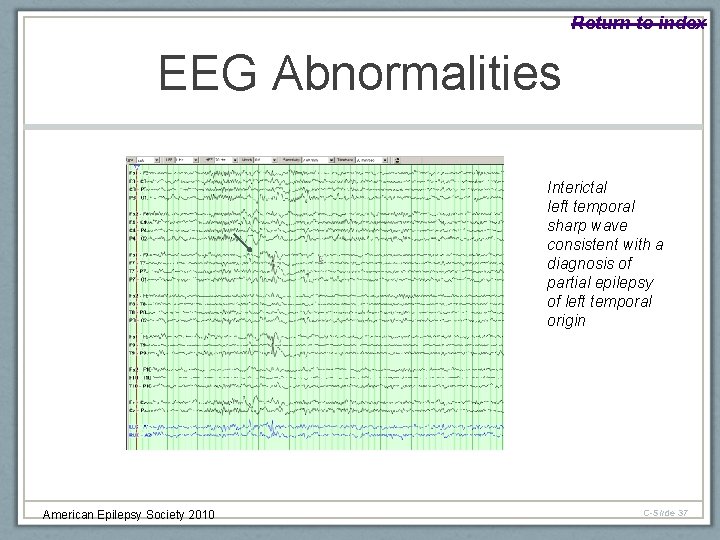
Return to index EEG Abnormalities Interictal left temporal sharp wave consistent with a diagnosis of partial epilepsy of left temporal origin American Epilepsy Society 2010 C-Slide 37
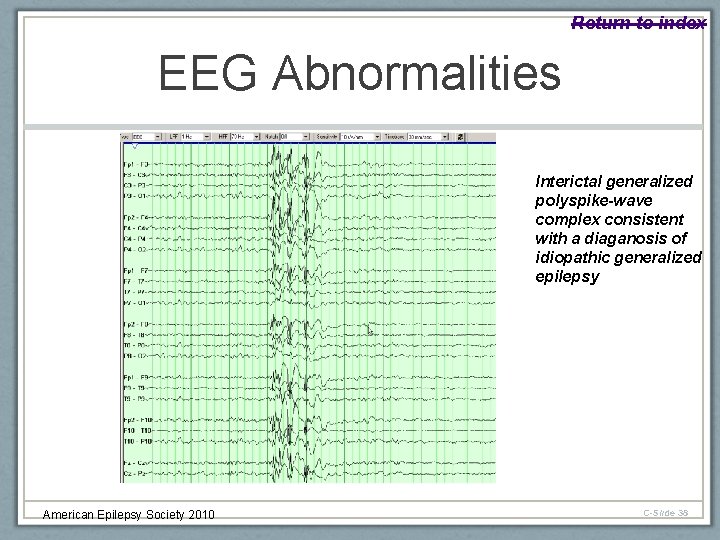
Return to index EEG Abnormalities Interictal generalized polyspike-wave complex consistent with a diaganosis of idiopathic generalized epilepsy American Epilepsy Society 2010 C-Slide 38
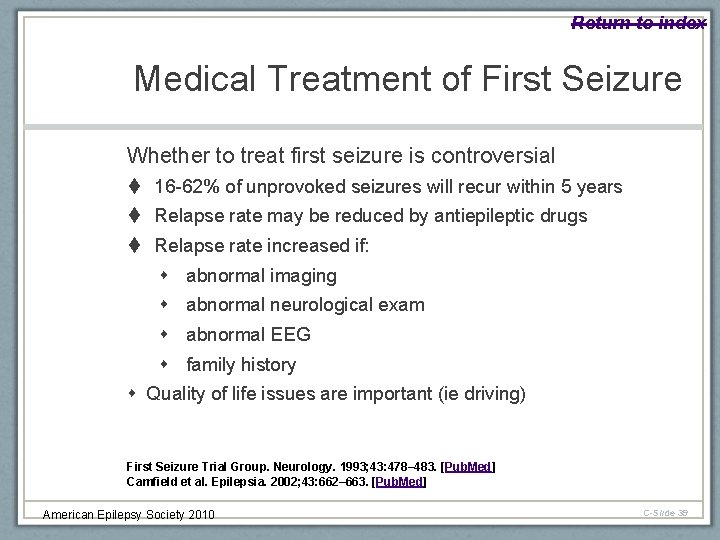
Return to index Medical Treatment of First Seizure Whether to treat first seizure is controversial 16 -62% of unprovoked seizures will recur within 5 years Relapse rate may be reduced by antiepileptic drugs Relapse rate increased if: abnormal imaging abnormal neurological exam abnormal EEG family history Quality of life issues are important (ie driving) First Seizure Trial Group. Neurology. 1993; 43: 478– 483. [Pub. Med] Camfield et al. Epilepsia. 2002; 43: 662– 663. [Pub. Med] American Epilepsy Society 2010 C-Slide 39
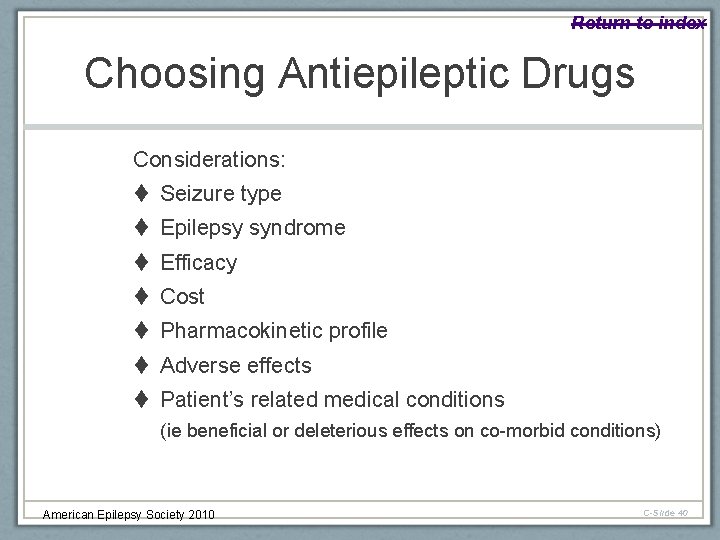
Return to index Choosing Antiepileptic Drugs Considerations: Seizure type Epilepsy syndrome Efficacy Cost Pharmacokinetic profile Adverse effects Patient’s related medical conditions (ie beneficial or deleterious effects on co-morbid conditions) American Epilepsy Society 2010 C-Slide 40
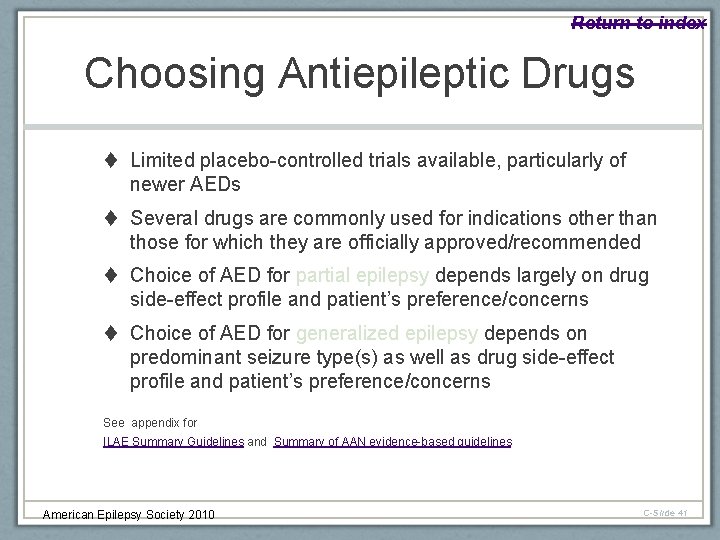
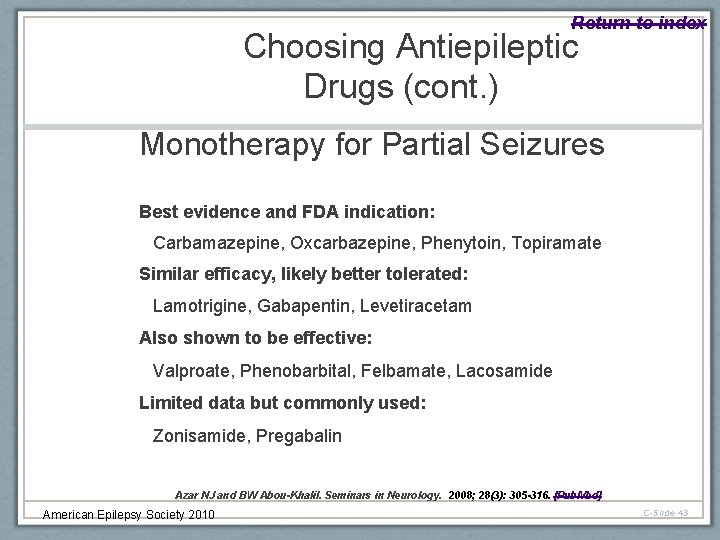
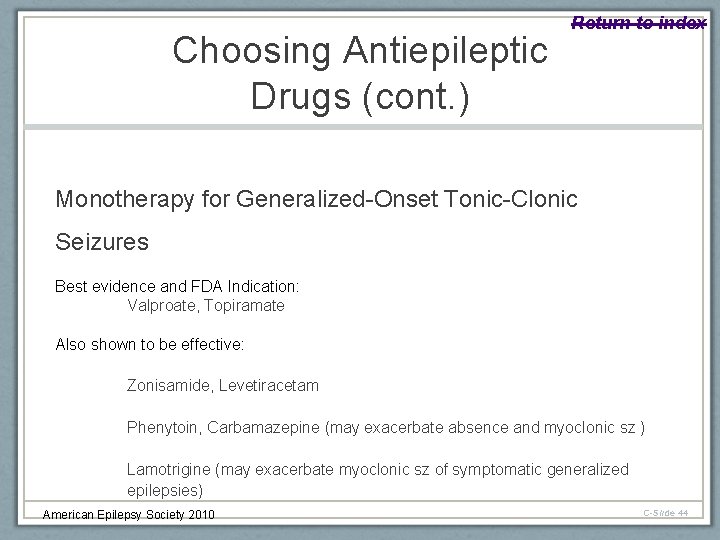
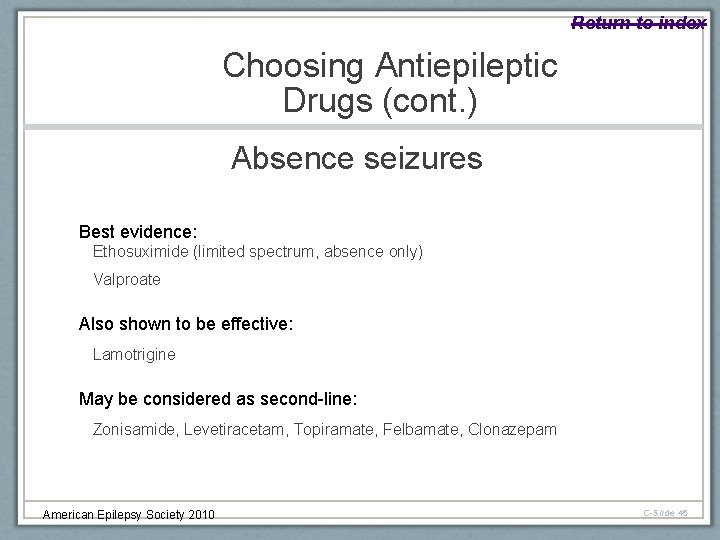
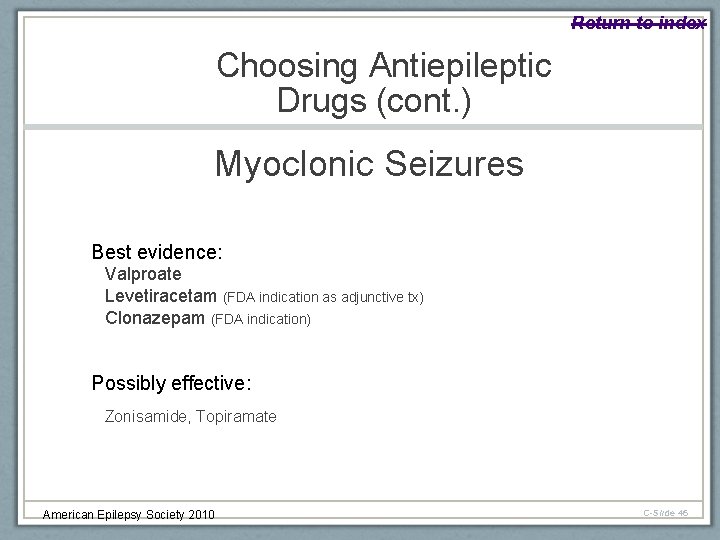
Return to index Choosing Antiepileptic Drugs Limited placebo-controlled trials available, particularly of newer AEDs Several drugs are commonly used for indications other than those for which they are officially approved/recommended Choice of AED for partial epilepsy depends largely on drug side-effect profile and patient’s preference/concerns Choice of AED for generalized epilepsy depends on predominant seizure type(s) as well as drug side-effect profile and patient’s preference/concerns See appendix for ILAE Summary Guidelines and Summary of AAN evidence-based guidelines American Epilepsy Society 2010 C-Slide 41
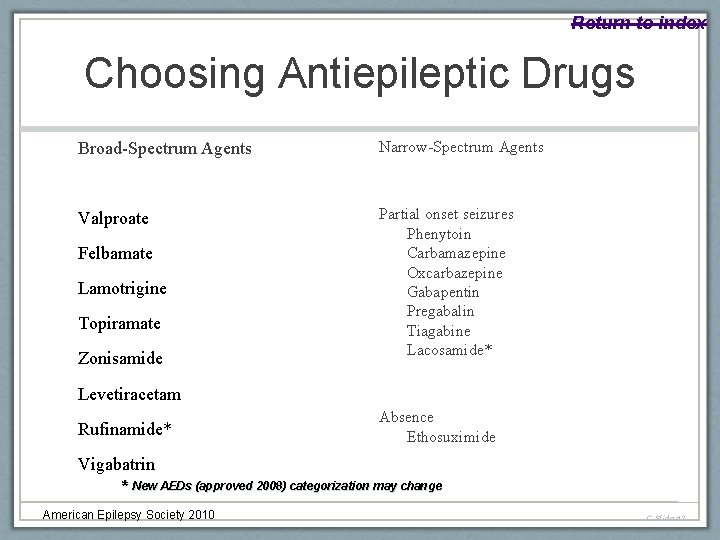
Return to index Choosing Antiepileptic Drugs Broad-Spectrum Agents Narrow-Spectrum Agents Valproate Partial onset seizures Phenytoin Carbamazepine Oxcarbazepine Gabapentin Pregabalin Tiagabine Lacosamide* Felbamate Lamotrigine Topiramate Zonisamide Levetiracetam Rufinamide* Absence Ethosuximide Vigabatrin * New AEDs (approved 2008) categorization may change American Epilepsy Society 2010 C-Slide 42
Return to index Choosing Antiepileptic Drugs (cont. ) Monotherapy for Partial Seizures Best evidence and FDA indication: Carbamazepine, Oxcarbazepine, Phenytoin, Topiramate Similar efficacy, likely better tolerated: Lamotrigine, Gabapentin, Levetiracetam Also shown to be effective: Valproate, Phenobarbital, Felbamate, Lacosamide Limited data but commonly used: Zonisamide, Pregabalin Azar NJ and BW Abou-Khalil. Seminars in Neurology. 2008; 28(3): 305 -316. [Pub. Med] American Epilepsy Society 2010 C-Slide 43
Choosing Antiepileptic Drugs (cont. ) Return to index Monotherapy for Generalized-Onset Tonic-Clonic Seizures Best evidence and FDA Indication: Valproate, Topiramate Also shown to be effective: Zonisamide, Levetiracetam Phenytoin, Carbamazepine (may exacerbate absence and myoclonic sz ) Lamotrigine (may exacerbate myoclonic sz of symptomatic generalized epilepsies) American Epilepsy Society 2010 C-Slide 44
Return to index Choosing Antiepileptic Drugs (cont. ) Absence seizures Best evidence: Ethosuximide (limited spectrum, absence only) Valproate Also shown to be effective: Lamotrigine May be considered as second-line: Zonisamide, Levetiracetam, Topiramate, Felbamate, Clonazepam American Epilepsy Society 2010 C-Slide 45
Return to index Choosing Antiepileptic Drugs (cont. ) Myoclonic Seizures Best evidence: Valproate Levetiracetam (FDA indication as adjunctive tx) Clonazepam (FDA indication) Possibly effective: Zonisamide, Topiramate American Epilepsy Society 2010 C-Slide 46
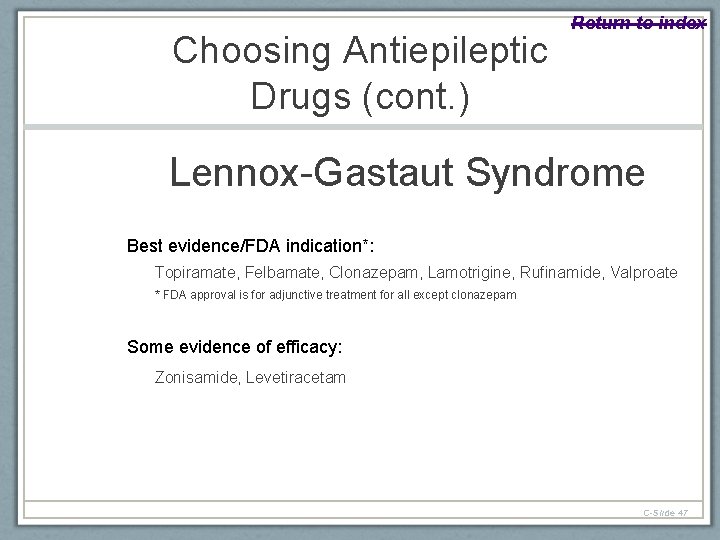
Choosing Antiepileptic Drugs (cont. ) Return to index Lennox-Gastaut Syndrome Best evidence/FDA indication*: Topiramate, Felbamate, Clonazepam, Lamotrigine, Rufinamide, Valproate * FDA approval is for adjunctive treatment for all except clonazepam Some evidence of efficacy: Zonisamide, Levetiracetam American Epilepsy Society 2010 C-Slide 47
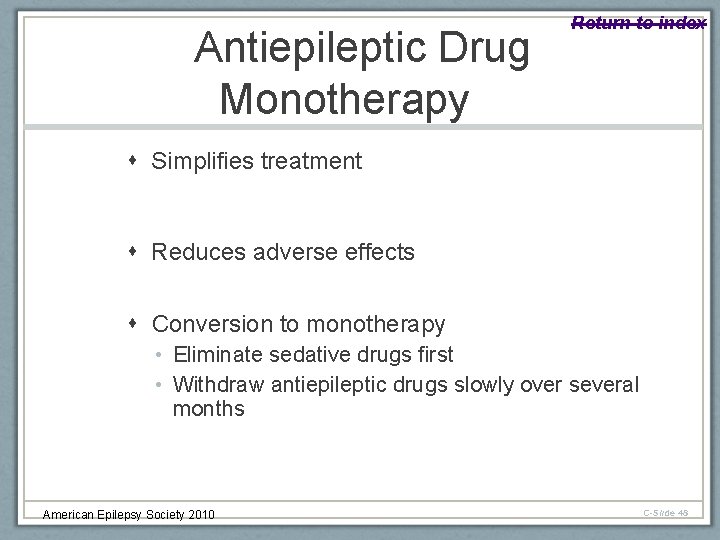
Antiepileptic Drug Monotherapy Return to index Simplifies treatment Reduces adverse effects Conversion to monotherapy • Eliminate sedative drugs first • Withdraw antiepileptic drugs slowly over several months American Epilepsy Society 2010 C-Slide 48
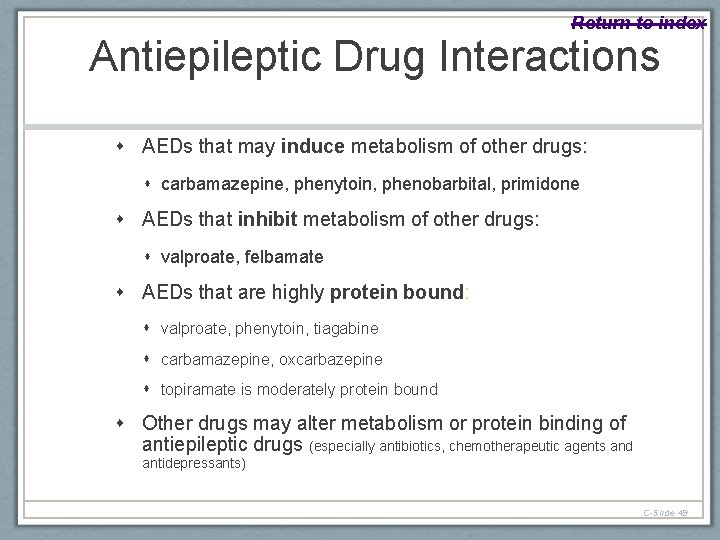
Return to index Antiepileptic Drug Interactions AEDs that may induce metabolism of other drugs: carbamazepine, phenytoin, phenobarbital, primidone AEDs that inhibit metabolism of other drugs: valproate, felbamate AEDs that are highly protein bound: valproate, phenytoin, tiagabine carbamazepine, oxcarbazepine topiramate is moderately protein bound Other drugs may alter metabolism or protein binding of antiepileptic drugs (especially antibiotics, chemotherapeutic agents and antidepressants) American Epilepsy Society 2010 C-Slide 49
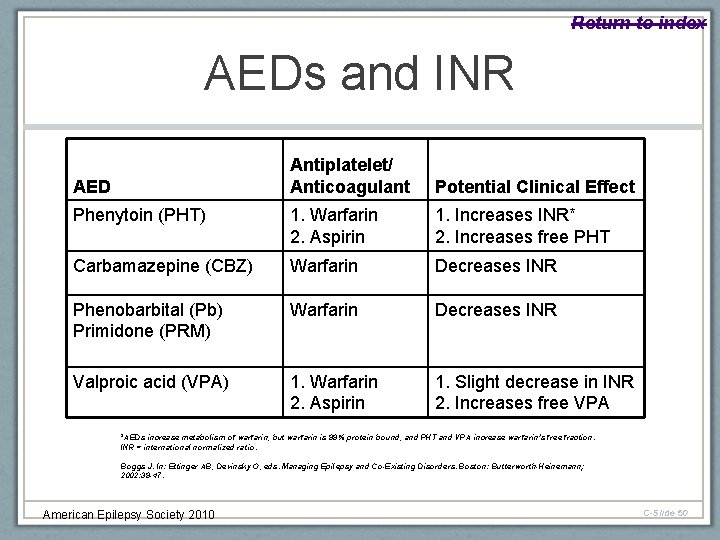
Return to index AEDs and INR Antiplatelet/ Anticoagulant Potential Clinical Effect Phenytoin (PHT) 1. Warfarin 2. Aspirin 1. Increases INR* 2. Increases free PHT Carbamazepine (CBZ) Warfarin Decreases INR Phenobarbital (Pb) Primidone (PRM) Warfarin Decreases INR Valproic acid (VPA) 1. Warfarin 2. Aspirin 1. Slight decrease in INR 2. Increases free VPA AED *AEDs increase metabolism of warfarin, but warfarin is 99% protein bound, and PHT and VPA increase warfarin’s free fraction. INR = international normalized ratio. Boggs J. In: Ettinger AB, Devinsky O, eds. Managing Epilepsy and Co-Existing Disorders. Boston: Butterworth-Heinemann; 2002: 39 -47. American Epilepsy Society 2010 C-Slide 50
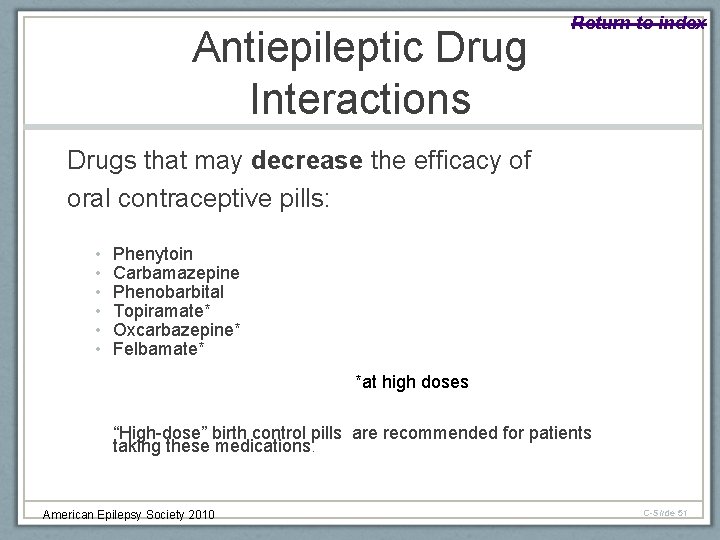
Antiepileptic Drug Interactions Return to index Drugs that may decrease the efficacy of oral contraceptive pills: • • • Phenytoin Carbamazepine Phenobarbital Topiramate* Oxcarbazepine* Felbamate* *at high doses “High-dose” birth control pills are recommended for patients taking these medications. American Epilepsy Society 2010 C-Slide 51
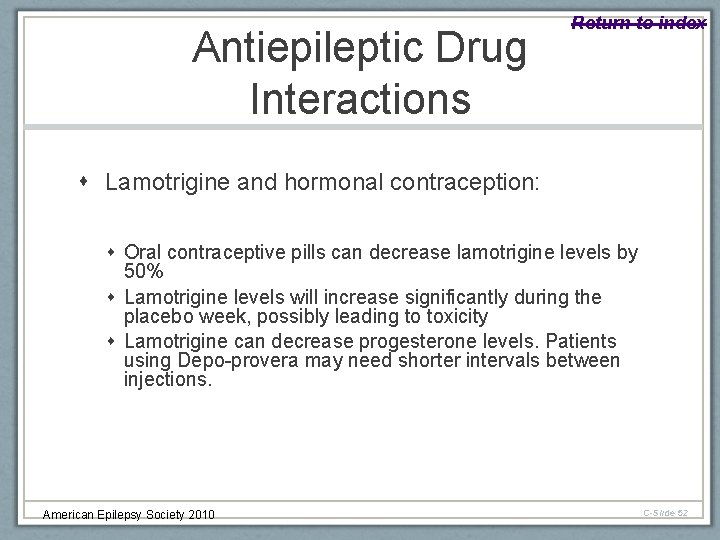
Antiepileptic Drug Interactions Return to index Lamotrigine and hormonal contraception: Oral contraceptive pills can decrease lamotrigine levels by 50% Lamotrigine levels will increase significantly during the placebo week, possibly leading to toxicity Lamotrigine can decrease progesterone levels. Patients using Depo-provera may need shorter intervals between injections. American Epilepsy Society 2010 C-Slide 52
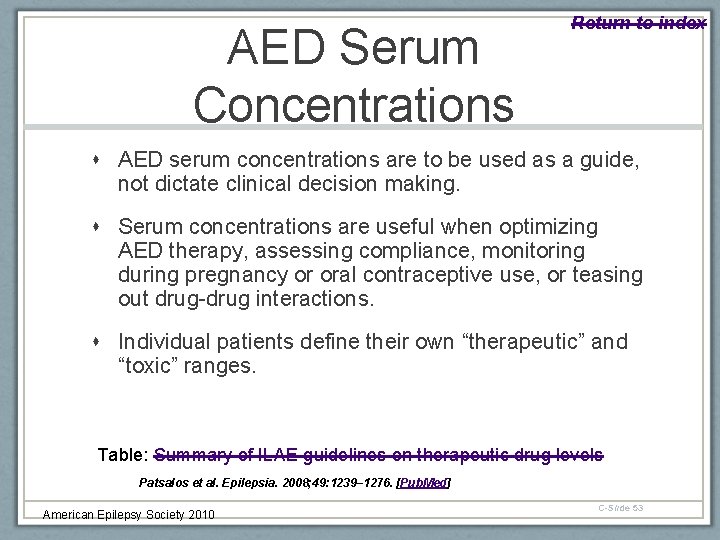
AED Serum Concentrations Return to index AED serum concentrations are to be used as a guide, not dictate clinical decision making. Serum concentrations are useful when optimizing AED therapy, assessing compliance, monitoring during pregnancy or oral contraceptive use, or teasing out drug-drug interactions. Individual patients define their own “therapeutic” and “toxic” ranges. Table: Summary of ILAE guidelines on therapeutic drug levels Patsalos et al. Epilepsia. 2008; 49: 1239– 1276. [Pub. Med] American Epilepsy Society 2010 C-Slide 53
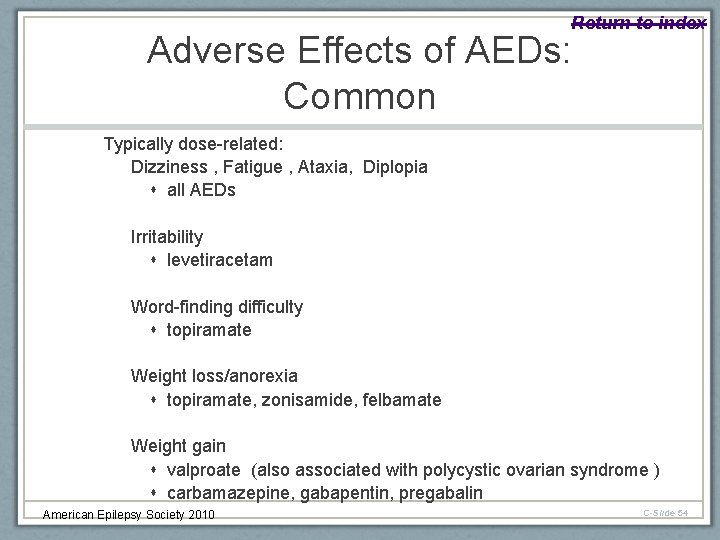
Return to index Adverse Effects of AEDs: Common Typically dose-related: Dizziness , Fatigue , Ataxia, Diplopia all AEDs Irritability levetiracetam Word-finding difficulty topiramate Weight loss/anorexia topiramate, zonisamide, felbamate Weight gain valproate (also associated with polycystic ovarian syndrome ) carbamazepine, gabapentin, pregabalin American Epilepsy Society 2010 C-Slide 54
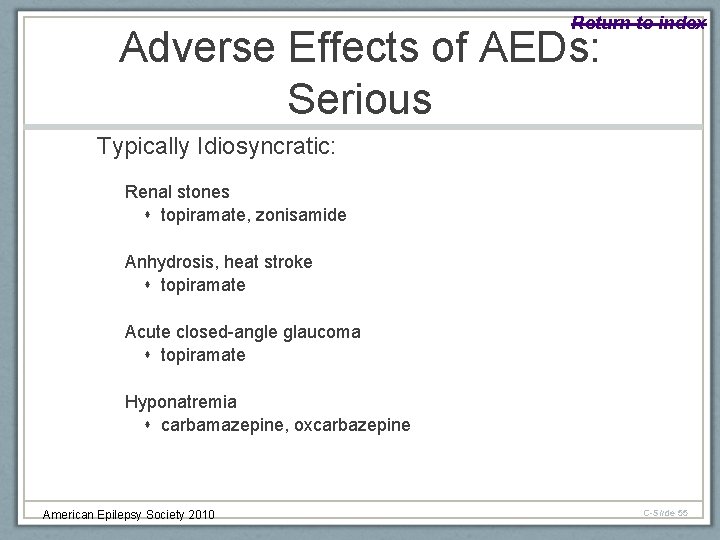
Return to index Adverse Effects of AEDs: Serious Typically Idiosyncratic: Renal stones topiramate, zonisamide Anhydrosis, heat stroke topiramate Acute closed-angle glaucoma topiramate Hyponatremia carbamazepine, oxcarbazepine American Epilepsy Society 2010 C-Slide 55
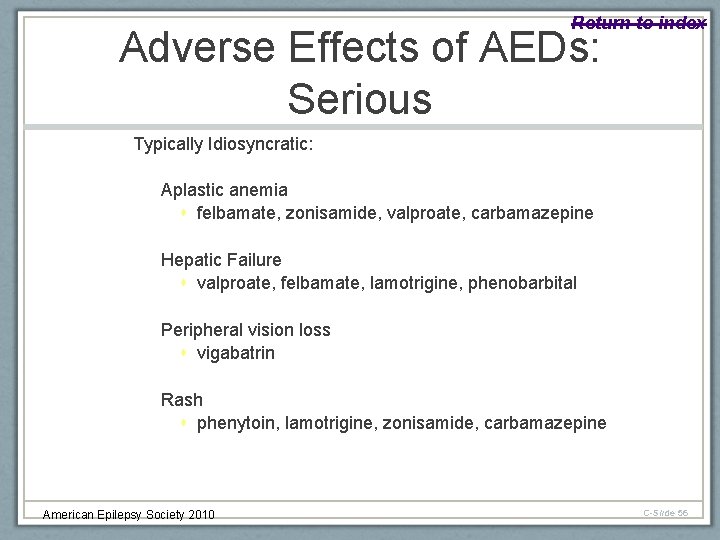
Return to index Adverse Effects of AEDs: Serious Typically Idiosyncratic: Aplastic anemia felbamate, zonisamide, valproate, carbamazepine Hepatic Failure valproate, felbamate, lamotrigine, phenobarbital Peripheral vision loss vigabatrin Rash phenytoin, lamotrigine, zonisamide, carbamazepine American Epilepsy Society 2010 C-Slide 56
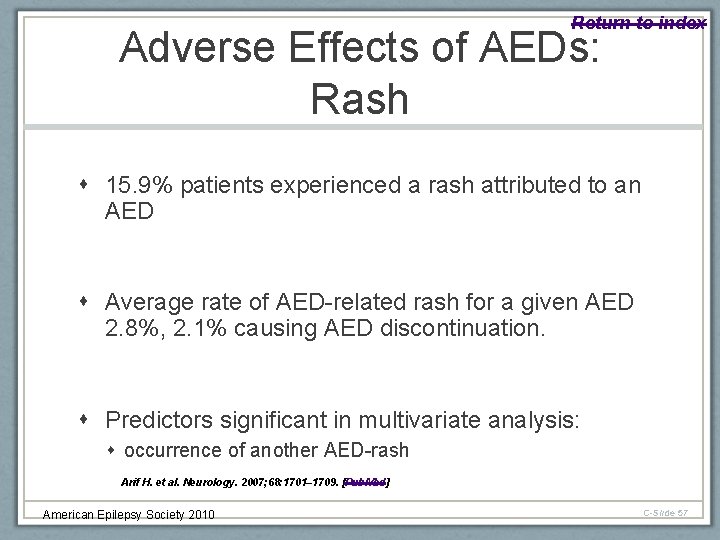
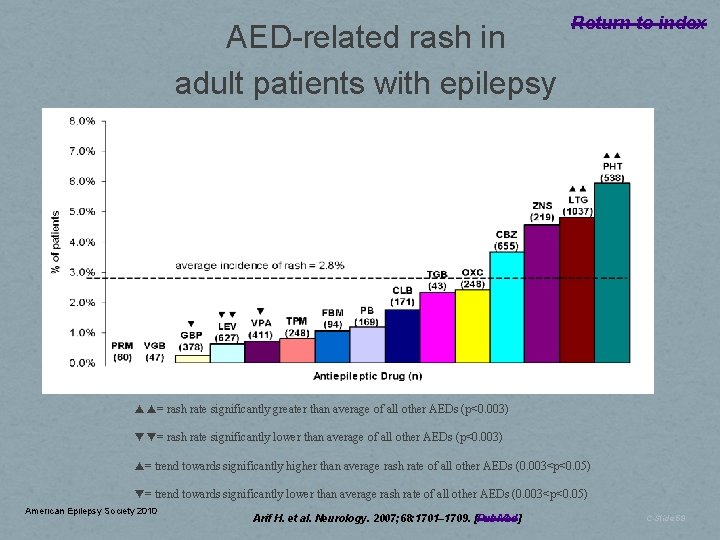
Return to index Adverse Effects of AEDs: Rash 15. 9% patients experienced a rash attributed to an AED Average rate of AED-related rash for a given AED 2. 8%, 2. 1% causing AED discontinuation. Predictors significant in multivariate analysis: occurrence of another AED-rash Arif H. et al. Neurology. 2007; 68: 1701– 1709. [Pub. Med] American Epilepsy Society 2010 C-Slide 57
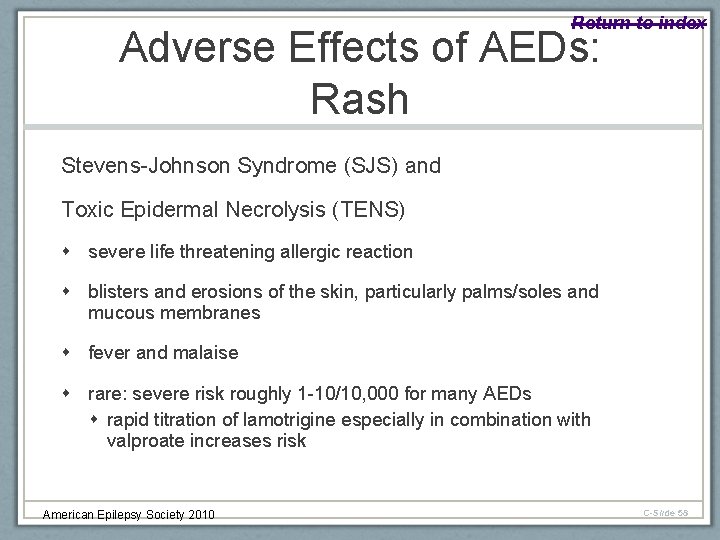
Return to index Adverse Effects of AEDs: Rash Stevens-Johnson Syndrome (SJS) and Toxic Epidermal Necrolysis (TENS) severe life threatening allergic reaction blisters and erosions of the skin, particularly palms/soles and mucous membranes fever and malaise rare: severe risk roughly 1 -10/10, 000 for many AEDs rapid titration of lamotrigine especially in combination with valproate increases risk American Epilepsy Society 2010 C-Slide 58
AED-related rash in adult patients with epilepsy Return to index ▲▲= rash rate significantly greater than average of all other AEDs (p<0. 003) ▼▼= rash rate significantly lower than average of all other AEDs (p<0. 003) ▲= trend towards significantly higher than average rash rate of all other AEDs (0. 003<p<0. 05) ▼= trend towards significantly lower than average rash rate of all other AEDs (0. 003<p<0. 05) American Epilepsy Society 2010 Arif H. et al. Neurology. 2007; 68: 1701– 1709. [Pub. Med] C-Slide 59
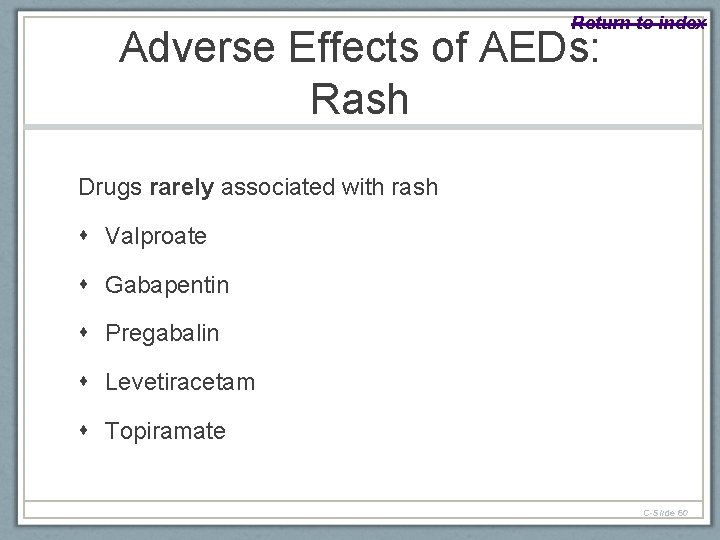
Return to index Adverse Effects of AEDs: Rash Drugs rarely associated with rash Valproate Gabapentin Pregabalin Levetiracetam Topiramate American Epilepsy Society 2010 C-Slide 60
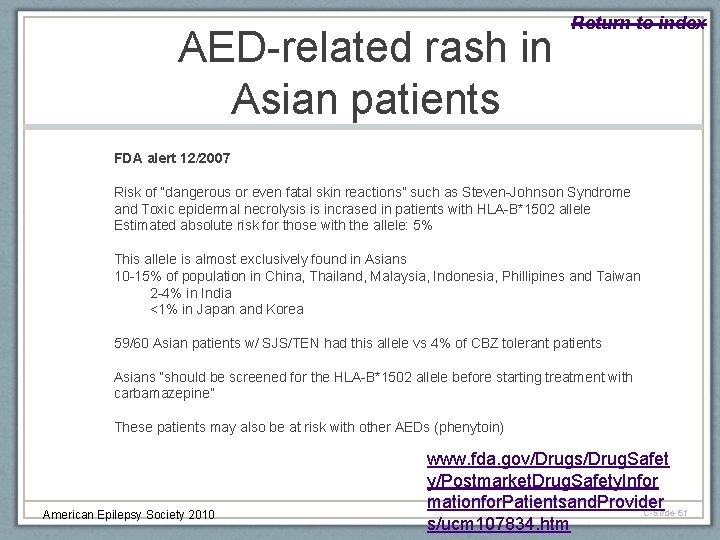
AED-related rash in Asian patients Return to index FDA alert 12/2007 Risk of “dangerous or even fatal skin reactions” such as Steven-Johnson Syndrome and Toxic epidermal necrolysis is incrased in patients with HLA-B*1502 allele Estimated absolute risk for those with the allele: 5% This allele is almost exclusively found in Asians 10 -15% of population in China, Thailand, Malaysia, Indonesia, Phillipines and Taiwan 2 -4% in India <1% in Japan and Korea 59/60 Asian patients w/ SJS/TEN had this allele vs 4% of CBZ tolerant patients Asians “should be screened for the HLA-B*1502 allele before starting treatment with carbamazepine” These patients may also be at risk with other AEDs (phenytoin) American Epilepsy Society 2010 www. fda. gov/Drugs/Drug. Safet y/Postmarket. Drug. Safety. Infor mationfor. Patientsand. Provider C-Slide 61 s/ucm 107834. htm
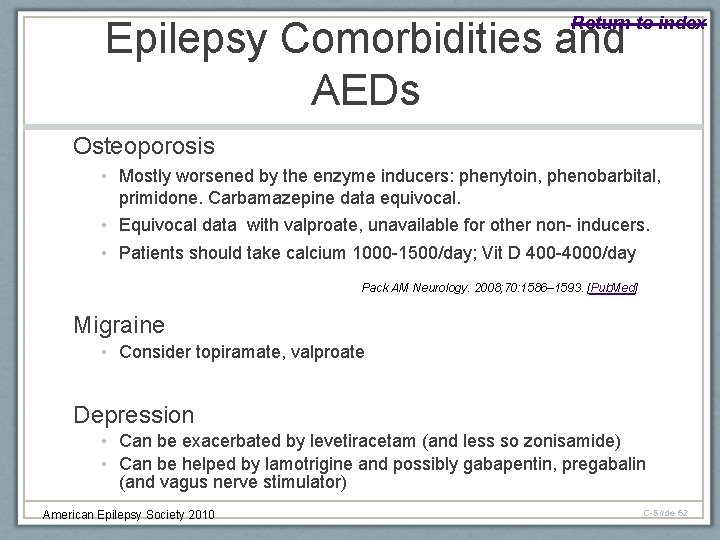
Return to index Epilepsy Comorbidities and AEDs Osteoporosis • Mostly worsened by the enzyme inducers: phenytoin, phenobarbital, primidone. Carbamazepine data equivocal. • Equivocal data with valproate, unavailable for other non- inducers. • Patients should take calcium 1000 -1500/day; Vit D 400 -4000/day Pack AM Neurology. 2008; 70: 1586– 1593. [Pub. Med] Migraine • Consider topiramate, valproate Depression • Can be exacerbated by levetiracetam (and less so zonisamide) • Can be helped by lamotrigine and possibly gabapentin, pregabalin (and vagus nerve stimulator) American Epilepsy Society 2010 C-Slide 62
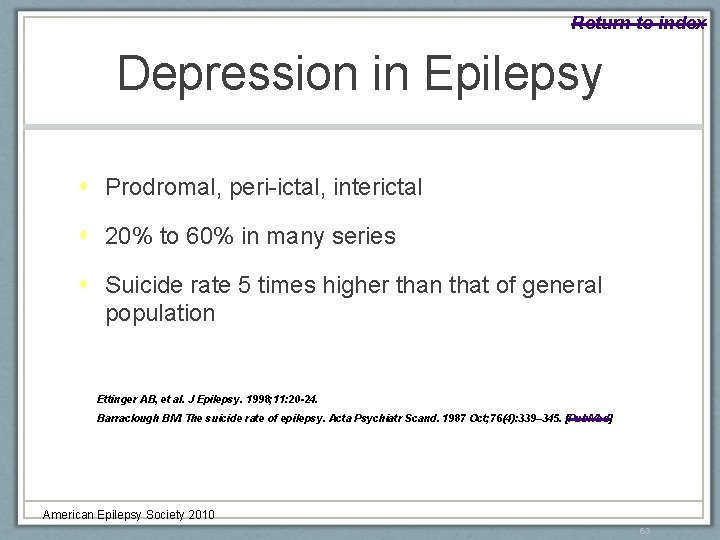
Return to index Depression in Epilepsy Prodromal, peri-ictal, interictal 20% to 60% in many series Suicide rate 5 times higher than that of general population Ettinger AB, et al. J Epilepsy. 1998; 11: 20 -24. Barraclough BM. The suicide rate of epilepsy. Acta Psychiatr Scand. 1987 Oct; 76(4): 339– 345. [Pub. Med] American Epilepsy Society 2010 63
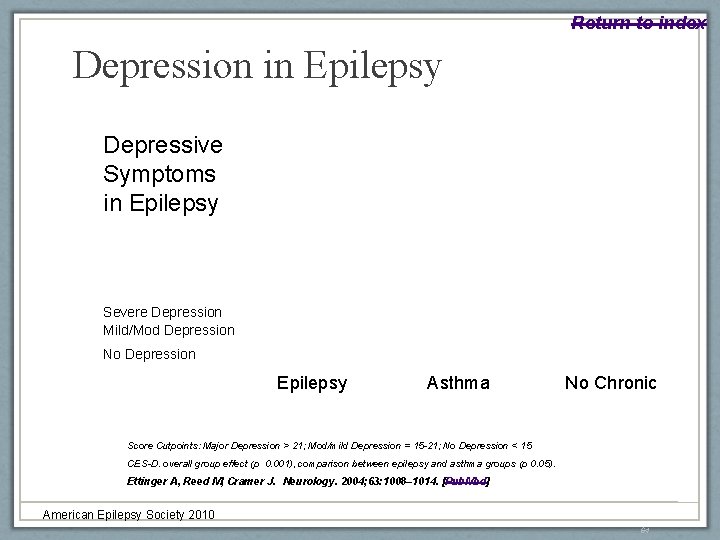
Return to index Depression in Epilepsy Depressive Symptoms in Epilepsy Severe Depression Mild/Mod Depression No Depression Epilepsy Asthma No Chronic Score Cutpoints: Major Depression > 21; Mod/mild Depression = 15 -21; No Depression < 15 CES-D. overall group effect (p 0. 001), comparison between epilepsy and asthma groups (p 0. 05). Ettinger A, Reed M, Cramer J. Neurology. 2004; 63: 1008– 1014. [Pub. Med] American Epilepsy Society 2010 64
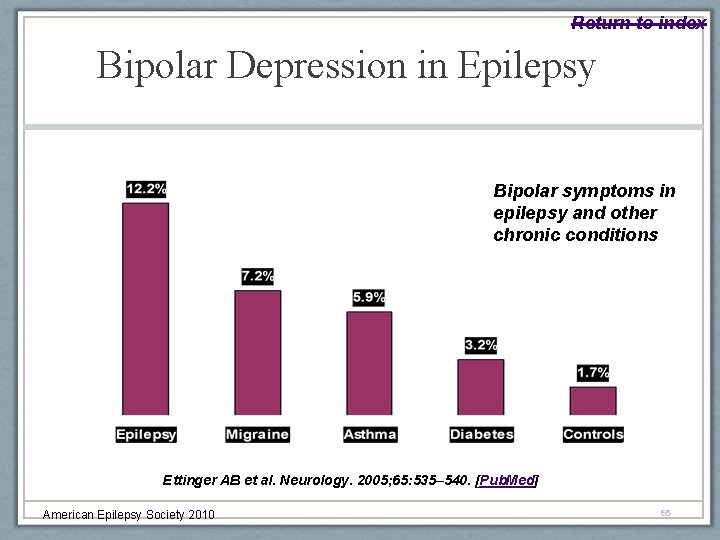
Return to index Bipolar Depression in Epilepsy Bipolar symptoms in epilepsy and other chronic conditions Ettinger AB et al. Neurology. 2005; 65: 535– 540. [Pub. Med] American Epilepsy Society 2010 65
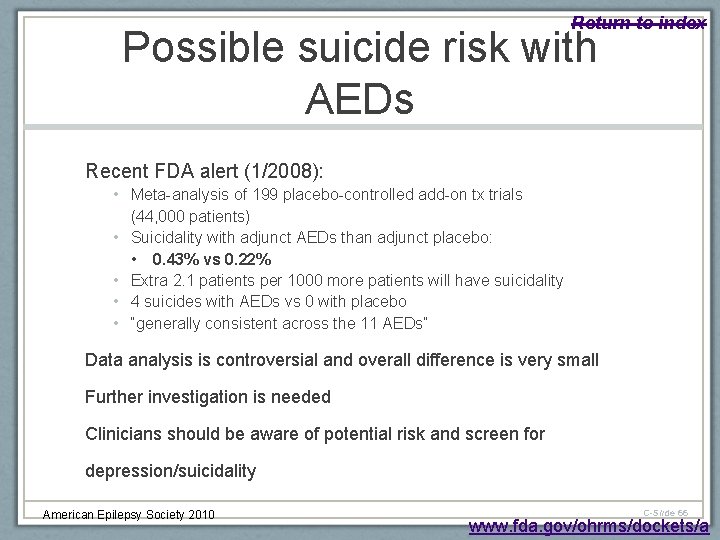
Return to index Possible suicide risk with AEDs Recent FDA alert (1/2008): • Meta-analysis of 199 placebo-controlled add-on tx trials (44, 000 patients) • Suicidality with adjunct AEDs than adjunct placebo: • 0. 43% vs 0. 22% • Extra 2. 1 patients per 1000 more patients will have suicidality • 4 suicides with AEDs vs 0 with placebo • “generally consistent across the 11 AEDs” Data analysis is controversial and overall difference is very small Further investigation is needed Clinicians should be aware of potential risk and screen for depression/suicidality American Epilepsy Society 2010 C-Slide 66 www. fda. gov/ohrms/dockets/a
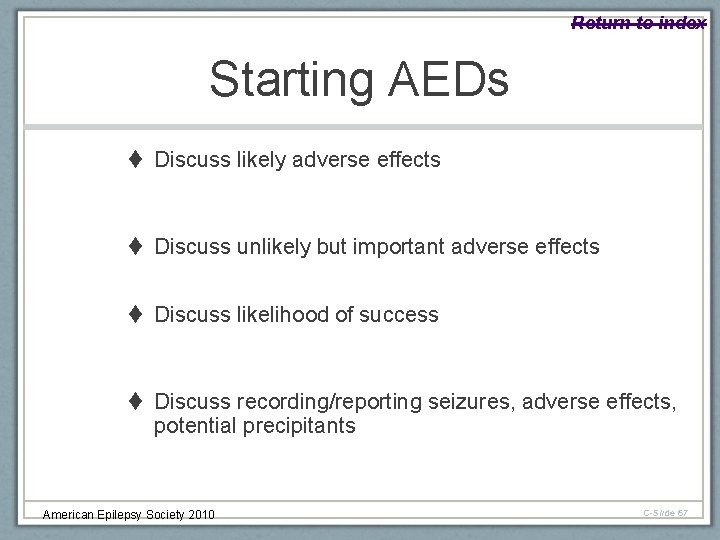
Return to index Starting AEDs Discuss likely adverse effects Discuss unlikely but important adverse effects Discuss likelihood of success Discuss recording/reporting seizures, adverse effects, potential precipitants American Epilepsy Society 2010 C-Slide 67
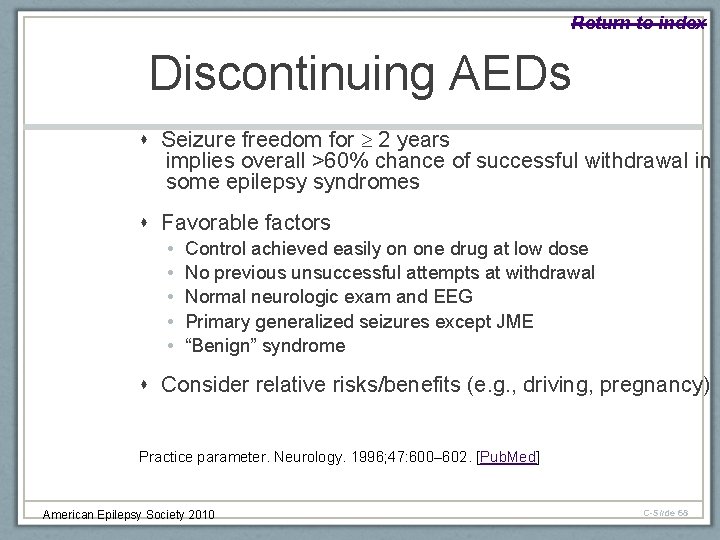
Return to index Discontinuing AEDs Seizure freedom for 2 years implies overall >60% chance of successful withdrawal in some epilepsy syndromes Favorable factors • • • Control achieved easily on one drug at low dose No previous unsuccessful attempts at withdrawal Normal neurologic exam and EEG Primary generalized seizures except JME “Benign” syndrome Consider relative risks/benefits (e. g. , driving, pregnancy) Practice parameter. Neurology. 1996; 47: 600– 602. [Pub. Med] American Epilepsy Society 2010 C-Slide 68
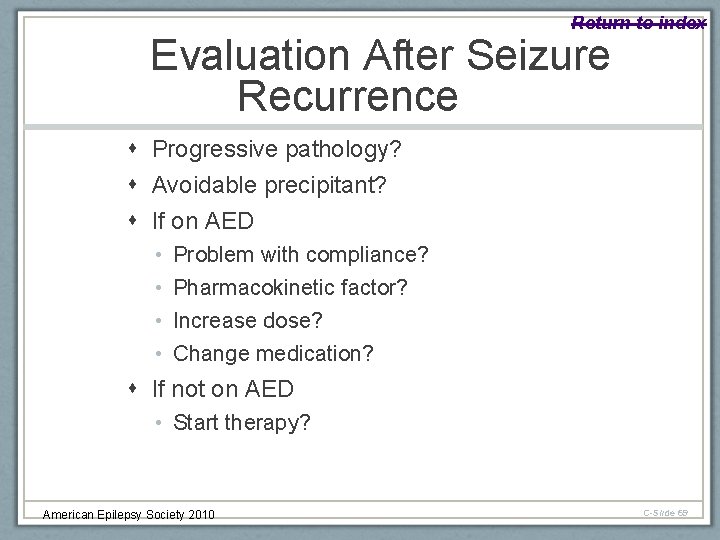
Return to index Evaluation After Seizure Recurrence Progressive pathology? Avoidable precipitant? If on AED • • Problem with compliance? Pharmacokinetic factor? Increase dose? Change medication? If not on AED • Start therapy? American Epilepsy Society 2010 C-Slide 69
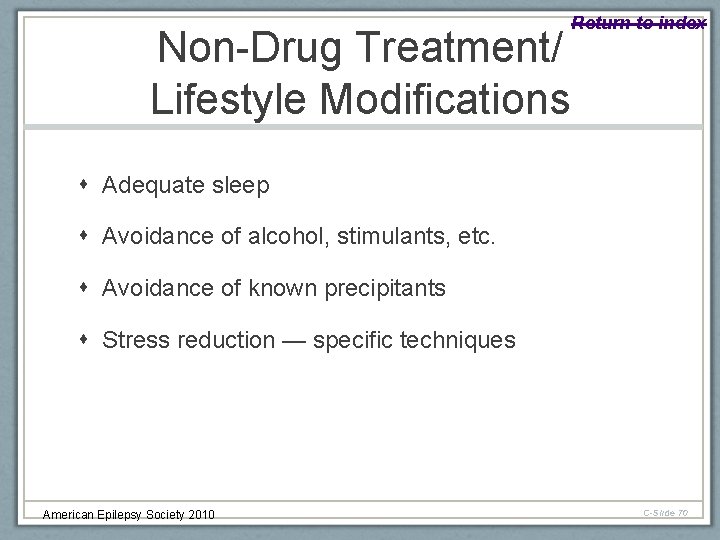
Non-Drug Treatment/ Lifestyle Modifications Return to index Adequate sleep Avoidance of alcohol, stimulants, etc. Avoidance of known precipitants Stress reduction — specific techniques American Epilepsy Society 2010 C-Slide 70
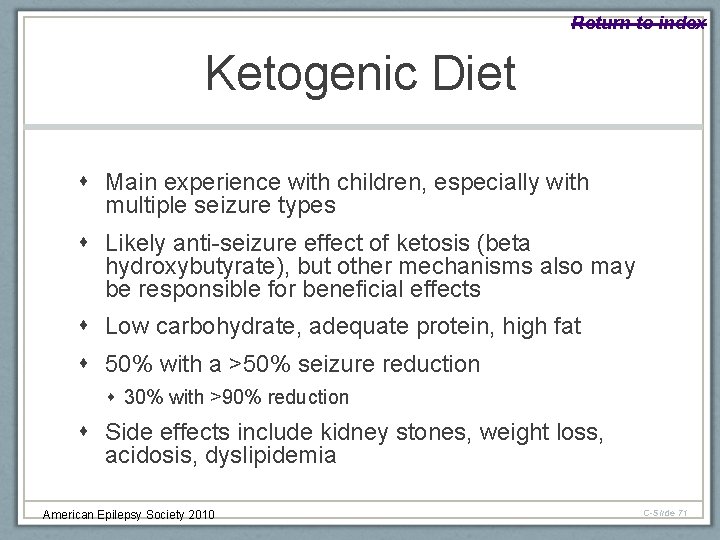
Return to index Ketogenic Diet Main experience with children, especially with multiple seizure types Likely anti-seizure effect of ketosis (beta hydroxybutyrate), but other mechanisms also may be responsible for beneficial effects Low carbohydrate, adequate protein, high fat 50% with a >50% seizure reduction 30% with >90% reduction Side effects include kidney stones, weight loss, acidosis, dyslipidemia American Epilepsy Society 2010 C-Slide 71
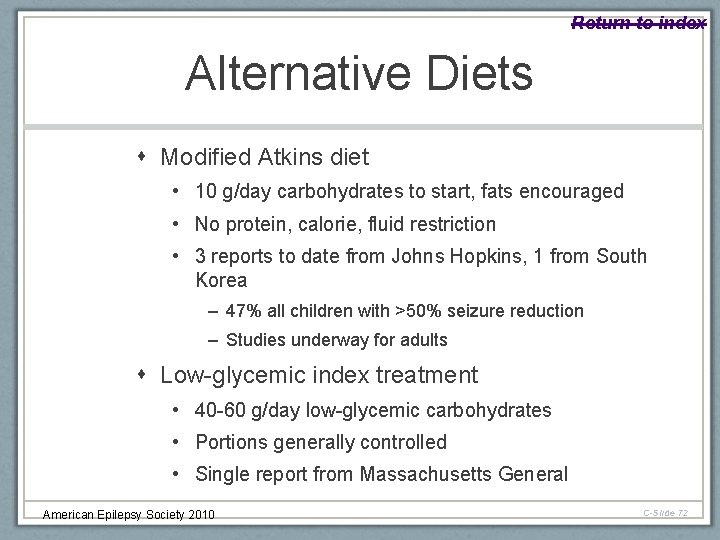
Return to index Alternative Diets Modified Atkins diet • 10 g/day carbohydrates to start, fats encouraged • No protein, calorie, fluid restriction • 3 reports to date from Johns Hopkins, 1 from South Korea – 47% all children with >50% seizure reduction – Studies underway for adults Low-glycemic index treatment • 40 -60 g/day low-glycemic carbohydrates • Portions generally controlled • Single report from Massachusetts General American Epilepsy Society 2010 C-Slide 72
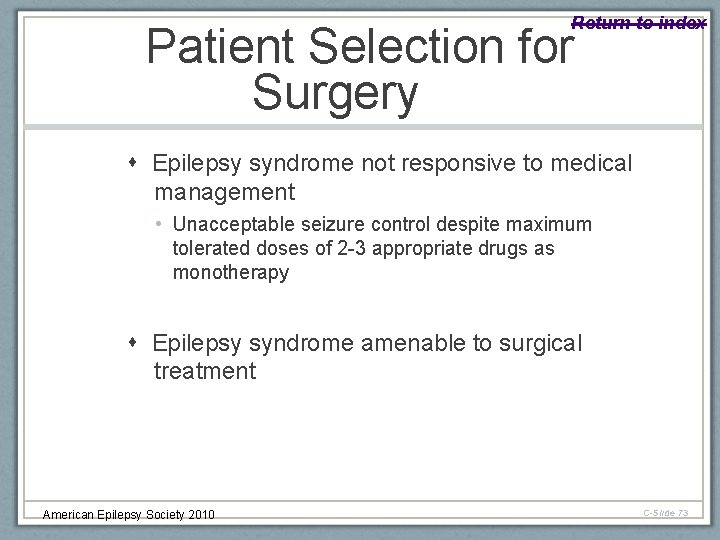
Return to index Patient Selection for Surgery Epilepsy syndrome not responsive to medical management • Unacceptable seizure control despite maximum tolerated doses of 2 -3 appropriate drugs as monotherapy Epilepsy syndrome amenable to surgical treatment American Epilepsy Society 2010 C-Slide 73
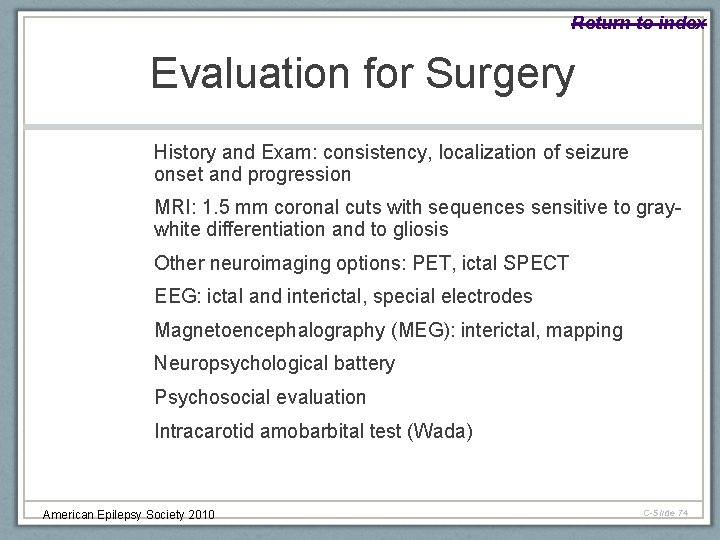
Return to index Evaluation for Surgery History and Exam: consistency, localization of seizure onset and progression MRI: 1. 5 mm coronal cuts with sequences sensitive to graywhite differentiation and to gliosis Other neuroimaging options: PET, ictal SPECT EEG: ictal and interictal, special electrodes Magnetoencephalography (MEG): interictal, mapping Neuropsychological battery Psychosocial evaluation Intracarotid amobarbital test (Wada) American Epilepsy Society 2010 C-Slide 74
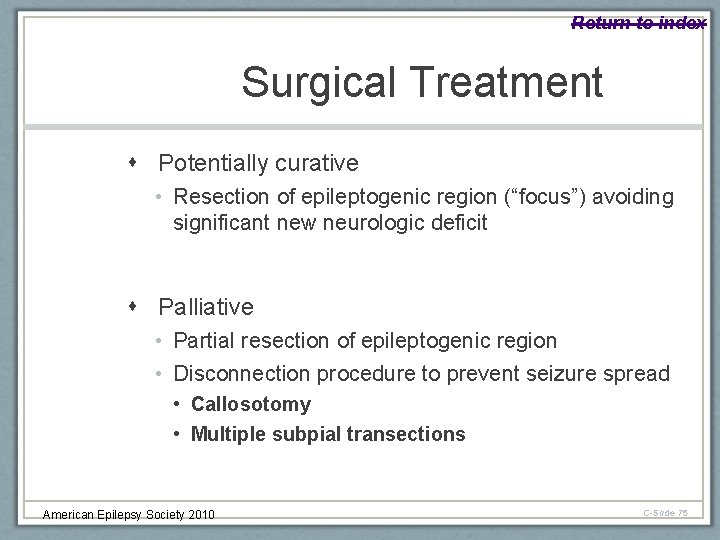
Return to index Surgical Treatment Potentially curative • Resection of epileptogenic region (“focus”) avoiding significant new neurologic deficit Palliative • Partial resection of epileptogenic region • Disconnection procedure to prevent seizure spread • Callosotomy • Multiple subpial transections American Epilepsy Society 2010 C-Slide 75
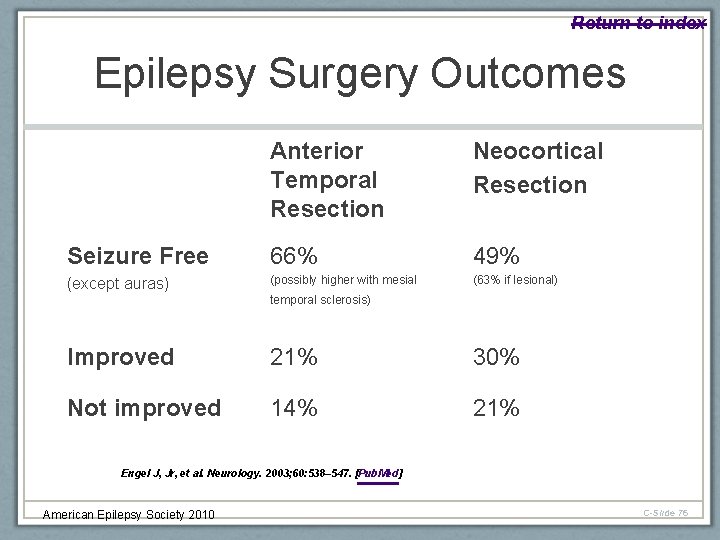
Return to index Epilepsy Surgery Outcomes Anterior Temporal Resection Neocortical Resection Seizure Free 66% 49% (except auras) (possibly higher with mesial (63% if lesional) Improved 21% 30% Not improved 14% 21% temporal sclerosis) Engel J, Jr, et al. Neurology. 2003; 60: 538– 547. [Pub. Med] American Epilepsy Society 2010 C-Slide 76
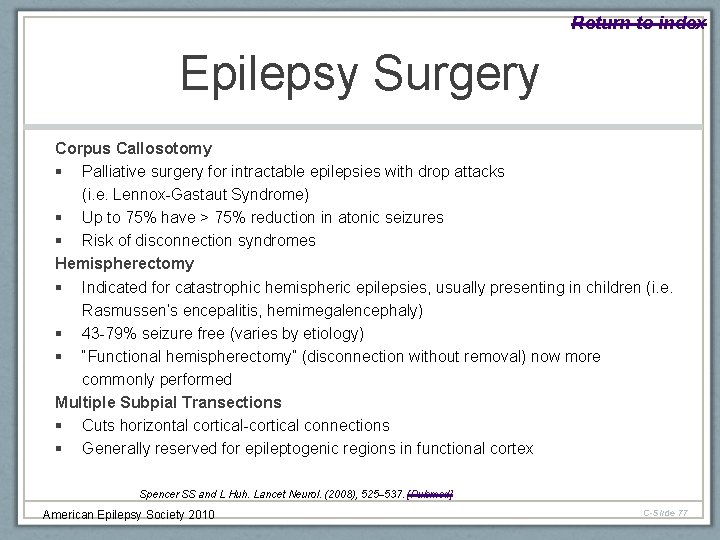
Return to index Epilepsy Surgery Corpus Callosotomy § Palliative surgery for intractable epilepsies with drop attacks (i. e. Lennox-Gastaut Syndrome) § Up to 75% have > 75% reduction in atonic seizures § Risk of disconnection syndromes Hemispherectomy § Indicated for catastrophic hemispheric epilepsies, usually presenting in children (i. e. Rasmussen’s encepalitis, hemimegalencephaly) § 43 -79% seizure free (varies by etiology) § “Functional hemispherectomy” (disconnection without removal) now more commonly performed Multiple Subpial Transections § Cuts horizontal cortical-cortical connections § Generally reserved for epileptogenic regions in functional cortex Spencer SS and L Huh. Lancet Neurol. (2008), 525– 537. [Pubmed] American Epilepsy Society 2010 C-Slide 77
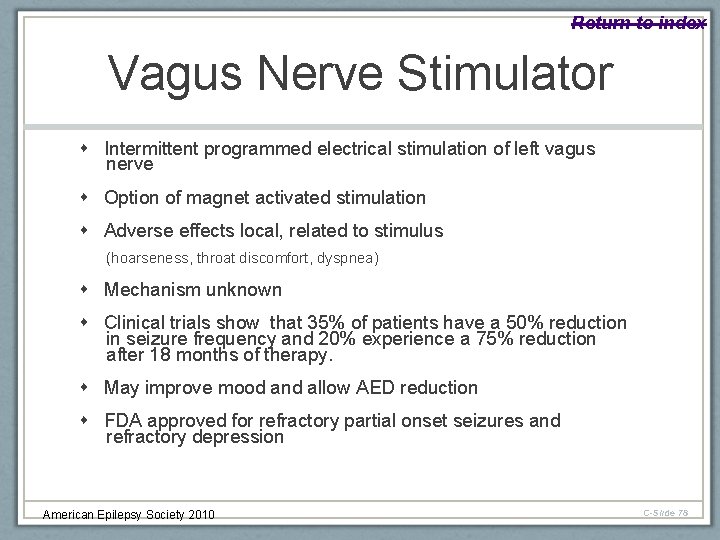
Return to index Vagus Nerve Stimulator Intermittent programmed electrical stimulation of left vagus nerve Option of magnet activated stimulation Adverse effects local, related to stimulus (hoarseness, throat discomfort, dyspnea) Mechanism unknown Clinical trials show that 35% of patients have a 50% reduction in seizure frequency and 20% experience a 75% reduction after 18 months of therapy. May improve mood and allow AED reduction FDA approved for refractory partial onset seizures and refractory depression American Epilepsy Society 2010 C-Slide 78
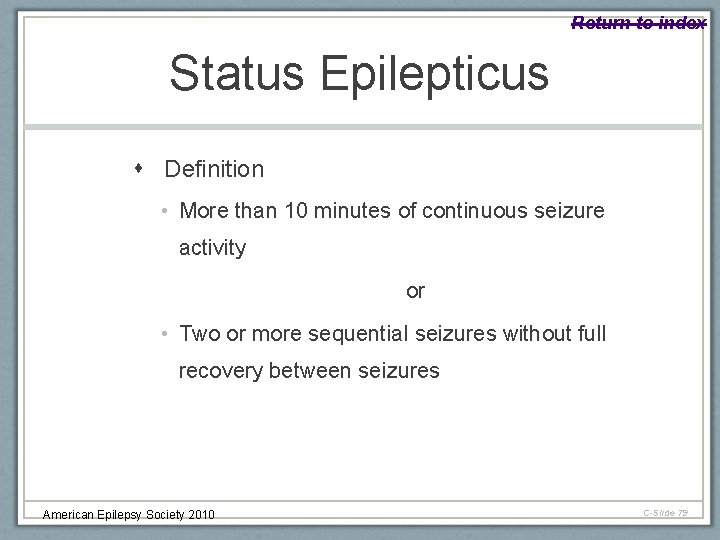
Return to index Status Epilepticus Definition • More than 10 minutes of continuous seizure activity or • Two or more sequential seizures without full recovery between seizures American Epilepsy Society 2010 C-Slide 79
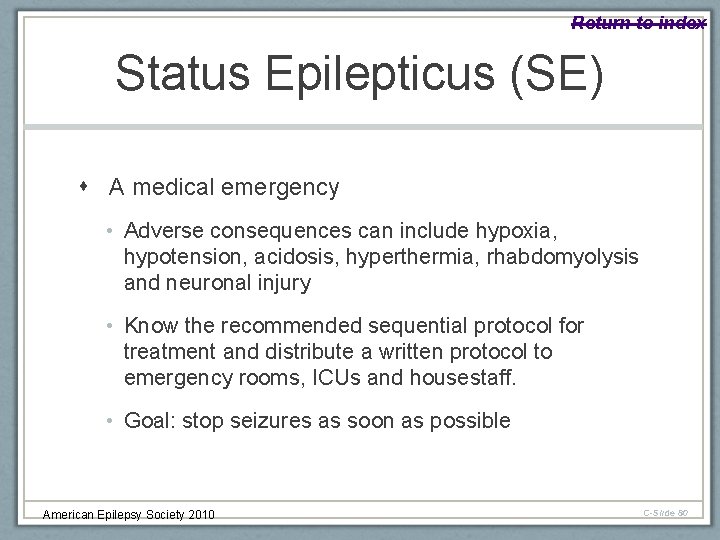
Return to index Status Epilepticus (SE) A medical emergency • Adverse consequences can include hypoxia, hypotension, acidosis, hyperthermia, rhabdomyolysis and neuronal injury • Know the recommended sequential protocol for treatment and distribute a written protocol to emergency rooms, ICUs and housestaff. • Goal: stop seizures as soon as possible American Epilepsy Society 2010 C-Slide 80
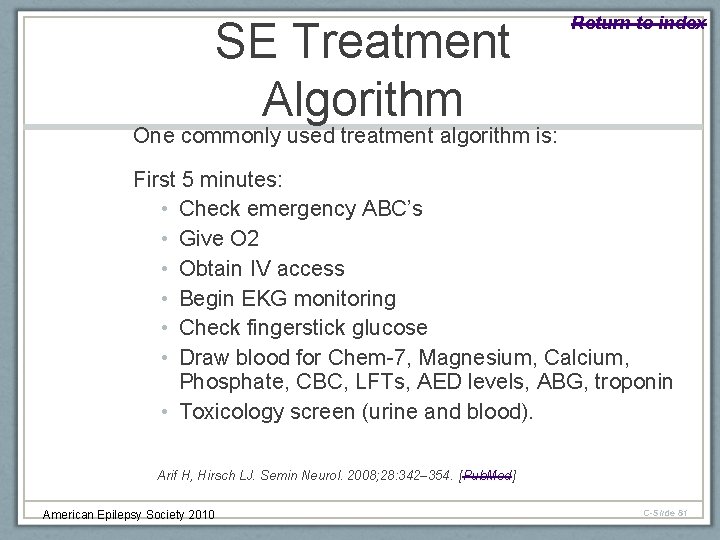
SE Treatment Algorithm Return to index One commonly used treatment algorithm is: First 5 minutes: • Check emergency ABC’s • Give O 2 • Obtain IV access • Begin EKG monitoring • Check fingerstick glucose • Draw blood for Chem-7, Magnesium, Calcium, Phosphate, CBC, LFTs, AED levels, ABG, troponin • Toxicology screen (urine and blood). Arif H, Hirsch LJ. Semin Neurol. 2008; 28: 342– 354. [Pub. Med] American Epilepsy Society 2010 C-Slide 81
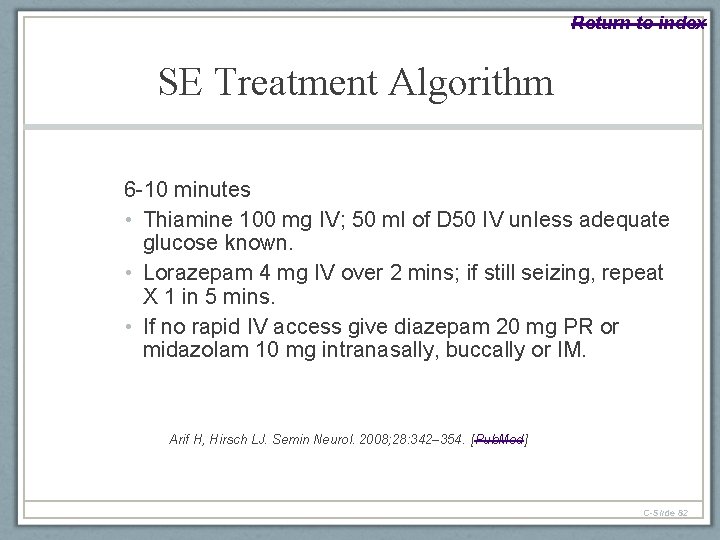
Return to index SE Treatment Algorithm 6 -10 minutes • Thiamine 100 mg IV; 50 ml of D 50 IV unless adequate glucose known. • Lorazepam 4 mg IV over 2 mins; if still seizing, repeat X 1 in 5 mins. • If no rapid IV access give diazepam 20 mg PR or midazolam 10 mg intranasally, buccally or IM. Arif H, Hirsch LJ. Semin Neurol. 2008; 28: 342– 354. [Pub. Med] American Epilepsy Society 2010 C-Slide 82
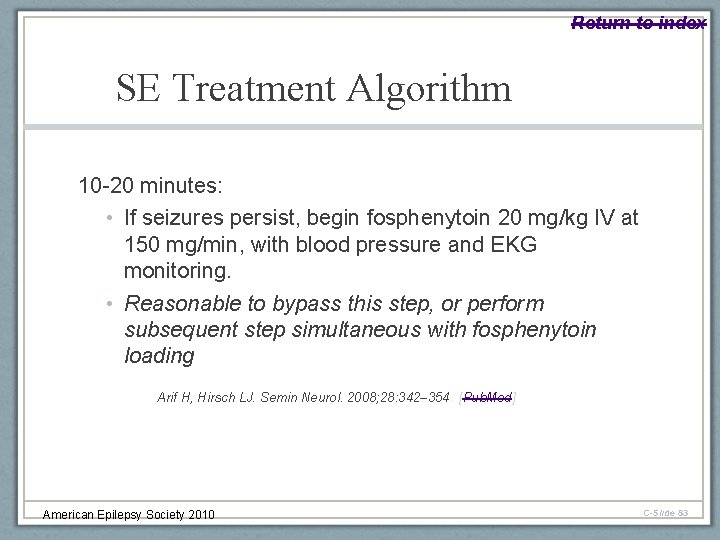
Return to index SE Treatment Algorithm 10 -20 minutes: • If seizures persist, begin fosphenytoin 20 mg/kg IV at 150 mg/min, with blood pressure and EKG monitoring. • Reasonable to bypass this step, or perform subsequent step simultaneous with fosphenytoin loading Arif H, Hirsch LJ. Semin Neurol. 2008; 28: 342– 354. [Pub. Med] American Epilepsy Society 2010 C-Slide 83
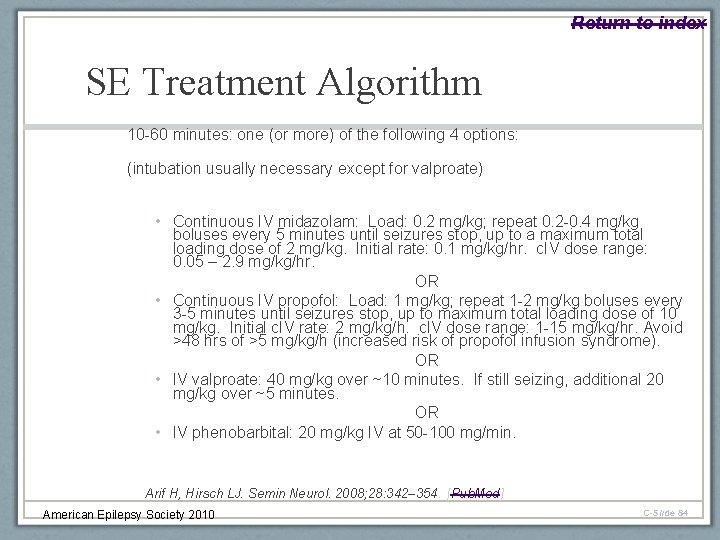
Return to index SE Treatment Algorithm 10 -60 minutes: one (or more) of the following 4 options: (intubation usually necessary except for valproate) • Continuous IV midazolam: Load: 0. 2 mg/kg; repeat 0. 2 -0. 4 mg/kg boluses every 5 minutes until seizures stop, up to a maximum total loading dose of 2 mg/kg. Initial rate: 0. 1 mg/kg/hr. c. IV dose range: 0. 05 – 2. 9 mg/kg/hr. OR • Continuous IV propofol: Load: 1 mg/kg; repeat 1 -2 mg/kg boluses every 3 -5 minutes until seizures stop, up to maximum total loading dose of 10 mg/kg. Initial c. IV rate: 2 mg/kg/h. c. IV dose range: 1 -15 mg/kg/hr. Avoid >48 hrs of >5 mg/kg/h (increased risk of propofol infusion syndrome). OR • IV valproate: 40 mg/kg over ~10 minutes. If still seizing, additional 20 mg/kg over ~5 minutes. OR • IV phenobarbital: 20 mg/kg IV at 50 -100 mg/min. Arif H, Hirsch LJ. Semin Neurol. 2008; 28: 342– 354. [Pub. Med] American Epilepsy Society 2010 C-Slide 84
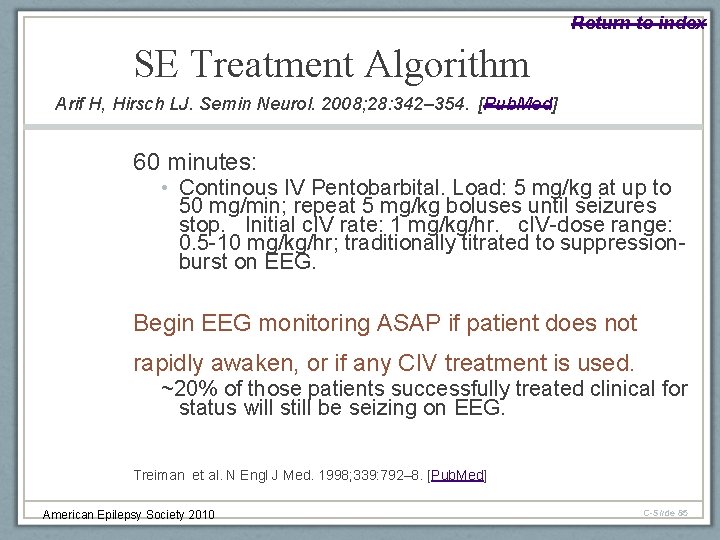
Return to index SE Treatment Algorithm Arif H, Hirsch LJ. Semin Neurol. 2008; 28: 342– 354. [Pub. Med] 60 minutes: • Continous IV Pentobarbital. Load: 5 mg/kg at up to 50 mg/min; repeat 5 mg/kg boluses until seizures stop. Initial c. IV rate: 1 mg/kg/hr. c. IV-dose range: 0. 5 -10 mg/kg/hr; traditionally titrated to suppressionburst on EEG. Begin EEG monitoring ASAP if patient does not rapidly awaken, or if any CIV treatment is used. ~20% of those patients successfully treated clinical for status will still be seizing on EEG. Treiman et al. N Engl J Med. 1998; 339: 792– 8. [Pub. Med] American Epilepsy Society 2010 C-Slide 85
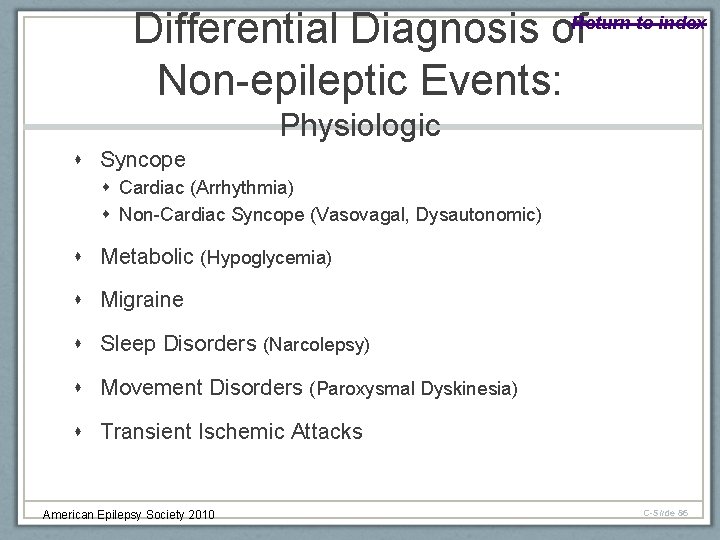
Return to index Differential Diagnosis of Non-epileptic Events: Physiologic Syncope Cardiac (Arrhythmia) Non-Cardiac Syncope (Vasovagal, Dysautonomic) Metabolic (Hypoglycemia) Migraine Sleep Disorders (Narcolepsy) Movement Disorders (Paroxysmal Dyskinesia) Transient Ischemic Attacks American Epilepsy Society 2010 C-Slide 86
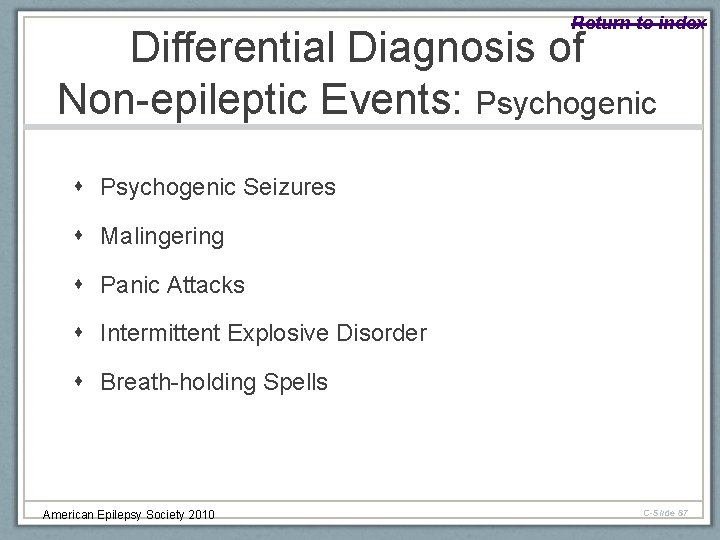
Return to index Differential Diagnosis of Non-epileptic Events: Psychogenic Seizures Malingering Panic Attacks Intermittent Explosive Disorder Breath-holding Spells American Epilepsy Society 2010 C-Slide 87
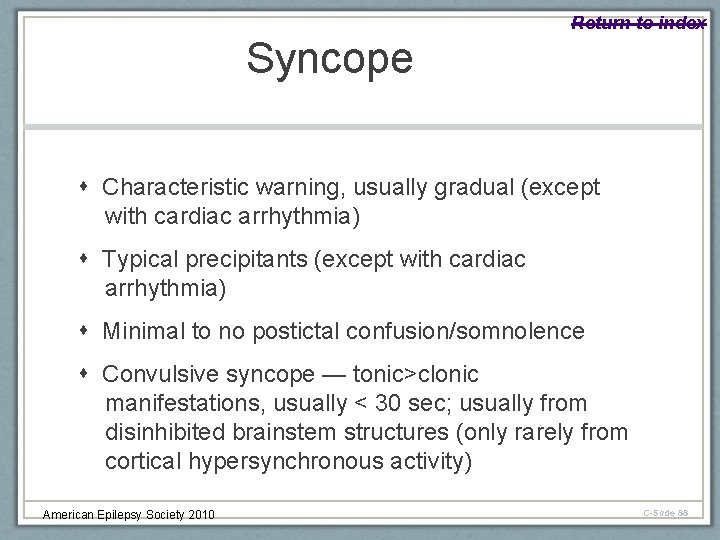
Return to index Syncope Characteristic warning, usually gradual (except with cardiac arrhythmia) Typical precipitants (except with cardiac arrhythmia) Minimal to no postictal confusion/somnolence Convulsive syncope — tonic>clonic manifestations, usually < 30 sec; usually from disinhibited brainstem structures (only rarely from cortical hypersynchronous activity) American Epilepsy Society 2010 C-Slide 88
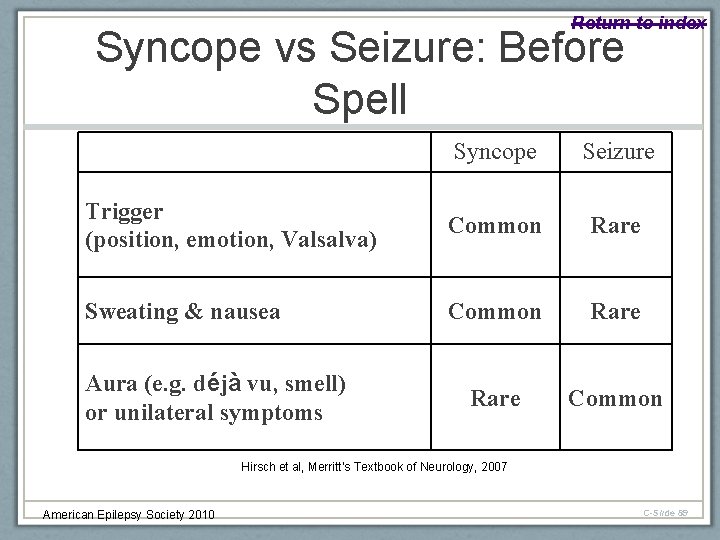
Return to index Syncope vs Seizure: Before Spell Syncope Seizure Trigger (position, emotion, Valsalva) Common Rare Sweating & nausea Common Rare Common Aura (e. g. déjà vu, smell) or unilateral symptoms Hirsch et al, Merritt’s Textbook of Neurology, 2007 American Epilepsy Society 2010 C-Slide 89
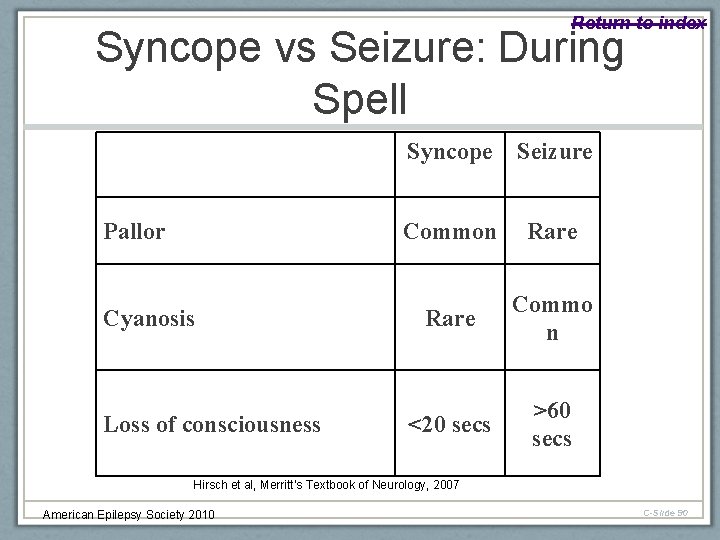
Return to index Syncope vs Seizure: During Spell Pallor Cyanosis Loss of consciousness Syncope Seizure Common Rare Commo n <20 secs >60 secs Hirsch et al, Merritt’s Textbook of Neurology, 2007 American Epilepsy Society 2010 C-Slide 90
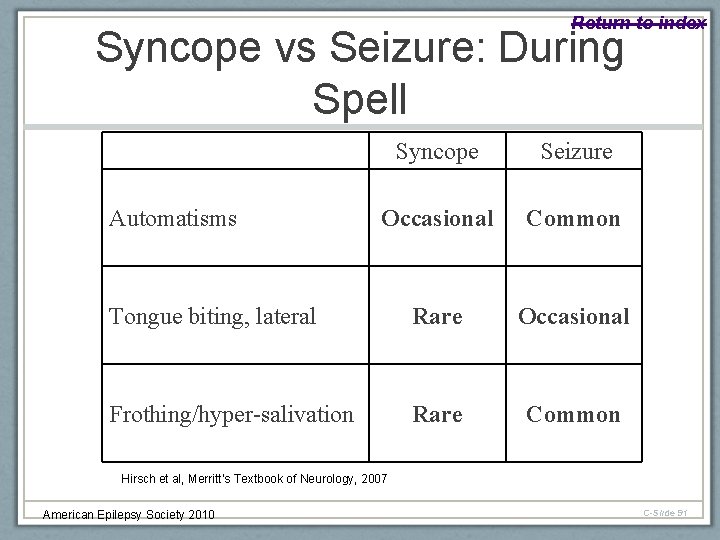
Return to index Syncope vs Seizure: During Spell Syncope Seizure Occasional Common Tongue biting, lateral Rare Occasional Frothing/hyper-salivation Rare Common Automatisms Hirsch et al, Merritt’s Textbook of Neurology, 2007 American Epilepsy Society 2010 C-Slide 91
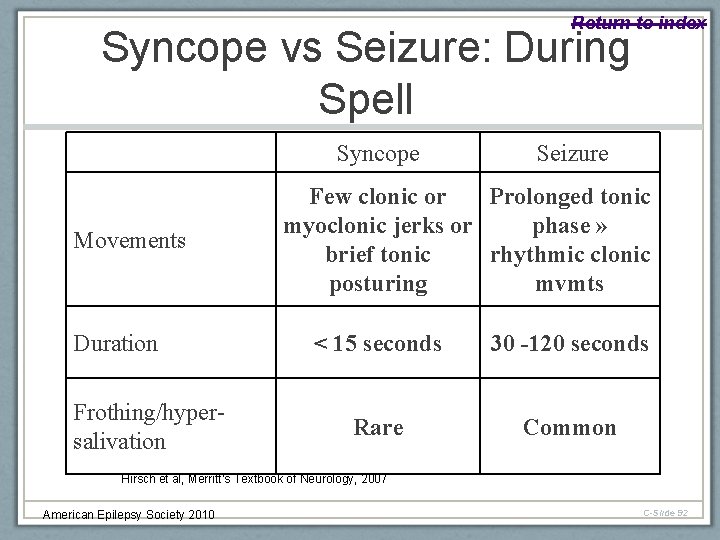
Return to index Syncope vs Seizure: During Spell Syncope Movements Duration Frothing/hypersalivation Seizure Few clonic or Prolonged tonic myoclonic jerks or phase » brief tonic rhythmic clonic posturing mvmts < 15 seconds 30 -120 seconds Rare Common Hirsch et al, Merritt’s Textbook of Neurology, 2007 American Epilepsy Society 2010 C-Slide 92
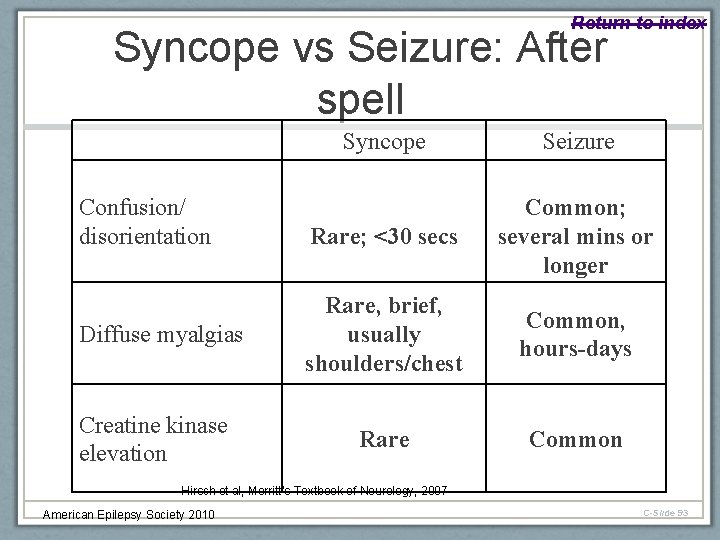
Return to index Syncope vs Seizure: After spell Confusion/ disorientation Diffuse myalgias Creatine kinase elevation Syncope Seizure Rare; <30 secs Common; several mins or longer Rare, brief, usually shoulders/chest Common, hours-days Rare Common Hirsch et al, Merritt’s Textbook of Neurology, 2007 American Epilepsy Society 2010 C-Slide 93
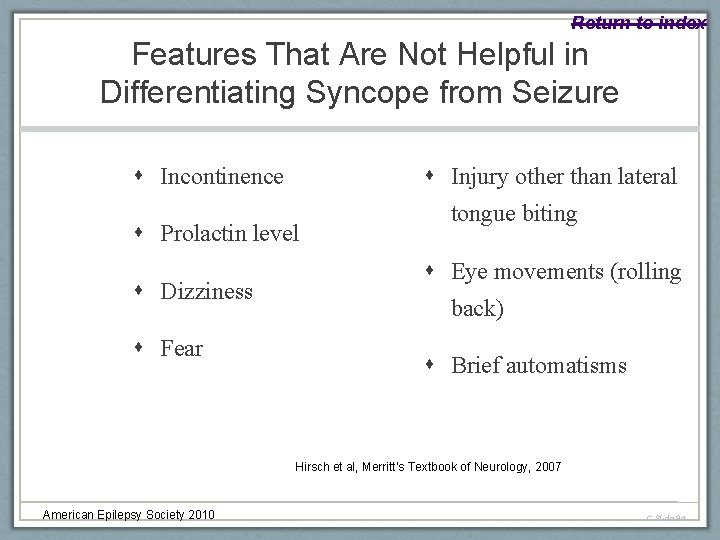
Return to index Features That Are Not Helpful in Differentiating Syncope from Seizure Incontinence Injury other than lateral Prolactin level Dizziness Fear tongue biting Eye movements (rolling back) Brief automatisms Hirsch et al, Merritt’s Textbook of Neurology, 2007 American Epilepsy Society 2010 C-Slide 94
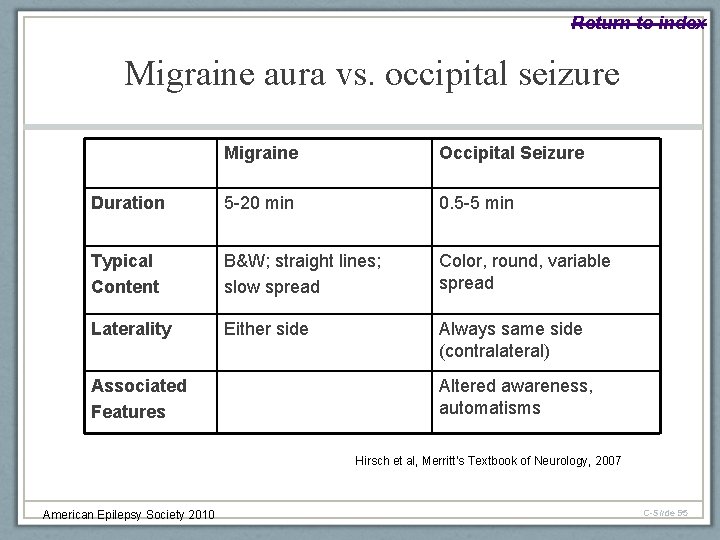
Return to index Migraine aura vs. occipital seizure Migraine Occipital Seizure Duration 5 -20 min 0. 5 -5 min Typical Content B&W; straight lines; slow spread Color, round, variable spread Laterality Either side Always same side (contralateral) Associated Features Altered awareness, automatisms Hirsch et al, Merritt’s Textbook of Neurology, 2007 American Epilepsy Society 2010 C-Slide 95
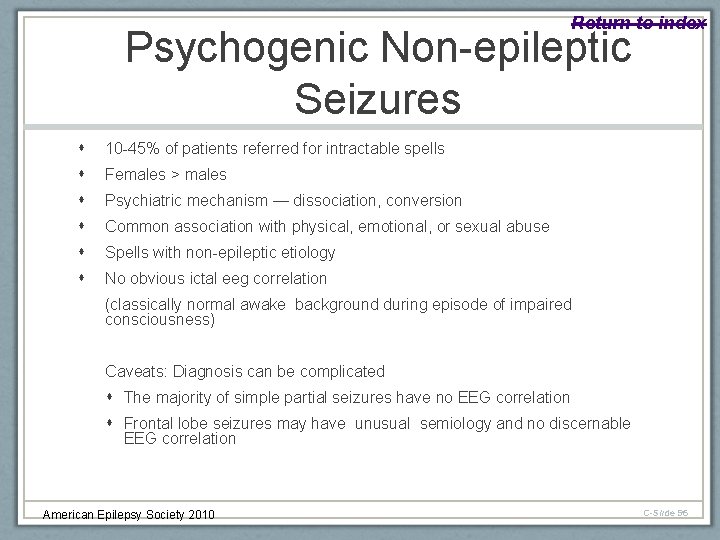
Return to index Psychogenic Non-epileptic Seizures 10 -45% of patients referred for intractable spells Females > males Psychiatric mechanism — dissociation, conversion Common association with physical, emotional, or sexual abuse Spells with non-epileptic etiology No obvious ictal eeg correlation (classically normal awake background during episode of impaired consciousness) Caveats: Diagnosis can be complicated The majority of simple partial seizures have no EEG correlation Frontal lobe seizures may have unusual semiology and no discernable EEG correlation American Epilepsy Society 2010 C-Slide 96
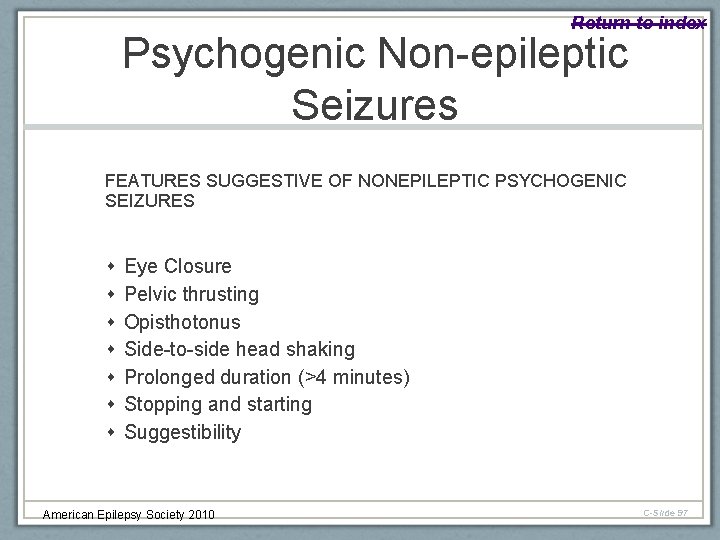
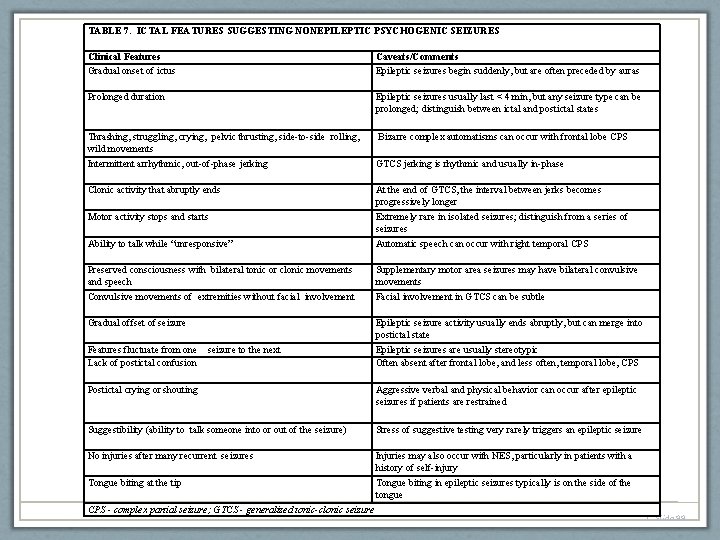
Return to index Psychogenic Non-epileptic Seizures FEATURES SUGGESTIVE OF NONEPILEPTIC PSYCHOGENIC SEIZURES Eye Closure Pelvic thrusting Opisthotonus Side-to-side head shaking Prolonged duration (>4 minutes) Stopping and starting Suggestibility American Epilepsy Society 2010 C-Slide 97
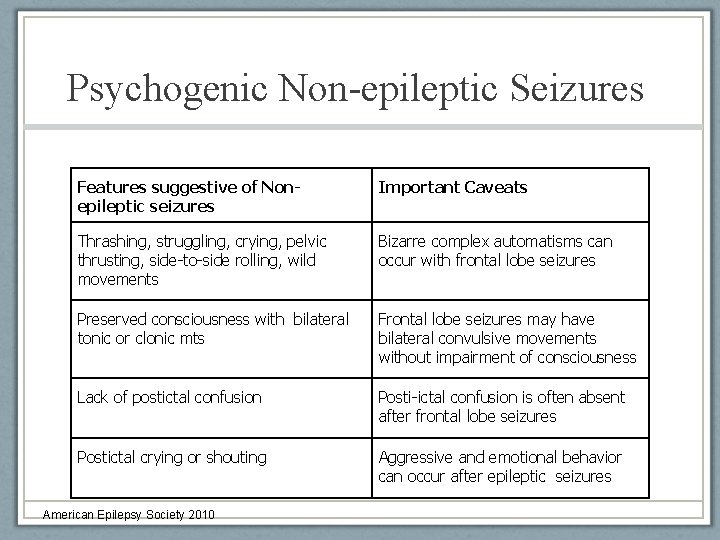
Psychogenic Non-epileptic Seizures Features suggestive of Nonepileptic seizures Important Caveats Thrashing, struggling, crying, pelvic thrusting, side-to-side rolling, wild movements Bizarre complex automatisms can occur with frontal lobe seizures Preserved consciousness with bilateral tonic or clonic mts Frontal lobe seizures may have bilateral convulsive movements without impairment of consciousness Lack of postictal confusion Posti-ictal confusion is often absent after frontal lobe seizures Postictal crying or shouting Aggressive and emotional behavior can occur after epileptic seizures American Epilepsy Society 2010
TABLE 7. ICTAL FEATURES SUGGESTING NONEPILEPTIC PSYCHOGENIC SEIZURES Clinical Features Gradual onset of ictus Caveats/Comments Epileptic seizures begin suddenly, but are often preceded by auras Prolonged duration Epileptic seizures usually last < 4 min, but any seizure type can be prolonged; distinguish between ictal and postictal states Thrashing, struggling, crying, pelvic thrusting, side-to-side rolling, wild movements Intermittent arrhythmic, out-of-phase jerking Bizarre complex automatisms can occur with frontal lobe CPS Clonic activity that abruptly ends GTCS jerking is rhythmic and usually in-phase Ability to talk while “unresponsive” At the end of GTCS, the interval between jerks becomes progressively longer Extremely rare in isolated seizures; distinguish from a series of seizures Automatic speech can occur with right temporal CPS Preserved consciousness with bilateral tonic or clonic movements and speech Convulsive movements of extremities without facial involvement Supplementary motor area seizures may have bilateral convulsive movements Facial involvement in GTCS can be subtle Gradual offset of seizure Epileptic seizure activity usually ends abruptly, but can merge into postictal state Epileptic seizures are usually stereotypic Often absent after frontal lobe, and less often, temporal lobe, CPS Motor activity stops and starts Features fluctuate from one seizure to the next Lack of postictal confusion Postictal crying or shouting Aggressive verbal and physical behavior can occur after epileptic seizures if patients are restrained Suggestibility (ability to talk someone into or out of the seizure) Stress of suggestive testing very rarely triggers an epileptic seizure No injuries after many recurrent seizures Injuries may also occur with NES, particularly in patients with a history of self-injury Tongue biting in epileptic seizures typically is on the side of the tongue Tongue biting at the tip CPS - complex partial seizure; GTCS - generalized tonic-clonic seizure American Epilepsy Society 2010 C-Slide 99
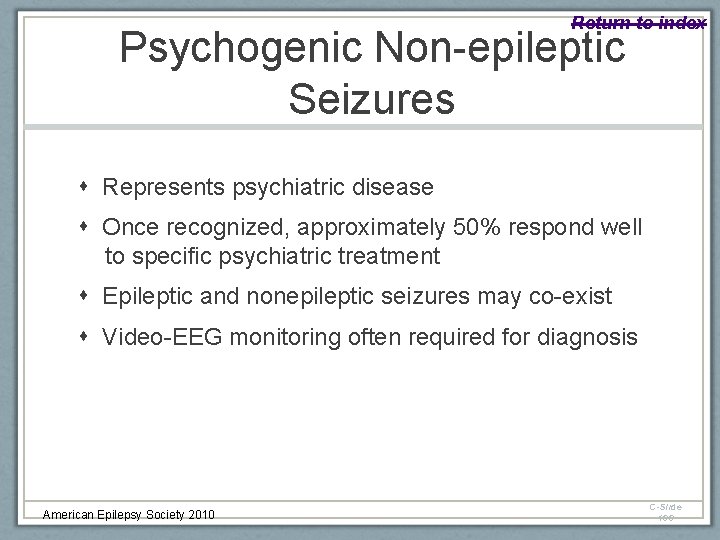
Return to index Psychogenic Non-epileptic Seizures Represents psychiatric disease Once recognized, approximately 50% respond well to specific psychiatric treatment Epileptic and nonepileptic seizures may co-exist Video-EEG monitoring often required for diagnosis American Epilepsy Society 2010 C-Slide 100
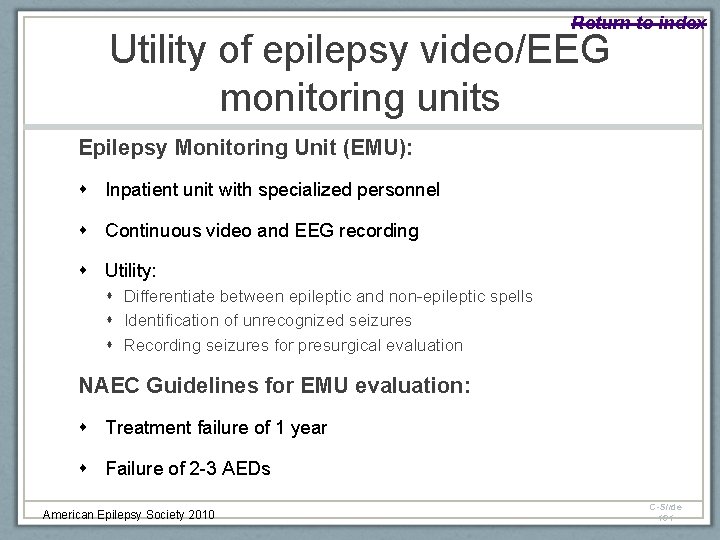
Return to index Utility of epilepsy video/EEG monitoring units Epilepsy Monitoring Unit (EMU): Inpatient unit with specialized personnel Continuous video and EEG recording Utility: Differentiate between epileptic and non-epileptic spells Identification of unrecognized seizures Recording seizures for presurgical evaluation NAEC Guidelines for EMU evaluation: Treatment failure of 1 year Failure of 2 -3 AEDs American Epilepsy Society 2010 C-Slide 101
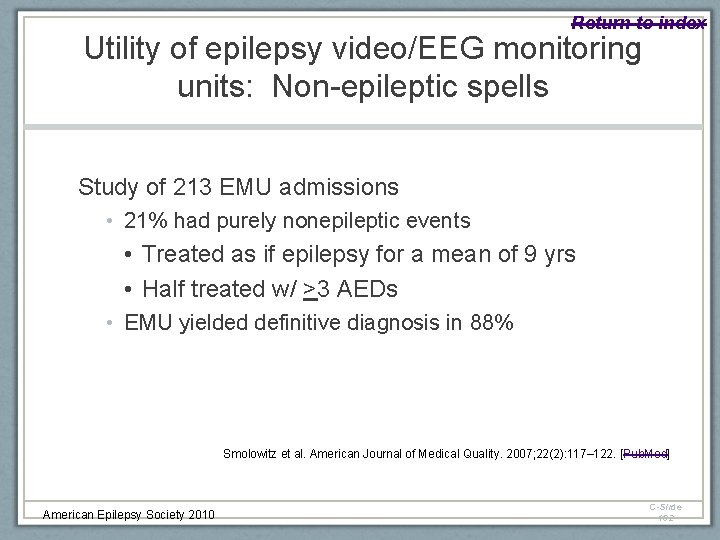
Return to index Utility of epilepsy video/EEG monitoring units: Non-epileptic spells Study of 213 EMU admissions • 21% had purely nonepileptic events • Treated as if epilepsy for a mean of 9 yrs • Half treated w/ >3 AEDs • EMU yielded definitive diagnosis in 88% Smolowitz et al. American Journal of Medical Quality. 2007; 22(2): 117– 122. [Pub. Med] American Epilepsy Society 2010 C-Slide 102
Return to index Utility of epilepsy video/EEG monitoring units (EMU): Epilepsy Early Identification of Refractory Epilepsy n=525 Kwan P and MJ Brodie. N Engl J Med. 342 (2000), 314 -9. [Pubmed] • 192 (37%) patients were refractory. • Only 11% of patients became seizure-free if the first drug was ineffective. • Suggests need for early pre-surgical evaluation Patient awareness of seizures n=31 Blum DE et al. Neurology. 1996; 47: 260– 4. [Pub. Med] • 30% patients deny all seizures • Only 23% were aware of all seizures American Epilepsy Society 2010 C-Slide 103
Return to index Sudden Unexplained Death in Epilepsy: SUDEP Definition: “sudden, unexpected, witnessed or unwitnessed, nontraumatic and non-drowning death in a patient with epilepsy where the postmortem examination does not reveal a toxicologic or anatomic cause of death, with or without evidence of a seizure and excluding documented status epilepticus. ” Nashef L, Brown S. Lancet. 1996; 348(9038): 1324– 1325. [Pub. Med] American Epilepsy Society 2010 C-Slide 104
Return to index Sudden Unexplained Death in Epilepsy: SUDEP Witnessed SUDEP Langan Y et al. JNNP 2000; 68: 211– 213. [Pub. Med] • 15/135 SUDEP cases were witnessed. • 12/15 were associated with a convulsive seizure. • One collapse occurred 5 minutes after a GTC seizure and one after an aura. • One patient died in a probable postictal state. • 12/15 were noted to have experienced respiratory difficulties. • Suggests that respiratory dysfunction may be an important contributing factor in SUDEP. • Suggests that positioning or stimulation of respiration may be important in the prevention of SUDEP. American Epilepsy Society 2010 C-Slide 105
Return to index Epidemiology of SUDEP • Represents about 2 -18% of deaths among the general population of patients with epilepsy. • Risk of sudden death in epilepsy patients 24 X that of general population. • Mean SUDEP incidence: 3. 7/1000 people per year. • Higher in patients referred for epilepsy surgery (up to 1 per 100 per year). Walczak TS et al. Neurology. 2001; 56: 519– 25. [Pub. Med] American Epilepsy Society 2010 C-Slide 106
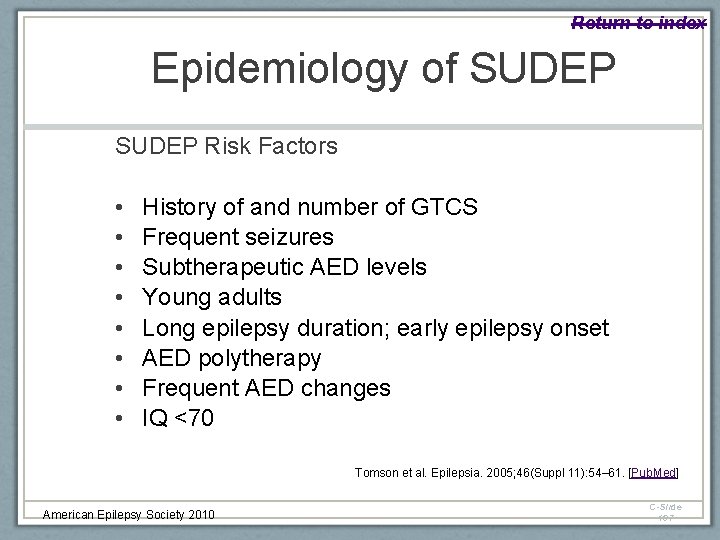
Return to index Epidemiology of SUDEP Risk Factors • • History of and number of GTCS Frequent seizures Subtherapeutic AED levels Young adults Long epilepsy duration; early epilepsy onset AED polytherapy Frequent AED changes IQ <70 Tomson et al. Epilepsia. 2005; 46(Suppl 11): 54– 61. [Pub. Med] American Epilepsy Society 2010 C-Slide 107
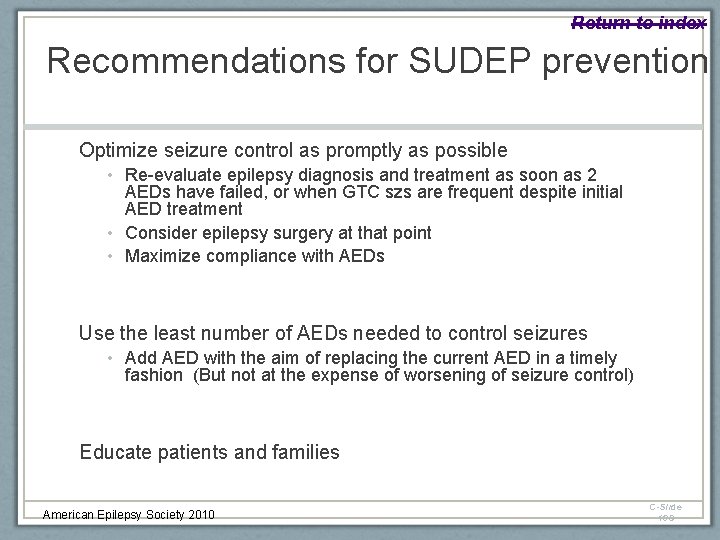
Return to index Recommendations for SUDEP prevention Optimize seizure control as promptly as possible • Re-evaluate epilepsy diagnosis and treatment as soon as 2 AEDs have failed, or when GTC szs are frequent despite initial AED treatment • Consider epilepsy surgery at that point • Maximize compliance with AEDs Use the least number of AEDs needed to control seizures • Add AED with the aim of replacing the current AED in a timely fashion (But not at the expense of worsening of seizure control) Educate patients and families American Epilepsy Society 2010 C-Slide 108
Return to index Driving and Epilepsy Regulation varies state by state regarding: • Reporting requirements • Required seizure-free period • Favorable/unfavorable modifiers Insurance issues Employment issues Resource: www. efa. org American Epilepsy Society 2010 C-Slide 109
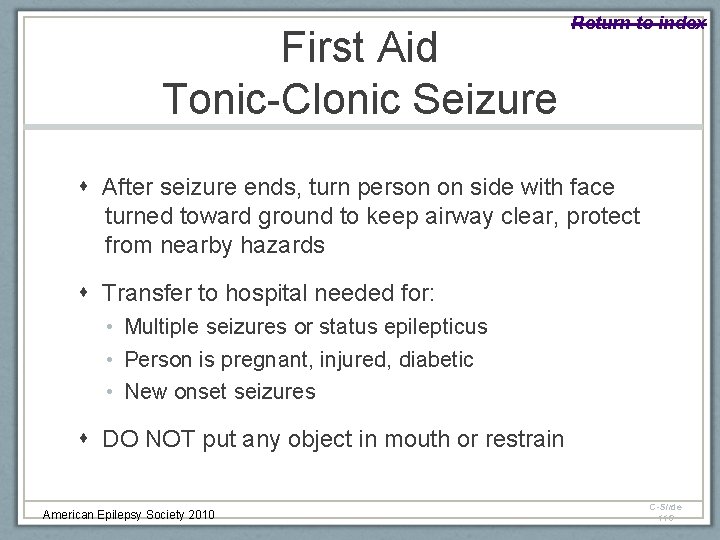
First Aid Tonic-Clonic Seizure Return to index After seizure ends, turn person on side with face turned toward ground to keep airway clear, protect from nearby hazards Transfer to hospital needed for: • Multiple seizures or status epilepticus • Person is pregnant, injured, diabetic • New onset seizures DO NOT put any object in mouth or restrain American Epilepsy Society 2010 C-Slide 110
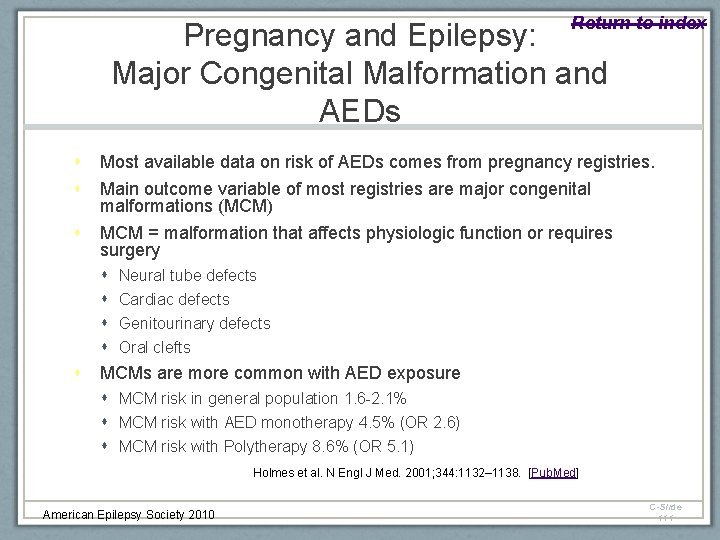
Return to index Pregnancy and Epilepsy: Major Congenital Malformation and AEDs Most available data on risk of AEDs comes from pregnancy registries. MCM = malformation that affects physiologic function or requires surgery Main outcome variable of most registries are major congenital malformations (MCM) Neural tube defects Cardiac defects Genitourinary defects Oral clefts MCMs are more common with AED exposure MCM risk in general population 1. 6 -2. 1% MCM risk with AED monotherapy 4. 5% (OR 2. 6) MCM risk with Polytherapy 8. 6% (OR 5. 1) Holmes et al. N Engl J Med. 2001; 344: 1132– 1138. [Pub. Med] American Epilepsy Society 2010 C-Slide 111
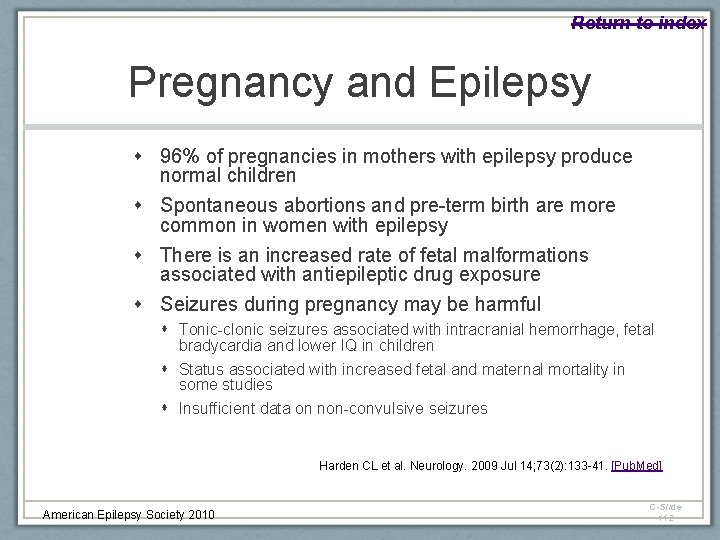
Return to index Pregnancy and Epilepsy 96% of pregnancies in mothers with epilepsy produce normal children Spontaneous abortions and pre-term birth are more common in women with epilepsy There is an increased rate of fetal malformations associated with antiepileptic drug exposure Seizures during pregnancy may be harmful Tonic-clonic seizures associated with intracranial hemorrhage, fetal bradycardia and lower IQ in children Status associated with increased fetal and maternal mortality in some studies Insufficient data on non-convulsive seizures Harden CL et al. Neurology. 2009 Jul 14; 73(2): 133 -41. [Pub. Med] American Epilepsy Society 2010 C-Slide 112
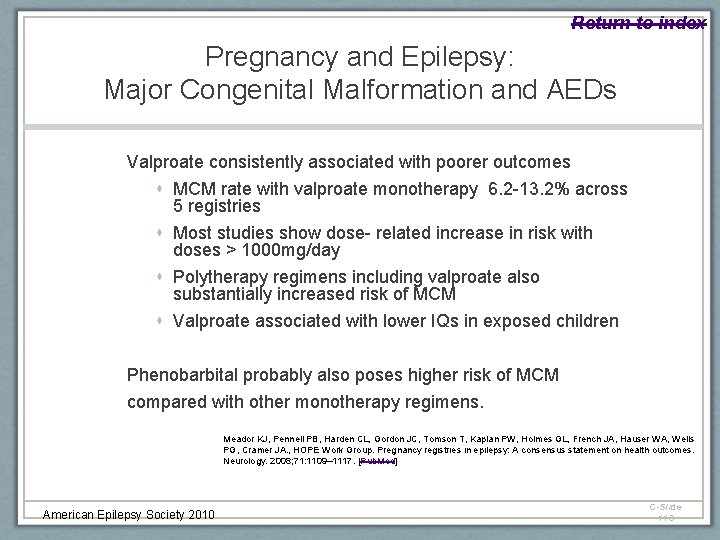
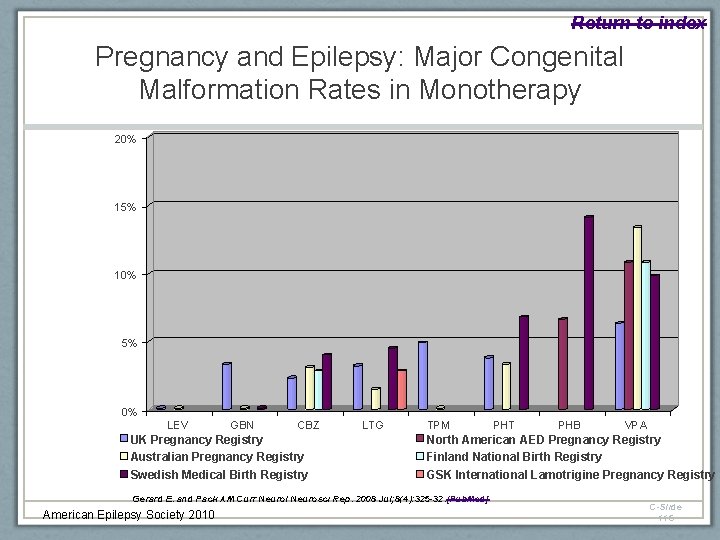
Return to index Pregnancy and Epilepsy: Major Congenital Malformation and AEDs Valproate consistently associated with poorer outcomes MCM rate with valproate monotherapy 6. 2 -13. 2% across 5 registries Most studies show dose- related increase in risk with doses > 1000 mg/day Polytherapy regimens including valproate also substantially increased risk of MCM Valproate associated with lower IQs in exposed children Phenobarbital probably also poses higher risk of MCM compared with other monotherapy regimens. Meador KJ, Pennell PB, Harden CL, Gordon JC, Tomson T, Kaplan PW, Holmes GL, French JA, Hauser WA, Wells PG, Cramer JA. , HOPE Work Group. Pregnancy registries in epilepsy: A consensus statement on health outcomes. Neurology. 2008; 71: 1109– 1117. [Pub. Med] American Epilepsy Society 2010 C-Slide 113
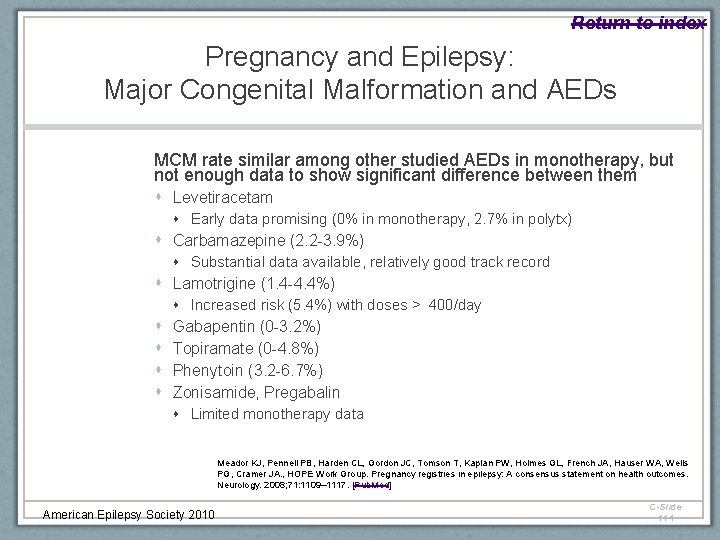
Return to index Pregnancy and Epilepsy: Major Congenital Malformation and AEDs MCM rate similar among other studied AEDs in monotherapy, but not enough data to show significant difference between them Levetiracetam Early data promising (0% in monotherapy, 2. 7% in polytx) Carbamazepine (2. 2 -3. 9%) Substantial data available, relatively good track record Lamotrigine (1. 4 -4. 4%) Increased risk (5. 4%) with doses > 400/day Gabapentin (0 -3. 2%) Topiramate (0 -4. 8%) Phenytoin (3. 2 -6. 7%) Zonisamide, Pregabalin Limited monotherapy data Meador KJ, Pennell PB, Harden CL, Gordon JC, Tomson T, Kaplan PW, Holmes GL, French JA, Hauser WA, Wells PG, Cramer JA. , HOPE Work Group. Pregnancy registries in epilepsy: A consensus statement on health outcomes. Neurology. 2008; 71: 1109– 1117. [Pub. Med] American Epilepsy Society 2010 C-Slide 114
Return to index Pregnancy and Epilepsy Guidelines for Management All women of child-bearing potential should receive education and carefully considered management before and during pregnancy to optimize the chances of a good outcome for both mother and child. Reference: Liporace J, D’Abreu. Epilepsy and Women’s Health: Family Planning, Bone Health, Menopause, and Menstrual Related Seizures. Mayo Clinic Proceedings 2003; 78: 497 -506. American Epilepsy Society 2010 C-Slide 115
Return to index Pregnancy and Epilepsy: Major Congenital Malformation Rates in Monotherapy 20% 15% 10% 5% 0% LEV GBN CBZ UK Pregnancy Registry Australian Pregnancy Registry Swedish Medical Birth Registry LTG TPM Gerard E. and Pack AM Curr Neurol Neurosci Rep. 2008 Jul; 8(4): 325 -32. [Pub. Med] American Epilepsy Society 2010 PHT PHB VPA North American AED Pregnancy Registry Finland National Birth Registry GSK International Lamotrigine Pregnancy Registry C-Slide 116
Return to index Pregnancy and Epilepsy Guidelines for Management Education • Most women with epilepsy have normal children • Risk of fetal malformations is increased with AED exposure • AED teratogenicity is related to exposure in the first trimester of pregnancy • Planning should begin well before pregnancy • Seizures may be deleterious to the fetus • Compliance with AED treatment is important • Prenatal diagnosis of fetal malformations is possible American Epilepsy Society 2010 C-Slide 117
Return to index Pregnancy and Epilepsy Guidelines for Management Before pregnancy • Attempt AED monotherapy with lowest effective dose • Consider switching AEDs prior to pregnancy, particularly if on valproate • Establish baseline therapeutic levels • Folate supplementation • 0. 4 – 5 mg/day American Epilepsy Society 2010 C-Slide 118
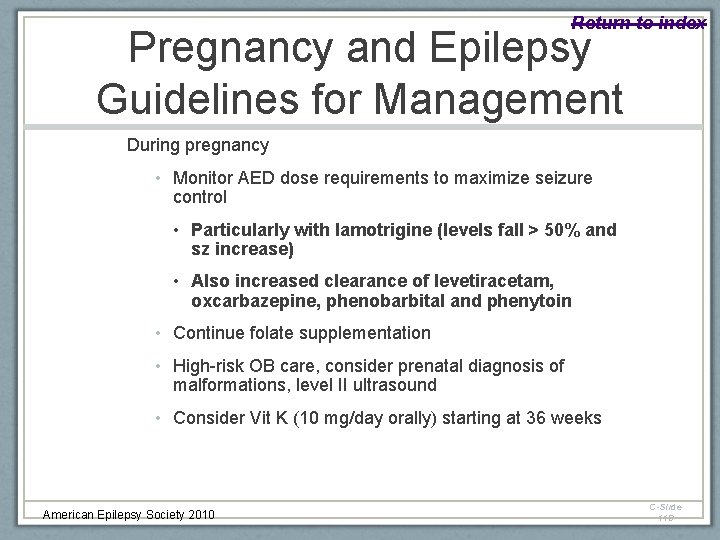
Return to index Pregnancy and Epilepsy Guidelines for Management During pregnancy • Monitor AED dose requirements to maximize seizure control • Particularly with lamotrigine (levels fall > 50% and sz increase) • Also increased clearance of levetiracetam, oxcarbazepine, phenobarbital and phenytoin • Continue folate supplementation • High-risk OB care, consider prenatal diagnosis of malformations, level II ultrasound • Consider Vit K (10 mg/day orally) starting at 36 weeks American Epilepsy Society 2010 C-Slide 119
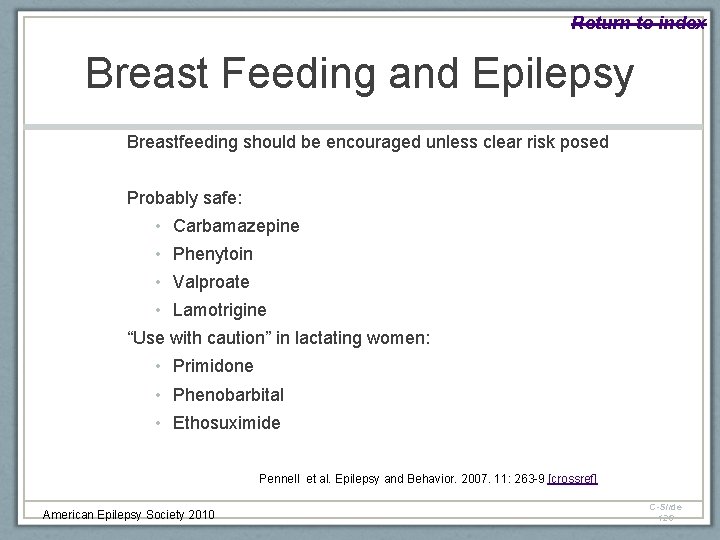
Return to index Breast Feeding and Epilepsy Breastfeeding should be encouraged unless clear risk posed Probably safe: • Carbamazepine • Phenytoin • Valproate • Lamotrigine “Use with caution” in lactating women: • Primidone • Phenobarbital • Ethosuximide Pennell et al. Epilepsy and Behavior. 2007. 11: 263 -9 [crossref] American Epilepsy Society 2010 C-Slide 120
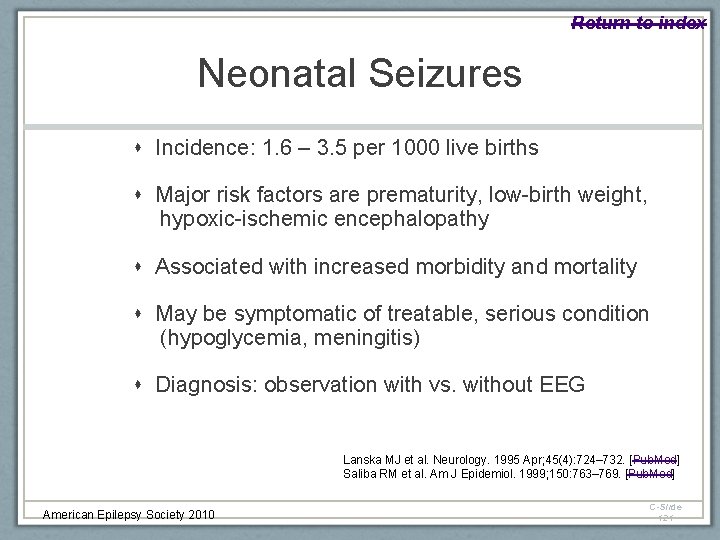
Return to index Neonatal Seizures Incidence: 1. 6 – 3. 5 per 1000 live births Major risk factors are prematurity, low-birth weight, hypoxic-ischemic encephalopathy Associated with increased morbidity and mortality May be symptomatic of treatable, serious condition (hypoglycemia, meningitis) Diagnosis: observation with vs. without EEG Lanska MJ et al. Neurology. 1995 Apr; 45(4): 724– 732. [Pub. Med] Saliba RM et al. Am J Epidemiol. 1999; 150: 763– 769. [Pub. Med] American Epilepsy Society 2010 C-Slide 121
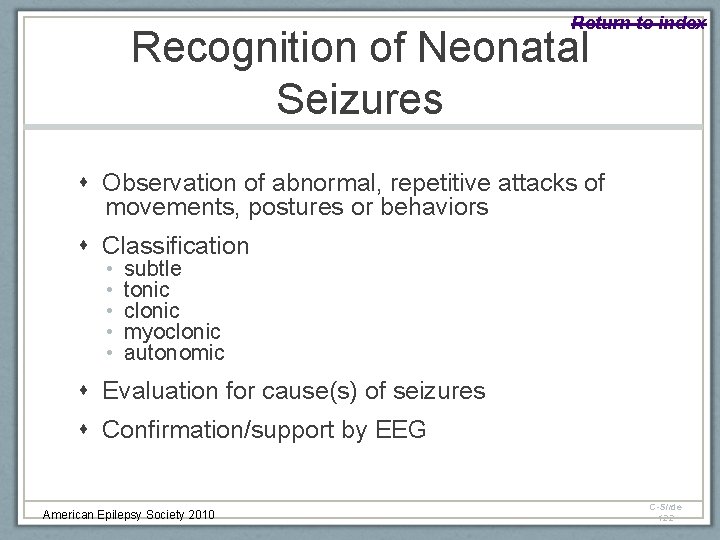
Return to index Recognition of Neonatal Seizures Observation of abnormal, repetitive attacks of movements, postures or behaviors Classification • • • subtle tonic clonic myoclonic autonomic Evaluation for cause(s) of seizures Confirmation/support by EEG American Epilepsy Society 2010 C-Slide 122
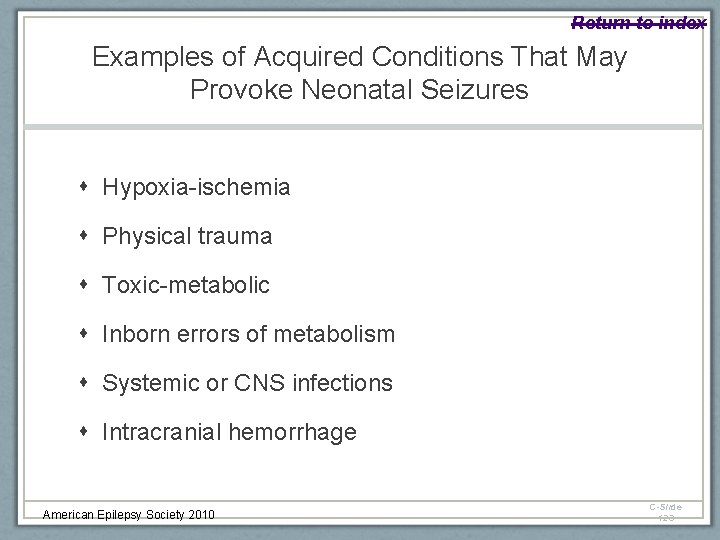
Return to index Examples of Acquired Conditions That May Provoke Neonatal Seizures Hypoxia-ischemia Physical trauma Toxic-metabolic Inborn errors of metabolism Systemic or CNS infections Intracranial hemorrhage American Epilepsy Society 2010 C-Slide 123
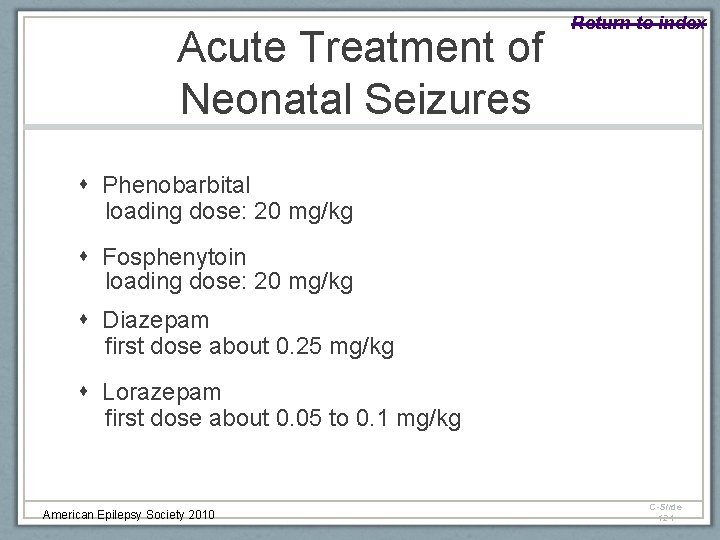
Acute Treatment of Neonatal Seizures Return to index Phenobarbital loading dose: 20 mg/kg Fosphenytoin loading dose: 20 mg/kg Diazepam first dose about 0. 25 mg/kg Lorazepam first dose about 0. 05 to 0. 1 mg/kg American Epilepsy Society 2010 C-Slide 124
Pediatric Epilepsy Syndromes Epilepsy syndromes may be classified according to whether the associated seizures are partial or generalized, and whether the etiology is idiopathic or symptomatic/cryptogenic. Several important pediatric syndromes can be further grouped according to age of onset and prognosis. These may be divided into the epileptic encephalopathies of infancy and early childhood, febrile convulsions, and benign partial and generalized syndromes of later childhood and adolescence. American Epilepsy Society 2010 C-Slide 125
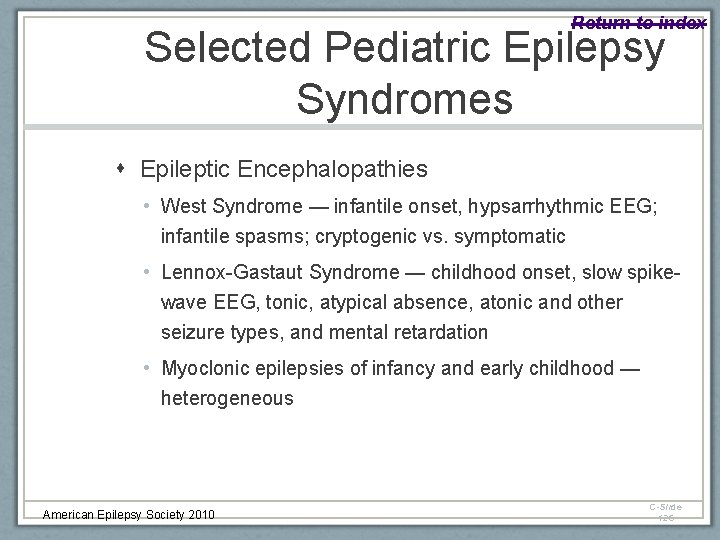
Return to index Selected Pediatric Epilepsy Syndromes Epileptic Encephalopathies • West Syndrome — infantile onset, hypsarrhythmic EEG; infantile spasms; cryptogenic vs. symptomatic • Lennox-Gastaut Syndrome — childhood onset, slow spikewave EEG, tonic, atypical absence, atonic and other seizure types, and mental retardation • Myoclonic epilepsies of infancy and early childhood — heterogeneous American Epilepsy Society 2010 C-Slide 126
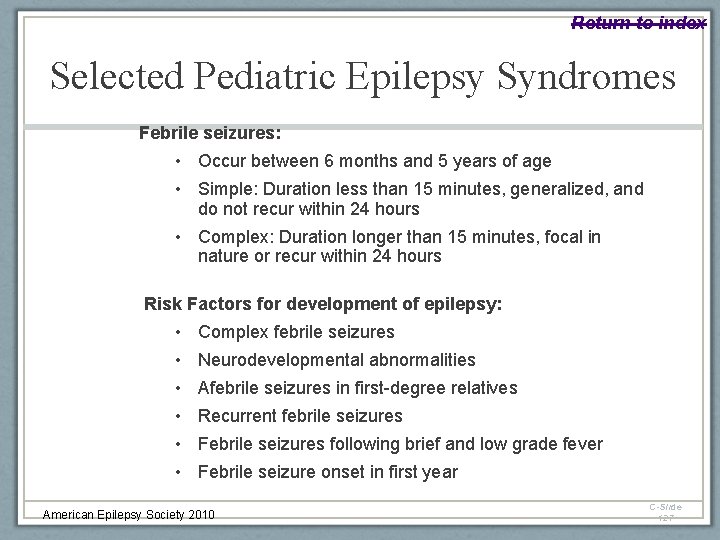
Return to index Selected Pediatric Epilepsy Syndromes Febrile seizures: • Occur between 6 months and 5 years of age • Simple: Duration less than 15 minutes, generalized, and do not recur within 24 hours • Complex: Duration longer than 15 minutes, focal in nature or recur within 24 hours Risk Factors for development of epilepsy: • Complex febrile seizures • Neurodevelopmental abnormalities • Afebrile seizures in first-degree relatives • Recurrent febrile seizures • Febrile seizures following brief and low grade fever • Febrile seizure onset in first year American Epilepsy Society 2010 C-Slide 127
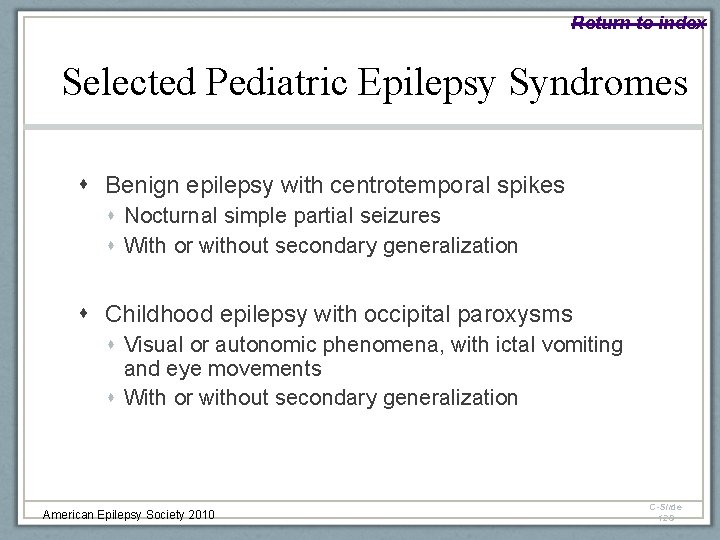
Return to index Selected Pediatric Epilepsy Syndromes Benign epilepsy with centrotemporal spikes Nocturnal simple partial seizures With or without secondary generalization Childhood epilepsy with occipital paroxysms Visual or autonomic phenomena, with ictal vomiting and eye movements With or without secondary generalization American Epilepsy Society 2010 C-Slide 128
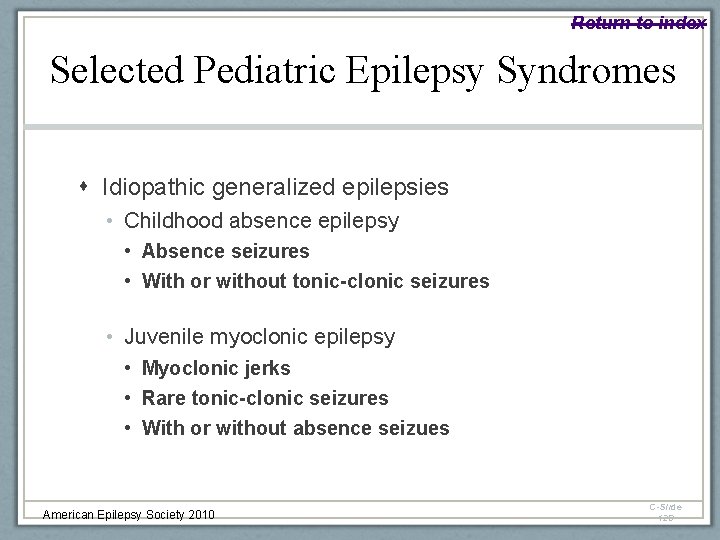
Return to index Selected Pediatric Epilepsy Syndromes Idiopathic generalized epilepsies • Childhood absence epilepsy • Absence seizures • With or without tonic-clonic seizures • Juvenile myoclonic epilepsy • Myoclonic jerks • Rare tonic-clonic seizures • With or without absence seizues American Epilepsy Society 2010 C-Slide 129
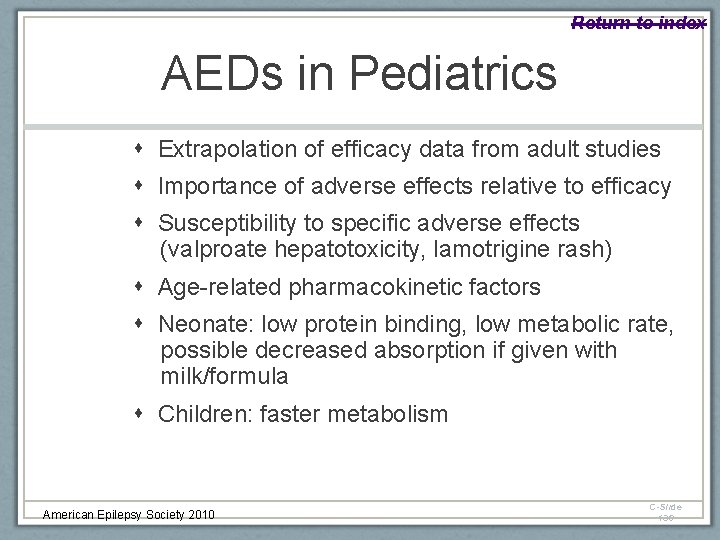
Return to index AEDs in Pediatrics Extrapolation of efficacy data from adult studies Importance of adverse effects relative to efficacy Susceptibility to specific adverse effects (valproate hepatotoxicity, lamotrigine rash) Age-related pharmacokinetic factors Neonate: low protein binding, low metabolic rate, possible decreased absorption if given with milk/formula Children: faster metabolism American Epilepsy Society 2010 C-Slide 130
Return to index Managing Pediatric Epilepsy Consider chewable/liquid formulations Weight-based dosing with frequent adjustments to account for growth Minimize missed school Develop safety plan with family For intractable epilepsy consider Ketogenic diet Surgery Vagal nerve stimulation American Epilepsy Society 2010 C-Slide 131
Return to index Appendix: References for Neurologists Epidemiology and classification § Herman ST. Classification of Epileptic Seizures. Continuum Neurol. 2007; 13(4): 1347. § Engel J et al. A Proposed Diagnostic Scheme for People with Epileptic Seizures and with Epilepsy: Report of the ILAE Task Force on Classification and Terminology. Epilepsia 2001; 42(6): 796 -803. [Pub. Med] § Hauser WA, Annegers JF, Kurland LT. Incidence of epilepsy and unprovoked seizures in Rochester, Minnesota: 1935– 1984. Epilepsia. 1993; 34(3): 453– 468. [Pub. Med] § French, JA and Pedley, TA. Management of Epilepsy. N Engl J Med 2008 359: 166176 [Pub. Med] American Epilepsy Society 2010 C-Slide 132
Return to index Appendix: References for Neurologists Evaluation of a first seizure § First Seizure Trial Group. Randomized clinical trial on the efficacy of antiepileptic drugs in reducing the risk of relapse after a first unprovoked tonic-clonic seizure. Neurology. 1993; 43: 478– 483. [Pub. Med] § Camfield P, Camfield C, Smith S, Dooley J, Smith E. Long-term outcome is unchanged by antiepileptic drug treatment after a first seizure: a 15 -year follow-up from a randomized trial in childhood. Epilepsia. 2002; 43: 662– 663. [Pub. Med] § Krumholz A, Wiebe S, Gronseth G, et al. Quality Standards Subcommittee of the American Academy of Neurology; American Epilepsy Society. Practice parameter: evaluating an apparent unprovoked first seizure in adults (an evidence-based review) Neurology. 2007; 69(21): 1996– 2007. [Pub. Med] American Epilepsy Society 2010 C-Slide 133
Return to index Appendix: References for Neurologists Anti-epileptic drugs § French JA, Kanner AM, Bautista J, et al. Efficacy and tolerability of the new antiepileptic drugs Neurology. 2004 a; 62: 1252– 60. [Pub. Med] 2004 b; 62: 1261– 73. [Pub. Med] § Glauser T, Ben-Menachem, Bourgeois B et al. ILAE treatment guidelines: evidence-based analysis of antiepileptic drug efficacy and effectiveness as initial monotherapy for epileptic seizures and syndromes. Epilepsia 2006; 47(7): 1094 -1120. [Pub. Med] § Patsalos PN, Berry DJ, Bourgeois BF, Cloyd JC, Glauser TA, Johannessen SI, Leppik IE, Tomson T, Perucca E. Antiepileptic drugs–best practice guidelines for therapeutic drug monitoring: A position paper by the Subcommission on therapeutic drug monitoring, ILAE Commission on therapeutic strategies. Epilepsia. 2008; 49: 1239– 1276. [Pub. Med] American Epilepsy Society 2010 C-Slide 134
Return to index Appendix: References for Neurologists Anti-epileptic drugs in special populations § Harden CL et al. Practice parameter update: management issues for women with epilepsy. Neurology. 2009 Jul 14; 73(2): 133 -41. [Pub. Med] § Rowan AJ et al. New onset geriatric epilepsy: a randomized study of gabapentin, lamotrigine, and carbamazepine. Neurology. 2005 Jun 14; 64(11): 1868 -73. [Pub. Med] § Azar NJ and BW Abou-Khalil. Considerations in the Choice of an Antiepileptic Drug in the Treatment of Epilepsy. Seminars in Neurology. 2008; 28(3): 305 -316. [Pub. Med] American Epilepsy Society 2010 C-Slide 135
Return to index Appendix: References for Neurologists Discontinuing antiepileptic drugs § Berg AT, Shinnar S. Relapse following discontinuation of antiepileptic drugs: a meta-analysis. Neurology 1994; 44: 601608. [Pub. Med] § Practice parameter: a guideline for discontinuing antiepileptic drugs in seizure-free patients-summary statement. Report of the Quality Standards Subcommittee of the American Academy of Neurology. 1996; 47: 600– 602. [Pub. Med] § Specchio LM et al. Discontinuing antiepileptic drugs in patients who are seizure free on monotherapy. J Neurol Neurosurg Psychiatry 2002 72: 22 -25 [Pub. Med] C-Slide American Epilepsy Society 2010 136
Return to index Appendix: References for Neurologists Intractable epilepsy and epilepsy surgery § Kwan P and MJ Brodie. Early Identification of Intractable Epilepsy. N Engl J Med. 342 (2000), 314 -9. [Pubmed] § Wiebe S et al. A randomized, controlled trial of surgery for temporal-lobe epilepsy, N Engl J Med 345 (2001), 311– 318 [Pubmed] § Engel J et al. Practice parameter: temporal lobe and localized neocortical resections for epilepsy: report of the Quality Standards Subcommittee of the American Academy of Neurology, in association with the American Epilepsy Society and the American Association of Neurological Surgeons, Neurology 60 (2003), 538– 547 [Pubmed] § Spencer SS and L Huh, Outcomes of epilepsy surgery in adults and children . Lancet Neurol. (2008), 525– 537. [Pubmed] American Epilepsy Society 2010 C-Slide 137
Return to index Appendix: References for Neurologists Management of status epilepticus § Arif H, Hirsch LJ. Treatment of status epilepticus. Semin Neurol. 2008; 28: 342 – 354. doi: 10. 1055/s-2008 -1079339. [Pub. Med] § Treiman DM, Meyers PD, Walton NY, Collins JF, Colling C, Rowan AJ, Handforth A, Faught E, Callabresi VP, Uthman BM, Ramsay RE, Mamdani MB. A comparison of four treatments for generalized convulsive status epilepticus. N Engl J Med. 1998; 339: 792– 8. [Pub. Med] § Alldredge BK, Gelb AM, Isaacs SM, Corry MD, Allen F, Ulrich S, Gottwald MD, O'Neil N, Neuhaus JM, Segal MR, Lowestein DH. A comparison of lorazepam, diazepam and placebo for the treatment of out-of-hospital status epilepticus. N Engl J Med. 2001; 345: 631– 7. [Pub. Med] American Epilepsy Society 2010 C-Slide 138
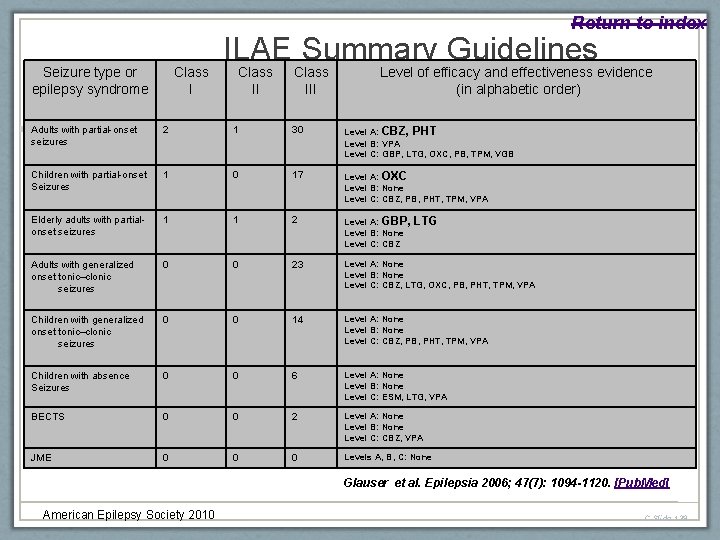
Return to index Seizure type or epilepsy syndrome Class I ILAE Summary Guidelines Class III Level of efficacy and effectiveness evidence (in alphabetic order) Adults with partial-onset seizures 2 1 30 Level A: CBZ, PHT Level B: VPA Level C: GBP, LTG, OXC, PB, TPM, VGB Children with partial-onset Seizures 1 0 17 Level A: OXC Level B: None Level C: CBZ, PB, PHT, TPM, VPA Elderly adults with partialonset seizures 1 1 2 Level A: GBP, Level B: None Level C: CBZ Adults with generalized onset tonic–clonic seizures 0 0 23 Level A: None Level B: None Level C: CBZ, LTG, OXC, PB, PHT, TPM, VPA Children with generalized onset tonic–clonic seizures 0 0 14 Level A: None Level B: None Level C: CBZ, PB, PHT, TPM, VPA Children with absence Seizures 0 0 6 Level A: None Level B: None Level C: ESM, LTG, VPA BECTS 0 0 2 Level A: None Level B: None Level C: CBZ, VPA JME 0 0 0 Levels A, B, C: None LTG Glauser et al. Epilepsia 2006; 47(7): 1094 -1120. [Pub. Med] American Epilepsy Society 2010 C-Slide 139
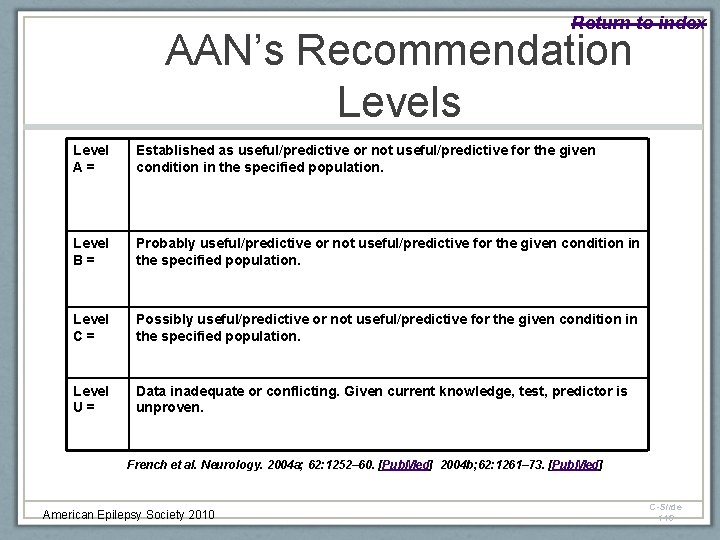
Return to index AAN’s Recommendation Levels Level A= Established as useful/predictive or not useful/predictive for the given condition in the specified population. Level B= Probably useful/predictive or not useful/predictive for the given condition in the specified population. Level C= Possibly useful/predictive or not useful/predictive for the given condition in the specified population. Level U= Data inadequate or conflicting. Given current knowledge, test, predictor is unproven. French et al. Neurology. 2004 a; 62: 1252– 60. [Pub. Med] 2004 b; 62: 1261– 73. [Pub. Med] American Epilepsy Society 2010 C-Slide 140
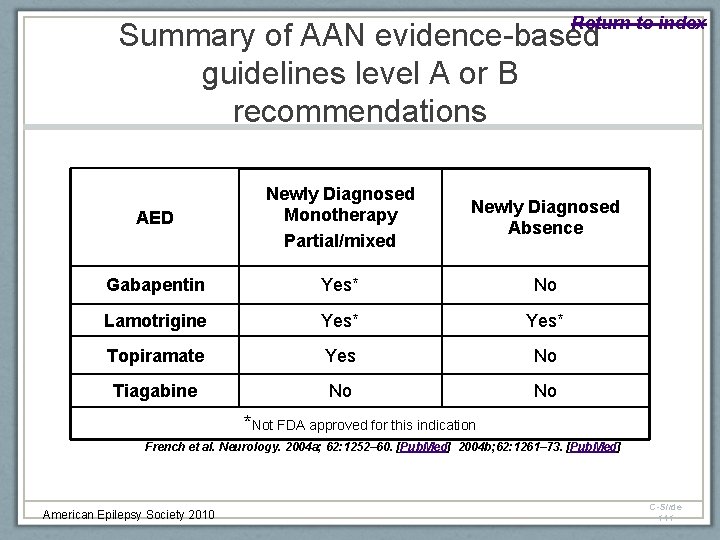
Return to index Summary of AAN evidence-based guidelines level A or B recommendations AED Newly Diagnosed Monotherapy Partial/mixed Newly Diagnosed Absence Gabapentin Yes* No Lamotrigine Yes* Topiramate Yes No Tiagabine No No *Not FDA approved for this indication French et al. Neurology. 2004 a; 62: 1252– 60. [Pub. Med] 2004 b; 62: 1261– 73. [Pub. Med] American Epilepsy Society 2010 C-Slide 141
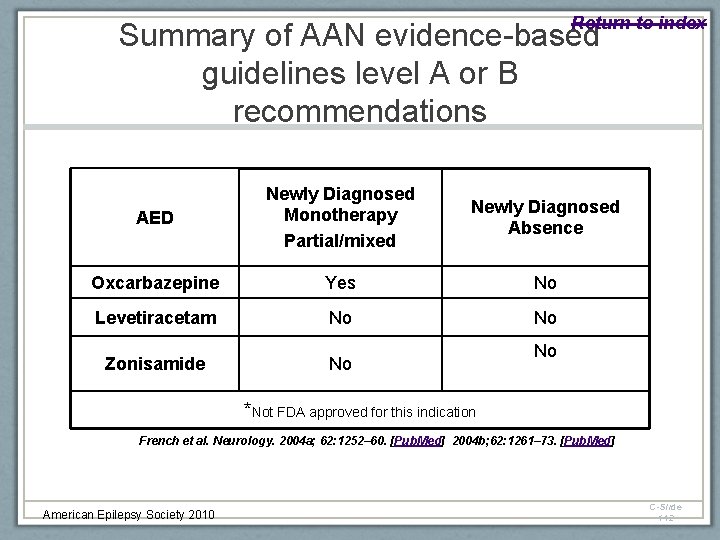
Return to index Summary of AAN evidence-based guidelines level A or B recommendations AED Newly Diagnosed Monotherapy Partial/mixed Newly Diagnosed Absence Oxcarbazepine Yes No Levetiracetam No No Zonisamide No No *Not FDA approved for this indication French et al. Neurology. 2004 a; 62: 1252– 60. [Pub. Med] 2004 b; 62: 1261– 73. [Pub. Med] American Epilepsy Society 2010 C-Slide 142
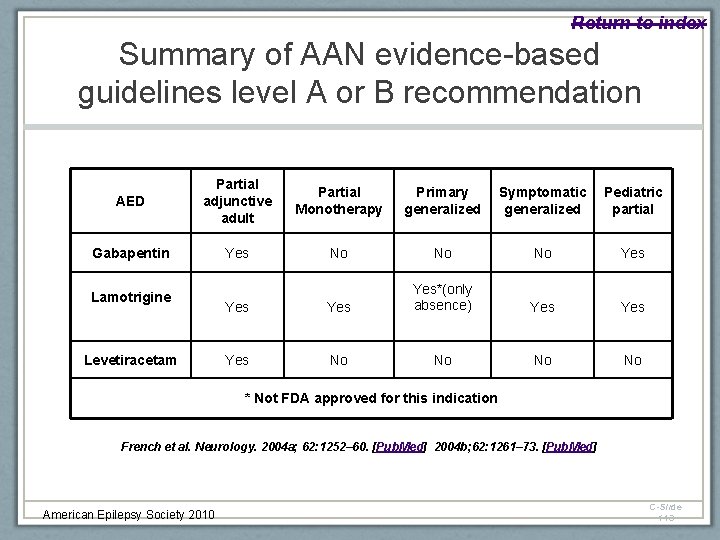
Return to index Summary of AAN evidence-based guidelines level A or B recommendation AED Partial adjunctive adult Partial Monotherapy Primary generalized Symptomatic generalized Pediatric partial Gabapentin Yes No No No Yes Yes*(only absence) Yes Yes No No Lamotrigine Levetiracetam * Not FDA approved for this indication French et al. Neurology. 2004 a; 62: 1252– 60. [Pub. Med] 2004 b; 62: 1261– 73. [Pub. Med] American Epilepsy Society 2010 C-Slide 143
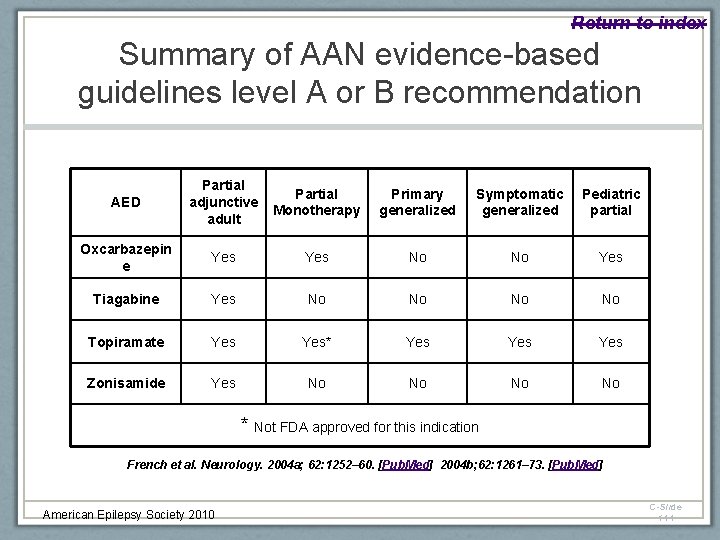
Return to index Summary of AAN evidence-based guidelines level A or B recommendation AED Partial adjunctive adult Partial Monotherapy Primary generalized Symptomatic generalized Pediatric partial Oxcarbazepin e Yes No No Yes Tiagabine Yes No No Topiramate Yes* Yes Yes Zonisamide Yes No No * Not FDA approved for this indication French et al. Neurology. 2004 a; 62: 1252– 60. [Pub. Med] 2004 b; 62: 1261– 73. [Pub. Med] American Epilepsy Society 2010 C-Slide 144
rican Epilepsy Society 2010 Summary of ILAE guidelines on therapeutic drug levels Retu Patsalos et al. Epilepsia. 2008; 49: 1239– 127 American Epilepsy Society 2010