Management of Difficult to Treat Epilepsy in Children



- Slides: 53
Management of Difficult to Treat Epilepsy in Children Northeast Regional Epilepsy Group
Advances in the Diagnosis and Treatment of Epilepsy Marcelo E. Lancman, M. D. Director, Epilepsy Program Northeast Regional Epilepsy Group
Advances in the Diagnosis and Treatment of Epilepsy concepts n Diagnosing Epilepsy n What causes Epilepsy n Treating Epilepsy n New developments n
Epilepsy Concepts n What is epilepsy? n What is a seizure?
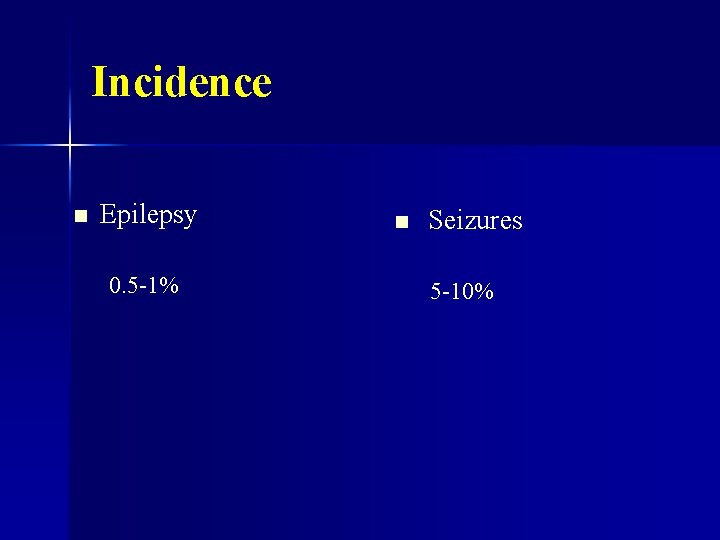
Incidence n Epilepsy 0. 5 -1% n Seizures 5 -10%
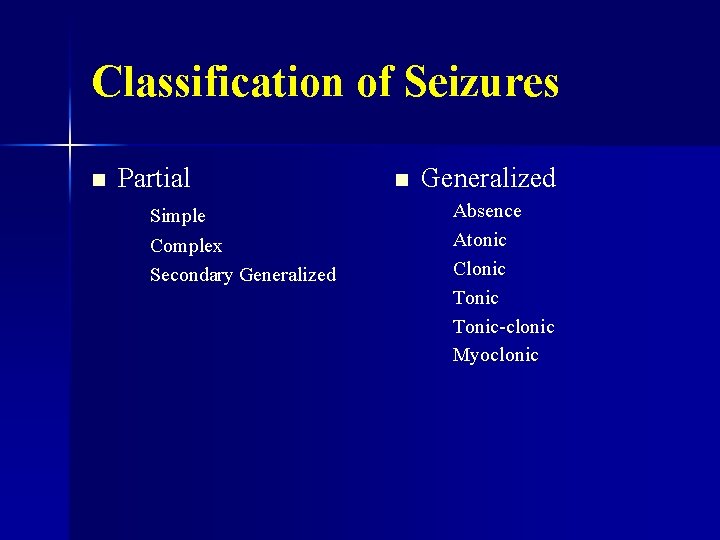
Classification of Seizures n Partial Simple Complex Secondary Generalized n Generalized Absence Atonic Clonic Tonic-clonic Myoclonic
Classification of Epilepsy n By Localization – Partial – Generalized n By Cause – Idiopathic (unknown) – Symptomatic
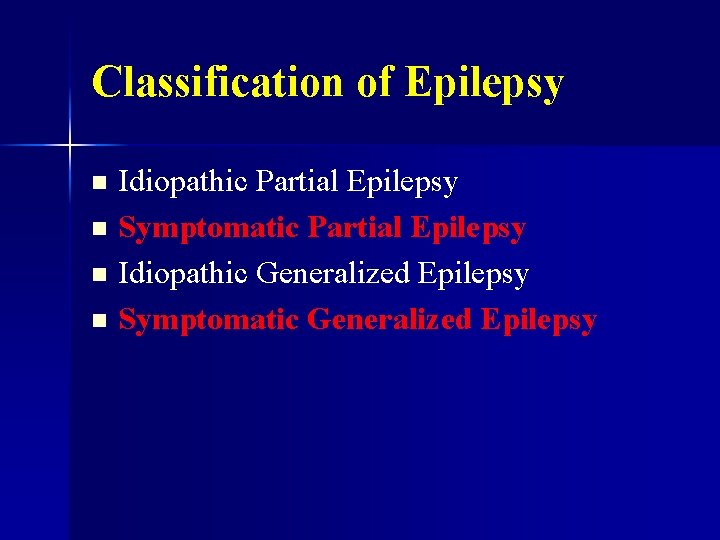
Classification of Epilepsy Idiopathic Partial Epilepsy n Symptomatic Partial Epilepsy n Idiopathic Generalized Epilepsy n Symptomatic Generalized Epilepsy n
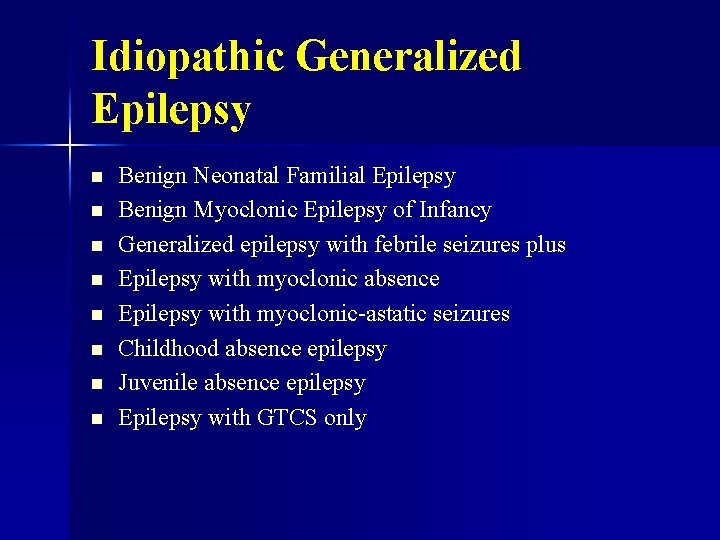
Idiopathic Generalized Epilepsy n n n n Benign Neonatal Familial Epilepsy Benign Myoclonic Epilepsy of Infancy Generalized epilepsy with febrile seizures plus Epilepsy with myoclonic absence Epilepsy with myoclonic-astatic seizures Childhood absence epilepsy Juvenile absence epilepsy Epilepsy with GTCS only
Idiopathic Partial Epilepsy n n Benign Rolandic Epilepsy Benign Occipital Epilepsy
Symptomatic Generalized Epilepsy Infantile spasms (West syndrome) n Dravet syndrome n Lennox-Gastaut syndrome n
Symptomatic Partial Epilepsy Temporal Lobe Epilepsy n Frontal Lobe Epilepsy n Parietal Lobe Epilepsy n Occipital Lobe Epilepsy n (Tuberous Sclerosis Complex, Neurofibromatosis) n
Special types of Epilepsy Neonatal seizures n Landau-Kleffner syndrome n ESES (electrical status epilepticus during sleep) n Reflex Epilepsy n
Type of Epilepsy n The importance of knowing
Diagnosis of Epilepsy Medical History n Physical exam n
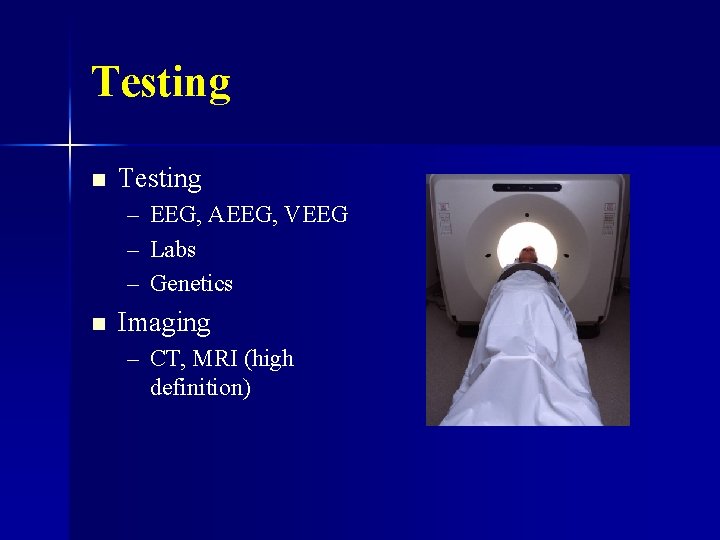
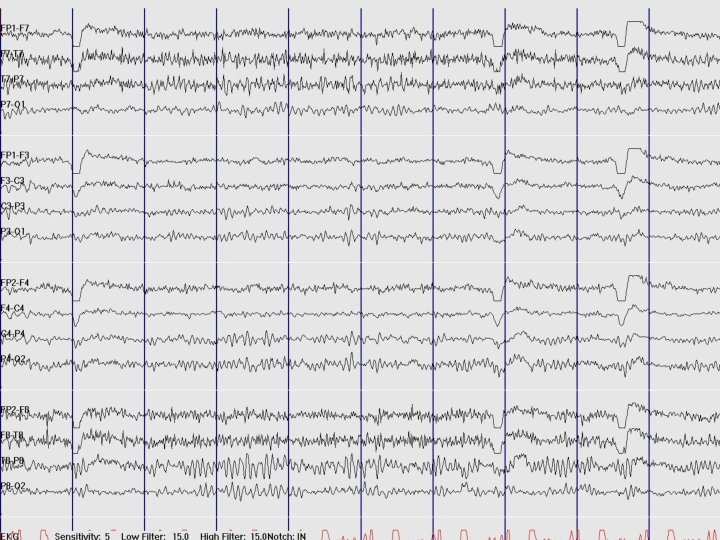
Testing n Testing – – – n EEG, AEEG, VEEG Labs Genetics Imaging – CT, MRI (high definition)
Diagnosis n Diagnosis is clear: treatment is initiated n Diagnosis unclear: Video-EEG
Video-EEG Monitoring n Continuous EEG monitoring along with continuous audio-video recording n Mostly requires inpatient admission
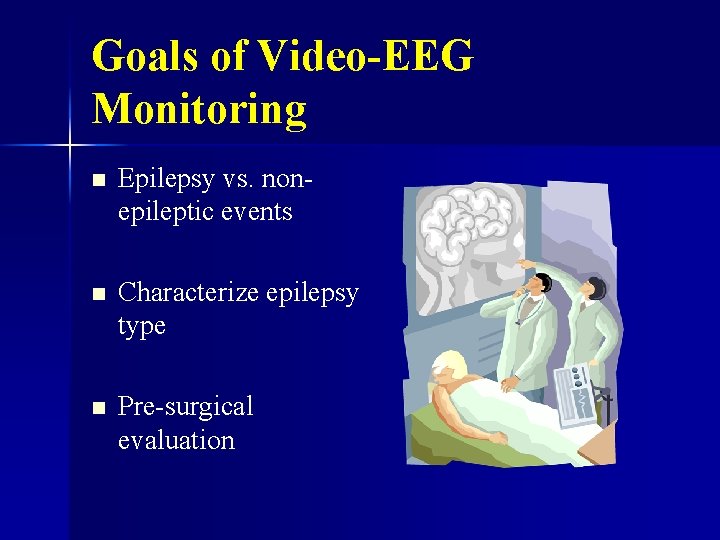
Goals of Video-EEG Monitoring n Epilepsy vs. nonepileptic events n Characterize epilepsy type n Pre-surgical evaluation
Non-Epileptic Events 20 to 30% of patients referred with diagnosis of intractable epilepsy n Events that do not have electrical source in brain n May have physical or psychological causes that are not epilepsy n But CAN also occur in patients who have epilepsy n
Non-epileptic events n Physiologic (other medical conditions) – Fainting, low sugar, changes in electrolytes, toxins, fever. n Psychological – Referred to psychiatry and neuropsychologist who work with this type of stress-seizure – Psychiatric medication, psychotherapy, education
Non-epileptic events n Conditions that may look like seizures: – TIAs, complicated migraines, movement disorders, sleep disorders, anxiety/panic disorder, vertigo, cardiac disorders, rage attacks, breath-holding spells,
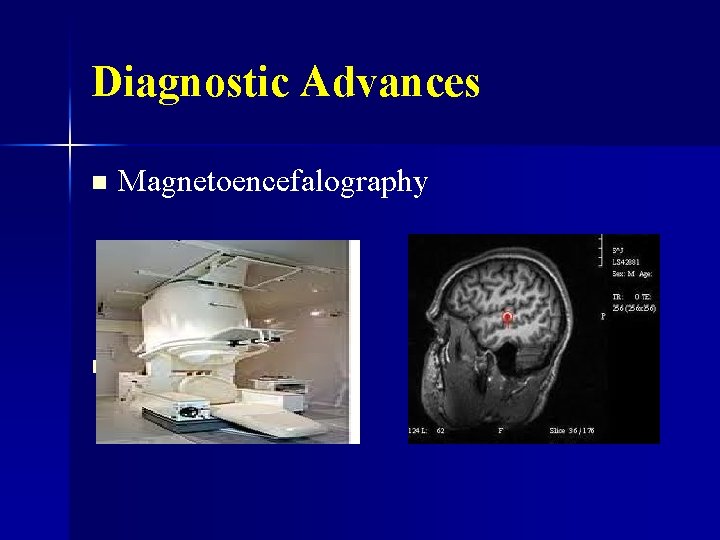
Diagnostic Advances n n Magnetoencefalography
What causes of Epilepsy? The seizure threshold n Causes: n – Genetics, head injury, stroke, tumors, infections, malformations, metabolic disorders (diabetes, thyroid, parathyroid, adrenal), degenerative disorders, perinatal factors and other less common (cardiac, GI, blood, inflammatory, poisons, etc)
Seizure Triggers n Alcohol, stress, environmental temperature, lights, fever/illness, hormonal changes, hyperventilation, sleep deprivation, medications and supplements, missing medication doses and travel across time zones
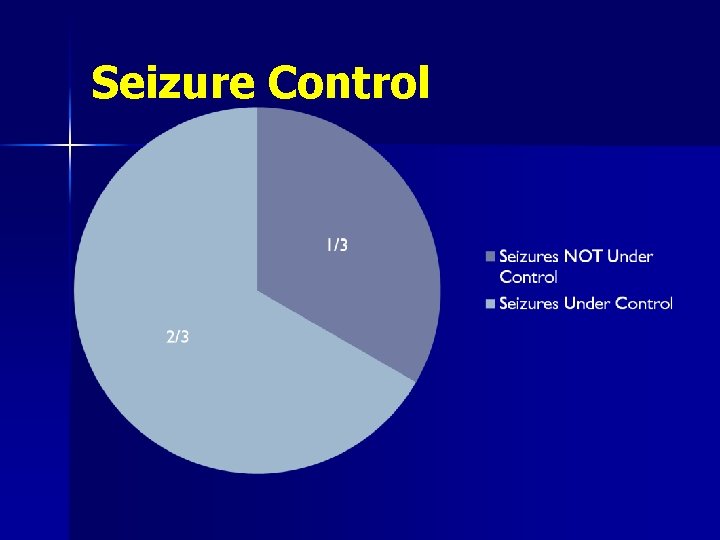
Treating Epilepsy n What is intractable epilepsy? Despite medical management, patient continues to have frequent, debilitating seizures
Seizure Control
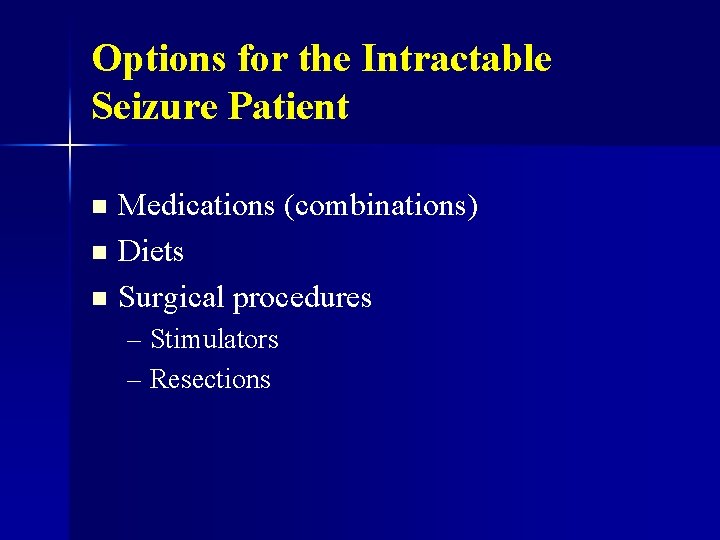
Options for the Intractable Seizure Patient Medications (combinations) n Diets n Surgical procedures n – Stimulators – Resections
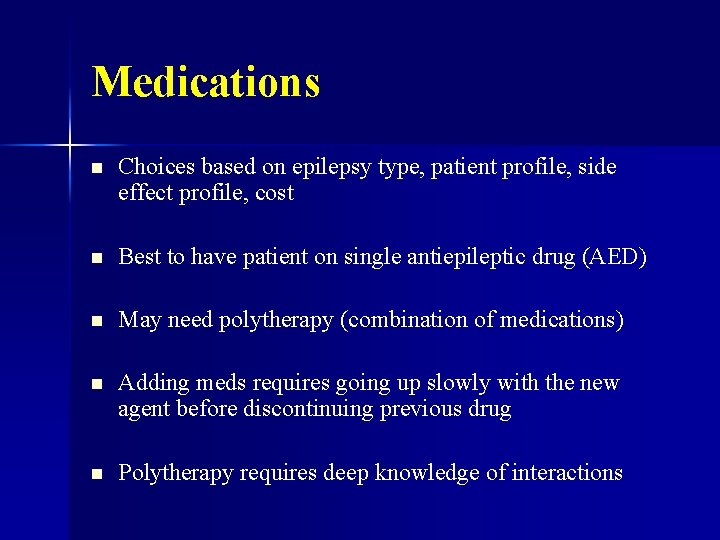
Medications n Choices based on epilepsy type, patient profile, side effect profile, cost n Best to have patient on single antiepileptic drug (AED) n May need polytherapy (combination of medications) n Adding meds requires going up slowly with the new agent before discontinuing previous drug n Polytherapy requires deep knowledge of interactions
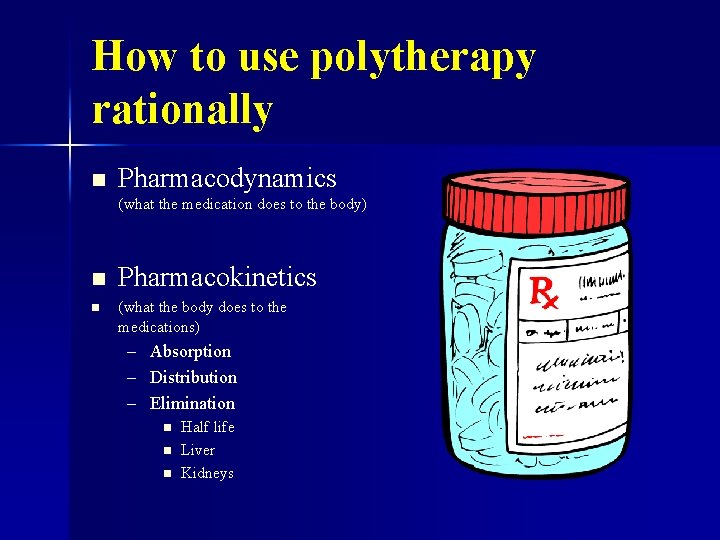
How to use polytherapy rationally n Pharmacodynamics (what the medication does to the body) n n Pharmacokinetics (what the body does to the medications) – Absorption – Distribution – Elimination n Half life Liver Kidneys
How to use polytherapy rationally n Side effects – Dose-related – Idiosyncratic (each person is different)
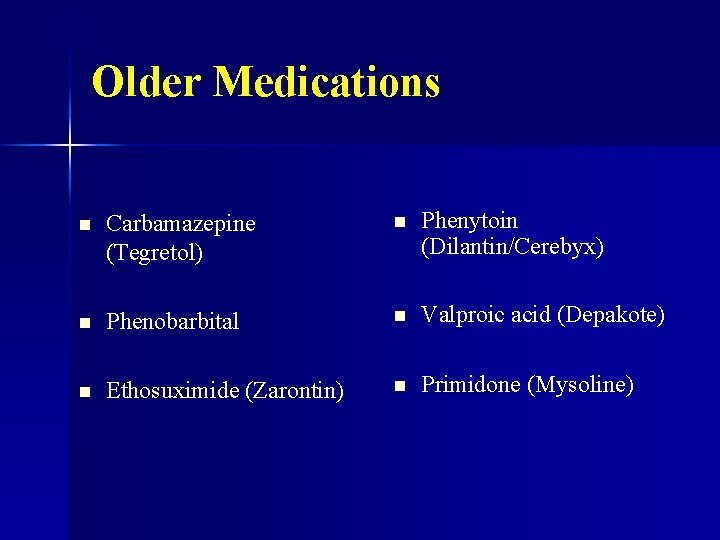
Older Medications n Carbamazepine (Tegretol) n Phenytoin (Dilantin/Cerebyx) n Phenobarbital n Valproic acid (Depakote) n Ethosuximide (Zarontin) n Primidone (Mysoline)
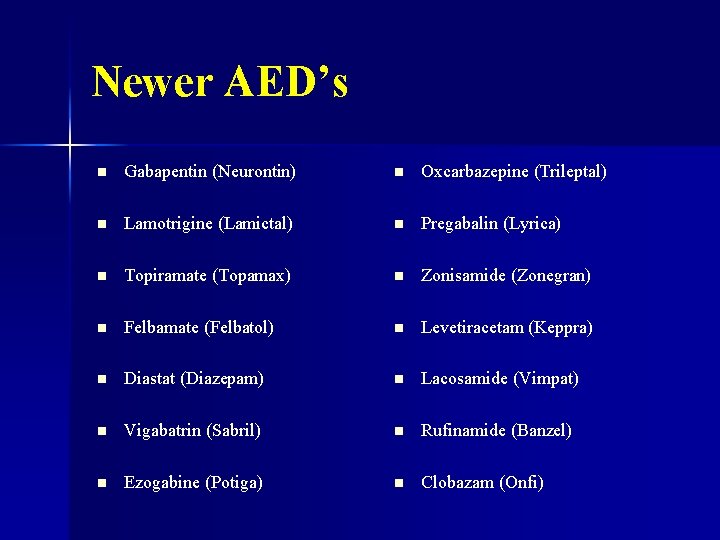
Newer AED’s n Gabapentin (Neurontin) n Oxcarbazepine (Trileptal) n Lamotrigine (Lamictal) n Pregabalin (Lyrica) n Topiramate (Topamax) n Zonisamide (Zonegran) n Felbamate (Felbatol) n Levetiracetam (Keppra) n Diastat (Diazepam) n Lacosamide (Vimpat) n Vigabatrin (Sabril) n Rufinamide (Banzel) n Ezogabine (Potiga) n Clobazam (Onfi)
Medication choices based on epilepsy type…
AED’s for Partial Epilepsy n All but Zarontin and Banzel
Best AED’s for Generalized Epilepsy n n n Depakote Keppra Lamictal Topamax Zonegran Banzel
Future Medications – – – – Brivaracetam Carisbamate Eslicarbazepine Ganaxalone Losigamone Nitrfazepam Perampanel Piracetam Progabide Remacemide Retigabine Seletracetam Stiripentol
What Are Some Promising New Medical Treatments? n Maintenance Treatment – Ezogabine (Potiga) – Perampanel – Vertex n Emergency Treatment – Intranasal Midazolam
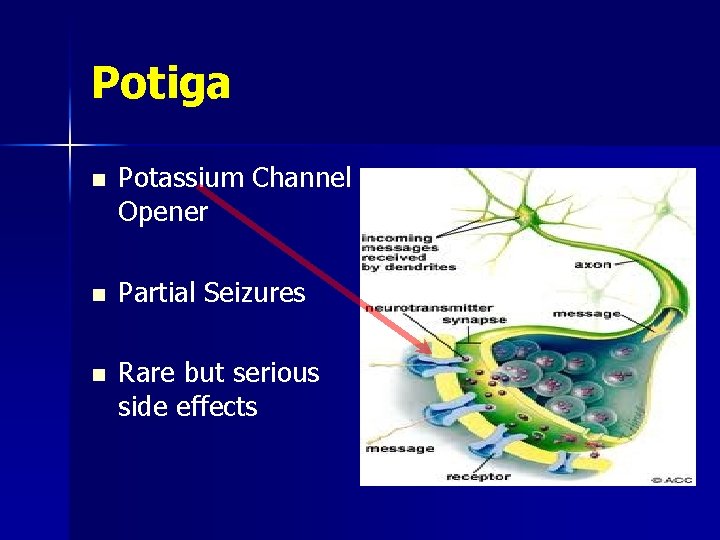
Potiga n Potassium Channel Opener n Partial Seizures n Rare but serious side effects
Peramapanel n Glutamate Blocker n Approved in Europe n Effective in trials for partial seizures n Under study in US for Generalized Seizure types n Side effects: Dizziness, Sleepiness n Under FDA review for Partial Seizures
Vx-765 for Partial Epilepsy n New approach to Epilepsy Rx – Anti-Inflammatory – Short Duration of therapy (weeks instead of years) – Oral Medicine n Early Clinical Trials Completed – Early results encouraging but longer treatment duration to be studied – Headache, dizziness, GI most common side effects
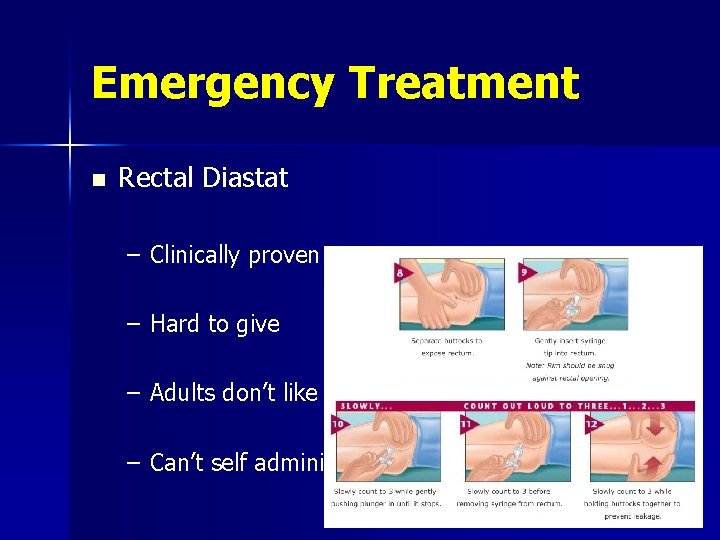
Emergency Treatment n Rectal Diastat – Clinically proven – Hard to give – Adults don’t like – Can’t self administer
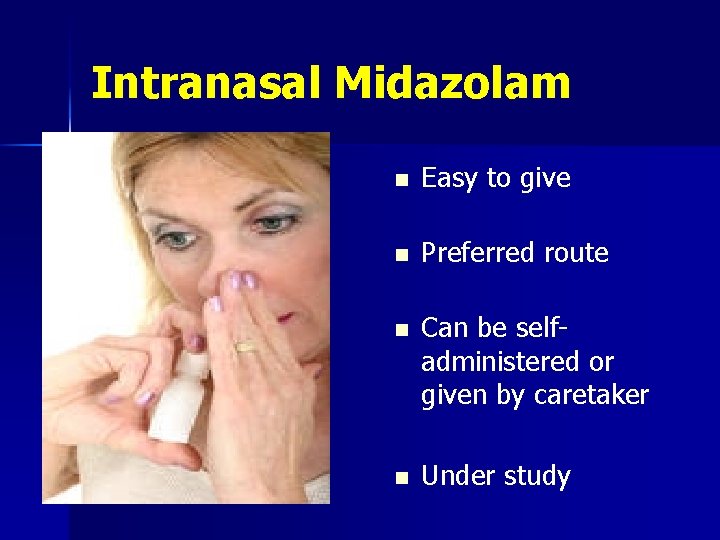
Intranasal Midazolam n Easy to give n Preferred route n Can be selfadministered or given by caretaker n Under study
For patients that do not respond to medication Ketogenic diet n Surgeries n
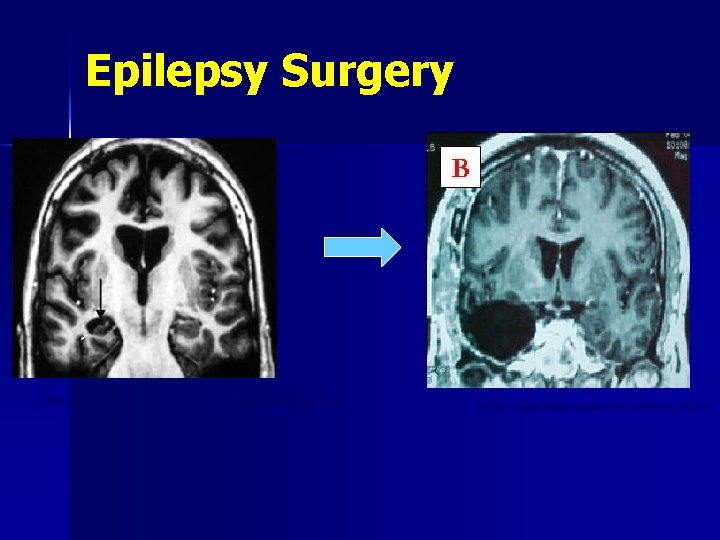
Epilepsy Surgery http: //www. rch. unimelb. edu. au/cep/Media/brain/mri 6. jpg http: //www. fleni. org. ar/files/servicio_193_8
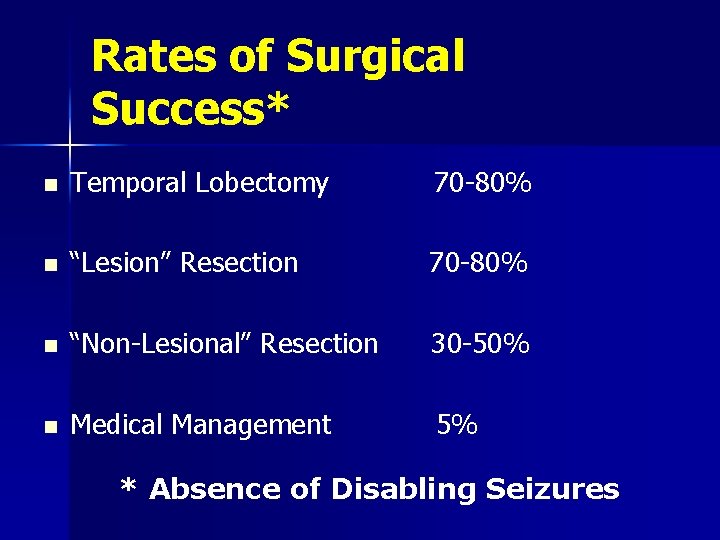
Rates of Surgical Success* n Temporal Lobectomy 70 -80% n “Lesion” Resection 70 -80% n “Non-Lesional” Resection 30 -50% n Medical Management 5% * Absence of Disabling Seizures
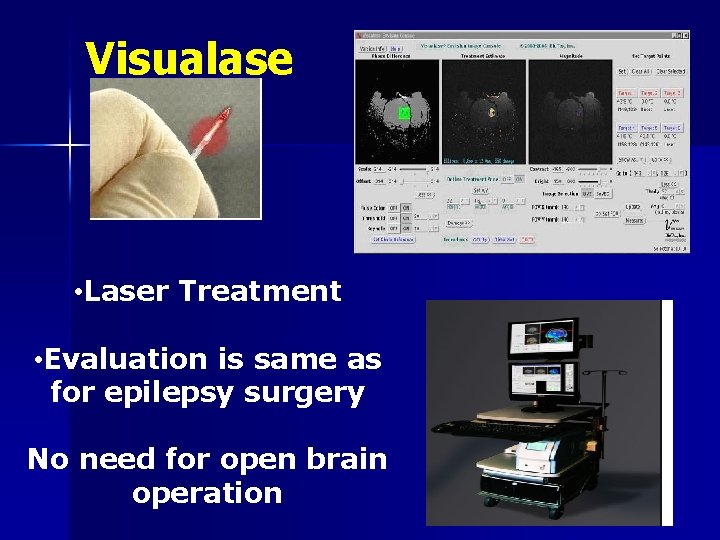
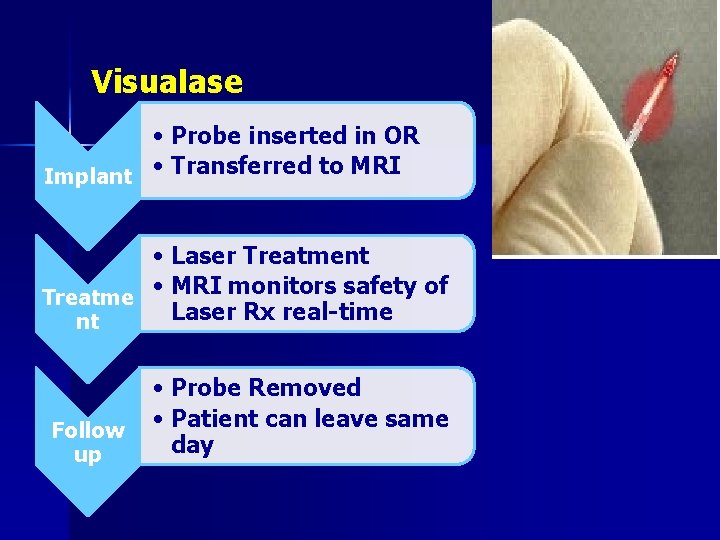
Visualase • Laser Treatment • Evaluation is same as for epilepsy surgery No need for open brain operation
Visualase • Probe inserted in OR Implant • Transferred to MRI • Laser Treatment • MRI monitors safety of Treatme Laser Rx real-time nt Follow up • Probe Removed • Patient can leave same day
Neuromodulatory Treatments n Device implanted to alter instead of destroy brain tissue n Range of treatment possible: Electrical, Cooling, local medications – Limit body/brain side effects n Improve brain function?
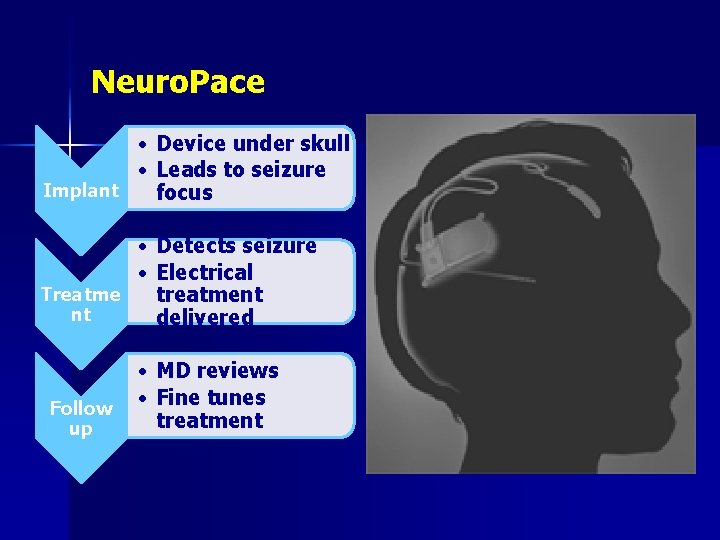
Neuro. Pace • Device under skull • Leads to seizure Implant focus • Detects seizure • Electrical Treatme treatment nt delivered Follow up • MD reviews • Fine tunes treatment
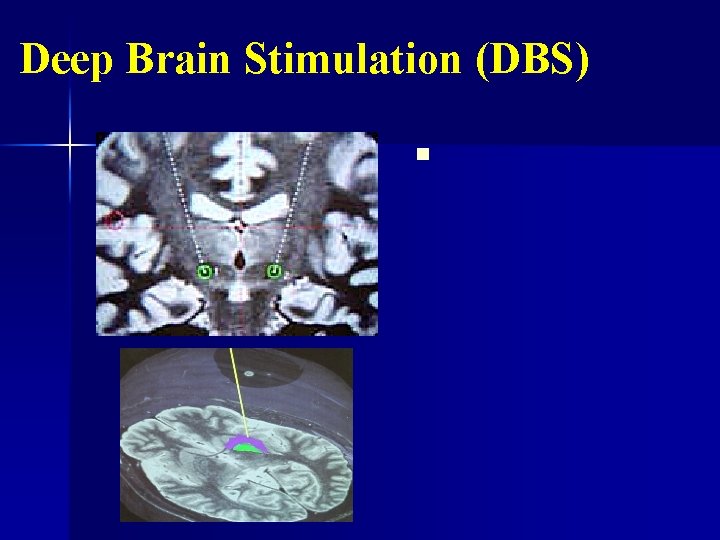
Deep Brain Stimulation (DBS) n
What will Epilepsy Care Look Like in Future? n Personalized Medical Choices based on genetics n Truly Anti-epileptic therapy n Treatment directed right at the seizure focus