
35 Year old Female with Polycystic Ovarian Syndrome
- Slides: 30
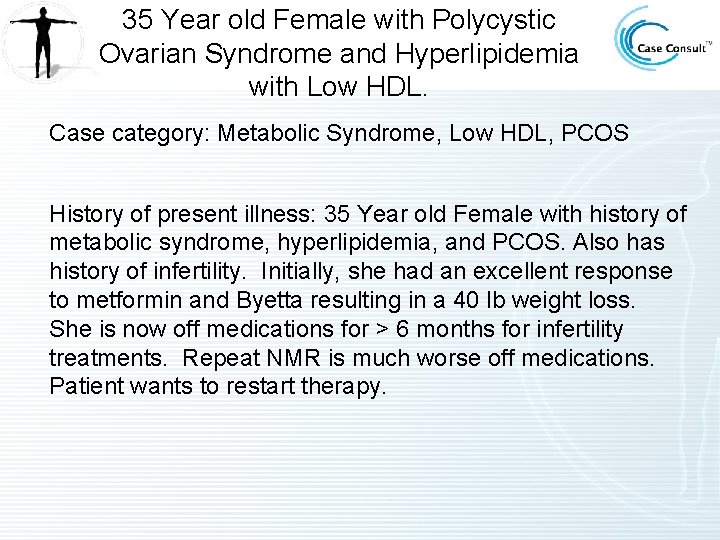
35 Year old Female with Polycystic Ovarian Syndrome and Hyperlipidemia with Low HDL. Case category: Metabolic Syndrome, Low HDL, PCOS History of present illness: 35 Year old Female with history of metabolic syndrome, hyperlipidemia, and PCOS. Also has history of infertility. Initially, she had an excellent response to metformin and Byetta resulting in a 40 lb weight loss. She is now off medications for > 6 months for infertility treatments. Repeat NMR is much worse off medications. Patient wants to restart therapy.
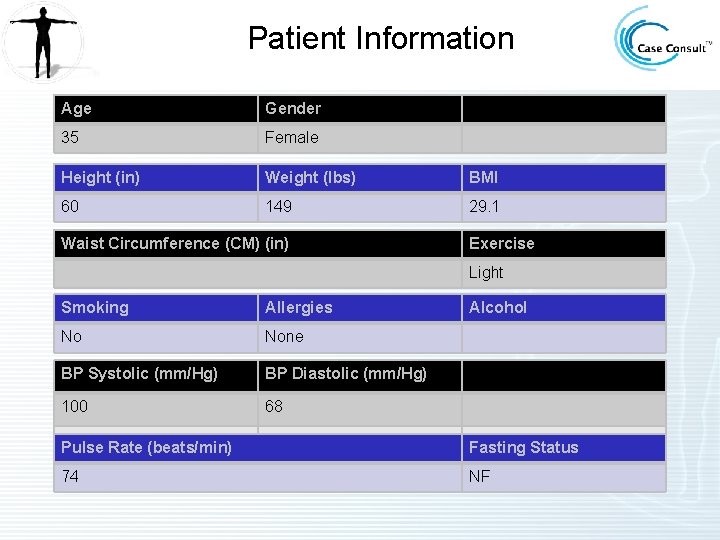
Patient Information Age Gender 35 Female Height (in) Weight (lbs) BMI 60 149 29. 1 Waist Circumference (CM) (in) Exercise Light Smoking Allergies No None BP Systolic (mm/Hg) BP Diastolic (mm/Hg) 100 68 Alcohol Pulse Rate (beats/min) Fasting Status 74 NF
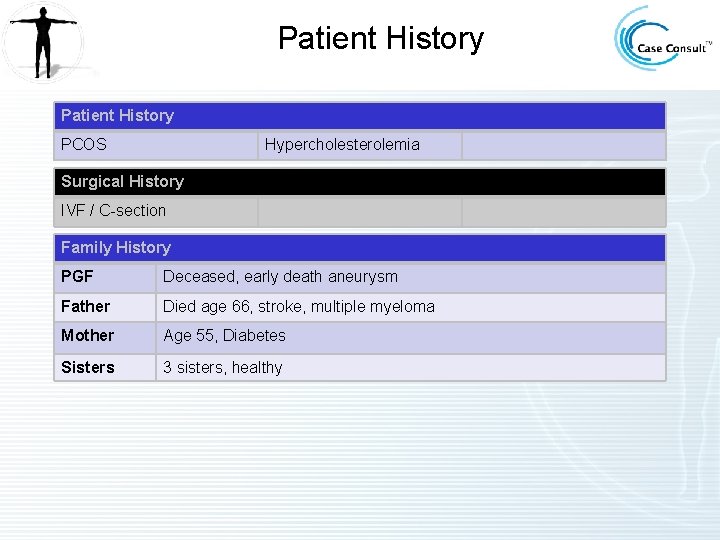
Patient History PCOS Hypercholesterolemia Surgical History IVF / C-section Family History PGF Deceased, early death aneurysm Father Died age 66, stroke, multiple myeloma Mother Age 55, Diabetes Sisters 3 sisters, healthy
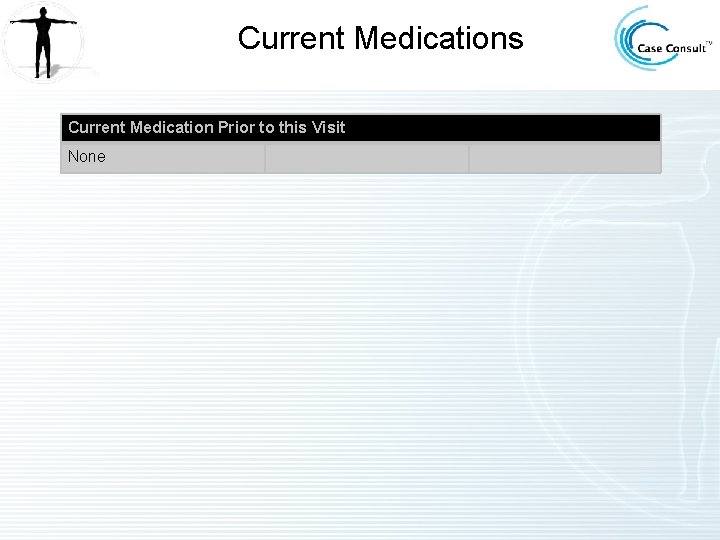
Current Medications Current Medication Prior to this Visit None
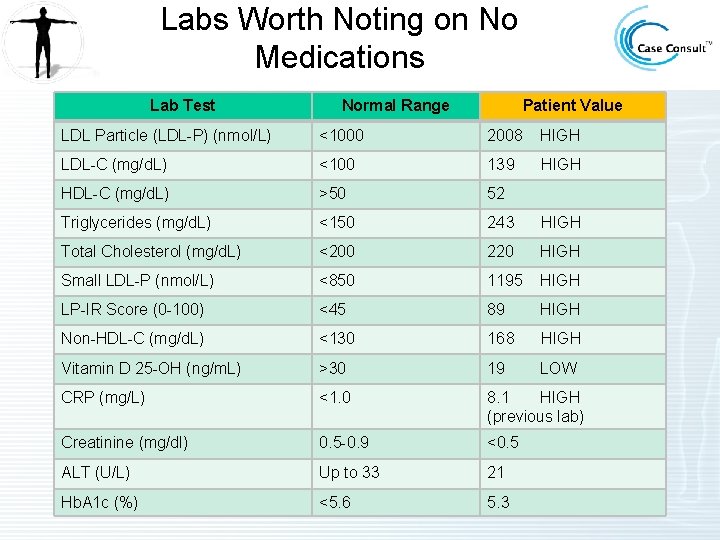
Labs Worth Noting on No Medications Lab Test Normal Range Patient Value LDL Particle (LDL-P) (nmol/L) <1000 2008 HIGH LDL-C (mg/d. L) <100 139 HIGH HDL-C (mg/d. L) >50 52 Triglycerides (mg/d. L) <150 243 HIGH Total Cholesterol (mg/d. L) <200 220 HIGH Small LDL-P (nmol/L) <850 1195 HIGH LP-IR Score (0 -100) <45 89 HIGH Non-HDL-C (mg/d. L) <130 168 HIGH Vitamin D 25 -OH (ng/m. L) >30 19 LOW CRP (mg/L) <1. 0 8. 1 HIGH (previous lab) Creatinine (mg/dl) 0. 5 -0. 9 <0. 5 ALT (U/L) Up to 33 21 Hb. A 1 c (%) <5. 6 5. 3
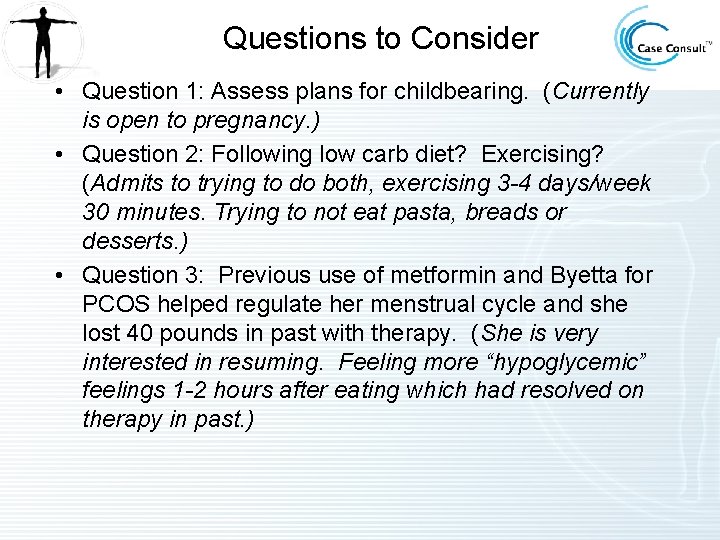
Questions to Consider • Question 1: Assess plans for childbearing. (Currently is open to pregnancy. ) • Question 2: Following low carb diet? Exercising? (Admits to trying to do both, exercising 3 -4 days/week 30 minutes. Trying to not eat pasta, breads or desserts. ) • Question 3: Previous use of metformin and Byetta for PCOS helped regulate her menstrual cycle and she lost 40 pounds in past with therapy. (She is very interested in resuming. Feeling more “hypoglycemic” feelings 1 -2 hours after eating which had resolved on therapy in past. )
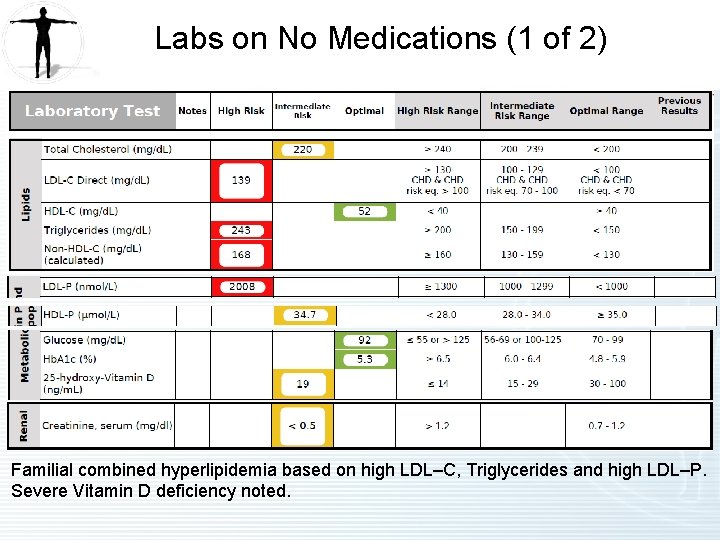
Labs on No Medications (1 of 2) Familial combined hyperlipidemia based on high LDL–C, Triglycerides and high LDL–P. Severe Vitamin D deficiency noted.
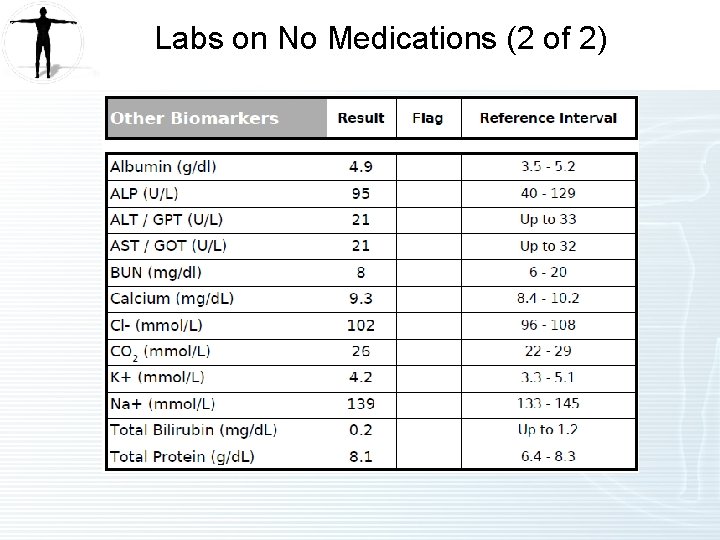
Labs on No Medications (2 of 2)
NMR Lipo. Profile • Insert NMR Lipoprofile 04262011 DW 75 Insert • There is clear evidence of insulin resistance on NMR with small dense LDL predominating and high IR score 89/100. Often in this setting patients have compensatory hyperinsulinemia and glucose is in normal range. HBAIC is 5. 3
Initial Treatment & Management • For metabolic syndrome/Insulin Resistance and PCOS, re-start metformin ER 1000 -1500 mg/day and Byetta 10 mcg injection BID (gradual titration from 5 mcg BID for one month). Medication should be taken 5 minutes to 1 hour prior to meals twice daily, at least 6 hours apart. • Consider starting OTC omega 3 fish oil to help lower CRP and for overall cardiovascular and antiinflammatory benefits. Take 2000 mg EPA/DHA. • Start vitamin D 3 5000 IU/day for vitamin D deficiency.
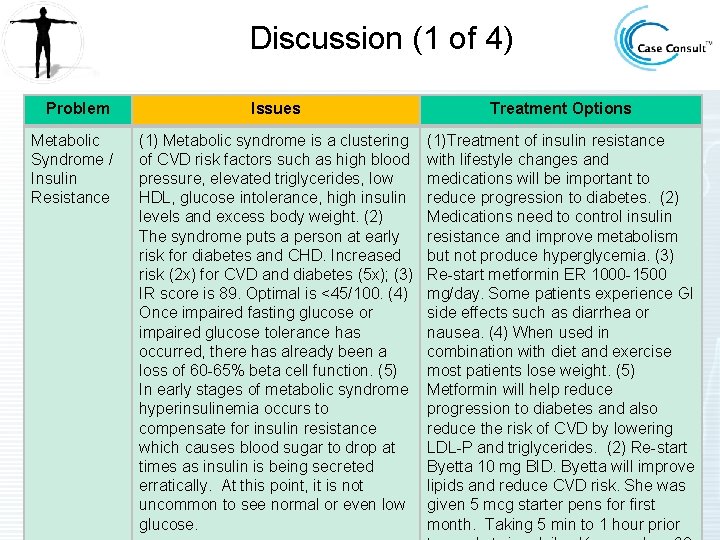
Discussion (1 of 4) Problem Metabolic Syndrome / Insulin Resistance Issues Treatment Options (1) Metabolic syndrome is a clustering of CVD risk factors such as high blood pressure, elevated triglycerides, low HDL, glucose intolerance, high insulin levels and excess body weight. (2) The syndrome puts a person at early risk for diabetes and CHD. Increased risk (2 x) for CVD and diabetes (5 x); (3) IR score is 89. Optimal is <45/100. (4) Once impaired fasting glucose or impaired glucose tolerance has occurred, there has already been a loss of 60 -65% beta cell function. (5) In early stages of metabolic syndrome hyperinsulinemia occurs to compensate for insulin resistance which causes blood sugar to drop at times as insulin is being secreted erratically. At this point, it is not uncommon to see normal or even low glucose. (1)Treatment of insulin resistance with lifestyle changes and medications will be important to reduce progression to diabetes. (2) Medications need to control insulin resistance and improve metabolism but not produce hyperglycemia. (3) Re-start metformin ER 1000 -1500 mg/day. Some patients experience GI side effects such as diarrhea or nausea. (4) When used in combination with diet and exercise most patients lose weight. (5) Metformin will help reduce progression to diabetes and also reduce the risk of CVD by lowering LDL-P and triglycerides. (2) Re-start Byetta 10 mg BID. Byetta will improve lipids and reduce CVD risk. She was given 5 mcg starter pens for first month. Taking 5 min to 1 hour prior
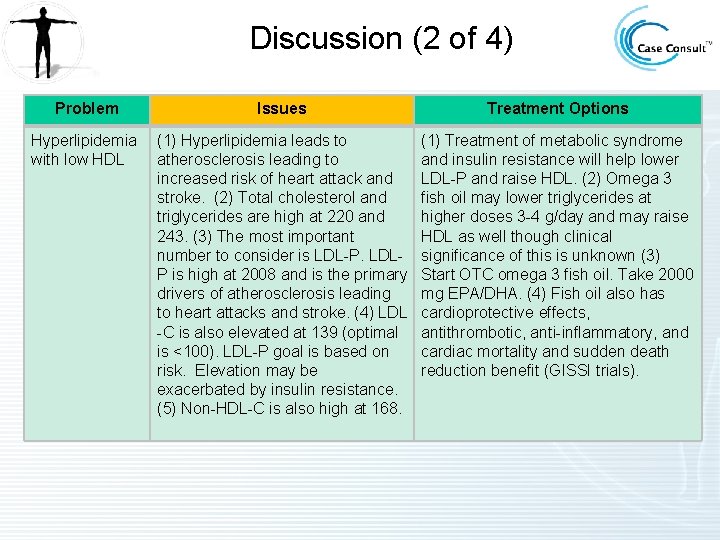
Discussion (2 of 4) Problem Issues Treatment Options Hyperlipidemia with low HDL (1) Hyperlipidemia leads to atherosclerosis leading to increased risk of heart attack and stroke. (2) Total cholesterol and triglycerides are high at 220 and 243. (3) The most important number to consider is LDL-P. LDLP is high at 2008 and is the primary drivers of atherosclerosis leading to heart attacks and stroke. (4) LDL -C is also elevated at 139 (optimal is <100). LDL-P goal is based on risk. Elevation may be exacerbated by insulin resistance. (5) Non-HDL-C is also high at 168. (1) Treatment of metabolic syndrome and insulin resistance will help lower LDL-P and raise HDL. (2) Omega 3 fish oil may lower triglycerides at higher doses 3 -4 g/day and may raise HDL as well though clinical significance of this is unknown (3) Start OTC omega 3 fish oil. Take 2000 mg EPA/DHA. (4) Fish oil also has cardioprotective effects, antithrombotic, anti-inflammatory, and cardiac mortality and sudden death reduction benefit (GISSI trials).
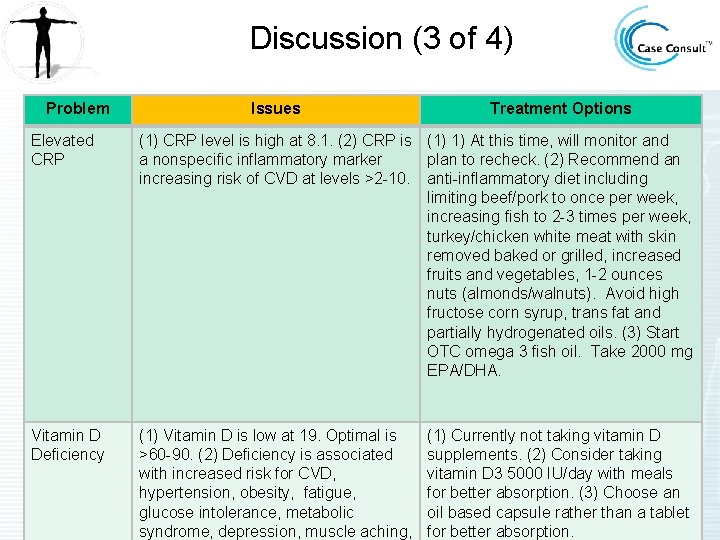
Discussion (3 of 4) Problem Issues Treatment Options Elevated CRP (1) CRP level is high at 8. 1. (2) CRP is (1) 1) At this time, will monitor and a nonspecific inflammatory marker plan to recheck. (2) Recommend an increasing risk of CVD at levels >2 -10. anti-inflammatory diet including limiting beef/pork to once per week, increasing fish to 2 -3 times per week, turkey/chicken white meat with skin removed baked or grilled, increased fruits and vegetables, 1 -2 ounces nuts (almonds/walnuts). Avoid high fructose corn syrup, trans fat and partially hydrogenated oils. (3) Start OTC omega 3 fish oil. Take 2000 mg EPA/DHA. Vitamin D Deficiency (1) Vitamin D is low at 19. Optimal is >60 -90. (2) Deficiency is associated with increased risk for CVD, hypertension, obesity, fatigue, glucose intolerance, metabolic syndrome, depression, muscle aching, (1) Currently not taking vitamin D supplements. (2) Consider taking vitamin D 3 5000 IU/day with meals for better absorption. (3) Choose an oil based capsule rather than a tablet for better absorption.
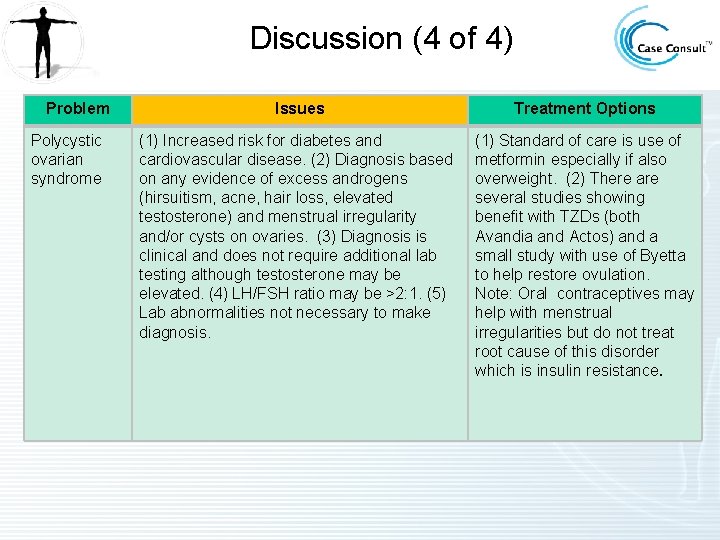
Discussion (4 of 4) Problem Polycystic ovarian syndrome Issues Treatment Options (1) Increased risk for diabetes and cardiovascular disease. (2) Diagnosis based on any evidence of excess androgens (hirsuitism, acne, hair loss, elevated testosterone) and menstrual irregularity and/or cysts on ovaries. (3) Diagnosis is clinical and does not require additional lab testing although testosterone may be elevated. (4) LH/FSH ratio may be >2: 1. (5) Lab abnormalities not necessary to make diagnosis. (1) Standard of care is use of metformin especially if also overweight. (2) There are several studies showing benefit with TZDs (both Avandia and Actos) and a small study with use of Byetta to help restore ovulation. Note: Oral contraceptives may help with menstrual irregularities but do not treat root cause of this disorder which is insulin resistance.
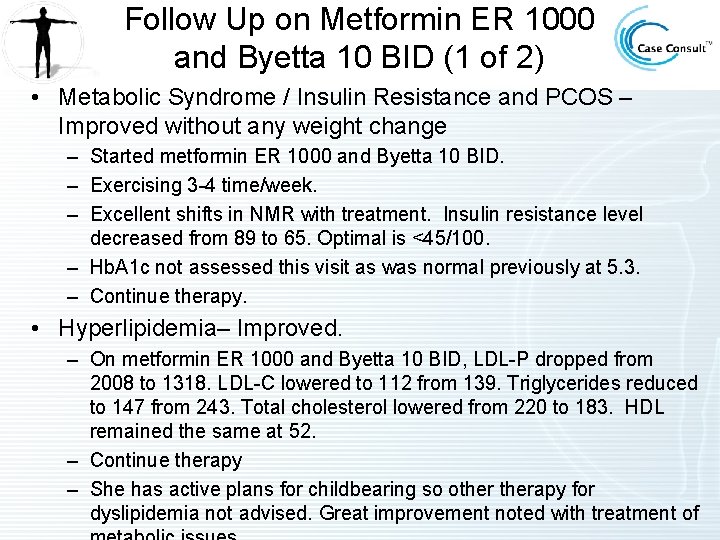
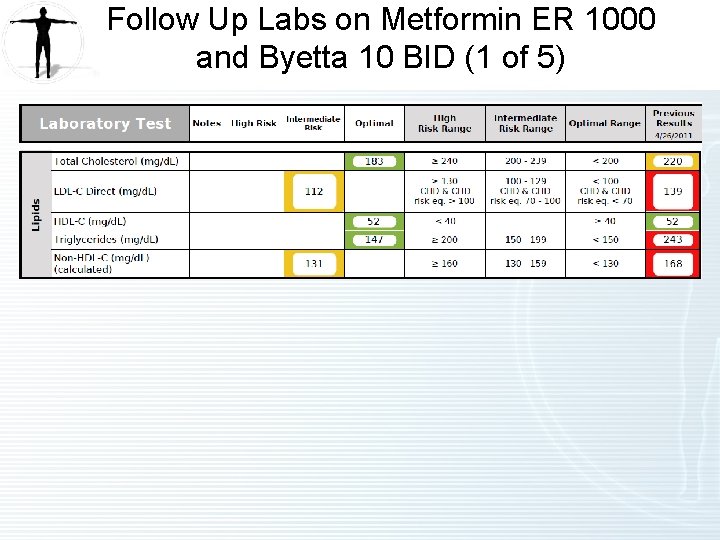
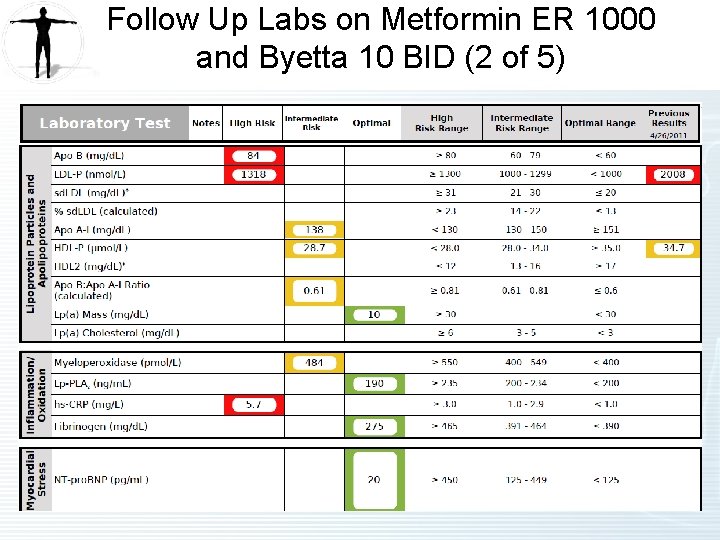
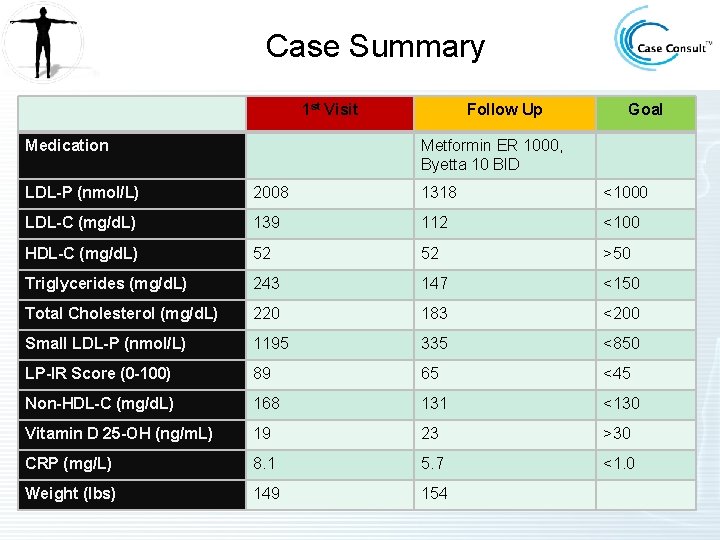
Follow Up on Metformin ER 1000 and Byetta 10 BID (1 of 2) • Metabolic Syndrome / Insulin Resistance and PCOS – Improved without any weight change – Started metformin ER 1000 and Byetta 10 BID. – Exercising 3 -4 time/week. – Excellent shifts in NMR with treatment. Insulin resistance level decreased from 89 to 65. Optimal is <45/100. – Hb. A 1 c not assessed this visit as was normal previously at 5. 3. – Continue therapy. • Hyperlipidemia– Improved. – On metformin ER 1000 and Byetta 10 BID, LDL-P dropped from 2008 to 1318. LDL-C lowered to 112 from 139. Triglycerides reduced to 147 from 243. Total cholesterol lowered from 220 to 183. HDL remained the same at 52. – Continue therapy – She has active plans for childbearing so otherapy for dyslipidemia not advised. Great improvement noted with treatment of
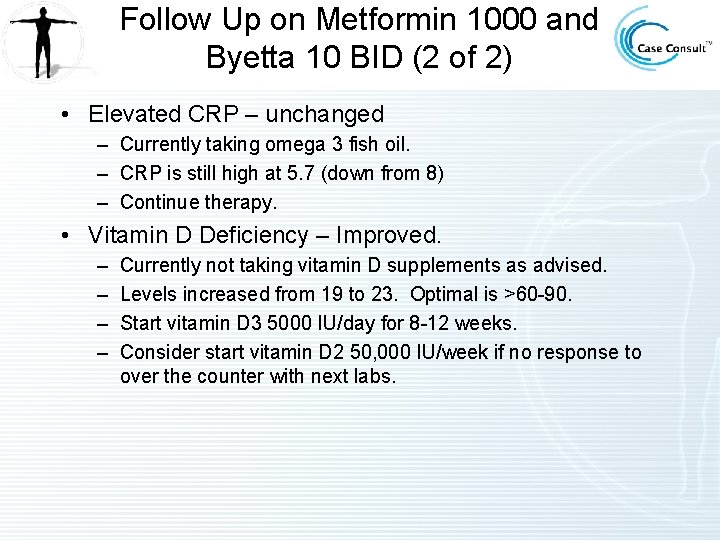
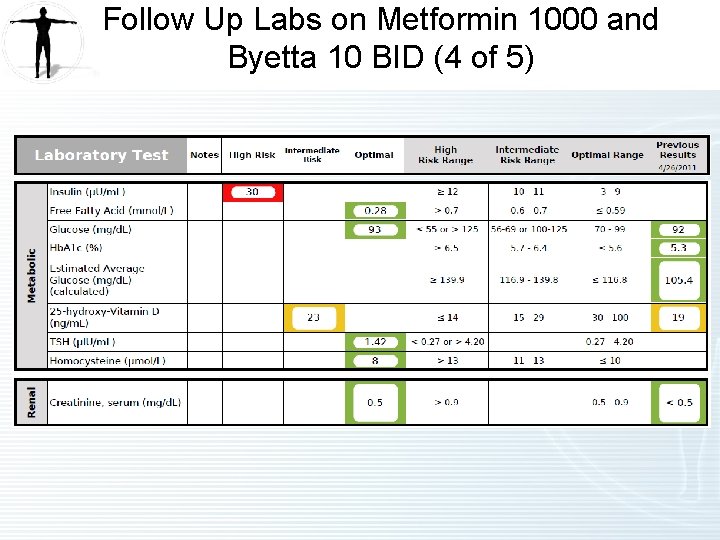
Follow Up on Metformin 1000 and Byetta 10 BID (2 of 2) • Elevated CRP – unchanged – Currently taking omega 3 fish oil. – CRP is still high at 5. 7 (down from 8) – Continue therapy. • Vitamin D Deficiency – Improved. – – Currently not taking vitamin D supplements as advised. Levels increased from 19 to 23. Optimal is >60 -90. Start vitamin D 3 5000 IU/day for 8 -12 weeks. Consider start vitamin D 2 50, 000 IU/week if no response to over the counter with next labs.
Follow Up Labs on Metformin ER 1000 and Byetta 10 BID (1 of 5)
Follow Up Labs on Metformin ER 1000 and Byetta 10 BID (2 of 5)
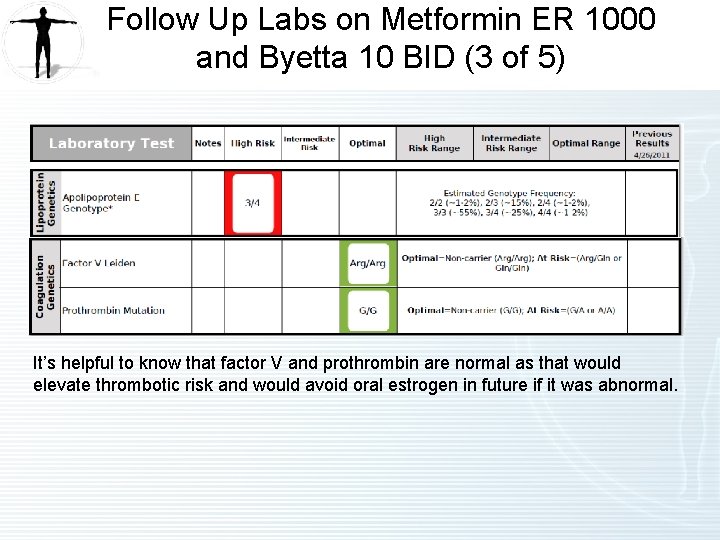
Follow Up Labs on Metformin ER 1000 and Byetta 10 BID (3 of 5) It’s helpful to know that factor V and prothrombin are normal as that would elevate thrombotic risk and would avoid oral estrogen in future if it was abnormal.
Follow Up Labs on Metformin 1000 and Byetta 10 BID (4 of 5)
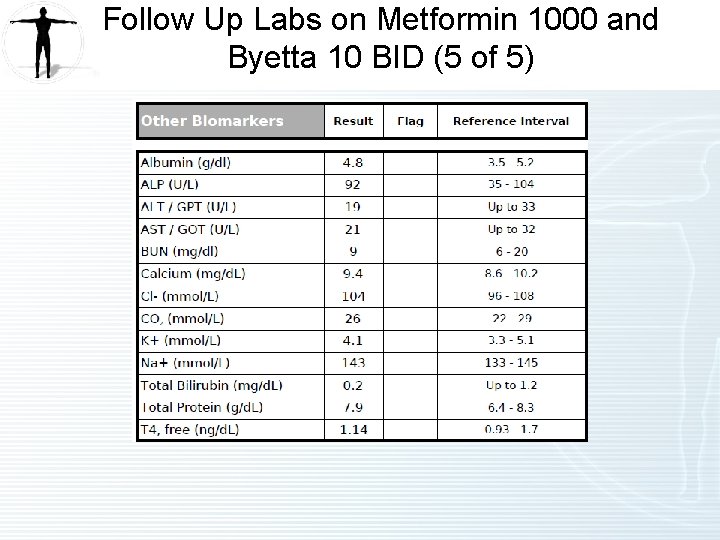
Follow Up Labs on Metformin 1000 and Byetta 10 BID (5 of 5)
NMR Lipo. Profile • Insert NMR Lipoprofile 06212011 DW 75 Insert
Case Summary 1 st Visit Medication Follow Up Goal Metformin ER 1000, Byetta 10 BID LDL-P (nmol/L) 2008 1318 <1000 LDL-C (mg/d. L) 139 112 <100 HDL-C (mg/d. L) 52 52 >50 Triglycerides (mg/d. L) 243 147 <150 Total Cholesterol (mg/d. L) 220 183 <200 Small LDL-P (nmol/L) 1195 335 <850 LP-IR Score (0 -100) 89 65 <45 Non-HDL-C (mg/d. L) 168 131 <130 Vitamin D 25 -OH (ng/m. L) 19 23 >30 CRP (mg/L) 8. 1 5. 7 <1. 0 Weight (lbs) 149 154
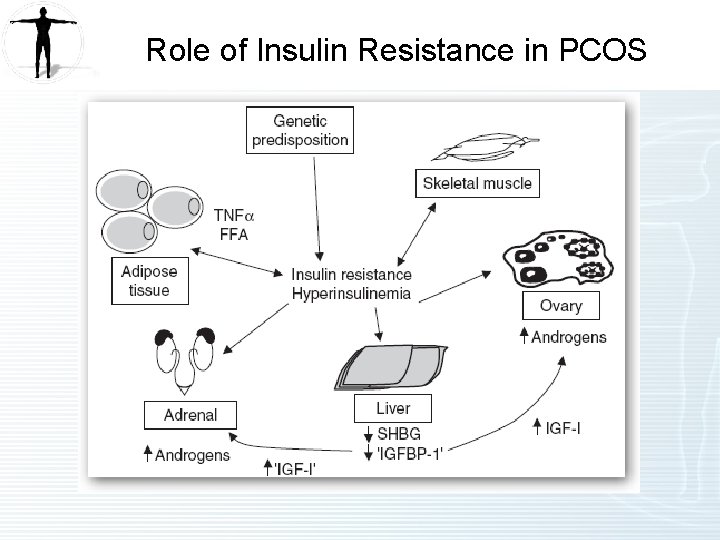
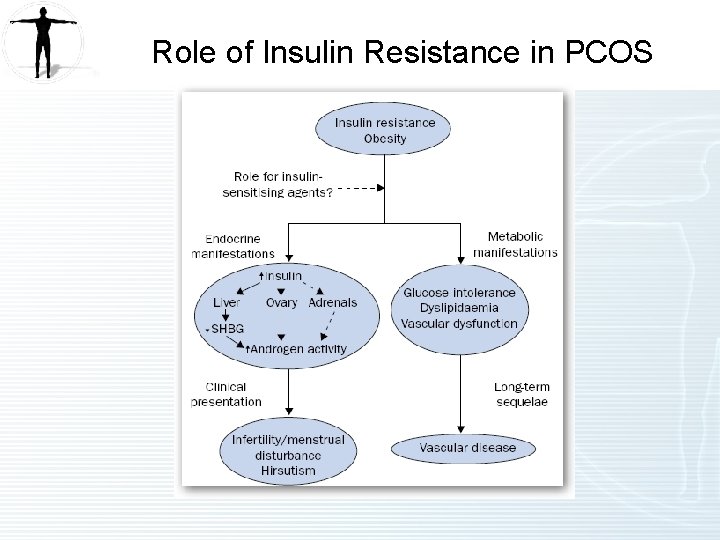
Role of Insulin Resistance in PCOS
Role of Insulin Resistance in PCOS
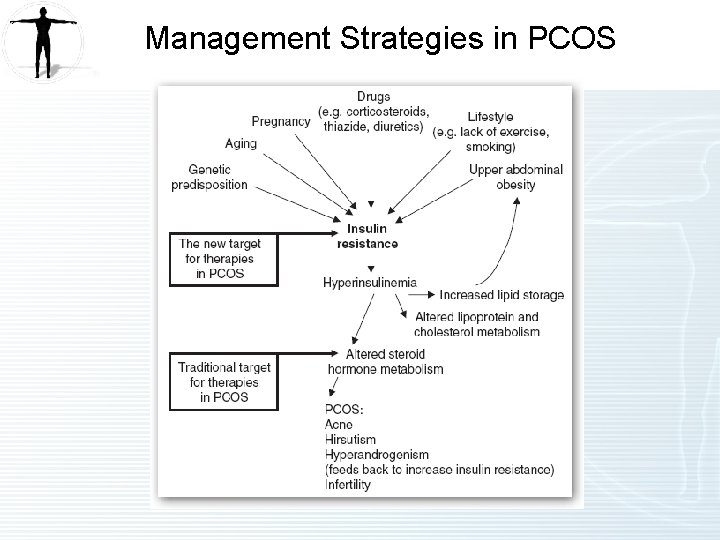
Management Strategies in PCOS
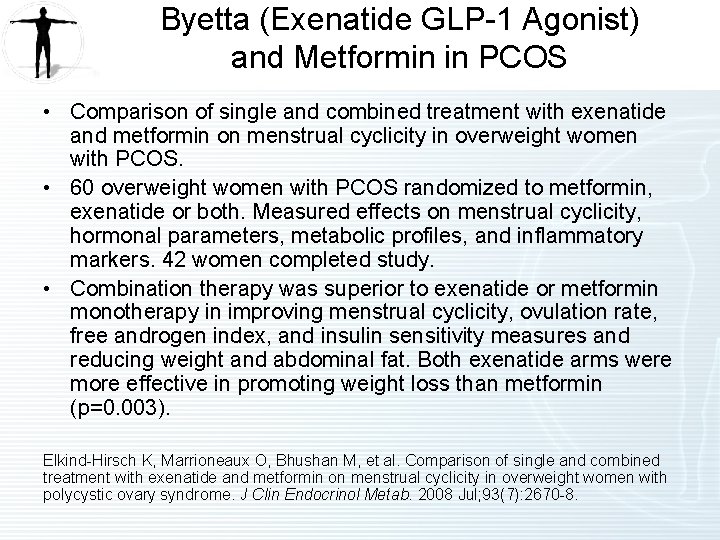
Byetta (Exenatide GLP-1 Agonist) and Metformin in PCOS • Comparison of single and combined treatment with exenatide and metformin on menstrual cyclicity in overweight women with PCOS. • 60 overweight women with PCOS randomized to metformin, exenatide or both. Measured effects on menstrual cyclicity, hormonal parameters, metabolic profiles, and inflammatory markers. 42 women completed study. • Combination therapy was superior to exenatide or metformin monotherapy in improving menstrual cyclicity, ovulation rate, free androgen index, and insulin sensitivity measures and reducing weight and abdominal fat. Both exenatide arms were more effective in promoting weight loss than metformin (p=0. 003). Elkind-Hirsch K, Marrioneaux O, Bhushan M, et al. Comparison of single and combined treatment with exenatide and metformin on menstrual cyclicity in overweight women with polycystic ovary syndrome. J Clin Endocrinol Metab. 2008 Jul; 93(7): 2670 -8.
References (1 of 3) • Metabolic Syndrome and Insulin Resistance – ADA Standards of Medical Care in Diabetes - 2012. Diabetes Care. Jan 2012 35(1)11 -63. – Knowler WC, Barrett-Connor E, Fowler SE, et al. Reduction in the incidence of type 2 diabetes with lifestyle intervention or metformin. N Engl J Med. 2002 Feb 7; 346(6): 393 -403. – Nathan DM, Davidson M, De. Fronzo RA, et al. Impaired fasting glucose and impaired glucose tolerance: implications for care. A consensus statement from the American Diabetes Association. Diabetes Care. 2007; 30: 753 -759. – Armato J, De. Fronzo R, Abdul-Ghani M, et al. Successful treatment of prediabetes in clinical practices: targeting insulin resistance and beta cell dysfunction. Endocr Pract. 2011 Nov 8: 1 -21. – Goff DC Jr, D'Agostino RB Jr, Haffner SM. Insulin resistance and adiposity influence lipoprotein size and subclass concentrations. Results from the Insulin Resistance Atherosclerosis Study. Metabolism. 2005 Feb; 54(2): 264 -70. – Bergenstal RM, Wysham C, Macconell L, et al. Efficacy and safety of exenatide once weekly versus sitagliptin or pioglitazone as an adjunct to metformin for treatment of type 2 diabetes (DURATION-2): a randomised trial. Lancet. 2010 Aug 7; 376(9739): 431 -9. – Drucker DJ, Buse JB, Taylor K, et al. Exentide once weekly versus twice daily for the treatment of type 2 diabetes: a randomised open-label, non-inferiority study. Lancet. 2008 Oct 4; 372(9645): 1240 -50. – Diamant M, Van Gaal L, Northrup J, et al. Once weekly exenatide compared with insulin glargine titrated to target in patients with type 2 diabetes (DURATION-3): an open-label randomised trial. Lancet. 2010 Jun 26; 375(9733): 2234 -43.
References (2 of 3) • Hyperlipidemia – Cromwell WC, Otvos JD, Keyes MJ, et al. LDL particle number and risk of future cardiovascular disease in the Framingham offspring study – implications for LDL management. J Clin Lipidol. 2007 Dec; 1(6): 583 -92. – Brunzell JD, Davidson M, Furberg CD, et al. Lipoprotein management in patients with cardiometabolic risk: consensus statement from the American Diabetes Association and the American College of Cardiology Foundation. Diabetes Care. 2008 Apr; 31(4): 811 -22. – GISSI-P Investigators. Dietary supplementation with n-3 polyunsaturated fatty acids and vitamin E after myocardial infarction: results of the GISSI-Prevenzion trial. Lancet. 1999; 354(9177): 447 -455. • Vitamin D – Dobnig H, Pilz S, Scharnagl H, et al. Independent association of low serum 25 -hydroxyvitamin d and 1, 25 -dihydroxyvitamin d levels with all-cause and cardiovascular mortality. Arch Intern Med. 2008; 168(12): 1340 -1349. – Michos E and Blumenthal R. Vitamin D Supplementation and Cardiovascular Disease Risk. Circulation. 2007; 115(7): 827 -828. – Hathcock J, Shao A, Vieth R, et al. Risk assessment for vitamin D. Am J Clin Nutr. 2007; 85: 618. – Jockers B. Vitamin D sufficiency: An approach to disease prevention. The American Journal for Nurse Practitioners. 2007; 11(10): 43 -50. – Holick M. Vitamin D Deficiency. N Engl J Med. 2007; 357: 266 -81.
References (3 of 3) • PCOS – Harborne L, Fleming R, Lyall H, et al. Descriptive review of the evidence for the use of metformin in polycystic ovary syndrome. Lancet. 2003 May 31; 361(9372): 1849 -901. – Elkind-Hirsch K, Marrioneaux O, Bhushan M, et al. Comparison of single and combined treatment with exenatide and metformin on menstrual cyclicity in overweight women with polycystic ovary syndrome. J Clin Endocrinol Metab. 2008 Jul; 93(7): 2670 -8. – Brettenthaler N, De Geyter C, Huber PR, et al. Effect of the insulin sensitizer pioglitazone on insulin resistance, hyperandrogenism, and ovulatory dysfunction in women with polycystic ovary syndrome. J Clin Endrocrinol Metab. 2004 Aug; 89(8): 3835 -40.