chop Master of Science Clinical Psychopharmacology Gerardo RodriguezMenendez
- Slides: 32
: chop Master of Science Clinical Psychopharmacology Gerardo Rodriguez-Menendez, Ph. D, ABPP, MSCP
Are we teaching our psychology students a viable model for the 21 st Century? 2
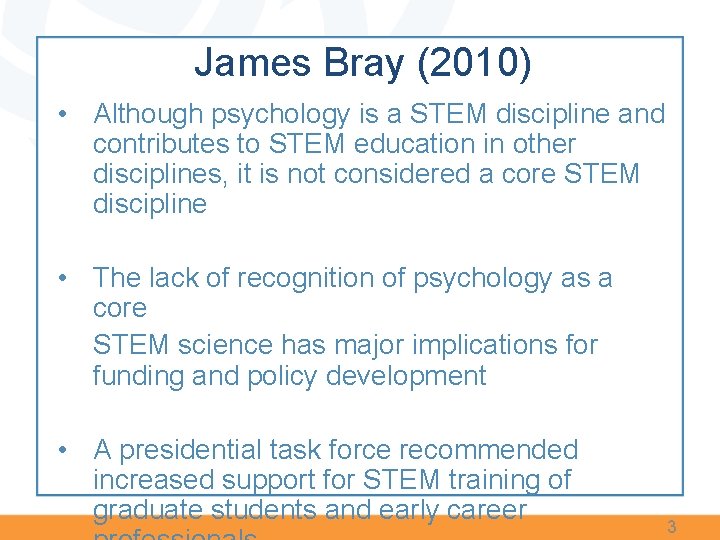
James Bray (2010) • Although psychology is a STEM discipline and contributes to STEM education in other disciplines, it is not considered a core STEM discipline • The lack of recognition of psychology as a core STEM science has major implications for funding and policy development • A presidential task force recommended increased support for STEM training of graduate students and early career 3
Goodness of Fit “Predoctoral Rx. P offers a better fit with a greater number of prospective students …Predoctoral Rx. P training could increase the representation of Rx. P-trained psychologists in universities, impacting training, practice, and research. ” Dr. Robert Ax
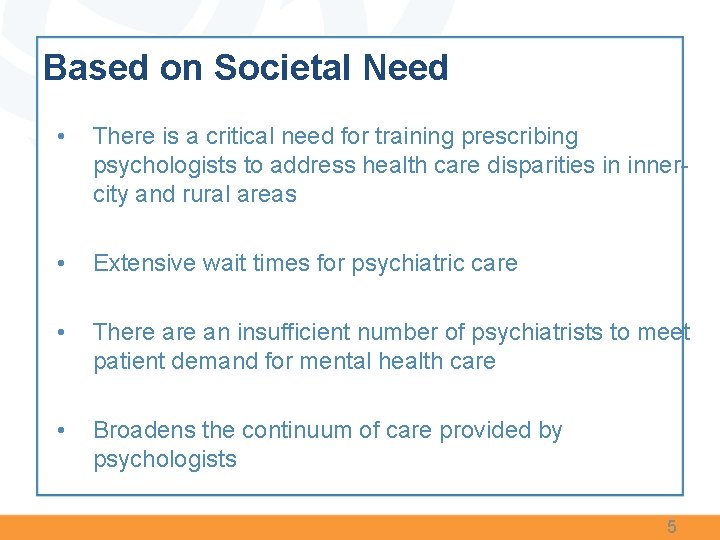
Based on Societal Need • There is a critical need for training prescribing psychologists to address health care disparities in innercity and rural areas • Extensive wait times for psychiatric care • There an insufficient number of psychiatrists to meet patient demand for mental health care • Broadens the continuum of care provided by psychologists 5
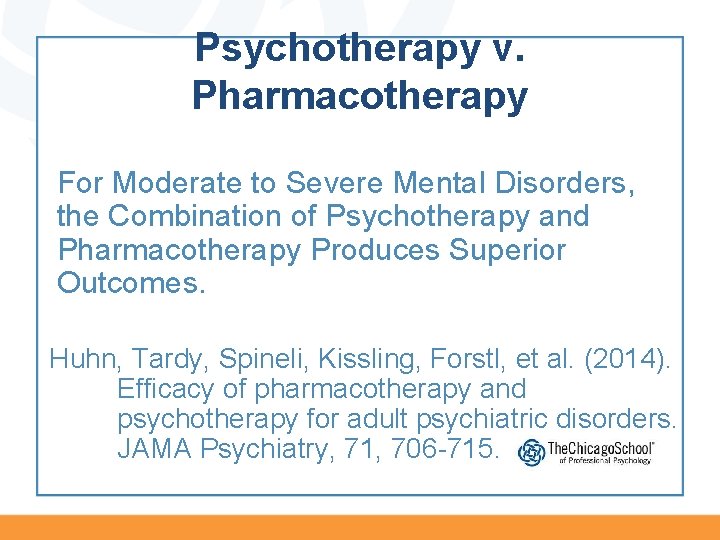
Psychotherapy v. Pharmacotherapy For Moderate to Severe Mental Disorders, the Combination of Psychotherapy and Pharmacotherapy Produces Superior Outcomes. Huhn, Tardy, Spineli, Kissling, Forstl, et al. (2014). Efficacy of pharmacotherapy and psychotherapy for adult psychiatric disorders. JAMA Psychiatry, 71, 706 -715.
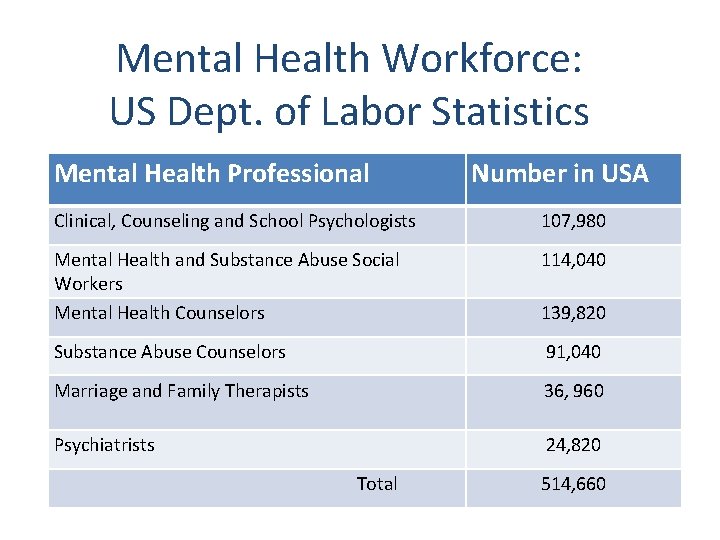
Mental Health Workforce: US Dept. of Labor Statistics Mental Health Professional Number in USA Clinical, Counseling and School Psychologists 107, 980 Mental Health and Substance Abuse Social Workers Mental Health Counselors 114, 040 Substance Abuse Counselors 91, 040 Marriage and Family Therapists 36, 960 Psychiatrists 24, 820 Total 139, 820 514, 660
“Common sense is not commonly practiced. ”
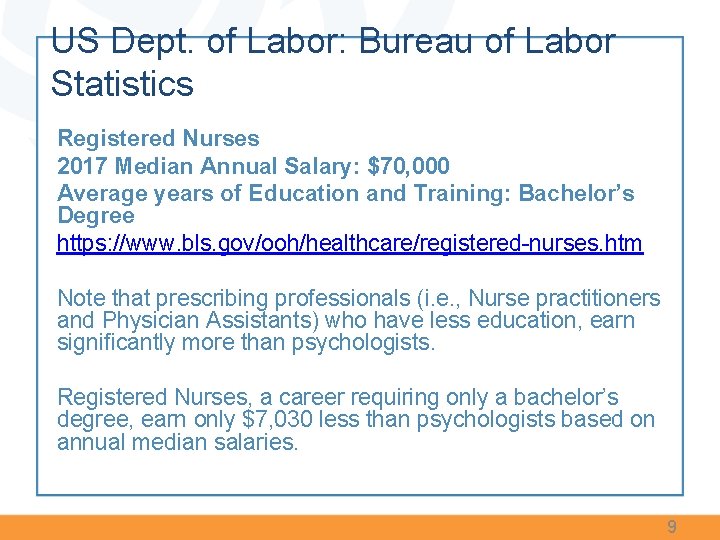
US Dept. of Labor: Bureau of Labor Statistics Registered Nurses 2017 Median Annual Salary: $70, 000 Average years of Education and Training: Bachelor’s Degree https: //www. bls. gov/ooh/healthcare/registered-nurses. htm Note that prescribing professionals (i. e. , Nurse practitioners and Physician Assistants) who have less education, earn significantly more than psychologists. Registered Nurses, a career requiring only a bachelor’s degree, earn only $7, 030 less than psychologists based on annual median salaries. 9
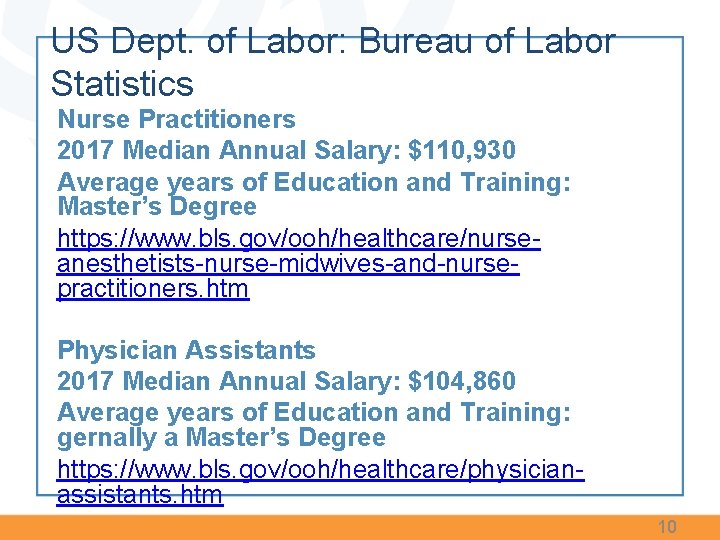
US Dept. of Labor: Bureau of Labor Statistics Nurse Practitioners 2017 Median Annual Salary: $110, 930 Average years of Education and Training: Master’s Degree https: //www. bls. gov/ooh/healthcare/nurseanesthetists-nurse-midwives-and-nursepractitioners. htm Physician Assistants 2017 Median Annual Salary: $104, 860 Average years of Education and Training: gernally a Master’s Degree https: //www. bls. gov/ooh/healthcare/physicianassistants. htm 10
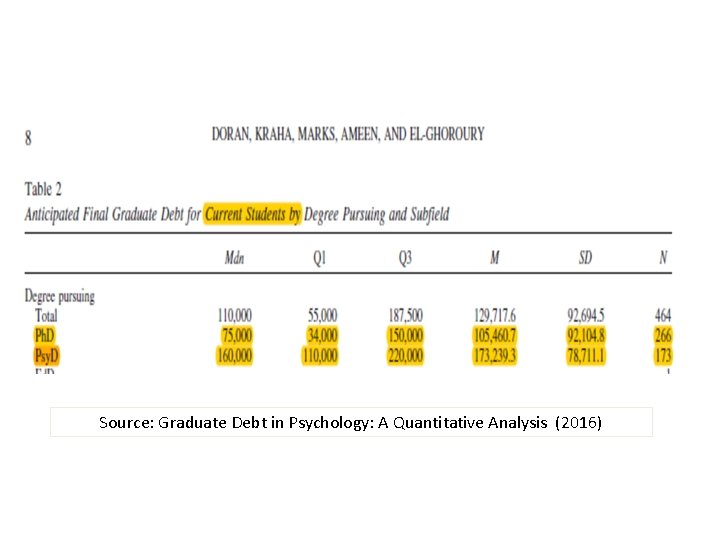
Source: Graduate Debt in Psychology: A Quantitative Analysis (2016)
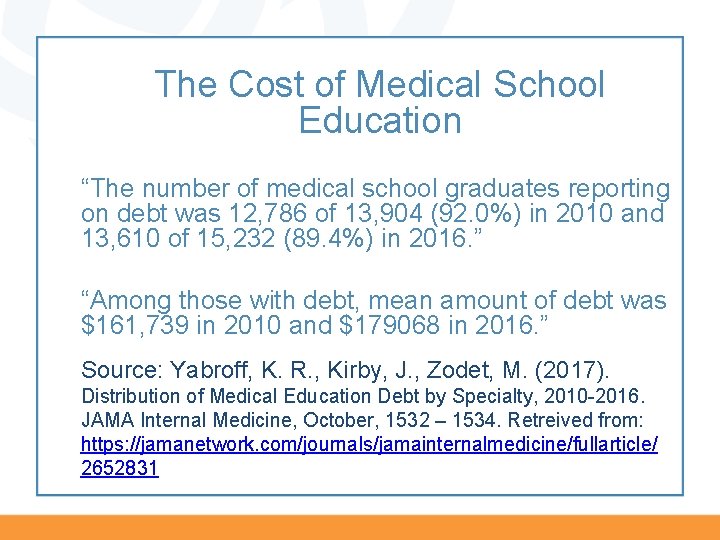
The Cost of Medical School Education “The number of medical school graduates reporting on debt was 12, 786 of 13, 904 (92. 0%) in 2010 and 13, 610 of 15, 232 (89. 4%) in 2016. ” “Among those with debt, mean amount of debt was $161, 739 in 2010 and $179068 in 2016. ” Source: Yabroff, K. R. , Kirby, J. , Zodet, M. (2017). Distribution of Medical Education Debt by Specialty, 2010 -2016. JAMA Internal Medicine, October, 1532 – 1534. Retreived from: https: //jamanetwork. com/journals/jamainternalmedicine/fullarticle/ 2652831
13
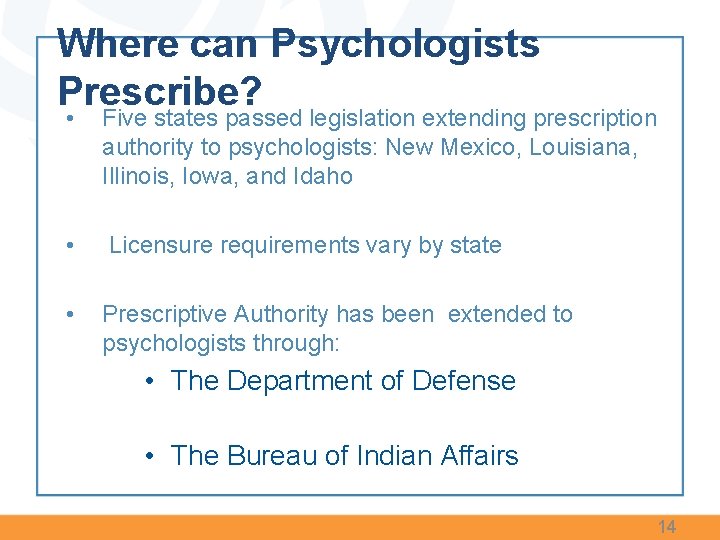
Where can Psychologists Prescribe? • Five states passed legislation extending prescription authority to psychologists: New Mexico, Louisiana, Illinois, Iowa, and Idaho • Licensure requirements vary by state • Prescriptive Authority has been extended to psychologists through: • The Department of Defense • The Bureau of Indian Affairs 14
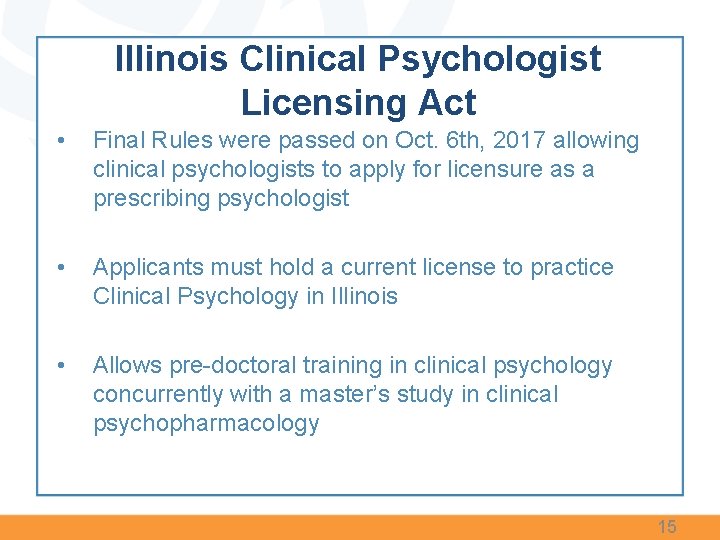
Illinois Clinical Psychologist Licensing Act • Final Rules were passed on Oct. 6 th, 2017 allowing clinical psychologists to apply for licensure as a prescribing psychologist • Applicants must hold a current license to practice Clinical Psychology in Illinois • Allows pre-doctoral training in clinical psychology concurrently with a master’s study in clinical psychopharmacology 15
What distinguishes our MSCP Program? 16
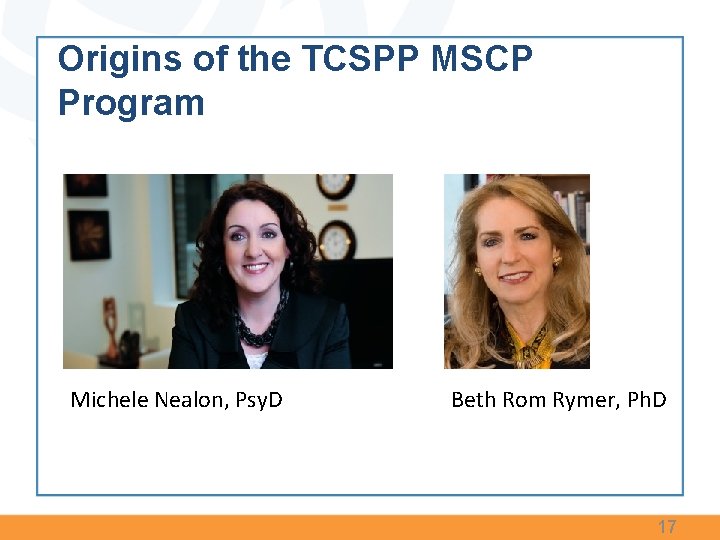
Origins of the TCSPP MSCP Program Michele Nealon, Psy. D Beth Rom Rymer, Ph. D 17
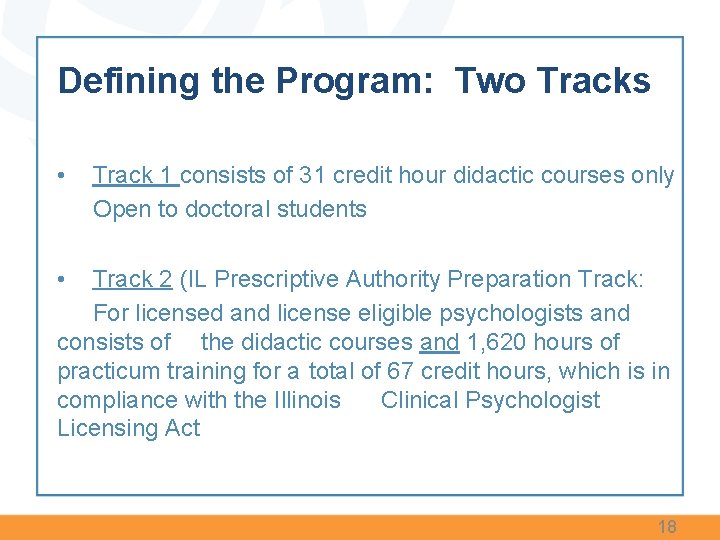
Defining the Program: Two Tracks • Track 1 consists of 31 credit hour didactic courses only Open to doctoral students • Track 2 (IL Prescriptive Authority Preparation Track: For licensed and license eligible psychologists and consists of the didactic courses and 1, 620 hours of practicum training for a total of 67 credit hours, which is in compliance with the Illinois Clinical Psychologist Licensing Act 18
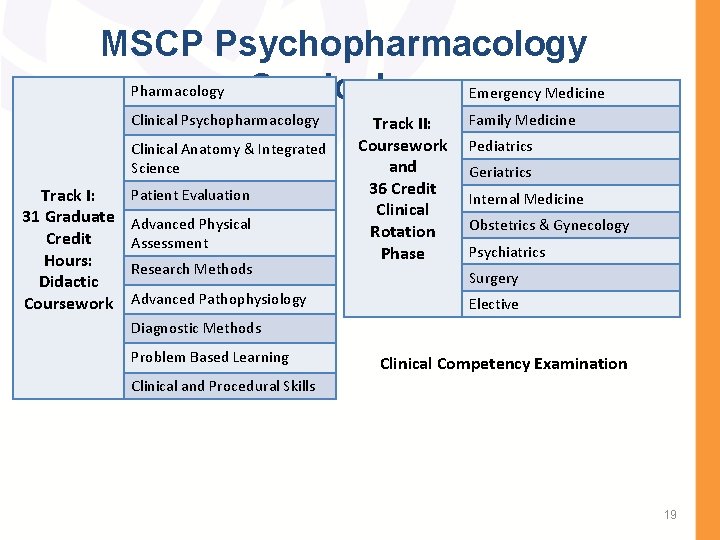
MSCP Psychopharmacology Pharmacology Curriculum Emergency Medicine Clinical Psychopharmacology Clinical Anatomy & Integrated Science Track I: 31 Graduate Credit Hours: Didactic Coursework Patient Evaluation Advanced Physical Assessment Research Methods Advanced Pathophysiology Track II: Coursework and 36 Credit Clinical Rotation Phase Family Medicine Pediatrics Geriatrics Internal Medicine Obstetrics & Gynecology Psychiatrics Surgery Elective Diagnostic Methods Problem Based Learning Clinical Competency Examination Clinical and Procedural Skills 19
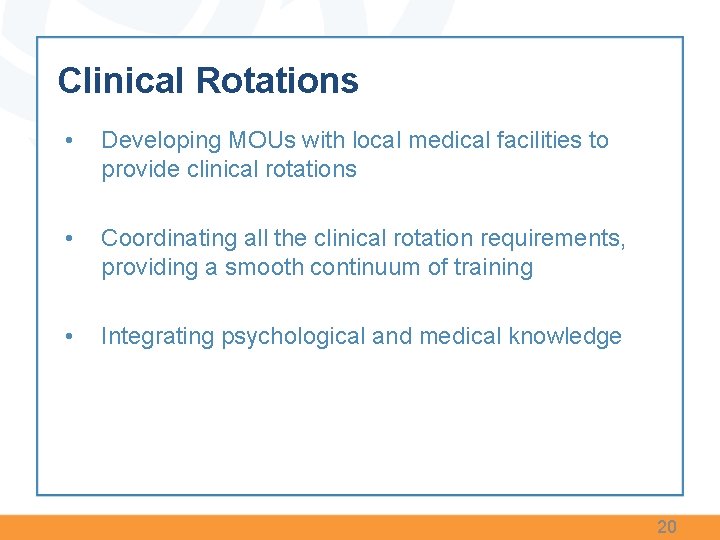
Clinical Rotations • Developing MOUs with local medical facilities to provide clinical rotations • Coordinating all the clinical rotation requirements, providing a smooth continuum of training • Integrating psychological and medical knowledge 20
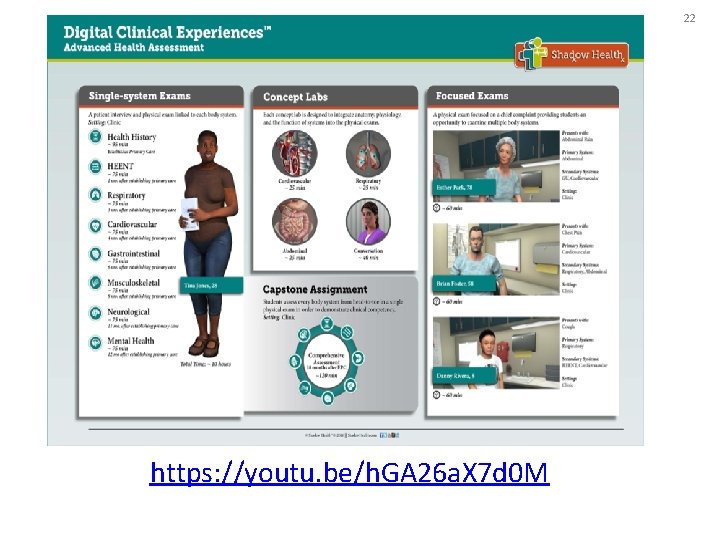
MSCP Curriculum • Emphasis on student mentorship and professional development • Delivered online via Canvas Learning Management System (LMS), using synchronous and asynchronous learning • Courses are rigorously developed • Case studies: use of virtual patients (virtual reality) 21
22 https: //youtu. be/h. GA 26 a. X 7 d 0 M
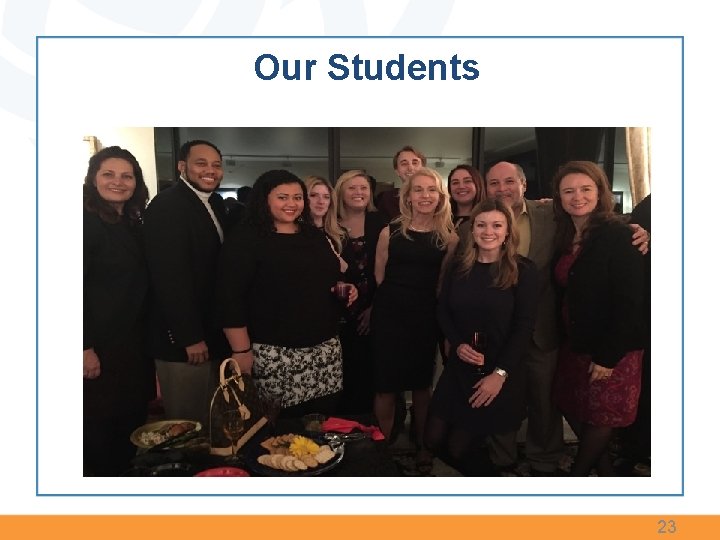
Our Students 23
What Predoctoral Students Say About the MSCP Program 24
I chose to enroll in this specific MSCP program due to its flexibility with online courses, mentorship from the faculty, and expansiveness of coursework. The coursework has been challenging and engaging, even though it has an online platform. The flexibility of being able to do most of the coursework on my own time is invaluable. I am excited to be one of the first students in the nation completing the MSCP concurrently while obtaining my Psy. D and I have found that the two programs go very well together. I love that I will be able to become a prescribing psychologist so early on in my career and I know that TCSPP’s MSCP will be a great foundation to get me there! Alyssa Cunningham, M. A. , LPC, NCC MSCP Student and Doctoral Student 25
The rigor of the MSCP program at the Chicago School of Professional Psychology is unmatched. Each class encompasses all of the essential aspects of becoming a prescribing psychologist: an embracement of the biopsychosocial model as well as the continuous incorporation of diversity factors. I have continued to learn the importance to individualized mental health care, and this approach has made me a more insightful student and future psychologist … Last, it is without a doubt that each professor is invested in the success of their students and the program. From extra study sessions, to their willingness to collaborate on research projects, the faculty in the MSCP program continues to raise the bar of what it means to have strong mentorship throughout graduate training. Morgan E. Ferris, MA MSCP Student and Doctoral Student 26
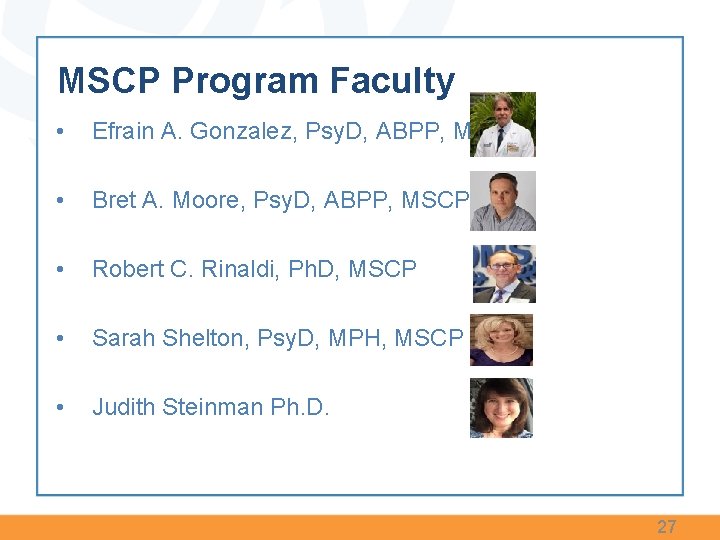
MSCP Program Faculty • Efrain A. Gonzalez, Psy. D, ABPP, MSCP • Bret A. Moore, Psy. D, ABPP, MSCP • Robert C. Rinaldi, Ph. D, MSCP • Sarah Shelton, Psy. D, MPH, MSCP • Judith Steinman Ph. D. 27
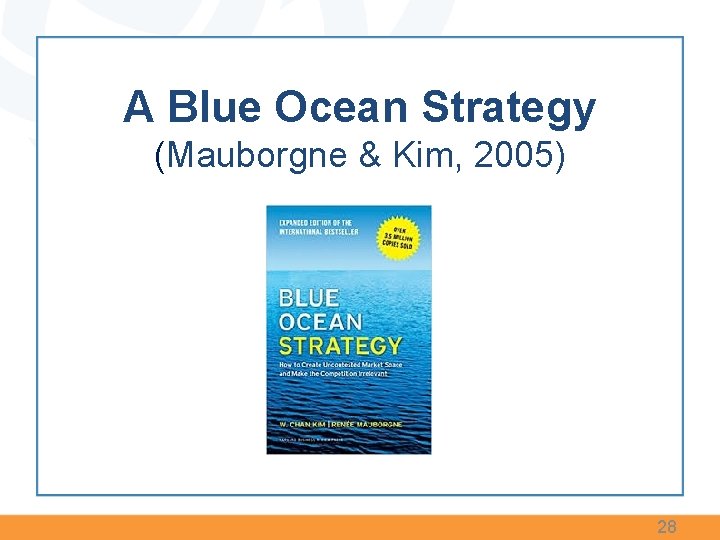
A Blue Ocean Strategy (Mauborgne & Kim, 2005) 28
A Blue Ocean Strategy • MSCP program offers a dual enrollment option: Psy. D/Ph. D/MSCP Degrees • MSCP Program is aligned with STEM, given its emphasis on the natural sciences • STEM focus allows us to recruit students who are studying the natural sciences • A new source of student recruitment for psychology education and training 29
Future Directions • Create a new model of education for Health Service Psychology by integrating doctoral training in Clinical Psychology and that of Clinical Psychopharmacology • Seek APA recognition for Clinical Psychopharmacology as an area of specialty within Health Service Psychology • Seek “Approved Program Designation” status with the APA 30
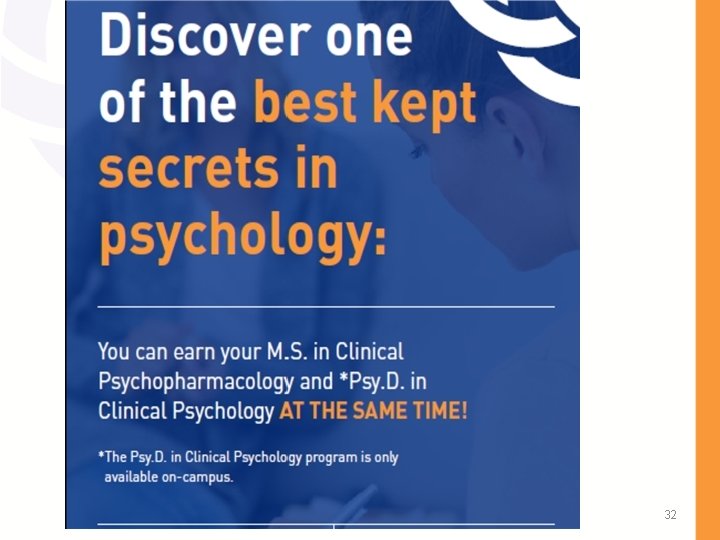
Future Directions (cont. ) • Creating Psychopharmacology Concentrations in collaboration with Clinical Psychology Programs • Offer a dual degree: Psy. D/MSCP • Recruit students from the natural sciences at the undergraduate and graduate levels 31
32