
Flaviviridae dengue yellow fever Groupe TBE Viral Hemorrhagic
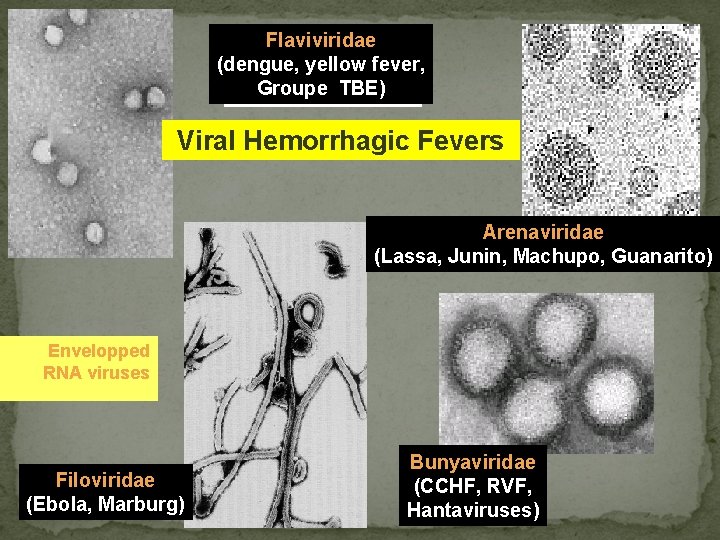
Flaviviridae (dengue, yellow fever, Groupe TBE) Viral Hemorrhagic Fevers Arenaviridae (Lassa, Junin, Machupo, Guanarito) Envelopped RNA viruses Filoviridae (Ebola, Marburg) Bunyaviridae (CCHF, RVF, Hantaviruses)
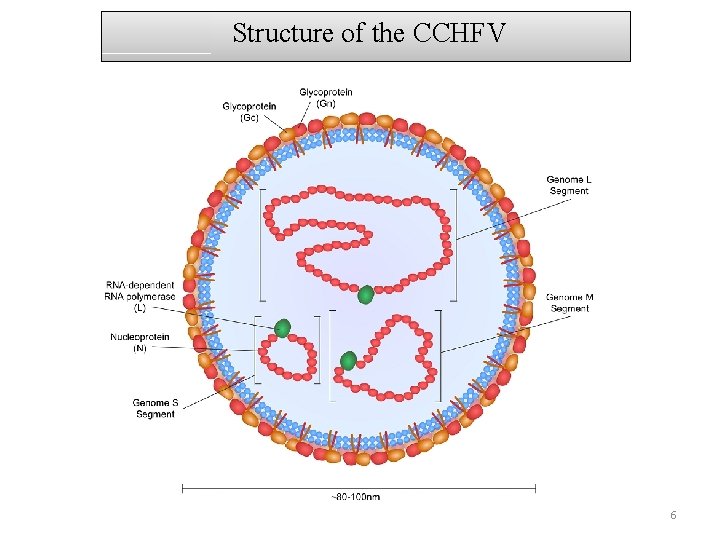
Structure of the CCHFV 6
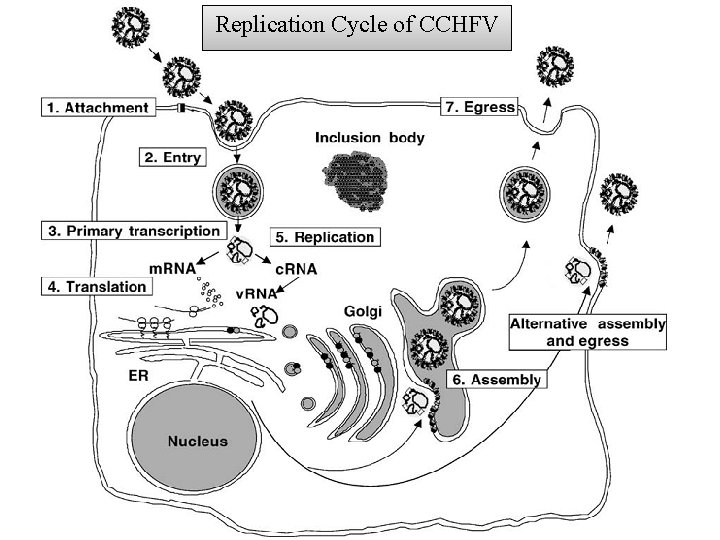
Replication Cycle of CCHFV 7
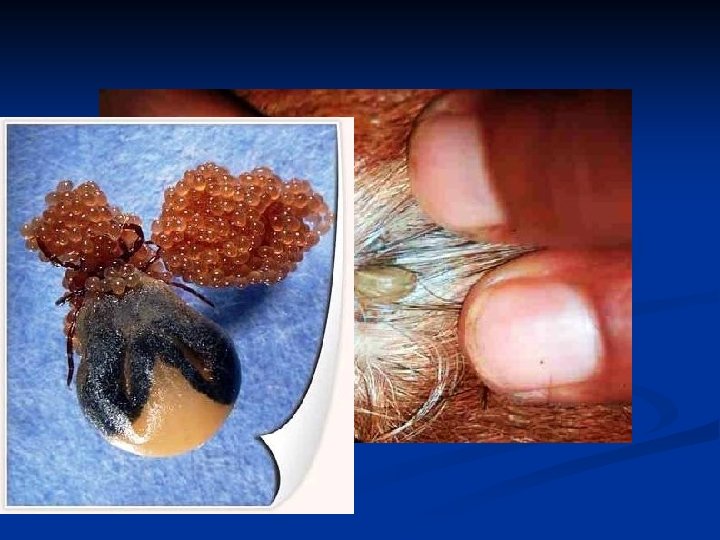
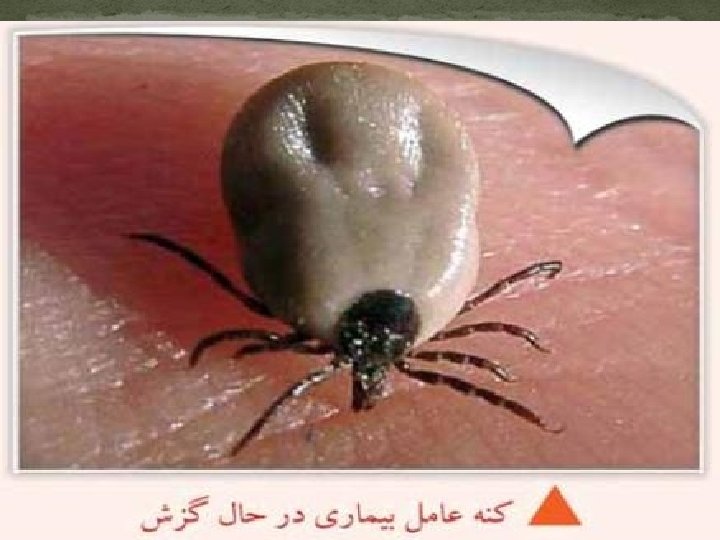
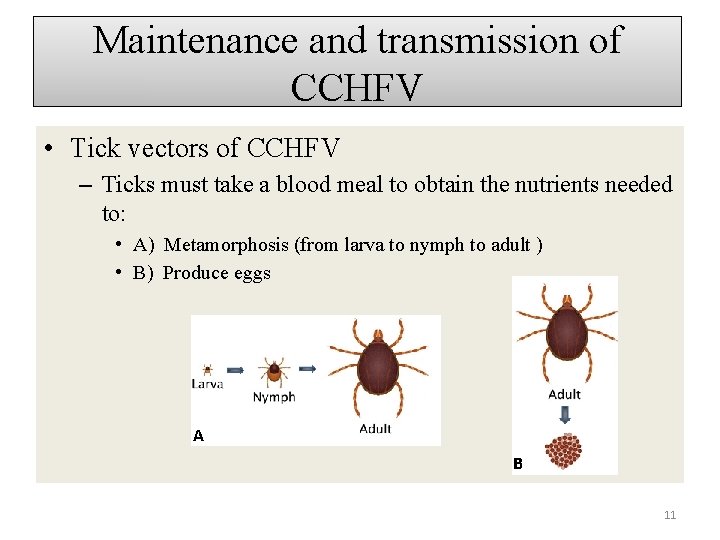
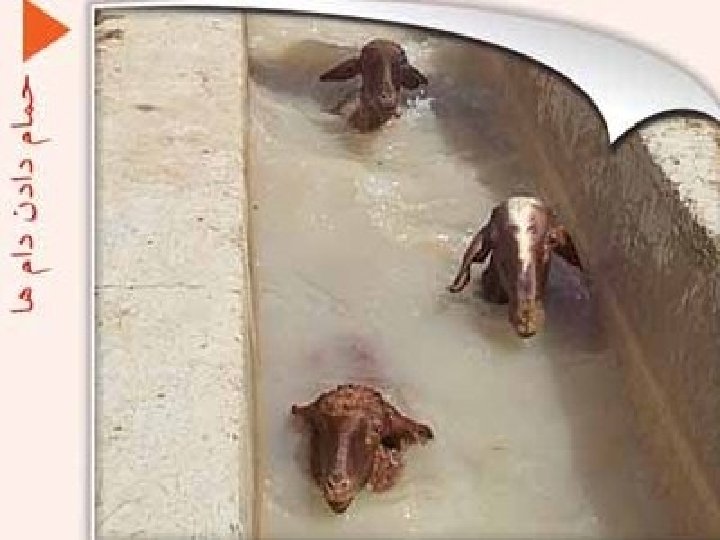
Maintenance and transmission of CCHFV • Tick vectors of CCHFV – Ticks must take a blood meal to obtain the nutrients needed to: • A) Metamorphosis (from larva to nymph to adult ) • B) Produce eggs A B 11
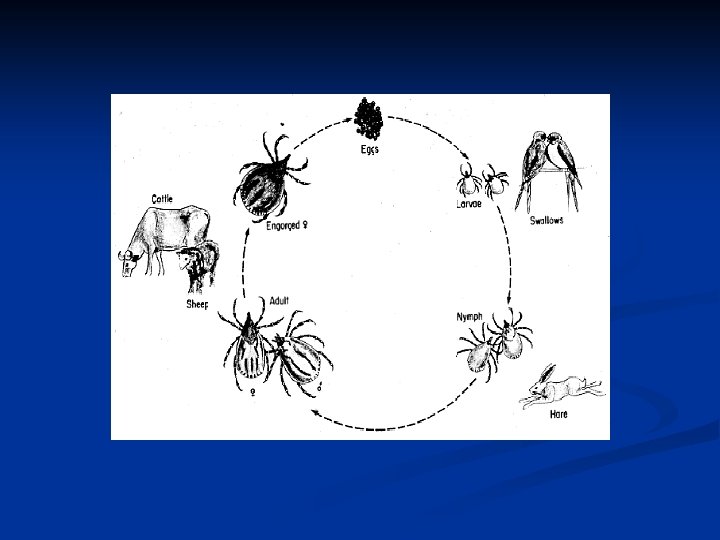
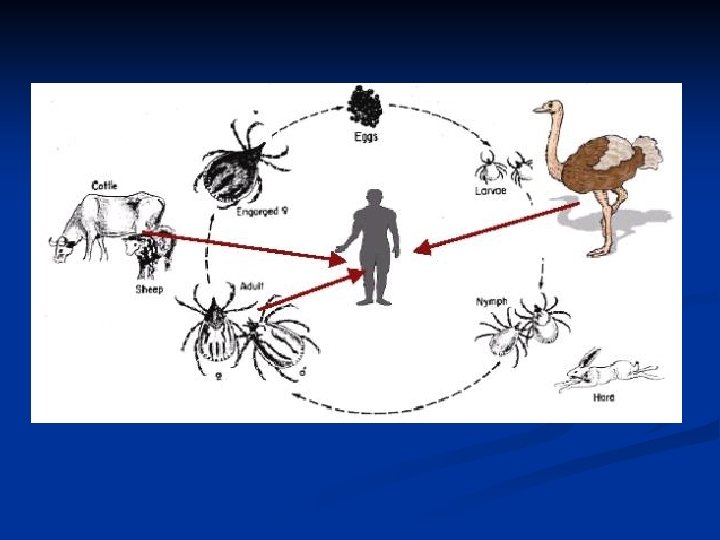
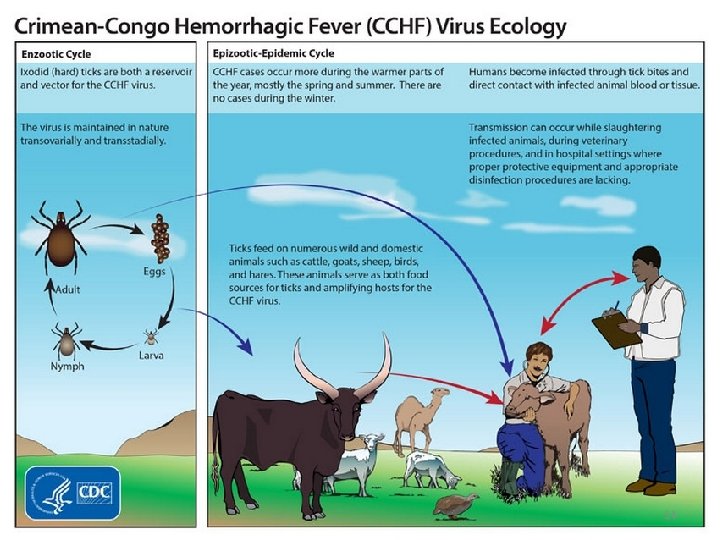
14
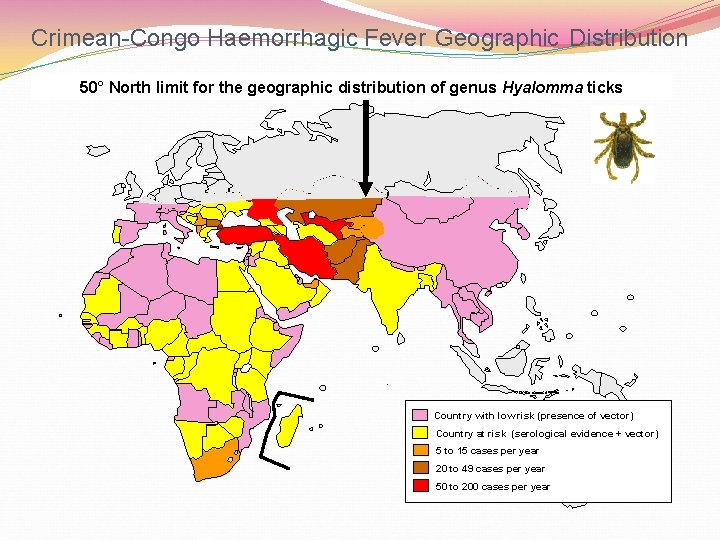
Crimean-Congo Haemorrhagic Fever Geographic Distribution 50° North limit for the geographic distribution of genus Hyalomma ticks Country with low risk (presence of vector) Country at risk (serological evidence + vector) 5 to 15 cases per year 20 to 49 cases per year 50 to 200 cases per year
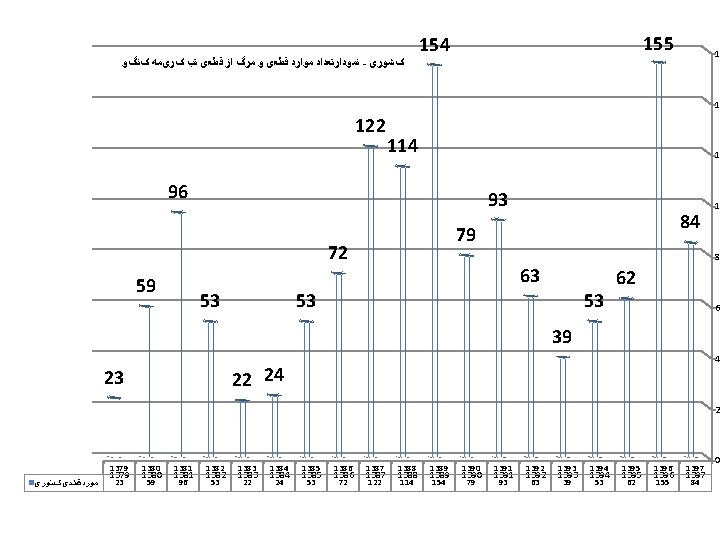
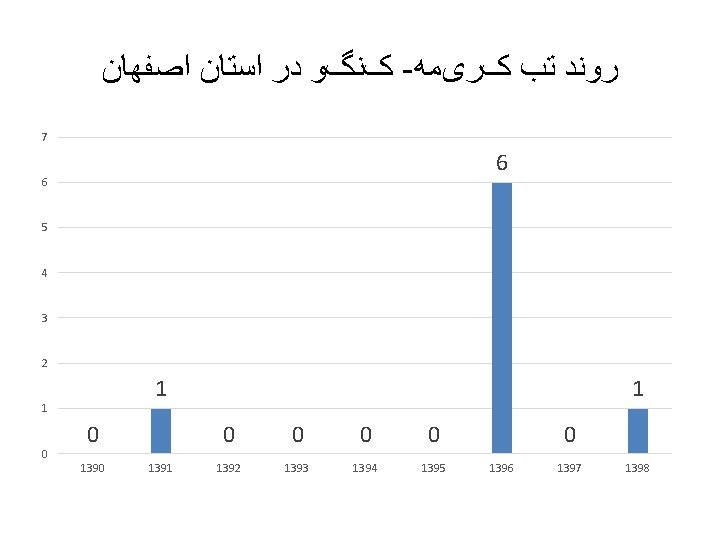
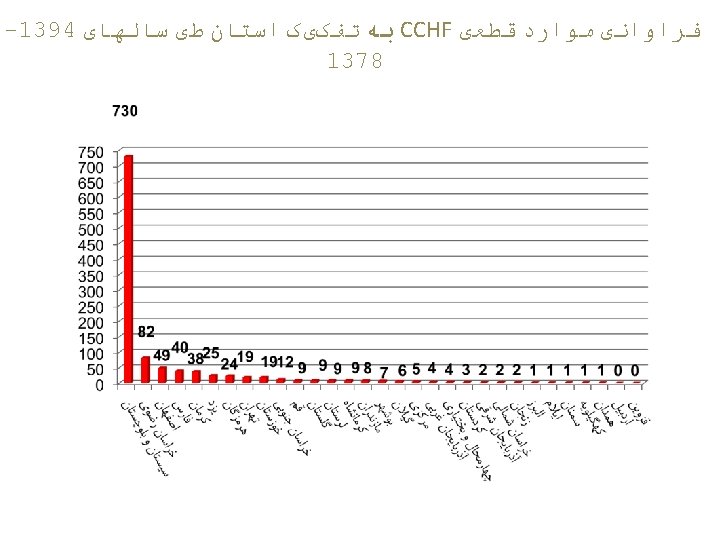
155 1 154 کﺸﻮﺭی - ﻧﻤﻮﺩﺍﺭﺗﻌﺪﺍﺩ ﻣﻮﺍﺭﺩ ﻗﻄﻌی ﻭ ﻣﺮگ ﺍﺯ ﻗﻄﻌی ﺗﺐ کﺮیﻤﻪ کﻨگﻮ 1 114 1 1 122 96 93 84 79 8 62 6 72 63 53 53 59 53 39 4 22 24 23 2 0 1397 84 1396 155 1395 62 1394 53 1393 39 1392 63 1391 93 1390 79 1389 154 1388 114 1387 122 1386 72 1385 53 1384 24 1383 22 1382 53 1381 96 1380 59 1379 23 ﻣﻮﺭﺩ ﻗﻄﻌی کﺸﻮﺭی
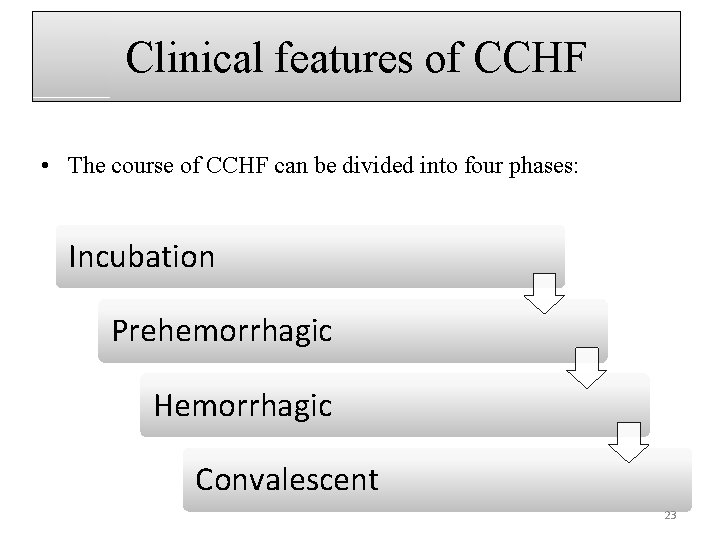
Clinical features of CCHF • The course of CCHF can be divided into four phases: Incubation Prehemorrhagic Hemorrhagic Convalescent 23
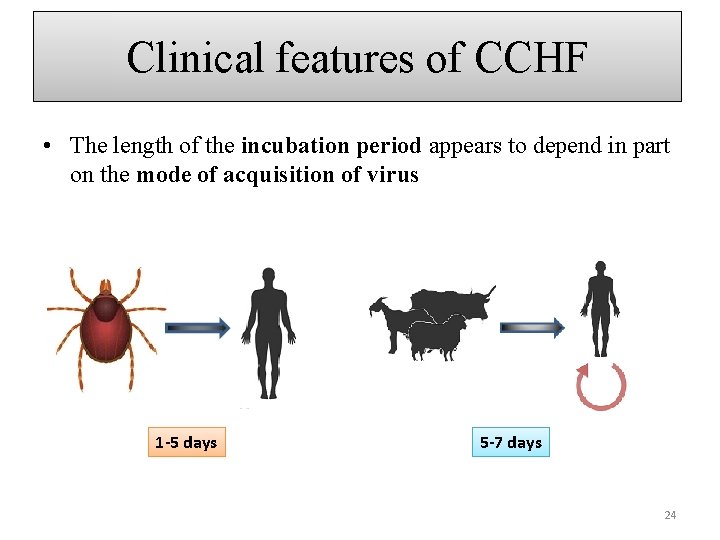
Clinical features of CCHF • The length of the incubation period appears to depend in part on the mode of acquisition of virus 1 -5 days 5 -7 days 24
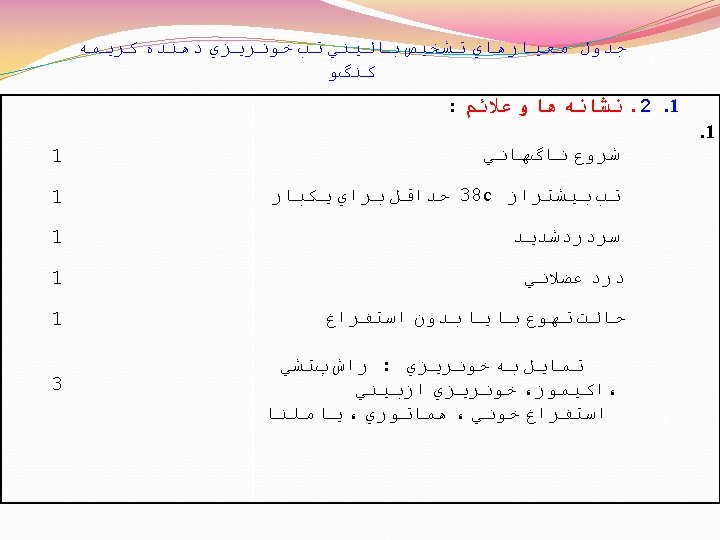
Clinical features of CCHF Prehemorrhagic phase Sudden onset of fever, Myalgia, Chills, Severe headache, Back and abdominal pains Prehemorrhagic 1– 7 days Nausea-Vomiting, Dizziness, Photophobia Hyperemia of the face, neck, and chest 25
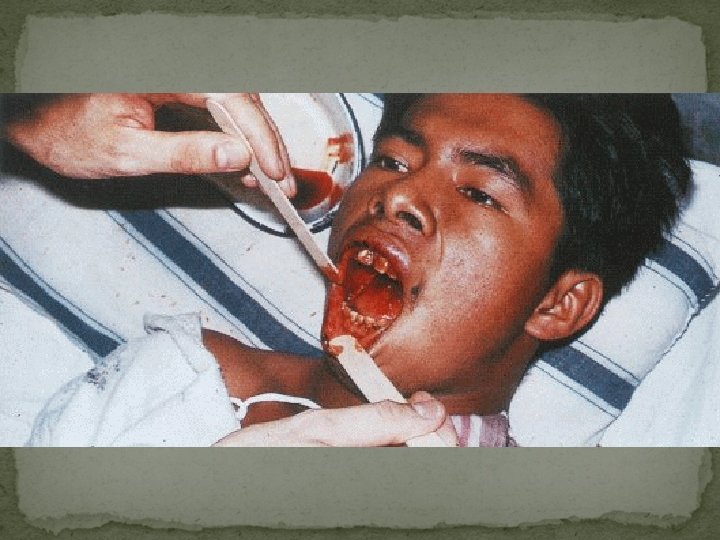
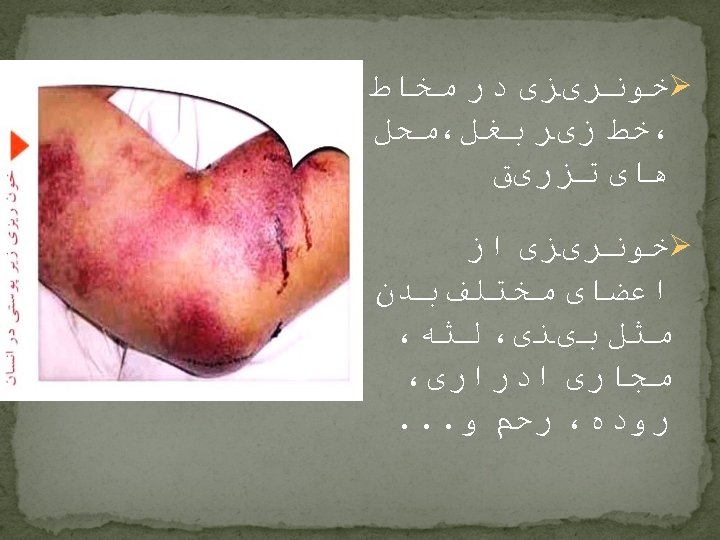
Clinical features of CCHF Hemorrhagic phase • Hemorrhagic period is short, rapidly develops, and usually begins at the 3 rd– 5 th days of disease. • Its most common initial manifestation is a petechial rash of the skin, conjunctiva and other mucous membranes, which progresses to large cutaneous ecchymoses and bleeding. • The most common bleeding sites are: – – Nose (epistaxis) Gastrointestinal tract (hematemesis, melena) Urinary tract (hematuria) Respiratory tract (hemoptysis) 26
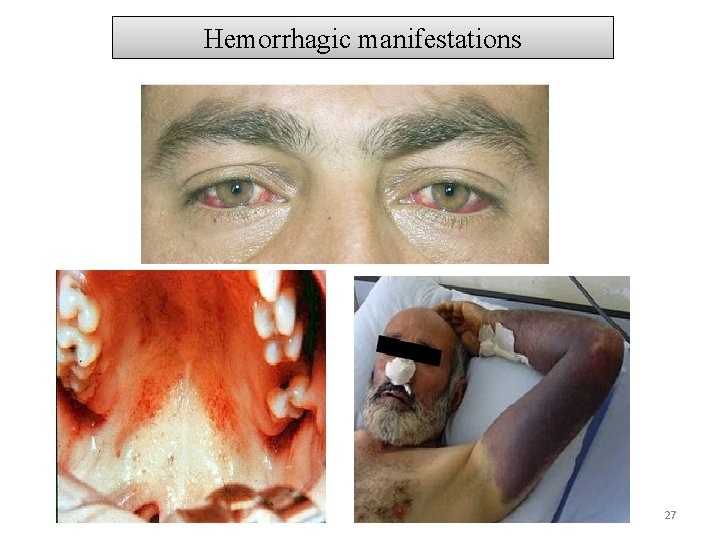
Hemorrhagic manifestations 27
Clinical features of CCHF • Convalescence period – Begins about 10– 20 days after the onset of illness. – Full recovery may take up to a year – Recovering patients often experienced a variety of health problems, including : • Weakness, • Hair loss, • Poor appetite, • Hearing loss, • Impaired memory and vision • Hepato-renal insufficiency 30
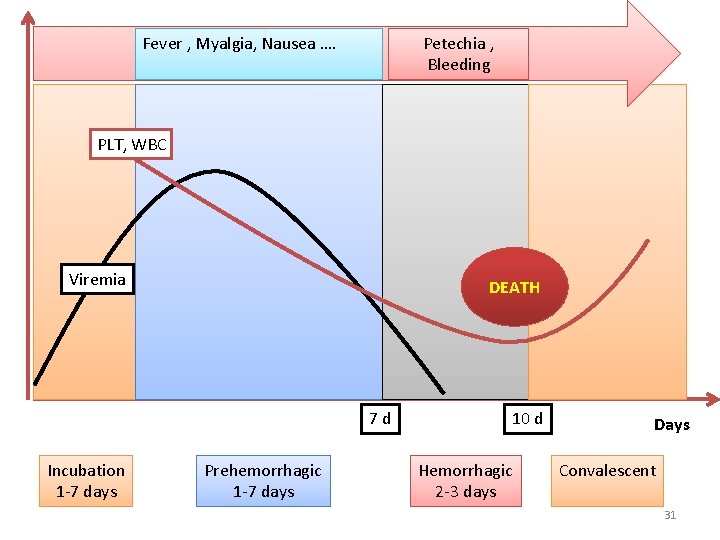
Fever , Myalgia, Nausea …. Petechia , Bleeding PLT, WBC Viremia DEATH 7 d Incubation 1 -7 days Prehemorrhagic 1 -7 days 10 d Hemorrhagic 2 -3 days Days Convalescent 31
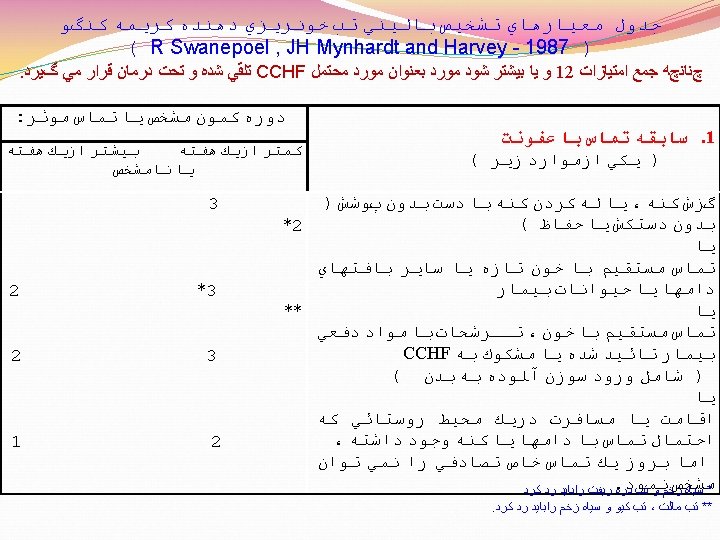
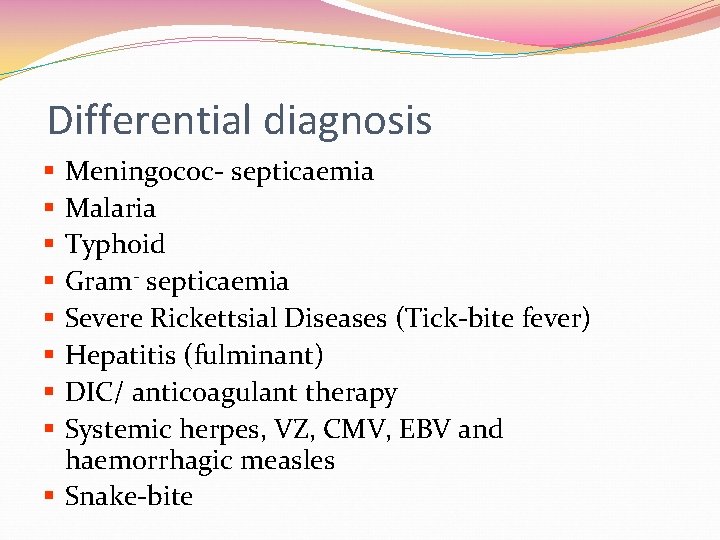
Differential diagnosis § Meningococ- septicaemia § Malaria § Typhoid § Gram- septicaemia § Severe Rickettsial Diseases (Tick-bite fever) § Hepatitis (fulminant) § DIC/ anticoagulant therapy § Systemic herpes, VZ, CMV, EBV and haemorrhagic measles § Snake-bite
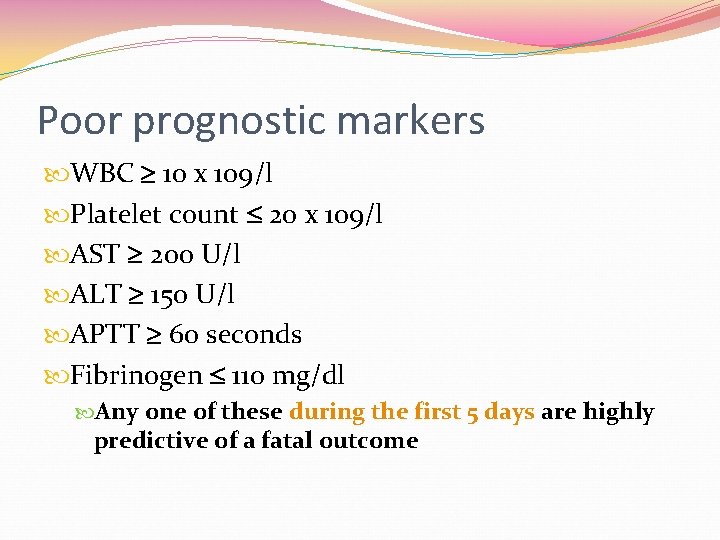
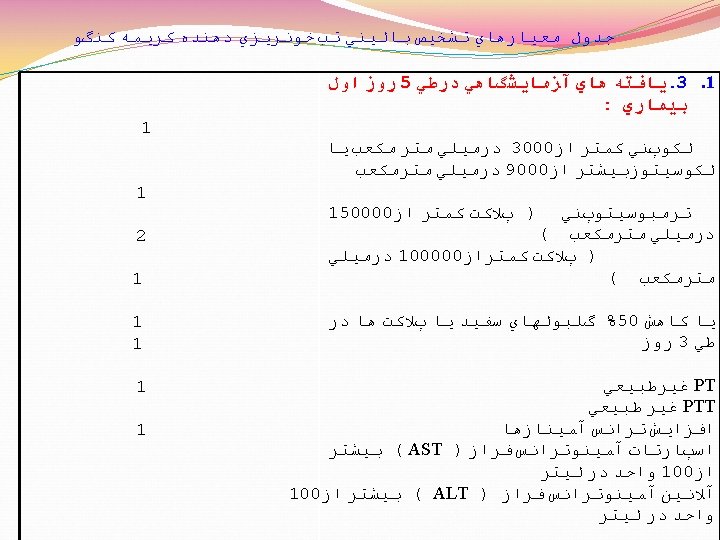
Poor prognostic markers WBC 10 x 109/l Platelet count 20 x 109/l AST 200 U/l ALT 150 U/l APTT 60 seconds Fibrinogen 110 mg/dl Any one of these during the first 5 days are highly predictive of a fatal outcome
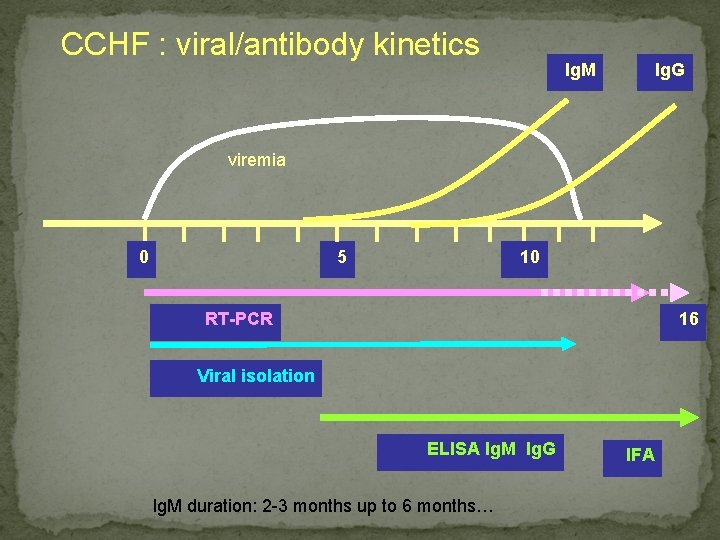
CCHF : viral/antibody kinetics Ig. M Ig. G viremia 0 5 10 RT-PCR 16 Viral isolation ELISA Ig. M Ig. G Ig. M duration: 2 -3 months up to 6 months… IFA

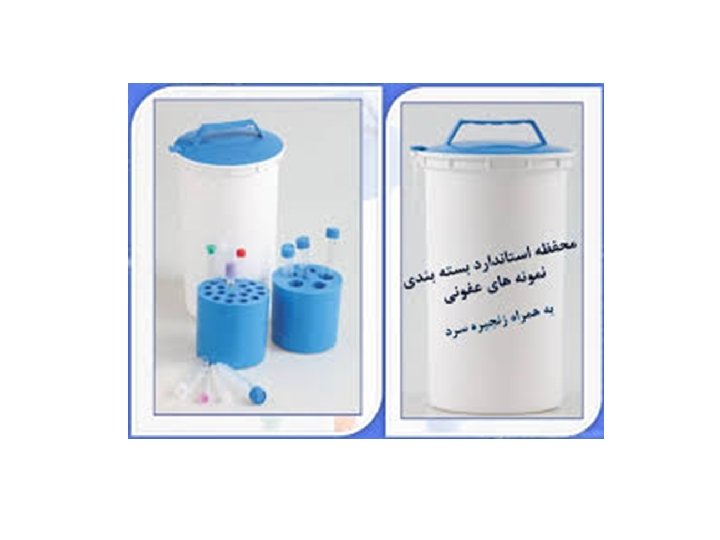
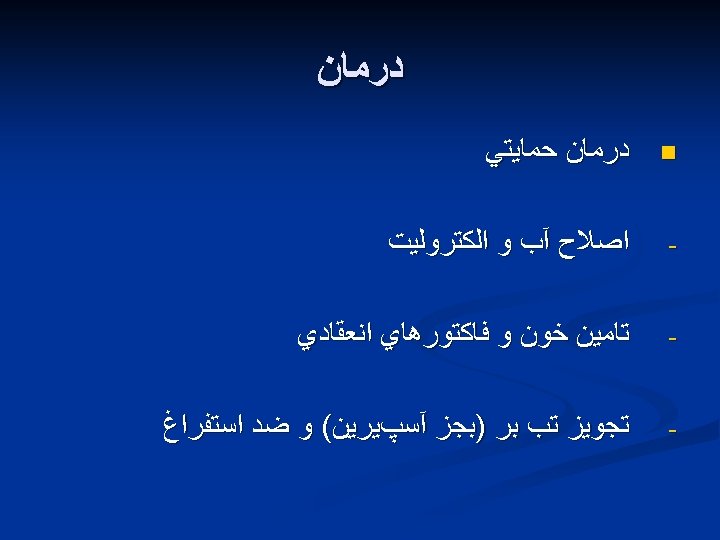
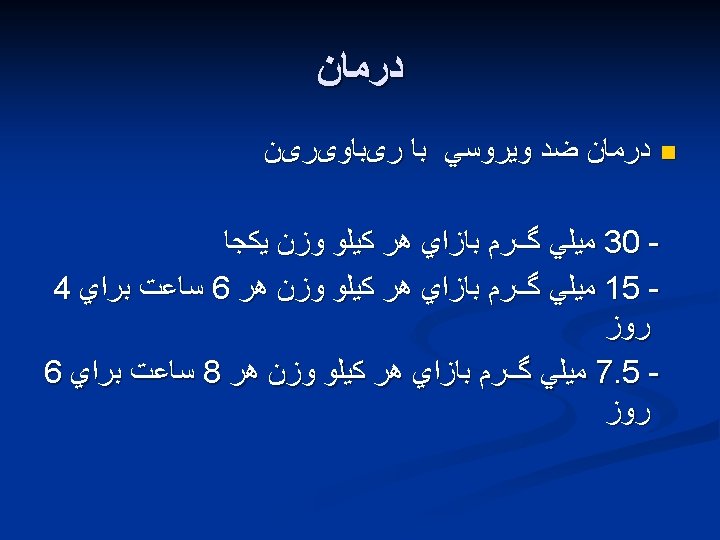
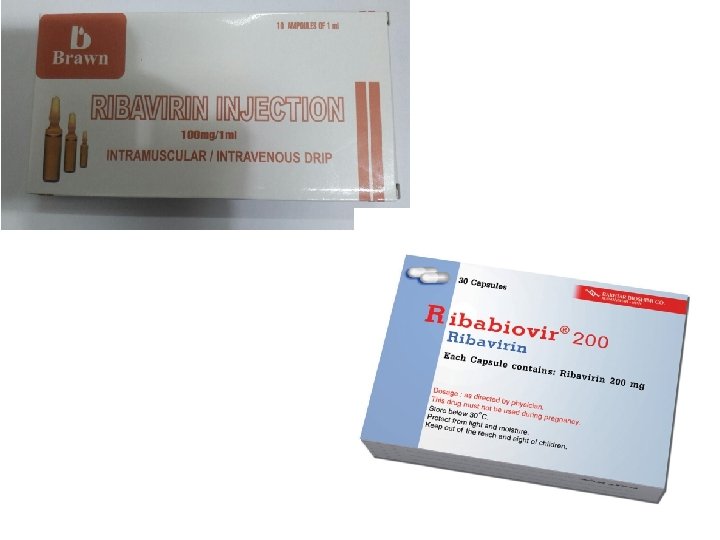
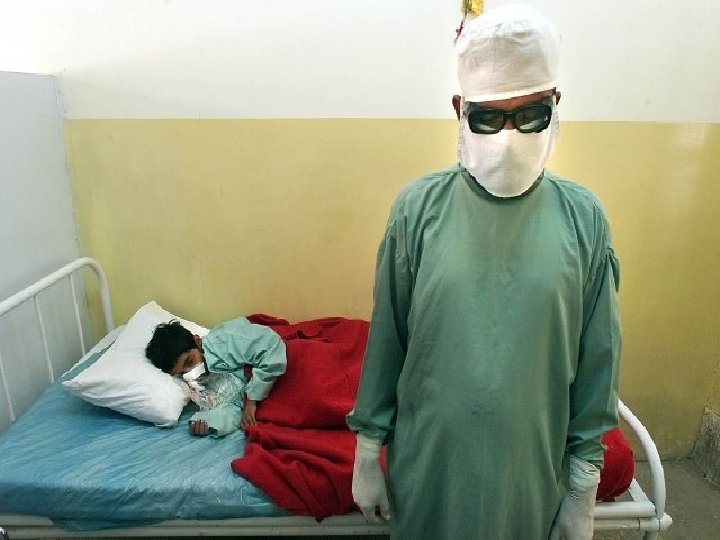
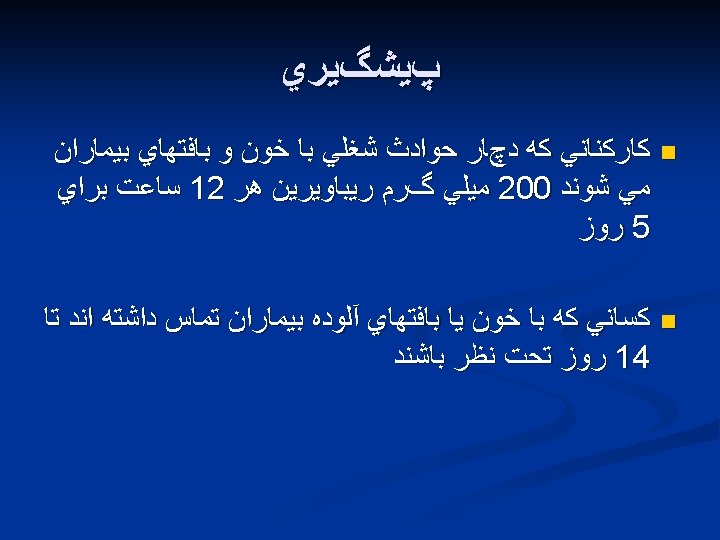



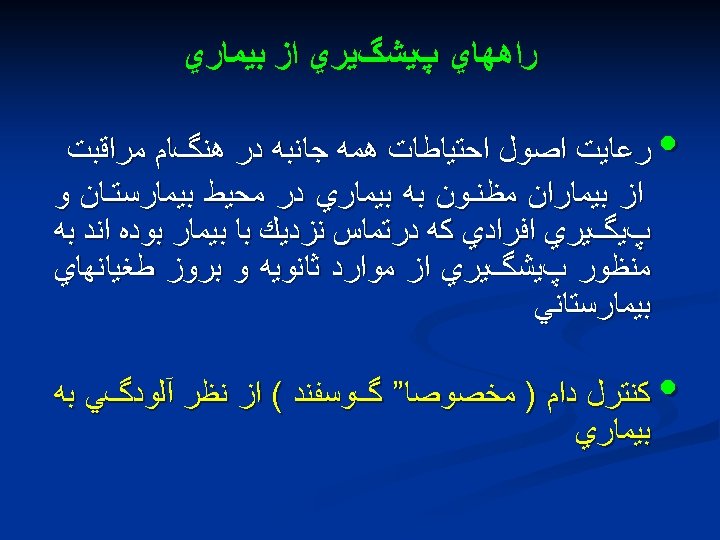
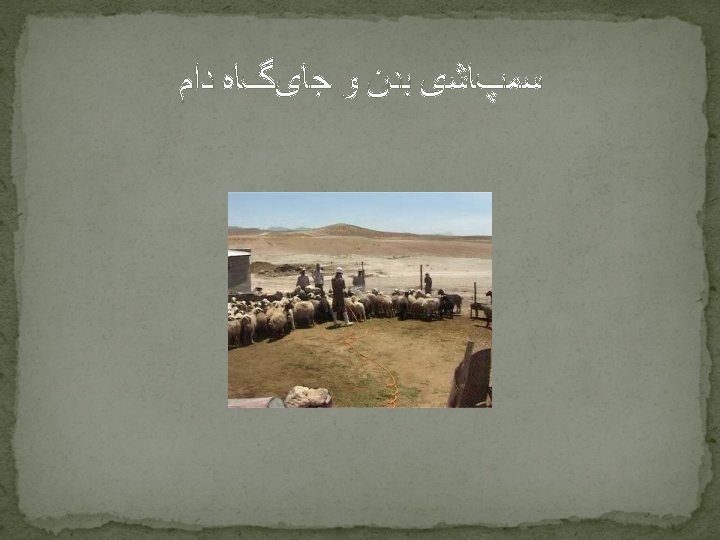
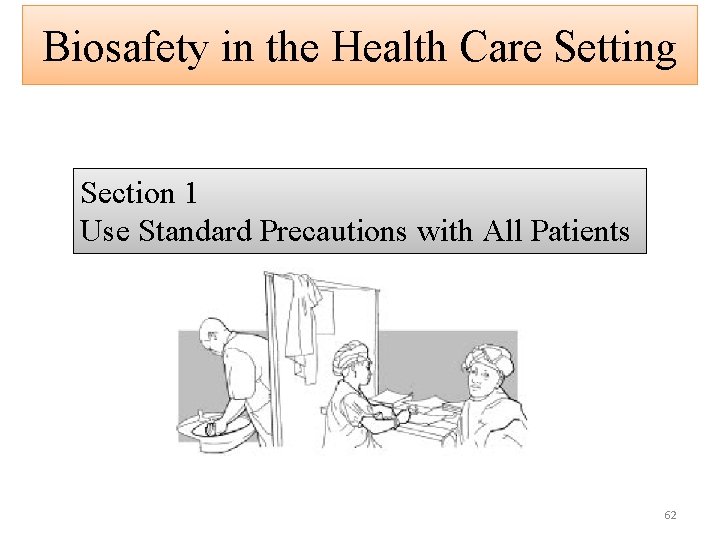
Biosafety in the Health Care Setting Section 1 Use Standard Precautions with All Patients 62
Biosafety in the Health Care Setting Section 1: Use Standard Precautions with All Patients • 1. 3 - Establish Routine Handwashing: • Handwashing is the most important precaution for the prevention of infections. 63
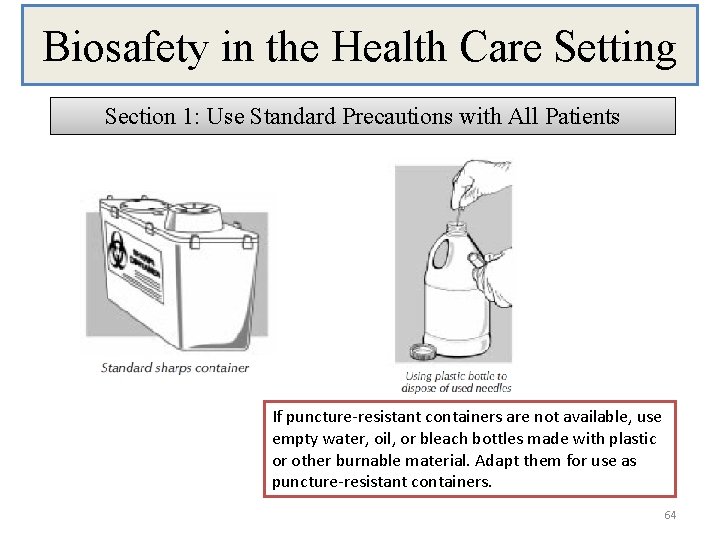
Biosafety in the Health Care Setting Section 1: Use Standard Precautions with All Patients If puncture-resistant containers are not available, use empty water, oil, or bleach bottles made with plastic or other burnable material. Adapt them for use as puncture-resistant containers. 64
Biosafety in the Health Care Setting Section 2: Use Standard Precautions with CCHF Patients • 2. 2 - Isolate the Patient: – If a single room is not available, select one of the following in order of preference: • A separate building or ward • � An area in a larger ward that is separate and far away from other patients in the ward • � An uncrowded corner of a large room or hall � 65
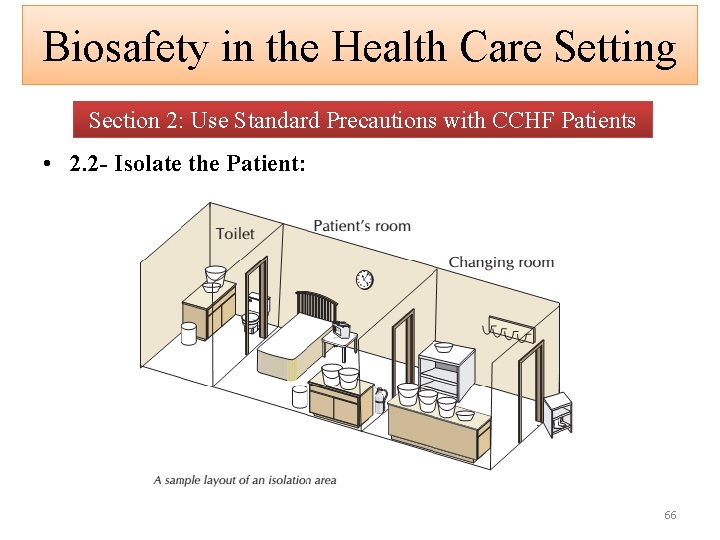
Biosafety in the Health Care Setting Section 2: Use Standard Precautions with CCHF Patients • 2. 2 - Isolate the Patient: 66
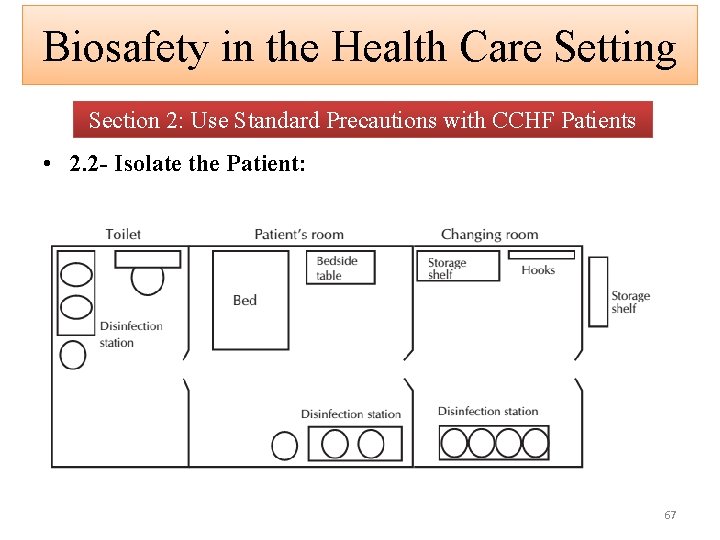
Biosafety in the Health Care Setting Section 2: Use Standard Precautions with CCHF Patients • 2. 2 - Isolate the Patient: 67
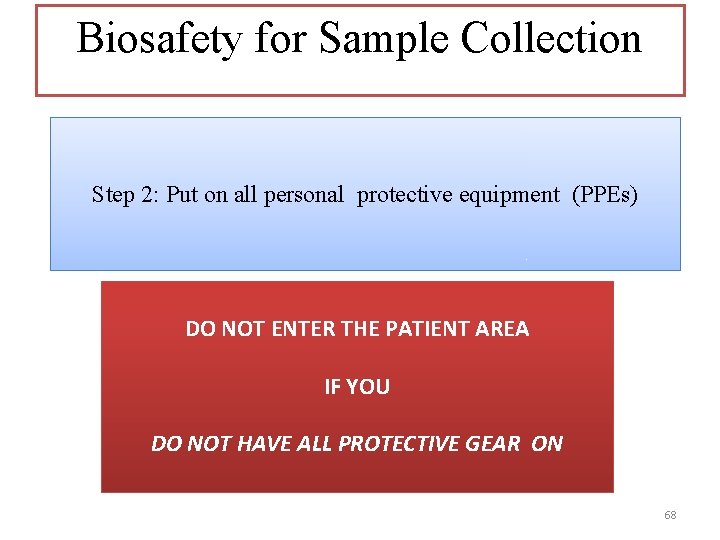
Biosafety for Sample Collection Step 2: Put on all personal protective equipment (PPEs) DO NOT ENTER THE PATIENT AREA IF YOU DO NOT HAVE ALL PROTECTIVE GEAR ON 68
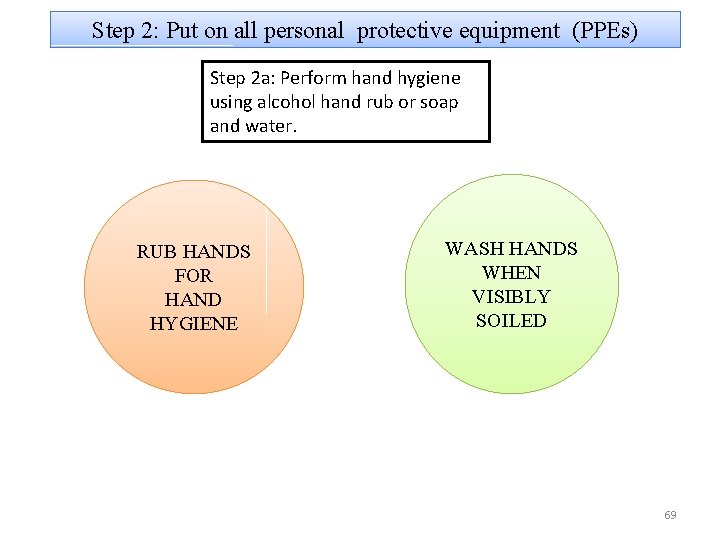
Step 2: Put on all personal protective equipment (PPEs) Step 2 a: Perform hand hygiene using alcohol hand rub or soap and water. RUB HANDS FOR HAND HYGIENE WASH HANDS WHEN VISIBLY SOILED 69
- Slides: 64