CHAPTER 2 THE RESEARCH ENTERPRISE IN PSYCHOLOGY LOOKING



- Slides: 53
CHAPTER 2 THE RESEARCH ENTERPRISE IN PSYCHOLOGY
LOOKING FOR LAWS: THE SCIENTIFIC APPROACH TO BEHAVIOR
GOALS OF THE SCIENTIFIC ENTERPRISE The goals of the science of psychology include § (1)the measurement & description of behavior, § (2)the understanding & prediction of behavior, § (3)the application of this knowledge to the task of controlling behavior.
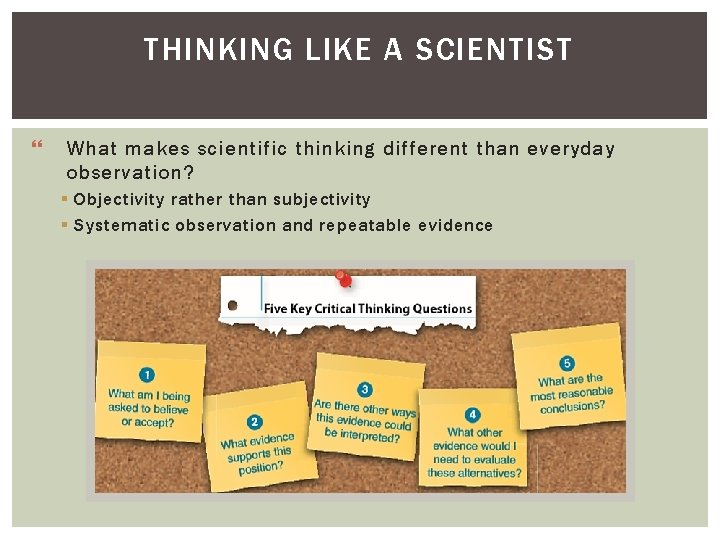
THINKING LIKE A SCIENTIST } What makes scientific thinking different than everyday observation? § Objectivity rather than subjectivity § Systematic observation and repeatable evidence
SCIENTIFIC ENTERPRISE A hypothesis is a tentative statement about the relationship between two or more variables. A theory is a system of interrelated ideas used to explain a set of observations.
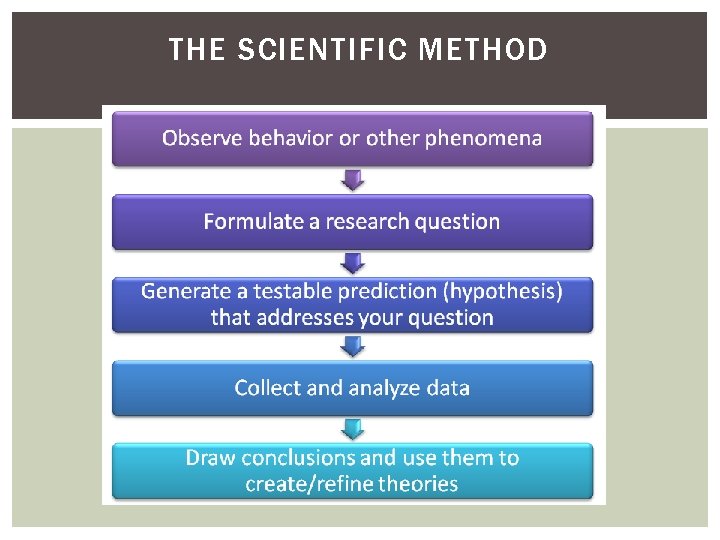
THE SCIENTIFIC METHOD
ADVANTAGES OF SCIENTIFIC INVESTIGATION There is a relative intolerance of error, which is promoted by scientists’ constant testing of hypotheses and skeptical scrutiny of research findings.
LOOKING FOR CAUSES: EXPERIMENTAL RESEARCH
Operational definitions precisely describe the actions or operations that will be used to measure or control variables.
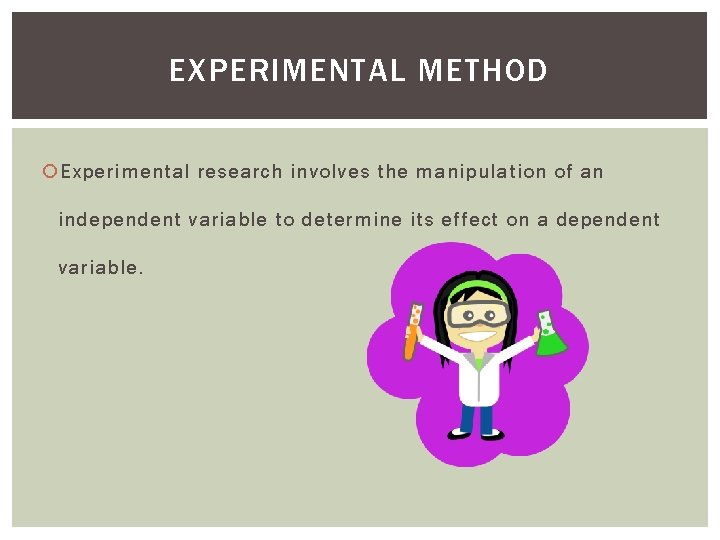
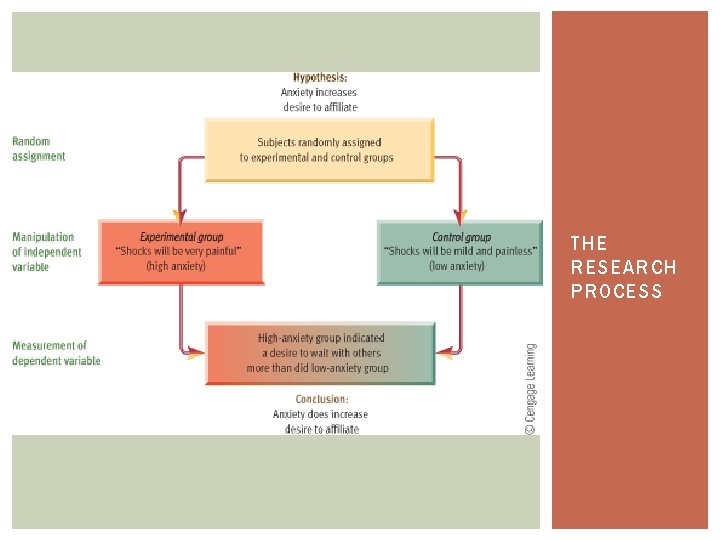
EXPERIMENTAL METHOD Experimental research involves the manipulation of an independent variable to determine its effect on a dependent variable.
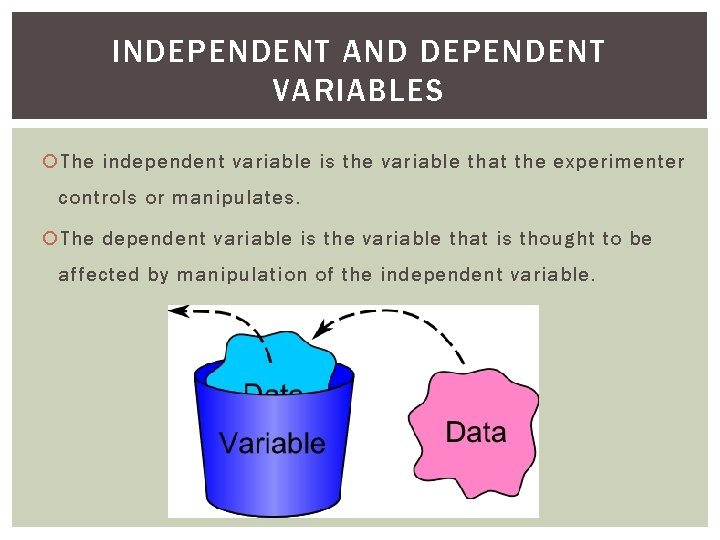
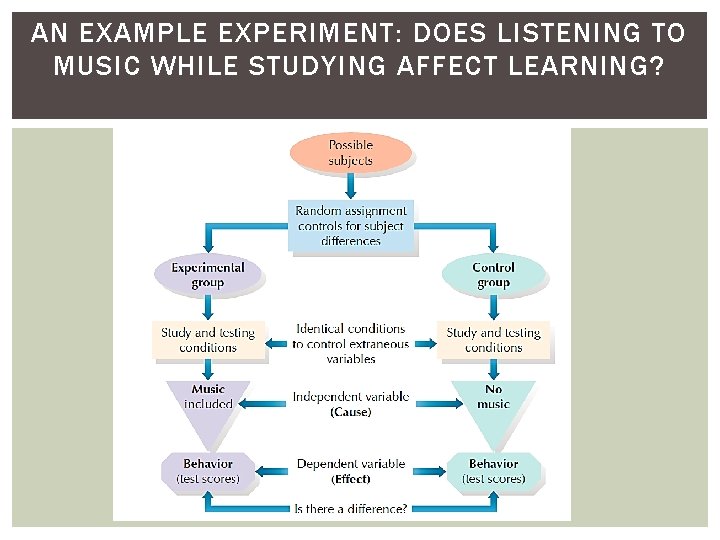
INDEPENDENT AND DEPENDENT VARIABLES The independent variable is the variable that the experimenter controls or manipulates. The dependent variable is the variable that is thought to be affected by manipulation of the independent variable.
EXPERIMENTAL AND CONTROL GROUPS The experimental group consists of the subjects who receive some special treatment in regard to the independent variable. The control group consists of similar subjects who do not receive the special treatment given to the experimental group.
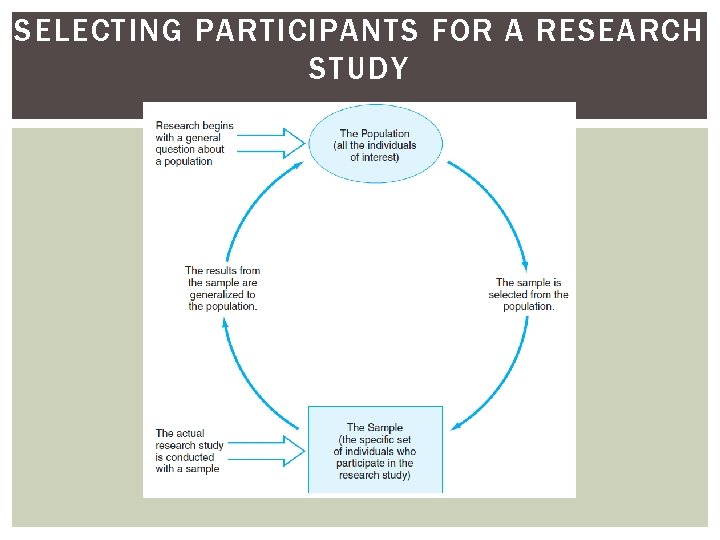
SELECTING PARTICIPANTS FOR A RESEARCH STUDY
EXTRANEOUS VARIABLES Any variables other than the independent variable that seem likely to influence the dependent variable in a specific study.
THE RESEARCH PROCESS
ADVANTAGES & DISADVANTAGES Advantage of the experiment is that it is a powerful research method that permits conclusions about cause-and-effect relationships between variables. Disadvantage of experiments is often not usable for a specific problem, and many experiments tend to be artificial.
AN EXAMPLE EXPERIMENT: DOES LISTENING TO MUSIC WHILE STUDYING AFFECT LEARNING?
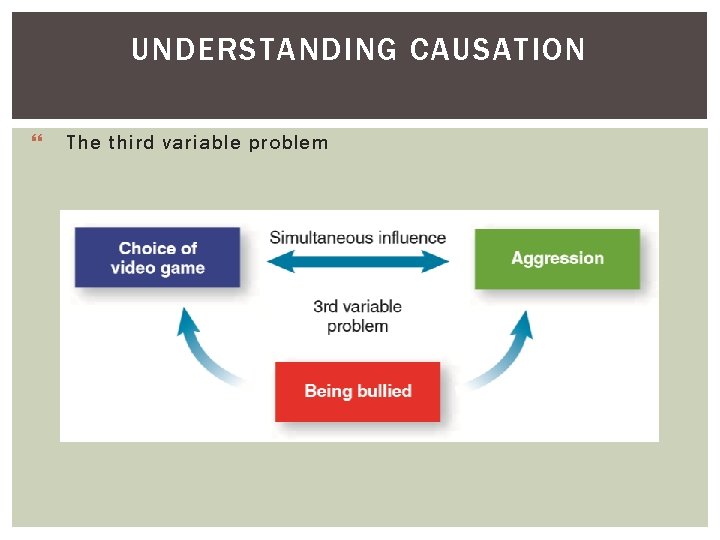
UNDERSTANDING CAUSATION } The third variable problem
LOOKING FOR LINKS: DESCRIPTIVE
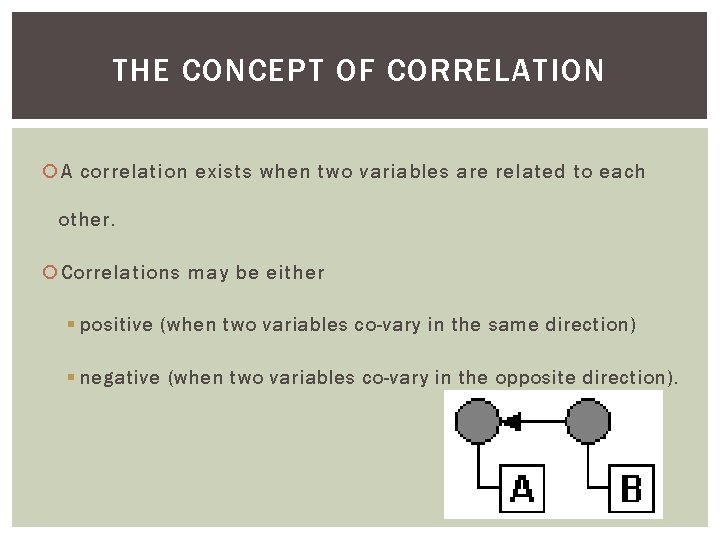
THE CONCEPT OF CORRELATION A correlation exists when two variables are related to each other. Correlations may be either § positive (when two variables co-vary in the same direction) § negative (when two variables co-vary in the opposite direction).
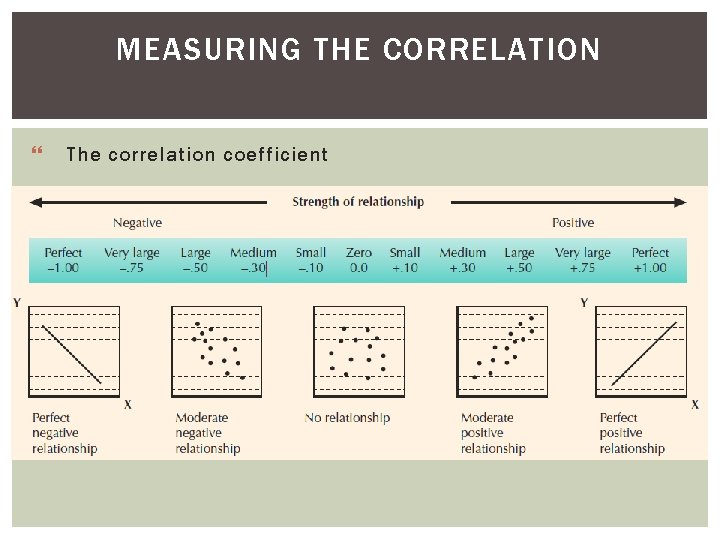
STRENGTH OF CORRELATION The correlation coefficient is a numerical index of the degree of relationship between two variables. § This coefficient can vary between 0 and +1. 00 (if the correlation is positive) § between 0 and − 1. 00 (if the correlation is negative). § A coefficient near zero indicates no relationship between the variables.
MEASURING THE CORRELATION } The correlation coefficient
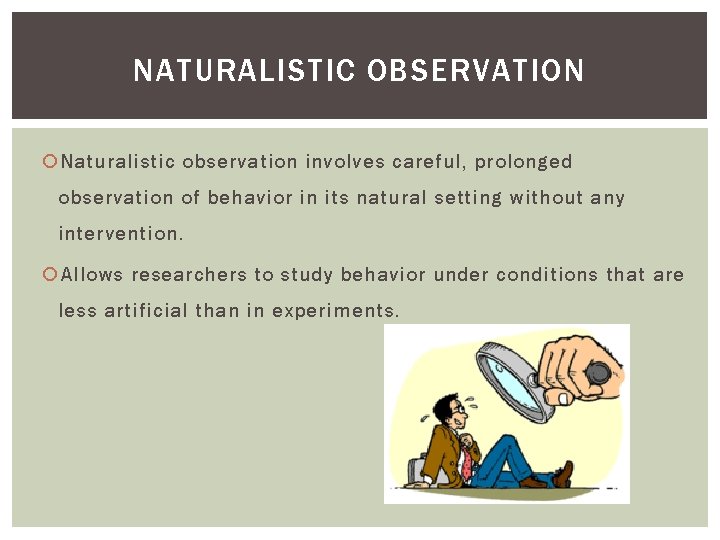
NATURALISTIC OBSERVATION Naturalistic observation involves careful, prolonged observation of behavior in its natural setting without any intervention. Allows researchers to study behavior under conditions that are less artificial than in experiments.
DISADVANTAGES OF NATURALISTIC OBSERVATION Researchers often have trouble making their observations unobtrusively so they don’t affect their participants’ behavior. Reactivity occurs when a subject’s behavior is altered by the presence of an observer. Another disadvantage is that it often is difficult to translate naturalistic observations into numerical data that permit precise statistical analyses.
CASE STUDIES A case study is an in-depth investigation of an individual subject. Most frequently used in Clinical Psychology.
CASE STUDIES Advantages Disadvantages Well suited for investigating certain phenomena, especially the roots of psychological disorders and the efficacy of selected therapeutic practices (Fishman, 2007). They can also provide compelling, real-life illustrations that bolster a hypothesis or theory. They are highly subjective. Clinicians & researchers often focus selectively on information that fits their expectations (usually reflect their theoretical slant). Thus, it is relatively easy for investigators to see what they expect to see in case study research.
SURVEYS Survey’s use questionnaires or interviews to gather information about specific aspects of participants’ background, attitudes, beliefs, or behavior. Are often used to obtain information on types of behavior that are difficult to directly observe make it relatively easy to collect data on attitudes and opinions from large samples of participants.
ADVANTAGES & DISADVANTAGES OF DESCRIPTIVE RESEARCH Advantage Allows for the exploration of issues that might not be open to experimental investigation because the variables of interest cannot be manipulated for practical or ethical reasons. Disadvantage these research methods cannot demonstrate causeeffect relationships.
PSYCHOLOGICAL RESEARCH - CRASH COURSE PSYCHOLOGY #2
LOOKING FOR FLAWS: EVALUATING RESEARCH
META-ANALYSIS Meta-analysis combines the statistical results of many studies of the same question, yielding an estimate of the size and consistency of a variable’s effects.
REPLICATION Replication is the repetition of a study to see whether the earlier results are duplicated. Scientists often try to replicate research findings to doublecheck their validity. Although this process leads to some contradictory findings, science works toward reconciling inconsistent results.
SAMPLING BIAS A sample is the collection of subjects selected for observation in an empirical study. The population is the much larger collection of people (from which the sample is drawn) that researchers want to generalize about.
SAMPLING BIAS American psychologists have historically tended to under sample ethnic minorities and people from non-Western cultures.
PLACEBO EFFECTS A placebo is a substance that resembles a drug but has no actual pharmacological effect. Placebo effects occur when participants’ expectations cause them to change their behavior in response to a fake treatment. Yet, studies demonstrated mere expectations can change physiological effects.
PLACEBO EFFECT
DISTORTIONS IN SELF-REPORT DATA Social desirability bias is a tendency to give socially approved answers to questions about oneself. Halo effect occurs when someone’s overall evaluation of a person, object, or institution spills over to influence more specific ratings.
EXPERIMENTER BIAS Experimenter bias occurs when researchers’ expectations and desires distort their observations or unintentionally influence their subjects’ behavior. The most common way of managing is through thee doubleblind procedure is a research strategy in which neither subjects nor experimenters know which subjects are in the experimental or control groups.
LOOKING AT ETHICS: DO THE ENDS JUSTIFY THE MEANS?
ETHICAL PRINCIPLES IN RESEARCH: WORKING WITH HUMAN PARTICIPANTS Participation should always be voluntary & they should be allowed to withdraw from a study at any time Should not be subjected to harmful or dangerous treatments If a study requires deception, participants should be debriefed (informed of the true nature and purpose of the research) as soon as possible Participants’ right to privacy should never be compromised.
THE QUESTION OF DECEPTION Opposition It is unethical because: its immoral contributes to feelings of distrust can be very stressful Defense Certain issues cannot be investigated with it Negative effects have been overestimated
THE QUESTION OF ANIMAL RESEARCH Opposition Animal research violates animals rights Studies may not generalize to humans Defense Animals used are mostly rodents & birds Brought about major advances that are worth the cost
GUIDELINES FOR RESEARCH WITH ANIMALS INCLUDE: Harmful or painful procedures cannot be justified unless the potential benefits of the research are substantial Research animals are entitled to decent living conditions
KEEPING RESEARCHERS IN CHECK Institutions use an Internal Review Board to ensure ethical practices in research.
BEHAVIORAL STATISTICS
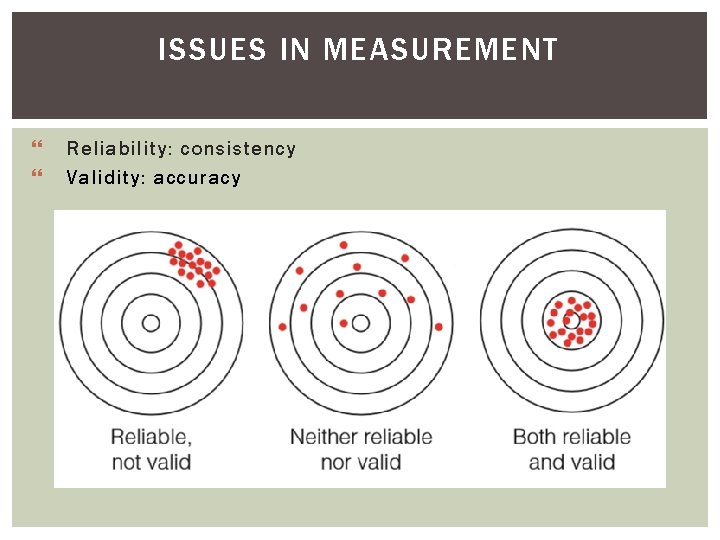
ISSUES IN MEASUREMENT } } Reliability: consistency Validity: accuracy
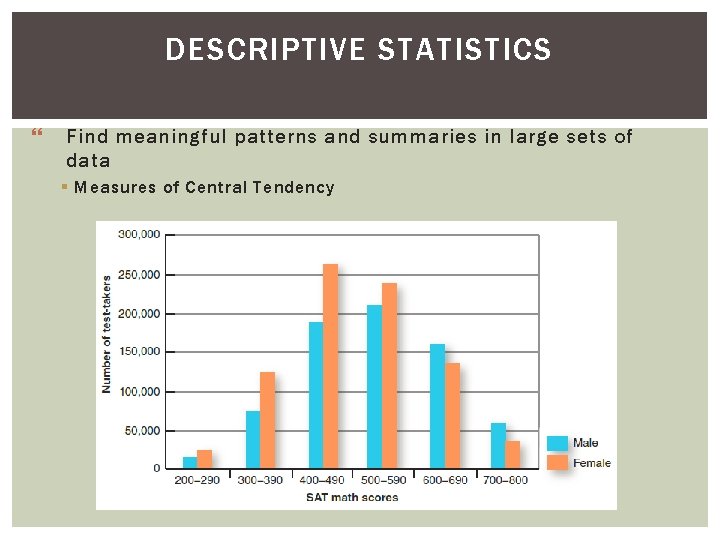
DESCRIPTIVE STATISTICS } Find meaningful patterns and summaries in large sets of data § Measures of Central Tendency
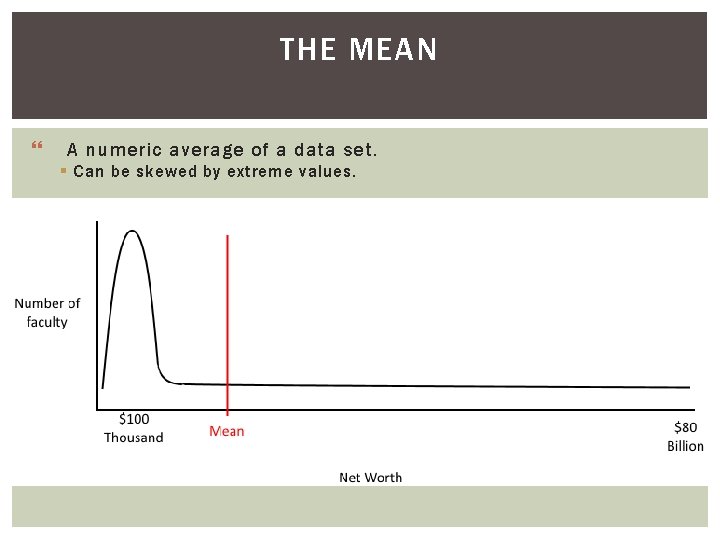
THE MEAN } A numeric average of a data set. § Can be skewed by extreme values.
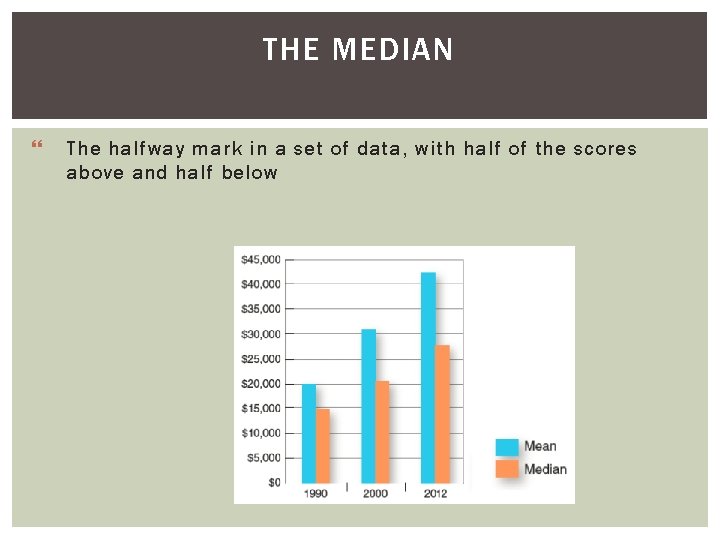
THE MEDIAN } The halfway mark in a set of data, with half of the scores above and half below
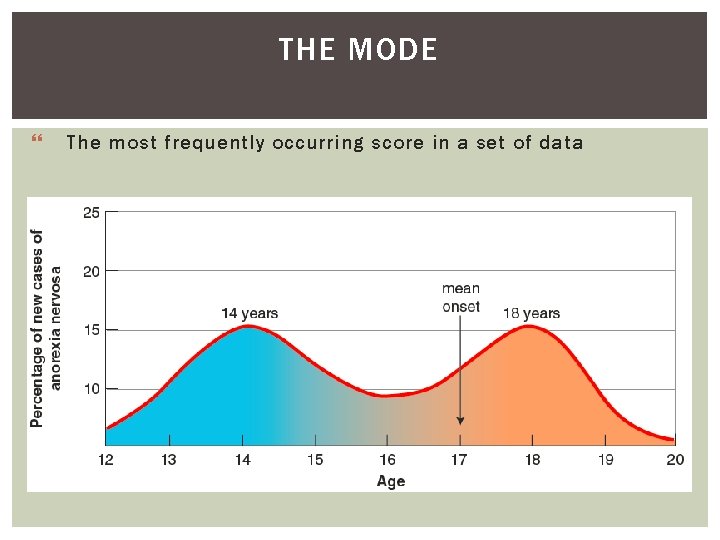
THE MODE } The most frequently occurring score in a set of data
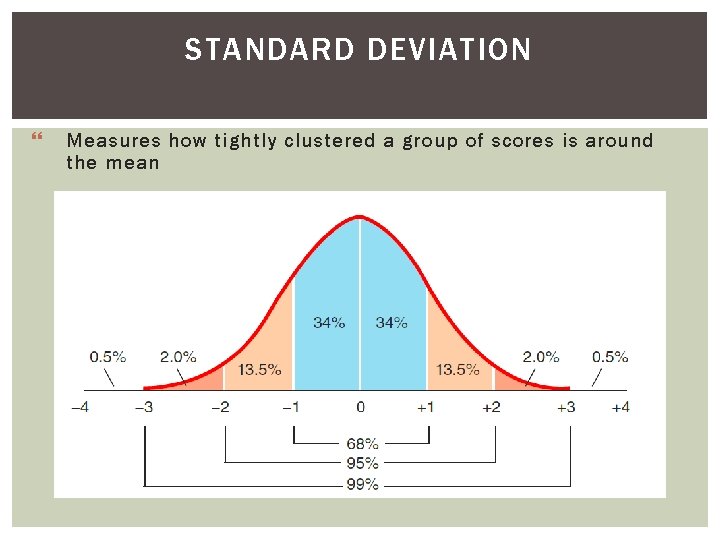
STANDARD DEVIATION } Measures how tightly clustered a group of scores is around the mean
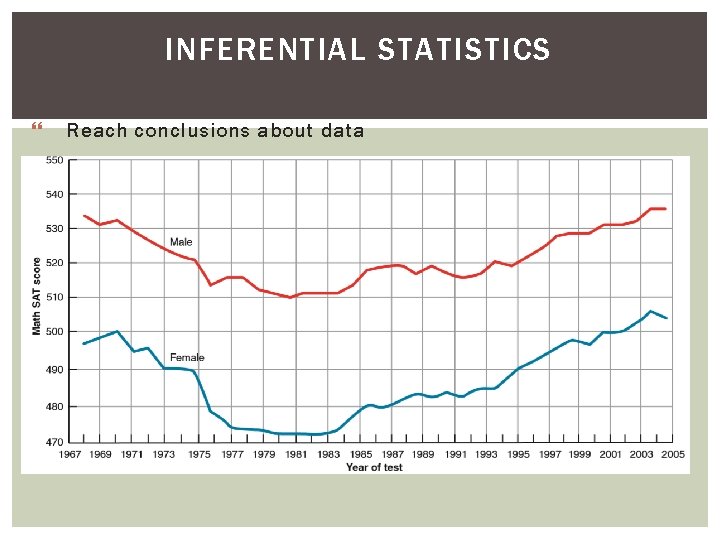
INFERENTIAL STATISTICS } Reach conclusions about data
5 MOST DISTURBING & UNETHICAL HUMAN EXPERIMENTS