Aim What is the function of the respiratory






- Slides: 65
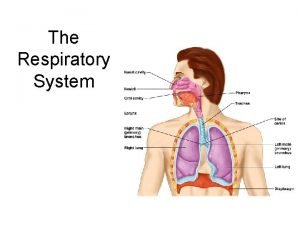
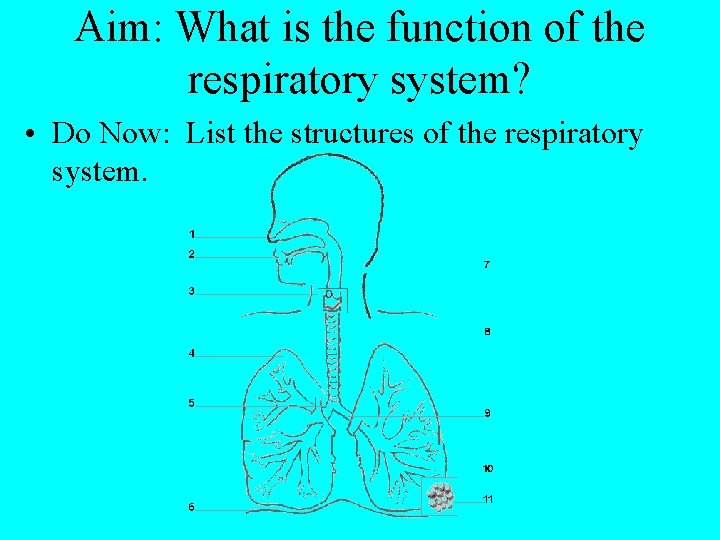
Aim: What is the function of the respiratory system? • Do Now: List the structures of the respiratory system.
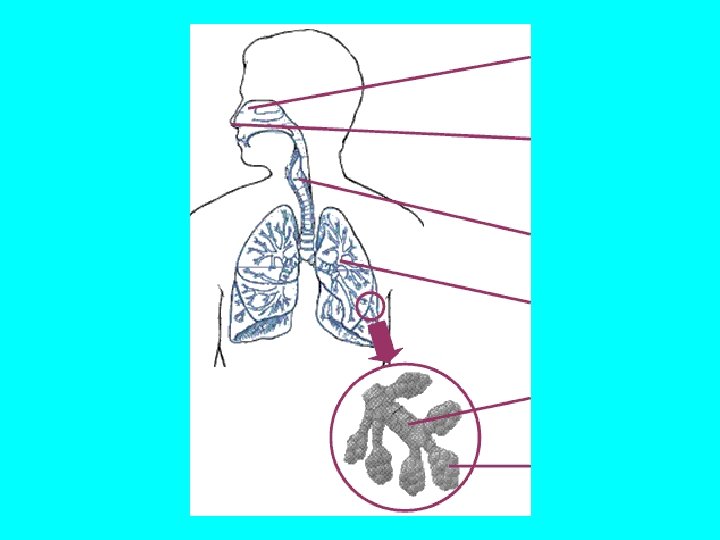
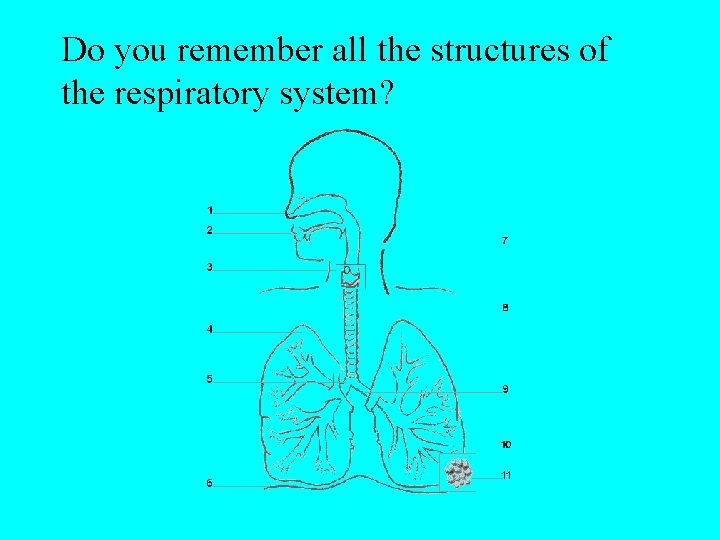
What are the parts of the respiratory system? Label
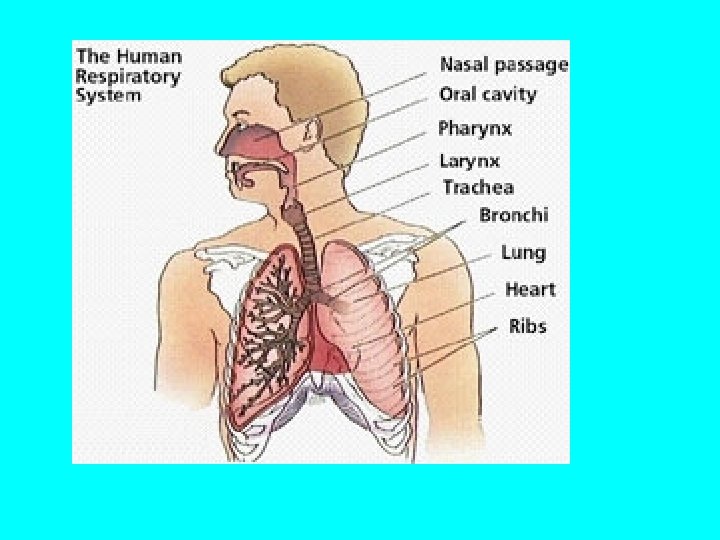
Intro to Resp parts
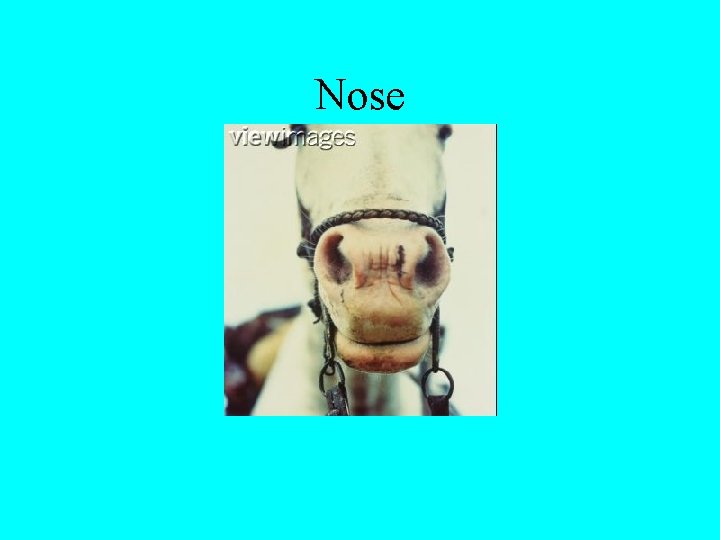
Nose
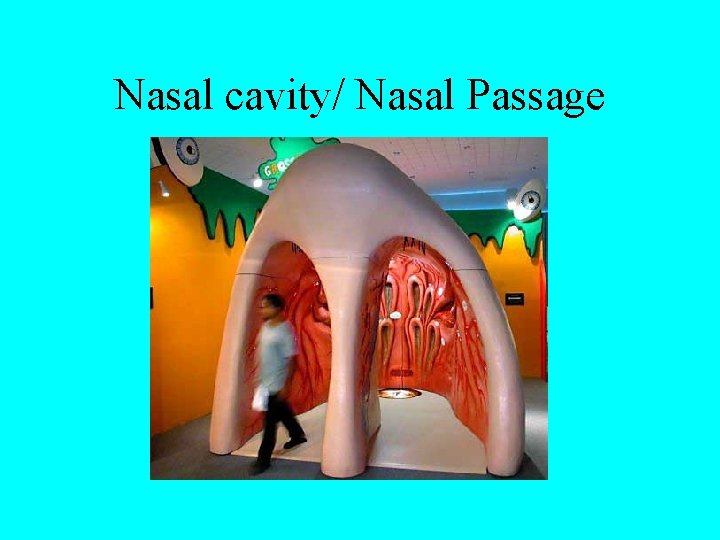
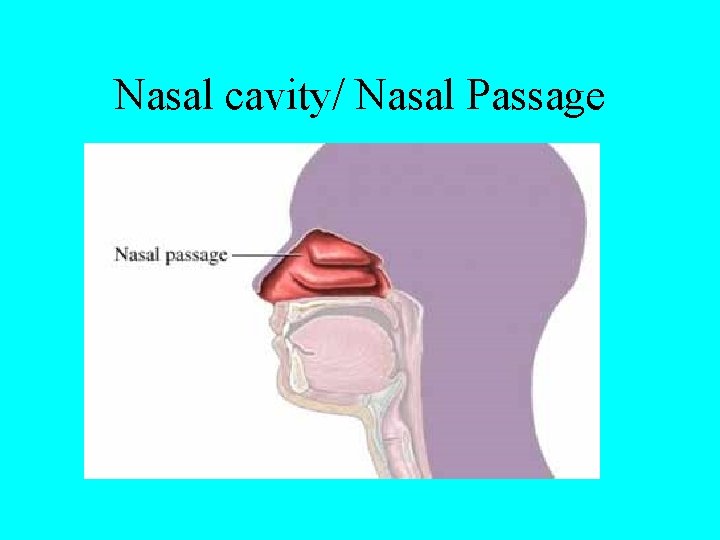
Nasal cavity/ Nasal Passage
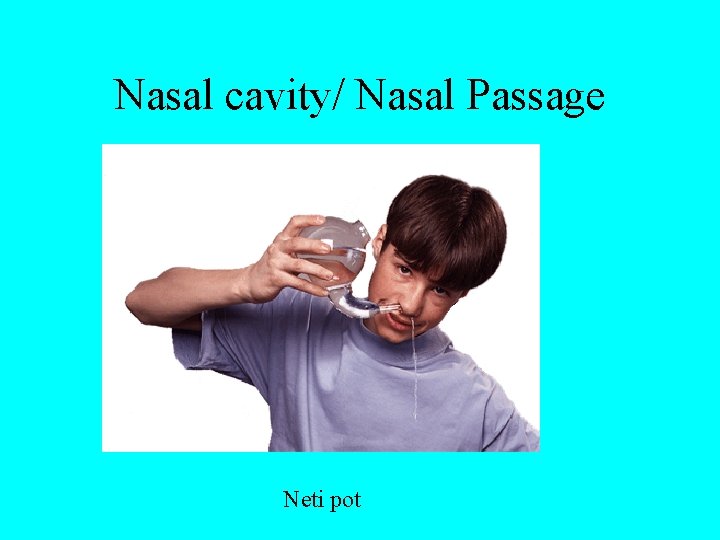
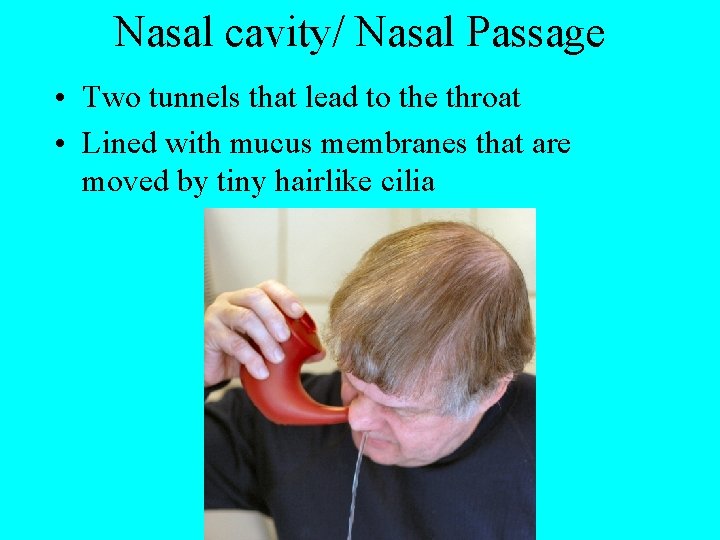
Nasal cavity/ Nasal Passage Neti pot
Nasal cavity/ Nasal Passage
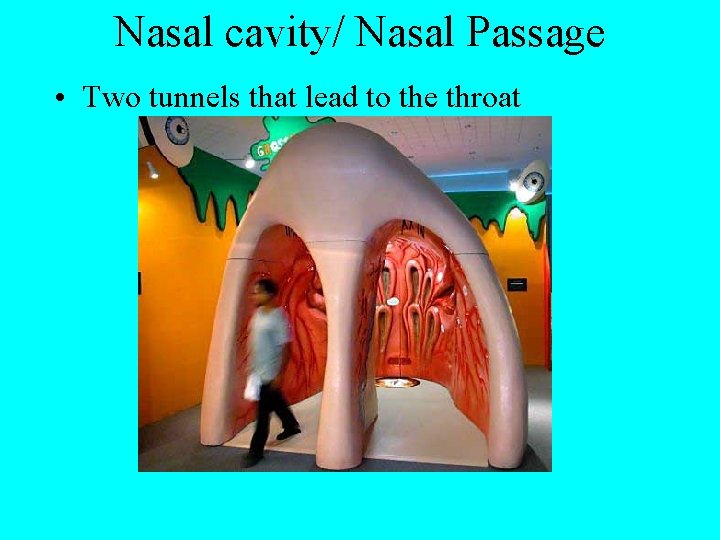
Nasal cavity/ Nasal Passage • Two tunnels that lead to the throat
Nasal cavity/ Nasal Passage • Two tunnels that lead to the throat • Lined with mucus membranes that are moved by tiny hairlike cilia
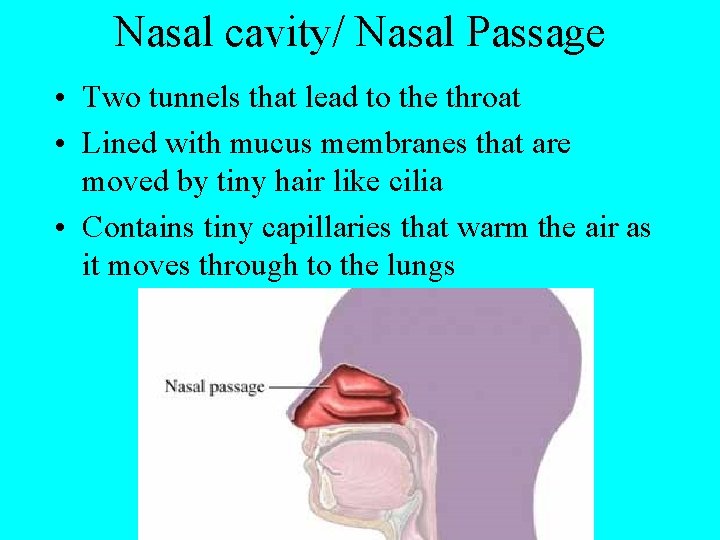
Nasal cavity/ Nasal Passage • Two tunnels that lead to the throat • Lined with mucus membranes that are moved by tiny hair like cilia • Contains tiny capillaries that warm the air as it moves through to the lungs
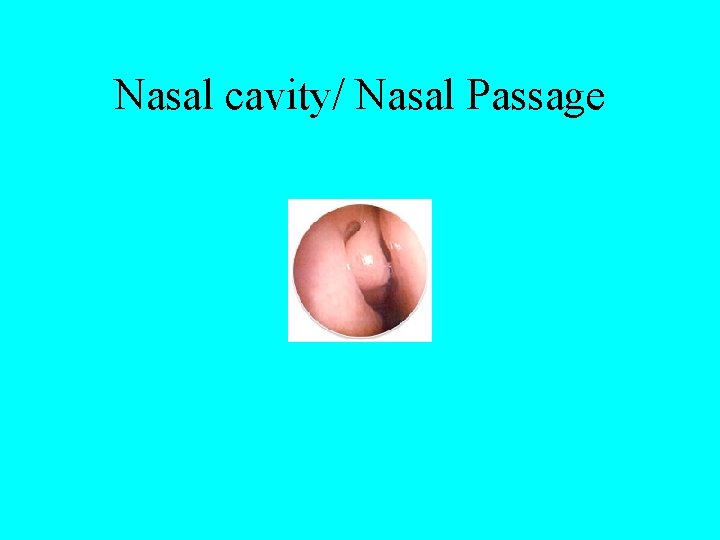
Nasal cavity/ Nasal Passage
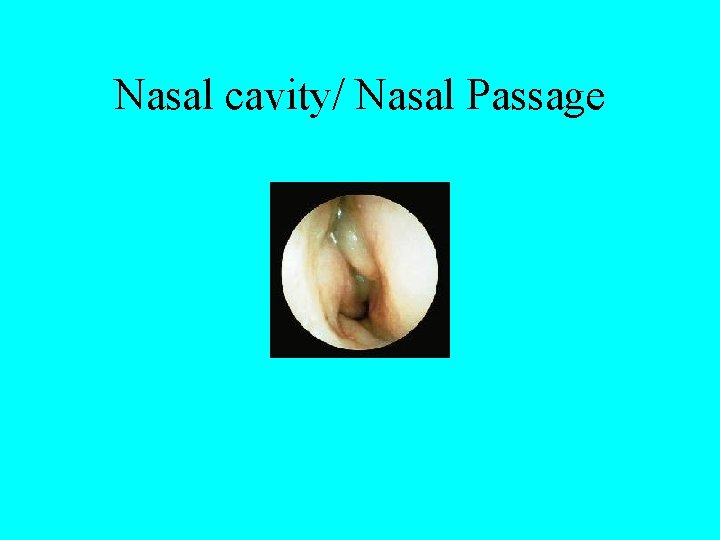
Nasal cavity/ Nasal Passage
Mucus
Mucus • sticky like substances produced by the nose to moisten the inhaled air and trap dust and bacteria
Mucus • sticky like substances produced by the nose to moisten the inhaled air and trap dust and bacteria
Mucus • sticky like substances produced by the nose to moisten the inhaled air and trap dust and bacteria
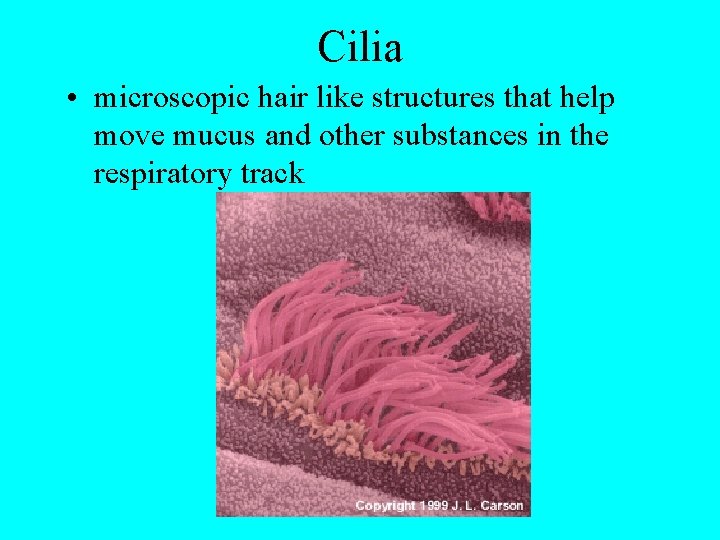
Cilia • microscopic hair like structures that help move mucus and other substances in the respiratory track
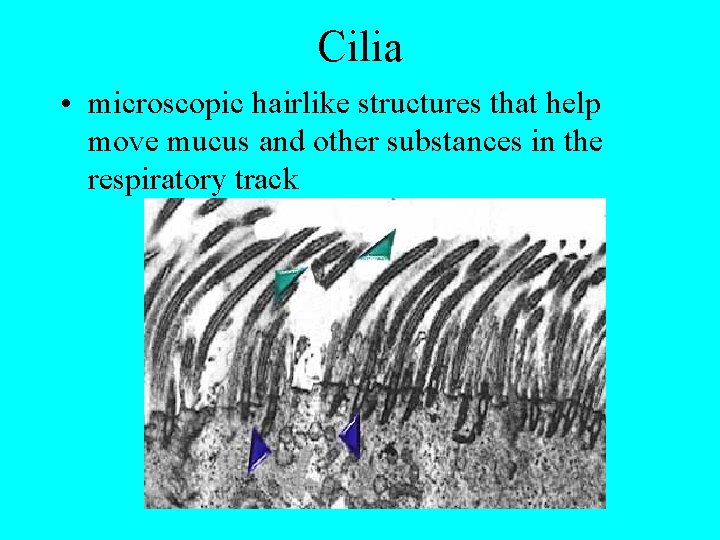
Cilia • microscopic hairlike structures that help move mucus and other substances in the respiratory track
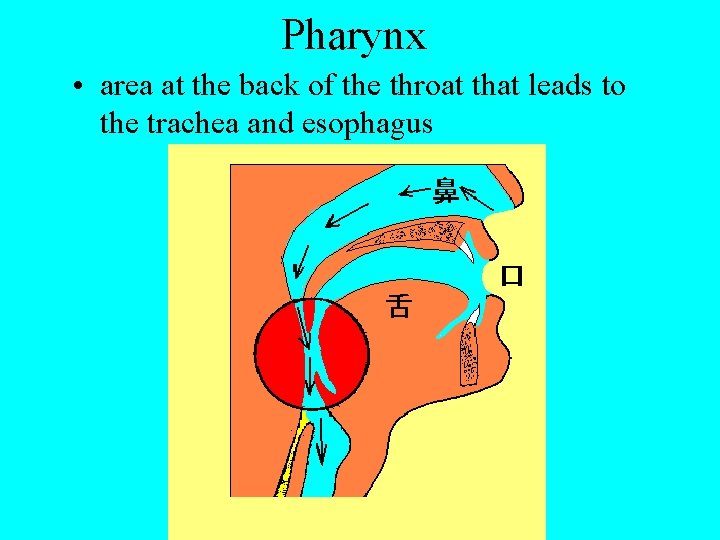
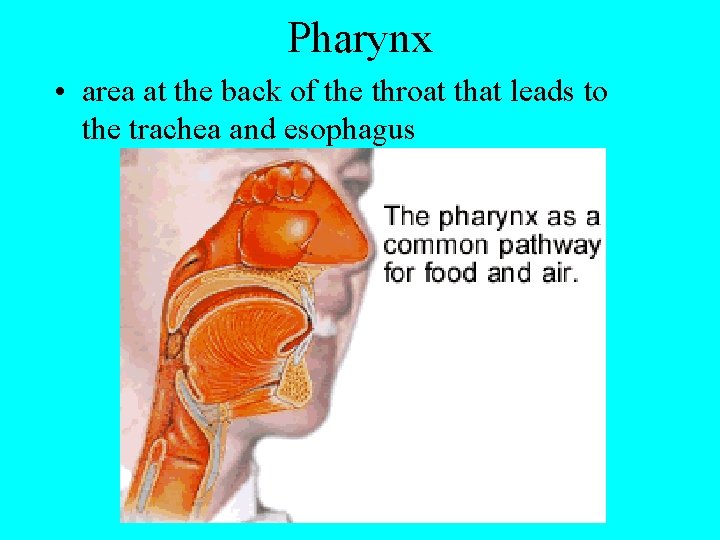
Pharynx • area at the back of the throat that leads to the trachea and esophagus
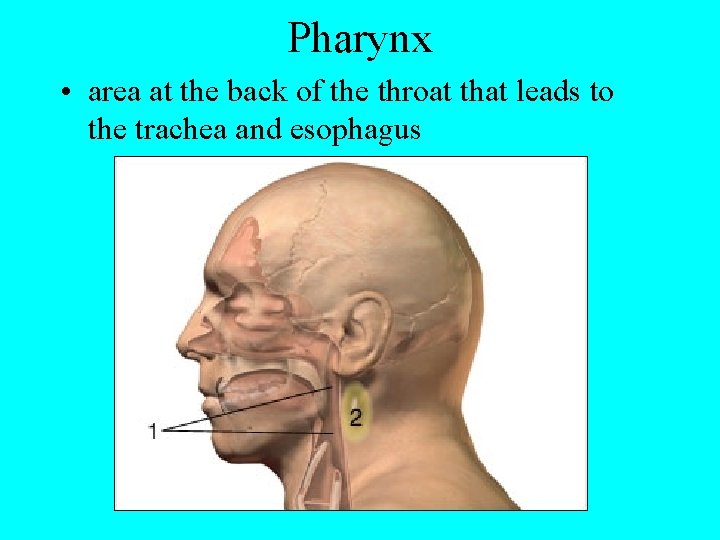
Pharynx • area at the back of the throat that leads to the trachea and esophagus
Pharynx • area at the back of the throat that leads to the trachea and esophagus
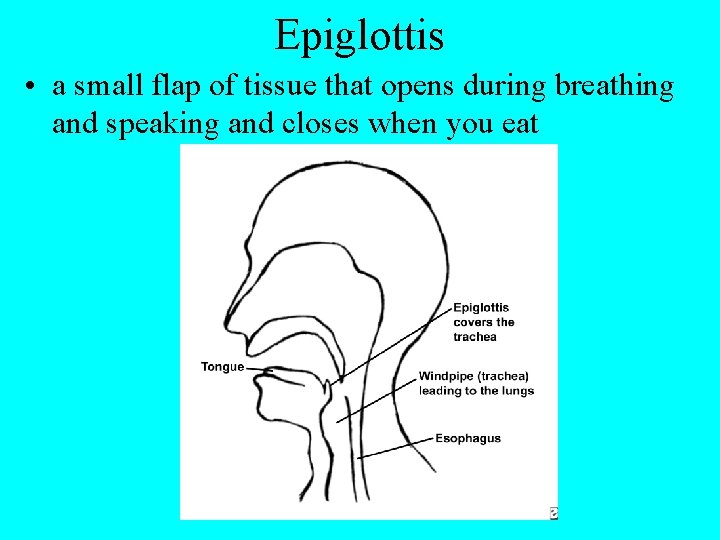
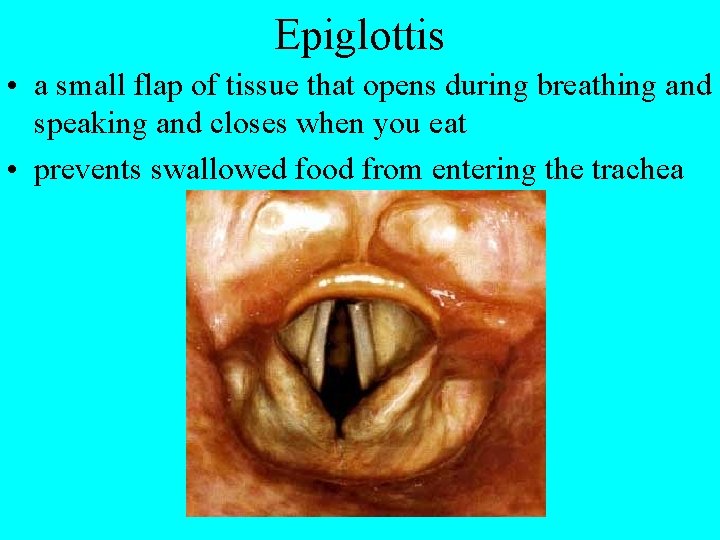
Epiglottis • a small flap of tissue that opens during breathing and speaking and closes when you eat
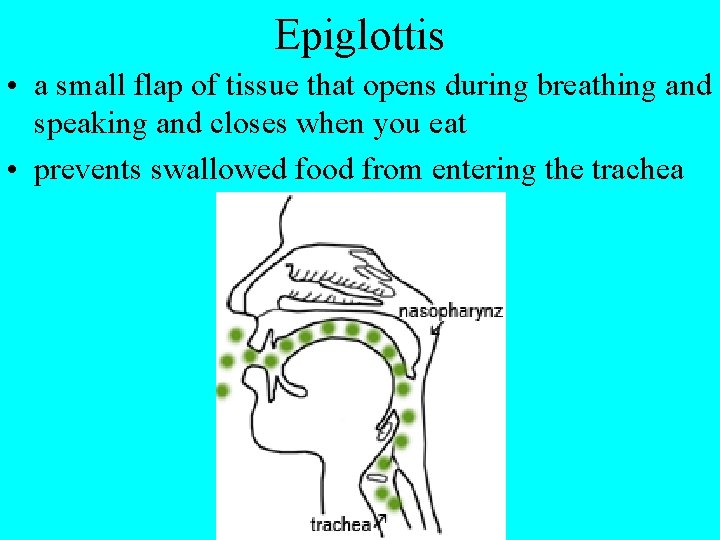
Epiglottis • a small flap of tissue that opens during breathing and speaking and closes when you eat • prevents swallowed food from entering the trachea
Epiglottis • a small flap of tissue that opens during breathing and speaking and closes when you eat • prevents swallowed food from entering the trachea
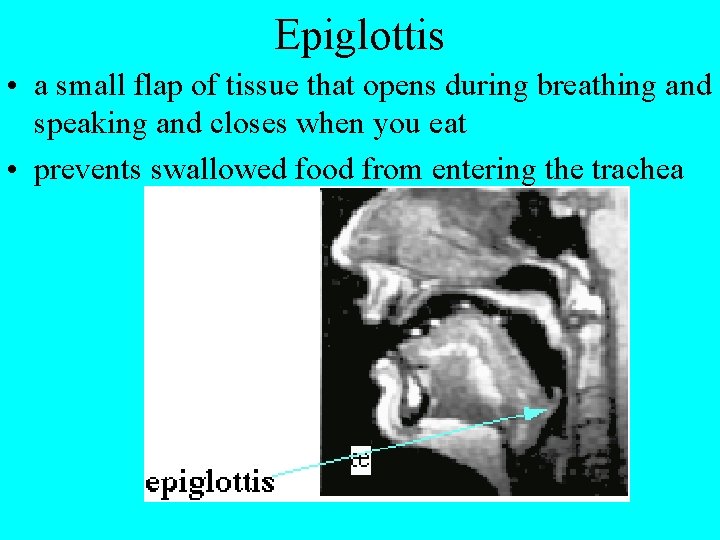
Epiglottis • a small flap of tissue that opens during breathing and speaking and closes when you eat • prevents swallowed food from entering the trachea
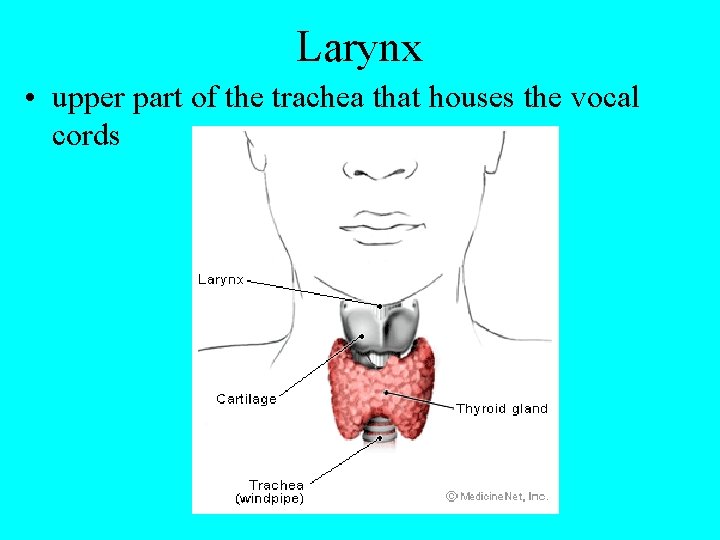
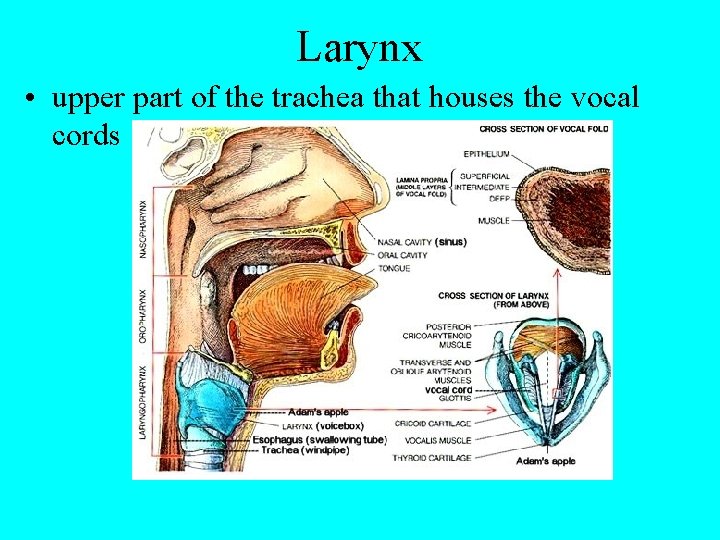
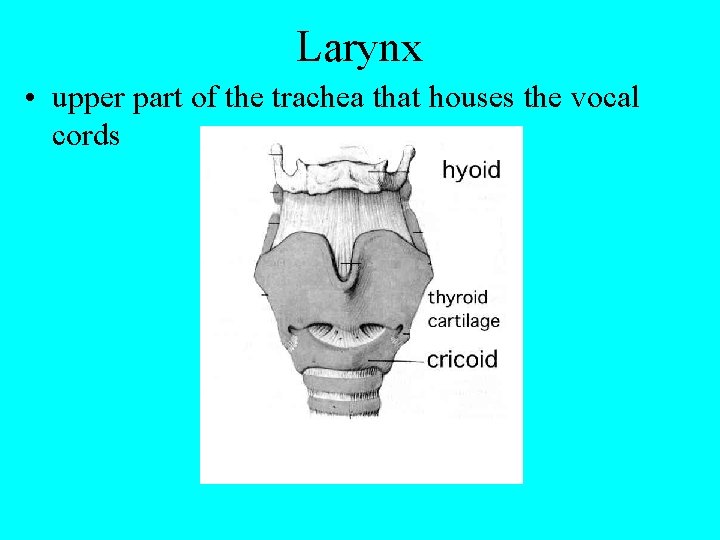
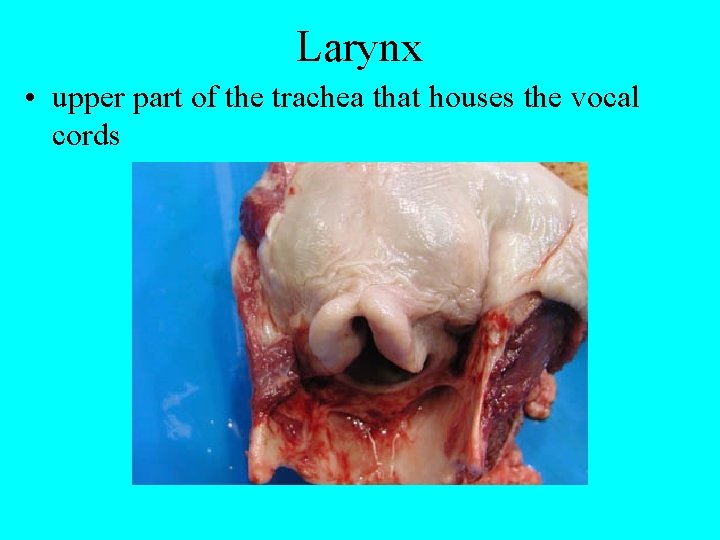
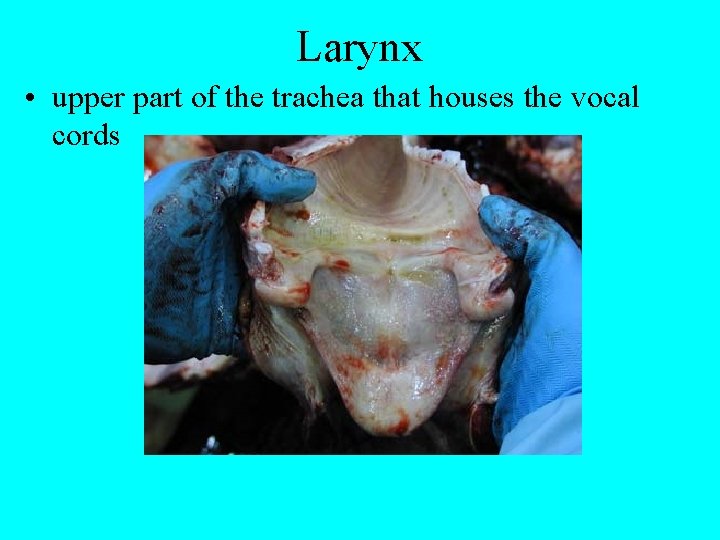
Larynx • upper part of the trachea that houses the vocal cords
Larynx • upper part of the trachea that houses the vocal cords
Larynx • upper part of the trachea that houses the vocal cords
Larynx • upper part of the trachea that houses the vocal cords
Larynx • upper part of the trachea that houses the vocal cords
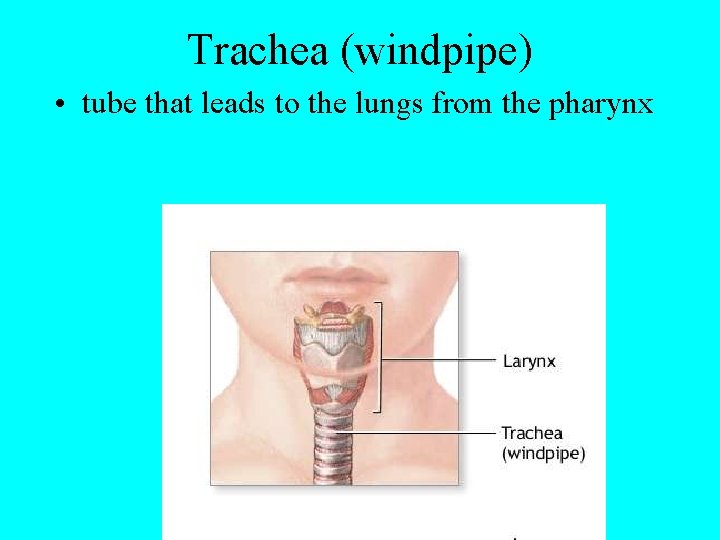
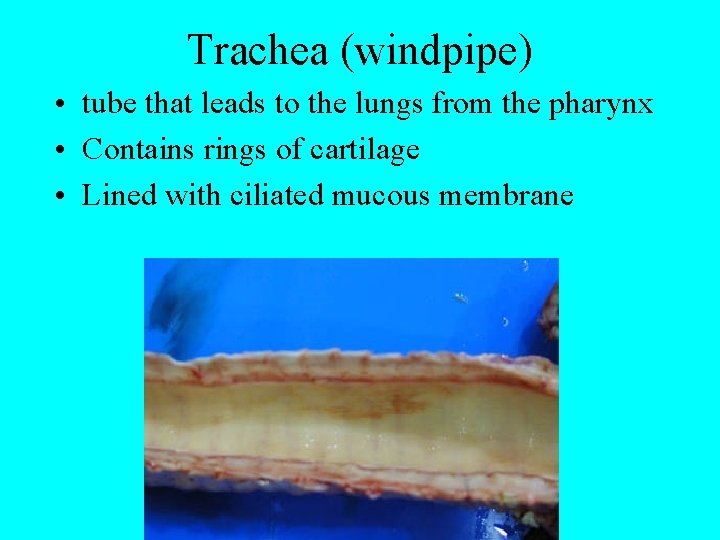
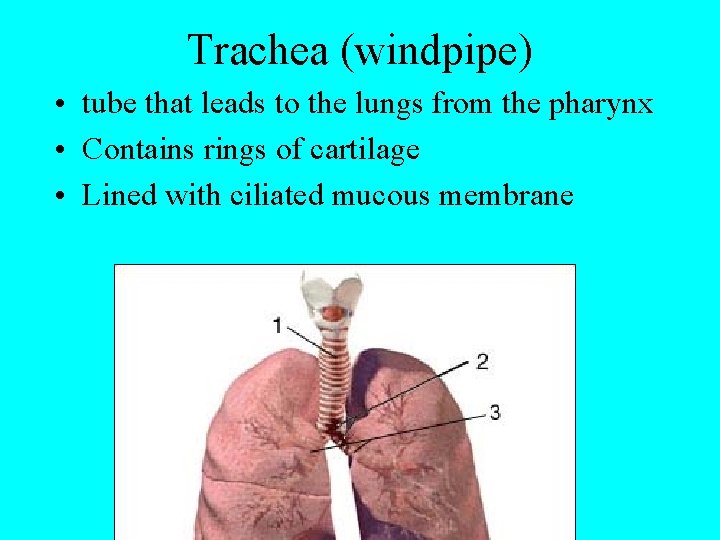
Trachea (windpipe) • tube that leads to the lungs from the pharynx
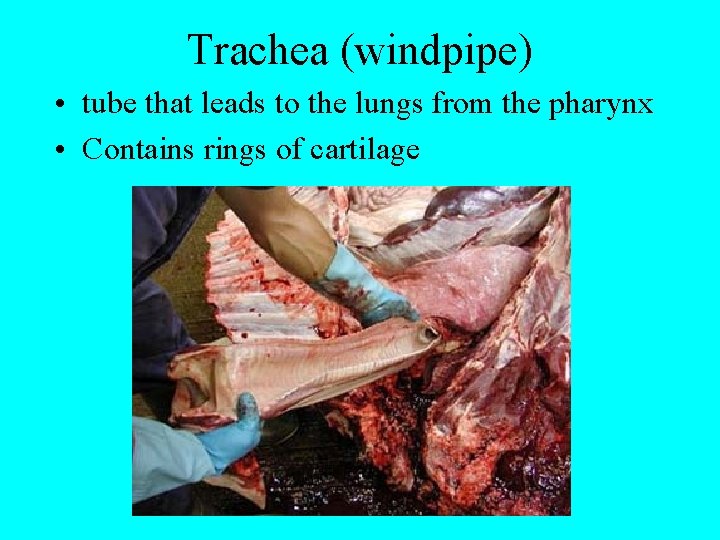
Trachea (windpipe) • tube that leads to the lungs from the pharynx • Contains rings of cartilage
Trachea (windpipe) • tube that leads to the lungs from the pharynx • Contains rings of cartilage • Lined with ciliated mucous membrane
Trachea (windpipe) • tube that leads to the lungs from the pharynx • Contains rings of cartilage • Lined with ciliated mucous membrane
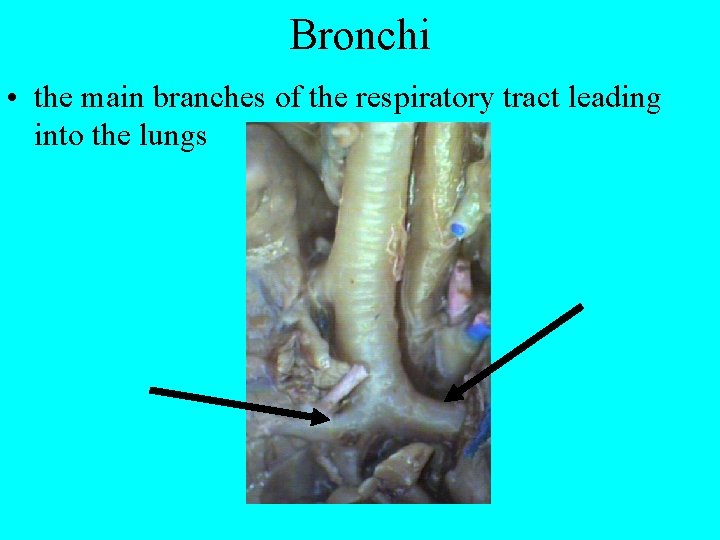
Bronchi (Bronchus – singular) • the main branches of the respiratory tract leading into the lungs
Bronchi • the main branches of the respiratory tract leading into the lungs
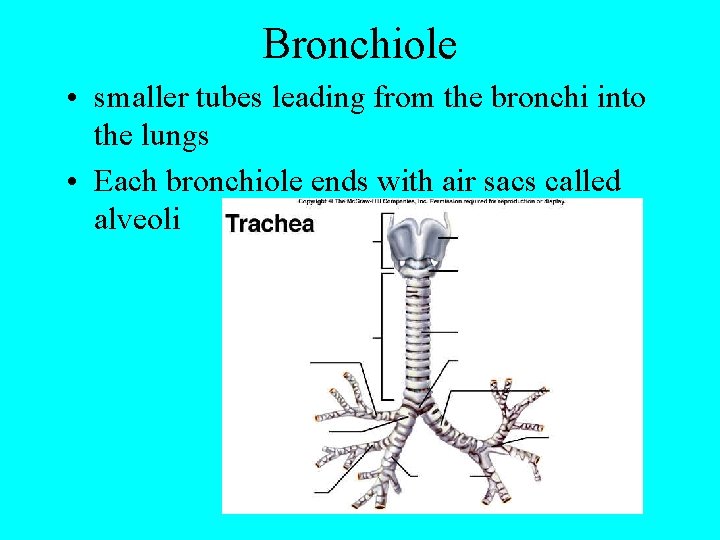
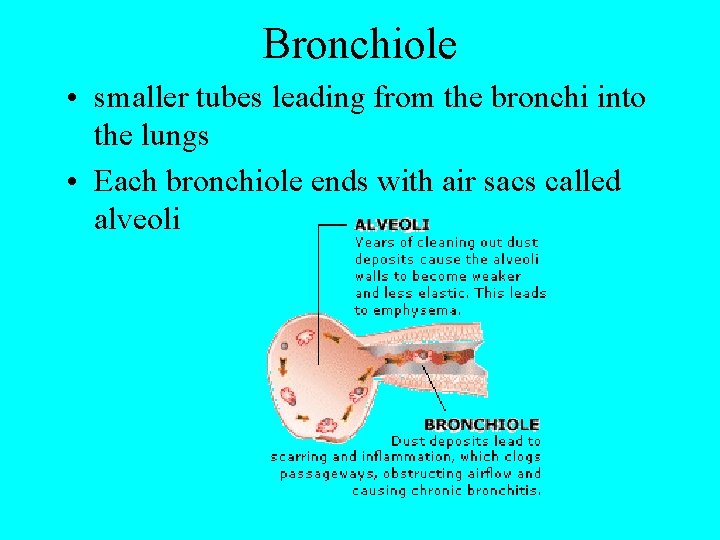
Bronchiole • smaller tubes leading from the bronchi into the lungs Bronchiole
Bronchiole • smaller tubes leading from the bronchi into the lungs
Bronchiole • smaller tubes leading from the bronchi into the lungs • Each bronchiole ends with air sacs called alveoli
Bronchiole • smaller tubes leading from the bronchi into the lungs • Each bronchiole ends with air sacs called alveoli
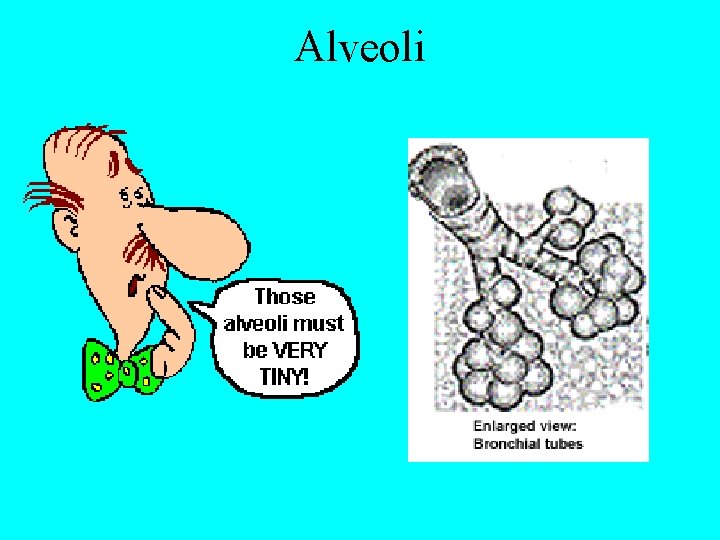
Alveoli
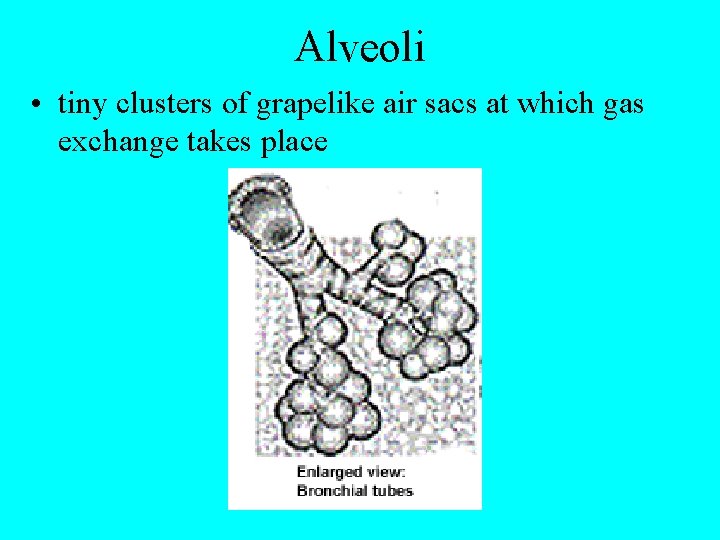
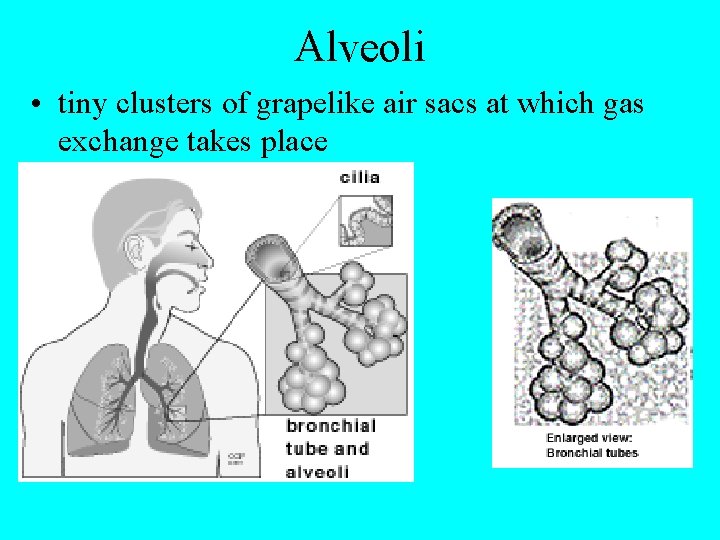
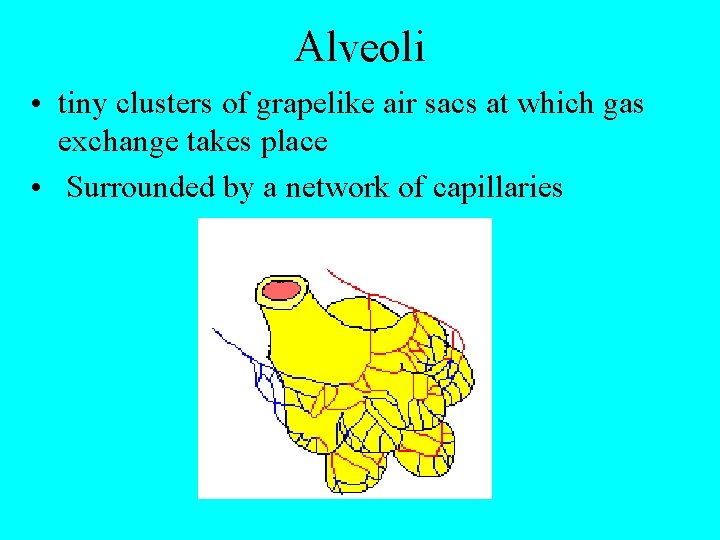
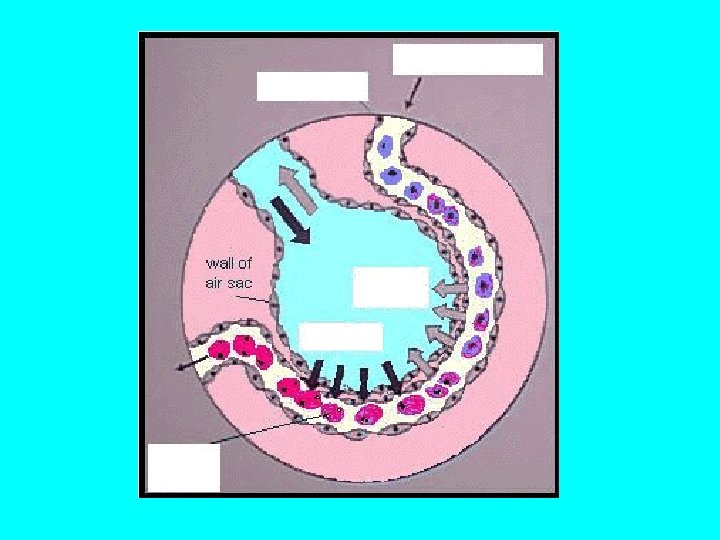
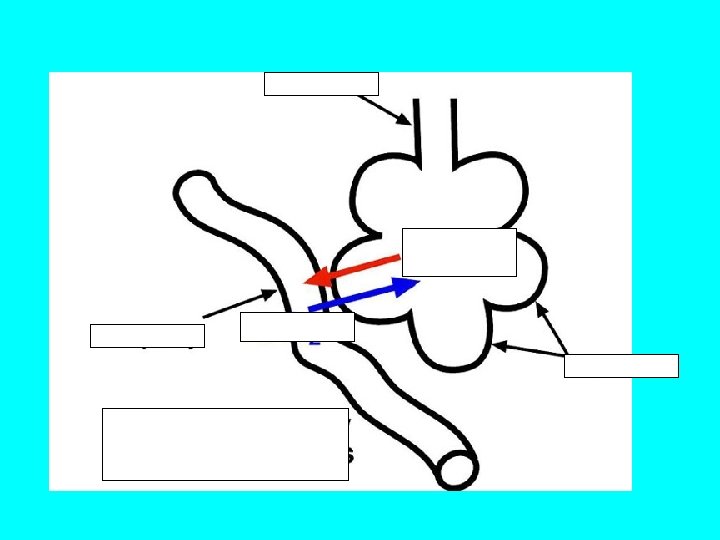
Alveoli • tiny clusters of grapelike air sacs at which gas exchange takes place
Alveoli • tiny clusters of grapelike air sacs at which gas exchange takes place
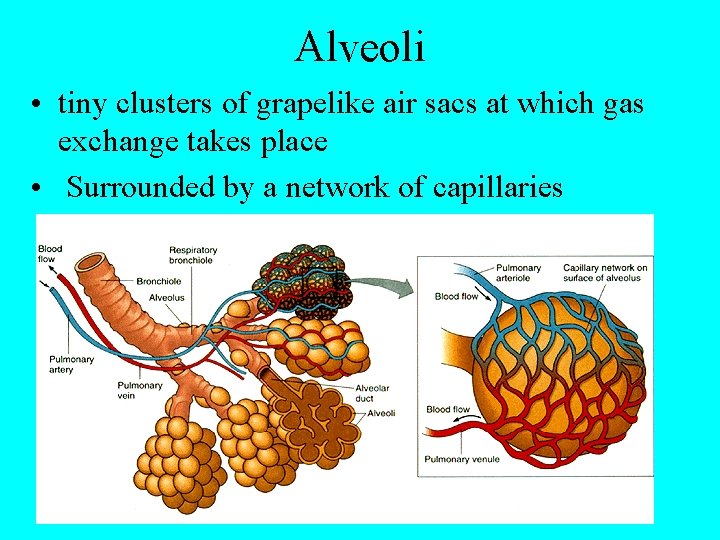
Alveoli • tiny clusters of grapelike air sacs at which gas exchange takes place • Surrounded by a network of capillaries
Alveoli • tiny clusters of grapelike air sacs at which gas exchange takes place • Surrounded by a network of capillaries
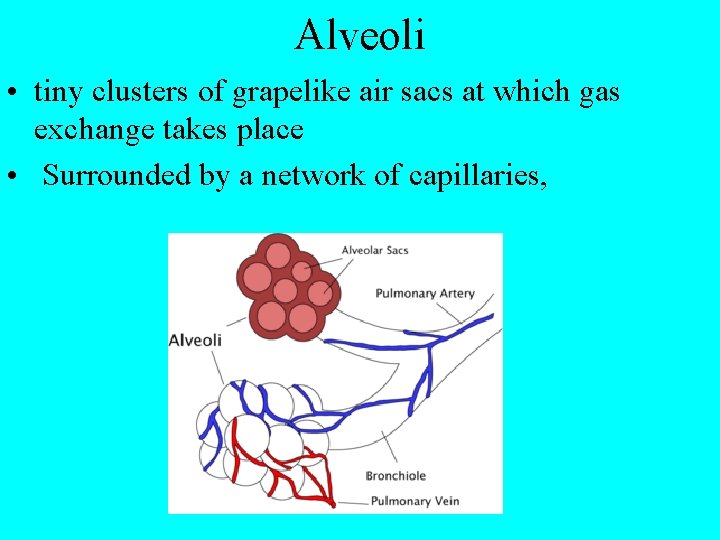
Alveoli • tiny clusters of grapelike air sacs at which gas exchange takes place • Surrounded by a network of capillaries,
• Surrounded by a network of capillaries, • Oxygen diffuses from the alveoli into the capillaries; Carbon dioxide diffuses from the capillaries into the alveoli
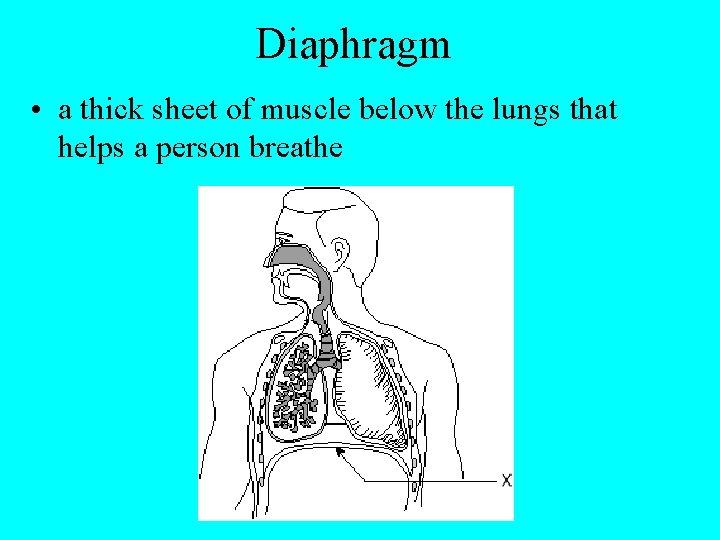
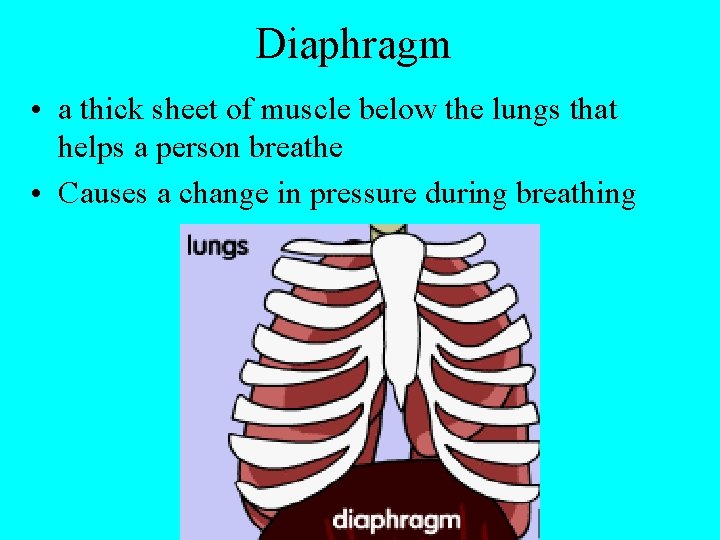
Diaphragm • a thick sheet of muscle below the lungs that helps a person breathe
Diaphragm • a thick sheet of muscle below the lungs that helps a person breathe • Causes a change in pressure during breathing
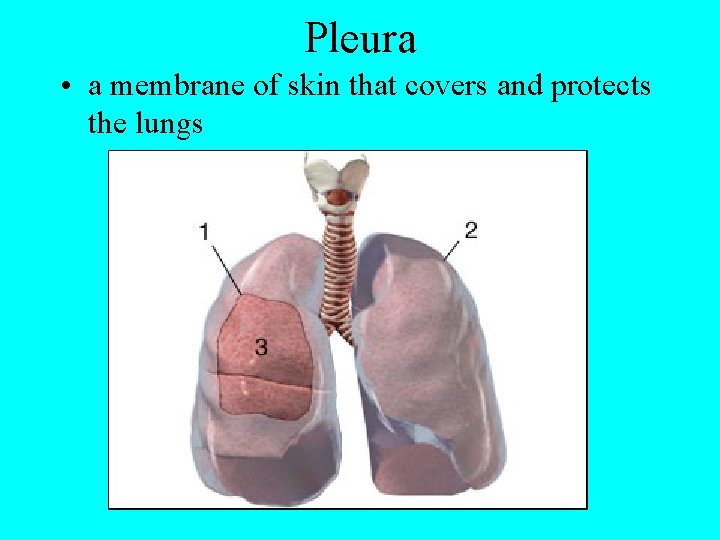
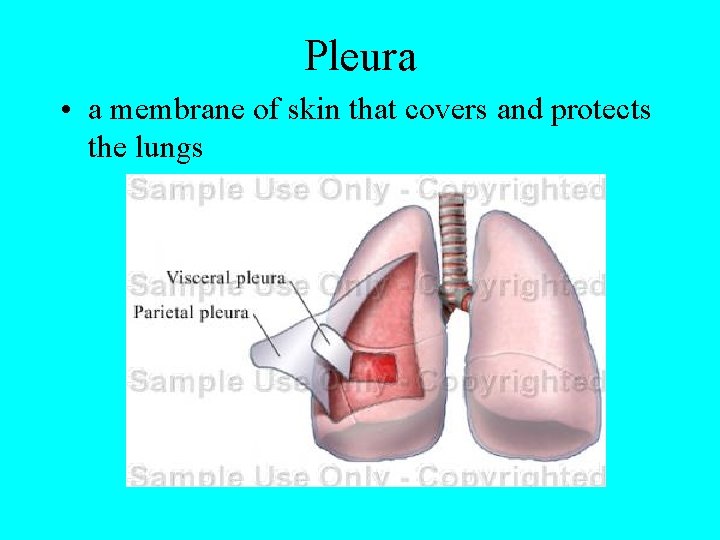
Pleura • a membrane of skin that covers and protects the lungs
Pleura • a membrane of skin that covers and protects the lungs
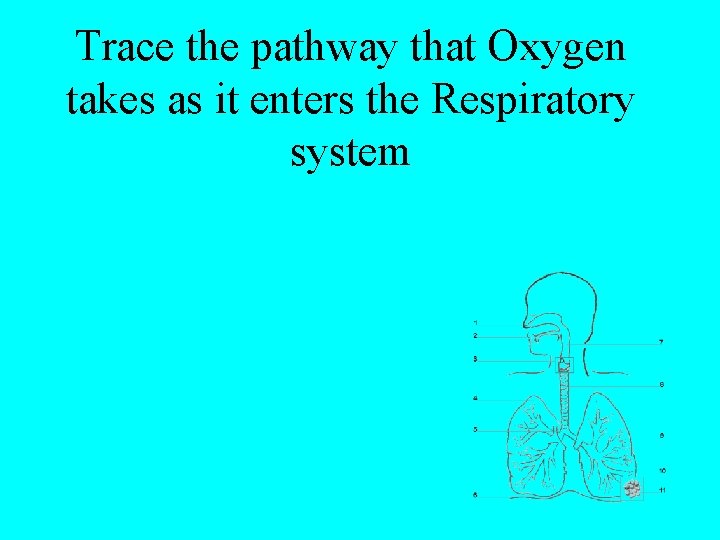
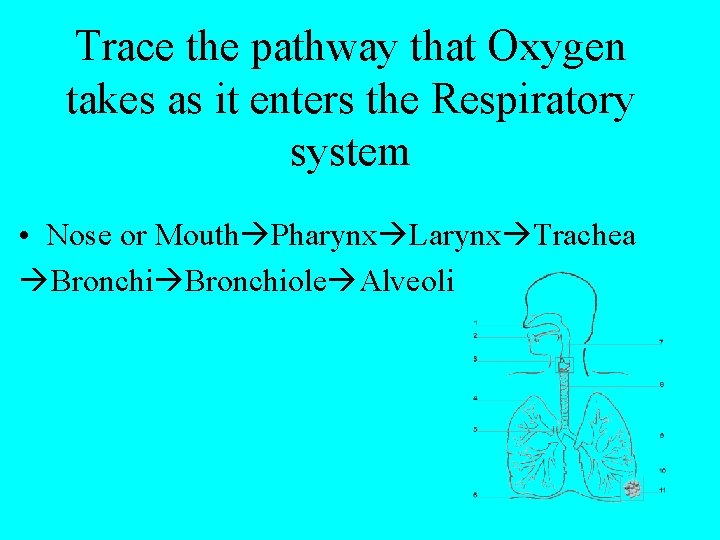
Trace the pathway that Oxygen takes as it enters the Respiratory system
Trace the pathway that Oxygen takes as it enters the Respiratory system • Nose or Mouth Pharynx Larynx Trachea Bronchiole Alveoli
What happens to the level of oxygen and carbon dioxide in the blood when you exercise?
Give 3 examples of how the body systems help to maintain homeostasis during exercise? (BE sure to mention the system involved in making the changes)
Give an example of a body system that works along with the respiratory system. Describe how the two body systems work together.
List 3 organs and name a substance that moves through it by the process of diffusion
Write the cellular respiration formula. • Where does it occur?
The end!
Do you remember all the structures of the respiratory system?