Studying innovation In particular the political economy of



- Slides: 71
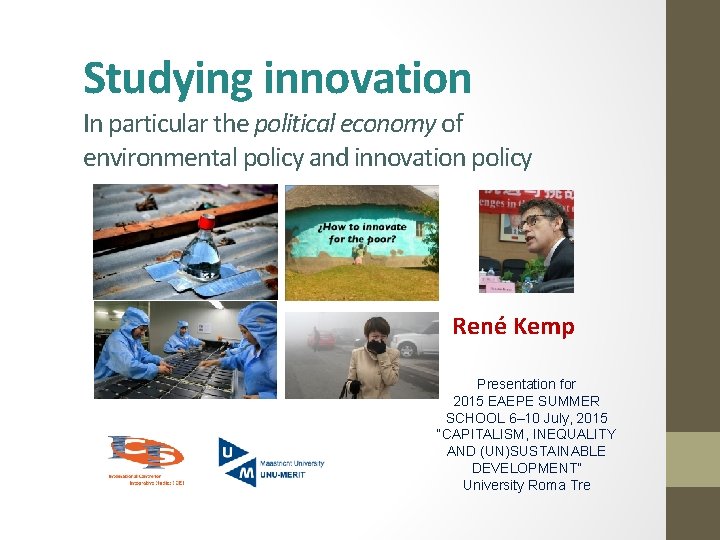
Studying innovation In particular the political economy of environmental policy and innovation policy René Kemp Presentation for 2015 EAEPE SUMMER SCHOOL 6– 10 July, 2015 “CAPITALISM, INEQUALITY AND (UN)SUSTAINABLE DEVELOPMENT” University Roma Tre
I am a multi-specialist • I have published on energy issues, transport, waste, sustainability transitions, innovation policy, environmental policy and science. • I have published in Research Policy, Policy Science, Ecological Economics, Journal of Evolutionary Economics, Sustainability Science, Environment and Planning A, Environmental and Resource Economics, Energy Policy, Journal of Cleaner Production, Futures) • I am advisory editor of Research Policy (the world-leading Innovation journal), editor of Sustainability Science and editor of Environmental Innovation and Societal Transitions. • h-index = 45 (Google Scholar) 12241 citations
My policy experiences • I advised the EU on RTD policy for climate change and on ecoinnovation on many occasions. • For the Environment Council (= meeting of EU Environment Ministers) in Maastricht in 2004, I wrote a strategy note about ecoinnovation, which fed into the council’s conclusions. • Together with Jan Rotmans, I developed the model of Transition Management, which, following many discussions with policy makers, was used by the Dutch national government as a basis for its innovation policy for sustainability energy. For a description of my encounters with policy makers see: Kemp, R. , and J. Rotmans (2009) Transitioning Policy: Co-production of a new strategic framework for energy innovation policy in the Netherlands, Policy Sciences, 42: 303– 322. • In 2013 and 2014 I was member of the Limburg Chamber of Commerce platform “Energy, Sustainability and Innovation”.
About innovation studies • Innovation studies is a mature field of studies • It has handbooks, journals, communities, academic positions, research centres, . . • Communities of research fall into 3 broad types • STS • Economics of Innovation • Organisational Studies
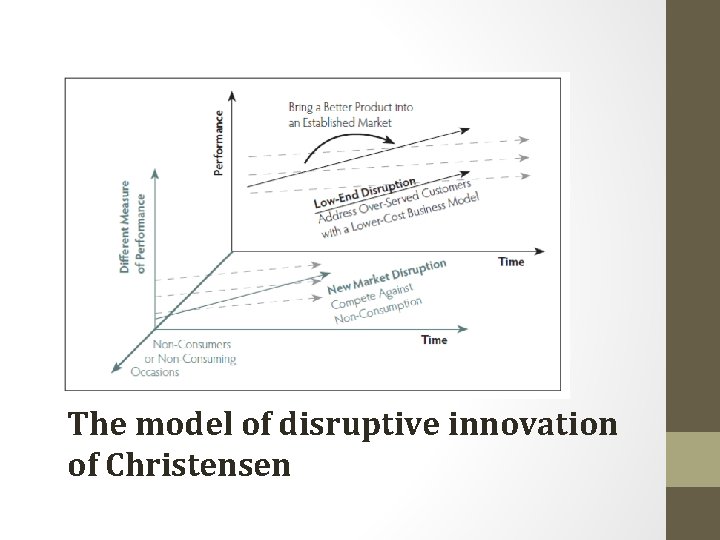
Positivistic approaches and interpretative approaches are used • There are those who apply a positivistic approach (Fagerberg, Jaffe, Arundel, …) • Those who apply a purely interpretative approach as in the social constructive accounts of technological change (Bijker), and text-analysis of the history of the innovation concept (Godin) • And mixed forms: studies of long-waves and changes in techno-economic paradigm (Freeman, Perez) , the evolution of industries (Murmann), management of innovation and organisational change (van de Ven, Christensen), systems of innovation studies (Lundvall, Nelson), dynamics of sociotechnical systems (Geels), innovation policy analysis (Kuhlmann), …
Many studies are underpinned by an evolutionary perspective • The seminal publication being Nelson and Winter (1982) An evolutionary theory of economic change. • The more quasi-evolutionary model of Rip and Schot • The technology cycle of variation, selection and retention/elaboration with era of ferment and era of incremental change (Tushman, Murrmann) • Co-evolutionary frameworks (Nelson, van den Bergh, . . )
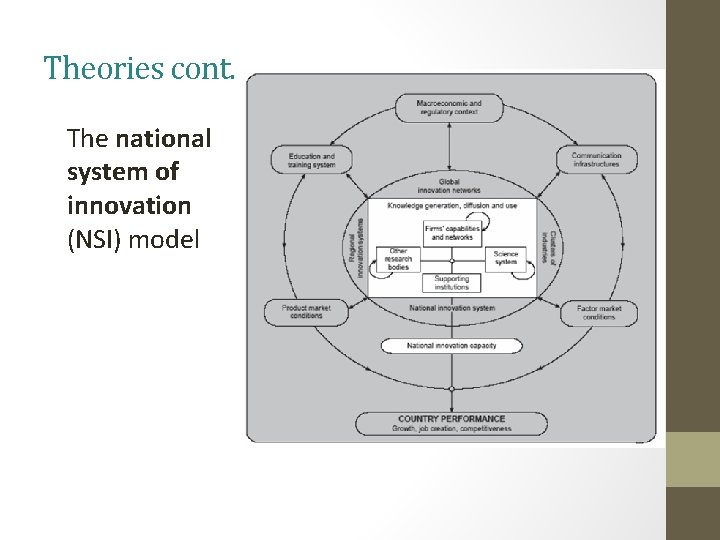
Theories as a set of concepts and postulate Most theories are little more than a set of concepts and a postulate) § Resource-based view of the firm: companies performance depends critically on their resources (brand names, in-house knowledge of technology, employment of skilled personnel, trade contacts, machinery, efficient procedures, capital) and firms are well-advised to base their strategy on those (Wernerfelt, 1984) § New postulate: “Core capabilities turning into rigidities” § National system of innovation: The concept of national innovation systems rests on the premise that understanding the linkages among the actors involved in innovation is key to improving technology performance. Innovation and technical progress are the result of a complex set of relationships among actors producing, distributing and applying various kinds of knowledge. The innovative performance of a country depends to a large extent on how these actors relate to each other as elements of a collective system of knowledge creation and use as well as the technologies they use (OECD, 1997).
The model of disruptive innovation of Christensen
Theories cont. The national system of innovation (NSI) model
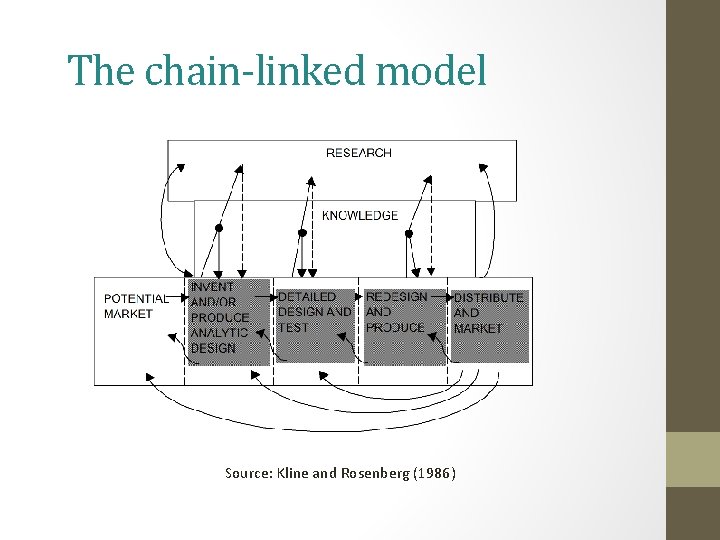
The chain-linked model Source: Kline and Rosenberg (1986)
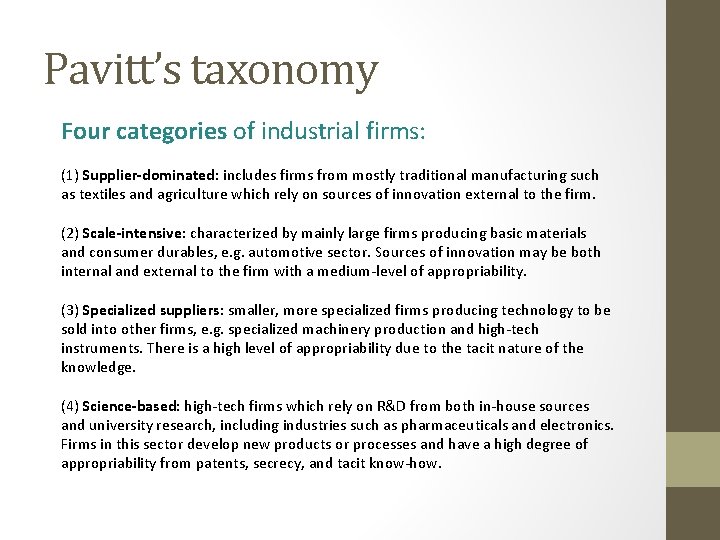
Pavitt’s taxonomy Four categories of industrial firms: (1) Supplier-dominated: includes firms from mostly traditional manufacturing such as textiles and agriculture which rely on sources of innovation external to the firm. (2) Scale-intensive: characterized by mainly large firms producing basic materials and consumer durables, e. g. automotive sector. Sources of innovation may be both internal and external to the firm with a medium-level of appropriability. (3) Specialized suppliers: smaller, more specialized firms producing technology to be sold into other firms, e. g. specialized machinery production and high-tech instruments. There is a high level of appropriability due to the tacit nature of the knowledge. (4) Science-based: high-tech firms which rely on R&D from both in-house sources and university research, including industries such as pharmaceuticals and electronics. Firms in this sector develop new products or processes and have a high degree of appropriability from patents, secrecy, and tacit know-how.
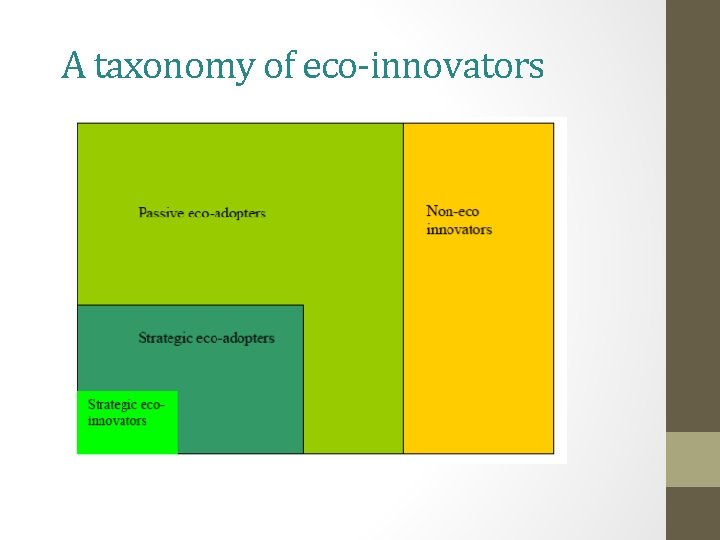
A taxonomy of eco-innovators
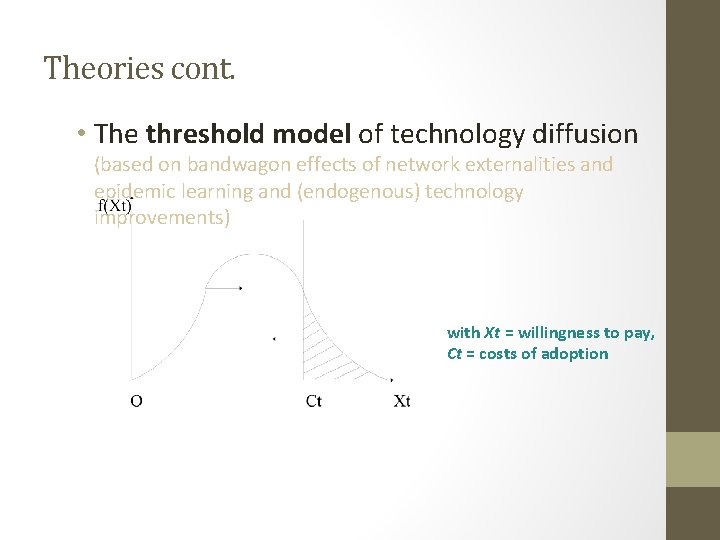
Theories cont. • The threshold model of technology diffusion (based on bandwagon effects of network externalities and epidemic learning and (endogenous) technology improvements) with Xt = willingness to pay, Ct = costs of adoption
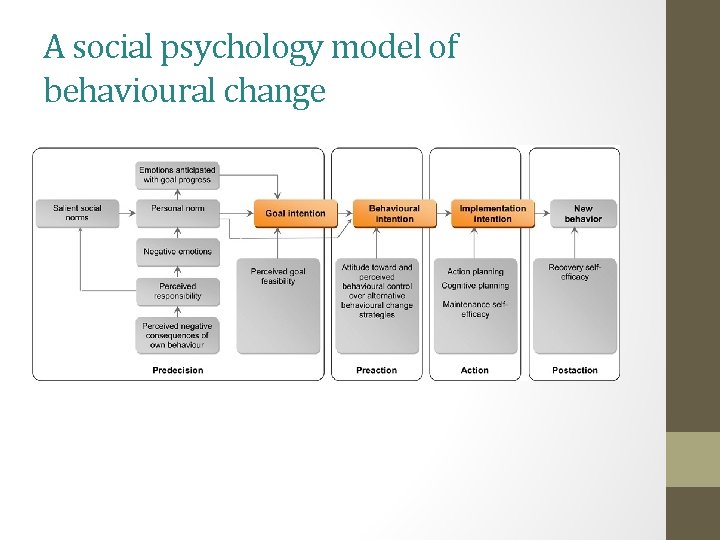
A social psychology model of behavioural change
My critical view of the innovation literature is that • Causal mechanisms are poorly investigated (they are either implicit or crudely assessed) • Limited use is made of mixed methods • Few studies combine different theoretical perspectives • The ontology is almost never mentioned (the focus is exclusively on methodology) • Findings from neighbouring fields are frequently ignored (for being either “economic”, or not being “economic”) • The details of learning processes (in learning explanations) are not uncovered • Politics are backgrounded • There are few critical analyses how innovation contributes to inequality and sustains power relationships • Far too little research is being done of innovation journeys throughout society
About theory • Theory is necessary in offering language for talking and making sense • In analysing a phenomenon you have to be selective (you can’t introduce everything in your analysis) • Conceptualization is a central scientific activity • But selectivity implies bias
How good is your theory? “every single mono-causal explanation ever advanced for development falls down in the face of the empirical evidence” (Szirmai, 2008)
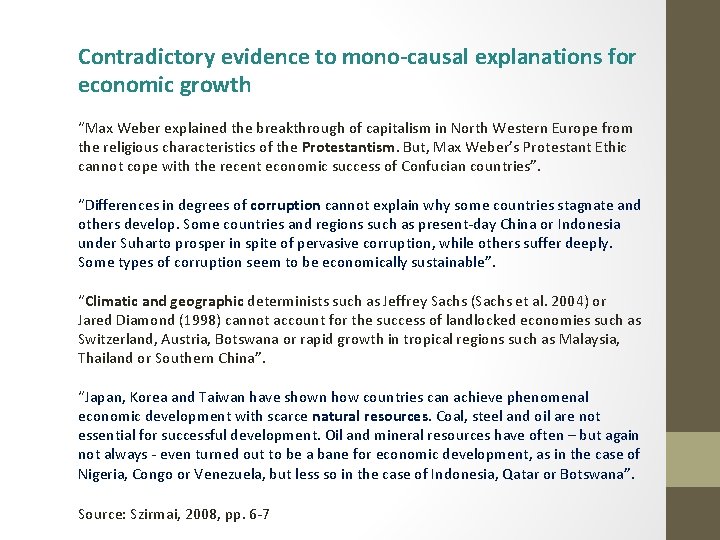
Contradictory evidence to mono-causal explanations for economic growth “Max Weber explained the breakthrough of capitalism in North Western Europe from the religious characteristics of the Protestantism. But, Max Weber’s Protestant Ethic cannot cope with the recent economic success of Confucian countries”. “Differences in degrees of corruption cannot explain why some countries stagnate and others develop. Some countries and regions such as present-day China or Indonesia under Suharto prosper in spite of pervasive corruption, while others suffer deeply. Some types of corruption seem to be economically sustainable”. “Climatic and geographic determinists such as Jeffrey Sachs (Sachs et al. 2004) or Jared Diamond (1998) cannot account for the success of landlocked economies such as Switzerland, Austria, Botswana or rapid growth in tropical regions such as Malaysia, Thailand or Southern China”. “Japan, Korea and Taiwan have shown how countries can achieve phenomenal economic development with scarce natural resources. Coal, steel and oil are not essential for successful development. Oil and mineral resources have often – but again not always - even turned out to be a bane for economic development, as in the case of Nigeria, Congo or Venezuela, but less so in the case of Indonesia, Qatar or Botswana”. Source: Szirmai, 2008, pp. 6 -7
“Capital accumulation is an ingredient of every conceivable development strategy. But high rates of investment are no guarantee for sustained growth of per capita output or total factor productivity. If the capacity to absorb investment is lacking, mobilising national or international resources for investment results in waste and inefficiency”. “Human capital seems to be important in successful development experiences. But many African developing countries have achieved great success in expanding their education systems, while their economic growth stagnated (Pack and Paxson, 2001)”. “Protection of property rights has often been advanced as a key precondition for innovation, technological change and economic progress (North and Thomas, 1973). But the case of China since 1978 illustrates that explosive growth and catch up can coexist with weak intellectual property rights and weakly defined property rights in general (Qian, 2003). Too much emphasis on institutions, results in what Rodrik (2006) has called institutional fundamentalism. “Marxist and other theories of colonial and neo-colonial exploitation fail to explain why some former colonies break the mould of dependence and stagnation and emerge as dynamic economies, and others do not. Why did the USA become the world productivity leader while Brazil and Argentina have remained developing countries, though their decolonisation was only a few decades apart? ” From Szirmai, 2008, pp. 6 -7.
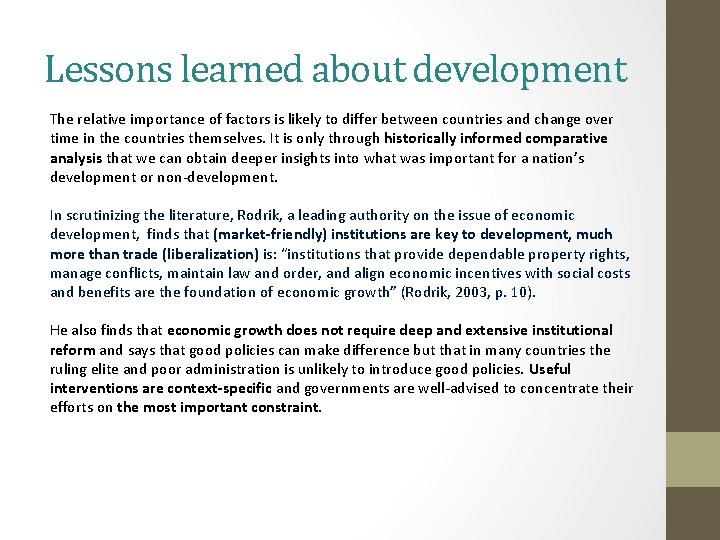
Lessons learned about development The relative importance of factors is likely to differ between countries and change over time in the countries themselves. It is only through historically informed comparative analysis that we can obtain deeper insights into what was important for a nation’s development or non-development. In scrutinizing the literature, Rodrik, a leading authority on the issue of economic development, finds that (market-friendly) institutions are key to development, much more than trade (liberalization) is: “institutions that provide dependable property rights, manage conflicts, maintain law and order, and align economic incentives with social costs and benefits are the foundation of economic growth” (Rodrik, 2003, p. 10). He also finds that economic growth does not require deep and extensive institutional reform and says that good policies can make difference but that in many countries the ruling elite and poor administration is unlikely to introduce good policies. Useful interventions are context-specific and governments are well-advised to concentrate their efforts on the most important constraint.
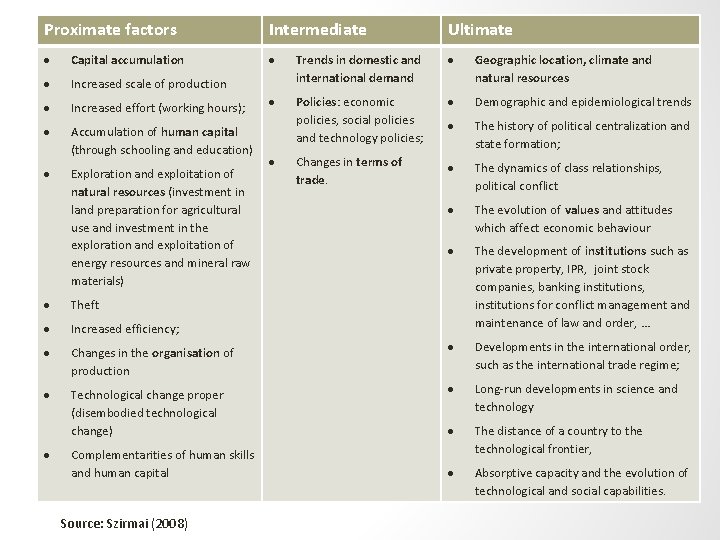
Proximate factors Intermediate Ultimate Capital accumulation Increased scale of production Trends in domestic and international demand Geographic location, climate and natural resources Increased effort (working hours); Demographic and epidemiological trends Accumulation of human capital (through schooling and education) Policies: economic policies, social policies and technology policies; The history of political centralization and state formation; Exploration and exploitation of natural resources (investment in land preparation for agricultural use and investment in the exploration and exploitation of energy resources and mineral raw materials) Changes in terms of trade. The dynamics of class relationships, political conflict The evolution of values and attitudes which affect economic behaviour The development of institutions such as private property, IPR, joint stock companies, banking institutions, institutions for conflict management and maintenance of law and order, … Developments in the international order, such as the international trade regime; Long-run developments in science and technology The distance of a country to the technological frontier, Absorptive capacity and the evolution of technological and social capabilities. Theft Increased efficiency; Changes in the organisation of production Technological change proper (disembodied technological change) Complementarities of human skills and human capital Source: Szirmai (2008)
‘Forget’ Popper • Social theories are not truth machines • Most theories are beyond refutation, as they consist of concepts and a postulate • They are more like a perspective than a predictive theory • No scientist considers his theory to be true in a simple way
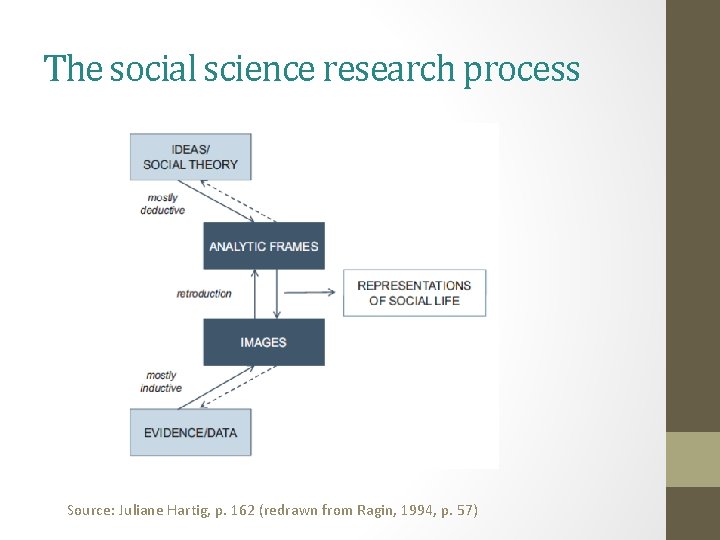
The social science research process Source: Juliane Hartig, p. 162 (redrawn from Ragin, 1994, p. 57)
The social science Charlesunity Ragin (1994)in considers the distinction between quantitative and qualitative research misleading, where one is about “numbers” and the other is about “words” § “The differences between quantitative and qualitative research are that quantitative researchers typically focus on the links among a small number of attributes across many cases when they construct representations of social life, while qualitative researchers focus on the links among a larger number of attributes across relatively few cases in their representations. ” § “All social researchers engage in a dialogue of ideas (”theory”) and evidence (“data”) when they construct representations of social life. ” § Ideas help social researchers use evidence to extend, revise and test ideas.
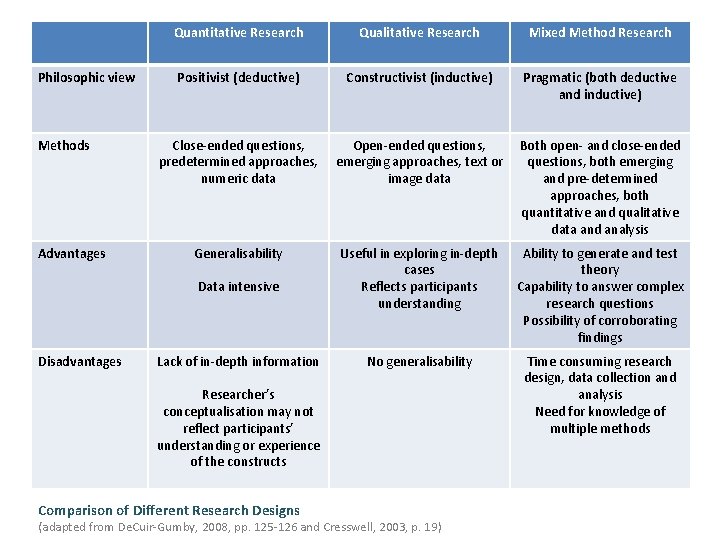
Philosophic view Methods Advantages Quantitative Research Qualitative Research Mixed Method Research Positivist (deductive) Constructivist (inductive) Pragmatic (both deductive and inductive) Close-ended questions, predetermined approaches, numeric data Open-ended questions, emerging approaches, text or image data Both open- and close-ended questions, both emerging and pre-determined approaches, both quantitative and qualitative data and analysis Generalisability Useful in exploring in-depth cases Reflects participants understanding Ability to generate and test theory Capability to answer complex research questions Possibility of corroborating findings No generalisability Time consuming research design, data collection and analysis Need for knowledge of multiple methods Data intensive Disadvantages Lack of in-depth information Researcher’s conceptualisation may not reflect participants’ understanding or experience of the constructs Comparison of Different Research Designs (adapted from De. Cuir-Gumby, 2008, pp. 125 -126 and Cresswell, 2003, p. 19)
About ontology • According to Sewell, social scientists have overemphasized their methodology and left their ontology unspecified. This is a gap for which there is no accounting, because methodologies in fact always imply ontologies whether stated or assumed • In his view, social scientists should conceptualise the social explicitly rather than let conceptualisations be unstated and unexamined corollaries of … methodological positions. • Sewell’s ontological view is that the world is contingent rather than necessary and that the “semiotic” and “structural” should be understood as parts of a whole.
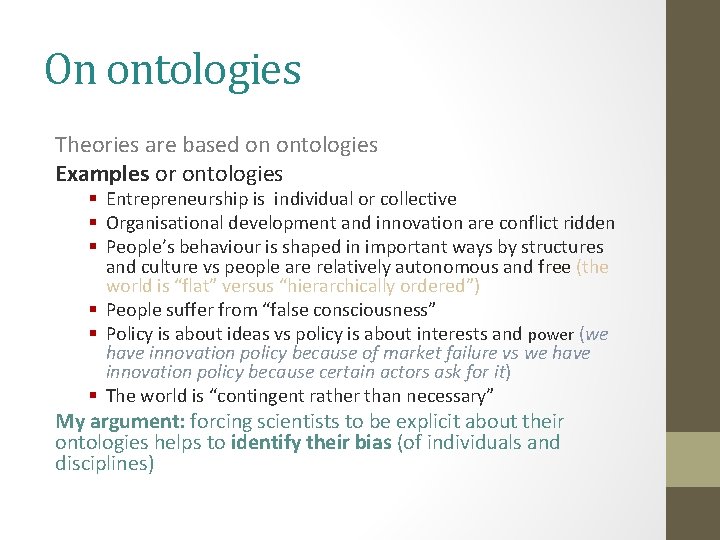
On ontologies Theories are based on ontologies Examples or ontologies § Entrepreneurship is individual or collective § Organisational development and innovation are conflict ridden § People’s behaviour is shaped in important ways by structures and culture vs people are relatively autonomous and free (the world is “flat” versus “hierarchically ordered”) § People suffer from “false consciousness” § Policy is about ideas vs policy is about interests and power (we have innovation policy because of market failure vs we have innovation policy because certain actors ask for it) § The world is “contingent rather than necessary” My argument: forcing scientists to be explicit about their ontologies helps to identify their bias (of individuals and disciplines)
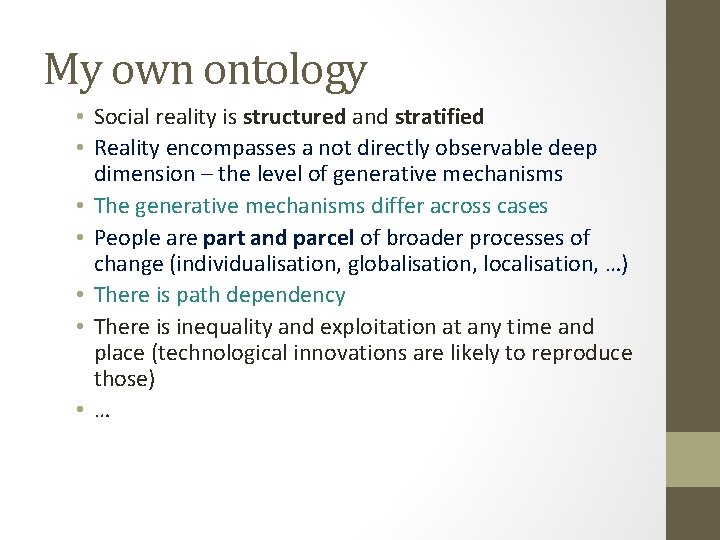
My own ontology • Social reality is structured and stratified • Reality encompasses a not directly observable deep dimension – the level of generative mechanisms • The generative mechanisms differ across cases • People are part and parcel of broader processes of change (individualisation, globalisation, localisation, …) • There is path dependency • There is inequality and exploitation at any time and place (technological innovations are likely to reproduce those) • …
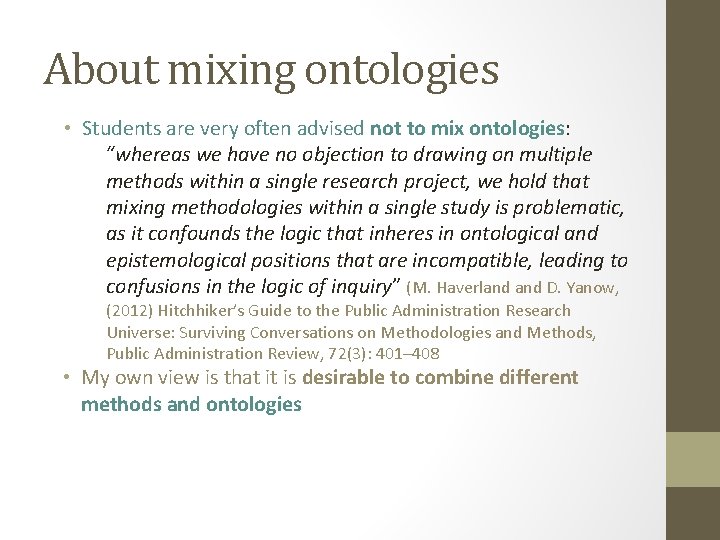
About mixing ontologies • Students are very often advised not to mix ontologies: “whereas we have no objection to drawing on multiple methods within a single research project, we hold that mixing methodologies within a single study is problematic, as it confounds the logic that inheres in ontological and epistemological positions that are incompatible, leading to confusions in the logic of inquiry” (M. Haverland D. Yanow, (2012) Hitchhiker’s Guide to the Public Administration Research Universe: Surviving Conversations on Methodologies and Methods, Public Administration Review, 72(3): 401– 408 • My own view is that it is desirable to combine different methods and ontologies
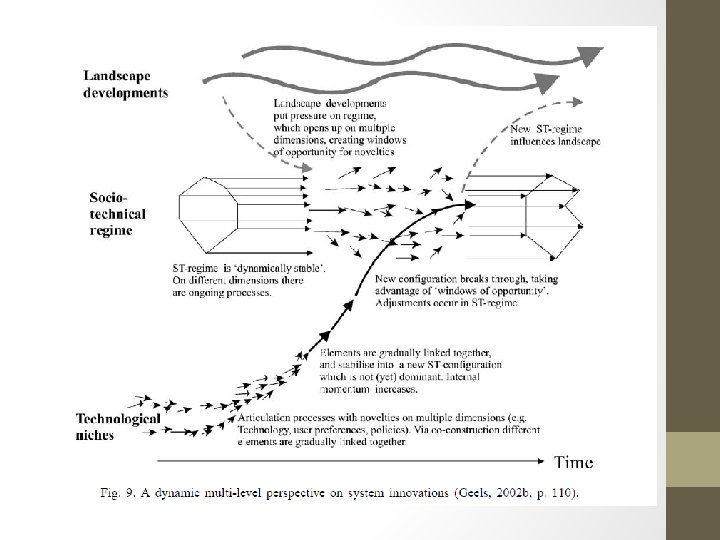
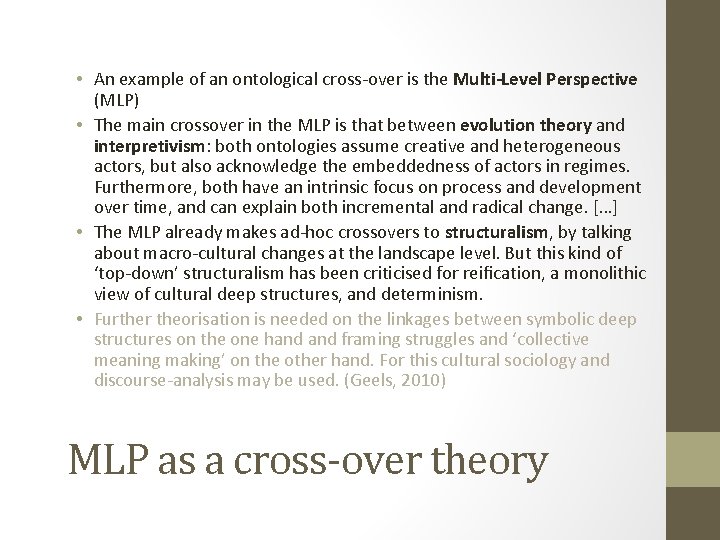
• An example of an ontological cross-over is the Multi-Level Perspective (MLP) • The main crossover in the MLP is that between evolution theory and interpretivism: both ontologies assume creative and heterogeneous actors, but also acknowledge the embeddedness of actors in regimes. Furthermore, both have an intrinsic focus on process and development over time, and can explain both incremental and radical change. […] • The MLP already makes ad-hoc crossovers to structuralism, by talking about macro-cultural changes at the landscape level. But this kind of ‘top-down’ structuralism has been criticised for reification, a monolithic view of cultural deep structures, and determinism. • Further theorisation is needed on the linkages between symbolic deep structures on the one hand framing struggles and ‘collective meaning making’ on the other hand. For this cultural sociology and discourse-analysis may be used. (Geels, 2010) MLP as a cross-over theory
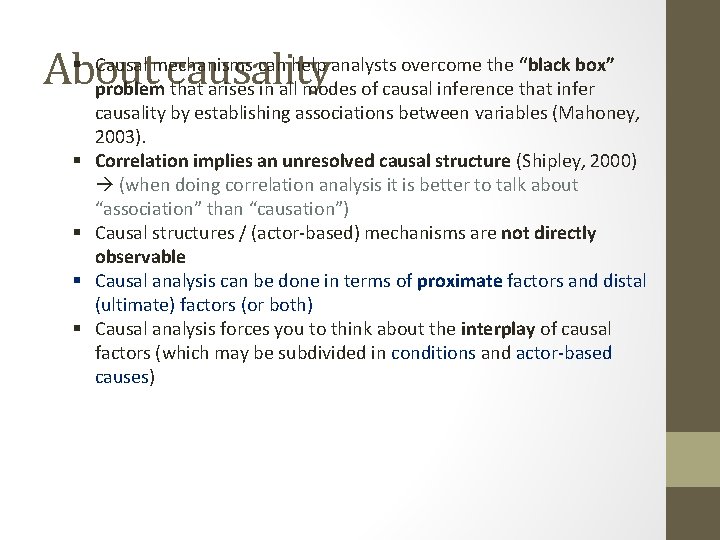
§ Causal mechanisms can help analysts overcome the “black box” About causality problem that arises in all modes of causal inference that infer § § causality by establishing associations between variables (Mahoney, 2003). Correlation implies an unresolved causal structure (Shipley, 2000) (when doing correlation analysis it is better to talk about “association” than “causation”) Causal structures / (actor-based) mechanisms are not directly observable Causal analysis can be done in terms of proximate factors and distal (ultimate) factors (or both) Causal analysis forces you to think about the interplay of causal factors (which may be subdivided in conditions and actor-based causes)
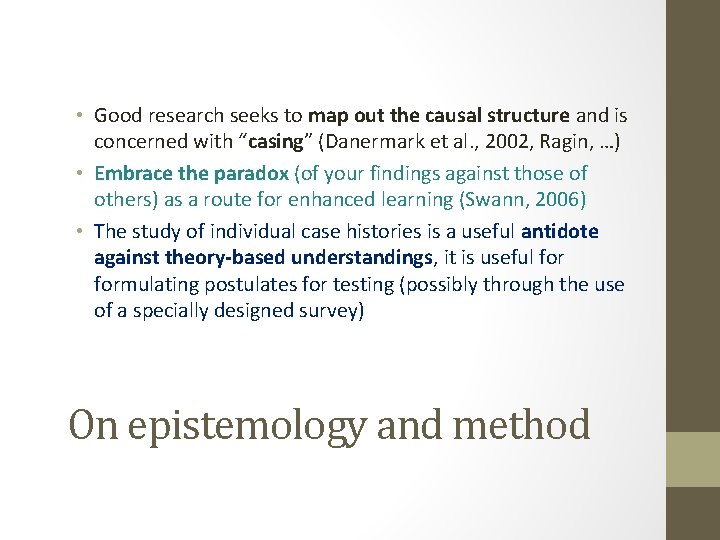
• Good research seeks to map out the causal structure and is concerned with “casing” (Danermark et al. , 2002, Ragin, …) • Embrace the paradox (of your findings against those of others) as a route for enhanced learning (Swann, 2006) • The study of individual case histories is a useful antidote against theory-based understandings, it is useful formulating postulates for testing (possibly through the use of a specially designed survey) On epistemology and method
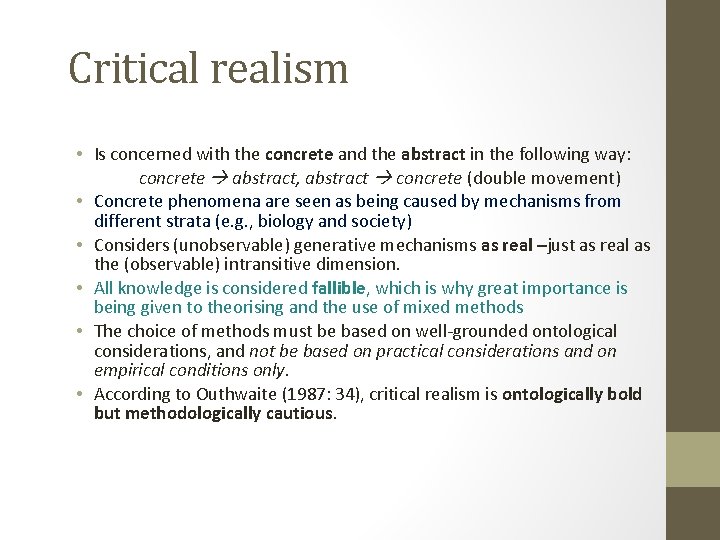
Critical realism • Is concerned with the concrete and the abstract in the following way: concrete abstract, abstract concrete (double movement) • Concrete phenomena are seen as being caused by mechanisms from different strata (e. g. , biology and society) • Considers (unobservable) generative mechanisms as real –just as real as the (observable) intransitive dimension. • All knowledge is considered fallible, which is why great importance is being given to theorising and the use of mixed methods • The choice of methods must be based on well-grounded ontological considerations, and not be based on practical considerations and on empirical conditions only. • According to Outhwaite (1987: 34), critical realism is ontologically bold but methodologically cautious.
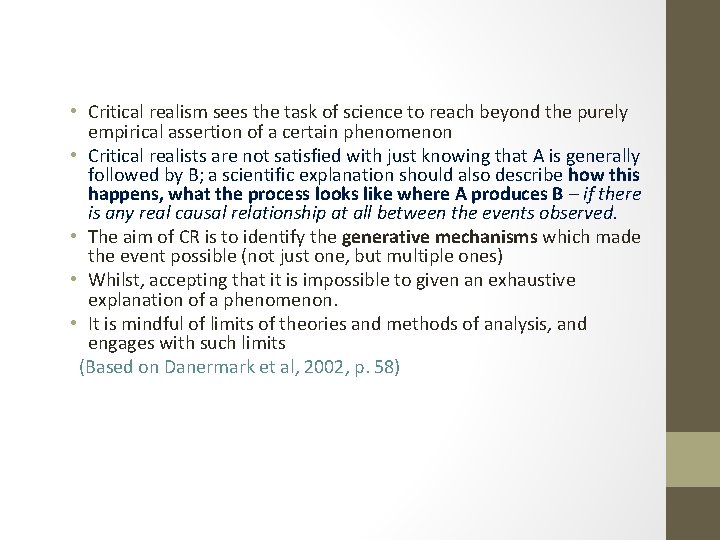
• Critical realism sees the task of science to reach beyond the purely empirical assertion of a certain phenomenon • Critical realists are not satisfied with just knowing that A is generally followed by B; a scientific explanation should also describe how this happens, what the process looks like where A produces B – if there is any real causal relationship at all between the events observed. • The aim of CR is to identify the generative mechanisms which made the event possible (not just one, but multiple ones) • Whilst, accepting that it is impossible to given an exhaustive explanation of a phenomenon. • It is mindful of limits of theories and methods of analysis, and engages with such limits (Based on Danermark et al, 2002, p. 58)
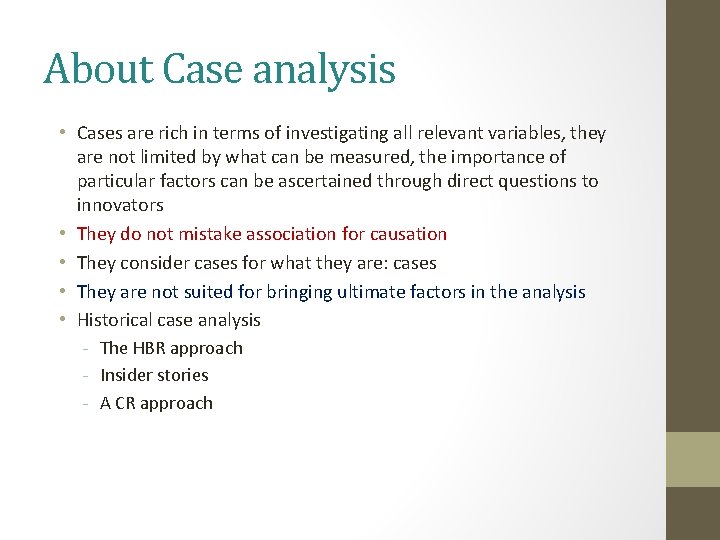
About Case analysis • Cases are rich in terms of investigating all relevant variables, they are not limited by what can be measured, the importance of particular factors can be ascertained through direct questions to innovators • They do not mistake association for causation • They consider cases for what they are: cases • They are not suited for bringing ultimate factors in the analysis • Historical case analysis - The HBR approach - Insider stories - A CR approach
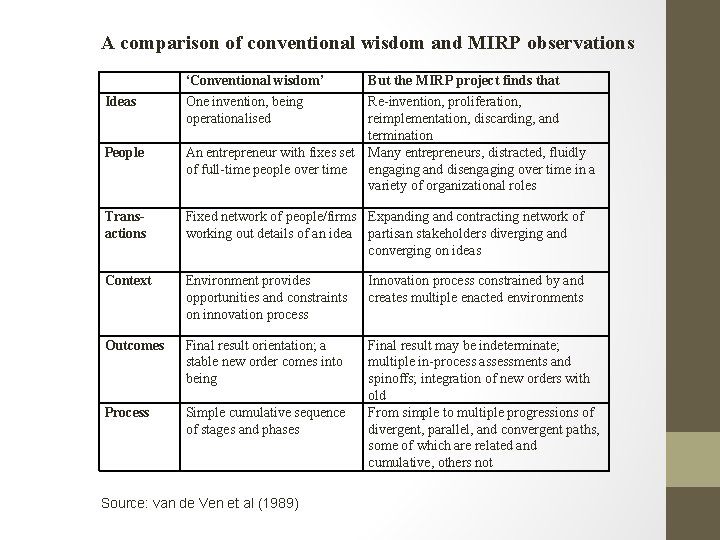
A comparison of conventional wisdom and MIRP observations ‘Conventional wisdom’ Ideas People But the MIRP project finds that One invention, being operationalised Re-invention, proliferation, reimplementation, discarding, and termination An entrepreneur with fixes set Many entrepreneurs, distracted, fluidly of full-time people over time engaging and disengaging over time in a variety of organizational roles Transactions Fixed network of people/firms Expanding and contracting network of working out details of an idea partisan stakeholders diverging and converging on ideas Context Environment provides opportunities and constraints on innovation process Innovation process constrained by and creates multiple enacted environments Outcomes Final result orientation; a stable new order comes into being Process Simple cumulative sequence of stages and phases Final result may be indeterminate; multiple in-process assessments and spinoffs; integration of new orders with old From simple to multiple progressions of divergent, parallel, and convergent paths, some of which are related and cumulative, others not Source: van de Ven et al (1989)
Structures, mechanisms and events
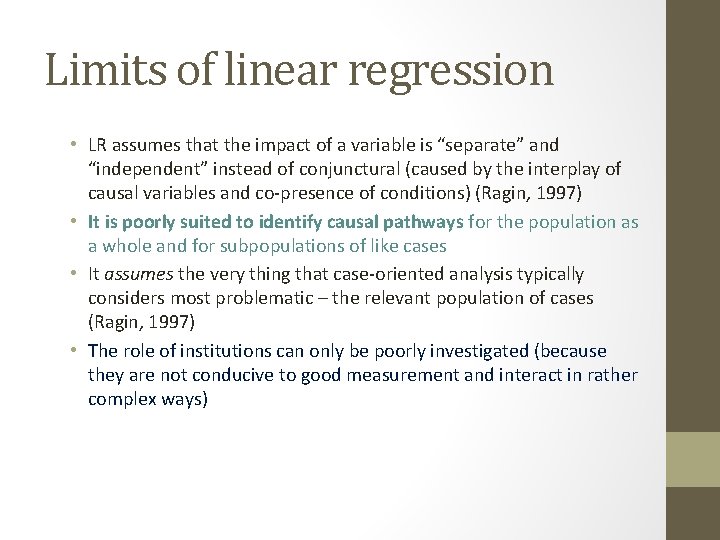
Limits of linear regression • LR assumes that the impact of a variable is “separate” and “independent” instead of conjunctural (caused by the interplay of causal variables and co-presence of conditions) (Ragin, 1997) • It is poorly suited to identify causal pathways for the population as a whole and for subpopulations of like cases • It assumes the very thing that case-oriented analysis typically considers most problematic – the relevant population of cases (Ragin, 1997) • The role of institutions can only be poorly investigated (because they are not conducive to good measurement and interact in rather complex ways)
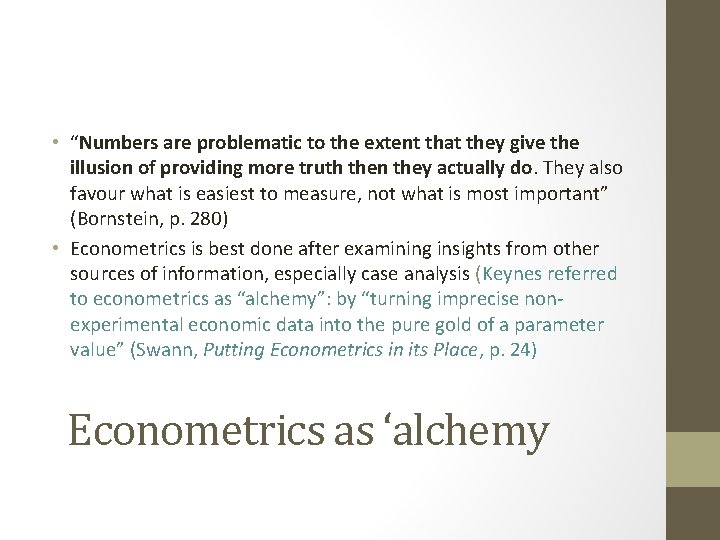
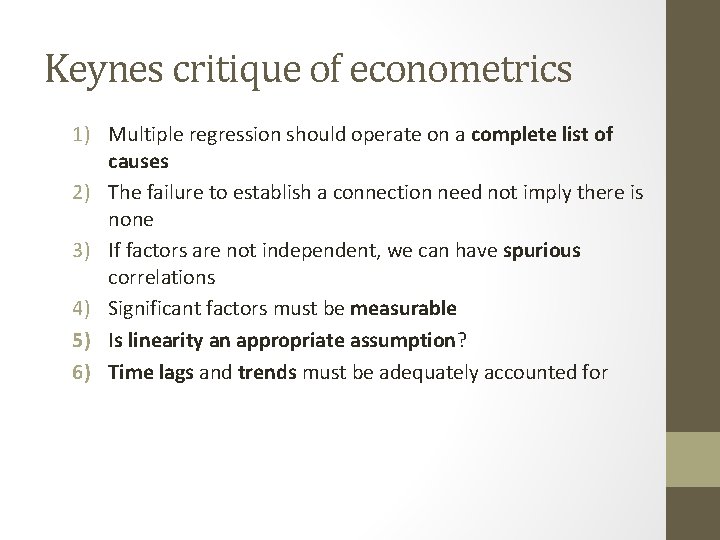
• “Numbers are problematic to the extent that they give the illusion of providing more truth then they actually do. They also favour what is easiest to measure, not what is most important” (Bornstein, p. 280) • Econometrics is best done after examining insights from other sources of information, especially case analysis (Keynes referred to econometrics as “alchemy”: by “turning imprecise nonexperimental economic data into the pure gold of a parameter value” (Swann, Putting Econometrics in its Place, p. 24) Econometrics as ‘alchemy
Keynes critique of econometrics 1) Multiple regression should operate on a complete list of causes 2) The failure to establish a connection need not imply there is none 3) If factors are not independent, we can have spurious correlations 4) Significant factors must be measurable 5) Is linearity an appropriate assumption? 6) Time lags and trends must be adequately accounted for
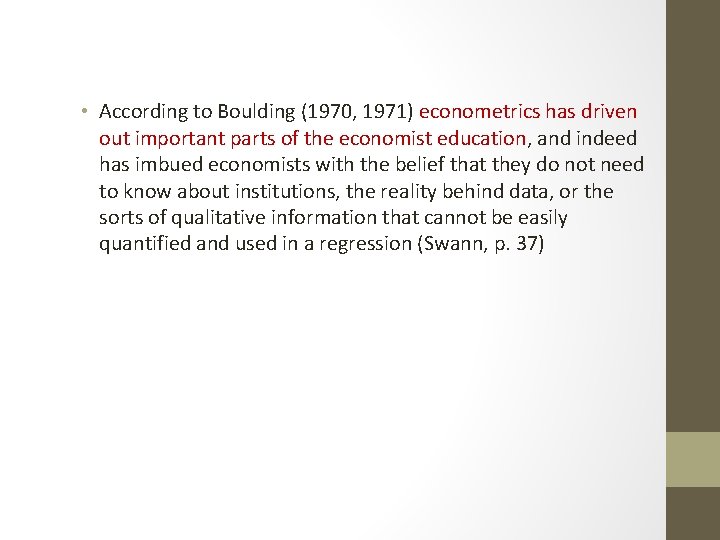
• According to Boulding (1970, 1971) econometrics has driven out important parts of the economist education, and indeed has imbued economists with the belief that they do not need to know about institutions, the reality behind data, or the sorts of qualitative information that cannot be easily quantified and used in a regression (Swann, p. 37)
Two alternatives • Structural equation modelling • Fuzzy-set Qualitative Comparative Analysis
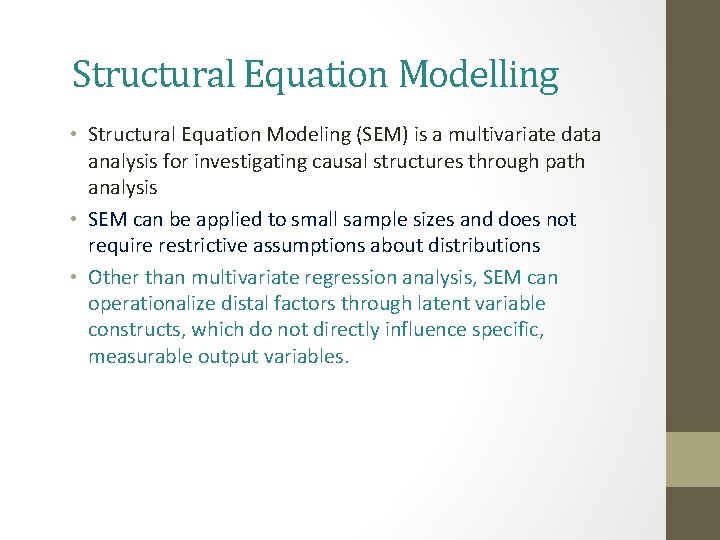
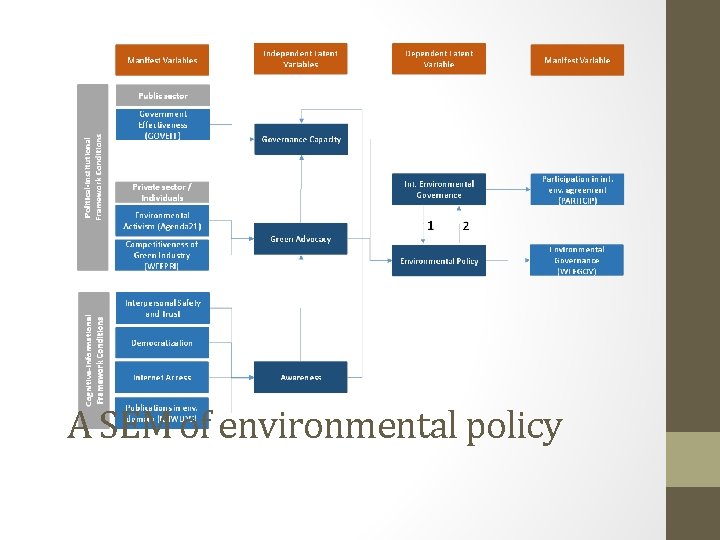
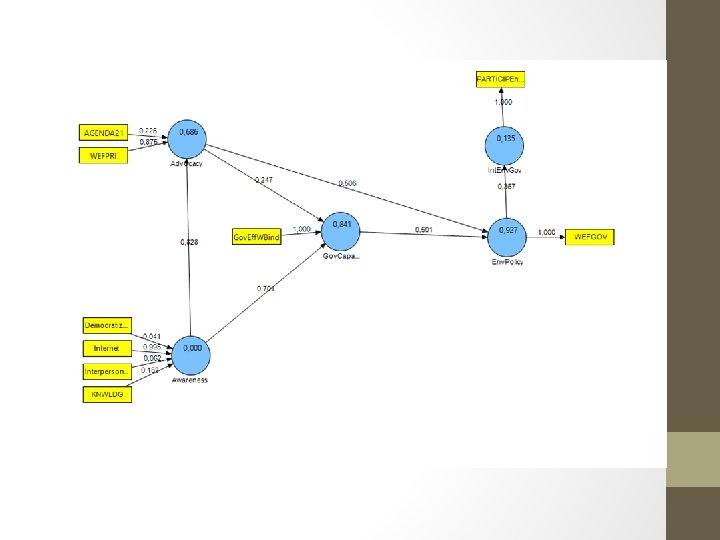
Structural Equation Modelling • Structural Equation Modeling (SEM) is a multivariate data analysis for investigating causal structures through path analysis • SEM can be applied to small sample sizes and does not require restrictive assumptions about distributions • Other than multivariate regression analysis, SEM can operationalize distal factors through latent variable constructs, which do not directly influence specific, measurable output variables.
A SEM of environmental policy
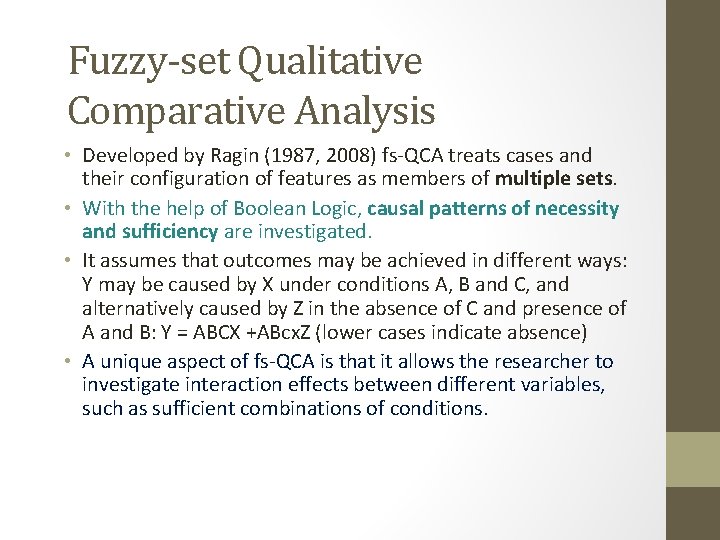
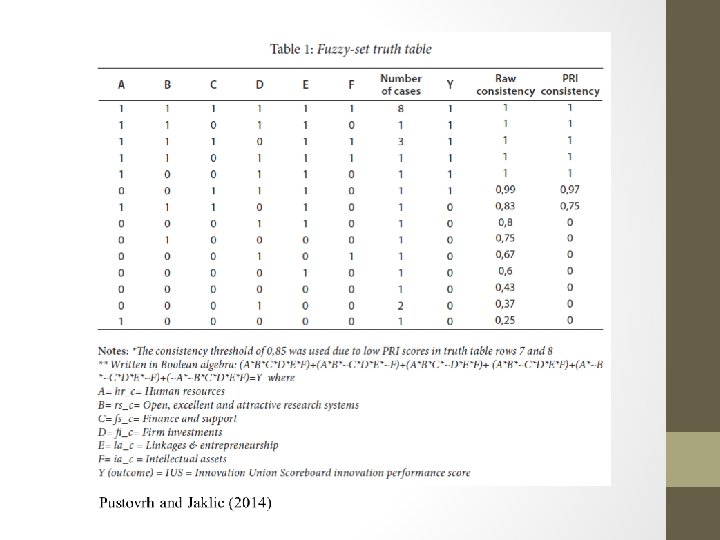
Fuzzy-set Qualitative Comparative Analysis • Developed by Ragin (1987, 2008) fs-QCA treats cases and their configuration of features as members of multiple sets. • With the help of Boolean Logic, causal patterns of necessity and sufficiency are investigated. • It assumes that outcomes may be achieved in different ways: Y may be caused by X under conditions A, B and C, and alternatively caused by Z in the absence of C and presence of A and B: Y = ABCX +ABcx. Z (lower cases indicate absence) • A unique aspect of fs-QCA is that it allows the researcher to investigate interaction effects between different variables, such as sufficient combinations of conditions.
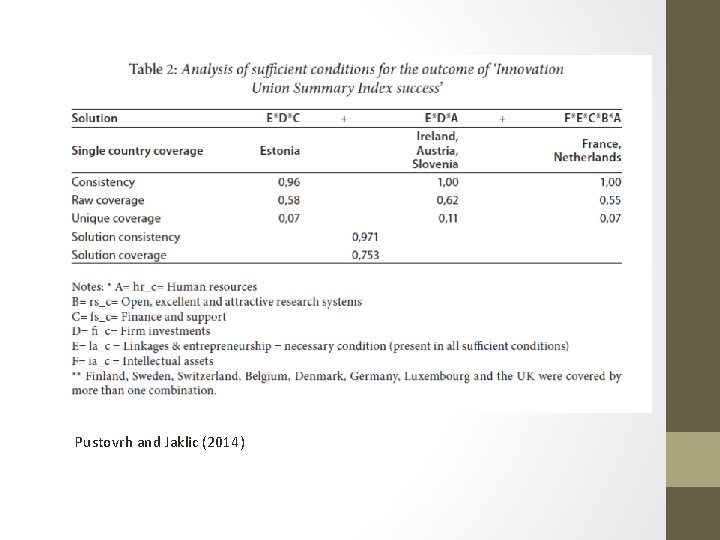
Pustovrh and Jaklic (2014)
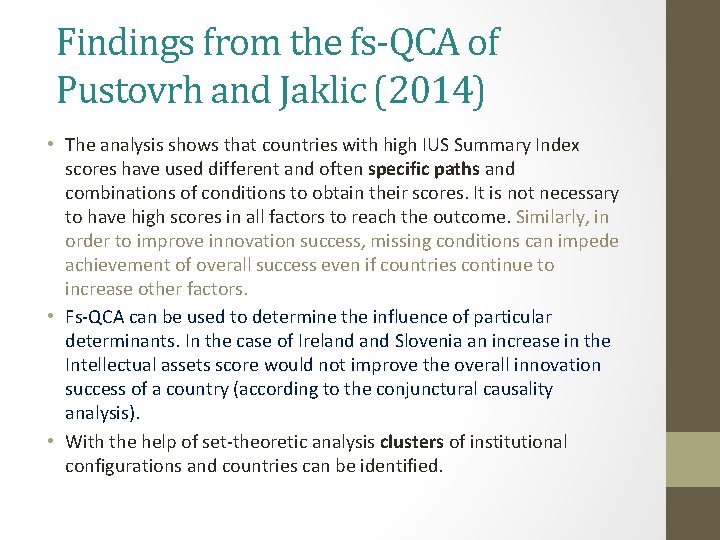
Findings from the fs-QCA of Pustovrh and Jaklic (2014) • The analysis shows that countries with high IUS Summary Index scores have used different and often specific paths and combinations of conditions to obtain their scores. It is not necessary to have high scores in all factors to reach the outcome. Similarly, in order to improve innovation success, missing conditions can impede achievement of overall success even if countries continue to increase other factors. • Fs-QCA can be used to determine the influence of particular determinants. In the case of Ireland Slovenia an increase in the Intellectual assets score would not improve the overall innovation success of a country (according to the conjunctural causality analysis). • With the help of set-theoretic analysis clusters of institutional configurations and countries can be identified.
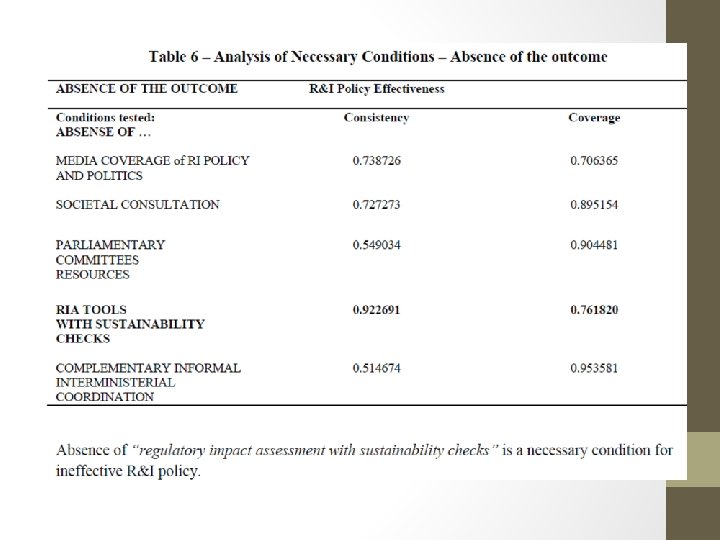
An exemplary mixed method • Effective research and innovation (R&I) policy in analysis the EU-28: A causal and configurational analysis of political governance determinants • Serdar Turkeli and Rene Kemp • UNU-MERIT Working Paper 2015 -023
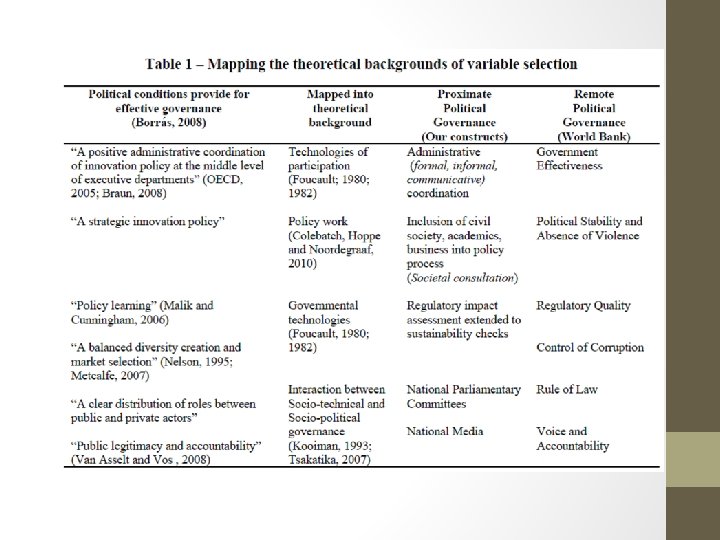
Theoretical assumptions and approach • Theoretically, our model is informed by the “policy work” perspective of Colebatch et al. (2010) which views policy workers as essential agents of policy choices, and a Foucauldian perspective of power which views power and knowledge as mutually-constitutive (Foucault, 1980; 1982). • Conceptually, our contribution consists of a framework of “proximate political governance factors of R&I policy”. It is called a proximate framework because four of our five variables are proximate variables, and the fifth is an intermediate, boundary/proximate variable from the perspective of governmental action.
• Empirically, we investigate the influence of the following five ‘proximate’ factors of political governance: § inter-ministerial policy coordination § resources of parliamentary committees § regulatory impact assessment extended to sustainability checks, § media coverage of R&I policy-related news items § the influence of societal consultation, as an intermediate, boundary/proximate variable. • In doing so, we make a contribution to the study of actor-based political governance.
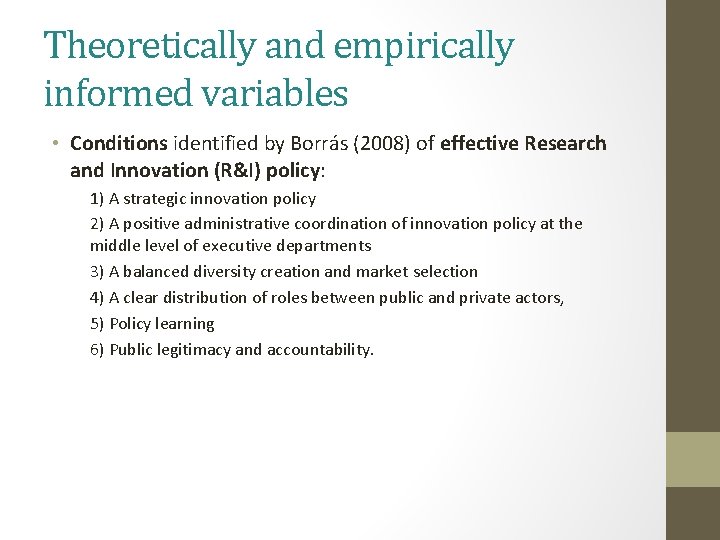
Theoretically and empirically informed variables • Conditions identified by Borrás (2008) of effective Research and Innovation (R&I) policy: 1) A strategic innovation policy 2) A positive administrative coordination of innovation policy at the middle level of executive departments 3) A balanced diversity creation and market selection 4) A clear distribution of roles between public and private actors, 5) Policy learning 6) Public legitimacy and accountability.
About the data • Measurement of variables: country experts’ subjective judgements about policy effectiveness and policy governance aspects • Data source: Bertelsmann Stiftung Sustainability Governance Indicators (SGI) • Background of data: The SGI is a platform built on a crossnational survey of governance that identifies reform needs in 41 EU and OECD countries. http: //www. sgi-network. org/2014/ all values are between 1 and 10. The SGI data relies on a combination of qualitative assessments by country experts http: //www. sgi-network. org/2014/Expert_Network and quantitative data drawn from official sources.
Limitations of the data • The explanatory variables/conditions are of generic kind not R&I policy-specific, meaning that they are not measured specifically for the R&I policy, such as resources of parliamentary committees to monitor and oppose governmental action in R&I-related topics. • The 28 countries of the EU constitute a small N (as sample size) from the point of view of regression analysis. • The data are based on subjective judgements instead of objective measures
The dependent variable / the outcome • The dependent (ordinal) variable is “Research and Innovation Policy Effectiveness” (RIPE) which is a measure of the extent (1 -10) to which R&I policy supports technological innovations that fosters the creation and introduction of new products and enhanced productivity
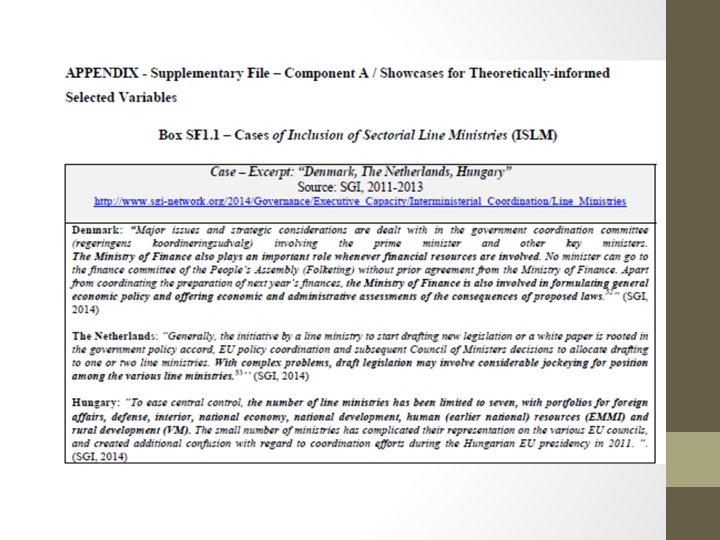
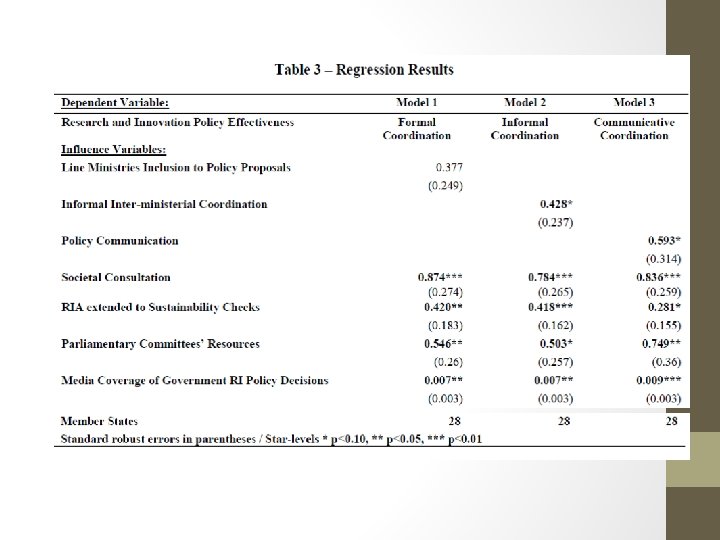
• Inclusion of Sectorial Line Ministries (ISLM) is a measure of the extent (1 -10) to which capable sectoral/line ministries are involved in the government office/prime minister’s office (GO/PMO) in the preparation of policy proposals, as reflected by the score for: • “Inter-related capacities for coordination in the GO/PMO and line ministries at policy proposal level” The explanatory variables
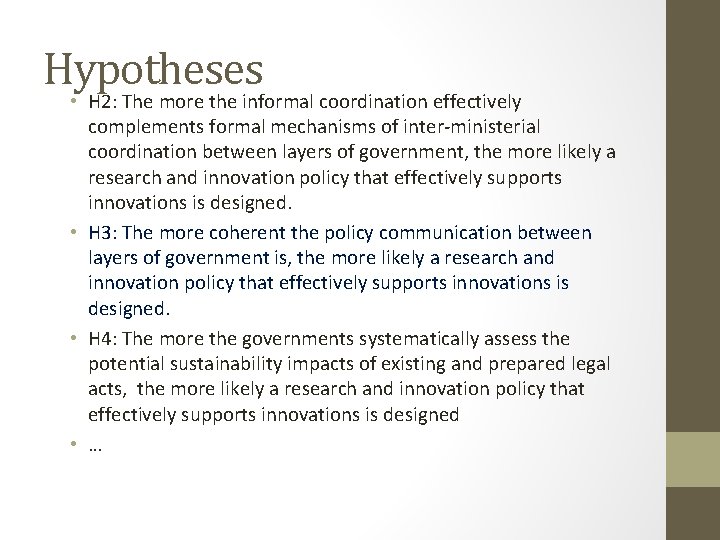
Hypotheses • H 2: The more the informal coordination effectively complements formal mechanisms of inter-ministerial coordination between layers of government, the more likely a research and innovation policy that effectively supports innovations is designed. • H 3: The more coherent the policy communication between layers of government is, the more likely a research and innovation policy that effectively supports innovations is designed. • H 4: The more the governments systematically assess the potential sustainability impacts of existing and prepared legal acts, the more likely a research and innovation policy that effectively supports innovations is designed • …
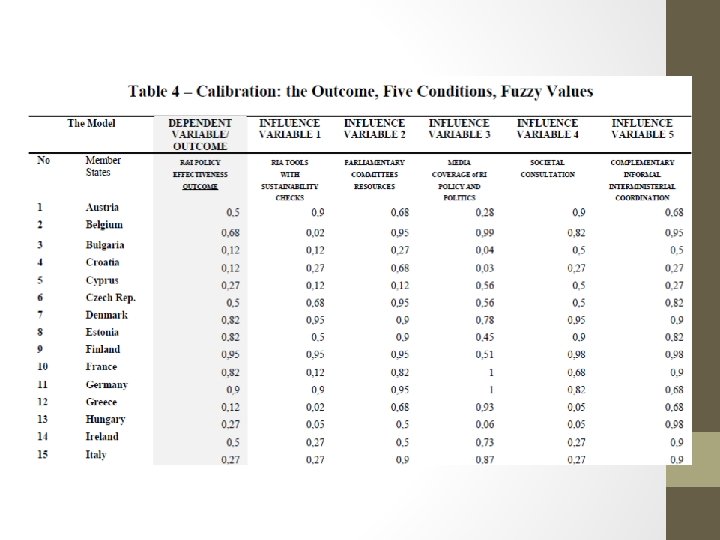
Method II: Fuzzy-Set Qualitative Comparative Analysis (fs/QCA)
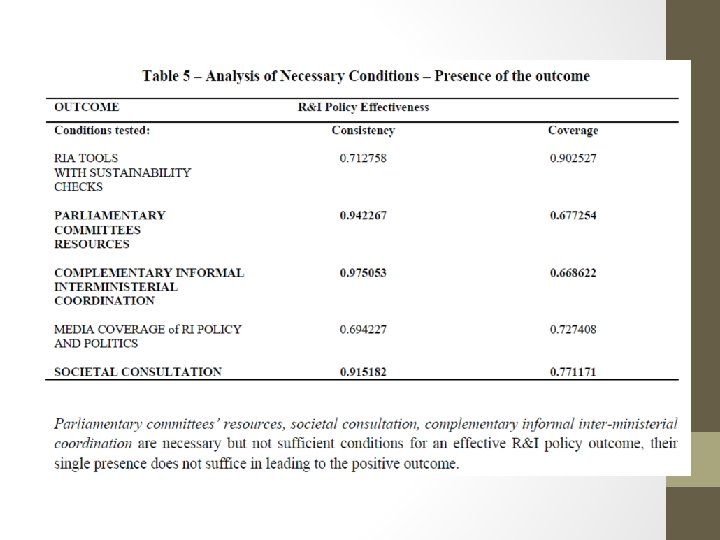
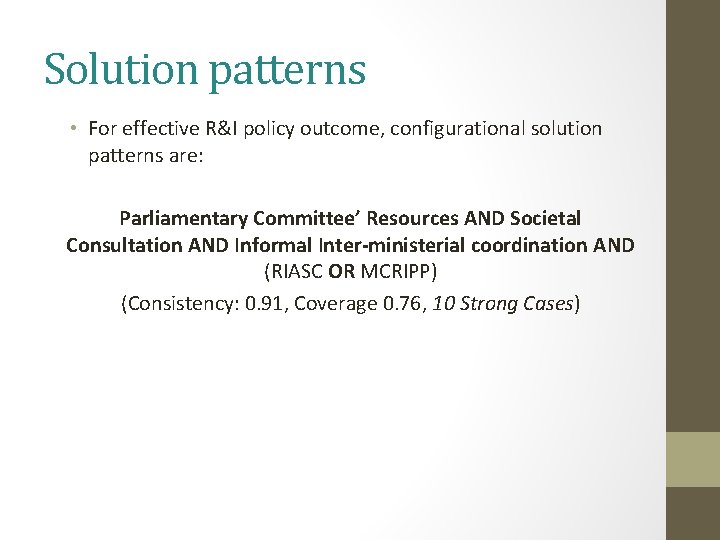
Solution patterns • For effective R&I policy outcome, configurational solution patterns are: Parliamentary Committee’ Resources AND Societal Consultation AND Informal Inter-ministerial coordination AND (RIASC OR MCRIPP) (Consistency: 0. 91, Coverage 0. 76, 10 Strong Cases)
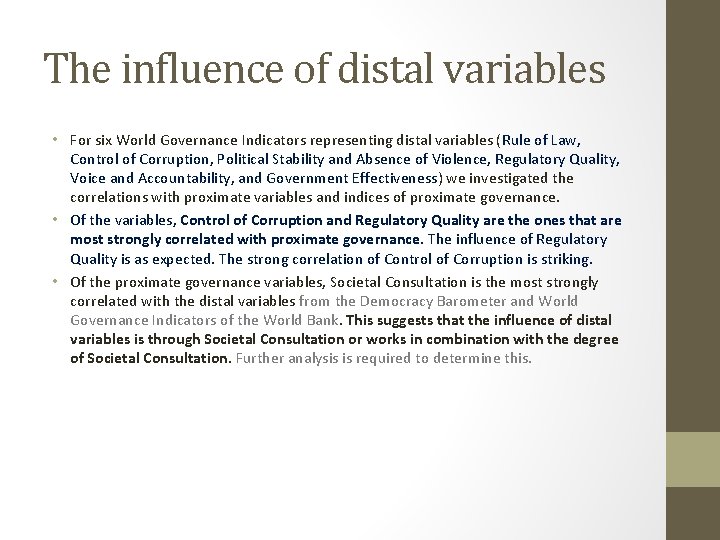
The influence of distal variables • For six World Governance Indicators representing distal variables (Rule of Law, Control of Corruption, Political Stability and Absence of Violence, Regulatory Quality, Voice and Accountability, and Government Effectiveness) we investigated the correlations with proximate variables and indices of proximate governance. • Of the variables, Control of Corruption and Regulatory Quality are the ones that are most strongly correlated with proximate governance. The influence of Regulatory Quality is as expected. The strong correlation of Control of Corruption is striking. • Of the proximate governance variables, Societal Consultation is the most strongly correlated with the distal variables from the Democracy Barometer and World Governance Indicators of the World Bank. This suggests that the influence of distal variables is through Societal Consultation or works in combination with the degree of Societal Consultation. Further analysis is required to determine this.
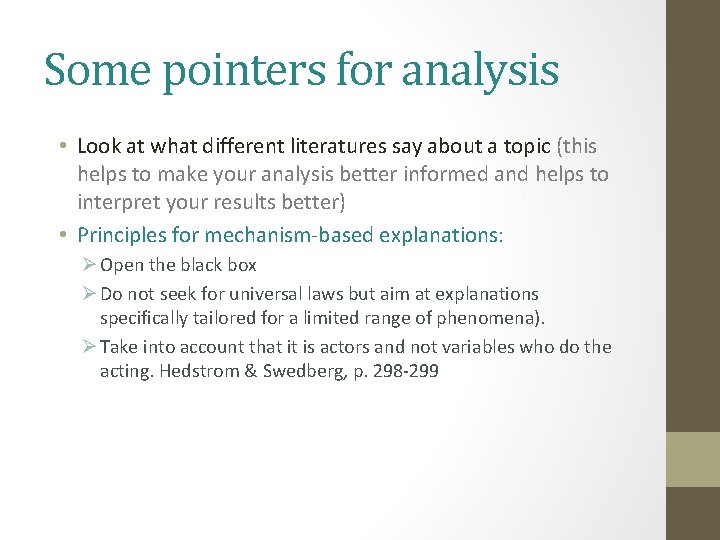
Some pointers for analysis • Look at what different literatures say about a topic (this helps to make your analysis better informed and helps to interpret your results better) • Principles for mechanism-based explanations: Ø Open the black box Ø Do not seek for universal laws but aim at explanations specifically tailored for a limited range of phenomena). Ø Take into account that it is actors and not variables who do the acting. Hedstrom & Swedberg, p. 298 -299
• Hoppe, R. , (1999) Policy analysis, science, and politics: from "speaking truth to power" to "making sense together" Science and Public Policy 26(3): 201 -210. • Meadowcroft, J. (2011). "Engaging with the politics of sustainability transitions. " Environmental Innovation and Societal Transitions 1(1): 70 -75. • Dani Rodrik (2013) When Ideas Trump Interests: Preferences, World Views, and Policy Innovations, The Journal of Economic Perspectives (Forth. ) • Sewell, W. H. (1992) A Theory of Structure: Duality, Agency, and Transformation, American Journal of Sociology, 98(1): 1 -29 Some reading suggestions. . .