Chapter 4 Introduction to Alkenes Structure and Reactivity
- Slides: 95
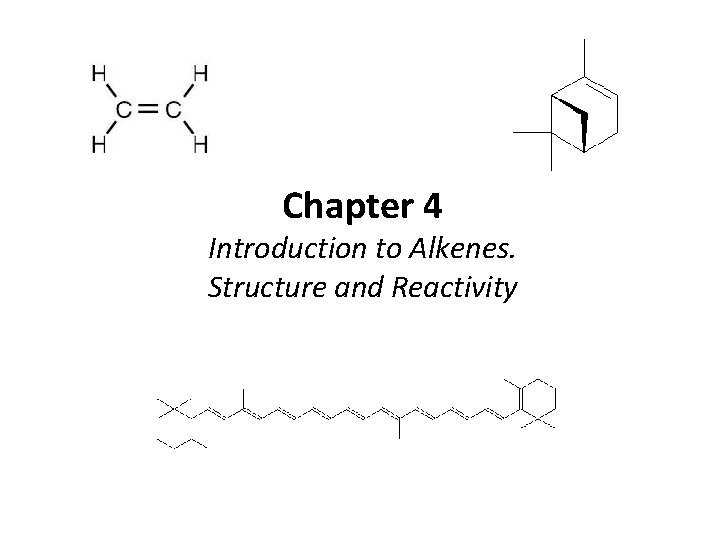
Chapter 4 Introduction to Alkenes. Structure and Reactivity
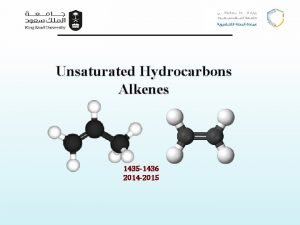
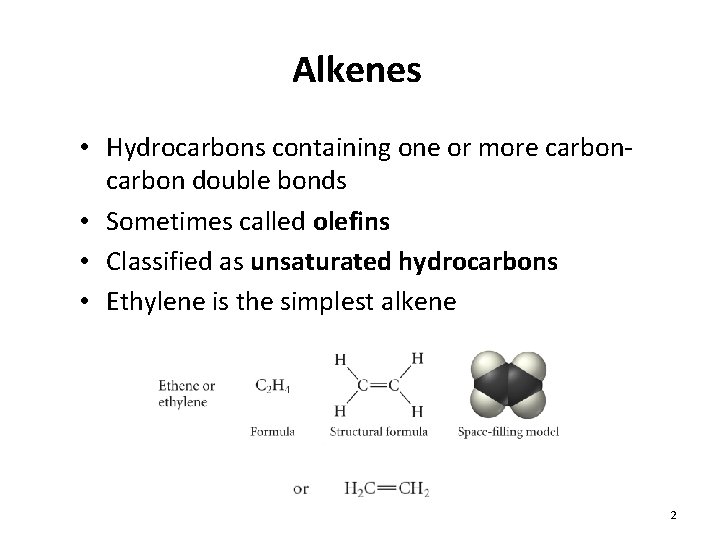
Alkenes • Hydrocarbons containing one or more carbon double bonds • Sometimes called olefins • Classified as unsaturated hydrocarbons • Ethylene is the simplest alkene 2
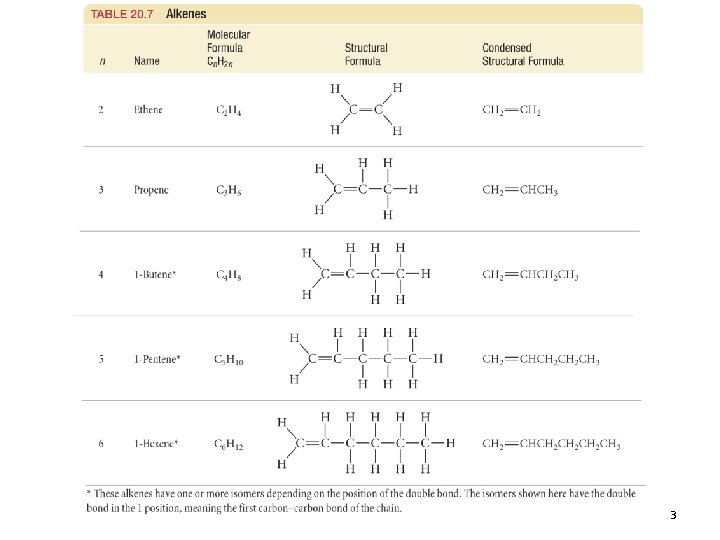
3
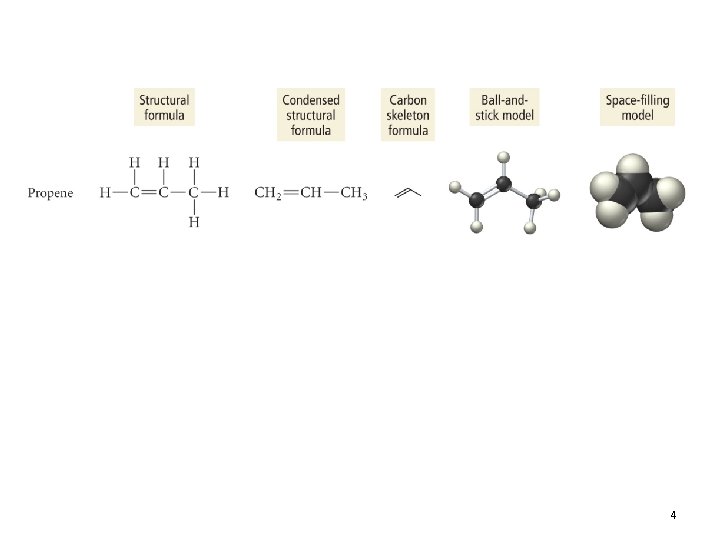
4
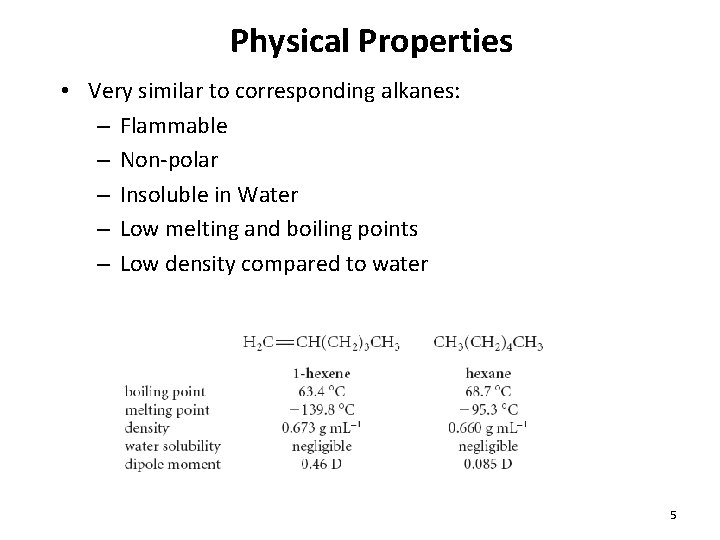
Physical Properties • Very similar to corresponding alkanes: – Flammable – Non-polar – Insoluble in Water – Low melting and boiling points – Low density compared to water 5
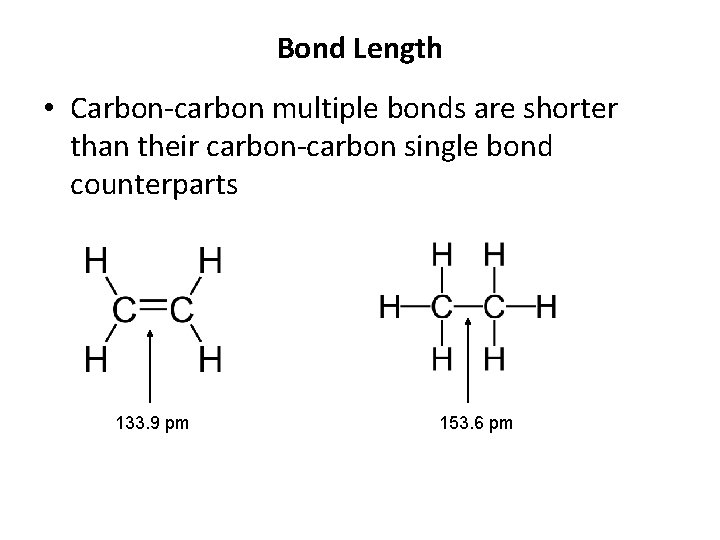
Bond Length • Carbon-carbon multiple bonds are shorter than their carbon-carbon single bond counterparts 133. 9 pm 153. 6 pm
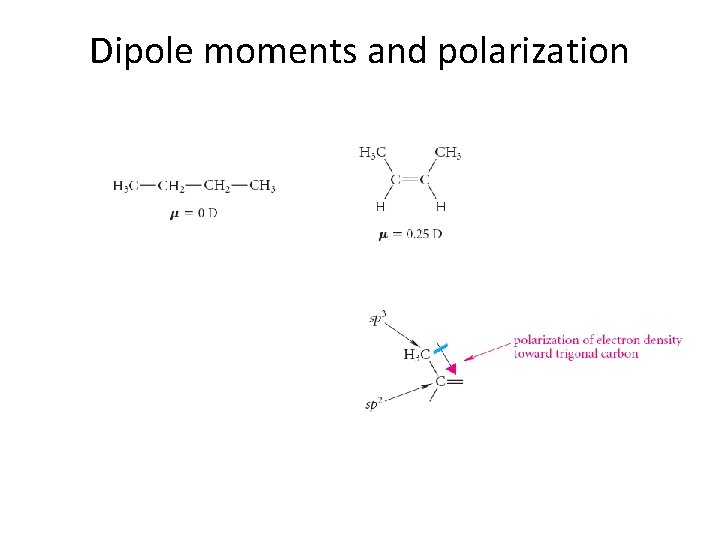
Dipole moments and polarization
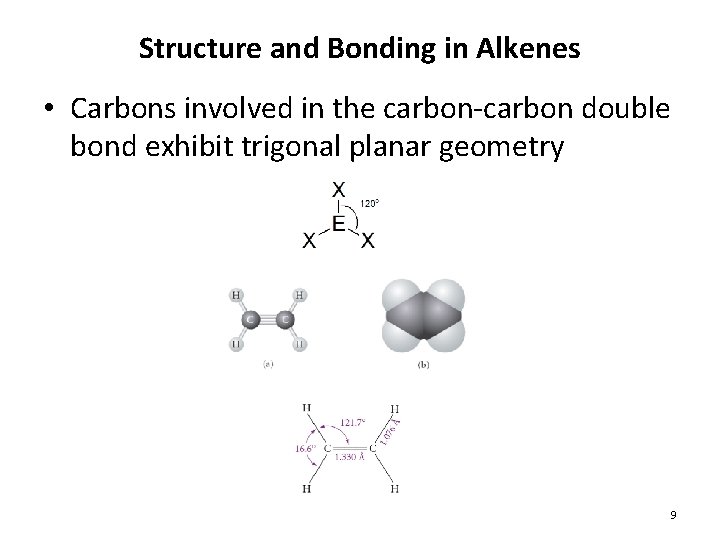
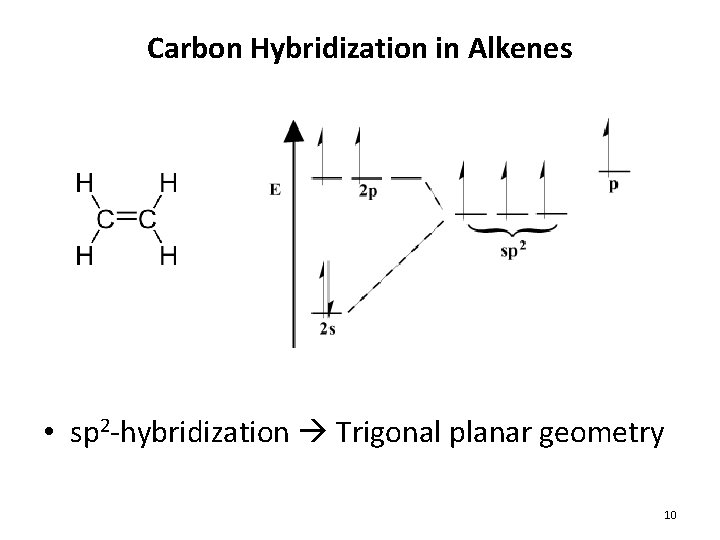
Structure and Bonding in Alkenes • Carbons involved in the carbon-carbon double bond exhibit trigonal planar geometry 9
Carbon Hybridization in Alkenes • sp 2 -hybridization Trigonal planar geometry 10
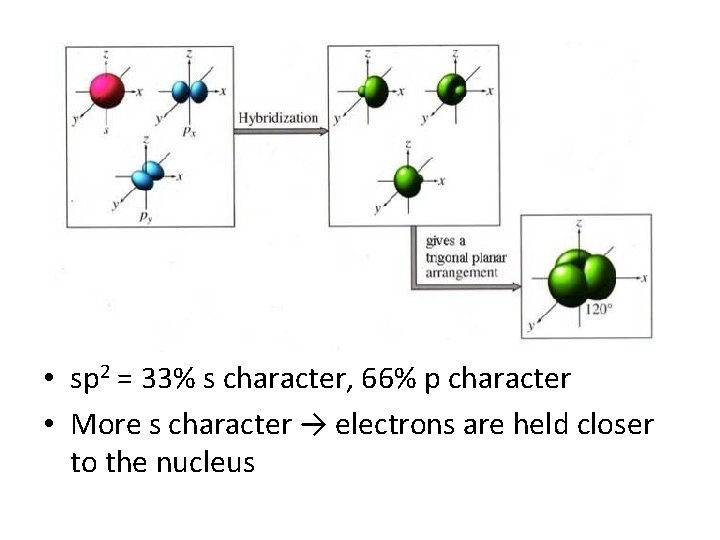
• sp 2 = 33% s character, 66% p character • More s character → electrons are held closer to the nucleus
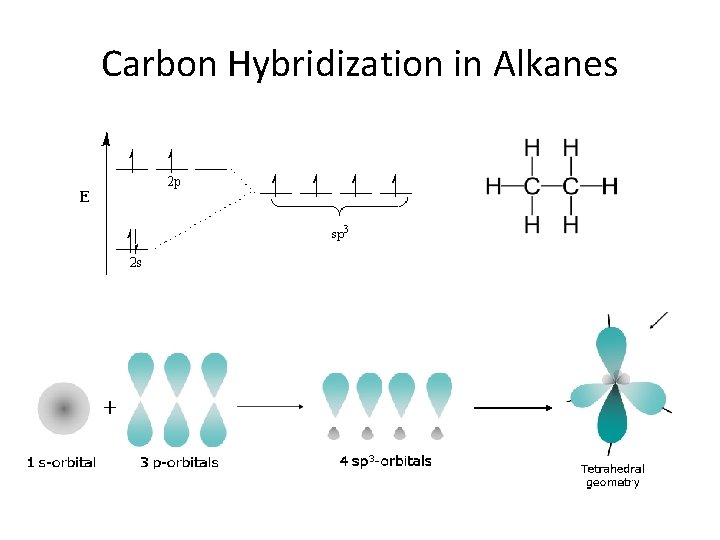
Carbon Hybridization in Alkanes
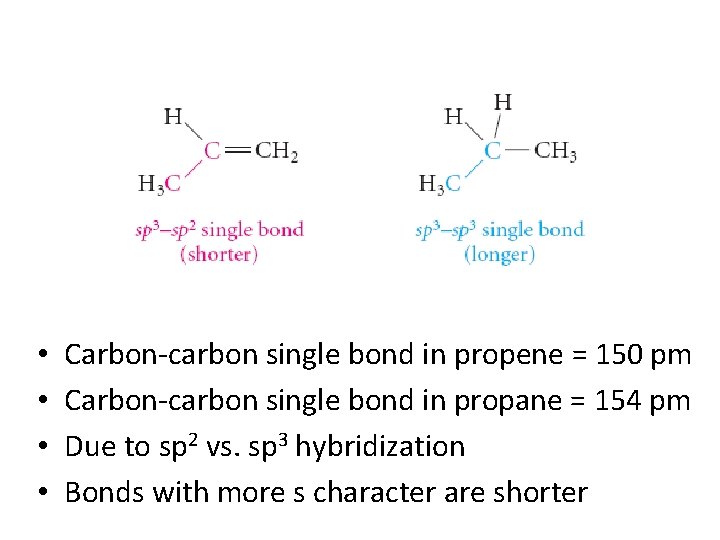
• • Carbon-carbon single bond in propene = 150 pm Carbon-carbon single bond in propane = 154 pm Due to sp 2 vs. sp 3 hybridization Bonds with more s character are shorter
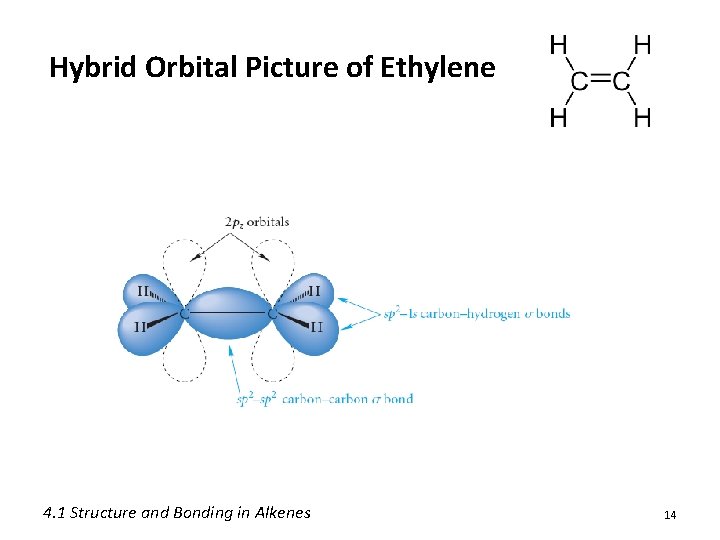
Hybrid Orbital Picture of Ethylene 4. 1 Structure and Bonding in Alkenes 14
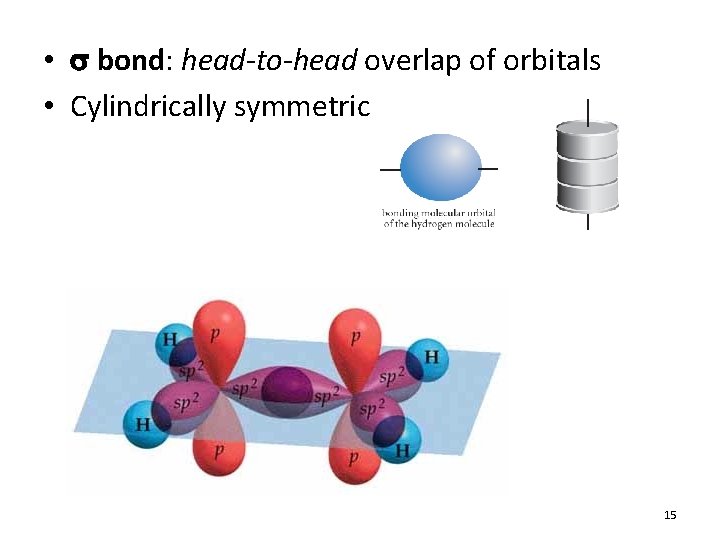
• s bond: head-to-head overlap of orbitals • Cylindrically symmetric 15
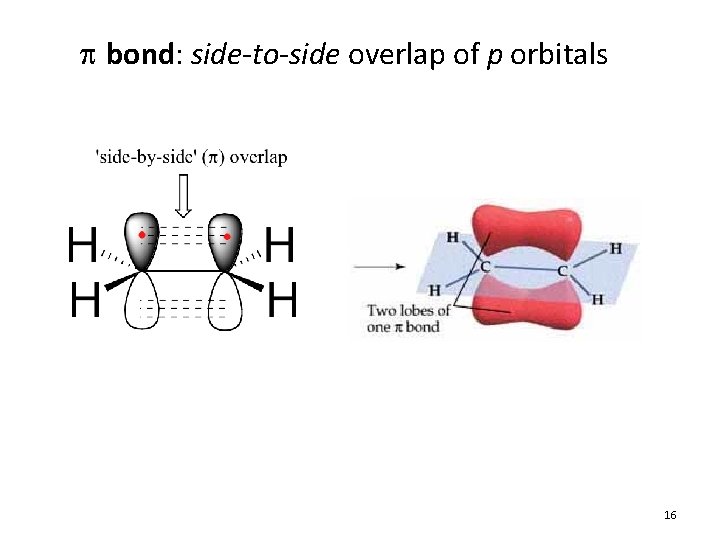
bond: side-to-side overlap of p orbitals 16
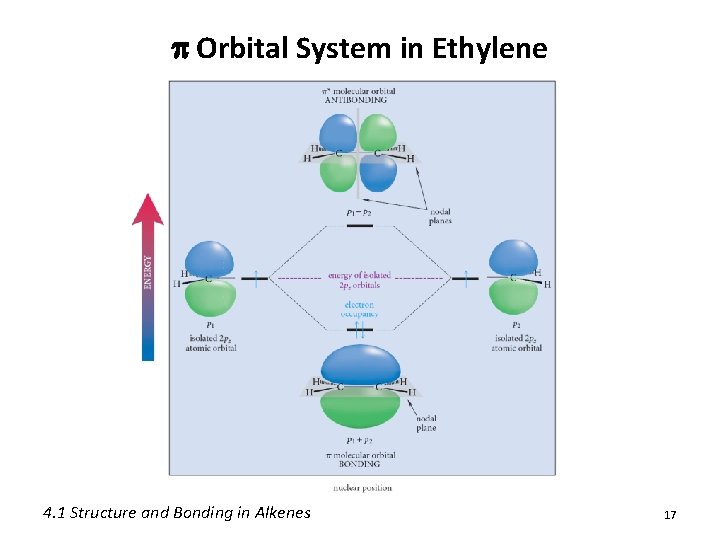
p Orbital System in Ethylene 4. 1 Structure and Bonding in Alkenes 17
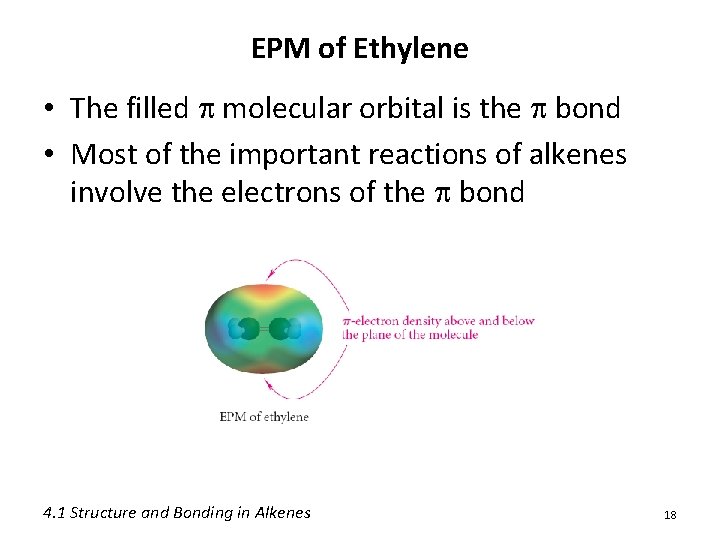
EPM of Ethylene • The filled molecular orbital is the bond • Most of the important reactions of alkenes involve the electrons of the bond 4. 1 Structure and Bonding in Alkenes 18
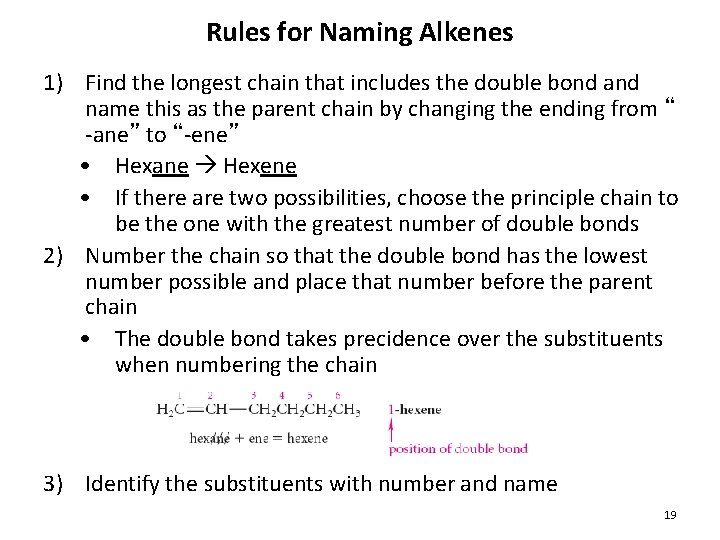
Rules for Naming Alkenes 1) Find the longest chain that includes the double bond and name this as the parent chain by changing the ending from “ -ane” to “-ene” • Hexane Hexene • If there are two possibilities, choose the principle chain to be the one with the greatest number of double bonds 2) Number the chain so that the double bond has the lowest number possible and place that number before the parent chain • The double bond takes precidence over the substituents when numbering the chain 3) Identify the substituents with number and name 19
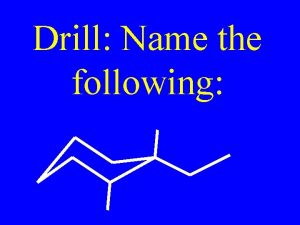
Problems • Name the following:
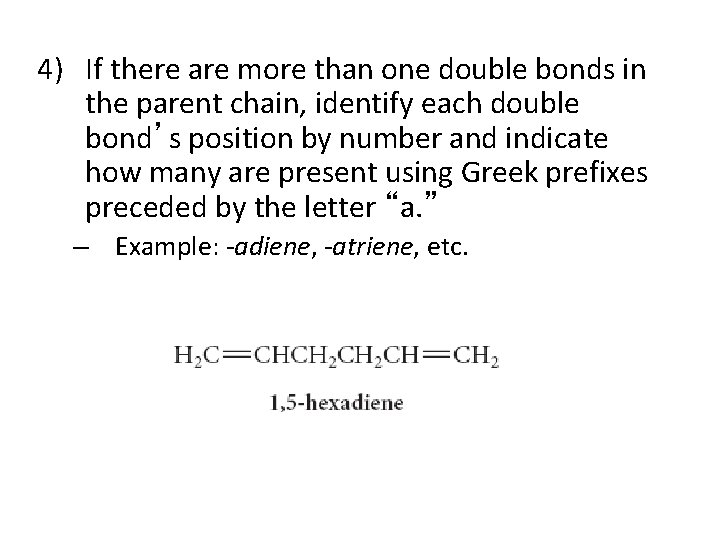
4) If there are more than one double bonds in the parent chain, identify each double bond’s position by number and indicate how many are present using Greek prefixes preceded by the letter “a. ” – Example: -adiene, -atriene, etc.
Problems • Name the following:
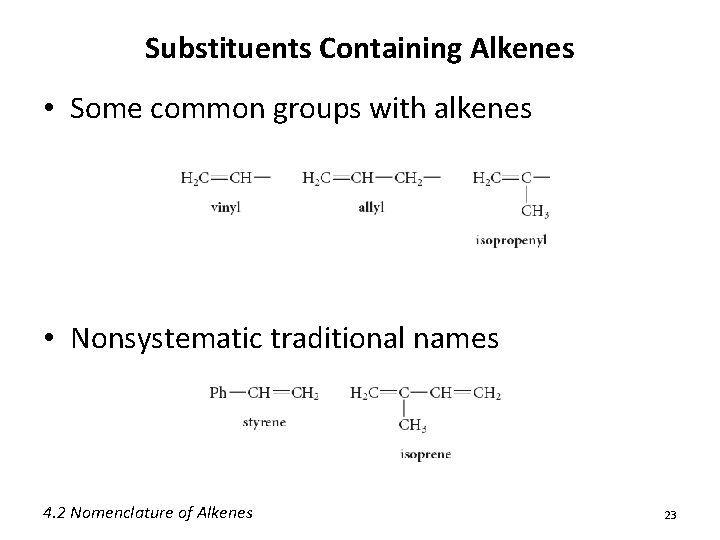
Substituents Containing Alkenes • Some common groups with alkenes • Nonsystematic traditional names 4. 2 Nomenclature of Alkenes 23
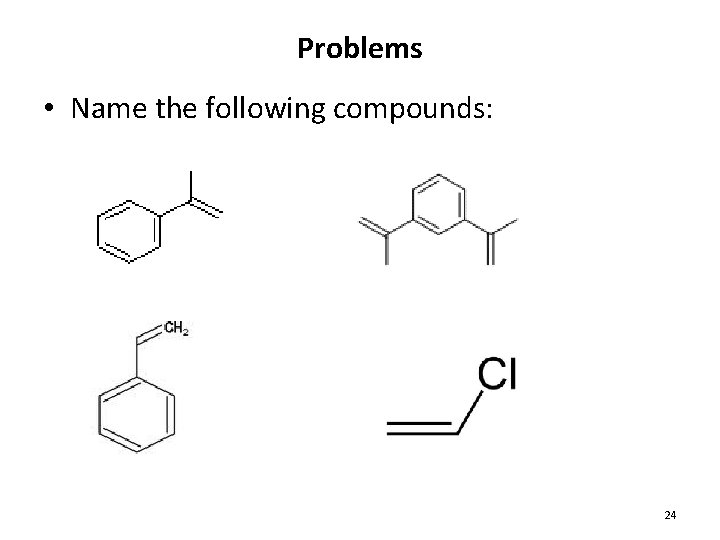
Problems • Name the following compounds: 24
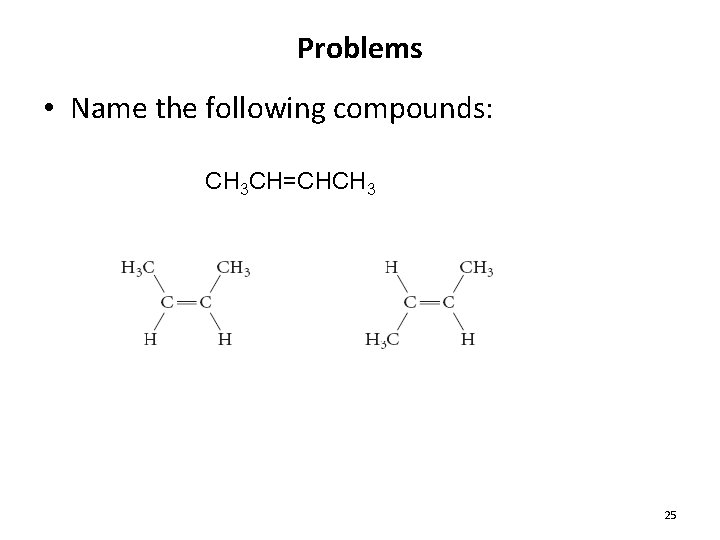
Problems • Name the following compounds: CH 3 CH=CHCH 3 25
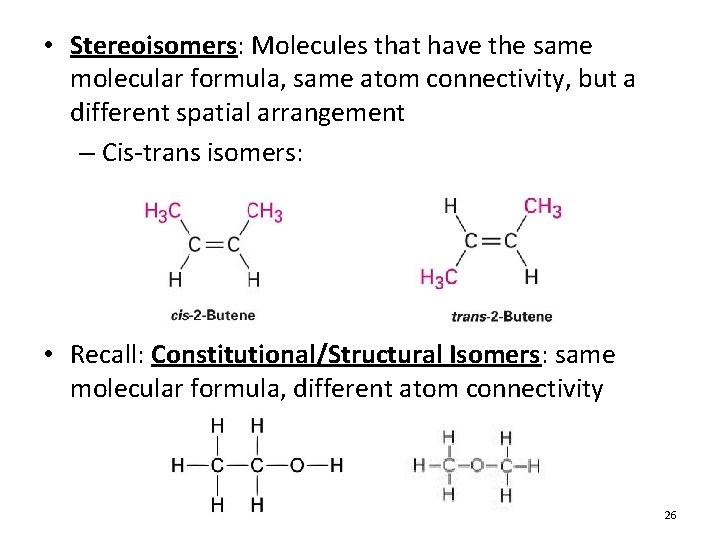
• Stereoisomers: Molecules that have the same molecular formula, same atom connectivity, but a different spatial arrangement – Cis-trans isomers: • Recall: Constitutional/Structural Isomers: same molecular formula, different atom connectivity 26
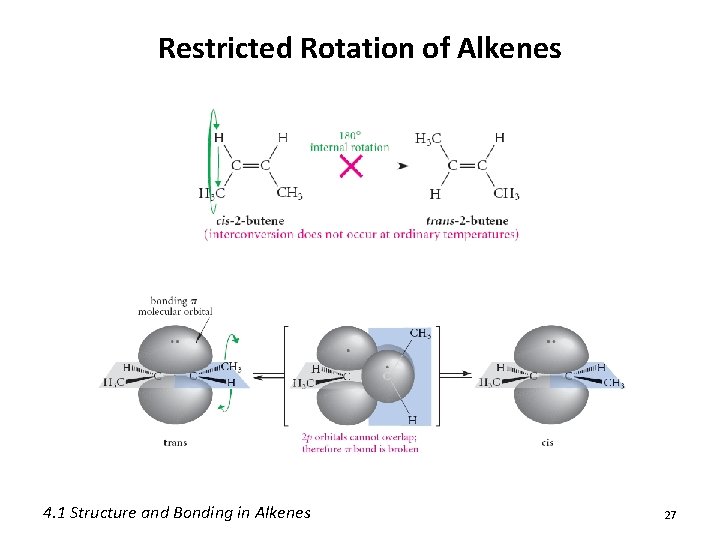
Restricted Rotation of Alkenes 4. 1 Structure and Bonding in Alkenes 27
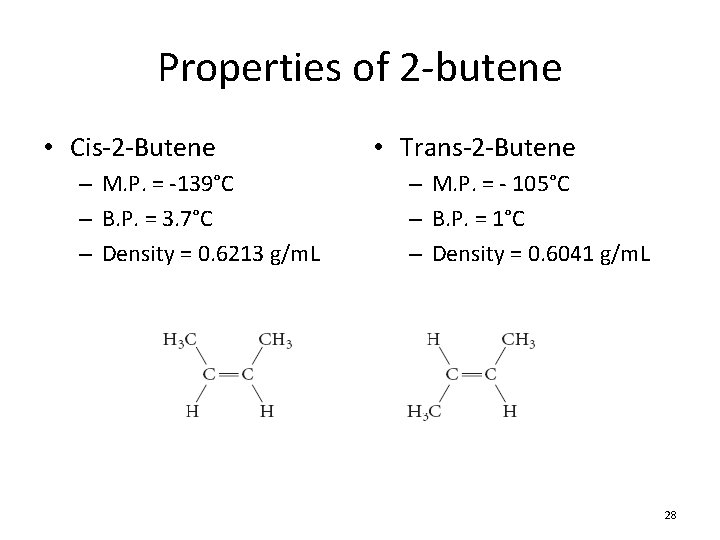
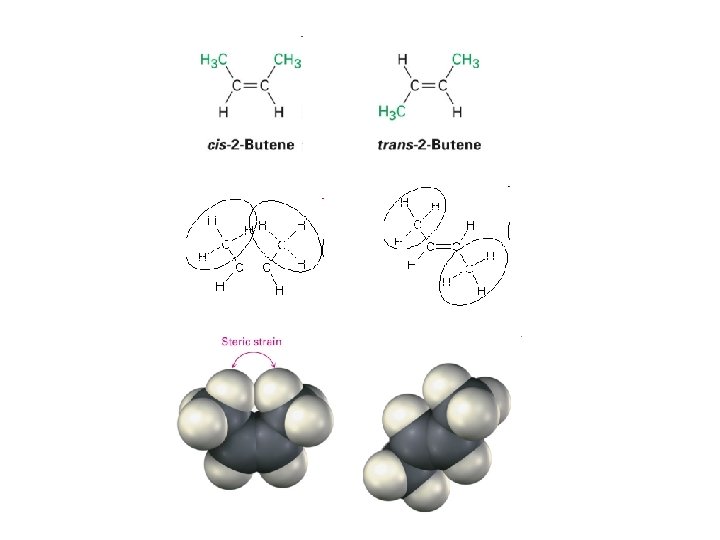
Properties of 2 -butene • Cis-2 -Butene – M. P. = -139°C – B. P. = 3. 7°C – Density = 0. 6213 g/m. L • Trans-2 -Butene – M. P. = - 105°C – B. P. = 1°C – Density = 0. 6041 g/m. L 28
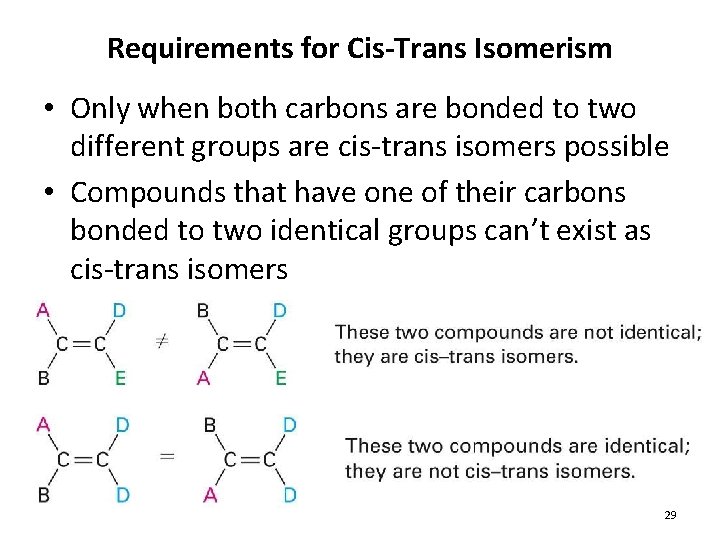
Requirements for Cis-Trans Isomerism • Only when both carbons are bonded to two different groups are cis-trans isomers possible • Compounds that have one of their carbons bonded to two identical groups can’t exist as cis-trans isomers 29
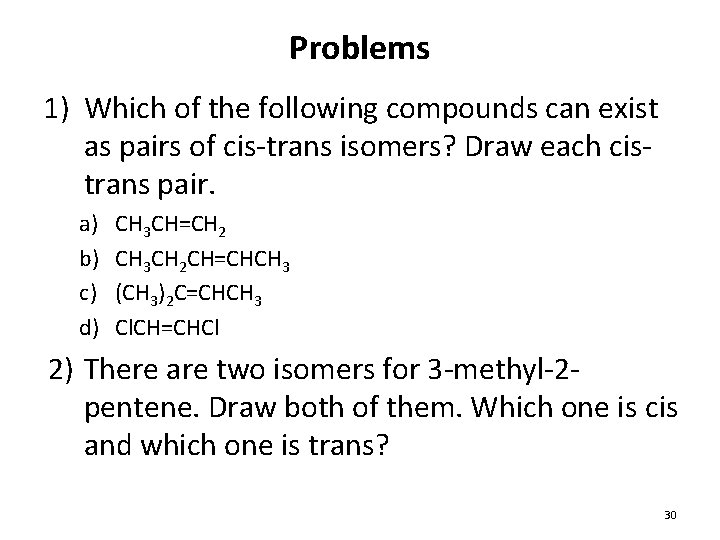
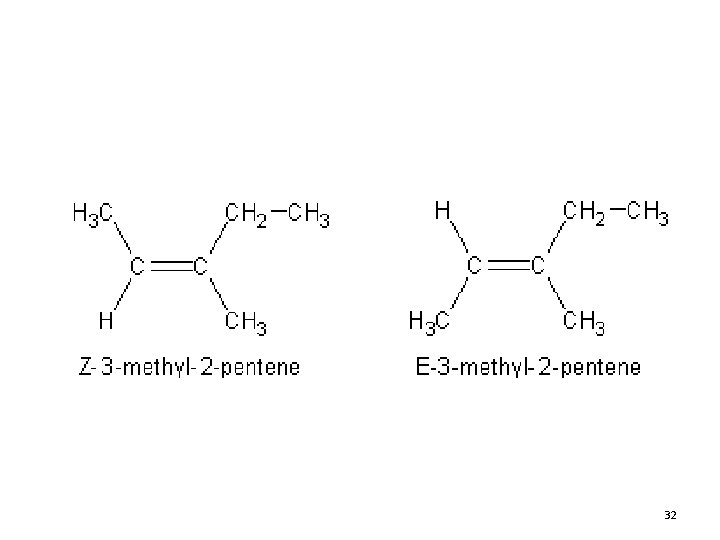
Problems 1) Which of the following compounds can exist as pairs of cis-trans isomers? Draw each cistrans pair. a) b) c) d) CH 3 CH=CH 2 CH 3 CH 2 CH=CHCH 3 (CH 3)2 C=CHCH 3 Cl. CH=CHCl 2) There are two isomers for 3 -methyl-2 pentene. Draw both of them. Which one is cis and which one is trans? 30
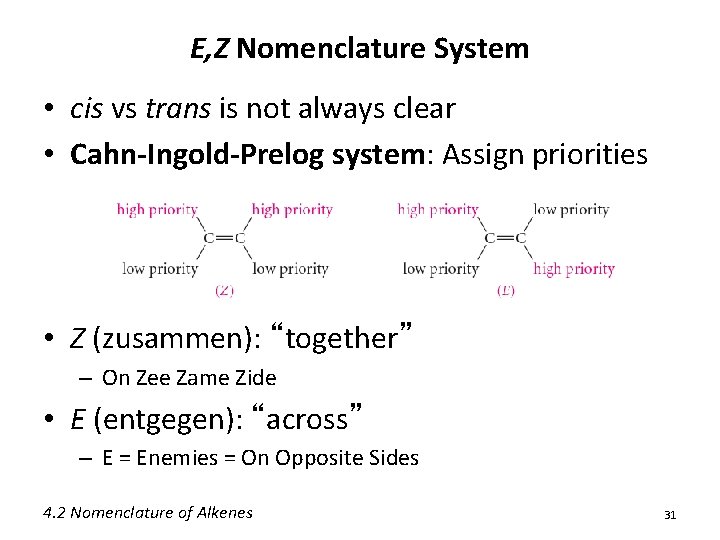
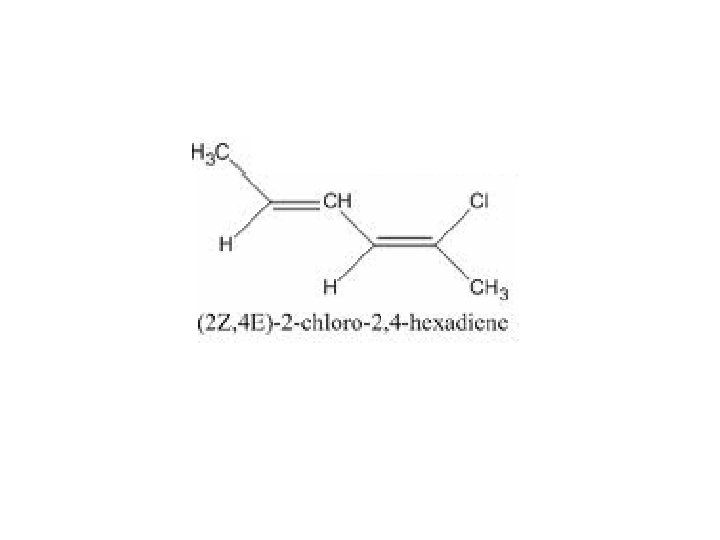
E, Z Nomenclature System • cis vs trans is not always clear • Cahn-Ingold-Prelog system: Assign priorities • Z (zusammen): “together” – On Zee Zame Zide • E (entgegen): “across” – E = Enemies = On Opposite Sides 4. 2 Nomenclature of Alkenes 31
32
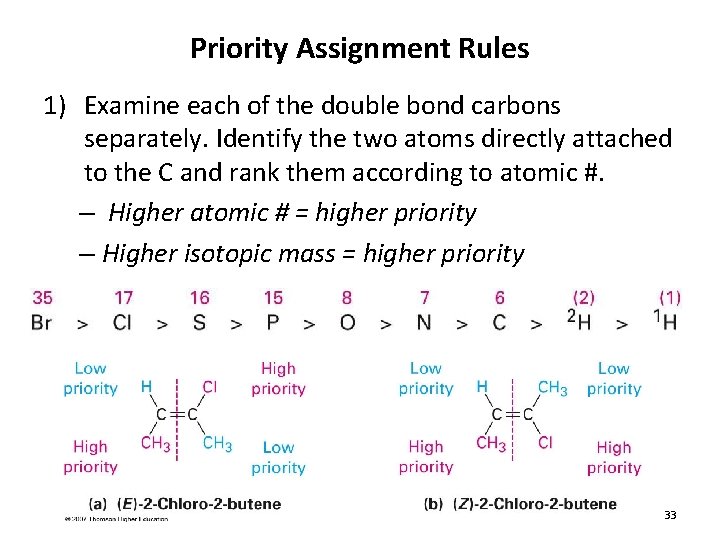
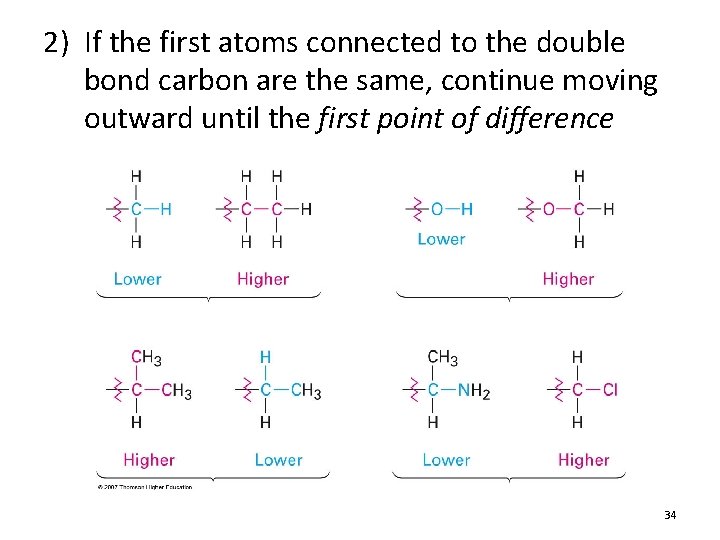
Priority Assignment Rules 1) Examine each of the double bond carbons separately. Identify the two atoms directly attached to the C and rank them according to atomic #. – Higher atomic # = higher priority – Higher isotopic mass = higher priority 33
2) If the first atoms connected to the double bond carbon are the same, continue moving outward until the first point of difference 34
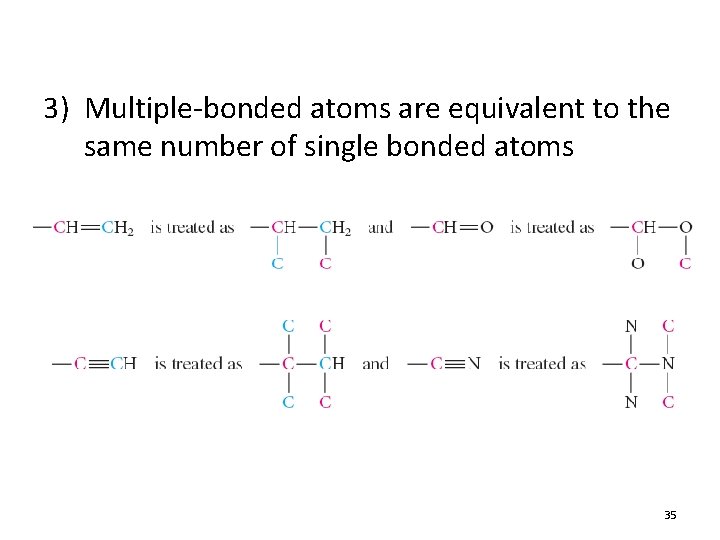
3) Multiple-bonded atoms are equivalent to the same number of single bonded atoms 35
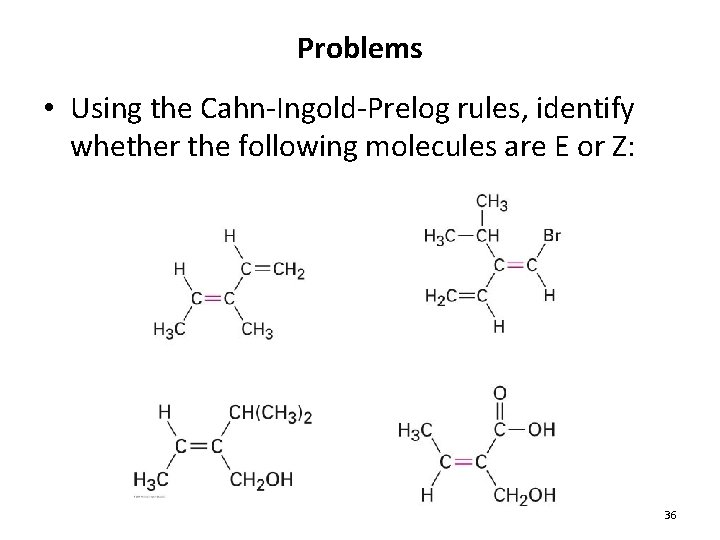
Problems • Using the Cahn-Ingold-Prelog rules, identify whether the following molecules are E or Z: 36
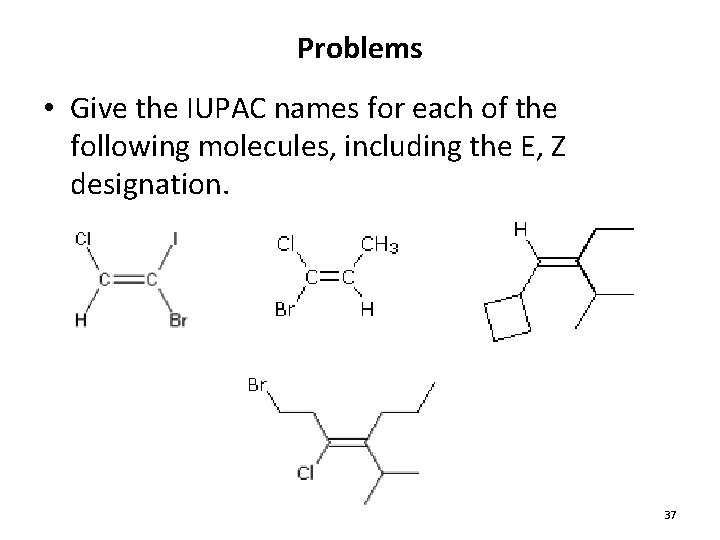
Problems • Give the IUPAC names for each of the following molecules, including the E, Z designation. 37
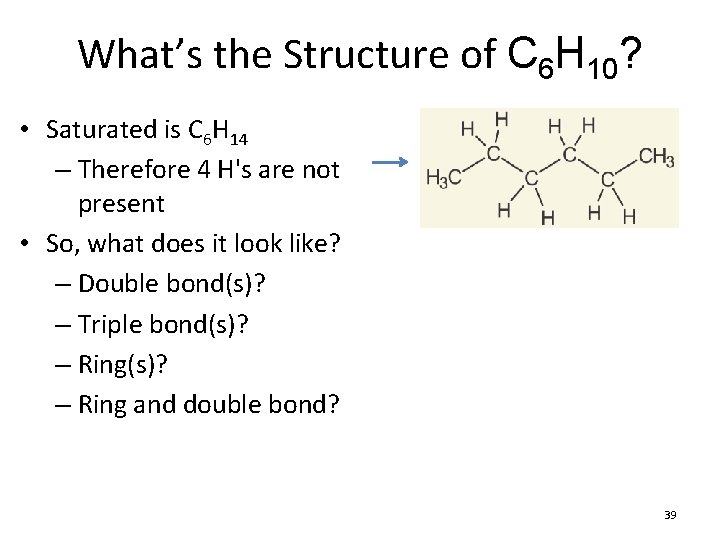
What’s the Structure of C 6 H 10? • Saturated is C 6 H 14 – Therefore 4 H's are not present • So, what does it look like? – Double bond(s)? – Triple bond(s)? – Ring and double bond? 39
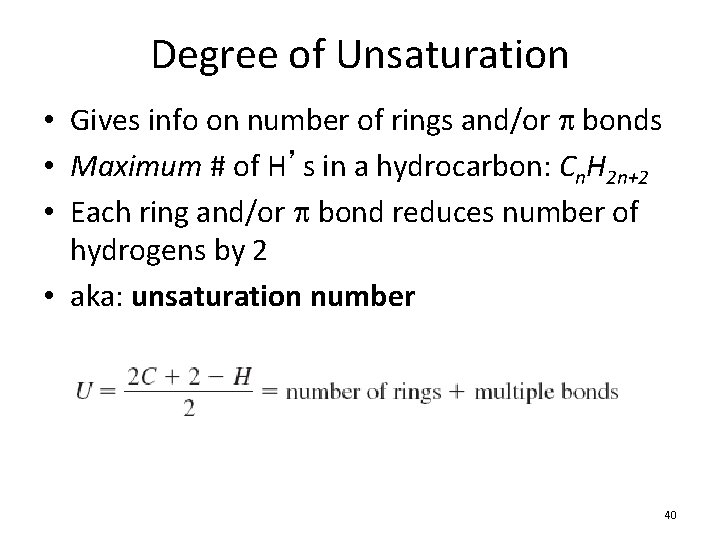
Degree of Unsaturation • Gives info on number of rings and/or bonds • Maximum # of H’s in a hydrocarbon: Cn. H 2 n+2 • Each ring and/or bond reduces number of hydrogens by 2 • aka: unsaturation number 40
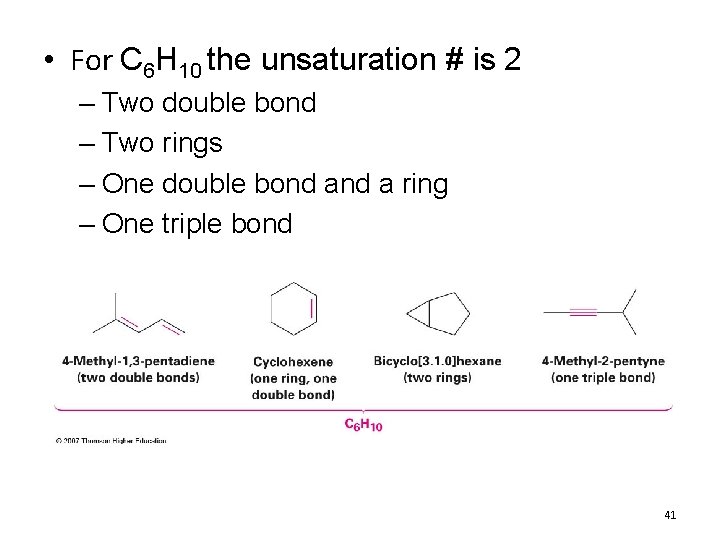
• For C 6 H 10 the unsaturation # is 2 – Two double bond – Two rings – One double bond a ring – One triple bond 41
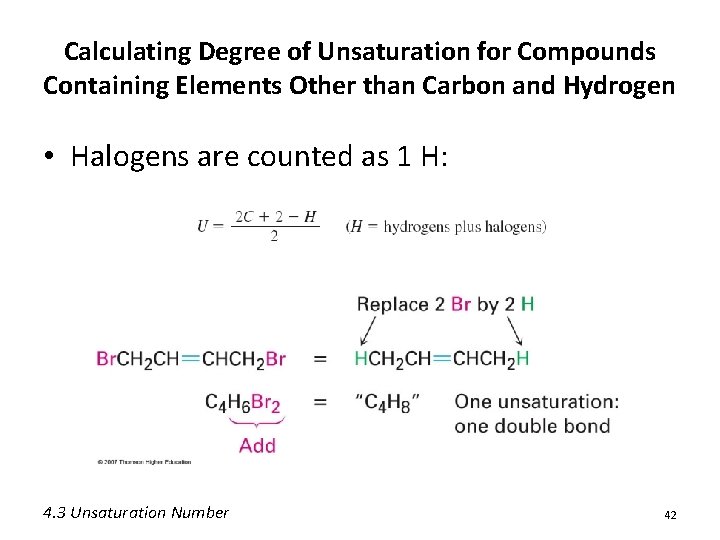
Calculating Degree of Unsaturation for Compounds Containing Elements Other than Carbon and Hydrogen • Halogens are counted as 1 H: 4. 3 Unsaturation Number 42
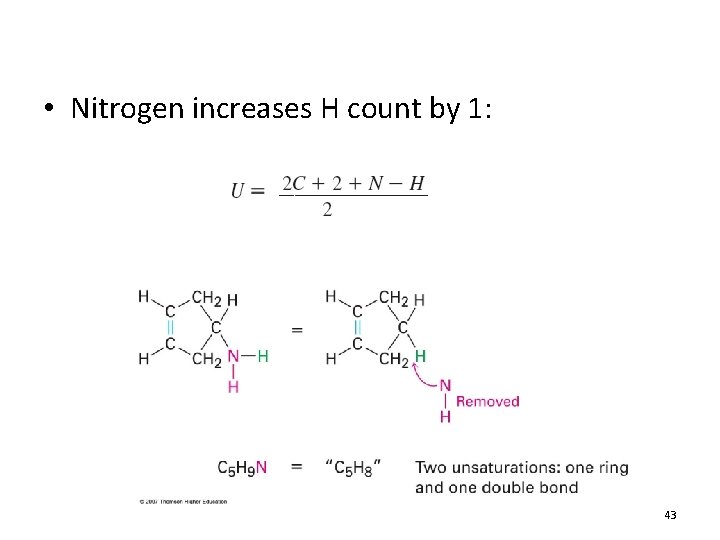
• Nitrogen increases H count by 1: 43
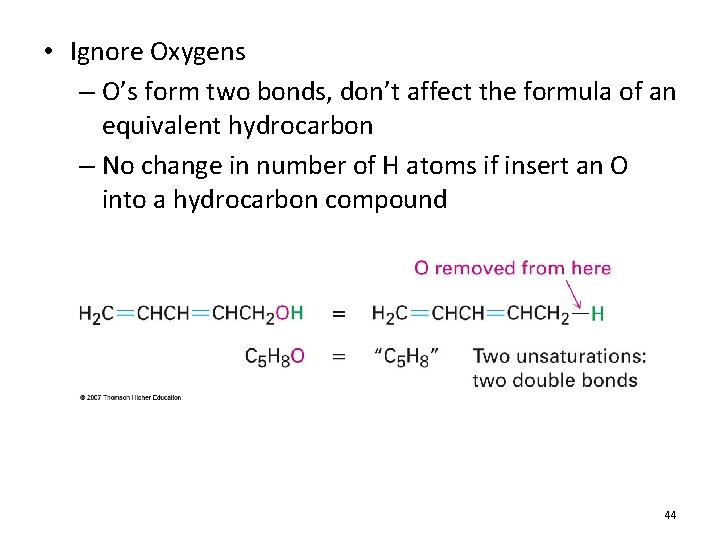
• Ignore Oxygens – O’s form two bonds, don’t affect the formula of an equivalent hydrocarbon – No change in number of H atoms if insert an O into a hydrocarbon compound 44
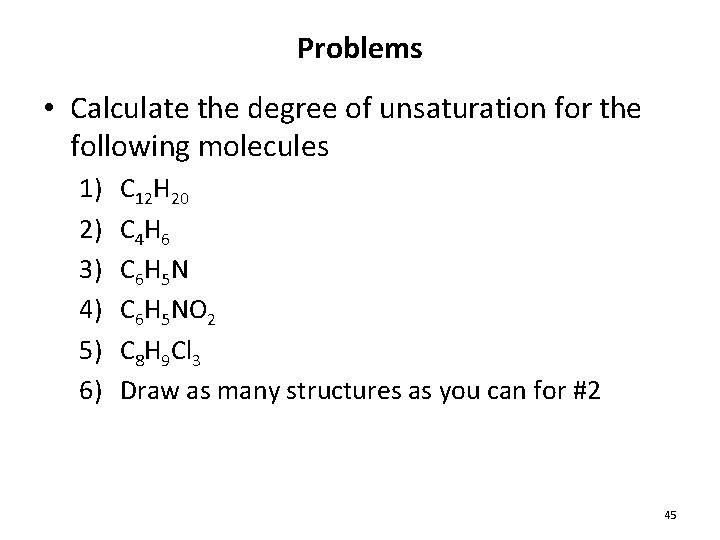
Problems • Calculate the degree of unsaturation for the following molecules 1) 2) 3) 4) 5) 6) C 12 H 20 C 4 H 6 C 6 H 5 N C 6 H 5 NO 2 C 8 H 9 Cl 3 Draw as many structures as you can for #2 45
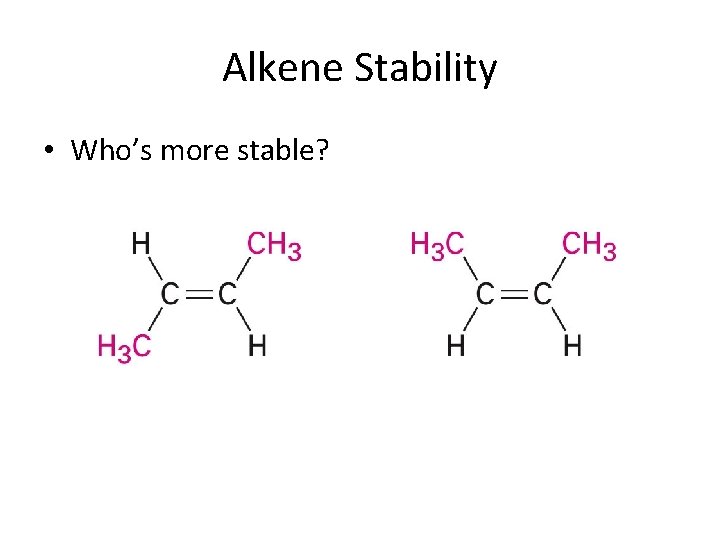
Alkene Stability • Who’s more stable?
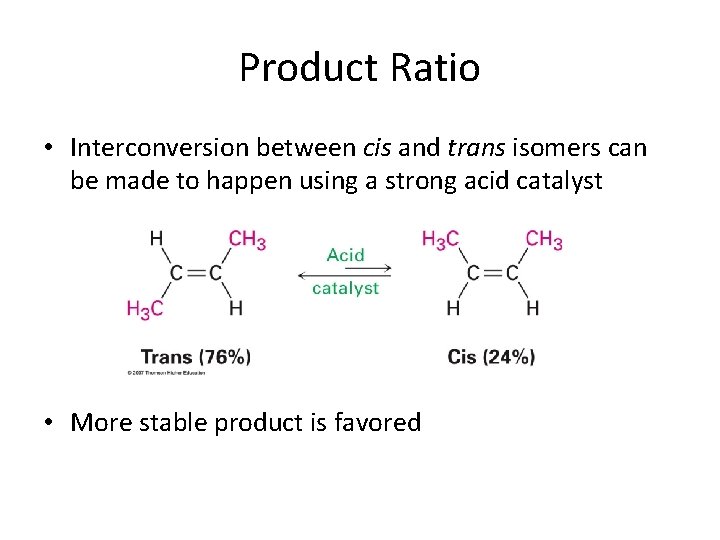
Product Ratio • Interconversion between cis and trans isomers can be made to happen using a strong acid catalyst • More stable product is favored
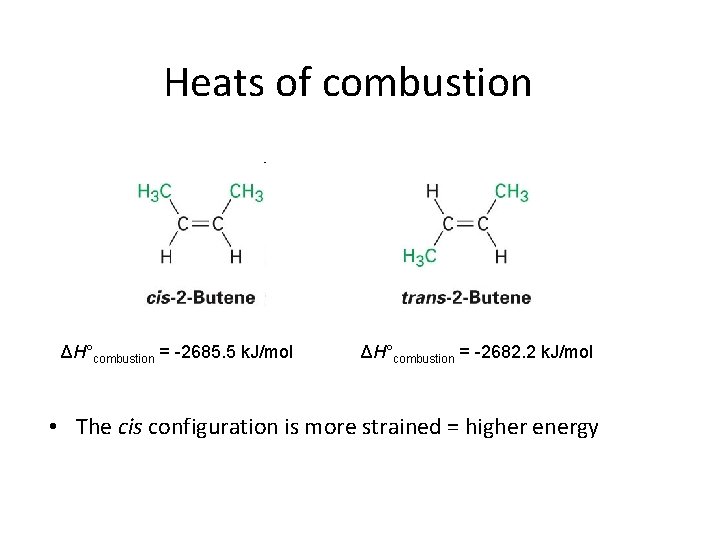
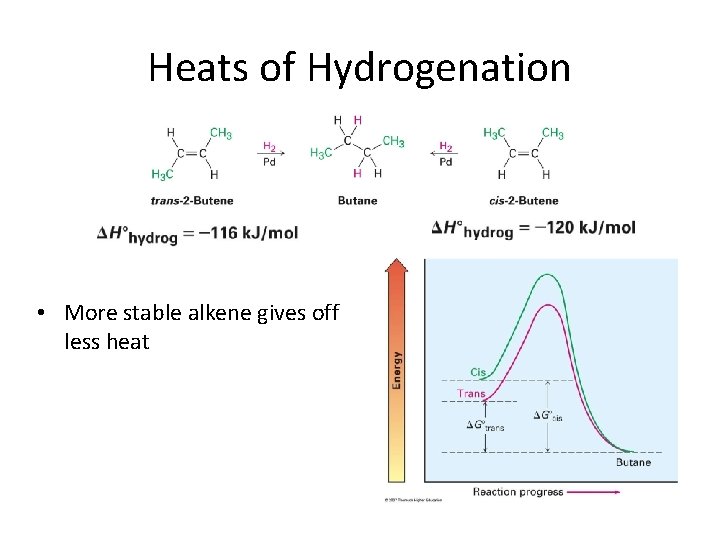
Heats of combustion ΔH°combustion = -2685. 5 k. J/mol ΔH°combustion = -2682. 2 k. J/mol • The cis configuration is more strained = higher energy
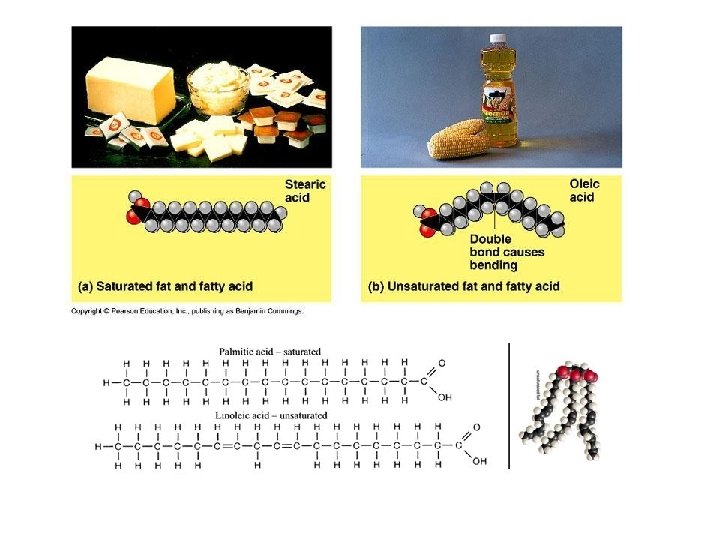
Heats of Hydrogenation • More stable alkene gives off less heat
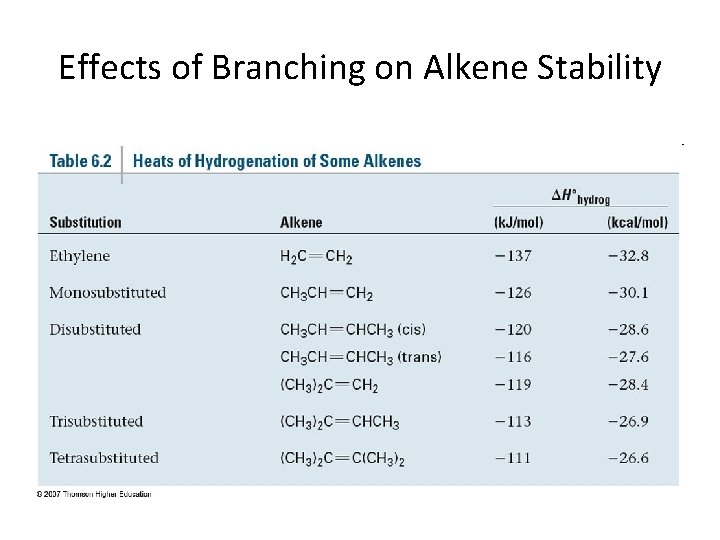
Effects of Branching on Alkene Stability
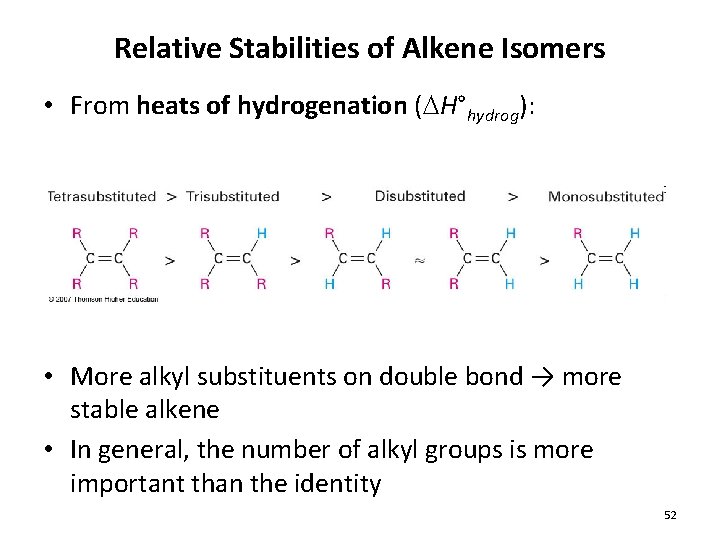
Relative Stabilities of Alkene Isomers • From heats of hydrogenation (DH°hydrog): • More alkyl substituents on double bond → more stable alkene • In general, the number of alkyl groups is more important than the identity 52
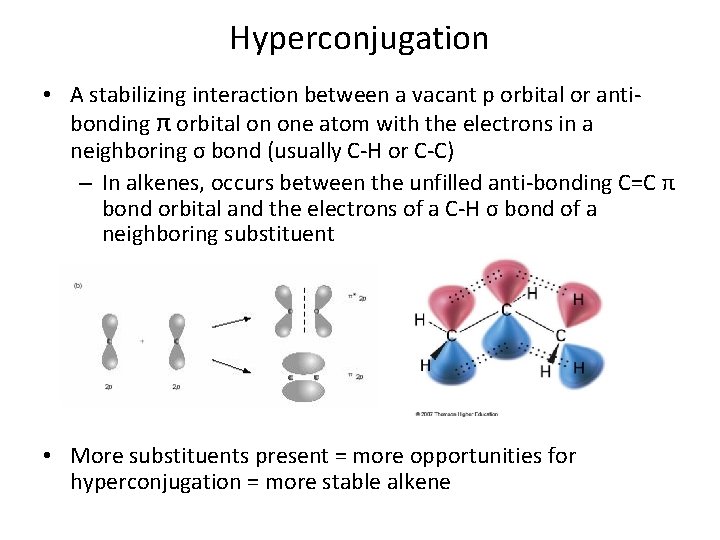
Hyperconjugation • A stabilizing interaction between a vacant p orbital or antibonding π orbital on one atom with the electrons in a neighboring σ bond (usually C-H or C-C) – In alkenes, occurs between the unfilled anti-bonding C=C π bond orbital and the electrons of a C-H σ bond of a neighboring substituent • More substituents present = more opportunities for hyperconjugation = more stable alkene
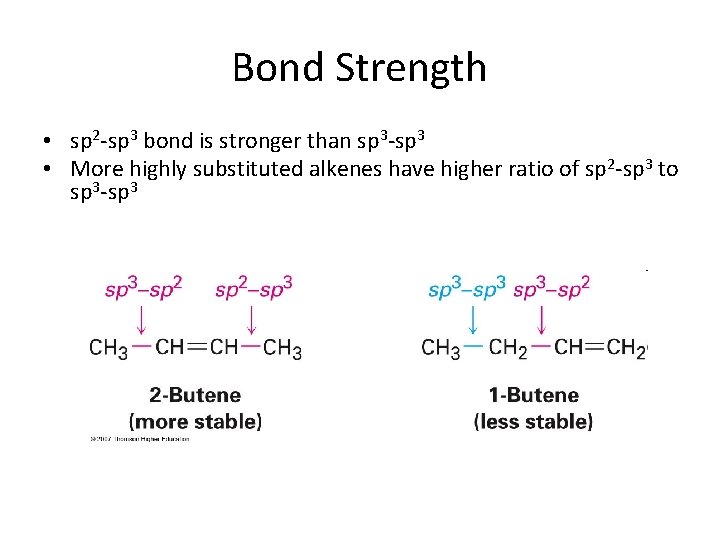
Bond Strength • sp 2 -sp 3 bond is stronger than sp 3 -sp 3 • More highly substituted alkenes have higher ratio of sp 2 -sp 3 to sp 3 -sp 3
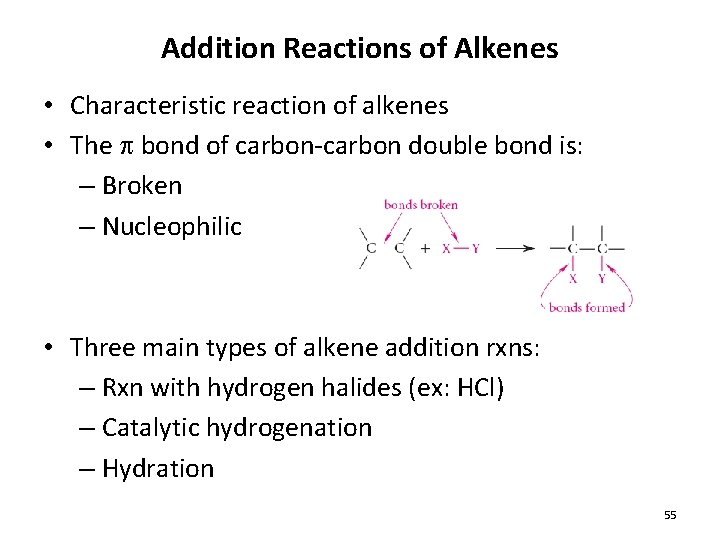
Addition Reactions of Alkenes • Characteristic reaction of alkenes • The bond of carbon-carbon double bond is: – Broken – Nucleophilic • Three main types of alkene addition rxns: – Rxn with hydrogen halides (ex: HCl) – Catalytic hydrogenation – Hydration 55
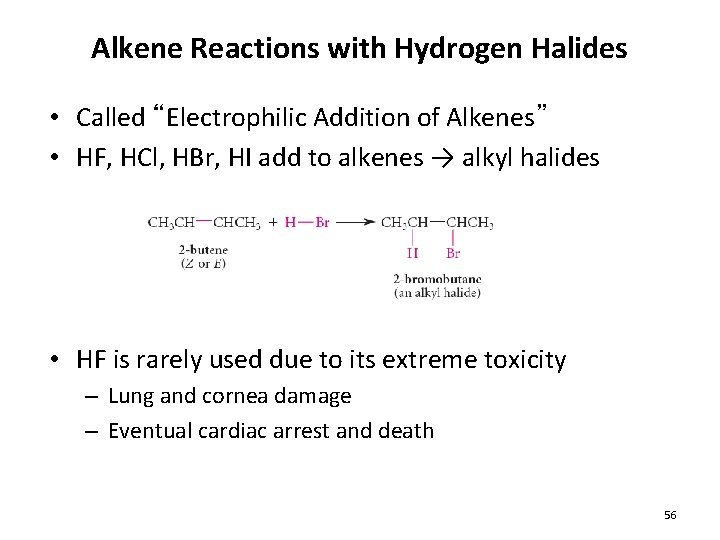
Alkene Reactions with Hydrogen Halides • Called “Electrophilic Addition of Alkenes” • HF, HCl, HBr, HI add to alkenes → alkyl halides • HF is rarely used due to its extreme toxicity – Lung and cornea damage – Eventual cardiac arrest and death 56
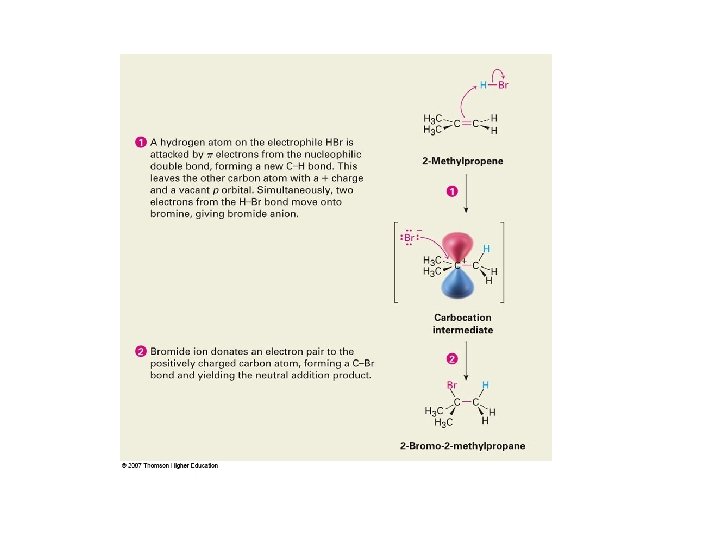
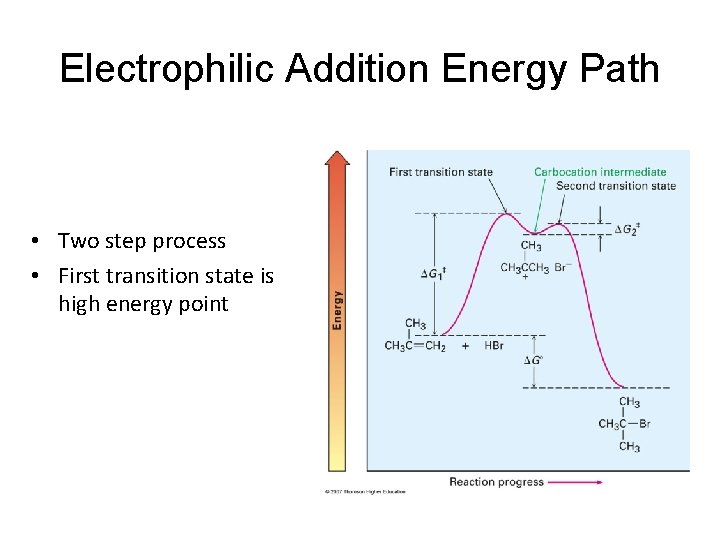
Electrophilic Addition Energy Path • Two step process • First transition state is high energy point
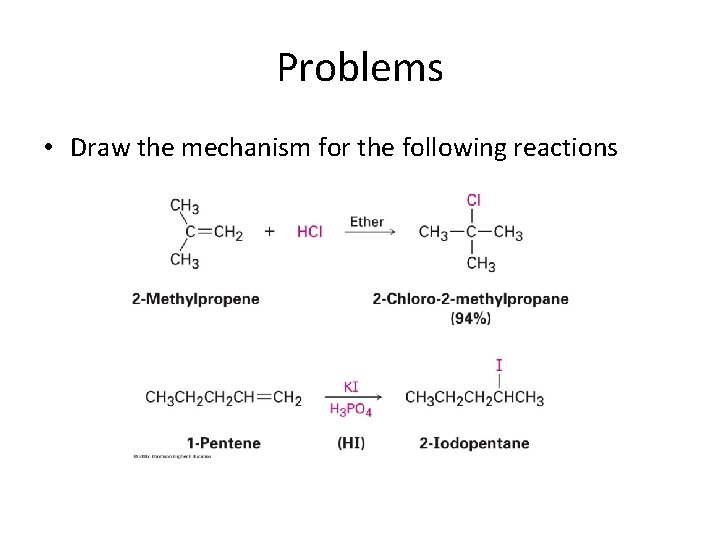
Problems • Draw the mechanism for the following reactions
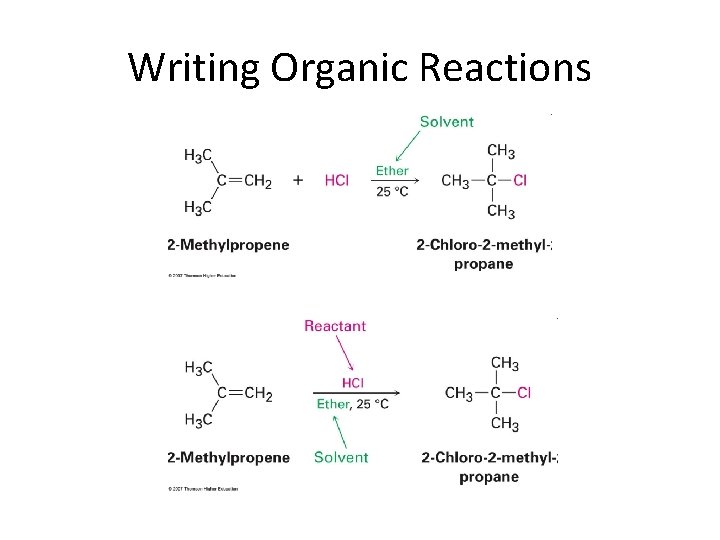
Writing Organic Reactions
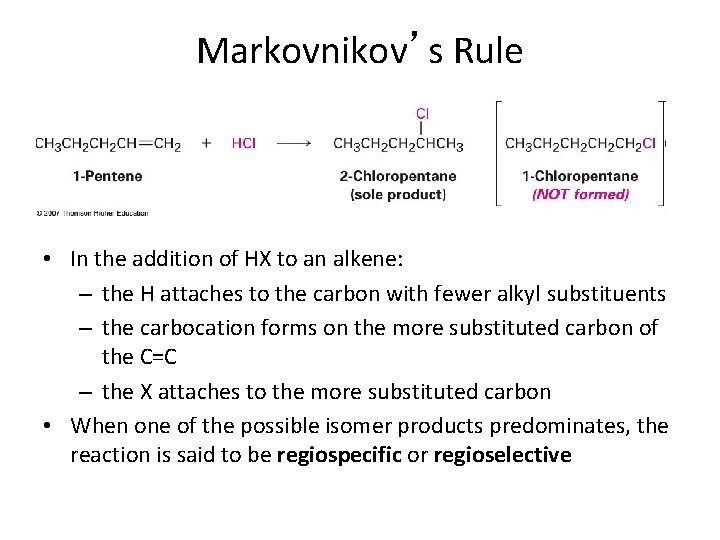
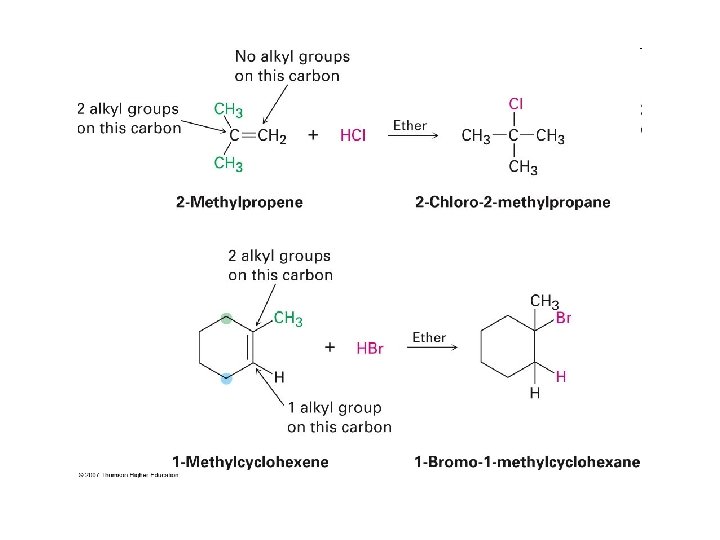
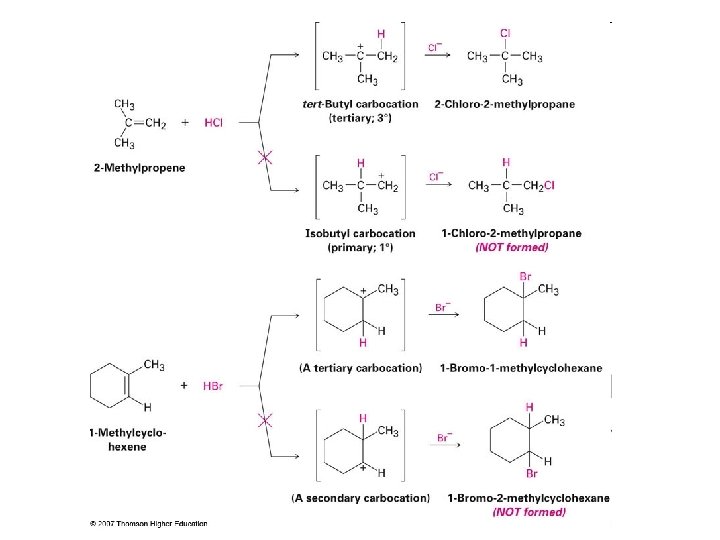
Markovnikov’s Rule • In the addition of HX to an alkene: – the H attaches to the carbon with fewer alkyl substituents – the carbocation forms on the more substituted carbon of the C=C – the X attaches to the more substituted carbon • When one of the possible isomer products predominates, the reaction is said to be regiospecific or regioselective
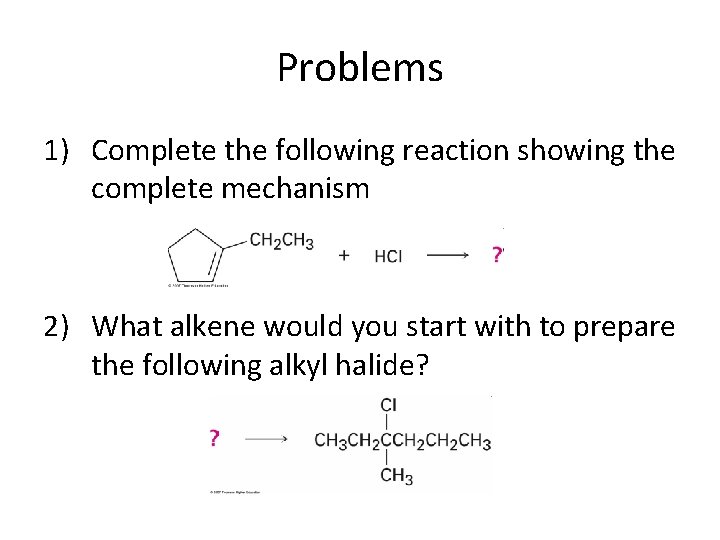
Problems 1) Complete the following reaction showing the complete mechanism 2) What alkene would you start with to prepare the following alkyl halide?
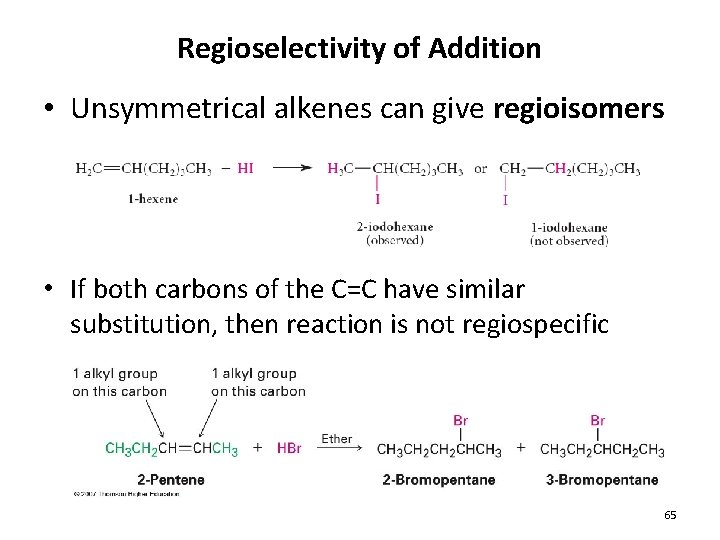
Regioselectivity of Addition • Unsymmetrical alkenes can give regioisomers • If both carbons of the C=C have similar substitution, then reaction is not regiospecific 65
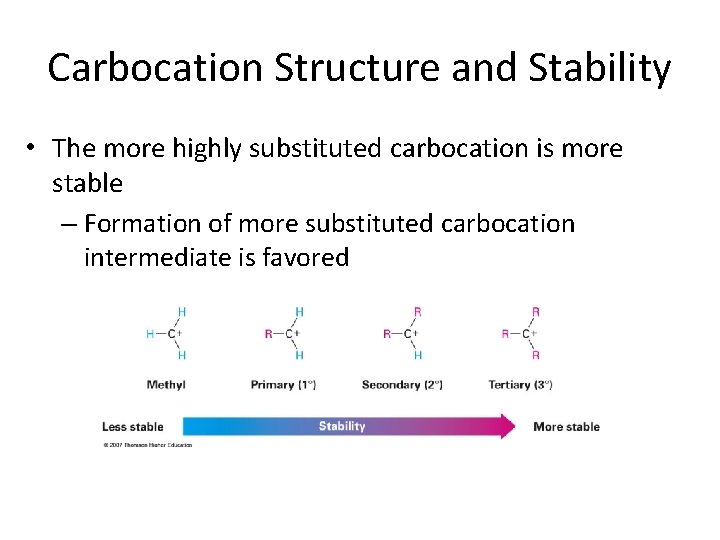
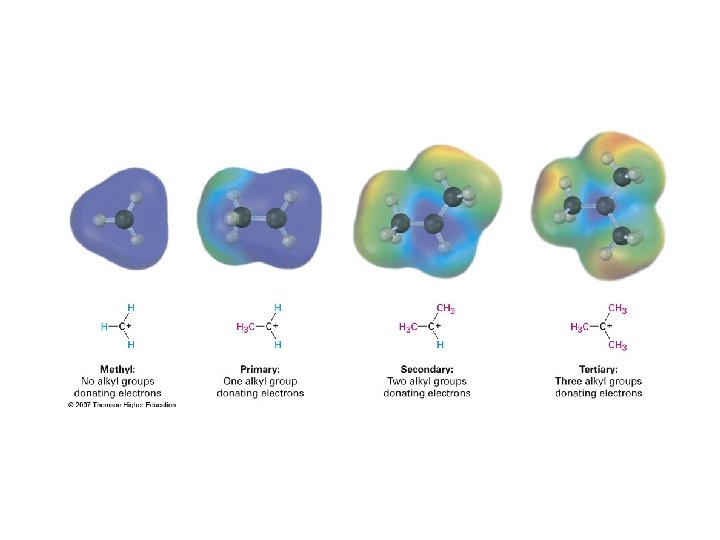
Carbocation Structure and Stability • The more highly substituted carbocation is more stable – Formation of more substituted carbocation intermediate is favored
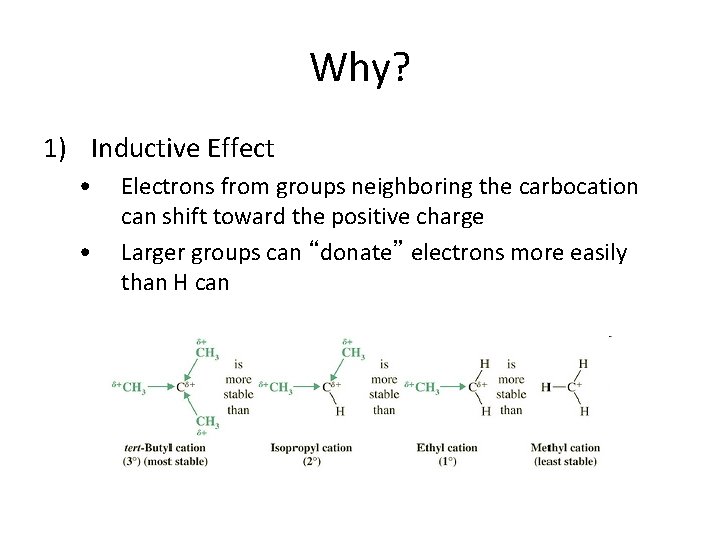
Why? 1) Inductive Effect • • Electrons from groups neighboring the carbocation can shift toward the positive charge Larger groups can “donate” electrons more easily than H can
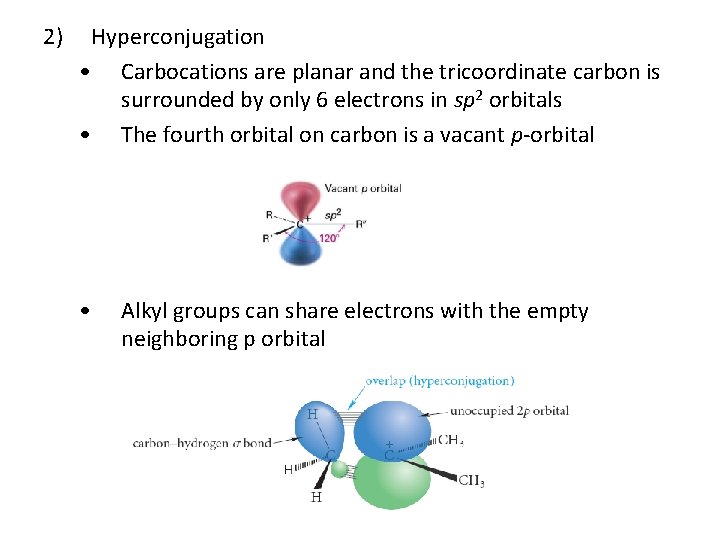
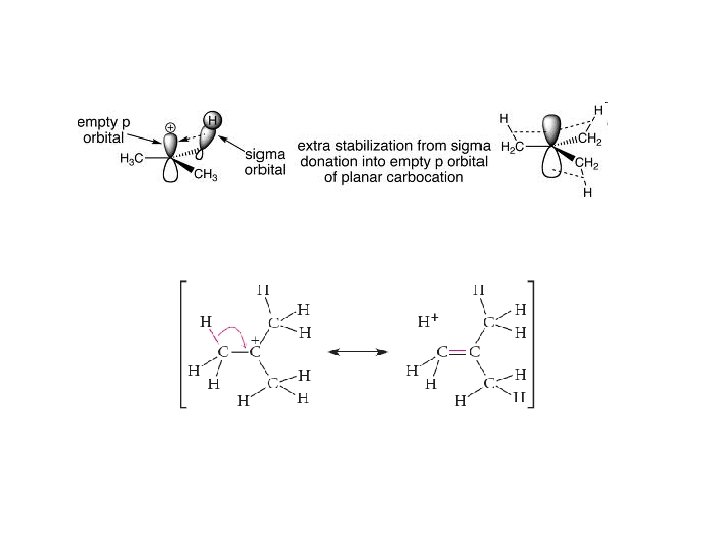
2) Hyperconjugation • Carbocations are planar and the tricoordinate carbon is surrounded by only 6 electrons in sp 2 orbitals • The fourth orbital on carbon is a vacant p-orbital • Alkyl groups can share electrons with the empty neighboring p orbital
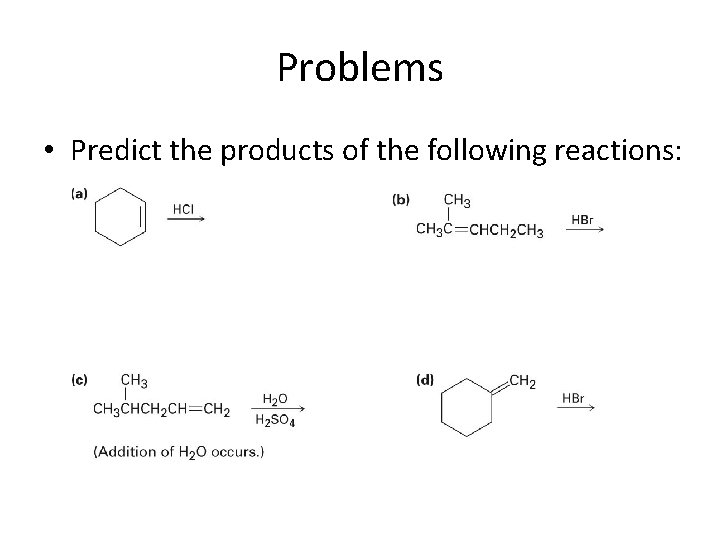
Problems • Predict the products of the following reactions:
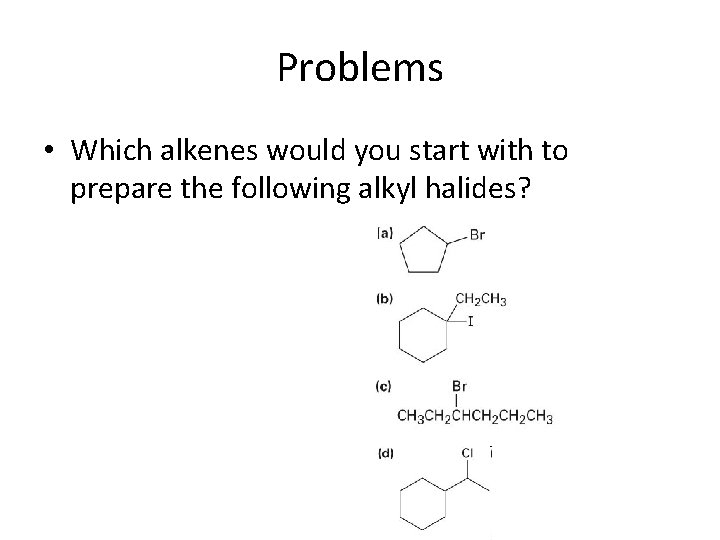
Problems • Which alkenes would you start with to prepare the following alkyl halides?
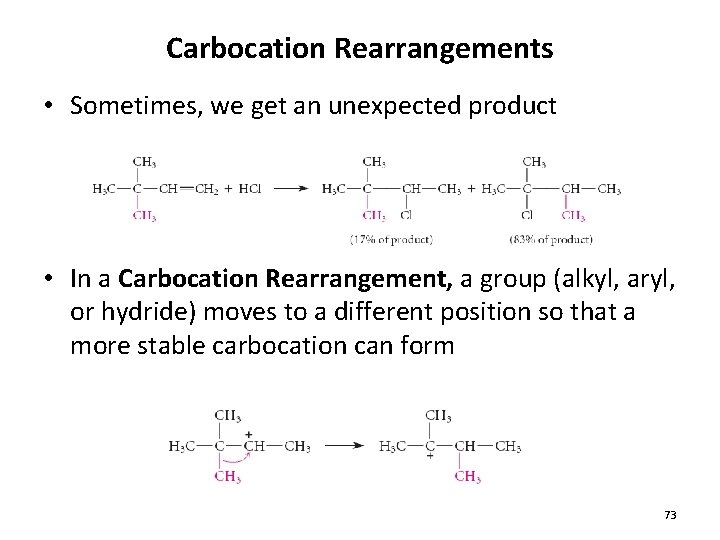
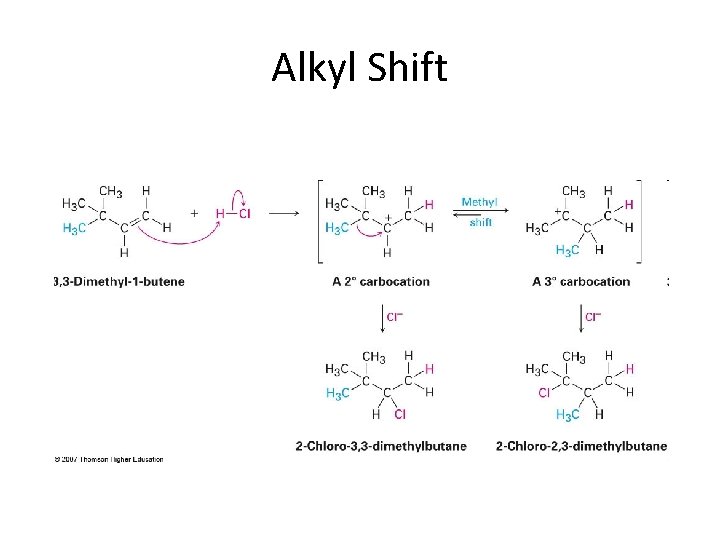
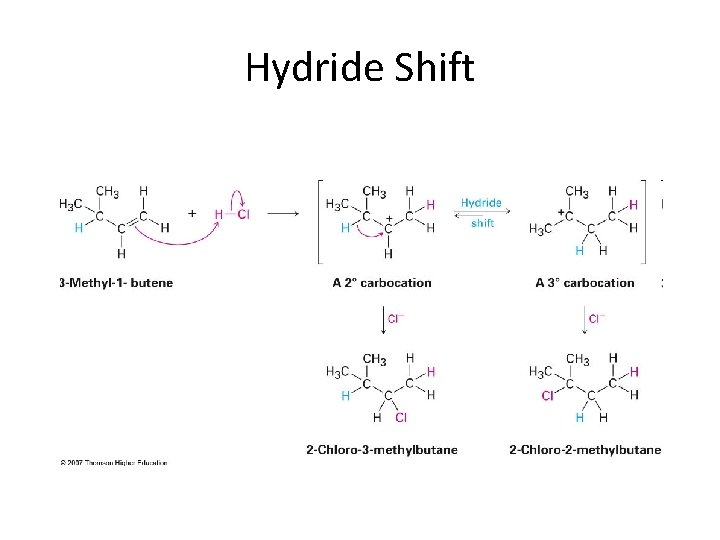
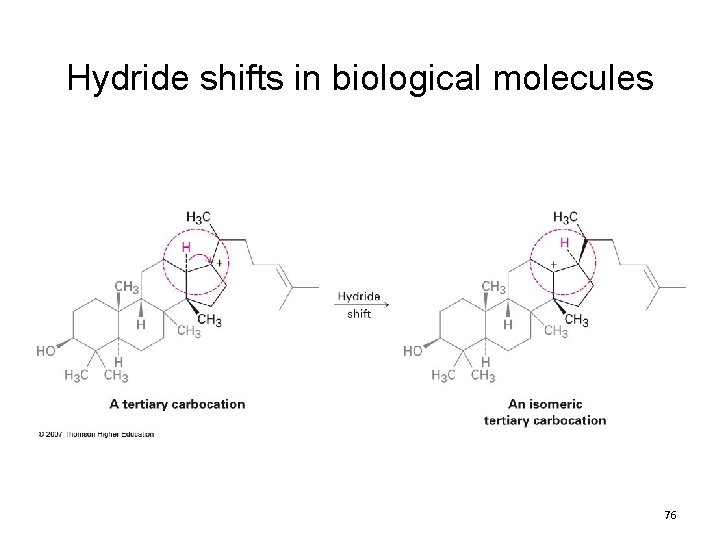
Carbocation Rearrangements • Sometimes, we get an unexpected product • In a Carbocation Rearrangement, a group (alkyl, aryl, or hydride) moves to a different position so that a more stable carbocation can form 73
Alkyl Shift
Hydride Shift
Hydride shifts in biological molecules 76
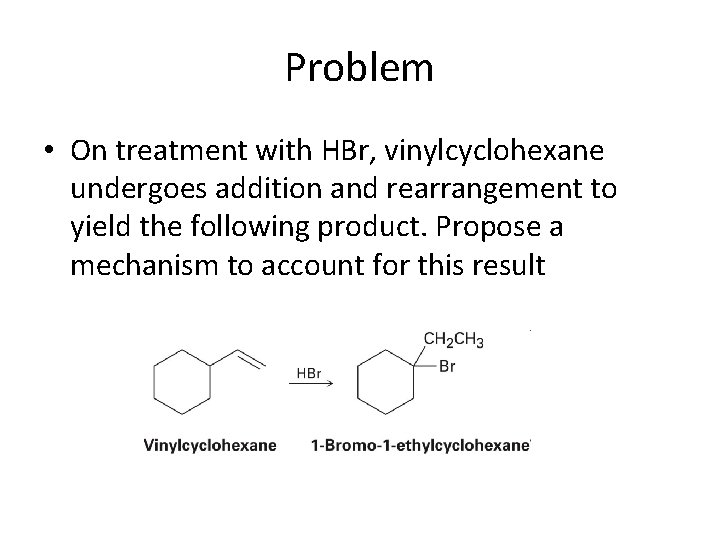
Problem • On treatment with HBr, vinylcyclohexane undergoes addition and rearrangement to yield the following product. Propose a mechanism to account for this result
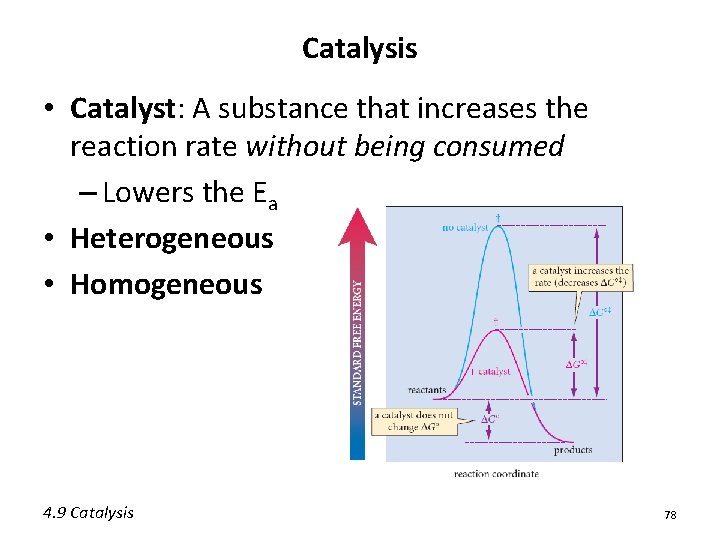
Catalysis • Catalyst: A substance that increases the reaction rate without being consumed – Lowers the Ea • Heterogeneous • Homogeneous 4. 9 Catalysis 78
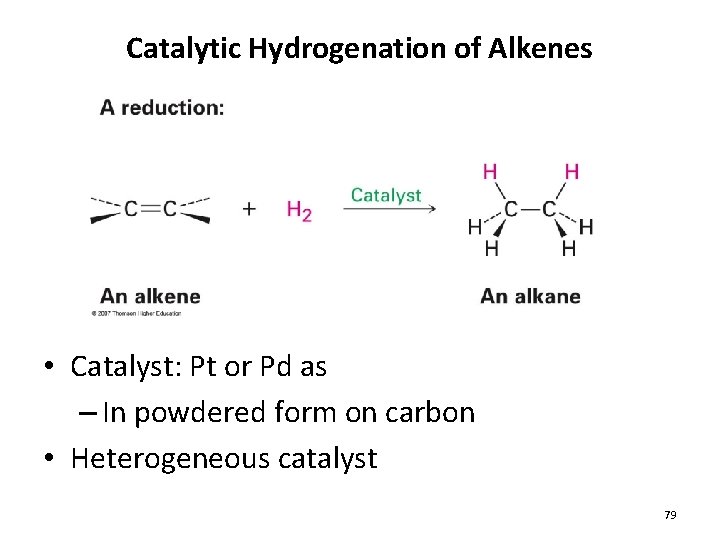
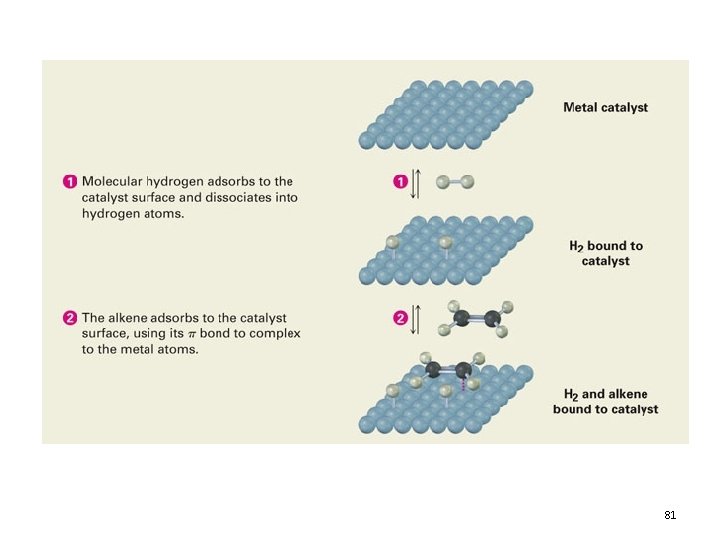
Catalytic Hydrogenation of Alkenes • Catalyst: Pt or Pd as – In powdered form on carbon • Heterogeneous catalyst 79
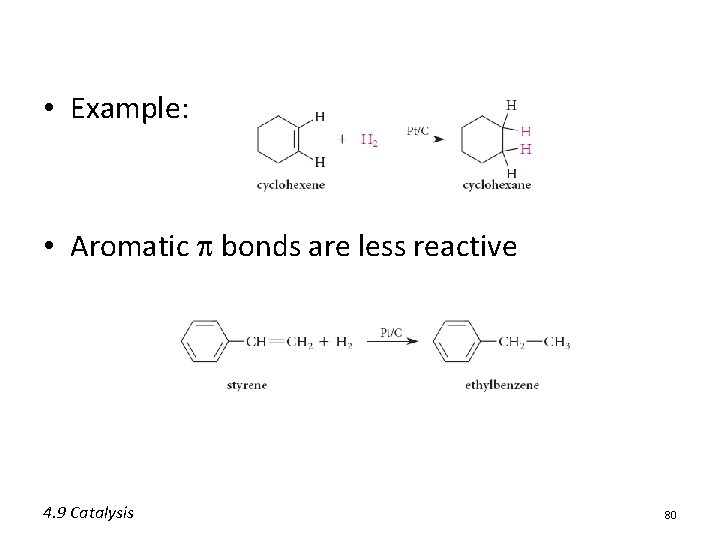
• Example: • Aromatic bonds are less reactive 4. 9 Catalysis 80
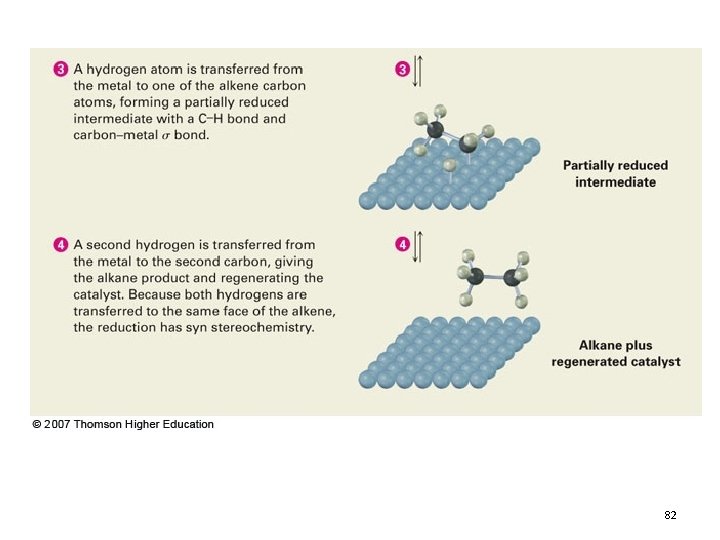
81
82
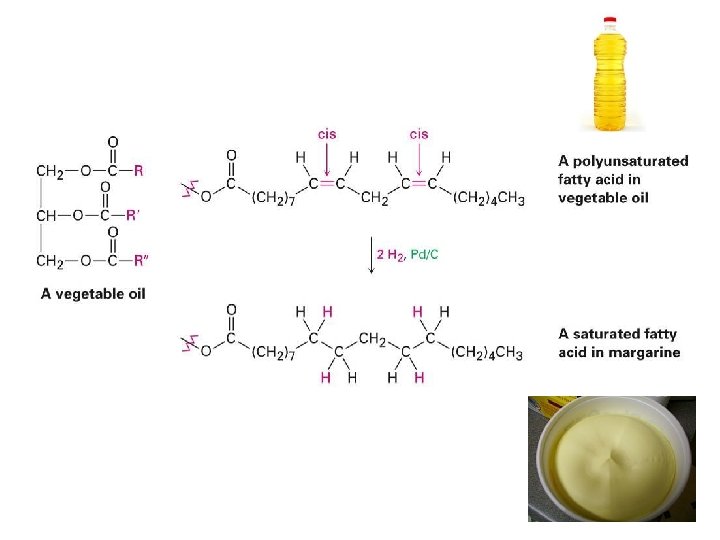
83
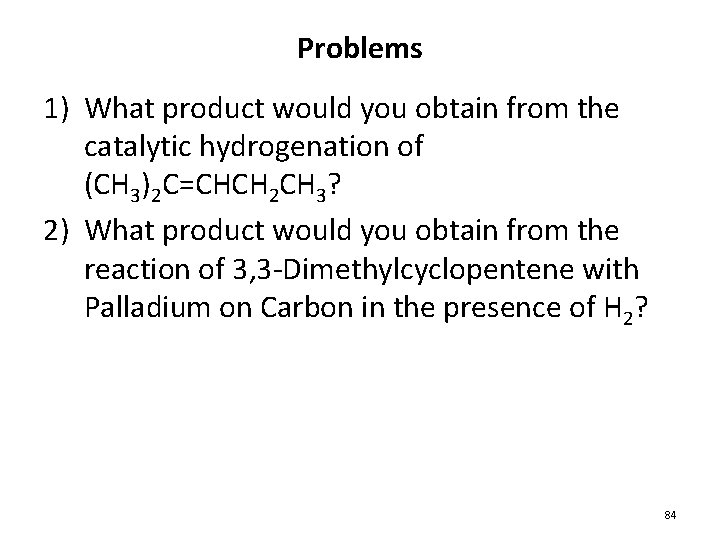
Problems 1) What product would you obtain from the catalytic hydrogenation of (CH 3)2 C=CHCH 2 CH 3? 2) What product would you obtain from the reaction of 3, 3 -Dimethylcyclopentene with Palladium on Carbon in the presence of H 2? 84
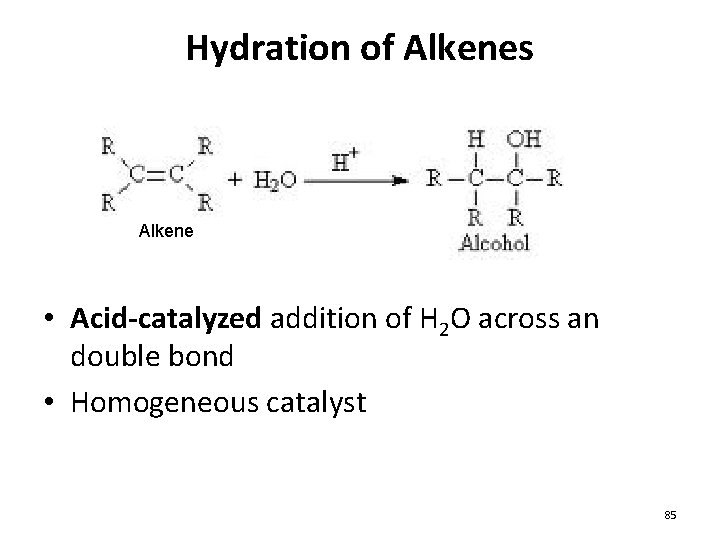
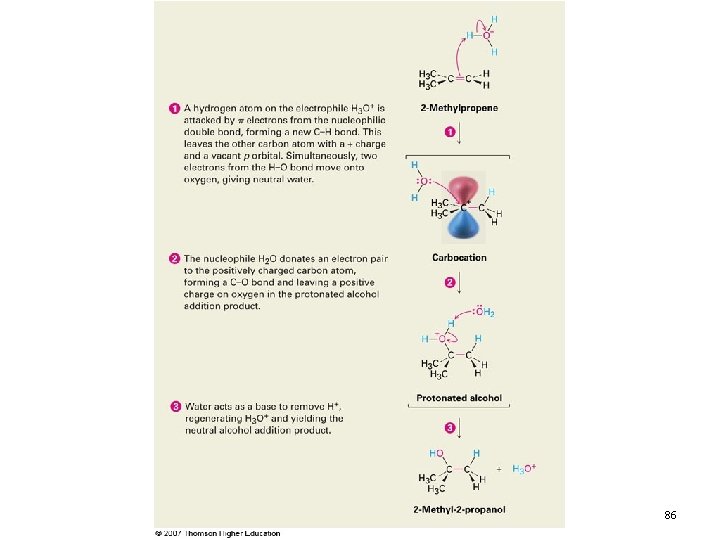
Hydration of Alkenes Alkene • Acid-catalyzed addition of H 2 O across an double bond • Homogeneous catalyst 85
86
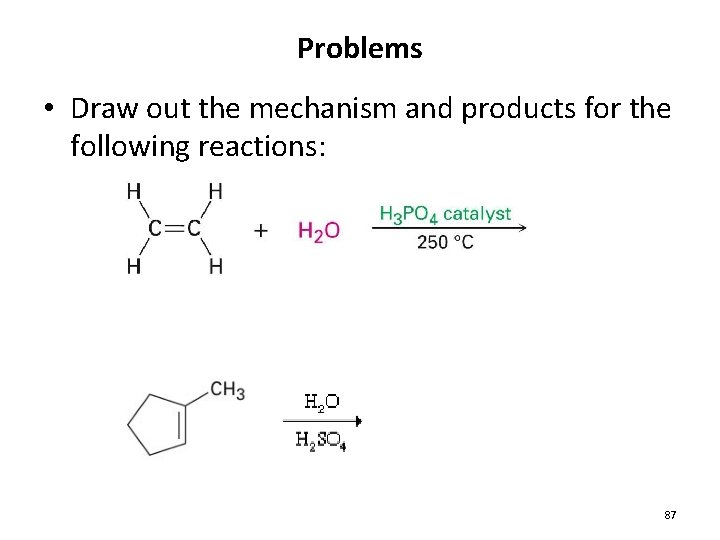
Problems • Draw out the mechanism and products for the following reactions: 87
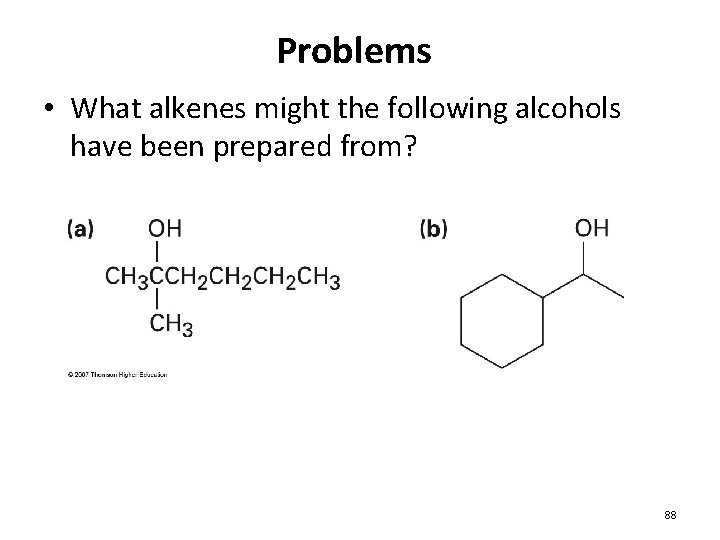
Problems • What alkenes might the following alcohols have been prepared from? 88
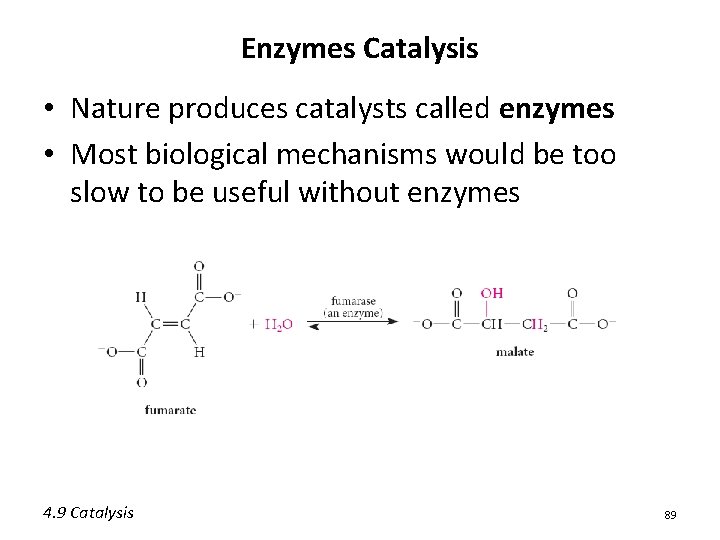
Enzymes Catalysis • Nature produces catalysts called enzymes • Most biological mechanisms would be too slow to be useful without enzymes 4. 9 Catalysis 89
Principle of Microscopic Reversibility • Generally, the reverse reaction follows the exact reverse of forward mechanism • Dehydration is the reverse of hydration 4. 9 Catalysis 90
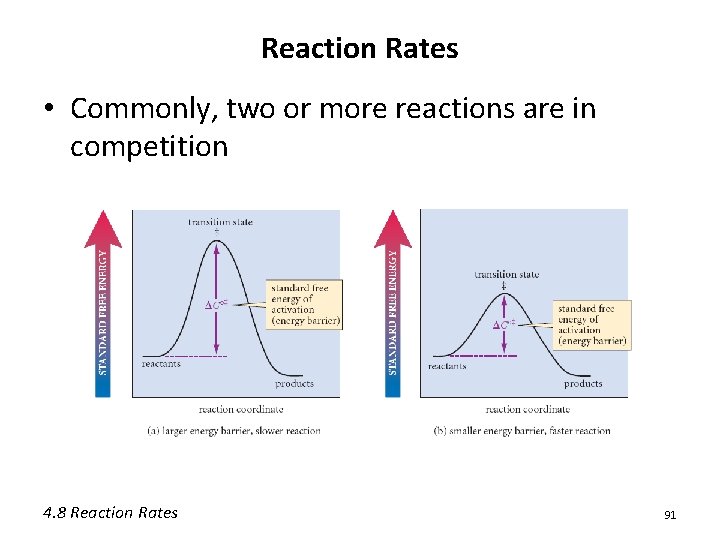
Reaction Rates • Commonly, two or more reactions are in competition 4. 8 Reaction Rates 91
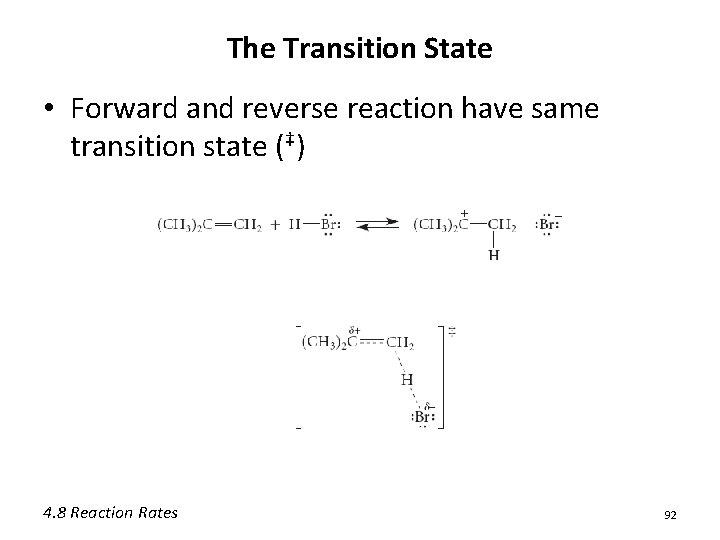
The Transition State • Forward and reverse reaction have same transition state (‡) 4. 8 Reaction Rates 92
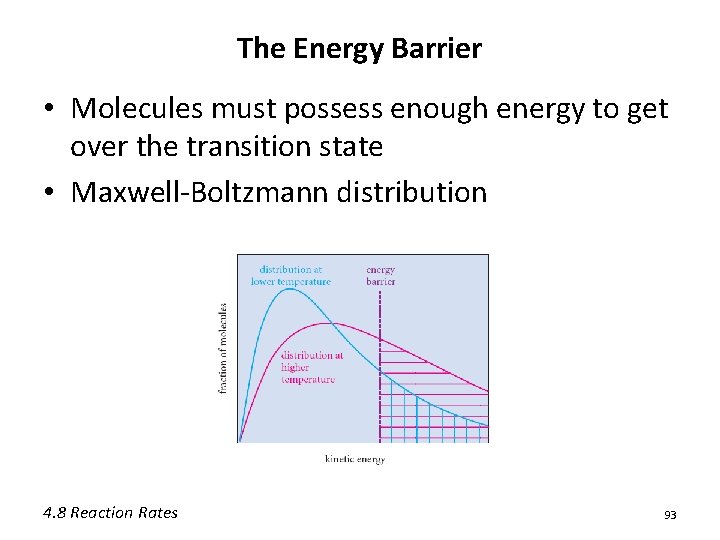
The Energy Barrier • Molecules must possess enough energy to get over the transition state • Maxwell-Boltzmann distribution 4. 8 Reaction Rates 93
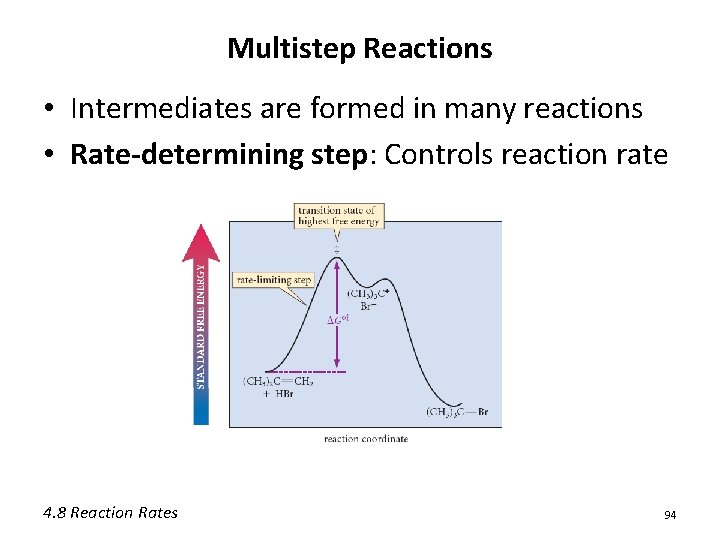
Multistep Reactions • Intermediates are formed in many reactions • Rate-determining step: Controls reaction rate 4. 8 Reaction Rates 94
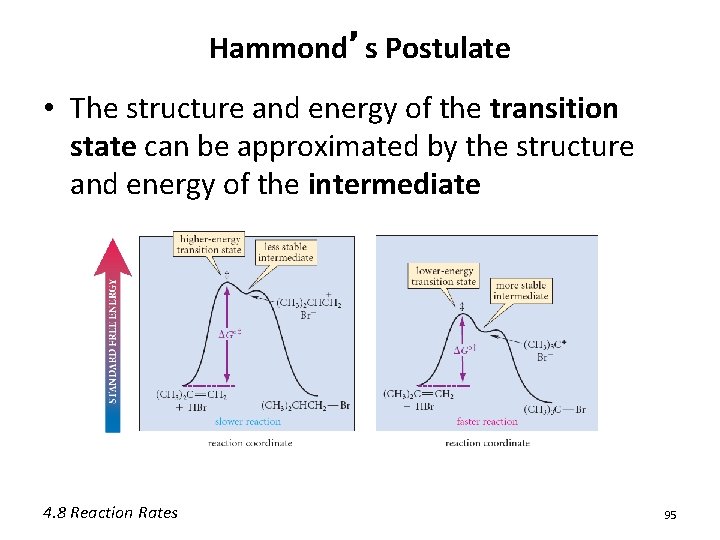
Hammond’s Postulate • The structure and energy of the transition state can be approximated by the structure and energy of the intermediate 4. 8 Reaction Rates 95