WARM UP 1 Radium is an element found
- Slides: 6
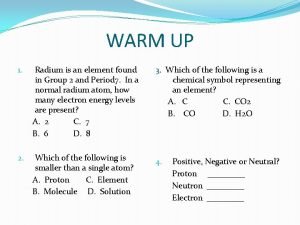
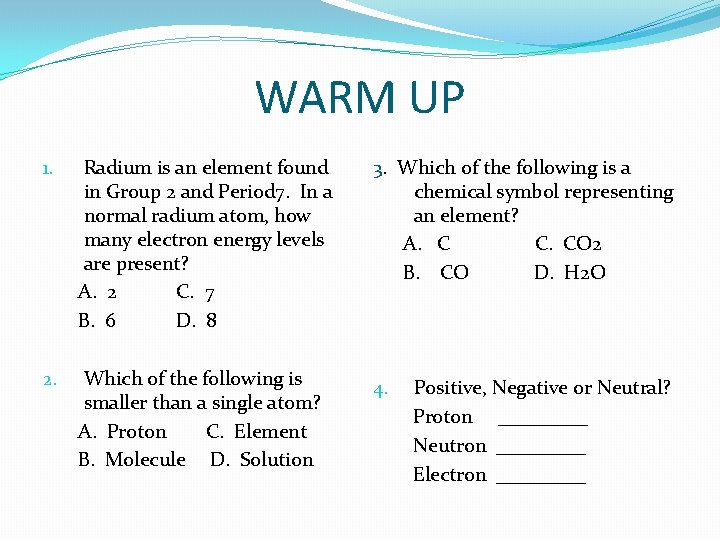
WARM UP 1. Radium is an element found in Group 2 and Period 7. In a normal radium atom, how many electron energy levels are present? A. 2 C. 7 B. 6 D. 8 2. Which of the following is smaller than a single atom? A. Proton C. Element B. Molecule D. Solution 3. Which of the following is a chemical symbol representing an element? A. C C. CO 2 B. CO D. H 2 O 4. Positive, Negative or Neutral? Proton _____ Neutron _____ Electron _____
Chemical Properties February 24, 2011
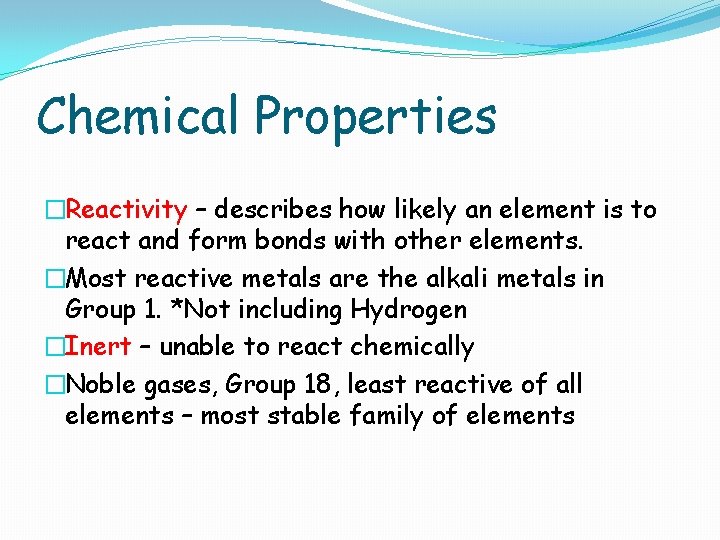
Chemical Properties �Reactivity – describes how likely an element is to react and form bonds with other elements. �Most reactive metals are the alkali metals in Group 1. *Not including Hydrogen �Inert – unable to react chemically �Noble gases, Group 18, least reactive of all elements – most stable family of elements
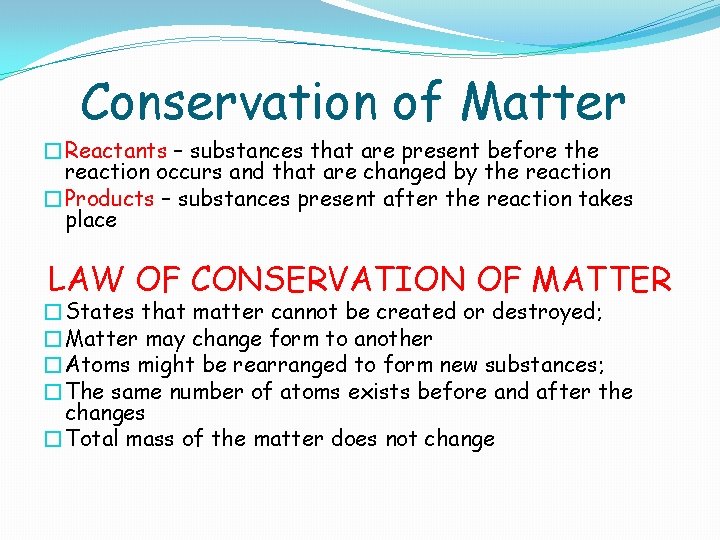
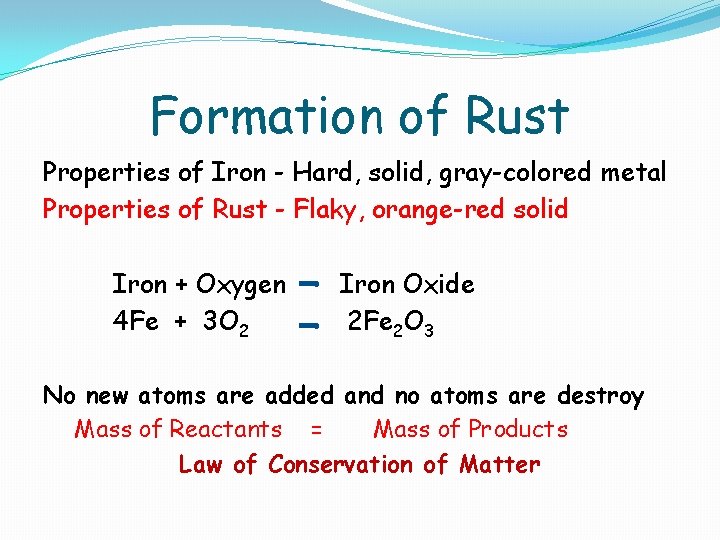
Conservation of Matter �Reactants – substances that are present before the reaction occurs and that are changed by the reaction �Products – substances present after the reaction takes place LAW OF CONSERVATION OF MATTER �States that matter cannot be created or destroyed; �Matter may change form to another �Atoms might be rearranged to form new substances; �The same number of atoms exists before and after the changes �Total mass of the matter does not change
Formation of Rust Properties of Iron - Hard, solid, gray-colored metal Properties of Rust - Flaky, orange-red solid Iron + Oxygen 4 Fe + 3 O 2 Iron Oxide 2 Fe 2 O 3 No new atoms are added and no atoms are destroy Mass of Reactants = Mass of Products Law of Conservation of Matter
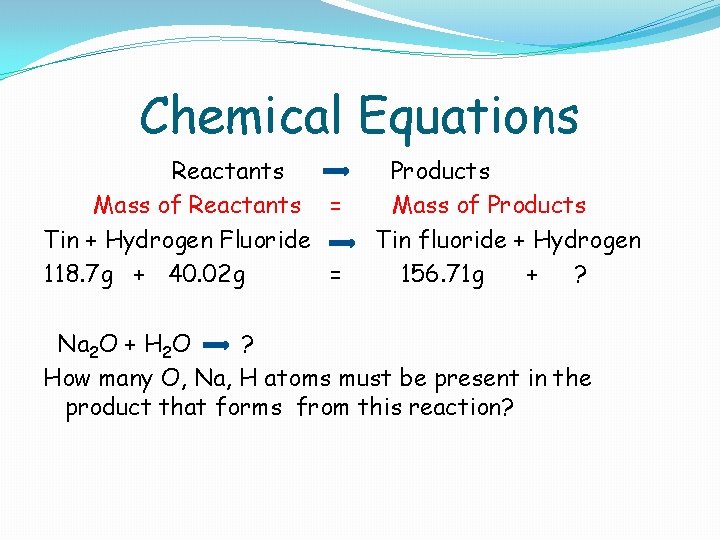
Chemical Equations Reactants Mass of Reactants = Tin + Hydrogen Fluoride 118. 7 g + 40. 02 g = Products Mass of Products Tin fluoride + Hydrogen 156. 71 g + ? Na 2 O + H 2 O ? How many O, Na, H atoms must be present in the product that forms from this reaction?