University of Minnesota The Healthcare Marketplace Medical Industry








- Slides: 65
University of Minnesota The Healthcare Marketplace Medical Industry Leadership Institute Course: MILI 6990/5990 Spring Semester A, 2015 Stephen T. Parente, Ph. D. Carlson School of Management Department of Finance sparente@umn. edu
Lecture #1 Overview • Course Overview – Syllabus – Faculty and student introductions • The U. S. healthcare marketplace: an introduction
Course Overview – Basic Info • Instructor - Stephen T. Parente, Ph. D – – Sparente@umn. edu Phone: 612 -624 -1391 Office: 3 -279 CSOM Hours: by appointment (usually on Wednesdays) • Website: http: //ehealthecon. hsinetwork. com/mili 6990_2015. html • Lectures: every Monday
Course Overview - Readings • Set of readings that will be made available to you electronically. • You may need to get articles electronically through the library. • Additional material may be handed out in class.
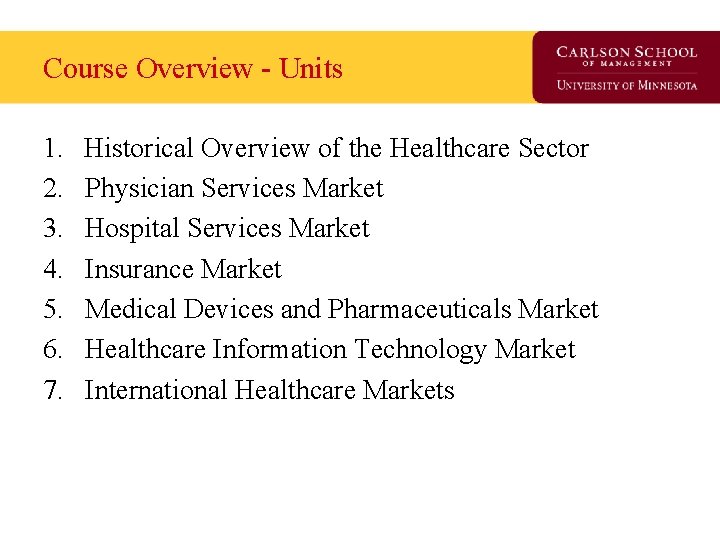
Course Overview - Units 1. 2. 3. 4. 5. 6. 7. Historical Overview of the Healthcare Sector Physician Services Market Hospital Services Market Insurance Market Medical Devices and Pharmaceuticals Market Healthcare Information Technology Market International Healthcare Markets
Course Overview - Units • Each unit will include: – Introductory lecture – Research and practitioner findings – Emerging trends and market drivers
Student Evaluation • Market Sizing Memo (20%) – Data driven, Entrepreneurial/venture perspective – Due on 3/6/2015 at 4 pm (or sooner) • Midterm Exam (25%) – In-class, closed-book, closed-note, 2/25/2013 – Mix of definitions, short answer, and essay questions – No make-up exams given unless pre-approved by an instructor. • Market Opportunity Research Paper (45%) – 1 page topic proposal due on 2/16/2015 – Final paper due on 3/9/2015, by 4 pm • Participation (10%)
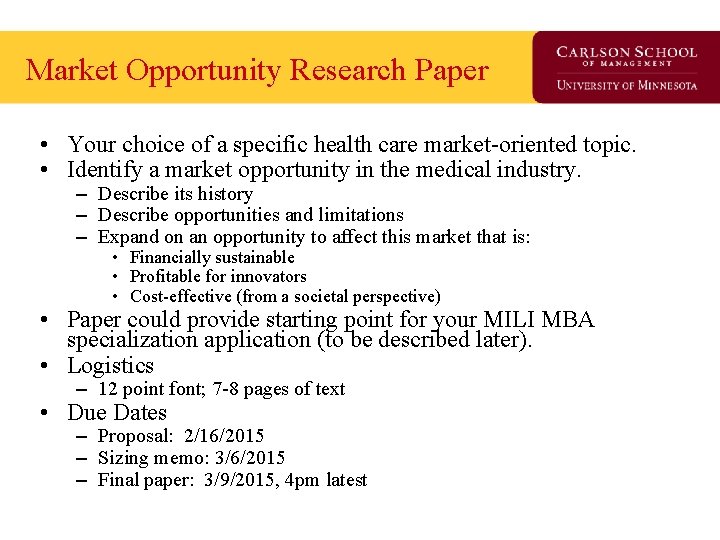
Market Opportunity Research Paper • Your choice of a specific health care market-oriented topic. • Identify a market opportunity in the medical industry. – Describe its history – Describe opportunities and limitations – Expand on an opportunity to affect this market that is: • Financially sustainable • Profitable for innovators • Cost-effective (from a societal perspective) • Paper could provide starting point for your MILI MBA specialization application (to be described later). • Logistics – 12 point font; 7 -8 pages of text • Due Dates – Proposal: 2/16/2015 – Sizing memo: 3/6/2015 – Final paper: 3/9/2015, 4 pm latest
Contractual Responsibilities • Student – Attend lectures – Engage in discussion – Learn by personal reading and investigation of research topic of choice • Instructor – Be prepared for lectures – Listen to students – Provide an exchange for ideas
Questions?
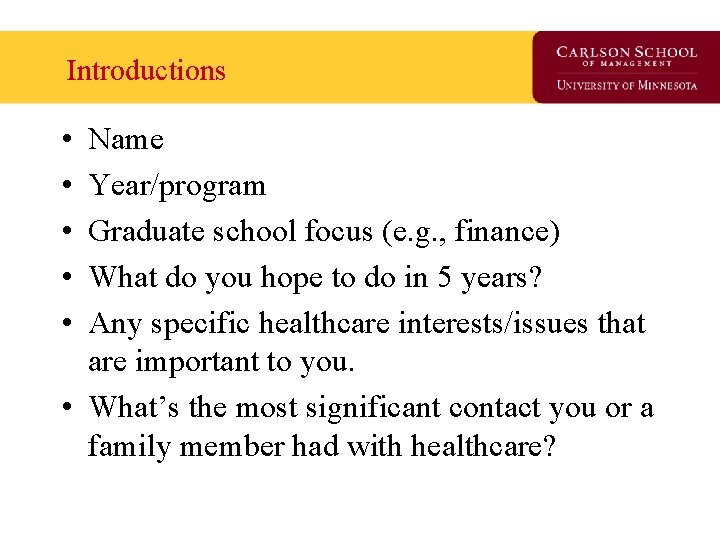
Introductions • • • Name Year/program Graduate school focus (e. g. , finance) What do you hope to do in 5 years? Any specific healthcare interests/issues that are important to you. • What’s the most significant contact you or a family member had with healthcare?
An Introduction to the U. S. Healthcare Marketplace
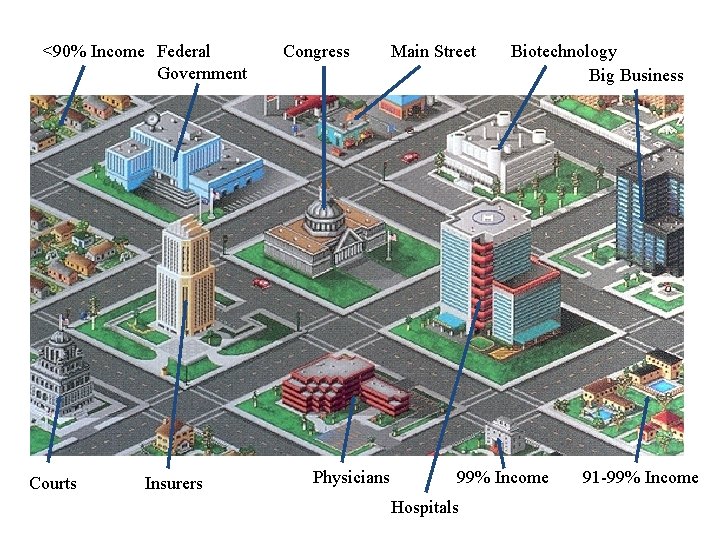
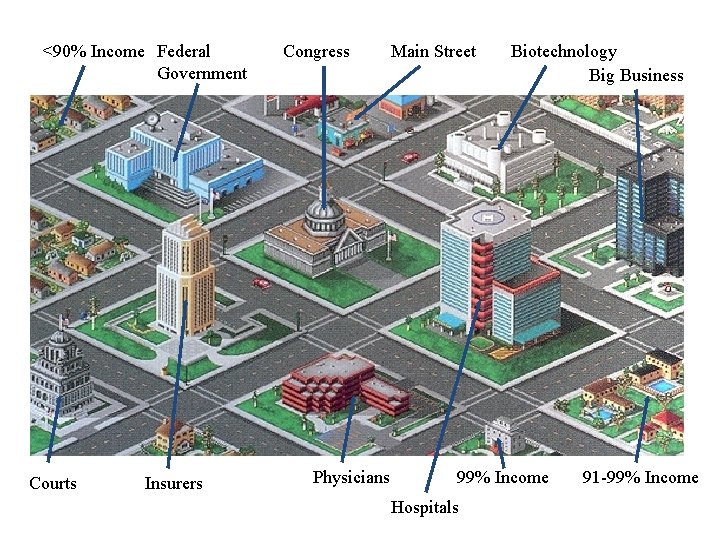
<90% Income Federal Government Courts Insurers Congress Physicians Main Street Biotechnology Big Business 99% Income Hospitals 91 -99% Income
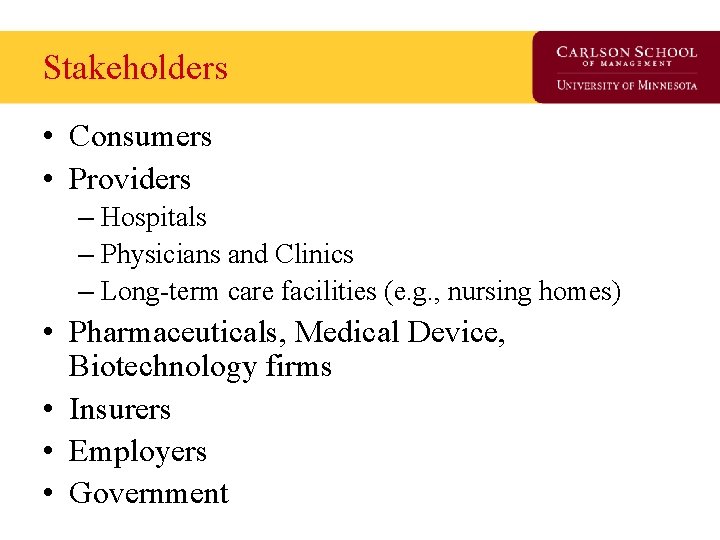
Stakeholders • Consumers • Providers – Hospitals – Physicians and Clinics – Long-term care facilities (e. g. , nursing homes) • Pharmaceuticals, Medical Device, Biotechnology firms • Insurers • Employers • Government
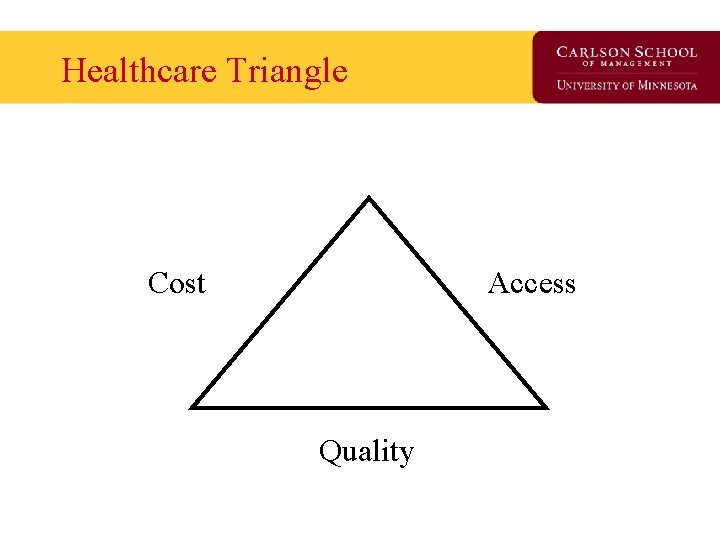
Healthcare Triangle Cost Access Quality
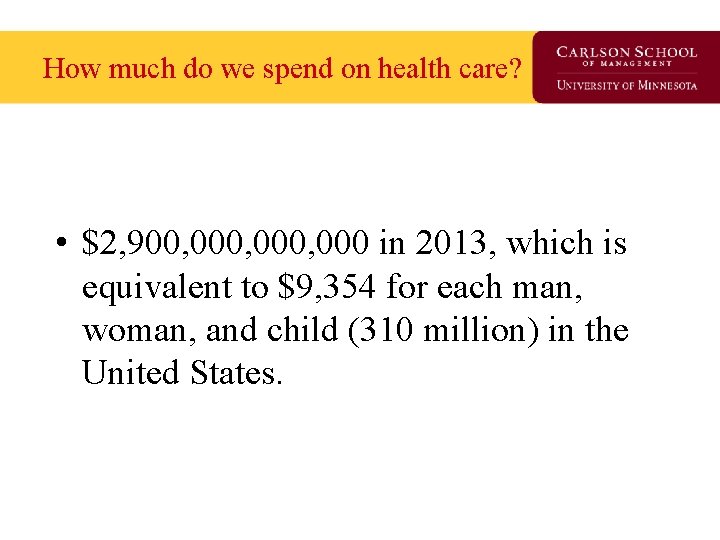
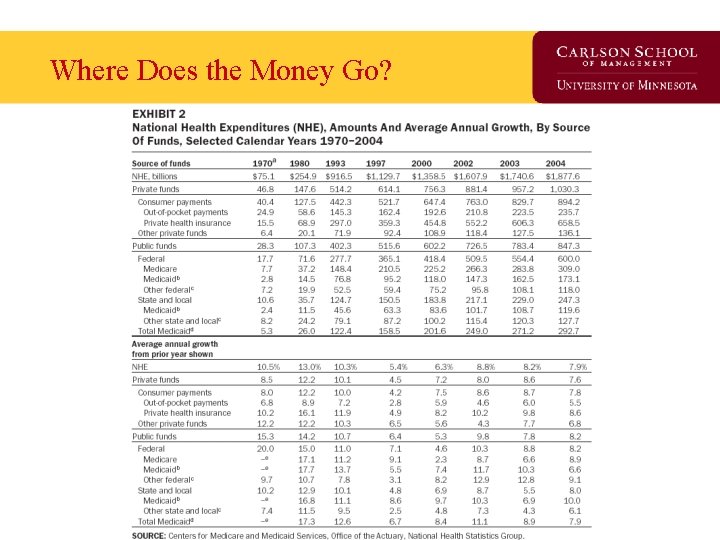
How much do we spend on health care? • $2, 900, 000, 000 in 2013, which is equivalent to $9, 354 for each man, woman, and child (310 million) in the United States.
What factors drive health care spending?
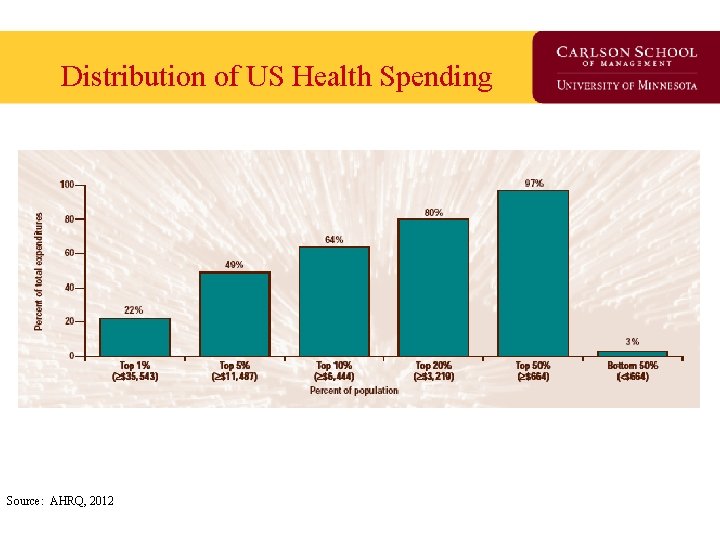
Distribution of US Health Spending Source: AHRQ, 2012
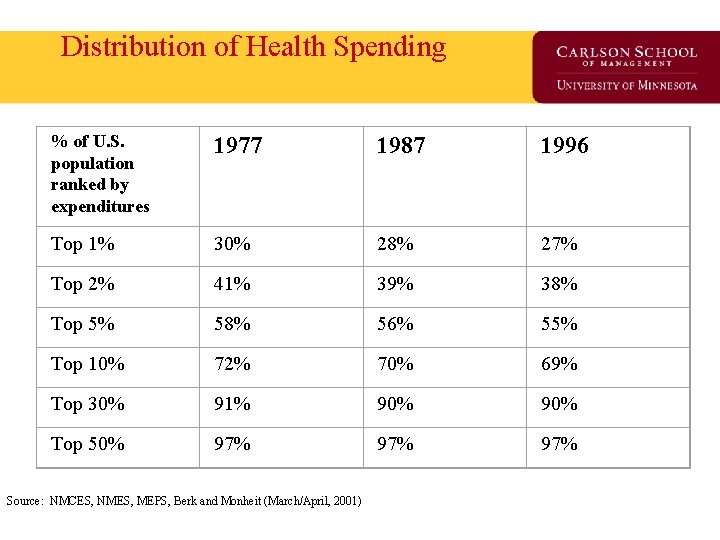
Distribution of Health Spending % of U. S. population ranked by expenditures 1977 1987 1996 Top 1% 30% 28% 27% Top 2% 41% 39% 38% Top 5% 58% 56% 55% Top 10% 72% 70% 69% Top 30% 91% 90% Top 50% 97% 97% Source: NMCES, NMES, MEPS, Berk and Monheit (March/April, 2001)
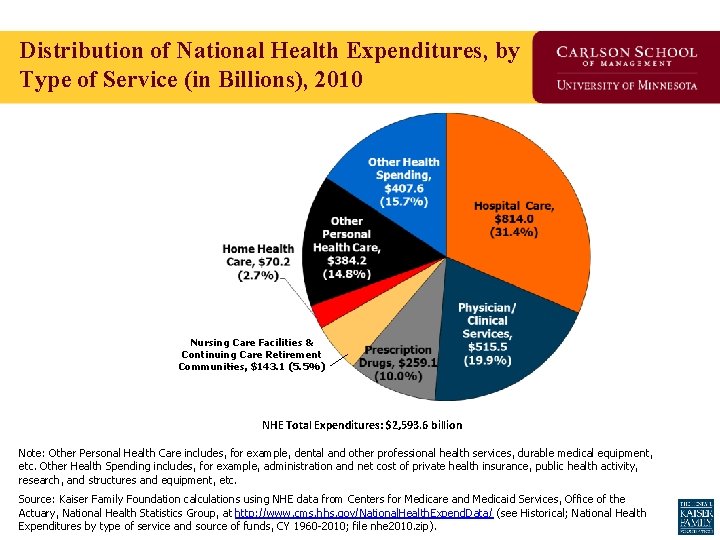
Distribution of National Health Expenditures, by Type of Service (in Billions), 2010 Nursing Care Facilities & Continuing Care Retirement Communities, $143. 1 (5. 5%) NHE Total Expenditures: $2, 593. 6 billion Note: Other Personal Health Care includes, for example, dental and other professional health services, durable medical equipment, etc. Other Health Spending includes, for example, administration and net cost of private health insurance, public health activity, research, and structures and equipment, etc. Source: Kaiser Family Foundation calculations using NHE data from Centers for Medicare and Medicaid Services, Office of the Actuary, National Health Statistics Group, at http: //www. cms. hhs. gov/National. Health. Expend. Data/ (see Historical; National Health Expenditures by type of service and source of funds, CY 1960 -2010; file nhe 2010. zip).
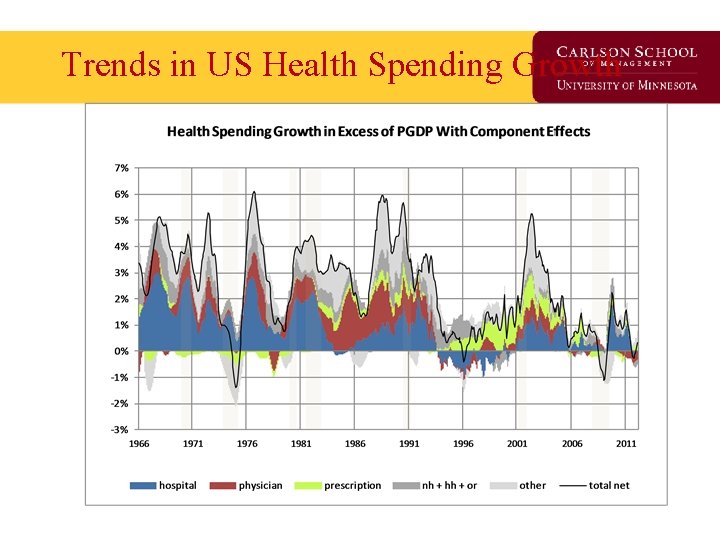
Trends in US Health Spending Growth
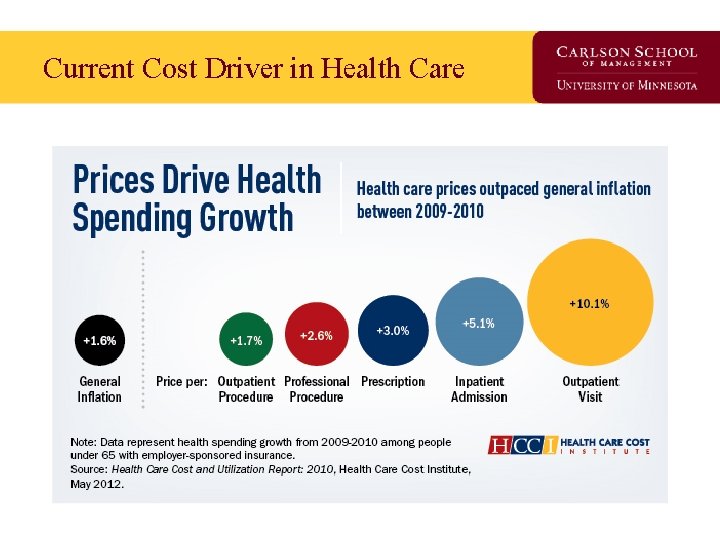
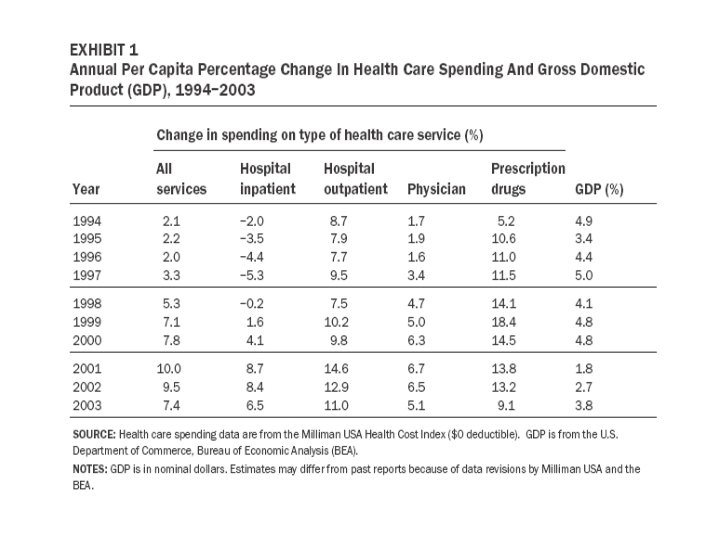
Current Cost Driver in Health Care
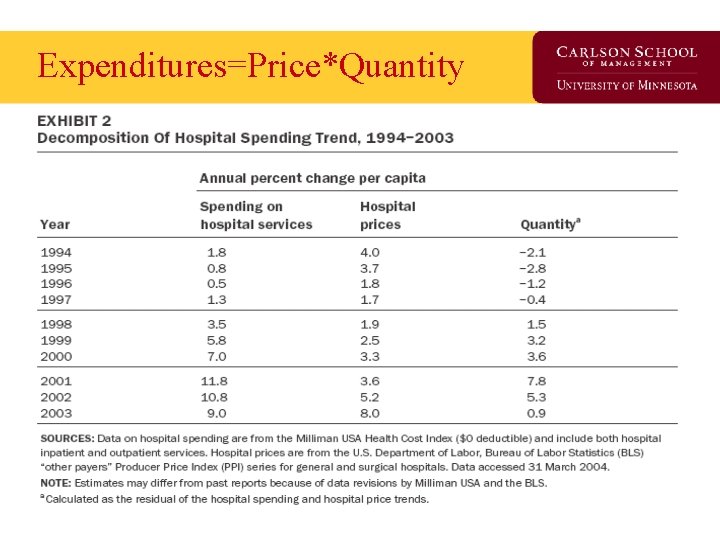
Expenditures=Price*Quantity
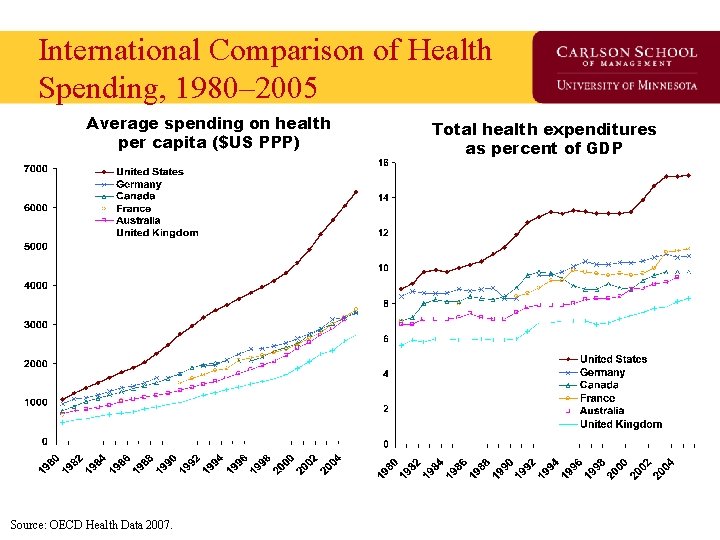
International Comparison of Health Spending, 1980– 2005 Average spending on health per capita ($US PPP) Source: OECD Health Data 2007. Total health expenditures as percent of GDP
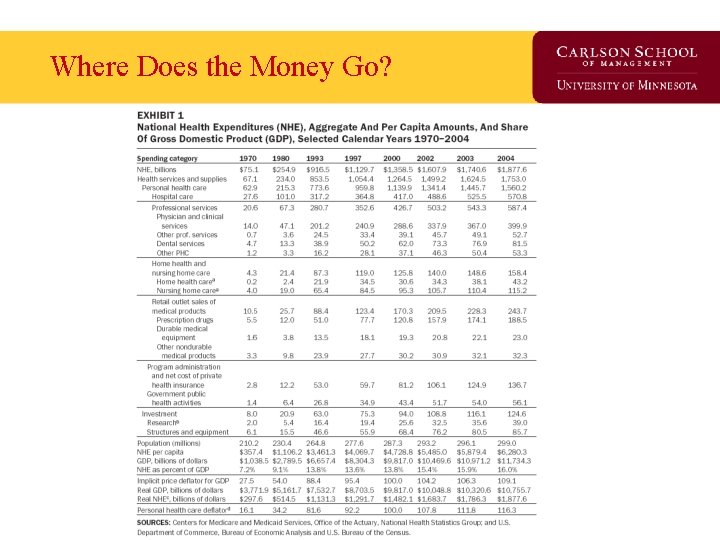
Where Does the Money Go?
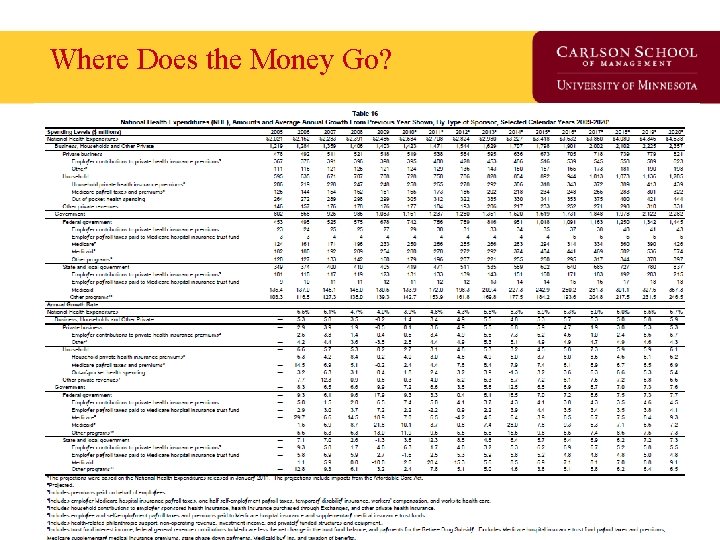
Where Does the Money Go?
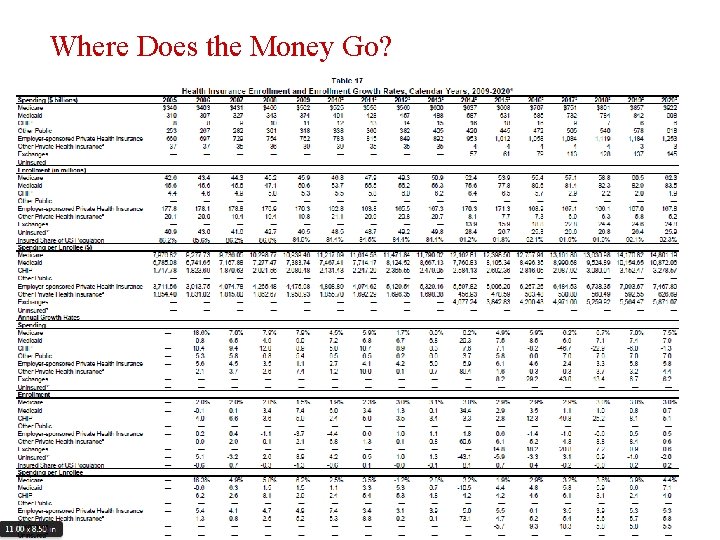
Where Does the Money Go?
Where Does the Money Go?
Healthcare Triangle Cost Access Quality
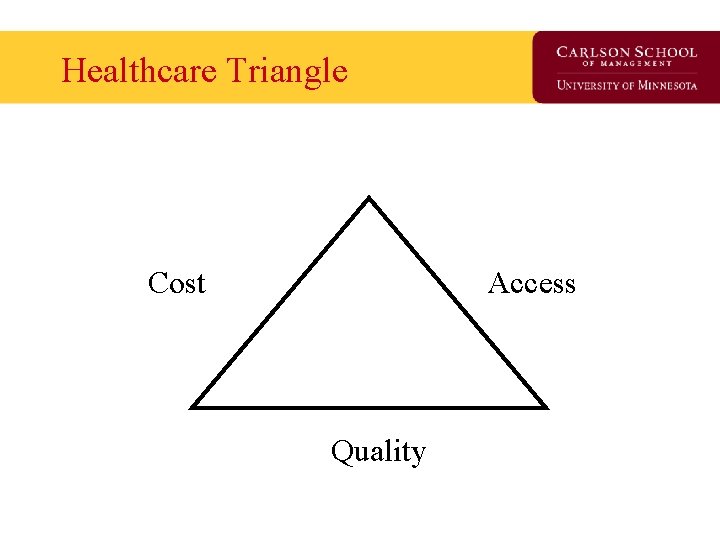
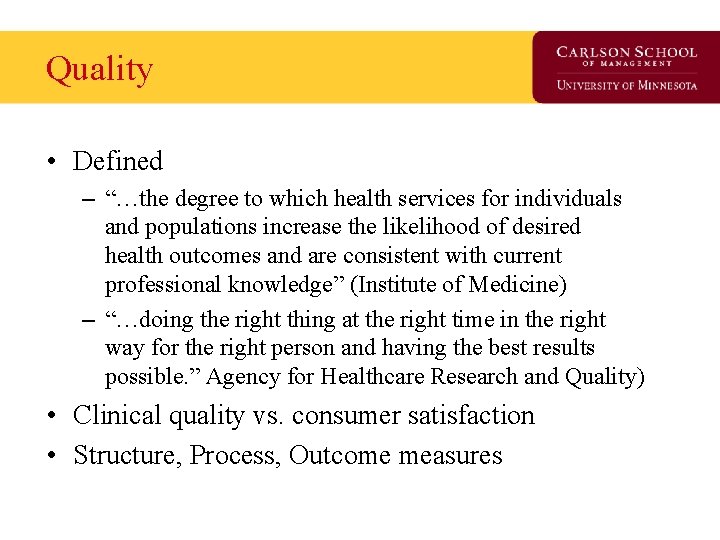
Quality • Defined – “…the degree to which health services for individuals and populations increase the likelihood of desired health outcomes and are consistent with current professional knowledge” (Institute of Medicine) – “…doing the right thing at the right time in the right way for the right person and having the best results possible. ” Agency for Healthcare Research and Quality) • Clinical quality vs. consumer satisfaction • Structure, Process, Outcome measures
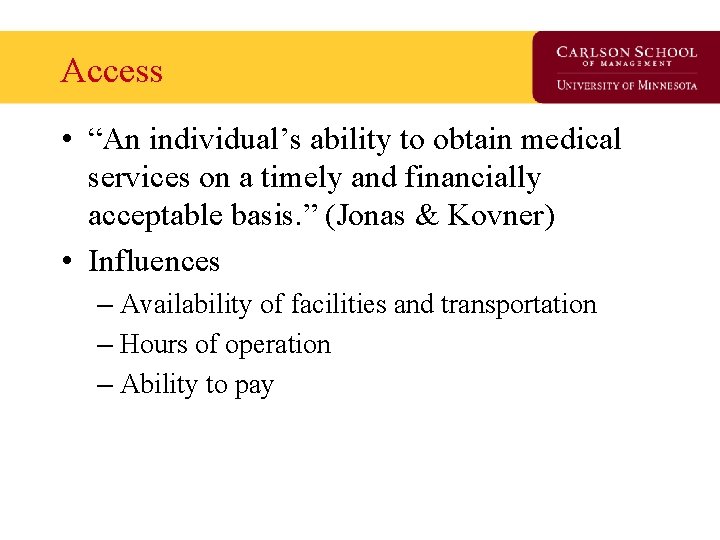
Access • “An individual’s ability to obtain medical services on a timely and financially acceptable basis. ” (Jonas & Kovner) • Influences – Availability of facilities and transportation – Hours of operation – Ability to pay
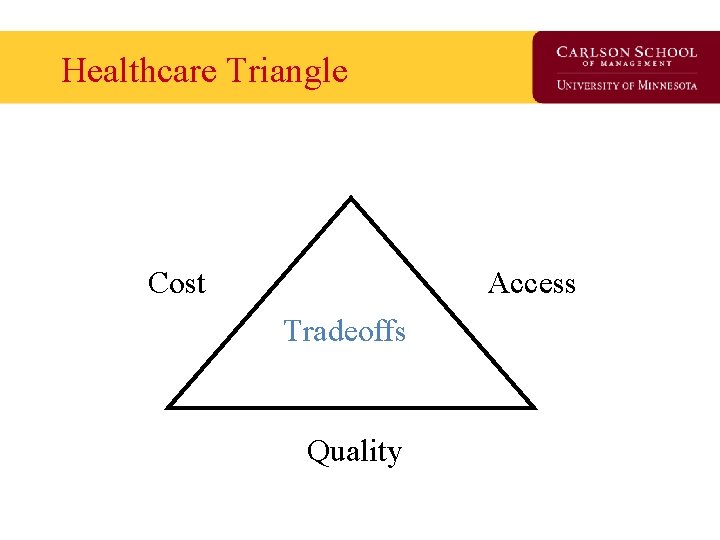
Healthcare Triangle Cost Access Tradeoffs Quality
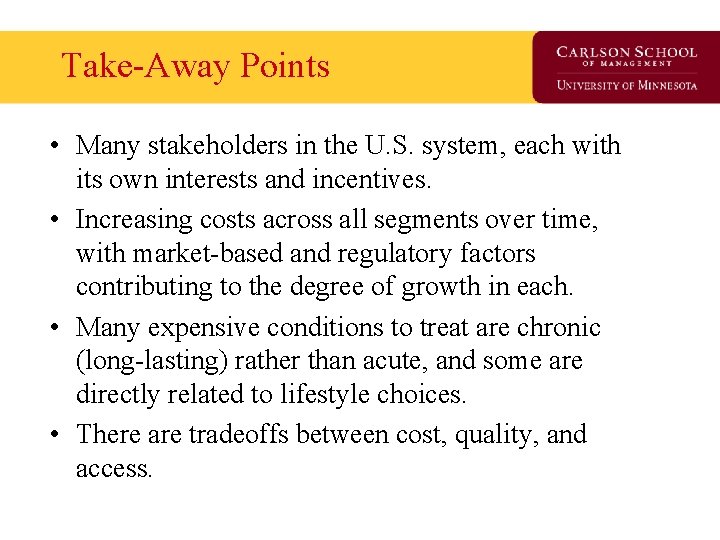
Take-Away Points • Many stakeholders in the U. S. system, each with its own interests and incentives. • Increasing costs across all segments over time, with market-based and regulatory factors contributing to the degree of growth in each. • Many expensive conditions to treat are chronic (long-lasting) rather than acute, and some are directly related to lifestyle choices. • There are tradeoffs between cost, quality, and access.
Small Group Discussion • Name three agents (other than patients) in the healthcare marketplace that are likely to be affected significantly by the current healthcare reform bills in the House and Senate. • Are they the same? • If the agents are the same, what are the differences in ‘policy prescriptions’?
Break
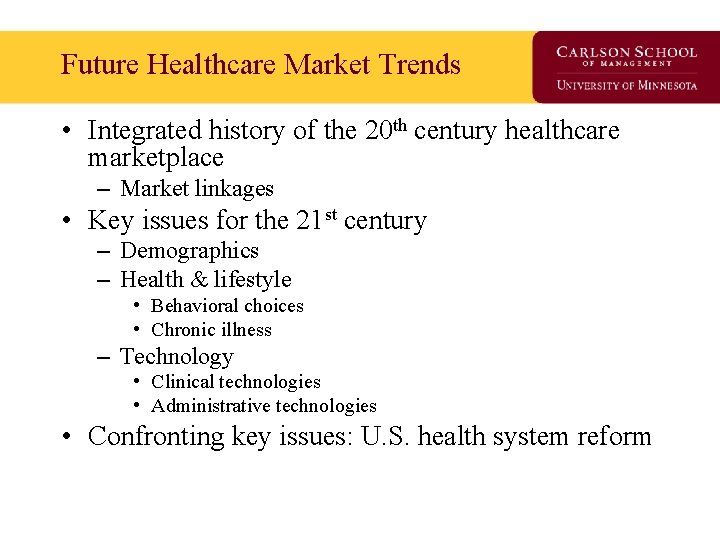
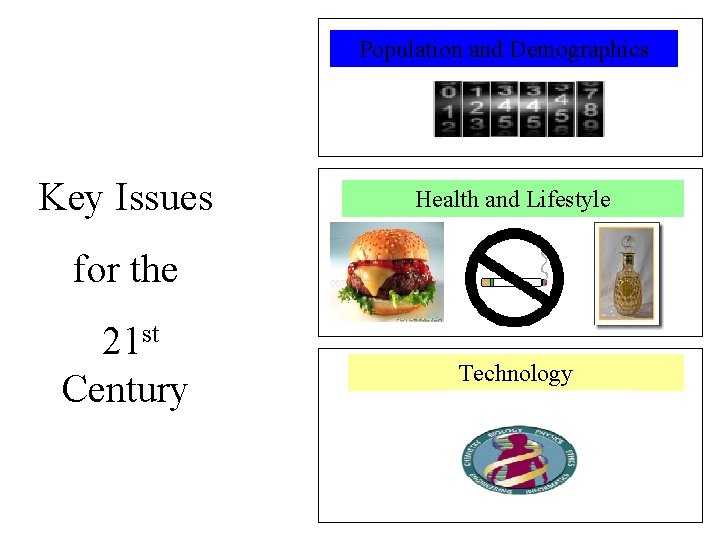
Future Healthcare Market Trends • Integrated history of the 20 th century healthcare marketplace – Market linkages • Key issues for the 21 st century – Demographics – Health & lifestyle • Behavioral choices • Chronic illness – Technology • Clinical technologies • Administrative technologies • Confronting key issues: U. S. health system reform
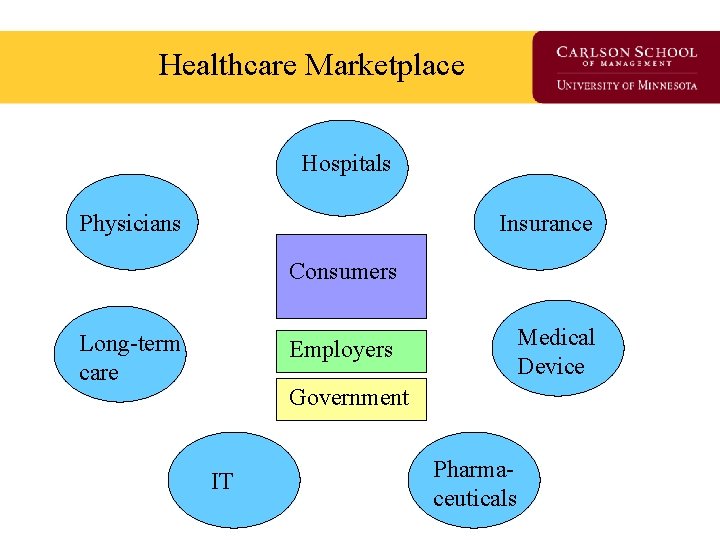
Healthcare Marketplace Hospitals Physicians Insurance Consumers Long-term care Medical Device Employers Government IT Pharmaceuticals
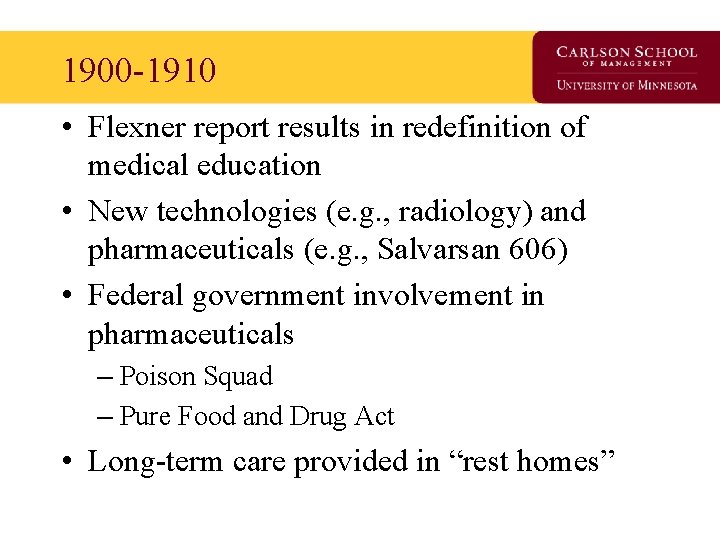
1900 -1910 • Flexner report results in redefinition of medical education • New technologies (e. g. , radiology) and pharmaceuticals (e. g. , Salvarsan 606) • Federal government involvement in pharmaceuticals – Poison Squad – Pure Food and Drug Act • Long-term care provided in “rest homes”
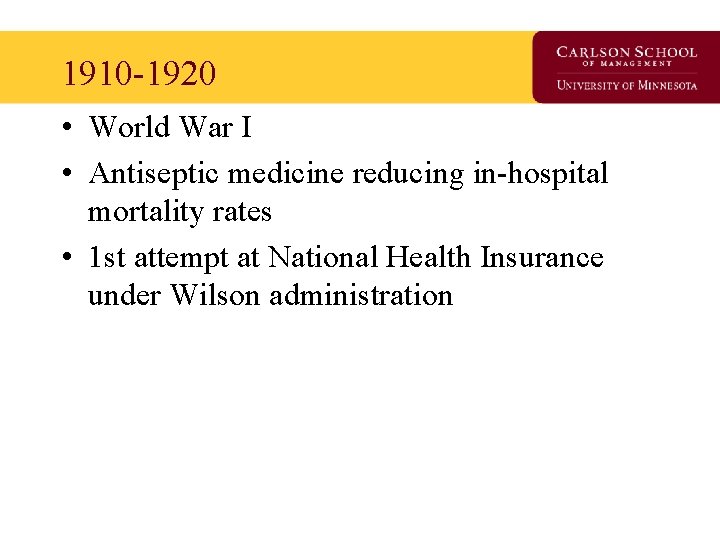
1910 -1920 • World War I • Antiseptic medicine reducing in-hospital mortality rates • 1 st attempt at National Health Insurance under Wilson administration
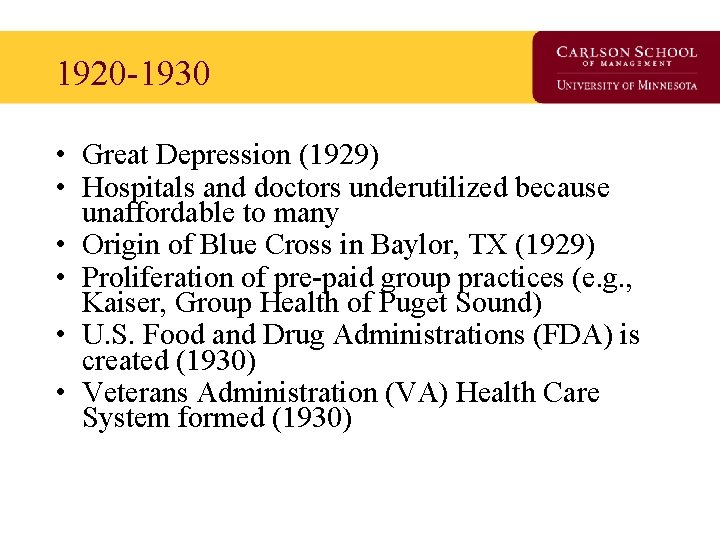
1920 -1930 • Great Depression (1929) • Hospitals and doctors underutilized because unaffordable to many • Origin of Blue Cross in Baylor, TX (1929) • Proliferation of pre-paid group practices (e. g. , Kaiser, Group Health of Puget Sound) • U. S. Food and Drug Administrations (FDA) is created (1930) • Veterans Administration (VA) Health Care System formed (1930)
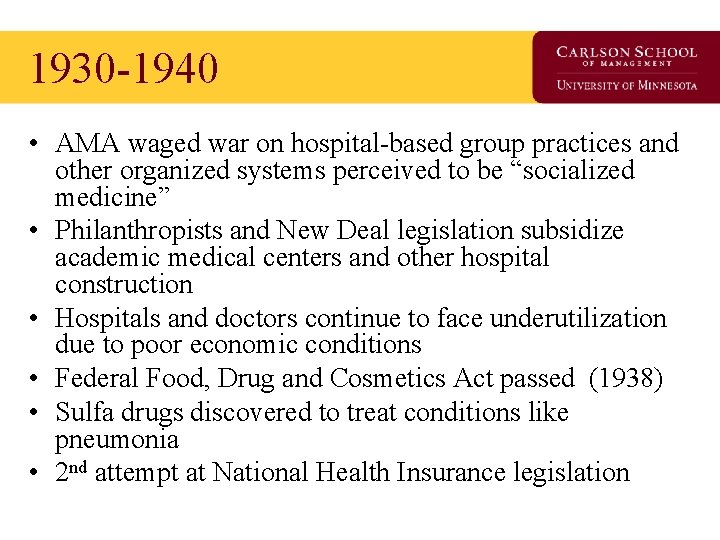
1930 -1940 • AMA waged war on hospital-based group practices and other organized systems perceived to be “socialized medicine” • Philanthropists and New Deal legislation subsidize academic medical centers and other hospital construction • Hospitals and doctors continue to face underutilization due to poor economic conditions • Federal Food, Drug and Cosmetics Act passed (1938) • Sulfa drugs discovered to treat conditions like pneumonia • 2 nd attempt at National Health Insurance legislation
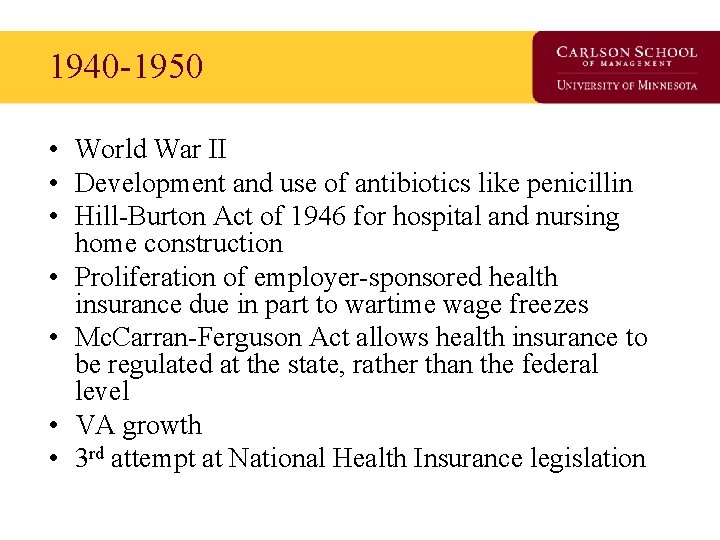
1940 -1950 • World War II • Development and use of antibiotics like penicillin • Hill-Burton Act of 1946 for hospital and nursing home construction • Proliferation of employer-sponsored health insurance due in part to wartime wage freezes • Mc. Carran-Ferguson Act allows health insurance to be regulated at the state, rather than the federal level • VA growth • 3 rd attempt at National Health Insurance legislation
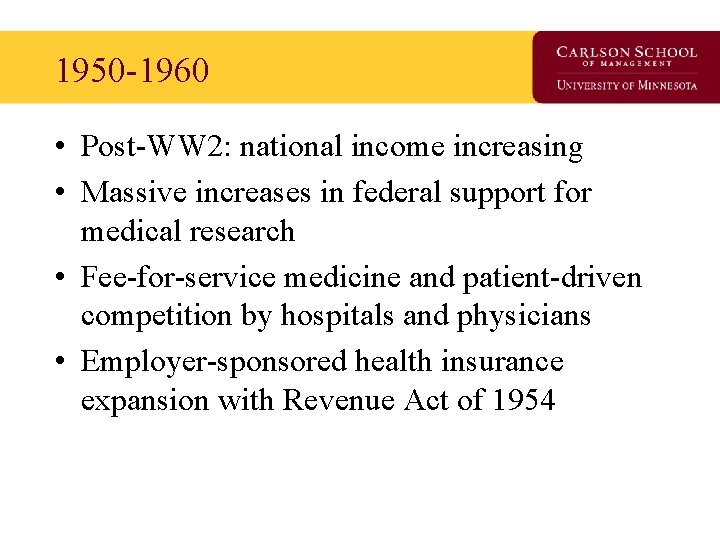
1950 -1960 • Post-WW 2: national income increasing • Massive increases in federal support for medical research • Fee-for-service medicine and patient-driven competition by hospitals and physicians • Employer-sponsored health insurance expansion with Revenue Act of 1954
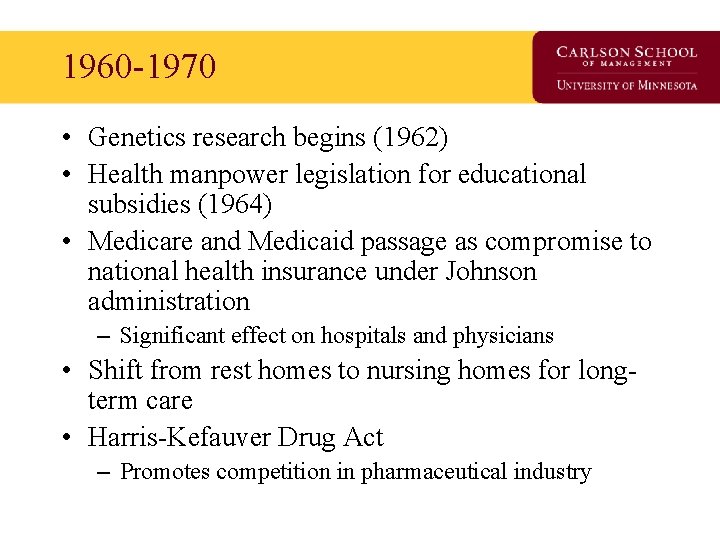
1960 -1970 • Genetics research begins (1962) • Health manpower legislation for educational subsidies (1964) • Medicare and Medicaid passage as compromise to national health insurance under Johnson administration – Significant effect on hospitals and physicians • Shift from rest homes to nursing homes for longterm care • Harris-Kefauver Drug Act – Promotes competition in pharmaceutical industry
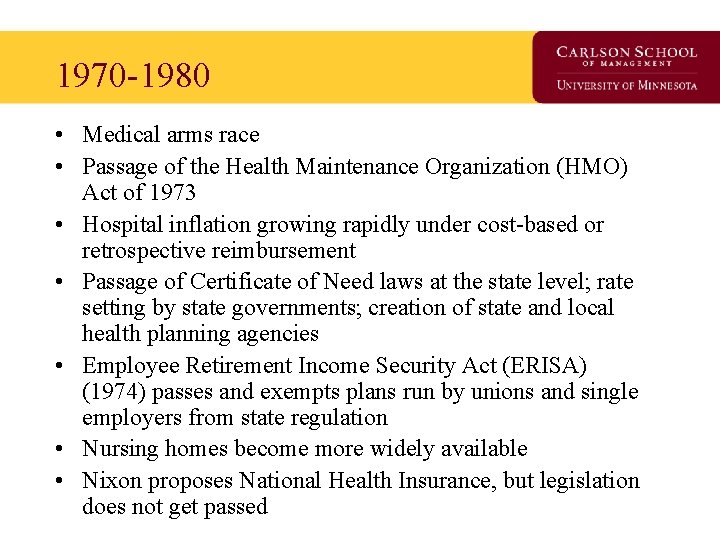
1970 -1980 • Medical arms race • Passage of the Health Maintenance Organization (HMO) Act of 1973 • Hospital inflation growing rapidly under cost-based or retrospective reimbursement • Passage of Certificate of Need laws at the state level; rate setting by state governments; creation of state and local health planning agencies • Employee Retirement Income Security Act (ERISA) (1974) passes and exempts plans run by unions and single employers from state regulation • Nursing homes become more widely available • Nixon proposes National Health Insurance, but legislation does not get passed
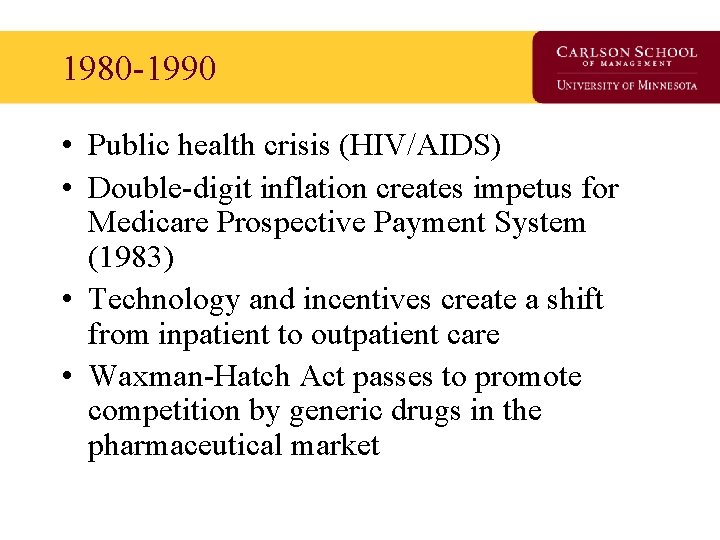
1980 -1990 • Public health crisis (HIV/AIDS) • Double-digit inflation creates impetus for Medicare Prospective Payment System (1983) • Technology and incentives create a shift from inpatient to outpatient care • Waxman-Hatch Act passes to promote competition by generic drugs in the pharmaceutical market
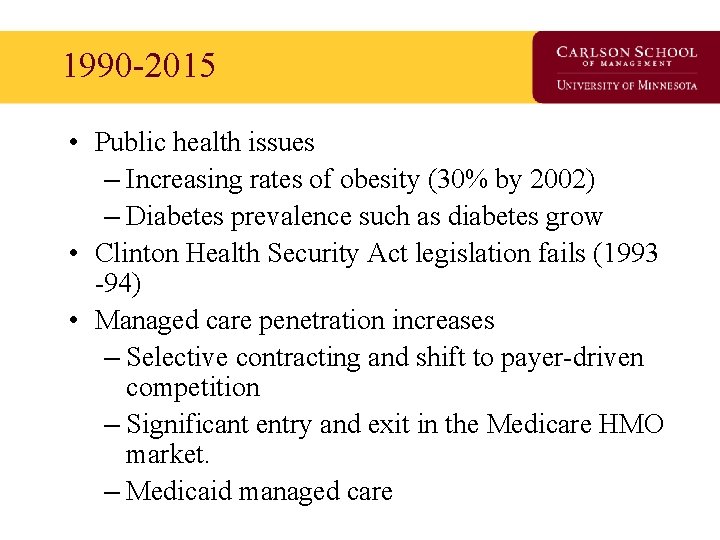
1990 -2015 • Public health issues – Increasing rates of obesity (30% by 2002) – Diabetes prevalence such as diabetes grow • Clinton Health Security Act legislation fails (1993 -94) • Managed care penetration increases – Selective contracting and shift to payer-driven competition – Significant entry and exit in the Medicare HMO market. – Medicaid managed care
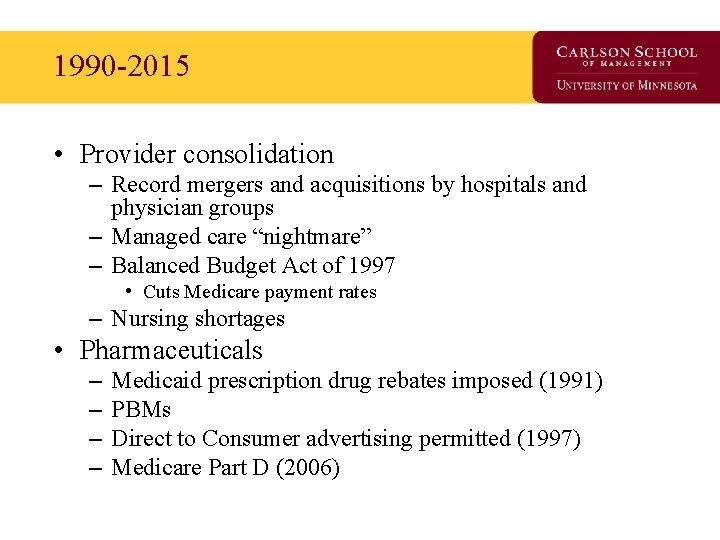
1990 -2015 • Provider consolidation – Record mergers and acquisitions by hospitals and physician groups – Managed care “nightmare” – Balanced Budget Act of 1997 • Cuts Medicare payment rates – Nursing shortages • Pharmaceuticals – – Medicaid prescription drug rebates imposed (1991) PBMs Direct to Consumer advertising permitted (1997) Medicare Part D (2006)
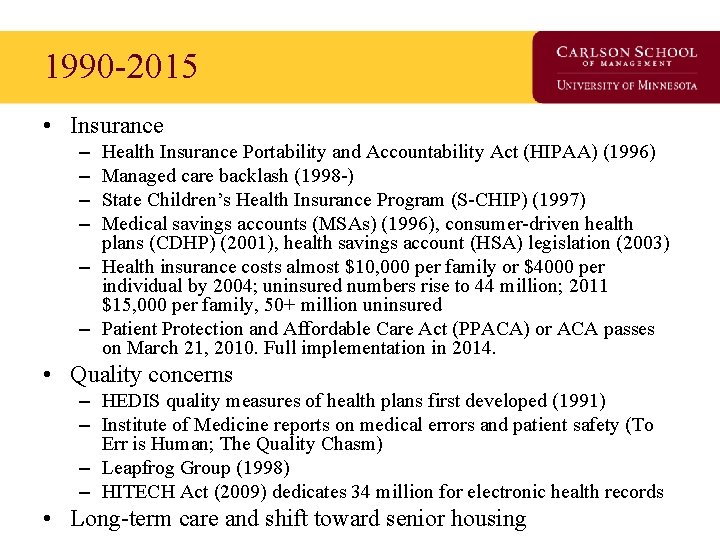
1990 -2015 • Insurance – – Health Insurance Portability and Accountability Act (HIPAA) (1996) Managed care backlash (1998 -) State Children’s Health Insurance Program (S-CHIP) (1997) Medical savings accounts (MSAs) (1996), consumer-driven health plans (CDHP) (2001), health savings account (HSA) legislation (2003) – Health insurance costs almost $10, 000 per family or $4000 per individual by 2004; uninsured numbers rise to 44 million; 2011 $15, 000 per family, 50+ million uninsured – Patient Protection and Affordable Care Act (PPACA) or ACA passes on March 21, 2010. Full implementation in 2014. • Quality concerns – HEDIS quality measures of health plans first developed (1991) – Institute of Medicine reports on medical errors and patient safety (To Err is Human; The Quality Chasm) – Leapfrog Group (1998) – HITECH Act (2009) dedicates 34 million for electronic health records • Long-term care and shift toward senior housing
<90% Income Federal Government Courts Insurers Congress Physicians Main Street Biotechnology Big Business 99% Income Hospitals 91 -99% Income
Thought question: In what ways does the global healthcare marketplace influence the U. S. healthcare marketplace?
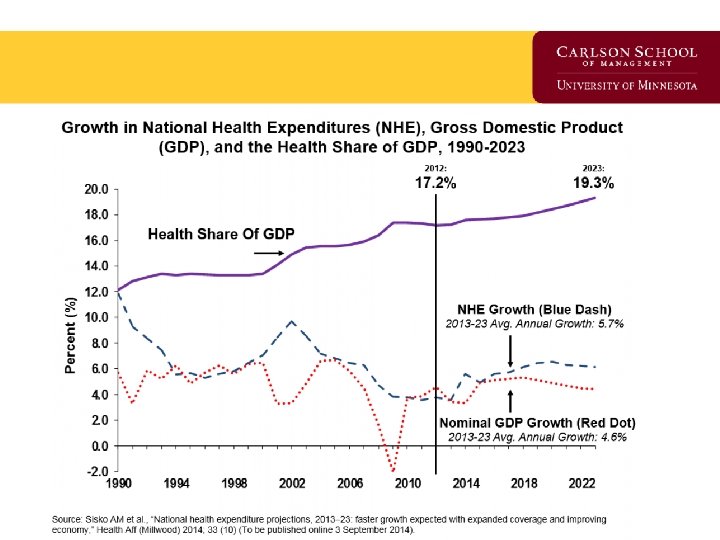
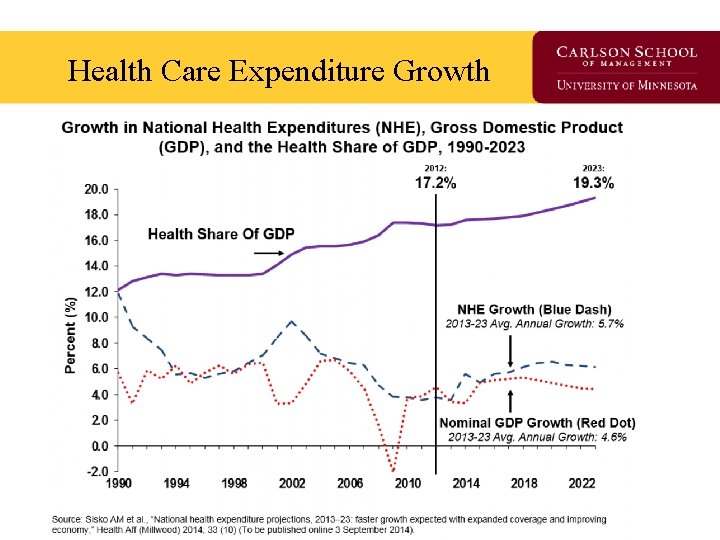
Health Care Expenditure Growth
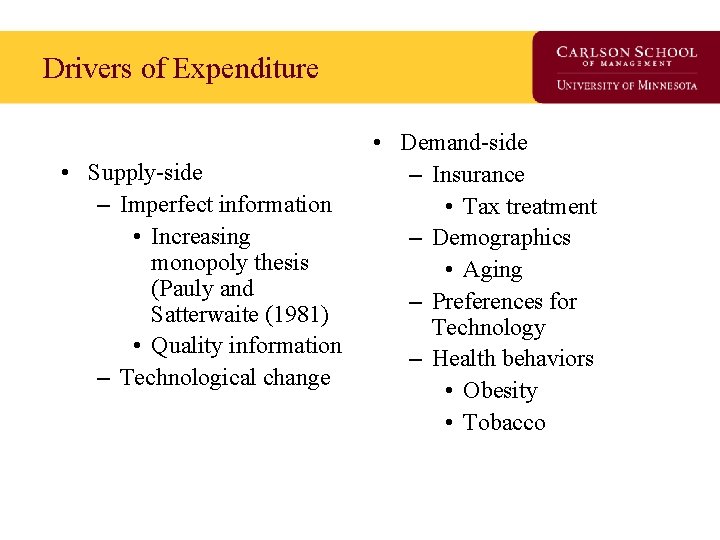
Drivers of Expenditure • Supply-side – Imperfect information • Increasing monopoly thesis (Pauly and Satterwaite (1981) • Quality information – Technological change • Demand-side – Insurance • Tax treatment – Demographics • Aging – Preferences for Technology – Health behaviors • Obesity • Tobacco
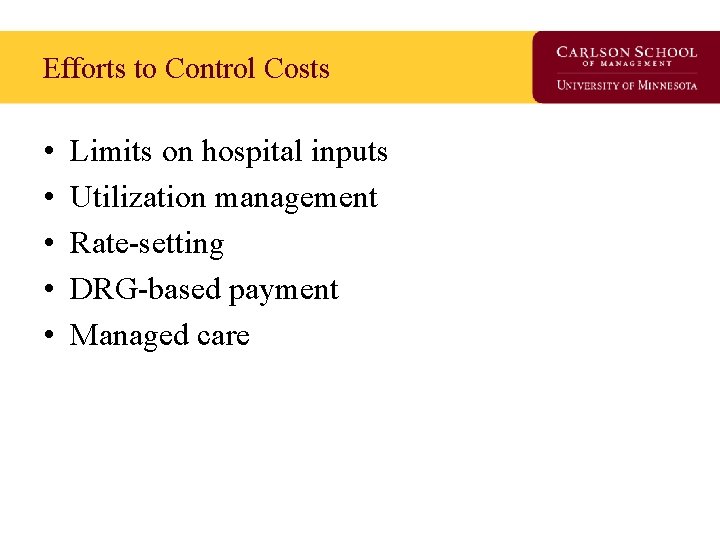
Efforts to Control Costs • • • Limits on hospital inputs Utilization management Rate-setting DRG-based payment Managed care
Population and Demographics Key Issues Health and Lifestyle for the 21 st Century Technology
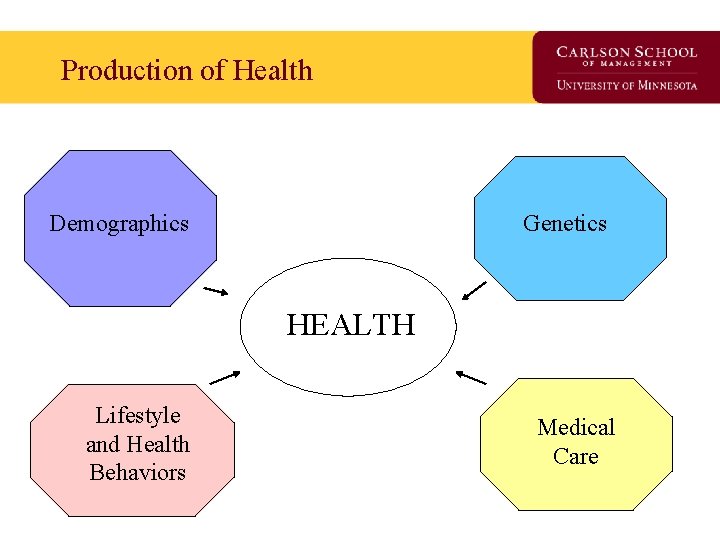
Production of Health Demographics Genetics HEALTH Lifestyle and Health Behaviors Medical Care
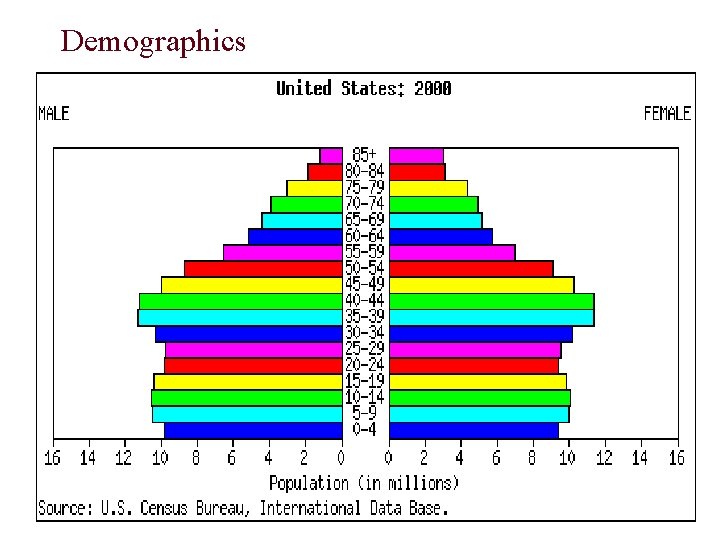
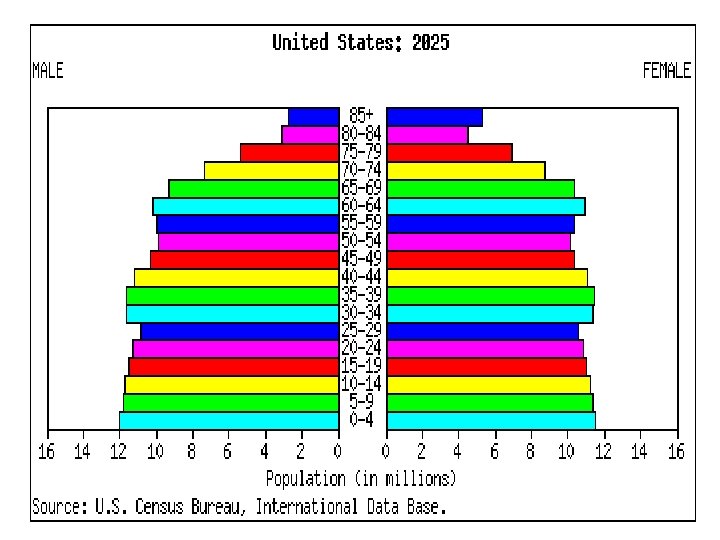
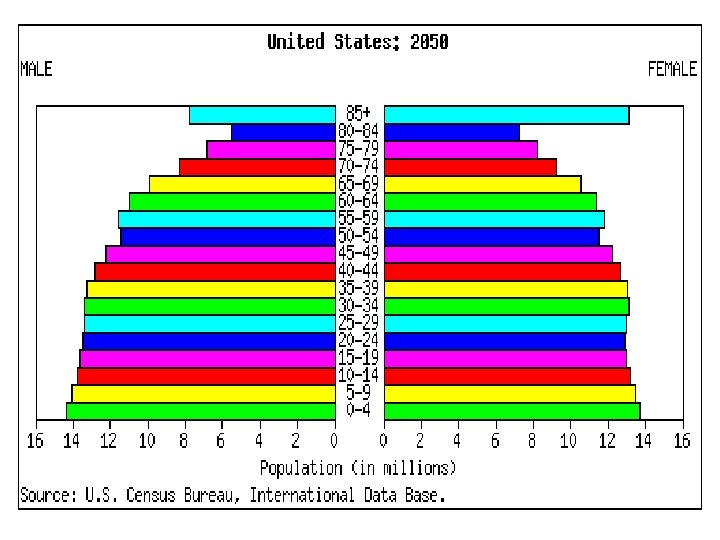
Demographics
Thought questions: Demographics • How will the demographic shifts affect the market for physicians? Physician services? Hospital services? Long-term care? • How will these demographic shifts affect younger generations? • In addition to the population distribution, what other demographic or socioeconomic changes will affect health care markets? How?
Significance of Health Behaviors • What is a “health bad”? – Concept – Examples • Why do economists and others care? – Externalities: case in which a consumer (producer) affects the utility (costs) of another consumer (producer) through actions that lie outside the price system; public price is not fully accounted for in the private price – Market failure • Subsidies for positive externalities (flu shots) • Taxes for negative externalities (excise taxes on cigarettes)
Consequences of Health Bads • Smoking – Cigarette smoking is the leading cause of lung cancer (90% of deaths); chronic bronchitis; emphysema (COPD), and a major cause of heart disease and stroke – Associated with additional cancers (e. g. , bladder, pancreatic, and cervical) – Vision and hearing problems and slowed healing from injuries – Responsible for 435, 000 deaths per year in 2000 • Obesity – Linked to hypertension, high cholesterol, coronary heart disease, type 2 diabetes, depression, and various types of cancer – Responsible for 400, 000 deaths in 2000 – $75 billion in medical care expenditures in 2003 • Excessive Alcohol Consumption – Associated with lost productivity, disability, early death, crime, neglect of family responsibilities – Motor vehicle accidents while driving under the influence – 100, 000 deaths from alcohol abuse in 2000
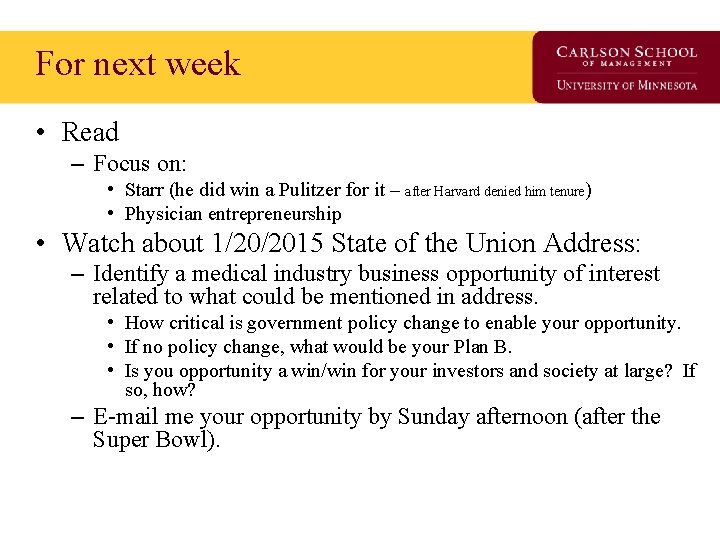
For next week • Read – Focus on: • Starr (he did win a Pulitzer for it – after Harvard denied him tenure) • Physician entrepreneurship • Watch about 1/20/2015 State of the Union Address: – Identify a medical industry business opportunity of interest related to what could be mentioned in address. • How critical is government policy change to enable your opportunity. • If no policy change, what would be your Plan B. • Is you opportunity a win/win for your investors and society at large? If so, how? – E-mail me your opportunity by Sunday afternoon (after the Super Bowl).