Understanding and Appreciating the CF CG LM TG


- Slides: 54
Understanding and Appreciating the CF, CG, LM & TG Grade 9 - English
Understanding and Appreciating the CF, CG, LM & TG My first name starts with C and my last name ends with K, concepts and principles are inside me. CURRICULUM FRAMEWORK DEPARTMENT OF EDUCATION
Session Objectives In this learning session, the participants should be able to: 1. discuss the English Conceptual Framework by: • distinguishing its major components • showing relationship among the components • explaining how the Curriculum Guide (CG), Learner’s Material (LM) and Teacher’s Guide (TG) are aligned with the Conceptual Framework DEPARTMENT OF EDUCATION
Session Objectives In this learning session, the participants should be able to: 2. get familiarized with the contents of the Curriculum Guide, Learner’s Material (LM), and Teacher’s Guide (TG) 3. show appreciation of the curriculum in developing and producing a holistic Filipino learner/child DEPARTMENT OF EDUCATION
Understanding and Appreciating the CF, CG, LM & TG ACTIVITY 1 Group Work DEPARTMENT OF EDUCATION
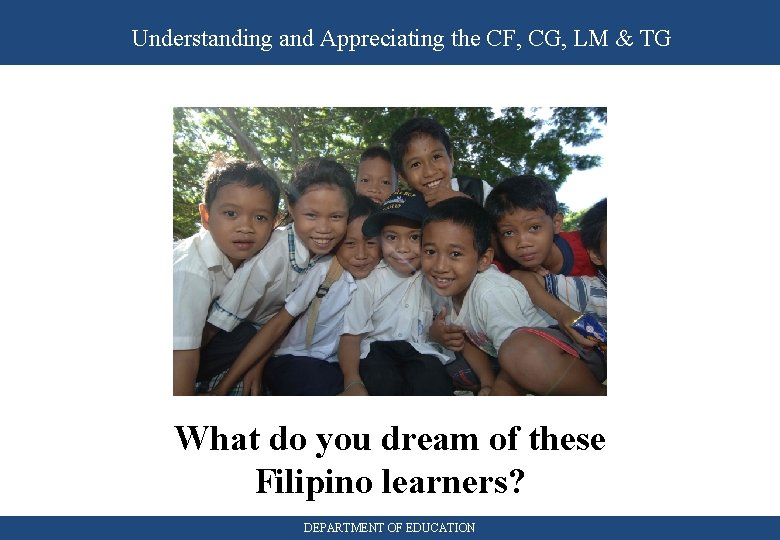
Understanding and Appreciating the CF, CG, LM & TG What do you dream of these Filipino learners? DEPARTMENT OF EDUCATION
Understanding and Appreciating the CF, CG, LM & TG What to do: 1. Think of your vision for the Filipino learners. 2. Brainstorm with your group to come up with only one vision. 3. Present your group’s output. DEPARTMENT OF EDUCATION
ANALYSIS 1. How do you feel about your group’s output? Why? 2. What have you envisioned for these children? 3. How can this vision be achieved? 4. What is your role in realizing this vision? 5. What have you realized from this activity? DEPARTMENT OF EDUCATION
Where is ENGLISH in the K-12 Basic Education Curriculum Framework?
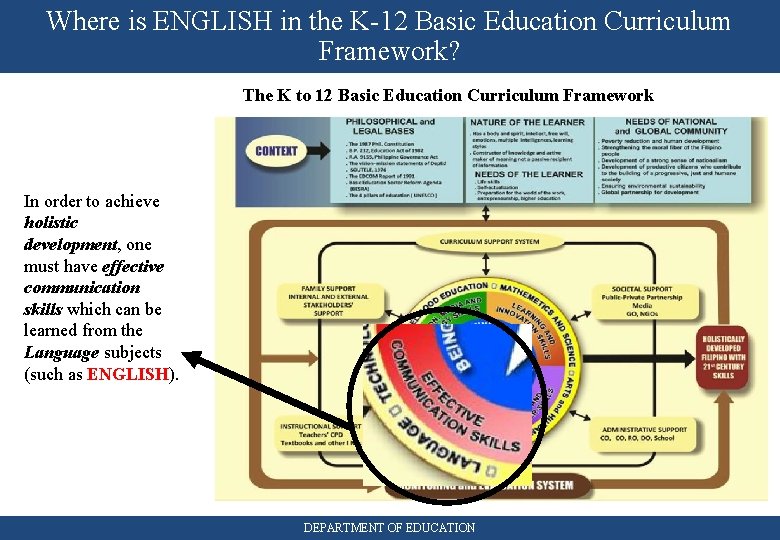
Where is ENGLISH in the K-12 Basic Education Curriculum Framework? The K to 12 Basic Education Curriculum Framework In order to achieve holistic development, one must have effective communication skills which can be learned from the Language subjects (such as ENGLISH). DEPARTMENT OF EDUCATION
Understanding the English Conceptual Framework
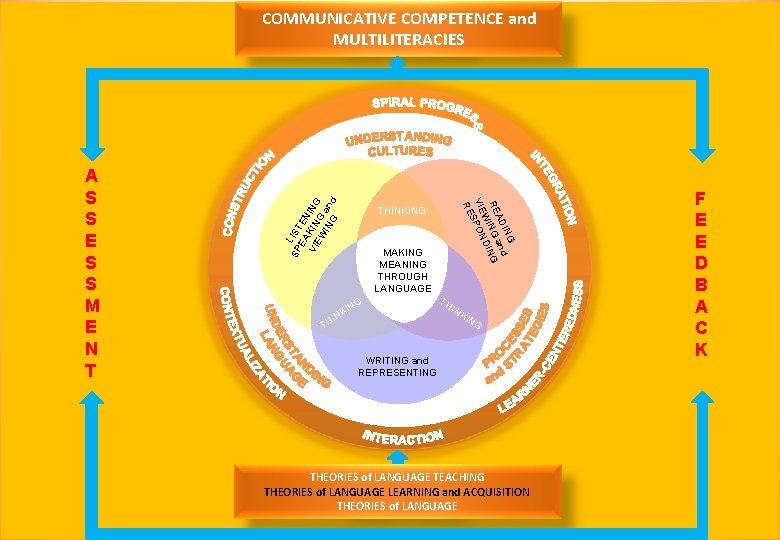
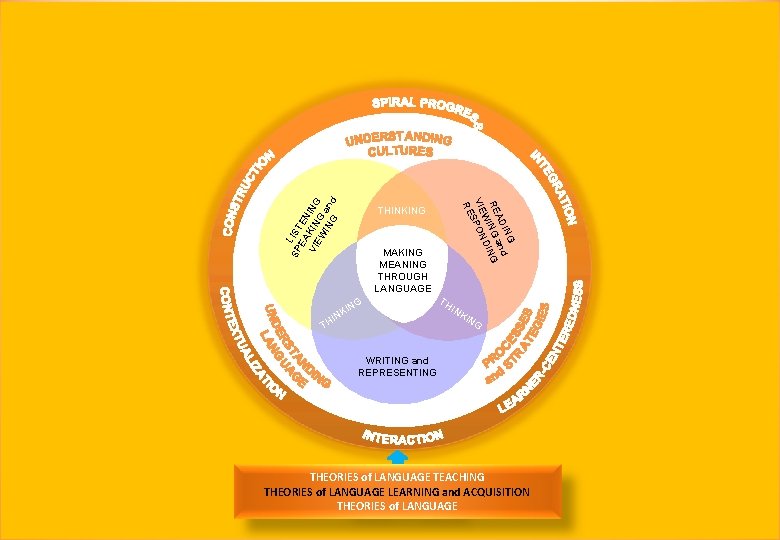
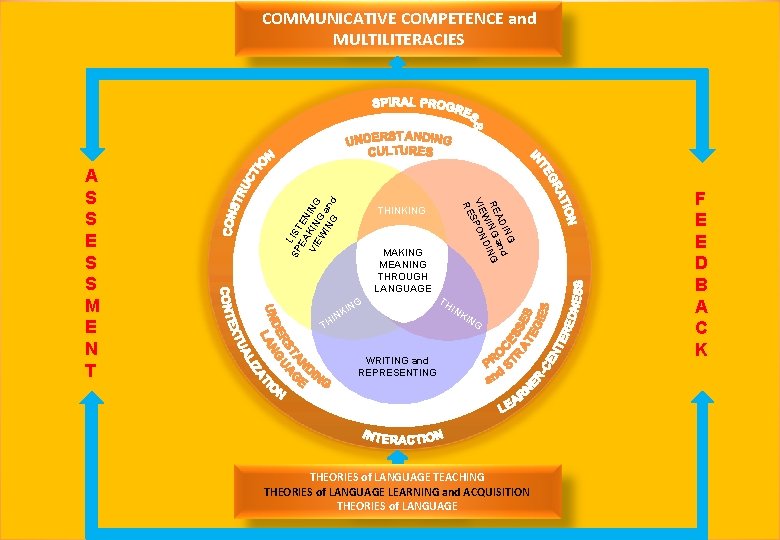
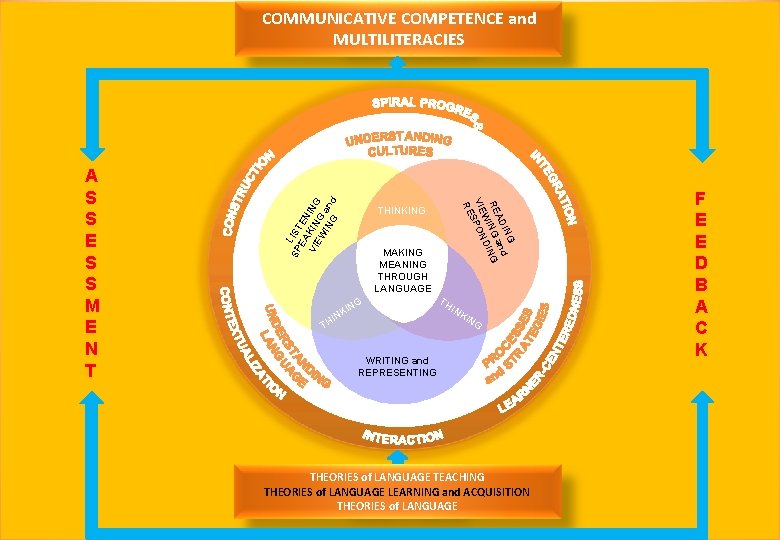
ING d AD an RE NG ING D WI VIE PON S RE A S S E S S M E N T SP LIST EA EN VI KIN ING EW G IN an G d COMMUNICATIVE COMPETENCE and MULTILITERACIES THINKING MAKING MEANING THROUGH LANGUAGE G N KI N HI T TH IN KI NG WRITING and REPRESENTING THEORIES of LANGUAGE TEACHING THEORIES of LANGUAGE LEARNING and ACQUISITION THEORIES of LANGUAGE F E E D B A C K
Philosophy, Rationale, and Guiding Principles
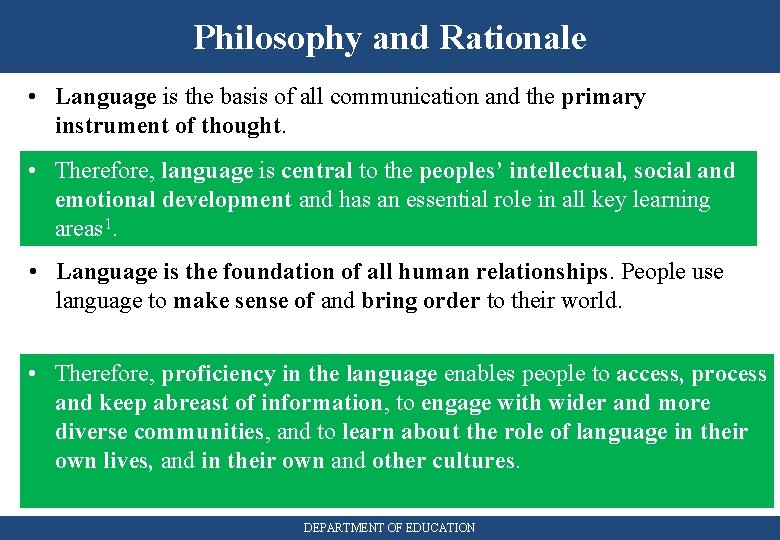
Philosophy and Rationale • Language is the basis of all communication and the primary instrument of thought. • Therefore, language is central to the peoples’ intellectual, social and emotional development and has an essential role in all key learning areas 1. • Language is the foundation of all human relationships. People use language to make sense of and bring order to their world. • Therefore, proficiency in the language enables people to access, process and keep abreast of information, to engage with wider and more diverse communities, and to learn about the role of language in their own lives, and in their own and other cultures. DEPARTMENT OF EDUCATION
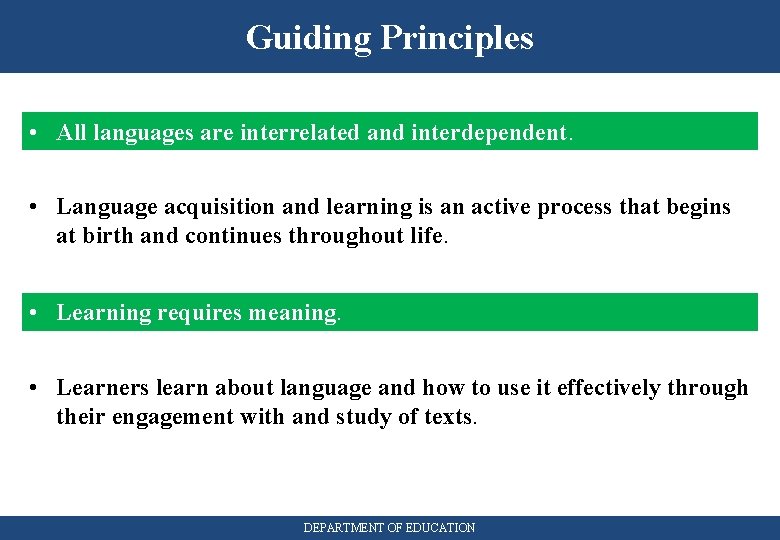
Guiding Principles • All languages are interrelated and interdependent. • Language acquisition and learning is an active process that begins at birth and continues throughout life. • Learning requires meaning. • Learners learn about language and how to use it effectively through their engagement with and study of texts. DEPARTMENT OF EDUCATION
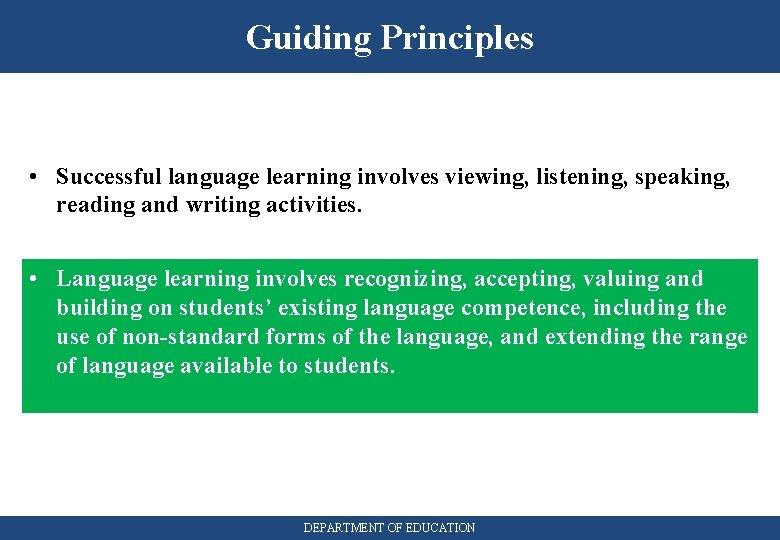
Guiding Principles • Successful language learning involves viewing, listening, speaking, reading and writing activities. • Language learning involves recognizing, accepting, valuing and building on students’ existing language competence, including the use of non-standard forms of the language, and extending the range of language available to students. DEPARTMENT OF EDUCATION
Guiding Principles An effective language arts and multiliteracies curriculum satisfies the following principles: 1. develops thinking and language through interactive learning; 2. develops communicative competence and critical literacy; 3. draws on literature in order to develop students’ understanding of their literacy heritage; 4. draws on informational texts and multimedia in order to build academic vocabulary and strong content knowledge; 5. develops students’ oral language and literacy through appropriately challenging learning; DEPARTMENT OF EDUCATION
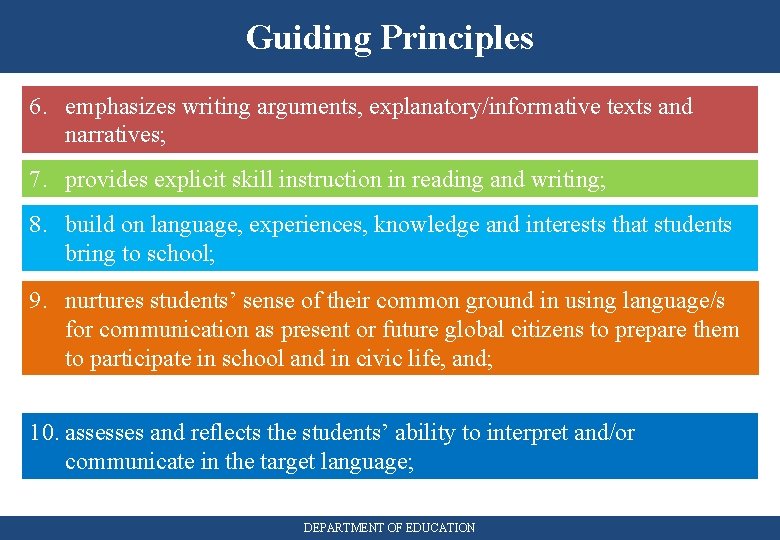
Guiding Principles 6. emphasizes writing arguments, explanatory/informative texts and narratives; 7. provides explicit skill instruction in reading and writing; 8. build on language, experiences, knowledge and interests that students bring to school; 9. nurtures students’ sense of their common ground in using language/s for communication as present or future global citizens to prepare them to participate in school and in civic life, and; 10. assesses and reflects the students’ ability to interpret and/or communicate in the target language; DEPARTMENT OF EDUCATION
The Needs of the Learners: The Context
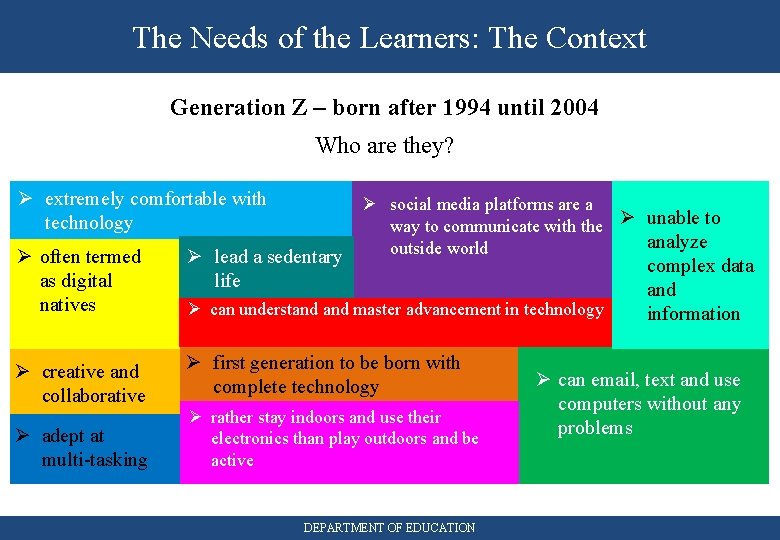
The Needs of the Learners: The Context Generation Z – born after 1994 until 2004 Who are they? Ø extremely comfortable with technology Ø social media platforms are a way to communicate with the Ø unable to analyze outside world Ø often termed as digital natives Ø lead a sedentary life Ø creative and collaborative Ø first generation to be born with complete technology Ø adept at multi-tasking Ø rather stay indoors and use their electronics than play outdoors and be active Ø can understand master advancement in technology DEPARTMENT OF EDUCATION complex data and information Ø can email, text and use computers without any problems
The Outcomes
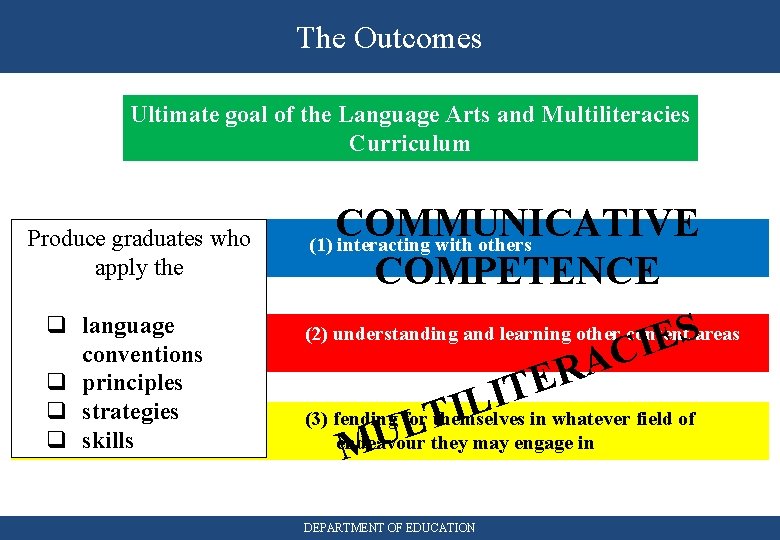
The Outcomes Ultimate goal of the Language Arts and Multiliteracies Curriculum Produce graduates who apply the q language conventions q principles q strategies q skills COMMUNICATIVE (1) interacting with others COMPETENCE (2) understanding and learning other content. Sareas E I C A R E T I L in whatever field of I (3) fending for T themselves L they may engage in U endeavour M DEPARTMENT OF EDUCATION
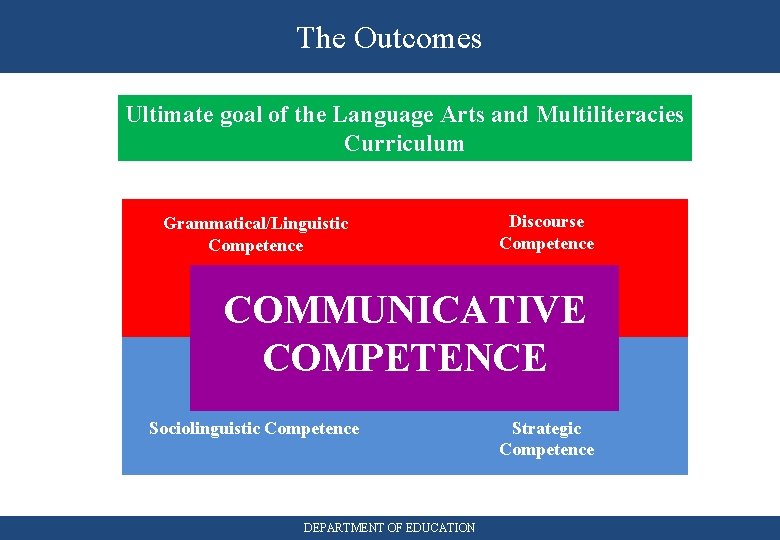
The Outcomes Ultimate goal of the Language Arts and Multiliteracies Curriculum Grammatical/Linguistic Competence Discourse Competence COMMUNICATIVE COMPETENCE Sociolinguistic Competence DEPARTMENT OF EDUCATION Strategic Competence
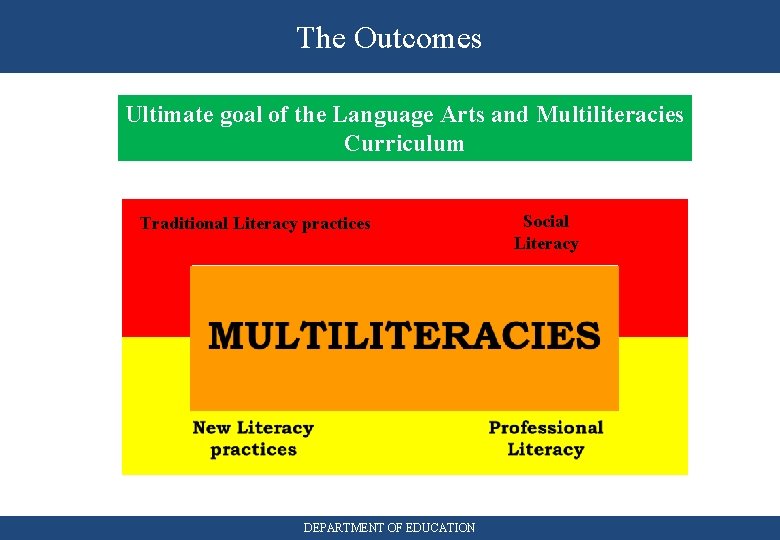
The Outcomes Ultimate goal of the Language Arts and Multiliteracies Curriculum Traditional Literacy practices DEPARTMENT OF EDUCATION Social Literacy
The Outcomes q The curriculum aims to help learners acquire highly-developed literacy skills that enable them to understand that English language is the most widely used medium of communication in Trade and the Arts, Sciences, Mathematics, and in world economy. q Furthermore, the curriculum aims to help learners understand that English language is a dynamic social process which responds to and reflects changing social conditions, and that English is inextricably involved with values, beliefs and ways of thinking about ourselves and the world we dwell in. q Through multi-literacy skills, learners will be able to appreciate and be sensitive to sociocultural diversity and understand that the meaning of any form of communication depends on context, purpose and audience. DEPARTMENT OF EDUCATION
The Conceptual Framework
ING d AD an RE NG ING D WI VIE PON S RE A S S E S S M E N T SP LIST EA EN VI KIN ING EW G IN an G d COMMUNICATIVE COMPETENCE and MULTILITERACIES THINKING MAKING MEANING THROUGH LANGUAGE G N KI N HI T TH IN KI NG WRITING and REPRESENTING THEORIES of LANGUAGE TEACHING THEORIES of LANGUAGE LEARNING and ACQUISITION THEORIES of LANGUAGE F E E D B A C K
The Conceptual Framework COMPONENT 1 Language Learning Process DEPARTMENT OF EDUCATION
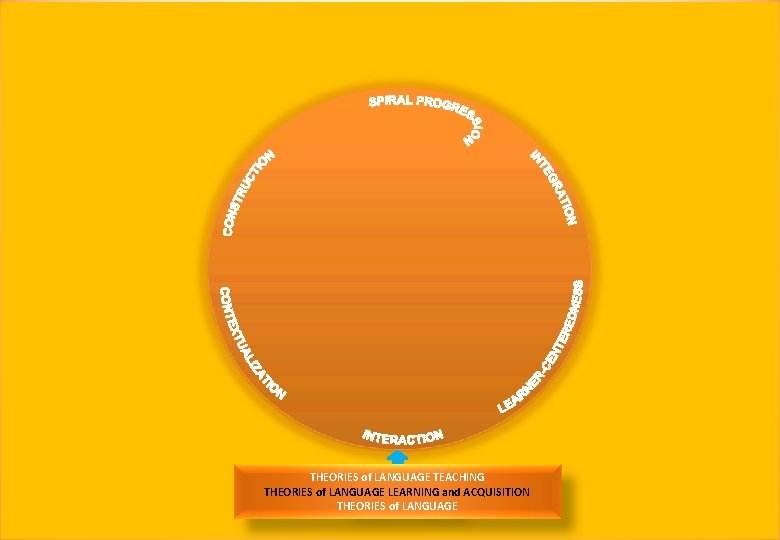
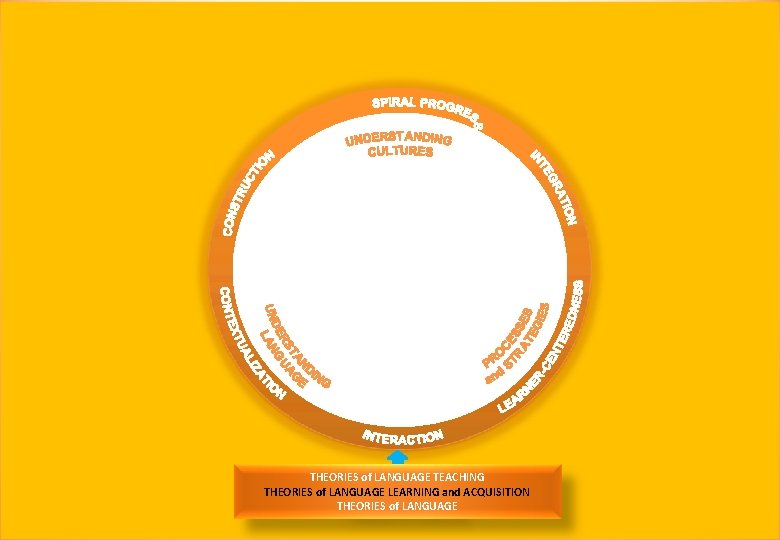
THEORIES of LANGUAGE TEACHING THEORIES of LANGUAGE LEARNING and ACQUISITION THEORIES of LANGUAGE
The Conceptual Framework Spiral Progression Ø Skills, grammatical items, structures and various types of texts will be taught, revised and revisited at increasing levels of difficulty and sophistication. This will allow students to progress from the foundational level to higher levels of language use. Interaction Ø Language learning will be situated in the context of communication (oral and written). Activities that simulate real-life situations of varying language demands (purposes, topics, and audiences) will be employed to help students interact with others thereby improve their socialization skills. DEPARTMENT OF EDUCATION
The Conceptual Framework Integration Ø The areas of language learning – the receptive skills, the productive skills, and grammar and vocabulary will be taught in an integrated way, together with the use of relevant print and nonprint resources, to provide multiple perspectives and meaningful connections. Integration may come in different types either implicitly or explicitly (skills, content, theme, topic, and values integration). Learner-Centeredness Ø Learners are at the center of the teaching-learning process. Teaching will be differentiated according to students’ needs, abilities and interests. Effective pedagogies will be used to engage them and to strengthen their language development. DEPARTMENT OF EDUCATION
The Conceptual Framework Contextualization Ø Learning tasks and activities will be designed for learners to acquire the language in authentic and meaningful contexts of use. For example, lessons will be planned around learning outcomes, a theme, or a type of text to help learners use related language skills, grammatical items/structures and vocabulary appropriately in spoken and written language to suit the purpose, audience, context and culture. Learning points will be reinforced through explicit instruction and related follow-up practice. Construction Ø Making meaning is the heart of language learning and use. Learning tasks and activities will be designed for learners in such a way that they will have time to reflect on and respond to ideas and information. Learners will be provided with sufficient scaffolding so that they will be able to reach their full cognitive, affective, and psychomotor potentials and become independent learners who are good consumers and constructors of meaning. DEPARTMENT OF EDUCATION
The Conceptual Framework COMPONENT 2 Effective Language Use DEPARTMENT OF EDUCATION
THEORIES of LANGUAGE TEACHING THEORIES of LANGUAGE LEARNING and ACQUISITION THEORIES of LANGUAGE
The Conceptual Framework UNDERSTANDING CULTURES Ø Learning language through text types and literary appreciation exposes learners to different cultures of the world, including one’s culture. UNDERSTANDING LANGUAGE Ø Learners apply their knowledge of the system of the language to assist them to make meaning and to create meaning. PROCESS AND STRATEGIES Ø Learners select from a repertoire of processes and strategies by reflecting on their understanding of the way language works for a variety of purposes in a range of contexts. DEPARTMENT OF EDUCATION
The Conceptual Framework COMPONENT 3 Making Meaning Through Language DEPARTMENT OF EDUCATION
SP LIST EA EN VI KIN ING EW G IN an G d ING d AD an RE NG ING D WI VIE PON S RE THINKING MAKING MEANING THROUGH LANGUAGE G N KI N HI T TH IN KI NG WRITING and REPRESENTING THEORIES of LANGUAGE TEACHING THEORIES of LANGUAGE LEARNING and ACQUISITION THEORIES of LANGUAGE
The Conceptual Framework q Language is the major instrument in communication (oral and written) and the heart of which is the exchange of meaning. Language learning should focus on guiding students make meaning through language for different purposes on a range of topics and with a variety of audiences. Students must be able to adapt to various situations where communication demands greatly vary. q The skills, grammatical items, structures and various types of texts will be taught, and revisited at increasing levels of difficulty and sophistication. This design allows students to progress from the foundational level to higher levels of language use. q The Language Arts and Multiliteracies Curriculum (LAMC) is composed of five (5) intricately intertwined and integrated sub-strands (listening, speaking, reading, writing, and viewing) that serve as building blocks for understanding and creation of meaning and for effective communication across curricula. DEPARTMENT OF EDUCATION
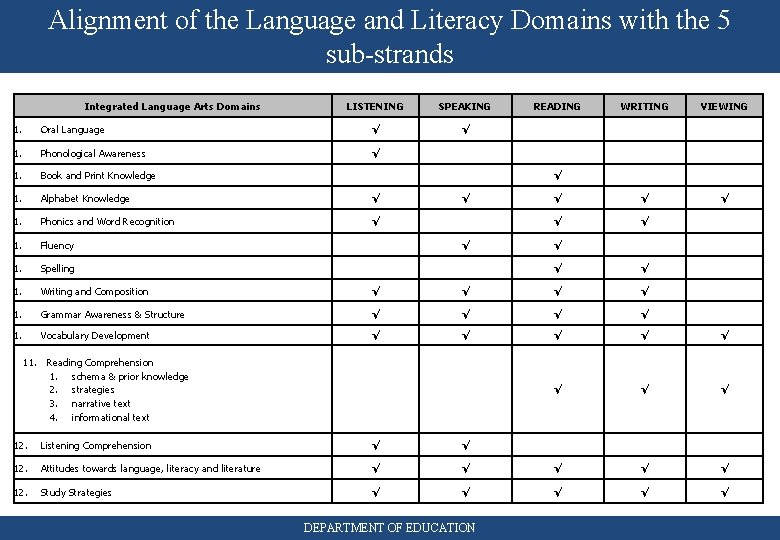
Alignment of the Language and Literacy Domains with the 5 sub-strands Integrated Language Arts Domains LISTENING SPEAKING READING WRITING VIEWING 1. Oral Language √ √ 1. Phonological Awareness √ 1. Book and Print Knowledge √ 1. Alphabet Knowledge √ √ √ 1. Phonics and Word Recognition √ √ √ 1. Fluency √ √ 1. Spelling √ √ 1. Writing and Composition √ √ 1. Grammar Awareness & Structure √ √ 1. Vocabulary Development √ √ √ 11. Reading Comprehension 1. schema & prior knowledge 2. strategies 3. narrative text 4. informational text 12. Listening Comprehension √ √ 12. Attitudes towards language, literacy and literature √ √ √ 12. Study Strategies √ √ √ DEPARTMENT OF EDUCATION
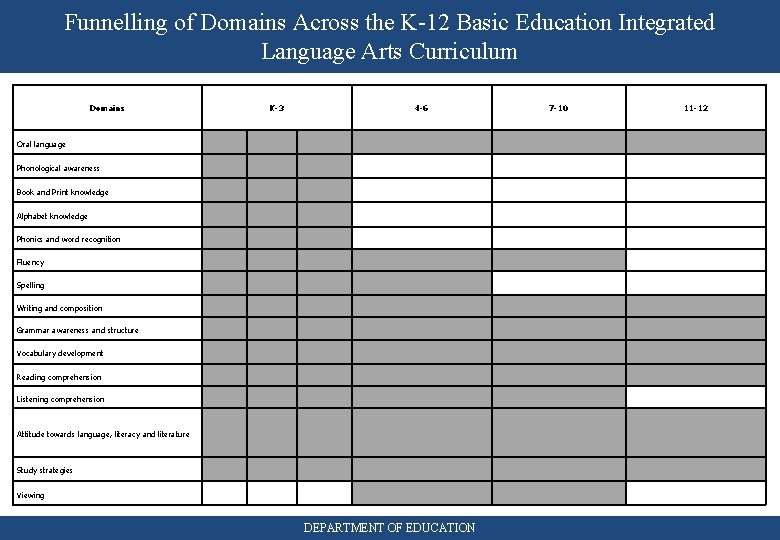
Funnelling of Domains Across the K-12 Basic Education Integrated Language Arts Curriculum Domains K-3 4 -6 7 -10 11 -12 Oral language Phonological awareness Book and Print knowledge Alphabet knowledge Phonics and word recognition Fluency Spelling Writing and composition Grammar awareness and structure Vocabulary development Reading comprehension Listening comprehension Attitude towards language, literacy and literature Study strategies Viewing DEPARTMENT OF EDUCATION
The Conceptual Framework COMPONENT 4 Holistic Assessment DEPARTMENT OF EDUCATION
ING d AD an RE NG ING D WI VIE PON S RE A S S E S S M E N T SP LIST EA EN VI KIN ING EW G IN an G d COMMUNICATIVE COMPETENCE and MULTILITERACIES THINKING MAKING MEANING THROUGH LANGUAGE G N KI N HI T TH IN KI NG WRITING and REPRESENTING THEORIES of LANGUAGE TEACHING THEORIES of LANGUAGE LEARNING and ACQUISITION THEORIES of LANGUAGE F E E D B A C K
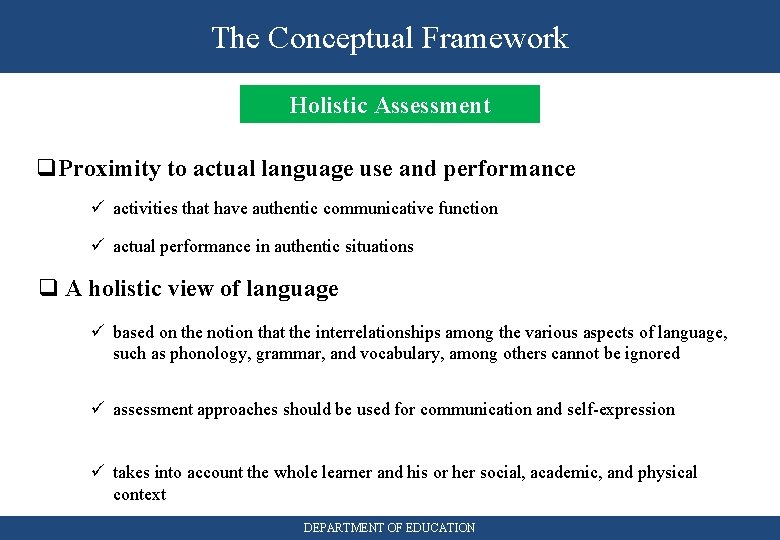
The Conceptual Framework Holistic Assessment q. Proximity to actual language use and performance ü activities that have authentic communicative function ü actual performance in authentic situations q A holistic view of language ü based on the notion that the interrelationships among the various aspects of language, such as phonology, grammar, and vocabulary, among others cannot be ignored ü assessment approaches should be used for communication and self-expression ü takes into account the whole learner and his or her social, academic, and physical context DEPARTMENT OF EDUCATION
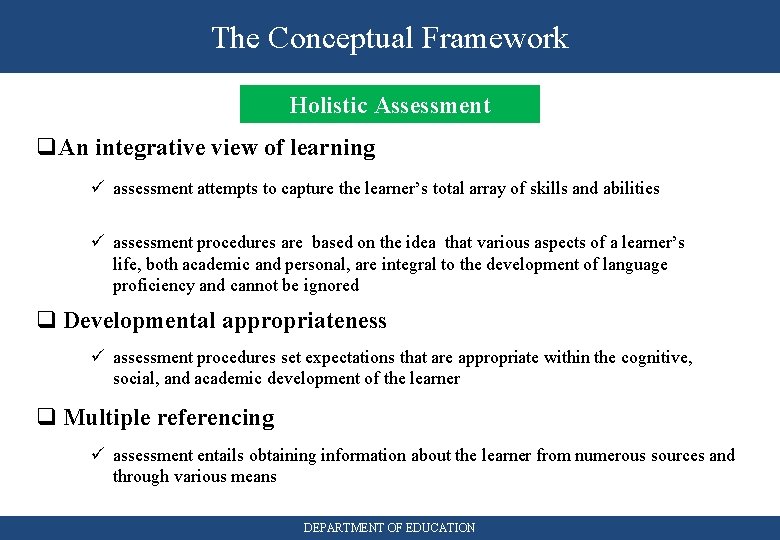
The Conceptual Framework Holistic Assessment q. An integrative view of learning ü assessment attempts to capture the learner’s total array of skills and abilities ü assessment procedures are based on the idea that various aspects of a learner’s life, both academic and personal, are integral to the development of language proficiency and cannot be ignored q Developmental appropriateness ü assessment procedures set expectations that are appropriate within the cognitive, social, and academic development of the learner q Multiple referencing ü assessment entails obtaining information about the learner from numerous sources and through various means DEPARTMENT OF EDUCATION
ING d AD an RE NG ING D WI VIE PON S RE A S S E S S M E N T SP LIST EA EN VI KIN ING EW G IN an G d COMMUNICATIVE COMPETENCE and MULTILITERACIES THINKING MAKING MEANING THROUGH LANGUAGE G N KI N HI T TH IN KI NG WRITING and REPRESENTING THEORIES of LANGUAGE TEACHING THEORIES of LANGUAGE LEARNING and ACQUISITION THEORIES of LANGUAGE F E E D B A C K
Understanding and Appreciating the CF, CG, LM & TG ACTIVITY 2 Group Work DEPARTMENT OF EDUCATION
Understanding and Appreciating the CF, CG, LM & TG What to do: 1. Skim through your copy of the document assigned to your group - Curriculum Guide (CG), Learner’s Material (LM), and Teacher’s Guide (TG). 2. Answer the worksheet assigned to your group. 3. Consolidate the answers of your group and write it in a manila paper. 4. Present your group’s output. DEPARTMENT OF EDUCATION
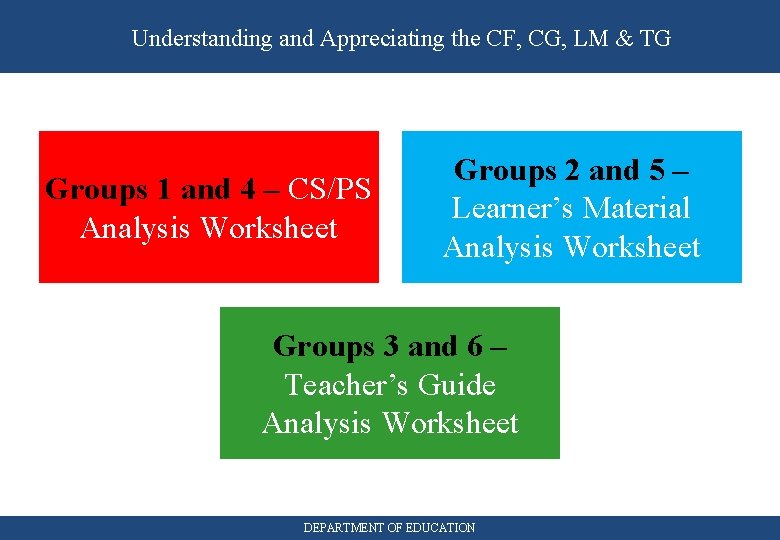
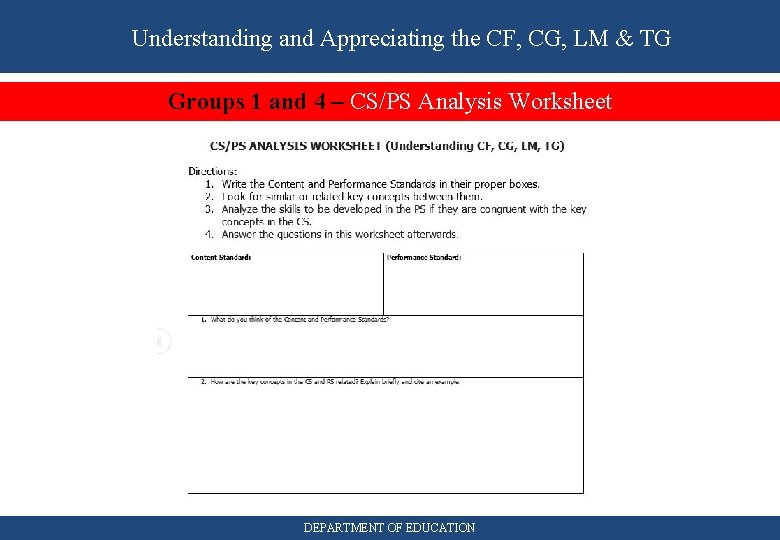
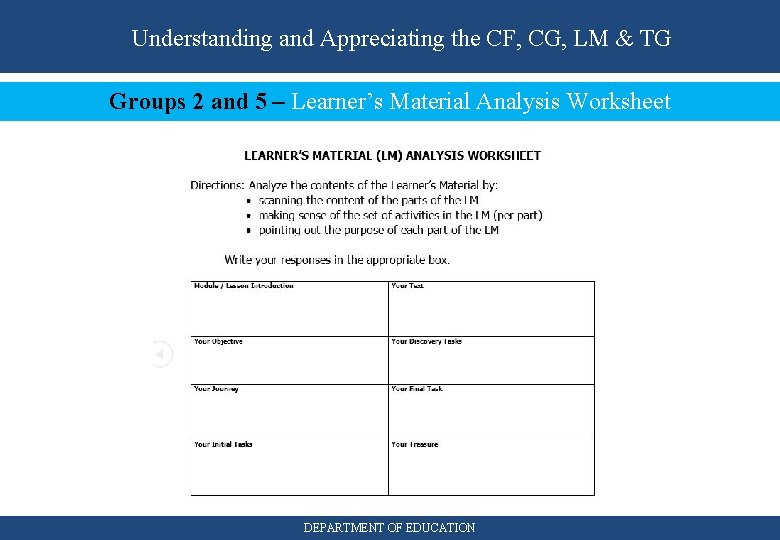
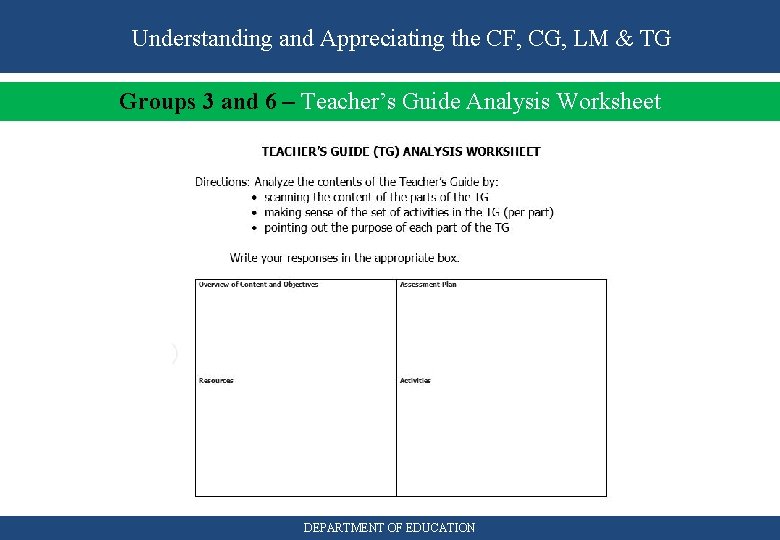
Understanding and Appreciating the CF, CG, LM & TG Groups 1 and 4 – CS/PS Analysis Worksheet Groups 2 and 5 – Learner’s Material Analysis Worksheet Groups 3 and 6 – Teacher’s Guide Analysis Worksheet DEPARTMENT OF EDUCATION
Understanding and Appreciating the CF, CG, LM & TG Groups 1 and 4 – CS/PS Analysis Worksheet DEPARTMENT OF EDUCATION
Understanding and Appreciating the CF, CG, LM & TG Groups 2 and 5 – Learner’s Material Analysis Worksheet DEPARTMENT OF EDUCATION
Understanding and Appreciating the CF, CG, LM & TG Groups 3 and 6 – Teacher’s Guide Analysis Worksheet DEPARTMENT OF EDUCATION
ANALYSIS 1. How did you find the activity? Why? 2. What can you say about the CG, TG and LM as presented? What commonality did you find in your answers? 3. How do you compare these materials to the one/s you used previously? 4. How will these materials help the teachers in teaching the subject? 5. What difficulty do you foresee in using these materials? 6. What insights did you gain from this activity? DEPARTMENT OF EDUCATION
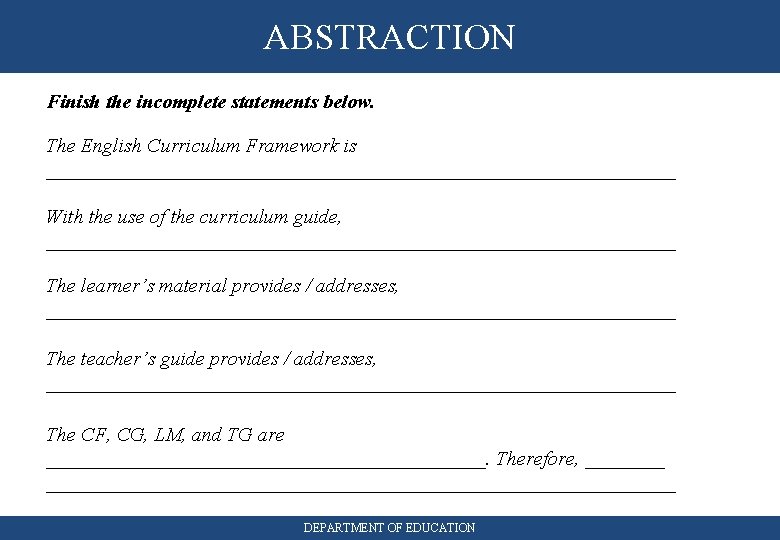
ABSTRACTION Finish the incomplete statements below. The English Curriculum Framework is ________________________________ With the use of the curriculum guide, ________________________________ The learner’s material provides / addresses, ________________________________ The teacher’s guide provides / addresses, ________________________________ The CF, CG, LM, and TG are ______________________. Therefore, ____________________________________ DEPARTMENT OF EDUCATION
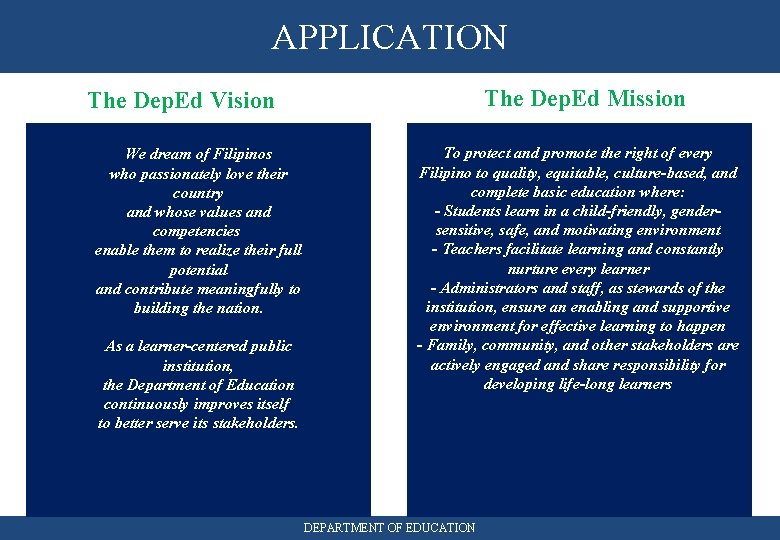
APPLICATION The Dep. Ed Mission The Dep. Ed Vision We dream of Filipinos who passionately love their country and whose values and competencies enable them to realize their full potential and contribute meaningfully to building the nation. As a learner-centered public institution, the Department of Education continuously improves itself to better serve its stakeholders. To protect and promote the right of every Filipino to quality, equitable, culture-based, and complete basic education where: - Students learn in a child-friendly, gendersensitive, safe, and motivating environment - Teachers facilitate learning and constantly nurture every learner - Administrators and staff, as stewards of the institution, ensure an enabling and supportive environment for effective learning to happen - Family, community, and other stakeholders are actively engaged and share responsibility for developing life-long learners DEPARTMENT OF EDUCATION