Title and Right Side NOTES ONLY Highlight TN

- Slides: 142
Title and Right Side – NOTES ONLY Highlight TN Ch 9. 1 Date Topic: EQ: Book Questions: Write Question out (left side of red line) and answer it (Highlight answer) based on from what you read. Notes: • • Write out the notes from my website. You may use different color pens. Use Bullets or Number notes. Space out your notes so you can add any additional into during lecture. NO HIGHLIGTING, UNDERLINING, etc WE WILL DO OUR FOCUS NOTES TOGETHER Summary: • Write 2 -3 sentences (end of notes) from what you learned from reading, notes, and/or lecture.
Title and Highlight LEFT Side – PICTURES, PRACTICE PROBLEMS, ETC TN Ch 9. 1 DRAW ANY PICTURES, FIGURES, AND WRITE OUT ANY PRACTICE PROBLEMS/QUESTIONS. WE WILL ANSWER THEM TOGETHER. LEAVE SPACES SO WE CAN ANSWER QUES.
Electrons in Atoms and the Periodic Table • We examine two important models—the Bohr model and the quantum-mechanical model —that propose explanations for the inertness of helium, the reactivity of hydrogen, and the periodic law. • These models explain how electrons exist in atoms and how those electrons affect the chemical and physical properties of elements. • (Remember – elements in same group have similar phy/chem prop’s) - Learned this in Ch 4!!
Electromagnetic Radiation • The interaction of light with atoms helped to shape scientists’ models of the atom. • Light is a form of electromagnetic radiation. • Light has properties of both waves and particles.
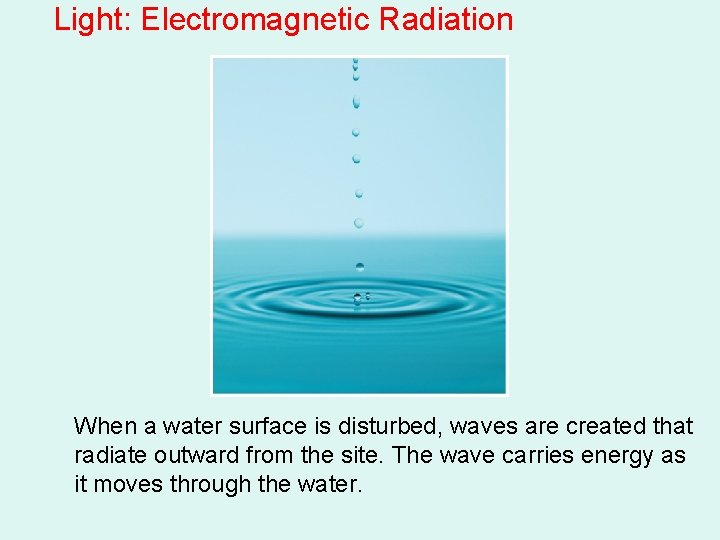
Light: Electromagnetic Radiation When a water surface is disturbed, waves are created that radiate outward from the site. The wave carries energy as it moves through the water.
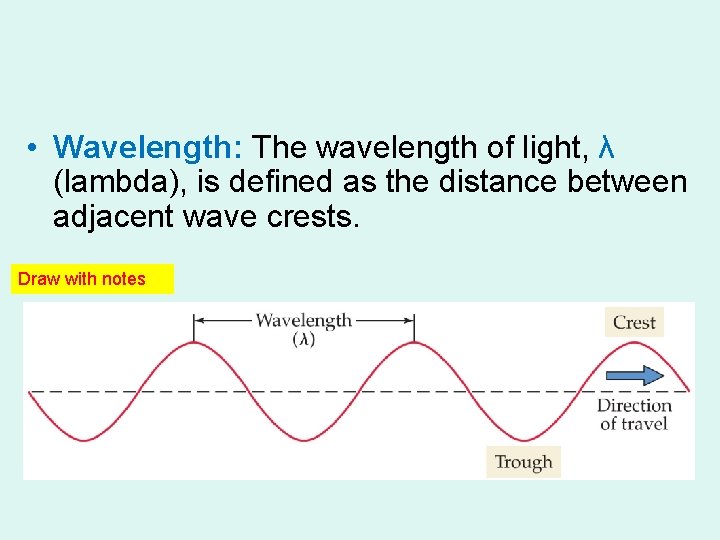
• Wavelength: The wavelength of light, λ (lambda), is defined as the distance between adjacent wave crests. Draw with notes
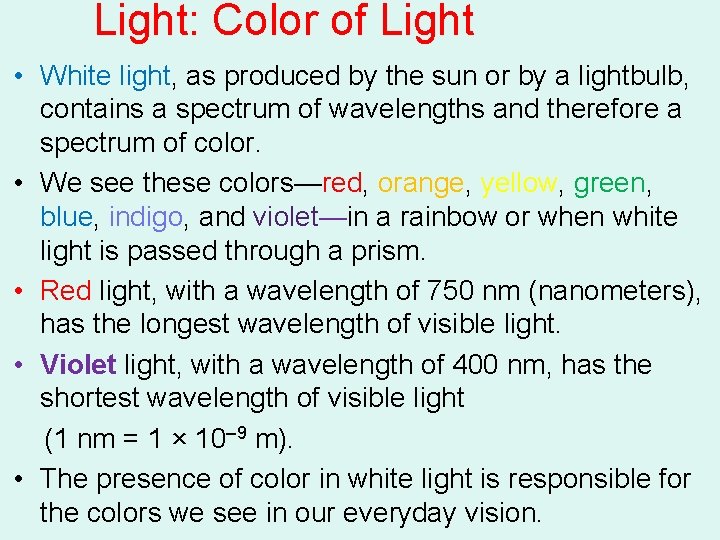
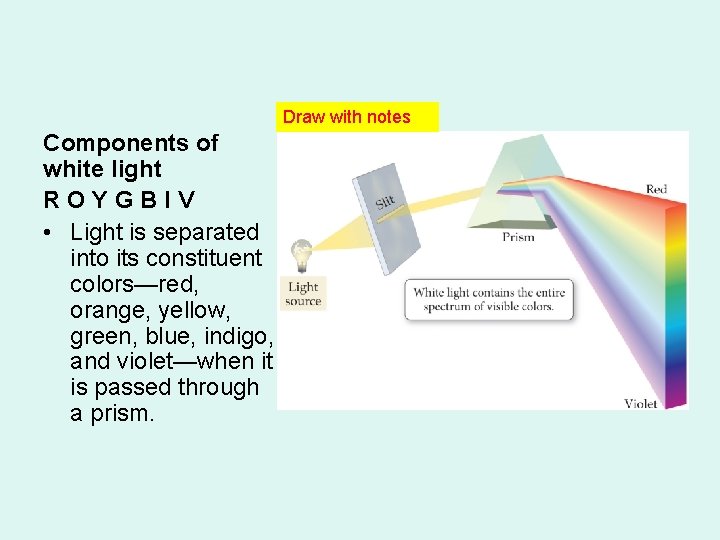
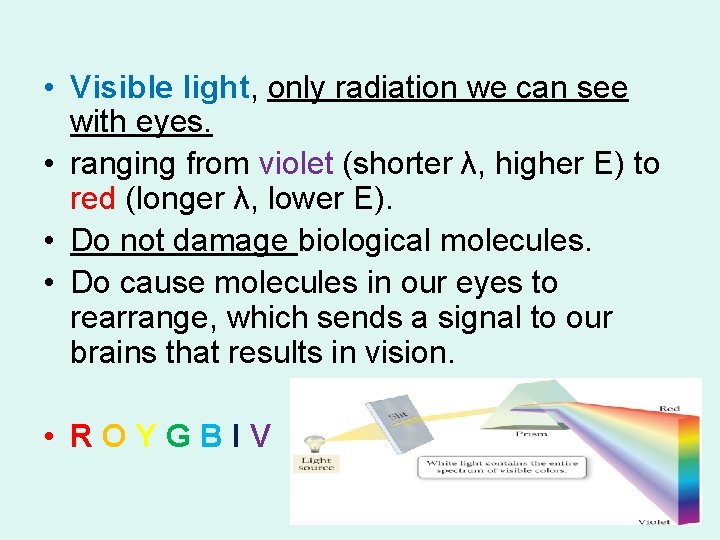
Light: Color of Light • White light, as produced by the sun or by a lightbulb, contains a spectrum of wavelengths and therefore a spectrum of color. • We see these colors—red, orange, yellow, green, blue, indigo, and violet—in a rainbow or when white light is passed through a prism. • Red light, with a wavelength of 750 nm (nanometers), has the longest wavelength of visible light. • Violet light, with a wavelength of 400 nm, has the shortest wavelength of visible light (1 nm = 1 × 10– 9 m). • The presence of color in white light is responsible for the colors we see in our everyday vision.
Draw with notes Components of white light ROYGBIV • Light is separated into its constituent colors—red, orange, yellow, green, blue, indigo, and violet—when it is passed through a prism.
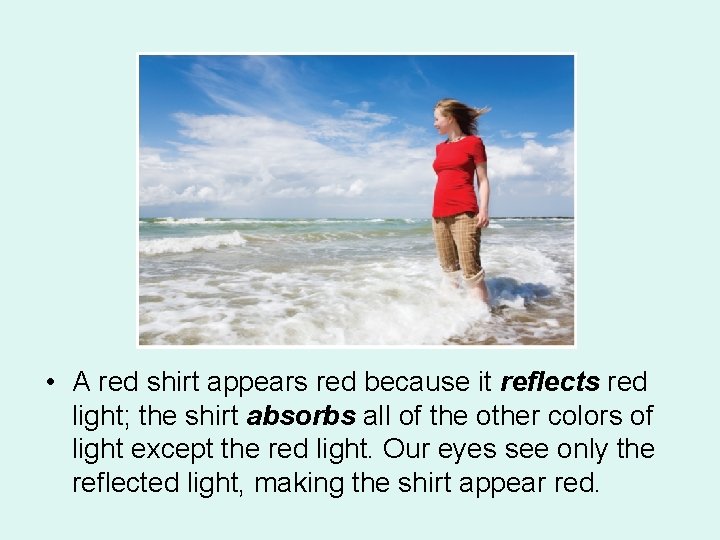
• A red shirt appears red because it reflects red light; the shirt absorbs all of the other colors of light except the red light. Our eyes see only the reflected light, making the shirt appear red.
• Frequency: The frequency of light, ν (nu), is defined as the number of cycles or crests that pass through a stationary point in one second. • Wavelength and frequency are inversely related—the shorter the wavelength, the higher the frequency.
Electromagnetic Radiation (Photons—Particles of Light) • Light can be viewed as a stream of particles. • A particle of light is called a photon. – Photon = packet (bundle) of light energy. • The amount of energy carried in the packet depends on the wavelength of the light—the shorter the wavelength, higher frequency, the greater the energy. • Violet light (shorter wavelength) carries more energy per photon than red light (longer wavelength).
ØCh 9. 3 Notes Topic: Electromagnetic Spectrum EQ: What are the 7 types of radiation? READ Ch 9. 3 (pg. 288 -291) Write Questions & Answer Questions #6 -12 (notes side) Highlight answer
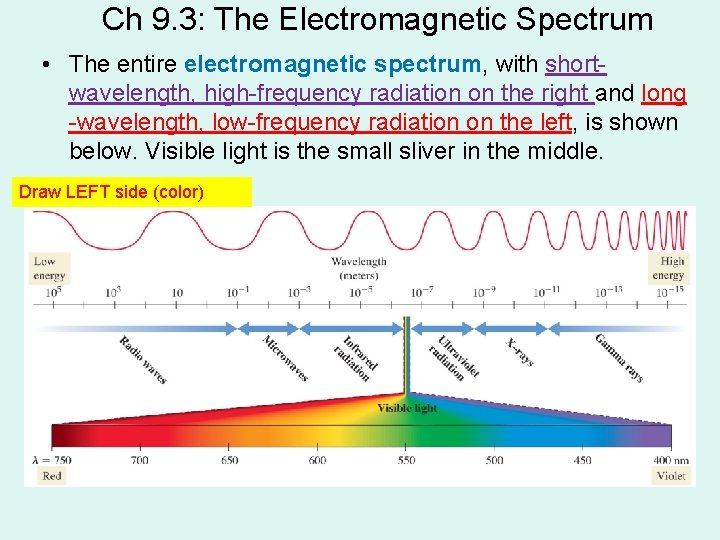
Ch 9. 3: The Electromagnetic Spectrum • The entire electromagnetic spectrum, with shortwavelength, high-frequency radiation on the right and long -wavelength, low-frequency radiation on the left, is shown below. Visible light is the small sliver in the middle. Draw LEFT side (color)
• The shortest wavelength(λ) and most energetic photons are those of gamma rays. – produced by the sun, by stars, and by certain unstable atoms on Earth. – Excessive exposure is dangerous: high energy photons can damage biological molecules.
• X-rays, familiar to us from their medical and dental uses. – used to image internal bones and organs. – Can damage biological molecules. – While yearly exposures to X-rays are relatively harmless, excessive exposure to X-rays increases cancer risk.
• Ultraviolet or UV light - sunlight that produces a sunburn or suntan. • Not as energetic as gamma-ray or X-ray photons, • Still can damage biological molecules. • Excessive exposure to UV increases the risk of skin cancer, cataracts and causes premature wrinkling of the skin.
• Visible light, only radiation we can see with eyes. • ranging from violet (shorter λ, higher E) to red (longer λ, lower E). • Do not damage biological molecules. • Do cause molecules in our eyes to rearrange, which sends a signal to our brains that results in vision. • ROYGBIV
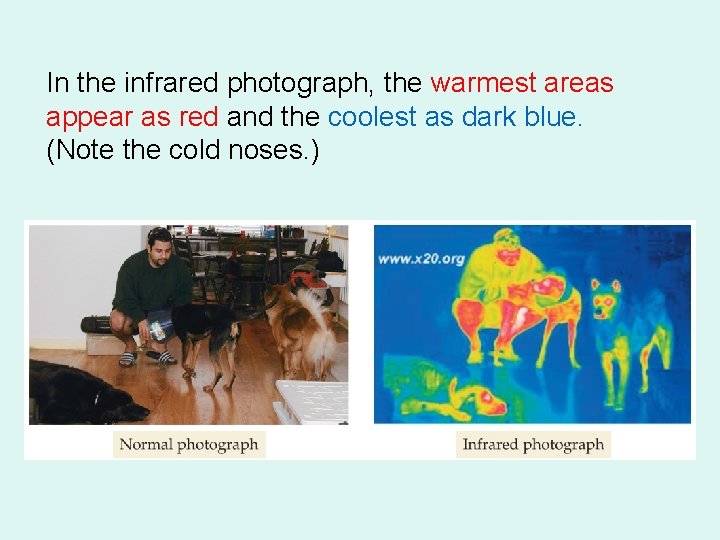
• Infrared (IR) light - The heat you feel when you place your hand near a hot object is infrared light. • All warm objects, including human bodies, emit infrared light. • Can’t see with our eyes, infrared sensors can detect it and are often used in nightvision technology to “see” in the dark. – warm objects—such as human bodies— glow light a lightbulb glows in the visible region of the spectrum.
In the infrared photograph, the warmest areas appear as red and the coolest as dark blue. (Note the cold noses. )
• Microwaves, used for radar and in microwave ovens. – Substances that contain water, such as food, are warmed by the radiation of a microwave oven, but substances that do not contain water, such as a plate, are not.
• The longest wavelengths of light are radio waves, which are used to transmit the signals used by AM and FM radio, cellular telephones, television, and other forms of communication.
Write LEFT side Practice #1 • Arrange three types of electromagnetic radiation—visible light, X-rays, and microwaves—in order of increasing: (a) Wavelength (b) Frequency (c) Energy per photon
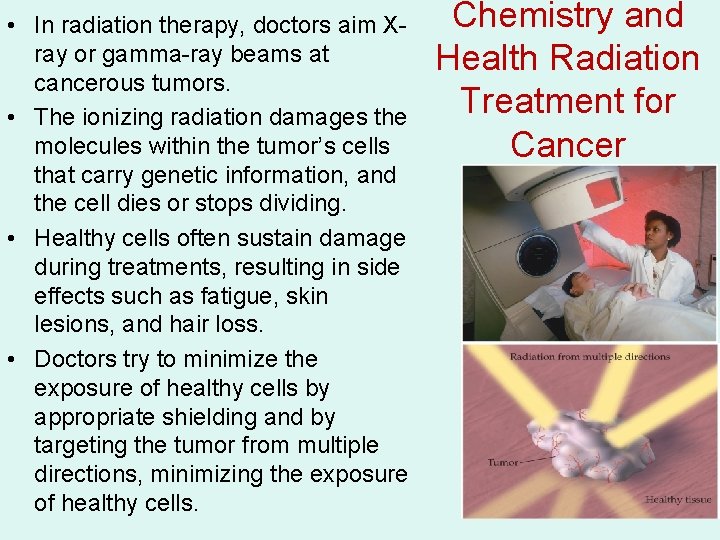
• In radiation therapy, doctors aim Xray or gamma-ray beams at cancerous tumors. • The ionizing radiation damages the molecules within the tumor’s cells that carry genetic information, and the cell dies or stops dividing. • Healthy cells often sustain damage during treatments, resulting in side effects such as fatigue, skin lesions, and hair loss. • Doctors try to minimize the exposure of healthy cells by appropriate shielding and by targeting the tumor from multiple directions, minimizing the exposure of healthy cells. Chemistry and Health Radiation Treatment for Cancer
ØCh 9. 4 -9. 5 Notes Topic: Atoms with Orbitals EQ: How do electrons orbit around the nucleus? READ Ch 9. 4 -9. 5 (pg. 291 -295) Write Questions & Answer Questions #13 -16 (notes side) Highlight answer
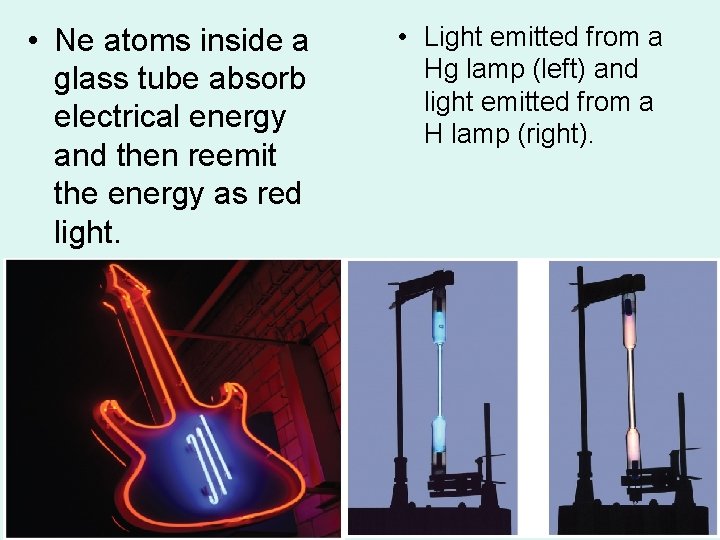
• Ne atoms inside a glass tube absorb electrical energy and then reemit the energy as red light. • Light emitted from a Hg lamp (left) and light emitted from a H lamp (right).
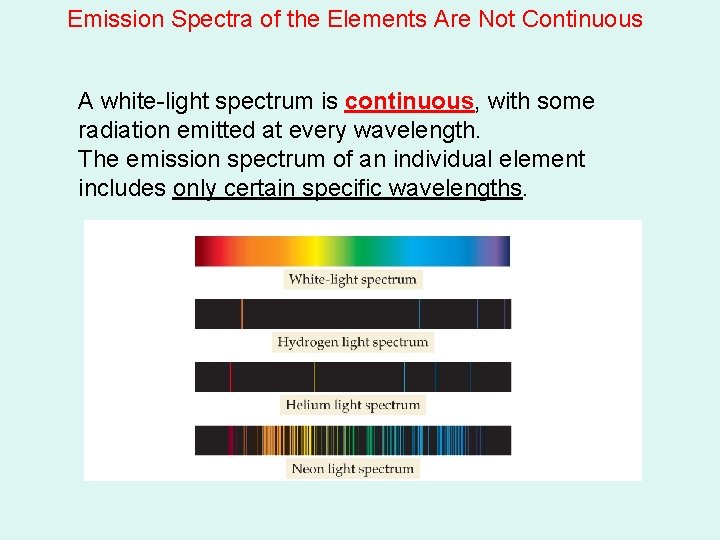
Emission Spectra of the Elements Are Not Continuous A white-light spectrum is continuous, with some radiation emitted at every wavelength. The emission spectrum of an individual element includes only certain specific wavelengths.
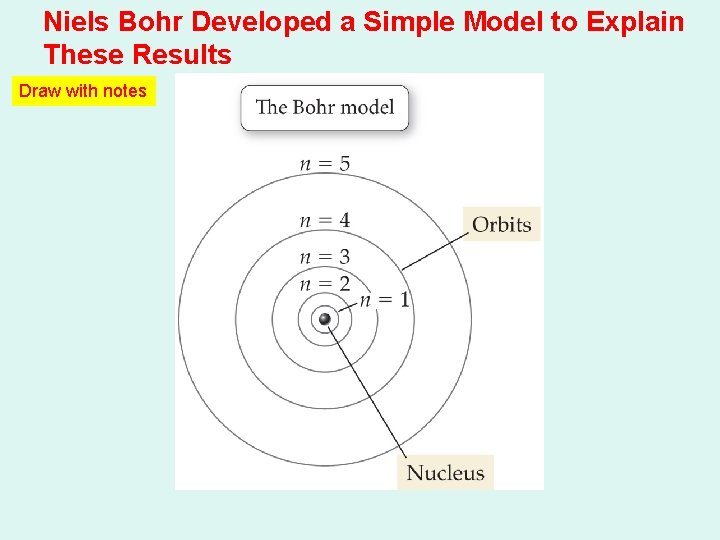
Niels Bohr Developed a Simple Model to Explain These Results Draw with notes
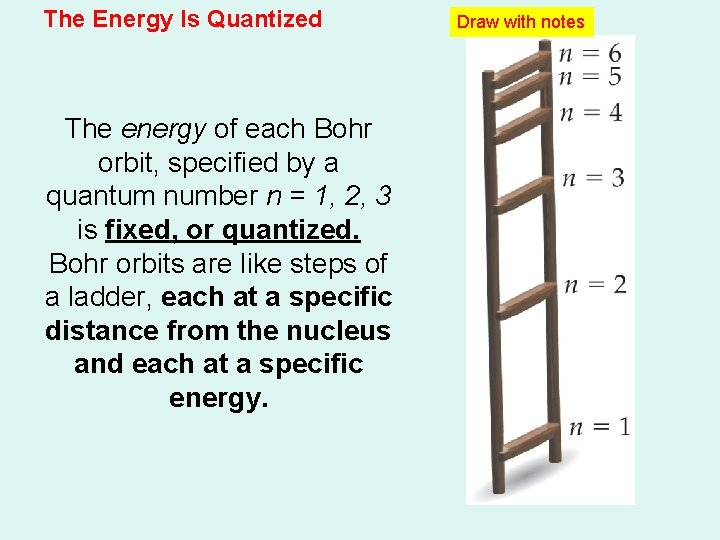
The Energy Is Quantized The energy of each Bohr orbit, specified by a quantum number n = 1, 2, 3 is fixed, or quantized. Bohr orbits are like steps of a ladder, each at a specific distance from the nucleus and each at a specific energy. Draw with notes
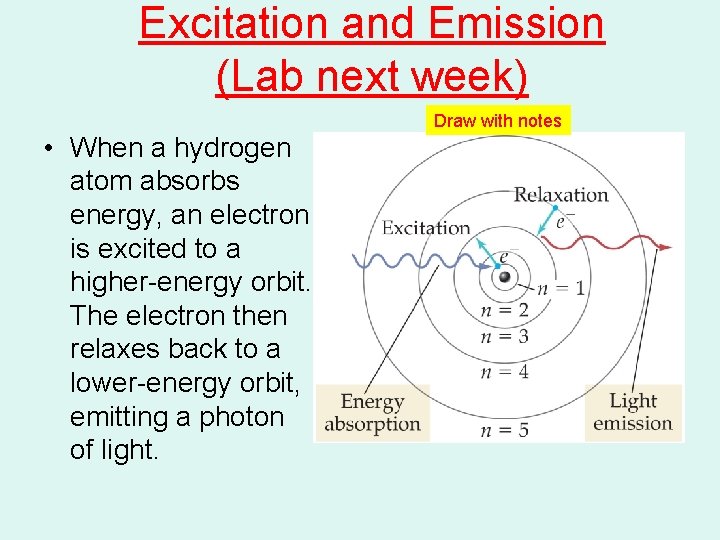
Excitation and Emission (Lab next week) Draw with notes • When a hydrogen atom absorbs energy, an electron is excited to a higher-energy orbit. The electron then relaxes back to a lower-energy orbit, emitting a photon of light.
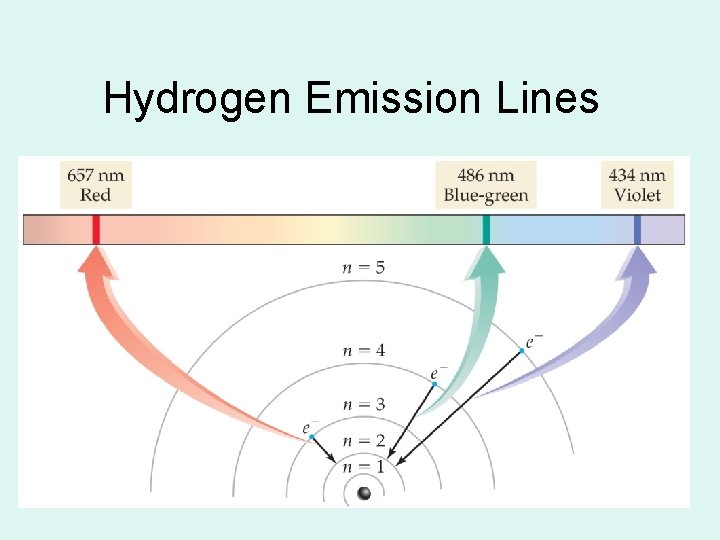
Hydrogen Emission Lines
The Bohr Model: Atoms with Orbits • Bohr model - predicted the lines of the hydrogen emission spectrum. • However, it failed to predict the emission spectra of other elements that contained more than one electron. • Bohr model was replaced with the quantum-mechanical or wave-mechanical model.
• In the quantum-mechanical model, Bohr orbits are replaced with quantummechanical orbitals. • Orbitals are different from orbits - they represent probability maps that show a where the electron is likely to be found.
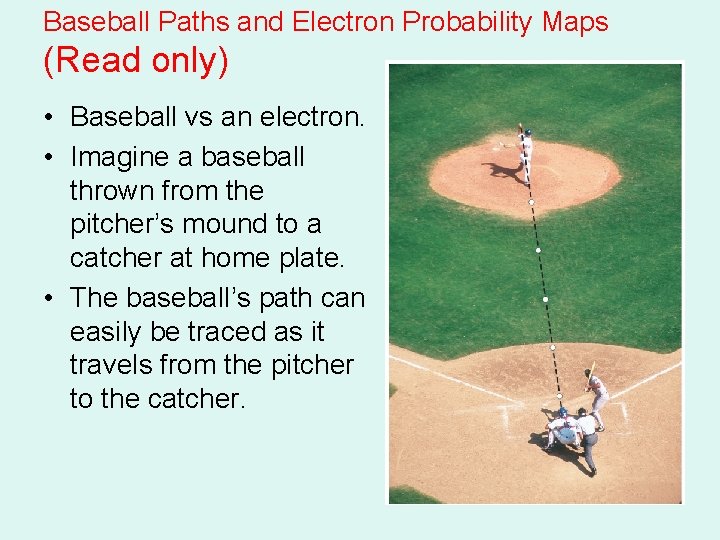
Baseball Paths and Electron Probability Maps (Read only) • Baseball vs an electron. • Imagine a baseball thrown from the pitcher’s mound to a catcher at home plate. • The baseball’s path can easily be traced as it travels from the pitcher to the catcher.
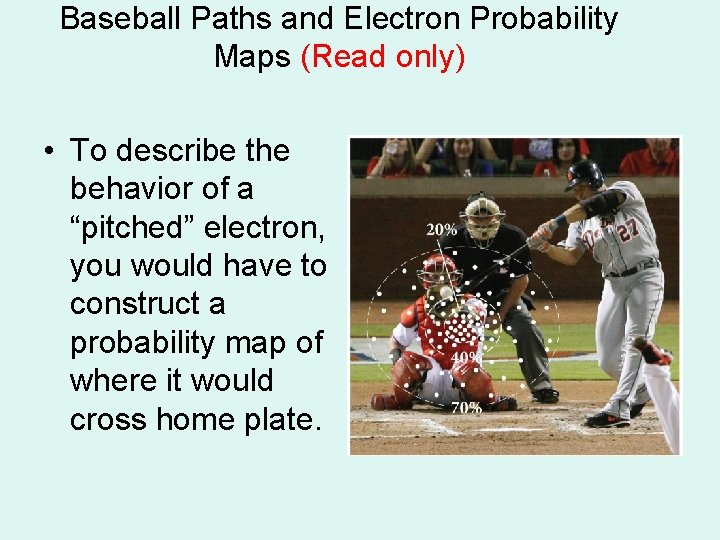
Baseball Paths and Electron Probability Maps (Read only) • To describe the behavior of a “pitched” electron, you would have to construct a probability map of where it would cross home plate.
The Quantum-Mechanical Model: Atoms with Orbitals • We cannot describe their exact paths. – Best probability of where the electron is likely to be found (90% of the time)
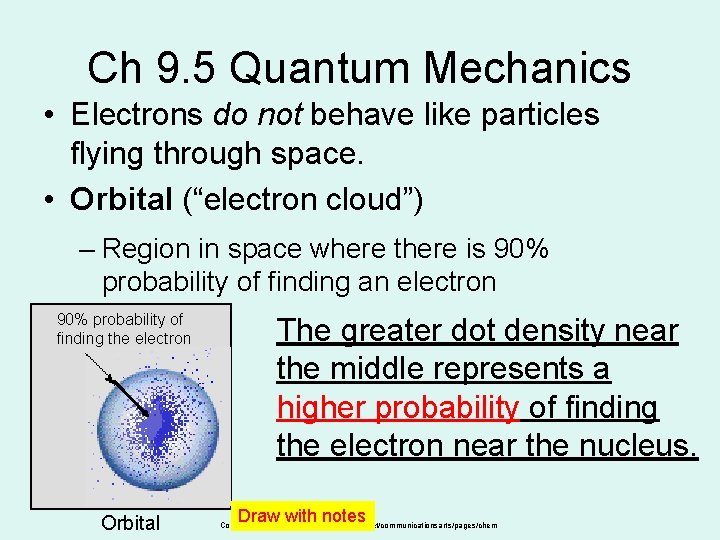
Ch 9. 5 Quantum Mechanics • Electrons do not behave like particles flying through space. • Orbital (“electron cloud”) – Region in space where there is 90% probability of finding an electron 90% probability of finding the electron Orbital The greater dot density near the middle represents a higher probability of finding the electron near the nucleus. Draw with notes Courtesy Christy Johannesson www. nisd. net/communicationsarts/pages/chem
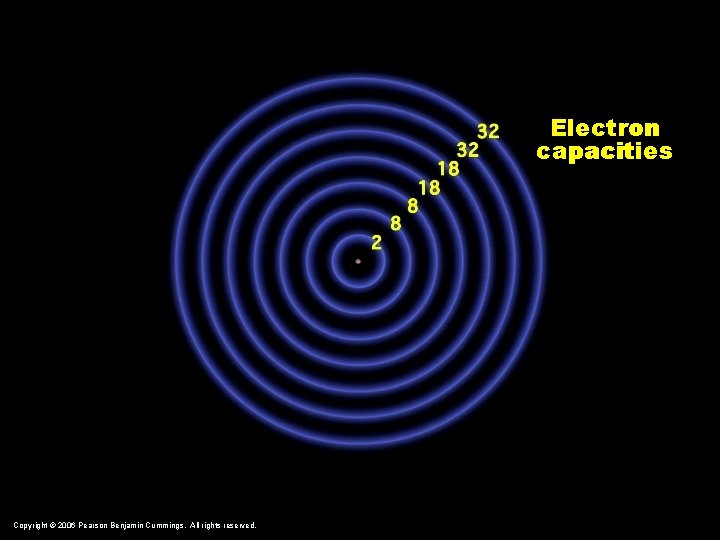
Electron capacities Copyright © 2006 Pearson Benjamin Cummings. All rights reserved.
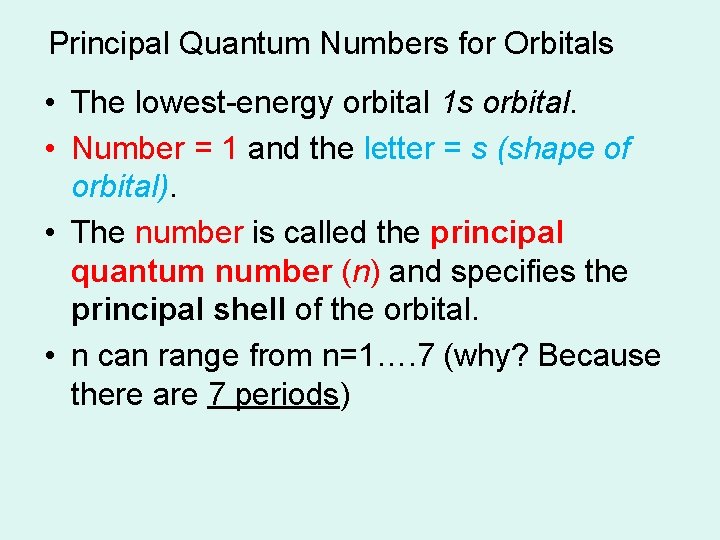
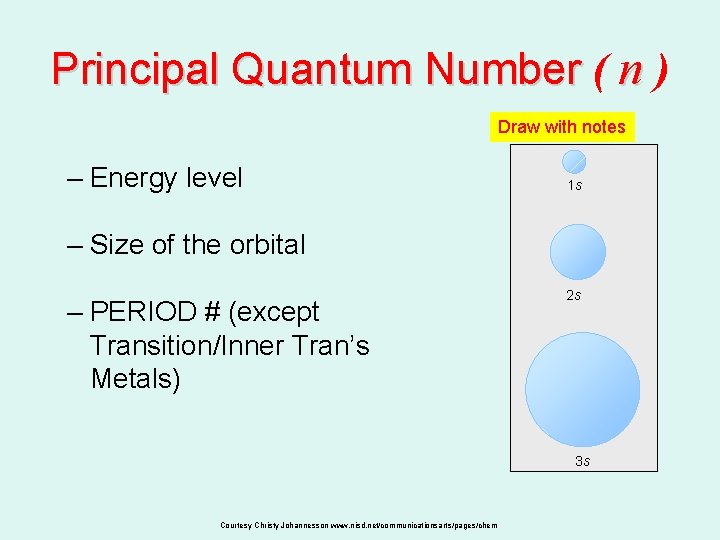
Principal Quantum Numbers for Orbitals • The lowest-energy orbital 1 s orbital. • Number = 1 and the letter = s (shape of orbital). • The number is called the principal quantum number (n) and specifies the principal shell of the orbital. • n can range from n=1…. 7 (why? Because there are 7 periods)
Ground States and Excited States • ground state - lowest energy state • When the e- is in a higher-energy orbital, the hydrogen atom is said to be in an excited state.
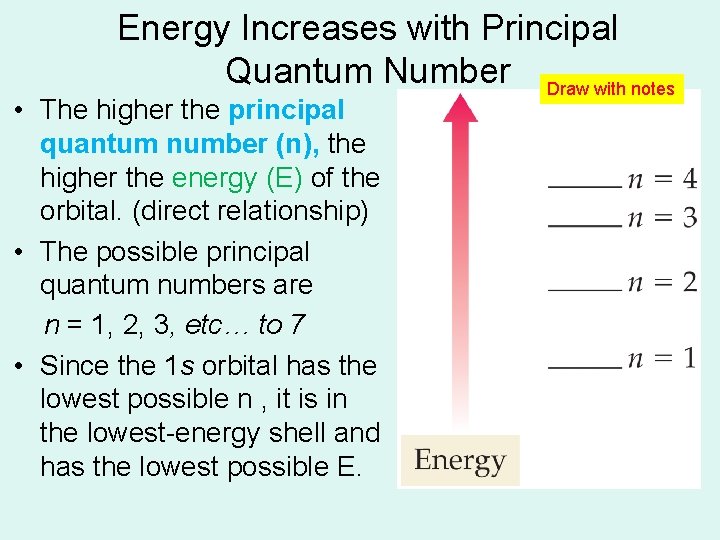
Energy Increases with Principal Quantum Number Draw with notes • The higher the principal quantum number (n), the higher the energy (E) of the orbital. (direct relationship) • The possible principal quantum numbers are n = 1, 2, 3, etc… to 7 • Since the 1 s orbital has the lowest possible n , it is in the lowest-energy shell and has the lowest possible E.
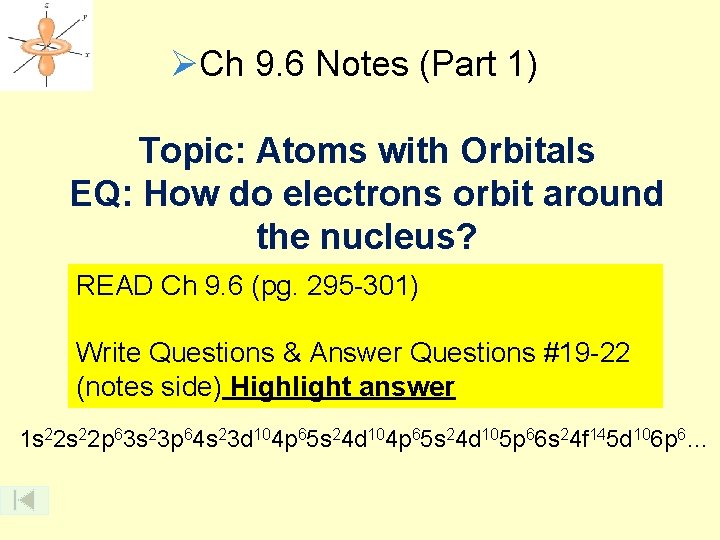
ØCh 9. 6 Notes (Part 1) Topic: Atoms with Orbitals EQ: How do electrons orbit around the nucleus? READ Ch 9. 6 (pg. 295 -301) Write Questions & Answer Questions #19 -22 (notes side) Highlight answer 1 s 22 p 63 s 23 p 64 s 23 d 104 p 65 s 24 d 105 p 66 s 24 f 145 d 106 p 6…
Shapes of Orbitals • The letter indicates the subshell of the orbital and specifies its shape. • The possible letters are s, p, d, and f, each with a different shape. • Orbitals can be drawn as geometric shapes
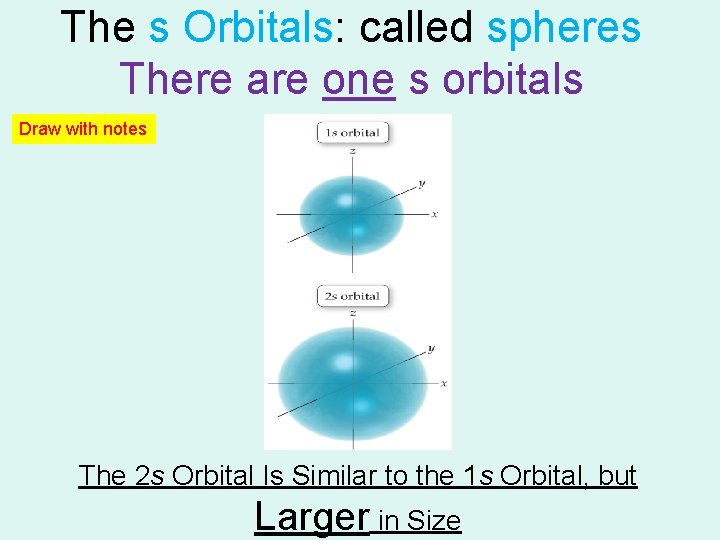
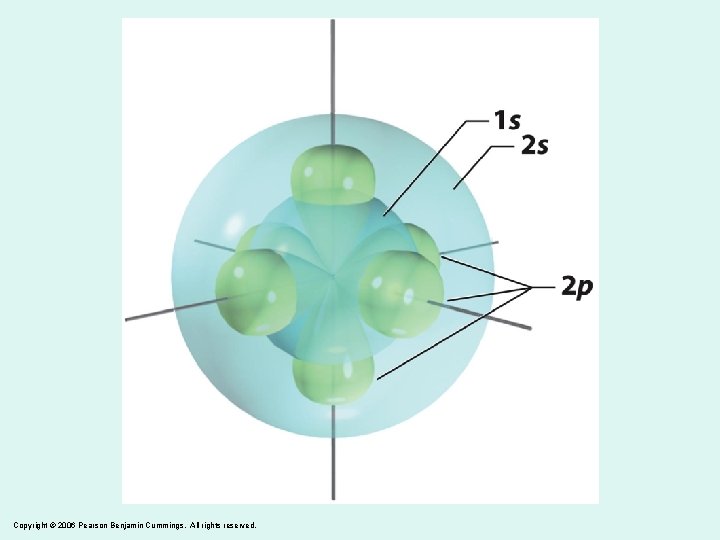
The s Orbitals: called spheres There are one s orbitals Draw with notes The 2 s Orbital Is Similar to the 1 s Orbital, but Larger in Size
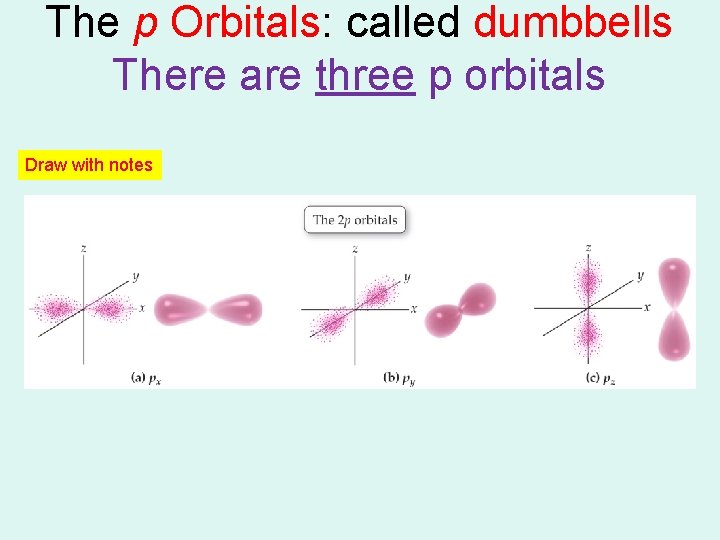
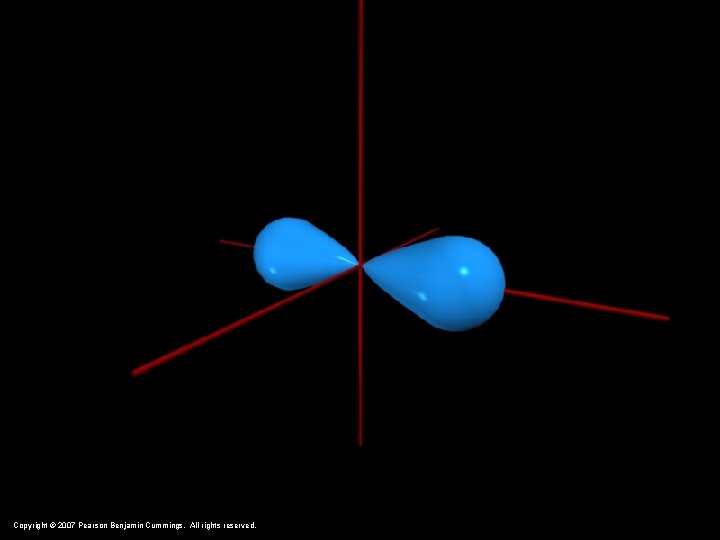
The p Orbitals: called dumbbells There are three p orbitals Draw with notes
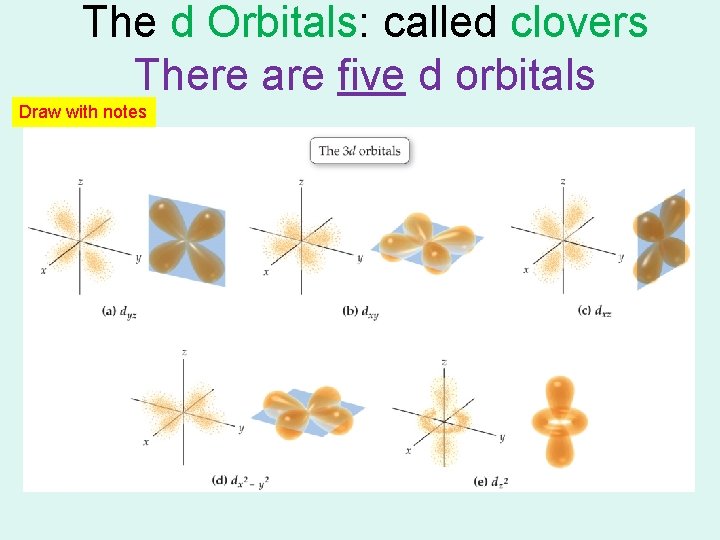
The d Orbitals: called clovers There are five d orbitals Draw with notes
Copyright © 2007 Pearson Benjamin Cummings. All rights reserved.
Copyright © 2006 Pearson Benjamin Cummings. All rights reserved.
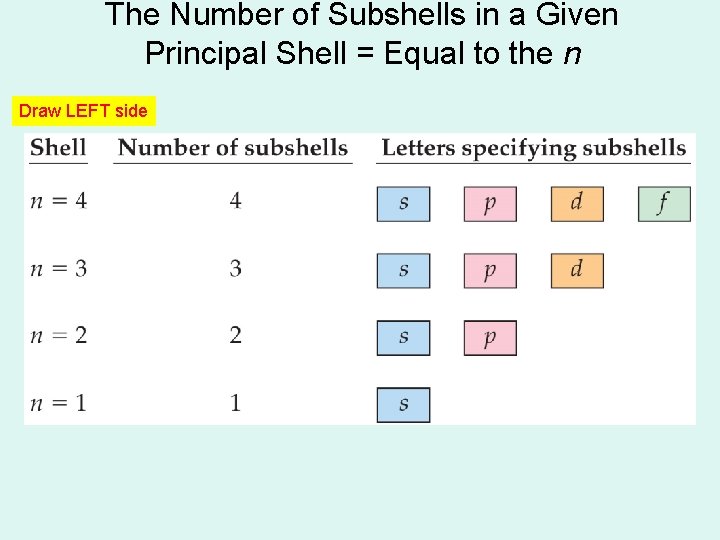
The Number of Subshells in a Given Principal Shell = Equal to the n Draw LEFT side
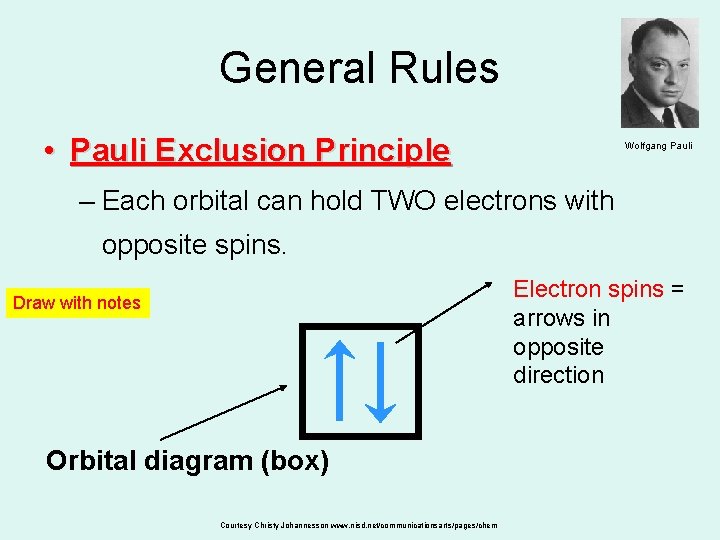
General Rules • Pauli Exclusion Principle Wolfgang Pauli – Each orbital can hold TWO electrons with opposite spins. Electron spins = arrows in opposite direction Draw with notes Orbital diagram (box) Courtesy Christy Johannesson www. nisd. net/communicationsarts/pages/chem
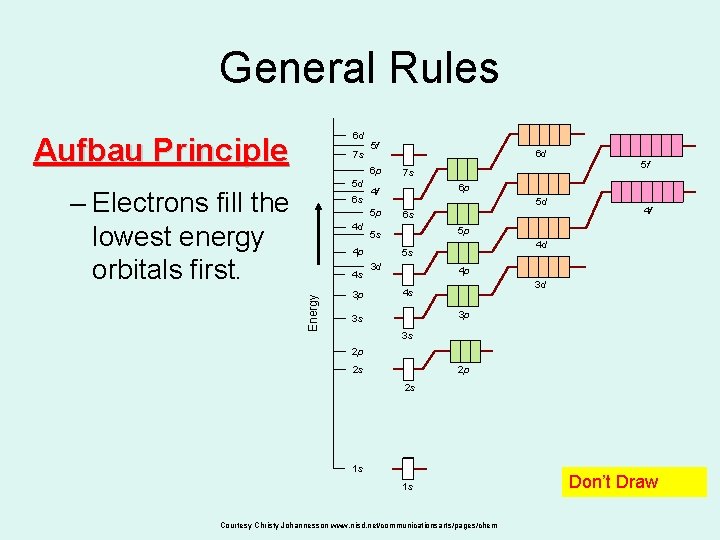
General Rules 6 d Aufbau Principle 7 s 5 f 6 p 5 d – Electrons fill the lowest energy orbitals first. 6 s Energy 3 p 5 f 6 p 5 d 6 s 4 f 5 p 5 s 4 p 4 s 7 s 4 f 5 p 4 d 6 d 4 d 5 s 3 d 4 p 3 d 4 s 3 p 3 s 3 s 2 p 2 p 2 s 2 s 1 s 1 s Courtesy Christy Johannesson www. nisd. net/communicationsarts/pages/chem Don’t Draw
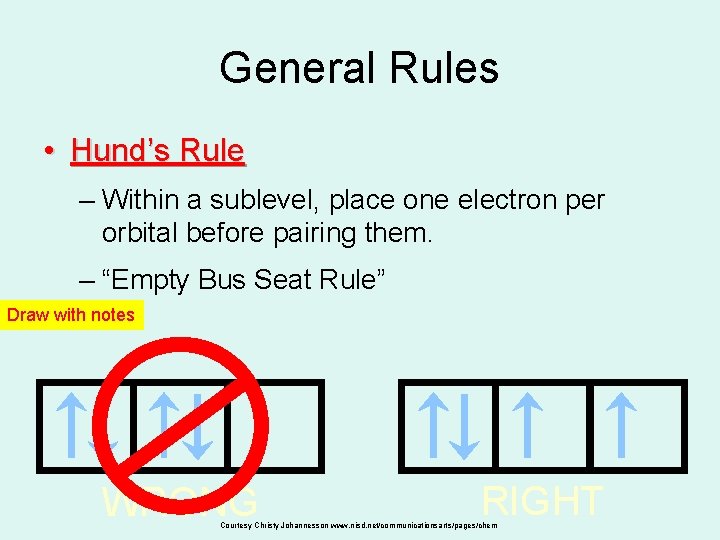
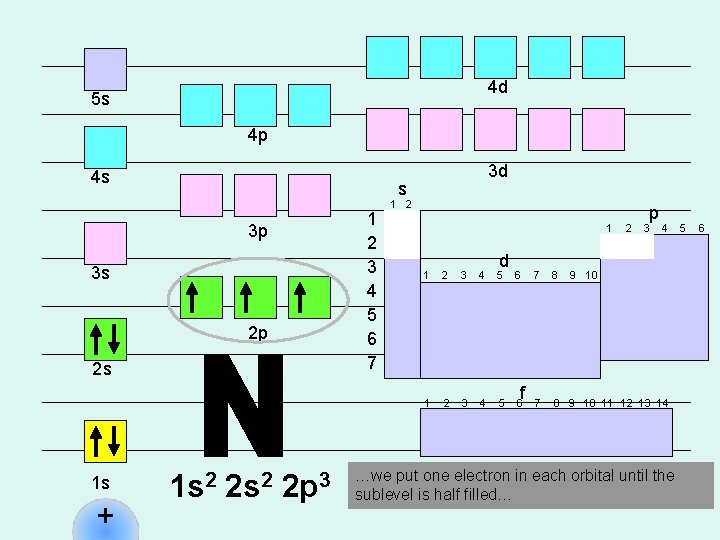
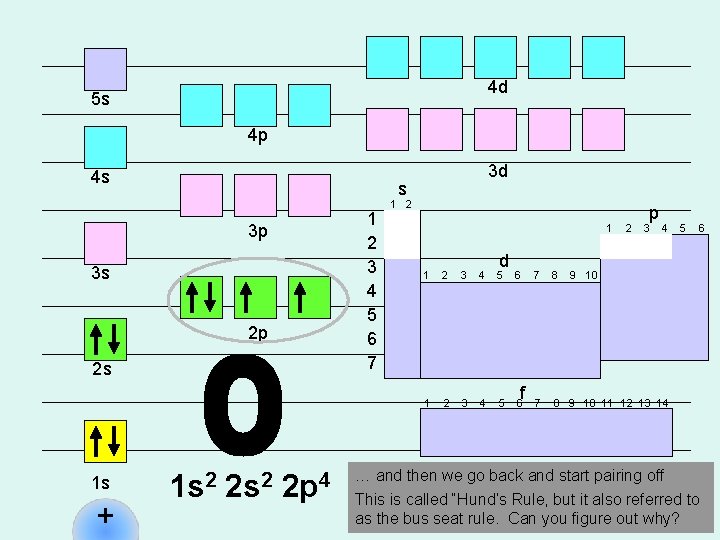
General Rules • Hund’s Rule – Within a sublevel, place one electron per orbital before pairing them. – “Empty Bus Seat Rule” Draw with notes WRONG RIGHT Courtesy Christy Johannesson www. nisd. net/communicationsarts/pages/chem
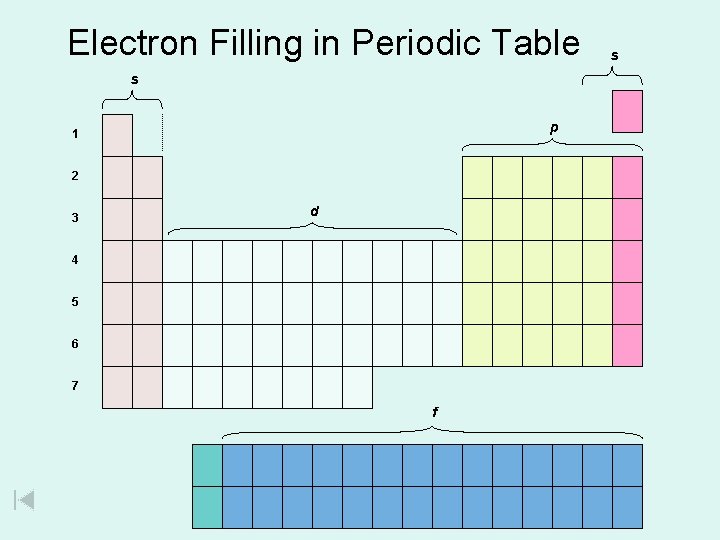
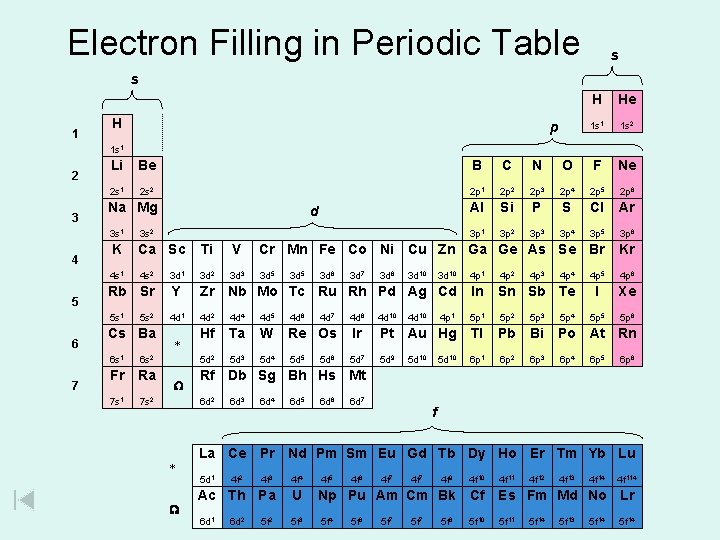
Electron Filling in Periodic Table s p 1 2 3 d 4 5 6 7 f s
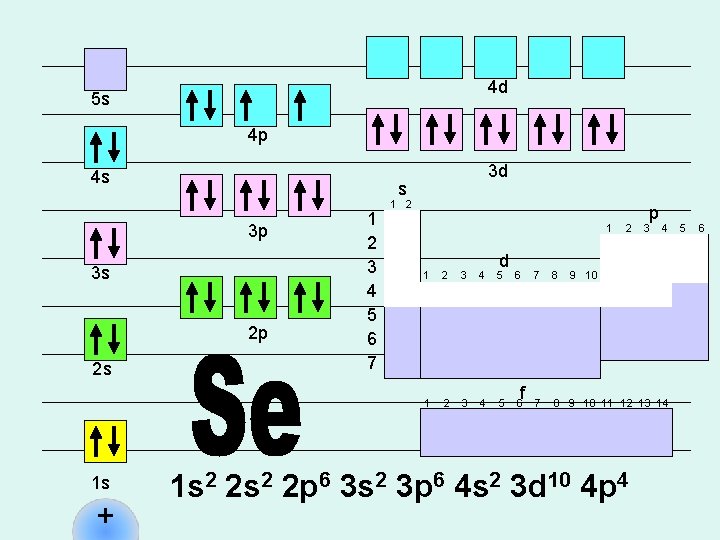
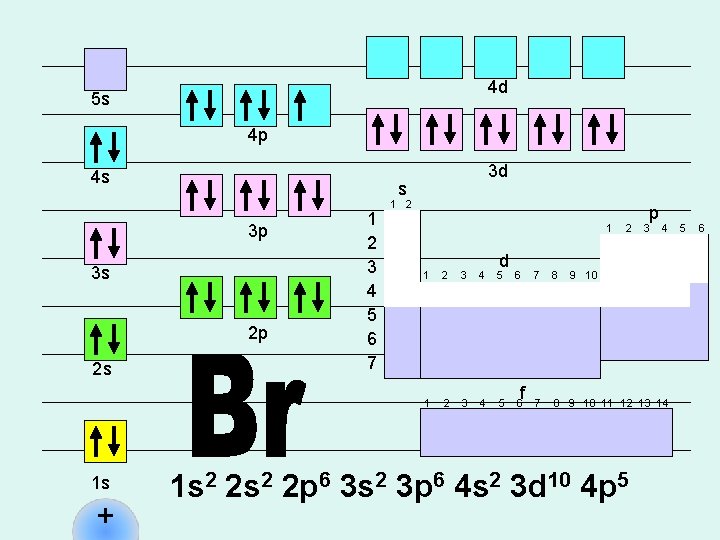
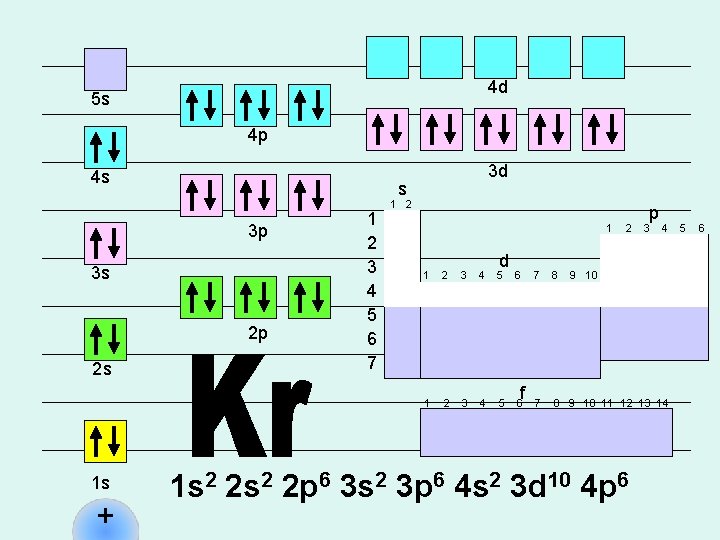
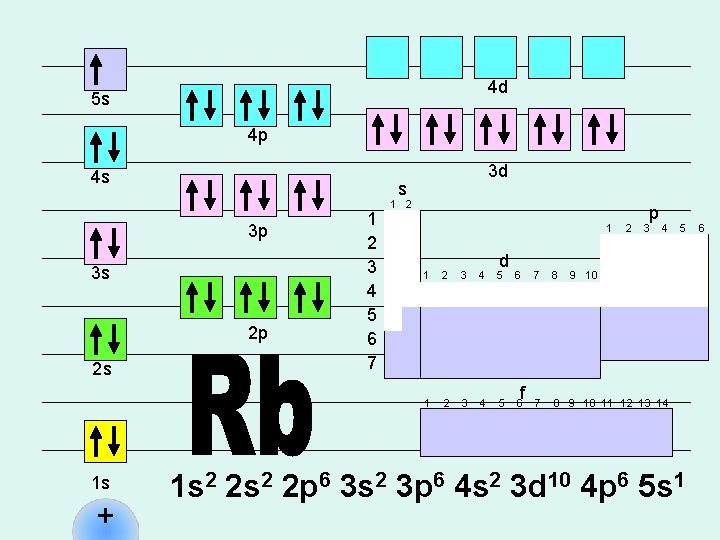
Electron Filling in Periodic Table s s 1 H p H He 1 s 1 1 s 2 1 s 1 2 3 4 5 6 7 Li Be B C N O F Ne 2 s 1 2 s 2 2 p 1 2 p 2 2 p 3 2 p 4 2 p 5 2 p 6 Al Si P S Cl Ar 3 p 1 3 p 2 3 p 3 3 p 4 3 p 5 3 p 6 Na Mg d 3 s 1 3 s 2 K Ca Sc Ti V Cr Mn Fe Co Ni Cu Zn Ga Ge As Se Br Kr 4 s 1 4 s 2 3 d 1 3 d 2 3 d 3 3 d 5 3 d 10 4 p 1 4 p 2 4 p 5 4 p 6 Rb Sr Y Zr Nb Mo Tc Ru Rh Pd Ag Cd In Sn Sb Te I Xe 5 s 1 4 d 2 4 d 4 4 d 5 4 d 6 4 d 7 4 d 8 4 d 10 4 p 1 5 p 2 5 p 3 5 p 4 5 p 5 5 p 6 Hf Ta W Re Os Ir Pt Au Hg Tl Pb Bi Po At Rn 5 d 2 5 d 3 5 d 4 5 d 5 5 d 7 5 d 9 6 p 1 6 p 2 6 p 3 6 p 4 5 s 2 Cs Ba 6 s 1 6 s 2 Fr Ra 7 s 1 7 s 2 * W 5 d 6 3 d 7 3 d 8 3 d 10 4 d 10 5 d 10 4 p 3 4 p 4 6 p 5 6 p 6 6 d 3 6 d 4 6 d 5 6 d 6 6 d 7 f La Ce Pr Nd Pm Sm Eu Gd Tb Dy Ho Er Tm Yb Lu 5 d 1 W 3 d 6 Rf Db Sg Bh Hs Mt 6 d 2 * 3 d 5 4 f 2 4 f 3 4 f 4 Ac Th Pa U 6 d 1 5 f 3 6 d 2 5 f 2 4 f 5 4 f 6 4 f 7 4 f 9 4 f 10 Np Pu Am Cm Bk Cf 5 f 4 5 f 6 5 f 7 5 f 8 5 f 10 4 f 11 4 f 12 4 f 13 4 f 14 4 f 114 Es Fm Md No Lr 5 f 11 5 f 14 5 f 13 5 f 14
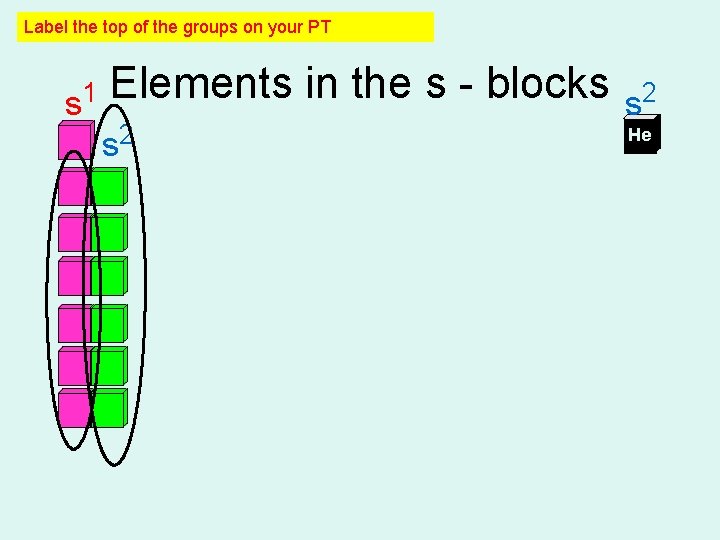
Label the top of the groups on your PT s 1 Elements in the s - blocks 2 s s 2 He
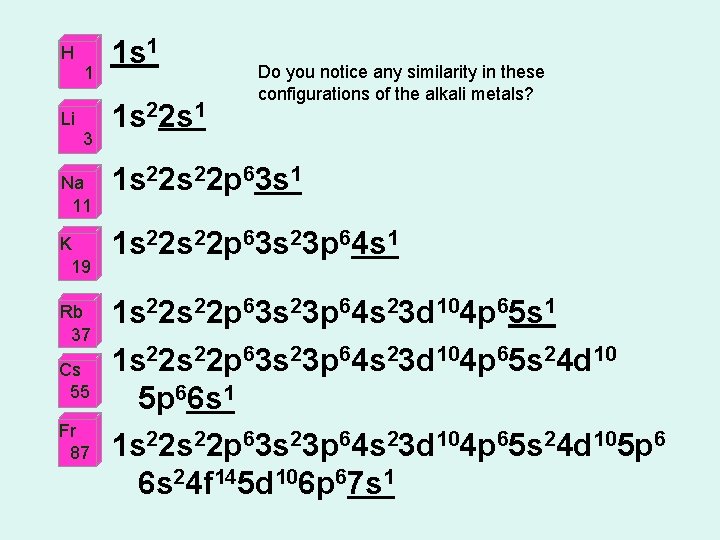
H 1 Li 3 Na 11 1 s 22 s 1 Do you notice any similarity in these configurations of the alkali metals? 1 s 22 p 63 s 1 K 19 1 s 22 p 63 s 23 p 64 s 1 Rb 37 1 s 22 p 63 s 23 p 64 s 23 d 104 p 65 s 1 Cs 55 Fr 87 1 s 22 p 63 s 23 p 64 s 23 d 104 p 65 s 24 d 10 5 p 66 s 1 1 s 22 p 63 s 23 p 64 s 23 d 104 p 65 s 24 d 105 p 6 6 s 24 f 145 d 106 p 67 s 1
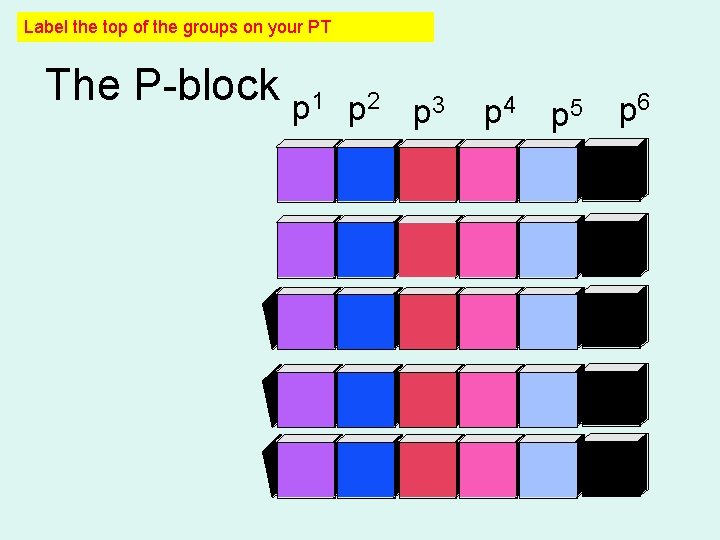
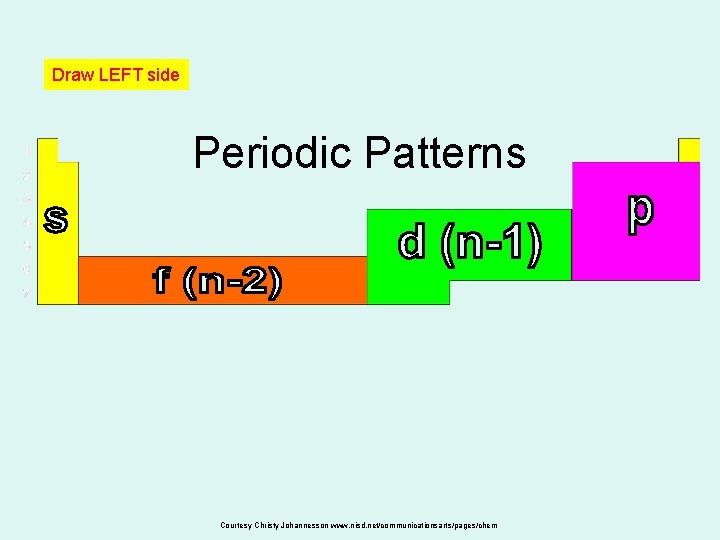
Label the top of the groups on your PT The P-block p 1 p 2 p 3 p 4 p 5 p 6
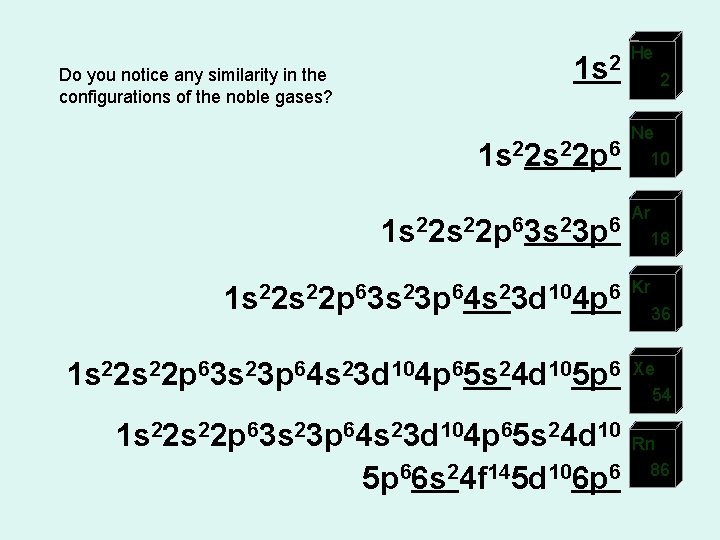
Do you notice any similarity in the configurations of the noble gases? He 2 1 s 1 s 22 p 2 Ne 6 10 1 s 22 p 63 s 23 p 6 Ar 18 Kr 2 2 6 2 10 6 1 s 2 s 2 p 3 s 3 p 4 s 3 d 4 p 36 1 s 22 p 63 s 23 p 64 s 23 d 104 p 65 s 24 d 105 p 6 Xe 54 1 s 22 p 63 s 23 p 64 s 23 d 104 p 65 s 24 d 10 5 p 66 s 24 f 145 d 106 p 6 Rn 86
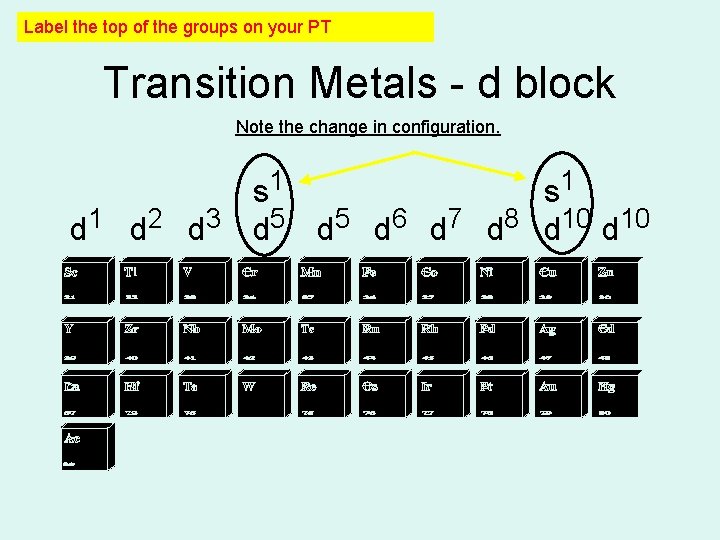
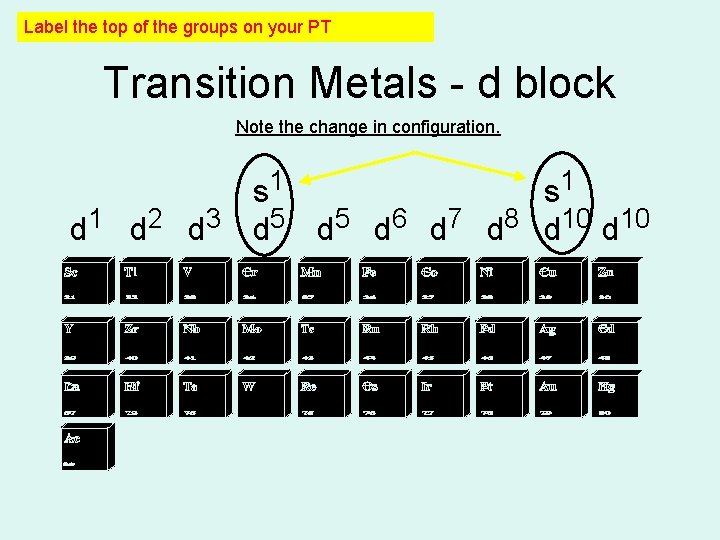
Label the top of the groups on your PT Transition Metals - d block Note the change in configuration. s 1 d 1 d 2 d 3 d 5 d 6 d 7 d 8 d 10
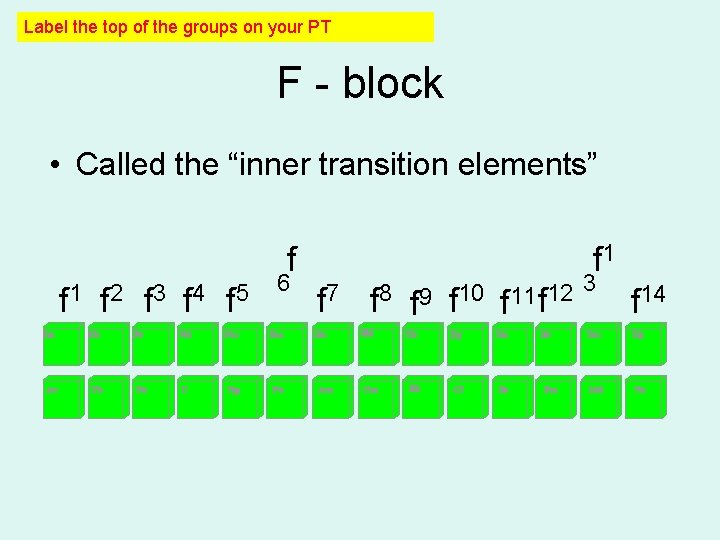
Label the top of the groups on your PT F - block • Called the “inner transition elements” f 1 f f 1 f 2 f 3 f 4 f 5 6 f 7 f 8 f 9 f 10 f 11 f 12 3 f 14
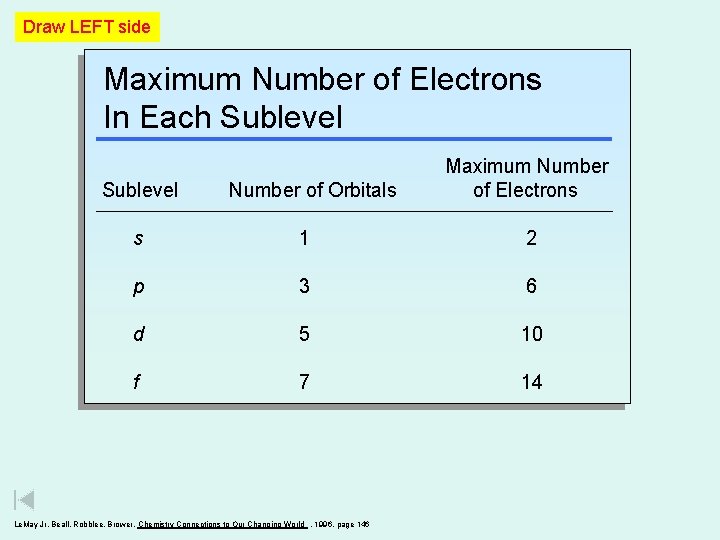
Draw LEFT side Maximum Number of Electrons In Each Sublevel s Number of Orbitals Maximum Number of Electrons 1 2 p 3 6 d 5 10 f 7 14 Le. May Jr, Beall, Robblee, Brower, Chemistry Connections to Our Changing World , 1996, page 146
Principal Quantum Number ( n ) Draw with notes – Energy level 1 s – Size of the orbital – PERIOD # (except Transition/Inner Tran’s Metals) 2 s 3 s Courtesy Christy Johannesson www. nisd. net/communicationsarts/pages/chem
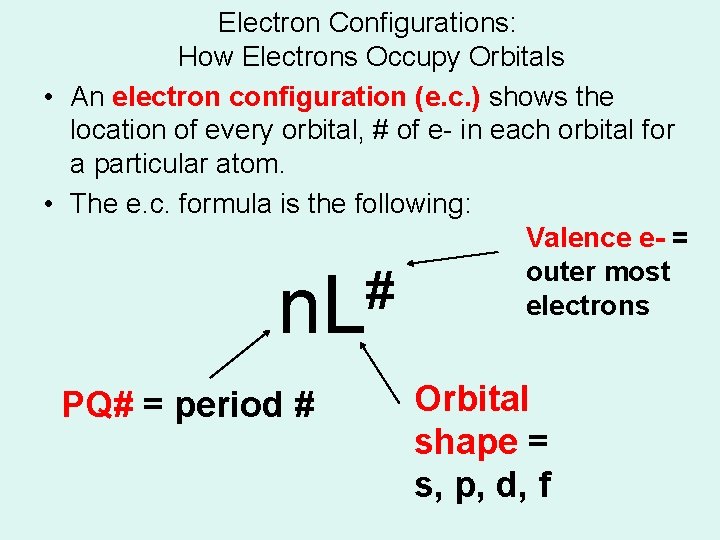
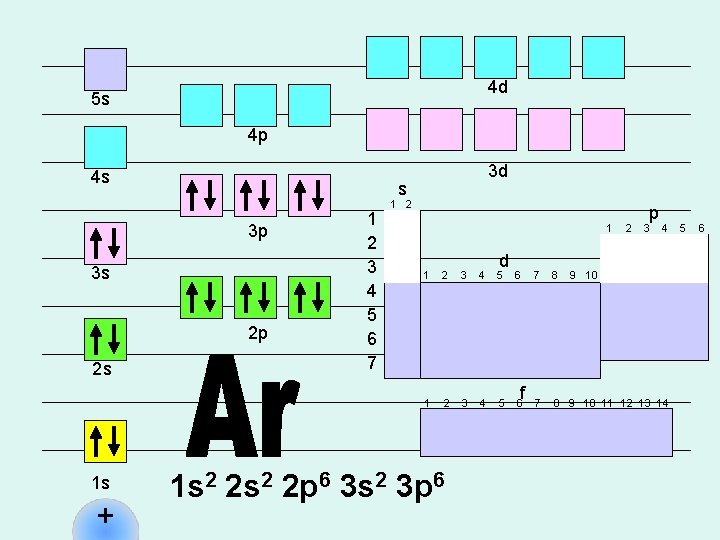
Electron Configurations: How Electrons Occupy Orbitals • An electron configuration (e. c. ) shows the location of every orbital, # of e- in each orbital for a particular atom. • The e. c. formula is the following: Valence e- = outer most electrons # n. L PQ# = period # Orbital shape = s, p, d, f
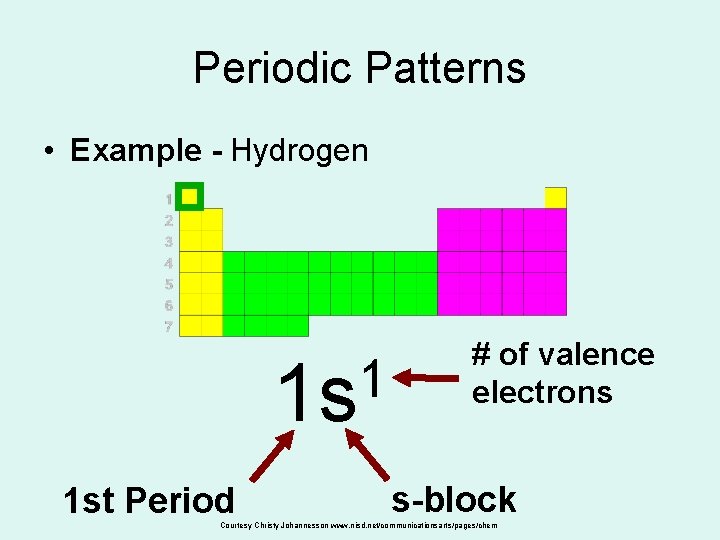
Periodic Patterns • Example - Hydrogen 1 1 s 1 st Period # of valence electrons s-block Courtesy Christy Johannesson www. nisd. net/communicationsarts/pages/chem
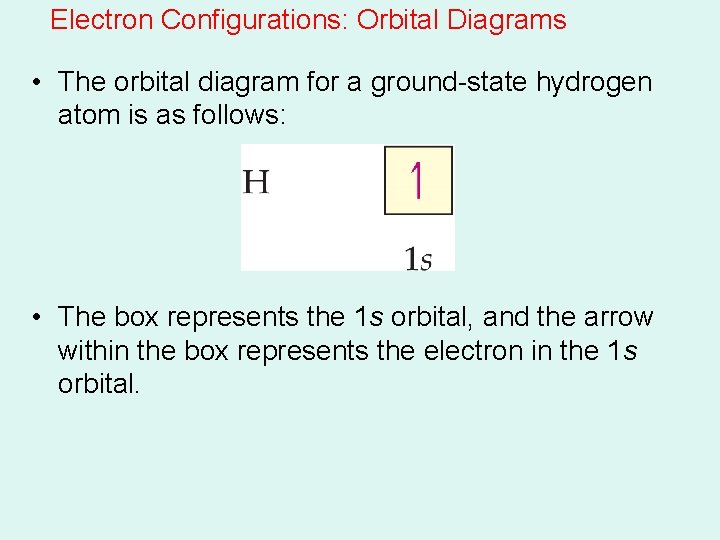
Electron Configurations: Orbital Diagrams • The orbital diagram for a ground-state hydrogen atom is as follows: • The box represents the 1 s orbital, and the arrow within the box represents the electron in the 1 s orbital.
Let’s Practice • The following slides we will do in class!! • Don’t write them in notes yet • Get out PT • List the first 20 elements (symbols) • Leave space between each element.
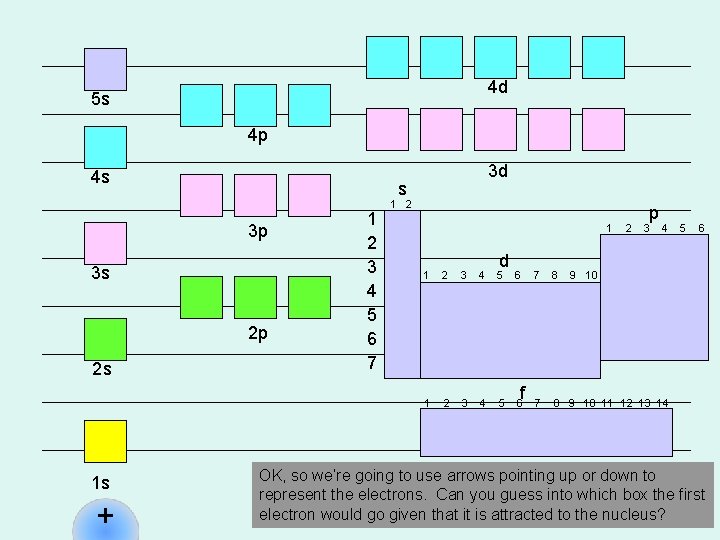
4 d 5 s 4 p 4 s s 3 p 3 s 2 p 2 s 1 2 3 4 5 6 7 3 d 1 2 p 1 2 3 4 5 6 d 1 2 3 4 5 6 7 8 9 10 f 1 2 3 4 5 6 7 8 9 10 11 12 13 14 1 s + OK, so we’re going to use arrows pointing up or down to represent the electrons. Can you guess into which box the first electron would go given that it is attracted to the nucleus?
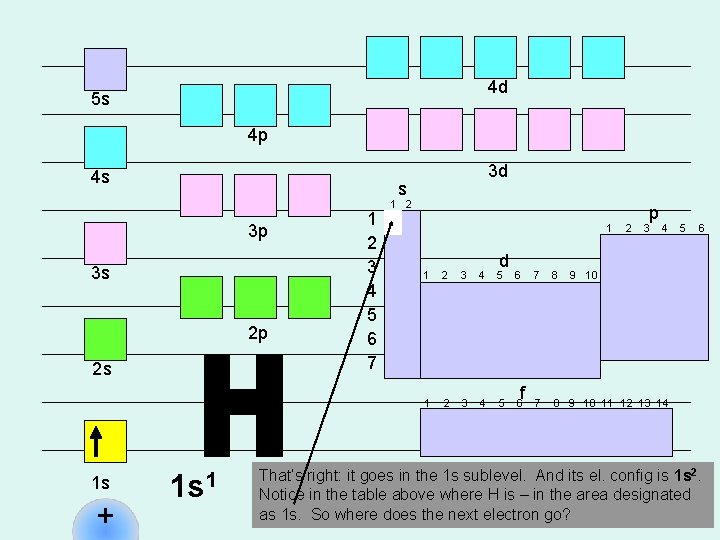
4 d 5 s 4 p 4 s s 3 p 3 s 2 p 2 s 1 2 3 4 5 6 7 3 d 1 2 p 1 2 3 4 5 6 d 1 2 3 4 5 6 7 8 9 10 f 1 2 3 4 5 6 7 8 9 10 11 12 13 14 1 s + 1 s 1 That’s right: it goes in the 1 s sublevel. And its el. config is 1 s 2. Notice in the table above where H is – in the area designated as 1 s. So where does the next electron go?
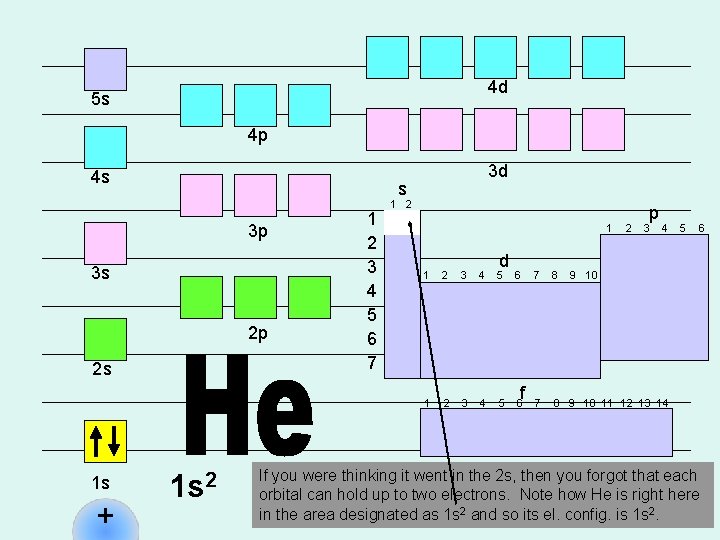
4 d 5 s 4 p 4 s s 3 p 3 s 2 p 2 s 1 2 3 4 5 6 7 3 d 1 2 p 1 2 3 4 5 6 d 1 2 3 4 5 6 7 8 9 10 f 1 2 3 4 5 6 7 8 9 10 11 12 13 14 1 s + 1 s 2 If you were thinking it went in the 2 s, then you forgot that each orbital can hold up to two electrons. Note how He is right here in the area designated as 1 s 2 and so its el. config. is 1 s 2.
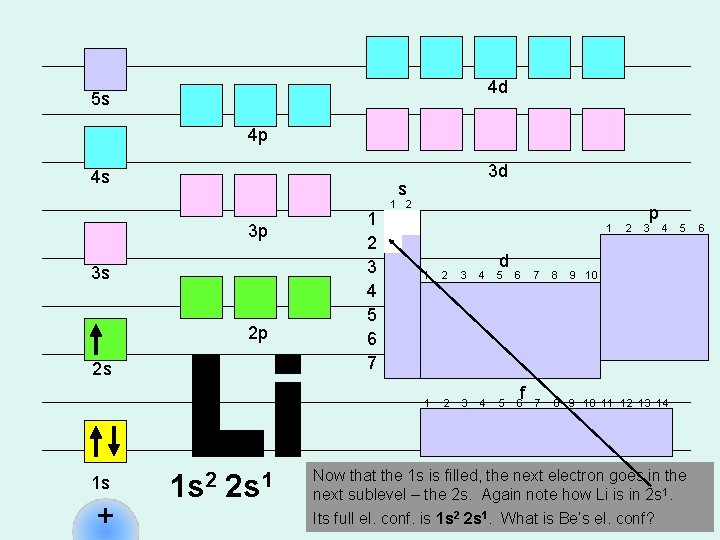
4 d 5 s 4 p 4 s s 3 p 3 s 2 p 2 s 1 2 3 4 5 6 7 3 d 1 2 p 1 2 3 4 5 6 d 1 2 3 4 5 6 7 8 9 10 f 1 2 3 4 5 6 7 8 9 10 11 12 13 14 1 s + 1 s 2 2 s 1 Now that the 1 s is filled, the next electron goes in the next sublevel – the 2 s. Again note how Li is in 2 s 1. Its full el. conf. is 1 s 2 2 s 1. What is Be’s el. conf?
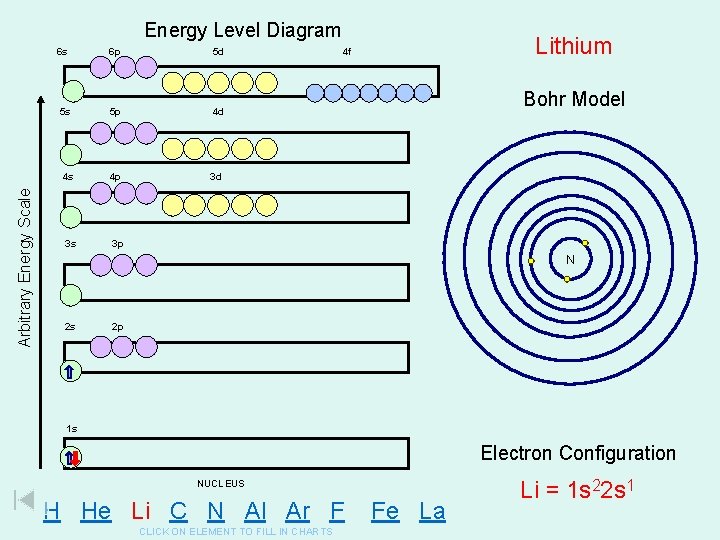
Arbitrary Energy Scale Energy Level Diagram 6 s 6 p 5 d 5 s 5 p 4 d 4 s 4 p 3 d 3 s 3 p 4 f Lithium Bohr Model N 2 s 2 p 1 s Electron Configuration NUCLEUS H He Li C N Al Ar F Fe La CLICK ON ELEMENT TO FILL IN CHARTS Li = 1 s 22 s 1
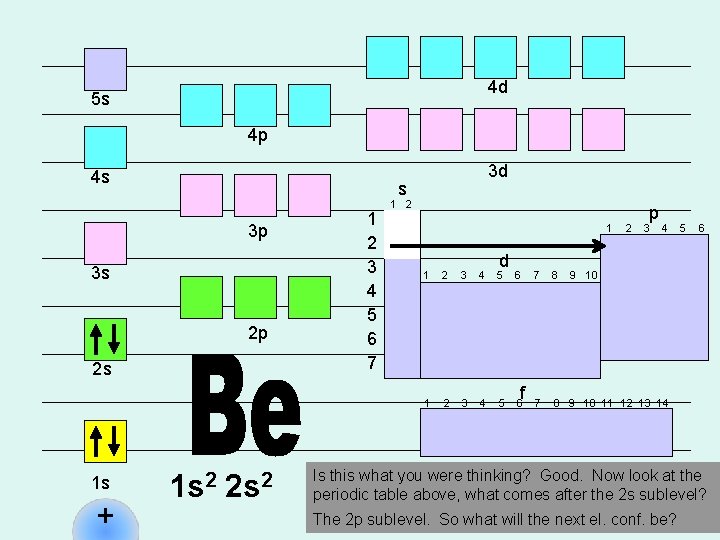
4 d 5 s 4 p 4 s s 3 p 3 s 2 p 2 s 1 2 3 4 5 6 7 3 d 1 2 p 1 2 3 4 5 6 d 1 2 3 4 5 6 7 8 9 10 f 1 2 3 4 5 6 7 8 9 10 11 12 13 14 1 s + 1 s 2 2 s 2 Is this what you were thinking? Good. Now look at the periodic table above, what comes after the 2 s sublevel? The 2 p sublevel. So what will the next el. conf. be?
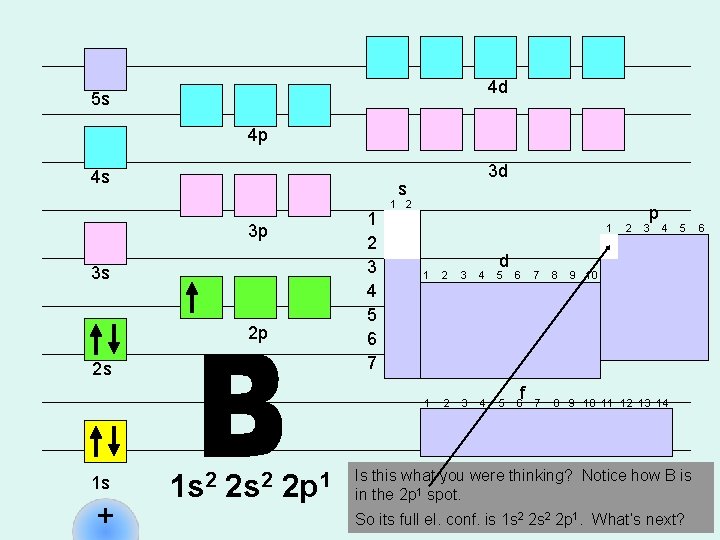
4 d 5 s 4 p 4 s s 1 2 3 4 5 6 7 3 p 3 s 2 p 2 s 3 d 1 2 p 1 2 3 4 5 6 d 1 2 3 4 5 6 7 8 9 10 f 1 2 3 4 5 6 7 8 9 10 11 12 13 14 1 s + 1 s 2 2 p 1 Is this what you were thinking? Notice how B is in the 2 p 1 spot. So its full el. conf. is 1 s 2 2 p 1. What’s next?
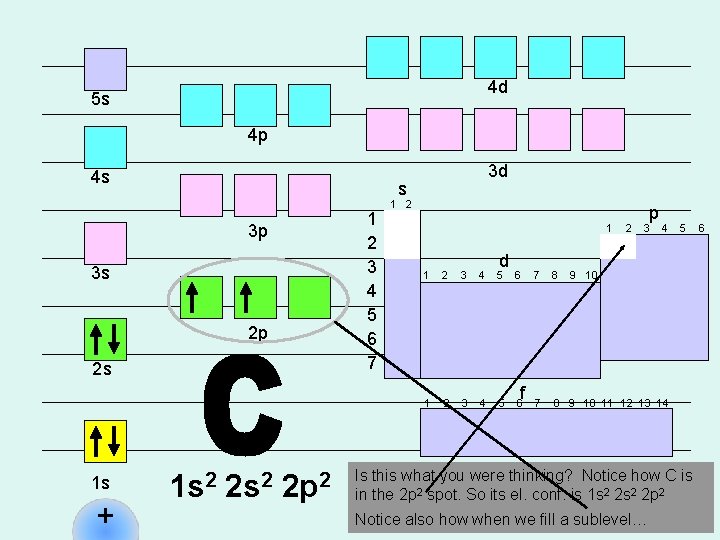
4 d 5 s 4 p 4 s s 1 2 3 4 5 6 7 3 p 3 s 2 p 2 s 3 d 1 2 p 1 2 3 4 5 6 d 1 2 3 4 5 6 7 8 9 10 f 1 2 3 4 5 6 7 8 9 10 11 12 13 14 1 s + 1 s 2 2 p 2 Is this what you were thinking? Notice how C is in the 2 p 2 spot. So its el. conf. is 1 s 2 2 p 2 Notice also how when we fill a sublevel…
4 d 5 s 4 p 4 s s 1 2 3 4 5 6 7 3 p 3 s 2 p 2 s 3 d 1 2 p 1 2 3 4 5 6 d 1 2 3 4 5 6 7 8 9 10 f 1 2 3 4 5 6 7 8 9 10 11 12 13 14 1 s + 1 s 2 2 p 3 …we put one electron in each orbital until the sublevel is half filled…
4 d 5 s 4 p 4 s s 1 2 3 4 5 6 7 3 p 3 s 2 p 2 s 3 d 1 2 p 1 2 3 4 5 6 d 1 2 3 4 5 6 7 8 9 10 f 1 2 3 4 5 6 7 8 9 10 11 12 13 14 1 s + 1 s 2 2 p 4 … and then we go back and start pairing off This is called “Hund’s Rule, but it also referred to as the bus seat rule. Can you figure out why?
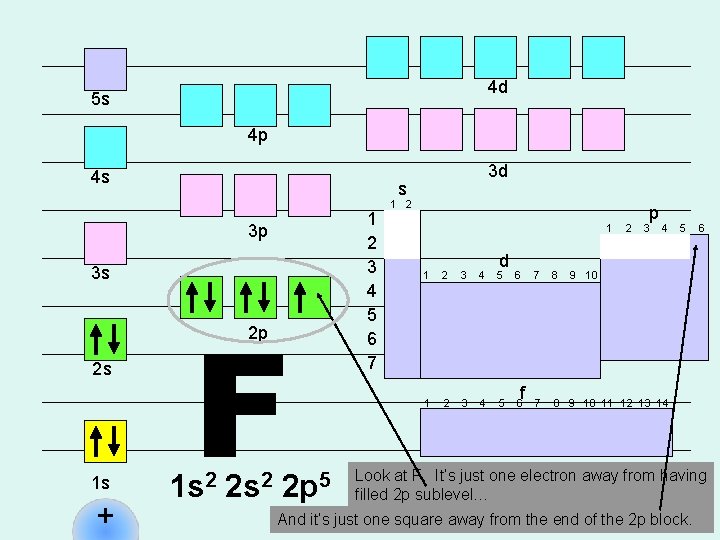
4 d 5 s 4 p 4 s s 1 2 3 4 5 6 7 3 p 3 s 2 p 2 s 3 d 1 2 p 1 2 3 4 5 6 d 1 2 3 4 5 6 7 8 9 10 f 1 2 3 4 5 6 7 8 9 10 11 12 13 14 1 s + 1 s 2 2 p 5 Look at F. It’s just one electron away from having filled 2 p sublevel… And it’s just one square away from the end of the 2 p block.
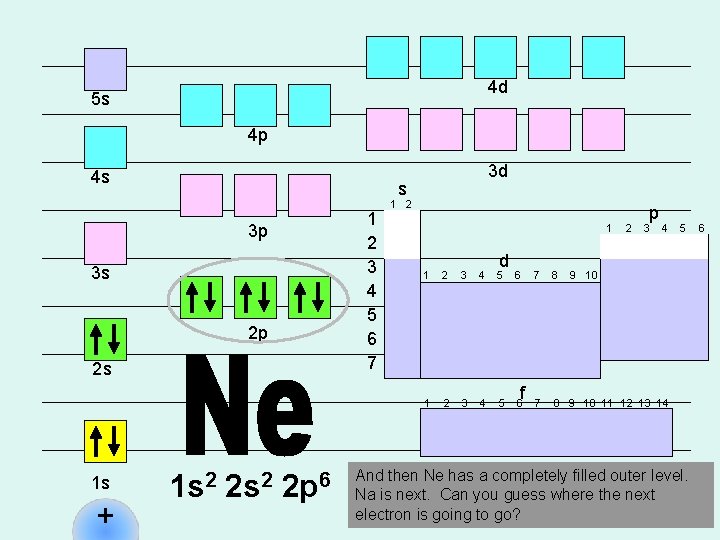
4 d 5 s 4 p 4 s s 1 2 3 4 5 6 7 3 p 3 s 2 p 2 s 3 d 1 2 p 1 2 3 4 5 6 d 1 2 3 4 5 6 7 8 9 10 f 1 2 3 4 5 6 7 8 9 10 11 12 13 14 1 s + 1 s 2 2 p 6 And then Ne has a completely filled outer level. Na is next. Can you guess where the next electron is going to go?
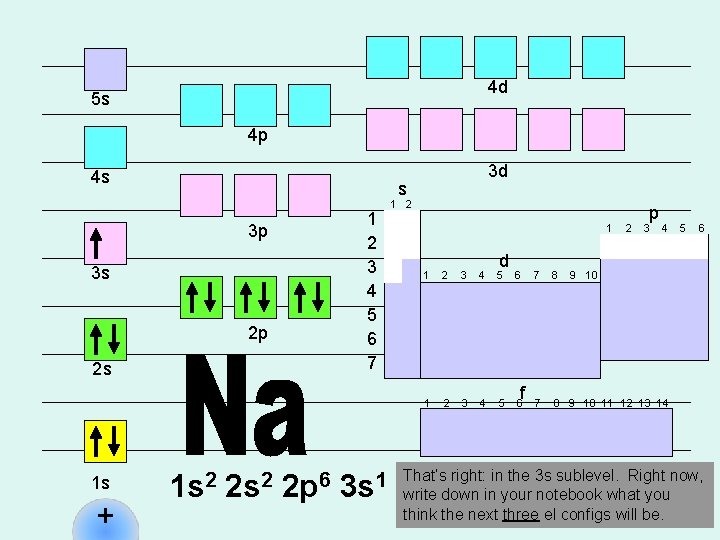
4 d 5 s 4 p 4 s s 1 2 3 4 5 6 7 3 p 3 s 2 p 2 s 3 d 1 2 p 1 2 3 4 5 6 d 1 2 3 4 5 6 7 8 9 10 f 1 2 3 4 5 6 7 8 9 10 11 12 13 14 1 s + 1 s 2 2 p 6 3 s 1 That’s right: in the 3 s sublevel. Right now, write down in your notebook what you think the next three el configs will be.
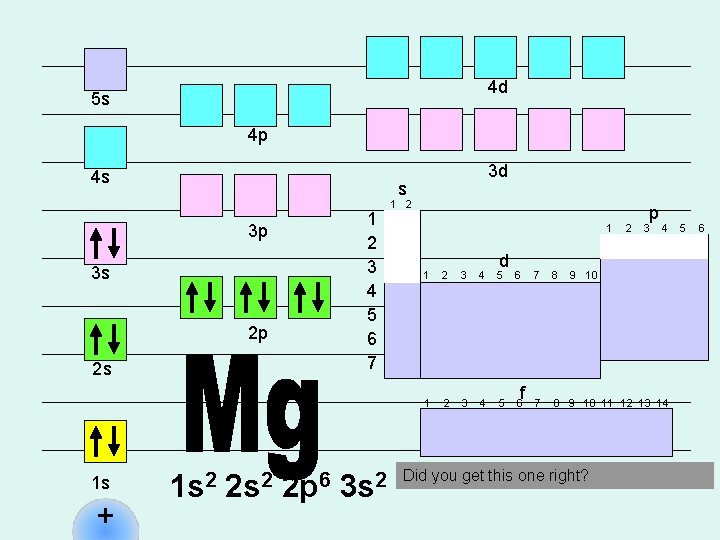
4 d 5 s 4 p 4 s s 1 2 3 4 5 6 7 3 p 3 s 2 p 2 s 3 d 1 2 p 1 2 3 4 5 6 d 1 2 3 4 5 6 7 8 9 10 f 1 2 3 4 5 6 7 8 9 10 11 12 13 14 1 s + 1 s 2 2 p 6 3 s 2 Did you get this one right?
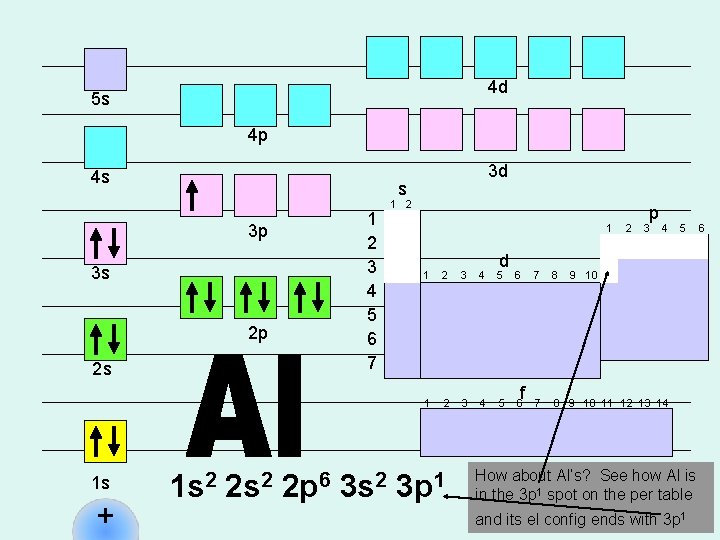
4 d 5 s 4 p 4 s 3 d s 1 2 3 4 5 6 7 3 p 3 s 2 p 2 s 1 2 p 1 2 3 4 5 6 d 1 2 3 4 5 6 7 8 9 10 f 1 2 3 4 5 6 7 8 9 10 11 12 13 14 1 s + 1 s 2 2 p 6 3 s 2 3 p 1 How about Al’s? See how Al is in the 3 p 1 spot on the per table and its el config ends with 3 p 1
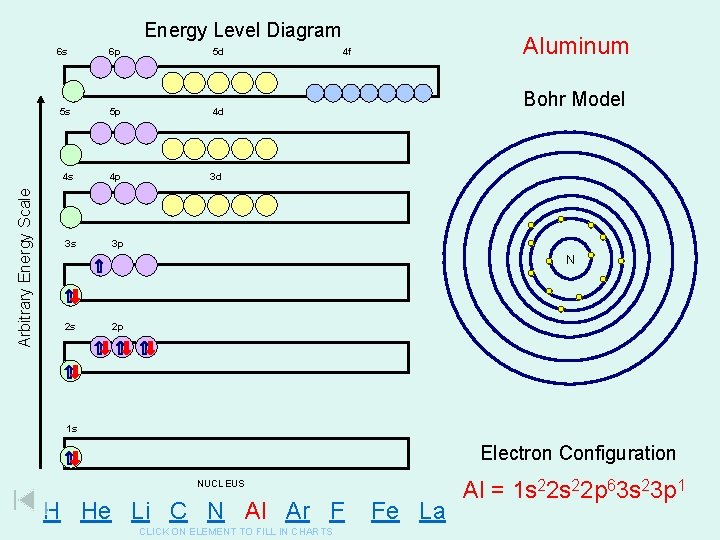
Arbitrary Energy Scale Energy Level Diagram 6 s 6 p 5 d 5 s 5 p 4 d 4 s 4 p 3 d 3 s 3 p 4 f Aluminum Bohr Model N 2 s 2 p 1 s Electron Configuration NUCLEUS H He Li C N Al Ar F Fe La CLICK ON ELEMENT TO FILL IN CHARTS Al = 1 s 22 p 63 s 23 p 1
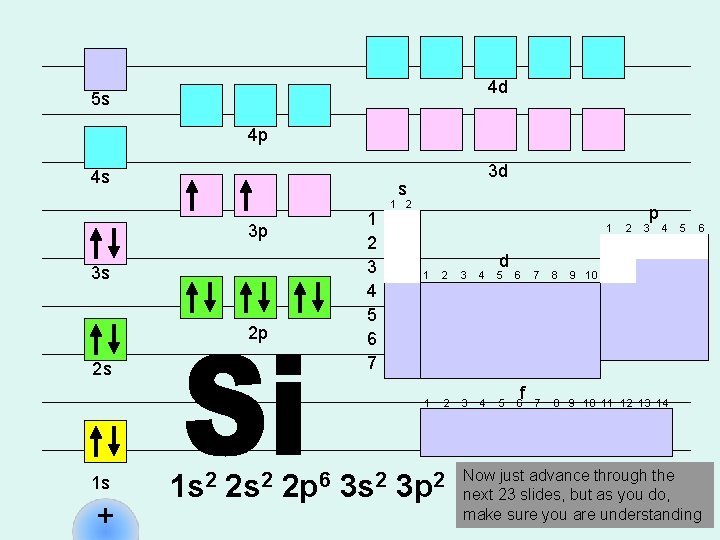
4 d 5 s 4 p 4 s 3 d s 1 2 3 4 5 6 7 3 p 3 s 2 p 2 s 1 2 p 1 2 3 4 5 6 d 1 2 3 4 5 6 7 8 9 10 f 1 2 3 4 5 6 7 8 9 10 11 12 13 14 1 s + 1 s 2 2 p 6 3 s 2 3 p 2 Now just advance through the next 23 slides, but as you do, make sure you are understanding
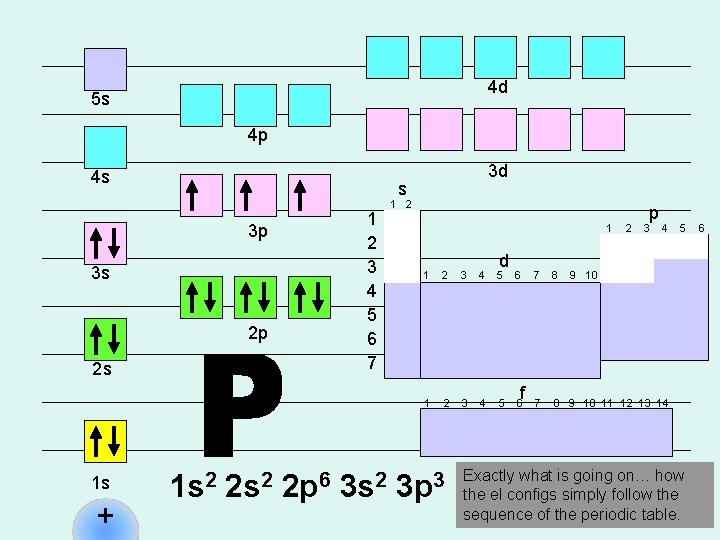
4 d 5 s 4 p 4 s 3 d s 1 2 3 4 5 6 7 3 p 3 s 2 p 2 s 1 2 p 1 2 3 4 5 6 d 1 2 3 4 5 6 7 8 9 10 f 1 2 3 4 5 6 7 8 9 10 11 12 13 14 1 s + 1 s 2 2 p 6 3 s 2 3 p 3 Exactly what is going on… how the el configs simply follow the sequence of the periodic table.
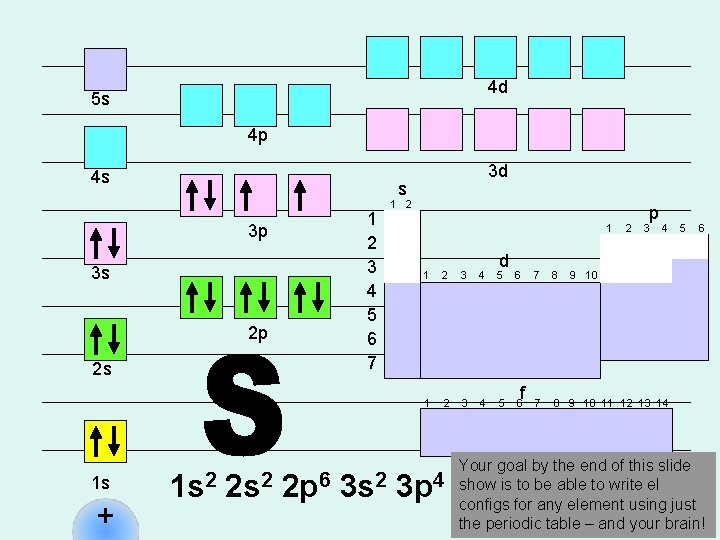
4 d 5 s 4 p 4 s s 3 p 3 s 2 p 2 s 3 d 1 2 3 4 5 6 7 1 2 p 1 2 3 4 5 6 d 1 2 3 4 5 6 7 8 9 10 f 1 2 3 4 5 6 7 8 9 10 11 12 13 14 1 s + 1 s 2 2 p 6 3 s 2 3 p 4 Your goal by the end of this slide show is to be able to write el configs for any element using just the periodic table – and your brain!
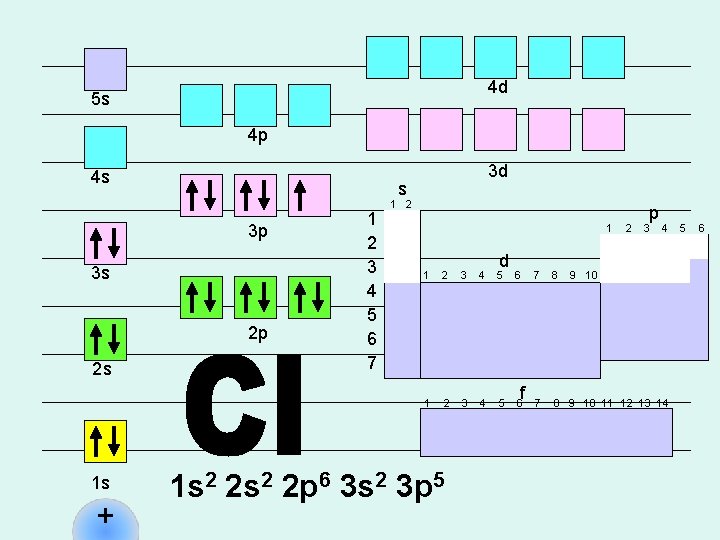
4 d 5 s 4 p 4 s s 3 p 3 s 2 p 2 s 3 d 1 2 3 4 5 6 7 1 2 p 1 2 3 4 5 6 d 1 2 3 4 5 6 7 8 9 10 f 1 2 3 4 5 6 7 8 9 10 11 12 13 14 1 s + 1 s 2 2 p 6 3 s 2 3 p 5
4 d 5 s 4 p 4 s s 3 p 3 s 2 p 2 s 3 d 1 2 3 4 5 6 7 1 2 p 1 2 3 4 5 6 d 1 2 3 4 5 6 7 8 9 10 f 1 2 3 4 5 6 7 8 9 10 11 12 13 14 1 s + 1 s 2 2 p 6 3 s 2 3 p 6
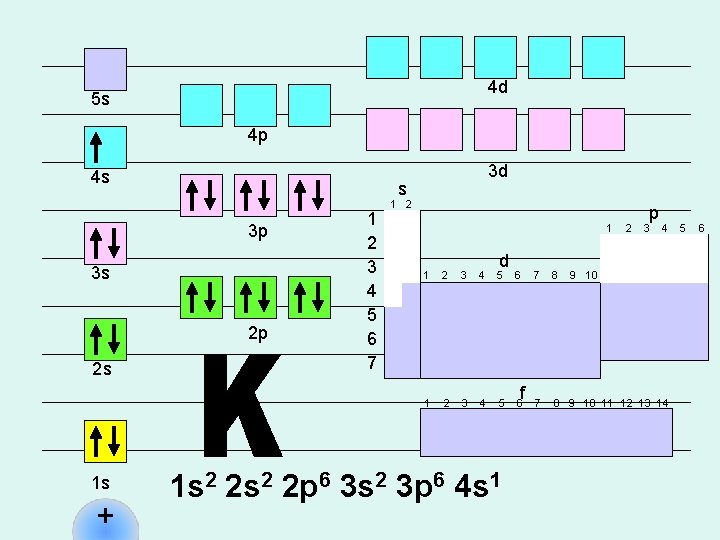
4 d 5 s 4 p 4 s s 3 p 3 s 2 p 2 s 1 2 3 4 5 6 7 3 d 1 2 p 1 2 3 4 5 6 d 1 2 3 4 5 6 7 8 9 10 f 1 2 3 4 5 6 7 8 9 10 11 12 13 14 1 s + 1 s 2 2 p 6 3 s 2 3 p 6 4 s 1
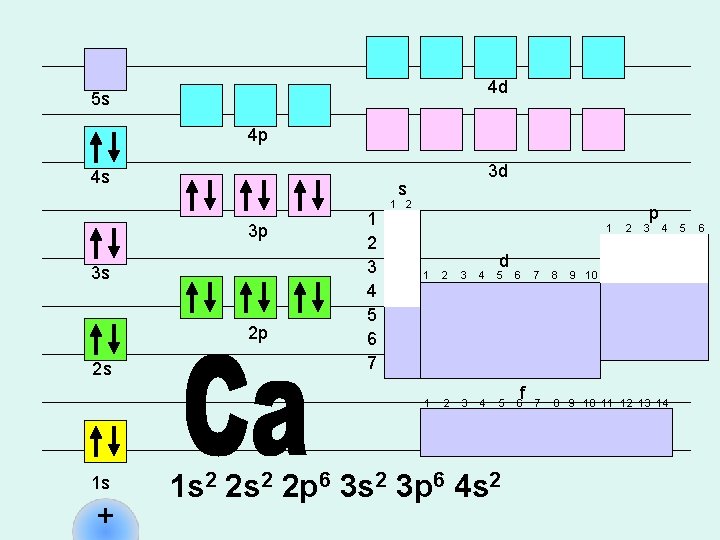
4 d 5 s 4 p 4 s s 3 p 3 s 2 p 2 s 1 2 3 4 5 6 7 3 d 1 2 p 1 2 3 4 5 6 d 1 2 3 4 5 6 7 8 9 10 f 1 2 3 4 5 6 7 8 9 10 11 12 13 14 1 s + 1 s 2 2 p 6 3 s 2 3 p 6 4 s 2
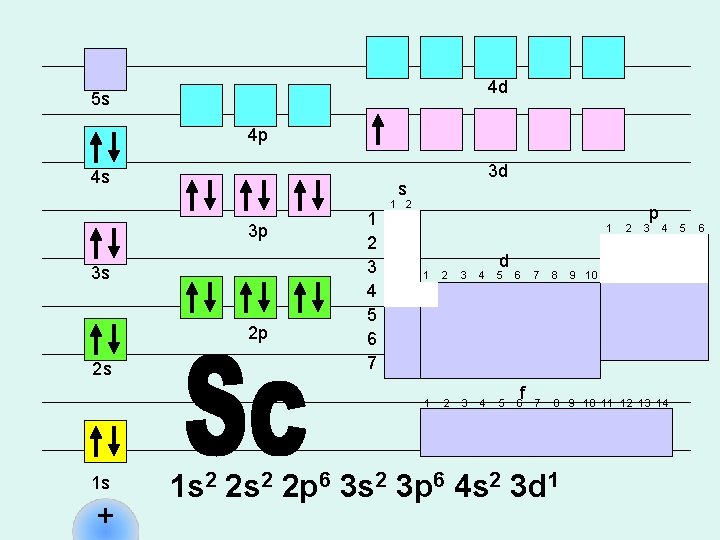
4 d 5 s 4 p 4 s s 3 p 3 s 2 p 2 s 1 2 3 4 5 6 7 3 d 1 2 p 1 2 3 4 5 6 d 1 2 3 4 5 6 7 8 9 10 f 1 2 3 4 5 6 7 8 9 10 11 12 13 14 1 s + 1 s 2 2 p 6 3 s 2 3 p 6 4 s 2 3 d 1
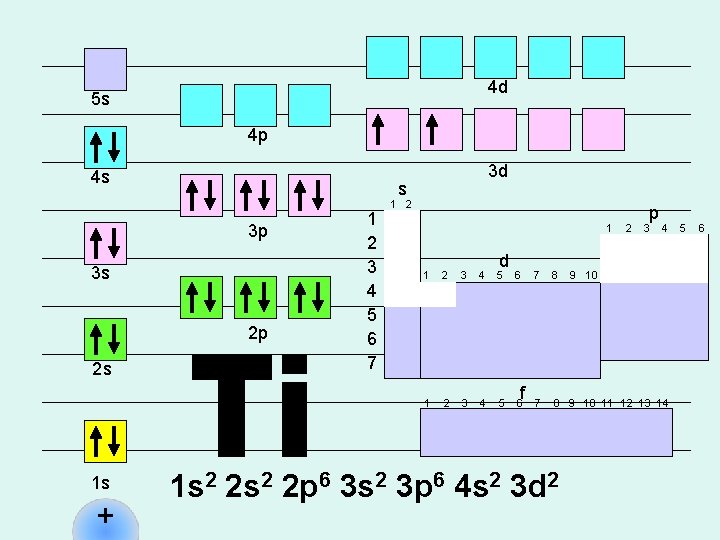
4 d 5 s 4 p 4 s s 3 p 3 s 2 p 2 s 1 2 3 4 5 6 7 3 d 1 2 p 1 2 3 4 5 6 d 1 2 3 4 5 6 7 8 9 10 f 1 2 3 4 5 6 7 8 9 10 11 12 13 14 1 s + 1 s 2 2 p 6 3 s 2 3 p 6 4 s 2 3 d 2
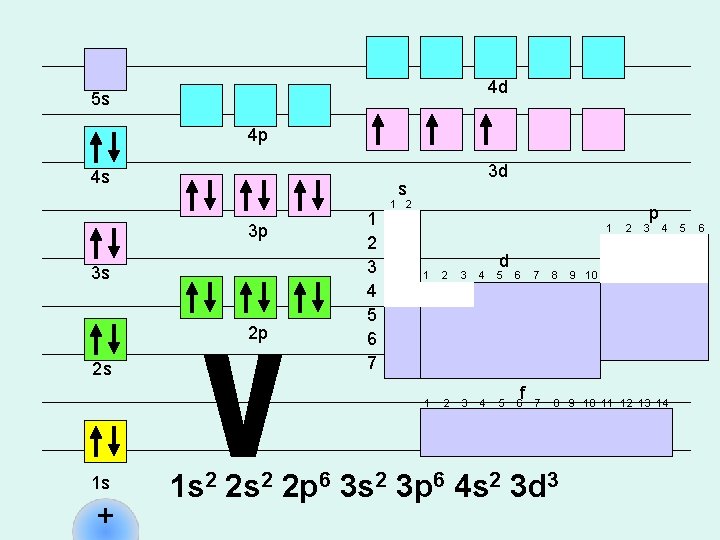
4 d 5 s 4 p 4 s s 3 p 3 s 2 p 2 s 1 2 3 4 5 6 7 3 d 1 2 p 1 2 3 4 5 6 d 1 2 3 4 5 6 7 8 9 10 f 1 2 3 4 5 6 7 8 9 10 11 12 13 14 1 s + 1 s 2 2 p 6 3 s 2 3 p 6 4 s 2 3 d 3
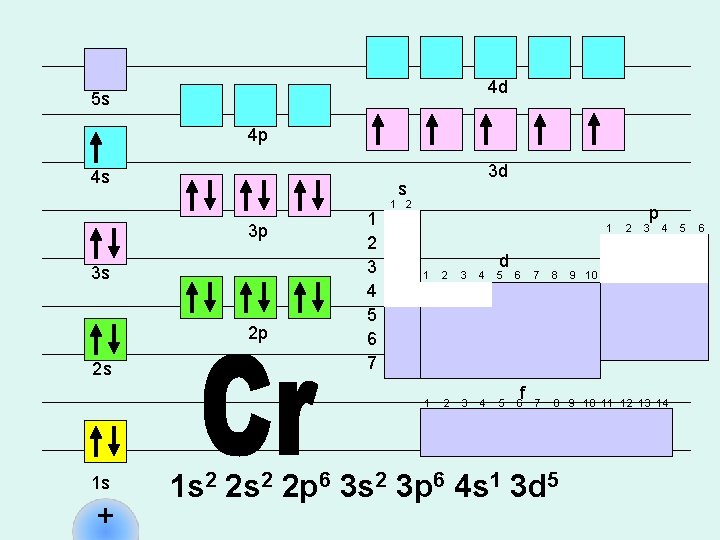
4 d 5 s 4 p 4 s s 3 p 3 s 2 p 2 s 1 2 3 4 5 6 7 3 d 1 2 p 1 2 3 4 5 6 d 1 2 3 4 5 6 7 8 9 10 f 1 2 3 4 5 6 7 8 9 10 11 12 13 14 1 s + 1 s 2 2 p 6 3 s 2 3 p 6 4 s 1 3 d 5
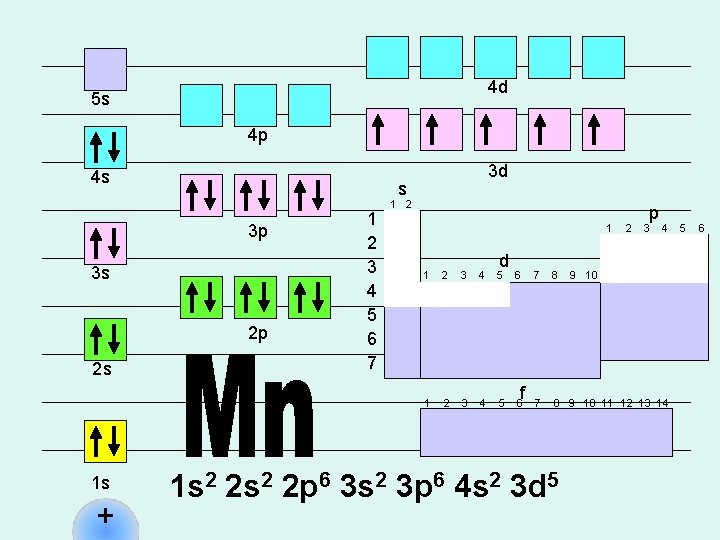
4 d 5 s 4 p 4 s s 3 p 3 s 2 p 2 s 1 2 3 4 5 6 7 3 d 1 2 p 1 2 3 4 5 6 d 1 2 3 4 5 6 7 8 9 10 f 1 2 3 4 5 6 7 8 9 10 11 12 13 14 1 s + 1 s 2 2 p 6 3 s 2 3 p 6 4 s 2 3 d 5
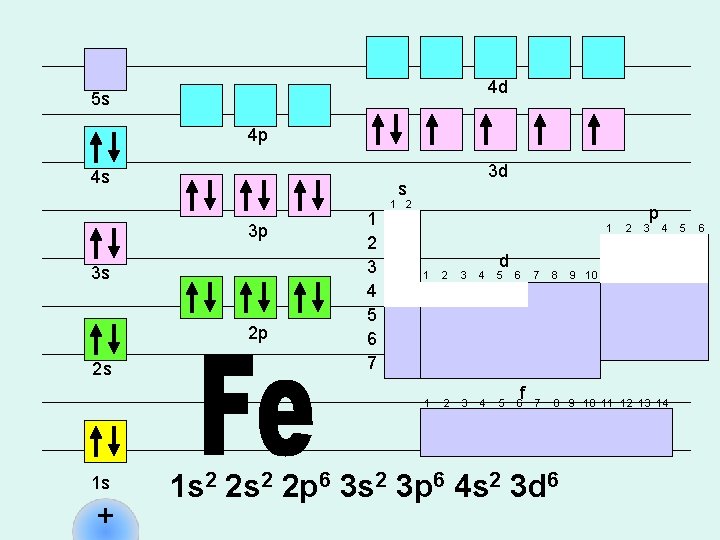
4 d 5 s 4 p 4 s s 3 p 3 s 2 p 2 s 1 2 3 4 5 6 7 3 d 1 2 p 1 2 3 4 5 6 d 1 2 3 4 5 6 7 8 9 10 f 1 2 3 4 5 6 7 8 9 10 11 12 13 14 1 s + 1 s 2 2 p 6 3 s 2 3 p 6 4 s 2 3 d 6
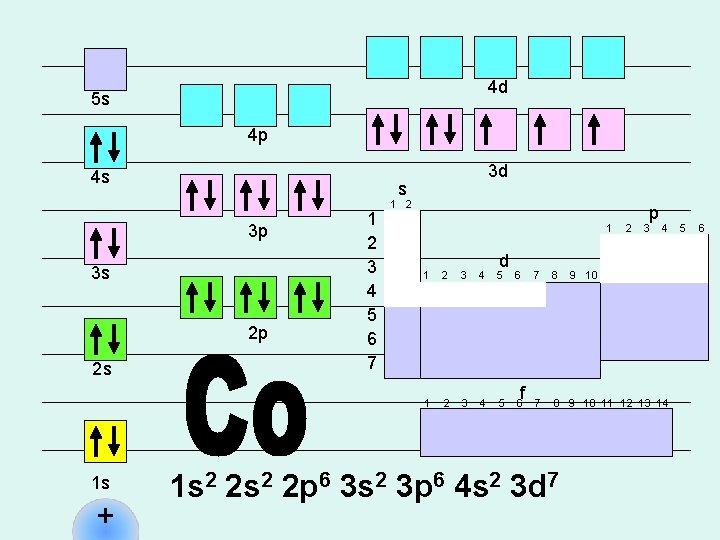
4 d 5 s 4 p 4 s s 3 p 3 s 2 p 2 s 1 2 3 4 5 6 7 3 d 1 2 p 1 2 3 4 5 6 d 1 2 3 4 5 6 7 8 9 10 f 1 2 3 4 5 6 7 8 9 10 11 12 13 14 1 s + 1 s 2 2 p 6 3 s 2 3 p 6 4 s 2 3 d 7
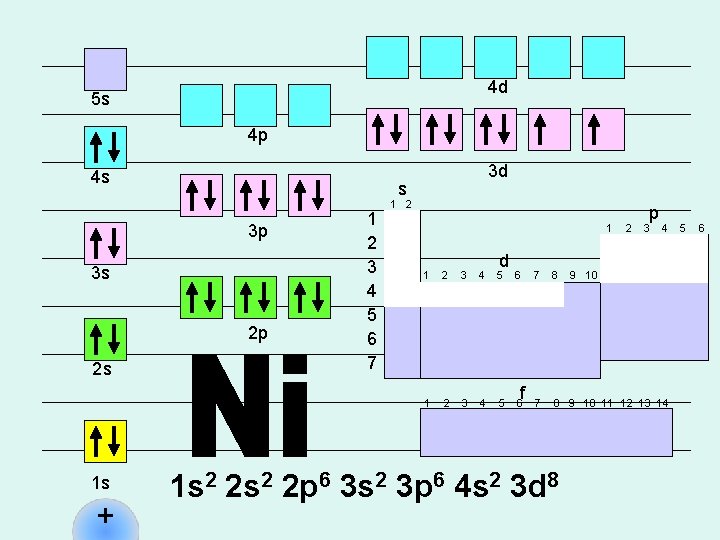
4 d 5 s 4 p 4 s s 3 p 3 s 2 p 2 s 1 2 3 4 5 6 7 3 d 1 2 p 1 2 3 4 5 6 d 1 2 3 4 5 6 7 8 9 10 f 1 2 3 4 5 6 7 8 9 10 11 12 13 14 1 s + 1 s 2 2 p 6 3 s 2 3 p 6 4 s 2 3 d 8
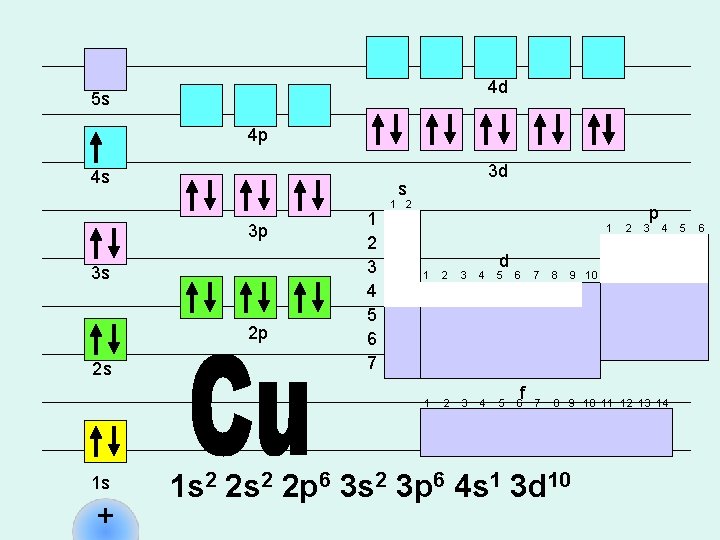
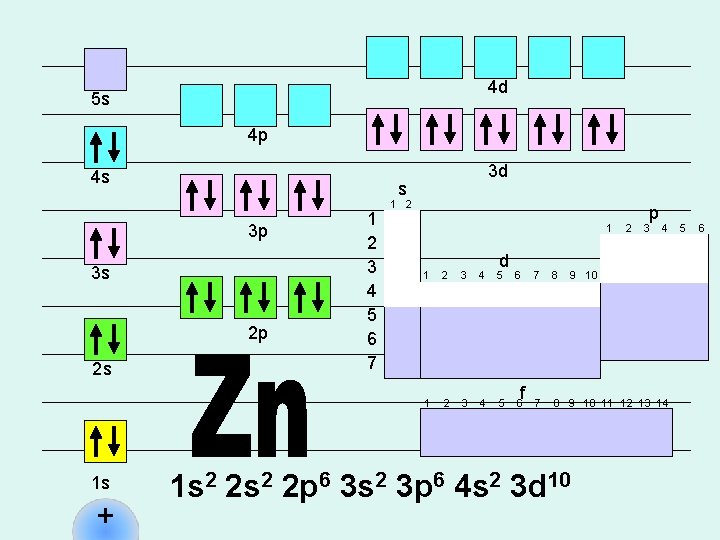
4 d 5 s 4 p 4 s s 3 p 3 s 2 p 2 s 1 2 3 4 5 6 7 3 d 1 2 p 1 2 3 4 5 6 d 1 2 3 4 5 6 7 8 9 10 f 1 2 3 4 5 6 7 8 9 10 11 12 13 14 1 s + 1 s 2 2 p 6 3 s 2 3 p 6 4 s 1 3 d 10
4 d 5 s 4 p 4 s s 3 p 3 s 2 p 2 s 1 2 3 4 5 6 7 3 d 1 2 p 1 2 3 4 5 6 d 1 2 3 4 5 6 7 8 9 10 f 1 2 3 4 5 6 7 8 9 10 11 12 13 14 1 s + 1 s 2 2 p 6 3 s 2 3 p 6 4 s 2 3 d 10
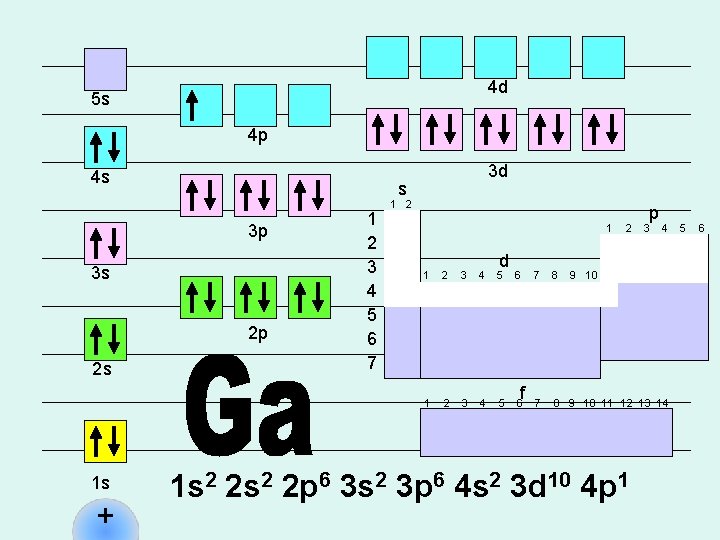
4 d 5 s 4 p 4 s s 3 p 3 s 2 p 2 s 1 2 3 4 5 6 7 3 d 1 2 p 1 2 3 4 5 6 d 1 2 3 4 5 6 7 8 9 10 f 1 2 3 4 5 6 7 8 9 10 11 12 13 14 1 s + 1 s 2 2 p 6 3 s 2 3 p 6 4 s 2 3 d 10 4 p 1
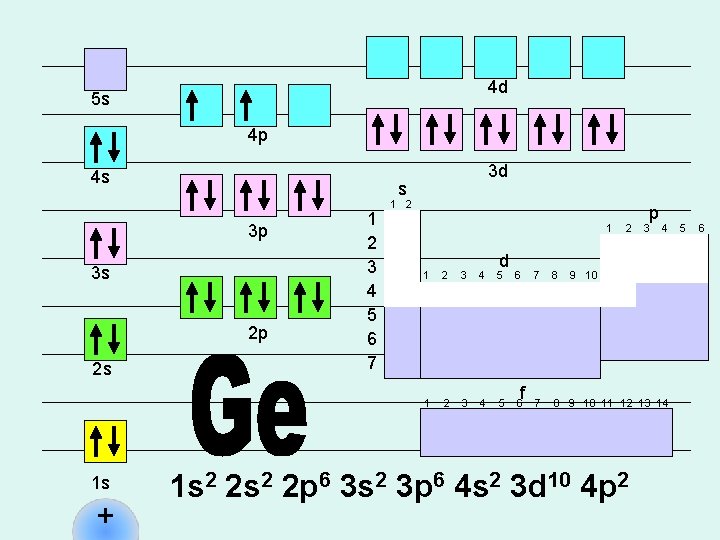
4 d 5 s 4 p 4 s s 3 p 3 s 2 p 2 s 1 2 3 4 5 6 7 3 d 1 2 p 1 2 3 4 5 6 d 1 2 3 4 5 6 7 8 9 10 f 1 2 3 4 5 6 7 8 9 10 11 12 13 14 1 s + 1 s 2 2 p 6 3 s 2 3 p 6 4 s 2 3 d 10 4 p 2
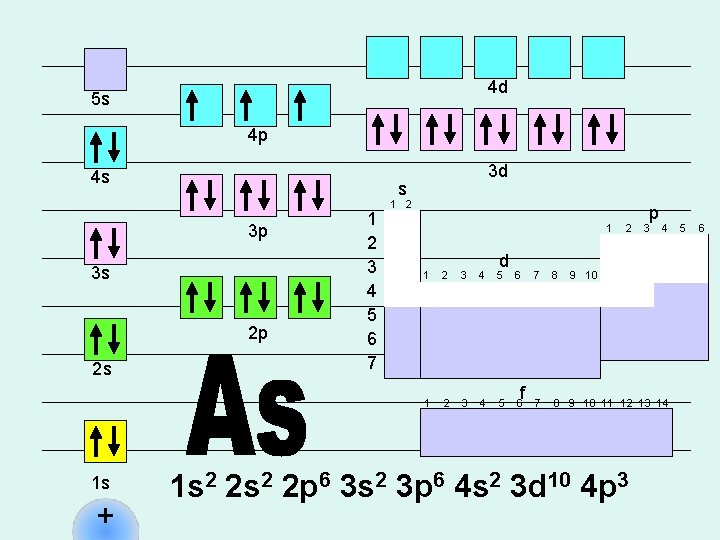
4 d 5 s 4 p 4 s s 3 p 3 s 2 p 2 s 1 2 3 4 5 6 7 3 d 1 2 p 1 2 3 4 5 6 d 1 2 3 4 5 6 7 8 9 10 f 1 2 3 4 5 6 7 8 9 10 11 12 13 14 1 s + 1 s 2 2 p 6 3 s 2 3 p 6 4 s 2 3 d 10 4 p 3
4 d 5 s 4 p 4 s s 3 p 3 s 2 p 2 s 1 2 3 4 5 6 7 3 d 1 2 p 1 2 3 4 5 6 d 1 2 3 4 5 6 7 8 9 10 f 1 2 3 4 5 6 7 8 9 10 11 12 13 14 1 s + 1 s 2 2 p 6 3 s 2 3 p 6 4 s 2 3 d 10 4 p 4
4 d 5 s 4 p 4 s s 3 p 3 s 2 p 2 s 1 2 3 4 5 6 7 3 d 1 2 p 1 2 3 4 5 6 d 1 2 3 4 5 6 7 8 9 10 f 1 2 3 4 5 6 7 8 9 10 11 12 13 14 1 s + 1 s 2 2 p 6 3 s 2 3 p 6 4 s 2 3 d 10 4 p 5
4 d 5 s 4 p 4 s s 3 p 3 s 2 p 2 s 1 2 3 4 5 6 7 3 d 1 2 p 1 2 3 4 5 6 d 1 2 3 4 5 6 7 8 9 10 f 1 2 3 4 5 6 7 8 9 10 11 12 13 14 1 s + 1 s 2 2 p 6 3 s 2 3 p 6 4 s 2 3 d 10 4 p 6
4 d 5 s 4 p 4 s s 3 p 3 s 2 p 2 s 1 2 3 4 5 6 7 3 d 1 2 p 1 2 3 4 5 6 d 1 2 3 4 5 6 7 8 9 10 f 1 2 3 4 5 6 7 8 9 10 11 12 13 14 1 s + 1 s 2 2 p 6 3 s 2 3 p 6 4 s 2 3 d 10 4 p 6 5 s 1
ØCh 9. 6 Notes (Part 2) Topic: Atoms with Orbitals EQ: How do electrons orbit around the nucleus? READ Ch 9. 6 (pg. 295 -301) NO BQ’s 1 s 22 p 63 s 23 p 64 s 23 d 104 p 65 s 24 d 105 p 66 s 24 f 145 d 106 p 6…
Draw LEFT side Periodic Patterns Courtesy Christy Johannesson www. nisd. net/communicationsarts/pages/chem
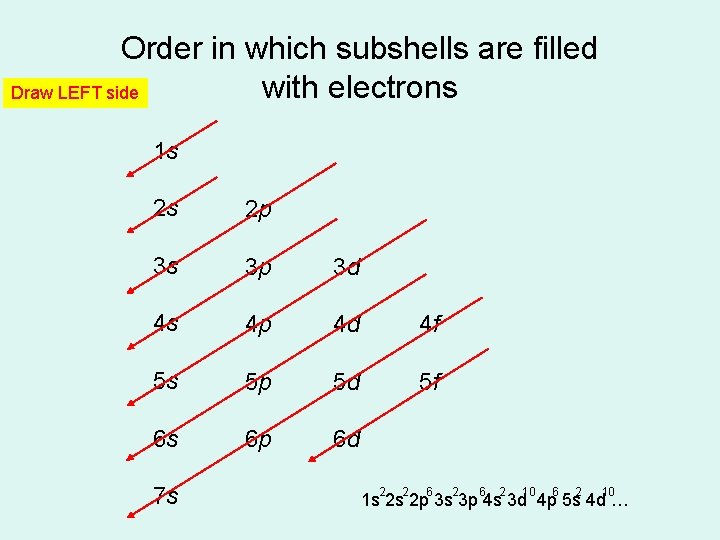
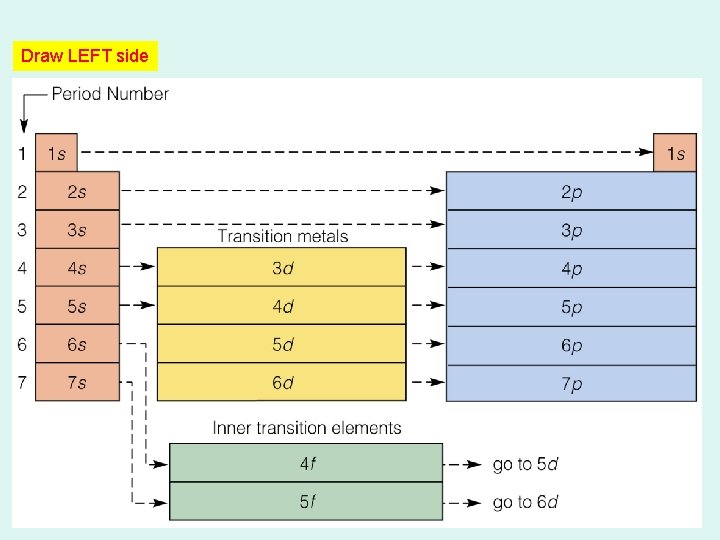
Order in which subshells are filled with electrons Draw LEFT side 1 s 2 s 2 p 3 s 3 p 3 d 4 s 4 p 4 d 4 f 5 s 5 p 5 d 5 f 6 s 6 p 6 d 7 s 2 2 6 2 10 6 2 10 1 s 2 s 2 p 3 s 3 p 4 s 3 d 4 p 5 s 4 d …
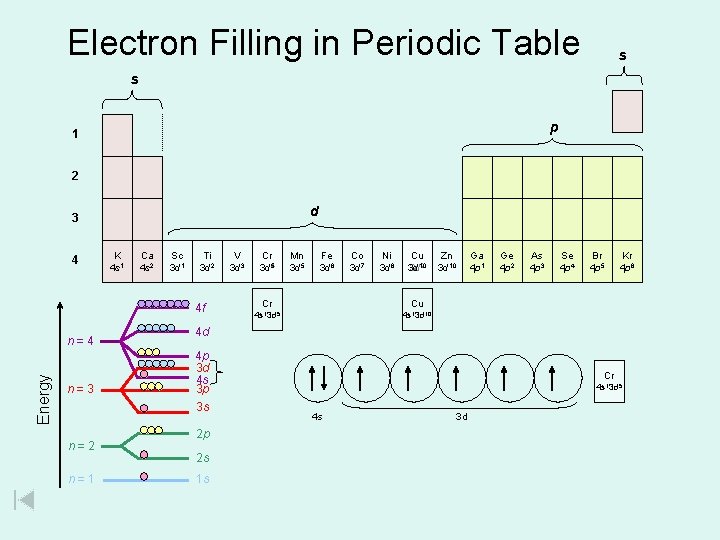
Electron Filling in Periodic Table s s p 1 2 d 3 4 K 4 s 1 Ca 4 s 2 Sc 3 d 1 Ti 3 d 2 4 f Energy n = 4 n = 3 n = 2 n = 1 V 3 d 3 Cr 3 d 54 Mn 3 d 5 Fe 3 d 6 Co 3 d 7 Ni 3 d 8 Cu 9 3 d 3 d 10 Cr Cu 4 s 13 d 5 4 s 13 d 10 Zn 3 d 10 Ga 4 p 1 Ge 4 p 2 As 4 p 3 Se 4 p 4 Br 4 p 5 Kr 4 p 6 4 d 4 p 3 d 4 s 3 p 3 s Cr 4 s 13 d 5 4 s 3 d 2 p 2 s Cu 1 s 4 s 13 d 10 4 s 3 d
Label the top of the groups on your PT Transition Metals - d block Note the change in configuration. s 1 d 1 d 2 d 3 d 5 d 6 d 7 d 8 d 10
Draw LEFT side
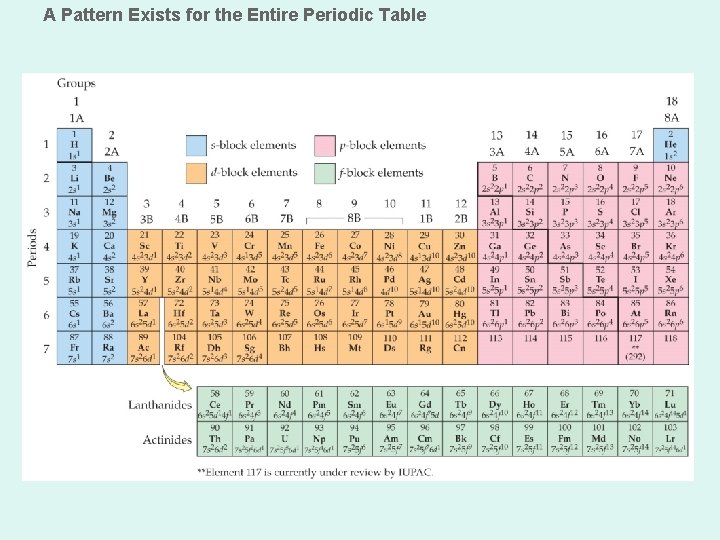
A Pattern Exists for the Entire Periodic Table
ØCh 9. 7 Notes Topic: Valence Electrons & Noble Gas e. c. EQ: What are Val. E- & how do you write noble gas e. c. ? READ Ch 9. 7 (pg. 302 -305) Write Questions & Answer Questions #23 -25 (notes side) Highlight answer 1 s 22 p 63 s 23 p 64 s 23 d 104 p 65 s 24 d 105 p 66 s 24 f 145 d 106 p 6…
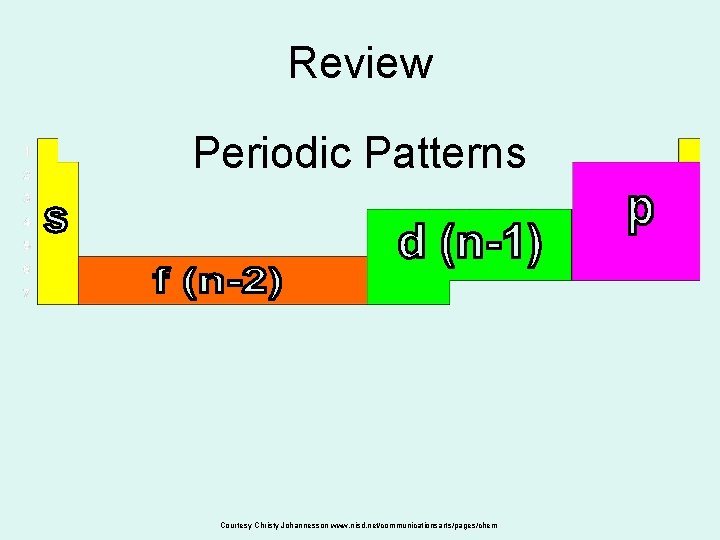
Review Periodic Patterns Courtesy Christy Johannesson www. nisd. net/communicationsarts/pages/chem
Energy Ordering of Orbitals for Multi. Electron Atoms • The subshells (s, p, d, f) within a principal shell (n) do not have the same energy because of e - interactions. • Different subshells within the same principal shell have different energies. – Increasing Energy: 3 s < 3 p <3 d (more e-)
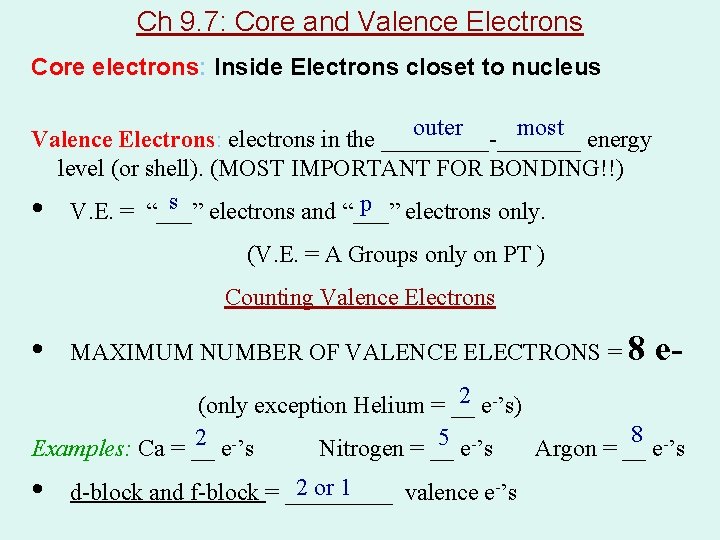
Ch 9. 7: Core and Valence Electrons Core electrons: Inside Electrons closet to nucleus outer most Valence Electrons: electrons in the _____-_______ energy level (or shell). (MOST IMPORTANT FOR BONDING!!) s electrons and “___” p electrons only. • V. E. = “___” (V. E. = A Groups only on PT ) Counting Valence Electrons • MAXIMUM NUMBER OF VALENCE ELECTRONS = 8 e- 2 e-’s) (only exception Helium = __ 8 2 5 Examples: Ca = __ e ’s Nitrogen = __ e ’s Argon = __ e ’s • 2 or 1 d-block and f-block = _____ valence e-’s
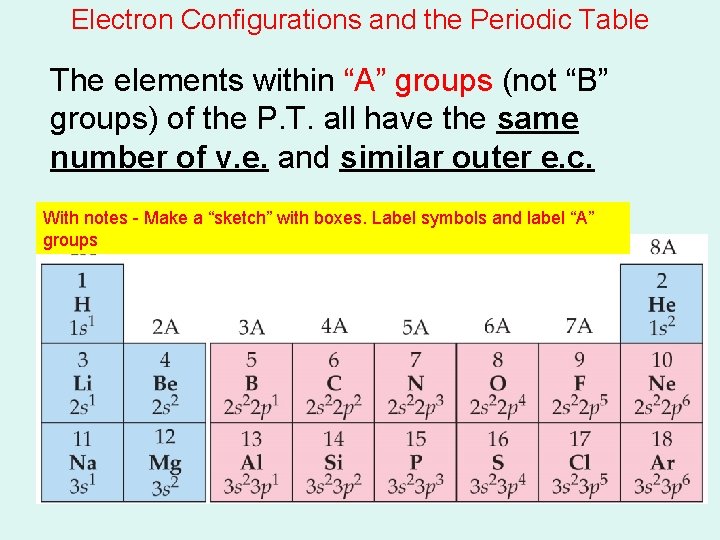
Electron Configurations and the Periodic Table The elements within “A” groups (not “B” groups) of the P. T. all have the same number of v. e. and similar outer e. c. With notes - Make a “sketch” with boxes. Label symbols and label “A” groups
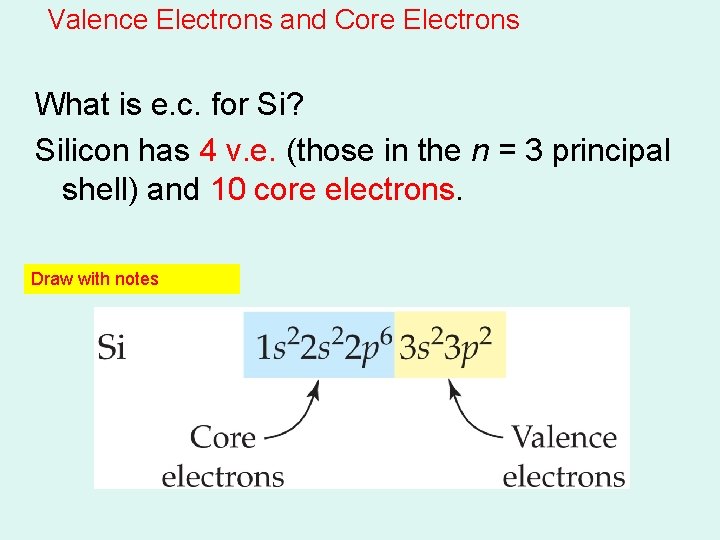
Valence Electrons and Core Electrons What is e. c. for Si? Silicon has 4 v. e. (those in the n = 3 principal shell) and 10 core electrons. Draw with notes
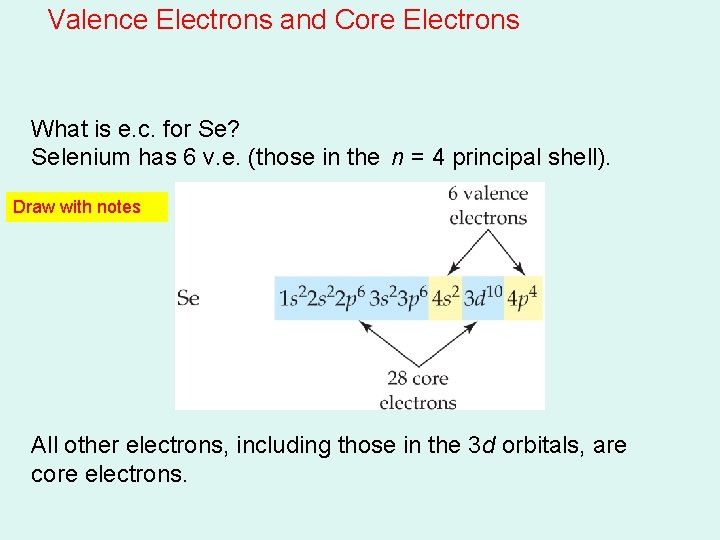
Valence Electrons and Core Electrons What is e. c. for Se? Selenium has 6 v. e. (those in the n = 4 principal shell). Draw with notes All other electrons, including those in the 3 d orbitals, are core electrons.
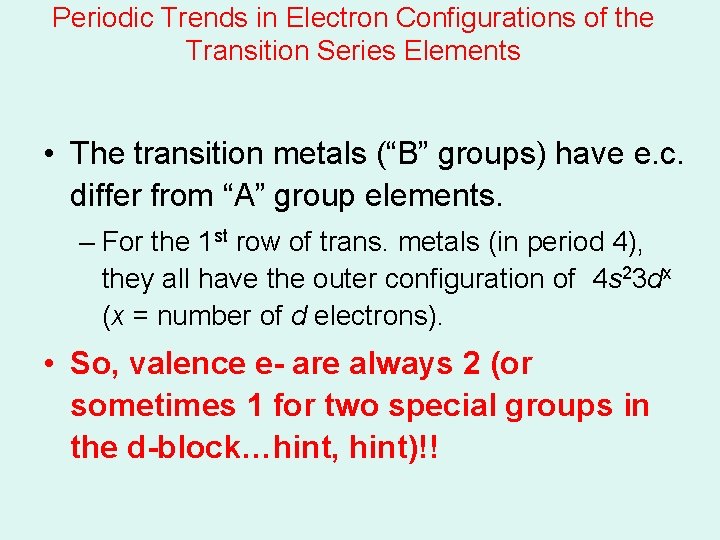
Periodic Trends in Electron Configurations of the Transition Series Elements • The transition metals (“B” groups) have e. c. differ from “A” group elements. – For the 1 st row of trans. metals (in period 4), they all have the outer configuration of 4 s 23 dx (x = number of d electrons). • So, valence e- are always 2 (or sometimes 1 for two special groups in the d-block…hint, hint)!!
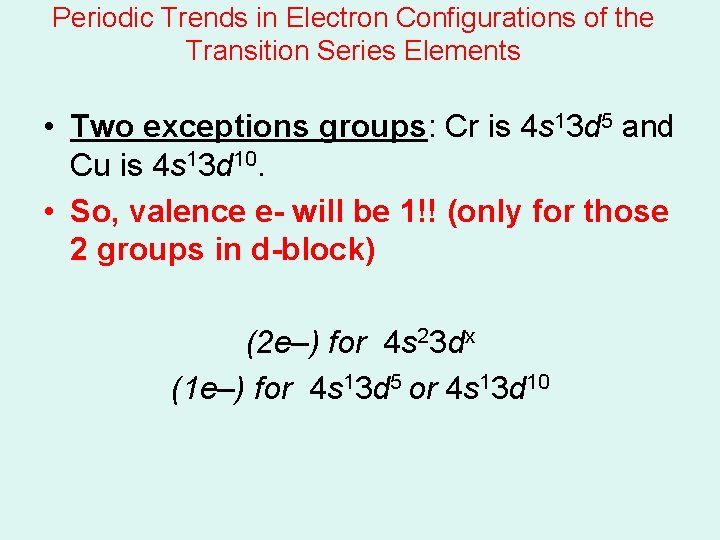
Periodic Trends in Electron Configurations of the Transition Series Elements • Two exceptions groups: Cr is 4 s 13 d 5 and Cu is 4 s 13 d 10. • So, valence e- will be 1!! (only for those 2 groups in d-block) (2 e–) for 4 s 23 dx (1 e–) for 4 s 13 d 5 or 4 s 13 d 10
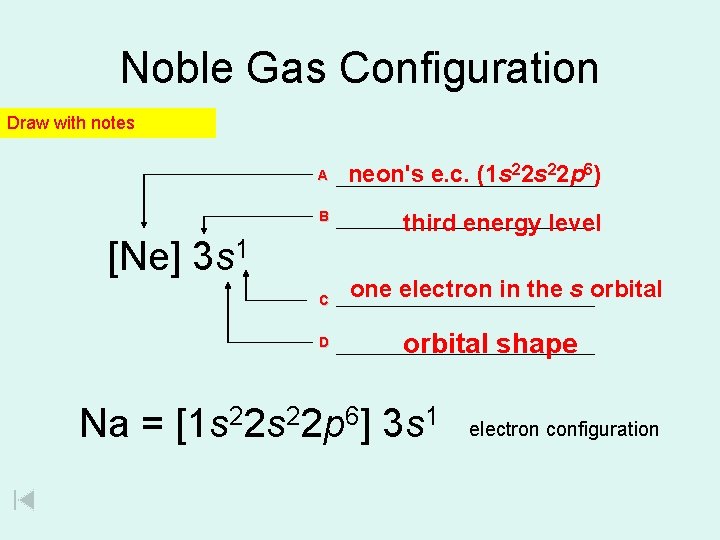
Noble Gas Configuration Draw with notes A neon's e. c. (1 s 22 p 6) B third energy level [Ne] 3 s 1 C D one electron in the s orbital shape Na = [1 s 22 p 6] 3 s 1 electron configuration
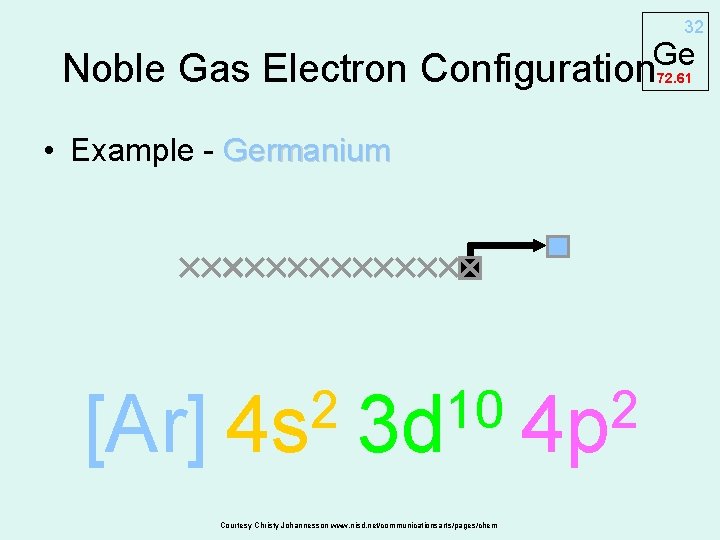
32 Ge Noble Gas Electron Configuration 72. 61 • Example - Germanium [Ar] 2 4 s 10 3 d Courtesy Christy Johannesson www. nisd. net/communicationsarts/pages/chem 2 4 p
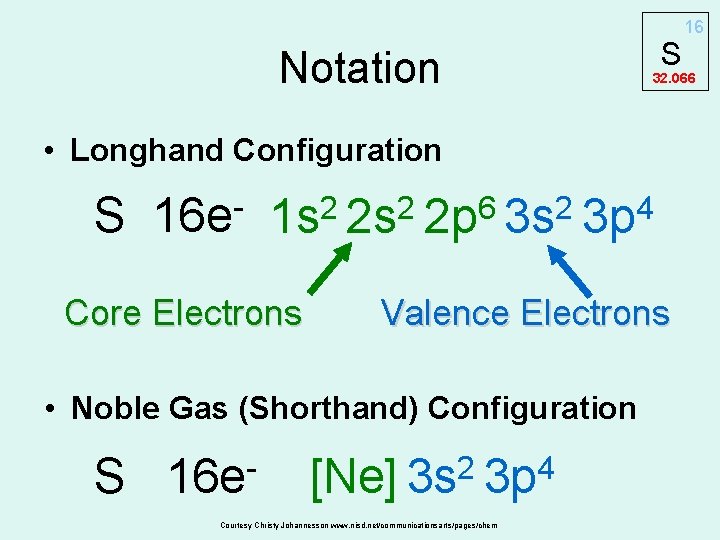
S Notation 32. 066 • Longhand Configuration S 16 e 6 2 2 2 1 s 2 s 2 p 3 s Core Electrons 4 3 p Valence Electrons • Noble Gas (Shorthand) Configuration S 16 e 2 4 [Ne] 3 s 3 p Courtesy Christy Johannesson www. nisd. net/communicationsarts/pages/chem 16
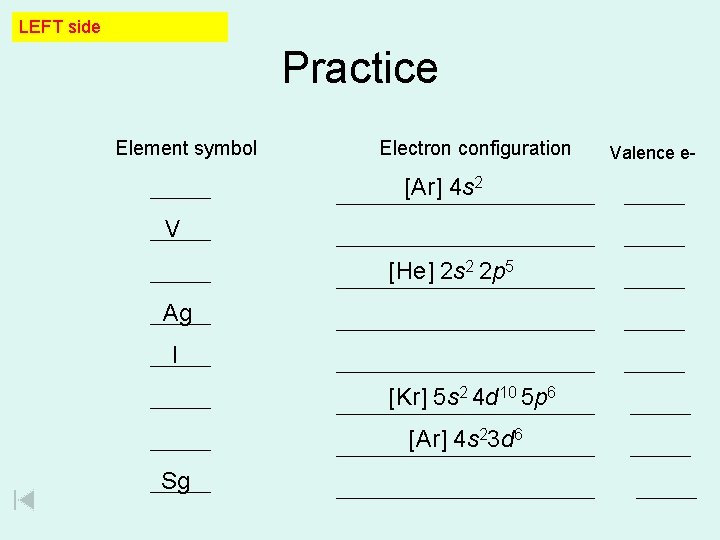
LEFT side Practice Element symbol Electron configuration [Ar] 4 s 2 V [He] 2 s 2 2 p 5 Ag I [Kr] 5 s 2 4 d 10 5 p 6 [Ar] 4 s 23 d 6 Sg Valence e-
ØCh 9. 8 Notes Topic: Ions and E. C. EQ: How does the e. c. change if the atom loses/gains v. e. ? READ Ch 9. 8 (pg. 305 -307) Write Questions & Answer Questions #27 (notes side) Highlight answer 1 s 22 p 63 s 23 p 64 s 23 d 104 p 65 s 24 d 105 p 66 s 24 f 145 d 106 p 6…
Ch 9. 8 Electron Configuration and Ions • The chemical properties of elements are largely determined by the number of valence electrons they contain.
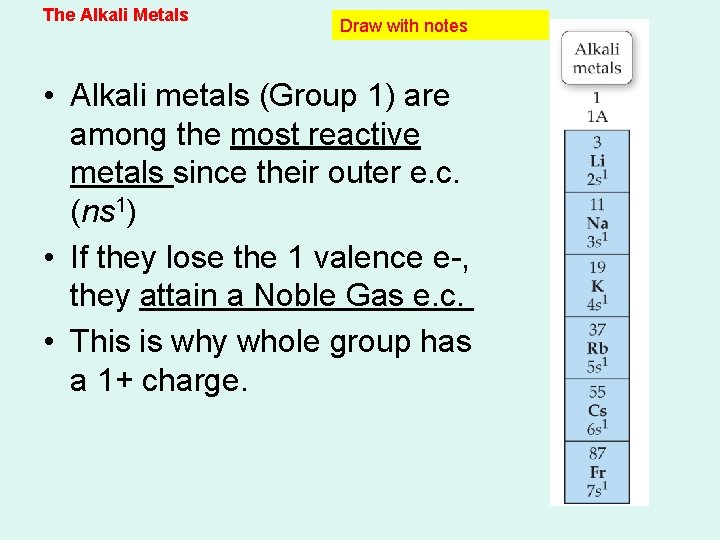
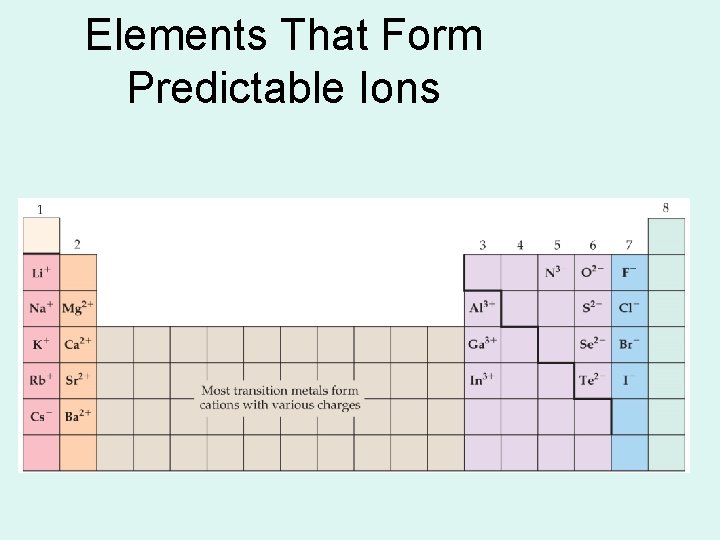
The Alkali Metals Draw with notes • Alkali metals (Group 1) are among the most reactive metals since their outer e. c. (ns 1) • If they lose the 1 valence e-, they attain a Noble Gas e. c. • This is why whole group has a 1+ charge.
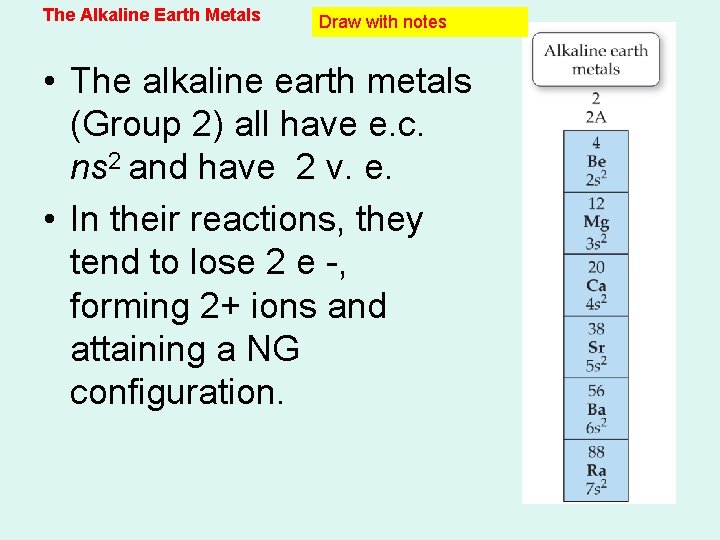
The Alkaline Earth Metals Draw with notes • The alkaline earth metals (Group 2) all have e. c. ns 2 and have 2 v. e. • In their reactions, they tend to lose 2 e -, forming 2+ ions and attaining a NG configuration.
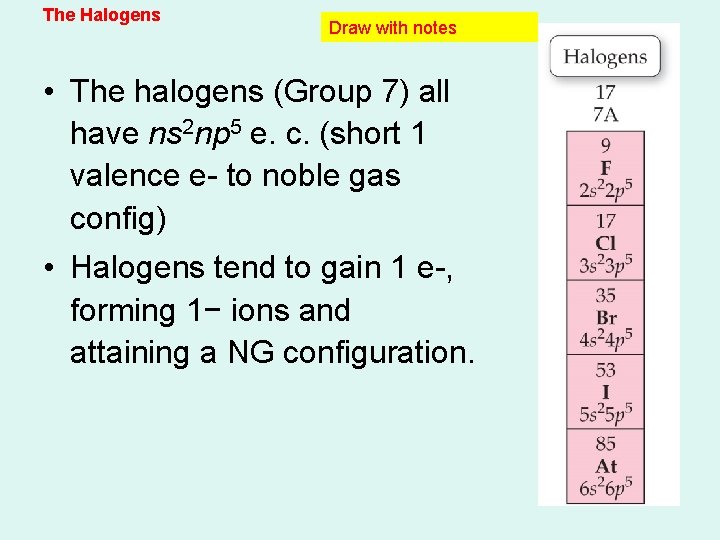
The Halogens Draw with notes • The halogens (Group 7) all have ns 2 np 5 e. c. (short 1 valence e- to noble gas config) • Halogens tend to gain 1 e-, forming 1− ions and attaining a NG configuration.
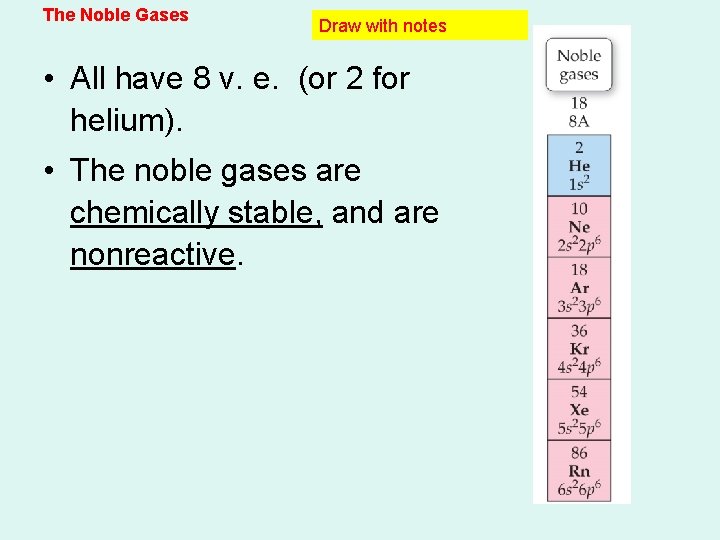
The Noble Gases Draw with notes • All have 8 v. e. (or 2 for helium). • The noble gases are chemically stable, and are nonreactive.
Elements That Form Predictable Ions
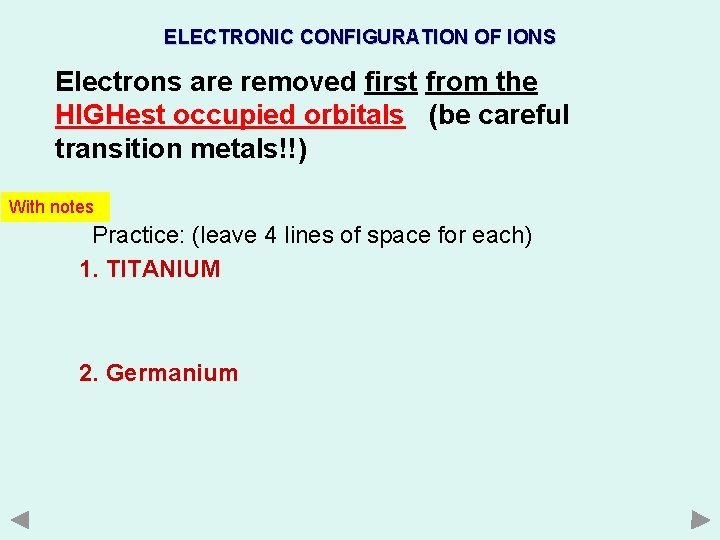
Ch 9. 8 - ELECTRONIC CONFIGURATION OF IONS • Positive ions (cations) are formed by losing e-. • Negative ions (anions) are formed by gaining e-. • Electrons are removed first from the HIGHest occupied orbitals With notes Practice: (leave 4 lines of space for each) 1. SODIUM 2. CHLORINE
ELECTRONIC CONFIGURATION OF IONS Electrons are removed first from the HIGHest occupied orbitals (be careful transition metals!!) With notes Practice: (leave 4 lines of space for each) 1. TITANIUM 2. Germanium
ØCh 9. 9 Notes Topic: Periodic Trends EQ: What are the 3 trends on the PT? READ Ch 9. 9 (pg. 307 -312) Write Questions & Answer Questions #28 (notes side) Highlight answer
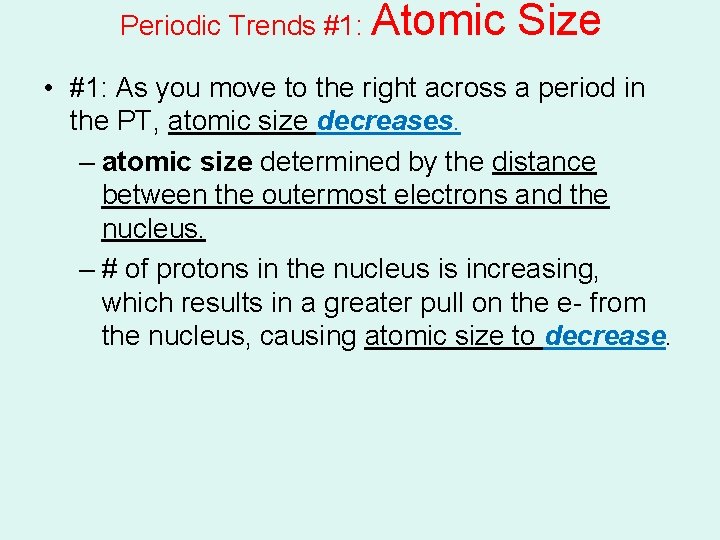
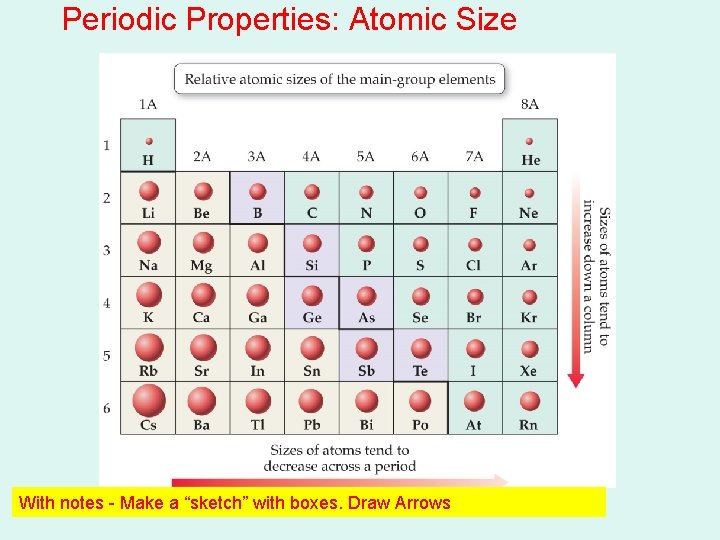
Periodic Trends #1: Atomic Size • #1: As you move to the right across a period in the PT, atomic size decreases. – atomic size determined by the distance between the outermost electrons and the nucleus. – # of protons in the nucleus is increasing, which results in a greater pull on the e- from the nucleus, causing atomic size to decrease.
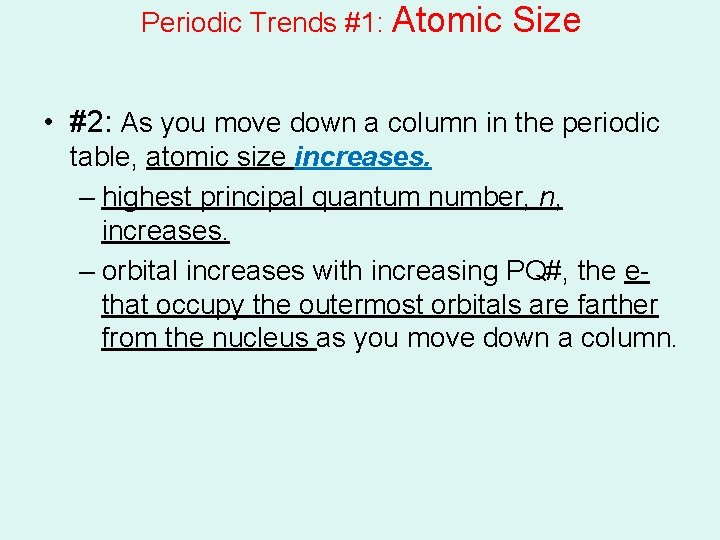
Periodic Trends #1: Atomic Size • #2: As you move down a column in the periodic table, atomic size increases. – highest principal quantum number, n, increases. – orbital increases with increasing PQ#, the ethat occupy the outermost orbitals are farther from the nucleus as you move down a column.
Periodic Properties: Atomic Size With notes - Make a “sketch” with boxes. Draw Arrows
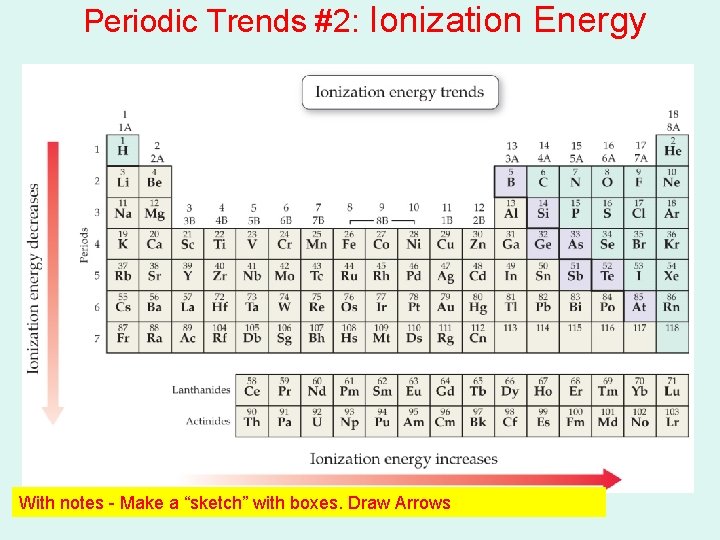
Periodic Trends #2: Ionization Energy • Ionization Energy – ability to lose electrons • Ionization energy increases as you move to the right across a period and decreases as you move down a column in the periodic table.
Periodic Trends #2: Ionization Energy With notes - Make a “sketch” with boxes. Draw Arrows
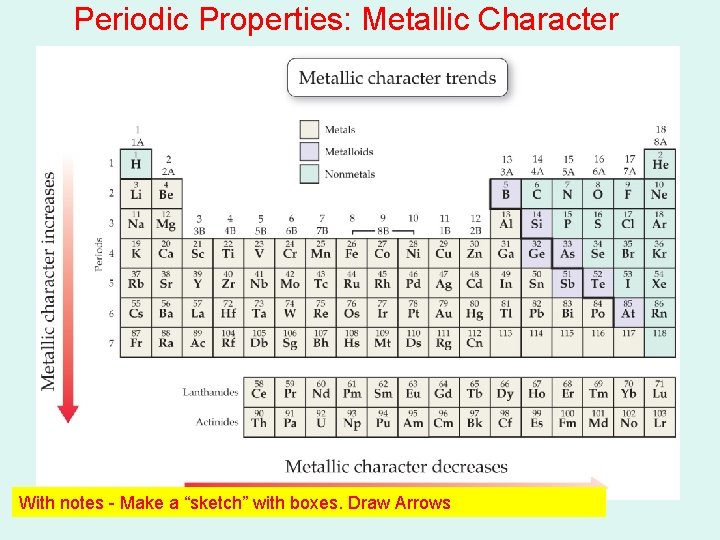
Periodic Properties #3: Metallic Character • Metals tend to lose electrons in their chemical reactions, while nonmetals tend to gain electrons. • Metallic character decreases as you move to the right across a period and increases as you move down a column in the periodic table.
Periodic Properties: Metallic Character With notes - Make a “sketch” with boxes. Draw Arrows