
The Moon Around the Earth and in the
- Slides: 47
The Moon -Around the Earth and in the Sky Our goals for learning: • Why do we see phases of the Moon? • When do we see the phases of the Moon? • What causes eclipses?
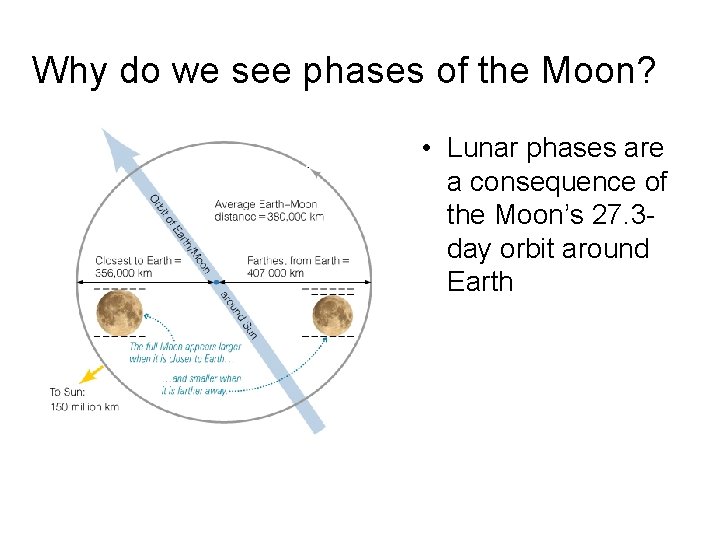
Why do we see phases of the Moon? • Lunar phases are a consequence of the Moon’s 27. 3 day orbit around Earth
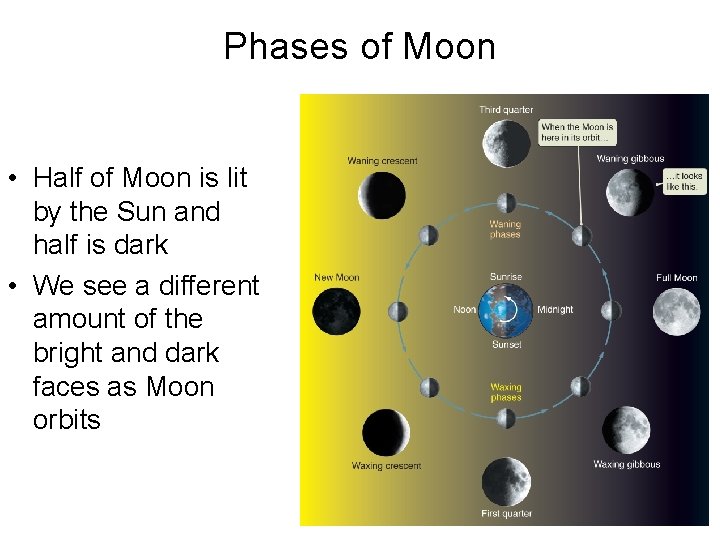
Phases of Moon • Half of Moon is lit by the Sun and half is dark • We see a different amount of the bright and dark faces as Moon orbits
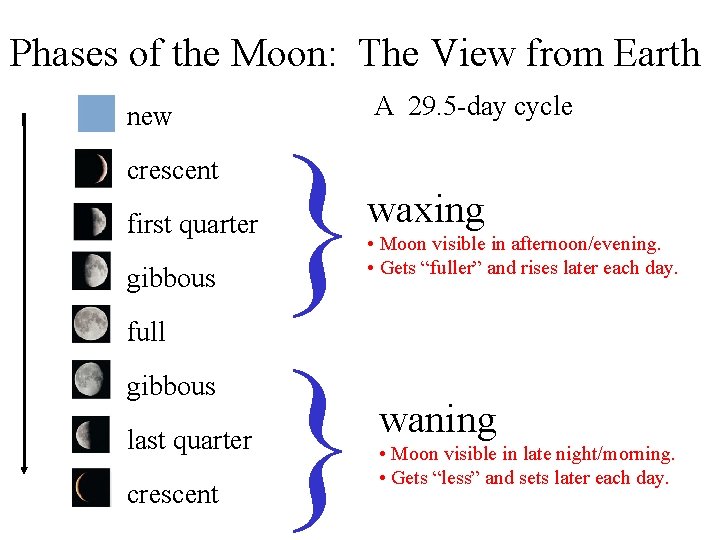
Phases of the Moon: The View from Earth new crescent first quarter gibbous full gibbous last quarter crescent } } A 29. 5 -day cycle waxing • Moon visible in afternoon/evening. • Gets “fuller” and rises later each day. waning • Moon visible in late night/morning. • Gets “less” and sets later each day.
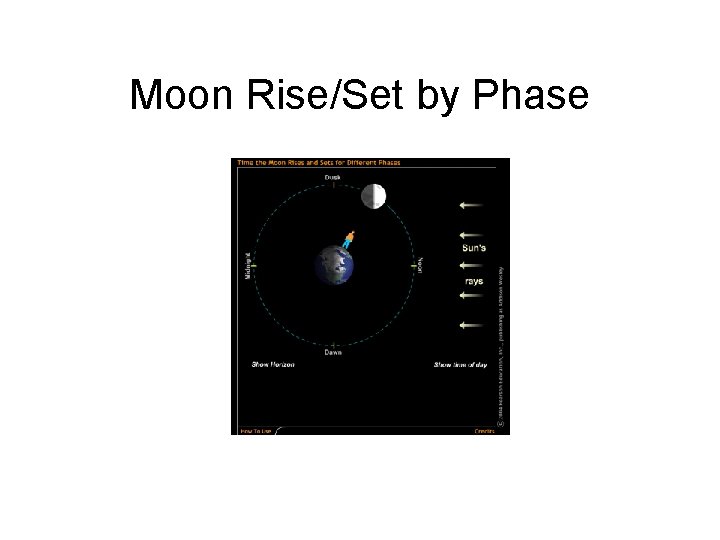
Moon Rise/Set by Phase
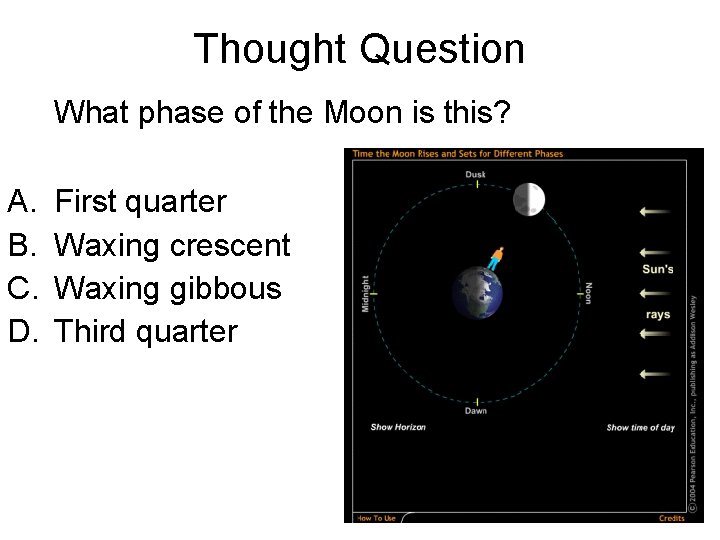
Thought Question What phase of the Moon is this? A. B. C. D. First quarter Waxing crescent Waxing gibbous Third quarter
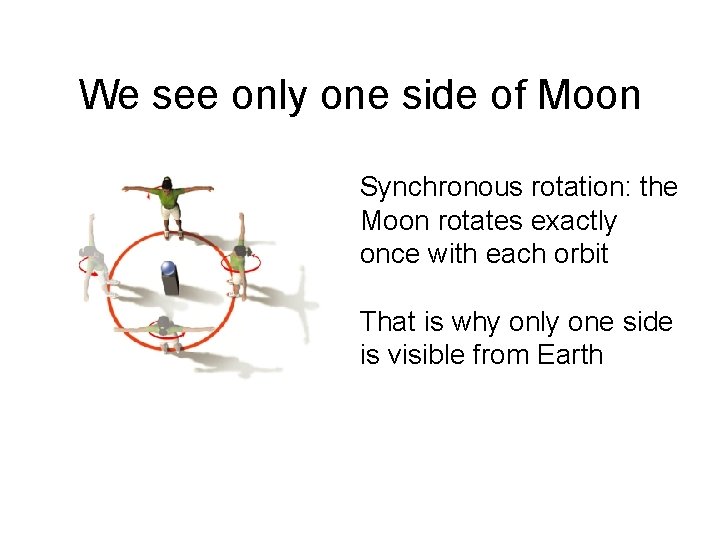
We see only one side of Moon Synchronous rotation: the Moon rotates exactly once with each orbit That is why only one side is visible from Earth
Eclipses Definition: When light from an astronomical body is blocked by another body passing between it and the observer.
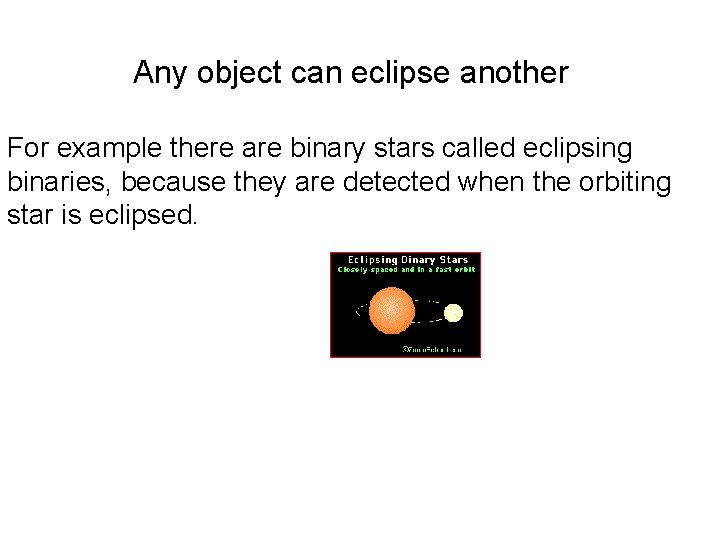
Any object can eclipse another For example there are binary stars called eclipsing binaries, because they are detected when the orbiting star is eclipsed.
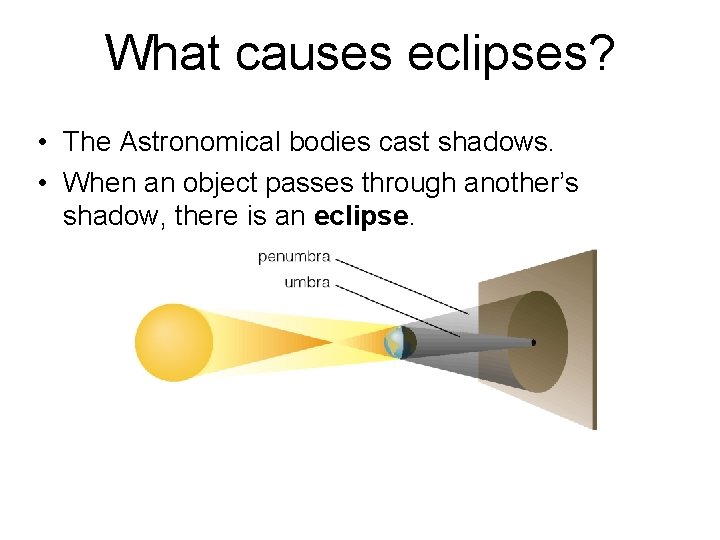
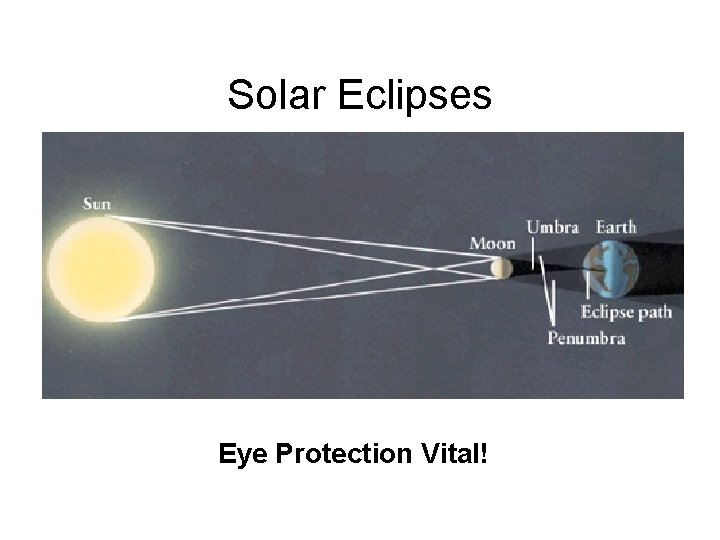
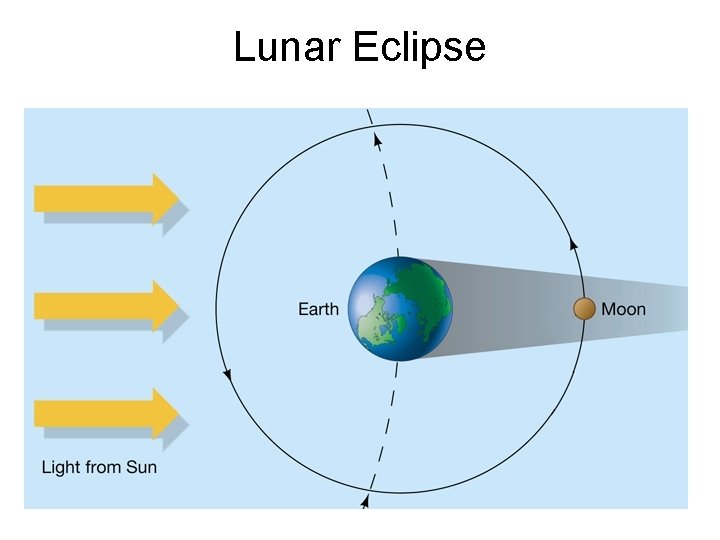
What causes eclipses? • The Astronomical bodies cast shadows. • When an object passes through another’s shadow, there is an eclipse.
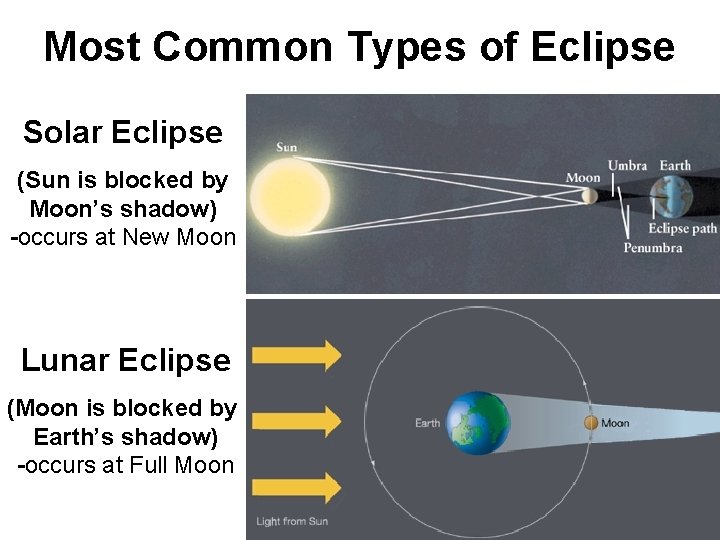
Most Common Types of Eclipse Solar Eclipse (Sun is blocked by Moon’s shadow) -occurs at New Moon Lunar Eclipse (Moon is blocked by Earth’s shadow) -occurs at Full Moon
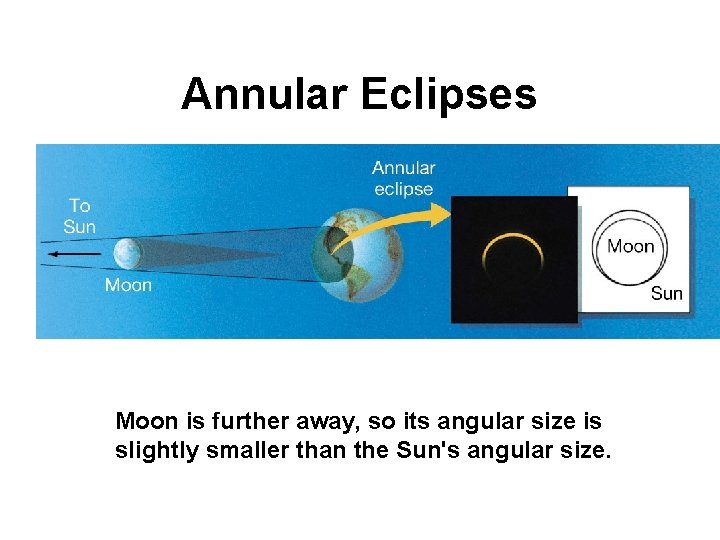
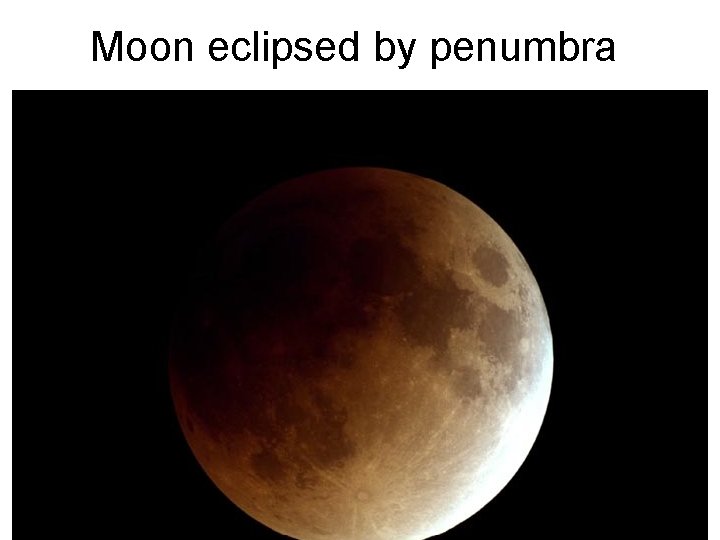
Types of Eclipse • Partial - Sun or Moon is partly covered. • Total - Sun or Moon is completely covered over and goes dark. • Annular - center of Sun is covered over, leaving a ring of light. • Penumbral Eclipse - Moon is solely in the penumbral shadow, only mildly darkened.
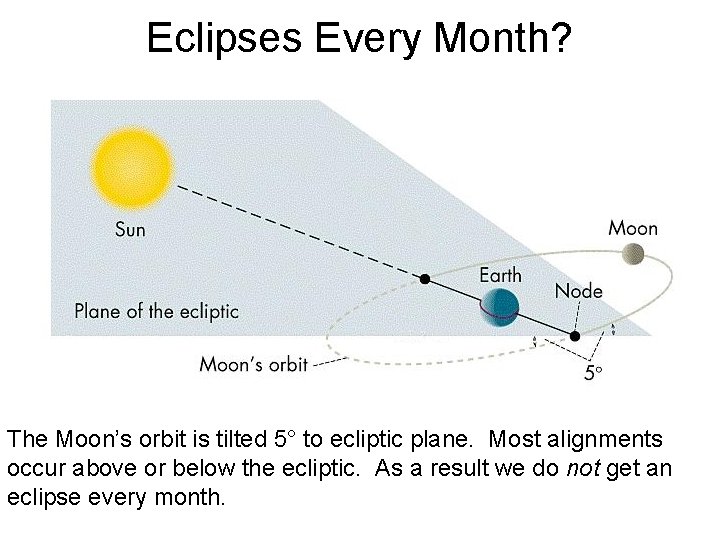
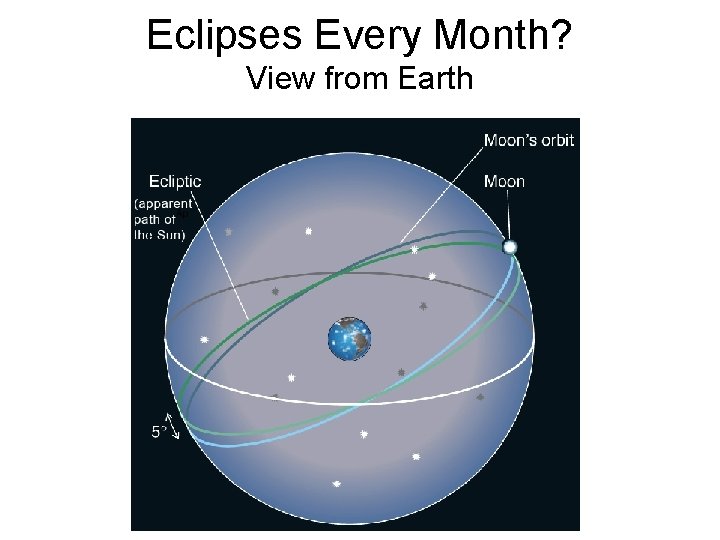
Eclipses Every Month? The Moon’s orbit is tilted 5° to ecliptic plane. Most alignments occur above or below the ecliptic. As a result we do not get an eclipse every month.
Eclipses Every Month? View from Earth
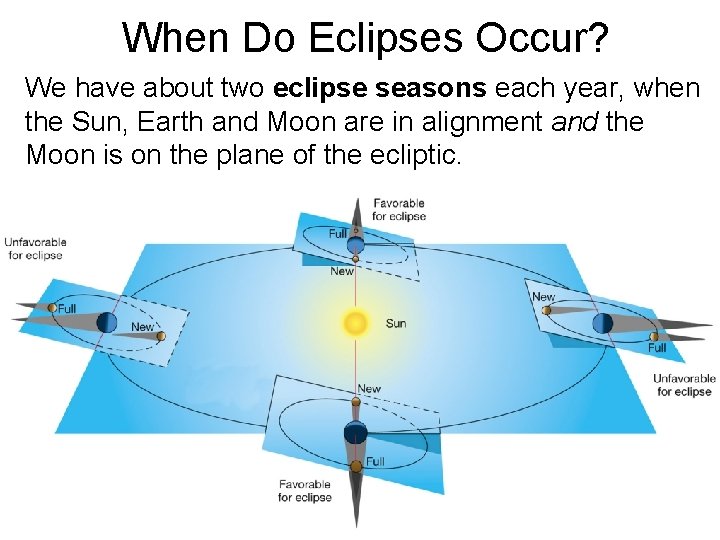
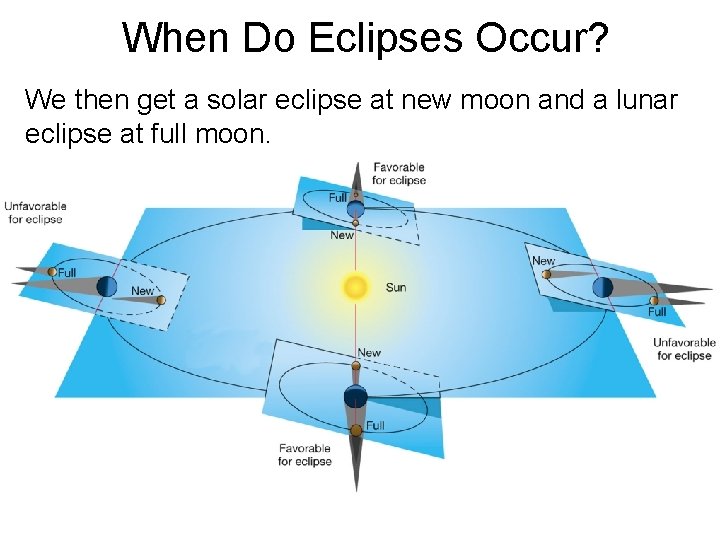
When Do Eclipses Occur? We have about two eclipse seasons each year, when the Sun, Earth and Moon are in alignment and the Moon is on the plane of the ecliptic.
When Do Eclipses Occur? We then get a solar eclipse at new moon and a lunar eclipse at full moon.
Solar Eclipses
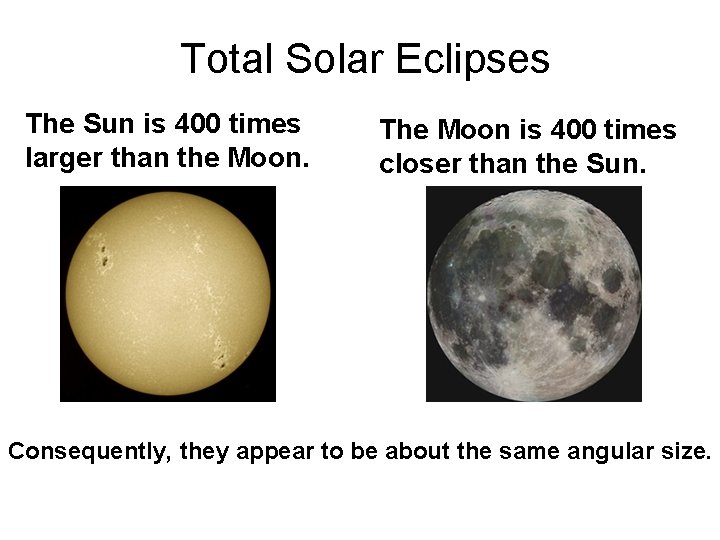
Total Solar Eclipses The Sun is 400 times larger than the Moon. The Moon is 400 times closer than the Sun. Consequently, they appear to be about the same angular size.
Solar Eclipses Eye Protection Vital!
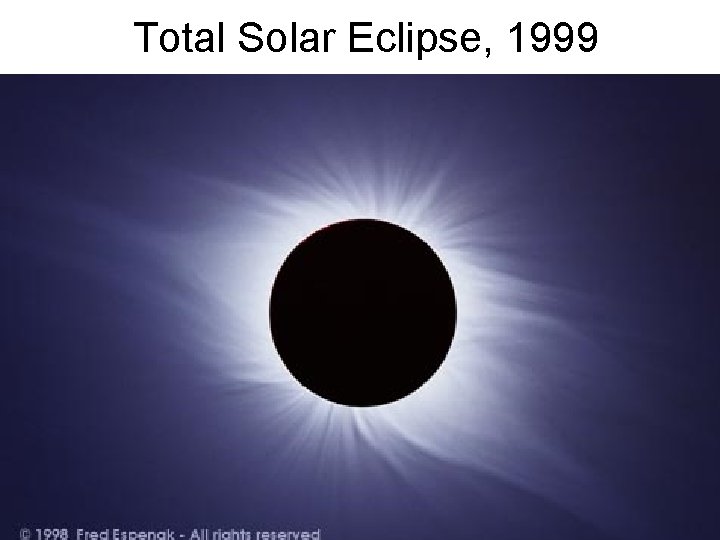
Total Solar Eclipse, 1999
Eye Safety • Sunlight can permanently burn out the receptors in your eyes. • Retinas have no pain sensors, You won't know until it's too late! • Eclipses are especially dangerous, since people are deliberately looking at the Sun.
Eye Safety • Welder's Glass- excellent if expensive. • Telescopes with Sun filters -excellent, but need to make sure it dies not get scratched. • Pin hole cameras -You do not look at the Sun (it's cheap and works, but is not a cool-looking) • Mylar eclipse glasses - cheap but not recommended. (They scratch far too easily, high risk of line blindness)
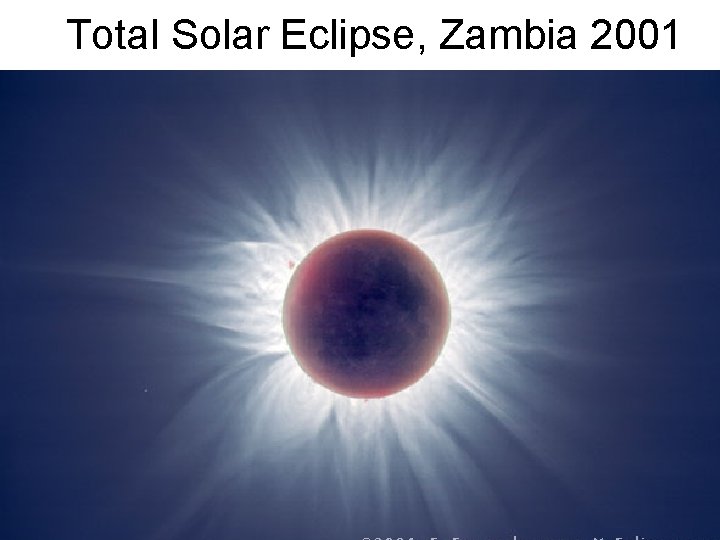
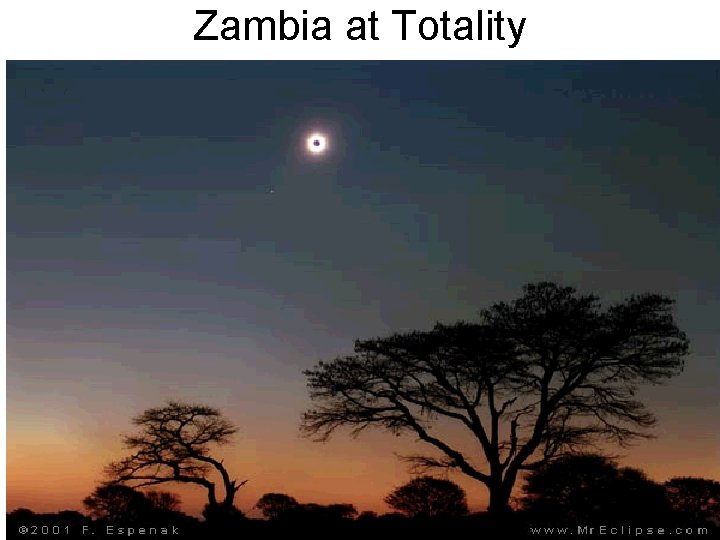
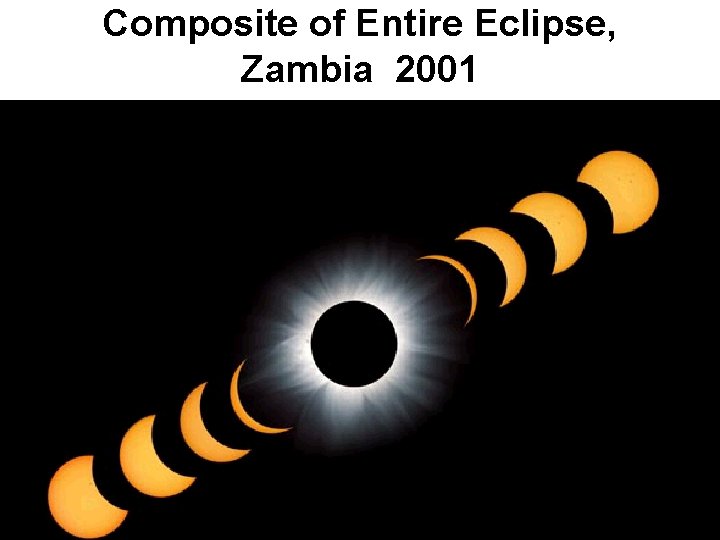
Total Solar Eclipse, Zambia 2001
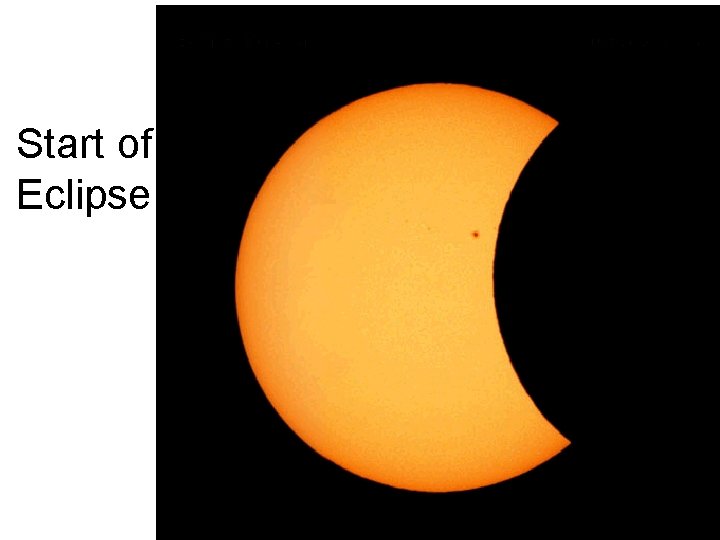
Start of Eclipse
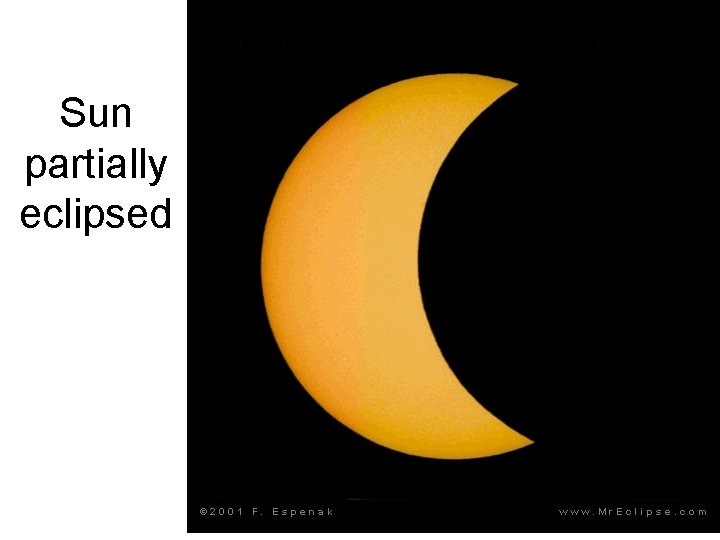
Sun partially eclipsed
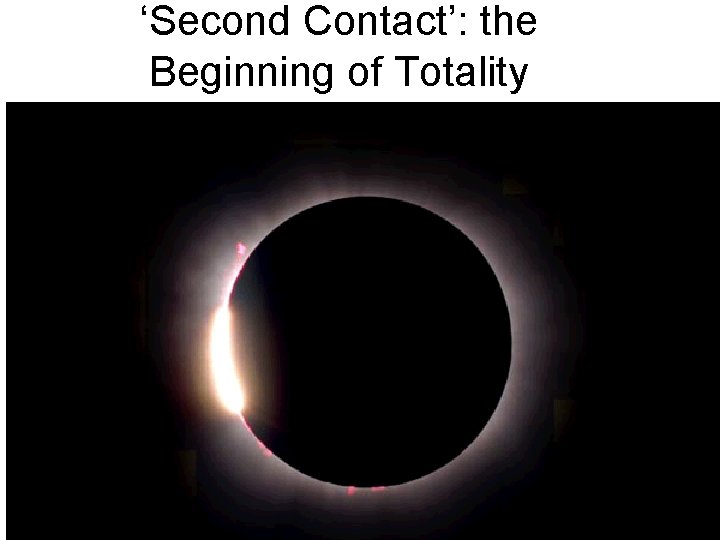
‘Second Contact’: the Beginning of Totality
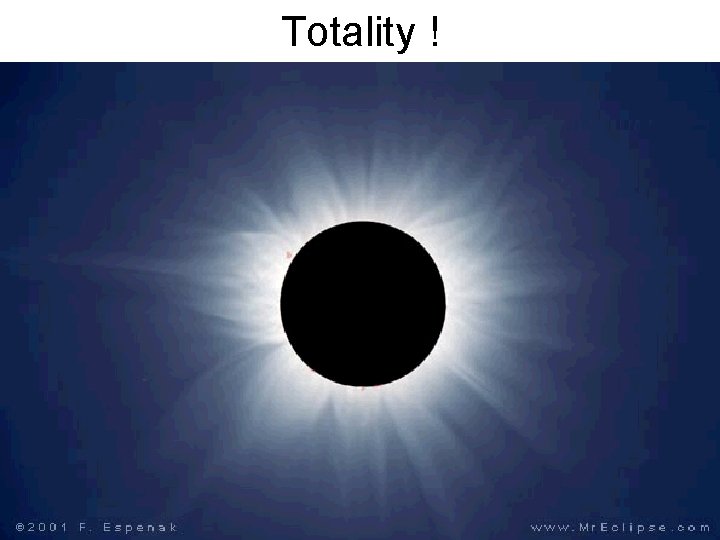
Totality !
Zambia at Totality
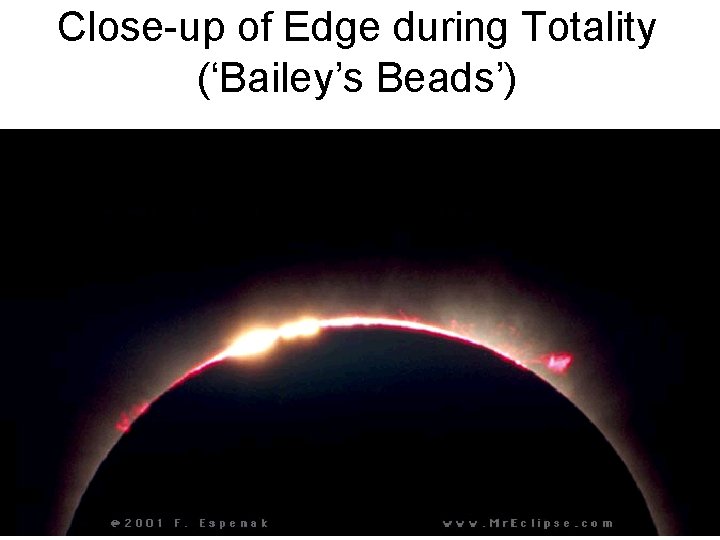
Close-up of Edge during Totality (‘Bailey’s Beads’)
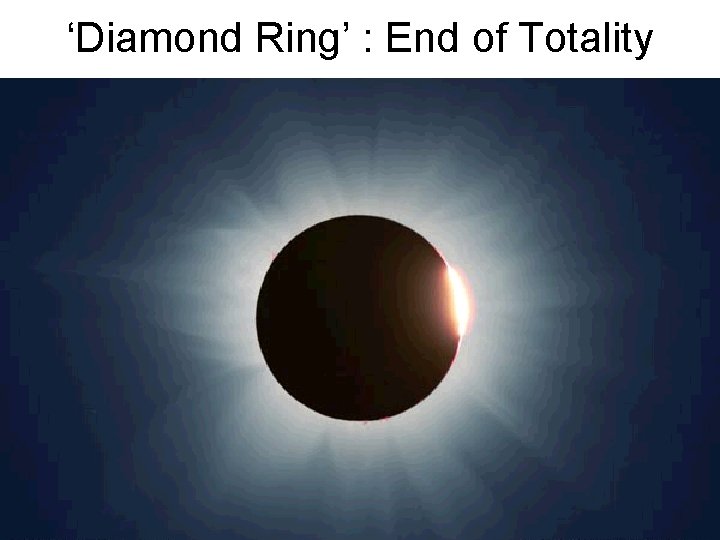
‘Diamond Ring’ : End of Totality
Composite of Entire Eclipse, Zambia 2001
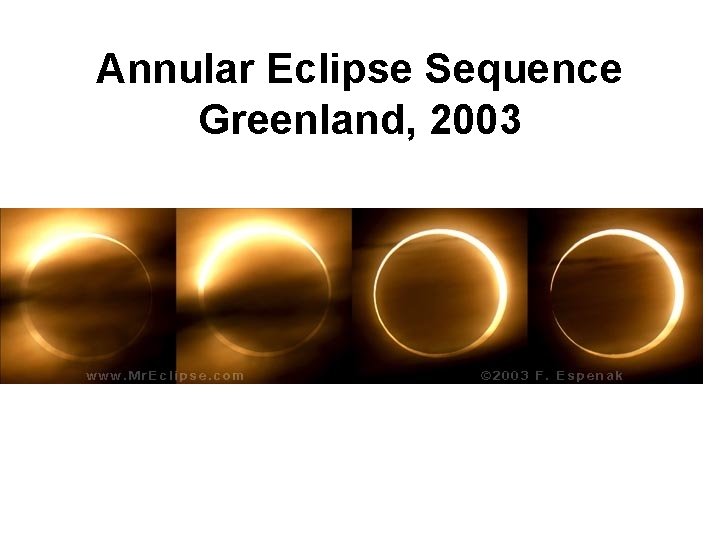
Annular Eclipses Moon is further away, so its angular size is slightly smaller than the Sun's angular size.
Annular Eclipse Sequence Greenland, 2003
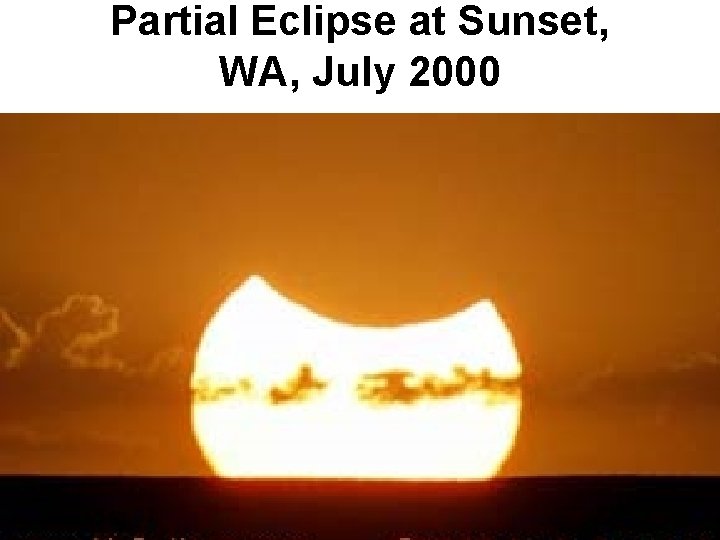
Partial Eclipse at Sunset, WA, July 2000
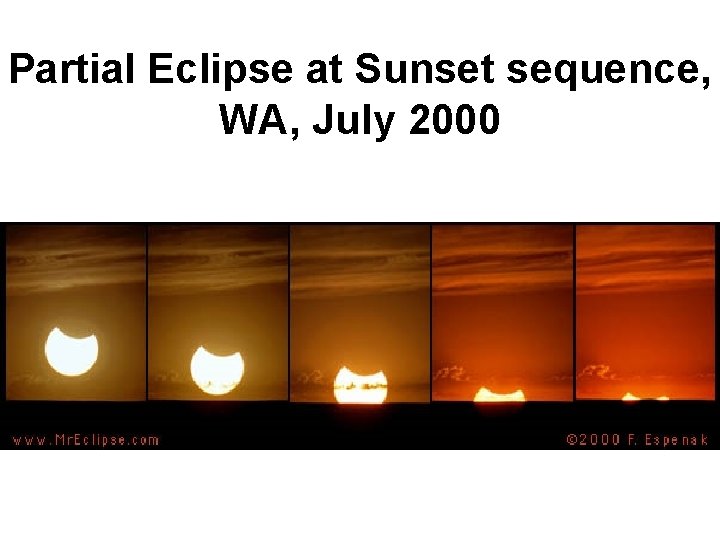
Partial Eclipse at Sunset sequence, WA, July 2000
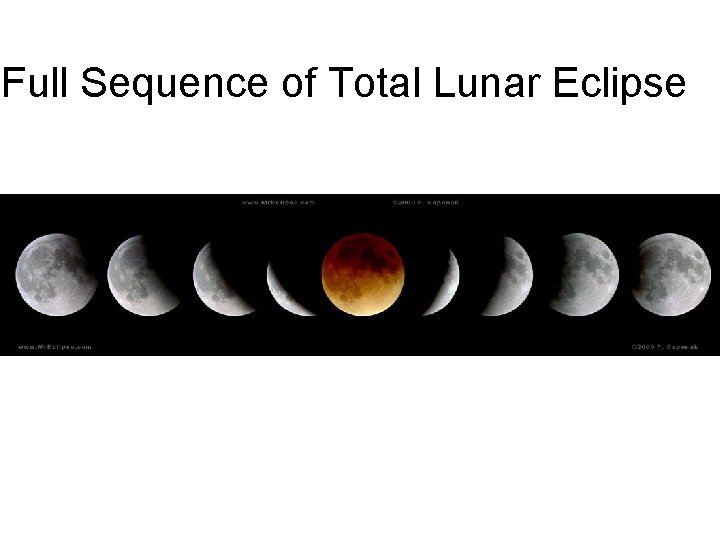
Total Lunar Eclipse
Lunar Eclipse
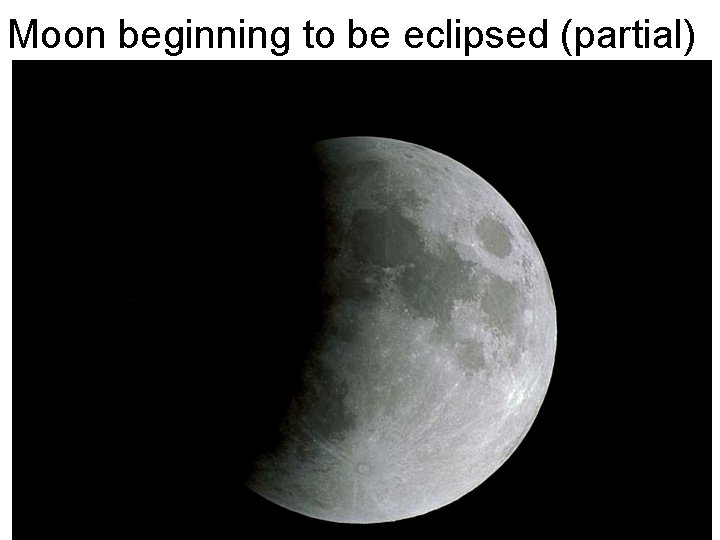
Moon beginning to be eclipsed (partial)
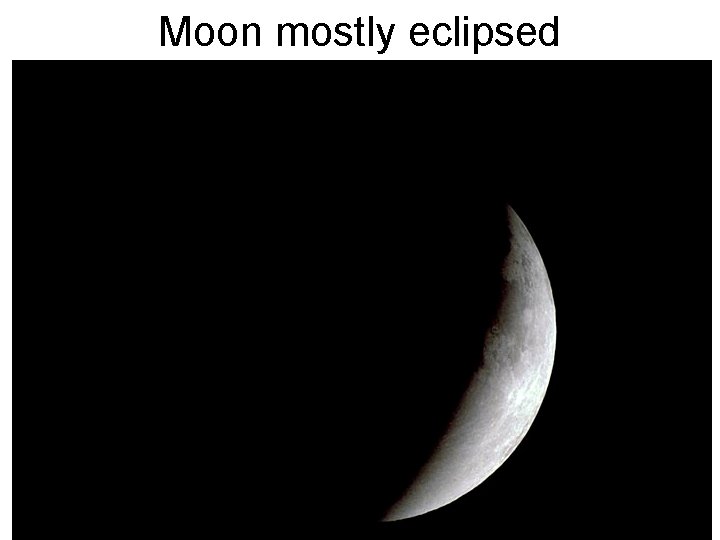
Moon mostly eclipsed
Moon eclipsed by penumbra
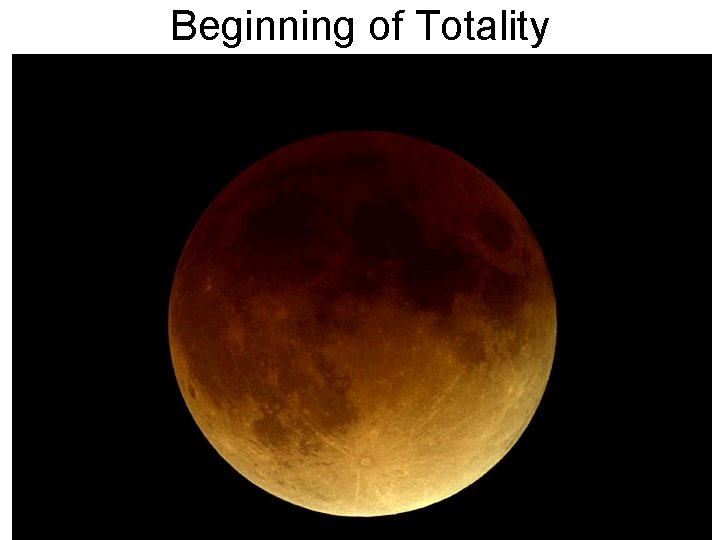
Beginning of Totality
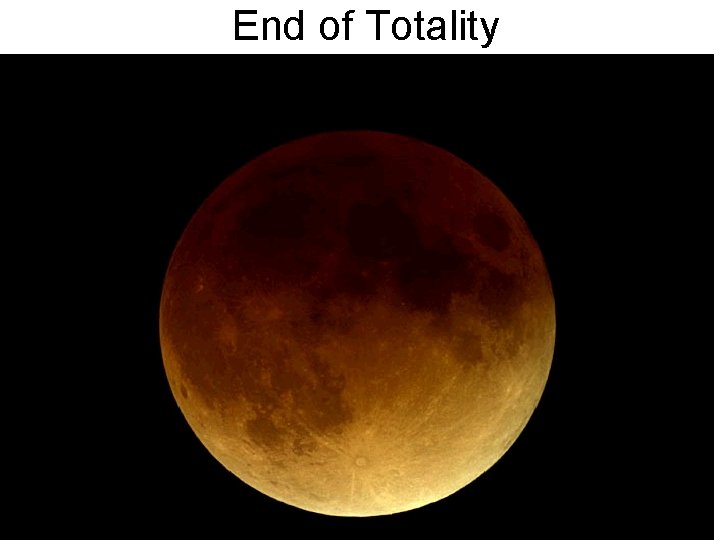
End of Totality
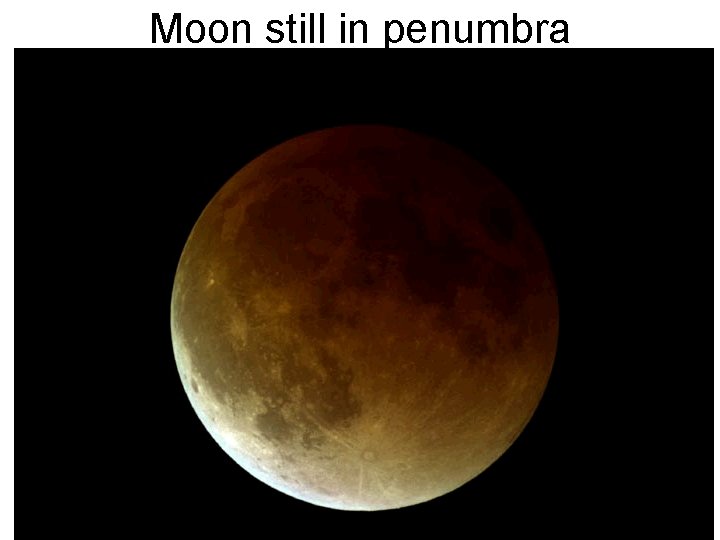
Moon still in penumbra
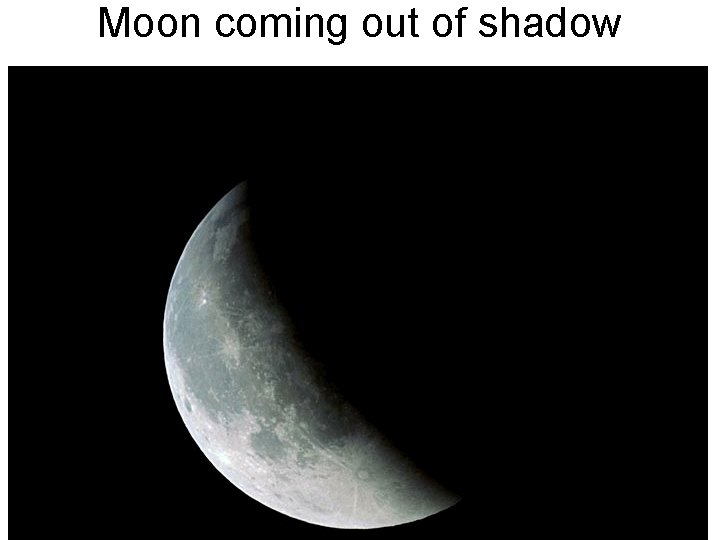
Moon coming out of shadow
Full Sequence of Total Lunar Eclipse
Predicting Eclipses • Eclipses recur with the 18 yr, 11 1/3 day saros cycle, but type (e. g. , partial, total) and location may vary.
What have we learned? • Why do we see phases of the Moon? – Half the Moon is lit by the Sun; half is in shadow, and its appearance to us is determined by the relative positions of Sun, Moon, and Earth during the Moon's orbit. • What causes eclipses? – Lunar eclipse: Earth’s shadow on the Moon – Solar eclipse: Moon’s shadow on Earth – Tilt of Moon’s orbit means eclipses occur during two periods each year