
The Modern Periodic Table The Periodic Table Elements
The Modern Periodic Table

The Periodic Table • • • Elements are arranged in the periodic table according to their atomic number. The table is generally arranged with metals towards the left side of the table. Examples of metals are sodium, aluminum, and lithium. Nonmetals are generally found on the right side of the table. Examples of non-metals are carbon, oxygen, and sulfur. One exception is hydrogen which is the lightest element. – It behaves mostly as a nonmetal.
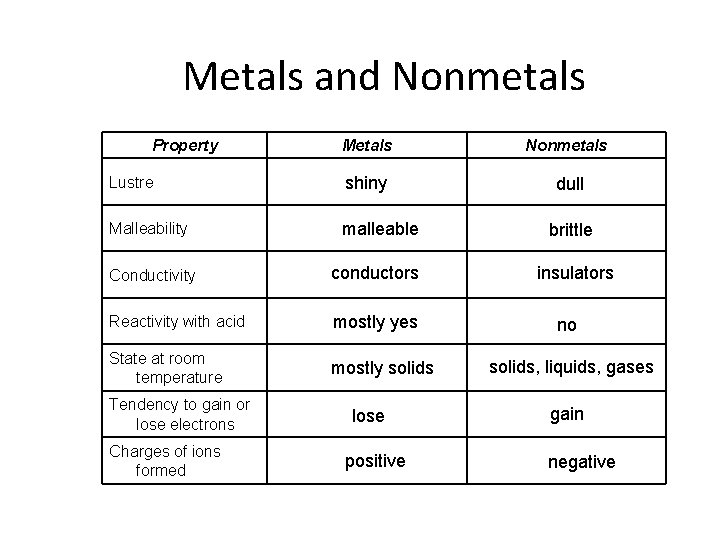
Metals and Nonmetals Property Metals Nonmetals Lustre shiny dull Malleability malleable Conductivity conductors Reactivity with acid mostly yes State at room temperature mostly solids Tendency to gain or lose electrons Charges of ions formed lose positive brittle insulators no solids, liquids, gases gain negative
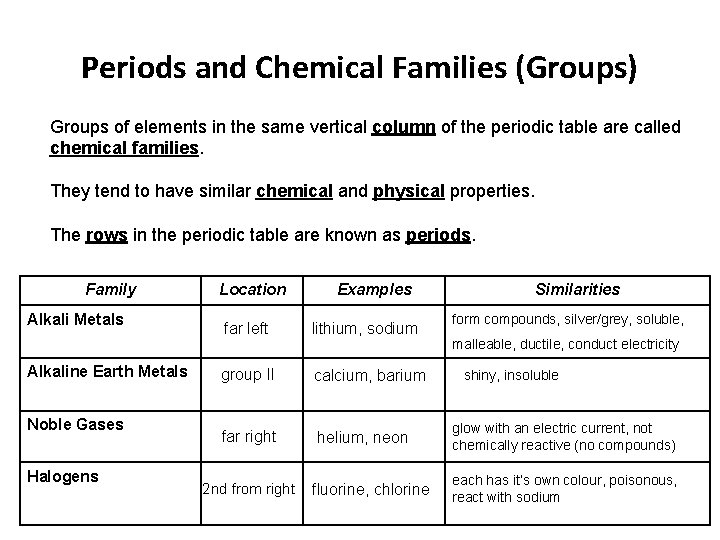
Periods and Chemical Families (Groups) Groups of elements in the same vertical column of the periodic table are called chemical families. They tend to have similar chemical and physical properties. The rows in the periodic table are known as periods. Family Alkali Metals Alkaline Earth Metals Noble Gases Halogens Location Examples far left lithium, sodium group II calcium, barium far right helium, neon 2 nd from right fluorine, chlorine Similarities form compounds, silver/grey, soluble, malleable, ductile, conduct electricity shiny, insoluble glow with an electric current, not chemically reactive (no compounds) each has it’s own colour, poisonous, react with sodium

Periodic Table of the Elements
- Slides: 5