THE OPENWORM PROJECT USING NEUROML IN A HIGHLY


- Slides: 46
THE OPENWORM PROJECT: USING NEUROML IN A HIGHLY DETAILED MODEL OF C. ELEGANS Stephen D. Larson Neuro. ML Workshop 03/13/12
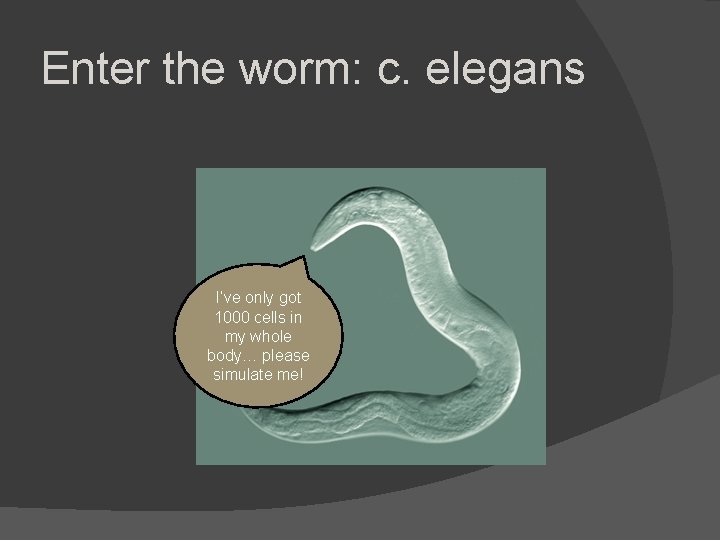
Enter the worm: c. elegans I’ve only got 1000 cells in my whole body… please simulate me!
In search of nature’s design principles via simulation • How can a humble worm regulate itself? – Reproduces – Avoids predators If –we can’t understand Survives in different chemical andgenes to temperature environments behavior here, why would we – Seeks and finds food sources in an ever expect to understand it anywhere? changing landscape – Distributes nutrients across its own cells – Manages waste and eliminates it
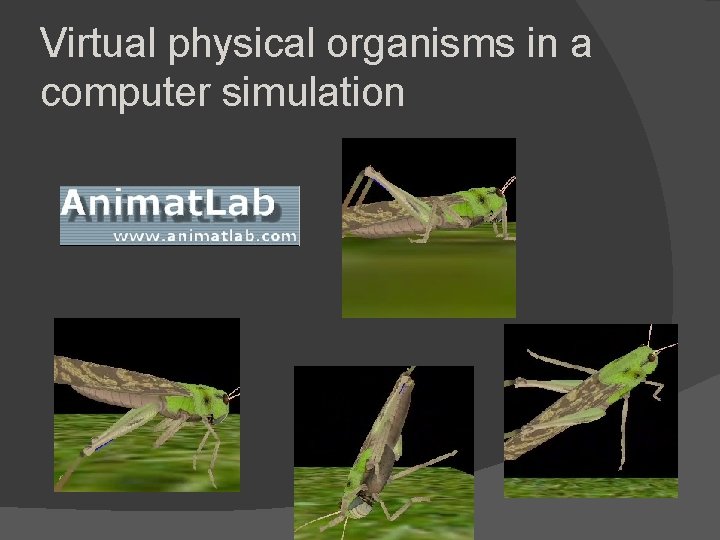
Virtual physical organisms in a computer simulation
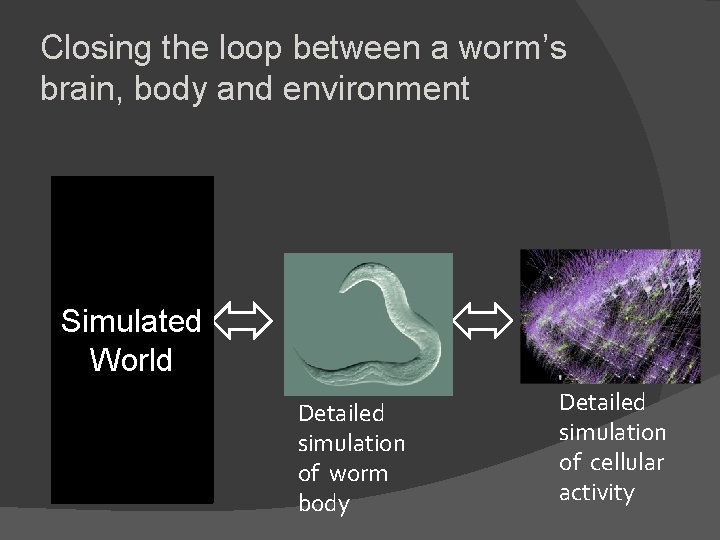
Closing the loop between a worm’s brain, body and environment Simulated World Detailed simulation of worm body Detailed simulation of cellular activity
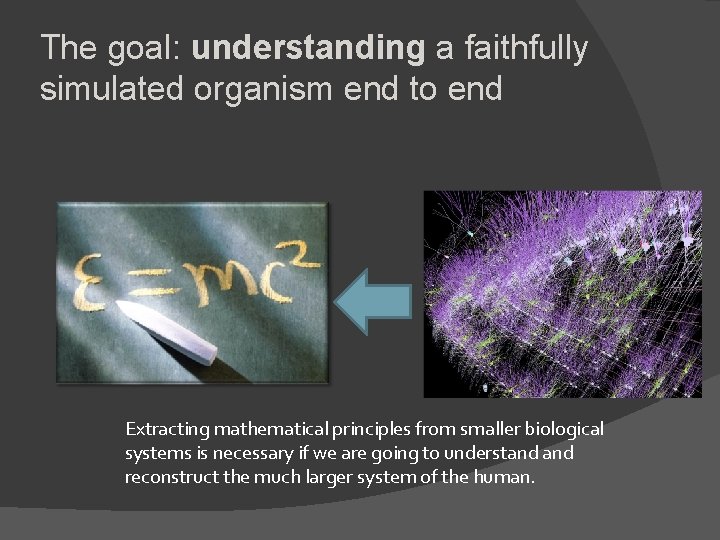
The goal: understanding a faithfully simulated organism end to end Extracting mathematical principles from smaller biological systems is necessary if we are going to understand reconstruct the much larger system of the human.
Outreach: put the model online and let the world play with it • Sex: Hermaphrodite • Interested in: Escaping my worm Matrix • Relationship status: Its complicated.
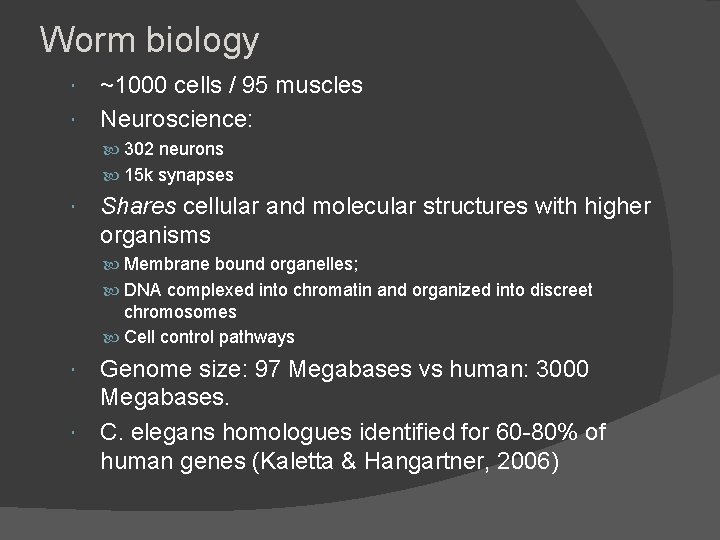
Worm biology ~1000 cells / 95 muscles Neuroscience: 302 neurons 15 k synapses Shares cellular and molecular structures with higher organisms Membrane bound organelles; DNA complexed into chromatin and organized into discreet chromosomes Cell control pathways Genome size: 97 Megabases vs human: 3000 Megabases. C. elegans homologues identified for 60 -80% of human genes (Kaletta & Hangartner, 2006)
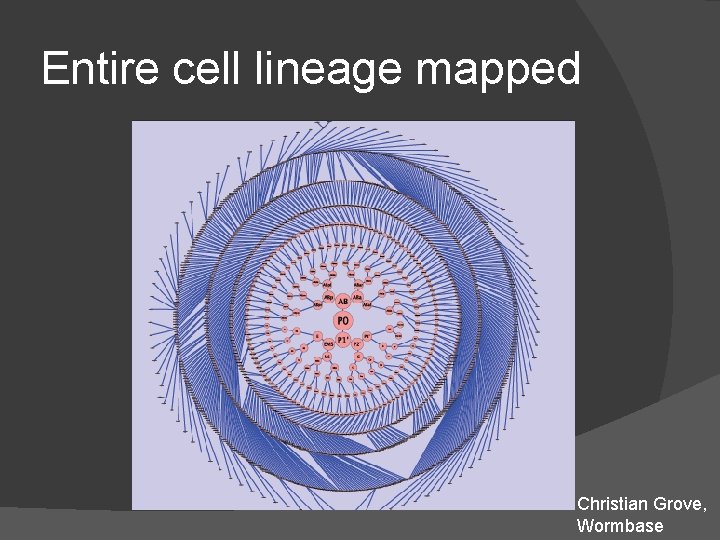
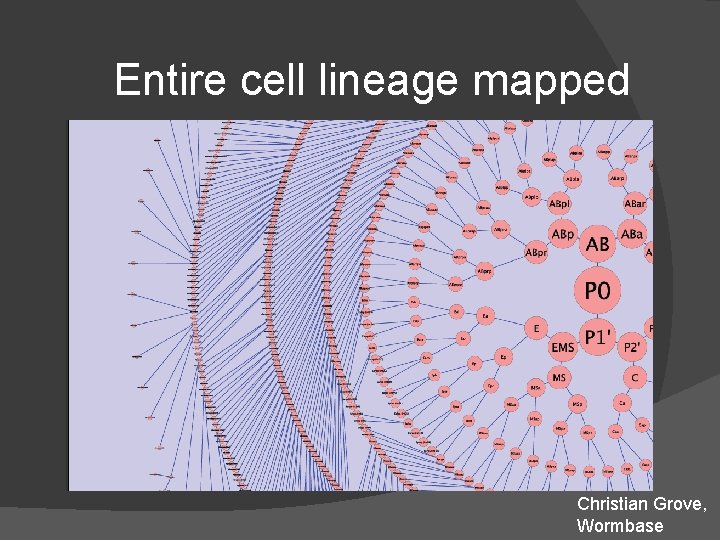
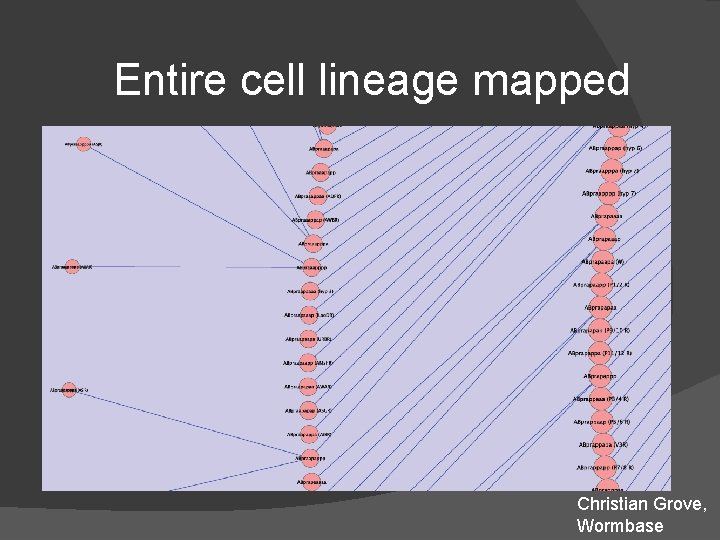
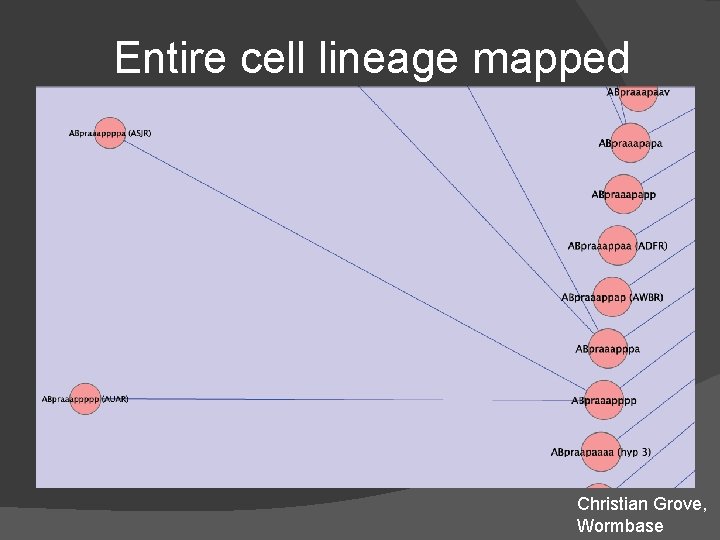
Entire cell lineage mapped Christian Grove, Wormbase
Entire cell lineage mapped Christian Grove, Wormbase
Entire cell lineage mapped Christian Grove, Wormbase
Entire cell lineage mapped Christian Grove, Wormbase
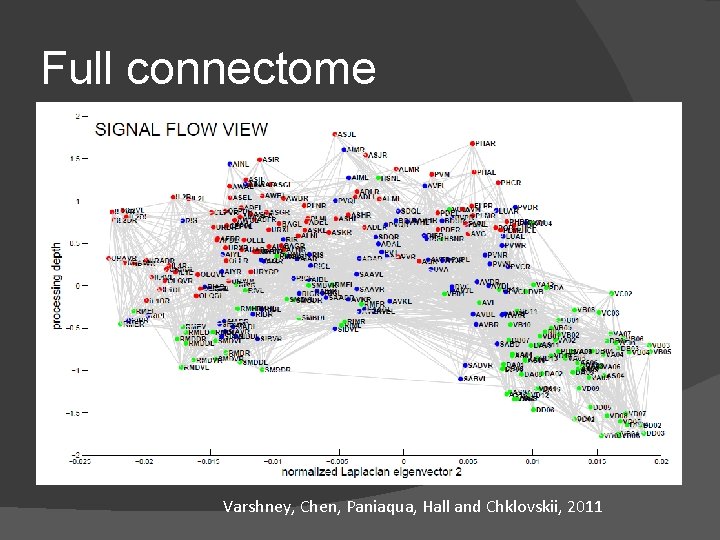
Full connectome Varshney, Chen, Paniaqua, Hall and Chklovskii, 2011
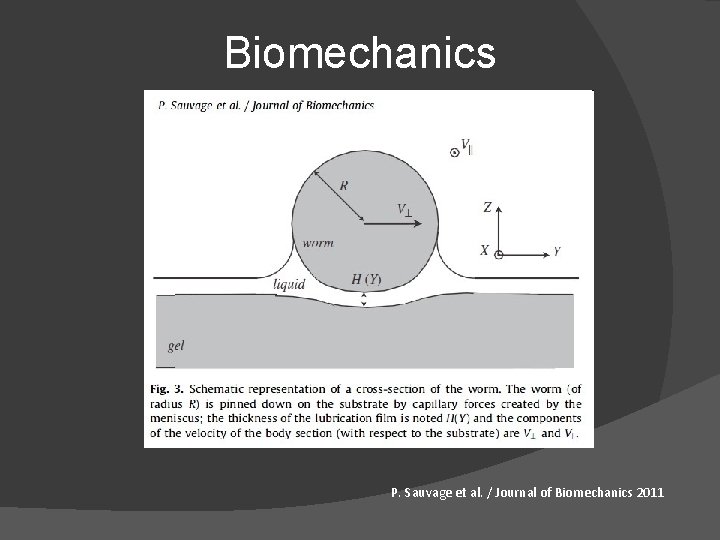
Biomechanics P. Sauvage et al. / Journal of Biomechanics 2011
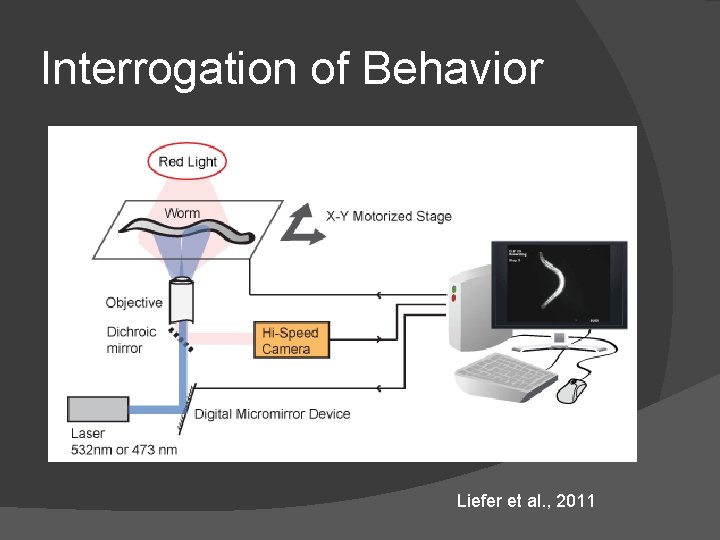
Interrogation of Behavior Liefer et al. , 2011
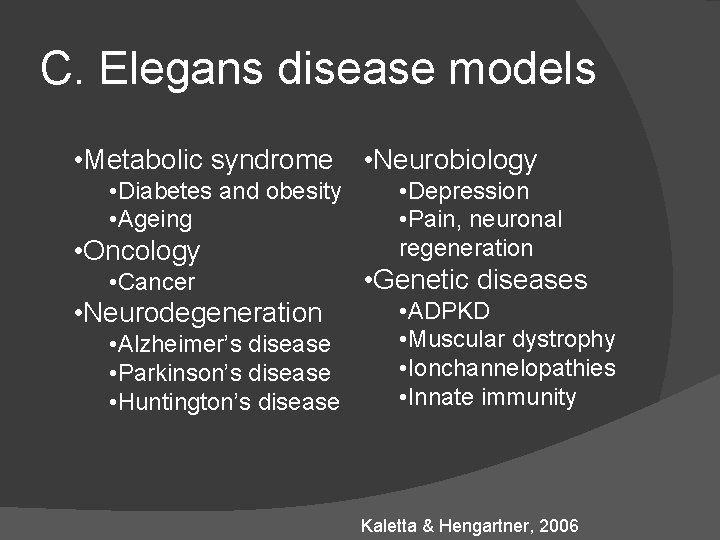
C. Elegans disease models • Metabolic syndrome • Diabetes and obesity • Ageing • Oncology • Cancer • Neurodegeneration • Alzheimer’s disease • Parkinson’s disease • Huntington’s disease • Neurobiology • Depression • Pain, neuronal regeneration • Genetic diseases • ADPKD • Muscular dystrophy • Ionchannelopathies • Innate immunity Kaletta & Hengartner, 2006
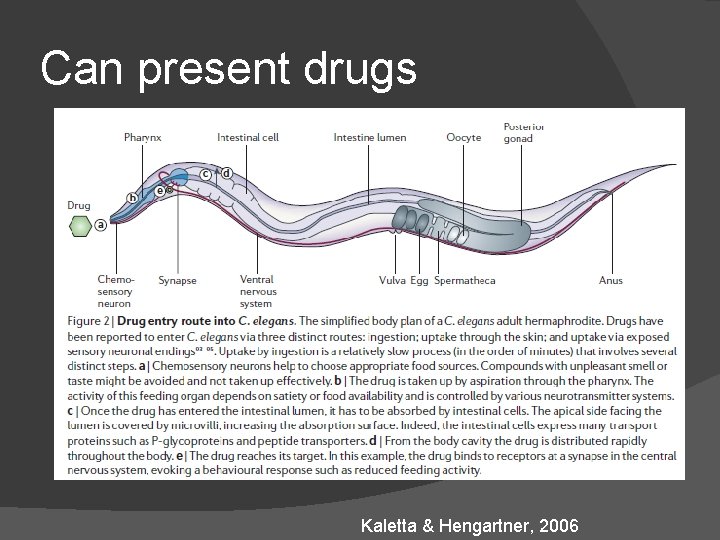
Can present drugs Kaletta & Hengartner, 2006
March– Sept 2011 OPEN WORM RELEASE 1
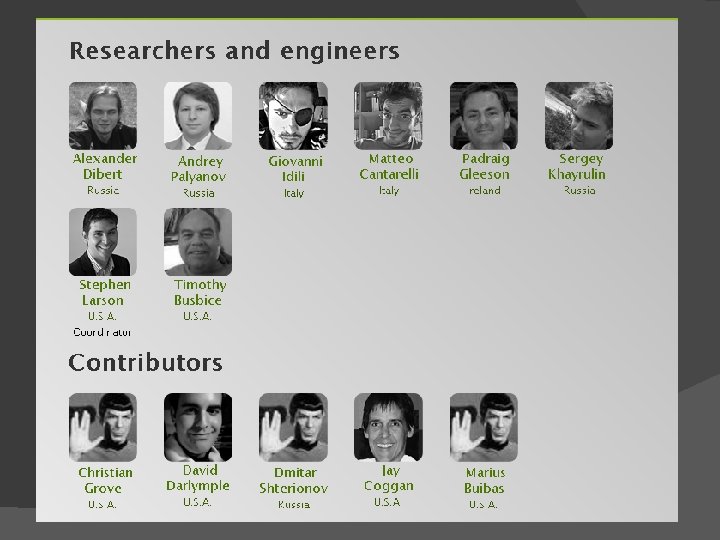
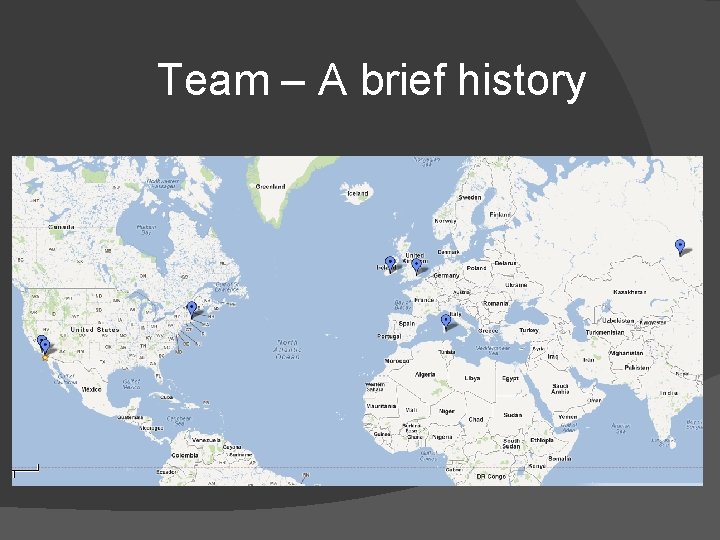
Team – A brief history
Collaboration technologies used
Mechanical model Palayanov, Khayrulin, Dibert (submitted)
3 D body plan Christian Grove, Wormbase
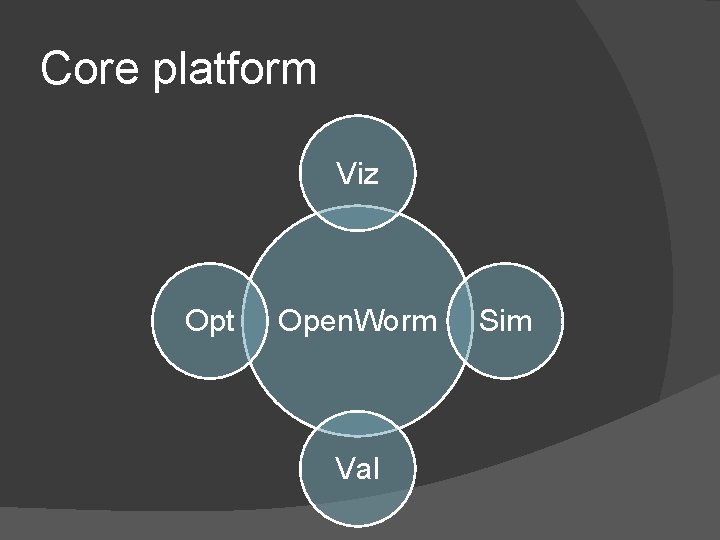
Core platform Viz Opt Open. Worm Val Sim
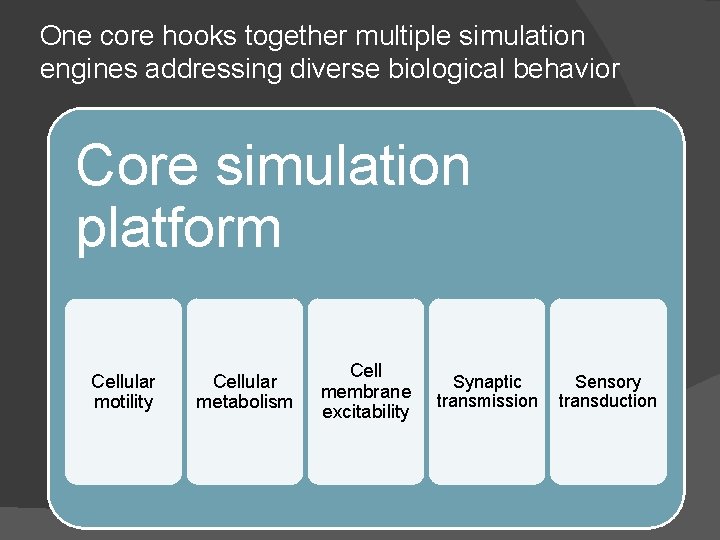
One core hooks together multiple simulation engines addressing diverse biological behavior Core simulation platform Cellular motility Cellular metabolism Cell membrane excitability Synaptic transmission Sensory transduction
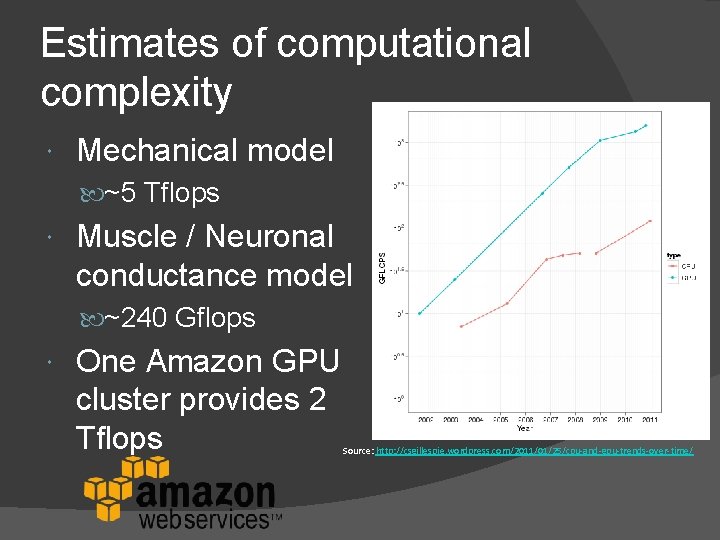
Estimates of computational complexity Mechanical model ~5 Tflops Muscle / Neuronal conductance model ~240 Gflops One Amazon GPU cluster provides 2 Tflops Source: http: //csgillespie. wordpress. com/2011/01/25/cpu-and-gpu-trends-over-time/
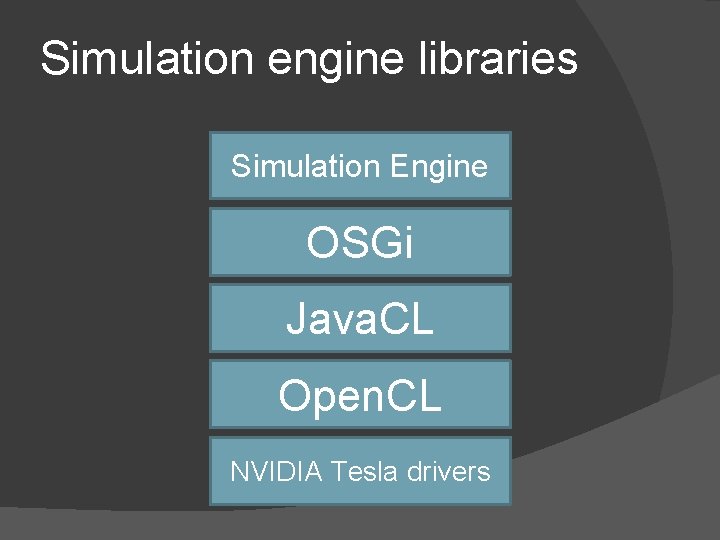
Simulation engine libraries Simulation Engine OSGi Java. CL Open. CL NVIDIA Tesla drivers
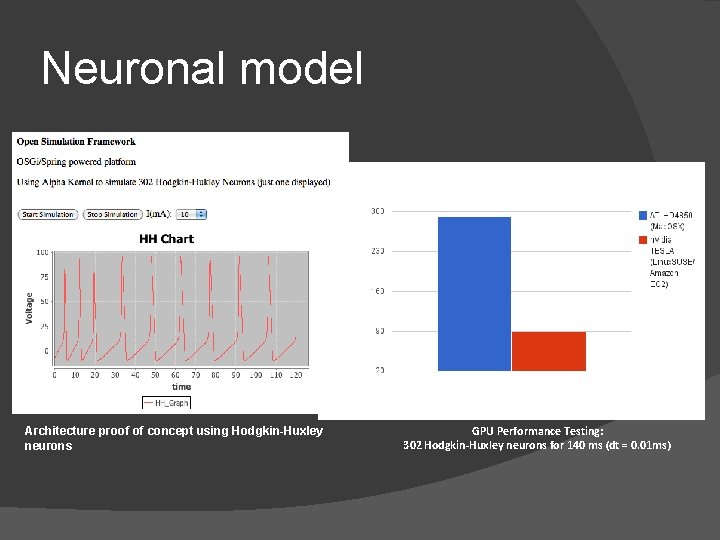
Neuronal model ms Architecture proof of concept using Hodgkin-Huxley neurons GPU Performance Testing: 302 Hodgkin-Huxley neurons for 140 ms (dt = 0. 01 ms)
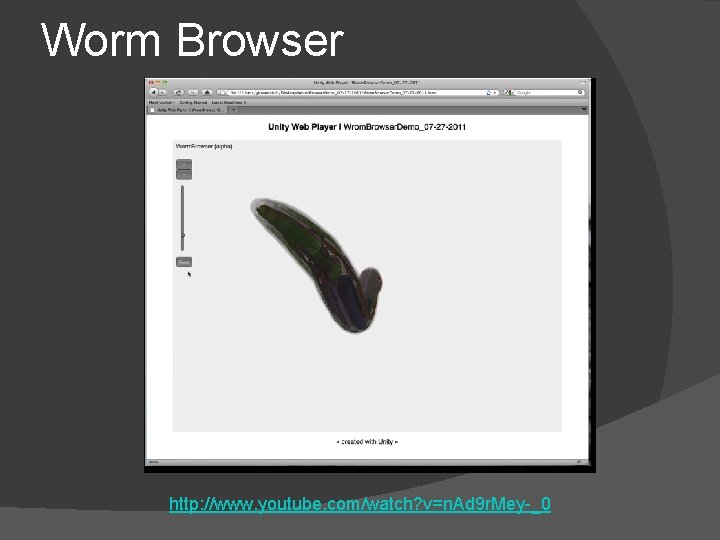
Worm Browser http: //www. youtube. com/watch? v=n. Ad 9 r. Mey-_0
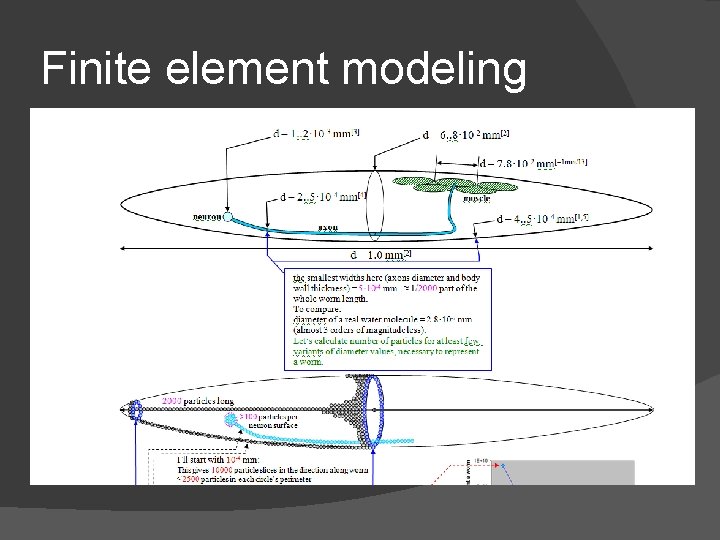
Finite element modeling
Release 2 – in progress
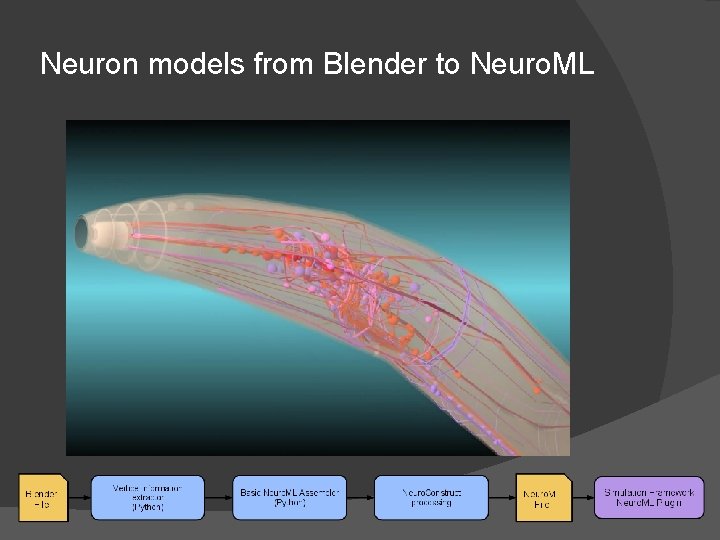
Neuron models from Blender to Neuro. ML
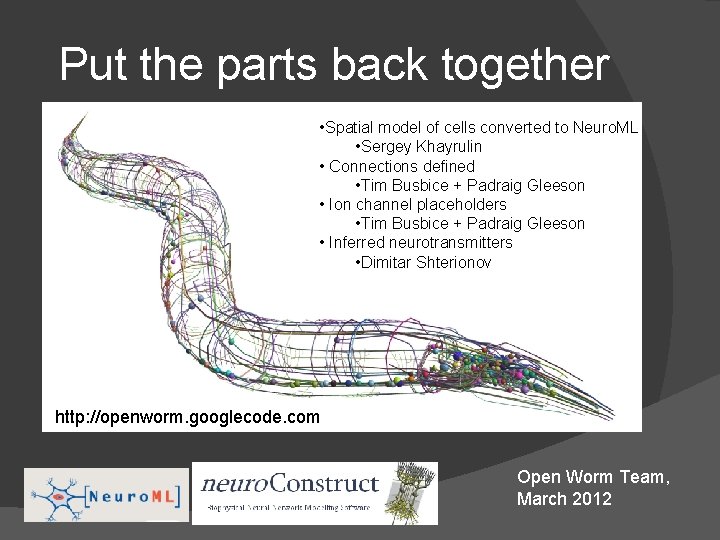
Put the parts back together • Spatial model of cells converted to Neuro. ML • Sergey Khayrulin • Connections defined • Tim Busbice + Padraig Gleeson • Ion channel placeholders • Tim Busbice + Padraig Gleeson • Inferred neurotransmitters • Dimitar Shterionov http: //openworm. googlecode. com Open Worm Team, March 2012
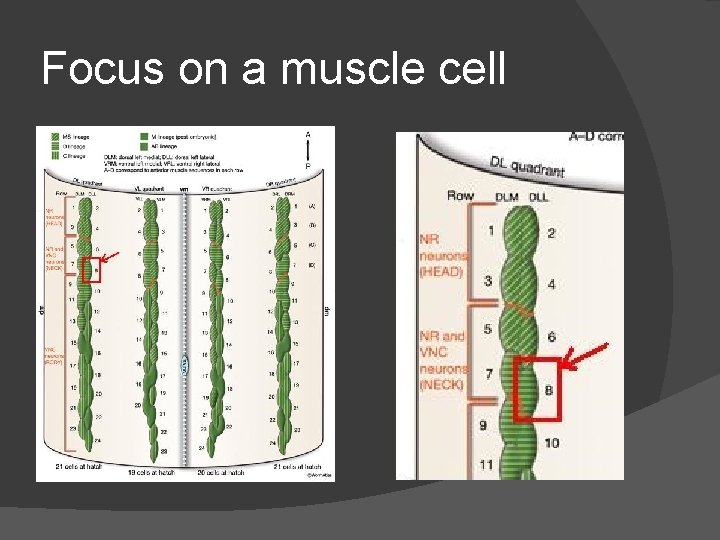
Focus on a muscle cell
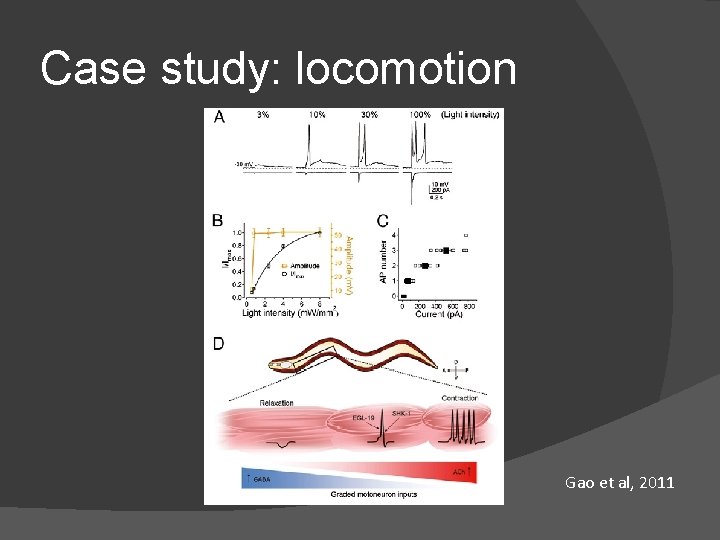
Case study: locomotion Gao et al, 2011
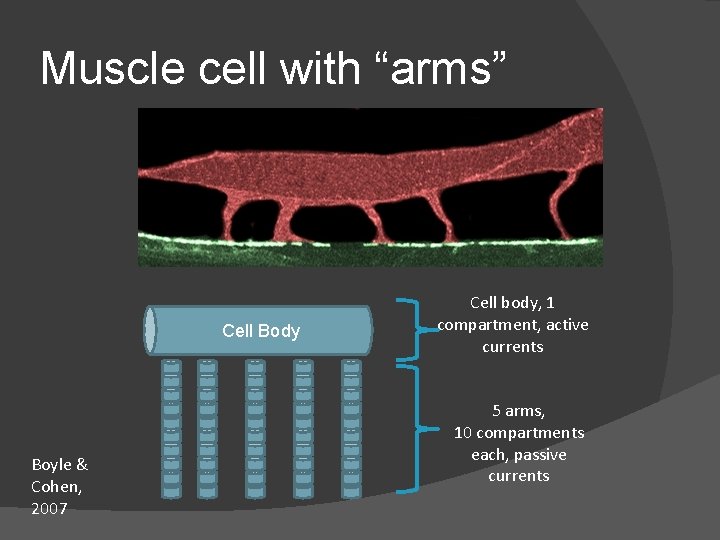
Muscle cell with “arms” Cell Body Boyle & Cohen, 2007 Cell body, 1 compartment, active currents 5 arms, 10 compartments each, passive currents
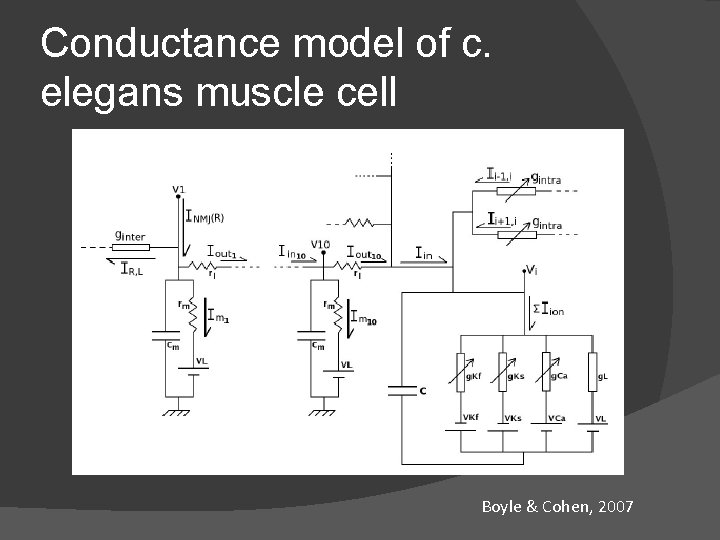
Conductance model of c. elegans muscle cell Boyle & Cohen, 2007
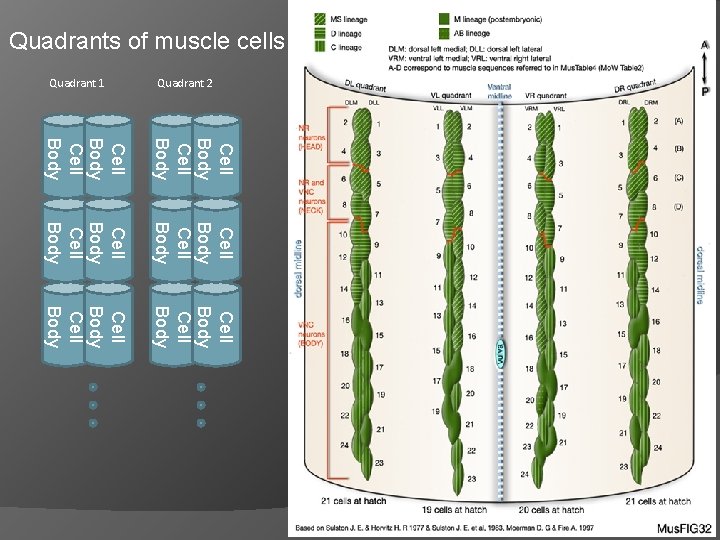
Quadrants of muscle cells Quadrant 2 Quadrant 1 Cell Body Cell Body Cell Body
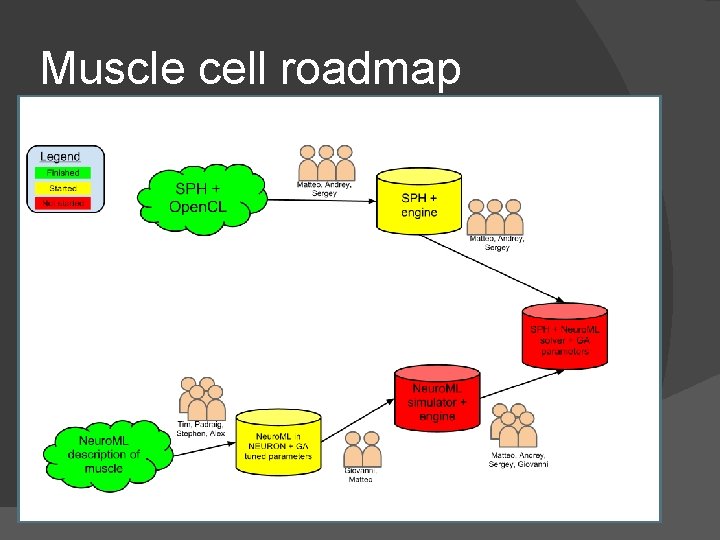
Muscle cell roadmap
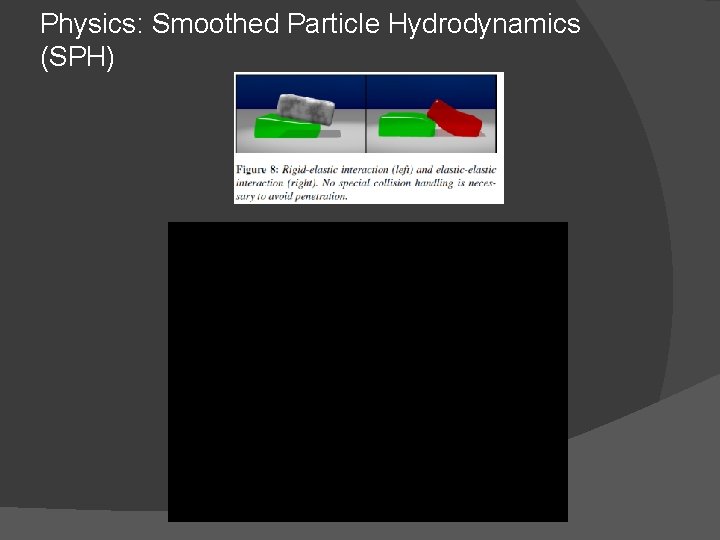
Physics: Smoothed Particle Hydrodynamics (SPH)
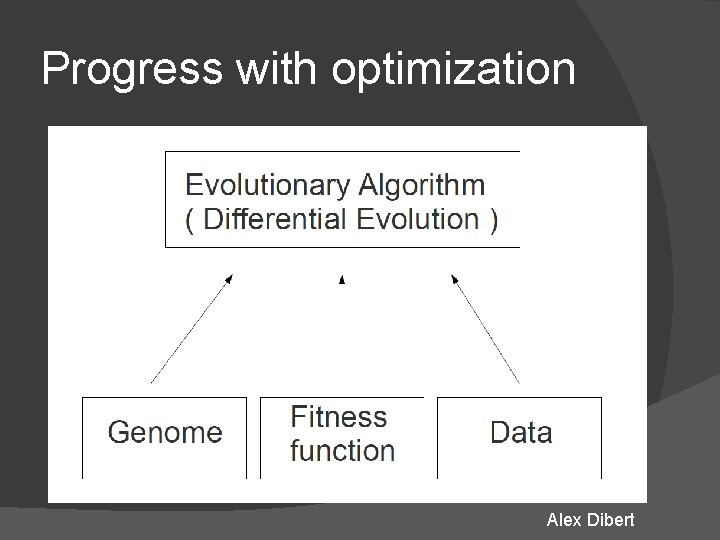
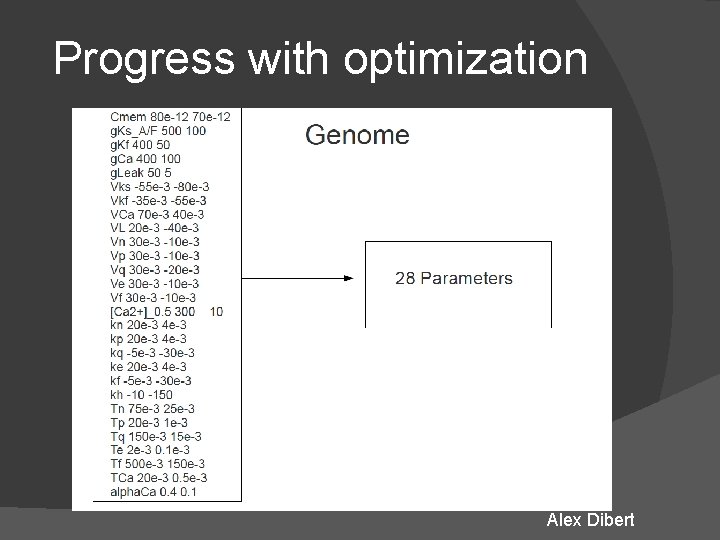
Progress with optimization Alex Dibert
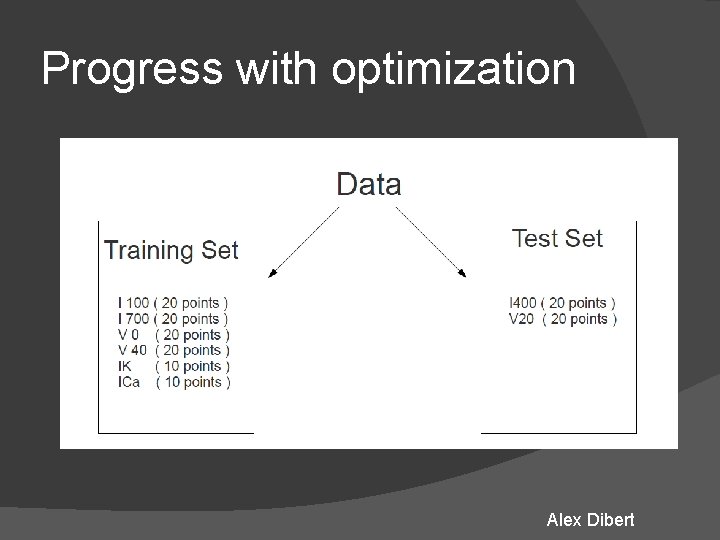
Progress with optimization Alex Dibert
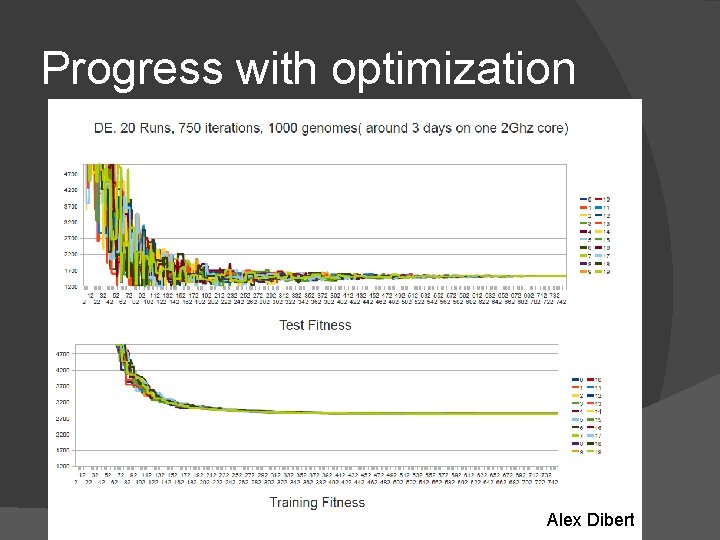
Progress with optimization Alex Dibert
Progress with optimization Alex Dibert
Current challenges Better integration of genetic algorithms into simulation pipeline Filling in the gaps of the ion channels for the spatial connectome Multi-timescale integration of smoothed particle hydrodynamics and conductance based electrical activity of muscle cell
Multi-scale synthesis in c. elegans Motivated highly detailed simulations in a small, well studied organism • Described the effort of a distributed “virtual team” of scientists and engineers • Described early results in building a framework and engine for c. elegans simulation • Described current opportunities for contribution •