Focal Segmental Glomerulosclerosis Jai Radhakrishnan MD MS MRCP

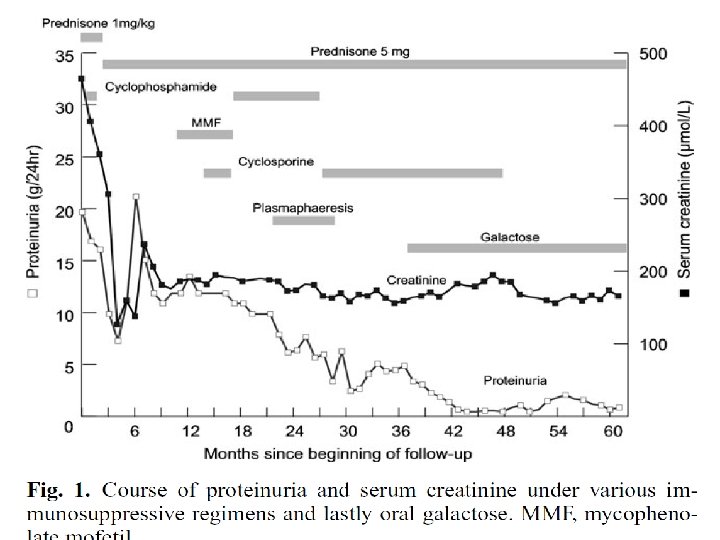
- Slides: 99
Focal Segmental Glomerulosclerosis Jai Radhakrishnan, MD, MS, MRCP, FACC, FASN Associate Professor of Clinical Medicine Columbia University, New York www. glomerularcenter. org
Objectives n n Diagnosis and epidemiology of FSGS Principles of therapy using a stepwise approach.
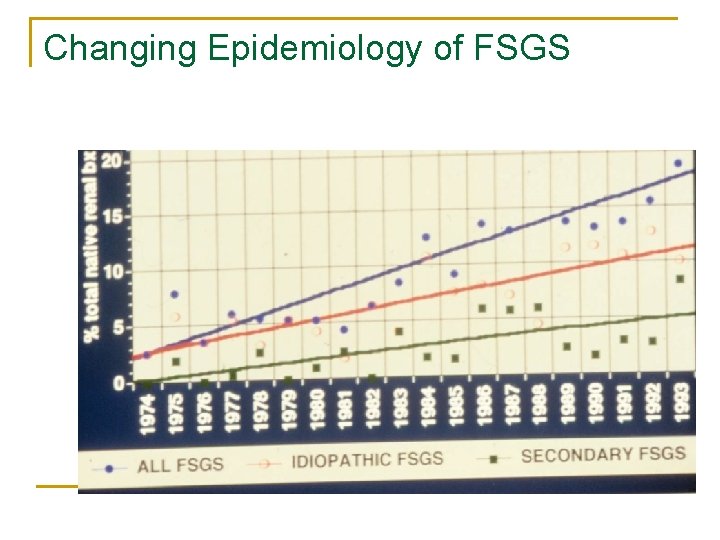
Changing Epidemiology of FSGS
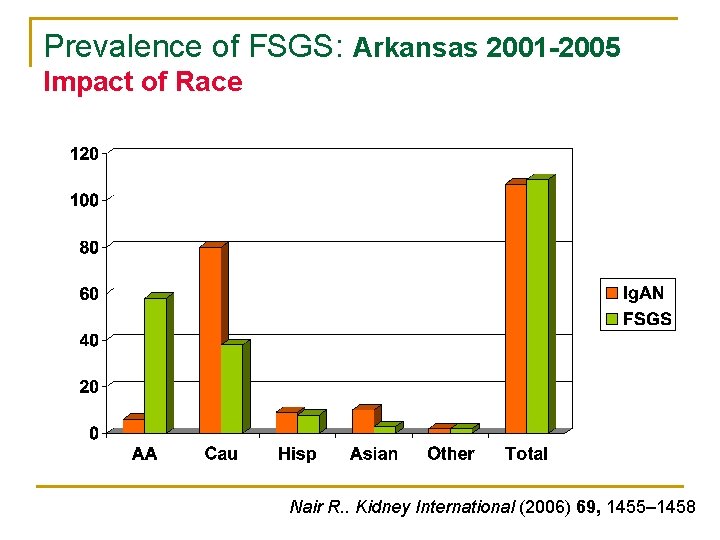
Prevalence of FSGS: Arkansas 2001 -2005 Impact of Race Nair R. . Kidney International (2006) 69, 1455– 1458
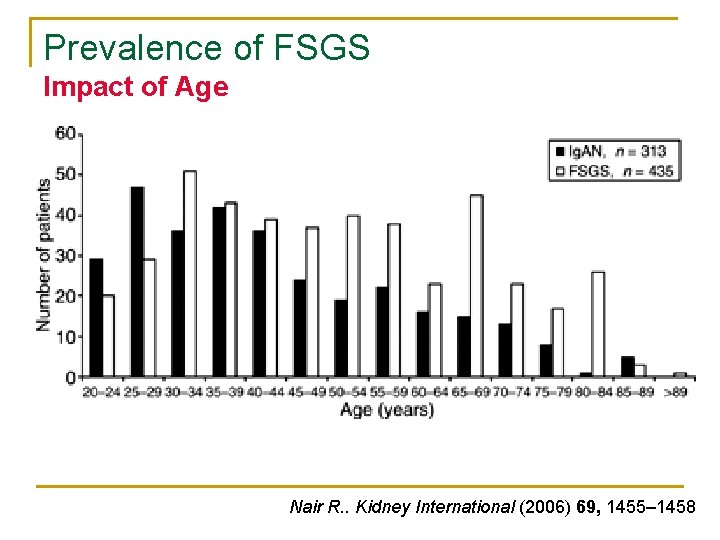
Prevalence of FSGS Impact of Age Nair R. . Kidney International (2006) 69, 1455– 1458
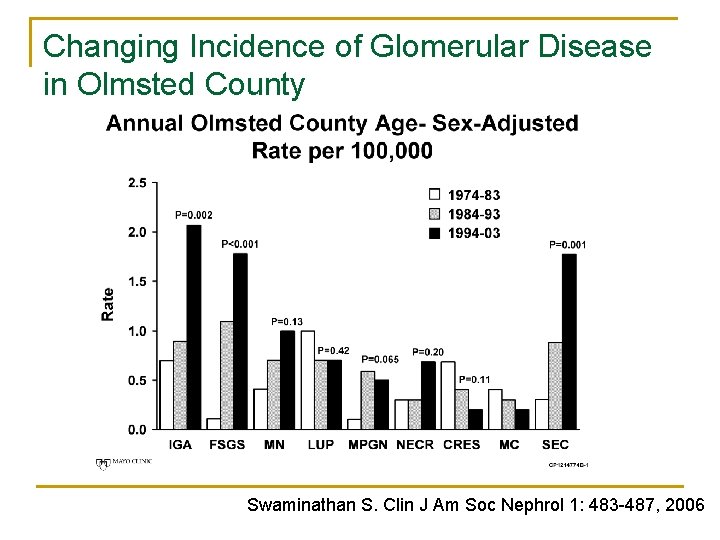
Changing Incidence of Glomerular Disease in Olmsted County Swaminathan S. Clin J Am Soc Nephrol 1: 483 -487, 2006
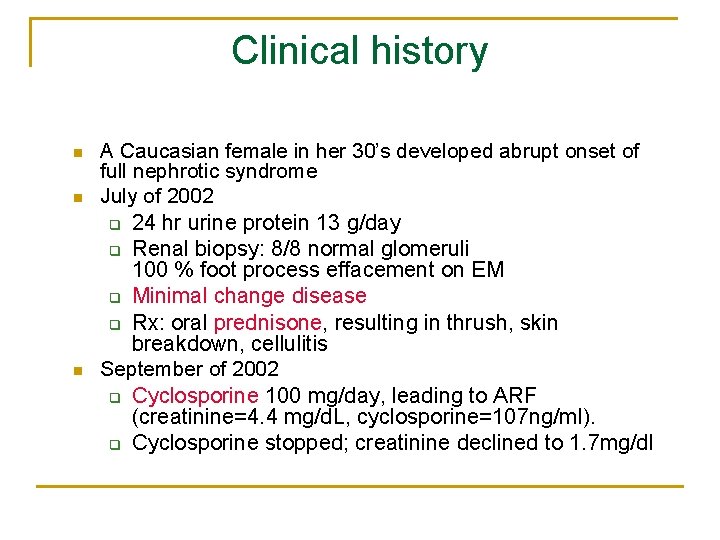
Clinical history n n n A Caucasian female in her 30’s developed abrupt onset of full nephrotic syndrome July of 2002 q 24 hr urine protein 13 g/day q Renal biopsy: 8/8 normal glomeruli 100 % foot process effacement on EM q Minimal change disease q Rx: oral prednisone, resulting in thrush, skin breakdown, cellulitis September of 2002 q Cyclosporine 100 mg/day, leading to ARF (creatinine=4. 4 mg/d. L, cyclosporine=107 ng/ml). q Cyclosporine stopped; creatinine declined to 1. 7 mg/dl
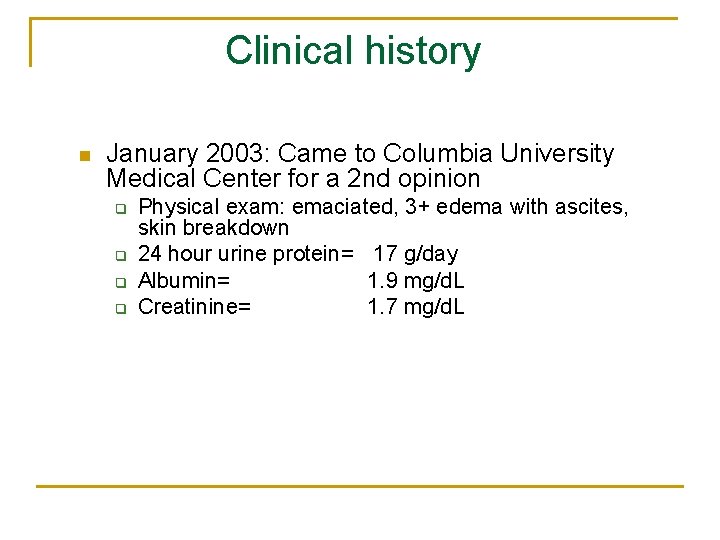
Clinical history n January 2003: Came to Columbia University Medical Center for a 2 nd opinion q q Physical exam: emaciated, 3+ edema with ascites, skin breakdown 24 hour urine protein= 17 g/day Albumin= 1. 9 mg/d. L Creatinine= 1. 7 mg/d. L
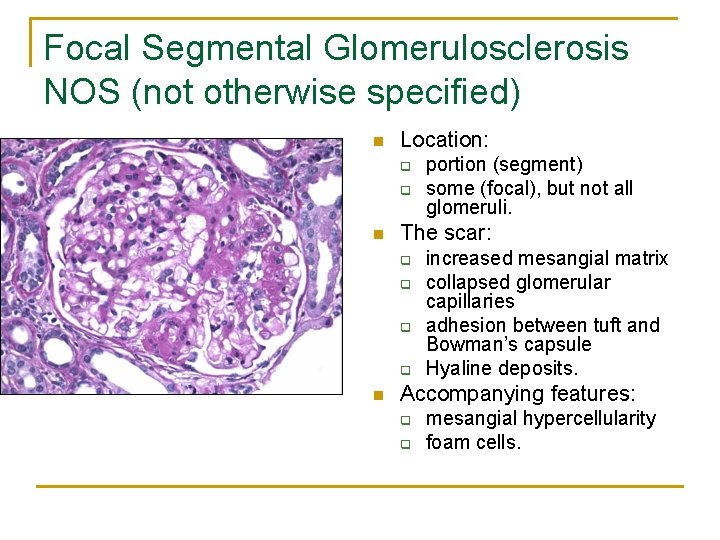
Focal Segmental Glomerulosclerosis NOS (not otherwise specified) n Location: q q n The scar: q q n portion (segment) some (focal), but not all glomeruli. increased mesangial matrix collapsed glomerular capillaries adhesion between tuft and Bowman’s capsule Hyaline deposits. Accompanying features: q q mesangial hypercellularity foam cells.
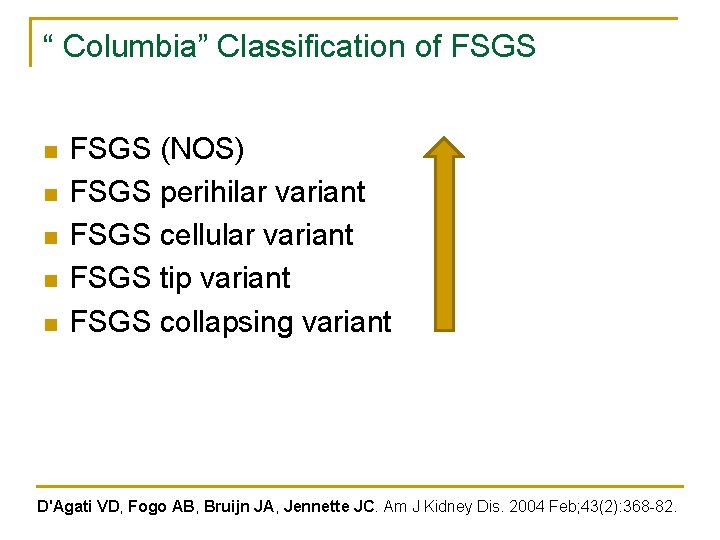
“ Columbia” Classification of FSGS n n n FSGS (NOS) FSGS perihilar variant FSGS cellular variant FSGS tip variant FSGS collapsing variant D'Agati VD, Fogo AB, Bruijn JA, Jennette JC. Am J Kidney Dis. 2004 Feb; 43(2): 368 -82.
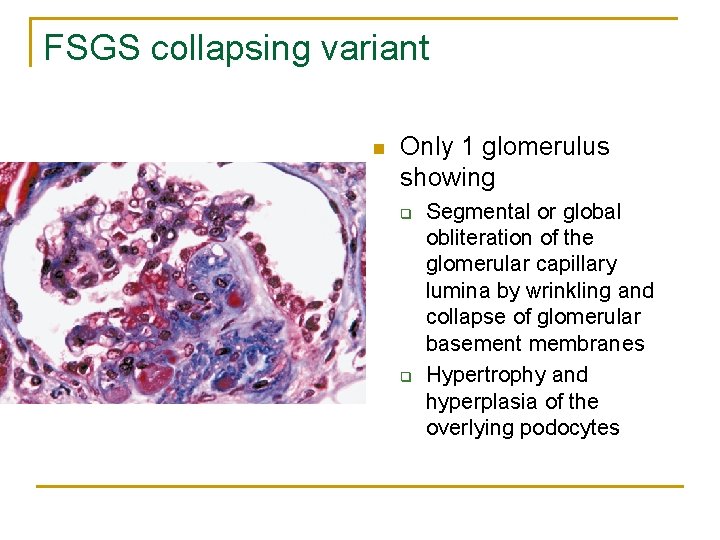
FSGS collapsing variant n Only 1 glomerulus showing q q Segmental or global obliteration of the glomerular capillary lumina by wrinkling and collapse of glomerular basement membranes Hypertrophy and hyperplasia of the overlying podocytes
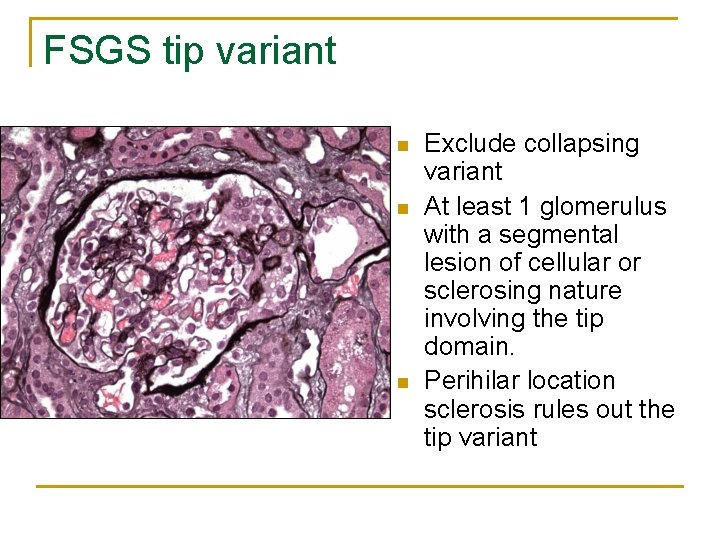
FSGS tip variant n n n Exclude collapsing variant At least 1 glomerulus with a segmental lesion of cellular or sclerosing nature involving the tip domain. Perihilar location sclerosis rules out the tip variant
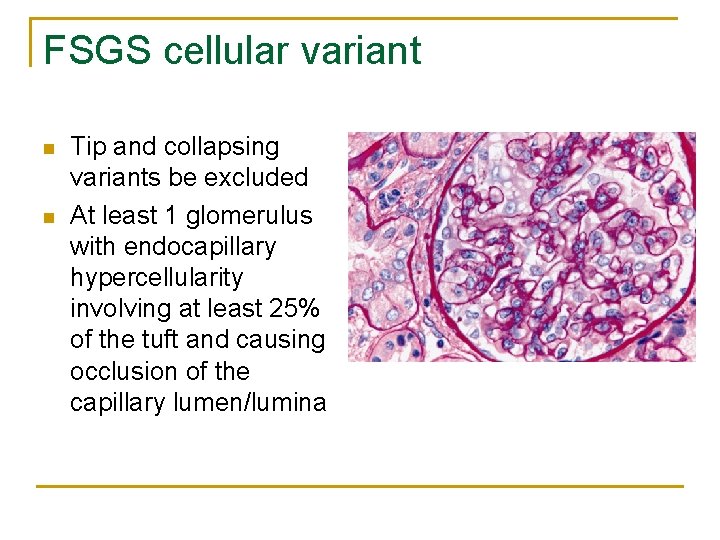
FSGS cellular variant n n Tip and collapsing variants be excluded At least 1 glomerulus with endocapillary hypercellularity involving at least 25% of the tuft and causing occlusion of the capillary lumen/lumina
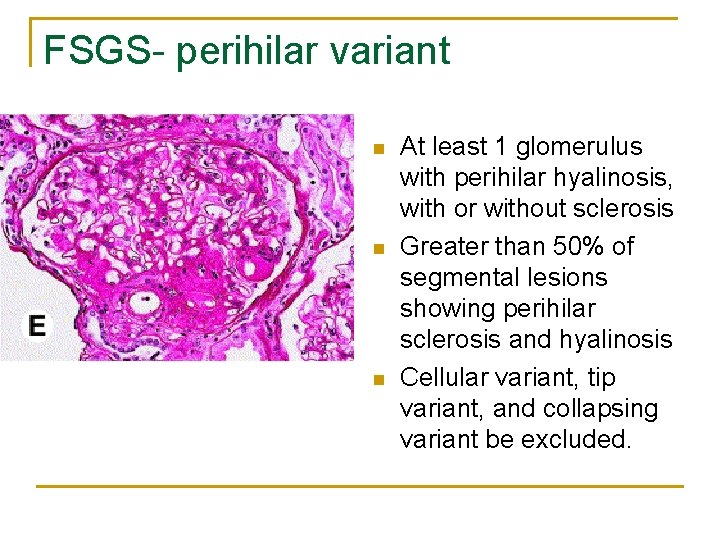
FSGS- perihilar variant n n n At least 1 glomerulus with perihilar hyalinosis, with or without sclerosis Greater than 50% of segmental lesions showing perihilar sclerosis and hyalinosis Cellular variant, tip variant, and collapsing variant be excluded.
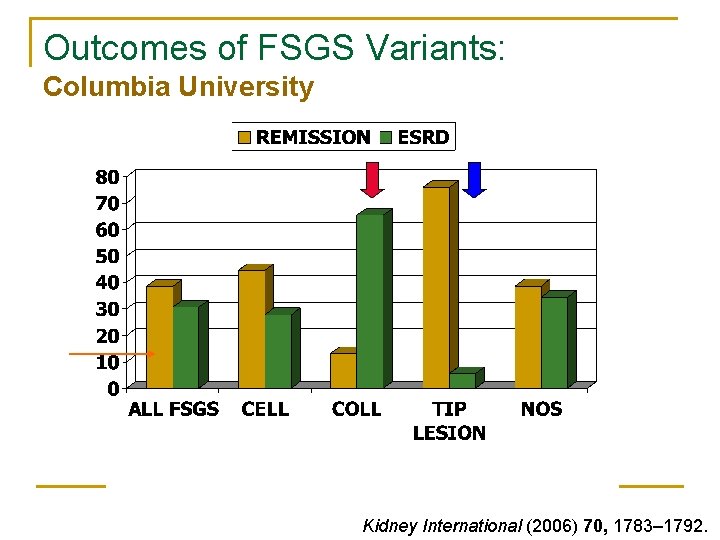
Outcomes of FSGS Variants: Columbia University Kidney International (2006) 70, 1783– 1792.
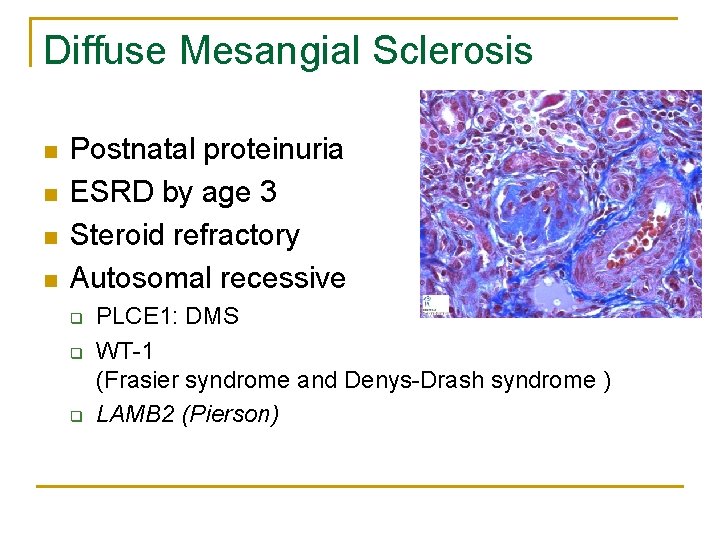
Diffuse Mesangial Sclerosis n n Postnatal proteinuria ESRD by age 3 Steroid refractory Autosomal recessive q q q PLCE 1: DMS WT-1 (Frasier syndrome and Denys-Drash syndrome ) LAMB 2 (Pierson)
What is her prognosis?
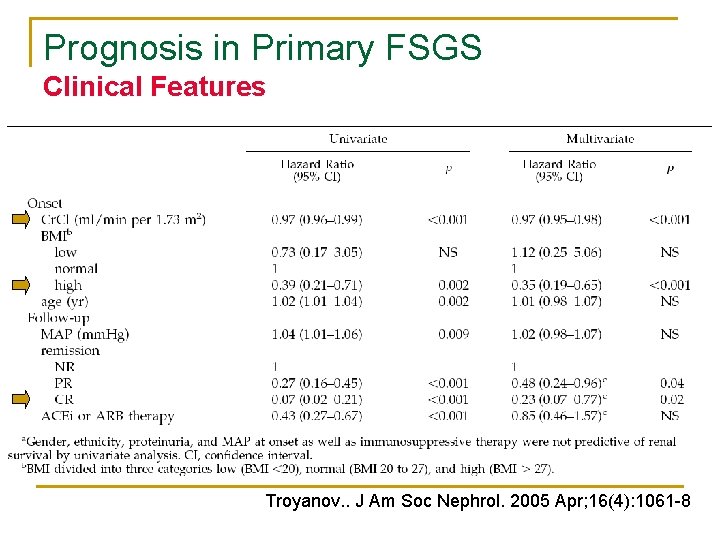
Prognosis in Primary FSGS Clinical Features Troyanov. . J Am Soc Nephrol. 2005 Apr; 16(4): 1061 -8
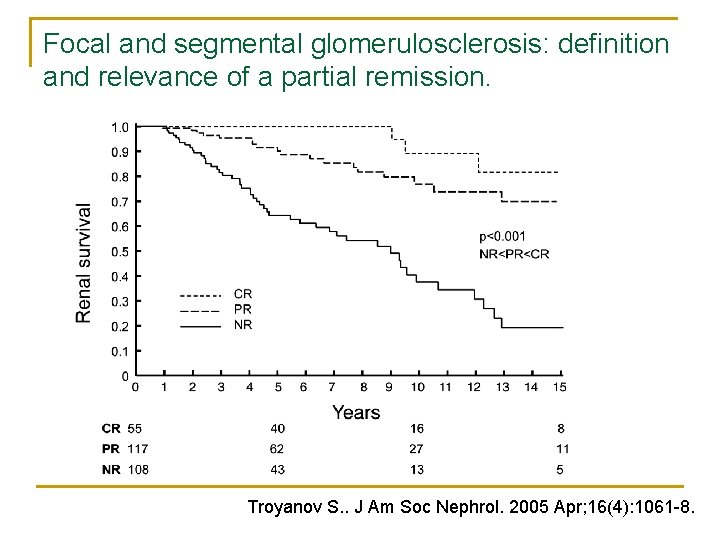
Focal and segmental glomerulosclerosis: definition and relevance of a partial remission. Troyanov S. . J Am Soc Nephrol. 2005 Apr; 16(4): 1061 -8.
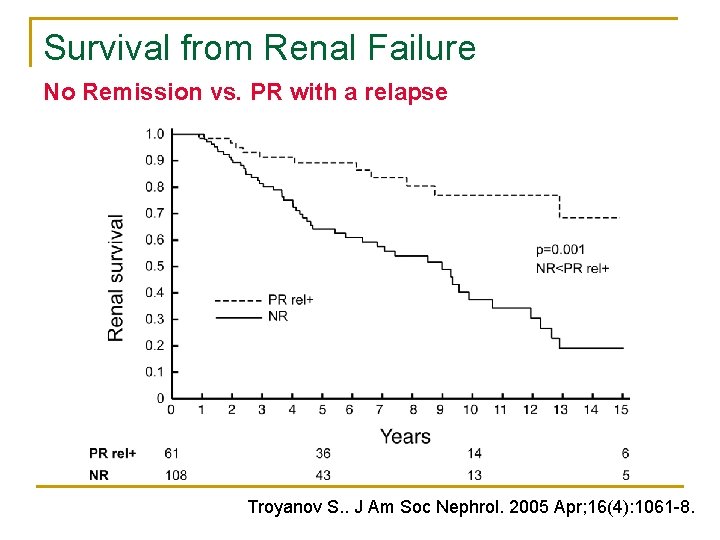
Survival from Renal Failure No Remission vs. PR with a relapse Troyanov S. . J Am Soc Nephrol. 2005 Apr; 16(4): 1061 -8.
Treatment of FSGS
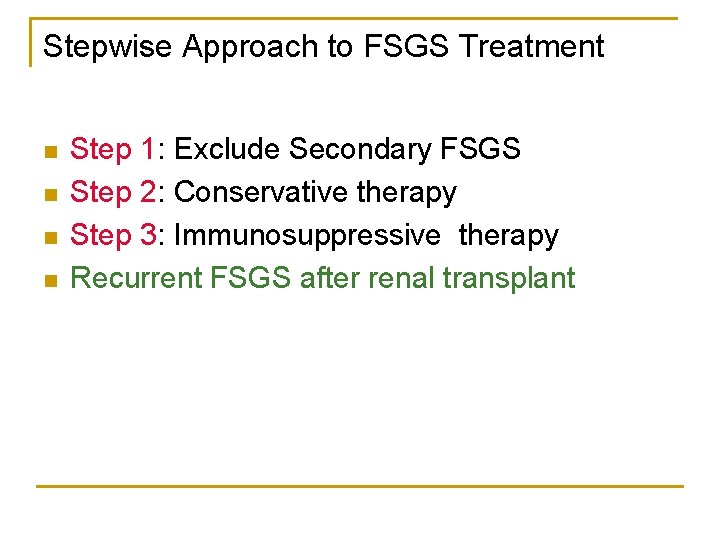
Stepwise Approach to FSGS Treatment n n Step 1: Exclude Secondary FSGS Step 2: Conservative therapy Step 3: Immunosuppressive therapy Recurrent FSGS after renal transplant
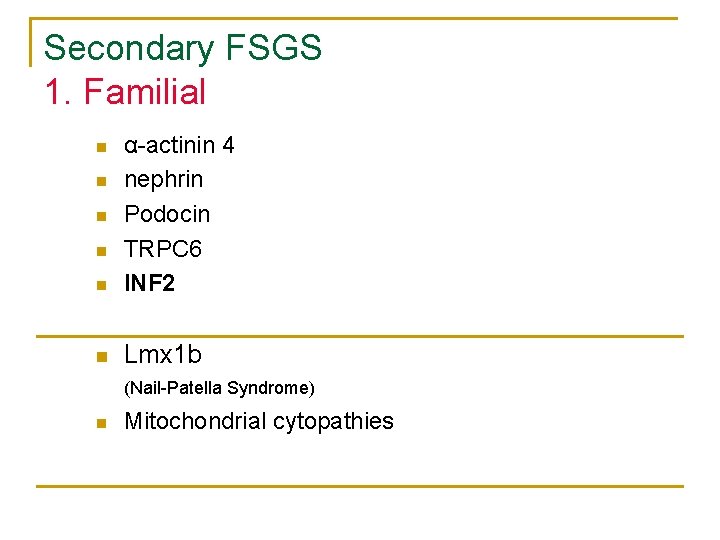
Secondary FSGS 1. Familial n α-actinin 4 nephrin Podocin TRPC 6 INF 2 n Lmx 1 b n n (Nail-Patella Syndrome) n Mitochondrial cytopathies
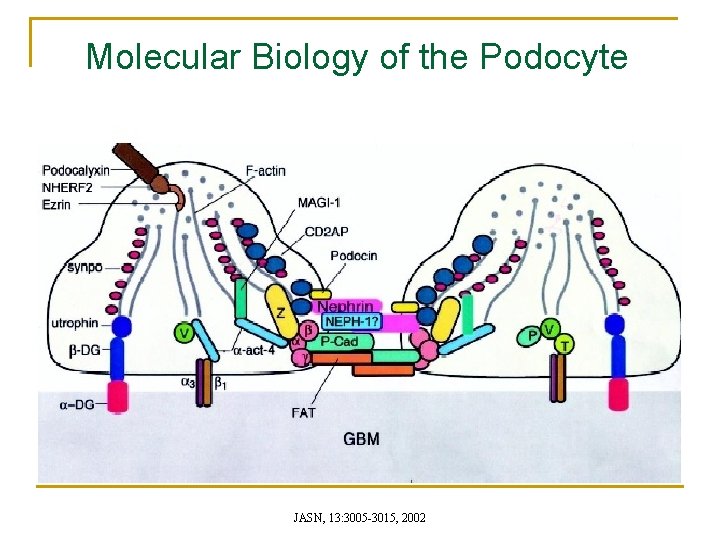
Molecular Biology of the Podocyte JASN, 13: 3005 -3015, 2002
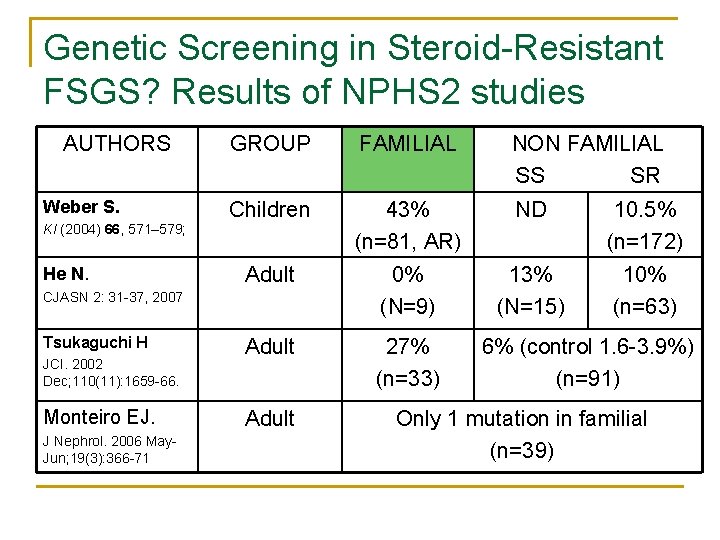
Genetic Screening in Steroid-Resistant FSGS? Results of NPHS 2 studies AUTHORS Weber S. KI (2004) 66, 571– 579; He N. GROUP FAMILIAL NON FAMILIAL SS SR Children 43% (n=81, AR) ND 10. 5% (n=172) Adult 0% (N=9) 13% (N=15) 10% (n=63) Adult 27% (n=33) CJASN 2: 31 -37, 2007 Tsukaguchi H JCI. 2002 Dec; 110(11): 1659 -66. Monteiro EJ. J Nephrol. 2006 May. Jun; 19(3): 366 -71 Adult 6% (control 1. 6 -3. 9%) (n=91) Only 1 mutation in familial (n=39)
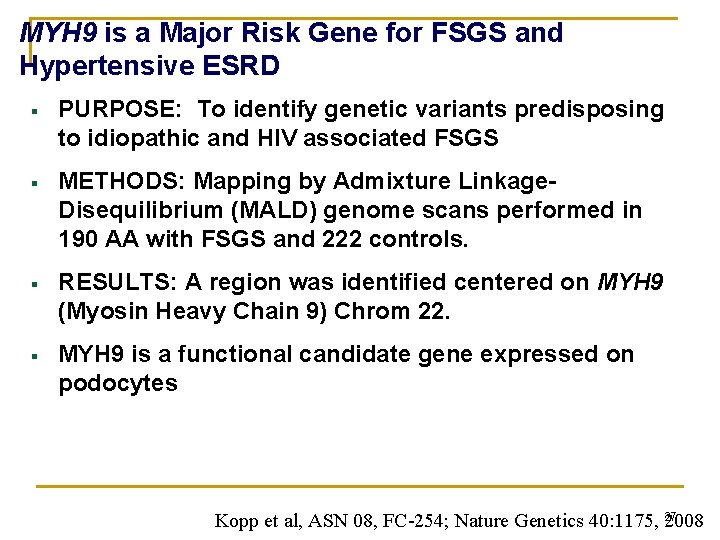
MYH 9 is a Major Risk Gene for FSGS and Hypertensive ESRD § PURPOSE: To identify genetic variants predisposing to idiopathic and HIV associated FSGS § METHODS: Mapping by Admixture Linkage. Disequilibrium (MALD) genome scans performed in 190 AA with FSGS and 222 controls. § RESULTS: A region was identified centered on MYH 9 (Myosin Heavy Chain 9) Chrom 22. § MYH 9 is a functional candidate gene expressed on podocytes Kopp et al, ASN 08, FC-254; Nature Genetics 40: 1175, 27 2008
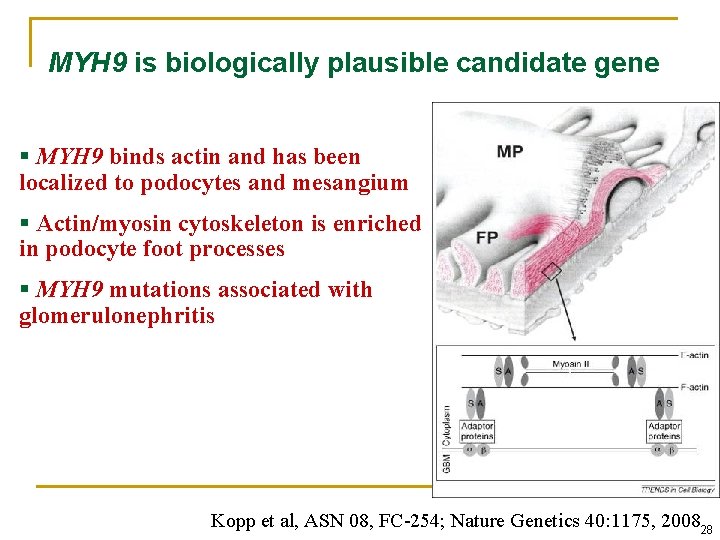
MYH 9 is biologically plausible candidate gene § MYH 9 binds actin and has been localized to podocytes and mesangium § Actin/myosin cytoskeleton is enriched in podocyte foot processes § MYH 9 mutations associated with glomerulonephritis Kopp et al, ASN 08, FC-254; Nature Genetics 40: 1175, 200828
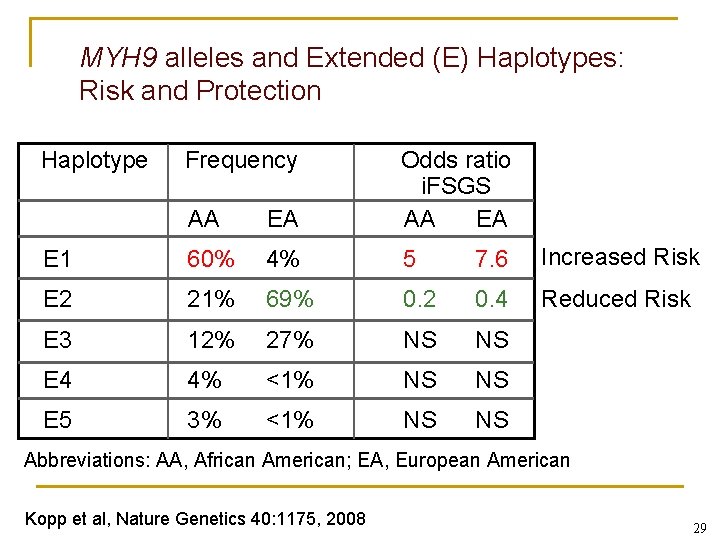
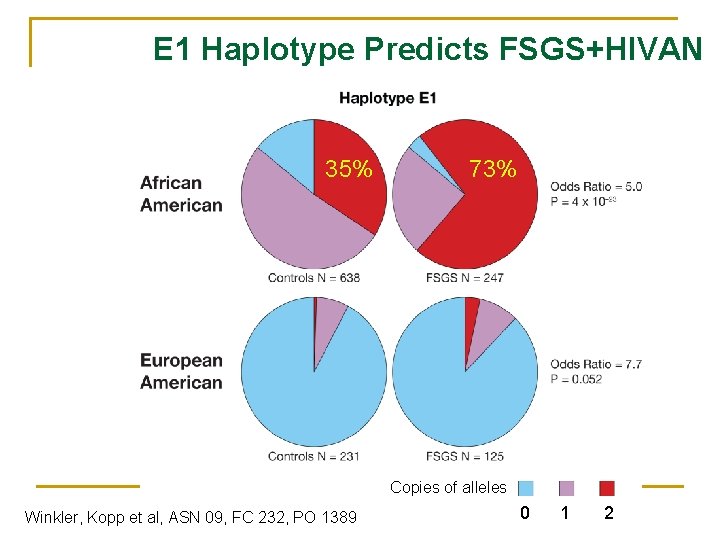
MYH 9 alleles and Extended (E) Haplotypes: Risk and Protection Haplotype Frequency AA EA Odds ratio i. FSGS AA EA E 1 60% 4% 5 7. 6 Increased Risk E 2 21% 69% 0. 2 0. 4 Reduced Risk E 3 12% 27% NS NS E 4 4% <1% NS NS E 5 3% <1% NS NS Abbreviations: AA, African American; EA, European American Kopp et al, Nature Genetics 40: 1175, 2008 29
E 1 Haplotype Predicts FSGS+HIVAN 35% 73% Copies of alleles Winkler, Kopp et al, ASN 09, FC 232, PO 1389 0 1 2
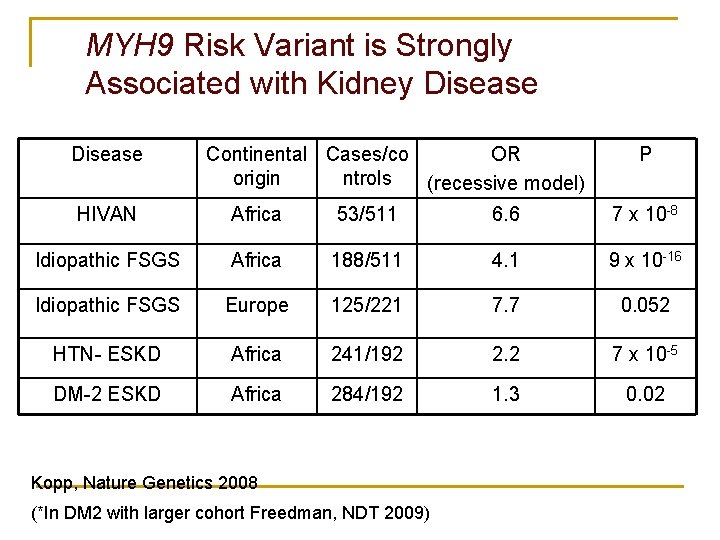
MYH 9 Risk Variant is Strongly Associated with Kidney Disease Continental Cases/co OR origin ntrols (recessive model) P HIVAN Africa 53/511 6. 6 7 x 10 -8 Idiopathic FSGS Africa 188/511 4. 1 9 x 10 -16 Idiopathic FSGS Europe 125/221 7. 7 0. 052 HTN- ESKD Africa 241/192 2. 2 7 x 10 -5 DM-2 ESKD Africa 284/192 1. 3 0. 02 Kopp, Nature Genetics 2008 (*In DM 2 with larger cohort Freedman, NDT 2009)
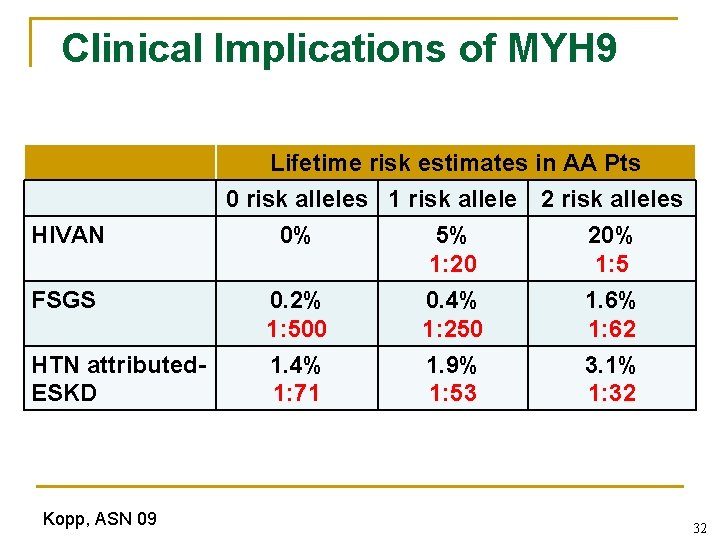
Clinical Implications of MYH 9 HIVAN FSGS HTN attributed. ESKD Kopp, ASN 09 Lifetime risk estimates in AA Pts 0 risk alleles 1 risk allele 2 risk alleles 0% 5% 20% 1: 20 1: 5 0. 2% 1: 500 1. 4% 1: 71 0. 4% 1: 250 1. 9% 1: 53 1. 6% 1: 62 3. 1% 1: 32 32
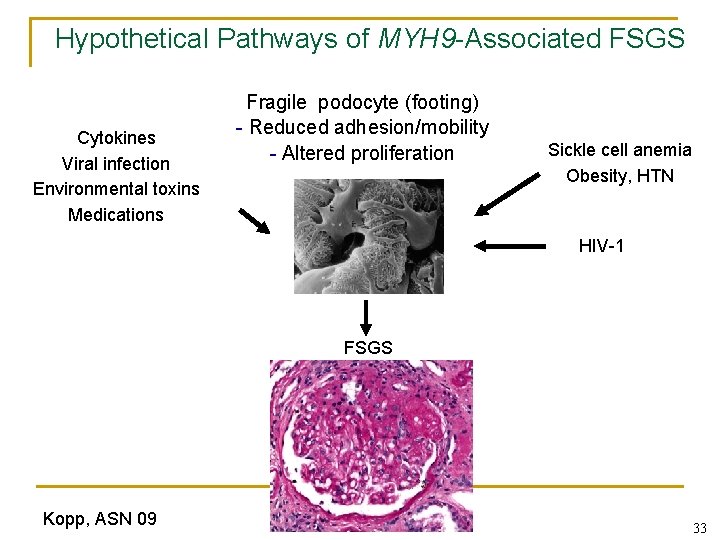
Hypothetical Pathways of MYH 9 -Associated FSGS Cytokines Viral infection Environmental toxins Medications Fragile podocyte (footing) - Reduced adhesion/mobility - Altered proliferation Sickle cell anemia Obesity, HTN HIV-1 FSGS Kopp, ASN 09 33
Secondary FSGS 2. Virus-associated n n Parvovirus B 19 HIV-associated nephropathy
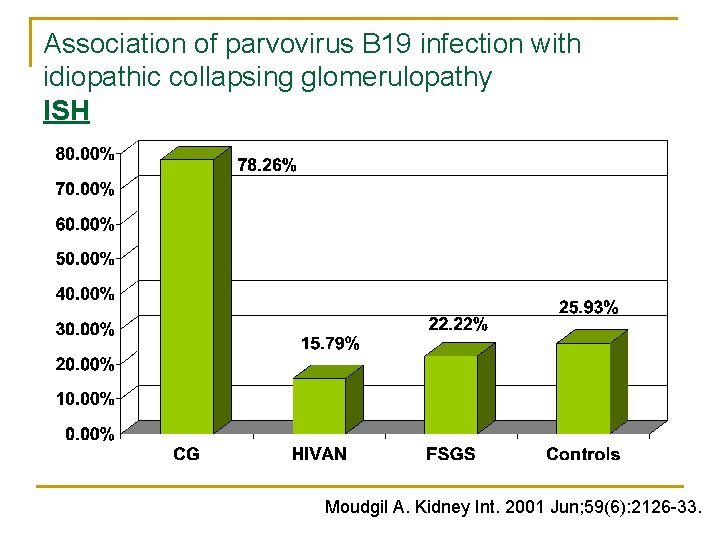
Association of parvovirus B 19 infection with idiopathic collapsing glomerulopathy ISH Moudgil A. Kidney Int. 2001 Jun; 59(6): 2126 -33.
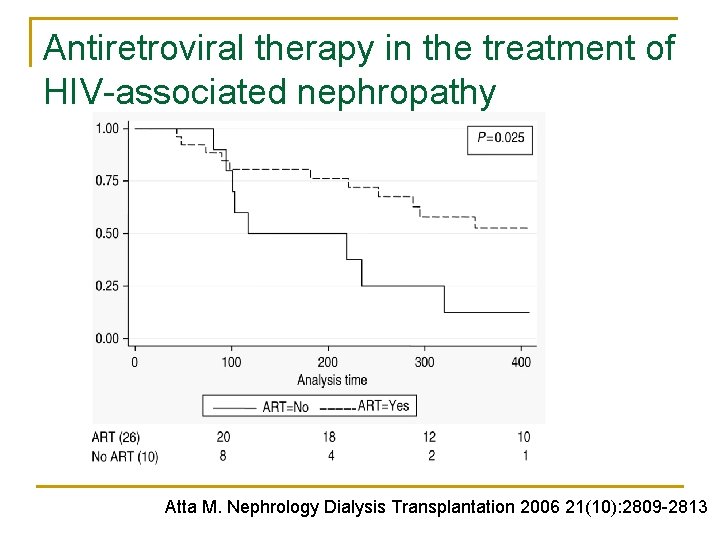
Antiretroviral therapy in the treatment of HIV-associated nephropathy Atta M. Nephrology Dialysis Transplantation 2006 21(10): 2809 -2813
Secondary FSGS 3. Medications n n Heroin nephropathy Interferon-α Lithium Pamidronate / alendronate
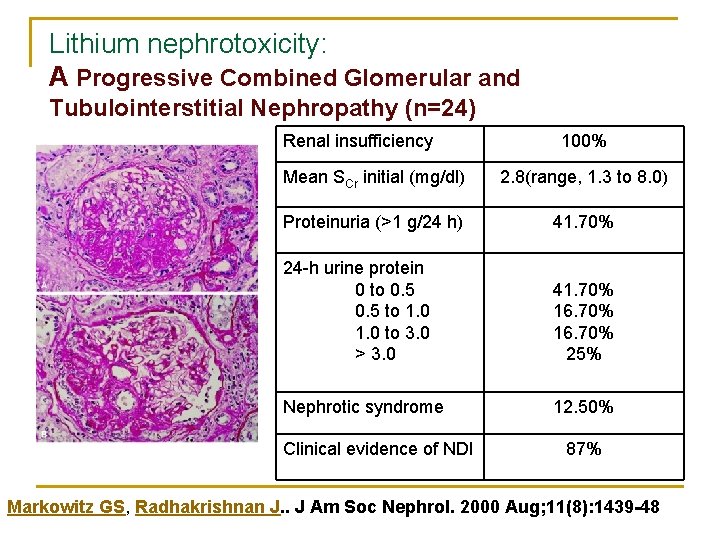
Lithium nephrotoxicity: A Progressive Combined Glomerular and Tubulointerstitial Nephropathy (n=24) Renal insufficiency 100% Mean SCr initial (mg/dl) 2. 8(range, 1. 3 to 8. 0) Proteinuria (>1 g/24 h) 41. 70% 24 -h urine protein 0 to 0. 5 to 1. 0 to 3. 0 > 3. 0 41. 70% 16. 70% 25% Nephrotic syndrome 12. 50% Clinical evidence of NDI 87% Markowitz GS, Radhakrishnan J. . J Am Soc Nephrol. 2000 Aug; 11(8): 1439 -48
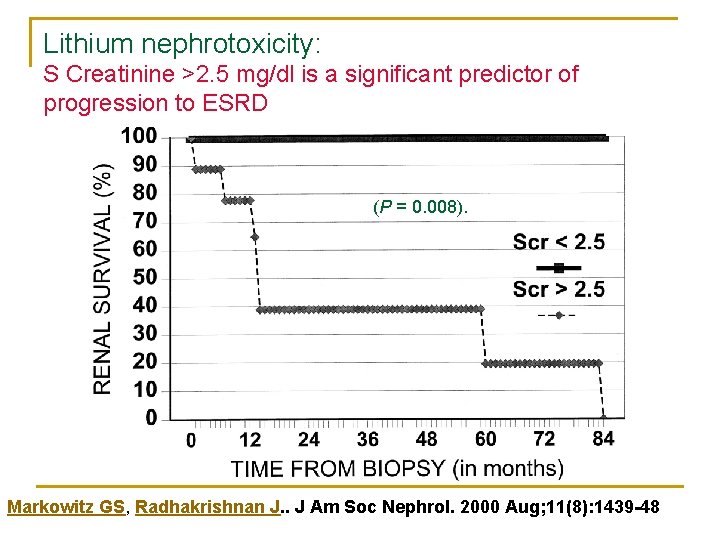
Lithium nephrotoxicity: S Creatinine >2. 5 mg/dl is a significant predictor of progression to ESRD (P = 0. 008). Markowitz GS, Radhakrishnan J. . J Am Soc Nephrol. 2000 Aug; 11(8): 1439 -48
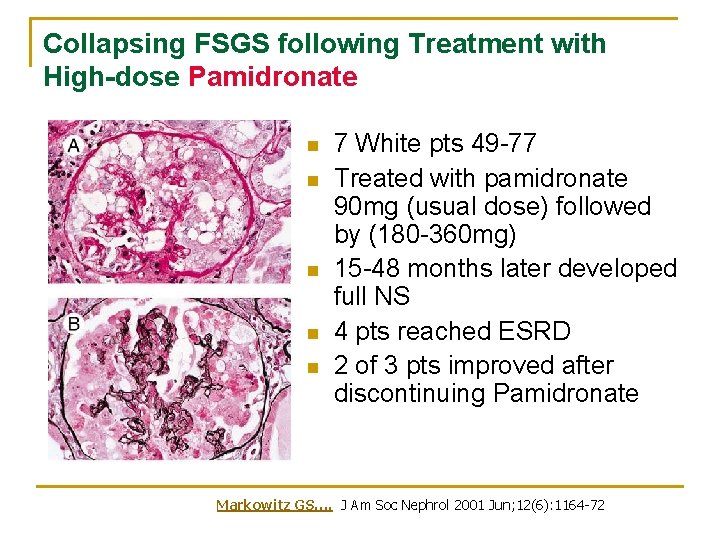
Collapsing FSGS following Treatment with High-dose Pamidronate n n n 7 White pts 49 -77 Treated with pamidronate 90 mg (usual dose) followed by (180 -360 mg) 15 -48 months later developed full NS 4 pts reached ESRD 2 of 3 pts improved after discontinuing Pamidronate Markowitz GS…. J Am Soc Nephrol 2001 Jun; 12(6): 1164 -72
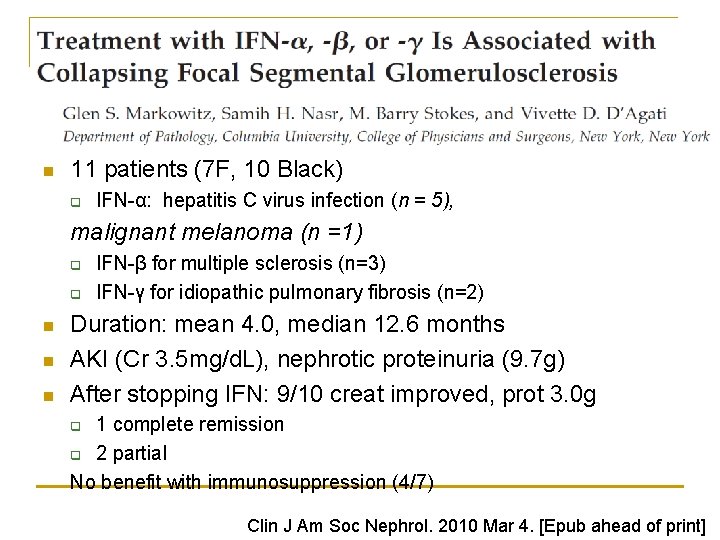
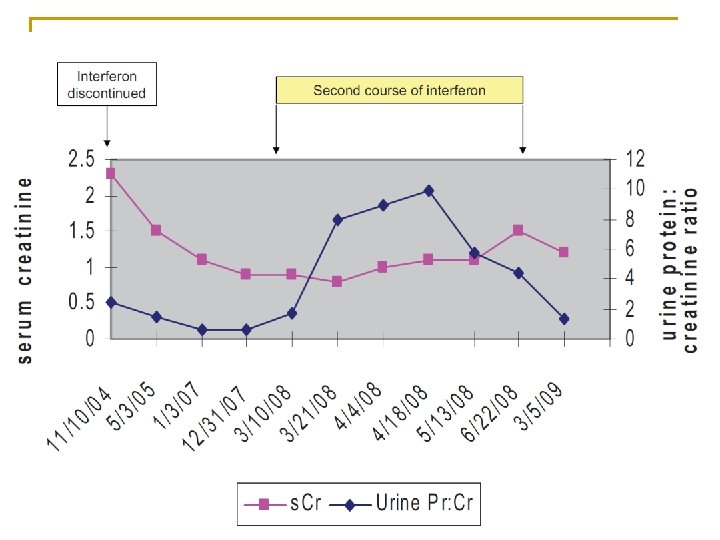
n 11 patients (7 F, 10 Black) q IFN-α: hepatitis C virus infection (n = 5), malignant melanoma (n =1) q q n n n IFN-β for multiple sclerosis (n=3) IFN-γ for idiopathic pulmonary fibrosis (n=2) Duration: mean 4. 0, median 12. 6 months AKI (Cr 3. 5 mg/d. L), nephrotic proteinuria (9. 7 g) After stopping IFN: 9/10 creat improved, prot 3. 0 g 1 complete remission q 2 partial No benefit with immunosuppression (4/7) q Clin J Am Soc Nephrol. 2010 Mar 4. [Epub ahead of print]
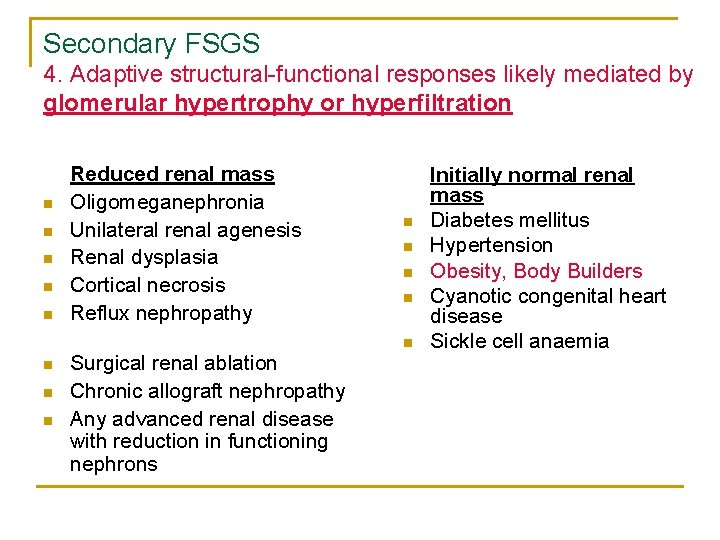
Secondary FSGS 4. Adaptive structural-functional responses likely mediated by glomerular hypertrophy or hyperfiltration n n n n Reduced renal mass Oligomeganephronia Unilateral renal agenesis Renal dysplasia Cortical necrosis Reflux nephropathy Surgical renal ablation Chronic allograft nephropathy Any advanced renal disease with reduction in functioning nephrons n n n Initially normal renal mass Diabetes mellitus Hypertension Obesity, Body Builders Cyanotic congenital heart disease Sickle cell anaemia
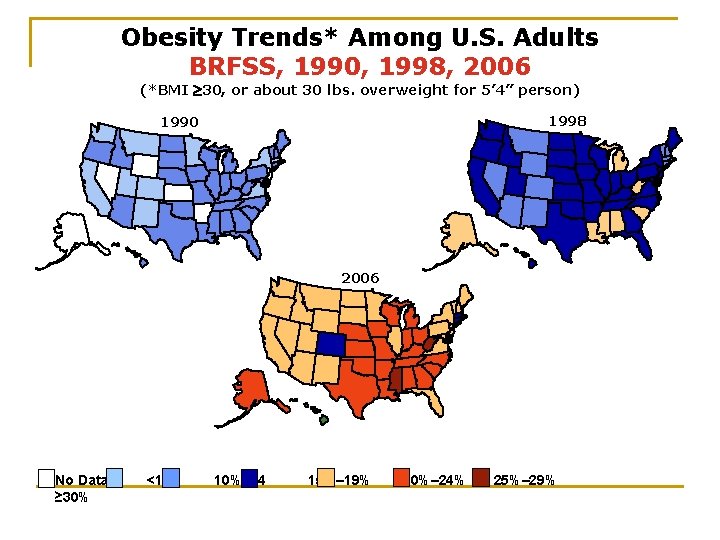
Obesity Trends* Among U. S. Adults BRFSS, 1990, 1998, 2006 (*BMI 30, or about 30 lbs. overweight for 5’ 4” person) 1998 1990 2006 No Data ≥ 30% <10% 10%– 14 15%– 19% 20%– 24% 25%– 29%
Obesity-Glomerular “Stress”
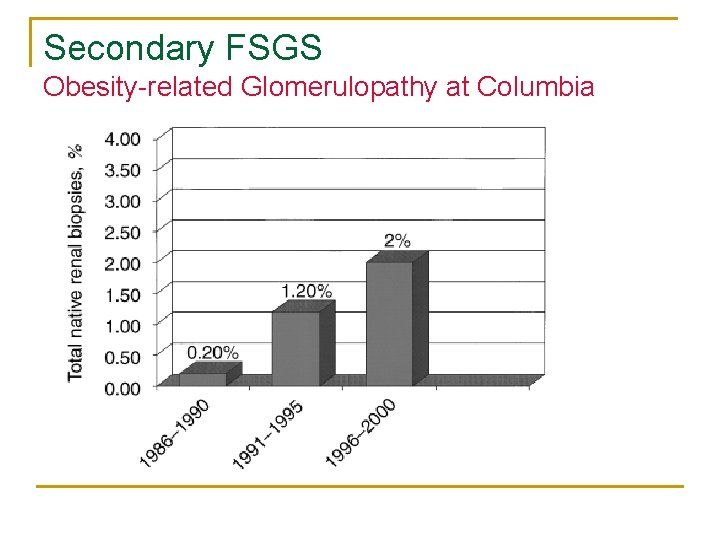
Secondary FSGS Obesity-related Glomerulopathy at Columbia
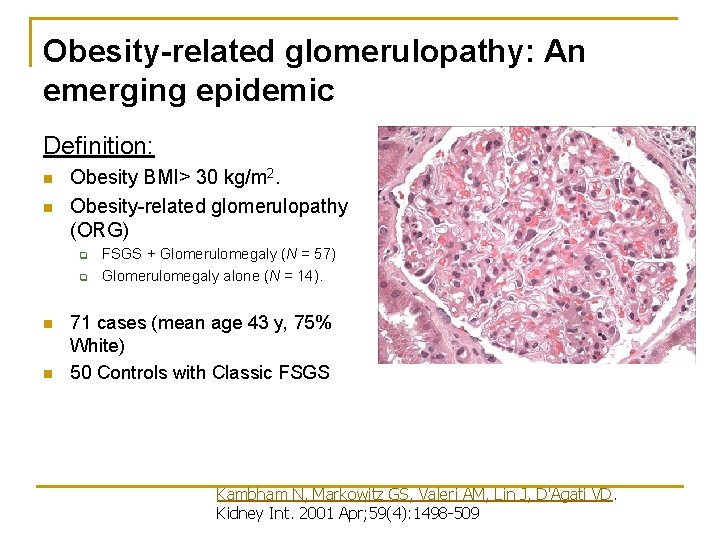
Obesity-related glomerulopathy: An emerging epidemic Definition: n n Obesity BMI> 30 kg/m 2. Obesity-related glomerulopathy (ORG) q q n n FSGS + Glomerulomegaly (N = 57) Glomerulomegaly alone (N = 14). 71 cases (mean age 43 y, 75% White) 50 Controls with Classic FSGS Kambham N, Markowitz GS, Valeri AM, Lin J, D'Agati VD. Kidney Int. 2001 Apr; 59(4): 1498 -509
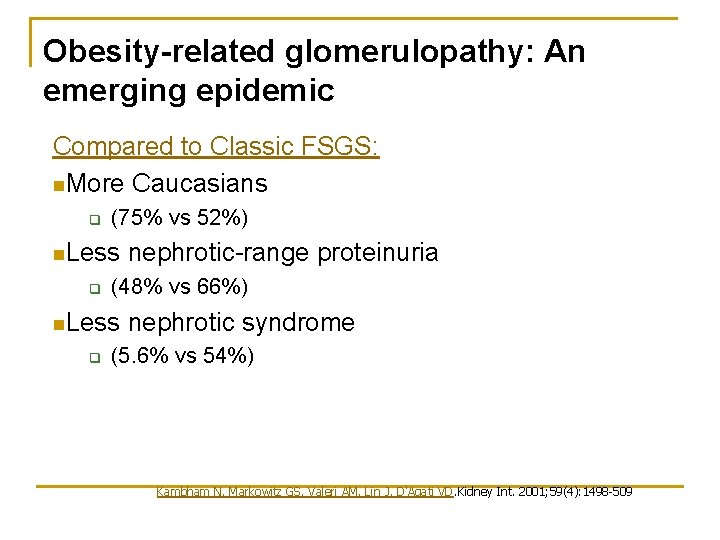
Obesity-related glomerulopathy: An emerging epidemic Compared to Classic FSGS: n. More Caucasians q (75% vs 52%) n. Less nephrotic-range proteinuria q (48% vs 66%) n. Less nephrotic syndrome q (5. 6% vs 54%) Kambham N, Markowitz GS, Valeri AM, Lin J, D'Agati VD. Kidney Int. 2001; 59(4): 1498 -509
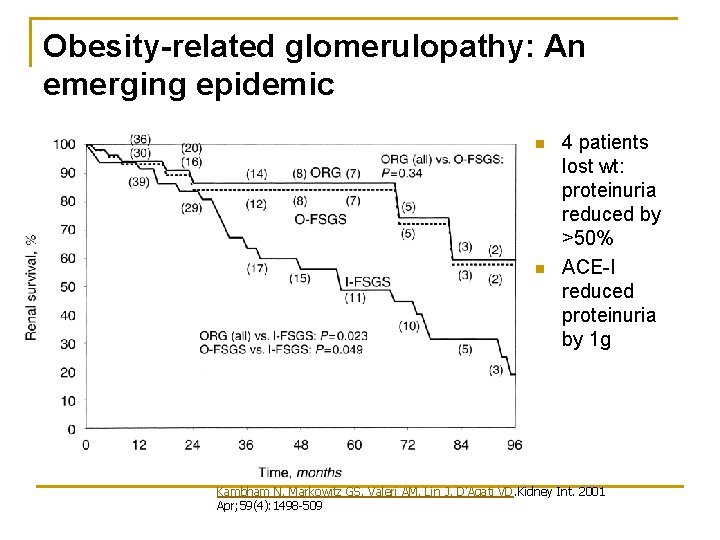
Obesity-related glomerulopathy: An emerging epidemic n n 4 patients lost wt: proteinuria reduced by >50% ACE-I reduced proteinuria by 1 g Kambham N, Markowitz GS, Valeri AM, Lin J, D'Agati VD. Kidney Int. 2001 Apr; 59(4): 1498 -509
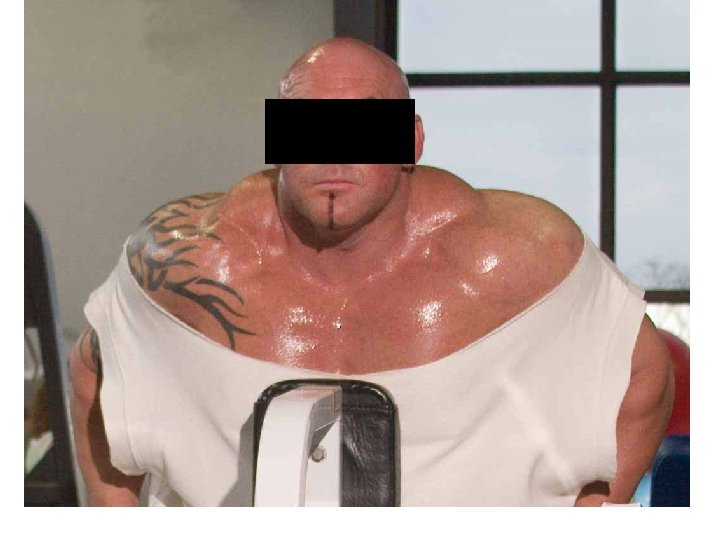
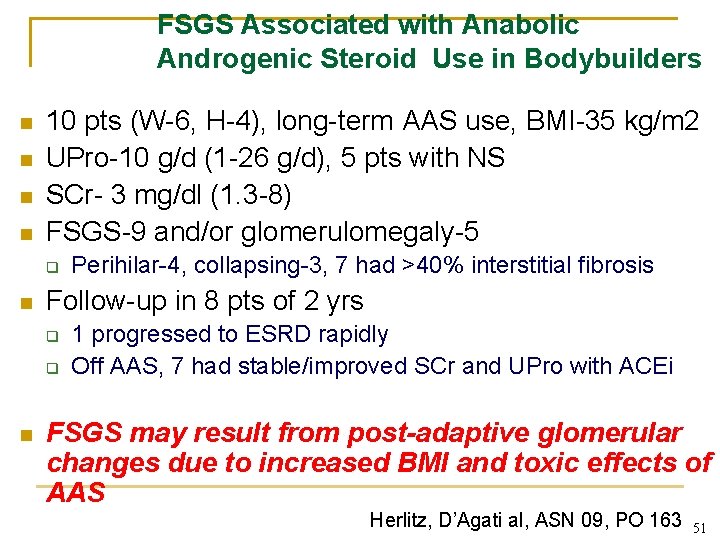
FSGS Associated with Anabolic Androgenic Steroid Use in Bodybuilders n n 10 pts (W-6, H-4), long-term AAS use, BMI-35 kg/m 2 UPro-10 g/d (1 -26 g/d), 5 pts with NS SCr- 3 mg/dl (1. 3 -8) FSGS-9 and/or glomerulomegaly-5 q n Follow-up in 8 pts of 2 yrs q q n Perihilar-4, collapsing-3, 7 had >40% interstitial fibrosis 1 progressed to ESRD rapidly Off AAS, 7 had stable/improved SCr and UPro with ACEi FSGS may result from post-adaptive glomerular changes due to increased BMI and toxic effects of AAS Herlitz, D’Agati al, ASN 09, PO 163 51
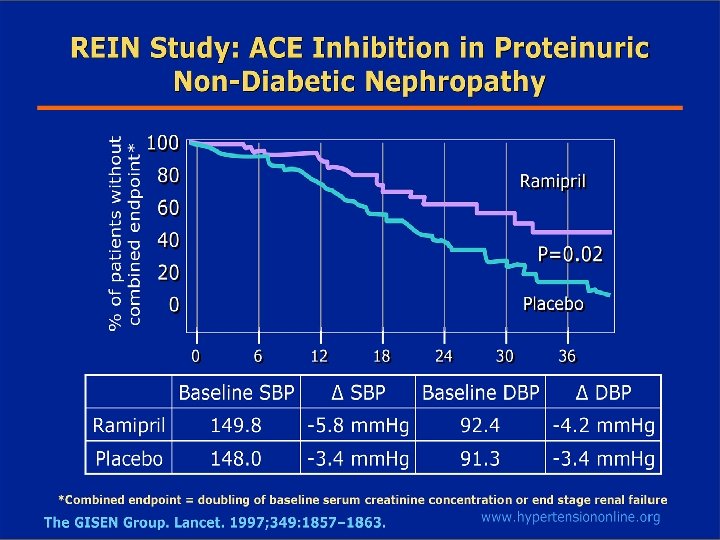
Treatment Principles Primary FSGS n n Spontaneous remission is rare <5% Any remission is better than no remission
Conservative Treatment (In all cases of FSGS)
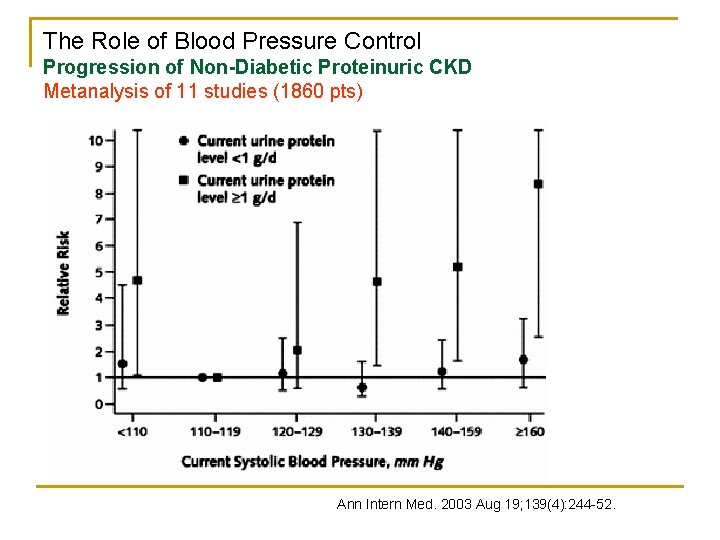
The Role of Blood Pressure Control Progression of Non-Diabetic Proteinuric CKD Metanalysis of 11 studies (1860 pts) Ann Intern Med. 2003 Aug 19; 139(4): 244 -52.
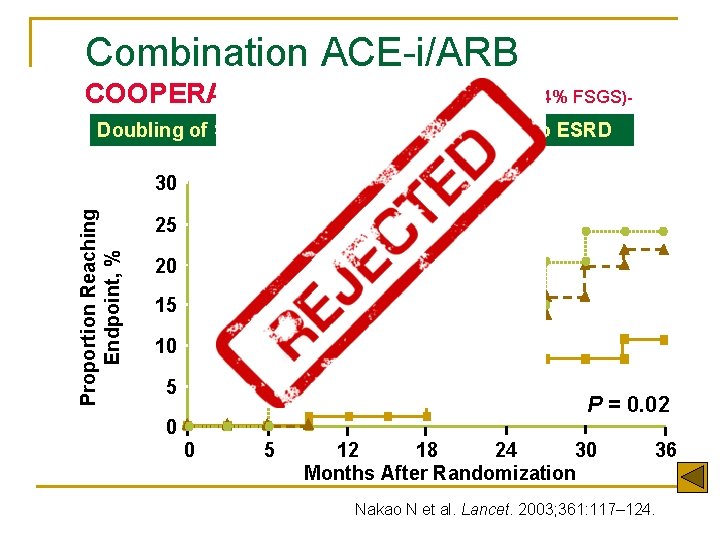
Combination ACE-i/ARB COOPERATE (Non diabetic glomerular disease- 14% FSGS)- Proportion Reaching Endpoint, % Doubling of Serum Creatinine or Progression to ESRD 30 Trandolapril 25 Losartan Combination 20 15 10 5 P = 0. 02 0 0 5 12 18 24 30 Months After Randomization 36 Nakao N et al. Lancet. 2003; 361: 117– 124.
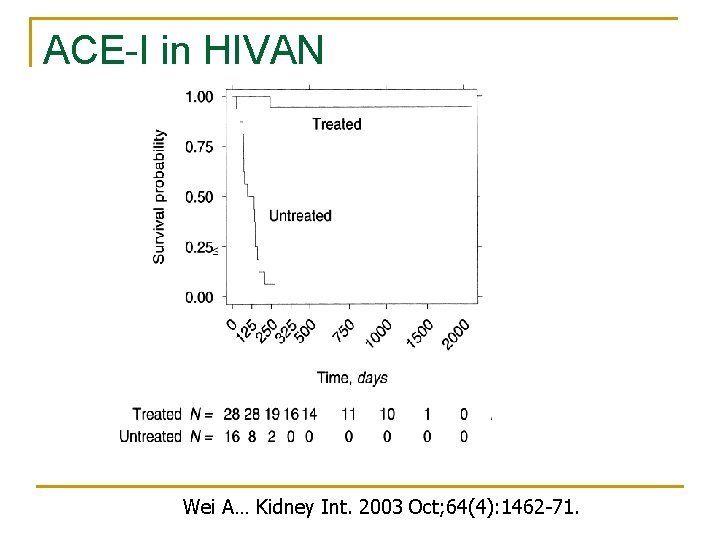
ACE-I in HIVAN Wei A… Kidney Int. 2003 Oct; 64(4): 1462 -71.
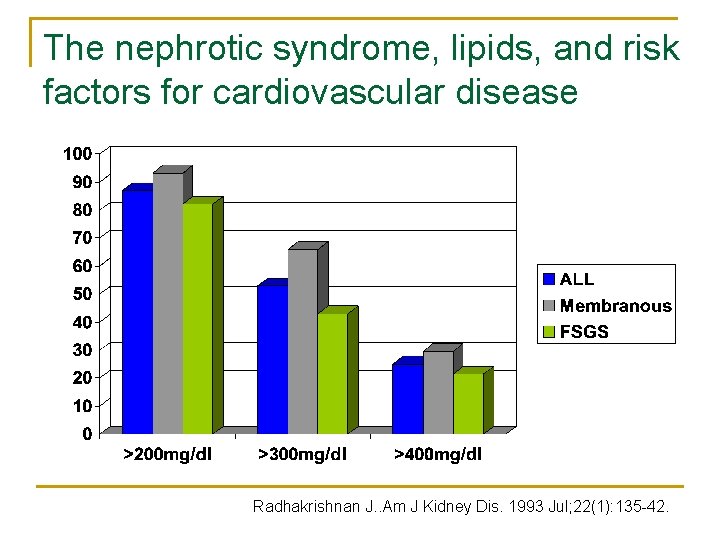
The nephrotic syndrome, lipids, and risk factors for cardiovascular disease Radhakrishnan J. . Am J Kidney Dis. 1993 Jul; 22(1): 135 -42.
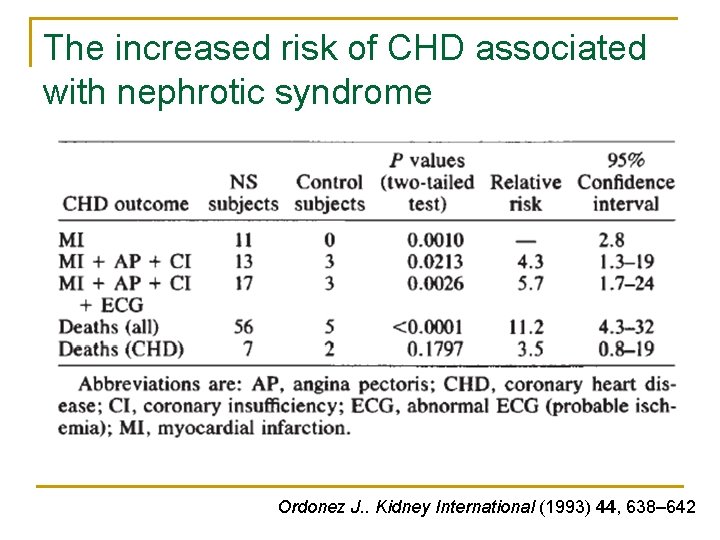
The increased risk of CHD associated with nephrotic syndrome Ordonez J. . Kidney International (1993) 44, 638– 642
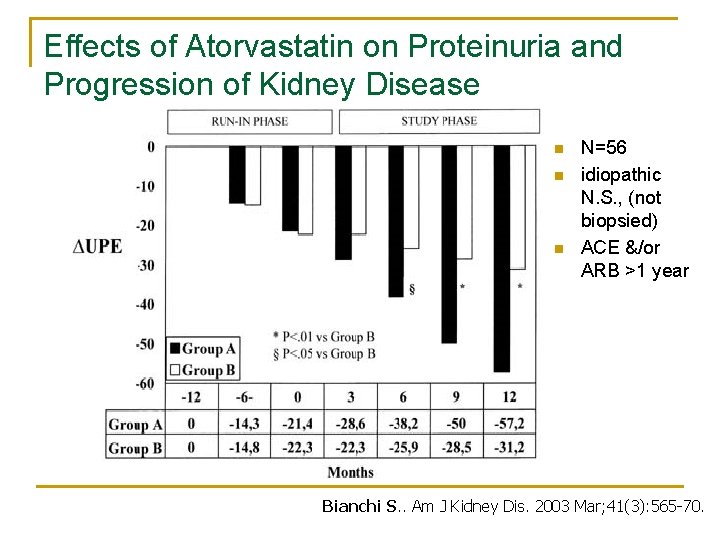
Effects of Atorvastatin on Proteinuria and Progression of Kidney Disease n n n N=56 idiopathic N. S. , (not biopsied) ACE &/or ARB >1 year Bianchi S. . Am J Kidney Dis. 2003 Mar; 41(3): 565 -70.
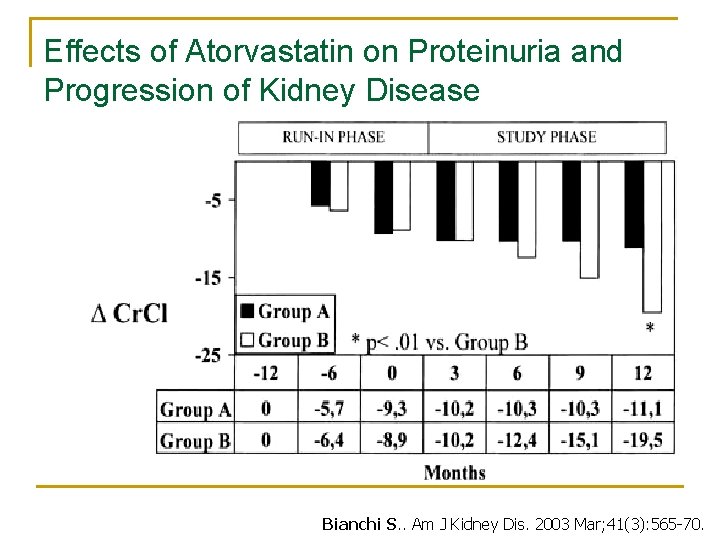
Effects of Atorvastatin on Proteinuria and Progression of Kidney Disease Bianchi S. . Am J Kidney Dis. 2003 Mar; 41(3): 565 -70.
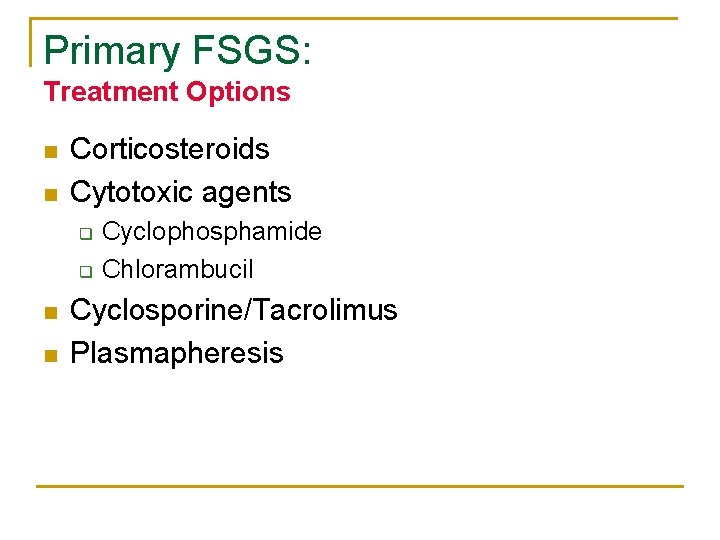
Primary FSGS: Treatment Options n n Corticosteroids Cytotoxic agents q q n n Cyclophosphamide Chlorambucil Cyclosporine/Tacrolimus Plasmapheresis
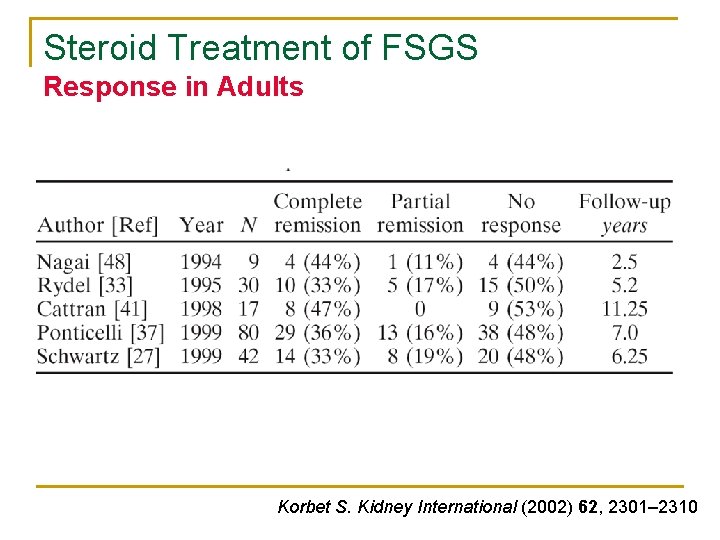
Steroid Treatment of FSGS Response in Adults Korbet S. Kidney International (2002) 62, 2301– 2310
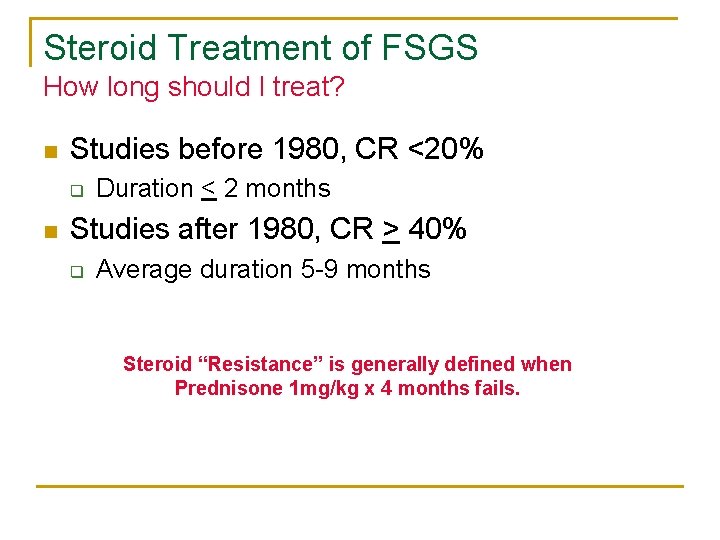
Steroid Treatment of FSGS How long should I treat? n Studies before 1980, CR <20% q n Duration < 2 months Studies after 1980, CR > 40% q Average duration 5 -9 months Steroid “Resistance” is generally defined when Prednisone 1 mg/kg x 4 months fails.
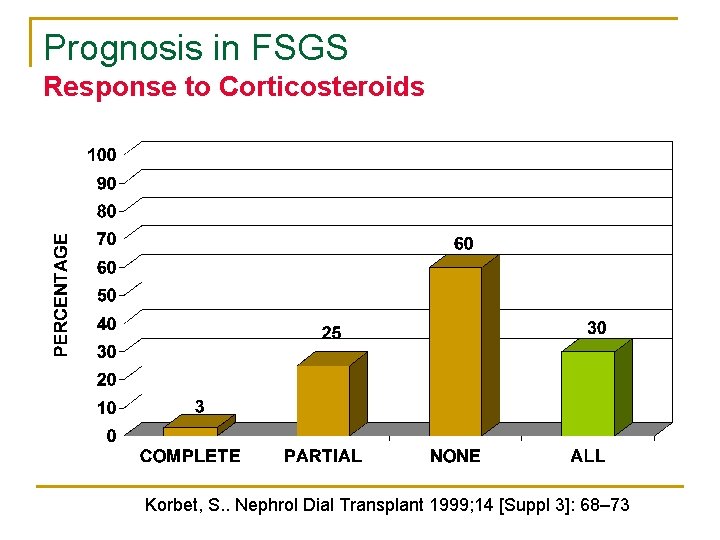
Prognosis in FSGS Response to Corticosteroids Korbet, S. . Nephrol Dial Transplant 1999; 14 [Suppl 3]: 68– 73
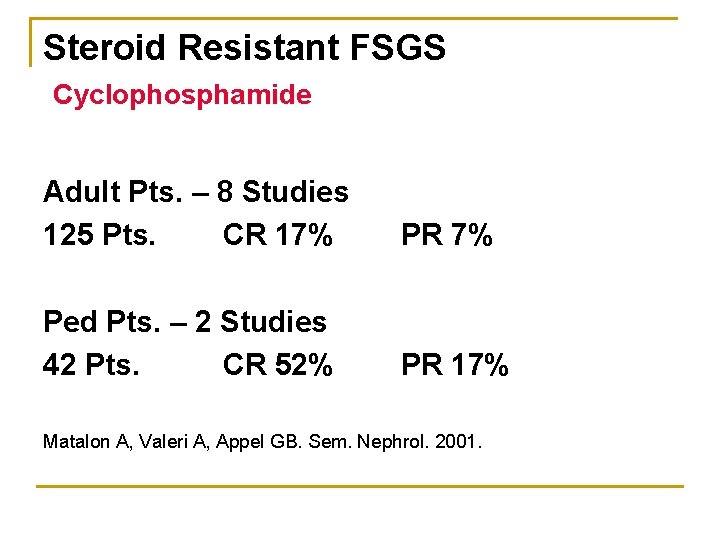
Steroid Resistant FSGS Cyclophosphamide Adult Pts. – 8 Studies 125 Pts. CR 17% PR 7% Ped Pts. – 2 Studies 42 Pts. CR 52% PR 17% Matalon A, Valeri A, Appel GB. Sem. Nephrol. 2001.
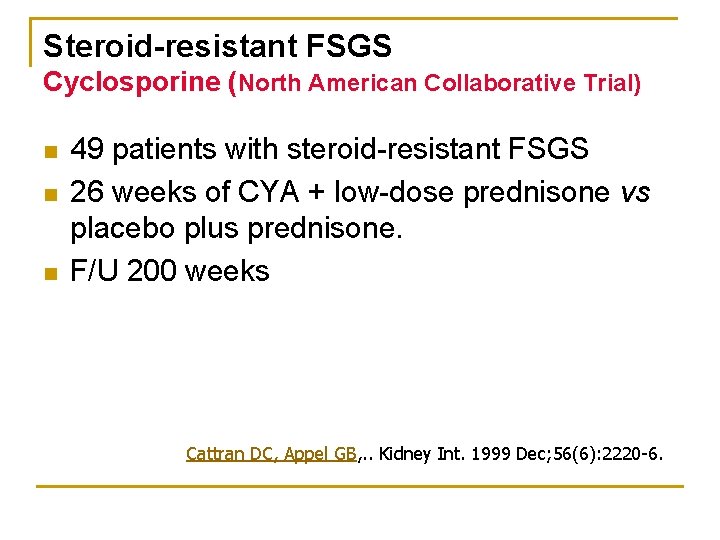
Steroid-resistant FSGS Cyclosporine (North American Collaborative Trial) n n n 49 patients with steroid-resistant FSGS 26 weeks of CYA + low-dose prednisone vs placebo plus prednisone. F/U 200 weeks Cattran DC, Appel GB, . . Kidney Int. 1999 Dec; 56(6): 2220 -6.
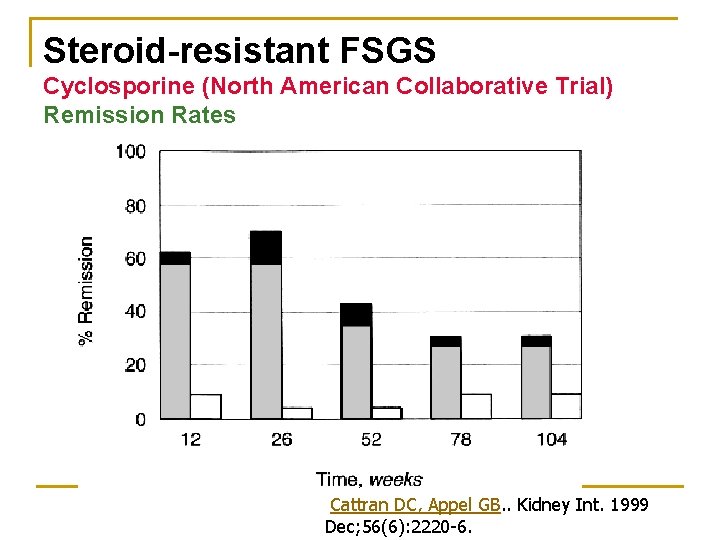
Steroid-resistant FSGS Cyclosporine (North American Collaborative Trial) Remission Rates Cattran DC, Appel GB. . Kidney Int. 1999 Dec; 56(6): 2220 -6.
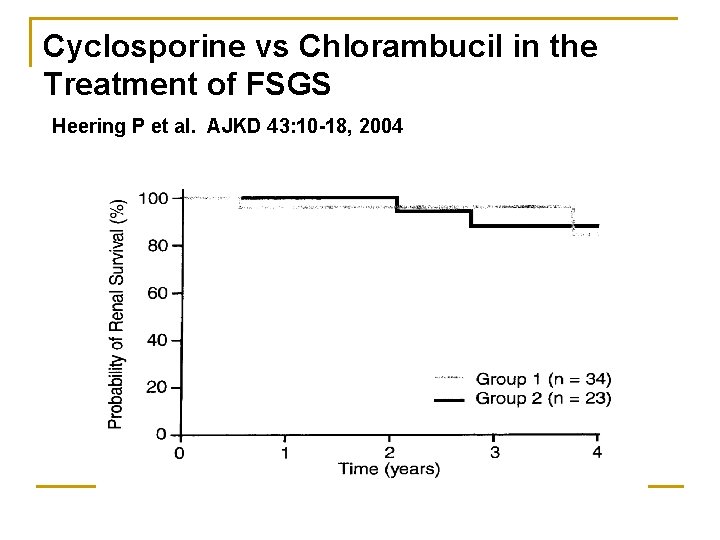
Cyclosporine vs Chlorambucil in the Treatment of FSGS Heering P et al. AJKD 43: 10 -18, 2004
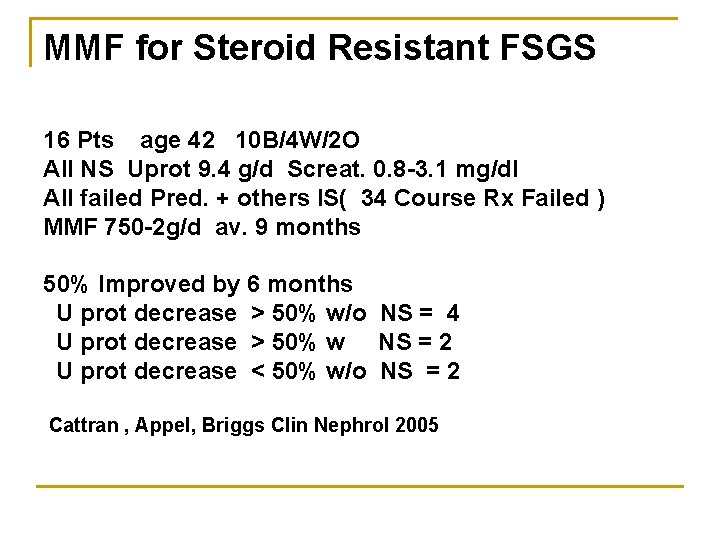
MMF for Steroid Resistant FSGS 16 Pts age 42 10 B/4 W/2 O All NS Uprot 9. 4 g/d Screat. 0. 8 -3. 1 mg/dl All failed Pred. + others IS( 34 Course Rx Failed ) MMF 750 -2 g/d av. 9 months 50% Improved by 6 months U prot decrease > 50% w/o NS = 4 U prot decrease > 50% w NS = 2 U prot decrease < 50% w/o NS = 2 Cattran , Appel, Briggs Clin Nephrol 2005
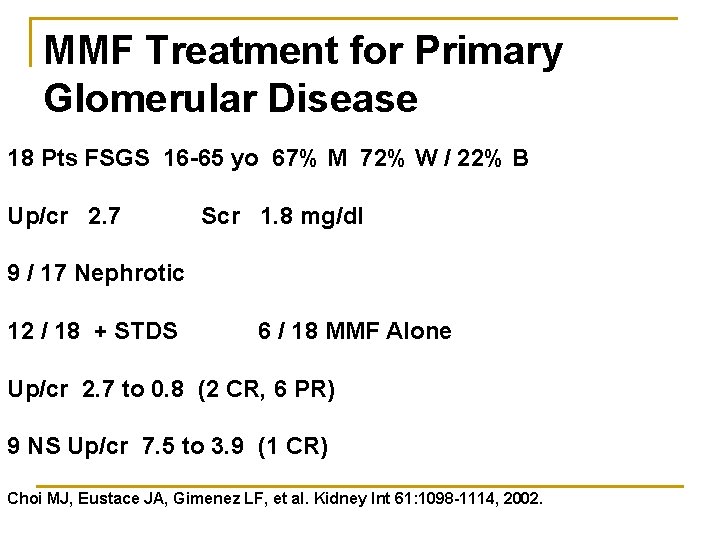
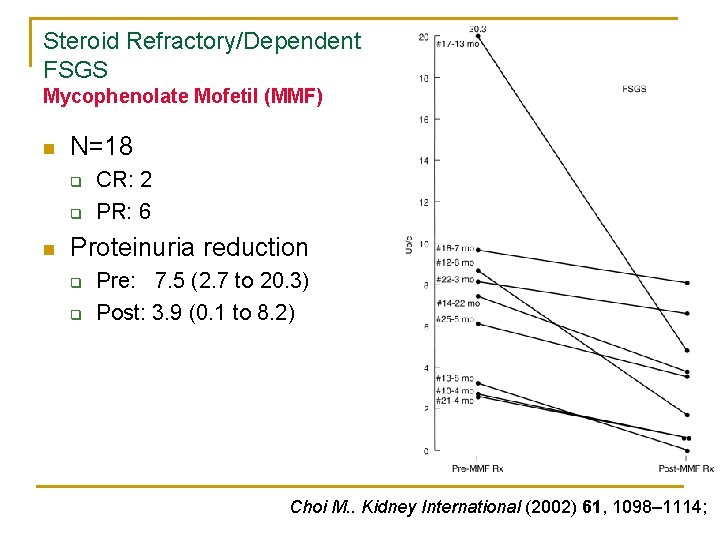
MMF Treatment for Primary Glomerular Disease 18 Pts FSGS 16 -65 yo 67% M 72% W / 22% B Up/cr 2. 7 Scr 1. 8 mg/dl 9 / 17 Nephrotic 12 / 18 + STDS 6 / 18 MMF Alone Up/cr 2. 7 to 0. 8 (2 CR, 6 PR) 9 NS Up/cr 7. 5 to 3. 9 (1 CR) Choi MJ, Eustace JA, Gimenez LF, et al. Kidney Int 61: 1098 -1114, 2002.
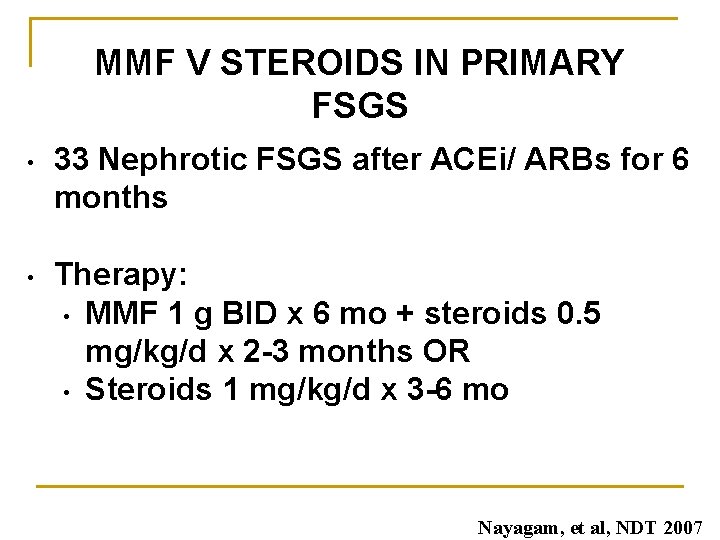
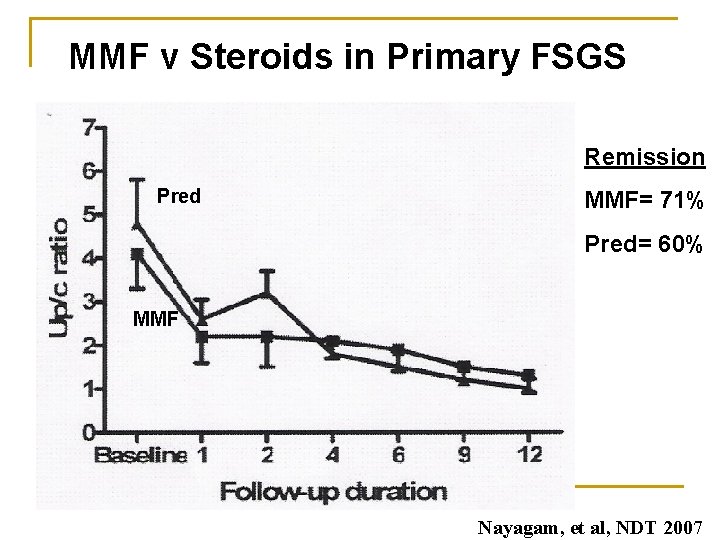
MMF V STEROIDS IN PRIMARY FSGS • 33 Nephrotic FSGS after ACEi/ ARBs for 6 months • Therapy: • MMF 1 g BID x 6 mo + steroids 0. 5 mg/kg/d x 2 -3 months OR • Steroids 1 mg/kg/d x 3 -6 mo Nayagam, et al, NDT 2007
MMF v Steroids in Primary FSGS Remission Pred MMF= 71% Pred= 60% MMF Nayagam, et al, NDT 2007
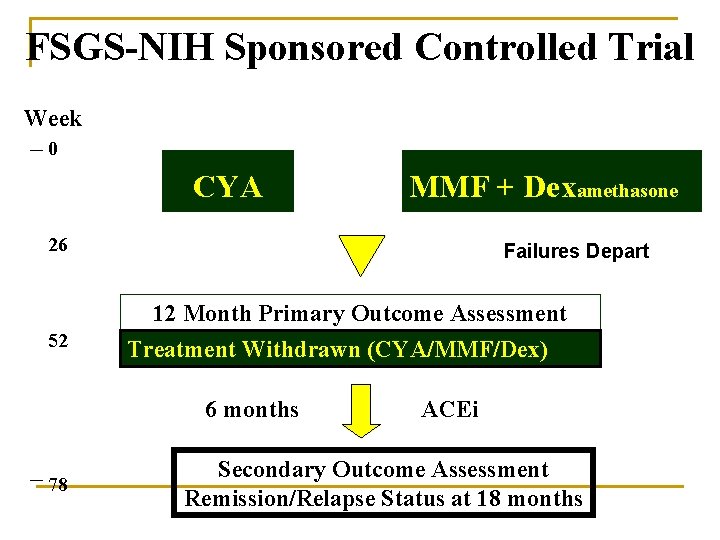
FSGS-NIH Sponsored Controlled Trial Week 0 CYA MMF + Dexamethasone 26 52 Failures Depart 12 Month Primary Outcome Assessment Treatment Withdrawn (CYA/MMF/Dex) 6 months 78 ACEi Secondary Outcome Assessment Remission/Relapse Status at 18 months
Steroid-resistant FSGS Cyclosporine (North American Collaborative Trial) 50% Decline in Creatinine Clearance Cattran DC, Appel GB. . Kidney Int. 1999 Dec; 56(6): 2220 -6.
Treatment of Steroid Refractory or Relapsing Patients. Response to Cytotoxic and Cyclosporine therapy
Steroid Refractory/Dependent FSGS Mycophenolate Mofetil (MMF) n N=18 q q n CR: 2 PR: 6 Proteinuria reduction q q Pre: 7. 5 (2. 7 to 20. 3) Post: 3. 9 (0. 1 to 8. 2) Choi M. . Kidney International (2002) 61, 1098– 1114;
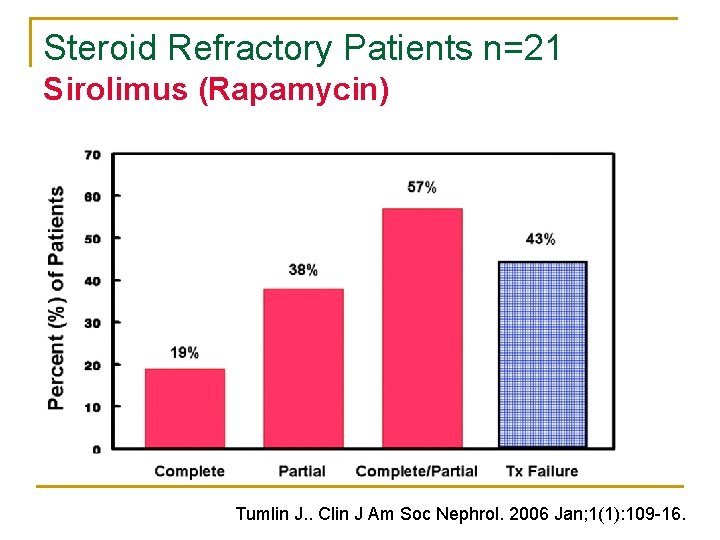
Steroid Refractory Patients n=21 Sirolimus (Rapamycin) Tumlin J. . Clin J Am Soc Nephrol. 2006 Jan; 1(1): 109 -16.
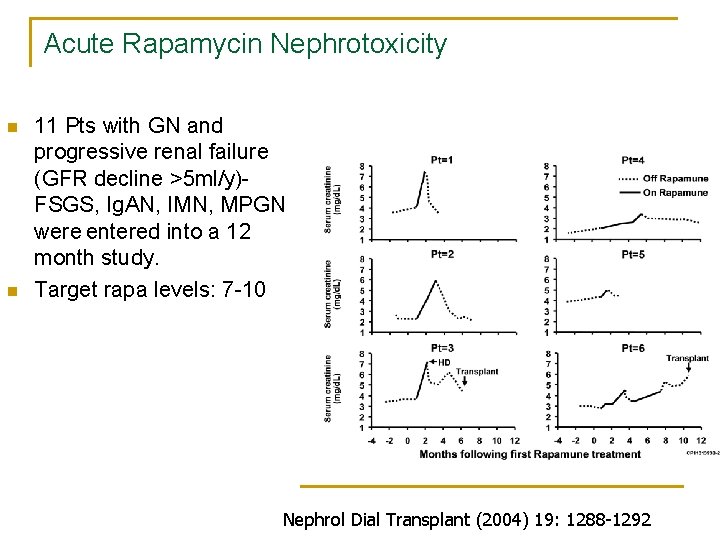
Acute Rapamycin Nephrotoxicity n n 11 Pts with GN and progressive renal failure (GFR decline >5 ml/y)FSGS, Ig. AN, IMN, MPGN were entered into a 12 month study. Target rapa levels: 7 -10 Nephrol Dial Transplant (2004) 19: 1288 -1292
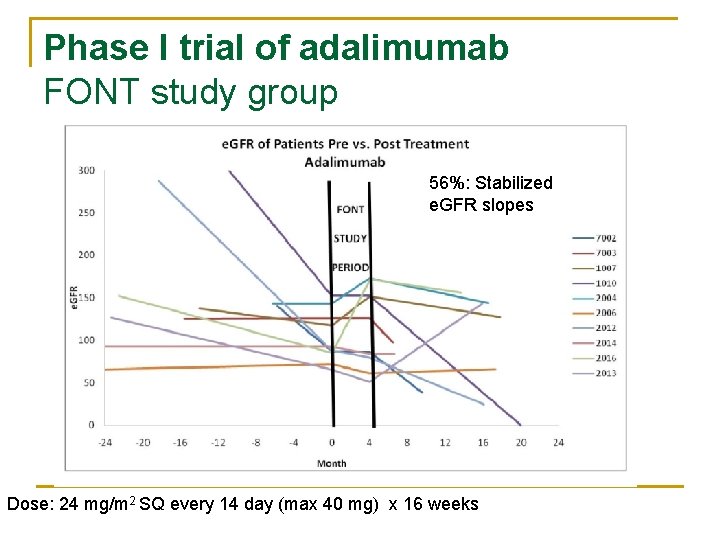
Phase I trial of adalimumab FONT study group 56%: Stabilized e. GFR slopes Dose: 24 mg/m 2 SQ every 14 day (max 40 mg) x 16 weeks
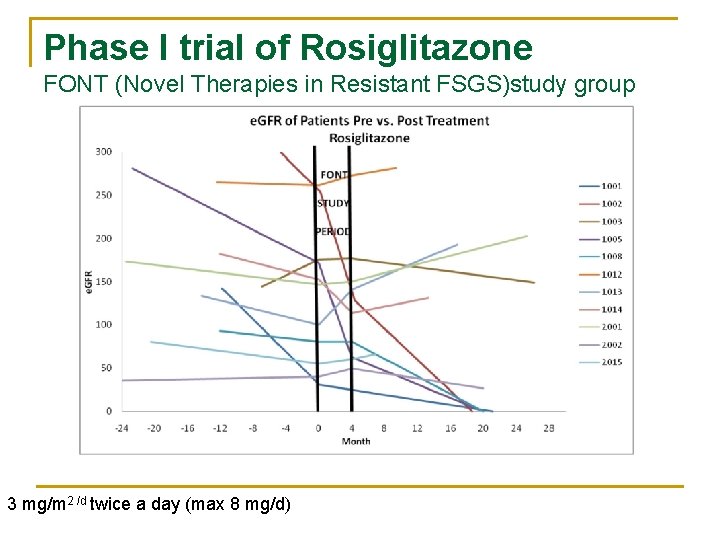
Phase I trial of Rosiglitazone FONT (Novel Therapies in Resistant FSGS)study group 3 mg/m 2 /d twice a day (max 8 mg/d)
Clinical history n Developed ARF with low dose tacrolimus n No respond to oral cyclophosphamide n Renal replacement therapy started in June of 2003 (12 months after onset)
Clinical History n The patient became progressively anuric on dialysis after which she improved clinically q q n Normal serum albumin 20 lb weight gain Several family members offered her a kidney including an HLA-identical sister
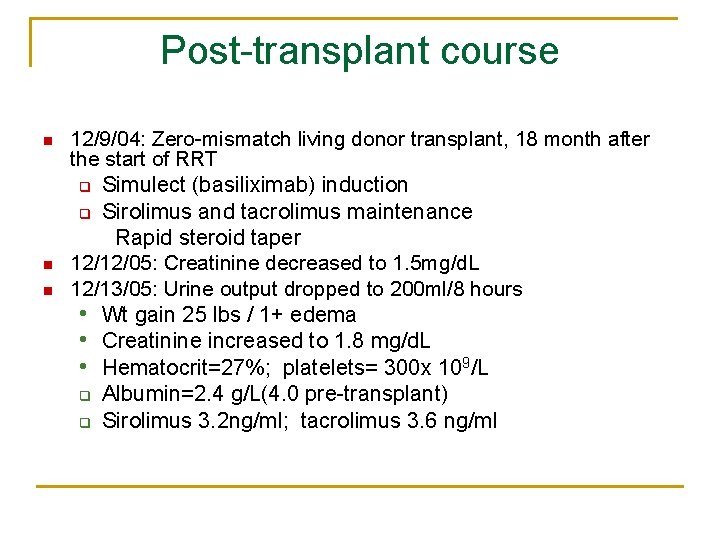
Post-transplant course n n n 12/9/04: Zero-mismatch living donor transplant, 18 month after the start of RRT q Simulect (basiliximab) induction q Sirolimus and tacrolimus maintenance Rapid steroid taper 12/12/05: Creatinine decreased to 1. 5 mg/d. L 12/13/05: Urine output dropped to 200 ml/8 hours • Wt gain 25 lbs / 1+ edema • Creatinine increased to 1. 8 mg/d. L • Hematocrit=27%; platelets= 300 x 109/L q Albumin=2. 4 g/L(4. 0 pre-transplant) q Sirolimus 3. 2 ng/ml; tacrolimus 3. 6 ng/ml
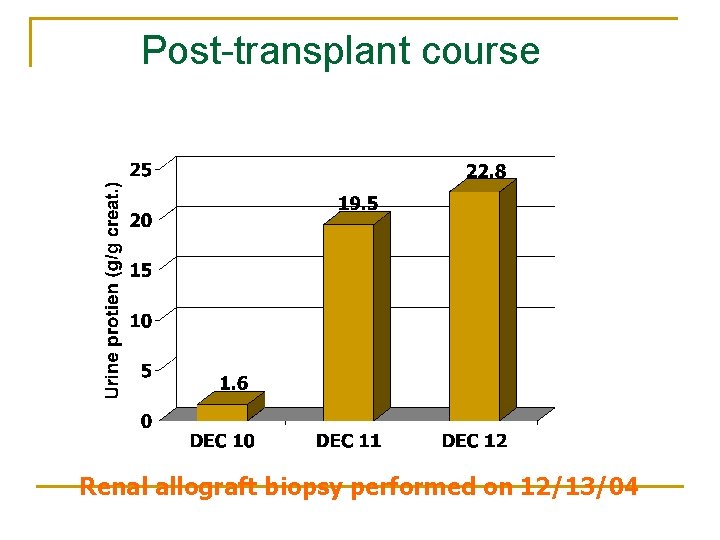
Post-transplant course Renal allograft biopsy performed on 12/13/04
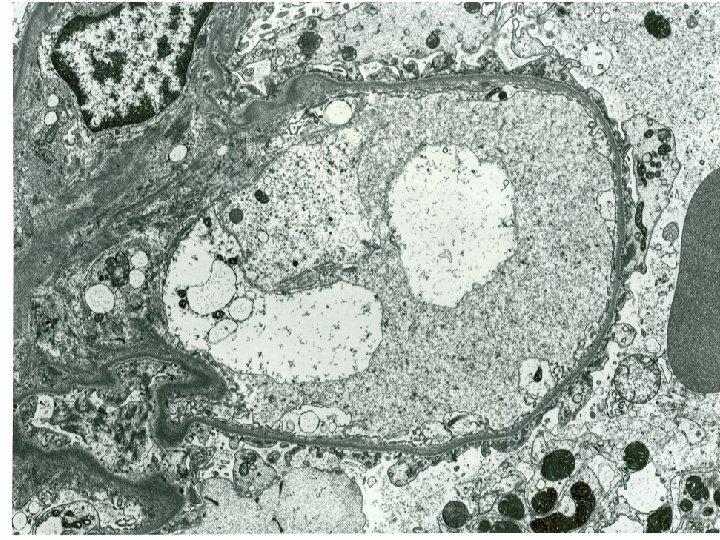
Diagnosis & findings n 90% foot process effacement, highly suggestive of early recurrent FSGS What therapy would you recommend for this patient?
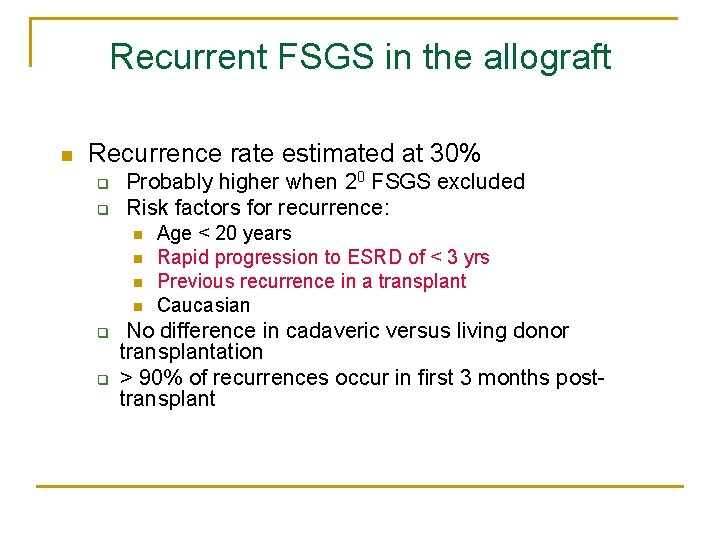
Recurrent FSGS in the allograft n Recurrence rate estimated at 30% q q Probably higher when 20 FSGS excluded Risk factors for recurrence: n n q q Age < 20 years Rapid progression to ESRD of < 3 yrs Previous recurrence in a transplant Caucasian No difference in cadaveric versus living donor transplantation > 90% of recurrences occur in first 3 months posttransplant
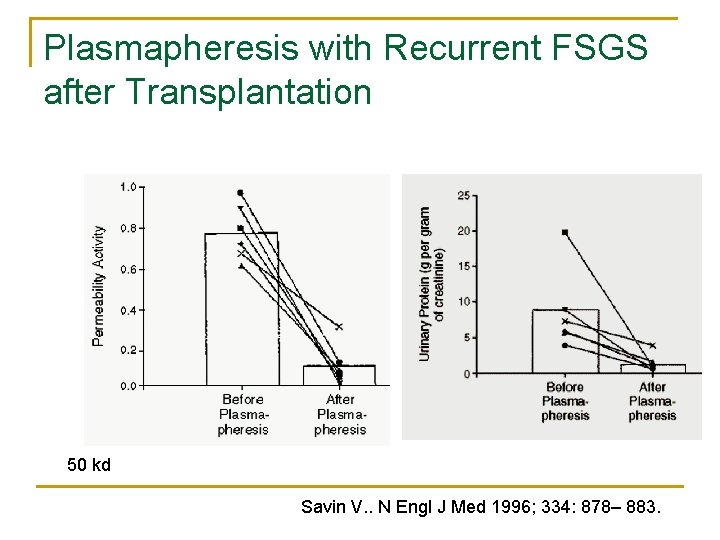
Plasmapheresis with Recurrent FSGS after Transplantation 50 kd Savin V. . N Engl J Med 1996; 334: 878– 883.
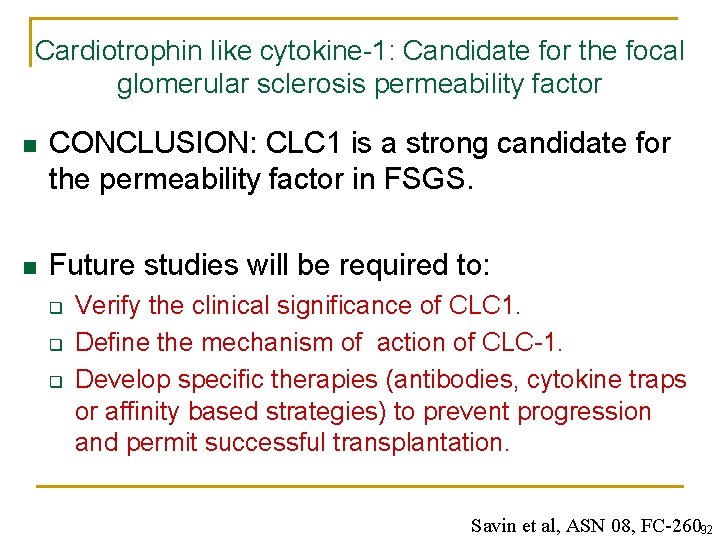
Cardiotrophin-like Cytokine-1(CLC 1): Candidate for the FSGS Permeability Factor n n n CLC 1 is a member of the IL-6 family CLC 1 was overexpressed in peripheral blood cells of 15 FSGS pts compared to controls (p <0. 03). Increasing doses of recombinant CLC 1 incrementally increased glomerular permeability (Palb) Monoclonal Ab to CLC 1 blocked the increase in Palb by CLC 1 and FSGS serum Incubation of CLC 1 with glomeruli decreased nephrin and podocin expression IV- CLC 1 in rats increased UPCR by 3 fold Savin et al, ASN 08, FC-26091
Cardiotrophin like cytokine-1: Candidate for the focal glomerular sclerosis permeability factor n CONCLUSION: CLC 1 is a strong candidate for the permeability factor in FSGS. n Future studies will be required to: q q q Verify the clinical significance of CLC 1. Define the mechanism of action of CLC-1. Develop specific therapies (antibodies, cytokine traps or affinity based strategies) to prevent progression and permit successful transplantation. Savin et al, ASN 08, FC-26092
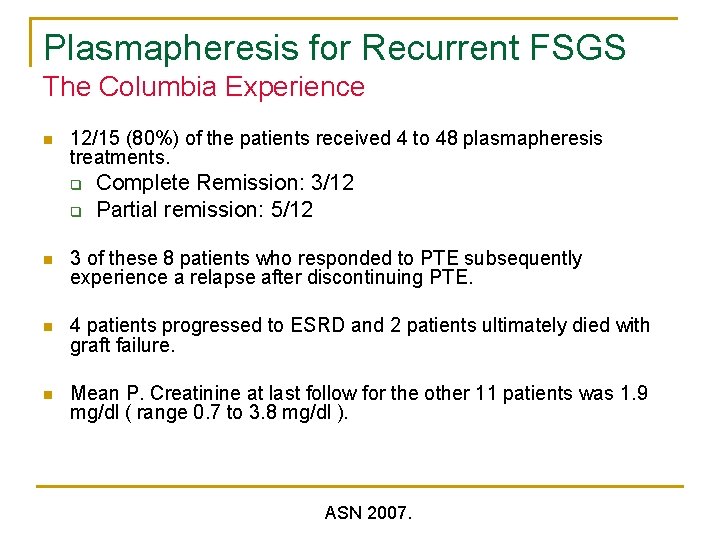
Plasmapheresis for Recurrent FSGS The Columbia Experience n 12/15 (80%) of the patients received 4 to 48 plasmapheresis treatments. q q Complete Remission: 3/12 Partial remission: 5/12 n 3 of these 8 patients who responded to PTE subsequently experience a relapse after discontinuing PTE. n 4 patients progressed to ESRD and 2 patients ultimately died with graft failure. n Mean P. Creatinine at last follow for the other 11 patients was 1. 9 mg/dl ( range 0. 7 to 3. 8 mg/dl ). ASN 2007.
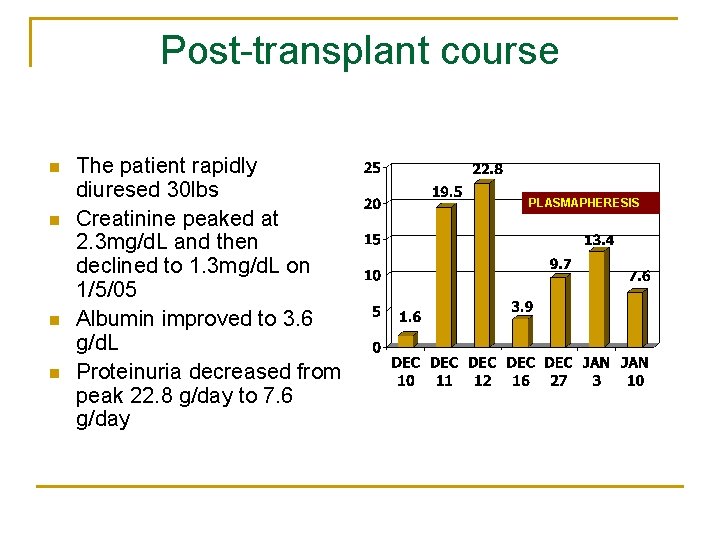
Post-transplant course n n The patient rapidly diuresed 30 lbs Creatinine peaked at 2. 3 mg/d. L and then declined to 1. 3 mg/d. L on 1/5/05 Albumin improved to 3. 6 g/d. L Proteinuria decreased from peak 22. 8 g/day to 7. 6 g/day PLASMAPHERESIS
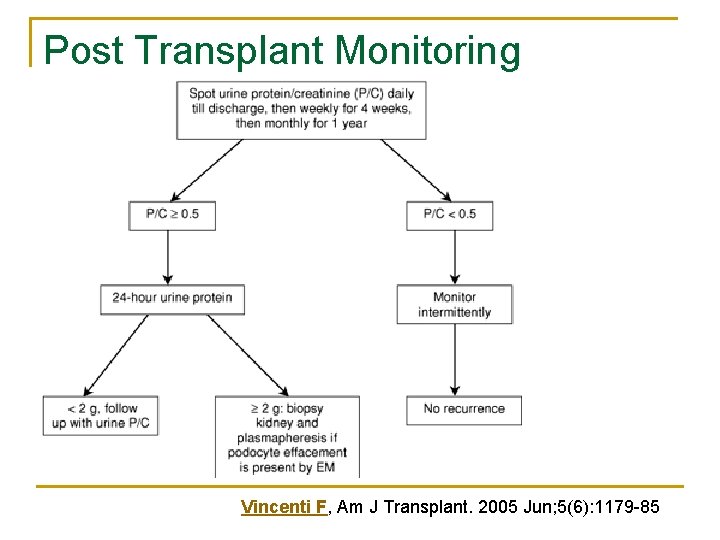
Post Transplant Monitoring Vincenti F, Am J Transplant. 2005 Jun; 5(6): 1179 -85
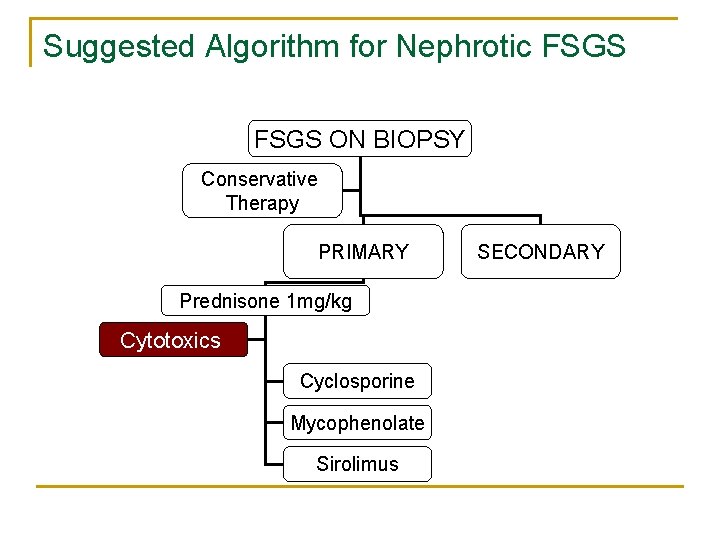
Suggested Algorithm for Nephrotic FSGS ON BIOPSY Conservative Therapy PRIMARY Prednisone 1 mg/kg Cytotoxics Cyclosporine Mycophenolate Sirolimus SECONDARY
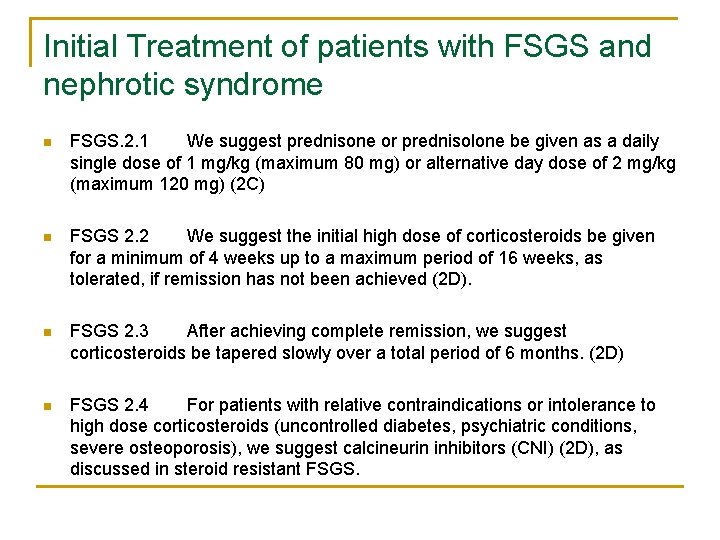
Initial Treatment of patients with FSGS and nephrotic syndrome n FSGS. 2. 1 We suggest prednisone or prednisolone be given as a daily single dose of 1 mg/kg (maximum 80 mg) or alternative day dose of 2 mg/kg (maximum 120 mg) (2 C) n FSGS 2. 2 We suggest the initial high dose of corticosteroids be given for a minimum of 4 weeks up to a maximum period of 16 weeks, as tolerated, if remission has not been achieved (2 D). n FSGS 2. 3 After achieving complete remission, we suggest corticosteroids be tapered slowly over a total period of 6 months. (2 D) n FSGS 2. 4 For patients with relative contraindications or intolerance to high dose corticosteroids (uncontrolled diabetes, psychiatric conditions, severe osteoporosis), we suggest calcineurin inhibitors (CNI) (2 D), as discussed in steroid resistant FSGS.
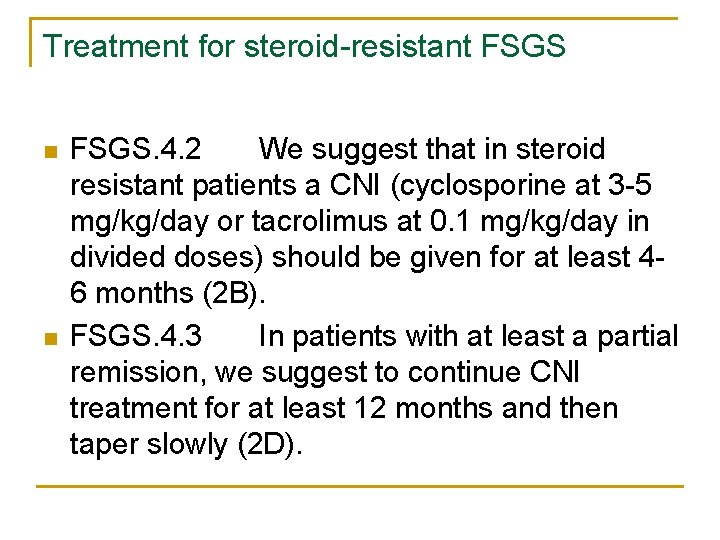
Treatment for steroid-resistant FSGS n n FSGS. 4. 2 We suggest that in steroid resistant patients a CNI (cyclosporine at 3 -5 mg/kg/day or tacrolimus at 0. 1 mg/kg/day in divided doses) should be given for at least 46 months (2 B). FSGS. 4. 3 In patients with at least a partial remission, we suggest to continue CNI treatment for at least 12 months and then taper slowly (2 D).
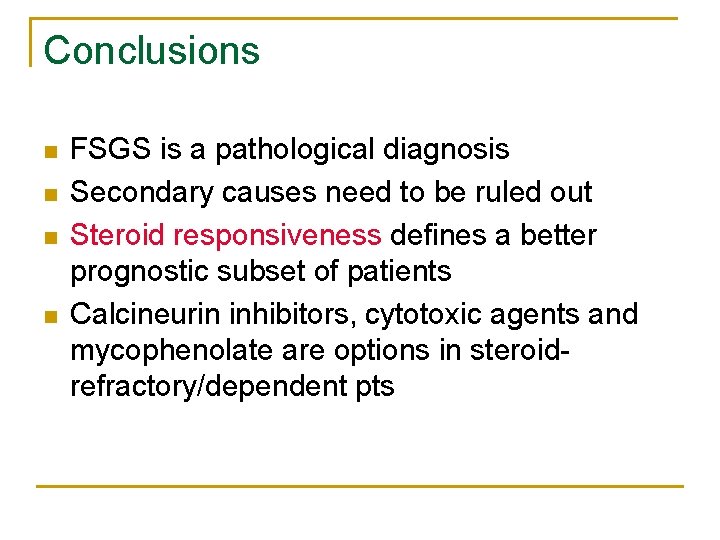
Conclusions n n FSGS is a pathological diagnosis Secondary causes need to be ruled out Steroid responsiveness defines a better prognostic subset of patients Calcineurin inhibitors, cytotoxic agents and mycophenolate are options in steroidrefractory/dependent pts