
CNS Infections EMERGENCY NEUROLOGY LECTURE SERIES August 24

- Slides: 48
CNS Infections EMERGENCY NEUROLOGY LECTURE SERIES August 24, 2011 Dr. Abdullah Al-Salti R 4
CNS Infections Case scenario Bacterial meningitis. ü C. T before L. P ü Dexamethasone used ü Prophylaxes. Viral encephalitis L. P procedure.
CASE 1 A 21 -year-old college student was found poorly responsive in her room. She had complained of a headache for about 4 days that was refractory to NSAIDs. In the ER, temperature was 39. 5°C, with BP 145/100 mm. Hg, HR of 112 per minute and RR of 18 per minute. She partly responded to verbal commands, localized symmetrically to noxious stimuli, and moaned incoherently. Neurological examination showed nuchal rigidity, and normal brainstem reflexes, with symmetric hyperreflexia and flexor plantar responses.
CASE 1 H. P. I ONSET, COURSE , DURATION CONSTITIUSIONAL SYMPTOMES. First thing to do PMH. SURGICAL HISTORY MEDICATIONS. SCREEN NUEROLOGICAL FAMILY HISTORY. SYSTEMS. HABITES. SYSTEMIC REVIEW. SOCIAL. WHAT IS SO FARE BEEN DONE ?
Examination : 1. 2. 3. 4. Focal neurological deficitst. Signs of meninegeal irritation. Signs of raised ICP. General systemic exam. Ddx: ? Investigasion ? Treatments?
CNS INFECTIONS
CNS INFECTIONS Overview Life-threatening problems with high associated mortality and morbidity. Presentation may be acute, subacute, or chronic. Clinical findings determined by anatomic site(s) of involvement, infecting pathogen, and host response. Vulnerability of CNS to the effects of inflammation & edema mandates prompt diagnosis with appropriate therapy if consequences to be minimized.
CNS Infections Meningitis Bacterial, viral, fungal, chemical, carcinomatous Encephalitis Bacterial, viral Meningoencephalitis Abscess Parenchymal, subdural, epidural
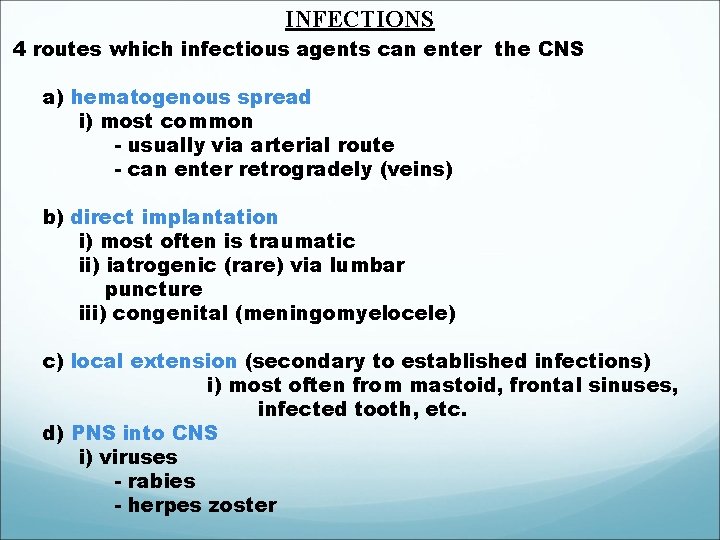
INFECTIONS 4 routes which infectious agents can enter the CNS a) hematogenous spread i) most common - usually via arterial route - can enter retrogradely (veins) b) direct implantation i) most often is traumatic ii) iatrogenic (rare) via lumbar puncture iii) congenital (meningomyelocele) c) local extension (secondary to established infections) i) most often from mastoid, frontal sinuses, infected tooth, etc. d) PNS into CNS i) viruses - rabies - herpes zoster
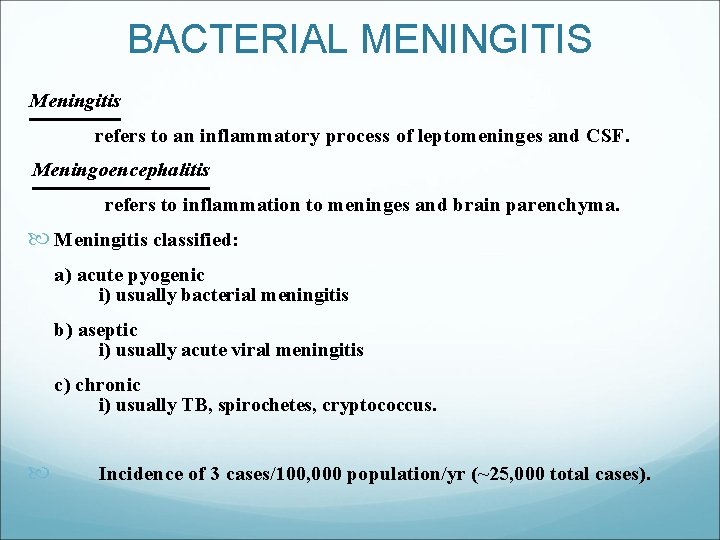
BACTERIAL MENINGITIS Meningitis refers to an inflammatory process of leptomeninges and CSF. Meningoencephalitis refers to inflammation to meninges and brain parenchyma. Meningitis classified: a) acute pyogenic i) usually bacterial meningitis b) aseptic i) usually acute viral meningitis c) chronic i) usually TB, spirochetes, cryptococcus. Incidence of 3 cases/100, 000 population/yr (~25, 000 total cases).
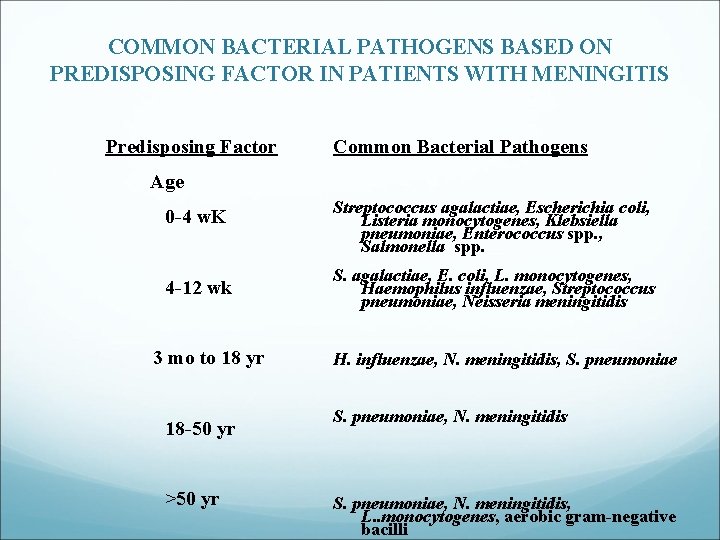
COMMON BACTERIAL PATHOGENS BASED ON PREDISPOSING FACTOR IN PATIENTS WITH MENINGITIS Predisposing Factor Common Bacterial Pathogens Age 0 -4 w. K 4 -12 wk 3 mo to 18 yr 18 -50 yr >50 yr Streptococcus agalactiae, Escherichia coli, Listeria monocytogenes, Klebsiella pneumoniae, Enterococcus spp. , Salmonella spp. S. agalactiae, E. coli, L. monocytogenes, Haemophilus influenzae, Streptococcus pneumoniae, Neisseria meningitidis H. influenzae, N. meningitidis, S. pneumoniae, N. meningitidis, L. . monocytogenes, aerobic gram-negative bacilli
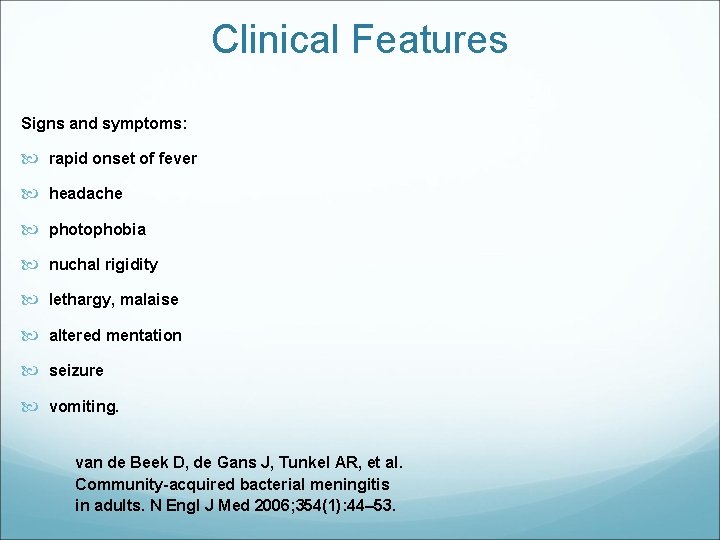
Clinical Features Signs and symptoms: rapid onset of fever headache photophobia nuchal rigidity lethargy, malaise altered mentation seizure vomiting. van de Beek D, de Gans J, Tunkel AR, et al. Community-acquired bacterial meningitis in adults. N Engl J Med 2006; 354(1): 44– 53.
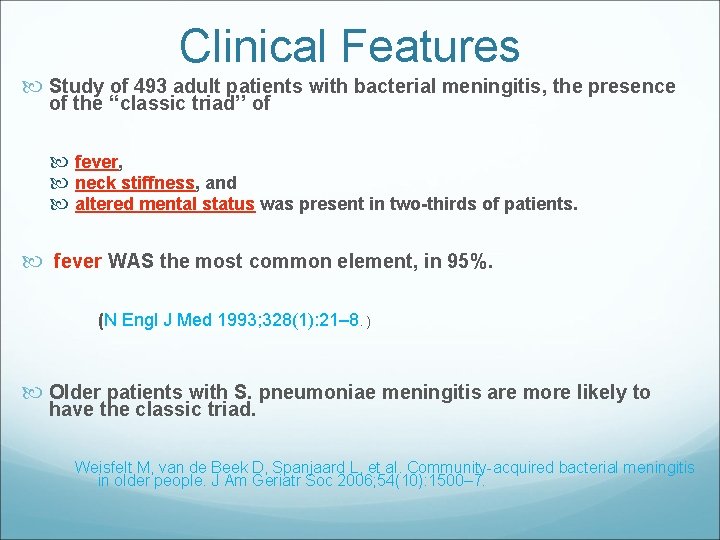
Clinical Features Study of 493 adult patients with bacterial meningitis, the presence of the ‘‘classic triad’’ of fever, neck stiffness, and altered mental status was present in two-thirds of patients. fever WAS the most common element, in 95%. (N Engl J Med 1993; 328(1): 21– 8. ) Older patients with S. pneumoniae meningitis are more likely to have the classic triad. Weisfelt M, van de Beek D, Spanjaard L, et al. Community-acquired bacterial meningitis in older people. J Am Geriatr Soc 2006; 54(10): 1500– 7.
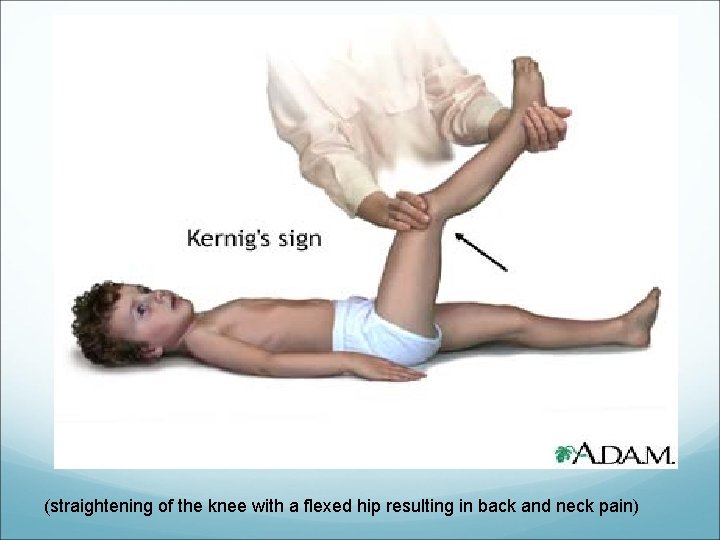
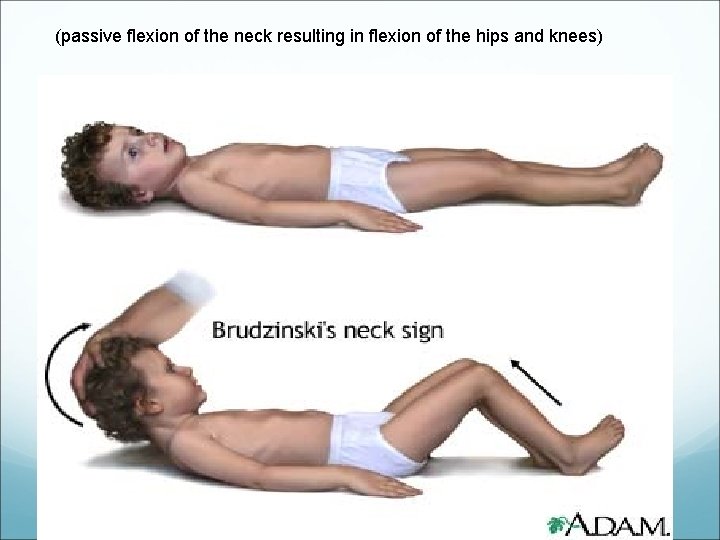
Physical examination A careful neurological examination is important to evaluate for : focal deficits increased intracranial pressure (ICP). Examination should include assessment for meningeal irritation Brudzinski’s sign Kernig’s sign findings include purpura or petechia of the skin, which may occur with meningococcemia.
(straightening of the knee with a flexed hip resulting in back and neck pain)
(passive flexion of the neck resulting in flexion of the hips and knees)
Bacterial meningitis Investigations
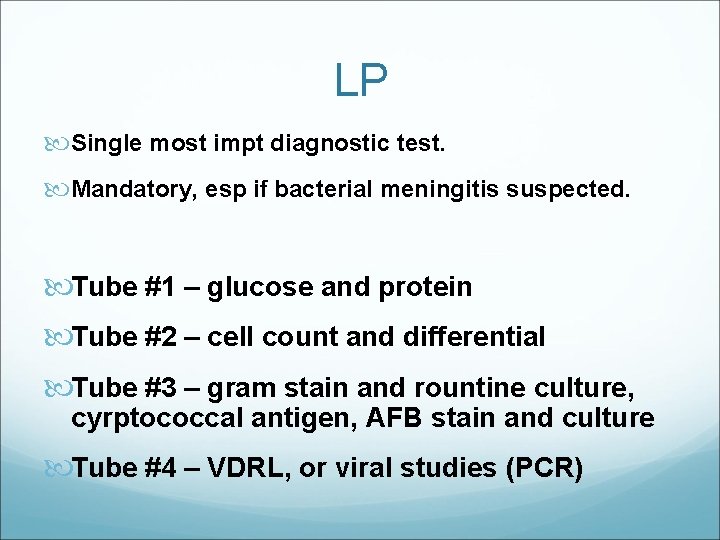
LP Single most impt diagnostic test. Mandatory, esp if bacterial meningitis suspected. Tube #1 – glucose and protein Tube #2 – cell count and differential Tube #3 – gram stain and rountine culture, cyrptococcal antigen, AFB stain and culture Tube #4 – VDRL, or viral studies (PCR)
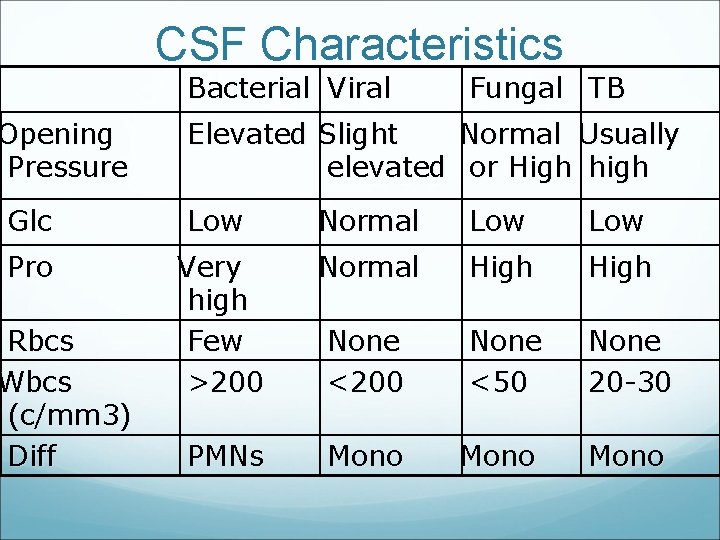
CSF Characteristics Bacterial Viral Opening Pressure Fungal TB Elevated Slight Normal Usually elevated or High high Glc Low Normal Low Pro Very high Few >200 Normal High None <200 None <50 None 20 -30 PMNs Mono Rbcs Wbcs (c/mm 3) Diff
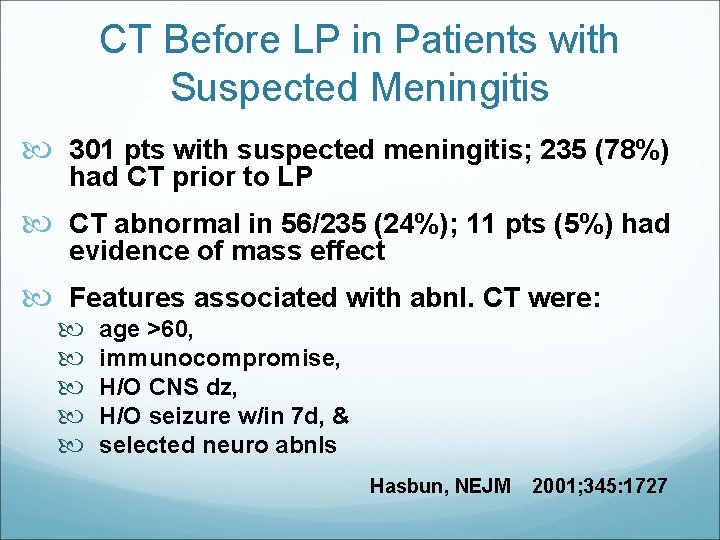
CT Before LP in Patients with Suspected Meningitis 301 pts with suspected meningitis; 235 (78%) had CT prior to LP CT abnormal in 56/235 (24%); 11 pts (5%) had evidence of mass effect Features associated with abnl. CT were: age >60, immunocompromise, H/O CNS dz, H/O seizure w/in 7 d, & selected neuro abnls Hasbun, NEJM 2001; 345: 1727
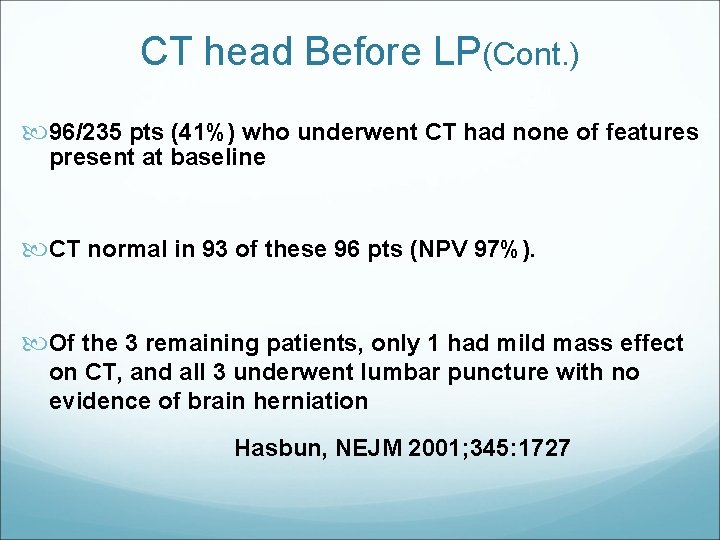
CT head Before LP(Cont. ) 96/235 pts (41%) who underwent CT had none of features present at baseline CT normal in 93 of these 96 pts (NPV 97%). Of the 3 remaining patients, only 1 had mild mass effect on CT, and all 3 underwent lumbar puncture with no evidence of brain herniation Hasbun, NEJM 2001; 345: 1727
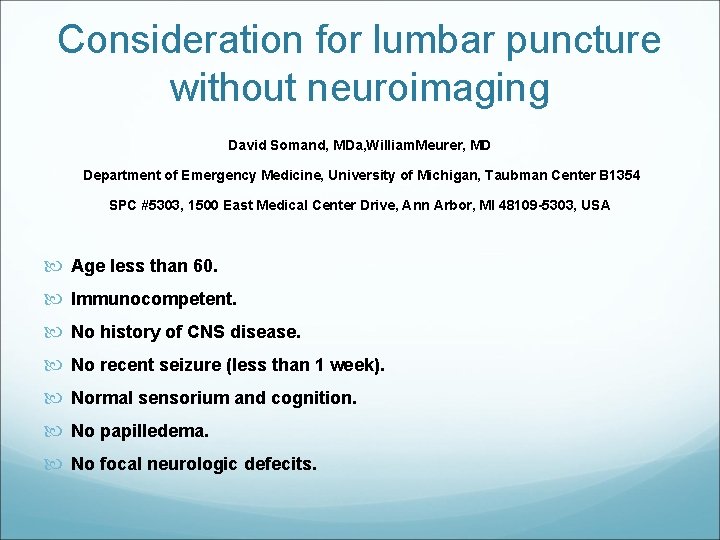
Consideration for lumbar puncture without neuroimaging David Somand, MDa, William. Meurer, MD Department of Emergency Medicine, University of Michigan, Taubman Center B 1354 SPC #5303, 1500 East Medical Center Drive, Ann Arbor, MI 48109 -5303, USA Age less than 60. Immunocompetent. No history of CNS disease. No recent seizure (less than 1 week). Normal sensorium and cognition. No papilledema. No focal neurologic defecits.
BACTERIAL MENINGITIS Managements
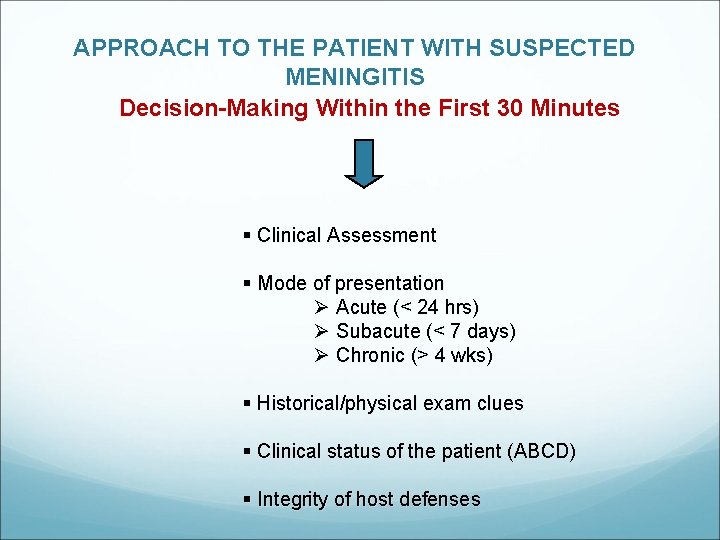
APPROACH TO THE PATIENT WITH SUSPECTED MENINGITIS Decision-Making Within the First 30 Minutes § Clinical Assessment § Mode of presentation Ø Acute (< 24 hrs) Ø Subacute (< 7 days) Ø Chronic (> 4 wks) § Historical/physical exam clues § Clinical status of the patient (ABCD) § Integrity of host defenses
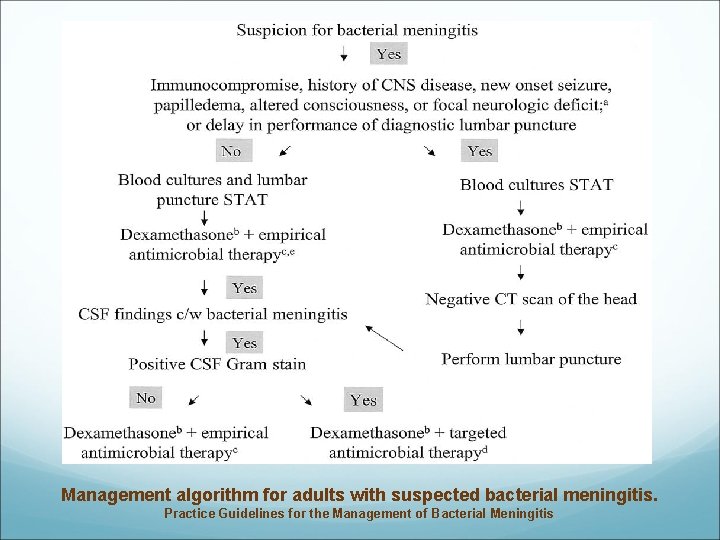
Management algorithm for adults with suspected bacterial meningitis. Practice Guidelines for the Management of Bacterial Meningitis
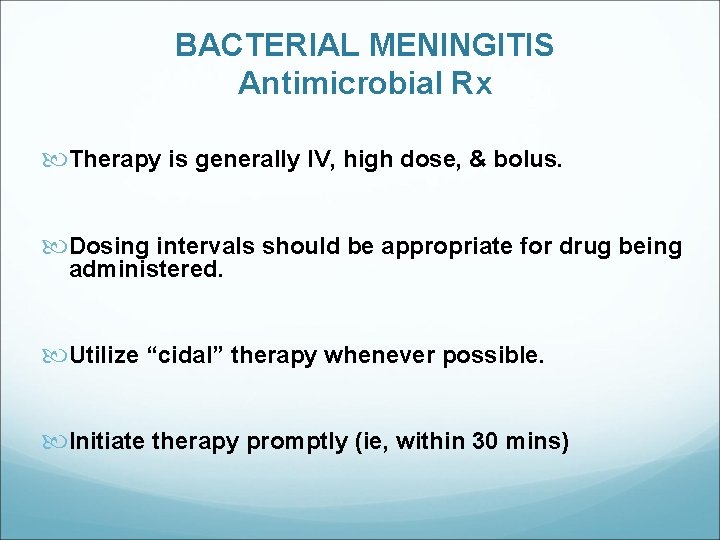
BACTERIAL MENINGITIS Antimicrobial Rx Therapy is generally IV, high dose, & bolus. Dosing intervals should be appropriate for drug being administered. Utilize “cidal” therapy whenever possible. Initiate therapy promptly (ie, within 30 mins)
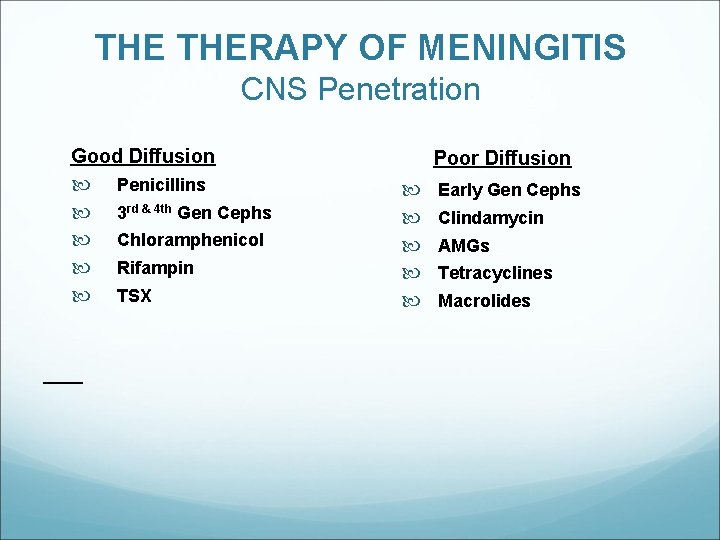
THE THERAPY OF MENINGITIS CNS Penetration Good Diffusion Penicillins 3 rd & 4 th Gen Cephs Chloramphenicol Rifampin TSX Poor Diffusion Early Gen Cephs Clindamycin AMGs Tetracyclines Macrolides
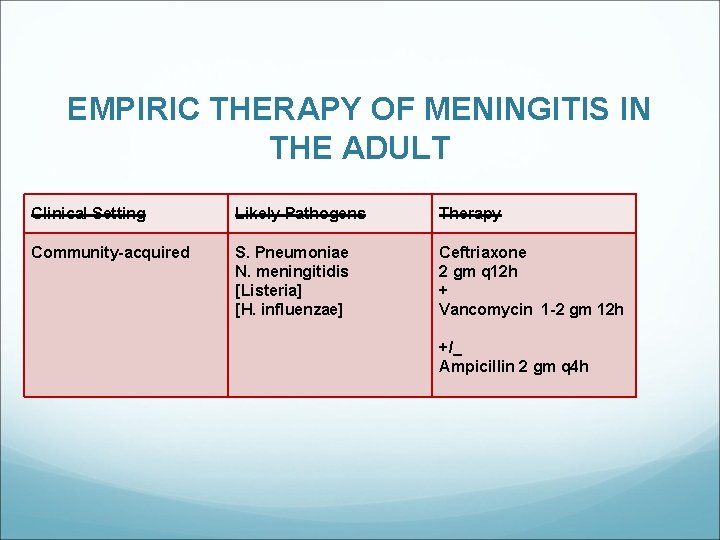
EMPIRIC THERAPY OF MENINGITIS IN THE ADULT Clinical Setting Likely Pathogens Community-acquired S. Pneumoniae N. meningitidis [Listeria] [H. influenzae] Therapy Ceftriaxone 2 gm q 12 h + Vancomycin 1 -2 gm 12 h +/_ Ampicillin 2 gm q 4 h
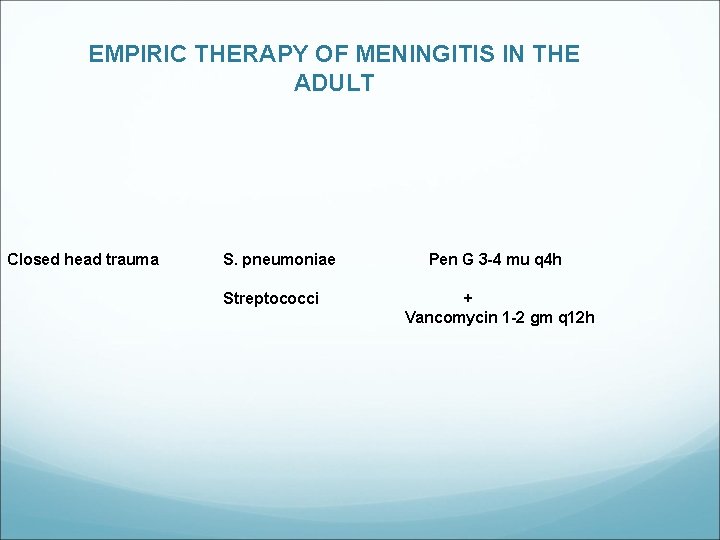
EMPIRIC THERAPY OF MENINGITIS IN THE ADULT Closed head trauma S. pneumoniae Pen G 3 -4 mu q 4 h Streptococci + Vancomycin 1 -2 gm q 12 h
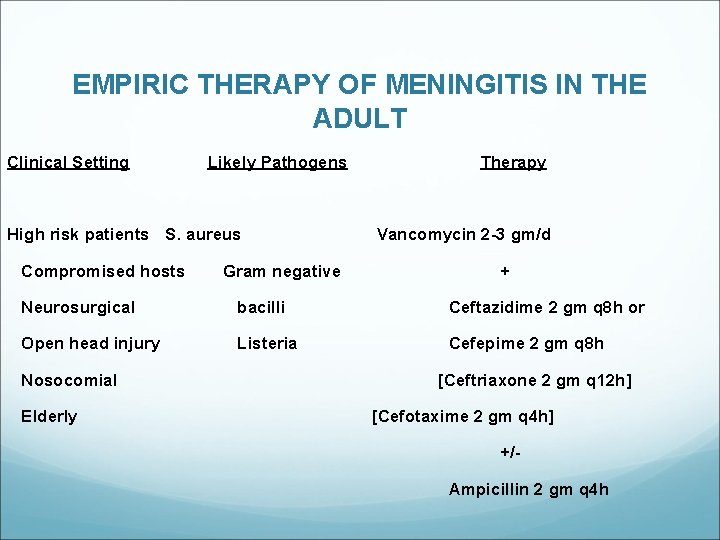
EMPIRIC THERAPY OF MENINGITIS IN THE ADULT Clinical Setting Likely Pathogens High risk patients S. aureus Therapy Vancomycin 2 -3 gm/d Compromised hosts Gram negative + Neurosurgical bacilli Ceftazidime 2 gm q 8 h or Open head injury Listeria Cefepime 2 gm q 8 h Nosocomial Elderly [Ceftriaxone 2 gm q 12 h] [Cefotaxime 2 gm q 4 h] +/ Ampicillin 2 gm q 4 h
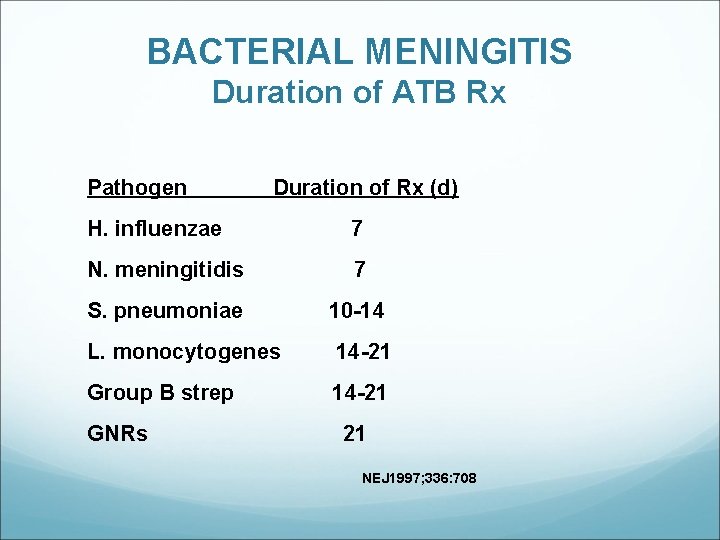
BACTERIAL MENINGITIS Duration of ATB Rx Pathogen Duration of Rx (d) H. influenzae 7 N. meningitidis 7 S. pneumoniae 10 -14 L. monocytogenes 14 -21 Group B strep 14 -21 GNRs 21 NEJ 1997; 336: 708
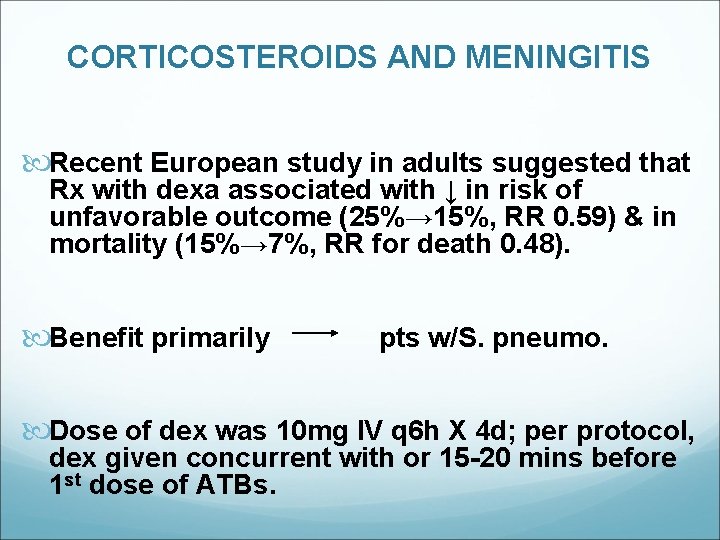
CORTICOSTEROIDS AND MENINGITIS Recent European study in adults suggested that Rx with dexa associated with ↓ in risk of unfavorable outcome (25%→ 15%, RR 0. 59) & in mortality (15%→ 7%, RR for death 0. 48). Benefit primarily pts w/S. pneumo. Dose of dex was 10 mg IV q 6 h X 4 d; per protocol, dex given concurrent with or 15 -20 mins before 1 st dose of ATBs.
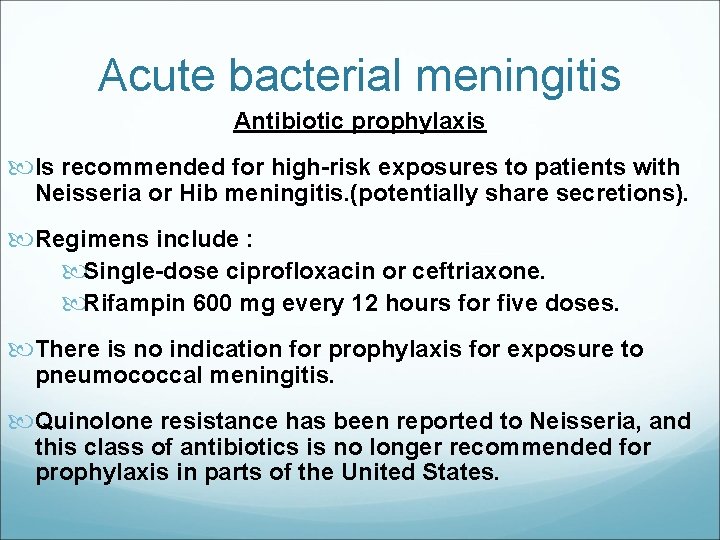
Acute bacterial meningitis Antibiotic prophylaxis Is recommended for high-risk exposures to patients with Neisseria or Hib meningitis. (potentially share secretions). Regimens include : Single-dose ciprofloxacin or ceftriaxone. Rifampin 600 mg every 12 hours for five doses. There is no indication for prophylaxis for exposure to pneumococcal meningitis. Quinolone resistance has been reported to Neisseria, and this class of antibiotics is no longer recommended for prophylaxis in parts of the United States.
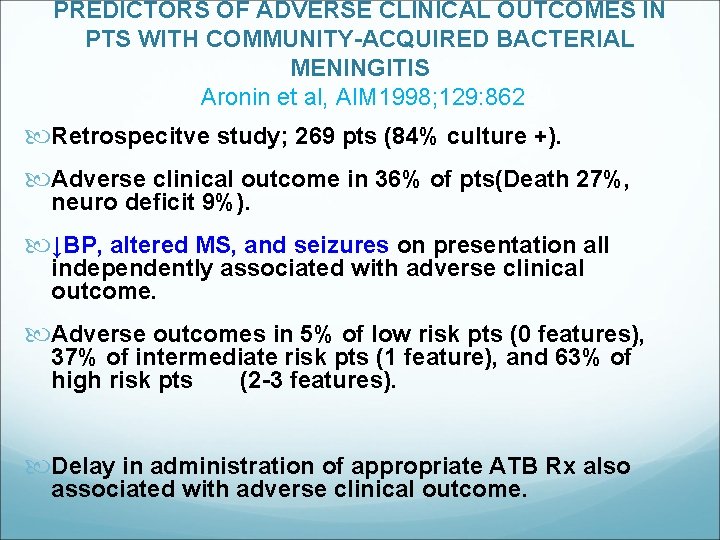
PREDICTORS OF ADVERSE CLINICAL OUTCOMES IN PTS WITH COMMUNITY-ACQUIRED BACTERIAL MENINGITIS Aronin et al, AIM 1998; 129: 862 Retrospecitve study; 269 pts (84% culture +). Adverse clinical outcome in 36% of pts(Death 27%, neuro deficit 9%). ↓BP, altered MS, and seizures on presentation all independently associated with adverse clinical outcome. Adverse outcomes in 5% of low risk pts (0 features), 37% of intermediate risk pts (1 feature), and 63% of high risk pts (2 -3 features). Delay in administration of appropriate ATB Rx also associated with adverse clinical outcome.
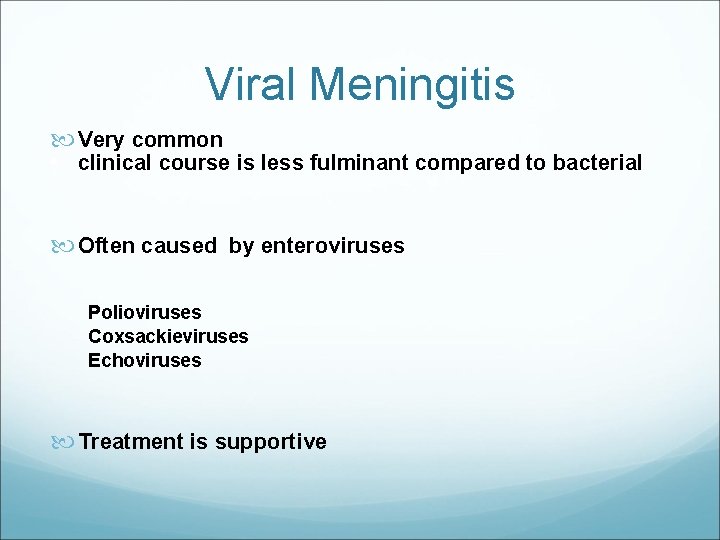
Viral Meningitis Very common • clinical course is less fulminant compared to bacterial Often caused by enteroviruses Polioviruses Coxsackieviruses Echoviruses Treatment is supportive
VIRAL ENCEPHALITIS
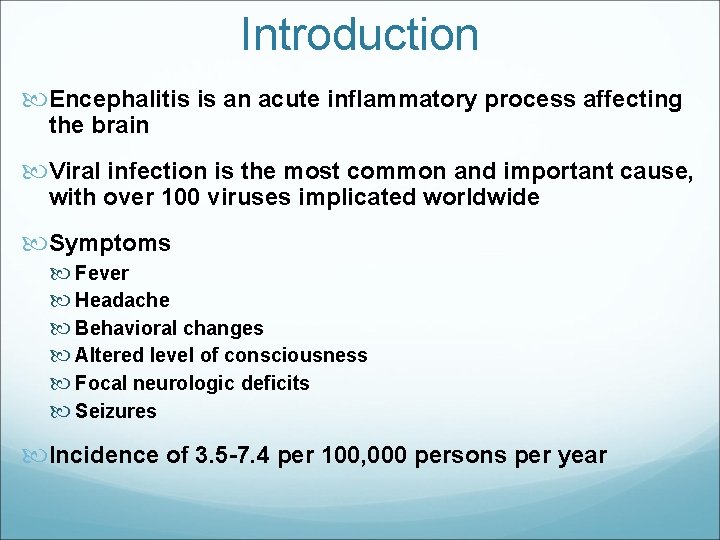
Introduction Encephalitis is an acute inflammatory process affecting the brain Viral infection is the most common and important cause, with over 100 viruses implicated worldwide Symptoms Fever Headache Behavioral changes Altered level of consciousness Focal neurologic deficits Seizures Incidence of 3. 5 -7. 4 per 100, 000 persons per year
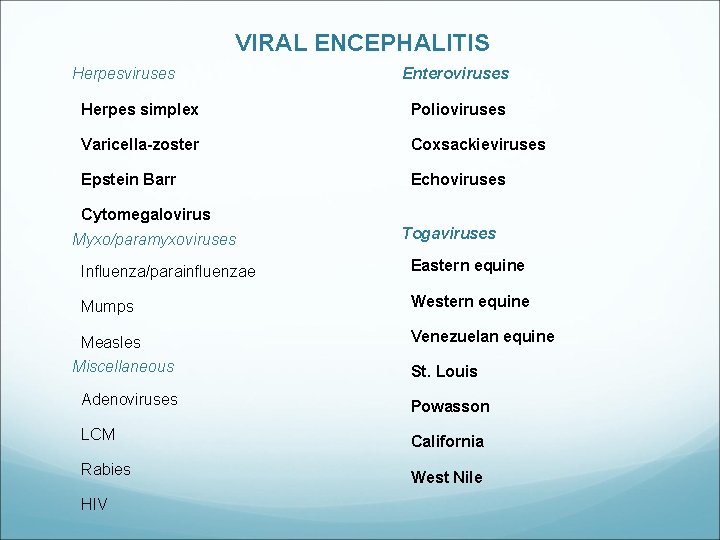
VIRAL ENCEPHALITIS Herpesviruses Enteroviruses Herpes simplex Polioviruses Varicella-zoster Coxsackieviruses Epstein Barr Echoviruses Cytomegalovirus Myxo/paramyxoviruses Influenza/parainfluenzae Togaviruses Eastern equine Mumps Western equine Measles Venezuelan equine Miscellaneous St. Louis Adenoviruses Powasson LCM California Rabies West Nile HIV
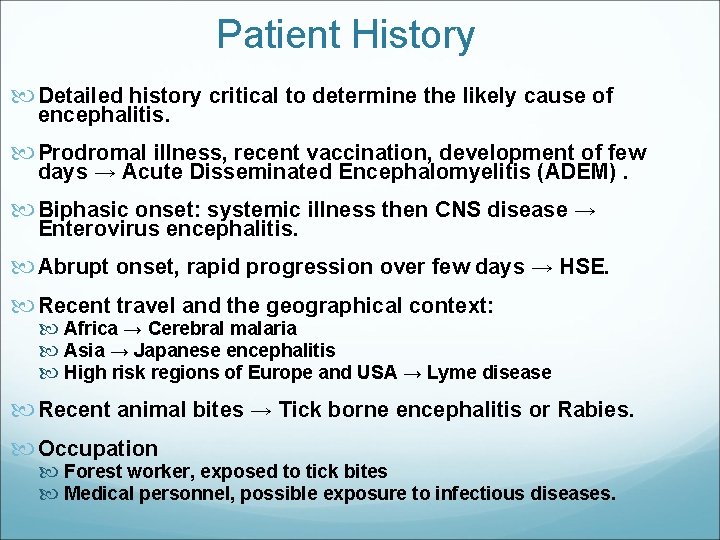
Patient History Detailed history critical to determine the likely cause of encephalitis. Prodromal illness, recent vaccination, development of few days → Acute Disseminated Encephalomyelitis (ADEM). Biphasic onset: systemic illness then CNS disease → Enterovirus encephalitis. Abrupt onset, rapid progression over few days → HSE. Recent travel and the geographical context: Africa → Cerebral malaria Asia → Japanese encephalitis High risk regions of Europe and USA → Lyme disease Recent animal bites → Tick borne encephalitis or Rabies. Occupation Forest worker, exposed to tick bites Medical personnel, possible exposure to infectious diseases.
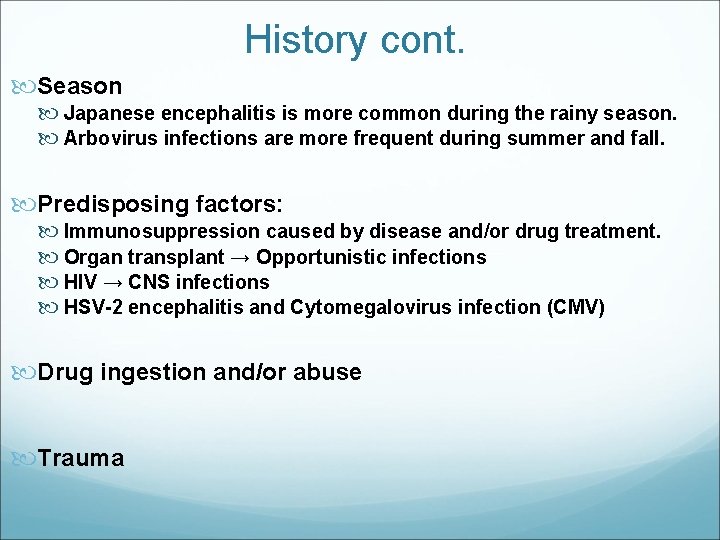
History cont. Season Japanese encephalitis is more common during the rainy season. Arbovirus infections are more frequent during summer and fall. Predisposing factors: Immunosuppression caused by disease and/or drug treatment. Organ transplant → Opportunistic infections HIV → CNS infections HSV-2 encephalitis and Cytomegalovirus infection (CMV) Drug ingestion and/or abuse Trauma
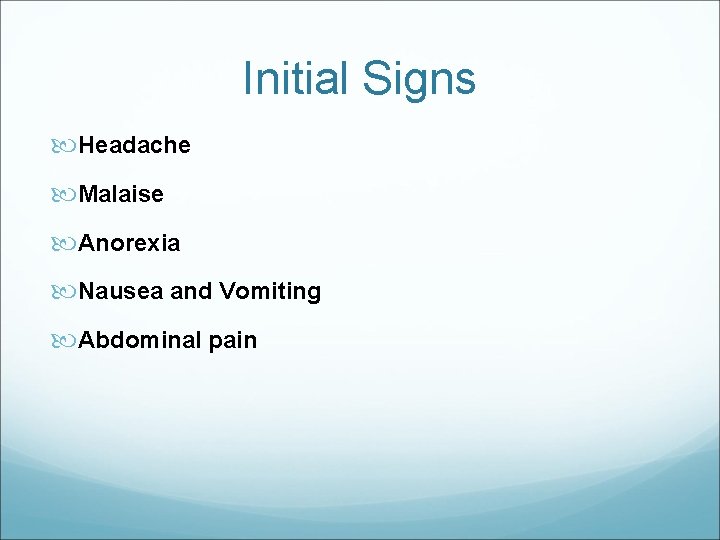
Initial Signs Headache Malaise Anorexia Nausea and Vomiting Abdominal pain
Developing Signs Altered LOC – mild lethargy to deep coma. AMS – confused, delirious, disoriented. Mental aberrations: hallucinations agitation personality change behavioral disorders occasionally frank psychosis Focal or general seizures in >50% severe cases. Severe focused neurologic deficits.
Neurologic Signs Virtually every possible focal neurological disturbance has been reported. Most Common Aphasia Ataxia Hemiparesis. Involuntary movements Cranial nerve deficits (ocular palsies, facial weakness)
Other Causes of Encephalopathy Anoxic/Ischemic conditions Metabolic disorders Nutritional deficiency Toxic (Accidental & Intentional) Systemic infections Critical illness Malignant hypertension Mitochondrial cytopathy (Reye’s and MELAS syndromes) Hashimoto’s encephalopathy Traumatic brain injury Epileptic (non-convulsive status) CJD (Mad Cow)
Differential Diagnosis Distinguish Etiology (1) Bacterial infection and other infectious conditions (2) Parameningeal infections or partially treated bacterial meningitis (3) Nonviral infectious meningitides where cultures may be negative (e. g. , fungal, tuberculous, parasitic, or syphilitic disease) (4) Meningitis secondary to noninfectious inflammatory diseases
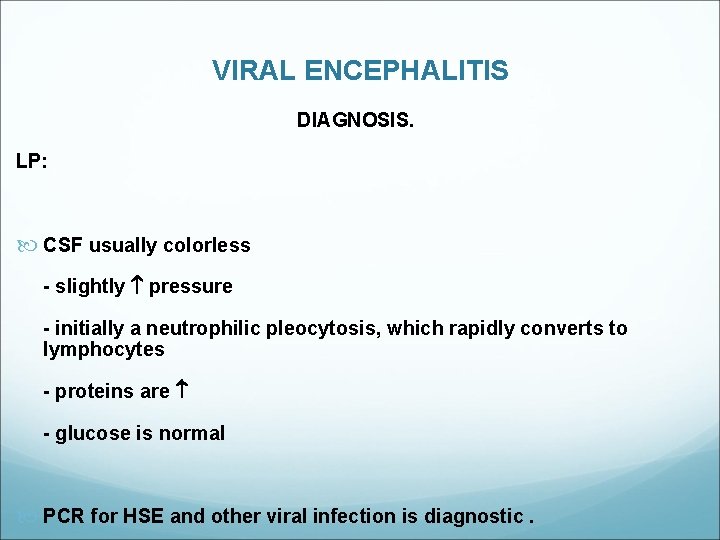
VIRAL ENCEPHALITIS DIAGNOSIS. LP: CSF usually colorless - slightly pressure - initially a neutrophilic pleocytosis, which rapidly converts to lymphocytes - proteins are - glucose is normal PCR for HSE and other viral infection is diagnostic.
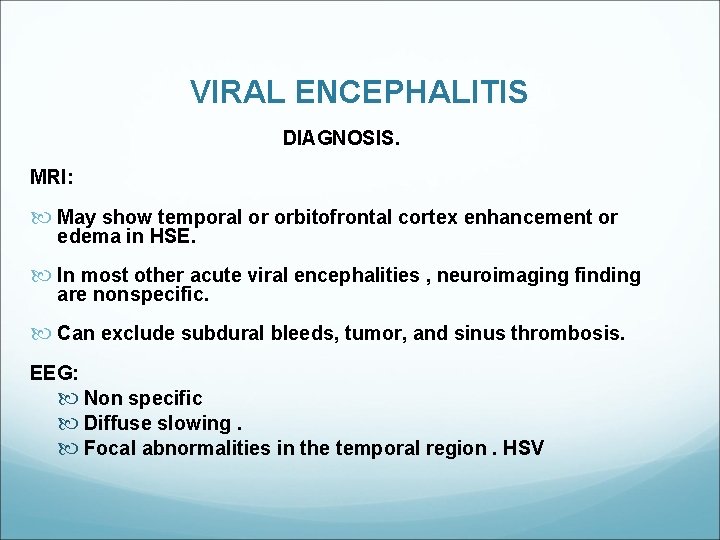
VIRAL ENCEPHALITIS DIAGNOSIS. MRI: May show temporal or orbitofrontal cortex enhancement or edema in HSE. In most other acute viral encephalities , neuroimaging finding are nonspecific. Can exclude subdural bleeds, tumor, and sinus thrombosis. EEG: Non specific Diffuse slowing. Focal abnormalities in the temporal region. HSV
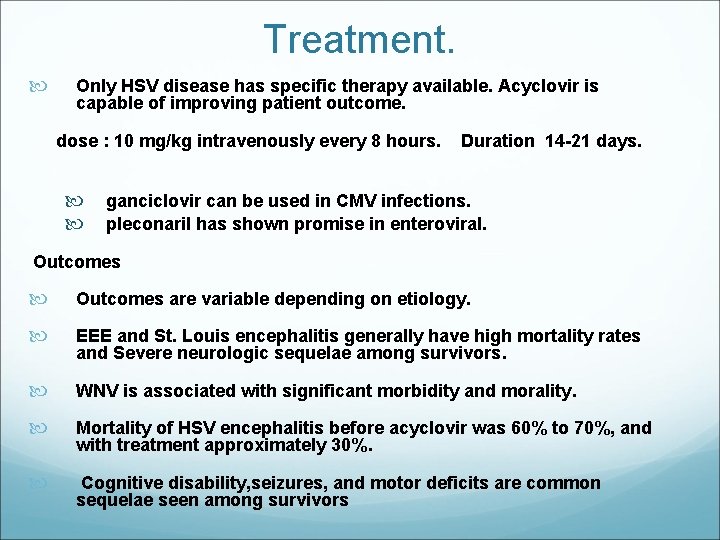
Treatment. Only HSV disease has specific therapy available. Acyclovir is capable of improving patient outcome. dose : 10 mg/kg intravenously every 8 hours. Duration 14 -21 days. ganciclovir can be used in CMV infections. pleconaril has shown promise in enteroviral. Outcomes are variable depending on etiology. EEE and St. Louis encephalitis generally have high mortality rates and Severe neurologic sequelae among survivors. WNV is associated with significant morbidity and morality. Mortality of HSV encephalitis before acyclovir was 60% to 70%, and with treatment approximately 30%. Cognitive disability, seizures, and motor deficits are common sequelae seen among survivors