
American Segmental Bridge Institute Annual Convention 2003 Load
American Segmental Bridge Institute Annual Convention, 2003 Load Rating of Segmental Concrete Bridges Consistent with LRFR Requirements Corven Engineering Inc. November, 2003

Definitions Inventory Rating: for design loads. The design load level that can safely use a bridge for an indefinite period of time. Operating Rating: for design, legal and permit loads. The absolute maximum load level to which a structure may be subjected. Takes advantage of conservatism in design.
Clearing Up A Misconception For Segmental Bridges Inventory and Operating Ratings are performed at both the strength limit state and service limit state. FDOT Manual 1995 - Section II. B. 8 “The load factor method is the required method for load rating structures, unless circumstances dictate that other methods should be used. …”
Current Issues in Rating Segmental Bridges • Existing Criteria based on AASHTO Standard Specification (LFD) and Guide Specification for Segmental Bridges. • When allowable Service stress is zero, ratings for Inventory and Operating are same – i. e. no benefit for Operating • Introduction of AASHTO LRFD & LRFR.
Load Resistance Factor Rating - LRFR • An AASHTO approved guide specification for rating all bridge types consistent with LRFD. • Uses target reliability, β, of 2. 5 for rating v. 3. 5 for design ( via e. g. γL = 1. 35 OP vs. 1. 75 DES ) • Primarily a strength limit state specification • Does not address, specifically, bridges governed by Service (e. g. zero tension) = Segmental Bridges.
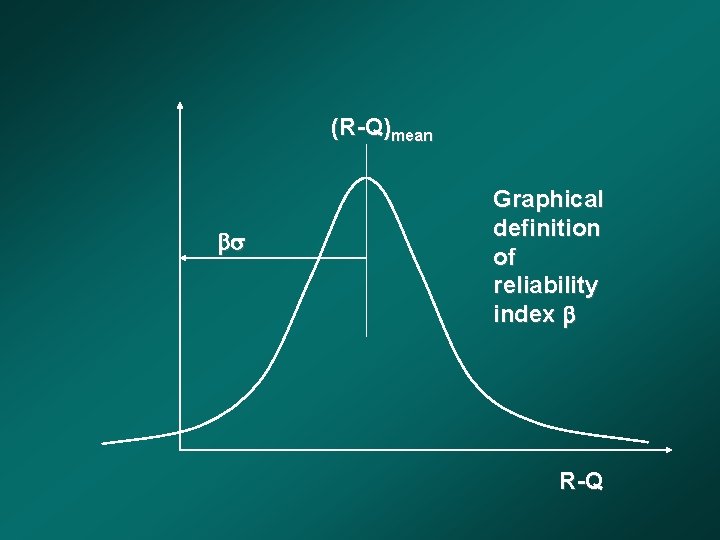
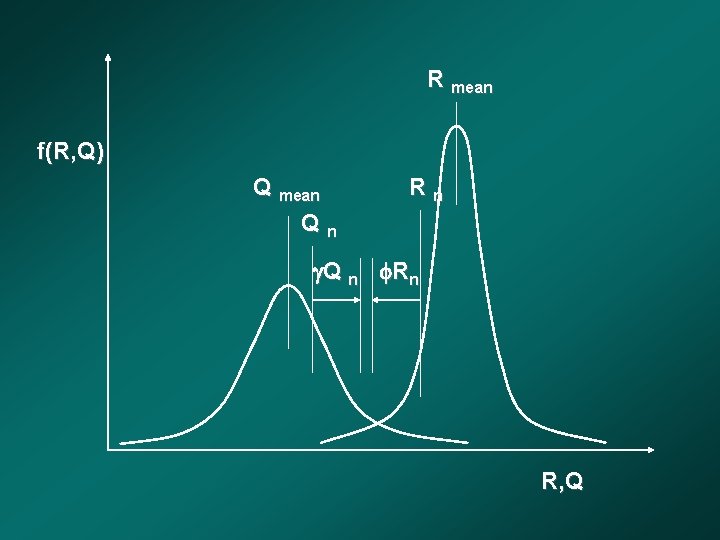
(R-Q)mean Graphical definition of reliability index R-Q
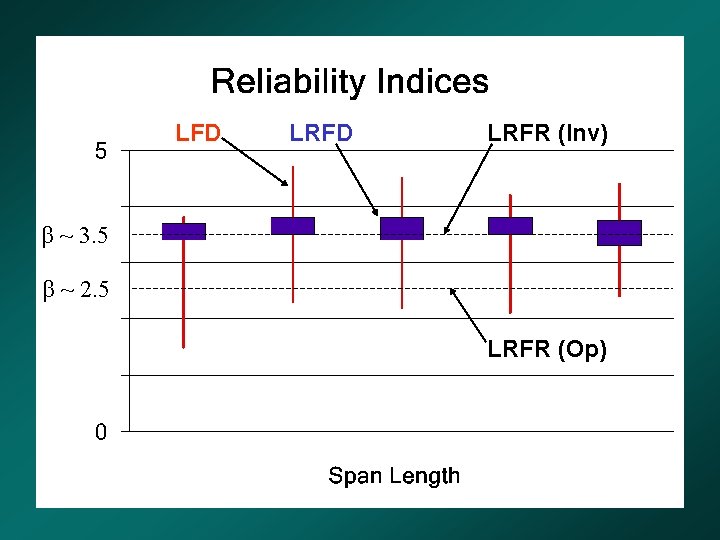
LFD LRFR (Inv) β ~ 3. 5 β ~ 2. 5 LRFR (Op)
Goal To develop Load Rating Guidelines that: • Are consistent with LRFR. • Address Segmental Bridges.
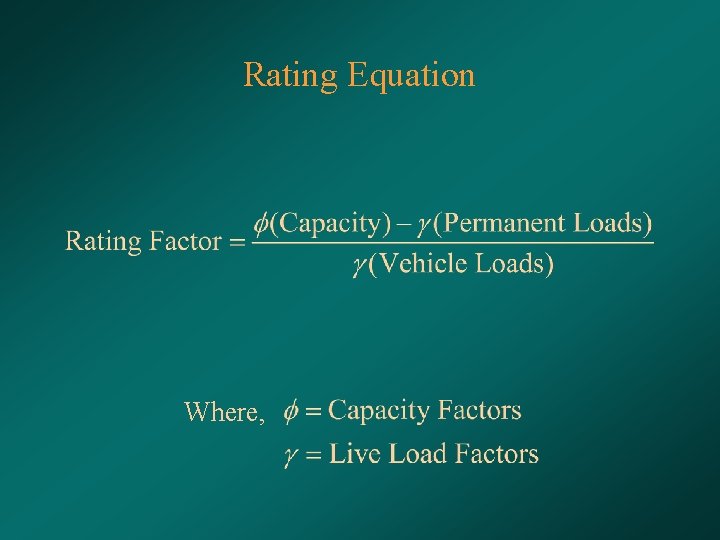
Rating Equation Where,
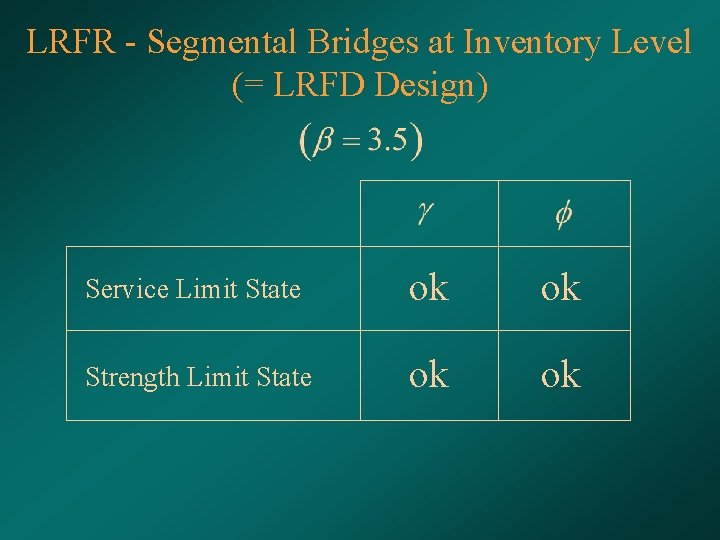
LRFR - Segmental Bridges at Inventory Level (= LRFD Design) Service Limit State ok ok Strength Limit State ok ok
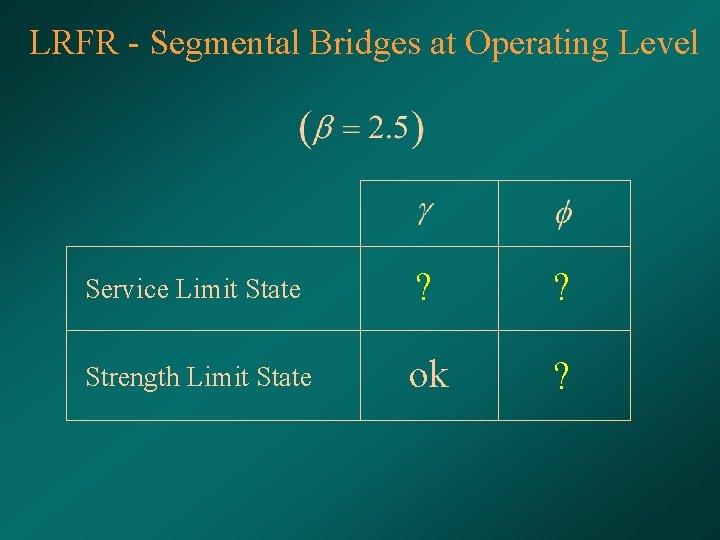
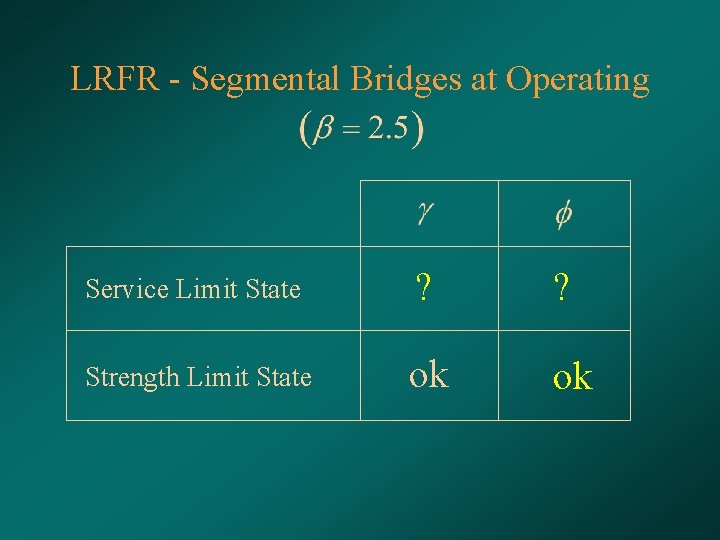
LRFR - Segmental Bridges at Operating Level Service Limit State ? ? Strength Limit State ok ?

Capacity Factors – Strength Limit State
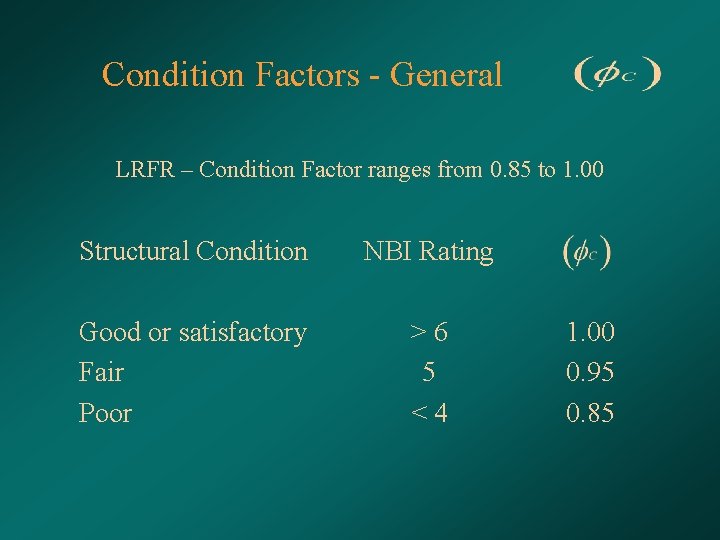
Condition Factors - General LRFR – Condition Factor ranges from 0. 85 to 1. 00 Structural Condition NBI Rating Good or satisfactory Fair Poor >6 5 <4 1. 00 0. 95 0. 85
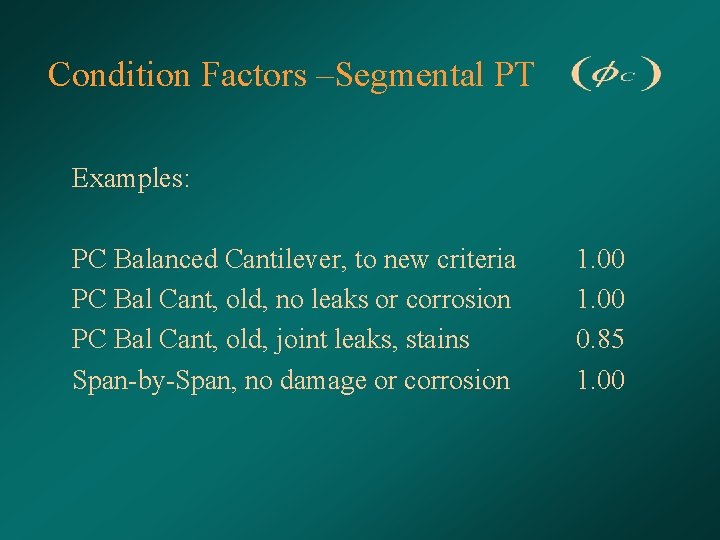
Condition Factors –Segmental PT Examples: PC Balanced Cantilever, to new criteria PC Bal Cant, old, no leaks or corrosion PC Bal Cant, old, joint leaks, stains Span-by-Span, no damage or corrosion 1. 00 0. 85 1. 00
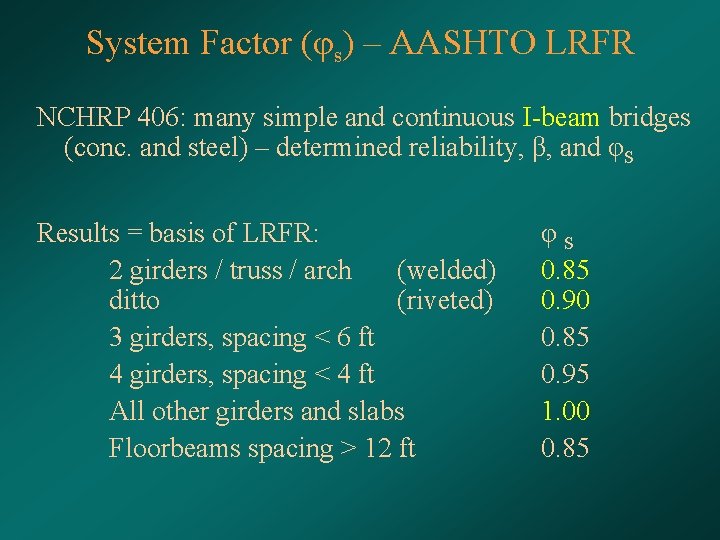
System Factor (φs) – AASHTO LRFR NCHRP 406: many simple and continuous I-beam bridges (conc. and steel) – determined reliability, β, and φS Results = basis of LRFR: 2 girders / truss / arch (welded) ditto (riveted) 3 girders, spacing < 6 ft 4 girders, spacing < 4 ft All other girders and slabs Floorbeams spacing > 12 ft φS 0. 85 0. 90 0. 85 0. 95 1. 00 0. 85

System Factor (φs) – AASHTO LRFR φs =. 85 2 Girders, Truss or Arch
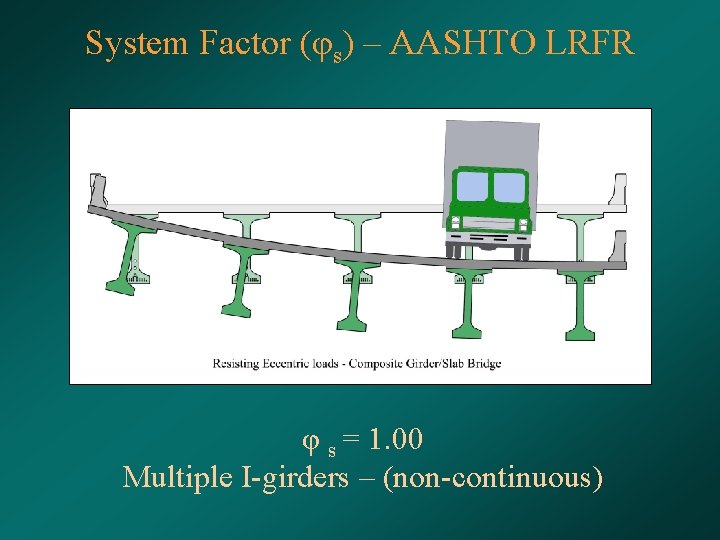
System Factor (φs) – AASHTO LRFR φ s = 1. 00 Multiple I-girders – (non-continuous)
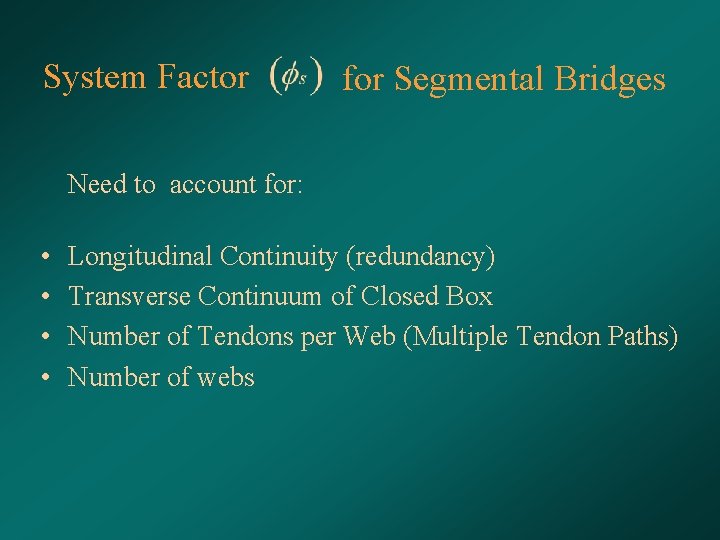
System Factor for Segmental Bridges Need to account for: • • Longitudinal Continuity (redundancy) Transverse Continuum of Closed Box Number of Tendons per Web (Multiple Tendon Paths) Number of webs
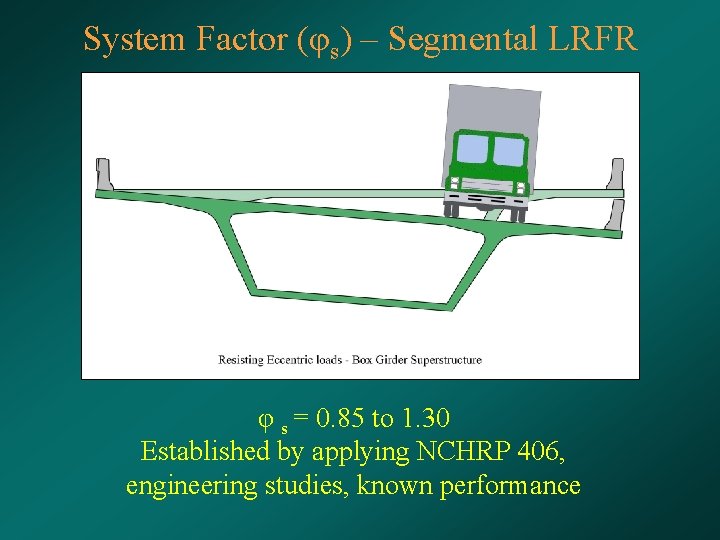
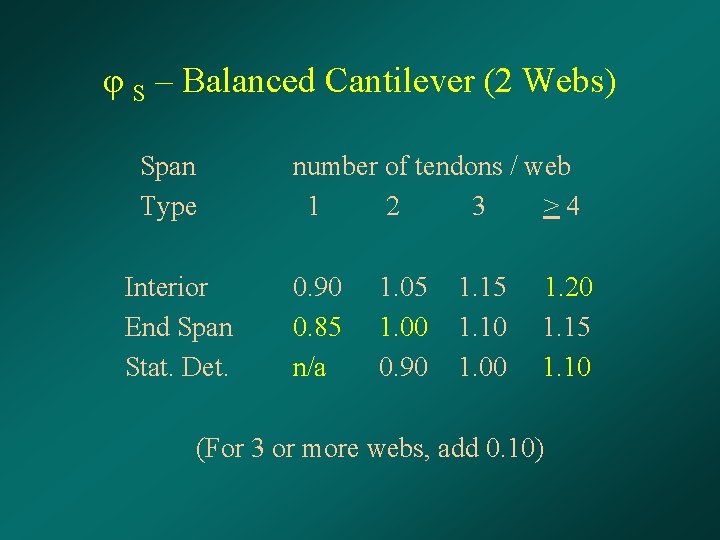
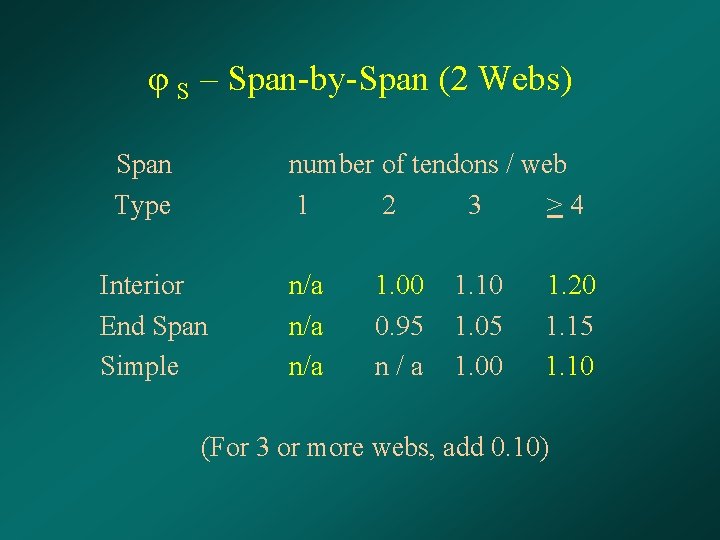
System Factor (φs) – Segmental LRFR φ s = 0. 85 to 1. 30 Established by applying NCHRP 406, engineering studies, known performance
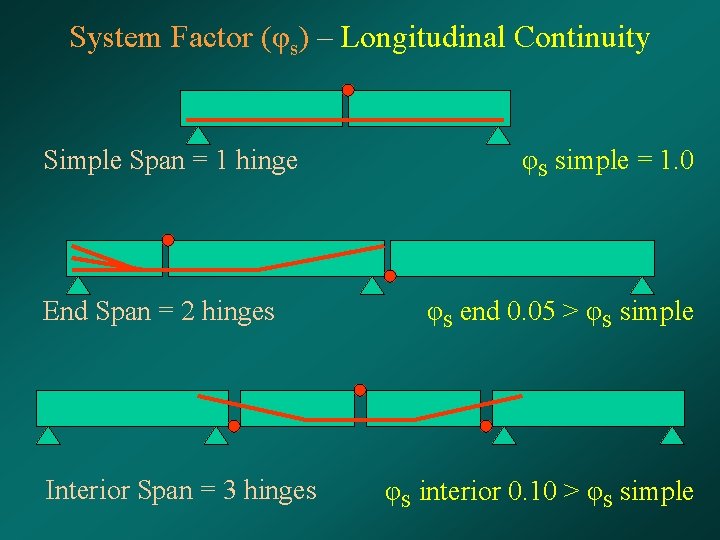
System Factor (φs) – Longitudinal Continuity Simple Span = 1 hinge End Span = 2 hinges Interior Span = 3 hinges φS simple = 1. 0 φS end 0. 05 > φS simple φS interior 0. 10 > φS simple
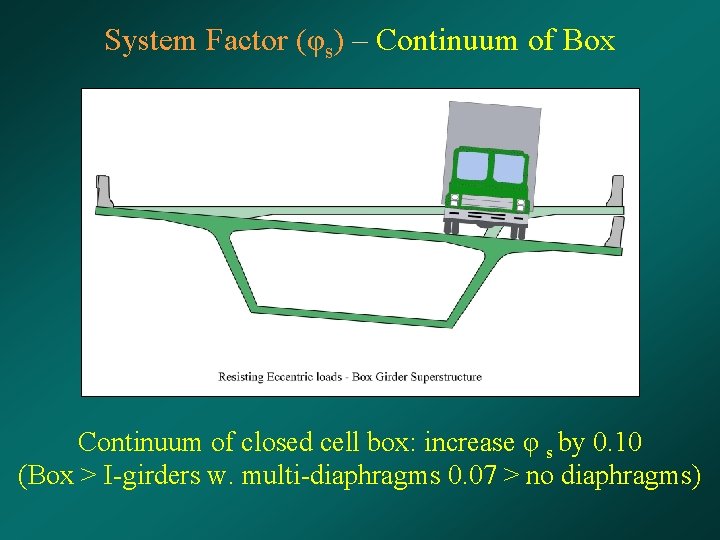
System Factor (φs) – Continuum of Box Continuum of closed cell box: increase φ s by 0. 10 (Box > I-girders w. multi-diaphragms 0. 07 > no diaphragms)
System Factor (φs) – No. of Tendons / Web (MTP) Multiple load-paths considered in AASHTO LRFR as • number of girders per deck • multiple rivets or bolts versus single welds • LRFR does not address PT segmental bridges FDOT “New Directions” requires accounting for “Multiple Post-Tensioning Tendon Paths” (MTP) φS “pivotal values” established from case history … (φS improves by 0. 10 going from 2 to 4 tendons / web)
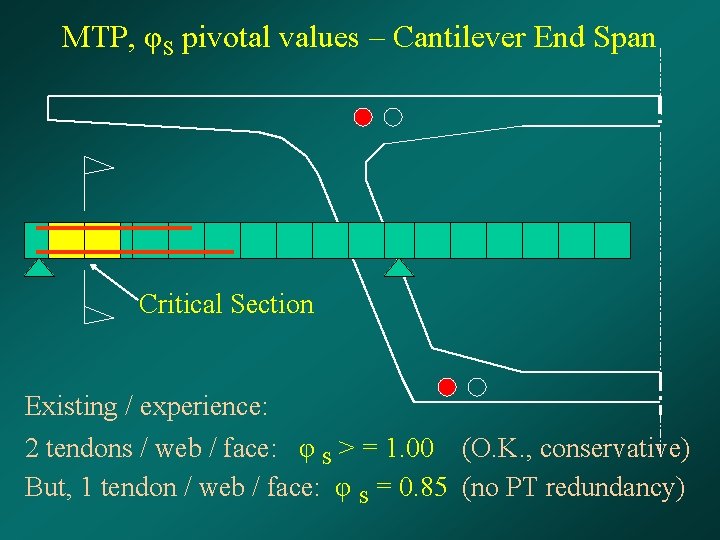
MTP, φS pivotal values – Cantilever End Span Critical Section Existing / experience: 2 tendons / web / face: φ S > = 1. 00 (O. K. , conservative) But, 1 tendon / web / face: φ S = 0. 85 (no PT redundancy)
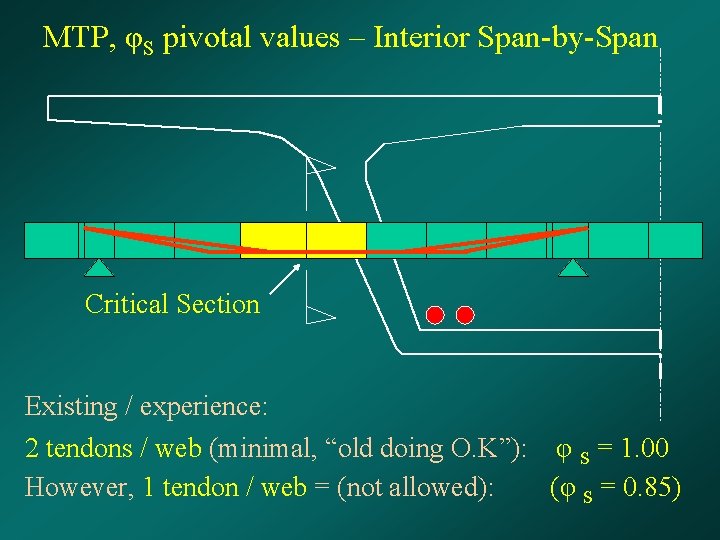
MTP, φS pivotal values – Interior Span-by-Span Critical Section Existing / experience: 2 tendons / web (minimal, “old doing O. K”): φ S = 1. 00 However, 1 tendon / web = (not allowed): (φ S = 0. 85)
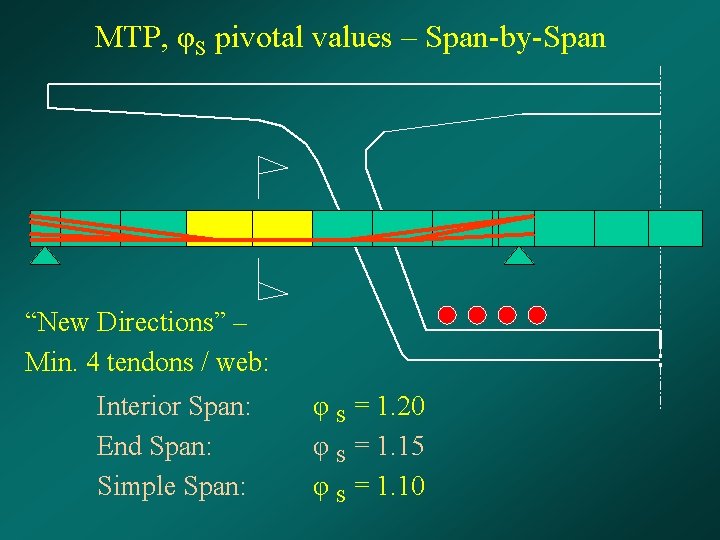
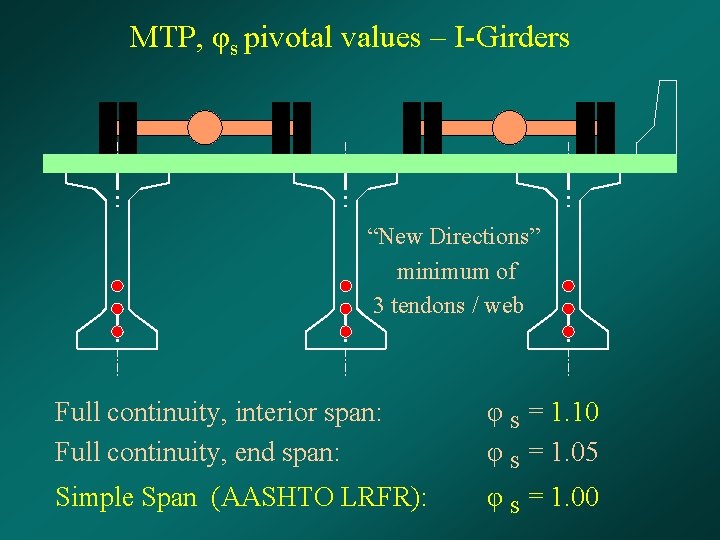
MTP, φS pivotal values – Span-by-Span “New Directions” – Min. 4 tendons / web: Interior Span: End Span: Simple Span: φ S = 1. 20 φ S = 1. 15 φ S = 1. 10
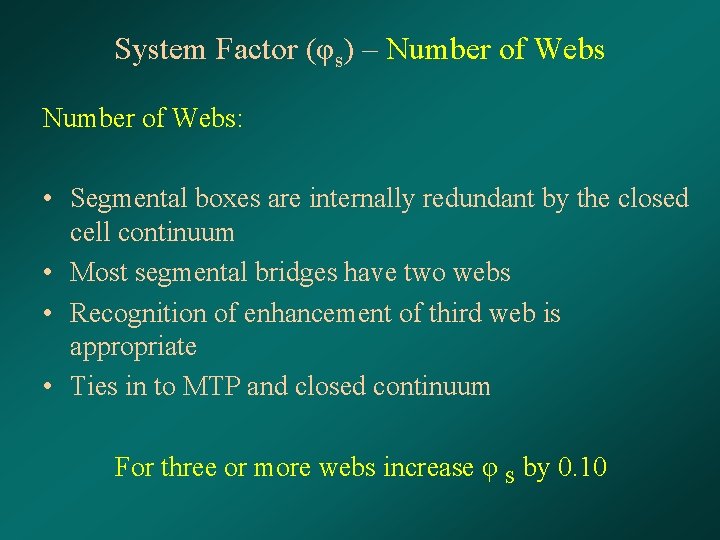
System Factor (φs) – Number of Webs: • Segmental boxes are internally redundant by the closed cell continuum • Most segmental bridges have two webs • Recognition of enhancement of third web is appropriate • Ties in to MTP and closed continuum For three or more webs increase φ S by 0. 10
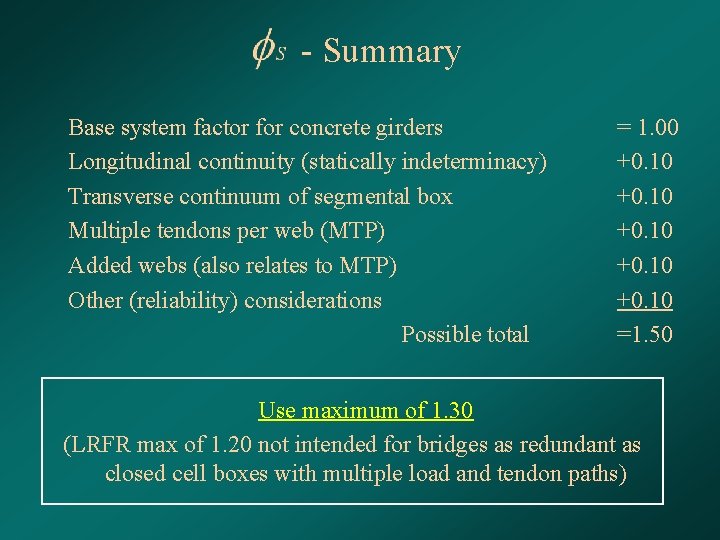
- Summary Base system factor for concrete girders Longitudinal continuity (statically indeterminacy) Transverse continuum of segmental box Multiple tendons per web (MTP) Added webs (also relates to MTP) Other (reliability) considerations Possible total = 1. 00 +0. 10 =1. 50 Use maximum of 1. 30 (LRFR max of 1. 20 not intended for bridges as redundant as closed cell boxes with multiple load and tendon paths)
φ S – Balanced Cantilever (2 Webs) Span Type Interior End Span Stat. Det. number of tendons / web 1 2 3 >4 0. 90 0. 85 n/a 1. 05 1. 00 0. 90 1. 15 1. 10 1. 00 1. 20 1. 15 1. 10 (For 3 or more webs, add 0. 10)
φ S – Span-by-Span (2 Webs) Span Type number of tendons / web 1 2 3 >4 Interior End Span Simple n/a n/a 1. 00 0. 95 n/a 1. 10 1. 05 1. 00 1. 20 1. 15 1. 10 (For 3 or more webs, add 0. 10)

& Other Effects Preceding values were for longitudinal flexure. Longitudinal Shear and Torsion Transverse Flexure
LRFR - Segmental Bridges at Operating Service Limit State ? ? Strength Limit State ok ok
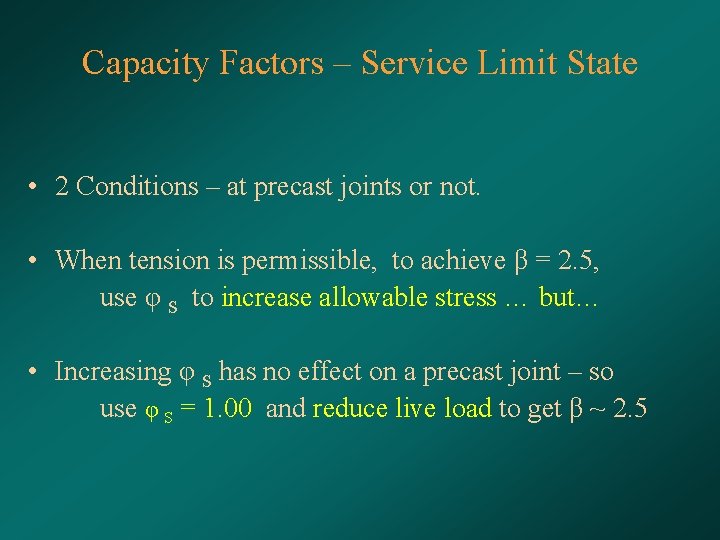
Capacity Factors – Service Limit State • 2 Conditions – at precast joints or not. • When tension is permissible, to achieve β = 2. 5, use φ S to increase allowable stress … but… • Increasing φ S has no effect on a precast joint – so use φ S = 1. 00 and reduce live load to get β ~ 2. 5
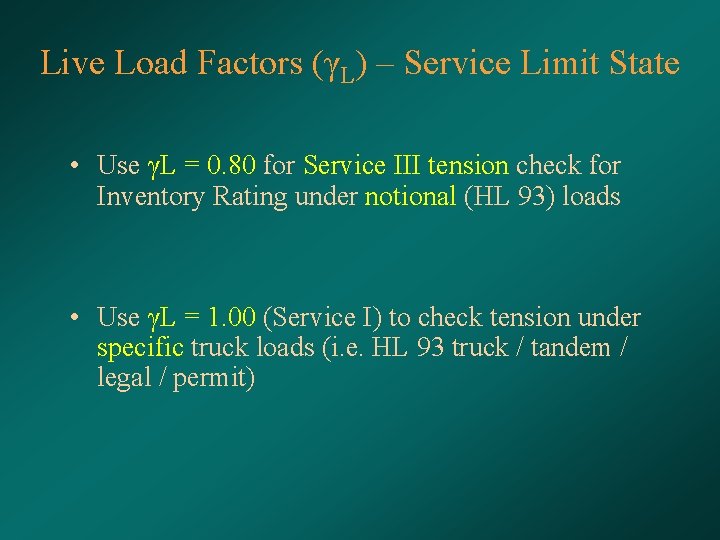
Live Load Factors (γL) – Service Limit State • Use γL = 0. 80 for Service III tension check for Inventory Rating under notional (HL 93) loads • Use γL = 1. 00 (Service I) to check tension under specific truck loads (i. e. HL 93 truck / tandem / legal / permit)
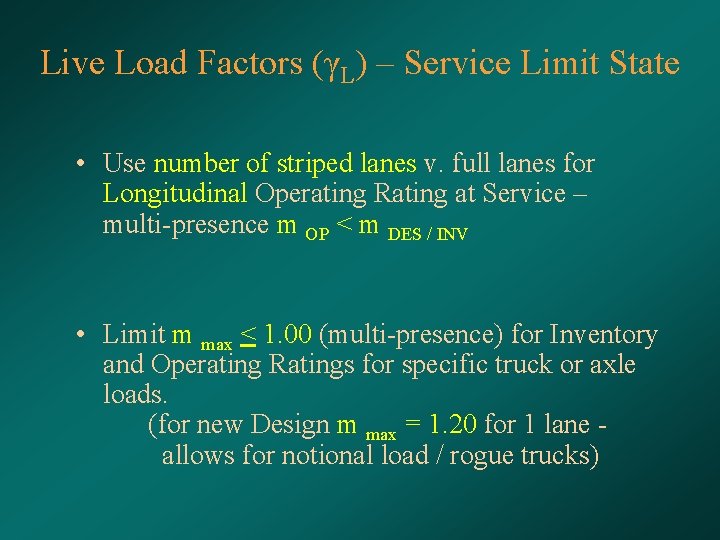
Live Load Factors (γL) – Service Limit State • Use number of striped lanes v. full lanes for Longitudinal Operating Rating at Service – multi-presence m OP < m DES / INV • Limit m max < 1. 00 (multi-presence) for Inventory and Operating Ratings for specific truck or axle loads. (for new Design m max = 1. 20 for 1 lane allows for notional load / rogue trucks)
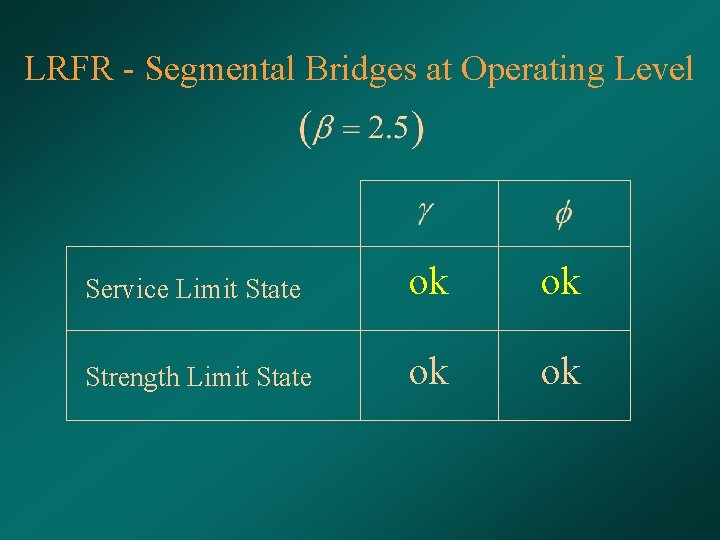
LRFR - Segmental Bridges at Operating Level Service Limit State ok ok Strength Limit State ok ok

Load Combinations at Strength and Service Limit States
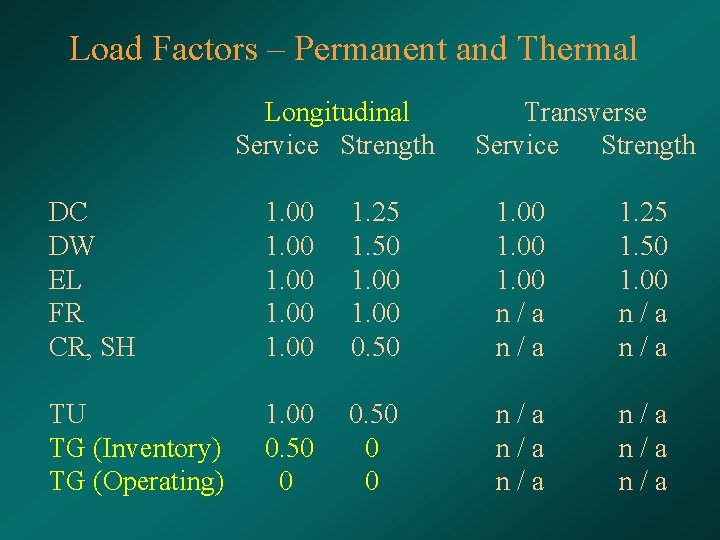
Load Factors – Permanent and Thermal Longitudinal Service Strength Transverse Service Strength DC DW EL FR CR, SH 1. 00 1. 25 1. 50 1. 00 0. 50 1. 00 n/a 1. 25 1. 50 1. 00 n/a TU TG (Inventory) TG (Operating) 1. 00 0. 50 0 0 n/a n/a n/a
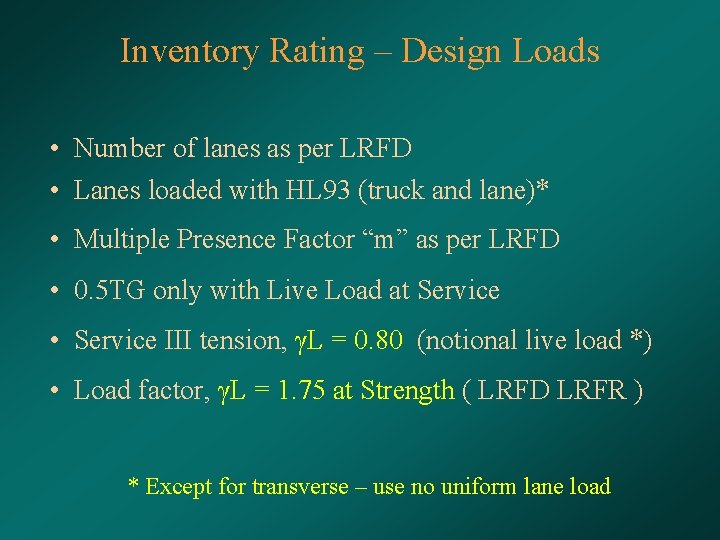
Inventory Rating – Design Loads • Number of lanes as per LRFD • Lanes loaded with HL 93 (truck and lane)* • Multiple Presence Factor “m” as per LRFD • 0. 5 TG only with Live Load at Service • Service III tension, γL = 0. 80 (notional live load *) • Load factor, γL = 1. 75 at Strength ( LRFD LRFR ) * Except for transverse – use no uniform lane load
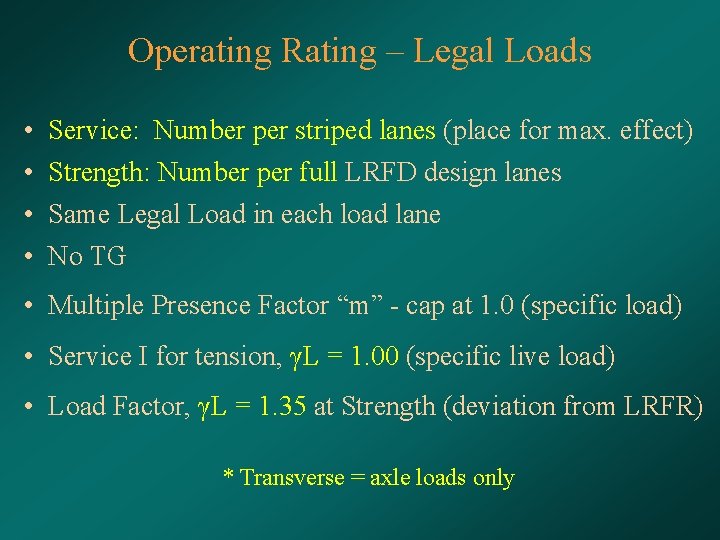
Operating Rating – Legal Loads • • Service: Number per striped lanes (place for max. effect) Strength: Number per full LRFD design lanes Same Legal Load in each load lane No TG • Multiple Presence Factor “m” - cap at 1. 0 (specific load) • Service I for tension, γL = 1. 00 (specific live load) • Load Factor, γL = 1. 35 at Strength (deviation from LRFR) * Transverse = axle loads only
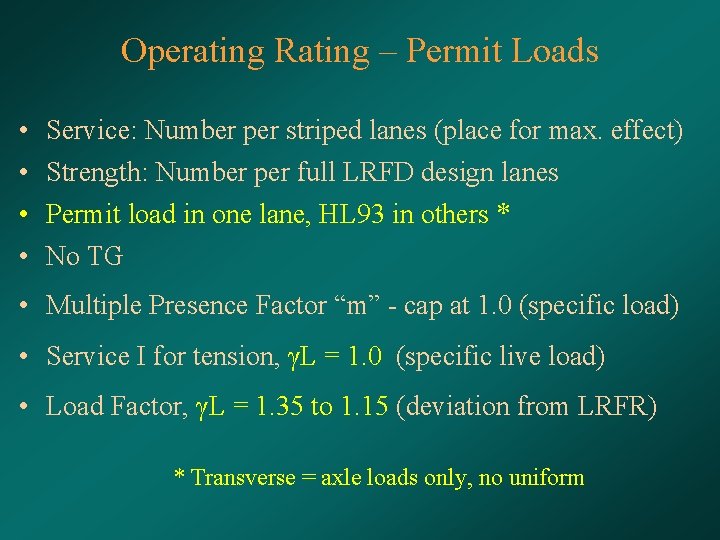
Operating Rating – Permit Loads • • Service: Number per striped lanes (place for max. effect) Strength: Number per full LRFD design lanes Permit load in one lane, HL 93 in others * No TG • Multiple Presence Factor “m” - cap at 1. 0 (specific load) • Service I for tension, γL = 1. 0 (specific live load) • Load Factor, γL = 1. 35 to 1. 15 (deviation from LRFR) * Transverse = axle loads only, no uniform

Allowable Stresses
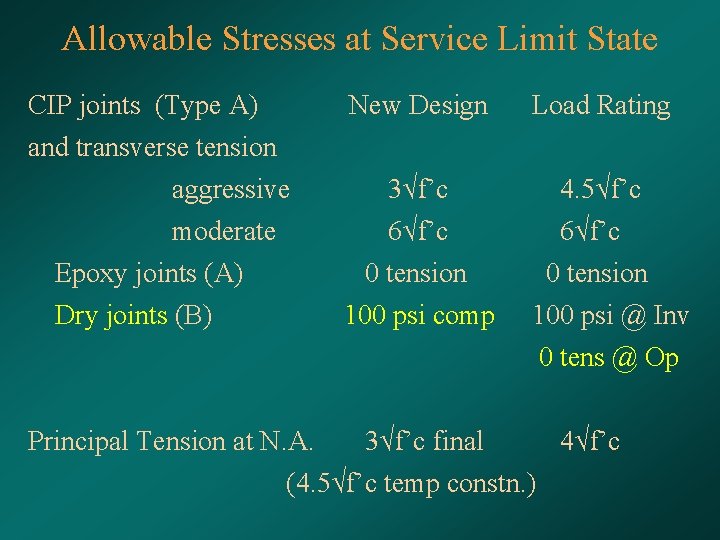
Allowable Stresses at Service Limit State CIP joints (Type A) New Design Load Rating 3√f’c 6√f’c 0 tension 100 psi comp 4. 5√f’c 6√f’c 0 tension 100 psi @ Inv and transverse tension aggressive moderate Epoxy joints (A) Dry joints (B) 0 tens @ Op Principal Tension at N. A. 3√f’c final 4√f’c (4. 5√f’c temp constn. )

Florida Department of Transportation Selected LRFR Ratings of Two FDOT Segmental Bridges July 24, 2003
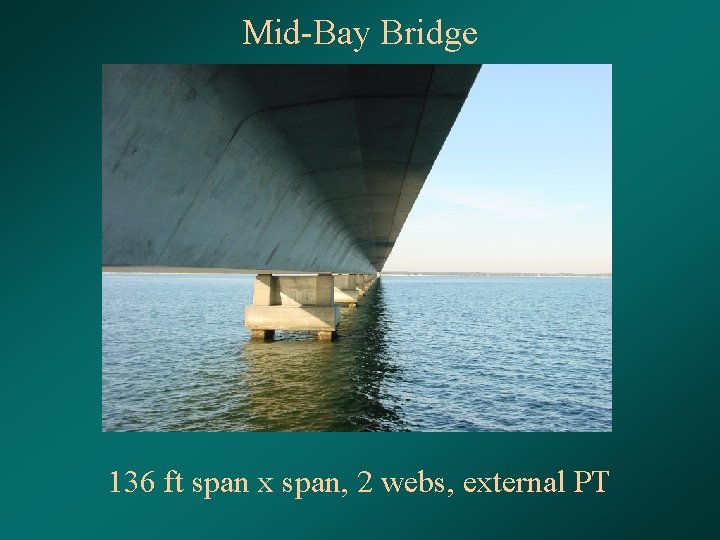
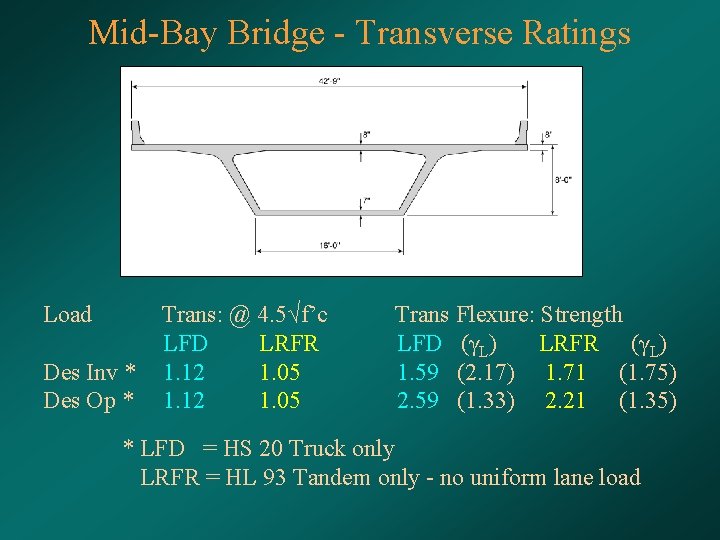
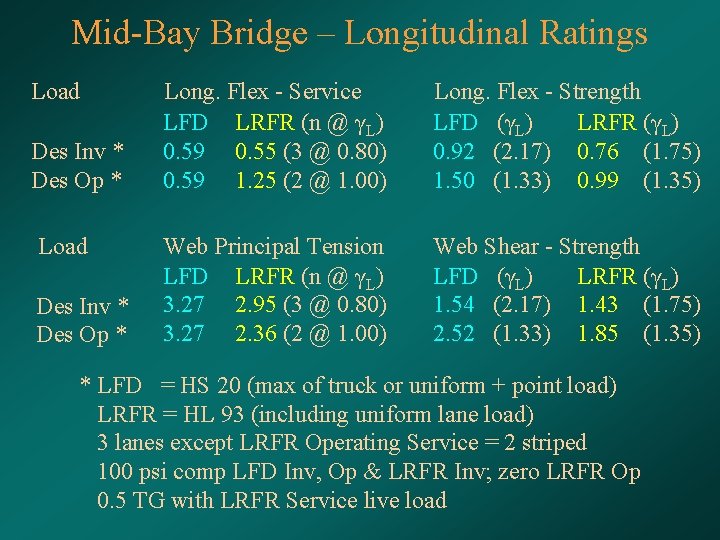
Mid-Bay Bridge 136 ft span x span, 2 webs, external PT
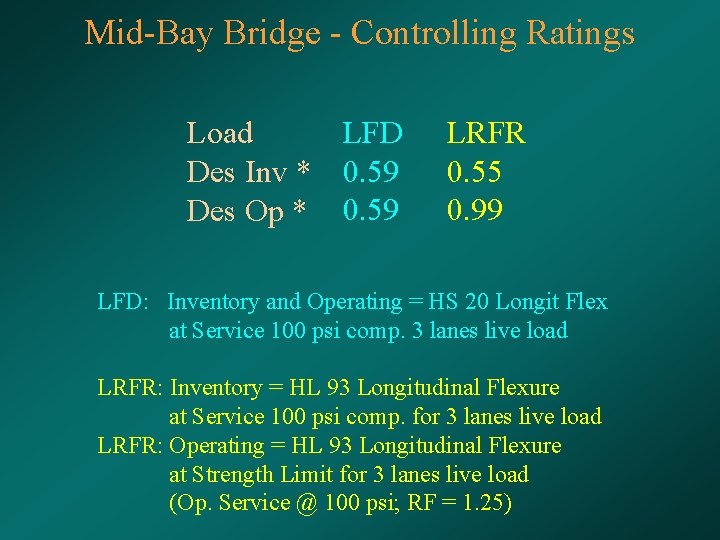
Mid-Bay Bridge - Controlling Ratings Load LFD Des Inv * 0. 59 Des Op * 0. 59 LRFR 0. 55 0. 99 LFD: Inventory and Operating = HS 20 Longit Flex at Service 100 psi comp. 3 lanes live load LRFR: Inventory = HL 93 Longitudinal Flexure at Service 100 psi comp. for 3 lanes live load LRFR: Operating = HL 93 Longitudinal Flexure at Strength Limit for 3 lanes live load (Op. Service @ 100 psi; RF = 1. 25)
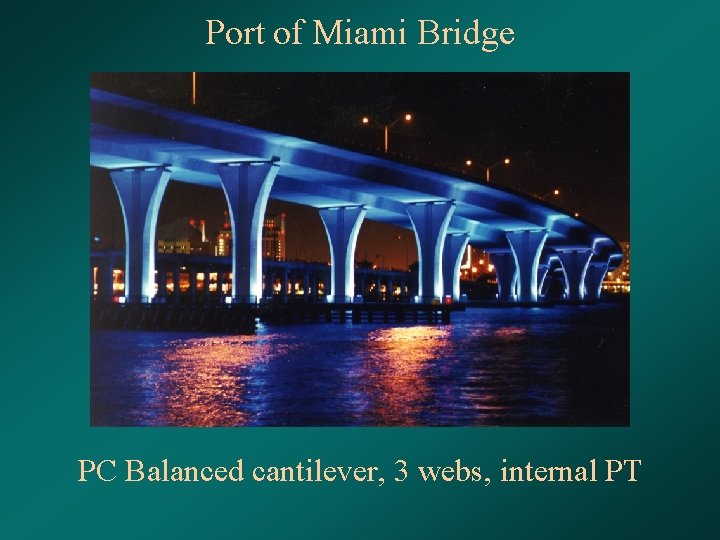
Port of Miami Bridge PC Balanced cantilever, 3 webs, internal PT
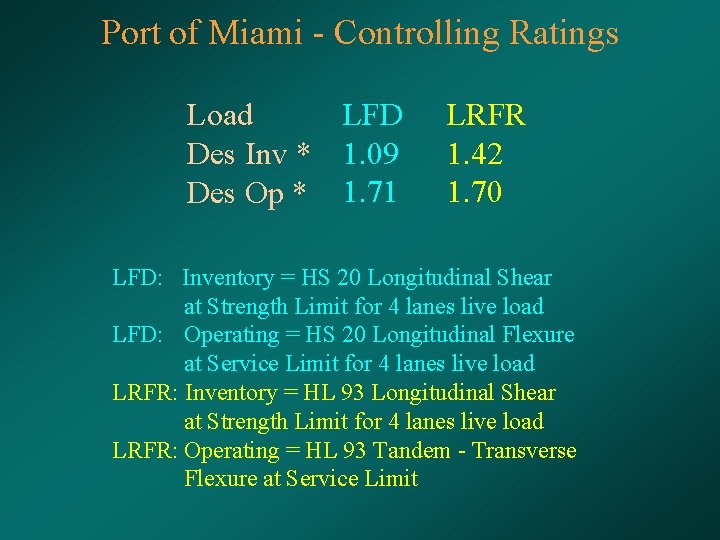
Port of Miami - Controlling Ratings Load LFD Des Inv * 1. 09 Des Op * 1. 71 LRFR 1. 42 1. 70 LFD: Inventory = HS 20 Longitudinal Shear at Strength Limit for 4 lanes live load LFD: Operating = HS 20 Longitudinal Flexure at Service Limit for 4 lanes live load LRFR: Inventory = HL 93 Longitudinal Shear at Strength Limit for 4 lanes live load LRFR: Operating = HL 93 Tandem - Transverse Flexure at Service Limit

Acknowledgements Florida Department of Transportation Key Participants • FDOT – William Nickas, Larry Sessions • Corven Engineering – John Corven, Alan Moreton • Expert Assistance – Dr. Dennis Mertz
R mean f(R, Q) Q mean Qn Rn Q n Rn R, Q
MTP, φs pivotal values – I-Girders “New Directions” minimum of 3 tendons / web Full continuity, interior span: Full continuity, end span: φ S = 1. 10 φ S = 1. 05 Simple Span (AASHTO LRFR): φ S = 1. 00
Mid-Bay Bridge - Transverse Ratings Load Des Inv * Des Op * Trans: @ 4. 5√f’c LFD LRFR 1. 12 1. 05 Trans Flexure: Strength LFD (γL) LRFR (γL) 1. 59 (2. 17) 1. 71 (1. 75) 2. 59 (1. 33) 2. 21 (1. 35) * LFD = HS 20 Truck only LRFR = HL 93 Tandem only - no uniform lane load
Mid-Bay Bridge – Longitudinal Ratings Load Des Inv * Des Op * Long. Flex - Service LFD LRFR (n @ γL) 0. 59 0. 55 (3 @ 0. 80) 0. 59 1. 25 (2 @ 1. 00) Long. Flex - Strength LFD (γL) LRFR (γL) 0. 92 (2. 17) 0. 76 (1. 75) 1. 50 (1. 33) 0. 99 (1. 35) Web Principal Tension LFD LRFR (n @ γL) 3. 27 2. 95 (3 @ 0. 80) 3. 27 2. 36 (2 @ 1. 00) Web Shear - Strength LFD (γL) LRFR (γL) 1. 54 (2. 17) 1. 43 (1. 75) 2. 52 (1. 33) 1. 85 (1. 35) * LFD = HS 20 (max of truck or uniform + point load) LRFR = HL 93 (including uniform lane load) 3 lanes except LRFR Operating Service = 2 striped 100 psi comp LFD Inv, Op & LRFR Inv; zero LRFR Op 0. 5 TG with LRFR Service live load
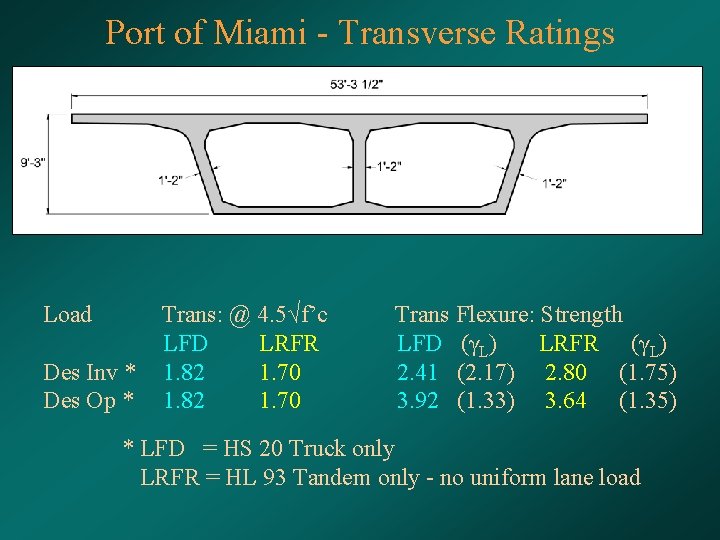
Port of Miami - Transverse Ratings Load Des Inv * Des Op * Trans: @ 4. 5√f’c LFD LRFR 1. 82 1. 70 Trans Flexure: Strength LFD (γL) LRFR (γL) 2. 41 (2. 17) 2. 80 (1. 75) 3. 92 (1. 33) 3. 64 (1. 35) * LFD = HS 20 Truck only LRFR = HL 93 Tandem only - no uniform lane load
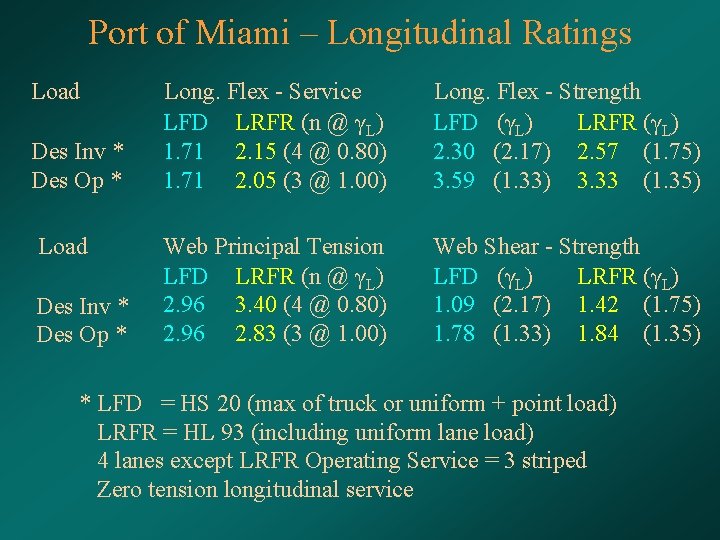
Port of Miami – Longitudinal Ratings Load Des Inv * Des Op * Long. Flex - Service LFD LRFR (n @ γL) 1. 71 2. 15 (4 @ 0. 80) 1. 71 2. 05 (3 @ 1. 00) Long. Flex - Strength LFD (γL) LRFR (γL) 2. 30 (2. 17) 2. 57 (1. 75) 3. 59 (1. 33) 3. 33 (1. 35) Web Principal Tension LFD LRFR (n @ γL) 2. 96 3. 40 (4 @ 0. 80) 2. 96 2. 83 (3 @ 1. 00) Web Shear - Strength LFD (γL) LRFR (γL) 1. 09 (2. 17) 1. 42 (1. 75) 1. 78 (1. 33) 1. 84 (1. 35) * LFD = HS 20 (max of truck or uniform + point load) LRFR = HL 93 (including uniform lane load) 4 lanes except LRFR Operating Service = 3 striped Zero tension longitudinal service

Posting Avoidance
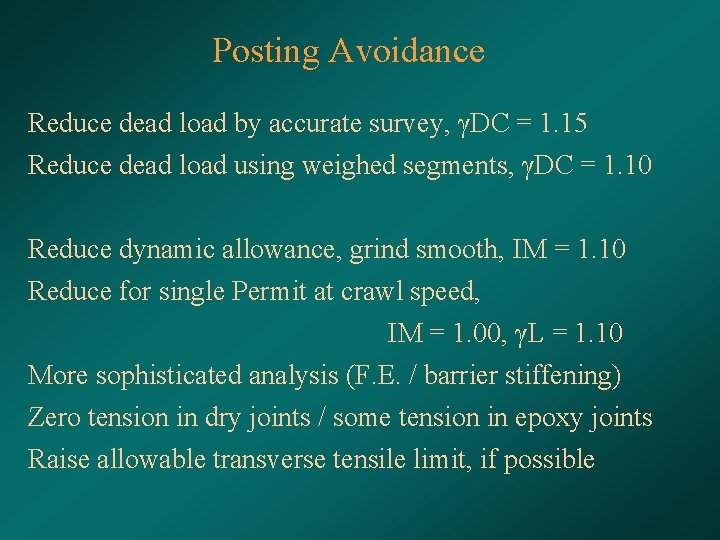
Posting Avoidance Reduce dead load by accurate survey, γDC = 1. 15 Reduce dead load using weighed segments, γDC = 1. 10 Reduce dynamic allowance, grind smooth, IM = 1. 10 Reduce for single Permit at crawl speed, IM = 1. 00, γL = 1. 10 More sophisticated analysis (F. E. / barrier stiffening) Zero tension in dry joints / some tension in epoxy joints Raise allowable transverse tensile limit, if possible
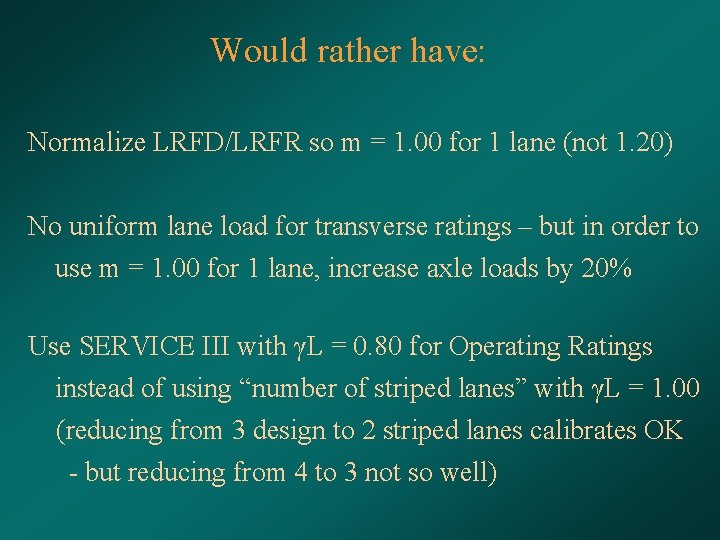
Would rather have: Normalize LRFD/LRFR so m = 1. 00 for 1 lane (not 1. 20) No uniform lane load for transverse ratings – but in order to use m = 1. 00 for 1 lane, increase axle loads by 20% Use SERVICE III with γL = 0. 80 for Operating Ratings instead of using “number of striped lanes” with γL = 1. 00 (reducing from 3 design to 2 striped lanes calibrates OK - but reducing from 4 to 3 not so well)
- Slides: 57