Chapter 4 Alkynes Organic chemistry sh javanshir n
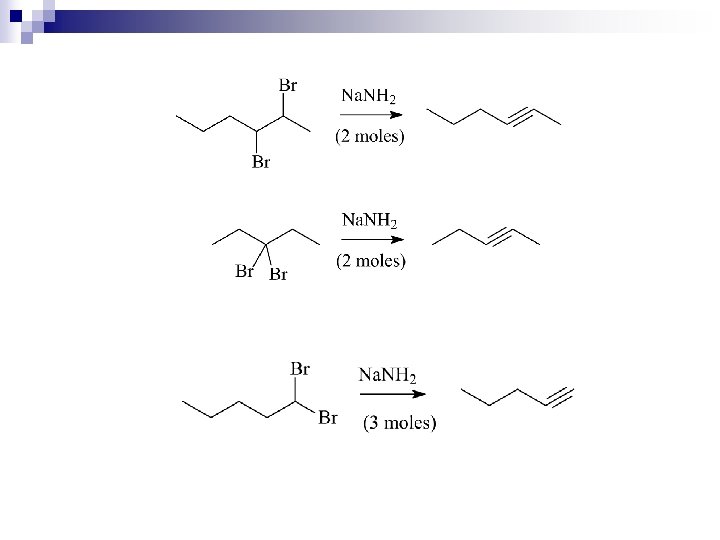
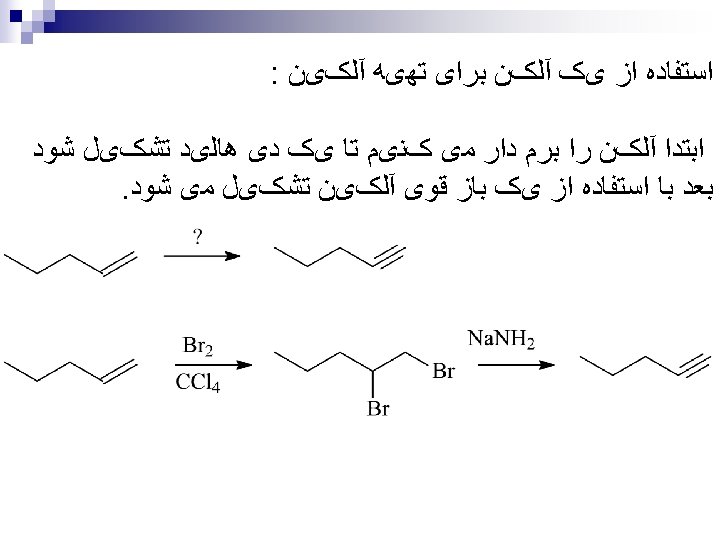
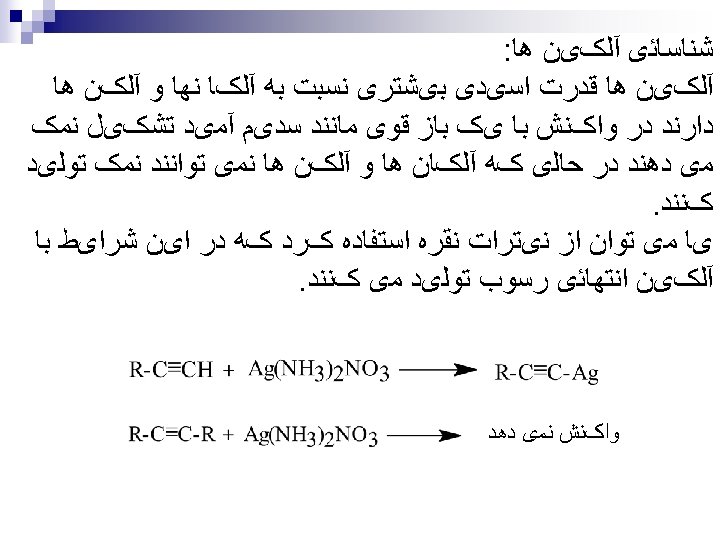
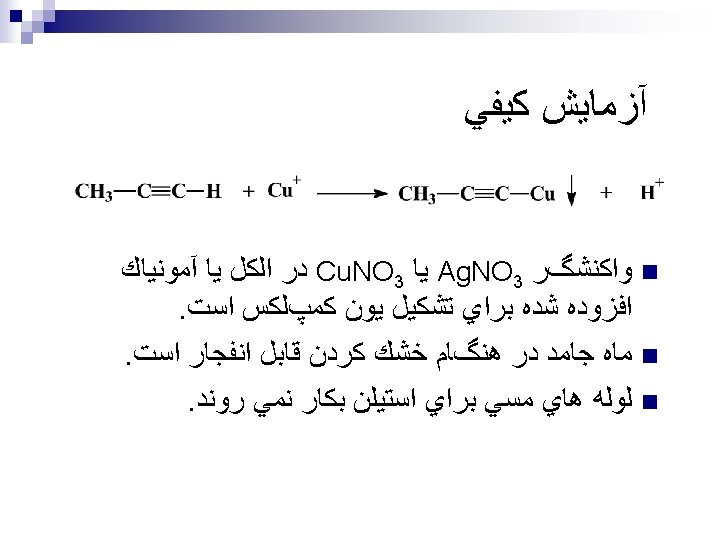
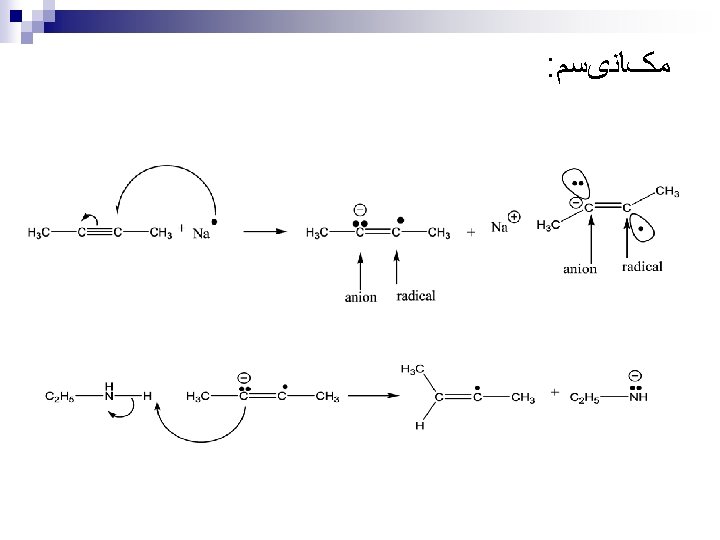
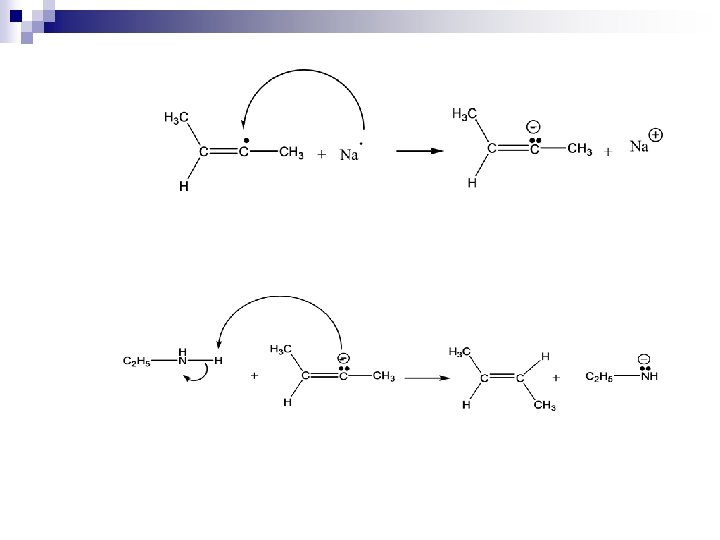
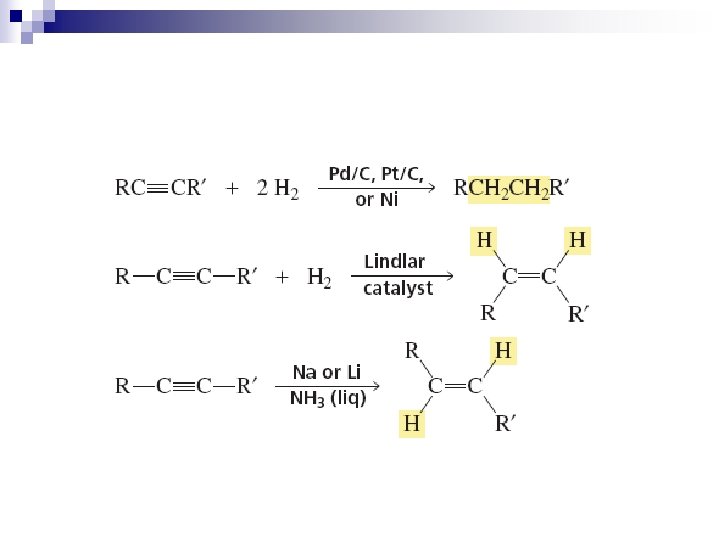
- Slides: 82
Chapter 4 Alkynes Organic chemistry sh. javanshir
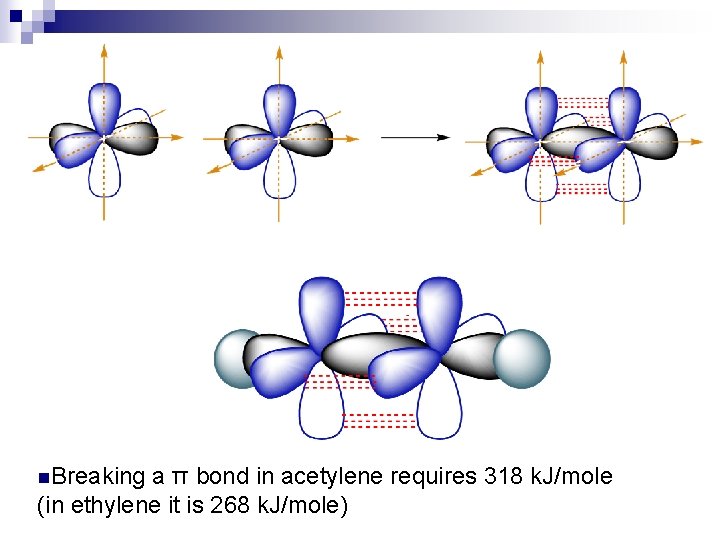
n. Breaking a π bond in acetylene requires 318 k. J/mole (in ethylene it is 268 k. J/mole)
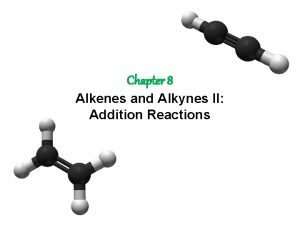
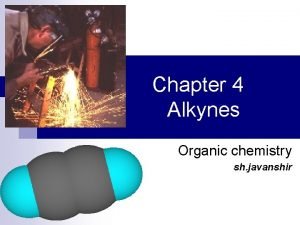
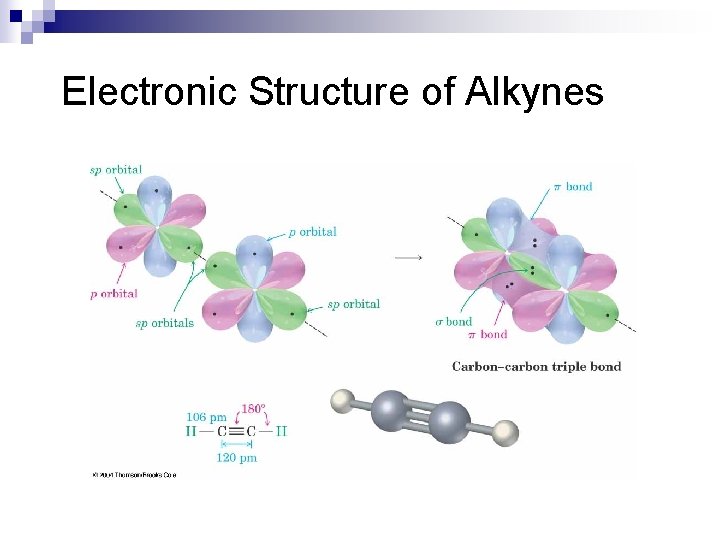
Electronic Structure of Alkynes
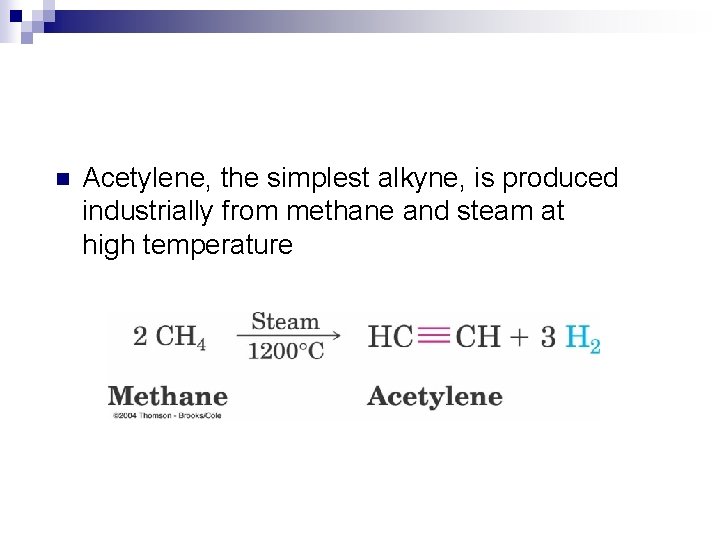
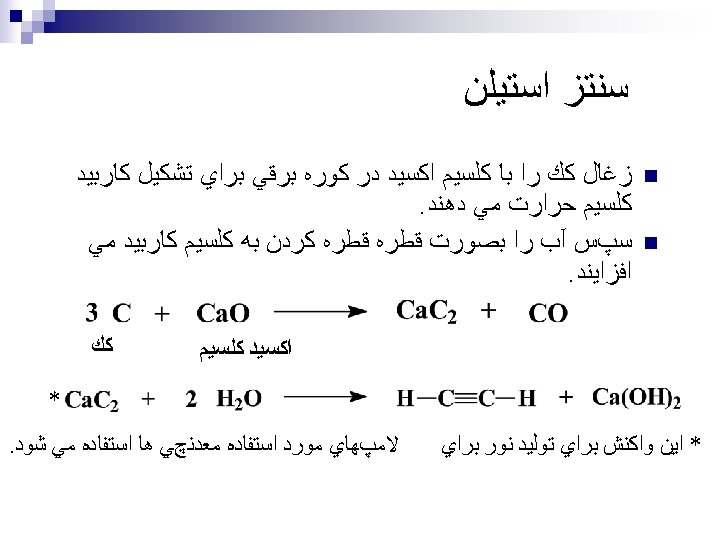
n Acetylene, the simplest alkyne, is produced industrially from methane and steam at high temperature
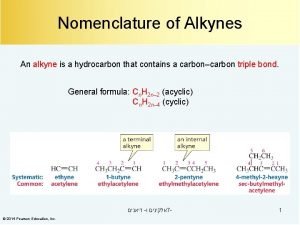
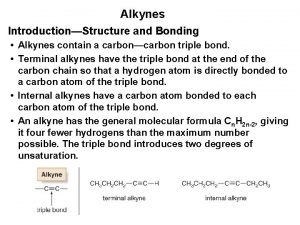
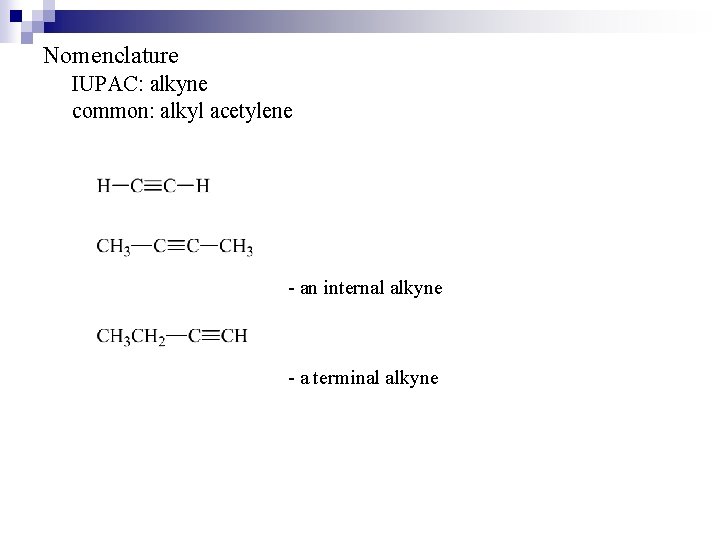
Nomenclature IUPAC: alkyne common: alkyl acetylene - an internal alkyne - a terminal alkyne
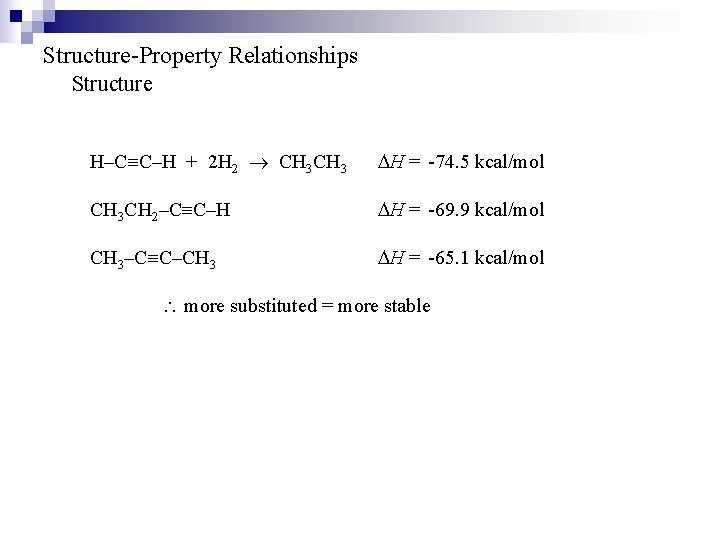
Structure-Property Relationships Structure H–C C–H + 2 H 2 CH 3 DH = -74. 5 kcal/mol CH 3 CH 2–C C–H DH = -69. 9 kcal/mol CH 3–C C–CH 3 DH = -65. 1 kcal/mol more substituted = more stable
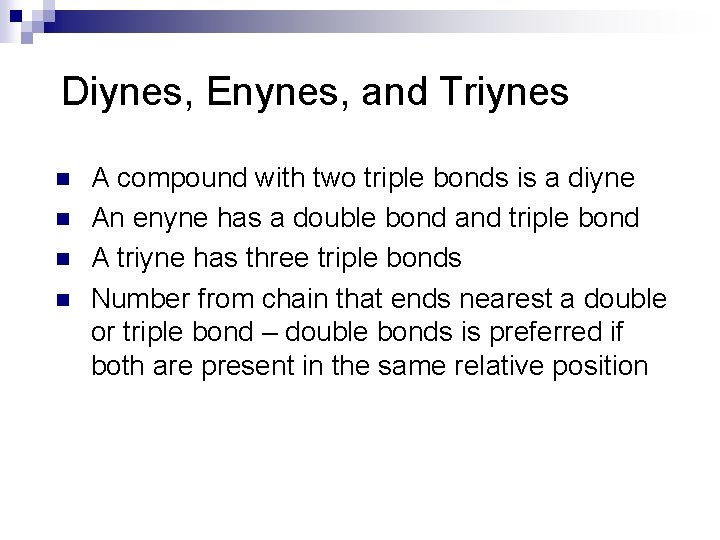
Diynes, Enynes, and Triynes n n A compound with two triple bonds is a diyne An enyne has a double bond and triple bond A triyne has three triple bonds Number from chain that ends nearest a double or triple bond – double bonds is preferred if both are present in the same relative position
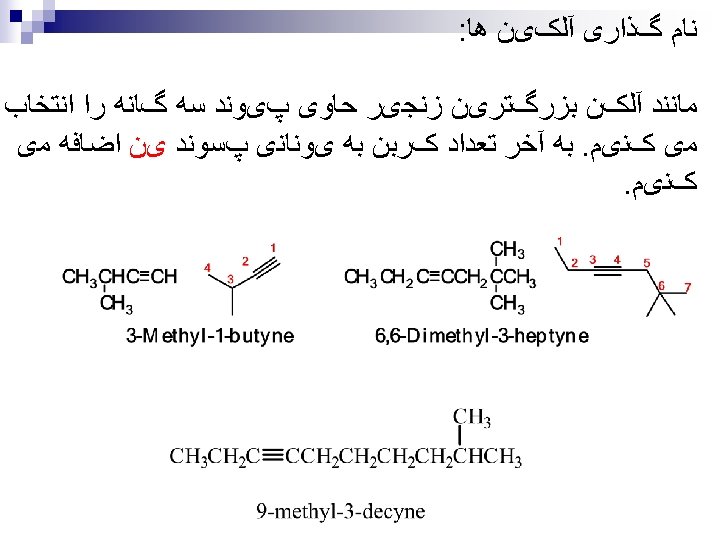
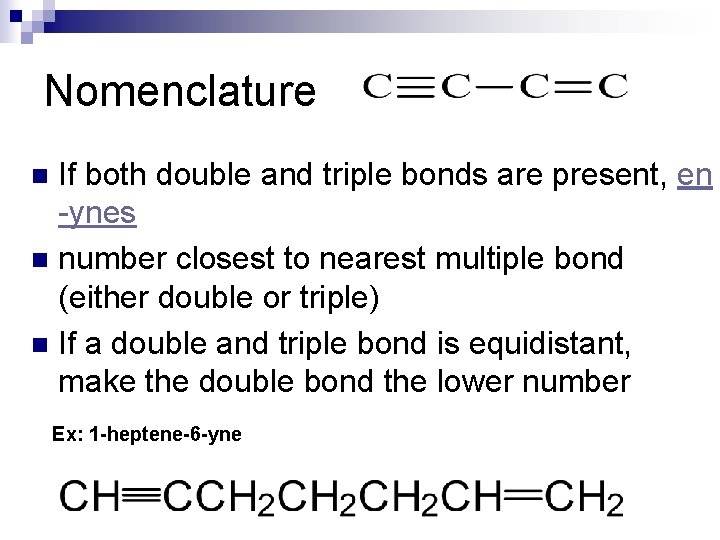
Nomenclature If both double and triple bonds are present, en -ynes n number closest to nearest multiple bond (either double or triple) n If a double and triple bond is equidistant, make the double bond the lower number n Ex: 1 -heptene-6 -yne
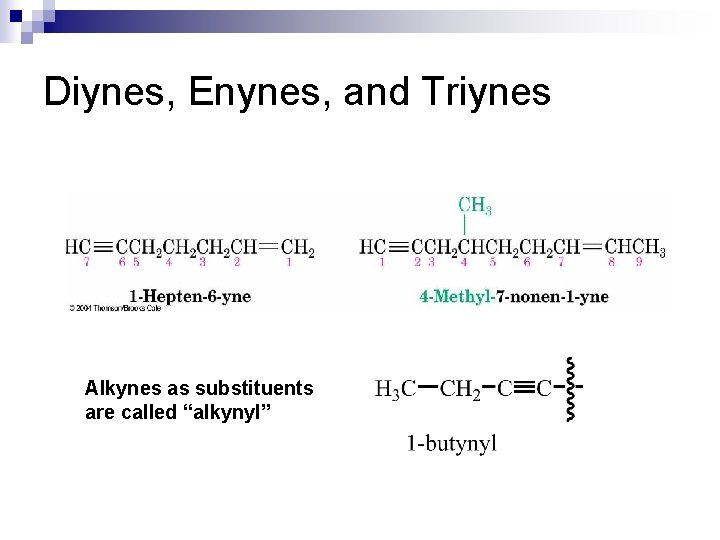
Diynes, Enynes, and Triynes Alkynes as substituents are called “alkynyl”
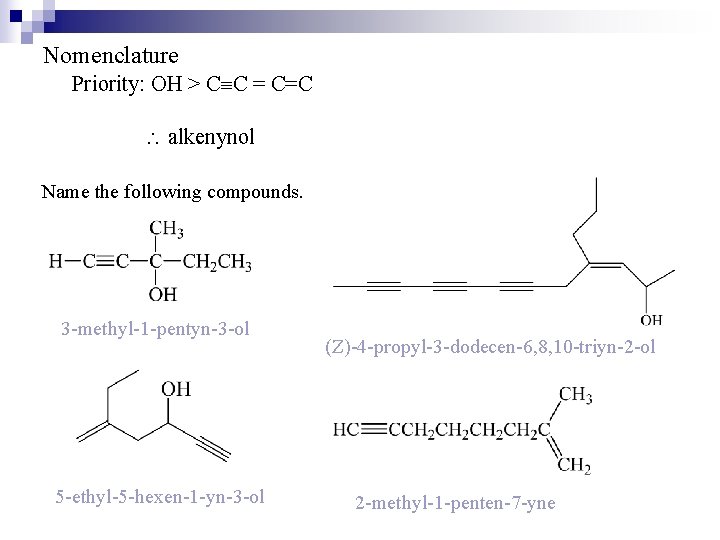
Nomenclature Priority: OH > C C = C=C alkenynol Name the following compounds. 3 -methyl-1 -pentyn-3 -ol 5 -ethyl-5 -hexen-1 -yn-3 -ol (Z)-4 -propyl-3 -dodecen-6, 8, 10 -triyn-2 -ol 2 -methyl-1 -penten-7 -yne
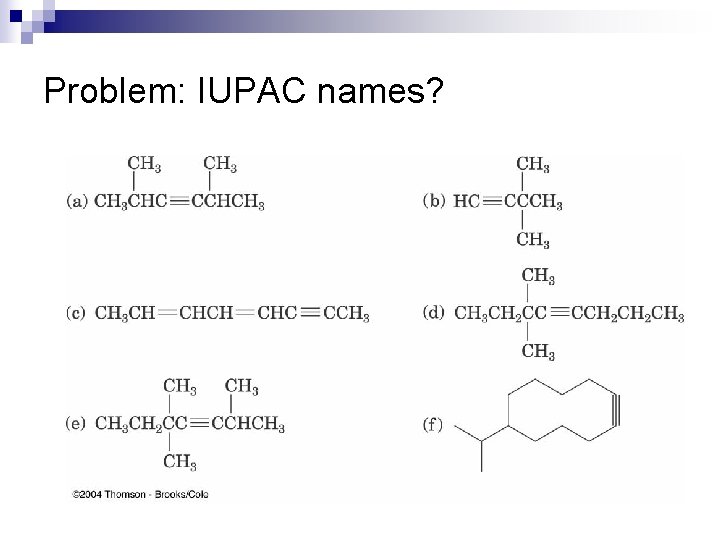
Problem: IUPAC names?
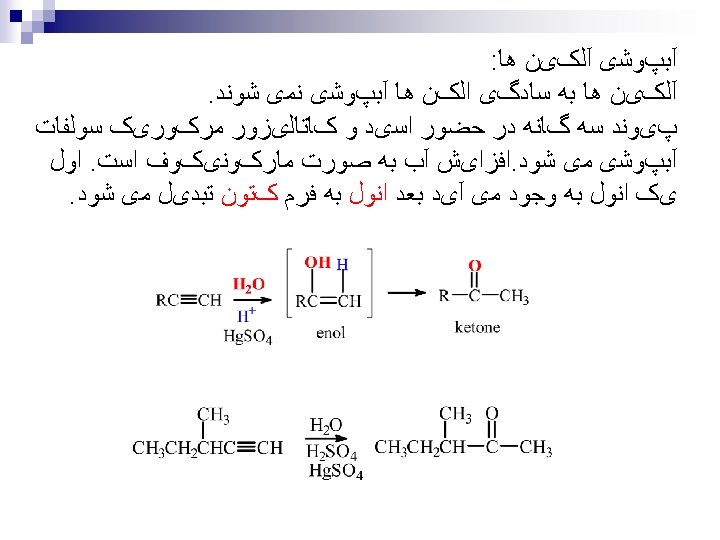
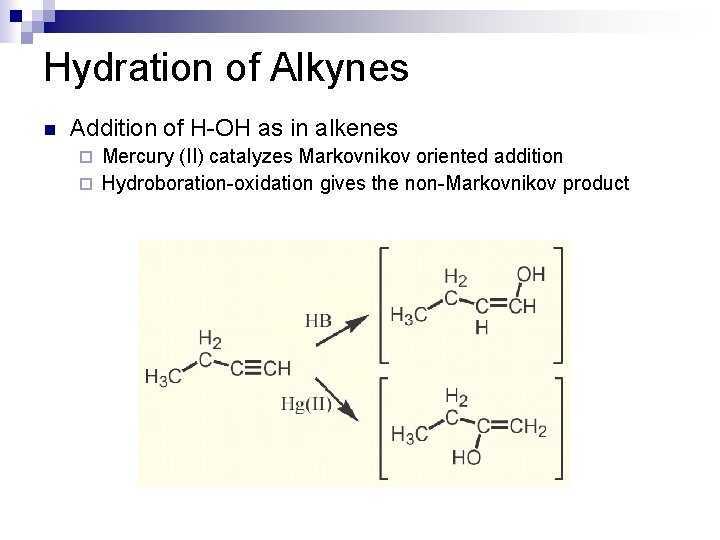
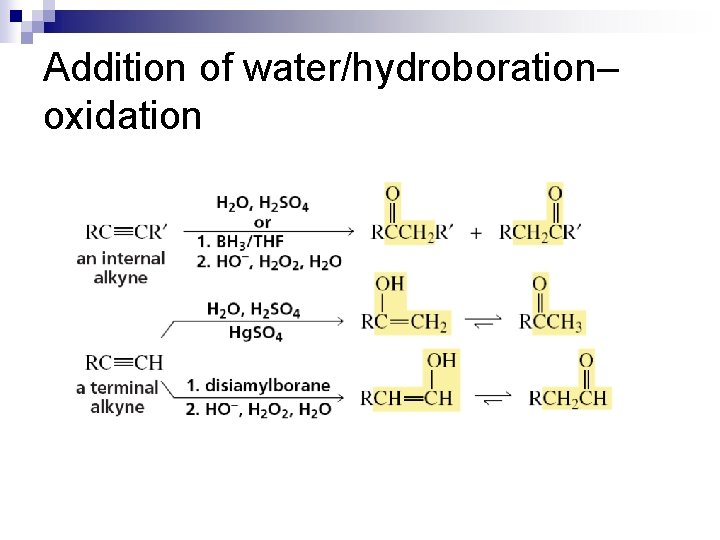
Hydration of Alkynes n Addition of H-OH as in alkenes Mercury (II) catalyzes Markovnikov oriented addition ¨ Hydroboration-oxidation gives the non-Markovnikov product ¨
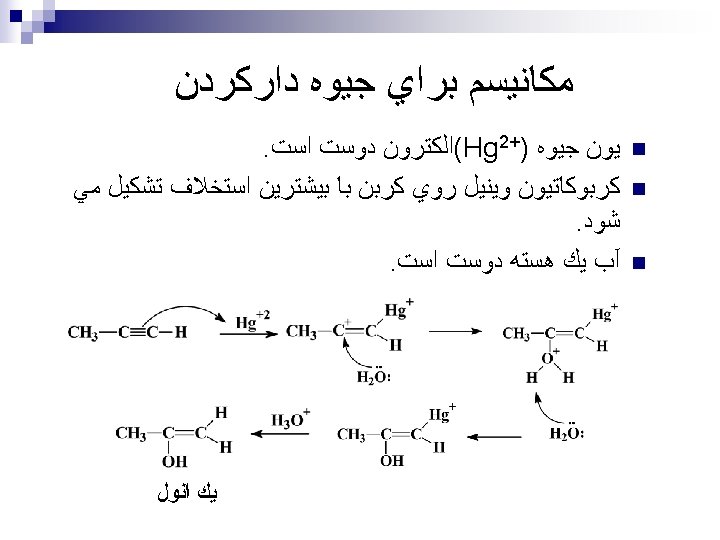
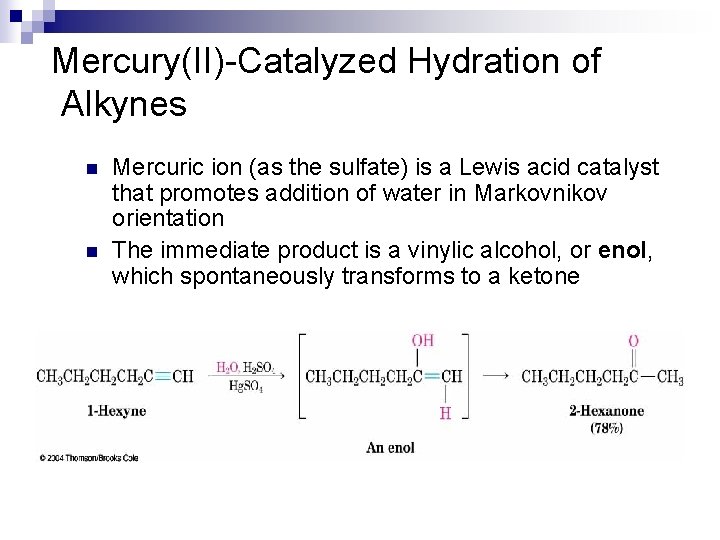
Mercury(II)-Catalyzed Hydration of Alkynes n n Mercuric ion (as the sulfate) is a Lewis acid catalyst that promotes addition of water in Markovnikov orientation The immediate product is a vinylic alcohol, or enol, which spontaneously transforms to a ketone
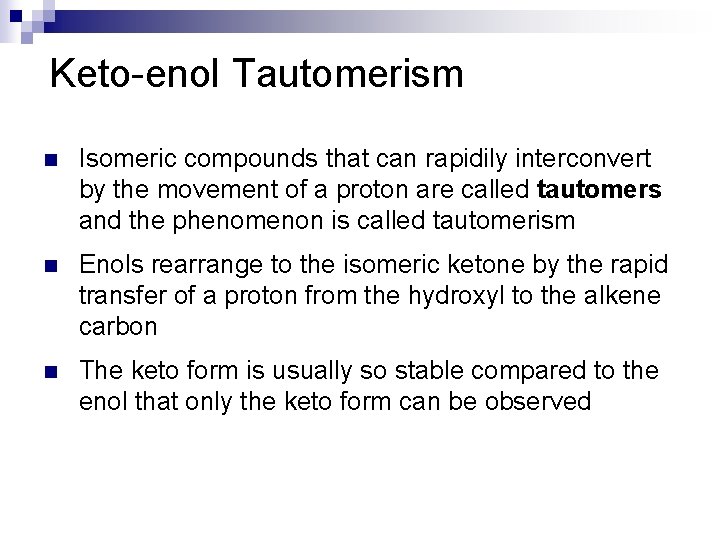
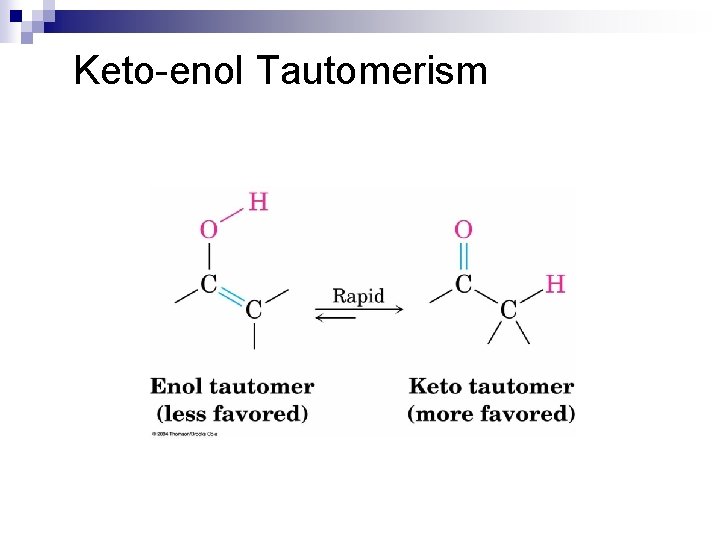
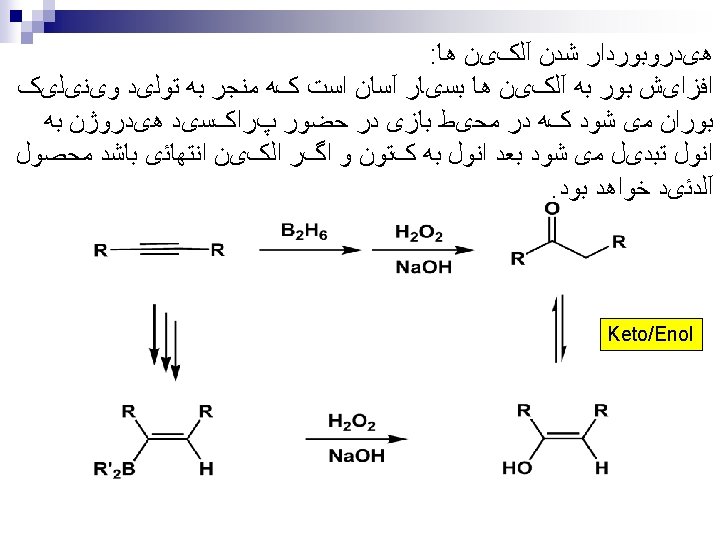
Keto-enol Tautomerism n Isomeric compounds that can rapidily interconvert by the movement of a proton are called tautomers and the phenomenon is called tautomerism n Enols rearrange to the isomeric ketone by the rapid transfer of a proton from the hydroxyl to the alkene carbon n The keto form is usually so stable compared to the enol that only the keto form can be observed
Keto-enol Tautomerism
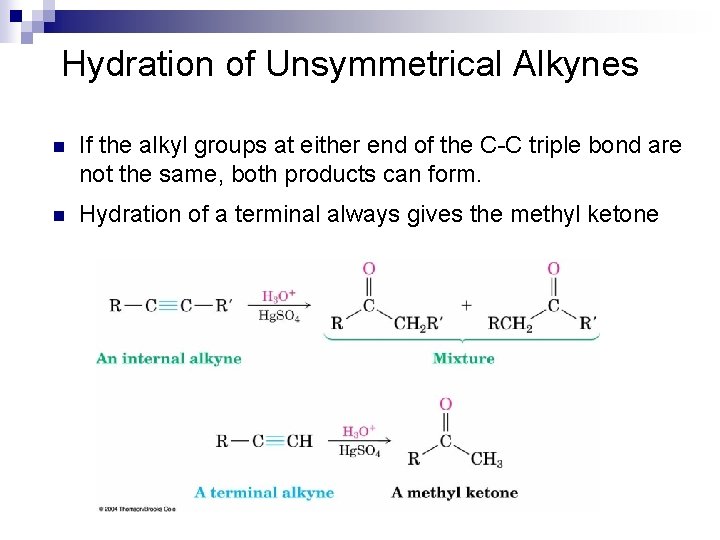
Hydration of Unsymmetrical Alkynes n If the alkyl groups at either end of the C-C triple bond are not the same, both products can form. n Hydration of a terminal always gives the methyl ketone
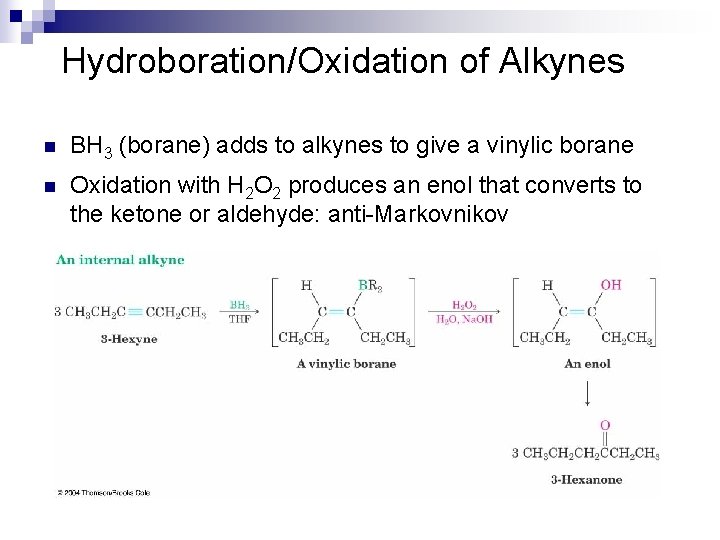
Hydroboration/Oxidation of Alkynes n BH 3 (borane) adds to alkynes to give a vinylic borane n Oxidation with H 2 O 2 produces an enol that converts to the ketone or aldehyde: anti-Markovnikov
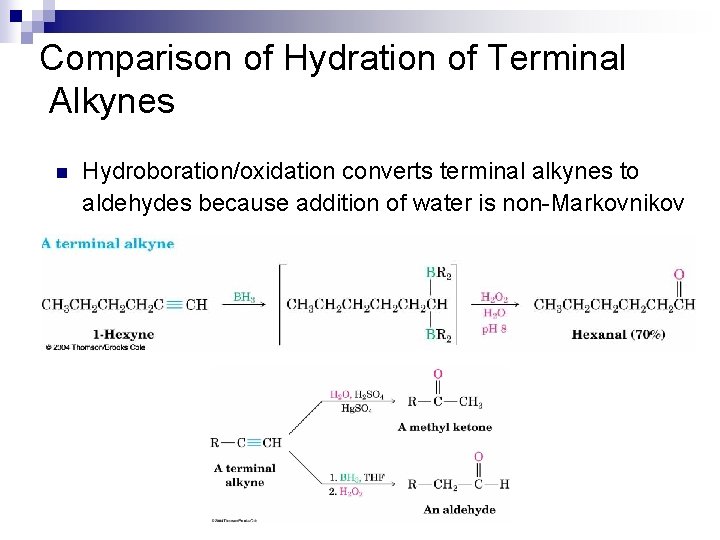
Comparison of Hydration of Terminal Alkynes n Hydroboration/oxidation converts terminal alkynes to aldehydes because addition of water is non-Markovnikov
Addition of water/hydroboration– oxidation
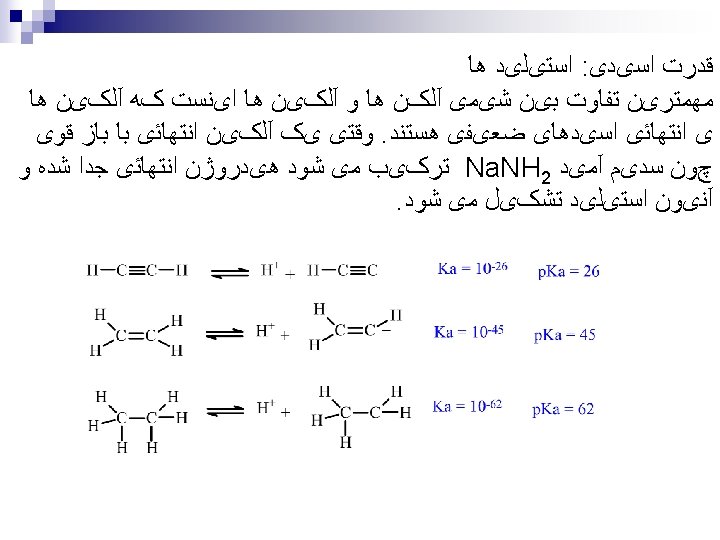
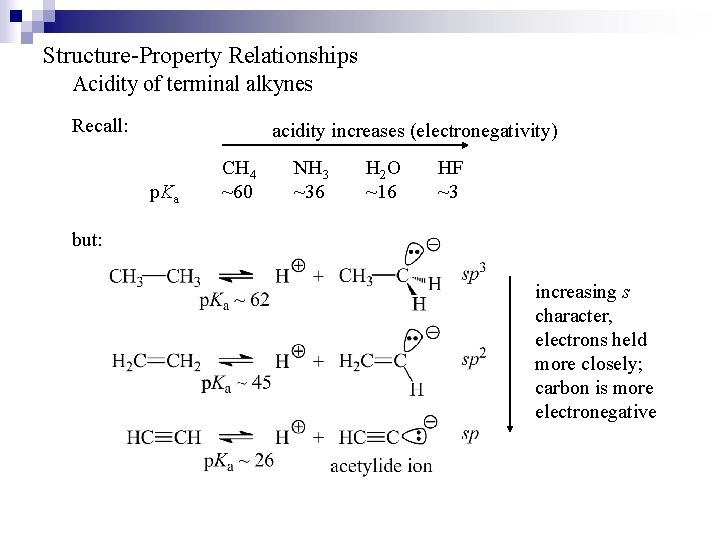
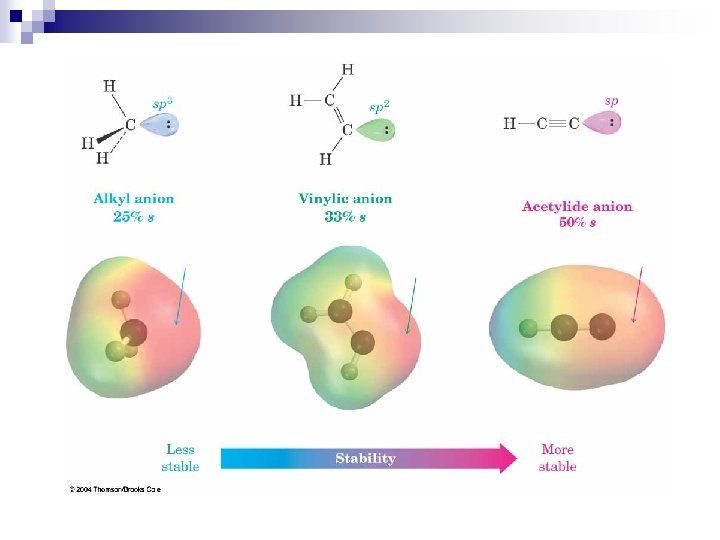
Structure-Property Relationships Acidity of terminal alkynes Recall: acidity increases (electronegativity) p. Ka CH 4 ~60 NH 3 ~36 H 2 O ~16 HF ~3 but: increasing s character, electrons held more closely; carbon is more electronegative
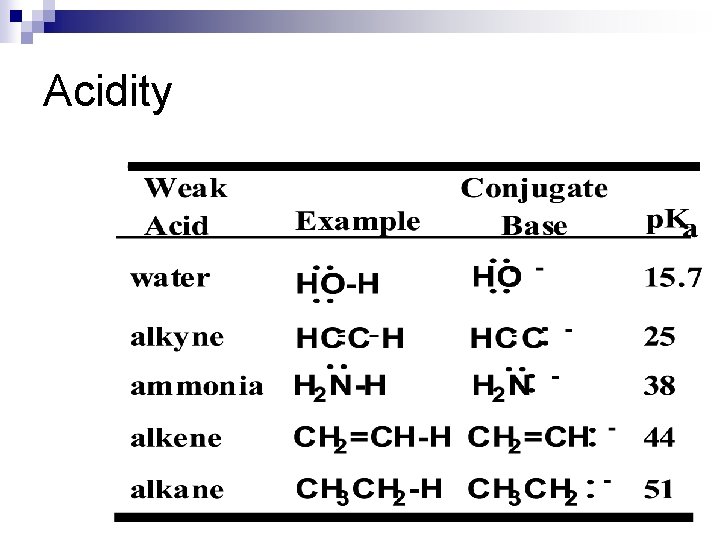
Acidity
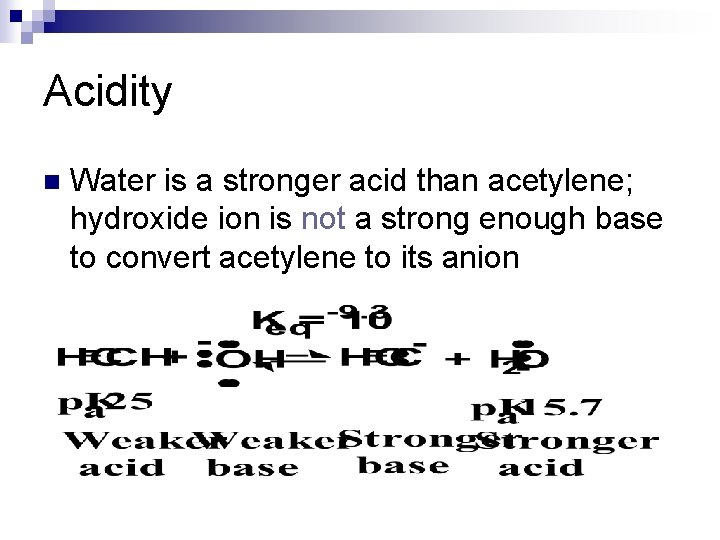
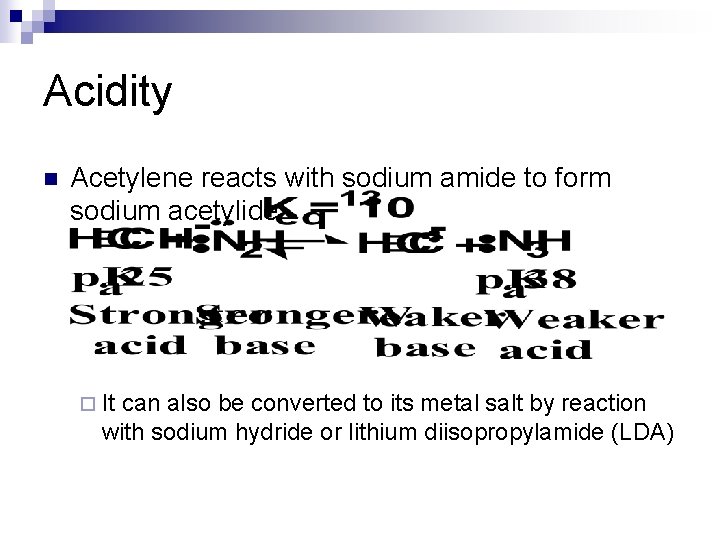
Acidity n Water is a stronger acid than acetylene; hydroxide ion is not a strong enough base to convert acetylene to its anion
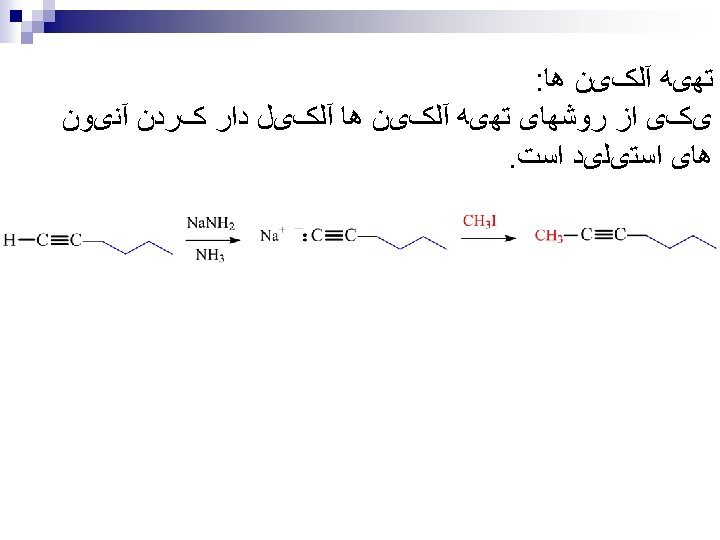
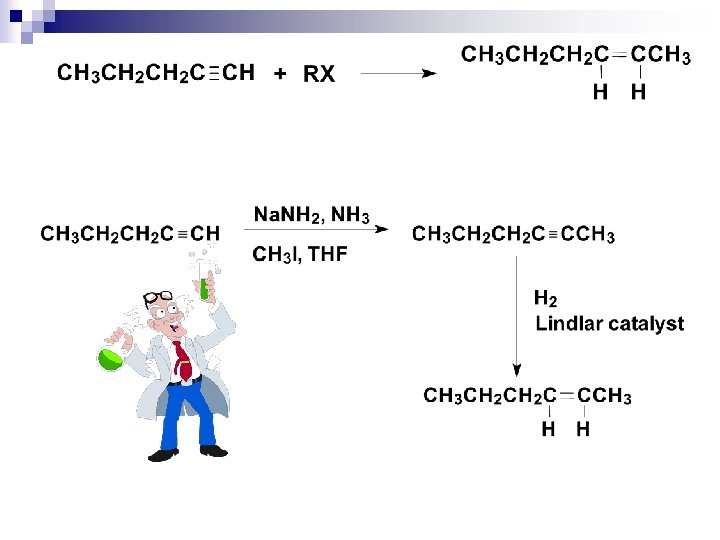
Acidity n Acetylene reacts with sodium amide to form sodium acetylide ¨ It can also be converted to its metal salt by reaction with sodium hydride or lithium diisopropylamide (LDA)
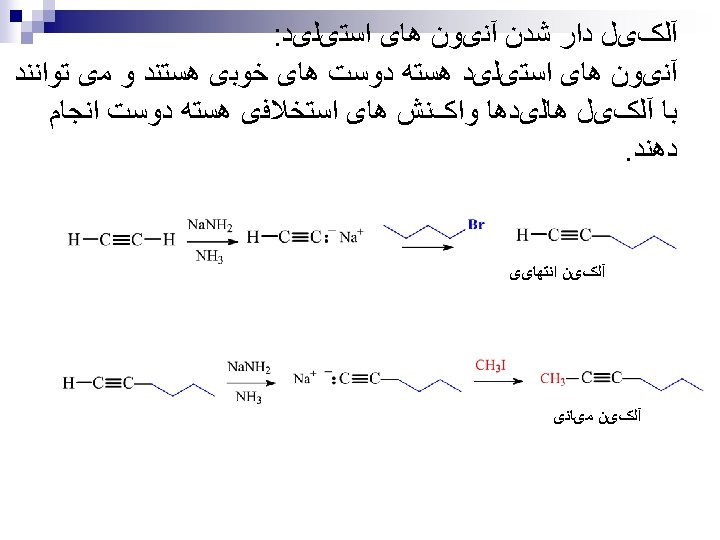
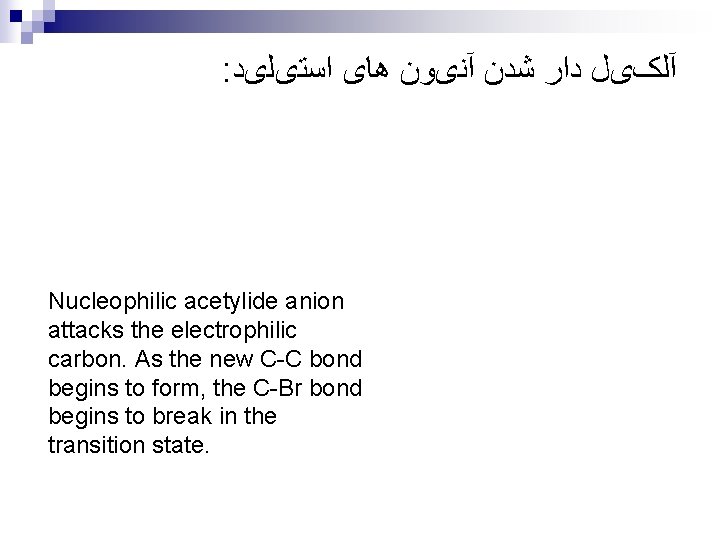
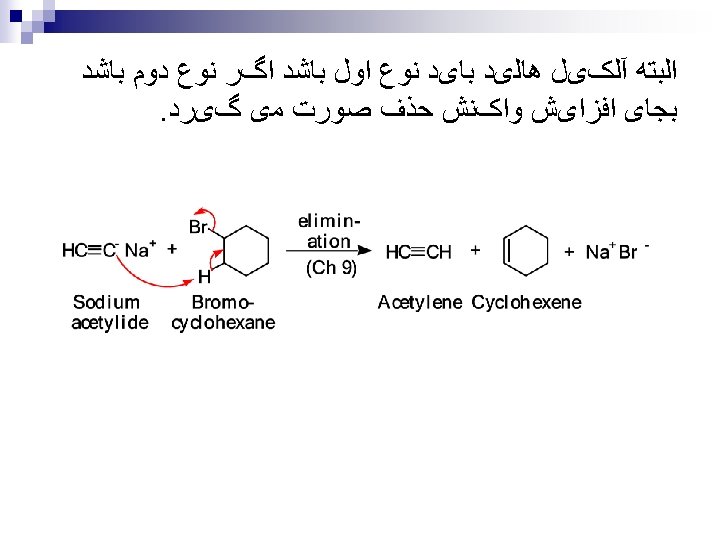
: آﻠکیﻞ ﺩﺍﺭ ﺷﺪﻥ آﻨیﻮﻥ ﻫﺎی ﺍﺳﺘیﻠیﺪ Nucleophilic acetylide anion attacks the electrophilic carbon. As the new C-C bond begins to form, the C-Br bond begins to break in the transition state.
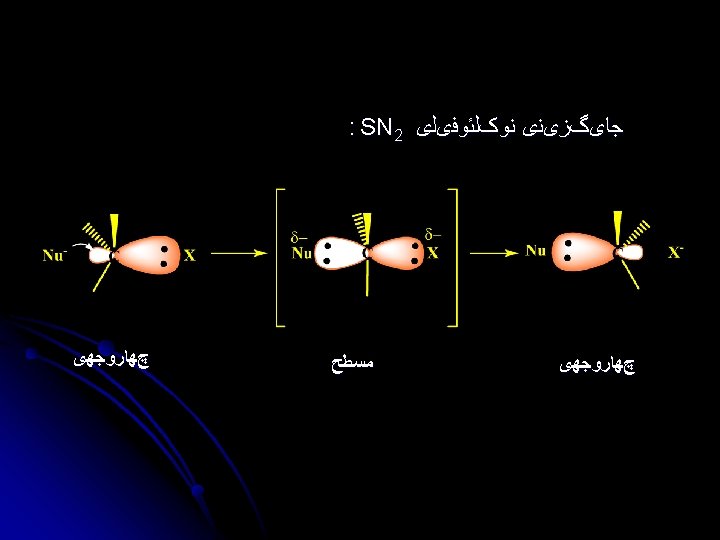
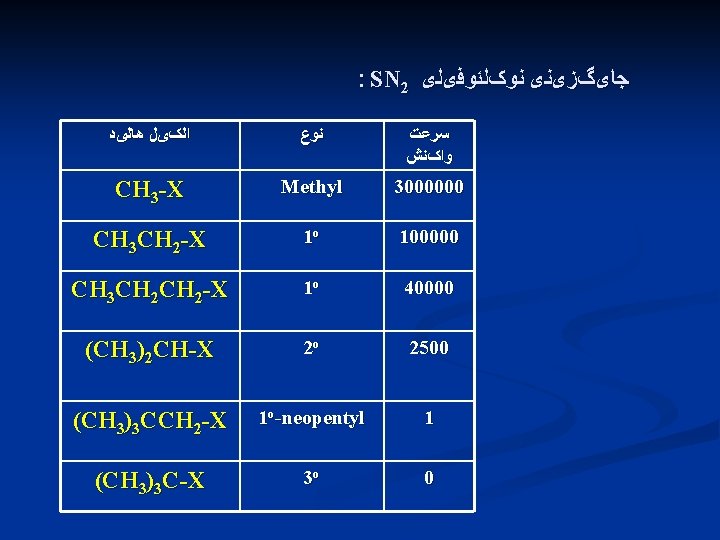
: SN 2 ﺟﺎیگﺰیﻨی ﻧﻮکﻠﺌﻮﻓیﻠی ﺍﻟکیﻞ ﻫﺎﻟیﺪ ﻧﻮﻉ ﺳﺮﻋﺖ ﻭﺍکﻨﺶ CH 3 -X Methyl 3000000 CH 3 CH 2 -X 1 o 100000 CH 3 CH 2 -X 1 o 40000 (CH 3)2 CH-X 2 o 2500 (CH 3)3 CCH 2 -X 1 o-neopentyl 1 (CH 3)3 C-X 3 o 0
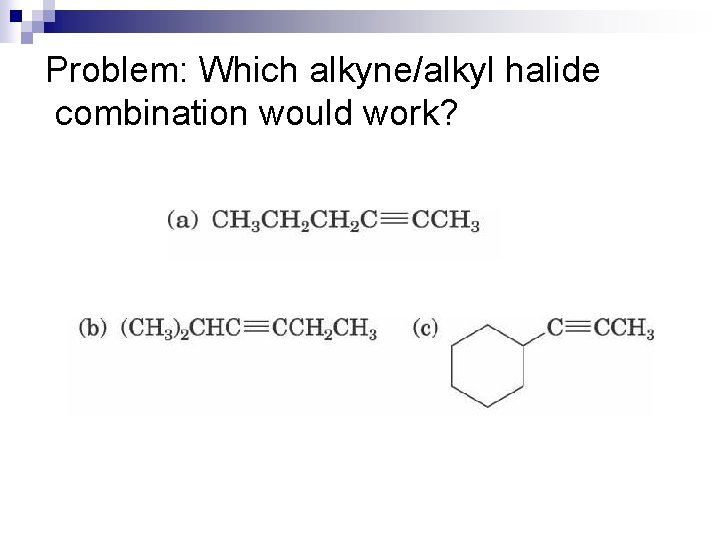
Problem: Which alkyne/alkyl halide combination would work?
An Introduction to Organic Synthesis n Organic synthesis creates molecules by design n Synthesis can produce new molecules that are needed as drugs or materials n Syntheses can be designed and tested to improve the efficiency and safety of making known molecules n Highly advanced syntheses are used to test ideas and methods, confirm structures, and demonstrate methods
Synthesis as a Tool for Learning Organic Chemistry n In order to propose a synthesis you must be familiar with reactions ¨ What they begin with ¨ What they lead to ¨ How they are accomplished ¨ What the limitations are
Synthesis as a Tool for Learning Organic Chemistry n A synthesis combines a series of proposed steps to go from a defined set of reactants to a specified product ¨ Questions related to synthesis can include partial information about a reaction of series that the student completes (“roadmap” problem)
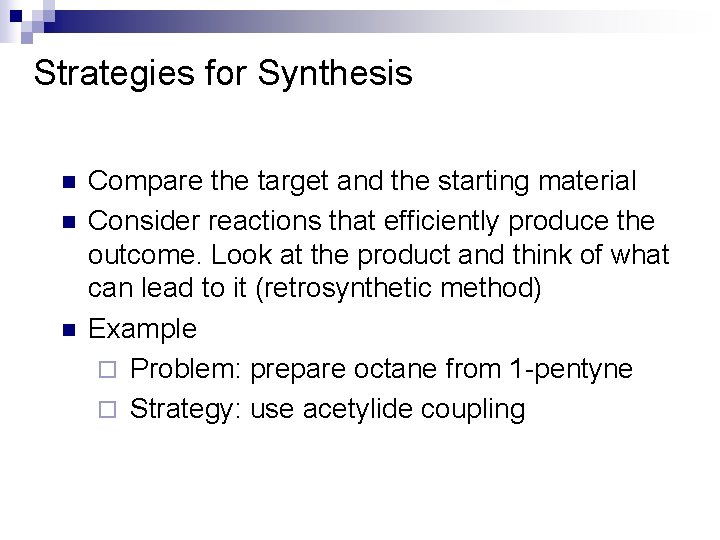
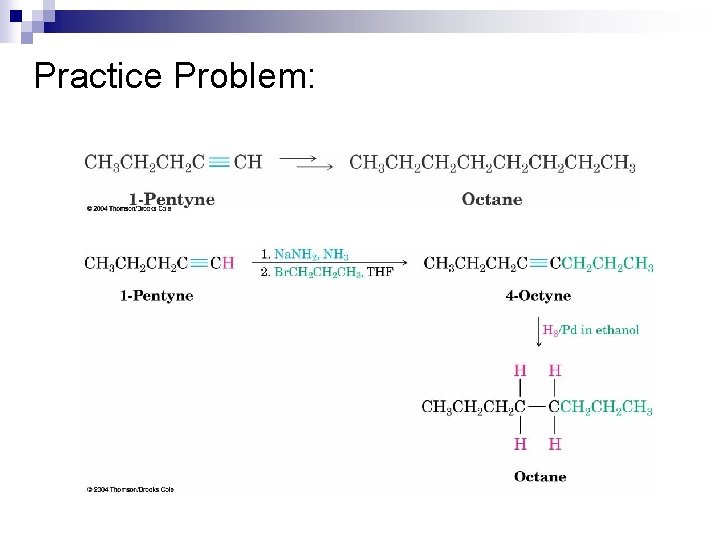
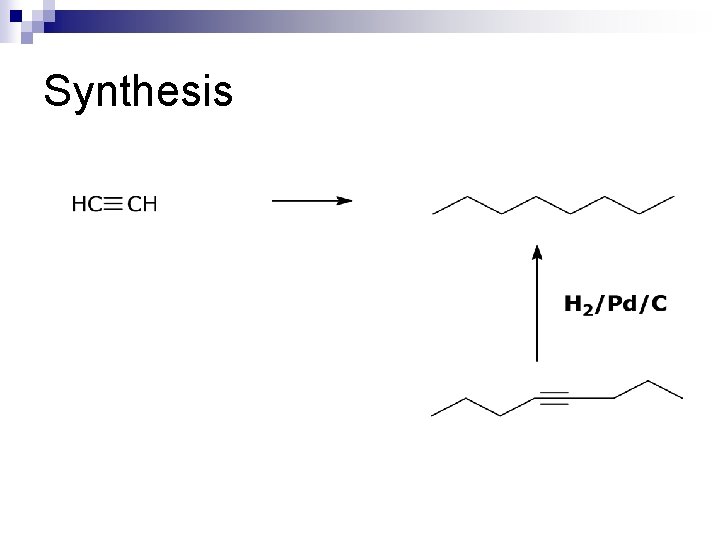
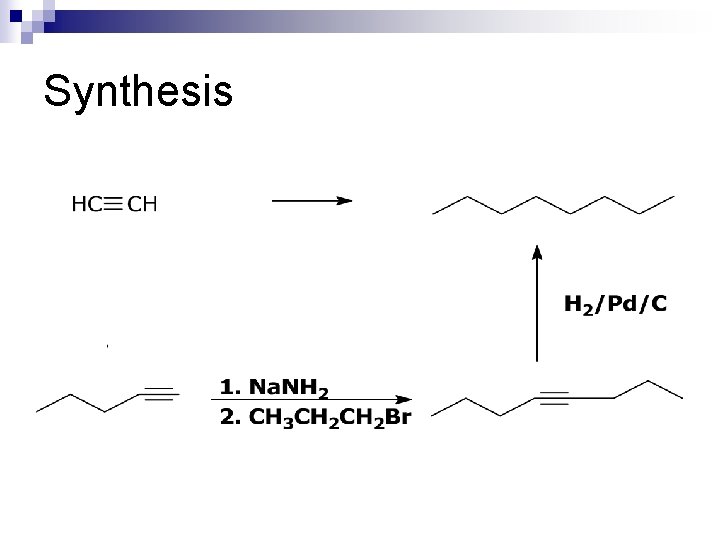
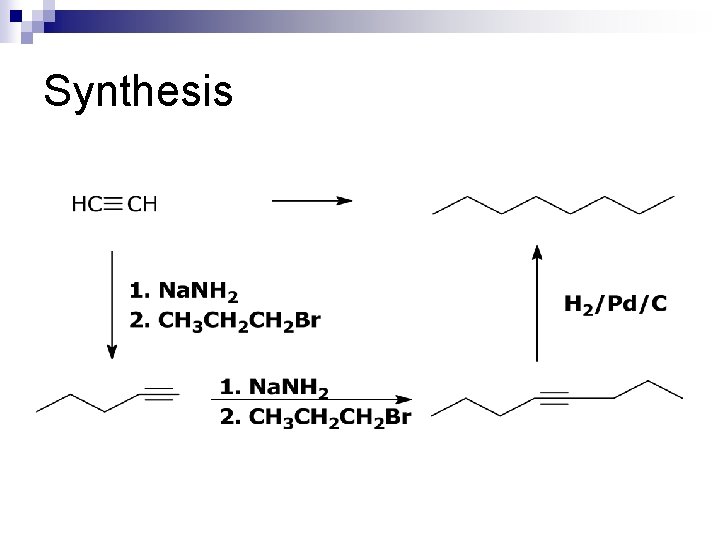
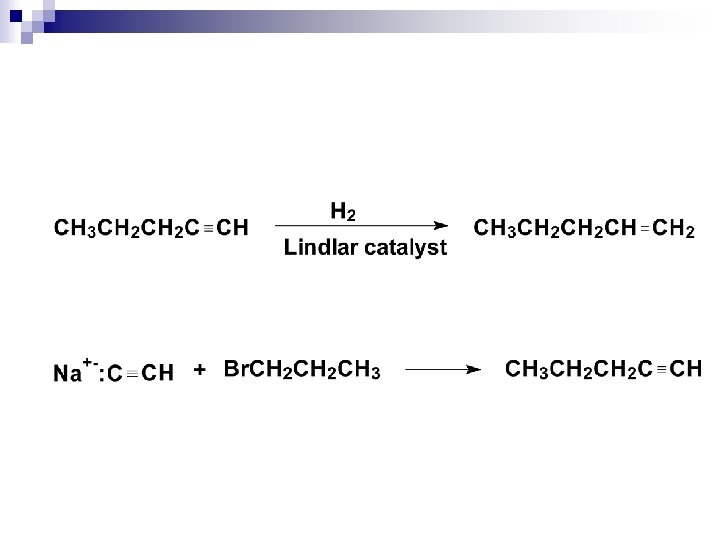
Strategies for Synthesis n n n Compare the target and the starting material Consider reactions that efficiently produce the outcome. Look at the product and think of what can lead to it (retrosynthetic method) Example ¨ Problem: prepare octane from 1 -pentyne ¨ Strategy: use acetylide coupling
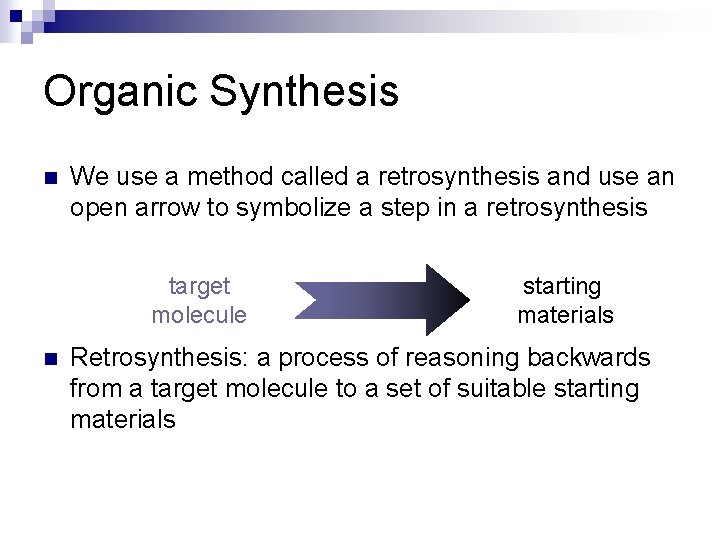
Organic Synthesis n We use a method called a retrosynthesis and use an open arrow to symbolize a step in a retrosynthesis target molecule n starting materials Retrosynthesis: a process of reasoning backwards from a target molecule to a set of suitable starting materials
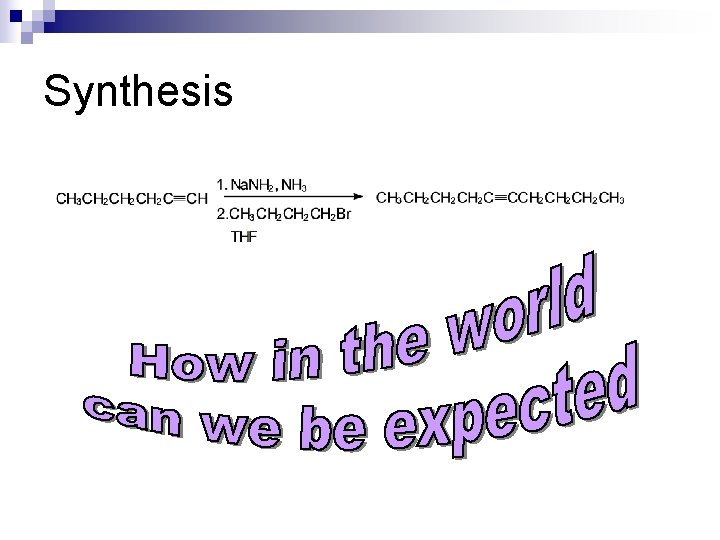
Synthesis
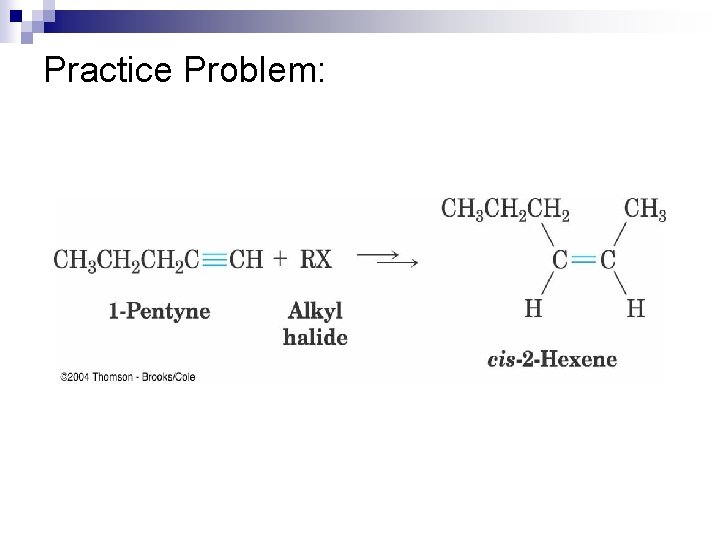
Practice Problem:
Practice Problem:
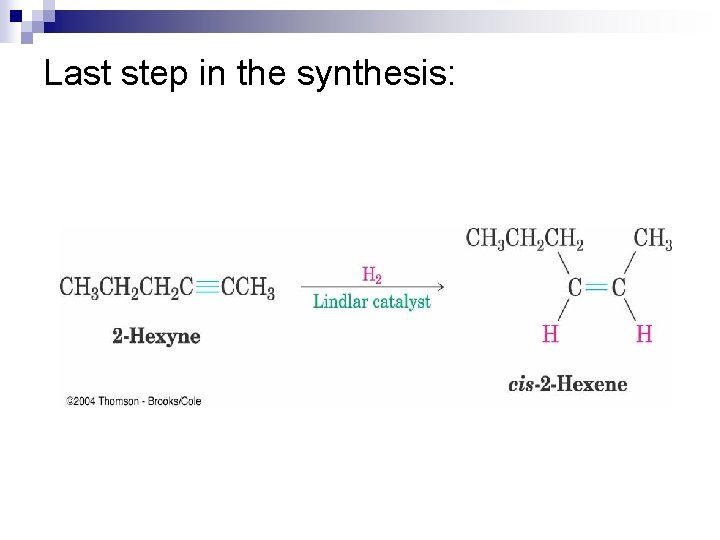
Last step in the synthesis:
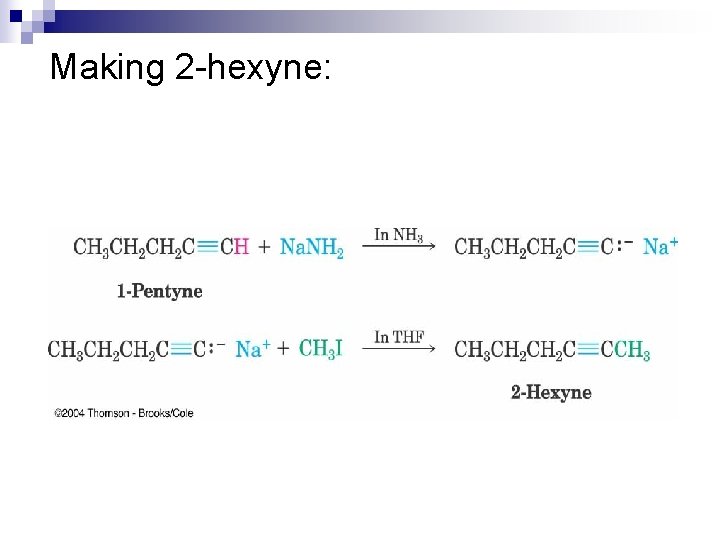
Making 2 -hexyne:
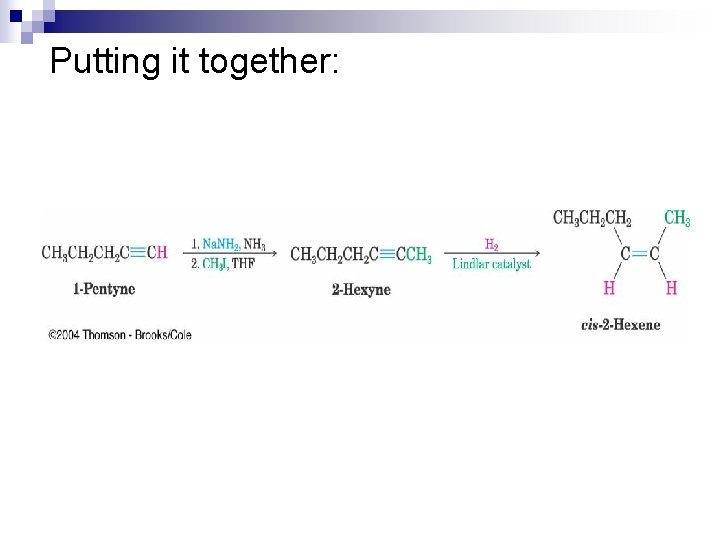
Putting it together:
Synthesis
Synthesis
Synthesis
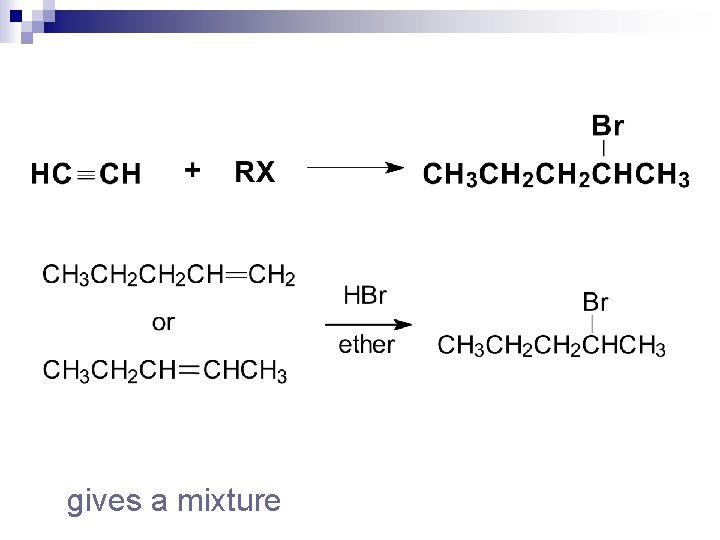
gives a mixture
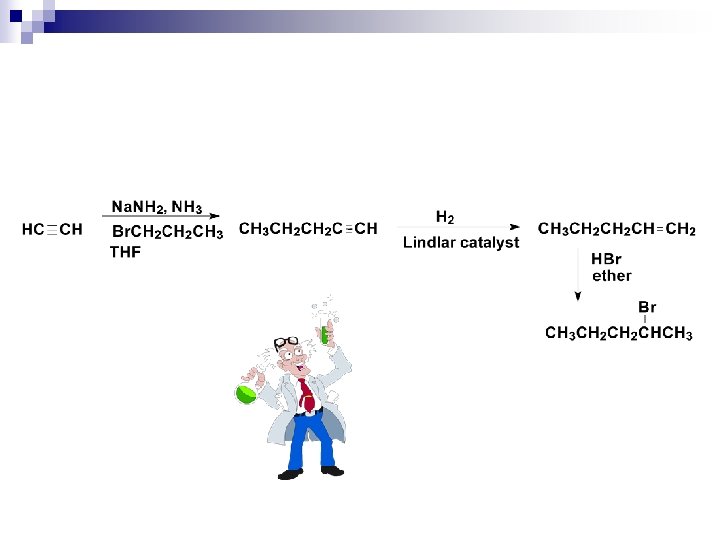
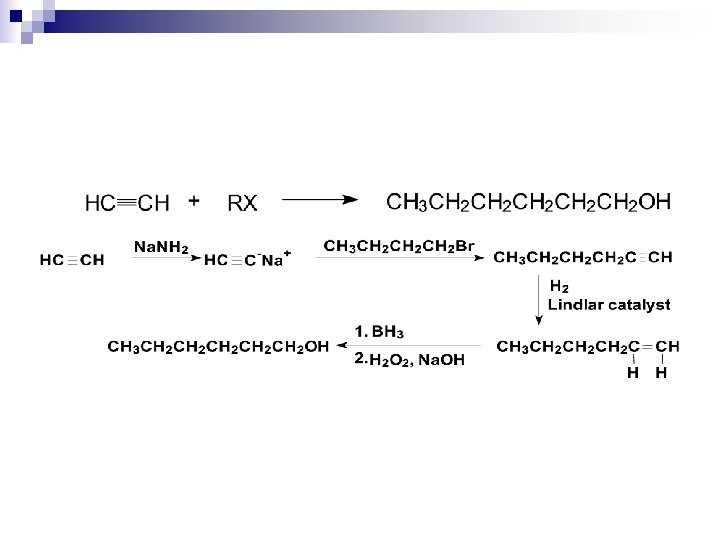
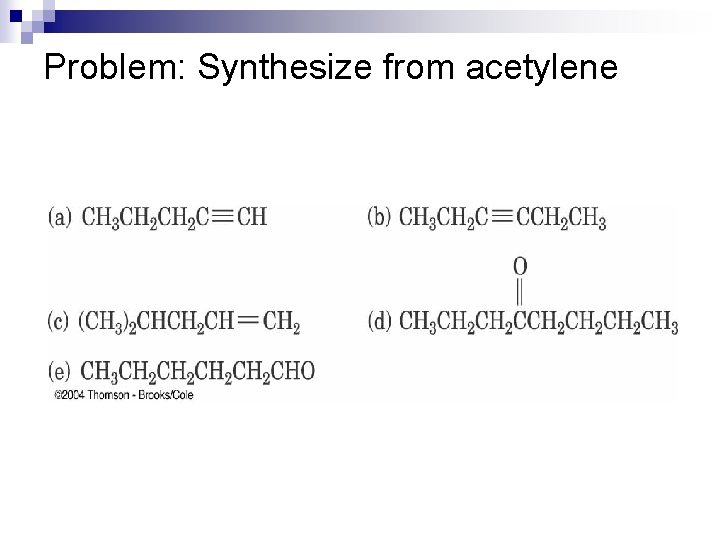
Problem: Synthesize from acetylene