
Organic Chemistry Fourth Edition Janice Gorzynski Smith University
- Slides: 43
Organic Chemistry, Fourth Edition Janice Gorzynski Smith University of Hawai’i Chapter 11 Lecture Outline Prepared by Layne A. Morsch The University of Illinois - Springfield Copyright © 2014 The Mc. Graw-Hill Companies, Inc. Permission required for reproduction or display. 1
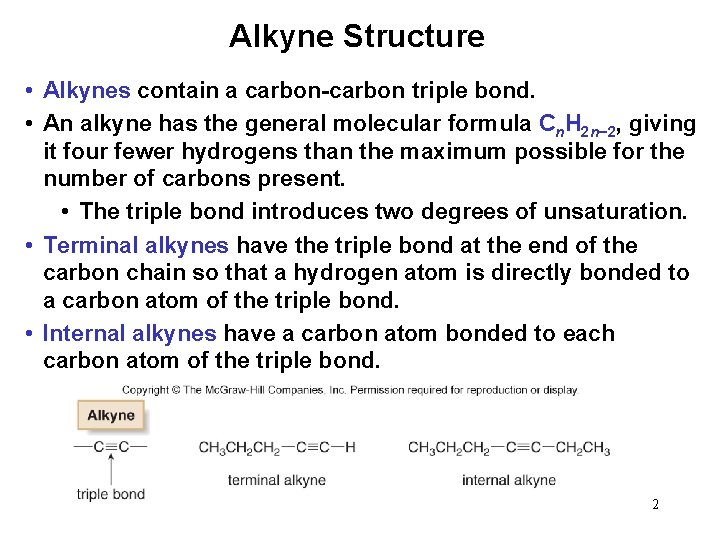
Alkyne Structure • Alkynes contain a carbon-carbon triple bond. • An alkyne has the general molecular formula Cn. H 2 n− 2, giving it four fewer hydrogens than the maximum possible for the number of carbons present. • The triple bond introduces two degrees of unsaturation. • Terminal alkynes have the triple bond at the end of the carbon chain so that a hydrogen atom is directly bonded to a carbon atom of the triple bond. • Internal alkynes have a carbon atom bonded to each carbon atom of the triple bond. 2
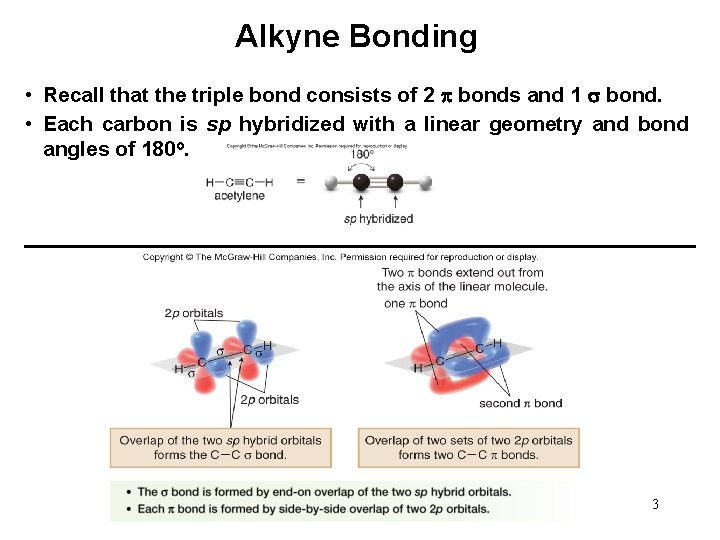
Alkyne Bonding • Recall that the triple bond consists of 2 bonds and 1 bond. • Each carbon is sp hybridized with a linear geometry and bond angles of 180 o. 3
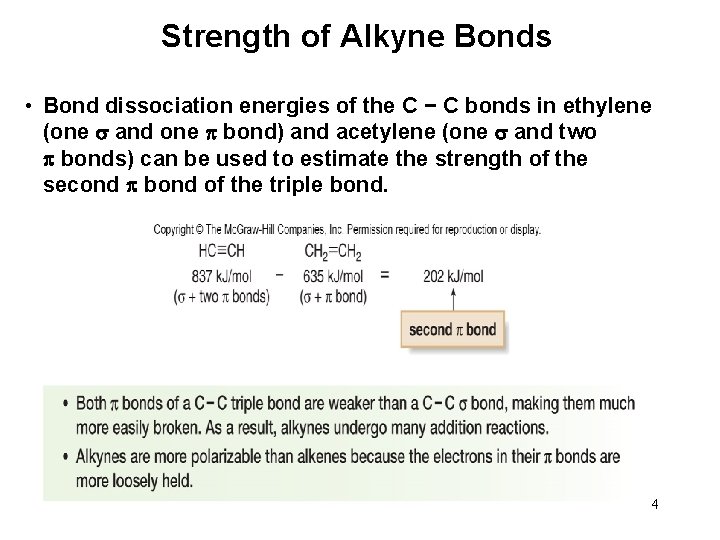
Strength of Alkyne Bonds • Bond dissociation energies of the C − C bonds in ethylene (one and one bond) and acetylene (one and two bonds) can be used to estimate the strength of the second bond of the triple bond. 4
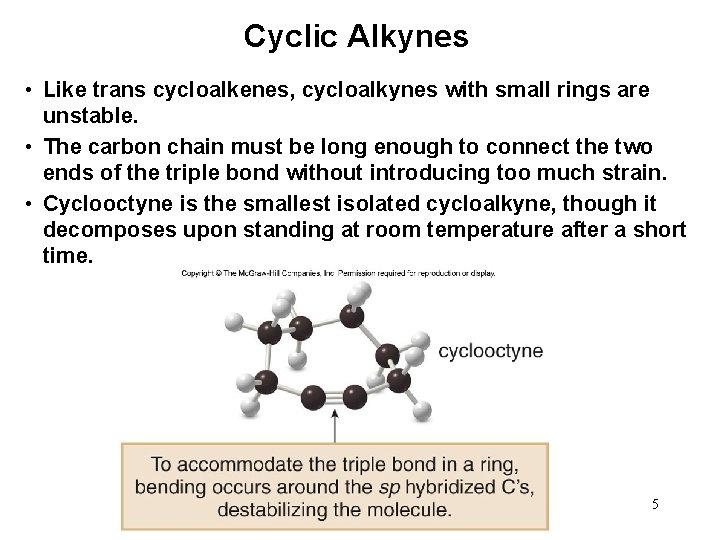
Cyclic Alkynes • Like trans cycloalkenes, cycloalkynes with small rings are unstable. • The carbon chain must be long enough to connect the two ends of the triple bond without introducing too much strain. • Cyclooctyne is the smallest isolated cycloalkyne, though it decomposes upon standing at room temperature after a short time. 5
Naming Alkynes • Alkynes are named in the same general way that alkenes are named. • In the IUPAC system, change the –ane ending of the parent alkane name to the suffix –yne. • Choose the longest continuous chain that contains both atoms of the triple bond and number the chain to give the triple bond the lower number. 6
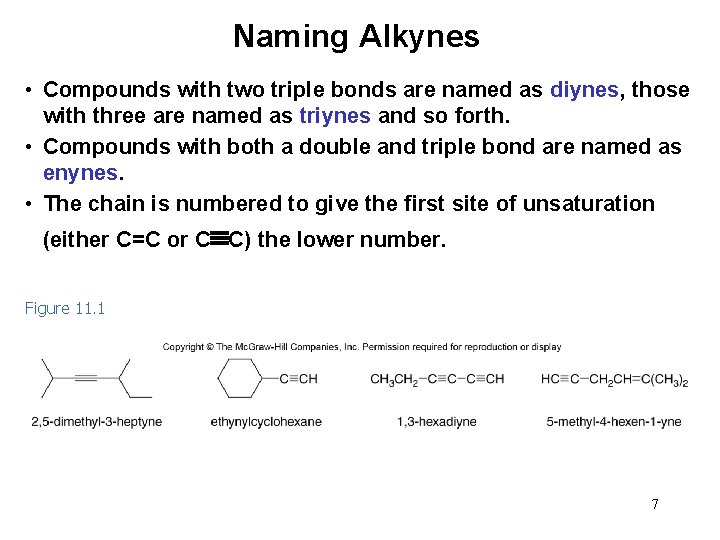
Naming Alkynes • Compounds with two triple bonds are named as diynes, those with three are named as triynes and so forth. • Compounds with both a double and triple bond are named as enynes. • The chain is numbered to give the first site of unsaturation (either C=C or C C) the lower number. Figure 11. 1 7
Physical Properties of Alkynes • The physical properties of alkynes resemble those of hydrocarbons of similar shape and molecular weight. • Alkynes have low melting points and boiling points. • Melting point and boiling point increase as the number of carbons increases. • Alkynes are soluble in organic solvents and insoluble in water. 8
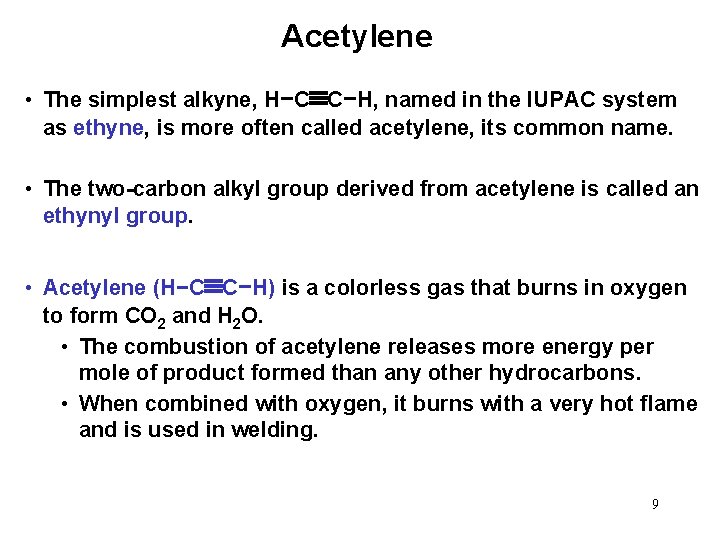
Acetylene • The simplest alkyne, H−C C−H, named in the IUPAC system as ethyne, is more often called acetylene, its common name. • The two-carbon alkyl group derived from acetylene is called an ethynyl group. • Acetylene (H−C C−H) is a colorless gas that burns in oxygen to form CO 2 and H 2 O. • The combustion of acetylene releases more energy per mole of product formed than any other hydrocarbons. • When combined with oxygen, it burns with a very hot flame and is used in welding. 9
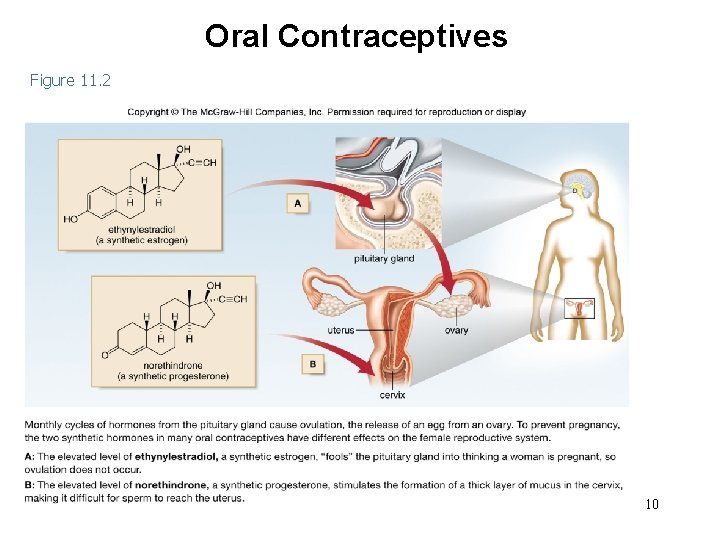
Oral Contraceptives Figure 11. 2 10
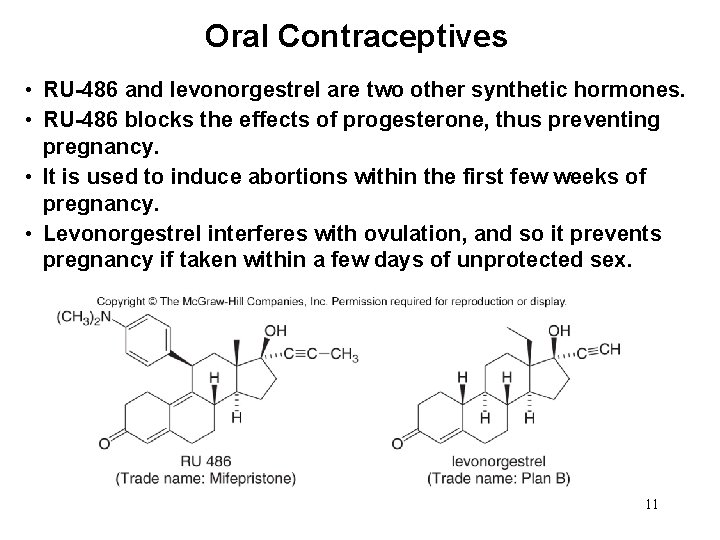
Oral Contraceptives • RU-486 and levonorgestrel are two other synthetic hormones. • RU-486 blocks the effects of progesterone, thus preventing pregnancy. • It is used to induce abortions within the first few weeks of pregnancy. • Levonorgestrel interferes with ovulation, and so it prevents pregnancy if taken within a few days of unprotected sex. 11
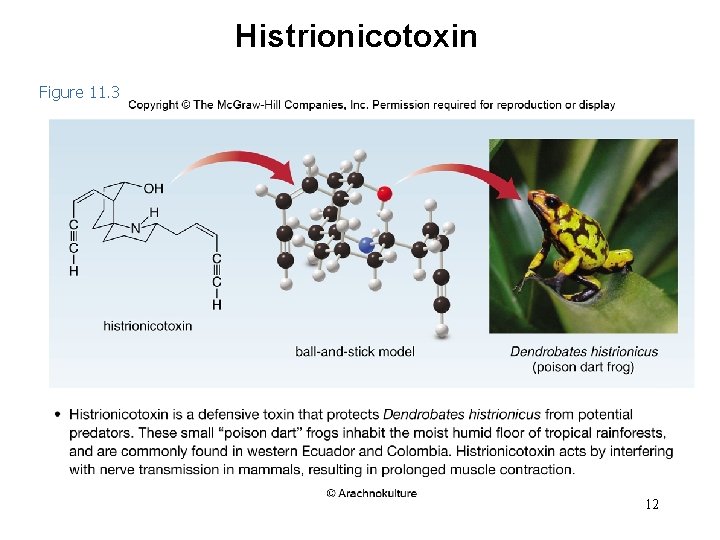
Histrionicotoxin Figure 11. 3 12
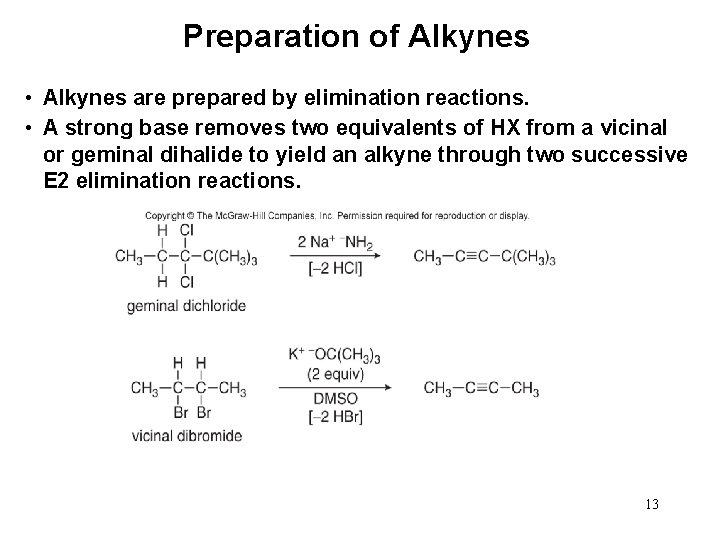
Preparation of Alkynes • Alkynes are prepared by elimination reactions. • A strong base removes two equivalents of HX from a vicinal or geminal dihalide to yield an alkyne through two successive E 2 elimination reactions. 13
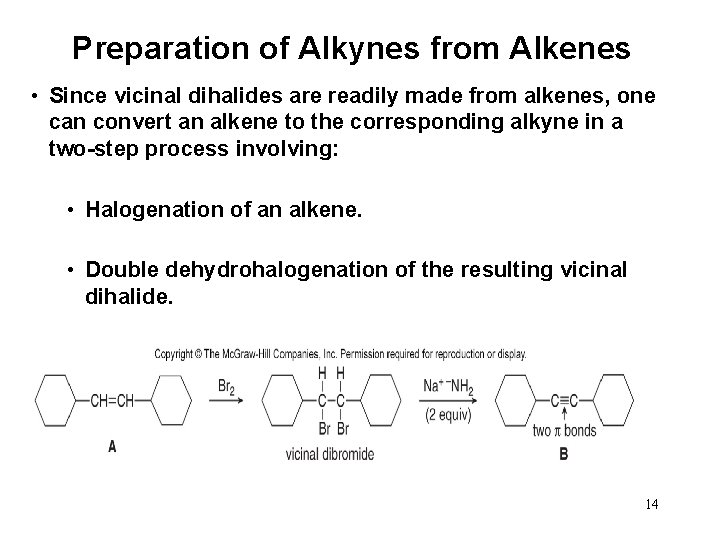
Preparation of Alkynes from Alkenes • Since vicinal dihalides are readily made from alkenes, one can convert an alkene to the corresponding alkyne in a two-step process involving: • Halogenation of an alkene. • Double dehydrohalogenation of the resulting vicinal dihalide. 14
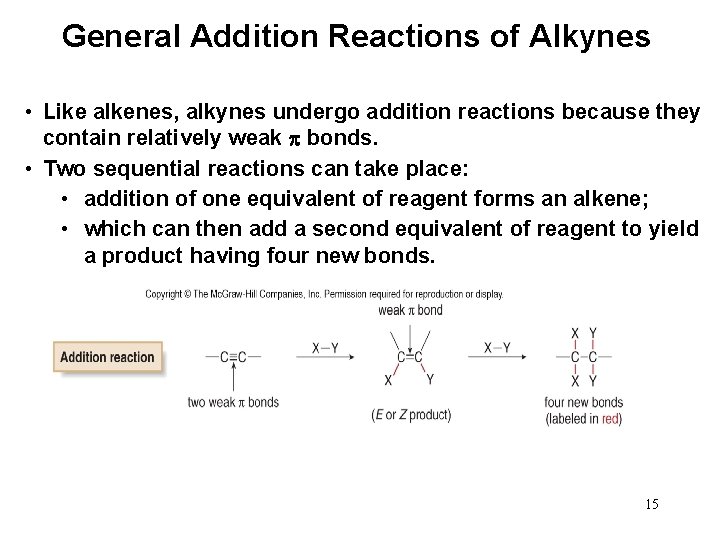
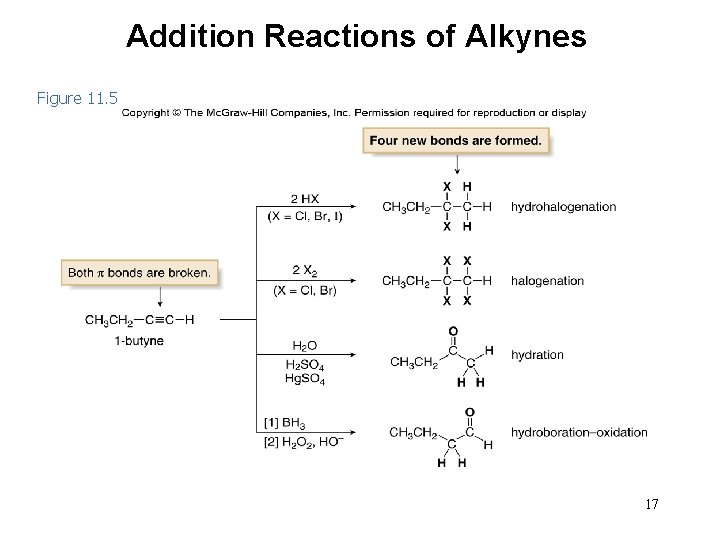
General Addition Reactions of Alkynes • Like alkenes, alkynes undergo addition reactions because they contain relatively weak bonds. • Two sequential reactions can take place: • addition of one equivalent of reagent forms an alkene; • which can then add a second equivalent of reagent to yield a product having four new bonds. 15
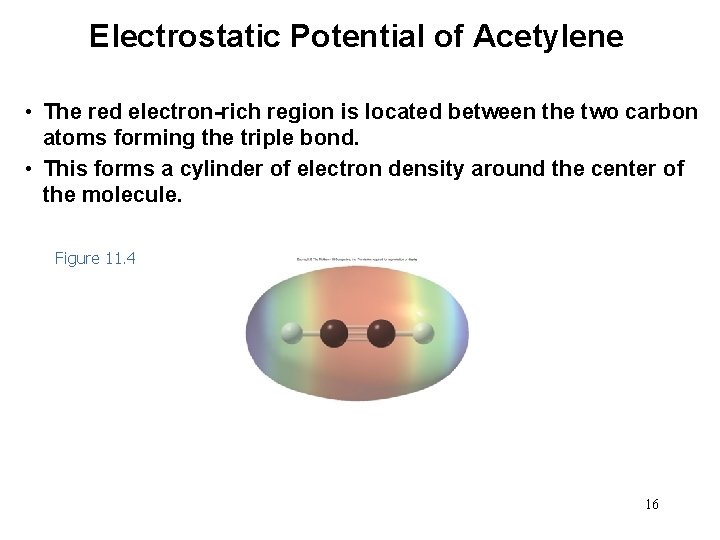
Electrostatic Potential of Acetylene • The red electron-rich region is located between the two carbon atoms forming the triple bond. • This forms a cylinder of electron density around the center of the molecule. Figure 11. 4 16
Addition Reactions of Alkynes Figure 11. 5 17
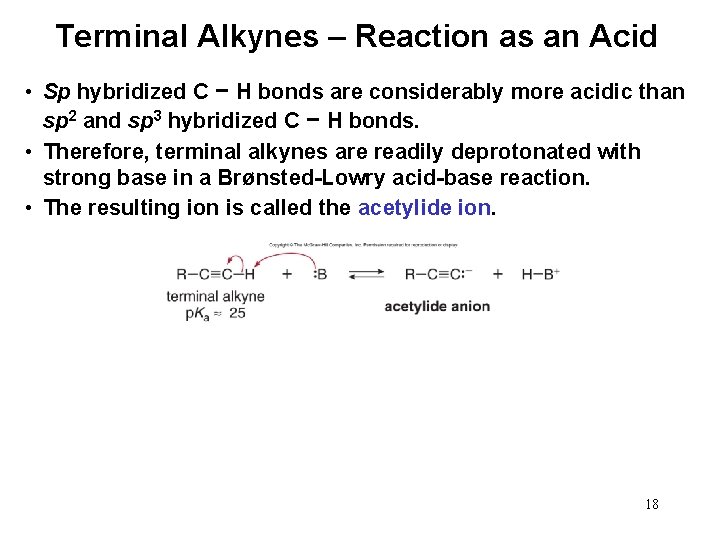
Terminal Alkynes – Reaction as an Acid • Sp hybridized C − H bonds are considerably more acidic than sp 2 and sp 3 hybridized C − H bonds. • Therefore, terminal alkynes are readily deprotonated with strong base in a Brønsted-Lowry acid-base reaction. • The resulting ion is called the acetylide ion. 18
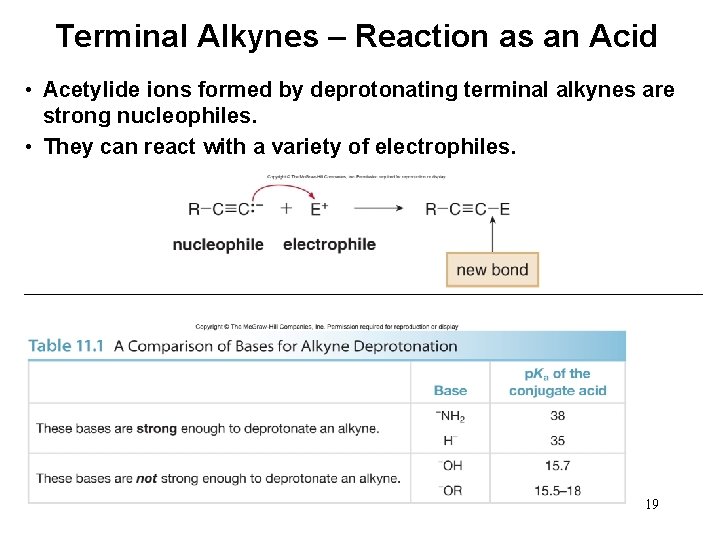
Terminal Alkynes – Reaction as an Acid • Acetylide ions formed by deprotonating terminal alkynes are strong nucleophiles. • They can react with a variety of electrophiles. 19
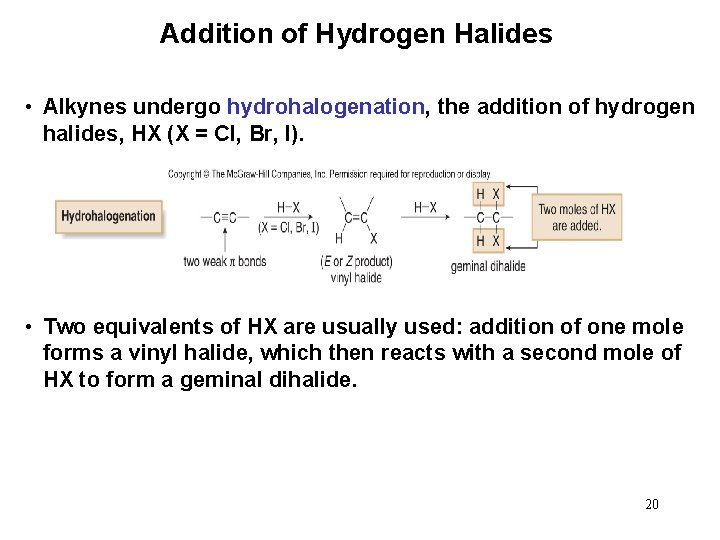
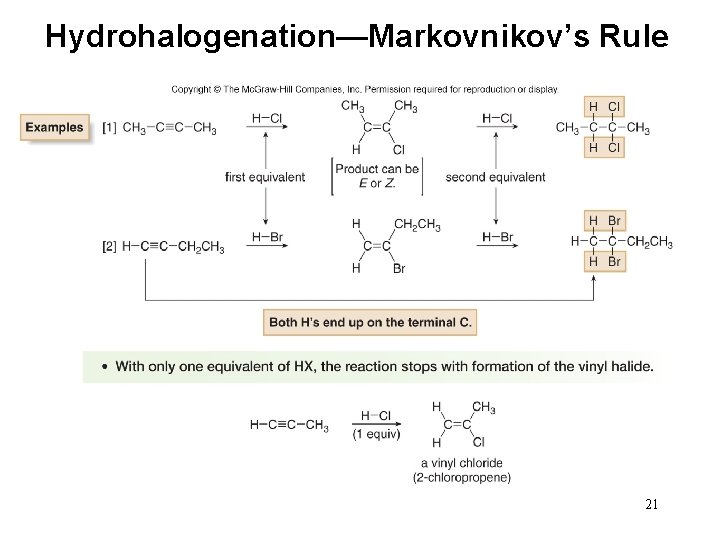
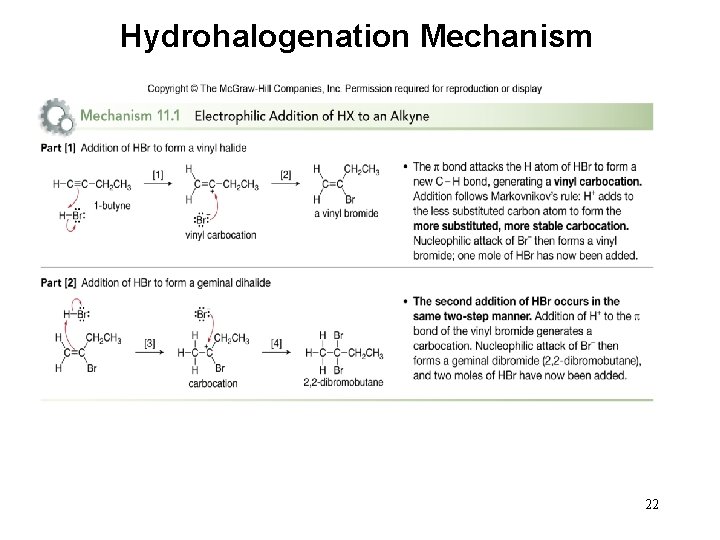
Addition of Hydrogen Halides • Alkynes undergo hydrohalogenation, the addition of hydrogen halides, HX (X = Cl, Br, I). • Two equivalents of HX are usually used: addition of one mole forms a vinyl halide, which then reacts with a second mole of HX to form a geminal dihalide. 20
Hydrohalogenation—Markovnikov’s Rule 21
Hydrohalogenation Mechanism 22
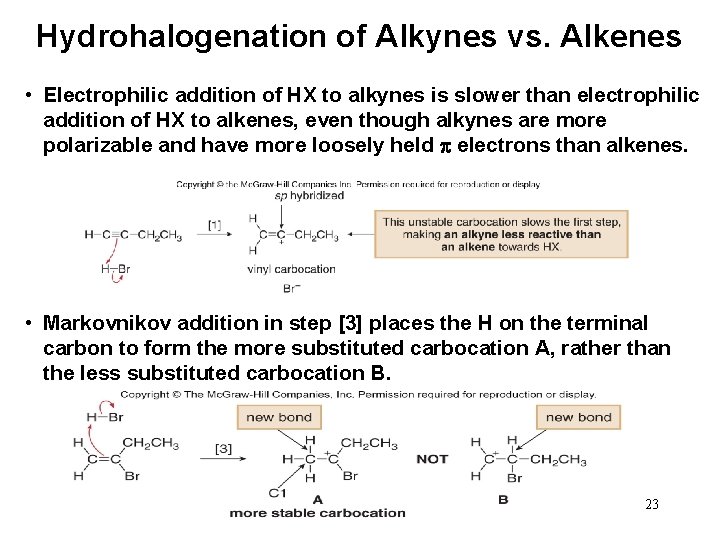
Hydrohalogenation of Alkynes vs. Alkenes • Electrophilic addition of HX to alkynes is slower than electrophilic addition of HX to alkenes, even though alkynes are more polarizable and have more loosely held electrons than alkenes. • Markovnikov addition in step [3] places the H on the terminal carbon to form the more substituted carbocation A, rather than the less substituted carbocation B. 23
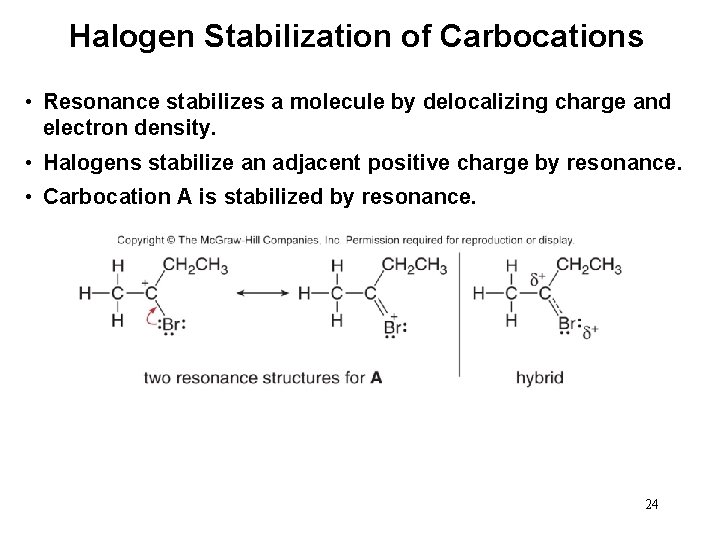
Halogen Stabilization of Carbocations • Resonance stabilizes a molecule by delocalizing charge and electron density. • Halogens stabilize an adjacent positive charge by resonance. • Carbocation A is stabilized by resonance. 24
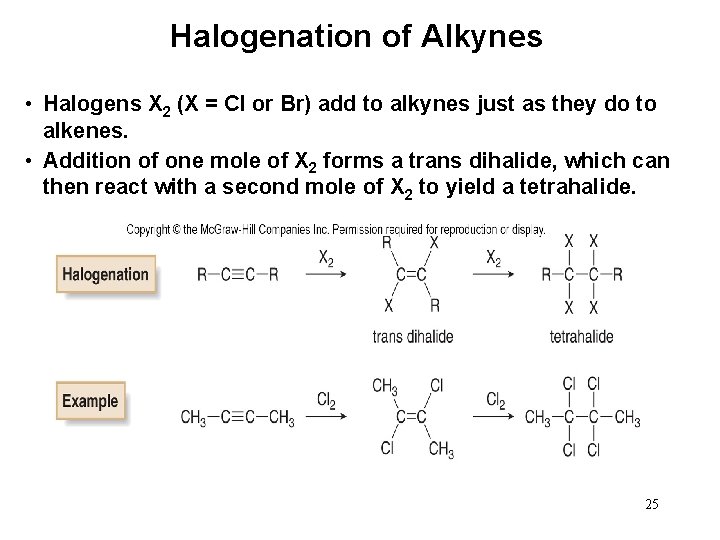
Halogenation of Alkynes • Halogens X 2 (X = Cl or Br) add to alkynes just as they do to alkenes. • Addition of one mole of X 2 forms a trans dihalide, which can then react with a second mole of X 2 to yield a tetrahalide. 25
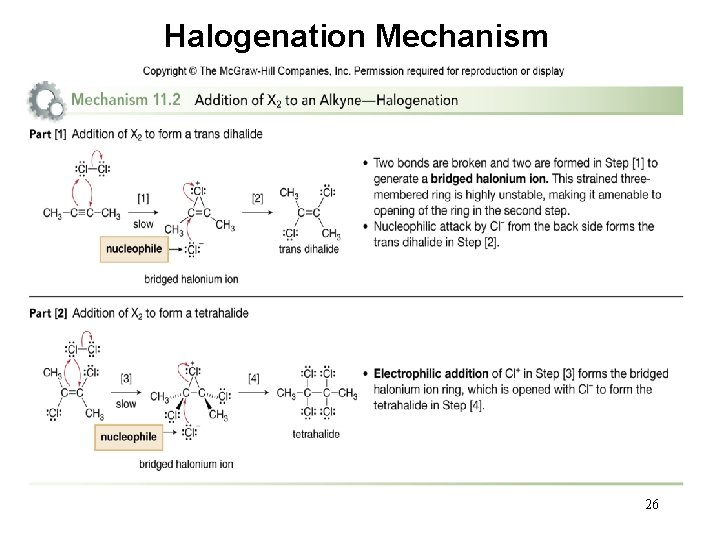
Halogenation Mechanism 26
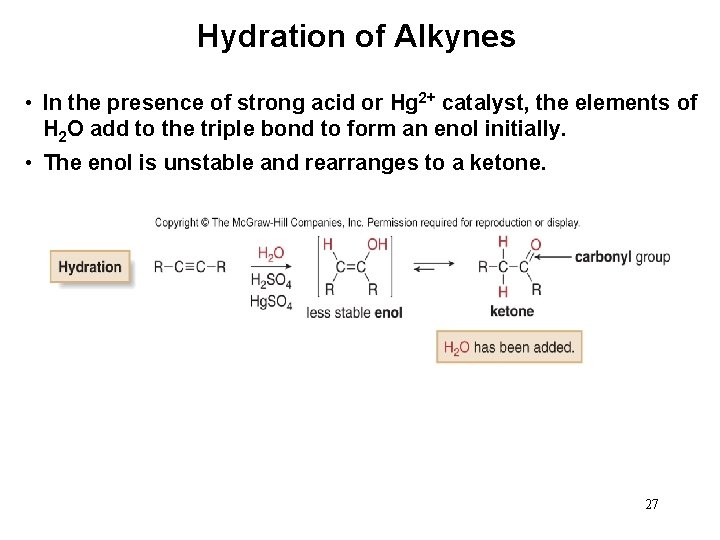
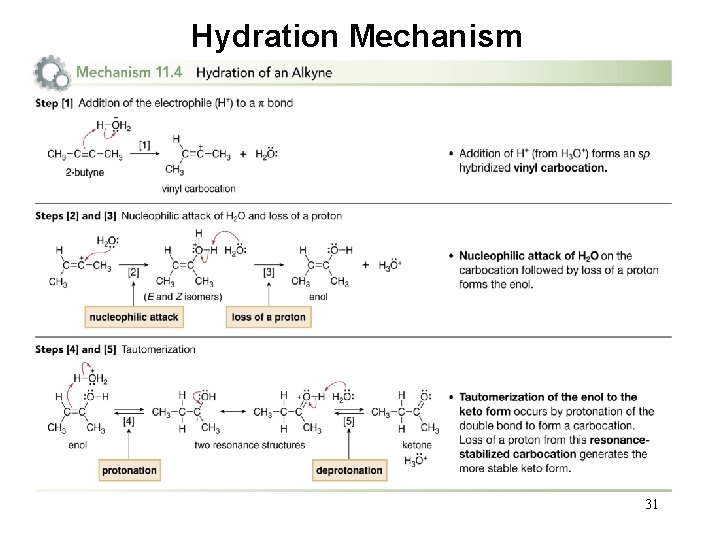
Hydration of Alkynes • In the presence of strong acid or Hg 2+ catalyst, the elements of H 2 O add to the triple bond to form an enol initially. • The enol is unstable and rearranges to a ketone. 27
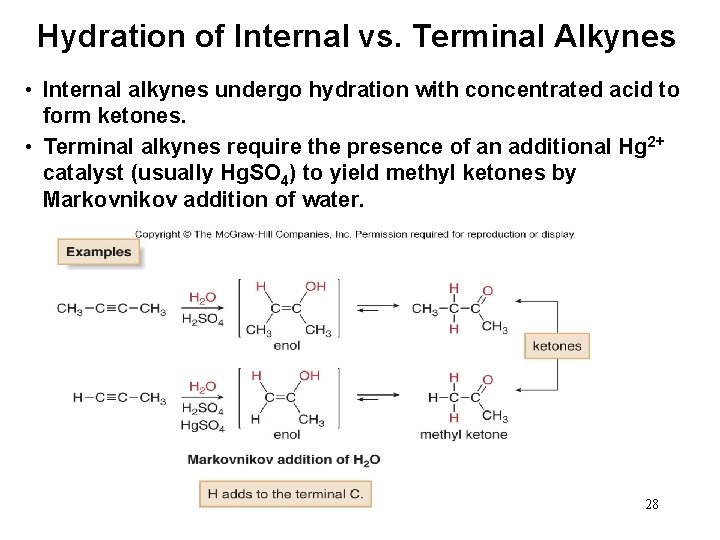
Hydration of Internal vs. Terminal Alkynes • Internal alkynes undergo hydration with concentrated acid to form ketones. • Terminal alkynes require the presence of an additional Hg 2+ catalyst (usually Hg. SO 4) to yield methyl ketones by Markovnikov addition of water. 28
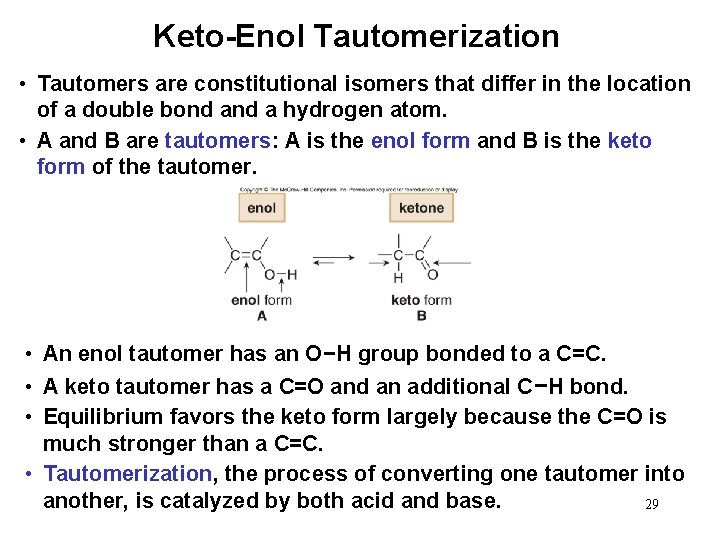
Keto-Enol Tautomerization • Tautomers are constitutional isomers that differ in the location of a double bond a hydrogen atom. • A and B are tautomers: A is the enol form and B is the keto form of the tautomer. • An enol tautomer has an O−H group bonded to a C=C. • A keto tautomer has a C=O and an additional C−H bond. • Equilibrium favors the keto form largely because the C=O is much stronger than a C=C. • Tautomerization, the process of converting one tautomer into another, is catalyzed by both acid and base. 29
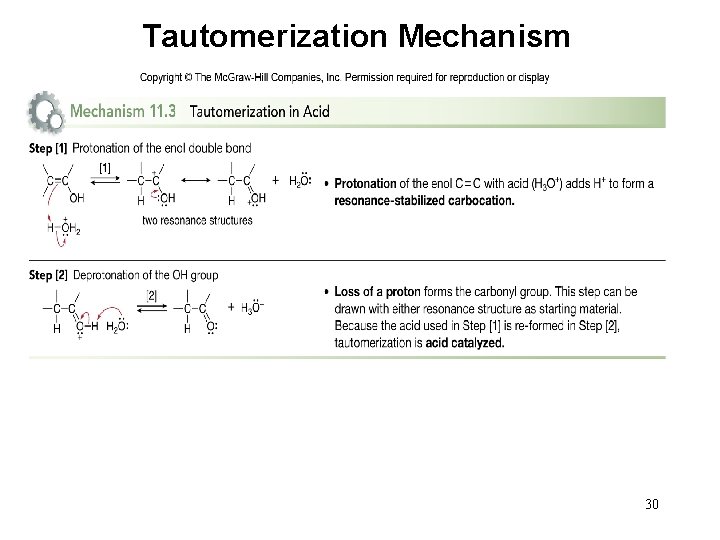
Tautomerization Mechanism 30
Hydration Mechanism 31
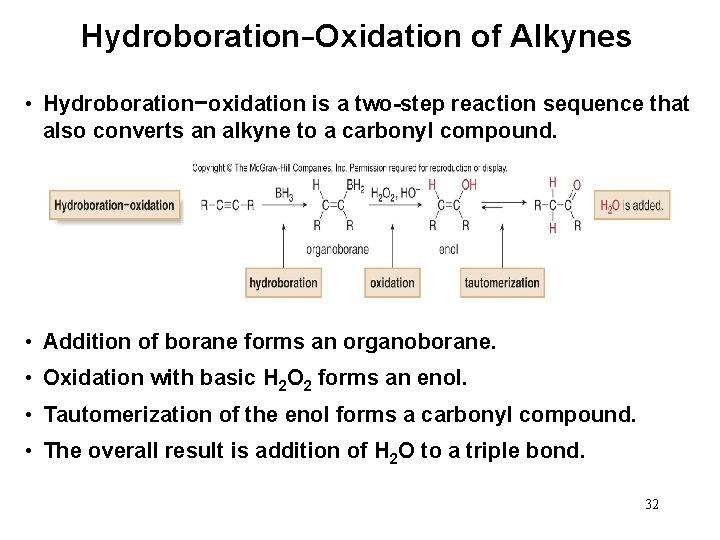
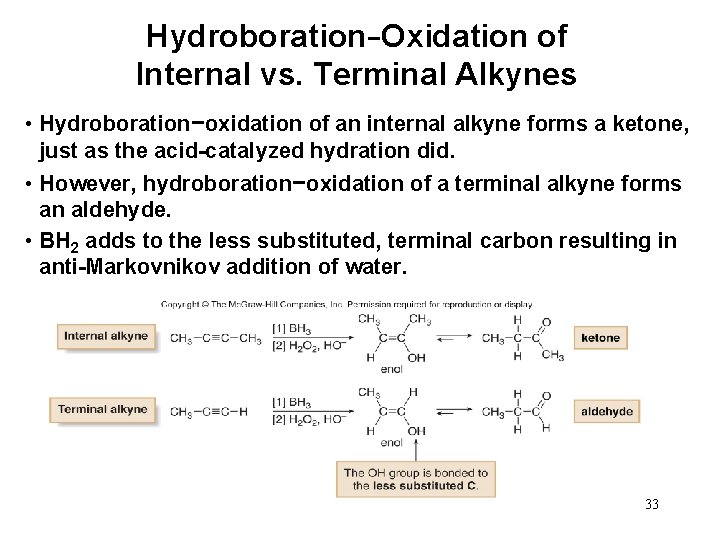
Hydroboration−Oxidation of Alkynes • Hydroboration−oxidation is a two-step reaction sequence that also converts an alkyne to a carbonyl compound. • Addition of borane forms an organoborane. • Oxidation with basic H 2 O 2 forms an enol. • Tautomerization of the enol forms a carbonyl compound. • The overall result is addition of H 2 O to a triple bond. 32
Hydroboration−Oxidation of Internal vs. Terminal Alkynes • Hydroboration−oxidation of an internal alkyne forms a ketone, just as the acid-catalyzed hydration did. • However, hydroboration−oxidation of a terminal alkyne forms an aldehyde. • BH 2 adds to the less substituted, terminal carbon resulting in anti-Markovnikov addition of water. 33
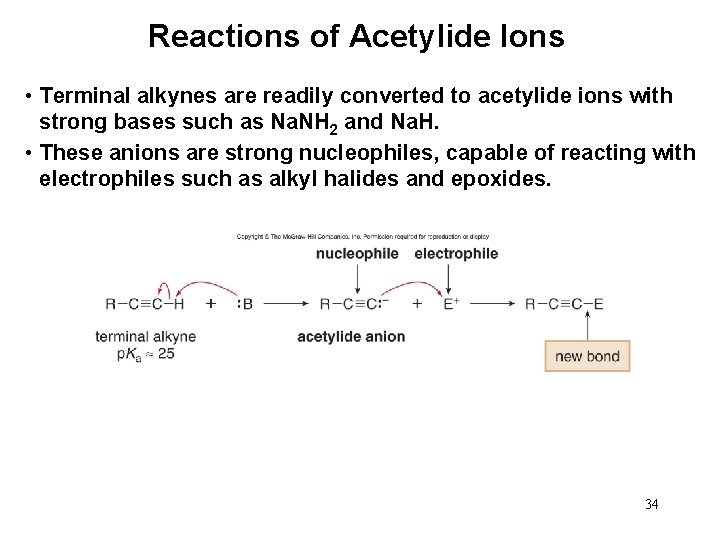
Reactions of Acetylide Ions • Terminal alkynes are readily converted to acetylide ions with strong bases such as Na. NH 2 and Na. H. • These anions are strong nucleophiles, capable of reacting with electrophiles such as alkyl halides and epoxides. 34
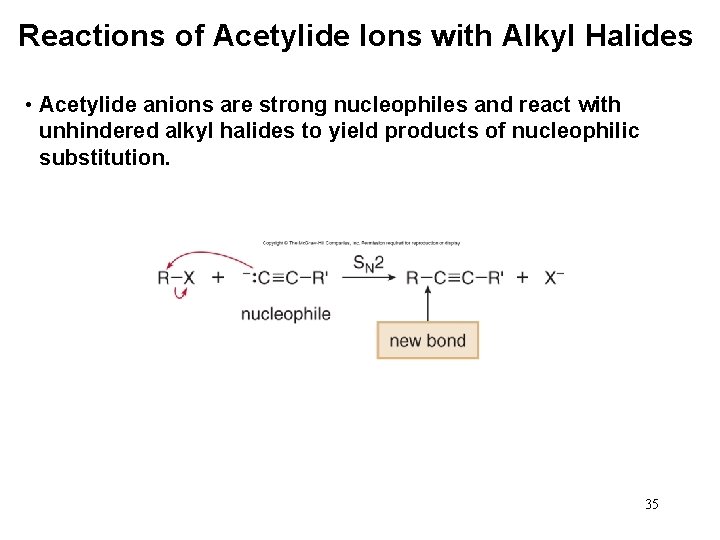
Reactions of Acetylide Ions with Alkyl Halides • Acetylide anions are strong nucleophiles and react with unhindered alkyl halides to yield products of nucleophilic substitution. 35
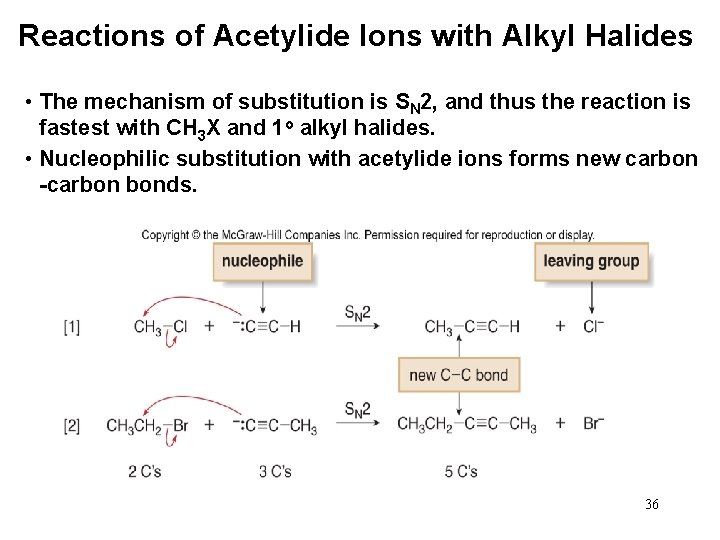
Reactions of Acetylide Ions with Alkyl Halides • The mechanism of substitution is SN 2, and thus the reaction is fastest with CH 3 X and 1 o alkyl halides. • Nucleophilic substitution with acetylide ions forms new carbon -carbon bonds. 36
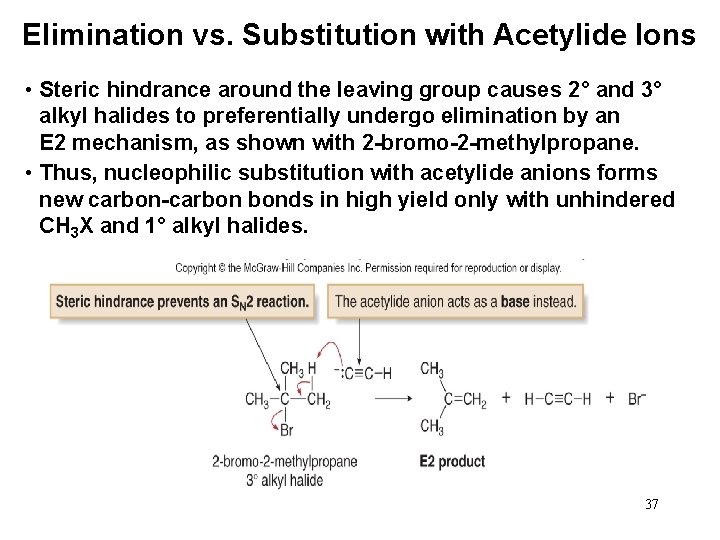
Elimination vs. Substitution with Acetylide Ions • Steric hindrance around the leaving group causes 2° and 3° alkyl halides to preferentially undergo elimination by an E 2 mechanism, as shown with 2 -bromo-2 -methylpropane. • Thus, nucleophilic substitution with acetylide anions forms new carbon-carbon bonds in high yield only with unhindered CH 3 X and 1° alkyl halides. 37
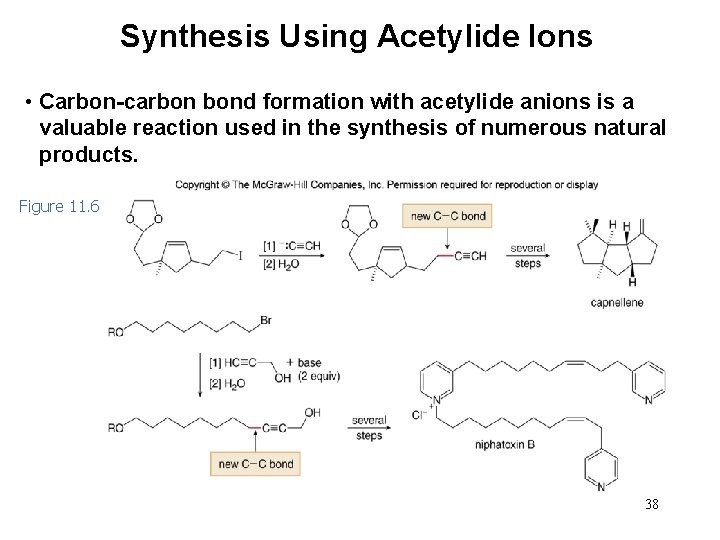
Synthesis Using Acetylide Ions • Carbon-carbon bond formation with acetylide anions is a valuable reaction used in the synthesis of numerous natural products. Figure 11. 6 38
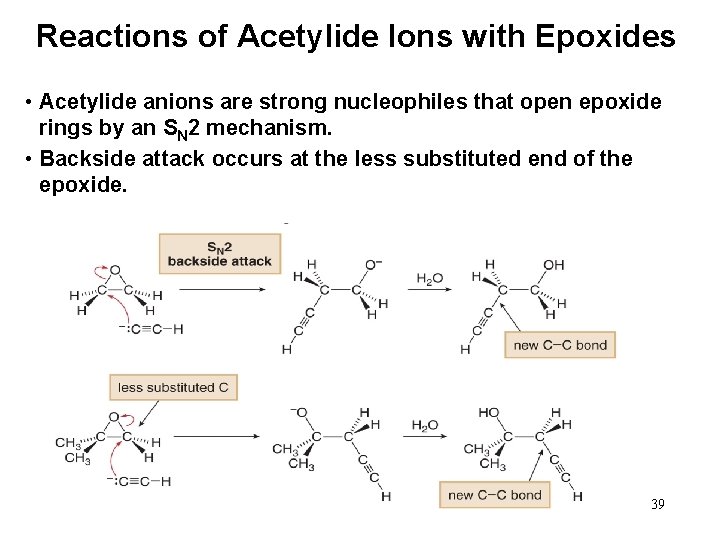
Reactions of Acetylide Ions with Epoxides • Acetylide anions are strong nucleophiles that open epoxide rings by an SN 2 mechanism. • Backside attack occurs at the less substituted end of the epoxide. 39
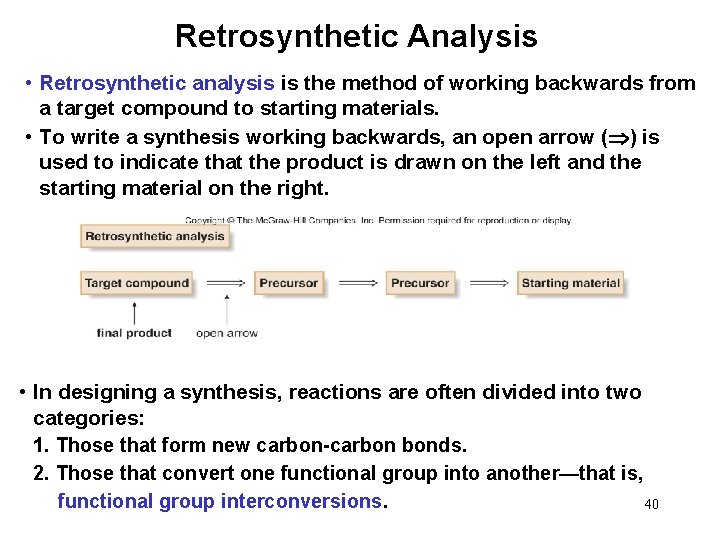
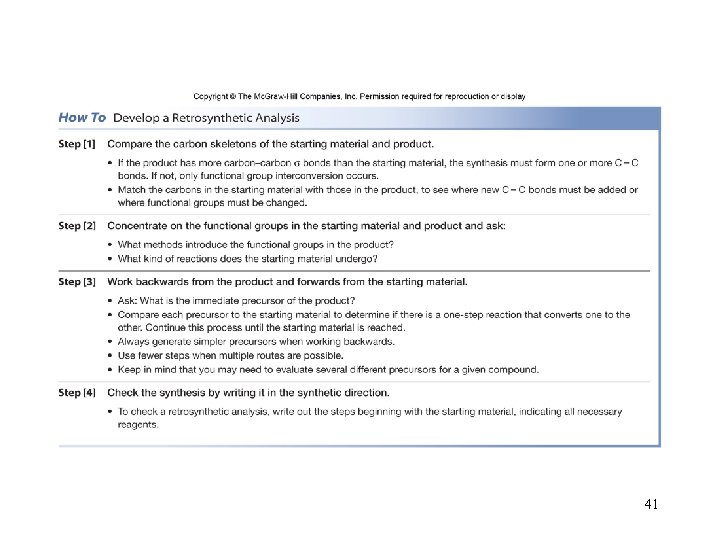
Retrosynthetic Analysis • Retrosynthetic analysis is the method of working backwards from a target compound to starting materials. • To write a synthesis working backwards, an open arrow ( ) is used to indicate that the product is drawn on the left and the starting material on the right. • In designing a synthesis, reactions are often divided into two categories: 1. Those that form new carbon-carbon bonds. 2. Those that convert one functional group into another—that is, functional group interconversions. 40
41
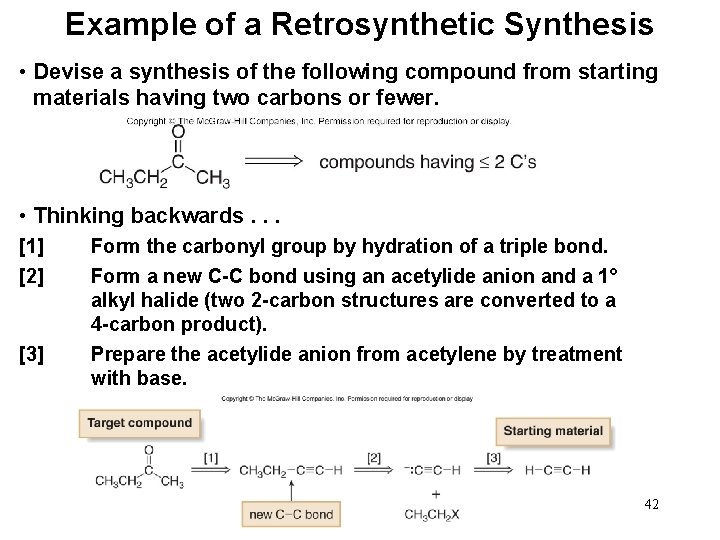
Example of a Retrosynthetic Synthesis • Devise a synthesis of the following compound from starting materials having two carbons or fewer. • Thinking backwards. . . [1] Form the carbonyl group by hydration of a triple bond. [2] Form a new C-C bond using an acetylide anion and a 1° alkyl halide (two 2 -carbon structures are converted to a 4 -carbon product). Prepare the acetylide anion from acetylene by treatment with base. [3] 42
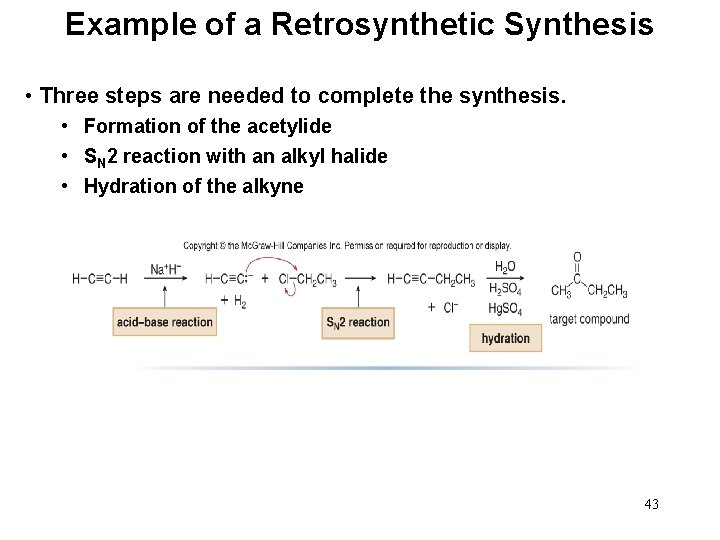
Example of a Retrosynthetic Synthesis • Three steps are needed to complete the synthesis. • Formation of the acetylide • SN 2 reaction with an alkyl halide • Hydration of the alkyne 43