Lesson 2 1 1 The Power of Communication
- Slides: 43
Lesson 2. 1. 1. The Power of Communication
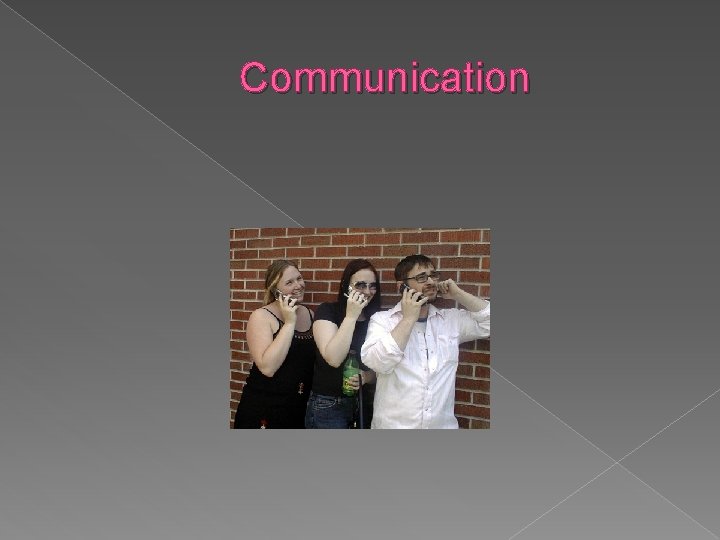
Communication
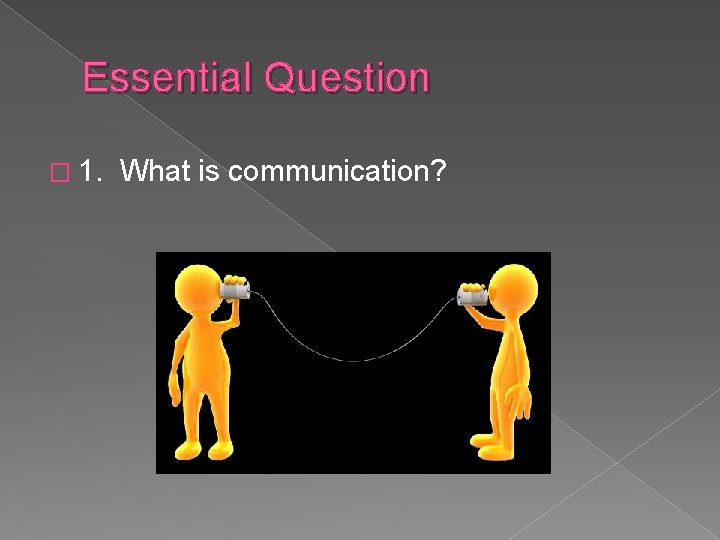
Essential Question � 1. What is communication?
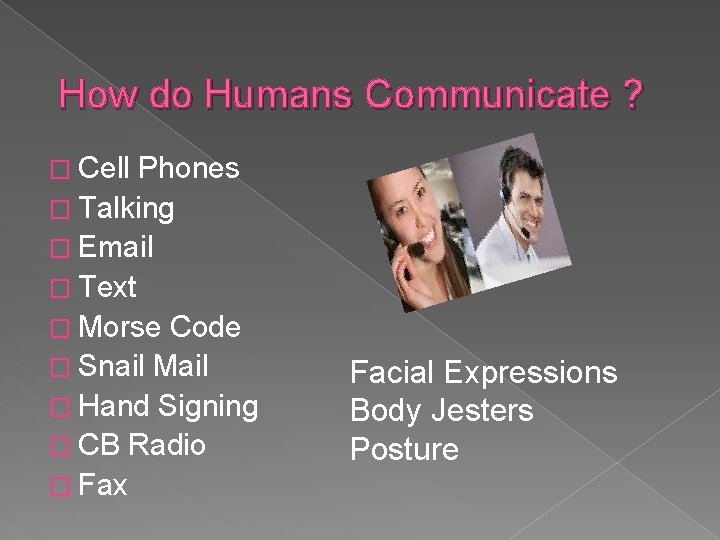
How do Humans Communicate ? � Cell Phones � Talking � Email � Text � Morse Code � Snail Mail � Hand Signing � CB Radio � Fax Facial Expressions Body Jesters Posture
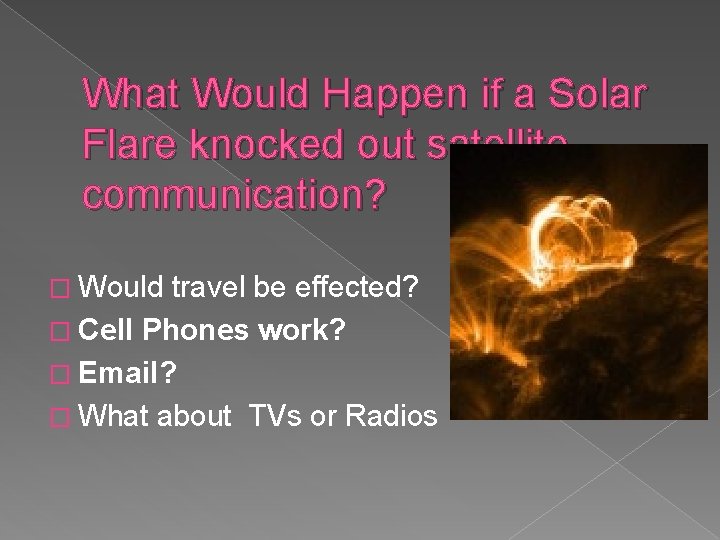
What Would Happen if a Solar Flare knocked out satellite communication? � Would travel be effected? � Cell Phones work? � Email? � What about TVs or Radios
If ALL ELECTRICITY went out how would humans relay messages or get news � Horses? � Trains? � Boats? � Snail Mail ?
How does communication relate to the human body � How does communication take place in humans? � What does it control? � What happens without it?
How well do you Communicate Activity 2. 1. 1 Part 1 � Partners back to back, each with 12 blocks � Partner 1 builds a structure (not a box) � Partner 1 gives instructions to partner 2 on how to build the structure. � Give one sentence at a time , Once said it can not be repeated. � Give 1 direction/step for each of the 12 blocks � Compare structures for accuracy � Complete C. Q. and team activity questions
How well do you Communicate Activity 2. 1. 1 Part II � Get into groups of 4 � Take about 20 minutes to discuss and answer the questions the teams are to complete � Discuss as a group your team responses
Essential Questions 2. 1 2. What are ways communication occurs in machines and in the human body? 3. What are consequences of miscommunication in the body?
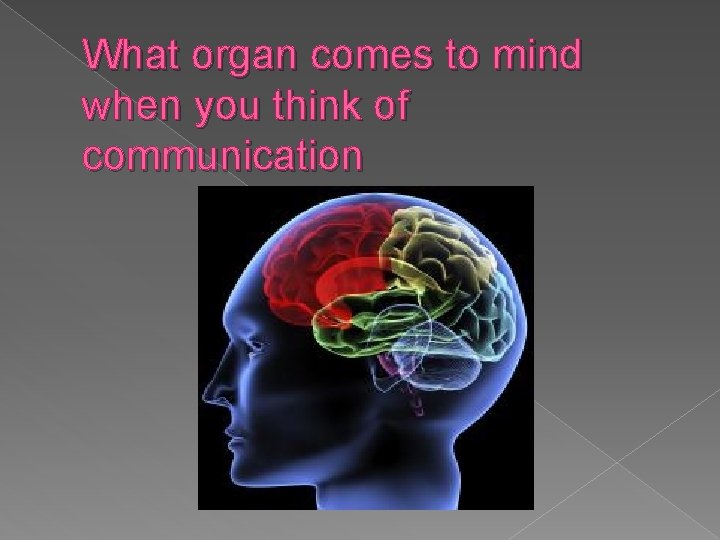
What organ comes to mind when you think of communication
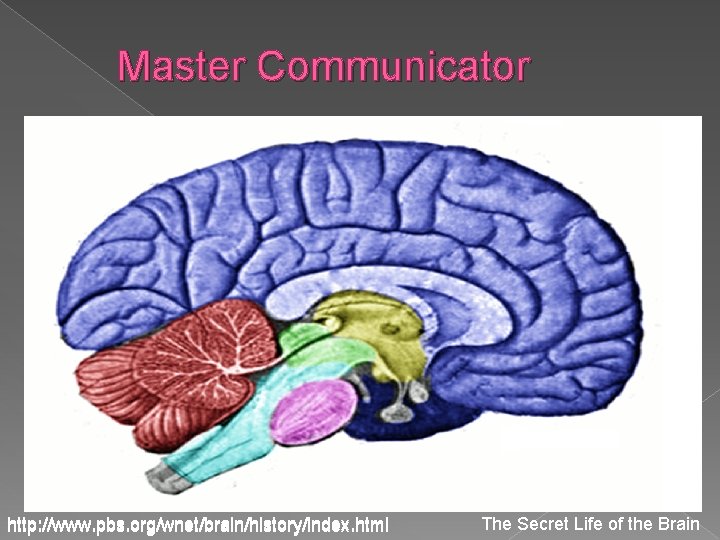
Master Communicator � kkl http: //www. pbs. org/wnet/brain/history/index. html The Secret Life of the Brain
Pushing the Limits- Brain Power - DVD
What actions does you brain control? � Your alarm goes off and your arm flies up to hit the snooze button. You drag yourself out of bed and decide what to wear and what to have for breakfast. Your sister’s pancakes smell good so you grab a few bites while she’s not looking and head out the door. Running late (as usual), you sprint to catch your bus. You struggle to keep your balance as you head to the back of the already moving vehicle. A younger kid slams into your side with his book bag. You are about to yell, but you figure it’s not worth it and grab a seat. You finish up the last of your math homework and turn on your i. Pod to clear your head. You have two tests and then a game after school. You think to yourself, “How am I going to get through the day? ”
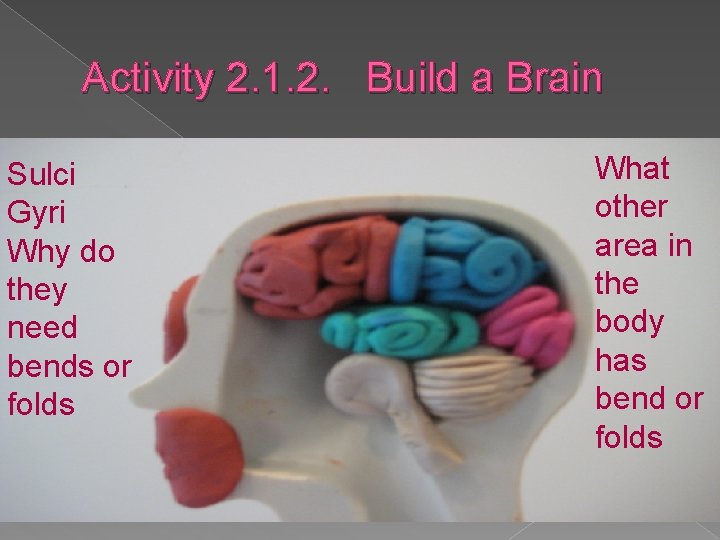
Activity 2. 1. 2. Build a Brain Sulci Gyri Why do they need bends or folds What other area in the body has bend or folds
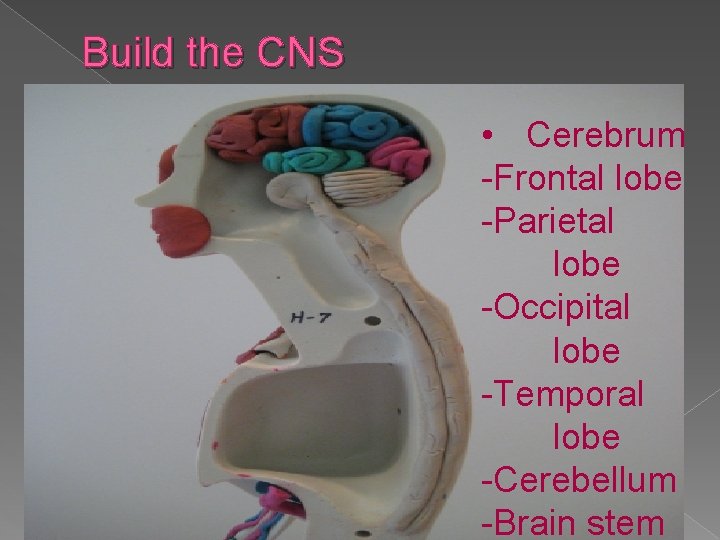
Build the CNS • Cerebrum -Frontal lobe -Parietal lobe -Occipital lobe -Temporal lobe -Cerebellum -Brain stem
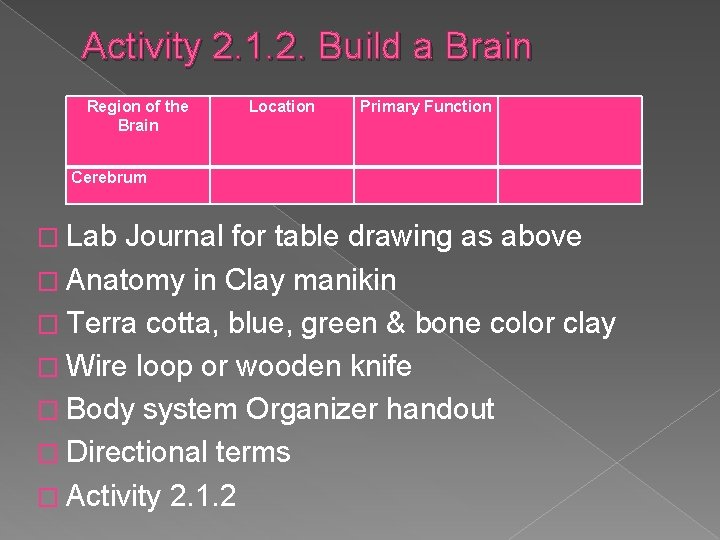
Activity 2. 1. 2. Build a Brain Region of the Brain Cerebrum � Lab Location Primary Function Journal for table drawing as above � Anatomy in Clay manikin � Terra cotta, blue, green & bone color clay � Wire loop or wooden knife � Body system Organizer handout � Directional terms � Activity 2. 1. 2
Essential Question 4. How do the central nervous system and the peripheral nervous system work together to control the body? 5. What are the functions of the main regions of the brain?
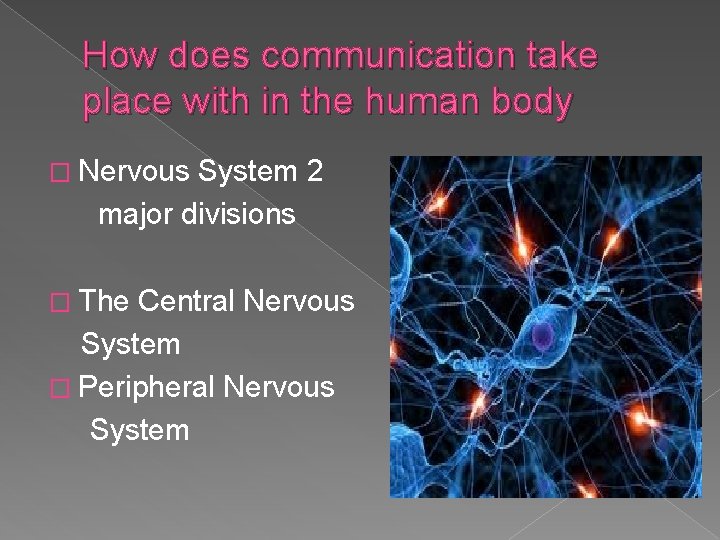
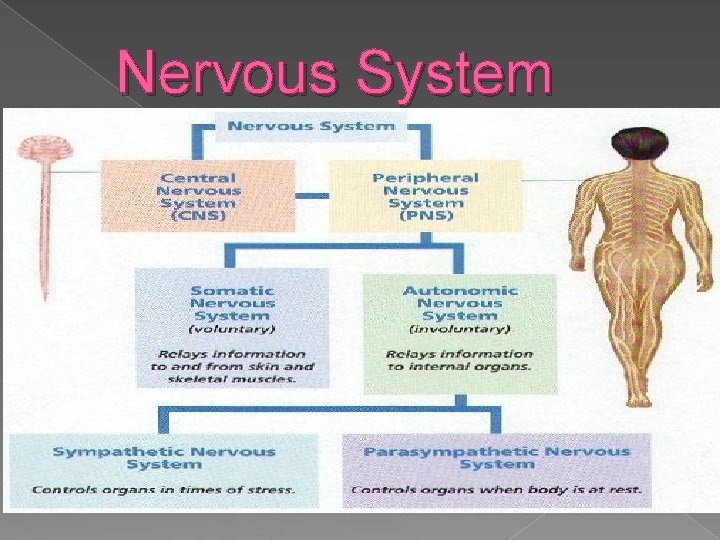
How does communication take place with in the human body � Nervous System 2 major divisions � The Central Nervous System � Peripheral Nervous System
How does The Brain Allows us to Communicate. by what means? � Verbal Projection � Auditory Reception � Visual Reception � Touch Reception � ALL of these are NERVE Connections that travel to and from the Brain
Central Nervous System Brain, and Spinal Cord Plus Cranial nerves 1 � Spinal Cord is a two-way conduction path carrying impulses to and away from the brain through the hole in the skull known as the foramen magnum. � The Brain is divided into four major regions: cerebral hemisphere, diencephalon, brain stem, and cerebellum
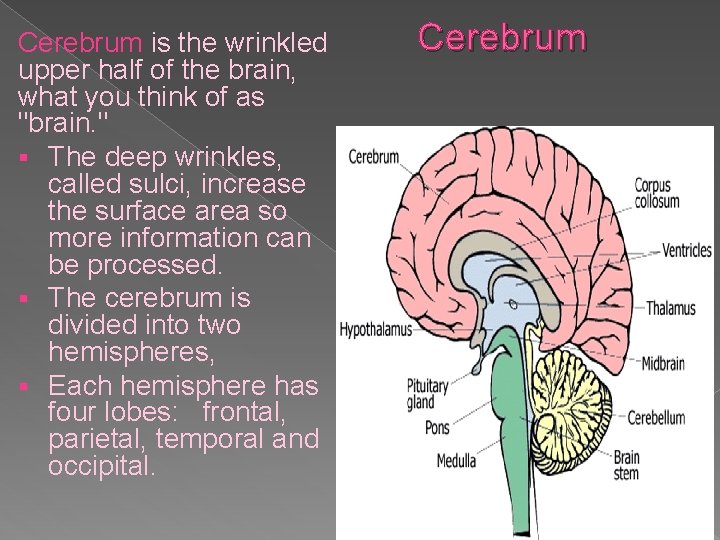
Cerebrum is the wrinkled upper half of the brain, what you think of as "brain. " § The deep wrinkles, called sulci, increase the surface area so more information can be processed. § The cerebrum is divided into two hemispheres, § Each hemisphere has four lobes: frontal, parietal, temporal and occipital. Cerebrum
Lobes of the 2 hemisphere � The frontal lobe, behind the forehead, Ø controls thinking, planning, judgment and movement. � The parietal lobe, on the top of the head, Ø interprets sensory information, from the nerves regarding taste, smell and touch. Spatial Orientation � The occipital lobe in the back of the head Ø main center for visual processing. � The temporal lobe, on the sides near the temples, Ø organizes sensory input, auditory perception, language and speech production, as well as many memories are stored there.
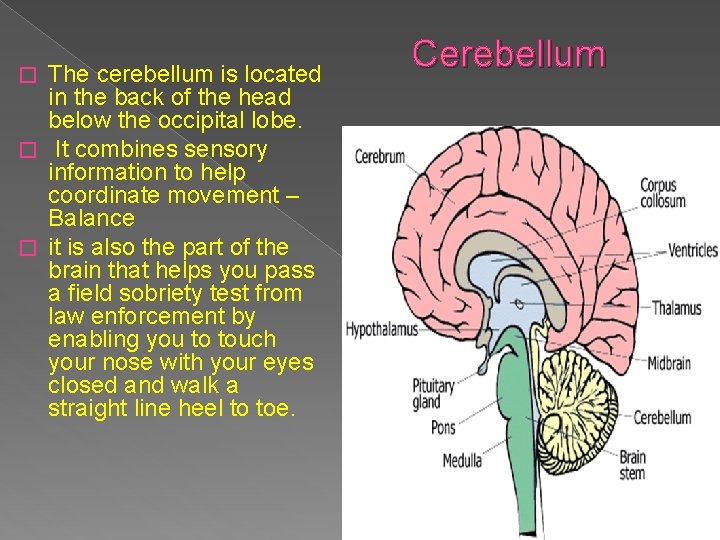
The cerebellum is located in the back of the head below the occipital lobe. � It combines sensory information to help coordinate movement – Balance � it is also the part of the brain that helps you pass a field sobriety test from law enforcement by enabling you to touch your nose with your eyes closed and walk a straight line heel to toe. � Cerebellum
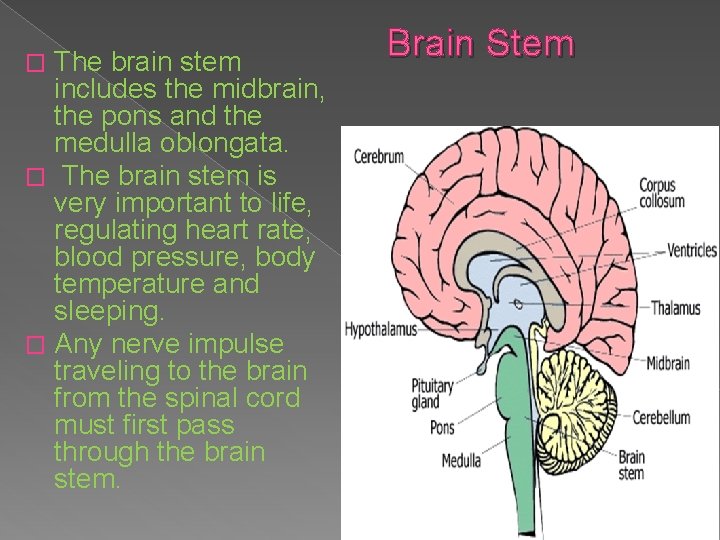
The brain stem includes the midbrain, the pons and the medulla oblongata. � The brain stem is very important to life, regulating heart rate, blood pressure, body temperature and sleeping. � Any nerve impulse traveling to the brain from the spinal cord must first pass through the brain stem. � Brain Stem
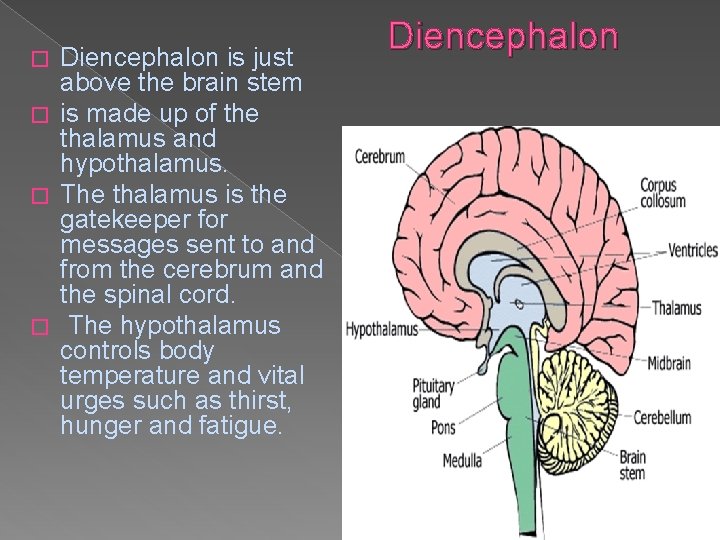
Diencephalon is just above the brain stem � is made up of the thalamus and hypothalamus. � The thalamus is the gatekeeper for messages sent to and from the cerebrum and the spinal cord. � The hypothalamus controls body temperature and vital urges such as thirst, hunger and fatigue. � Diencephalon
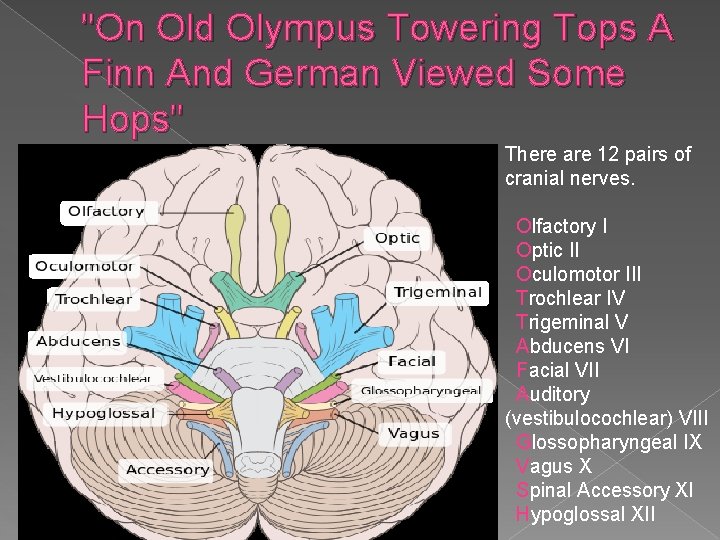
Peripheral Nervous System Sensory and Motor Peripheral Nerves are all nerves that are not part of the brain or spinal cord � Example: fingertip nerves for pain and temperature � Cranial nerves 2 -12 originate in the CNS. However the cranial nerve axons extend beyond the brain and are therefore considered part of PNS � Spinal nerves branch from the spinal cord and the autonomous nervous system (divided into the sympathetic and parasympathetic nervous system). �
Nervous System
"On Old Olympus Towering Tops A Finn And German Viewed Some Hops" � There are 12 pairs of cranial nerves. Olfactory I Optic II Oculomotor III Trochlear IV Trigeminal V Abducens VI Facial VII Auditory (vestibulocochlear) VIII Glossopharyngeal IX Vagus X Spinal Accessory XI Hypoglossal XII
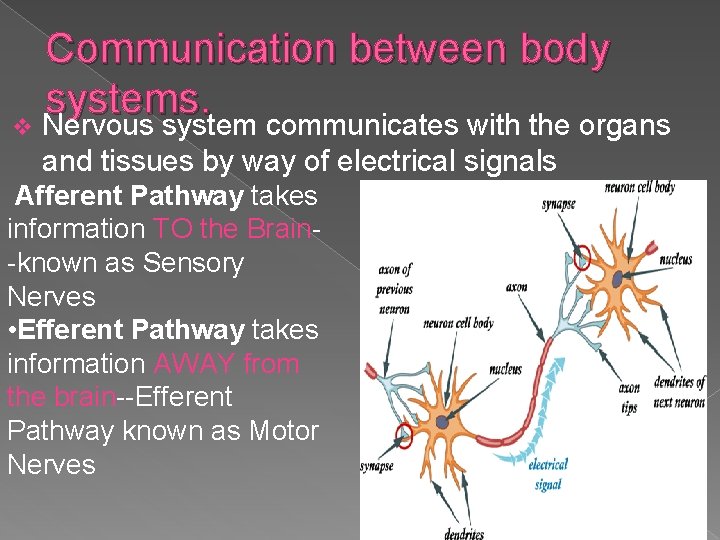
Communication between body systems. v Nervous system communicates with the organs and tissues by way of electrical signals Afferent Pathway takes information TO the Brain-known as Sensory Nerves • Efferent Pathway takes information AWAY from the brain--Efferent Pathway known as Motor Nerves
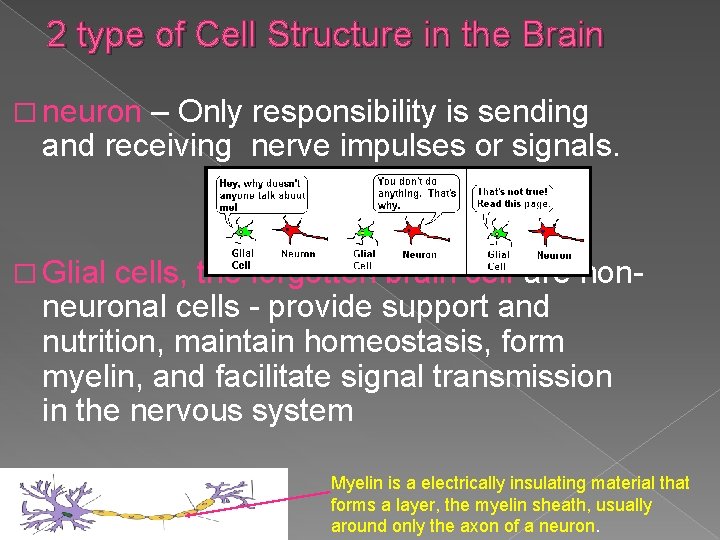
2 type of Cell Structure in the Brain � neuron – Only responsibility is sending and receiving nerve impulses or signals. � Glial cells, the forgotten brain cell-are nonneuronal cells - provide support and nutrition, maintain homeostasis, form myelin, and facilitate signal transmission in the nervous system Myelin is a electrically insulating material that forms a layer, the myelin sheath, usually around only the axon of a neuron.
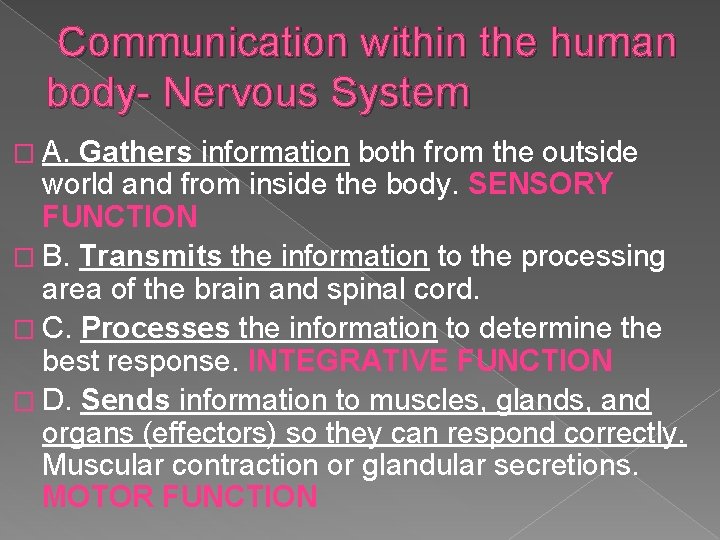
Communication within the human body- Nervous System � A. Gathers information both from the outside world and from inside the body. SENSORY FUNCTION � B. Transmits the information to the processing area of the brain and spinal cord. � C. Processes the information to determine the best response. INTEGRATIVE FUNCTION � D. Sends information to muscles, glands, and organs (effectors) so they can respond correctly. Muscular contraction or glandular secretions. MOTOR FUNCTION
Brain Map and Phineas Gage � View to 3: 36 = 4 girls demo brain http: //www. youtube. com/watch? v=ng 1 h. XCUIKg
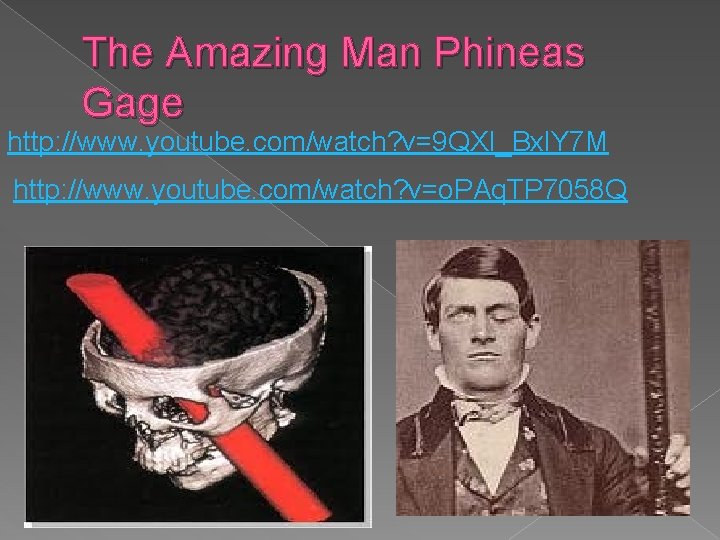
The Amazing Man Phineas Gage http: //www. youtube. com/watch? v=9 QXI_Bxl. Y 7 M http: //www. youtube. com/watch? v=o. PAq. TP 7058 Q
Activity 2. 1. 3 Map a Brain � Equipment needed � Computer /Internet / Microsoft Excel � White Latex free swim cap � Sharpie colored markers � Anatomy in Clay Maniken � Lab Journal
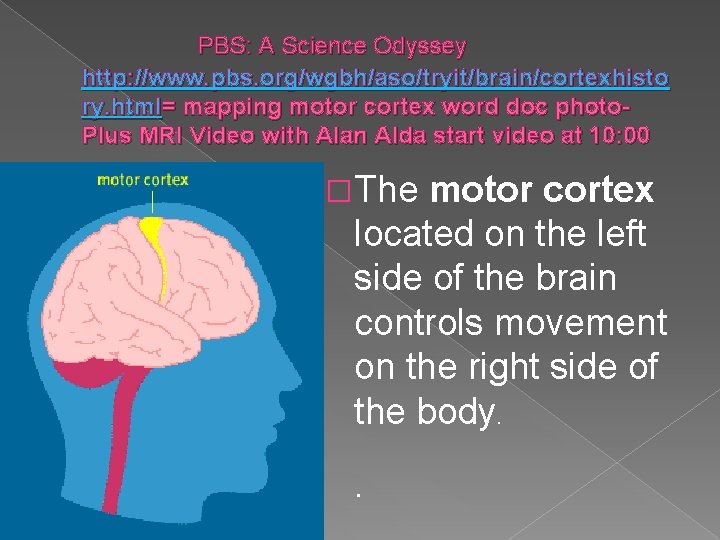
PBS: A Science Odyssey http: //www. pbs. org/wgbh/aso/tryit/brain/cortexhisto ry. html= mapping motor cortex word doc photo- Plus MRI Video with Alan Alda start video at 10: 00 �The motor cortex located on the left side of the brain controls movement on the right side of the body. .
Part II Map Brain on Diagram /Swim Cap On one side of the cap map the structures located on the external view of the brain. � On the other side of the cap display an internal view of the brain and show functional areas. � An example layout of the exterior and interior brain found at the National Geographic: Brain Anatomy site: http: //science. nationalgeographic. com/science/he alth-and-human-body/brainarticle. html View this site for map structure model �
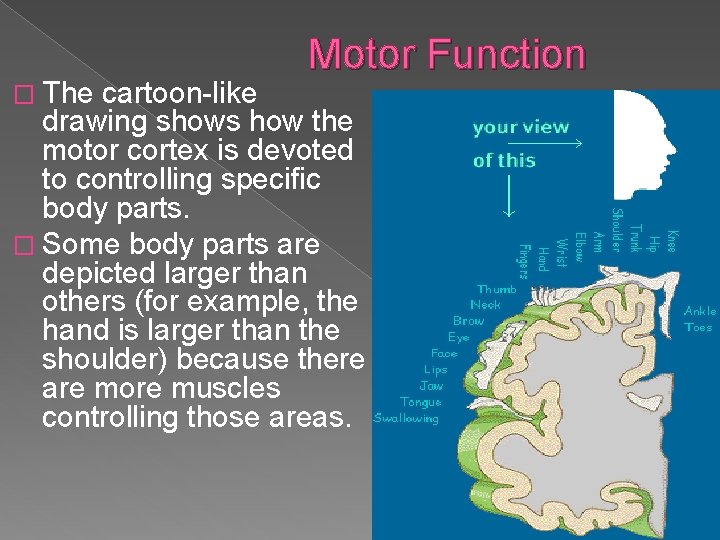
� The Motor Function cartoon-like drawing shows how the motor cortex is devoted to controlling specific body parts. � Some body parts are depicted larger than others (for example, the hand is larger than the shoulder) because there are more muscles controlling those areas.
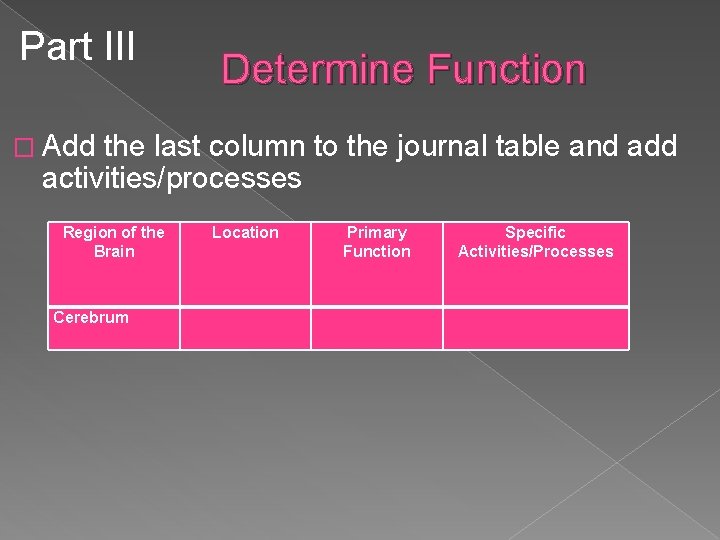
Part III Determine Function � Add the last column to the journal table and add activities/processes Region of the Brain Cerebrum Location Primary Function Specific Activities/Processes
Brain Function � Can we live with out part of the brain. � What are the functions of the different lobe of the brain. What are the facilities. � What is Phrenology? � Franz Joseph Gall 9 March 1758 – 22 August 1828 early pioneer in the study of the localization of mental functions in the brain.
Essential Questions 6. How do scientists determine which areas of the brain are associated with specific actions, emotions or functions?
� Key Terms Lesson 2. 1 The Brain – Brain Stem- The part of the brain composed of the midbrain, pons, and medulla oblongata and connecting the spinal cord with the forebrain and cerebrum. � Central nervous system- The part of the nervous system which in vertebrates consists of the brain and spinal cord, to which sensory impulses are transmitted and from which motor impulses pass out, and which supervises and coordinates the activity of the entire nervous system. � Cerebellum- A large dorsally projecting part of the brain concerned especially with the coordination of muscles and the maintenance of bodily equilibrium, situated between the brain stem and the back of the cerebrum and formed in humans of two lateral lobes and a median lobe. � Cerebrum- The dorsal portion, composed of right and left hemispheres, of the vertebrate forebrain; the integrating center for memory, learning, emotions, and other highly complex function of the central nervous system.
� Key Terms Lesson 2. 1 The Brain – convoluted ridge between anatomical grooves. Gyrus- A � Limbic System- A group of subcortical structures (as the hypothalamus, the hippocampus, and the amygdala) of the brain that are concerned especially with emotion and motivation. � Lobe- A division of a body organ (as the brain, lungs, or liver) marked off by a fissure on the surface. � Peripheral nervous system- The part of the nervous system that is outside the central nervous system and comprises the cranial nerves excepting the optic nerve, the spinal nerves, and the autonomic nervous system. � Phrenology- The study of the conformation of the skull based on the belief that it is indicative of mental faculties and character. � Sulcus- A shallow furrow on the surface of the brain separating adjacent gyri.