EVALUATION MANAGEMENT OF PULMONARY ARTERIAL HYPERTENSION Dr Sandeep
- Slides: 76
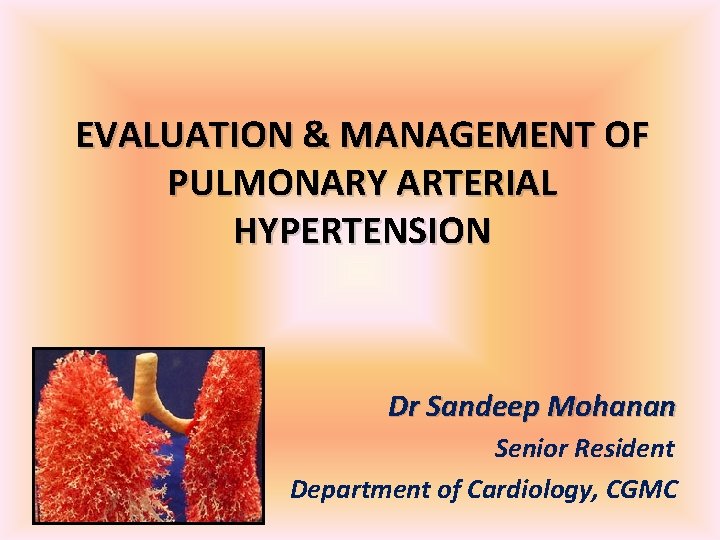
EVALUATION & MANAGEMENT OF PULMONARY ARTERIAL HYPERTENSION Dr Sandeep Mohanan Senior Resident Department of Cardiology, CGMC
OUTLINE EVALUATION • • Clinical diagnosis of PAH Diagnostic work up : 1) Initial , 2) Elaborate Prognostic work up Strategic work up - AVT MANAGEMENT • • Current pharmacological armamentarium - AT Surgical measures Follow up AT for specific aetiologies of PAH 2
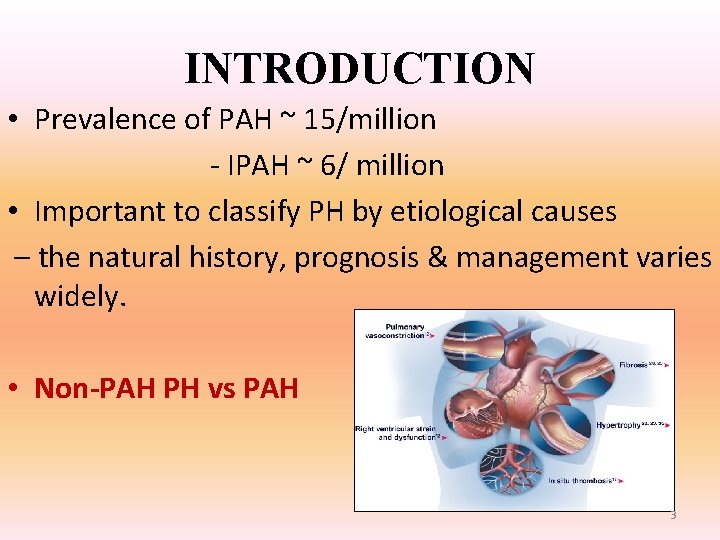
INTRODUCTION • Prevalence of PAH ~ 15/million - IPAH ~ 6/ million • Important to classify PH by etiological causes – the natural history, prognosis & management varies widely. • Non-PAH PH vs PAH 3
Case scenario. . • A 36 year old female - No significant past medical history - c/o progressive DOE from NYHA I to II over previous 6 months. - Tiredness, fatigue - O/E : Tachypnoeic, Tachycardia, , Mild pedal edema, Loud P 2, Pulmonary ESM, Pulmonary phasic EC BA, Pneumonia, ILD, RHD, CHD, Anaemia, Thyroid PAH 4 disorders, HTN, CAD, Psychogenic. . . PAH
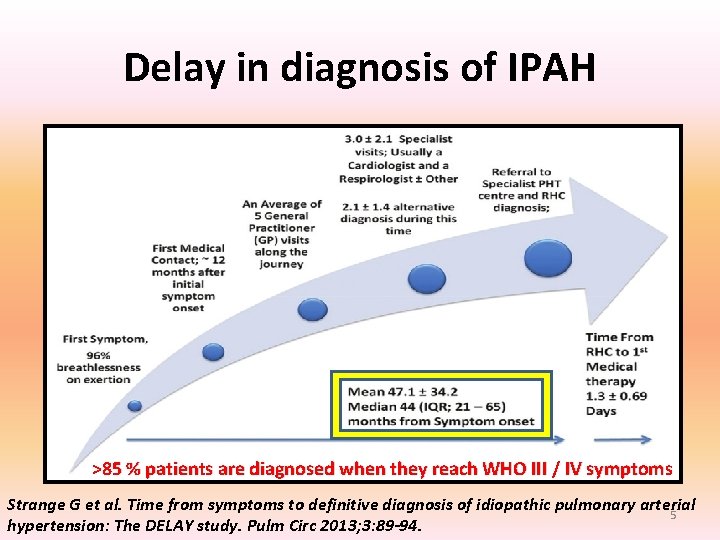
Delay in diagnosis of IPAH >85 % patients are diagnosed when they reach WHO III / IV symptoms Strange G et al. Time from symptoms to definitive diagnosis of idiopathic pulmonary arterial 5 hypertension: The DELAY study. Pulm Circ 2013; 3: 89 -94.
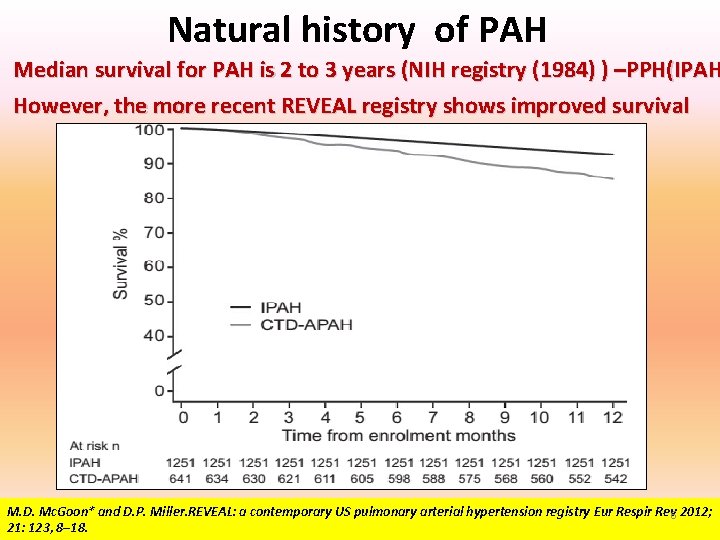
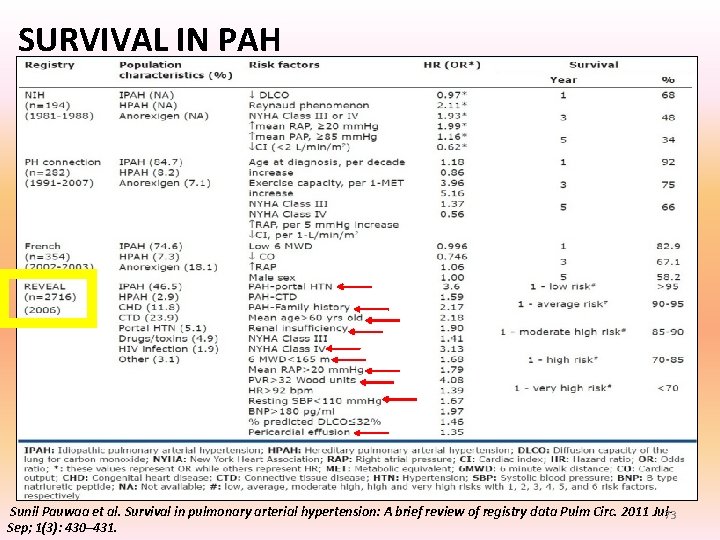
Natural history of PAH Median survival for PAH is 2 to 3 years (NIH registry (1984) ) –PPH(IPAH However, the more recent REVEAL registry shows improved survival Mc. Laughlin VV et al. Prognosis of pulmonary arterial hypertension: ACCP evidence-based clinical practice M. D. Mc. Goon* and D. P. Miller. REVEAL: a contemporary US pulmonary arterial hypertension registry Eur Respir Rev 2012; 6 guidelines. Chest. 2004; 126: 78 S– 92 S 21: 123, 8– 18.
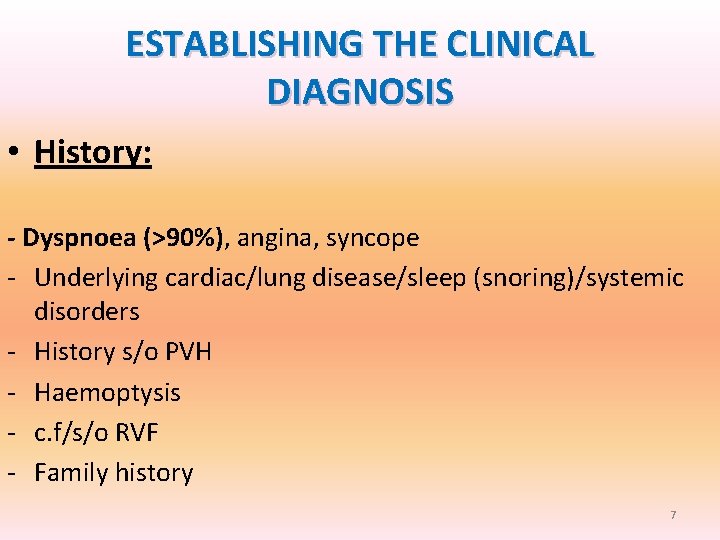
ESTABLISHING THE CLINICAL DIAGNOSIS • History: - Dyspnoea (>90%), angina, syncope - Underlying cardiac/lung disease/sleep (snoring)/systemic disorders - History s/o PVH - Haemoptysis - c. f/s/o RVF - Family history 7
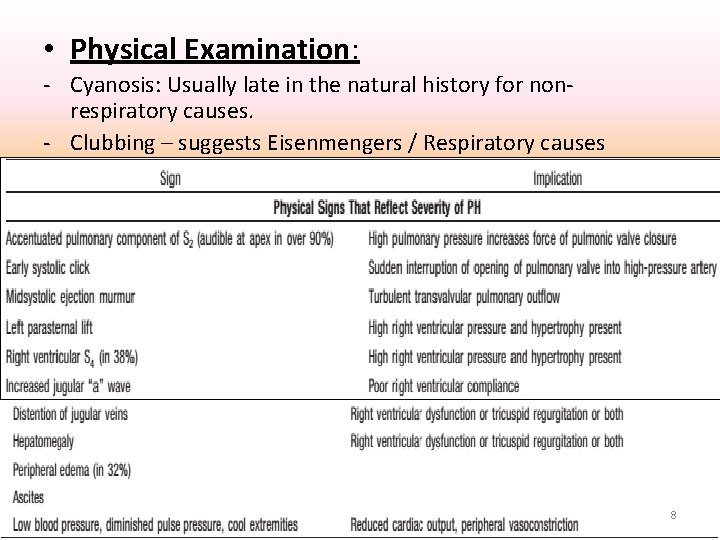
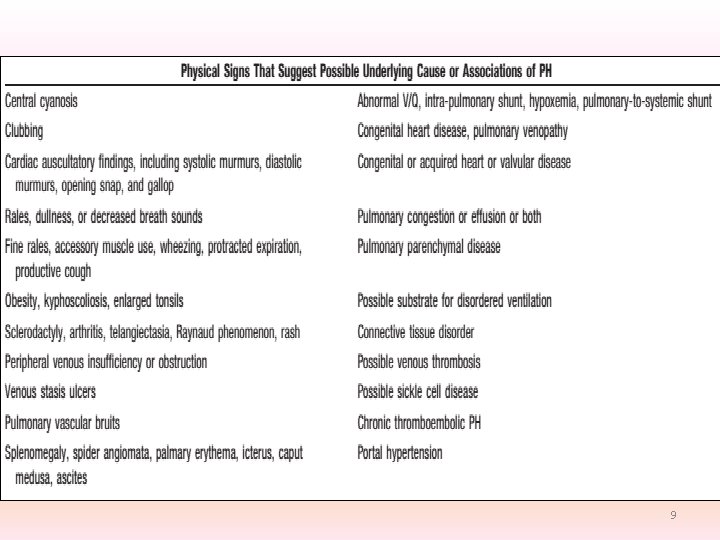
• Physical Examination: - Cyanosis: Usually late in the natural history for nonrespiratory causes. - Clubbing – suggests Eisenmengers / Respiratory causes • Respiratory system examination • BMI, Neck height/width, Thyroid examination 8
9
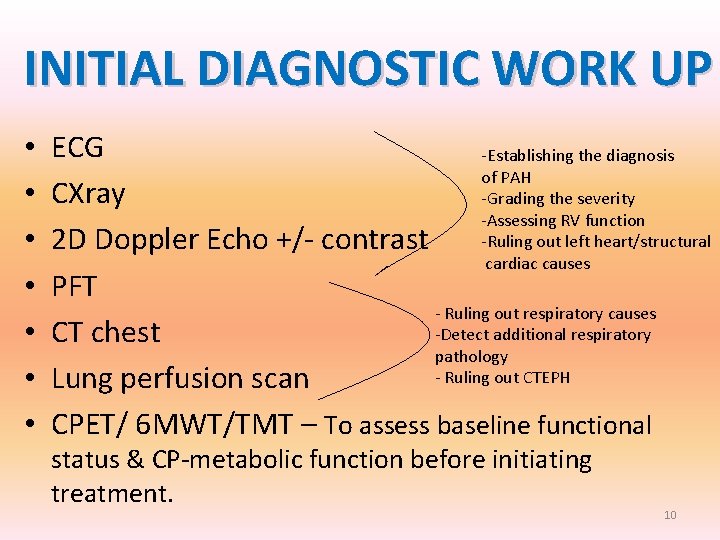
INITIAL DIAGNOSTIC WORK UP • • ECG -Establishing the diagnosis of PAH CXray -Grading the severity -Assessing RV function -Ruling out left heart/structural 2 D Doppler Echo +/- contrast cardiac causes PFT - Ruling out respiratory causes -Detect additional respiratory CT chest pathology - Ruling out CTEPH Lung perfusion scan CPET/ 6 MWT/TMT – To assess baseline functional status & CP-metabolic function before initiating treatment. 10
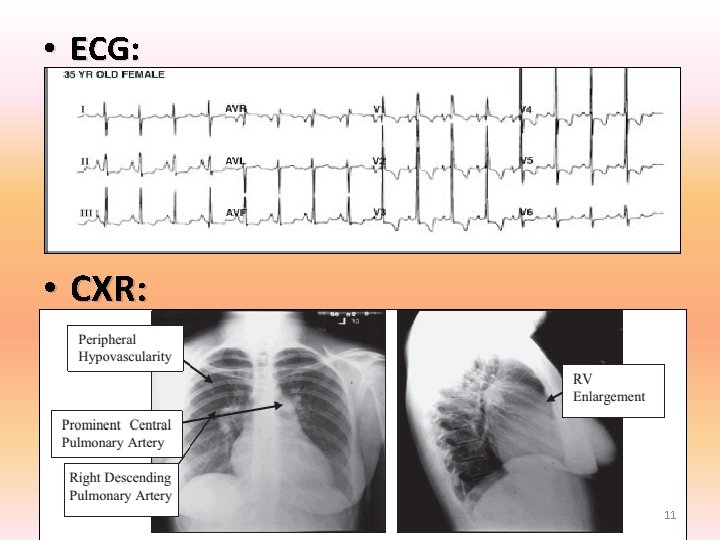
• ECG: • CXR: 11
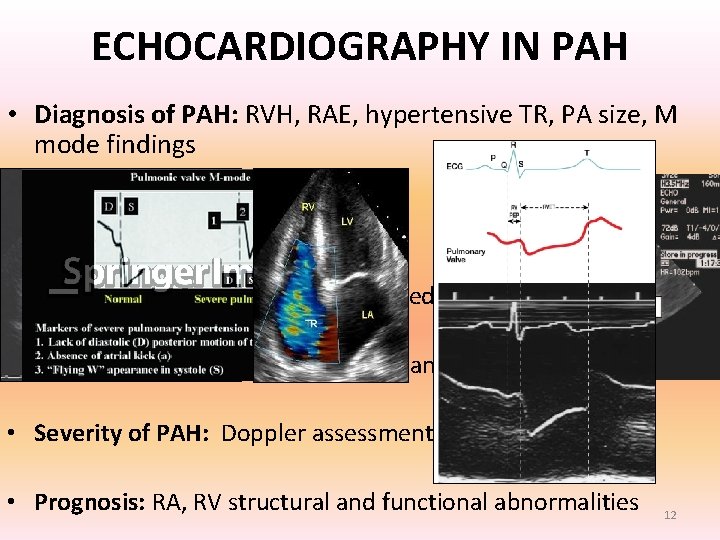
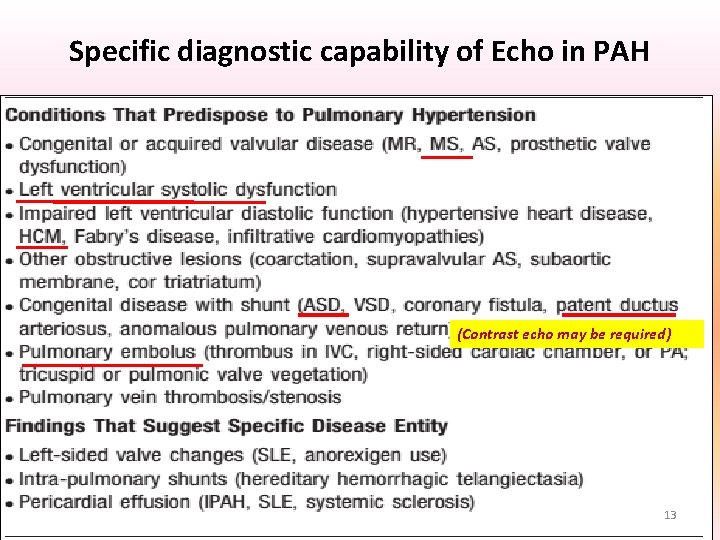
ECHOCARDIOGRAPHY IN PAH • Diagnosis of PAH: RVH, RAE, hypertensive TR, PA size, M mode findings • Alternate causes: Structural acquired/congenital heart disease • Additional information: LV systolic and diastolic function • Severity of PAH: Doppler assessment of PR, TR and PAH • Prognosis: RA, RV structural and functional abnormalities 12
Specific diagnostic capability of Echo in PAH (Contrast echo may be required) 13
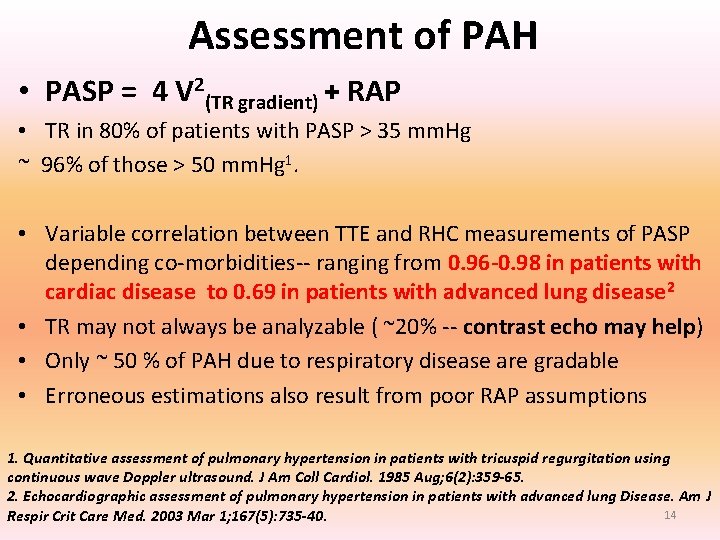
Assessment of PAH • PASP = 4 V 2(TR gradient) + RAP • TR in 80% of patients with PASP > 35 mm. Hg ~ 96% of those > 50 mm. Hg 1. • Variable correlation between TTE and RHC measurements of PASP depending co-morbidities-- ranging from 0. 96 -0. 98 in patients with cardiac disease to 0. 69 in patients with advanced lung disease 2 • TR may not always be analyzable ( ~20% -- contrast echo may help) • Only ~ 50 % of PAH due to respiratory disease are gradable • Erroneous estimations also result from poor RAP assumptions 1. Quantitative assessment of pulmonary hypertension in patients with tricuspid regurgitation using continuous wave Doppler ultrasound. J Am Coll Cardiol. 1985 Aug; 6(2): 359 -65. 2. Echocardiographic assessment of pulmonary hypertension in patients with advanced lung Disease. Am J 14 Respir Crit Care Med. 2003 Mar 1; 167(5): 735 -40.
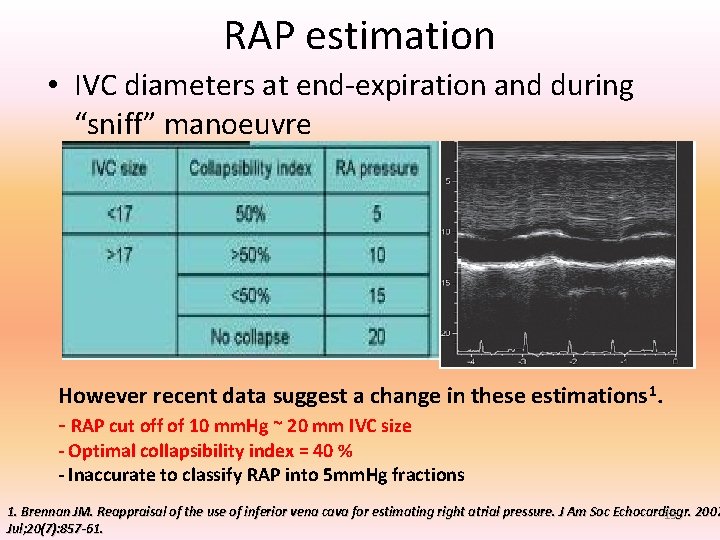
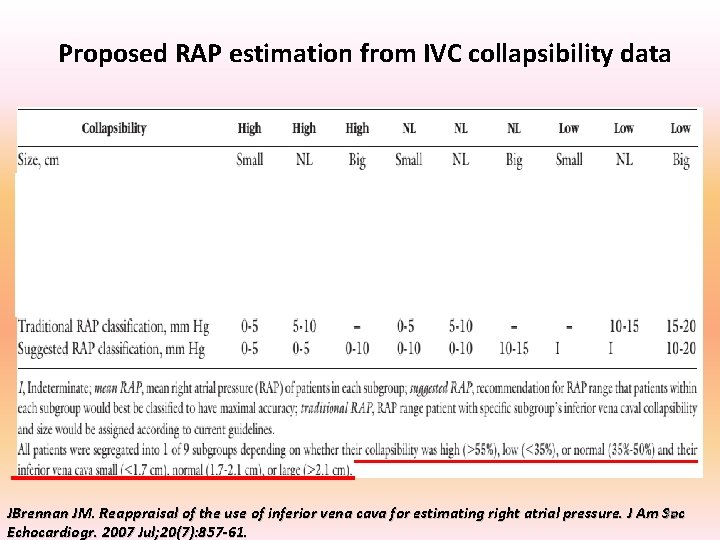
RAP estimation • IVC diameters at end-expiration and during “sniff” manoeuvre However recent data suggest a change in these estimations 1. - RAP cut off of 10 mm. Hg ~ 20 mm IVC size - Optimal collapsibility index = 40 % - Inaccurate to classify RAP into 5 mm. Hg fractions 1. Brennan JM. Reappraisal of the use of inferior vena cava for estimating right atrial pressure. J Am Soc Echocardiogr. 2007 15 Jul; 20(7): 857 -61.
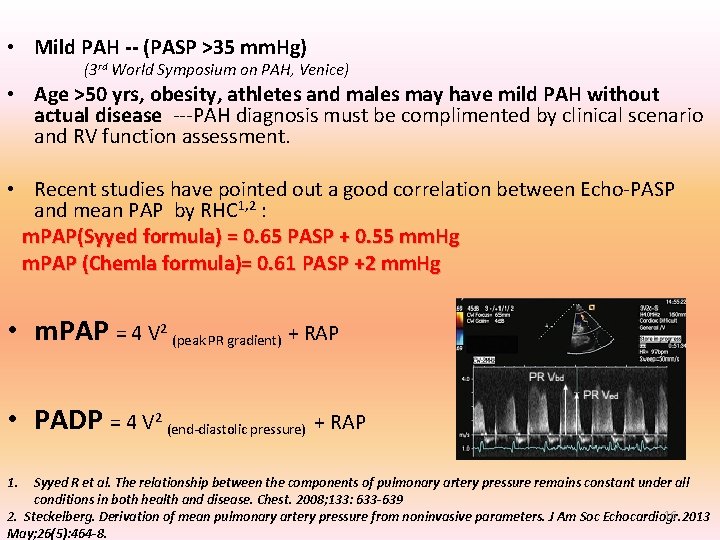
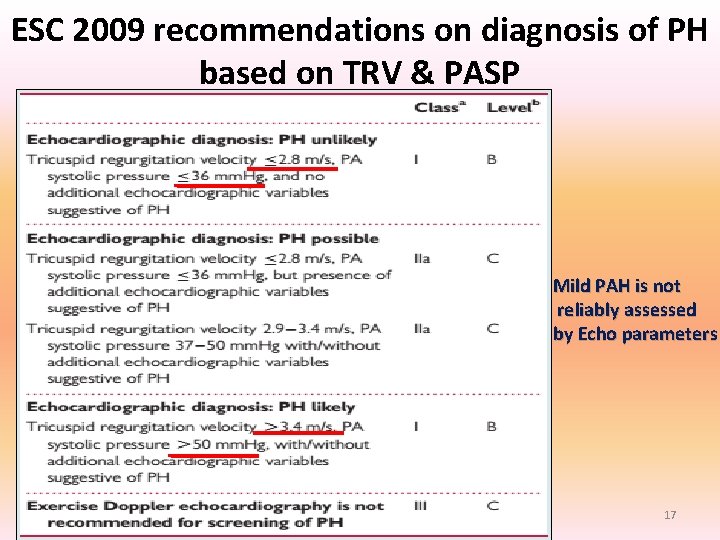
• Mild PAH -- (PASP >35 mm. Hg) (3 rd World Symposium on PAH, Venice) • Age >50 yrs, obesity, athletes and males may have mild PAH without actual disease ---PAH diagnosis must be complimented by clinical scenario and RV function assessment. • Recent studies have pointed out a good correlation between Echo-PASP and mean PAP by RHC 1, 2 : m. PAP(Syyed formula) = 0. 65 PASP + 0. 55 mm. Hg m. PAP (Chemla formula)= 0. 61 PASP +2 mm. Hg • m. PAP = 4 V 2 (peak PR gradient) + RAP • PADP = 4 V 2 (end-diastolic pressure) + RAP 1. Syyed R et al. The relationship between the components of pulmonary artery pressure remains constant under all conditions in both health and disease. Chest. 2008; 133: 633 -639 16 2. Steckelberg. Derivation of mean pulmonary artery pressure from noninvasive parameters. J Am Soc Echocardiogr. 2013 May; 26(5): 464 -8.
ESC 2009 recommendations on diagnosis of PH based on TRV & PASP Mild PAH is not reliably assessed by Echo parameters 17
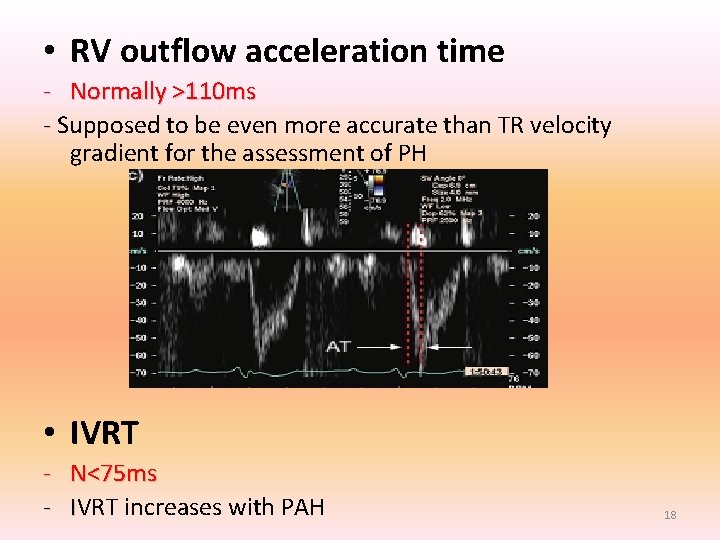
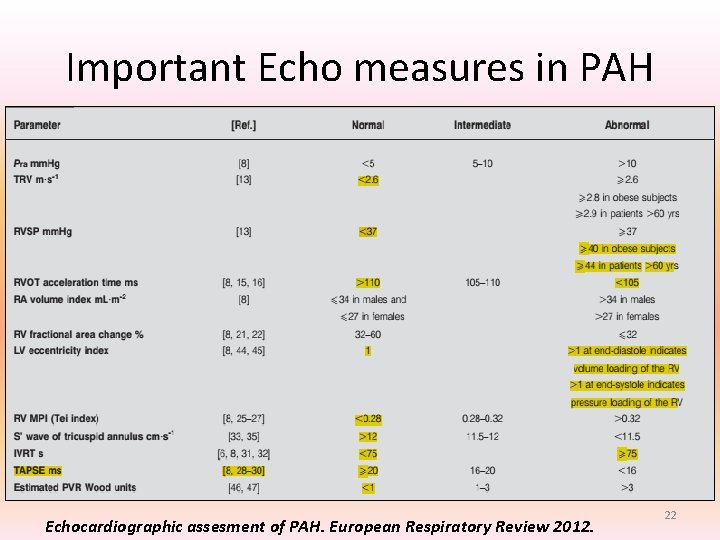
• RV outflow acceleration time - Normally >110 ms - Supposed to be even more accurate than TR velocity gradient for the assessment of PH • IVRT - N<75 ms - IVRT increases with PAH 18
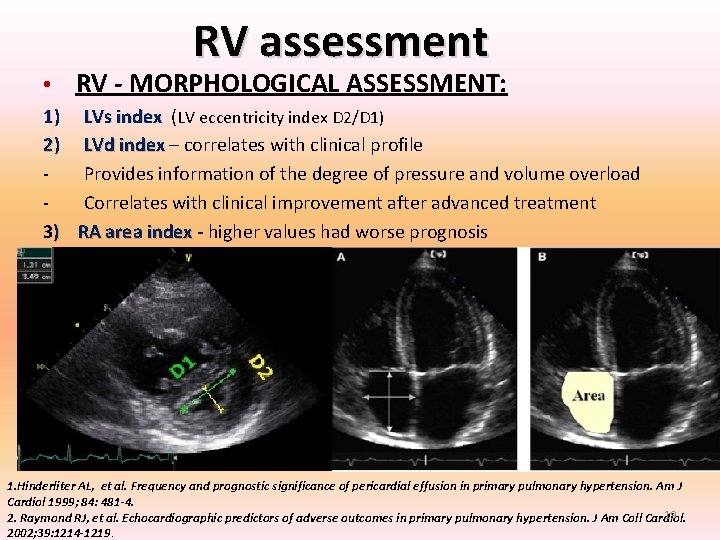
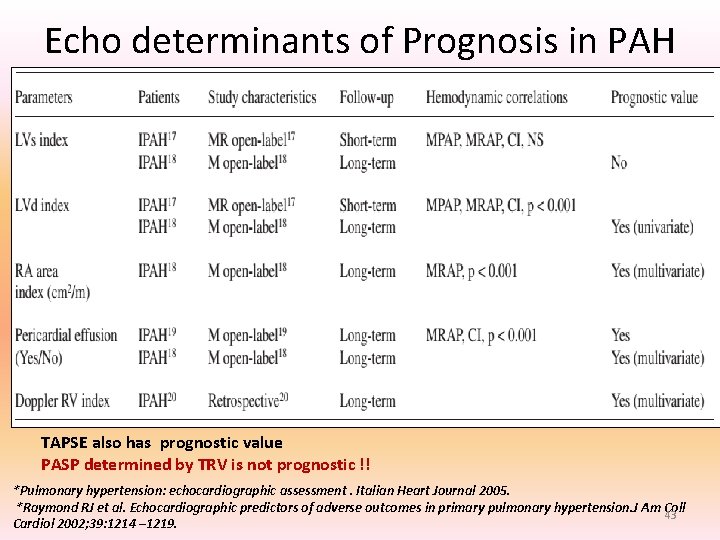
RV assessment • RV - MORPHOLOGICAL ASSESSMENT: 1) LVs index (LV eccentricity index D 2/D 1) 2) LVd index – correlates with clinical profile Provides information of the degree of pressure and volume overload Correlates with clinical improvement after advanced treatment 3) RA area index - higher values had worse prognosis 4) Pericardial effusion – most strong indicator of mortality (directly correlates with RAP and inversely with cardiac index) 5) RV-LV interdependency : - D shaped septum and rarely paradoxical septal motion - Altered LV shape in end-systole and early diastole – Abnormal LV diastolic function parameters 6) RVH : RV free wall > 5 mm 1. Hinderliter AL, et al. Frequency and prognostic significance of pericardial effusion in primary pulmonary hypertension. Am J Cardiol 1999; 84: 481 -4. 19 2. Raymond RJ, et al. Echocardiographic predictors of adverse outcomes in primary pulmonary hypertension. J Am Coll Cardiol. 2002; 39: 1214 -1219.
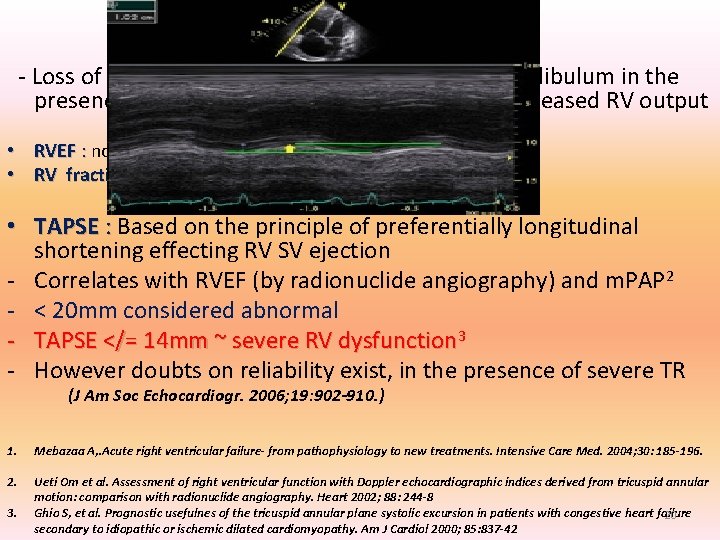
RV – FUNCTIONAL ASSESSMENT - Loss of peristaltic movements from sinus to infundibulum in the presence of high afterload and RV dilation 1 – Decreased RV output • RVEF : not practical/ reliable by 2 D TTE • RV fractional area change– change poor clinical utility • TAPSE : Based on the principle of preferentially longitudinal shortening effecting RV SV ejection - Correlates with RVEF (by radionuclide angiography) and m. PAP 2 - < 20 mm considered abnormal - TAPSE </= 14 mm ~ severe RV dysfunction 3 - However doubts on reliability exist, in the presence of severe TR (J Am Soc Echocardiogr. 2006; 19: 902 -910. ) 1. Mebazaa A, . Acute right ventricular failure- from pathophysiology to new treatments. Intensive Care Med. 2004; 30: 185 -196. 2. Ueti Om et al. Assessment of right ventricular function with Doppler echocardiographic indices derived from tricuspid annular motion: comparison with radionuclide angiography. Heart 2002; 88: 244 -8 Ghio S, et al. Prognostic usefulnes of the tricuspid annular plane systolic excursion in patients with congestive heart failure 20 secondary to idiopathic or ischemic dilated cardiomyopathy. Am J Cardiol 2000; 85: 837 -42 3.
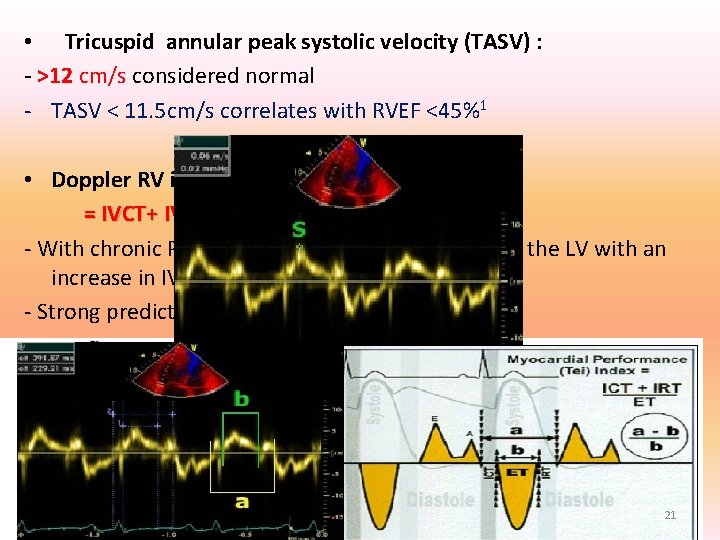
• Tricuspid annular peak systolic velocity (TASV) : - >12 cm/s considered normal - TASV < 11. 5 cm/s correlates with RVEF <45%1 • Doppler RV index (Tei index/MPI) : = IVCT+ IVRT /ET ( Normally < 0. 28) - With chronic PAH, RV P-V relationships resembles the LV with an increase in IVCT and IVRT and a decrease in ETs - Strong predictor of outcome in PAH 1. Meluzin J, Spinarova L, Bakala J, et al. Pulsed Doppler tissue imaging of the velocity of tricuspid annular systolic motion. A new, rapid, non-invasive method of evaluating rightventricular systolic function. Eur Heart J 2001; 22: 340 -8. 21
Important Echo measures in PAH Echocardiographic assesment of PAH. European Respiratory Review 2012. 22
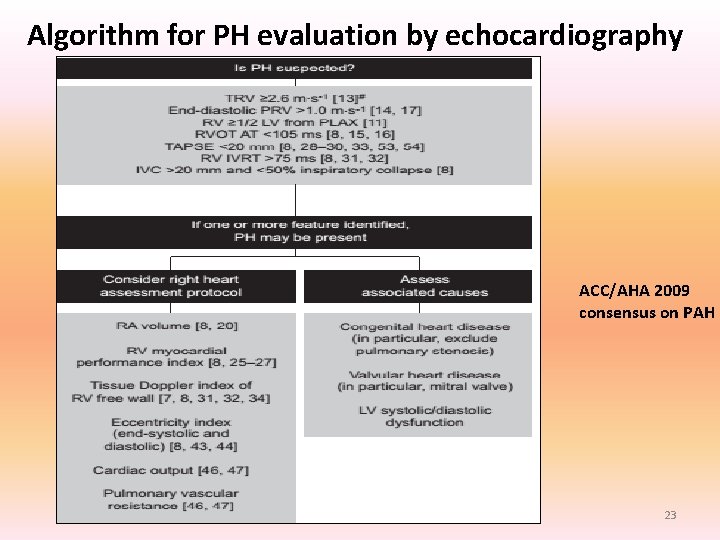
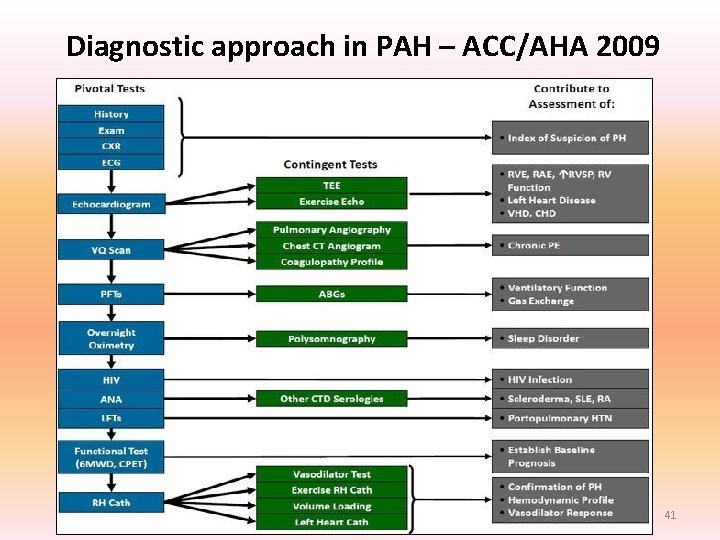
Algorithm for PH evaluation by echocardiography ACC/AHA 2009 consensus on PAH 23
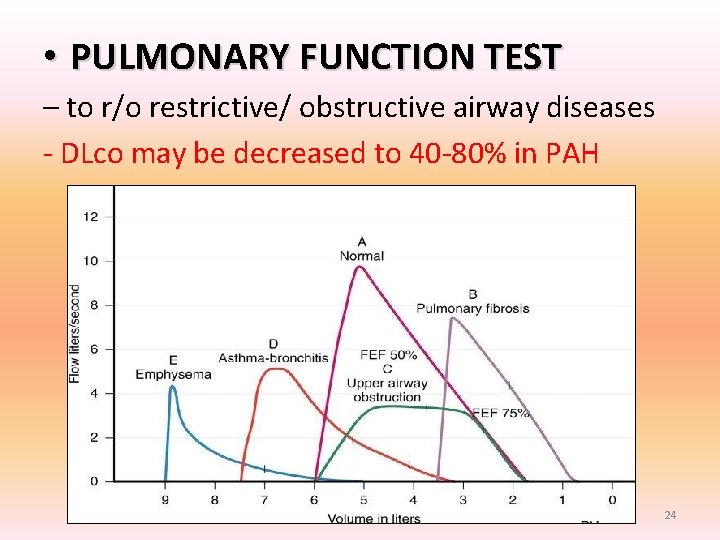
• PULMONARY FUNCTION TEST – to r/o restrictive/ obstructive airway diseases - DLco may be decreased to 40 -80% in PAH 24
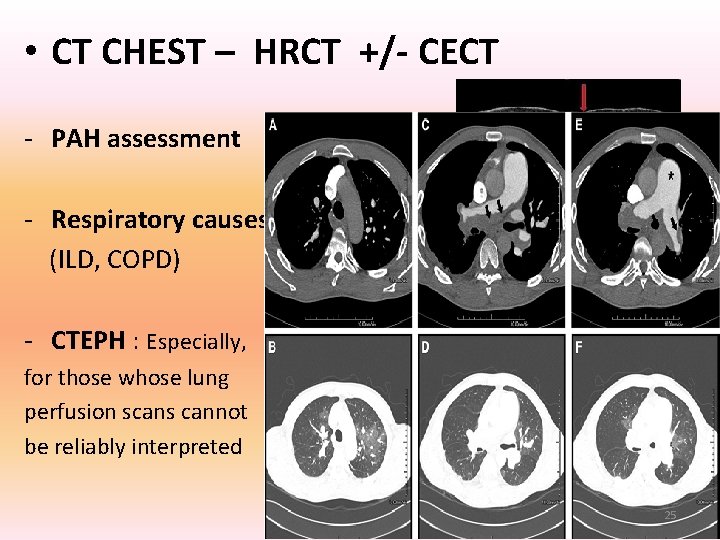
• CT CHEST – HRCT +/- CECT - PAH assessment - Respiratory causes (ILD, COPD) - CTEPH : Especially, for those whose lung perfusion scans cannot be reliably interpreted 25
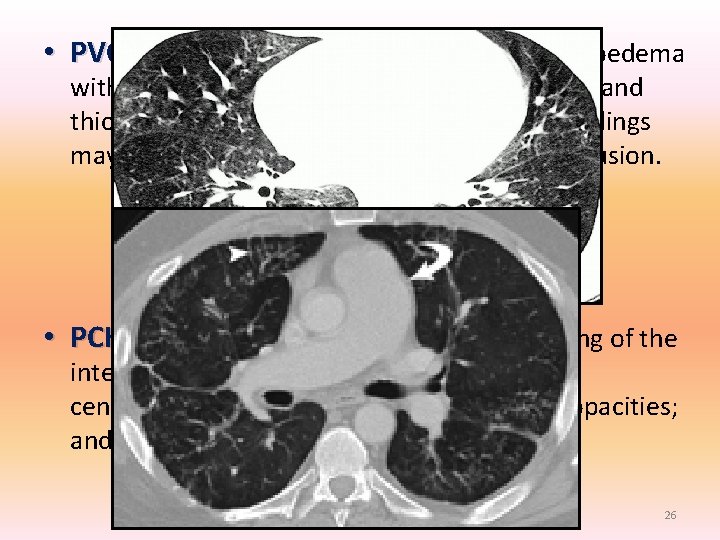
• PVOD : Characteristic changes of interstitial oedema with diffuse central ground-glass opacification and thickening of interlobular septa; additional findings may include lymphadenopathy and pleural effusion. • PCH : suggested by diffuse bilateral thickening of the interlobular septa and the presence of small, centrilobular, poorly circumscribed nodular opacities; and sometimes angiomatous lesions 26
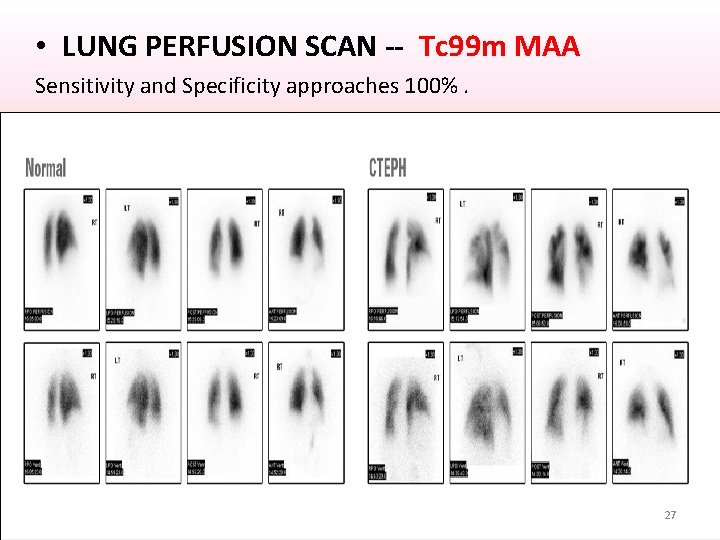
• LUNG PERFUSION SCAN -- Tc 99 m MAA Sensitivity and Specificity approaches 100%. 27
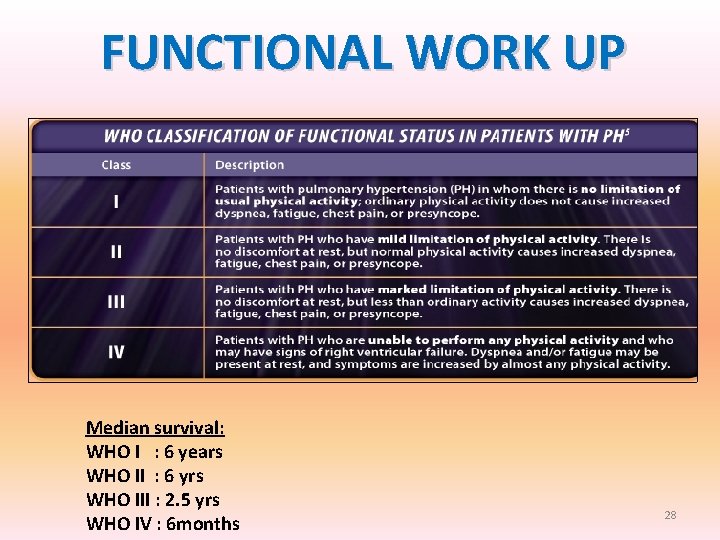
FUNCTIONAL WORK UP Median survival: WHO I : 6 years WHO II : 6 yrs WHO III : 2. 5 yrs WHO IV : 6 months 28
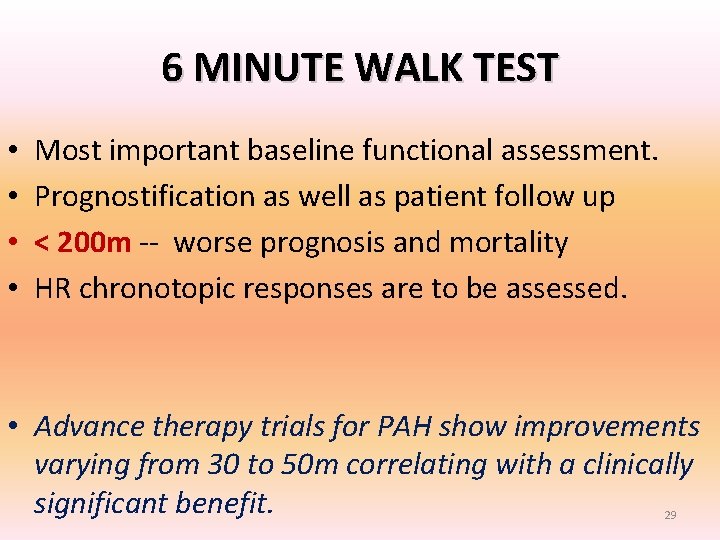
6 MINUTE WALK TEST • • Most important baseline functional assessment. Prognostification as well as patient follow up < 200 m -- worse prognosis and mortality HR chronotopic responses are to be assessed. • Advance therapy trials for PAH show improvements varying from 30 to 50 m correlating with a clinically significant benefit. 29
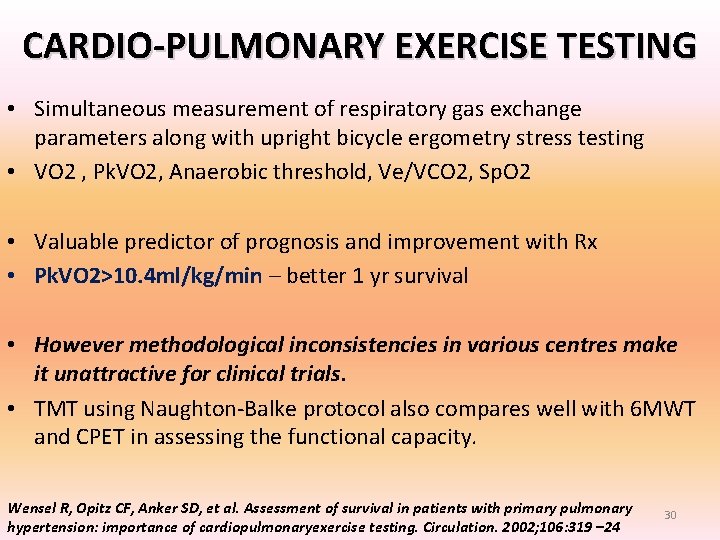
CARDIO-PULMONARY EXERCISE TESTING • Simultaneous measurement of respiratory gas exchange parameters along with upright bicycle ergometry stress testing • VO 2 , Pk. VO 2, Anaerobic threshold, Ve/VCO 2, Sp. O 2 • Valuable predictor of prognosis and improvement with Rx • Pk. VO 2>10. 4 ml/kg/min – better 1 yr survival • However methodological inconsistencies in various centres make it unattractive for clinical trials. • TMT using Naughton-Balke protocol also compares well with 6 MWT and CPET in assessing the functional capacity. Wensel R, Opitz CF, Anker SD, et al. Assessment of survival in patients with primary pulmonary hypertension: importance of cardiopulmonaryexercise testing. Circulation. 2002; 106: 319 – 24 30
ADVANCED DIAGNOSTIC WORK UP • Elaborate diagnostic work up • Cardiac MRI • Cardiac catheterization 31
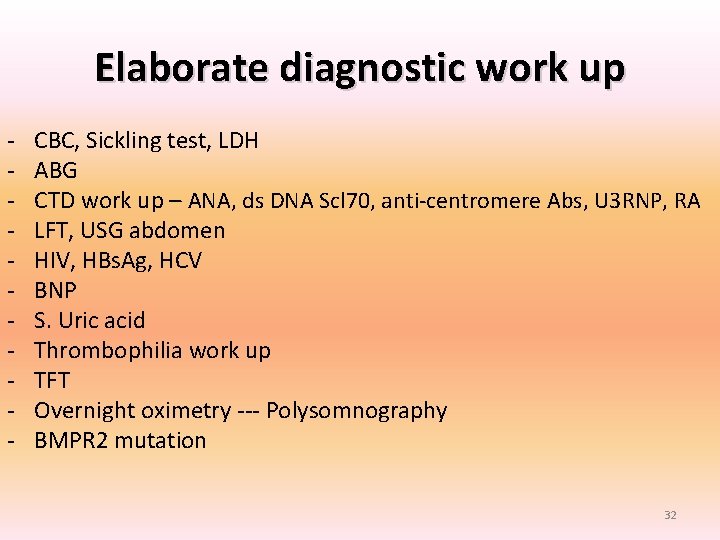
Elaborate diagnostic work up - CBC, Sickling test, LDH ABG CTD work up – ANA, ds DNA Scl 70, anti-centromere Abs, U 3 RNP, RA LFT, USG abdomen HIV, HBs. Ag, HCV BNP S. Uric acid Thrombophilia work up TFT Overnight oximetry --- Polysomnography BMPR 2 mutation 32
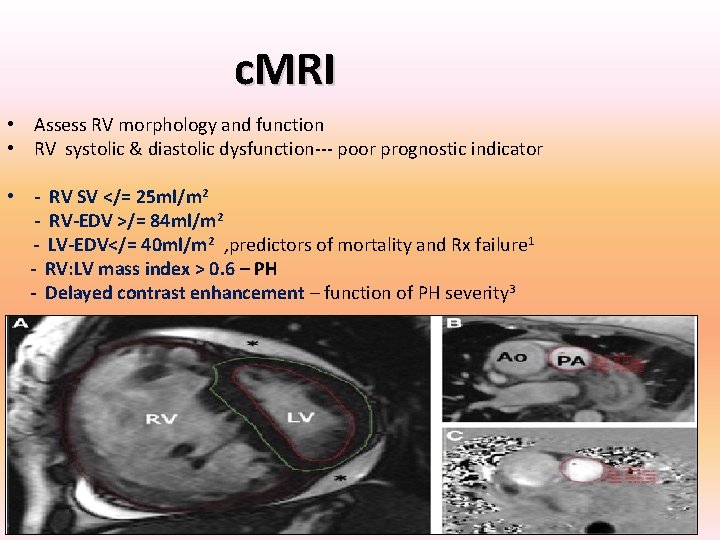
c. MRI • Assess RV morphology and function • RV systolic & diastolic dysfunction--- poor prognostic indicator • - RV SV </= 25 ml/m 2 - RV-EDV >/= 84 ml/m 2 - LV-EDV</= 40 ml/m 2 , predictors of mortality and Rx failure 1 - RV: LV mass index > 0. 6 – PH - Delayed contrast enhancement – function of PH severity 3 • Pulmonary artery stiffness : - Relative cross-sectional area change <16% -- Inc mortality in PAH patients 2 • Compliments evaluation for sarcoidosis etc 1. van Wolferen SA, et al. Prognostic value of right ventricular mass, volume, and function in idiopathic pulmonary arterial hypertension. Eur Heart J. 2007; 28: 1250– 7. 2. Gan CT et al. Noninvasively assessed pulmonary artery stiffness predicts mortality in pulmonary arterial hypertension. Chest. 2007; 132: 1906 – 12. 3. Shehata M et al. Myocardial delayedenhancement in pulmonary hypertension: pulmonary hemodynamics, right ventricular 33 function, and remodeling. AJR Am J Roentgenol. 2011; 196: 87 -94
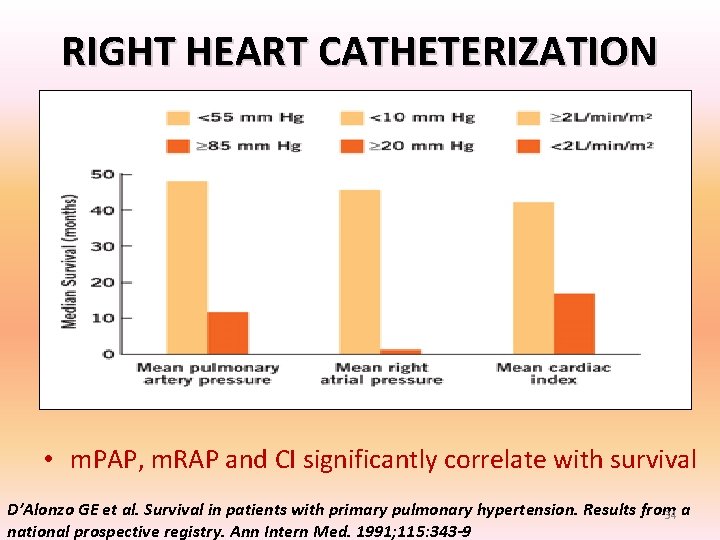
RIGHT HEART CATHETERIZATION • Not routinely recommended. • However ACC 2009 advises RHC to confirm diagnosis and define accurate hemodynamic profile in PAH patients– gold standard • IC recommendation by ECS 2009 for all PAH patients • Important for vasodilator testing and also suggested before CHD correction • Complications – 1. 1% , Mortality – 0. 05% • m. PAP, m. RAP and CI significantly correlate with survival D’Alonzo GE et al. Survival in patients with primary pulmonary hypertension. Results from a 34 national prospective registry. Ann Intern Med. 1991; 115: 343 -9
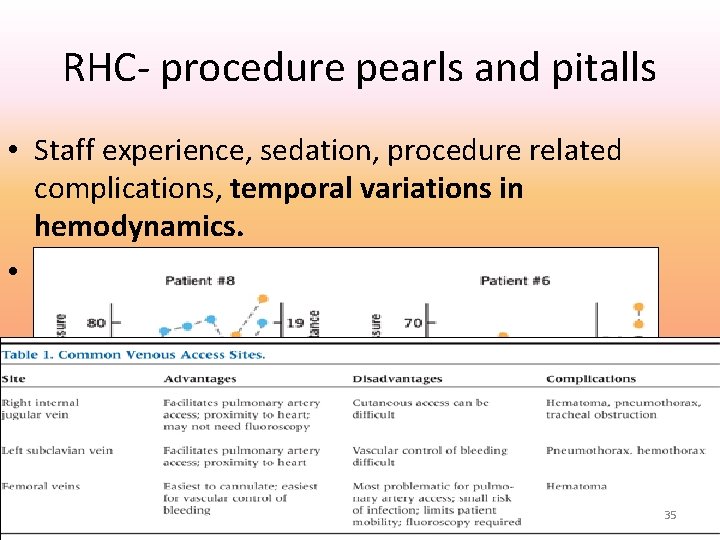
RHC- procedure pearls and pitalls • Staff experience, sedation, procedure related complications, temporal variations in hemodynamics. • Measurements must be at end-expiration • Limiting factors : Accuracy and errors in PCWP, method of COP estimation, complex structural heart disease 35
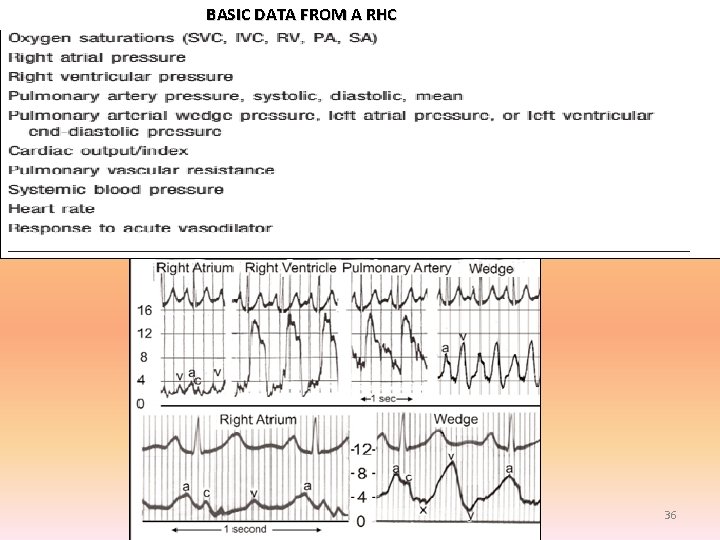
BASIC DATA FROM A RHC 36
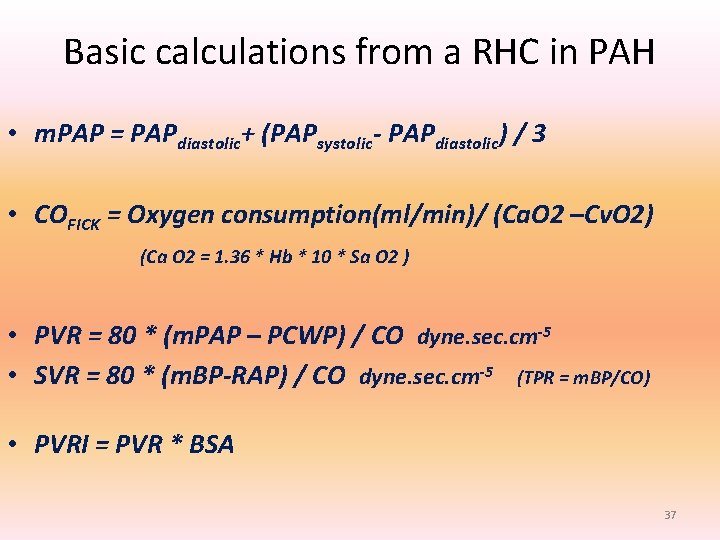
Basic calculations from a RHC in PAH • m. PAP = PAPdiastolic+ (PAPsystolic- PAPdiastolic) / 3 • COFICK = Oxygen consumption(ml/min)/ (Ca. O 2 –Cv. O 2) (Ca O 2 = 1. 36 * Hb * 10 * Sa O 2 ) • PVR = 80 * (m. PAP – PCWP) / CO dyne. sec. cm-5 • SVR = 80 * (m. BP-RAP) / CO dyne. sec. cm-5 (TPR = m. BP/CO) • PVRI = PVR * BSA 37
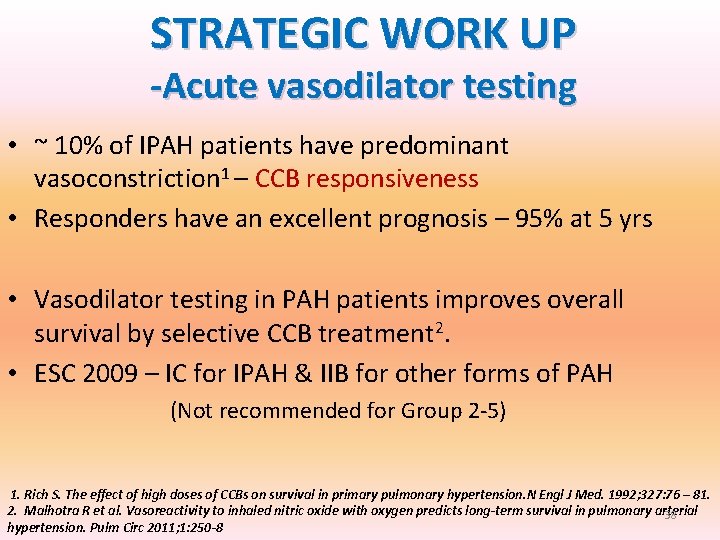
STRATEGIC WORK UP -Acute vasodilator testing • ~ 10% of IPAH patients have predominant vasoconstriction 1 – CCB responsiveness • Responders have an excellent prognosis – 95% at 5 yrs • Vasodilator testing in PAH patients improves overall survival by selective CCB treatment 2. • ESC 2009 – IC for IPAH & IIB for other forms of PAH (Not recommended for Group 2 -5) 1. Rich S. The effect of high doses of CCBs on survival in primary pulmonary hypertension. N Engl J Med. 1992; 327: 76 – 81. 2. Malhotra R et al. Vasoreactivity to inhaled nitric oxide with oxygen predicts long-term survival in pulmonary arterial 38 hypertension. Pulm Circ 2011; 1: 250 -8
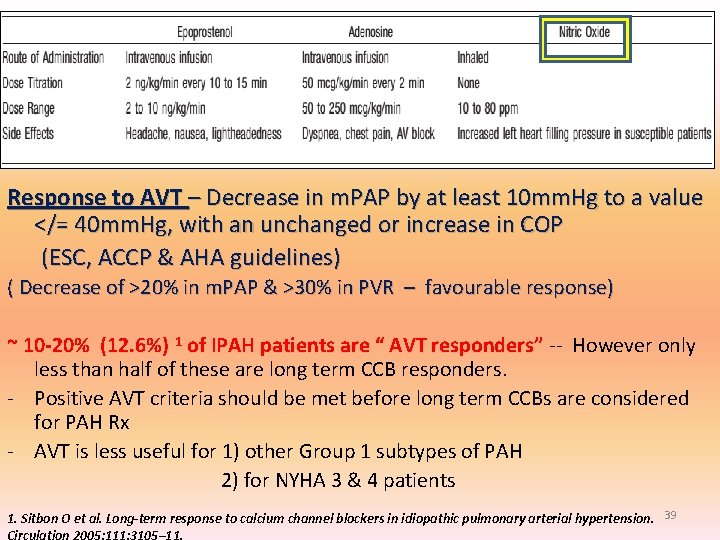
Response to AVT – Decrease in m. PAP by at least 10 mm. Hg to a value </= 40 mm. Hg, with an unchanged or increase in COP (ESC, ACCP & AHA guidelines) ( Decrease of >20% in m. PAP & >30% in PVR – favourable response) ~ 10 -20% (12. 6%) 1 of IPAH patients are “ AVT responders” -- However only less than half of these are long term CCB responders. - Positive AVT criteria should be met before long term CCBs are considered for PAH Rx - AVT is less useful for 1) other Group 1 subtypes of PAH 2) for NYHA 3 & 4 patients 1. Sitbon O et al. Long-term response to calcium channel blockers in idiopathic pulmonary arterial hypertension. 39 Circulation 2005; 111: 3105– 11.
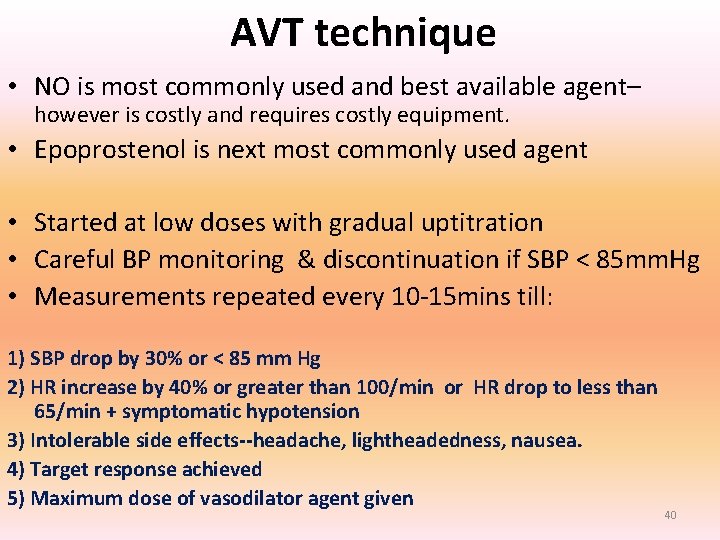
AVT technique • NO is most commonly used and best available agent– however is costly and requires costly equipment. • Epoprostenol is next most commonly used agent • Started at low doses with gradual uptitration • Careful BP monitoring & discontinuation if SBP < 85 mm. Hg • Measurements repeated every 10 -15 mins till: 1) SBP drop by 30% or < 85 mm Hg 2) HR increase by 40% or greater than 100/min or HR drop to less than 65/min + symptomatic hypotension 3) Intolerable side effects--headache, lightheadedness, nausea. 4) Target response achieved 5) Maximum dose of vasodilator agent given 40
Diagnostic approach in PAH – ACC/AHA 2009 41
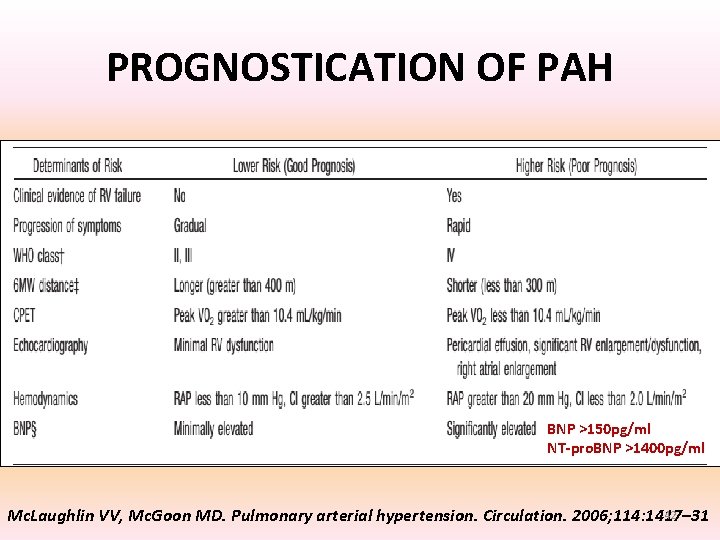
PROGNOSTICATION OF PAH BNP >150 pg/ml NT-pro. BNP >1400 pg/ml 42 Mc. Laughlin VV, Mc. Goon MD. Pulmonary arterial hypertension. Circulation. 2006; 114: 1417– 31
Echo determinants of Prognosis in PAH TAPSE also has prognostic value PASP determined by TRV is not prognostic !! *Pulmonary hypertension: echocardiographic assessment. Italian Heart Journal 2005. *Raymond RJ et al. Echocardiographic predictors of adverse outcomes in primary pulmonary hypertension. J Am Coll 43 Cardiol 2002; 39: 1214 – 1219.
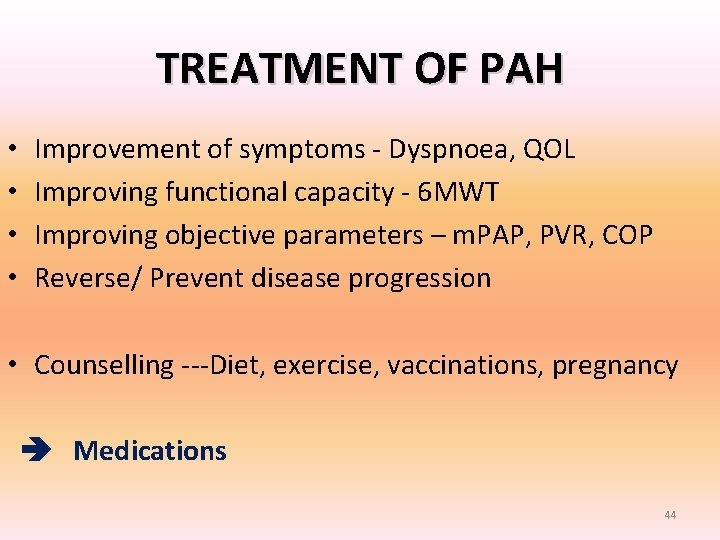
TREATMENT OF PAH • • Improvement of symptoms - Dyspnoea, QOL Improving functional capacity - 6 MWT Improving objective parameters – m. PAP, PVR, COP Reverse/ Prevent disease progression • Counselling ---Diet, exercise, vaccinations, pregnancy Medications 44
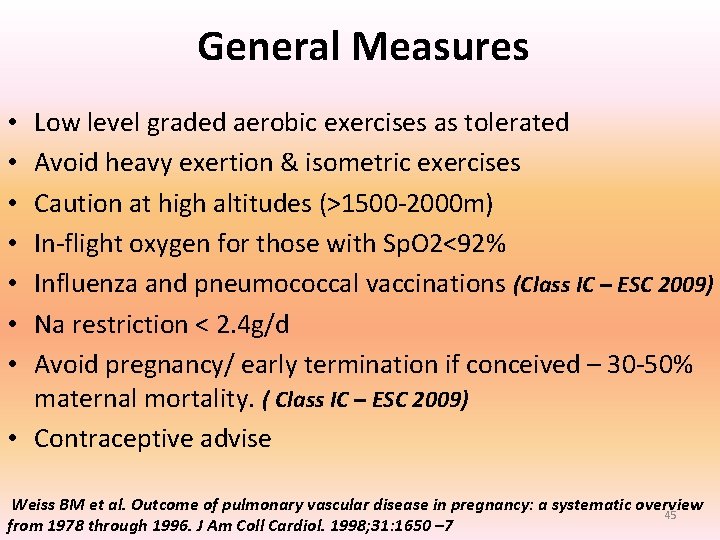
General Measures Low level graded aerobic exercises as tolerated Avoid heavy exertion & isometric exercises Caution at high altitudes (>1500 -2000 m) In-flight oxygen for those with Sp. O 2<92% Influenza and pneumococcal vaccinations (Class IC – ESC 2009) Na restriction < 2. 4 g/d Avoid pregnancy/ early termination if conceived – 30 -50% maternal mortality. ( Class IC – ESC 2009) • Contraceptive advise • • Weiss BM et al. Outcome of pulmonary vascular disease in pregnancy: a systematic overview 45 from 1978 through 1996. J Am Coll Cardiol. 1998; 31: 1650 – 7
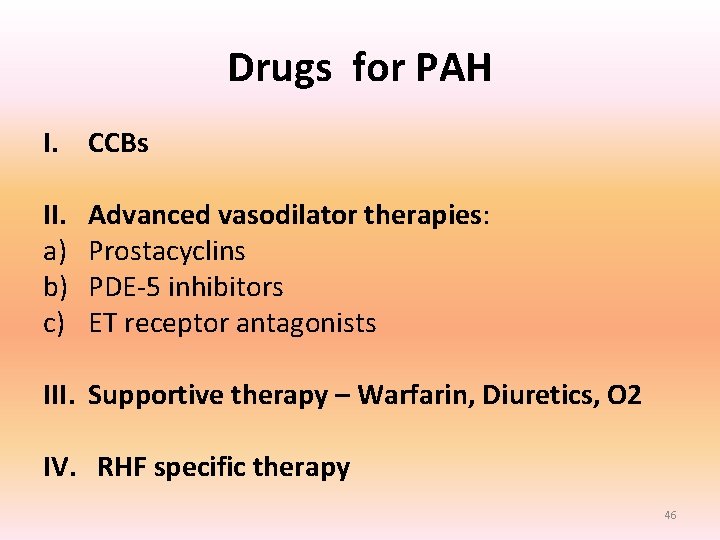
Drugs for PAH I. CCBs II. a) b) c) Advanced vasodilator therapies: Prostacyclins PDE-5 inhibitors ET receptor antagonists III. Supportive therapy – Warfarin, Diuretics, O 2 IV. RHF specific therapy 46
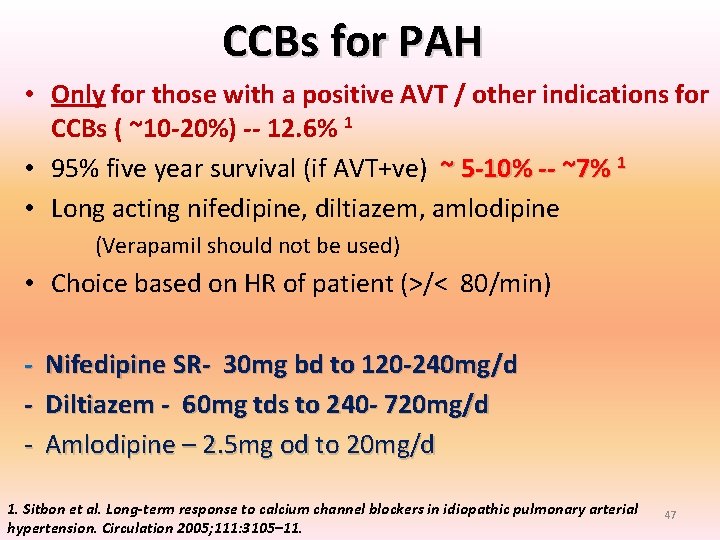
CCBs for PAH • Only for those with a positive AVT / other indications for CCBs ( ~10 -20%) -- 12. 6% 1 • 95% five year survival (if AVT+ve) ~ 5 -10% -- ~7% 1 • Long acting nifedipine, diltiazem, amlodipine (Verapamil should not be used) • Choice based on HR of patient (>/< 80/min) - Nifedipine SR- 30 mg bd to 120 -240 mg/d - Diltiazem - 60 mg tds to 240 - 720 mg/d - Amlodipine – 2. 5 mg od to 20 mg/d 1. Sitbon et al. Long-term response to calcium channel blockers in idiopathic pulmonary arterial hypertension. Circulation 2005; 111: 3105– 11. 47
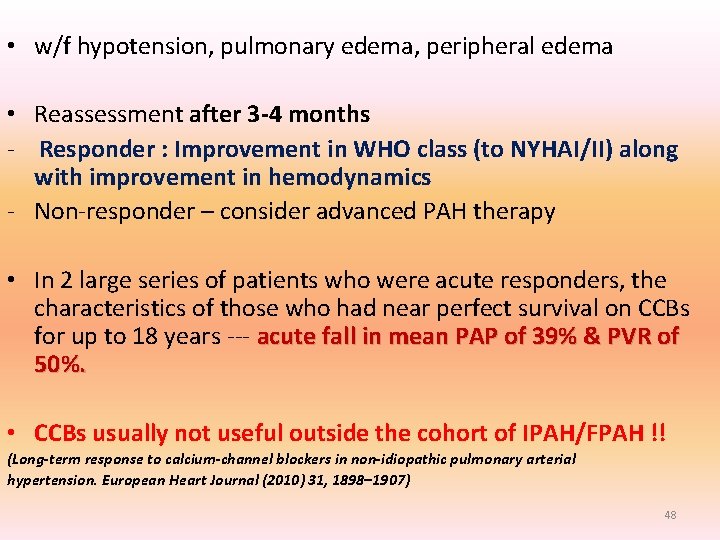
• w/f hypotension, pulmonary edema, peripheral edema • Reassessment after 3 -4 months - Responder : Improvement in WHO class (to NYHAI/II) along with improvement in hemodynamics - Non-responder – consider advanced PAH therapy • In 2 large series of patients who were acute responders, the characteristics of those who had near perfect survival on CCBs for up to 18 years --- acute fall in mean PAP of 39% & PVR of 50%. • CCBs usually not useful outside the cohort of IPAH/FPAH !! (Long-term response to calcium-channel blockers in non-idiopathic pulmonary arterial hypertension. European Heart Journal (2010) 31, 1898– 1907) 48
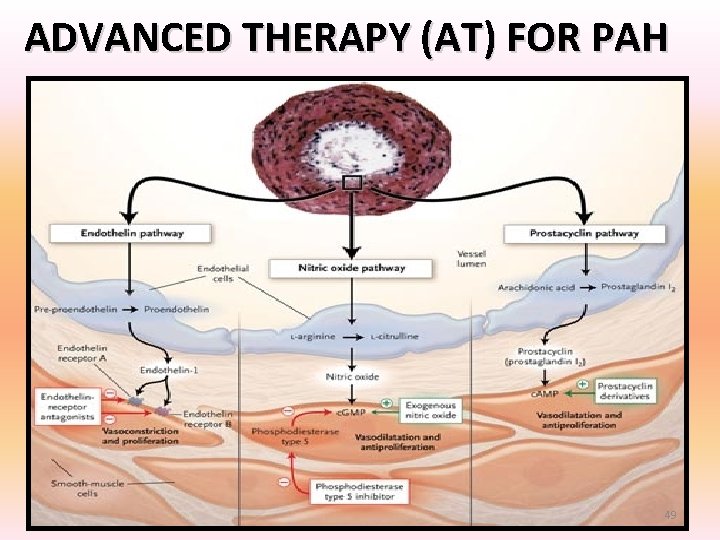
ADVANCED THERAPY (AT) FOR PAH 49
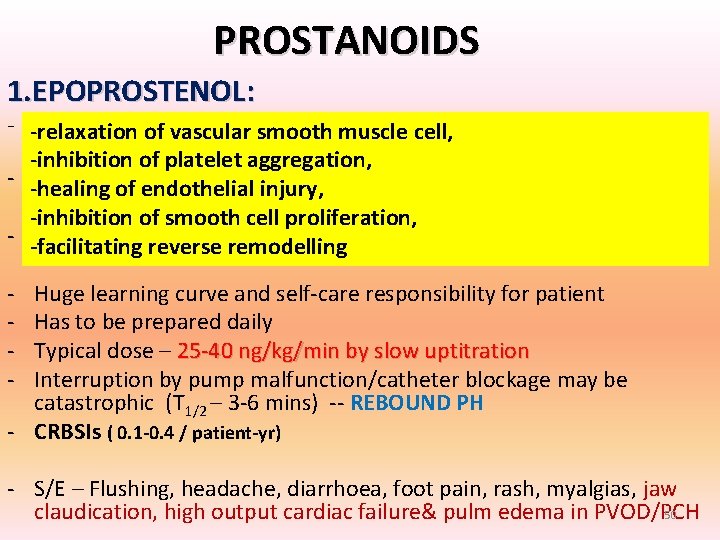
PROSTANOIDS 1. EPOPROSTENOL: - -Improves class, hemodynamics, relaxation. WHO of vascular smooth muscleexercise cell, tolerance & survival in -PAH inhibition of platelet aggregation, - -Mean improvement in 6 MWT healing of endothelial injury, ~ 30 -40 m & PAP by 20 -30% -inhibition of smooth cell proliferation, - -facilitating CV catheterreverse implanted surgically – continuous infusion remodelling - Huge learning curve and self-care responsibility for patient Has to be prepared daily Typical dose – 25 -40 ng/kg/min by slow uptitration Interruption by pump malfunction/catheter blockage may be catastrophic (T 1/2 – 3 -6 mins) -- REBOUND PH - CRBSIs ( 0. 1 -0. 4 / patient-yr) - S/E – Flushing, headache, diarrhoea, foot pain, rash, myalgias, jaw 50 claudication, high output cardiac failure& pulm edema in PVOD/PCH
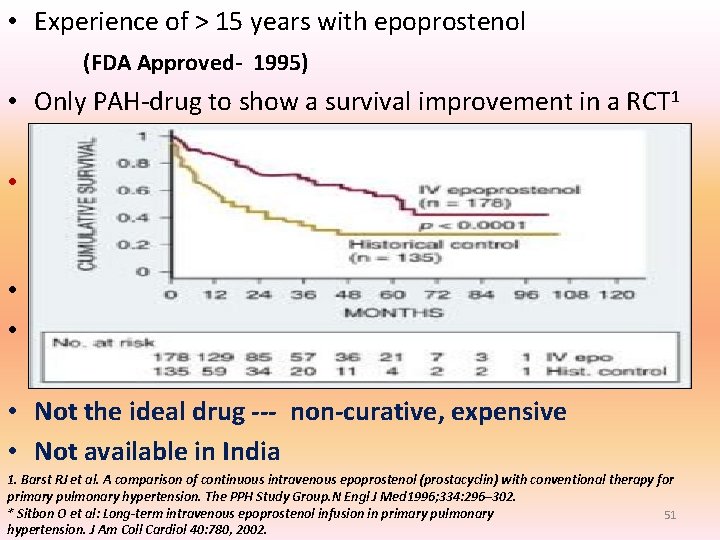
• Experience of > 15 years with epoprostenol (FDA Approved- 1995) • Only PAH-drug to show a survival improvement in a RCT 1 • Also been studied with beneficial results in APAH (CHD, Porto-pulm HTN & HIV-associated) and inoperable CTEPH • Bridge to lung transplantation • Should be administered at experienced centres. • Not the ideal drug --- non-curative, expensive • Not available in India 1. Barst RJ et al. A comparison of continuous intravenous epoprostenol (prostacyclin) with conventional therapy for primary pulmonary hypertension. The PPH Study Group. N Engl J Med 1996; 334: 296– 302. * Sitbon O et al: Long-term intravenous epoprostenol infusion in primary pulmonary 51 hypertension. J Am Coll Cardiol 40: 780, 2002.
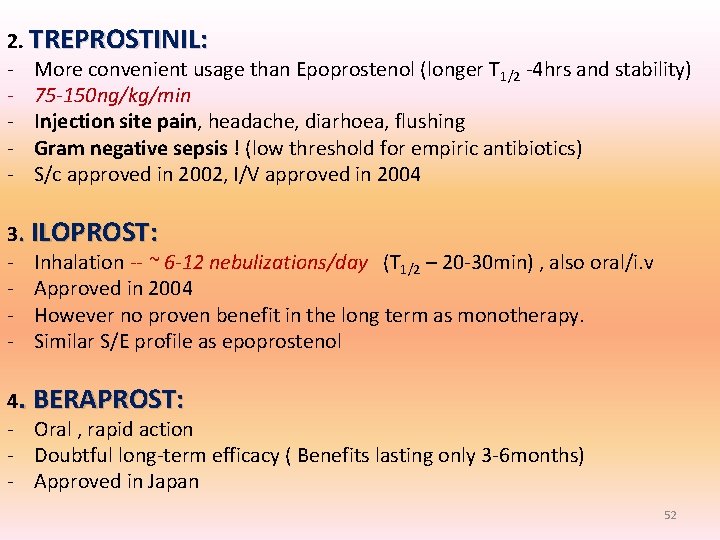
2. TREPROSTINIL: - More convenient usage than Epoprostenol (longer T 1/2 -4 hrs and stability) - 75 -150 ng/kg/min - Injection site pain, headache, diarhoea, flushing - Gram negative sepsis ! (low threshold for empiric antibiotics) - S/c approved in 2002, I/V approved in 2004 3. ILOPROST: - Inhalation -- ~ 6 -12 nebulizations/day (T 1/2 – 20 -30 min) , also oral/i. v - Approved in 2004 - However no proven benefit in the long term as monotherapy. - Similar S/E profile as epoprostenol 4. BERAPROST: - Oral , rapid action - Doubtful long-term efficacy ( Benefits lasting only 3 -6 months) - Approved in Japan 52
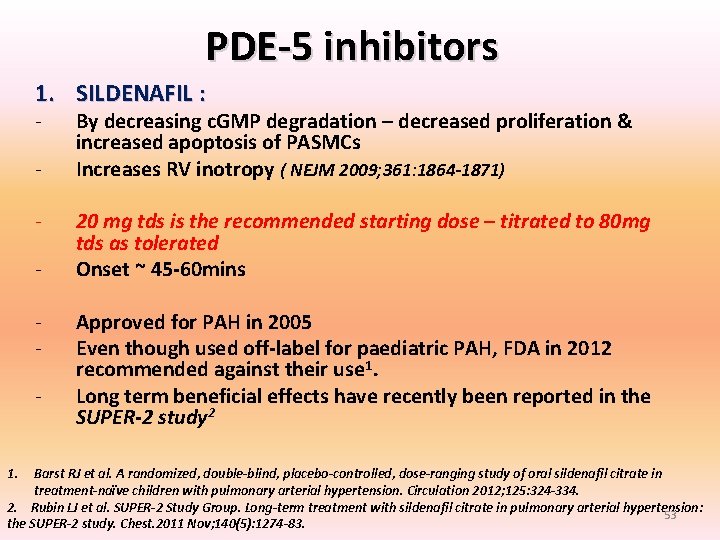
PDE-5 inhibitors 1. SILDENAFIL : 1. By decreasing c. GMP degradation – decreased proliferation & increased apoptosis of PASMCs Increases RV inotropy ( NEJM 2009; 361: 1864 -1871) 20 mg tds is the recommended starting dose – titrated to 80 mg tds as tolerated Onset ~ 45 -60 mins Approved for PAH in 2005 Even though used off-label for paediatric PAH, FDA in 2012 recommended against their use 1. Long term beneficial effects have recently been reported in the SUPER-2 study 2 Barst RJ et al. A randomized, double-blind, placebo-controlled, dose-ranging study of oral sildenafil citrate in treatment-naïve children with pulmonary arterial hypertension. Circulation 2012; 125: 324 -334. 2. Rubin LJ et al. SUPER-2 Study Group. Long-term treatment with sildenafil citrate in pulmonary arterial hypertension: 53 the SUPER-2 study. Chest. 2011 Nov; 140(5): 1274 -83.
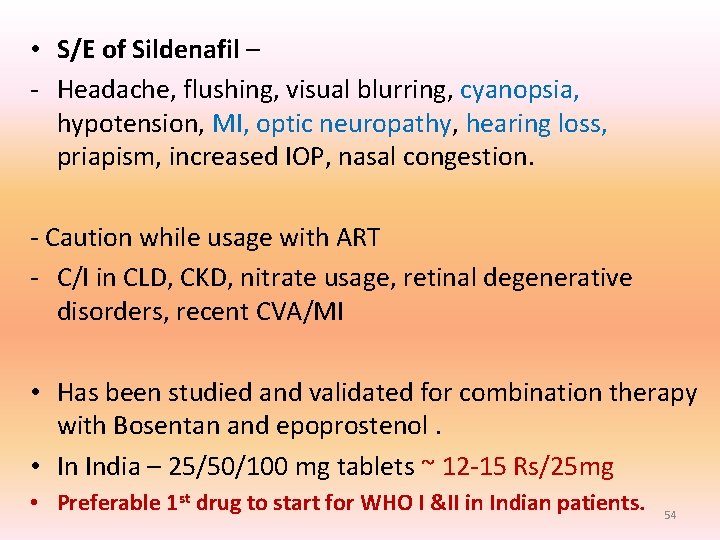
• S/E of Sildenafil – - Headache, flushing, visual blurring, cyanopsia, hypotension, MI, optic neuropathy, hearing loss, priapism, increased IOP, nasal congestion. - Caution while usage with ART - C/I in CLD, CKD, nitrate usage, retinal degenerative disorders, recent CVA/MI • Has been studied and validated for combination therapy with Bosentan and epoprostenol. • In India – 25/50/100 mg tablets ~ 12 -15 Rs/25 mg • Preferable 1 st drug to start for WHO I &II in Indian patients. 54
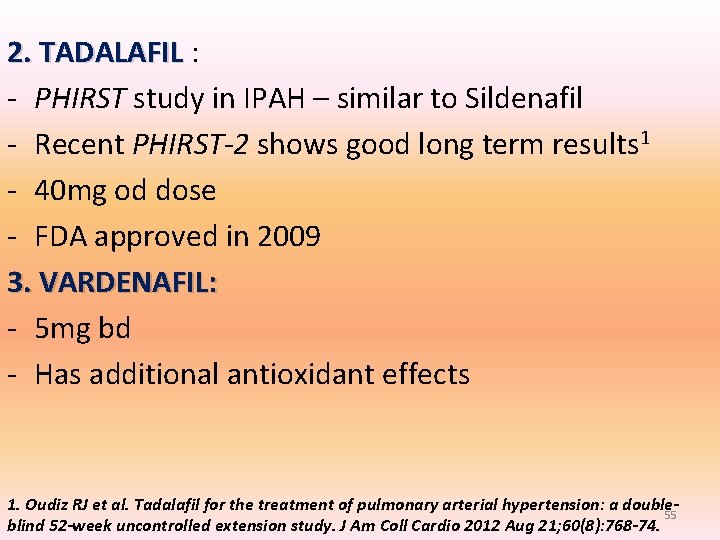
2. TADALAFIL : - PHIRST study in IPAH – similar to Sildenafil - Recent PHIRST-2 shows good long term results 1 - 40 mg od dose - FDA approved in 2009 3. VARDENAFIL: - 5 mg bd - Has additional antioxidant effects 1. Oudiz RJ et al. Tadalafil for the treatment of pulmonary arterial hypertension: a double 55 blind 52 -week uncontrolled extension study. J Am Coll Cardio 2012 Aug 21; 60(8): 768 -74.
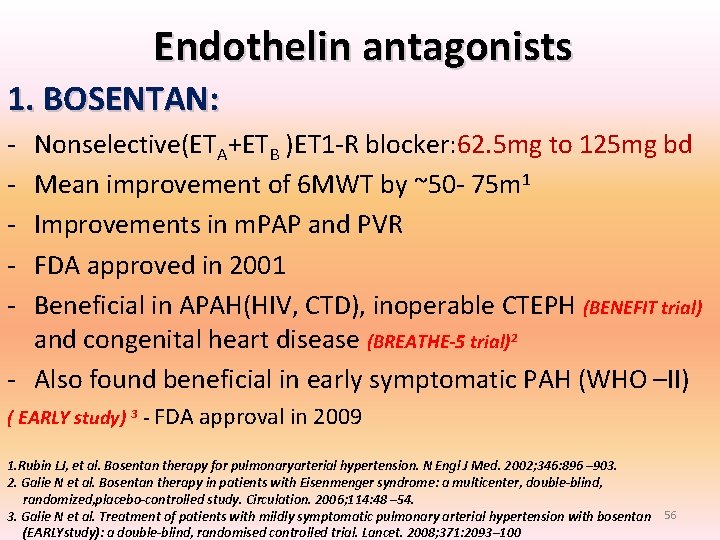
Endothelin antagonists 1. BOSENTAN: - Nonselective(ETA+ETB )ET 1 -R blocker: 62. 5 mg to 125 mg bd Mean improvement of 6 MWT by ~50 - 75 m 1 Improvements in m. PAP and PVR FDA approved in 2001 Beneficial in APAH(HIV, CTD), inoperable CTEPH (BENEFIT trial) and congenital heart disease (BREATHE-5 trial)2 - Also found beneficial in early symptomatic PAH (WHO –II) ( EARLY study) 3 - FDA approval in 2009 1. Rubin LJ, et al. Bosentan therapy for pulmonaryarterial hypertension. N Engl J Med. 2002; 346: 896 – 903. 2. Galie N et al. Bosentan therapy in patients with Eisenmenger syndrome: a multicenter, double-blind, randomized, placebo-controlled study. Circulation. 2006; 114: 48 – 54. 3. Galie N et al. Treatment of patients with mildly symptomatic pulmonary arterial hypertension with bosentan 56 (EARLYstudy): a double-blind, randomised controlled trial. Lancet. 2008; 371: 2093– 100
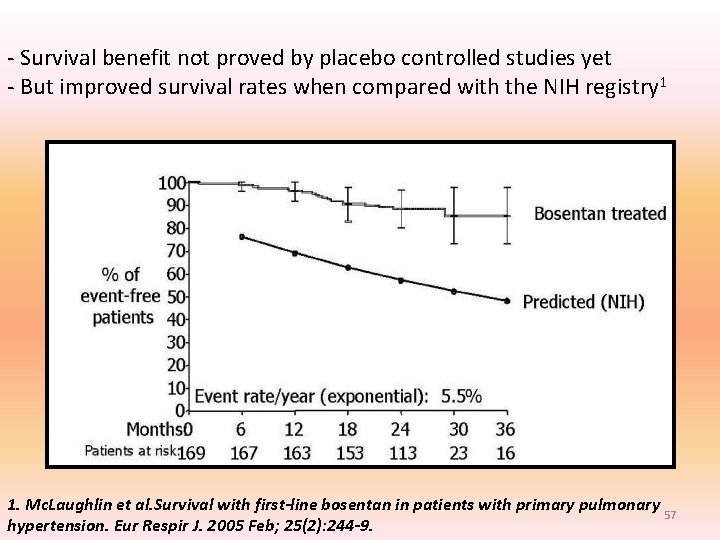
- Survival benefit not proved by placebo controlled studies yet - But improved survival rates when compared with the NIH registry 1 1. Mc. Laughlin et al. Survival with first-line bosentan in patients with primary pulmonary 57 hypertension. Eur Respir J. 2005 Feb; 25(2): 244 -9.
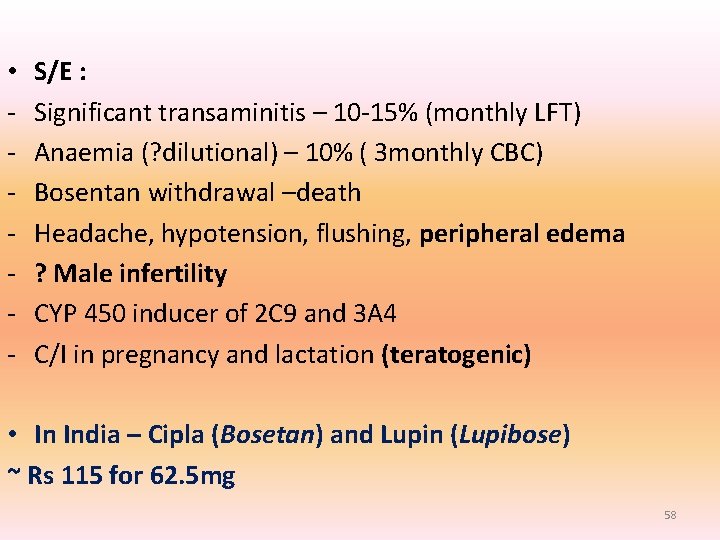
• - S/E : Significant transaminitis – 10 -15% (monthly LFT) Anaemia (? dilutional) – 10% ( 3 monthly CBC) Bosentan withdrawal –death Headache, hypotension, flushing, peripheral edema ? Male infertility CYP 450 inducer of 2 C 9 and 3 A 4 C/I in pregnancy and lactation (teratogenic) • In India – Cipla (Bosetan) and Lupin (Lupibose) ~ Rs 115 for 62. 5 mg 58
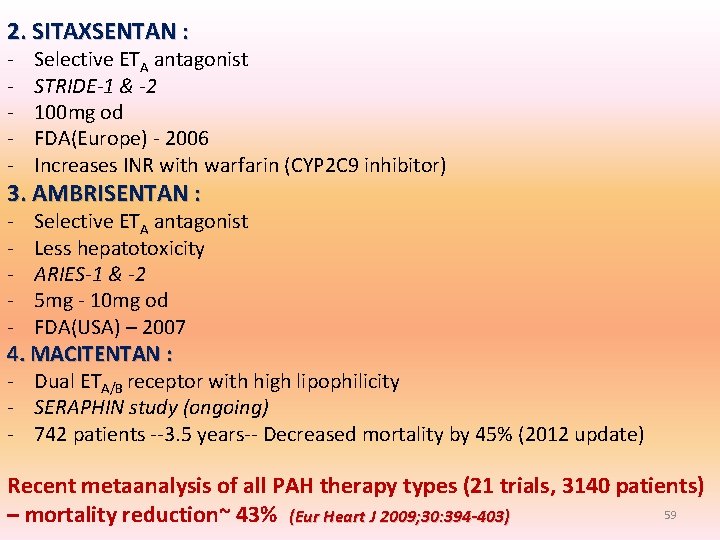
2. SITAXSENTAN : - Selective ETA antagonist STRIDE-1 & -2 100 mg od FDA(Europe) - 2006 Increases INR with warfarin (CYP 2 C 9 inhibitor) 3. AMBRISENTAN : - Selective ETA antagonist - Less hepatotoxicity - ARIES-1 & -2 - 5 mg - 10 mg od - FDA(USA) – 2007 4. MACITENTAN : - Dual ETA/B receptor with high lipophilicity - SERAPHIN study (ongoing) - 742 patients --3. 5 years-- Decreased mortality by 45% (2012 update) Recent metaanalysis of all PAH therapy types (21 trials, 3140 patients) 59 – mortality reduction~ 43% (Eur Heart J 2009; 30: 394 -403)
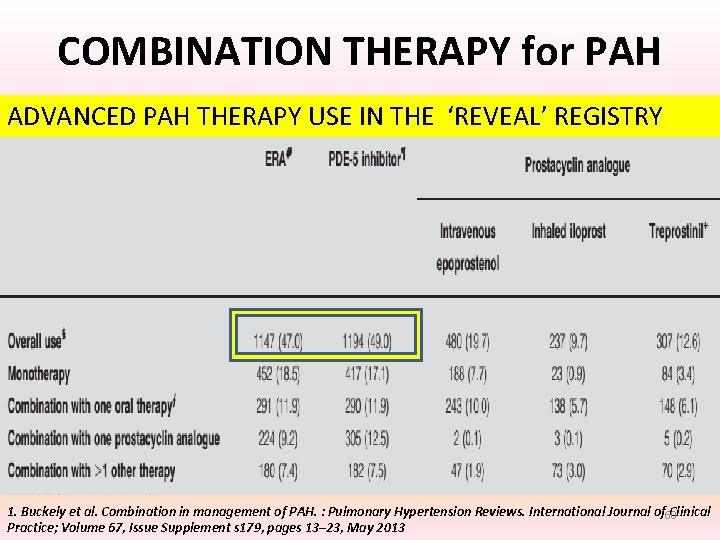
COMBINATION THERAPY for PAH ADVANCED THERAPY USE IN THEtoxicity ‘REVEAL’ REGISTRY • Maximum. PAH efficacy with minimum • Multiple observational studies with overall possible benefit • Bosentan +Epoprostenol: BREATHE-1 trial (+/--) • Sildenafil +Epoprostenol: PACES trial (+) (Ilo /Trep also tested +) • Bosentan + Iloprost: STEP trial ( +), COMBI trial (+/-) • Sildenafil + Bosentan : 2 obs trials ( + ) • Bosentan + Sildenafil + Iloprost – Beneficial -- Overall may be considered in unsuccessful monotherapy and the optimal combination should be individualized 1 -- ”Goal oriented therapeutic strategy” 1. Buckely et al. Combination in management of PAH. : Pulmonary Hypertension Reviews. International Journal of Clinical 60 Practice; Volume 67, Issue Supplement s 179, pages 13– 23, May 2013
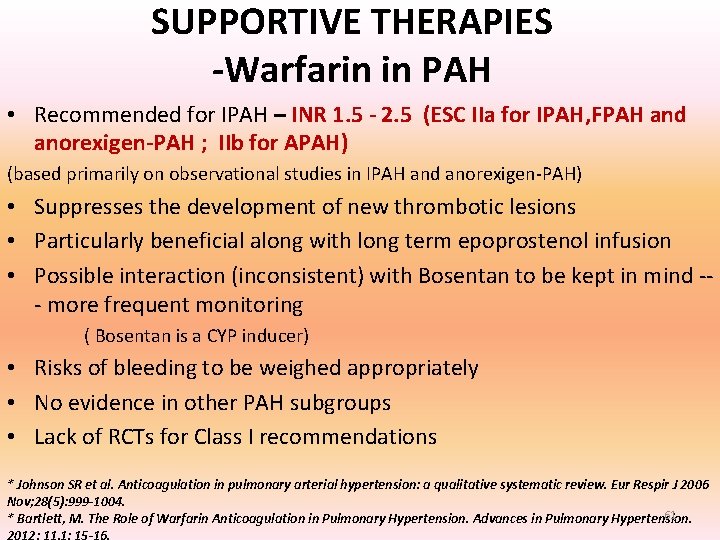
SUPPORTIVE THERAPIES -Warfarin in PAH • Recommended for IPAH – INR 1. 5 - 2. 5 (ESC IIa for IPAH, FPAH and anorexigen-PAH ; IIb for APAH) (based primarily on observational studies in IPAH and anorexigen-PAH) • Suppresses the development of new thrombotic lesions • Particularly beneficial along with long term epoprostenol infusion • Possible interaction (inconsistent) with Bosentan to be kept in mind -- more frequent monitoring ( Bosentan is a CYP inducer) • Risks of bleeding to be weighed appropriately • No evidence in other PAH subgroups • Lack of RCTs for Class I recommendations * Johnson SR et al. Anticoagulation in pulmonary arterial hypertension: a qualitative systematic review. Eur Respir J 2006 Nov; 28(5): 999 -1004. 61 * Bartlett, M. The Role of Warfarin Anticoagulation in Pulmonary Hypertension. Advances in Pulmonary Hypertension. 2012; 11, 1: 15 -16.
Other supportive therapies for PAH • Diuretics • Oxygen therapy when there is PO 2 <60 mm. Hg - LTOT may be considered when necessary. • Digoxin may be considered for RVF/ atrial tachyarrhythmias. • Management of arrhythmias 62
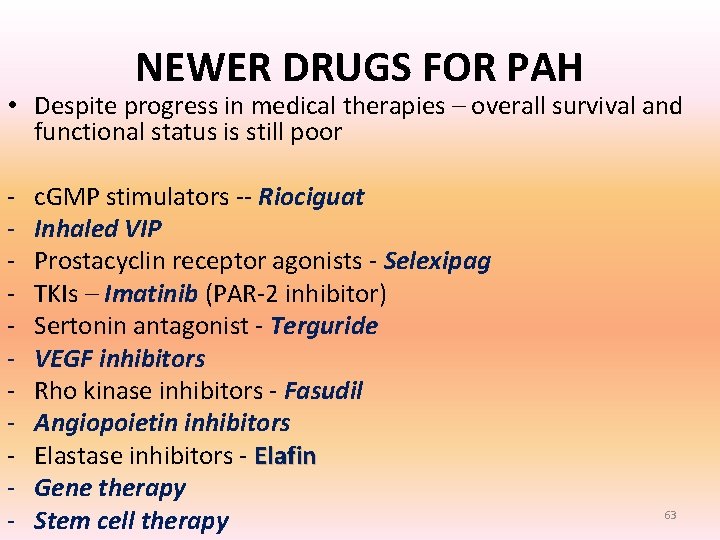
NEWER DRUGS FOR PAH • Despite progress in medical therapies – overall survival and functional status is still poor - c. GMP stimulators -- Riociguat Inhaled VIP Prostacyclin receptor agonists - Selexipag TKIs – Imatinib (PAR-2 inhibitor) Sertonin antagonist - Terguride VEGF inhibitors Rho kinase inhibitors - Fasudil Angiopoietin inhibitors Elastase inhibitors - Elafin Gene therapy Stem cell therapy 63
SURGICAL MEASURES • Failure to respond – inevitable result of RV failure – rapid deterioration v. Atrial septostomy v. Heart-lung transplantation v. Thrombo-endarterectomy for CTEPH v. RV mechanical assist ( under research) 64
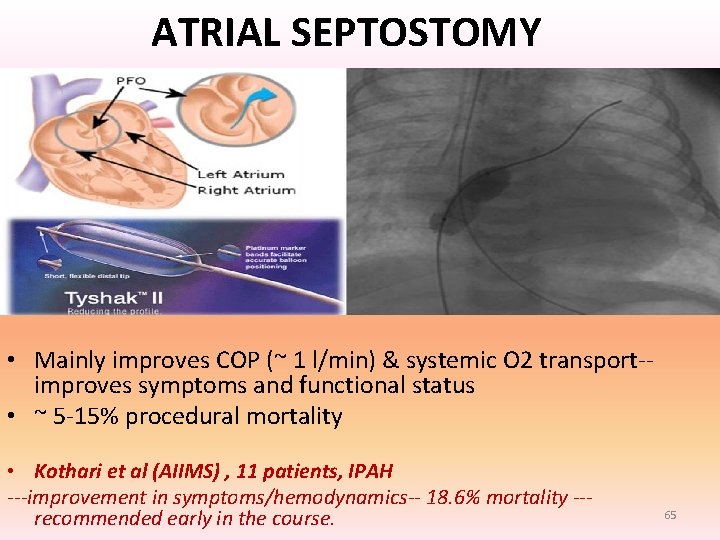
ATRIAL SEPTOSTOMY 1) In severe intractable RHF with syncopal symptoms on maximal advanced PAH therapy and inotropes. (avoided when RAP>20 mm. Hg, PVR>55 WU & Sp. O 2<80%-- end-stage) 2) When advanced medical therapy is not available. 3) Bridge to transplantation • Mainly improves COP (~ 1 l/min) & systemic O 2 transport-improves symptoms and functional status • ~ 5 -15% procedural mortality • Kothari et al (AIIMS) , 11 patients, IPAH ---improvement in symptoms/hemodynamics-- 18. 6% mortality --recommended early in the course. 65
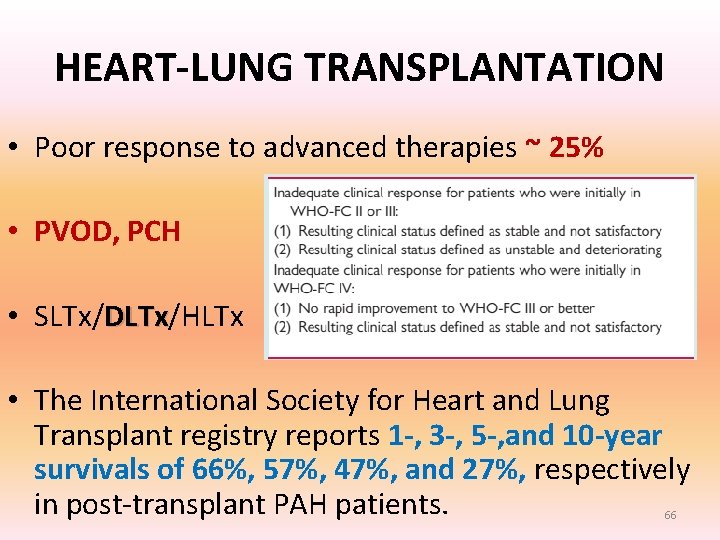
HEART-LUNG TRANSPLANTATION • Poor response to advanced therapies ~ 25% • PVOD, PCH • SLTx/DLTx/HLTx DLTx • The International Society for Heart and Lung Transplant registry reports 1 -, 3 -, 5 -, and 10 -year survivals of 66%, 57%, 47%, and 27%, respectively in post-transplant PAH patients. 66
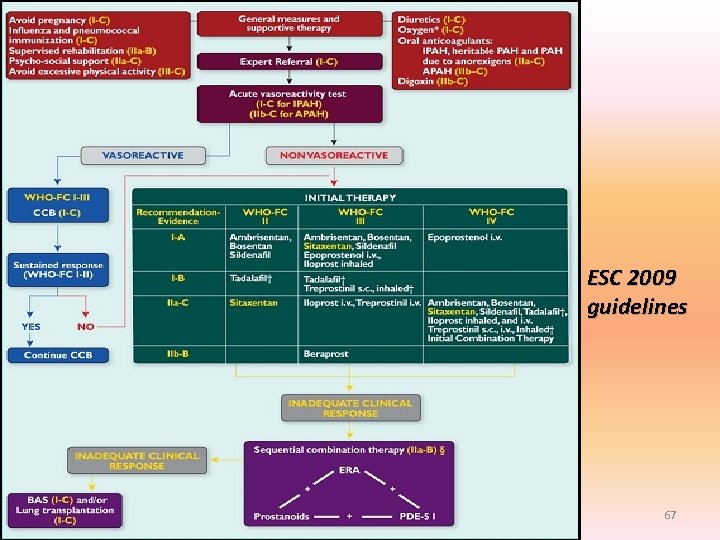
ESC 2009 guidelines 67
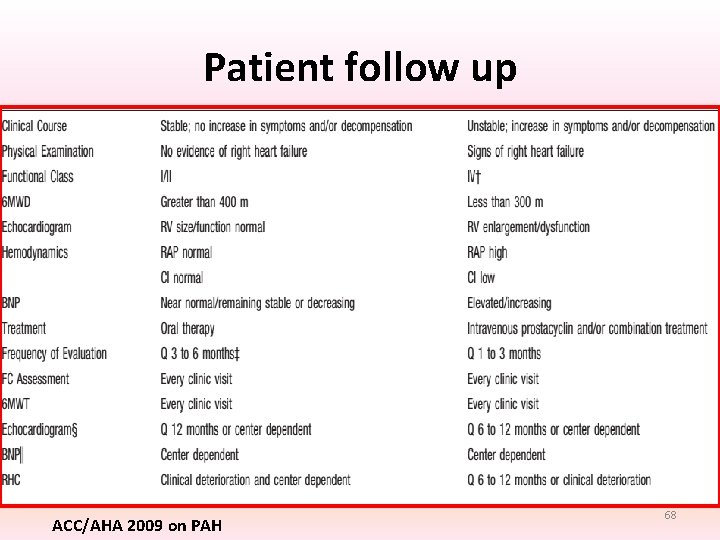
Patient follow up ACC/AHA 2009 on PAH 68
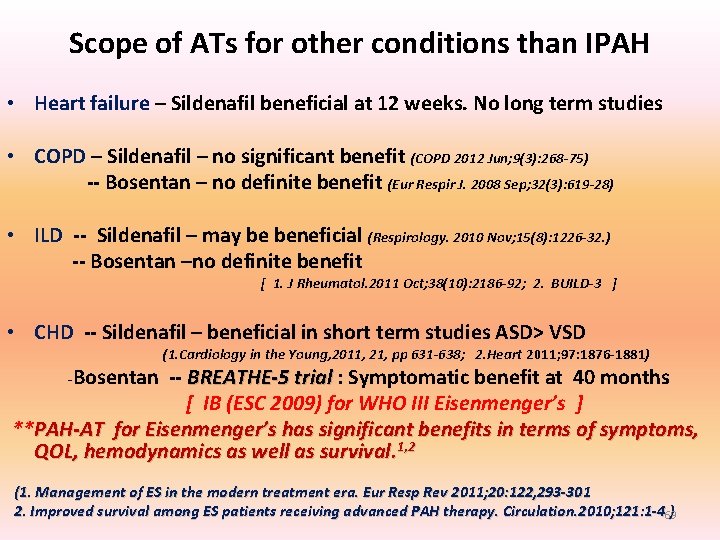
Scope of ATs for other conditions than IPAH • Heart failure – Sildenafil beneficial at 12 weeks. No long term studies • COPD – Sildenafil – no significant benefit (COPD 2012 Jun; 9(3): 268 -75) -- Bosentan – no definite benefit (Eur Respir J. 2008 Sep; 32(3): 619 -28) • ILD -- Sildenafil – may be beneficial (Respirology. 2010 Nov; 15(8): 1226 -32. ) -- Bosentan –no definite benefit [ 1. J Rheumatol. 2011 Oct; 38(10): 2186 -92; 2. BUILD-3 ] • CHD -- Sildenafil – beneficial in short term studies ASD> VSD (1. Cardiology in the Young, 2011, 21, pp 631 -638; 2. Heart 2011; 97: 1876 -1881) -Bosentan -- BREATHE-5 trial : Symptomatic benefit at 40 months [ IB (ESC 2009) for WHO III Eisenmenger’s ] **PAH-AT for Eisenmenger’s has significant benefits in terms of symptoms, QOL, hemodynamics as well as survival. 1, 2 (1. Management of ES in the modern treatment era. Eur Resp Rev 2011; 20: 122, 293 -301 2. Improved survival among ES patients receiving advanced PAH therapy. Circulation. 2010; 121: 1 -4 ) 69
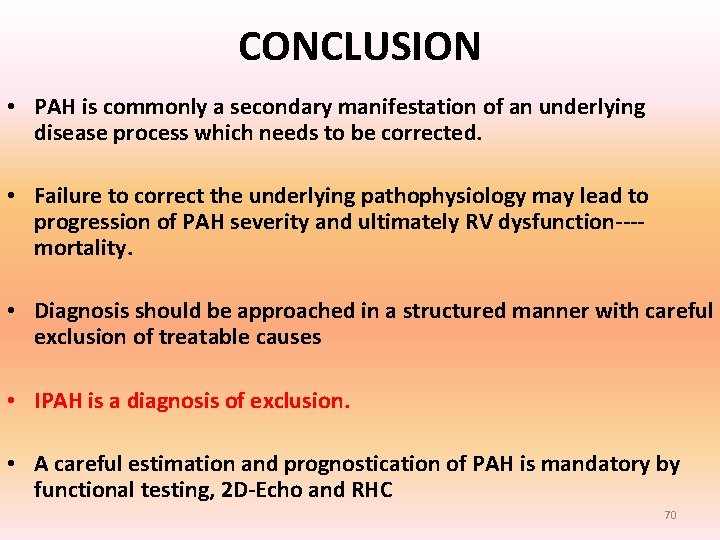
CONCLUSION • PAH is commonly a secondary manifestation of an underlying disease process which needs to be corrected. • Failure to correct the underlying pathophysiology may lead to progression of PAH severity and ultimately RV dysfunction---mortality. • Diagnosis should be approached in a structured manner with careful exclusion of treatable causes • IPAH is a diagnosis of exclusion. • A careful estimation and prognostication of PAH is mandatory by functional testing, 2 D-Echo and RHC 70
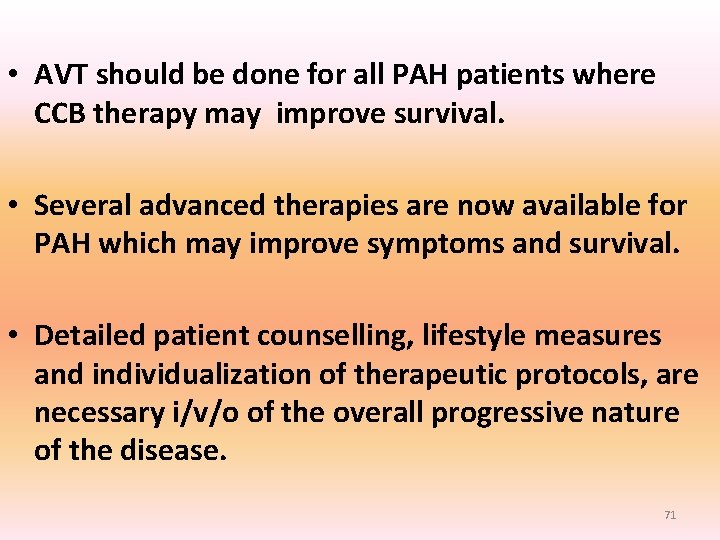
• AVT should be done for all PAH patients where CCB therapy may improve survival. • Several advanced therapies are now available for PAH which may improve symptoms and survival. • Detailed patient counselling, lifestyle measures and individualization of therapeutic protocols, are necessary i/v/o of the overall progressive nature of the disease. 71
References • • • • Braunwald’s Textbook of Heart Diseases (9 th edition) Hurst’s THE HEART Moss and Adams Textbook of Paediatric Cardiology Guidelines for the diagnosis and treatment of PAH. ESC 2009 guidelines Expert consensus document on PAH. ACCF/AHA 2009 Chemla et al. Hemodynamic evaluation of PH. Eur Resp J 2002; 20: 1314 -1331. Echocardiographic assessment of pulmonary hypertension: standard operating procedure. Eur Respir Rev 2012; 21: 125, 239– 248. Assessment of Right Ventricular Structure and Function in Pulmonary Hypertension. J Cardiovasc Ultrasound 2011; 19(3): 115 -125. The Effects of Vasodilators in Pulmonary Hypertension Pulmonary Vascular or Peripheral Vascular? Circ Heart Fail. 2009; 2; 145 -150. Bartlett, M. The Role of Warfarin Anticoagulation in Pulmonary Hypertension. Advances in Pulmonary Hypertension. 2012; 11, 1: 15 -16. Combination in management of PAH. : Pulmonary Hypertension Reviews. International Journal of Clinical Practice; Volume 67, Issue Supplement s 179, pages 13– 23, May 2013. Computed tomography and cardiac magnetic resonance imaging in pulmonary hypertension. Progress in Cardiovascular Diseases 55 (2012) 161– 171. M. D. Mc. Goon* and D. P. Miller. REVEAL: a contemporary US pulmonary arterial hypertension registry Eur Respir Rev 2012; 21: 123, 8– 18 Anita Saxena, Pulmonary hypertension—“state of the art” management in 2012; IHJ Jan-Feb 2012. 72 Multiple references as mentioned in footnote of slides.
SURVIVAL IN PAH Sunil Pauwaa et al. Survival in pulmonary arterial hypertension: A brief review of registry data Pulm Circ. 2011 Jul 73 Sep; 1(3): 430– 431.
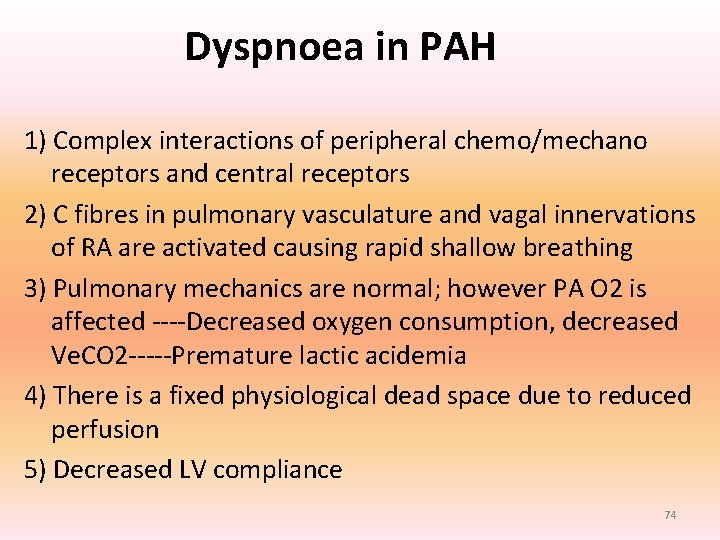
Dyspnoea in PAH 1) Complex interactions of peripheral chemo/mechano receptors and central receptors 2) C fibres in pulmonary vasculature and vagal innervations of RA are activated causing rapid shallow breathing 3) Pulmonary mechanics are normal; however PA O 2 is affected ----Decreased oxygen consumption, decreased Ve. CO 2 -----Premature lactic acidemia 4) There is a fixed physiological dead space due to reduced perfusion 5) Decreased LV compliance 74
Proposed RAP estimation from IVC collapsibility data JBrennan JM. Reappraisal of the use of inferior vena cava for estimating right atrial pressure. J Am Soc 75 Echocardiogr. 2007 Jul; 20(7): 857 -61.
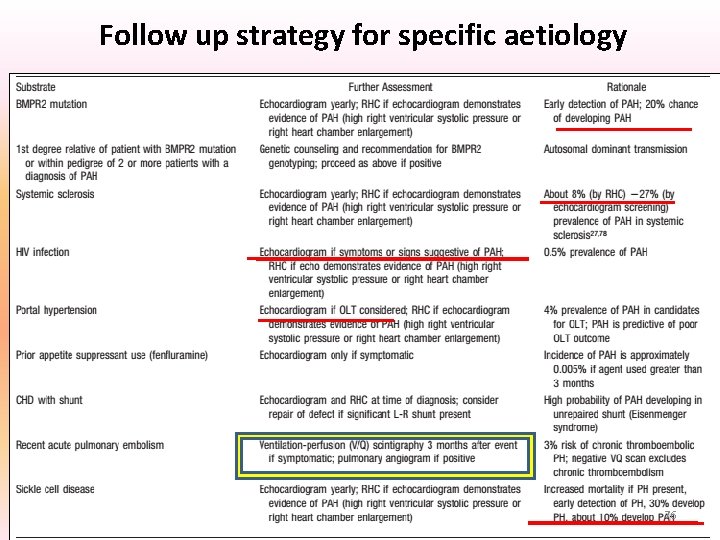
Follow up strategy for specific aetiology 76