
CommunityBased Health Coaching for Chronic Condition Prevention and
Community-Based Health Coaching for Chronic Condition Prevention and Self-Management DR. CHERYL DYE
Health Coaches for Hypertension Control 2009 -2012. DYE, PRINCIPAL INVESTIGATOR. J. WILLIAMS, COINVESTIGATOR; B. AYBAR-DAMALI, CO-INVESTIGATOR. HEALTH COACHES FOR HYPERTENSION CONTROL. HEALTH RESOURCES AND SERVICES ADMINISTRATION (HRSA). AWARD: DO 4 RH 12726 -01 -00. HTTP: //WWW. RACONLINE. ORG/SUCCESS/PROJECT-EXAMPLES/753 2012 - 2013. DYE, PRINCIPAL INVESTIGATOR. J. WILLIAMS COINVESTIGATOR. EXPANDED HEALTH COACHES FOR HYPERTENSION CONTROL. USDA – NATIONAL INSTITUTE OF FOOD AND AGRICULTURE. AWARD: 201246100 -20122.
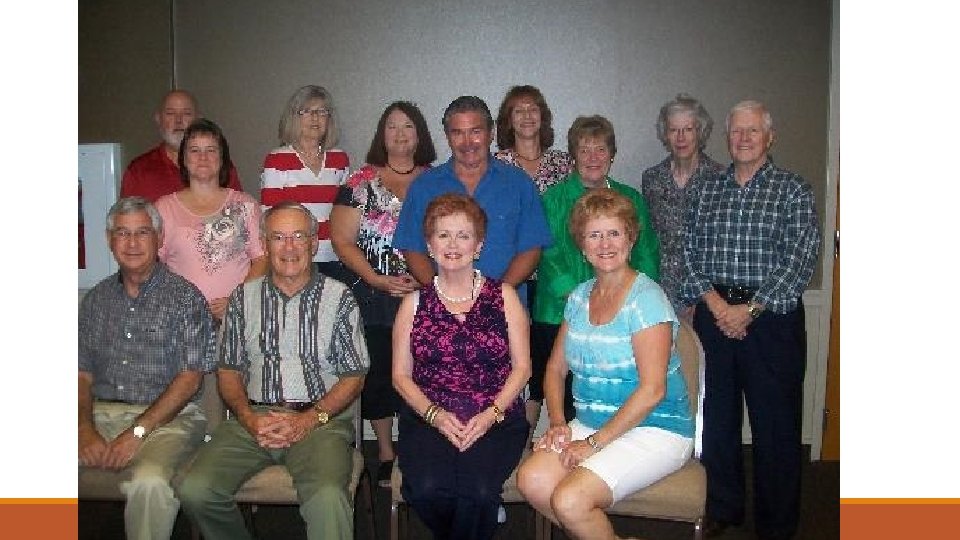
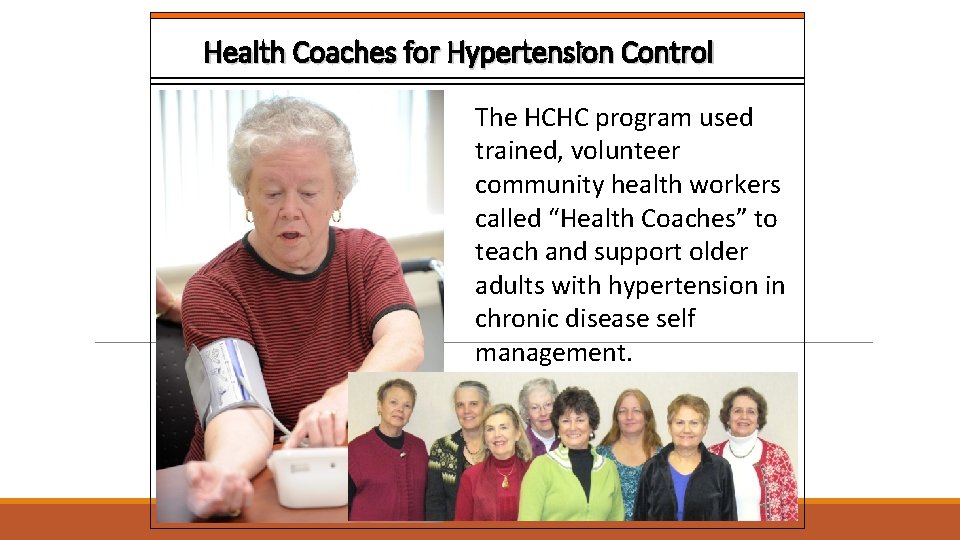
Health Coaches for Hypertension Control The HCHC program used trained, volunteer community health workers called “Health Coaches” to teach and support older adults with hypertension in chronic disease self management.
Background Compared to those living in urban areas, rural residents are: more likely to have chronic conditions, are less educated and are poorer. Both hypertension (HTN) and ischemic heart disease are higher in rural counties than urban areas. Lack of awareness of having HTN and lack of knowledge of how to control HTN after diagnosis places individuals at great risk. The American Heart Association lists lack of physical activity, poor diet (especially one high in salt), overweight and obesity as major risk factors for hypertension. The county of interest (Oconee County, South Carolina) has high rates of all hypertension risk factors. In South Carolina, hypertension prevalence is 33. 2% which is higher than the national rate of 28. 7%; incredibly, 2010 rates in Oconee county are even higher than the state’s at 41. 7%.
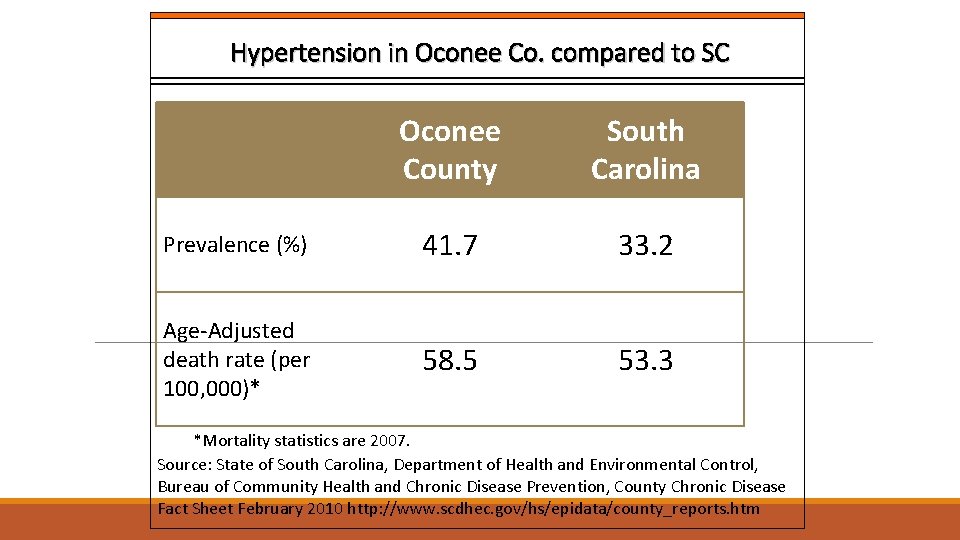
Hypertension in Oconee Co. compared to SC Oconee County South Carolina Prevalence (%) 41. 7 33. 2 Age-Adjusted death rate (per 100, 000)* 58. 5 53. 3 *Mortality statistics are 2007. Source: State of South Carolina, Department of Health and Environmental Control, Bureau of Community Health and Chronic Disease Prevention, County Chronic Disease Fact Sheet February 2010 http: //www. scdhec. gov/hs/epidata/county_reports. htm
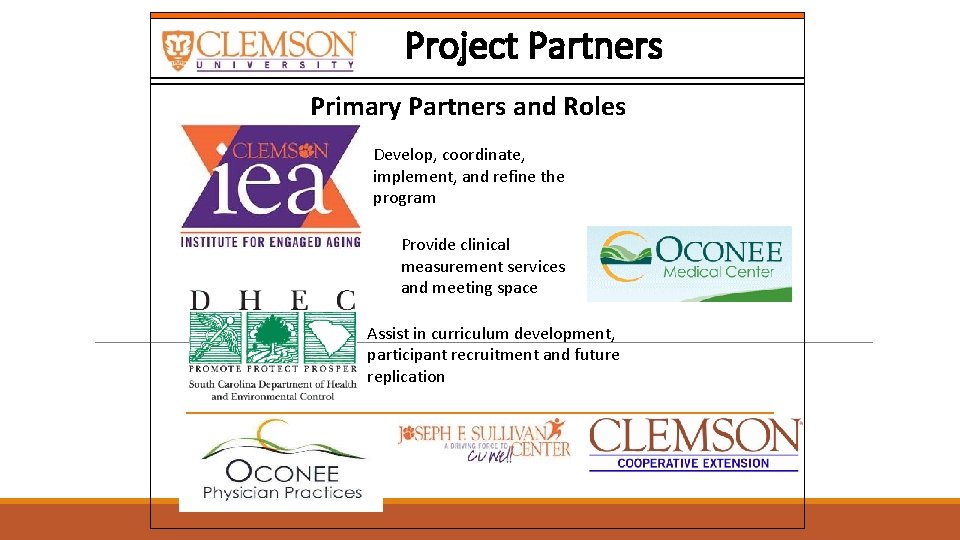
Project Partners Primary Partners and Roles Develop, coordinate, implement, and refine the program Provide clinical measurement services and meeting space Assist in curriculum development, participant recruitment and future replication
Data collection, literature review Needs Assessment ◦ Focus groups ◦ Discussion with agency leaders ◦ Review of strategic plans at national and state level Selection of behavior change strategies Incorporation of best practices ◦ CDC , “Community Health Worker’s Heart Disease and Stroke Prevention Sourcebook”, ◦ NIH “Your Heart, Your Life” ◦ USDA-funded program, Expanded Food and Nutrition Education Program (EFNEP) provided by Extension – protocols for recruiting and training lay educators, content used in HCHC supplemental modules Selection/development of measures – eg. HRA, self-efficacy, stage of change
“Best Practices” Use of Health Risk Appraisal to increase perception of health risk of current health behaviors, to serve as basis for Individualized Action Plan, and to serve as baseline measure and outcome measure Development of Individualized Action Plan Peer-led educational classes Telephone counseling Group support Use of Personal Health Diary Civic Engagement benefits for Health Coaches
Challenges to lifestyle behavior changes in priority population Inability to follow recommended health care regimen due to a lack of understanding and recall and a lack of support Inability to take medications as prescribed and to recognize significant side effects Inability to recognize “red flag” signs and symptoms that indicate a worsening of a chronic illness that requires intervention. Characteristics of the “rural culture” of independence, self-reliance, privacy and willingness to endure hardship, including serious health problems, that influence a rural elder to wait until they are more ill before seeking health care services. Lack of knowledge of community resources Lack of coordination of health care and related resources Lack of transportation, especially for those in remote areas of Mountain Rest, Long Creek and Fair Play.
Methods Trained community volunteers engaged program participants in eight core educational modules about hypertension self-management and eight additional modules in nutrition and physical activity. The modules followed guidelines of the Joint National Committee 7 (JNC 7) recommending lifestyle modifications including weight reduction through following a DASH eating plan and increasing physical activity to 30 minutes most days of the week. Participants completed health risk appraisals with blood work and surveys on knowledge, stage of readiness, and self-efficacy with data collection at baseline, 8 weeks and 16 weeks in first project (n-146) and at baseline and 8 weeks in second project (n-185) which used batched randomization to intervention or wait -list control groups.
Development of Training Materials Communicating with Older Adults (3 hours) ◦ Effective communication strategies to accommodate sensory loss ◦ Incorporating Principles of Adult Education in communication strategies ◦ Health Literacy Challenges of Older Adults and how to overcome them Hypertension Overview– What it is, What it Can Do and How to Control It (3 hours) ◦ Cardiovascular Disease and Hypertension ◦ Hypertension and Stroke ◦ Weight Management Nutrition Basics with Emphasis on Sodium Intake (3 hours) Physical Activity Basics for those with Hypertension (3 hours) Tobacco Use Cessation (self-implemented strategies and referral to tobacco cessation classes) Principles of Behavior Change (3 hours) Medication Management (1 hour) Human Subject Protection Community Resources and Making Referrals (2 hours)
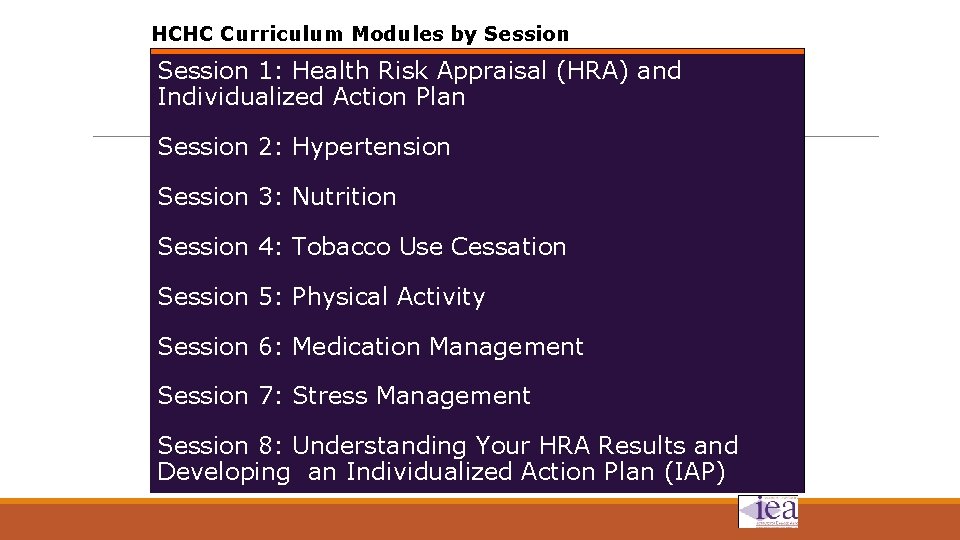
HCHC Curriculum Modules by Session 1: Health Risk Appraisal (HRA) and Individualized Action Plan Session 2: Hypertension Session 3: Nutrition Session 4: Tobacco Use Cessation Session 5: Physical Activity Session 6: Medication Management Session 7: Stress Management Session 8: Understanding Your HRA Results and Developing an Individualized Action Plan (IAP)
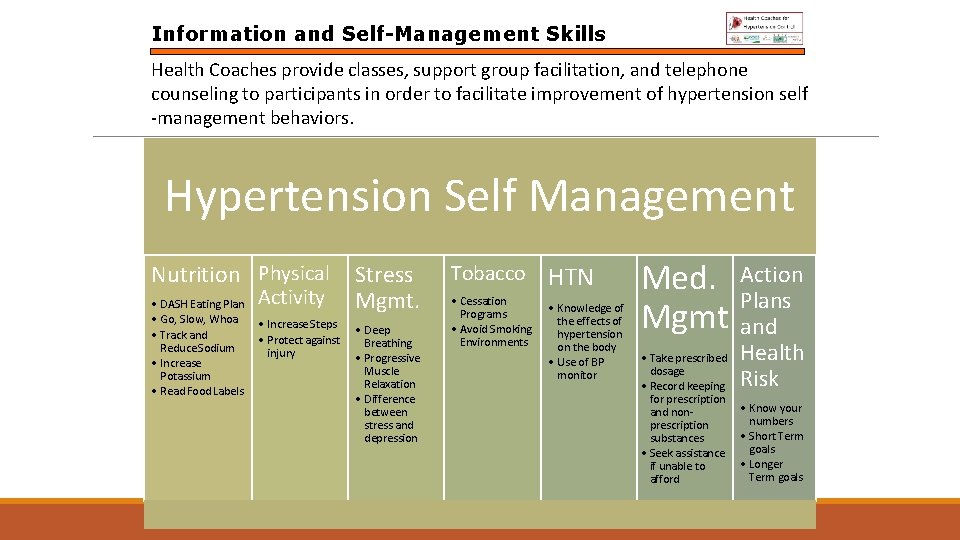
Information and Self-Management Skills Health Coaches provide classes, support group facilitation, and telephone counseling to participants in order to facilitate improvement of hypertension self -management behaviors. Hypertension Self Management Nutrition Physical Stress • DASH Eating Plan Activity Mgmt. • Go, Slow, Whoa • Track and Reduce Sodium • Increase Potassium • Read Food Labels • Increase Steps • Protect against injury • Deep Breathing • Progressive Muscle Relaxation • Difference between stress and depression Tobacco • Cessation Programs • Avoid Smoking Environments HTN • Knowledge of the effects of hypertension on the body • Use of BP monitor Med. Mgmt Action Plans and Health Risk • Take prescribed dosage • Record keeping for prescription • Know your and nonnumbers prescription • Short Term substances goals • Seek assistance • Longer if unable to Term goals afford
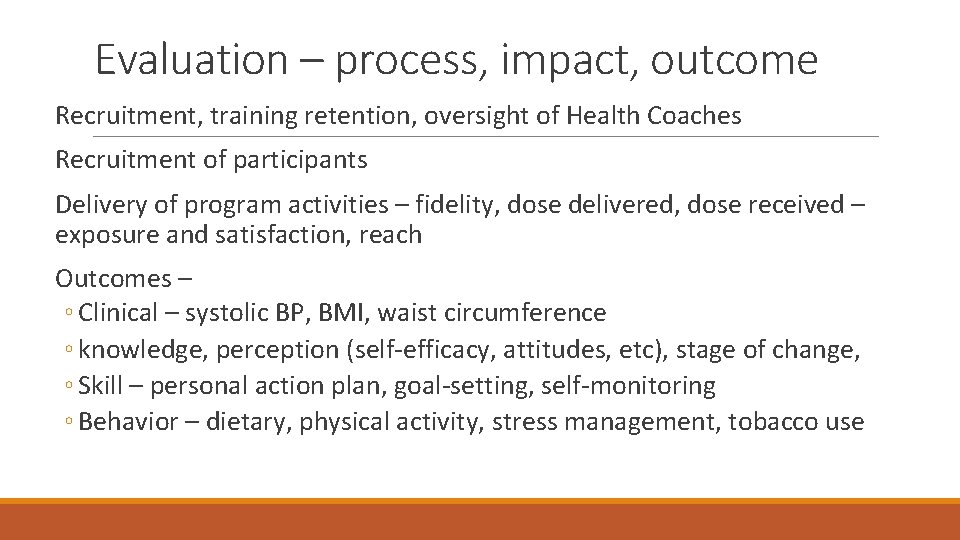
Evaluation – process, impact, outcome Recruitment, training retention, oversight of Health Coaches Recruitment of participants Delivery of program activities – fidelity, dose delivered, dose received – exposure and satisfaction, reach Outcomes – ◦ Clinical – systolic BP, BMI, waist circumference ◦ knowledge, perception (self-efficacy, attitudes, etc), stage of change, ◦ Skill – personal action plan, goal-setting, self-monitoring ◦ Behavior – dietary, physical activity, stress management, tobacco use
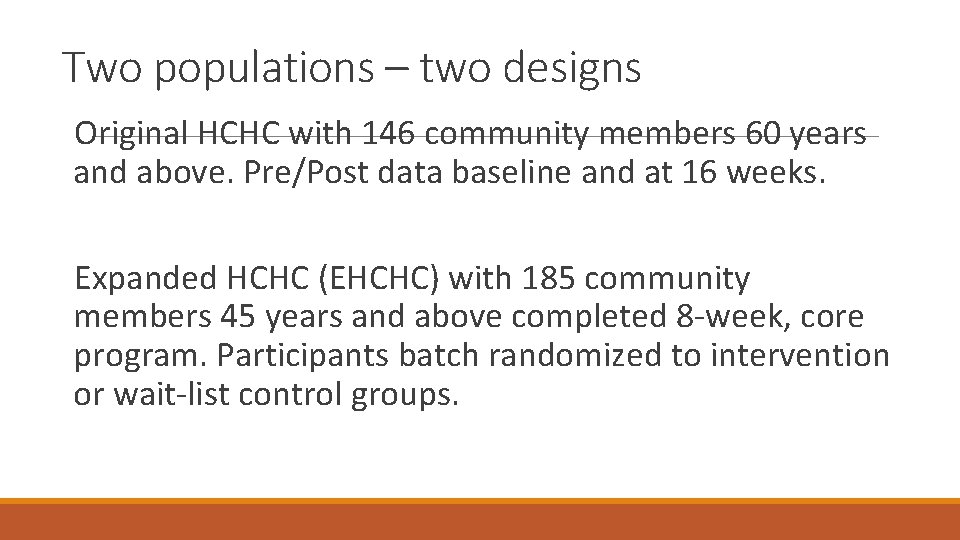
Two populations – two designs Original HCHC with 146 community members 60 years and above. Pre/Post data baseline and at 16 weeks. Expanded HCHC (EHCHC) with 185 community members 45 years and above completed 8 -week, core program. Participants batch randomized to intervention or wait-list control groups.
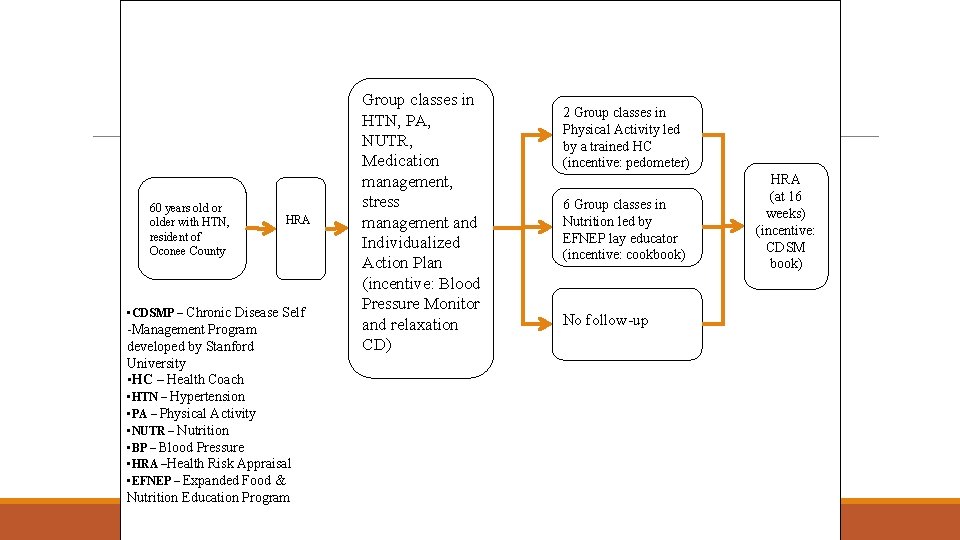
60 years old or older with HTN, resident of Oconee County HRA • CDSMP – Chronic Disease Self -Management Program developed by Stanford University • HC – Health Coach • HTN – Hypertension • PA – Physical Activity • NUTR – Nutrition • BP – Blood Pressure • HRA –Health Risk Appraisal • EFNEP – Expanded Food & Nutrition Education Program Group classes in HTN, PA, NUTR, Medication management, stress management and Individualized Action Plan (incentive: Blood Pressure Monitor and relaxation CD) 2 Group classes in Physical Activity led by a trained HC (incentive: pedometer) 6 Group classes in Nutrition led by EFNEP lay educator (incentive: cookbook) No follow-up HRA (at 16 weeks) (incentive: CDSM book)
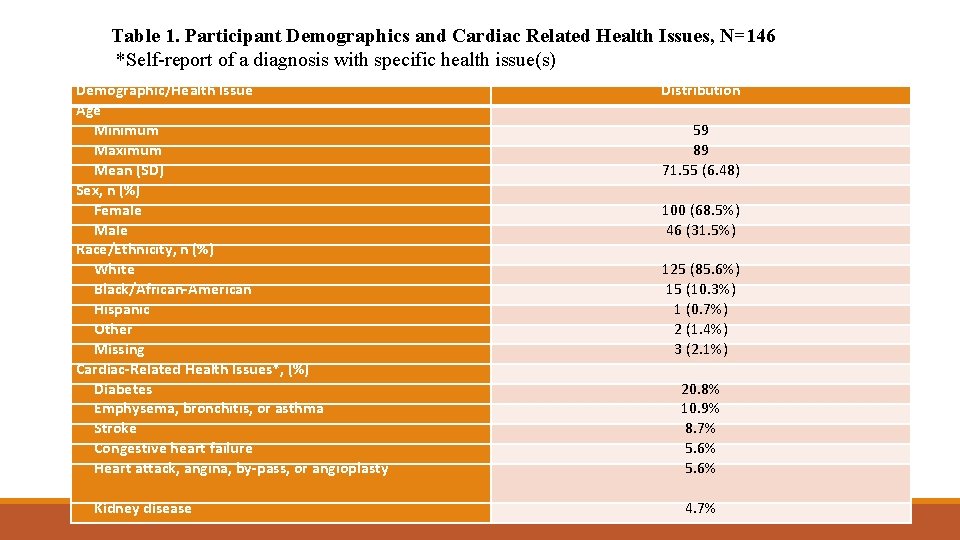
Table 1. Participant Demographics and Cardiac Related Health Issues, N=146 *Self-report of a diagnosis with specific health issue(s) Demographic/Health Issue Age Minimum Maximum Mean (SD) Sex, n (%) Female Male Race/Ethnicity, n (%) White Black/African-American Hispanic Other Missing Cardiac-Related Health Issues*, (%) Diabetes Emphysema, bronchitis, or asthma Stroke Congestive heart failure Heart attack, angina, by-pass, or angioplasty Kidney disease Distribution 59 89 71. 55 (6. 48) 100 (68. 5%) 46 (31. 5%) 125 (85. 6%) 15 (10. 3%) 1 (0. 7%) 2 (1. 4%) 3 (2. 1%) 20. 8% 10. 9% 8. 7% 5. 6% 4. 7%
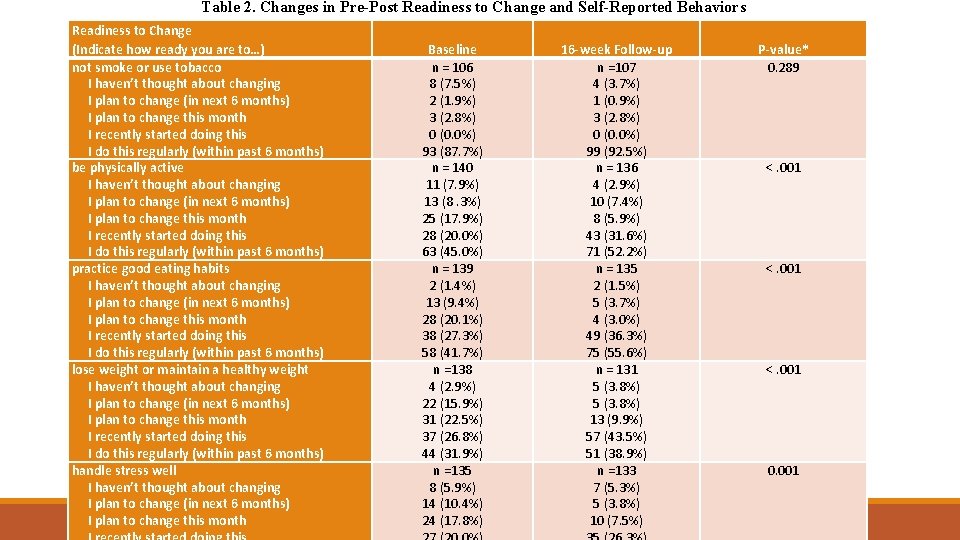
Table 2. Changes in Pre-Post Readiness to Change and Self-Reported Behaviors Readiness to Change (Indicate how ready you are to…) not smoke or use tobacco I haven’t thought about changing I plan to change (in next 6 months) I plan to change this month I recently started doing this I do this regularly (within past 6 months) be physically active I haven’t thought about changing I plan to change (in next 6 months) I plan to change this month I recently started doing this I do this regularly (within past 6 months) practice good eating habits I haven’t thought about changing I plan to change (in next 6 months) I plan to change this month I recently started doing this I do this regularly (within past 6 months) lose weight or maintain a healthy weight I haven’t thought about changing I plan to change (in next 6 months) I plan to change this month I recently started doing this I do this regularly (within past 6 months) handle stress well I haven’t thought about changing I plan to change (in next 6 months) I plan to change this month Baseline n = 106 8 (7. 5%) 2 (1. 9%) 3 (2. 8%) 0 (0. 0%) 93 (87. 7%) n = 140 11 (7. 9%) 13 (8. 3%) 25 (17. 9%) 28 (20. 0%) 63 (45. 0%) n = 139 2 (1. 4%) 13 (9. 4%) 28 (20. 1%) 38 (27. 3%) 58 (41. 7%) n =138 4 (2. 9%) 22 (15. 9%) 31 (22. 5%) 37 (26. 8%) 44 (31. 9%) n =135 8 (5. 9%) 14 (10. 4%) 24 (17. 8%) 16 -week Follow-up n =107 4 (3. 7%) 1 (0. 9%) 3 (2. 8%) 0 (0. 0%) 99 (92. 5%) n = 136 4 (2. 9%) 10 (7. 4%) 8 (5. 9%) 43 (31. 6%) 71 (52. 2%) n = 135 2 (1. 5%) 5 (3. 7%) 4 (3. 0%) 49 (36. 3%) 75 (55. 6%) n = 131 5 (3. 8%) 13 (9. 9%) 57 (43. 5%) 51 (38. 9%) n =133 7 (5. 3%) 5 (3. 8%) 10 (7. 5%) P-value* 0. 289 <. 001 0. 001
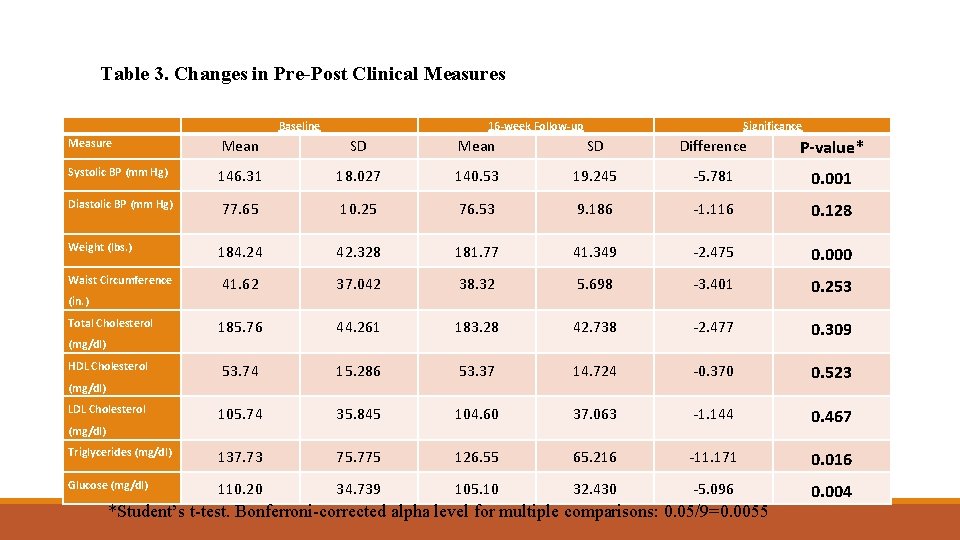
Table 3. Changes in Pre-Post Clinical Measures Measure Baseline 16 -week Follow-up Significance Mean SD Difference P-value* Systolic BP (mm Hg) 146. 31 18. 027 140. 53 19. 245 -5. 781 0. 001 Diastolic BP (mm Hg) 77. 65 10. 25 76. 53 9. 186 -1. 116 0. 128 184. 24 42. 328 181. 77 41. 349 -2. 475 0. 000 41. 62 37. 042 38. 32 5. 698 -3. 401 0. 253 185. 76 44. 261 183. 28 42. 738 -2. 477 0. 309 53. 74 15. 286 53. 37 14. 724 -0. 370 0. 523 105. 74 35. 845 104. 60 37. 063 -1. 144 0. 467 Triglycerides (mg/dl) 137. 73 75. 775 126. 55 65. 216 -11. 171 0. 016 Glucose (mg/dl) 110. 20 34. 739 105. 10 32. 430 -5. 096 0. 004 Weight (lbs. ) Waist Circumference (in. ) Total Cholesterol (mg/dl) HDL Cholesterol (mg/dl) LDL Cholesterol (mg/dl) *Student’s t-test. Bonferroni-corrected alpha level for multiple comparisons: 0. 05/9=0. 0055
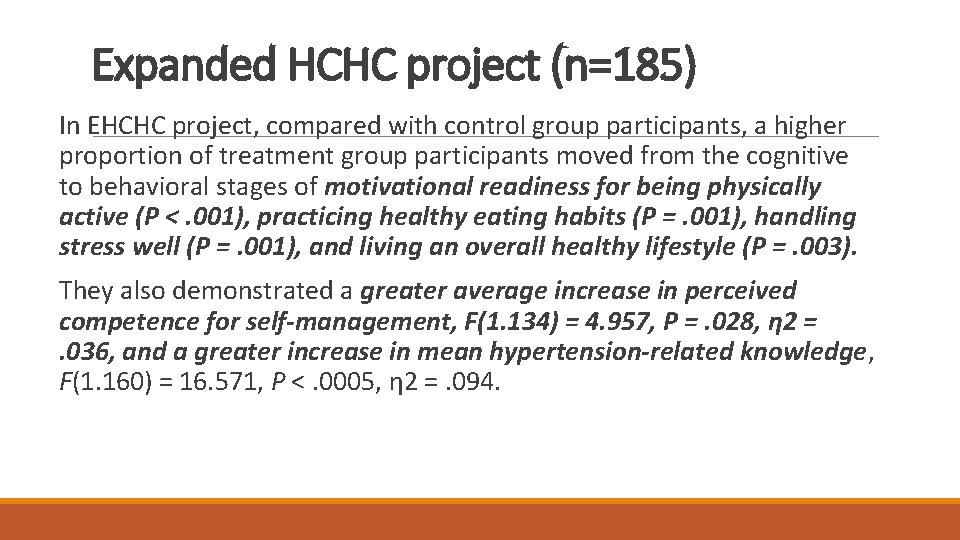
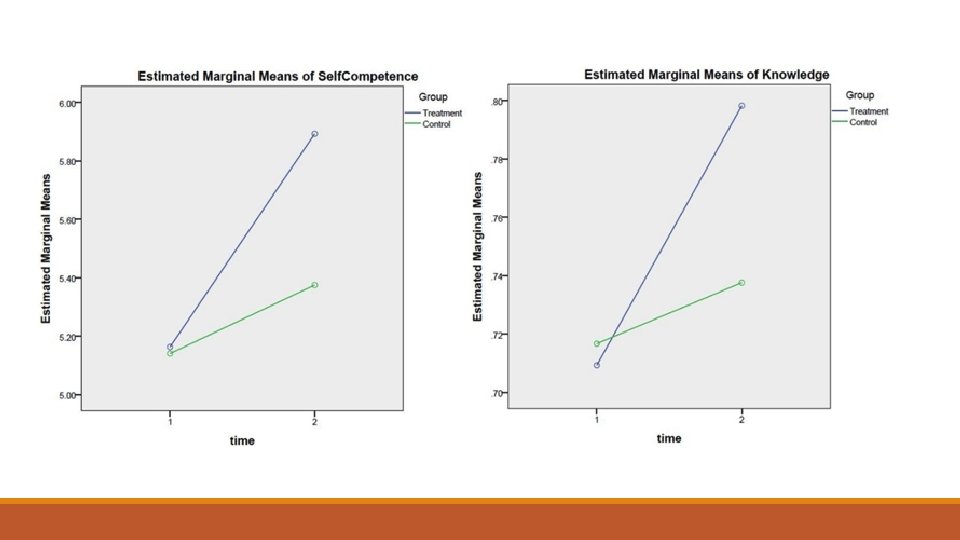
Expanded HCHC project (n=185) In EHCHC project, compared with control group participants, a higher proportion of treatment group participants moved from the cognitive to behavioral stages of motivational readiness for being physically active (P <. 001), practicing healthy eating habits (P =. 001), handling stress well (P =. 001), and living an overall healthy lifestyle (P =. 003). They also demonstrated a greater average increase in perceived competence for self-management, F(1. 134) = 4. 957, P =. 028, η 2 =. 036, and a greater increase in mean hypertension-related knowledge, F(1. 160) = 16. 571, P <. 0005, η 2 =. 094.
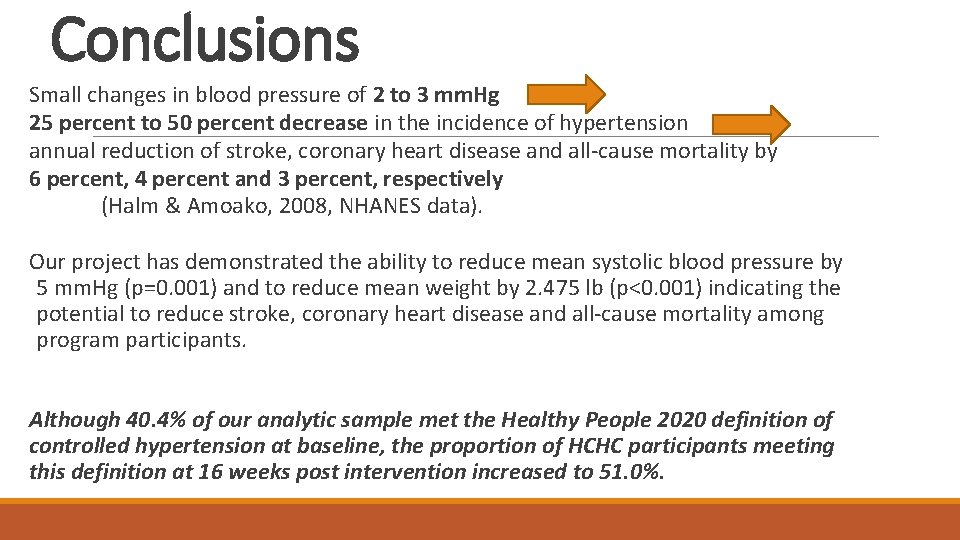
Conclusions Small changes in blood pressure of 2 to 3 mm. Hg 25 percent to 50 percent decrease in the incidence of hypertension annual reduction of stroke, coronary heart disease and all-cause mortality by 6 percent, 4 percent and 3 percent, respectively (Halm & Amoako, 2008, NHANES data). Our project has demonstrated the ability to reduce mean systolic blood pressure by 5 mm. Hg (p=0. 001) and to reduce mean weight by 2. 475 lb (p<0. 001) indicating the potential to reduce stroke, coronary heart disease and all-cause mortality among program participants. Although 40. 4% of our analytic sample met the Healthy People 2020 definition of controlled hypertension at baseline, the proportion of HCHC participants meeting this definition at 16 weeks post intervention increased to 51. 0%.
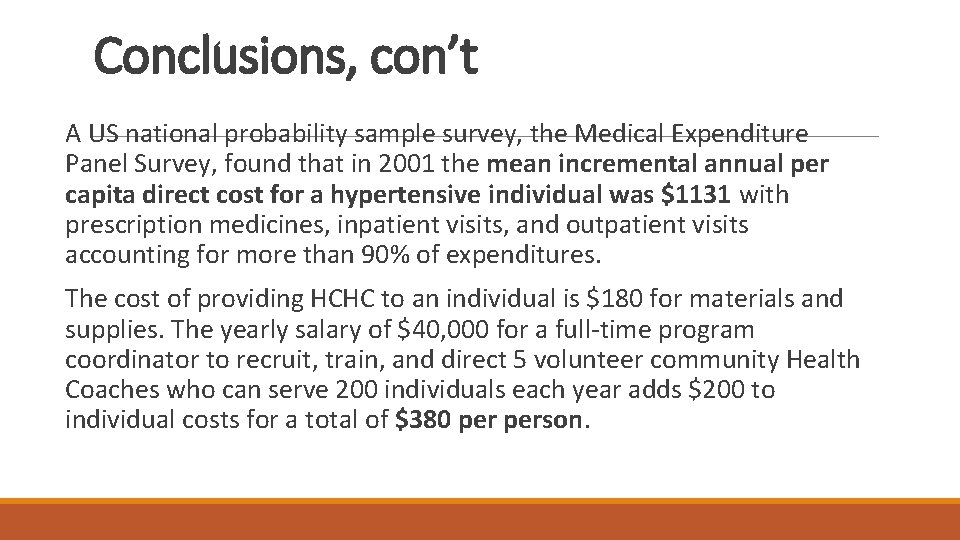
Conclusions, con’t A US national probability sample survey, the Medical Expenditure Panel Survey, found that in 2001 the mean incremental annual per capita direct cost for a hypertensive individual was $1131 with prescription medicines, inpatient visits, and outpatient visits accounting for more than 90% of expenditures. The cost of providing HCHC to an individual is $180 for materials and supplies. The yearly salary of $40, 000 for a full-time program coordinator to recruit, train, and direct 5 volunteer community Health Coaches who can serve 200 individuals each year adds $200 to individual costs for a total of $380 person.
Conclusions, con’t HCHC also benefits the volunteer Health Coaches, most of whom are retirees. Retirees are often seeking civic engagement, volunteer opportunities, and meaningful work throughout their later years. Enduring lifestyle changes necessary for chronic disease selfmanagement require that psychosocial determinants of health behavior are instilled, which is typically beyond standard medical practice. We recommend peer-led, community-based programs as a complement to clinical care and support the increasing health system interest in promoting population health beyond clinical walls.
NIH Stage Model applied to Health Coaches for Hypertension Control Stage 0 – Basic Science What are the high-risk populations for hypertension? (distribution of health outcomes in a population) Oconee County, prevalence, behavioral risk factors (BRFSS) What are the determinants of hypertension? (lifestyle) Why do people engage in behaviors linked with hypertension? What strategies have proven effective in changing lifestyle? ◦ Applicable frameworks – Chronic Care Model, HP 2010 goals ◦ Applicable behavior change theories – SCT, Transtheoretical Model (SOC) ◦ Lay Health Advisors, Community Health Workers/ Health Coaches (peer to peer) ◦ Health Literacy strategies
Stage II, Stage IV, Stage V Stage II –Stage III. Efficacy -- effectiveness implementation in Oconee County (n=330) ◦ close oversight of program activities, ◦ process, impact, and outcome evaluation Stage IV – implementation using only Health Coach manuals and participants notebooks to maintain fidelity Stage V - Dissemination through CU Extension, ? ? ? Evidence-Based Program designation by National Chronic Disease Self-Management Education Resource Center based at NCOA. Reimbursement through Older Americans Act (OAA) Title III-D
Publications Dye CJ, Williams J, Evatt JH. “Activating Patients for Sustained Chronic Disease Self. Management: Thinking Beyond Clinical Outcomes”. Journal of Primary Care and Community Health. 2016. DOI: 10. 1177/2150131915626562. Dye, CJ, Williams JE, Evatt JH. “Improving Hypertension Self-Management with Community Health Coaches”. Health Promotion Practice. DOI: 10. 1177/1524839914533797. 2014. Dye CJ, Williams, JE, Kemper KA, Mc. Guire F. " Impacting Mediators of Change for Physical Activity among Elderly Food Stamp Recipients”. Educational Gerontology. 38: 788 -798, 2012. Dye CJ, Willoughby F, Battisto D. “Advice from Rural Elders: What it Takes to Age in Place. ” Educational Gerontology. 37: 1 -20, 2011.
- Slides: 28