Chapter 30 Antidepressant Agents Introduction The most common



- Slides: 57
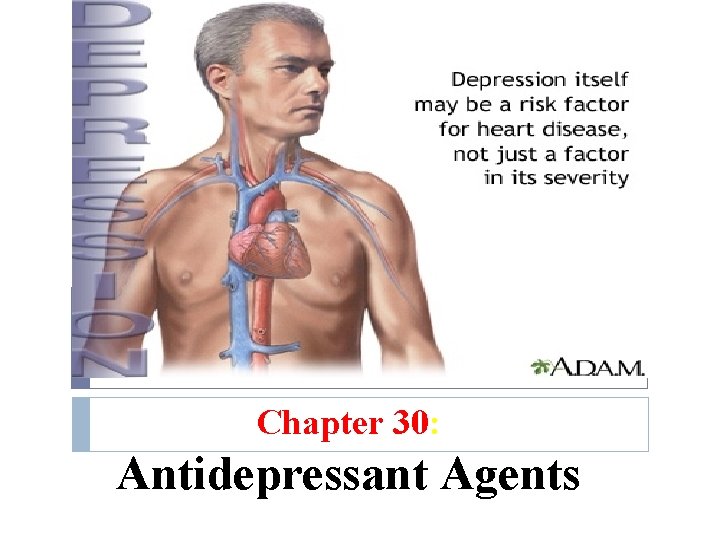
Chapter 30: Antidepressant Agents
Introduction The most common mood disorders are major depression (unipolar depression) and manic-depressive illness (bipolar disorder) Worldwide, depression is a major cause of disability and premature death In addition to the significant suicide risk, depressed individuals are more likely to die from other causes, such as heart disease, or cancer. The diagnosis of depression still rests primarily on the clinical interview Major depressive disorder (MDD) is characterized by depressed mood most of the time for at least 2 weeks AND/OR loss of interest or pleasure in most activities and must not be precipitated or influenced by a medical illness or medication
Introduction In addition is characterized by: 1. Change in appetite 2. Change in sleep 3. Low energy 4. Poor concentration (or difficulty making decisions) 5. Feelings of worthlessness or inappropriate guilt 6. Psychomotor agitation or retardation 7. Recurrent thoughts of suicide CAD, DM, and stroke are more common in depressed patients, and depression may worsen the prognosis for patients with a variety of comorbid medical conditions
Hypothesis of depression The monoamine hypothesis of depression suggests that depression is related to a deficiency in the amount or function of cortical and limbic 5 -HT, NE, and DA Neurothrophic hypothesis: nerve growth factors such as brain-derived neurotrophic factor (BDNF) regulate neural plasticity, resilience, and neurogenesis and that depression is associated with the loss of neurotrophic support
Neuroendocrine factors in depression MDD patients (Major depressive disorder) have high cortisol levels, nonsuppression of ACTH release in the dexamethasone suppression test, and chronically elevated levels of CRH Hypothyroidism often presents with depressive symptoms, which resolve with thyroid hormone supplementation Estrogen deficiency states, which occur in the postpartum and postmenopausal periods, are thought to play a role in the etiology of depression in some women Likewise, severe testosterone deficiency in men is sometimes associated with depressive symptoms
Antidepressants Most antidepressants exert important actions on the metabolism of monoamine neurotransmitters, their transporters, and receptors, particularly NE, 5 -HT or both The pharmacologic effects of any of the antidepressant drugs on neurotransmission occur immediately, whereas the time course for a therapeutic response occurs over several weeks It takes at least 2 weeks to produce significant improvement in mood, and maximum benefit may require up to 12 weeks or more
Drug Selection: General Considerations Various types of antidepressants are available: 1. Selective Serotonin Reuptake Inhibitors (SSRIs) 2. Serotonin Norepinephrine Reuptake Inhibitors: (SNRIs) & (TCA) 3. Monoamine Oxidase Inhibitors (MAOIs) 4. Atypical/ Miscellaneous
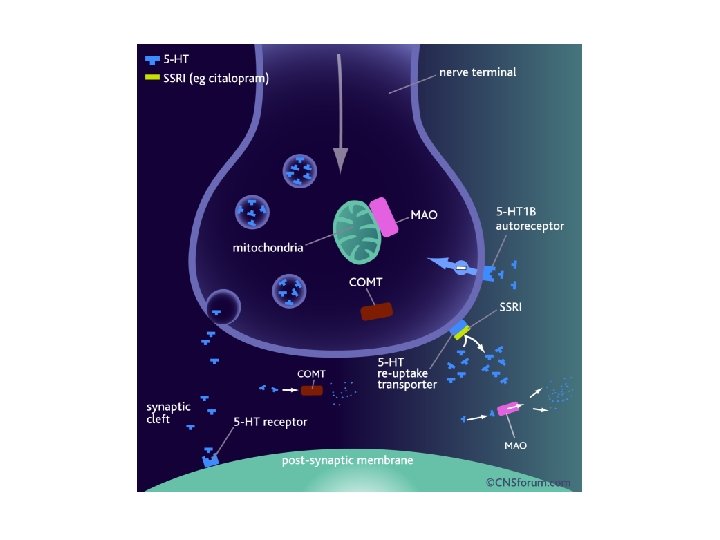
SSRIs- PDs Most commonly prescribed group of antidepressants Have 300 - to 3000 -fold greater selectivity for SERT compared to the NET SSRIs allosterically inhibit the serotonin transporter (SERT) by binding the receptor at a site other than active binding site for serotonin 6 available agents: Fluoxetine (Prozac®), Paroxetine, Sertraline, Fluvoxamine, Citalopram, & Escitalopram (S-citalopram)
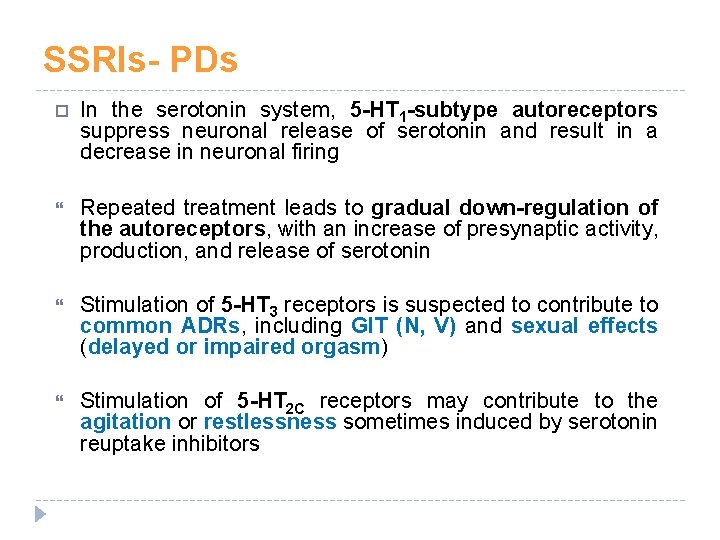
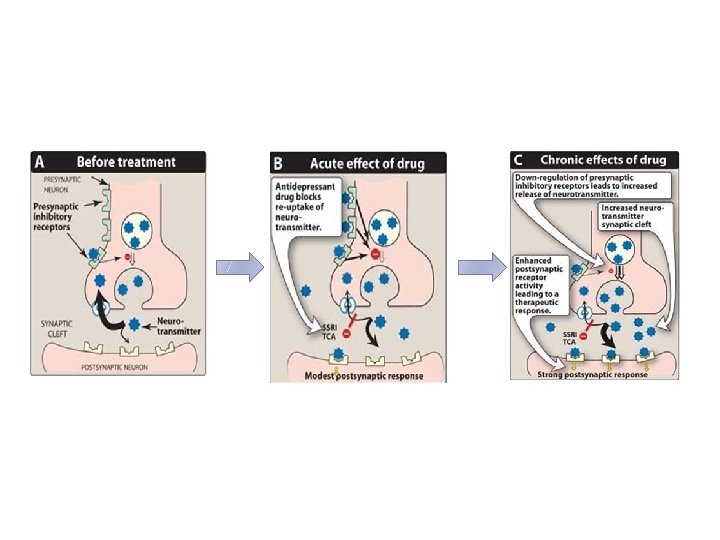
SSRIs- PDs In the serotonin system, 5 -HT 1 -subtype autoreceptors suppress neuronal release of serotonin and result in a decrease in neuronal firing Repeated treatment leads to gradual down-regulation of the autoreceptors, with an increase of presynaptic activity, production, and release of serotonin Stimulation of 5 -HT 3 receptors is suspected to contribute to common ADRs, including GIT (N, V) and sexual effects (delayed or impaired orgasm) Stimulation of 5 -HT 2 C receptors may contribute to the agitation or restlessness sometimes induced by serotonin reuptake inhibitors
Selective Serotonin Reuptake Inhibitors (SSRIs) As a class, these medications have little or no affinity for cholinergic, adrenergic or histamine receptors and do not interfere with cardiac conduction They are well tolerated by patients who are especially sensitive to the anticholinergic and orthostatic effects of the TCAs and MAOIs SSRI have largely replaced TCAs and MAOIs as the drugs of choice in treating depression
SSRIs- Clinical uses 1. 2. 3. 4. 5. 6. 7. 8. 9. Major Depression: the primary indication Obsessive-compulsive disorder (OCD) (fluvoxamine) Panic disorder Generalized anxiety disorder Posttraumatic stress disorder Social anxiety disorder (SAD) Premenstrual dysphoric disorder (fluoxetine & sertraline) Bulimia nervosa (only fluoxetine) Premature ejaculation
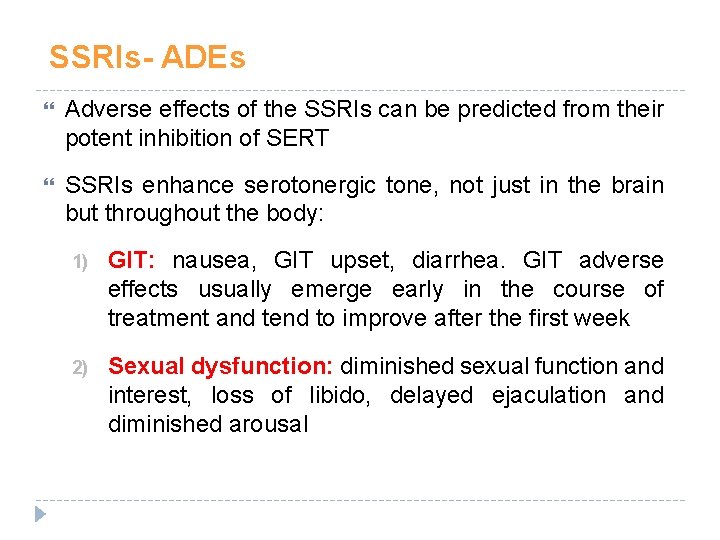
SSRIs- ADEs Adverse effects of the SSRIs can be predicted from their potent inhibition of SERT SSRIs enhance serotonergic tone, not just in the brain but throughout the body: 1) GIT: nausea, GIT upset, diarrhea. GIT adverse effects usually emerge early in the course of treatment and tend to improve after the first week 2) Sexual dysfunction: diminished sexual function and interest, loss of libido, delayed ejaculation and diminished arousal
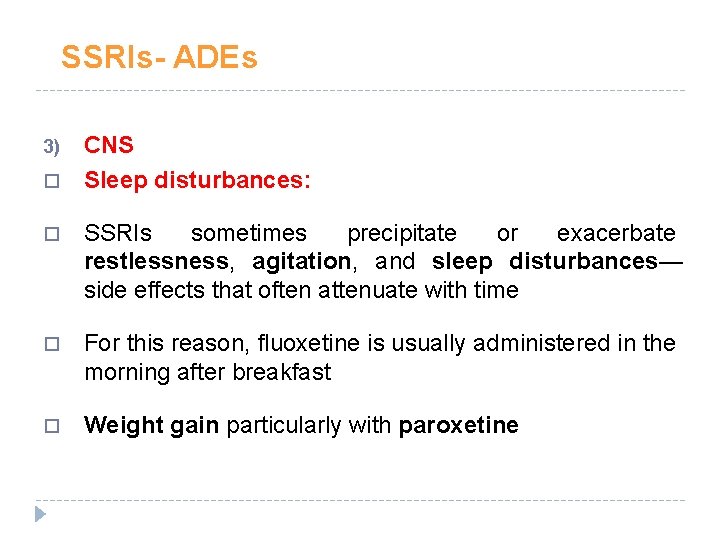
SSRIs- ADEs 3) CNS Sleep disturbances: SSRIs sometimes precipitate or exacerbate restlessness, agitation, and sleep disturbances— side effects that often attenuate with time For this reason, fluoxetine is usually administered in the morning after breakfast Weight gain particularly with paroxetine
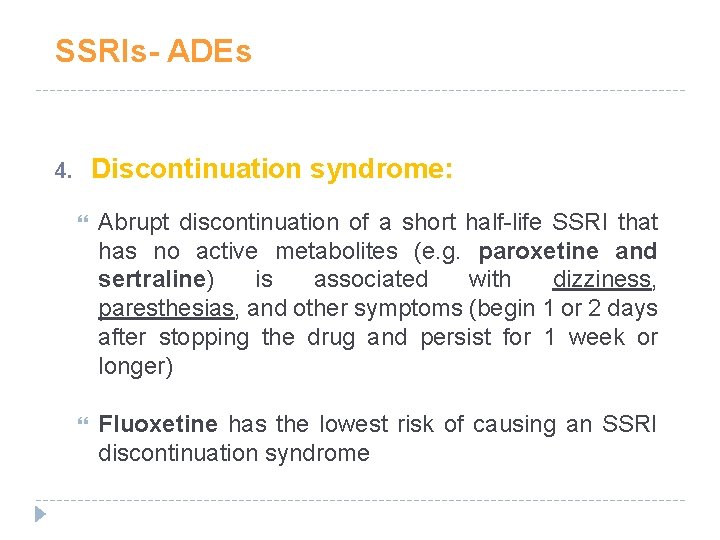
SSRIs- ADEs Discontinuation syndrome: 4. Abrupt discontinuation of a short half-life SSRI that has no active metabolites (e. g. paroxetine and sertraline) is associated with dizziness, paresthesias, and other symptoms (begin 1 or 2 days after stopping the drug and persist for 1 week or longer) Fluoxetine has the lowest risk of causing an SSRI discontinuation syndrome
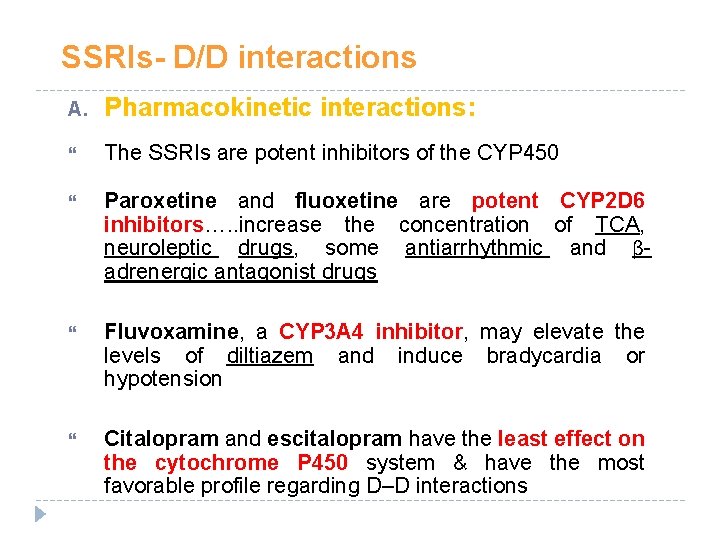
SSRIs- D/D interactions A. Pharmacokinetic interactions: The SSRIs are potent inhibitors of the CYP 450 Paroxetine and fluoxetine are potent CYP 2 D 6 inhibitors…. . increase the concentration of TCA, neuroleptic drugs, some antiarrhythmic and βadrenergic antagonist drugs Fluvoxamine, a CYP 3 A 4 inhibitor, may elevate the levels of diltiazem and induce bradycardia or hypotension Citalopram and escitalopram have the least effect on the cytochrome P 450 system & have the most favorable profile regarding D–D interactions
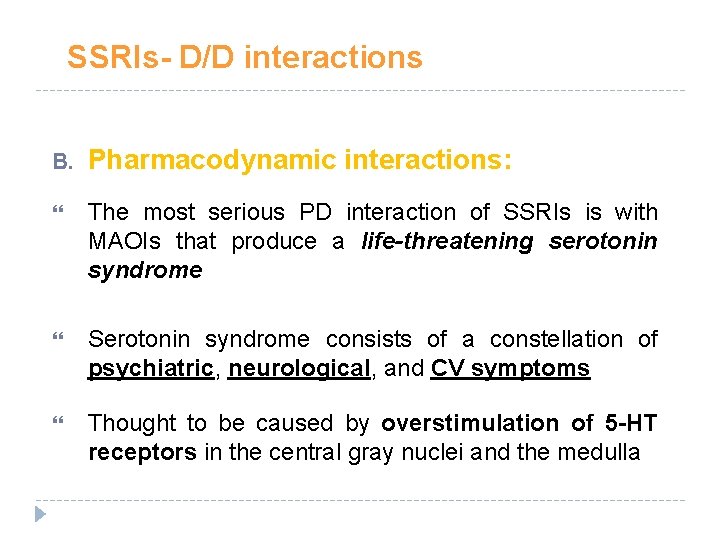
SSRIs- D/D interactions B. Pharmacodynamic interactions: The most serious PD interaction of SSRIs is with MAOIs that produce a life-threatening serotonin syndrome Serotonin syndrome consists of a constellation of psychiatric, neurological, and CV symptoms Thought to be caused by overstimulation of 5 -HT receptors in the central gray nuclei and the medulla
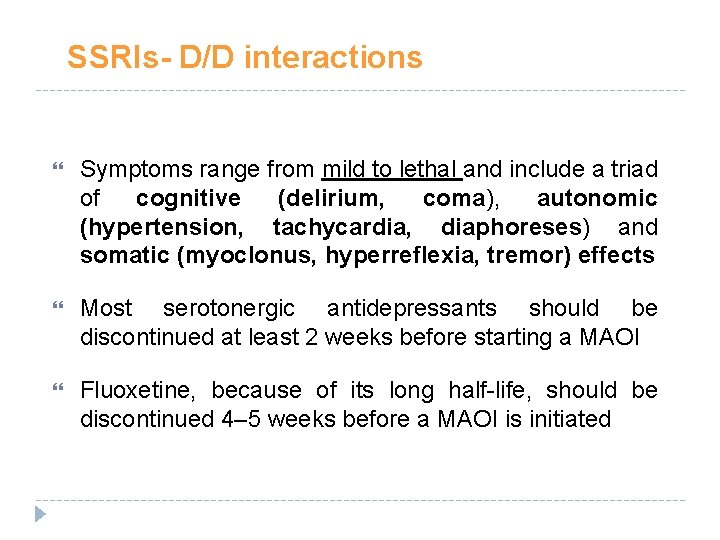
SSRIs- D/D interactions Symptoms range from mild to lethal and include a triad of cognitive (delirium, coma), autonomic (hypertension, tachycardia, diaphoreses) and somatic (myoclonus, hyperreflexia, tremor) effects Most serotonergic antidepressants should be discontinued at least 2 weeks before starting a MAOI Fluoxetine, because of its long half-life, should be discontinued 4– 5 weeks before a MAOI is initiated
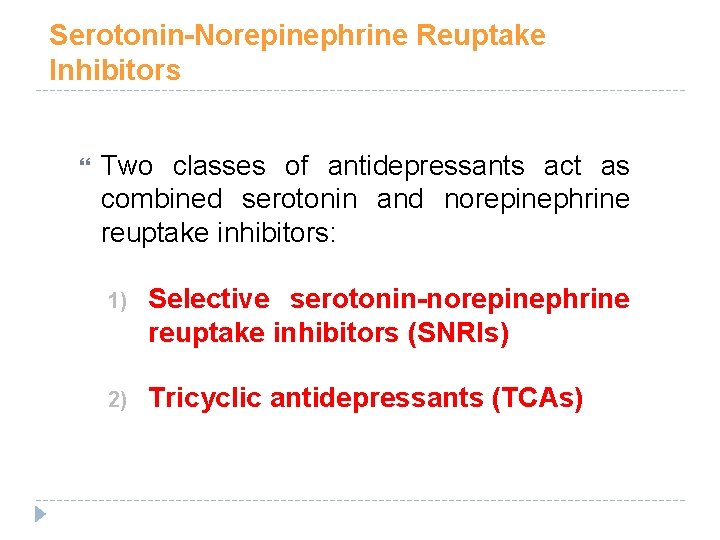
Serotonin-Norepinephrine Reuptake Inhibitors Two classes of antidepressants act as combined serotonin and norepinephrine reuptake inhibitors: 1) Selective serotonin-norepinephrine reuptake inhibitors (SNRIs) 2) Tricyclic antidepressants (TCAs)
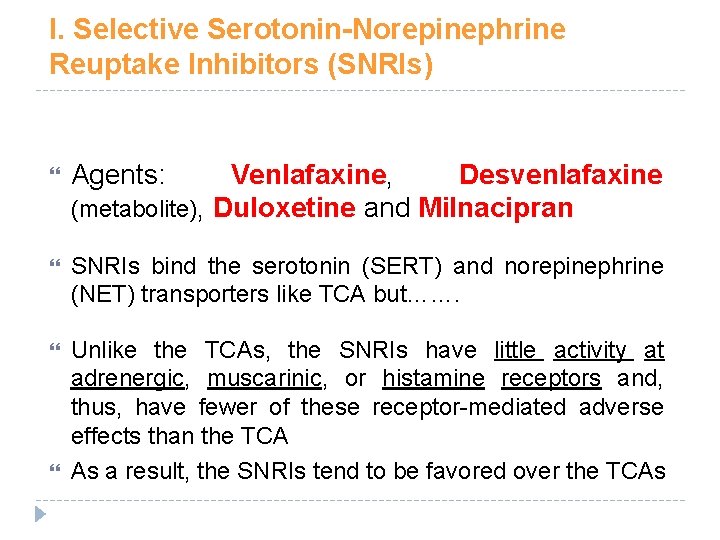
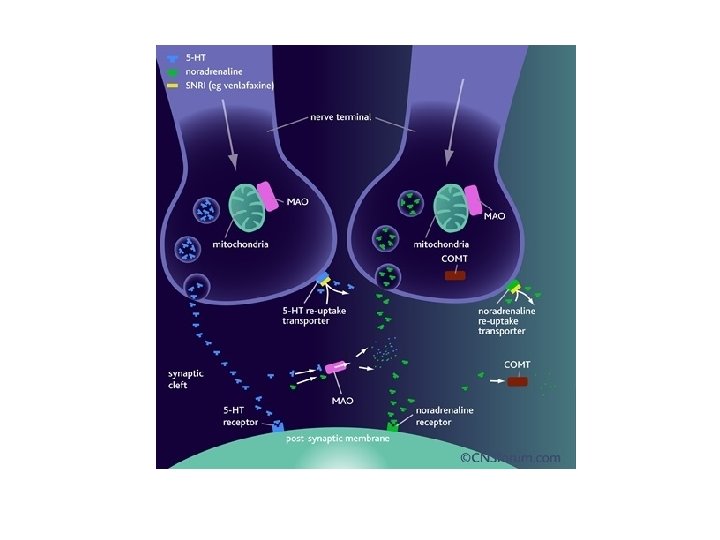
I. Selective Serotonin-Norepinephrine Reuptake Inhibitors (SNRIs) Agents: SNRIs bind the serotonin (SERT) and norepinephrine (NET) transporters like TCA but……. Unlike the TCAs, the SNRIs have little activity at adrenergic, muscarinic, or histamine receptors and, thus, have fewer of these receptor-mediated adverse effects than the TCA As a result, the SNRIs tend to be favored over the TCAs Venlafaxine, Desvenlafaxine (metabolite), Duloxetine and Milnacipran
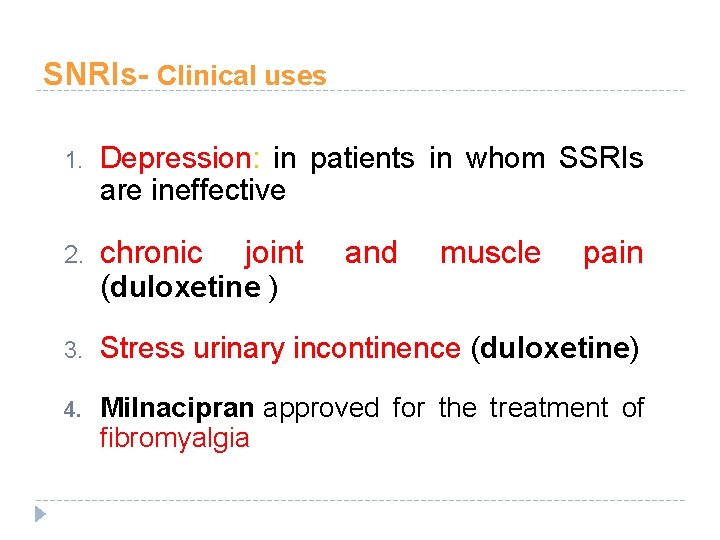
SNRIs- Clinical uses 1. Depression: in patients in whom SSRIs are ineffective 2. chronic joint (duloxetine ) 3. Stress urinary incontinence (duloxetine) 4. Milnacipran approved for the treatment of fibromyalgia and muscle pain
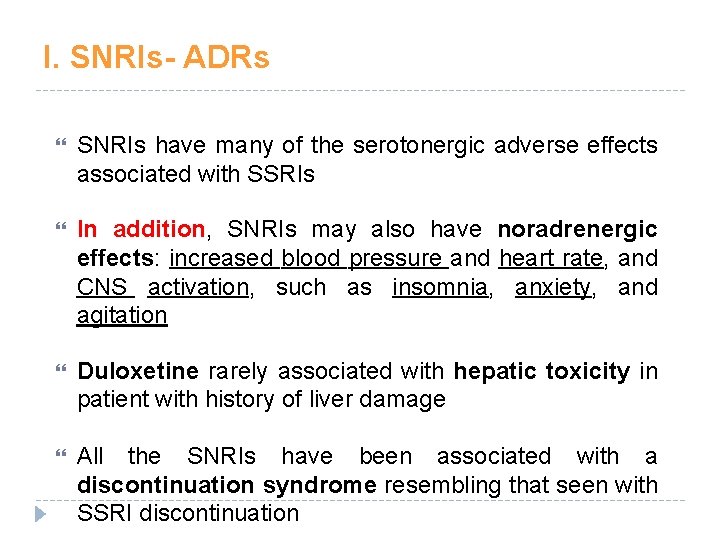
I. SNRIs- ADRs SNRIs have many of the serotonergic adverse effects associated with SSRIs In addition, SNRIs may also have noradrenergic effects: increased blood pressure and heart rate, and CNS activation, such as insomnia, anxiety, and agitation Duloxetine rarely associated with hepatic toxicity in patient with history of liver damage All the SNRIs have been associated with a discontinuation syndrome resembling that seen with SSRI discontinuation
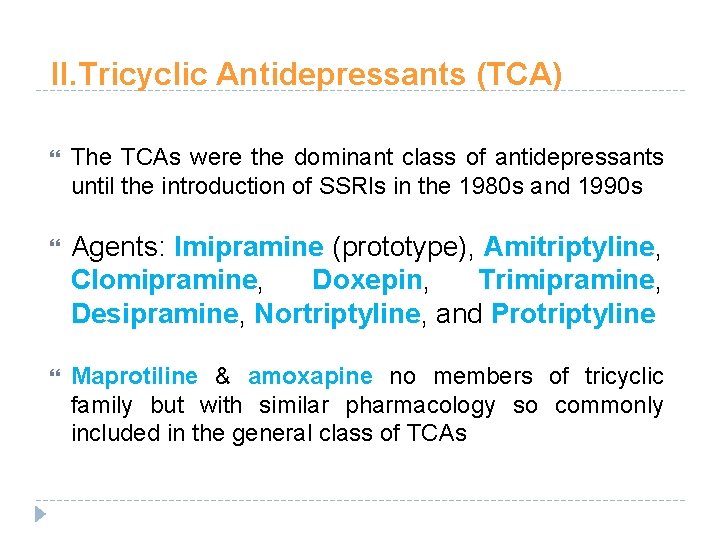
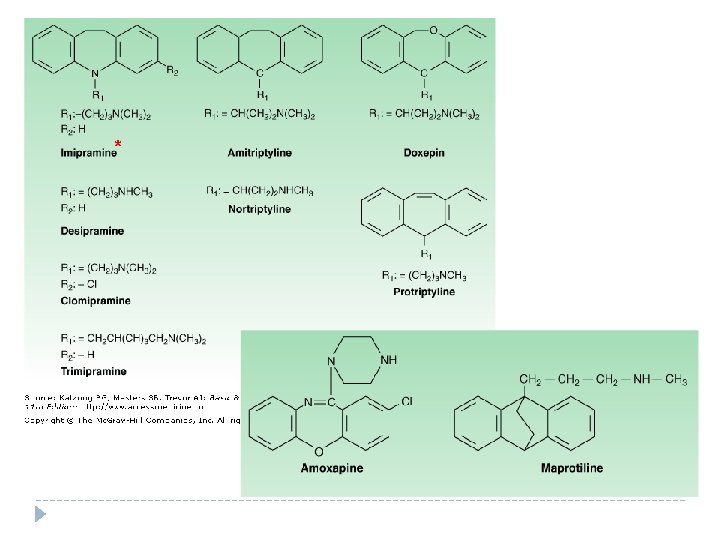
II. Tricyclic Antidepressants (TCA) The TCAs were the dominant class of antidepressants until the introduction of SSRIs in the 1980 s and 1990 s Agents: Imipramine (prototype), Amitriptyline, Clomipramine, Doxepin, Trimipramine, Desipramine, Nortriptyline, and Protriptyline Maprotiline & amoxapine no members of tricyclic family but with similar pharmacology so commonly included in the general class of TCAs
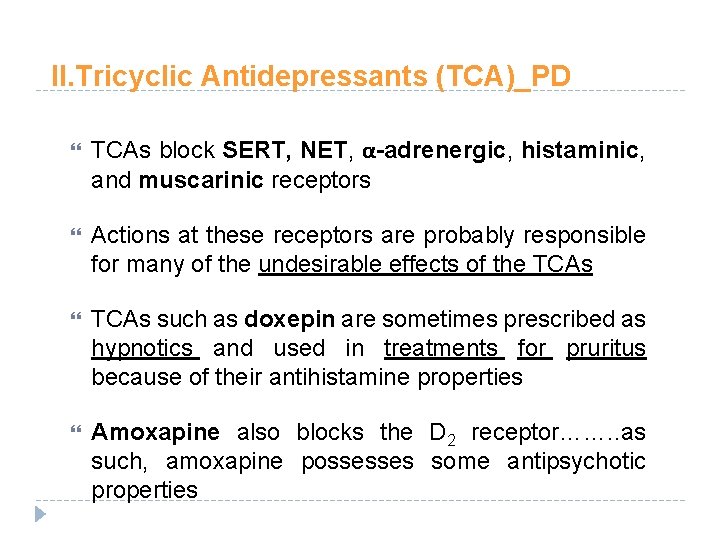
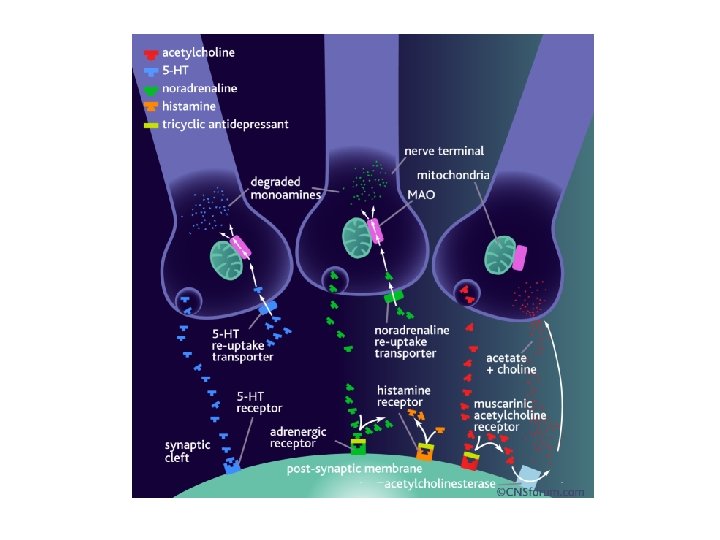
II. Tricyclic Antidepressants (TCA)_PD TCAs block SERT, NET, α-adrenergic, histaminic, and muscarinic receptors Actions at these receptors are probably responsible for many of the undesirable effects of the TCAs such as doxepin are sometimes prescribed as hypnotics and used in treatments for pruritus because of their antihistamine properties Amoxapine also blocks the D 2 receptor……. . as such, amoxapine possesses some antipsychotic properties
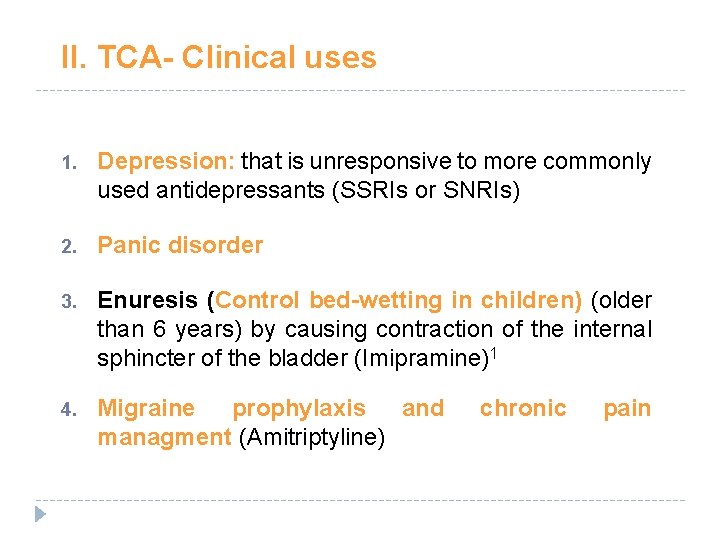
II. TCA- Clinical uses 1. Depression: that is unresponsive to more commonly used antidepressants (SSRIs or SNRIs) 2. Panic disorder 3. Enuresis (Control bed-wetting in children) (older than 6 years) by causing contraction of the internal sphincter of the bladder (Imipramine)1 4. Migraine prophylaxis and managment (Amitriptyline) chronic pain
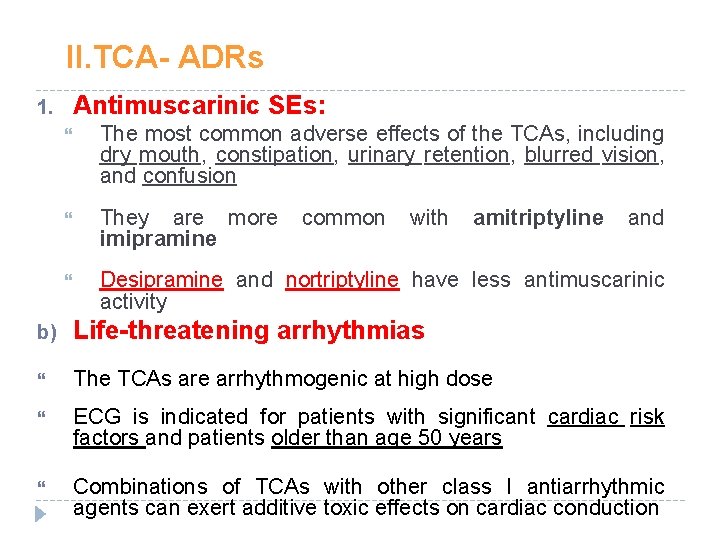
II. TCA- ADRs Antimuscarinic SEs: 1. The most common adverse effects of the TCAs, including dry mouth, constipation, urinary retention, blurred vision, and confusion They are more common with amitriptyline and imipramine Desipramine and nortriptyline have less antimuscarinic activity b) Life-threatening arrhythmias The TCAs are arrhythmogenic at high dose ECG is indicated for patients with significant cardiac risk factors and patients older than age 50 years Combinations of TCAs with other class I antiarrhythmic agents can exert additive toxic effects on cardiac conduction
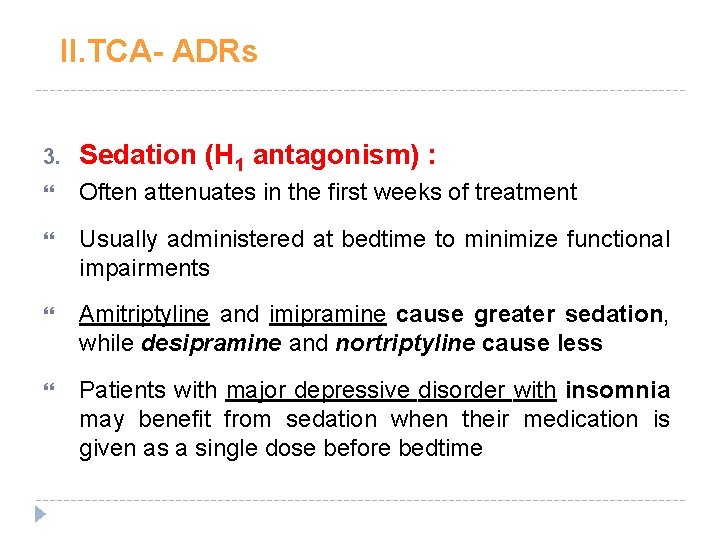
II. TCA- ADRs 3. Sedation (H 1 antagonism) : Often attenuates in the first weeks of treatment Usually administered at bedtime to minimize functional impairments Amitriptyline and imipramine cause greater sedation, while desipramine and nortriptyline cause less Patients with major depressive disorder with insomnia may benefit from sedation when their medication is given as a single dose before bedtime
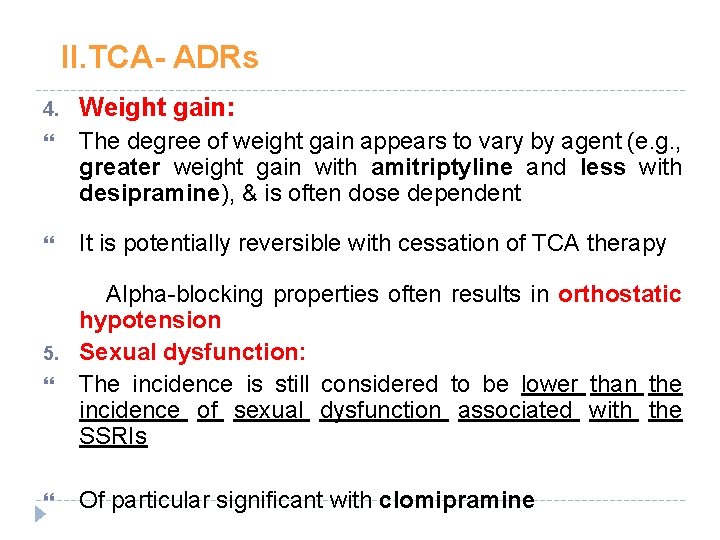
II. TCA- ADRs 4. Weight gain: The degree of weight gain appears to vary by agent (e. g. , greater weight gain with amitriptyline and less with desipramine), & is often dose dependent It is potentially reversible with cessation of TCA therapy Alpha-blocking properties often results in orthostatic hypotension 5. Sexual dysfunction: The incidence is still considered to be lower than the incidence of sexual dysfunction associated with the SSRIs Of particular significant with clomipramine
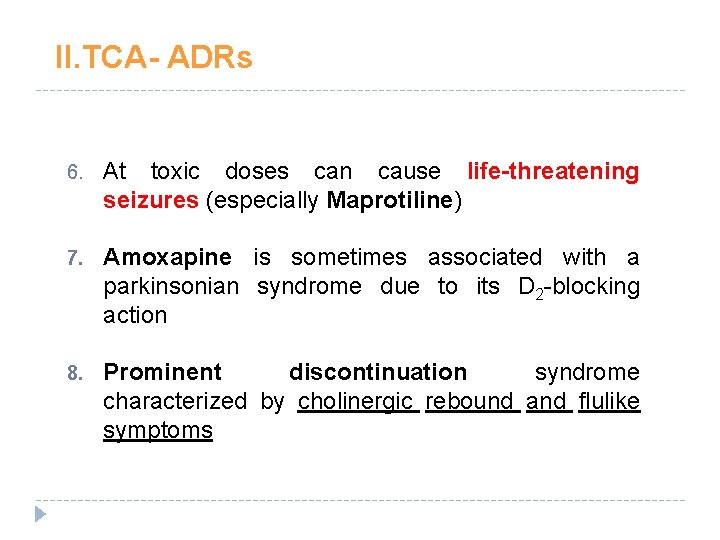
II. TCA- ADRs 6. At toxic doses can cause life-threatening seizures (especially Maprotiline) 7. Amoxapine is sometimes associated with a parkinsonian syndrome due to its D 2 -blocking action 8. Prominent discontinuation syndrome characterized by cholinergic rebound and flulike symptoms
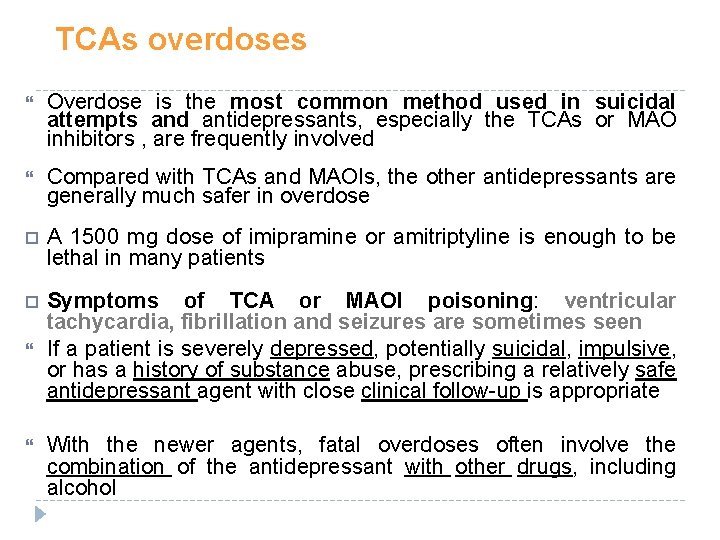
TCAs overdoses Overdose is the most common method used in suicidal attempts and antidepressants, especially the TCAs or MAO inhibitors , are frequently involved Compared with TCAs and MAOIs, the other antidepressants are generally much safer in overdose A 1500 mg dose of imipramine or amitriptyline is enough to be lethal in many patients Symptoms of TCA or MAOI poisoning: ventricular tachycardia, fibrillation and seizures are sometimes seen If a patient is severely depressed, potentially suicidal, impulsive, or has a history of substance abuse, prescribing a relatively safe antidepressant agent with close clinical follow-up is appropriate With the newer agents, fatal overdoses often involve the combination of the antidepressant with other drugs, including alcohol
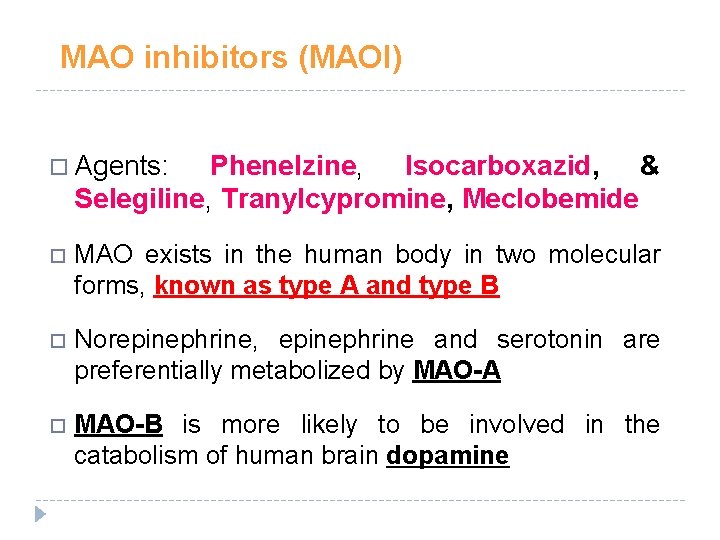
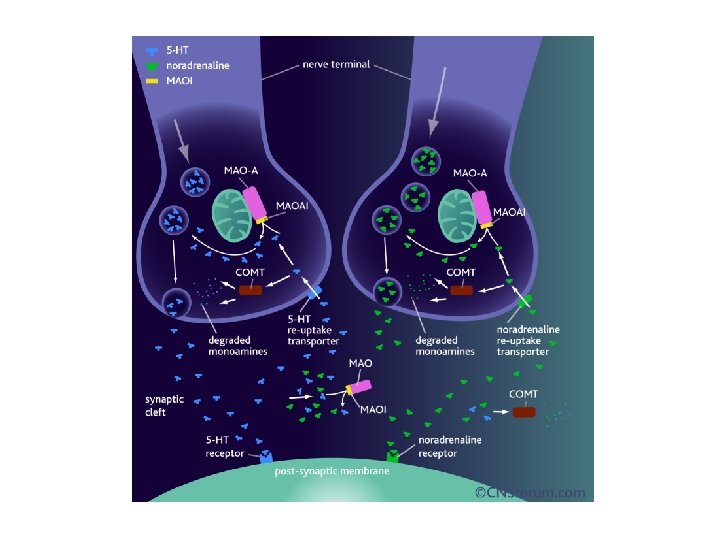
MAO inhibitors (MAOI) Agents: Phenelzine, Isocarboxazid, & Selegiline, Tranylcypromine, Meclobemide MAO exists in the human body in two molecular forms, known as type A and type B Norepinephrine, epinephrine and serotonin are preferentially metabolized by MAO-A MAO-B is more likely to be involved in the catabolism of human brain dopamine
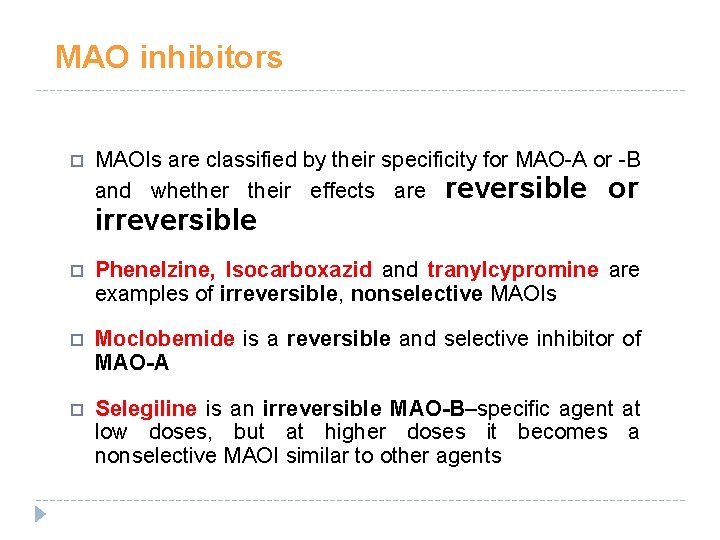
MAO inhibitors MAOIs are classified by their specificity for MAO-A or -B and whether their effects are reversible or irreversible Phenelzine, Isocarboxazid and tranylcypromine are examples of irreversible, nonselective MAOIs Moclobemide is a reversible and selective inhibitor of MAO-A Selegiline is an irreversible MAO-B–specific agent at low doses, but at higher doses it becomes a nonselective MAOI similar to other agents
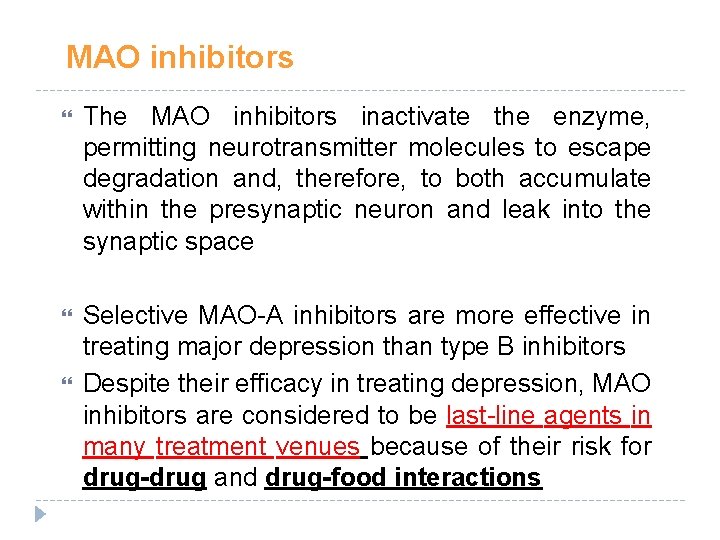
MAO inhibitors The MAO inhibitors inactivate the enzyme, permitting neurotransmitter molecules to escape degradation and, therefore, to both accumulate within the presynaptic neuron and leak into the synaptic space Selective MAO-A inhibitors are more effective in treating major depression than type B inhibitors Despite their efficacy in treating depression, MAO inhibitors are considered to be last-line agents in many treatment venues because of their risk for drug-drug and drug-food interactions
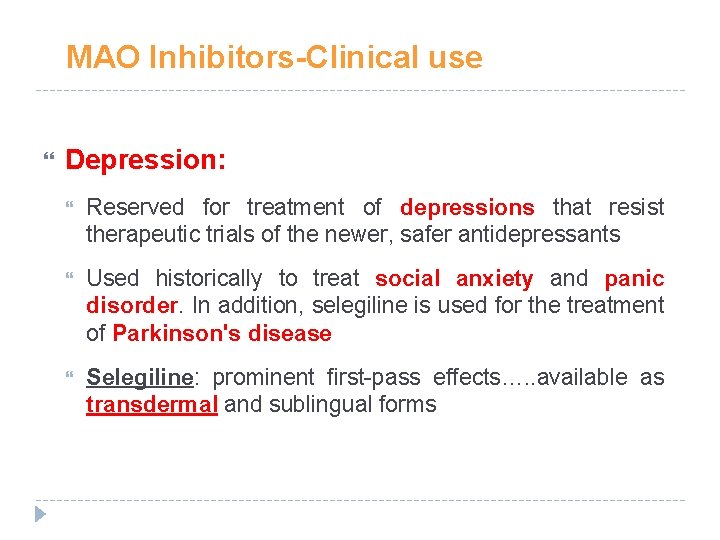
MAO Inhibitors-Clinical use Depression: Reserved for treatment of depressions that resist therapeutic trials of the newer, safer antidepressants Used historically to treat social anxiety and panic disorder. In addition, selegiline is used for the treatment of Parkinson's disease Selegiline: prominent first-pass effects…. . available as transdermal and sublingual forms
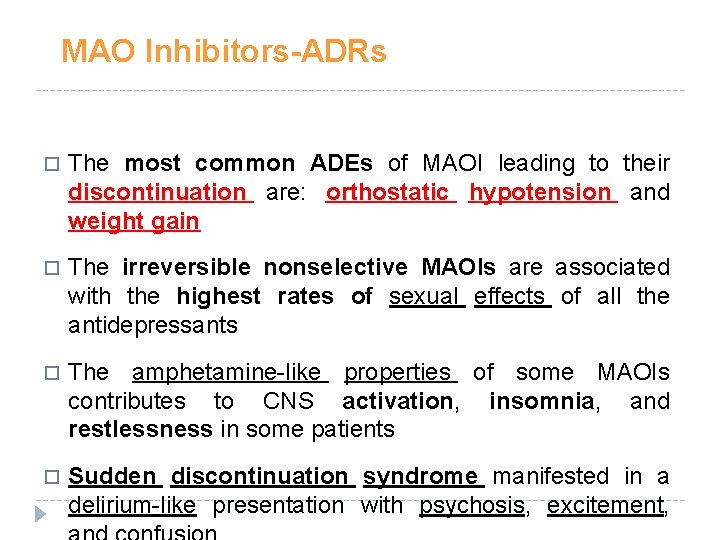
MAO Inhibitors-ADRs The most common ADEs of MAOI leading to their discontinuation are: orthostatic hypotension and weight gain The irreversible nonselective MAOIs are associated with the highest rates of sexual effects of all the antidepressants The amphetamine-like properties of some MAOIs contributes to CNS activation, insomnia, and restlessness in some patients Sudden discontinuation syndrome manifested in a delirium-like presentation with psychosis, excitement,
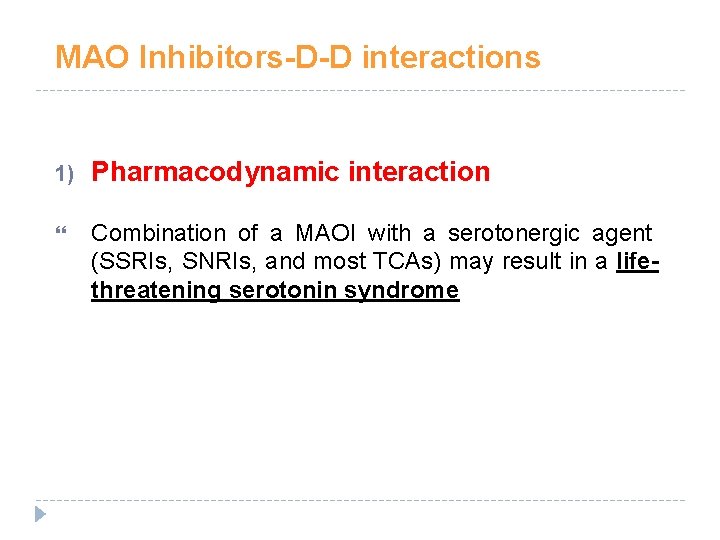
MAO Inhibitors-D-D interactions 1) Pharmacodynamic interaction Combination of a MAOI with a serotonergic agent (SSRIs, SNRIs, and most TCAs) may result in a lifethreatening serotonin syndrome
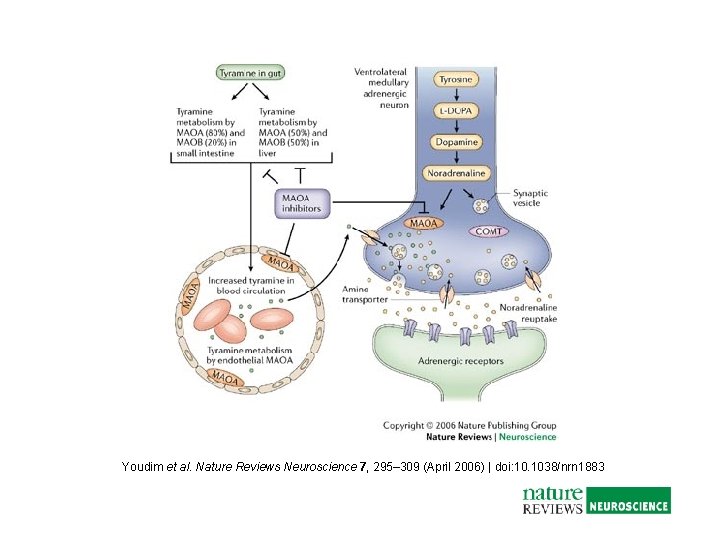
MAO Inhibitors-D-Food interactions 2. Pharmacodynamic interaction Occur when MAOI is combined with tyramine (2050 mg) in the diet (e. g. in fermented food as cheeses, sausage, pickled fish, and yeast supplements etc. ) MAOIs prevent the breakdown of tyramine in the gut resulting in high serum levels that enhance peripheral noradrenergic effects, including raising BP dramatically (Hypertensive crisis)
Youdim et al. Nature Reviews Neuroscience 7, 295– 309 (April 2006) | doi: 10. 1038/nrn 1883
MAO Inhibitors-D-D interactions Can be minimized with a low-tyramine diet that begins several days before starting the MAOI & continues for 3 -4 weeks after stopping the MAOI 3. Serious hypertension can occur with concomitant administration of OTC cough and cold medications containing sympathomimetic amines (pseudoephedrine)- CONTRAINDICATIONS
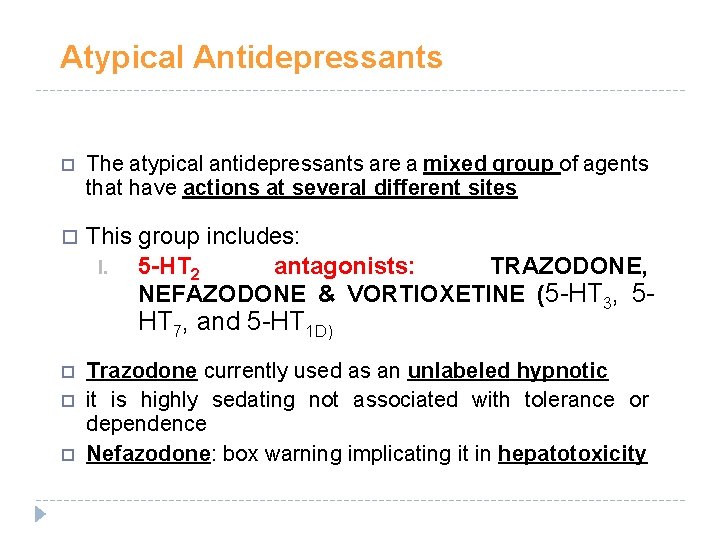
Atypical Antidepressants The atypical antidepressants are a mixed group of agents that have actions at several different sites This group includes: I. 5 -HT 2 antagonists: TRAZODONE, NEFAZODONE & VORTIOXETINE (5 -HT 3, 5 - HT 7, and 5 -HT 1 D) Trazodone currently used as an unlabeled hypnotic it is highly sedating not associated with tolerance or dependence Nefazodone: box warning implicating it in hepatotoxicity
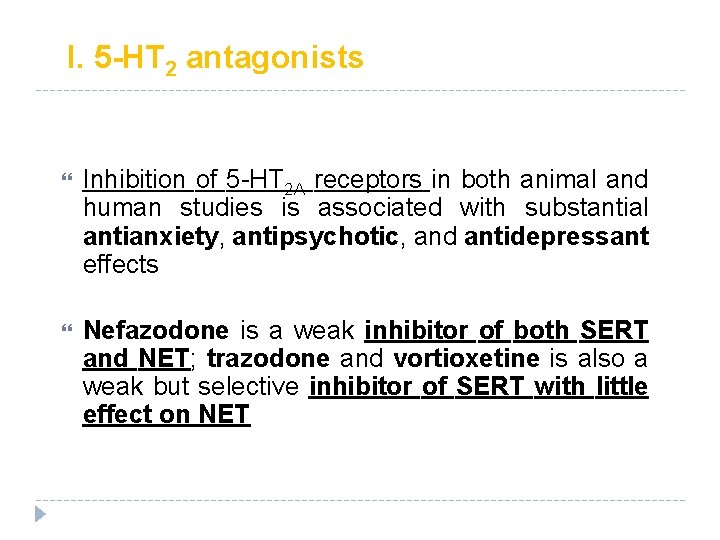
I. 5 -HT 2 antagonists Inhibition of 5 -HT 2 A receptors in both animal and human studies is associated with substantial antianxiety, antipsychotic, and antidepressant effects Nefazodone is a weak inhibitor of both SERT and NET; trazodone and vortioxetine is also a weak but selective inhibitor of SERT with little effect on NET
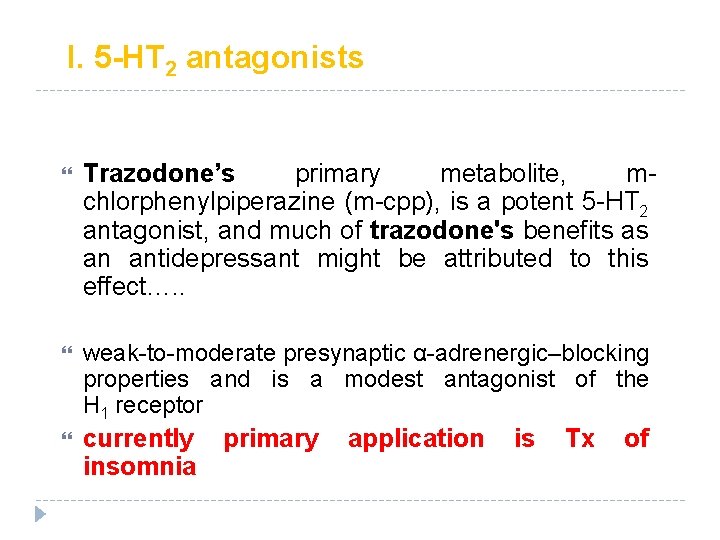
I. 5 -HT 2 antagonists Trazodone’s primary metabolite, mchlorphenylpiperazine (m-cpp), is a potent 5 -HT 2 antagonist, and much of trazodone's benefits as an antidepressant might be attributed to this effect…. . weak-to-moderate presynaptic α-adrenergic–blocking properties and is a modest antagonist of the H 1 receptor currently insomnia primary application is Tx of
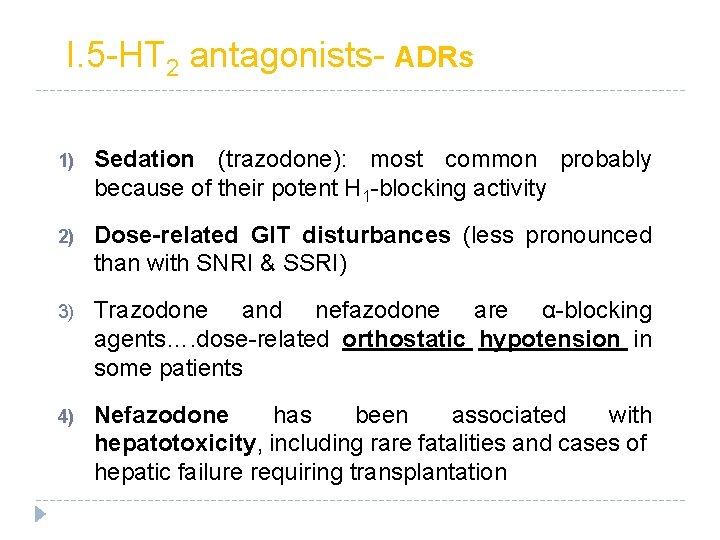
I. 5 -HT 2 antagonists- ADRs 1) Sedation (trazodone): most common probably because of their potent H 1 -blocking activity 2) Dose-related GIT disturbances (less pronounced than with SNRI & SSRI) 3) Trazodone and nefazodone are α-blocking agents…. dose-related orthostatic hypotension in some patients 4) Nefazodone has been associated with hepatotoxicity, including rare fatalities and cases of hepatic failure requiring transplantation
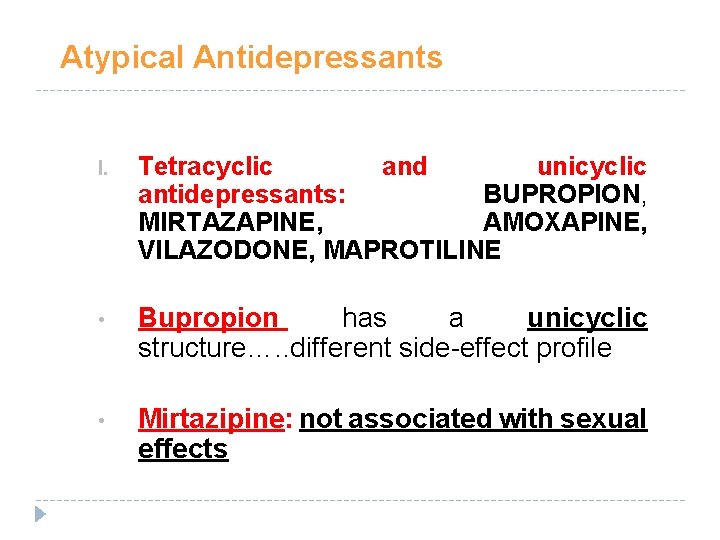
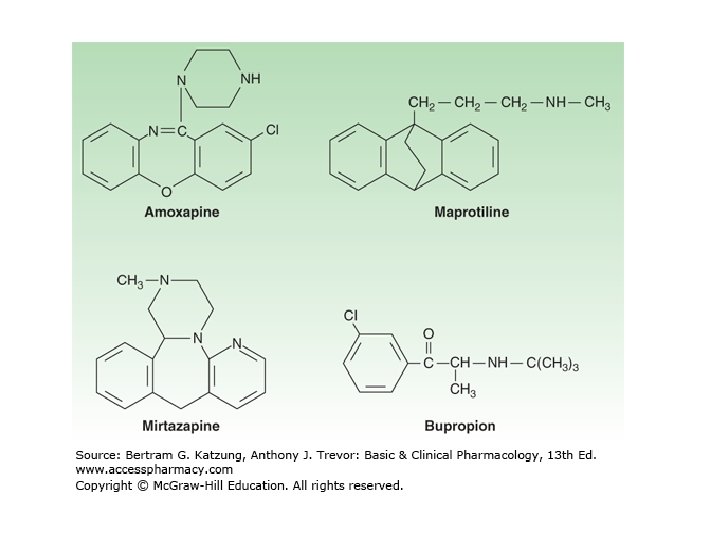
Atypical Antidepressants I. Tetracyclic and unicyclic antidepressants: BUPROPION, MIRTAZAPINE, AMOXAPINE, VILAZODONE, MAPROTILINE • Bupropion has a unicyclic structure…. . different side-effect profile • Mirtazipine: not associated with sexual effects
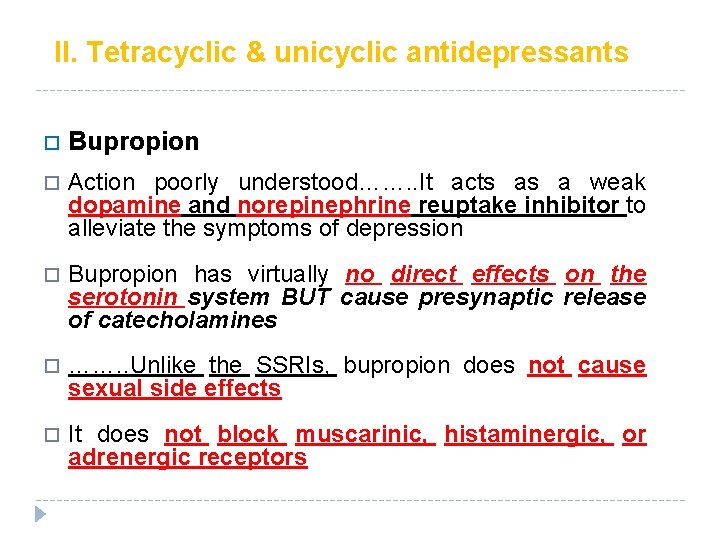
II. Tetracyclic & unicyclic antidepressants Bupropion Action poorly understood……. . It acts as a weak dopamine and norepinephrine reuptake inhibitor to alleviate the symptoms of depression Bupropion has virtually no direct effects on the serotonin system BUT cause presynaptic release of catecholamines ……. . Unlike the SSRIs, bupropion does not cause sexual side effects It does not block muscarinic, histaminergic, or adrenergic receptors
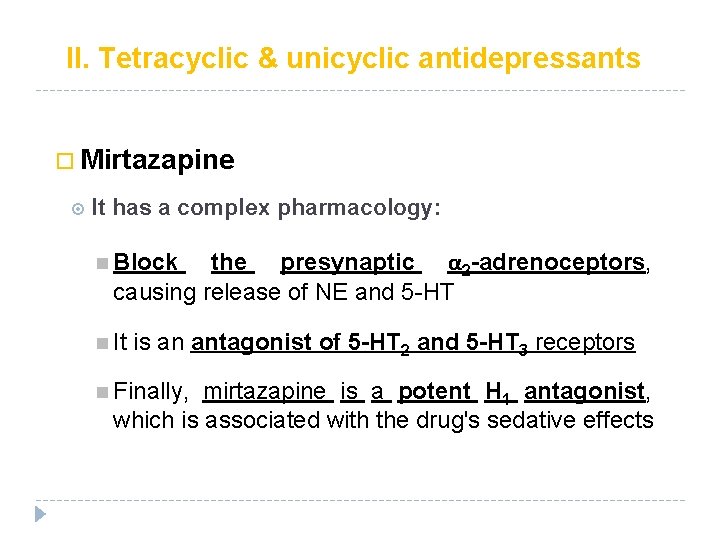
II. Tetracyclic & unicyclic antidepressants Mirtazapine It has a complex pharmacology: the presynaptic α 2 -adrenoceptors, causing release of NE and 5 -HT Block It is an antagonist Finally, of 5 -HT 2 and 5 -HT 3 receptors mirtazapine is a potent H 1 antagonist, which is associated with the drug's sedative effects
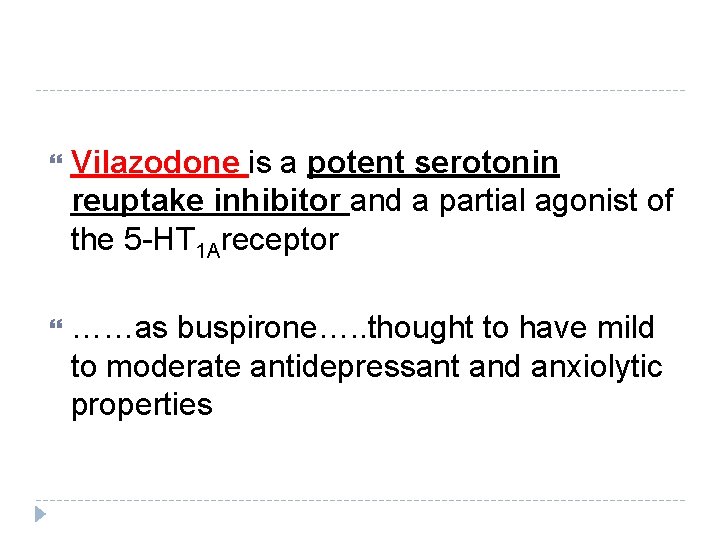
Vilazodone is a potent serotonin reuptake inhibitor and a partial agonist of the 5 -HT 1 Areceptor ……as buspirone…. . thought to have mild to moderate antidepressant and anxiolytic properties
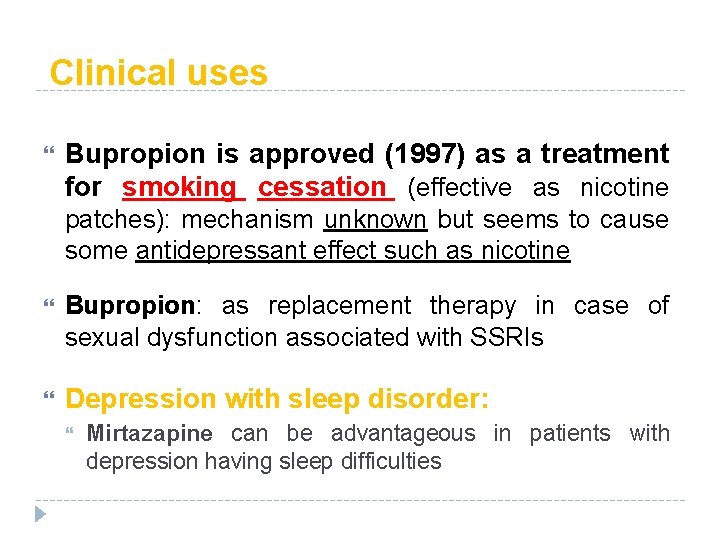
Clinical uses Bupropion is approved (1997) as a treatment for smoking cessation (effective as nicotine patches): mechanism unknown but seems to cause some antidepressant effect such as nicotine Bupropion: as replacement therapy in case of sexual dysfunction associated with SSRIs Depression with sleep disorder: Mirtazapine can be advantageous in patients with depression having sleep difficulties
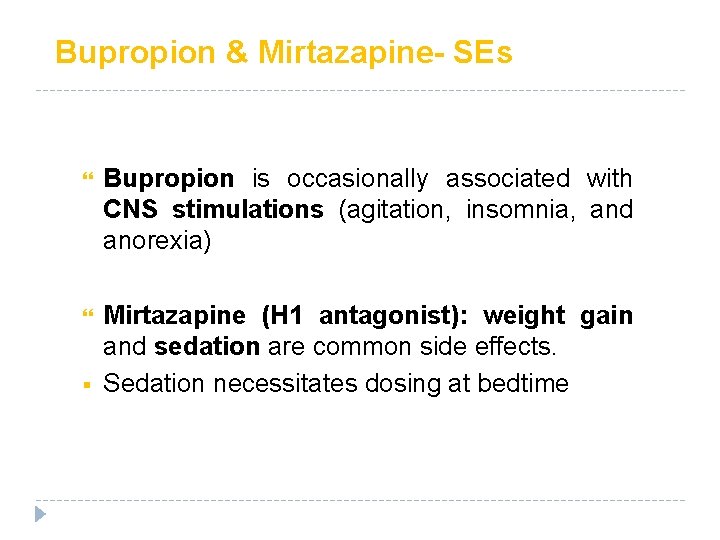
Bupropion & Mirtazapine- SEs Bupropion is occasionally associated with CNS stimulations (agitation, insomnia, and anorexia) Mirtazapine (H 1 antagonist): weight gain and sedation are common side effects. Sedation necessitates dosing at bedtime §
Bupropion & Mirtazapine- D/D interactions Bupropion is metabolized primarily by CYP 2 B 6, and its metabolism may be altered by drugs such as cyclophosphamide (substrate of 2 B 6) Mirtazapine substrate for several CYP 450 enzymes (2 D 6, 3 A 4, & 1 A 2)……. . drugs that inhibit these isozymes may raise mirtazapine levels The sedating effects of mirtazapine may be additive with those of CNS depressants such as alcohol and benzodiazepines