Welcome to the University of Cincinnatis Women in
- Slides: 51
Welcome to the University of Cincinnati’s Women in Medicine & Science Chapter Est. 2015 February 28, 2019 12 -1 PM MSB-E 255
Agenda • Welcome! • President’s Report Amy Bunger, Ph. D • Building Personal & Workplace Resiliency Jennifer Molano, MD • Open Discussion
President’s Report • Usage data on parental leave – Far below what was projected in cost estimate • Message welcoming new female faculty – WIMS letterhead – WIMS speakers/initiatives/resources • Request for Dawn Kleindorfer, MD to review Faculty Forward data for WIMS • Escalation of concerns
Building Personal and Workplace Resiliency Jennifer Rose V. Molano, MD Associate Professor The University of Cincinnati Department of Neurology and Rehabilitation Medicine WIMS Conference 28 February 2019
Objectives - To briefly define burnout and resilience To describe the role of stress on burnout and resilience To discuss the growth mindset as a pathway towards resilience for ourselves and our workplaces Review local efforts to promote wellness and resilience
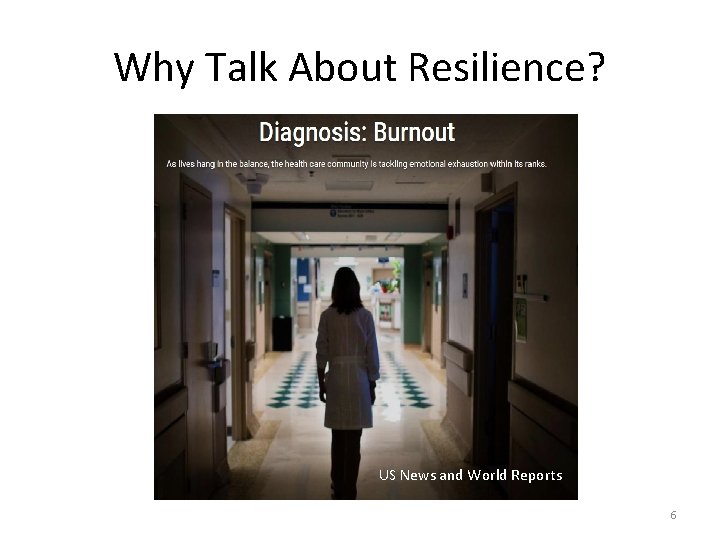
Why Talk About Resilience? US News and World Reports 6
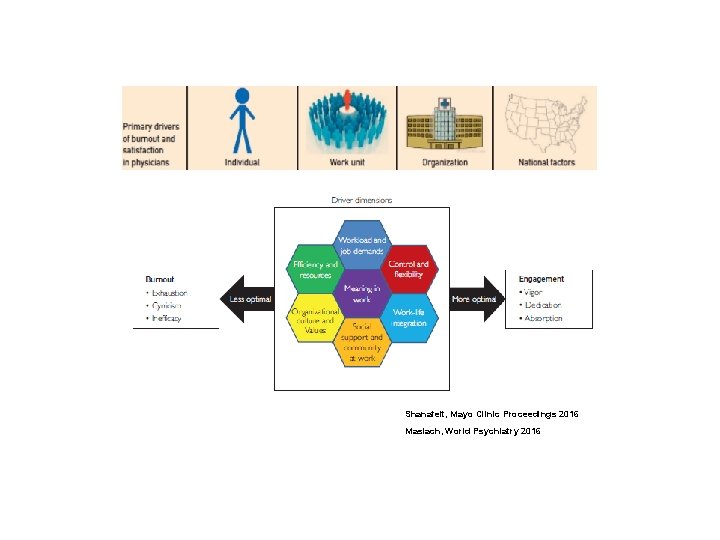
What IS burnout? • “Burnout is a response to chronic stressors that wear on a person over time – not acute ones such as a big event or a big change” (Christina Maslach, Ph. D) - Emotional exhaustion - Depersonalization/loss of identity or self - Low sense of personal accomplishment
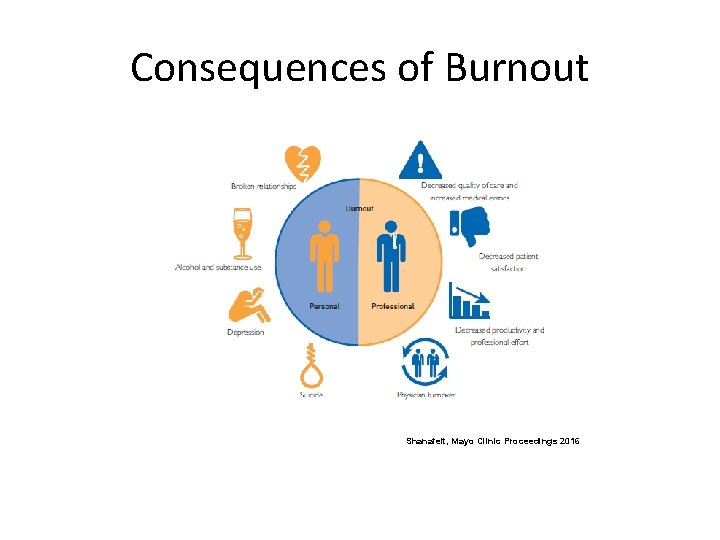
Consequences of Burnout Shanafelt, Mayo Clinic Proceedings 2016
Shanafelt, Mayo Clinic Proceedings 2016 Maslach, World Psychiatry 2016
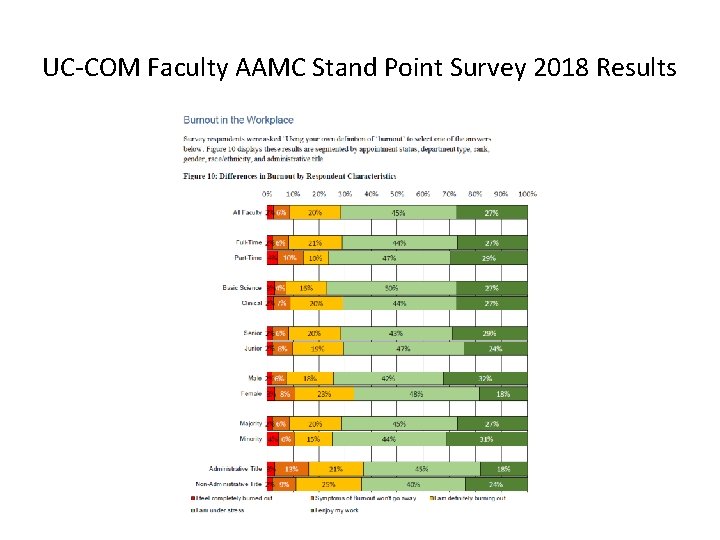
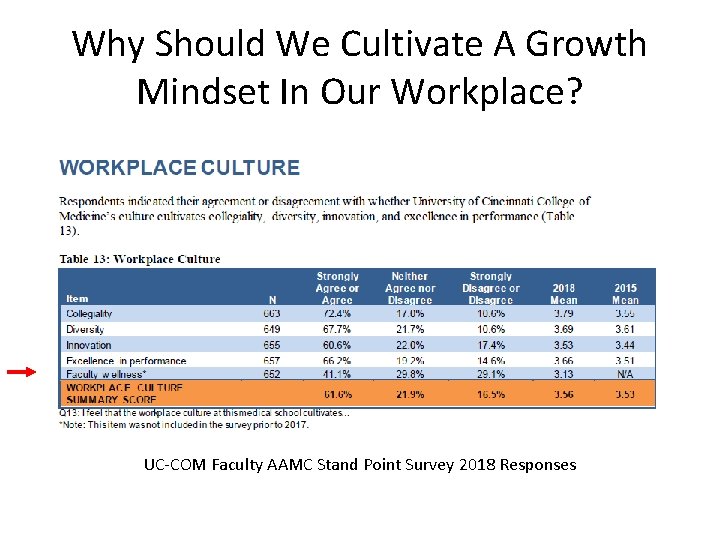
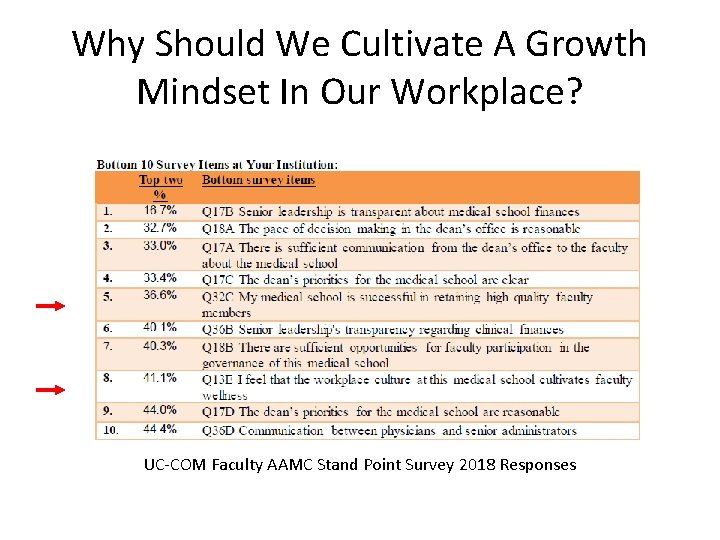
UC-COM Faculty AAMC Stand Point Survey 2018 Results
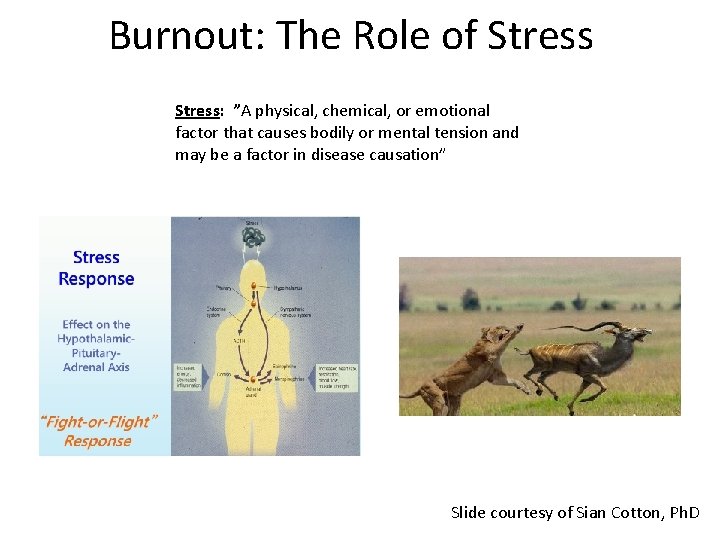
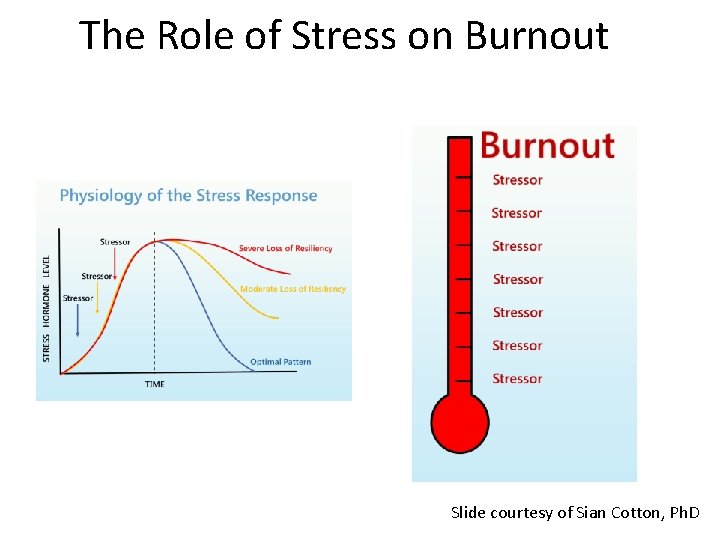
Burnout: The Role of Stress: ”A physical, chemical, or emotional factor that causes bodily or mental tension and may be a factor in disease causation” Slide courtesy of Sian Cotton, Ph. D
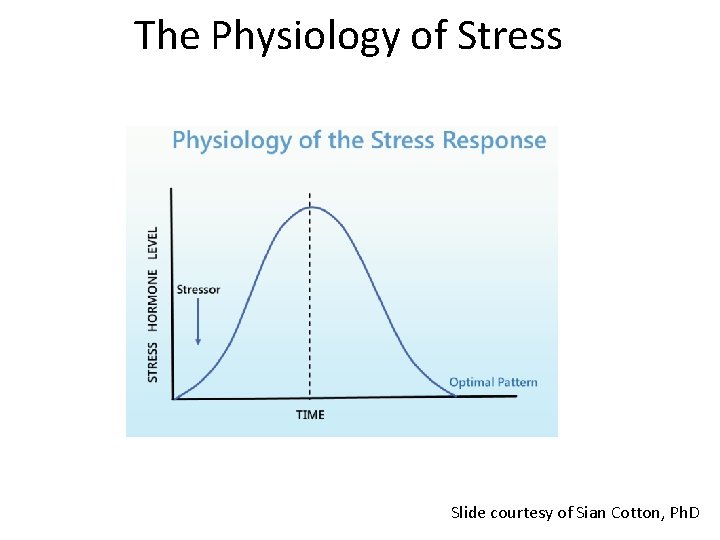
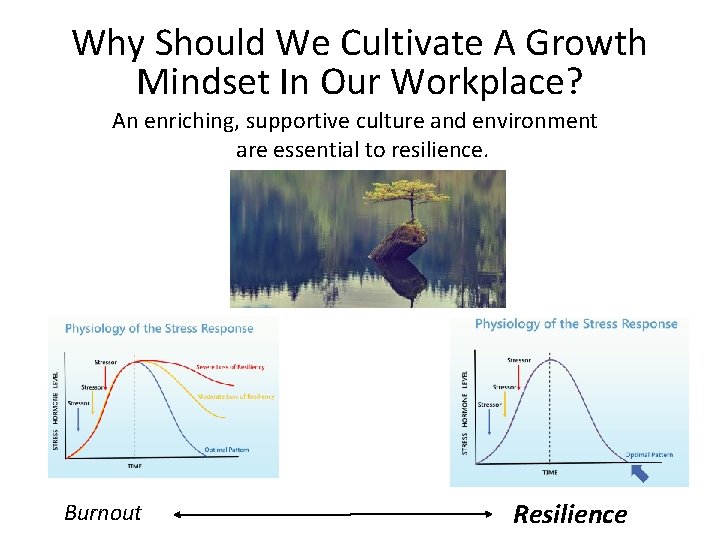
The Physiology of Stress Slide courtesy of Sian Cotton, Ph. D
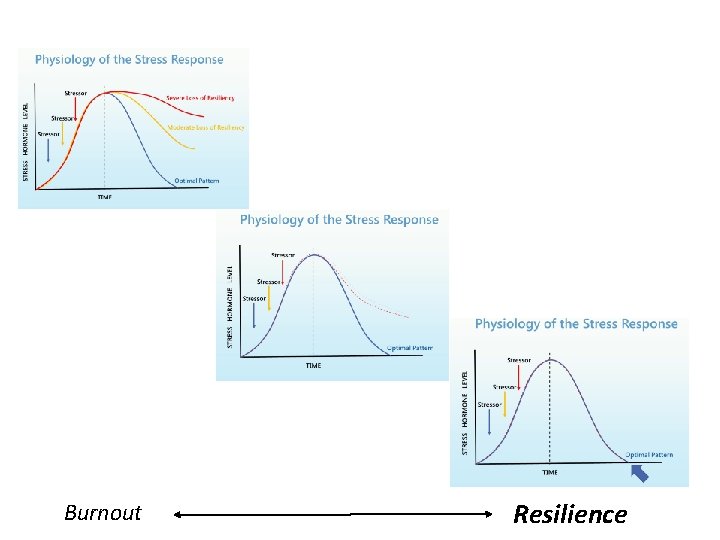
The Role of Stress on Burnout Slide courtesy of Sian Cotton, Ph. D
Burnout Resilience
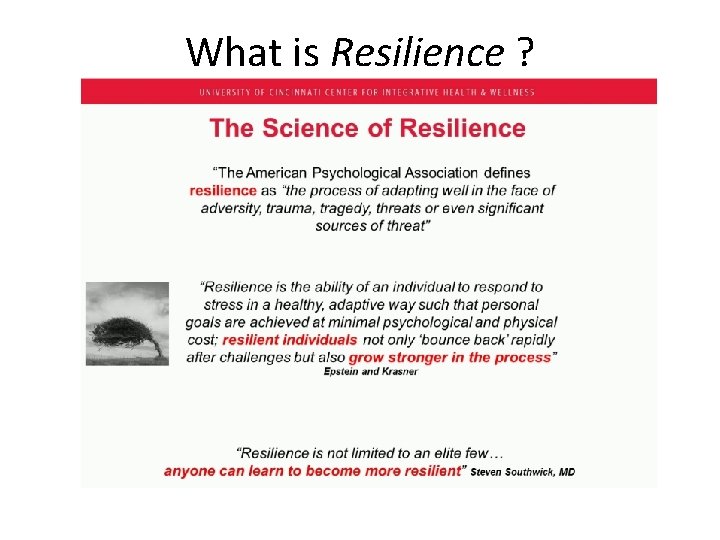
What is Resilience ?
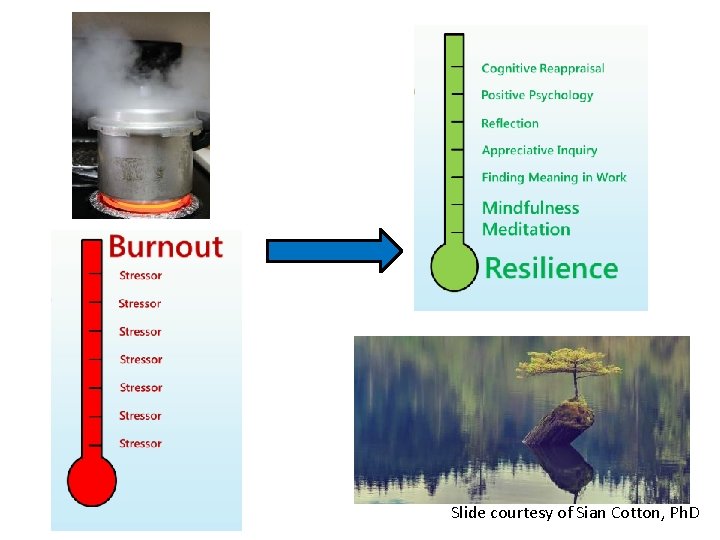
Slide courtesy of Sian Cotton, Ph. D
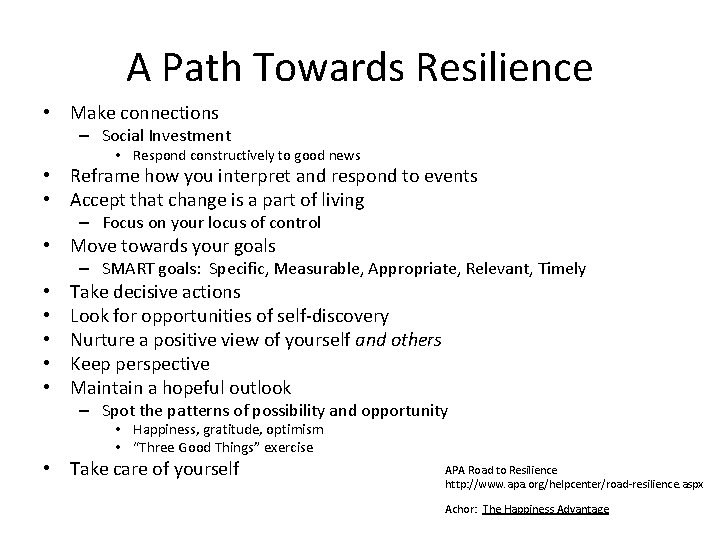
A Path Towards Resilience • Make connections – Social Investment • Respond constructively to good news • Reframe how you interpret and respond to events • Accept that change is a part of living – Focus on your locus of control • Move towards your goals – SMART goals: Specific, Measurable, Appropriate, Relevant, Timely • • • Take decisive actions Look for opportunities of self-discovery Nurture a positive view of yourself and others Keep perspective Maintain a hopeful outlook – Spot the patterns of possibility and opportunity • Happiness, gratitude, optimism • “Three Good Things” exercise • Take care of yourself APA Road to Resilience http: //www. apa. org/helpcenter/road-resilience. aspx Achor: The Happiness Advantage
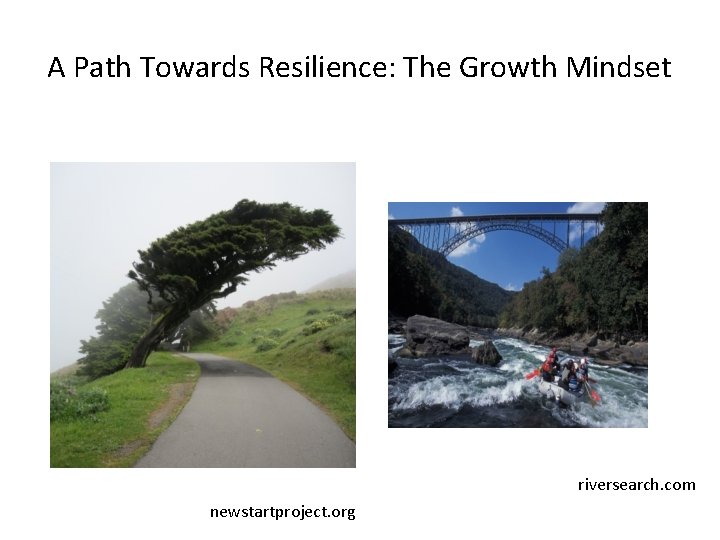
A Path Towards Resilience: The Growth Mindset riversearch. com newstartproject. org
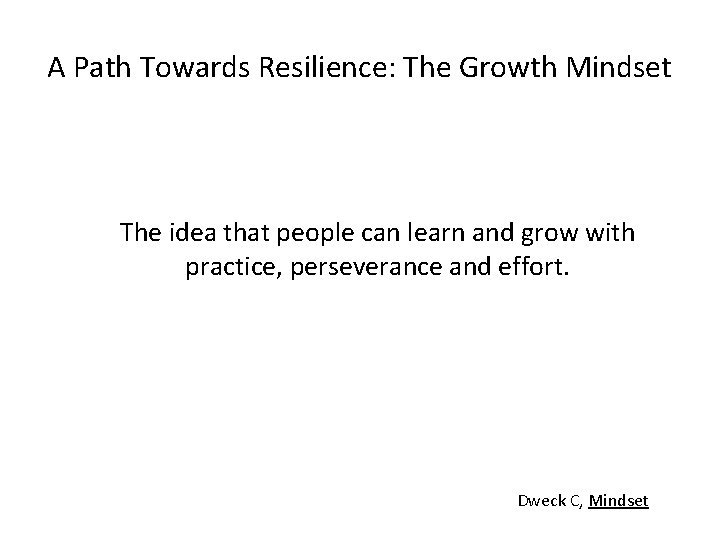
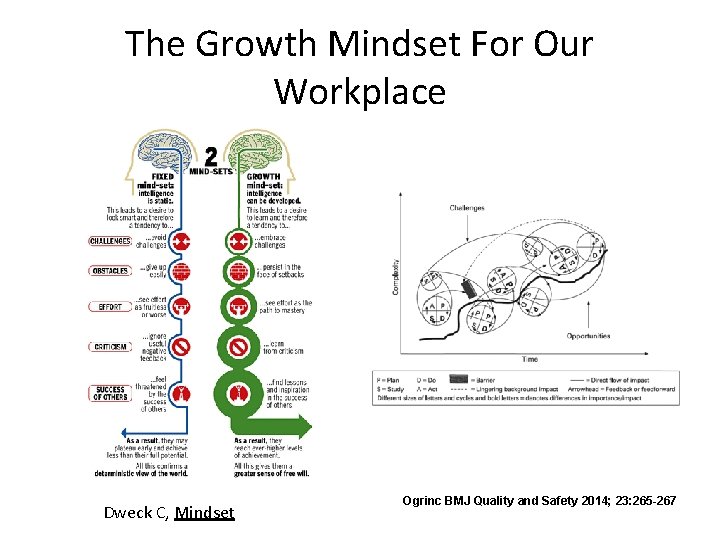
A Path Towards Resilience: The Growth Mindset The idea that people can learn and grow with practice, perseverance and effort. Dweck C, Mindset
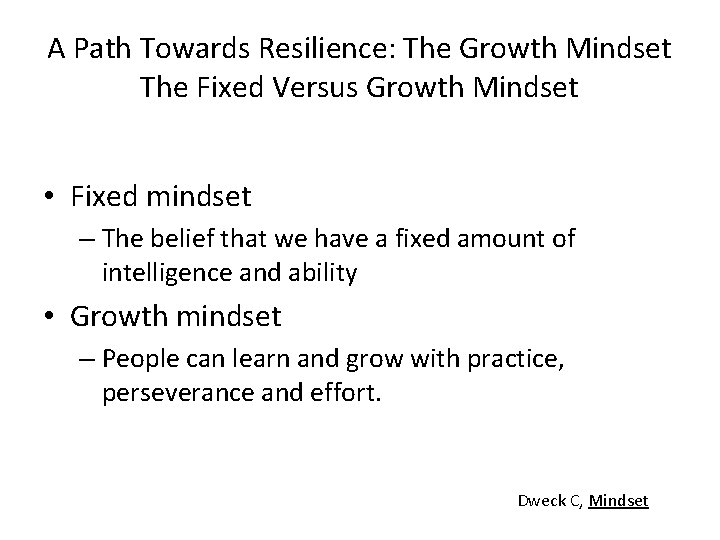
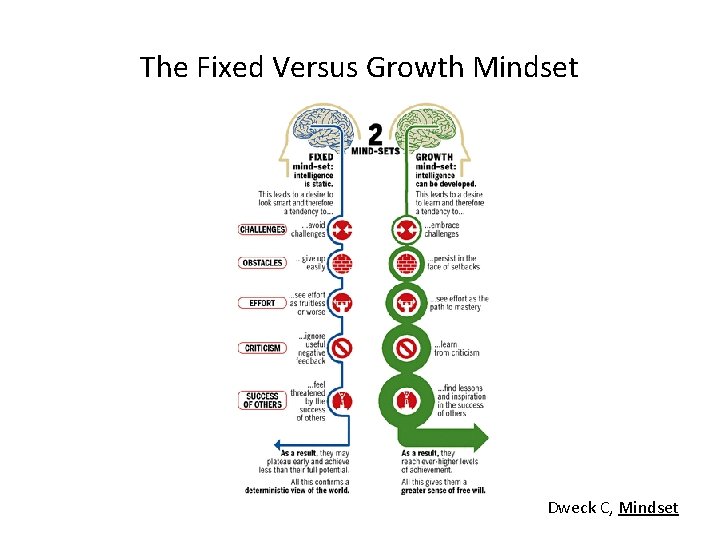
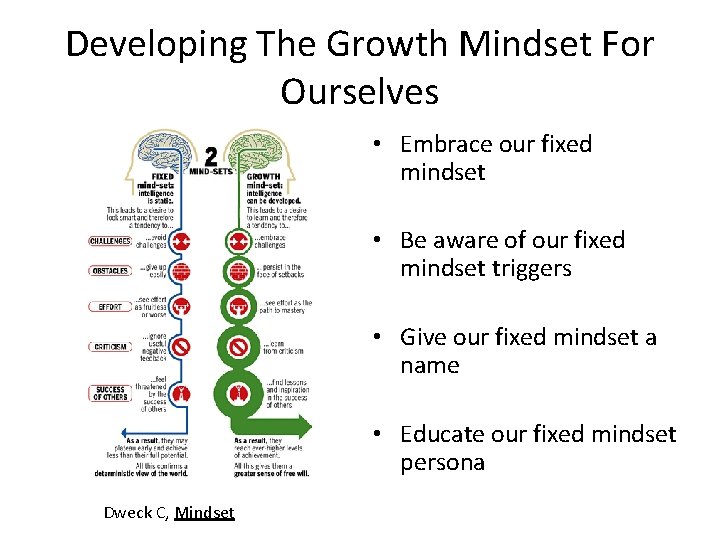
A Path Towards Resilience: The Growth Mindset The Fixed Versus Growth Mindset • Fixed mindset – The belief that we have a fixed amount of intelligence and ability • Growth mindset – People can learn and grow with practice, perseverance and effort. Dweck C, Mindset
Five Key Situations Where Mindset Influences Outcome • • • Challenges Obstacles Effort Criticism Success of Others Dweck C, Mindset
The Fixed Versus Growth Mindset
The Fixed Versus Growth Mindset Dweck C, Mindset
The Growth Mindset What It Is and Isn’t Is Not: • Oversimplification – Any effort is good • Anyone can do anything Is • Tying the effort into the result • Geared towards learning Dweck C, Mindset
Developing The Growth Mindset For Ourselves • Embrace our fixed mindset • Be aware of our fixed mindset triggers • Give our fixed mindset a name • Educate our fixed mindset persona Dweck C, Mindset
Developing The Growth Mindset For Ourselves • “What are the opportunities for learning and growth for myself and others around me? ” • After forming a plan, ask: – “When, where and how will I embark on my plan? ” • “What can I do to continue my growth? ” Dweck C, Mindset
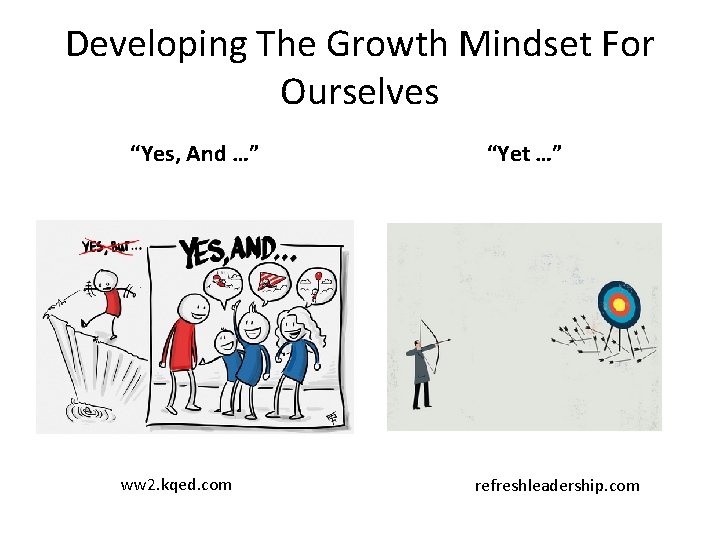
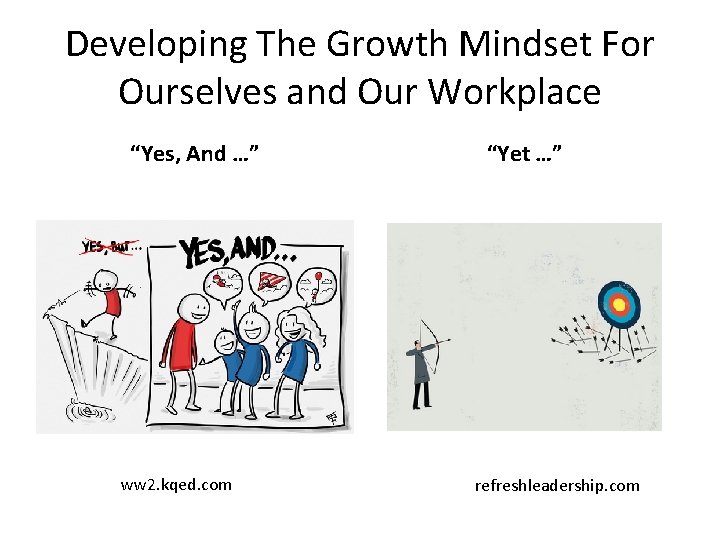
Developing The Growth Mindset For Ourselves “Yes, And …” ww 2. kqed. com “Yet …” refreshleadership. com
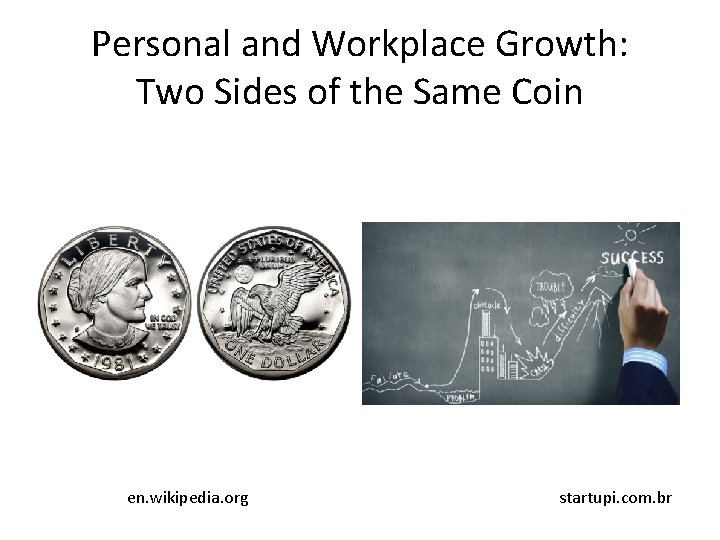
Personal and Workplace Growth: Two Sides of the Same Coin en. wikipedia. org startupi. com. br
The Growth Mindset For Our Workplace Dweck C, Mindset Ogrinc BMJ Quality and Safety 2014; 23: 265 -267
Why Should We Cultivate A Growth Mindset In Our Workplace? An enriching, supportive culture and environment are essential to resilience. Burnout Resilience
Why Should We Cultivate A Growth Mindset In Our Workplace? UC-COM Faculty AAMC Stand Point Survey 2018 Responses
Why Should We Cultivate A Growth Mindset In Our Workplace? UC-COM Faculty AAMC Stand Point Survey 2018 Responses
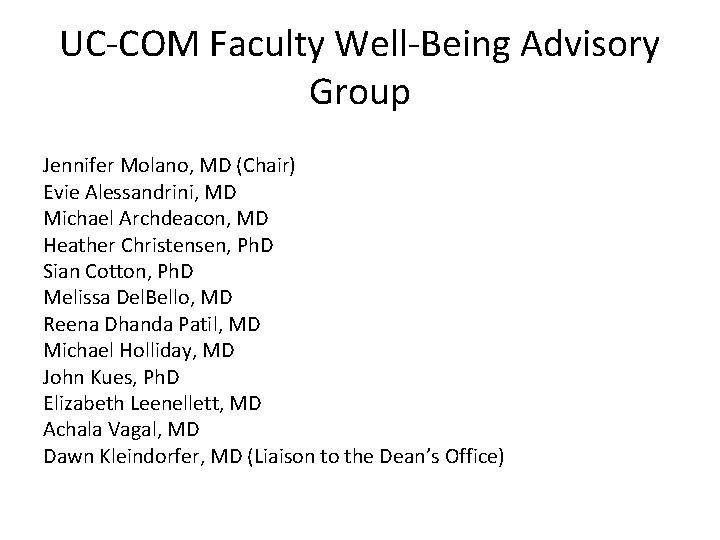
UC-COM Faculty Well-Being Advisory Group Jennifer Molano, MD (Chair) Evie Alessandrini, MD Michael Archdeacon, MD Heather Christensen, Ph. D Sian Cotton, Ph. D Melissa Del. Bello, MD Reena Dhanda Patil, MD Michael Holliday, MD John Kues, Ph. D Elizabeth Leenellett, MD Achala Vagal, MD Dawn Kleindorfer, MD (Liaison to the Dean’s Office)
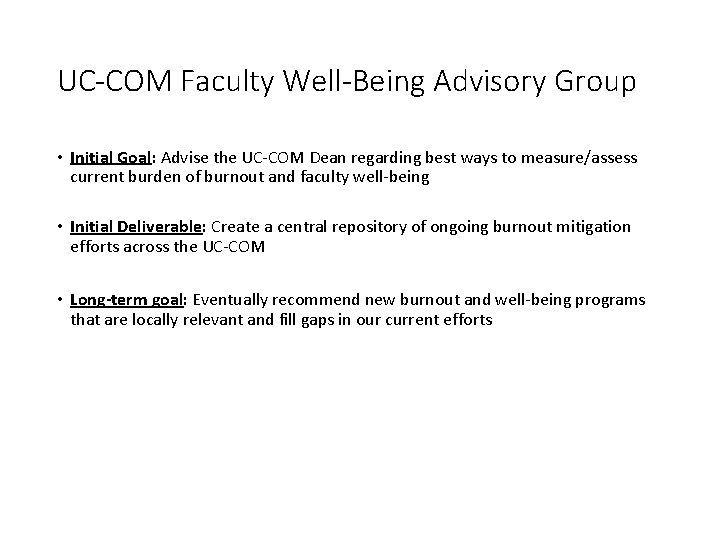
UC-COM Faculty Well-Being Advisory Group • Initial Goal: Advise the UC-COM Dean regarding best ways to measure/assess current burden of burnout and faculty well-being • Initial Deliverable: Create a central repository of ongoing burnout mitigation efforts across the UC-COM • Long-term goal: Eventually recommend new burnout and well-being programs that are locally relevant and fill gaps in our current efforts
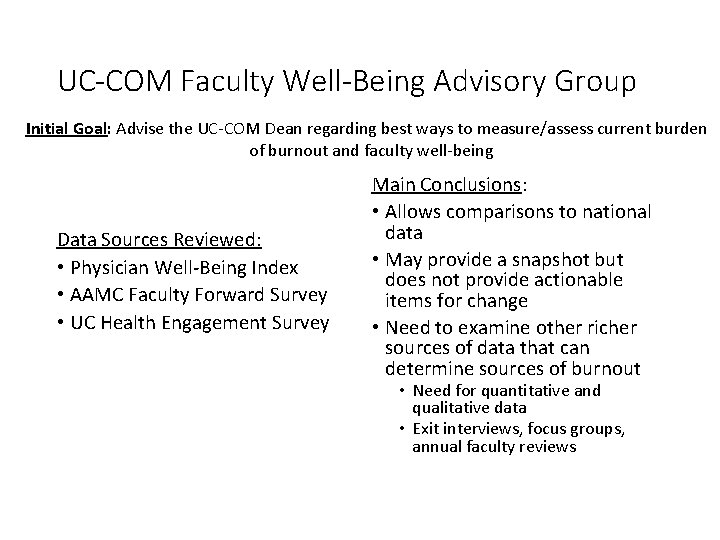
UC-COM Faculty Well-Being Advisory Group Initial Goal: Advise the UC-COM Dean regarding best ways to measure/assess current burden of burnout and faculty well-being Data Sources Reviewed: • Physician Well-Being Index • AAMC Faculty Forward Survey • UC Health Engagement Survey Main Conclusions: • Allows comparisons to national data • May provide a snapshot but does not provide actionable items for change • Need to examine other richer sources of data that can determine sources of burnout • Need for quantitative and qualitative data • Exit interviews, focus groups, annual faculty reviews
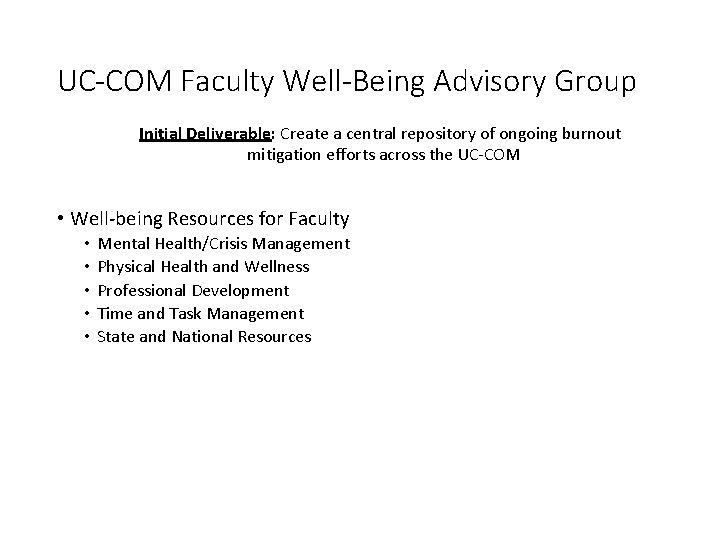
UC-COM Faculty Well-Being Advisory Group Initial Deliverable: Create a central repository of ongoing burnout mitigation efforts across the UC-COM • Well-being Resources for Faculty • • • Mental Health/Crisis Management Physical Health and Wellness Professional Development Time and Task Management State and National Resources
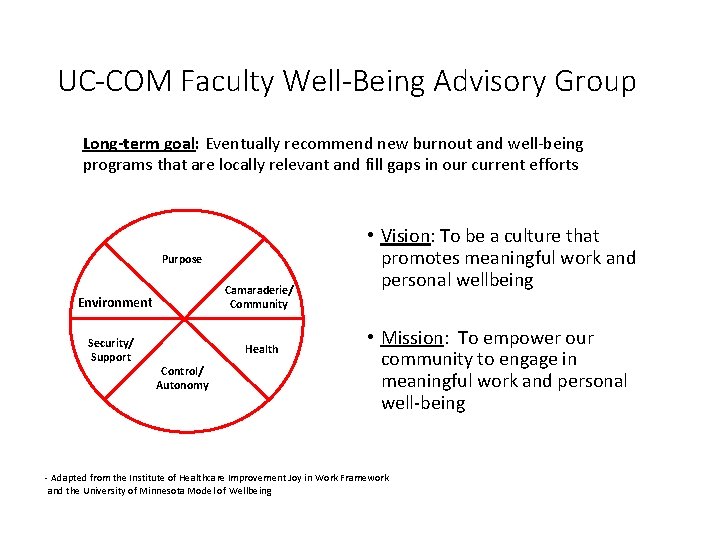
UC-COM Faculty Well-Being Advisory Group Long-term goal: Eventually recommend new burnout and well-being programs that are locally relevant and fill gaps in our current efforts Purpose Camaraderie/ Community Environment W Security/ Support Health Control/ Autonomy • Vision: To be a culture that promotes meaningful work and personal wellbeing • Mission: To empower our community to engage in meaningful work and personal well-being - Adapted from the Institute of Healthcare Improvement Joy in Work Framework and the University of Minnesota Model of Wellbeing
UC-COM Faculty Well-Being Advisory Group Long-term goal: Eventually recommend new burnout and well-being programs that are locally relevant and fill gaps in our current efforts • Dissemination of Resources for UC-COM Faculty • Needs Assessment for UC-COM chairs • Mind-Body Training for UC-COM Faculty • UC Center for Integrative Medicine
A Case Study: A Focus on Culture UC Department of Neurology and Rehabilitation Medicine • The vision of the department is to be the model and destination for integrated personalized care for those with neurological conditions. • Having a cohesive and strong culture within the department provides us with the support, consistency, and community to achieve our vision. • A cohesive culture is important to provide integrated personalized care.
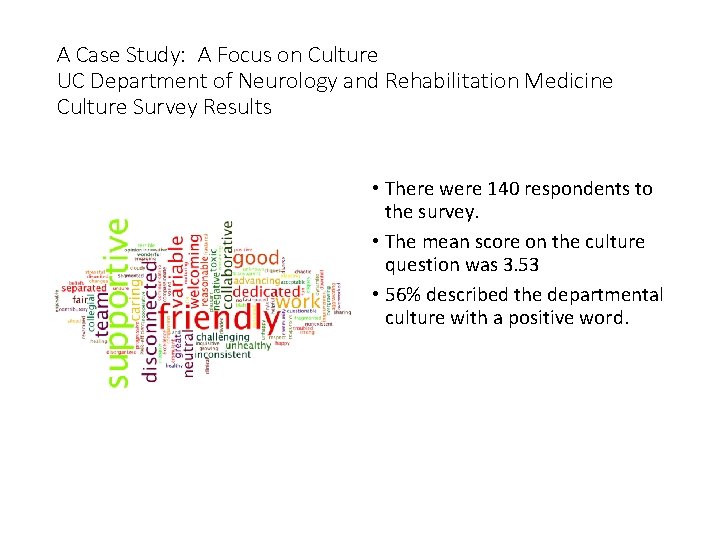
A Case Study: A Focus on Culture UC Department of Neurology and Rehabilitation Medicine • A half-day All-Associates Retreat was planned to focus on the culture of the department. • Prior to the retreat, all faculty, learners, medical staff, and administrative staff were asked two questions: • To rate the culture of the department from 1 (bad) to 5 (good) • To describe the culture of the department in one word.
A Case Study: A Focus on Culture UC Department of Neurology and Rehabilitation Medicine • Activities from the All-Associates Retreat focused on purpose, meaningful work, and personal resilience: • • Culture Survey Results Patient Experience Story Mind-body Experiential Sessions Appreciative Inquiry Exercise
A Case Study: A Focus on Culture UC Department of Neurology and Rehabilitation Medicine Culture Survey Results • There were 140 respondents to the survey. • The mean score on the culture question was 3. 53 • 56% described the departmental culture with a positive word.
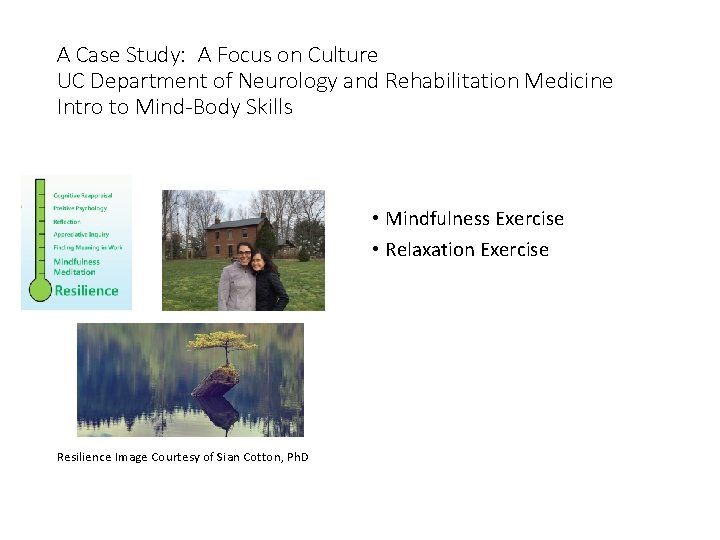
A Case Study: A Focus on Culture UC Department of Neurology and Rehabilitation Medicine Intro to Mind-Body Skills • Mindfulness Exercise • Relaxation Exercise Resilience Image Courtesy of Sian Cotton, Ph. D
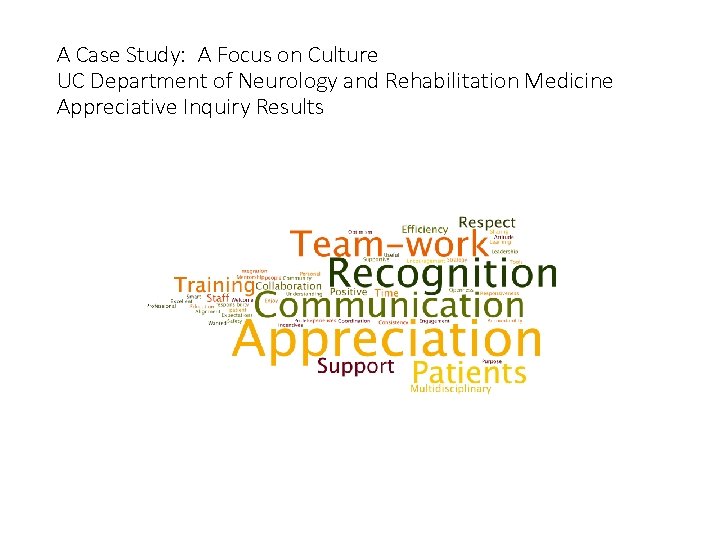
A Case Study: A Focus on Culture UC Department of Neurology and Rehabilitation Medicine Appreciative Inquiry Results
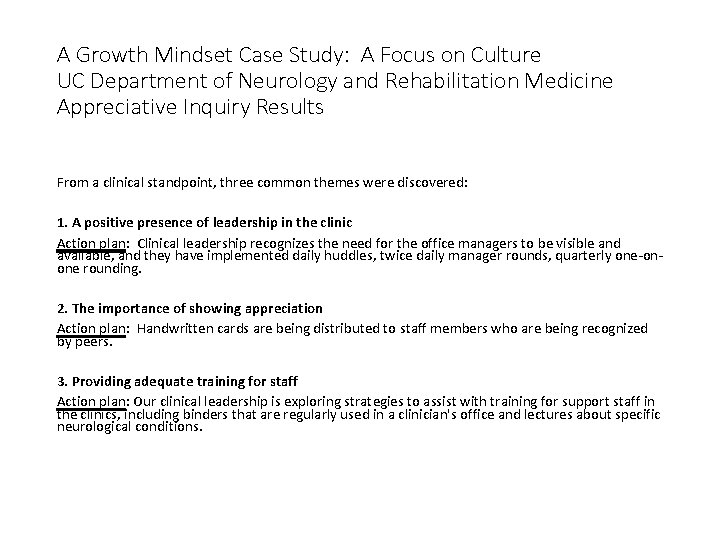
A Growth Mindset Case Study: A Focus on Culture UC Department of Neurology and Rehabilitation Medicine Appreciative Inquiry Results From a clinical standpoint, three common themes were discovered: 1. A positive presence of leadership in the clinic Action plan: Clinical leadership recognizes the need for the office managers to be visible and available, and they have implemented daily huddles, twice daily manager rounds, quarterly one-onone rounding. 2. The importance of showing appreciation Action plan: Handwritten cards are being distributed to staff members who are being recognized by peers. 3. Providing adequate training for staff Action plan: Our clinical leadership is exploring strategies to assist with training for support staff in the clinics, including binders that are regularly used in a clinician's office and lectures about specific neurological conditions.
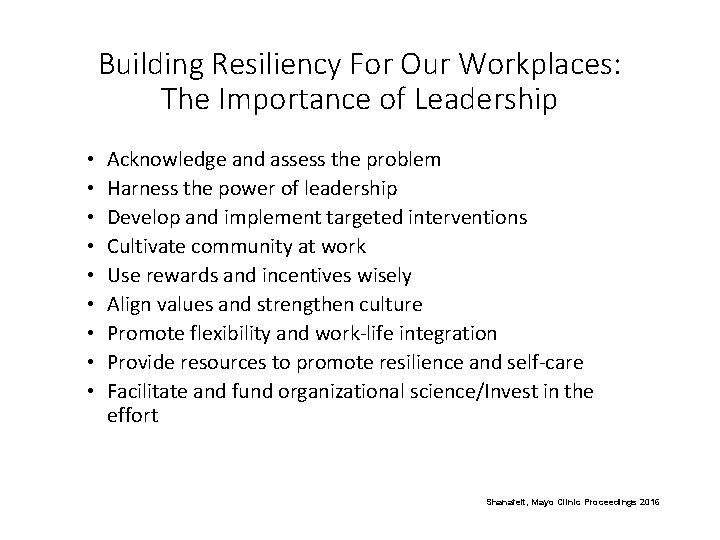
Building Resiliency For Our Workplaces: The Importance of Leadership • • • Acknowledge and assess the problem Harness the power of leadership Develop and implement targeted interventions Cultivate community at work Use rewards and incentives wisely Align values and strengthen culture Promote flexibility and work-life integration Provide resources to promote resilience and self-care Facilitate and fund organizational science/Invest in the effort Shanafelt, Mayo Clinic Proceedings 2016
Personal and Workplace Growth: Two Sides of the Same Coin en. wikipedia. org startupi. com. br
Developing The Growth Mindset For Ourselves and Our Workplace • “What are the opportunities for learning and growth for myself and others around me? ” • After forming a plan, ask: – “When, where and how will I embark on my plan? ” • “What can I do to continue my growth? ” • “What is one thing that I can do to continue the growth of others? ” Dweck C, Mindset
Developing The Growth Mindset For Ourselves and Our Workplace “Yes, And …” ww 2. kqed. com “Yet …” refreshleadership. com
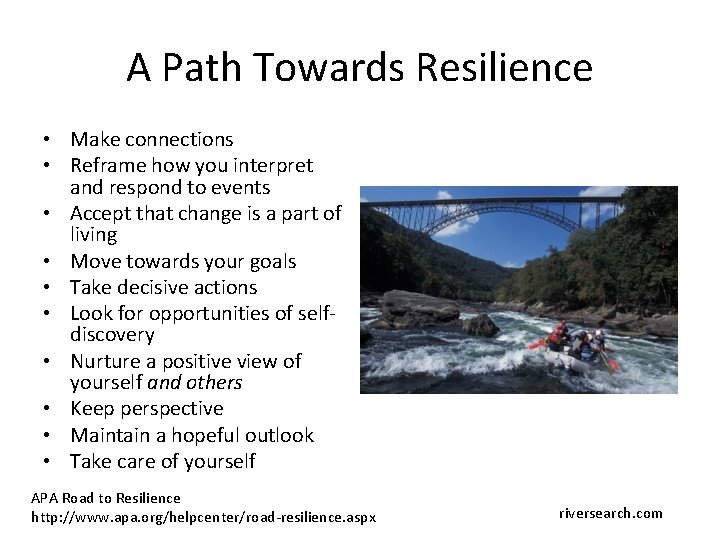
A Path Towards Resilience • Make connections • Reframe how you interpret and respond to events • Accept that change is a part of living • Move towards your goals • Take decisive actions • Look for opportunities of selfdiscovery • Nurture a positive view of yourself and others • Keep perspective • Maintain a hopeful outlook • Take care of yourself APA Road to Resilience http: //www. apa. org/helpcenter/road-resilience. aspx riversearch. com
Thank you PLUS: All of my patients All of the clinic support staff and managers All of the sleep lab techs All of the nurses, CNPs, PAs, residents and fellows Administrative assistants: Angela Schoner Lori Selm Misty Wethington Maggie Baker And many, many more …