WATER THE AREA OF THESSALONIKI 1 2 3
- Slides: 49
WATER: THE AREA OF THESSALONIKI 1. 2. 3. 4. RIVERS LAKES GULVES SPRINGS
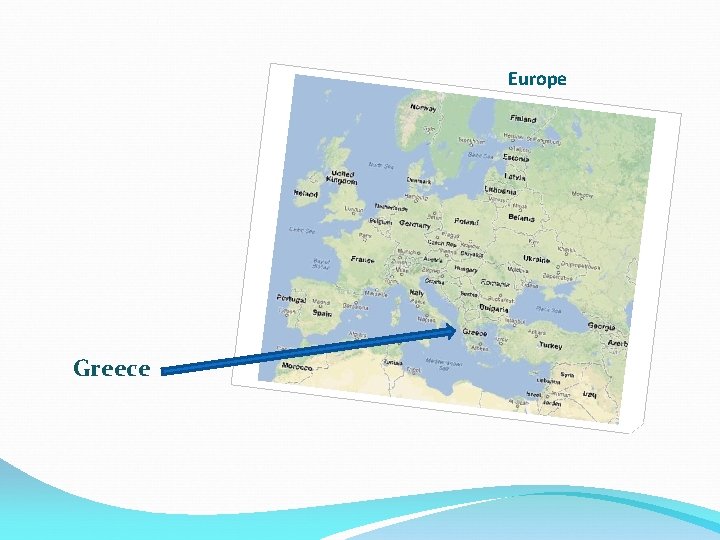
Europe Greece
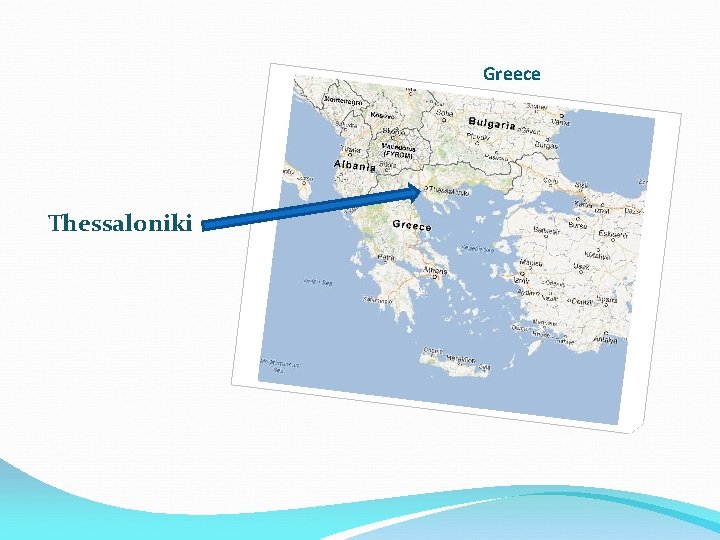
Greece Thessaloniki
1. ΤΗΕ RIVERS OF THESSALONIKI THE GALLIKOS RIVER THE AXIOS RIVER THE LUDIAS RIVER THE ALIAKMONAS RIVER Their acronym form the word gala(milk)
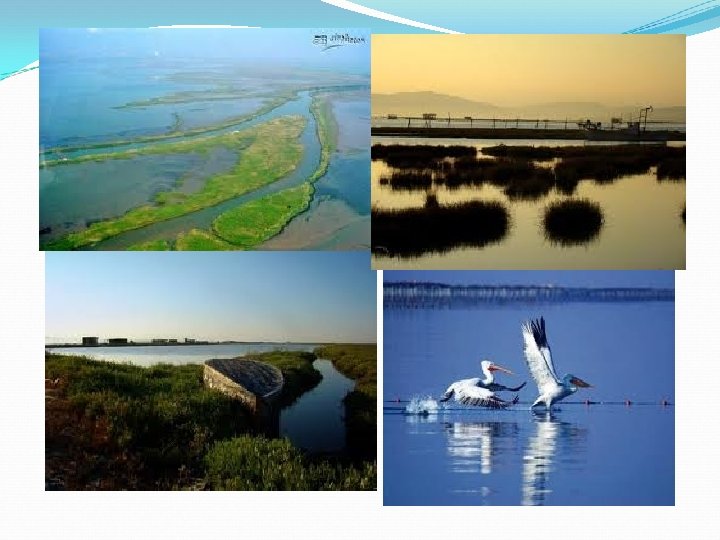
The four rivers form a huge delta which q is a National Park protected by National and European Community legislation (Natura 2000). qextends over 338 square kilometers q includes one of the most important wetland systems of Greece, rich in flora and fauna
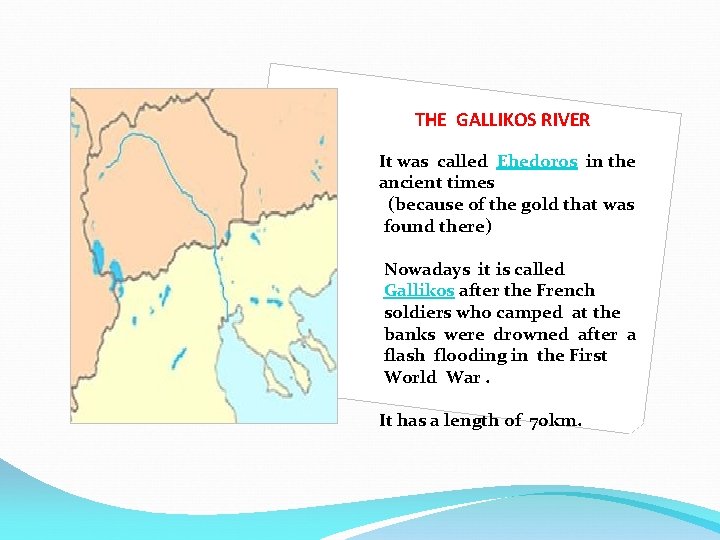
THE GALLIKOS RIVER It was called Ehedoros in the ancient times (because of the gold that was found there) Nowadays it is called Gallikos after the French soldiers who camped at the banks were drowned after a flash flooding in the First World War. It has a length of 70 km.
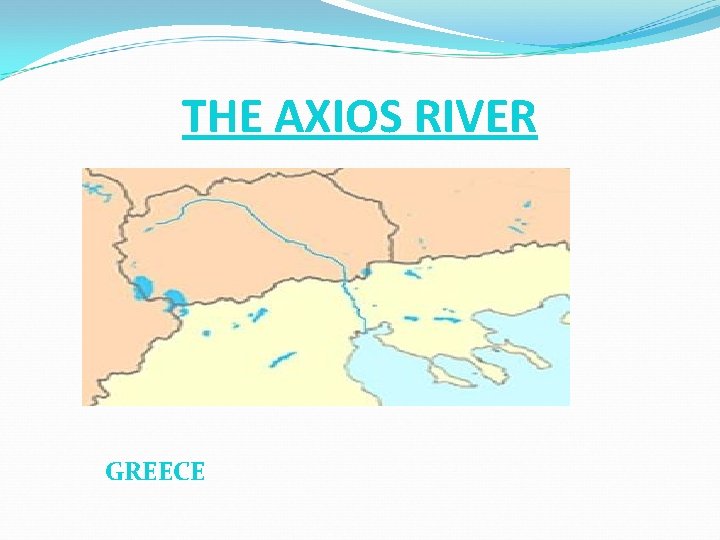
THE AXIOS RIVER � The Axios is the second longer river of Greece � It has a length of 320 km. � Its width ranges from 50 to 600 m and its depth reaches 4 m. � The river source is near the Serbian-Albanian borders, it enters the Greek territory, crosses Macedonia and flows in the Thermaikos Gulf. � Its name means Worthy and comes from the Macedonian root of Axos = forest because its banks are rich in forests.
THE AXIOS RIVER GREECE
THE LOUDIAS RIVER � Loudias River, the smallest of the four rivers of the National Park Axios – Loudias-Aliakmonas, is now an artificial channel � Loudias or else Mavroneri ( = black water - Kara Asmak in Turkish) is a river in Central Macedonia and used to be navigable till Pella, the birth city of Alexander the Great. � It has a length of 60 km
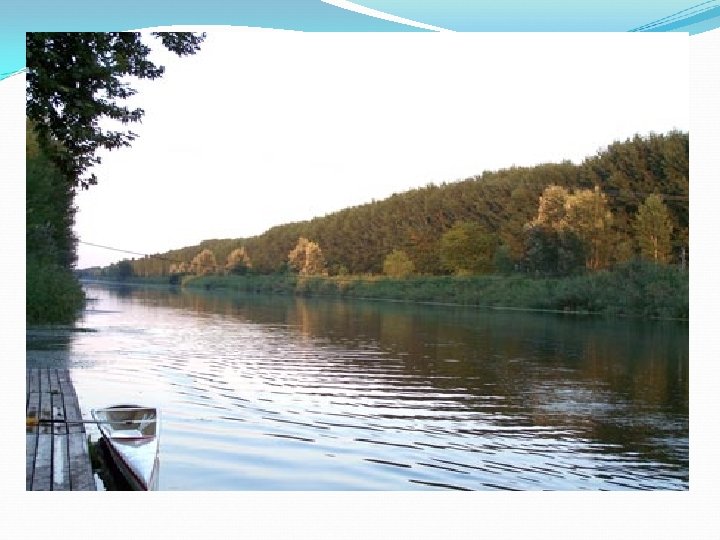
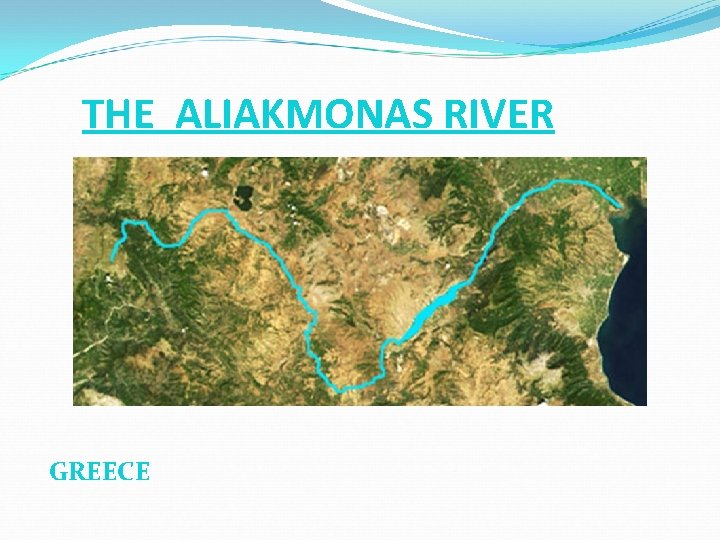
THE ALIAKMON RIVER �The longest river of Greece � It has a length of 350 km �The river source is in the mountain of Grammos �It flows into the Thermaikos Gulf near the Axios river, �Its name comes from als (salt sea) and the anvil. �According to the Greek mythology Aliakmon was one of the river gods, son of Ocean, a huge river that surrounds the Earth.
THE ALIAKMONAS RIVER GREECE
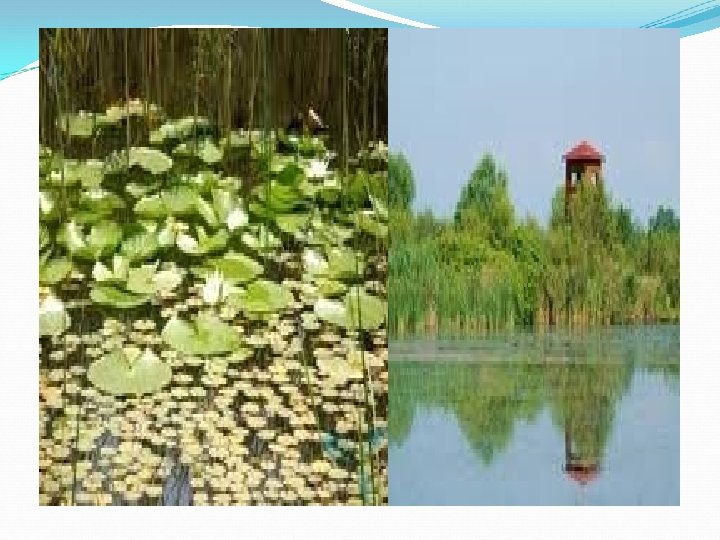
FLORA The banks of the rivers are rich in � beeches � oaks � sycamores � poplars � pines and firs � chestnuts, � cedars, � ashes, � maples, � willows These trees are among the 500 species of plants that are recorded.
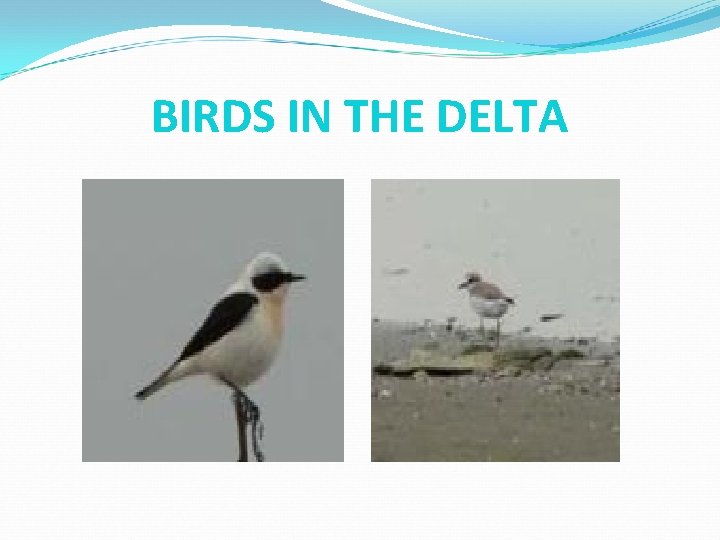
BIRDS IN THE DELTA
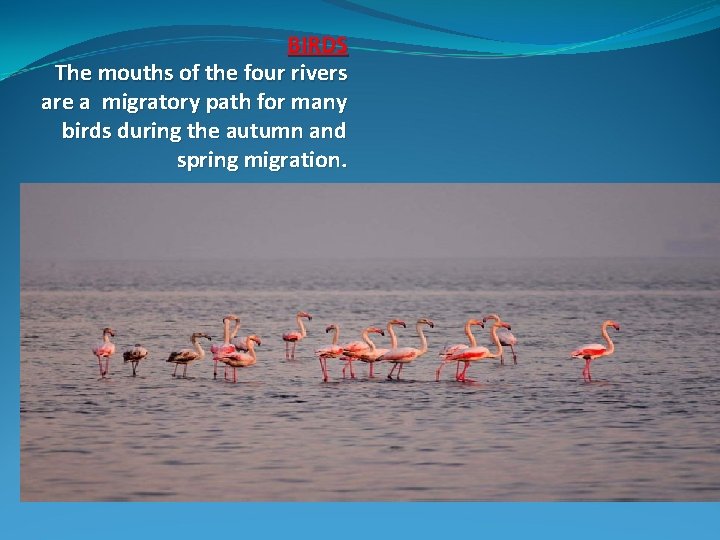
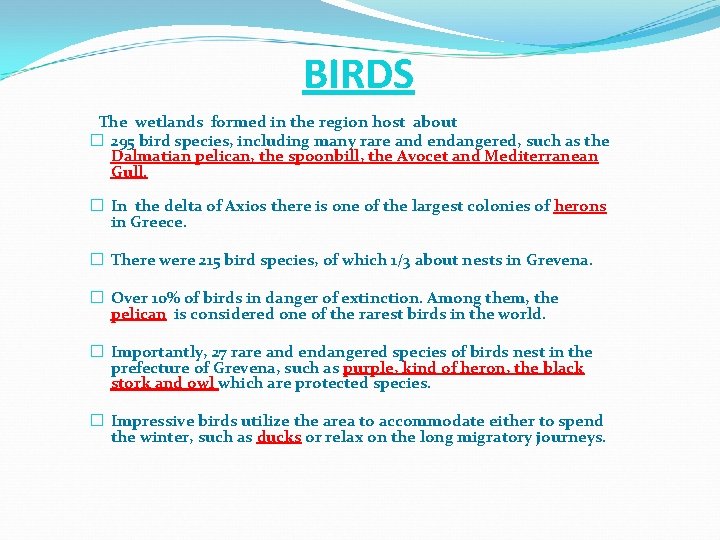
BIRDS The mouths of the four rivers are a migratory path for many birds during the autumn and spring migration.
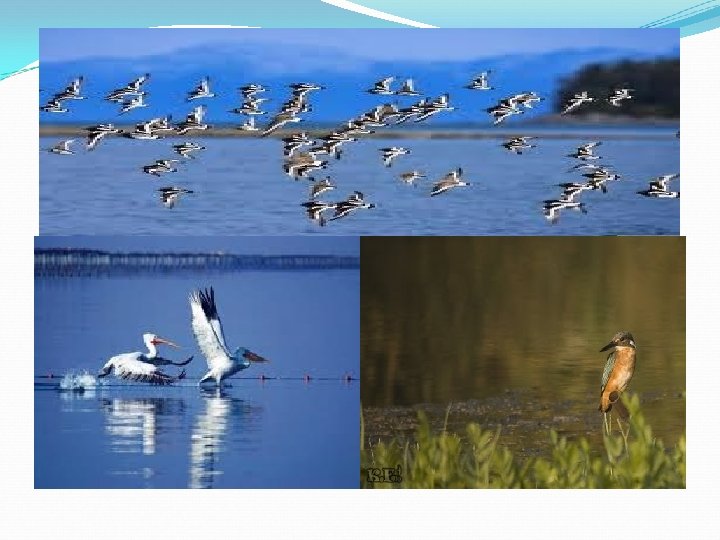
BIRDS The wetlands formed in the region host about � 295 bird species, including many rare and endangered, such as the Dalmatian pelican, the spoonbill, the Avocet and Mediterranean Gull. � In the delta of Axios there is one of the largest colonies of herons in Greece. � There were 215 bird species, of which 1/3 about nests in Grevena. � Over 10% of birds in danger of extinction. Among them, the pelican is considered one of the rarest birds in the world. � Importantly, 27 rare and endangered species of birds nest in the prefecture of Grevena, such as purple, kind of heron, the black stork and owl which are protected species. � Impressive birds utilize the area to accommodate either to spend the winter, such as ducks or relax on the long migratory journeys.
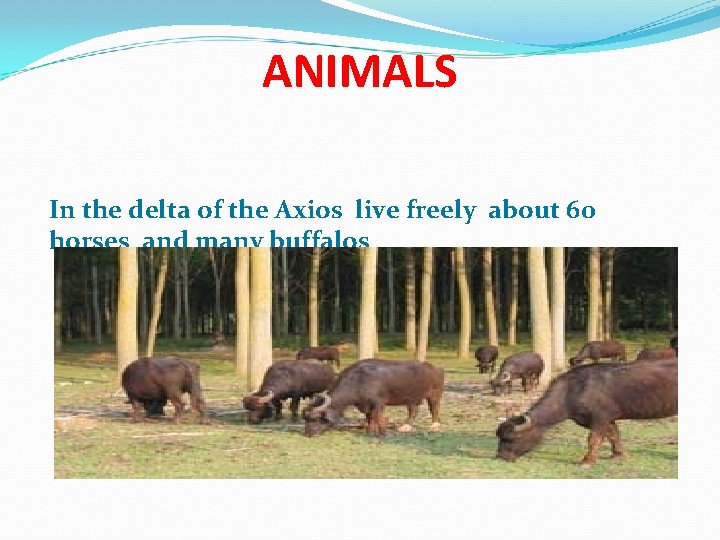
ANIMALS In the delta of the Axios live freely about 60 horses and many buffalos
the otter, jackal, the wild cat, wolf and deer, by the Axios banks, are likely to disappear .
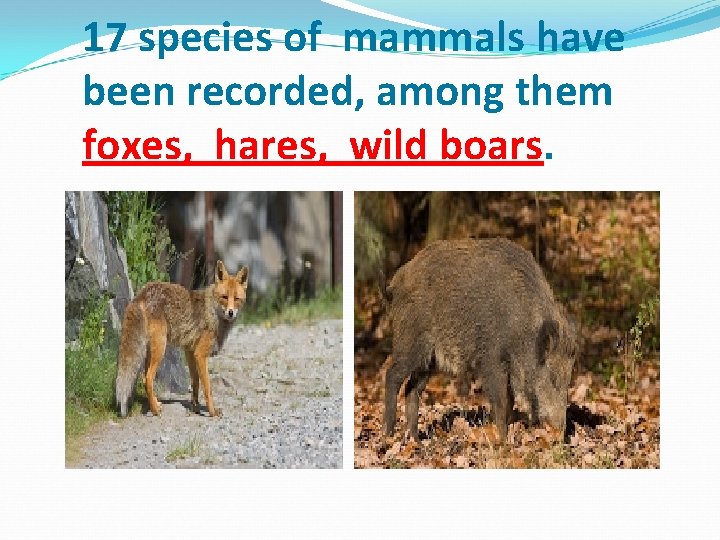
17 species of mammals have been recorded, among them foxes, hares, wild boars.
REPTLES 15 species of reptiles and amphibians complement the food chain of wetlands in the region of Aliakmonas. FISH In Aliakmonas 35 species of fish are found. Of these about 30 are native , namely endemic, while the others are imported with human intervention. Many of them are considered rare like mavrotsironi which does not live anywhere else in the world. Some of these kinds of fish have no commercial value. They only support the local food chain.
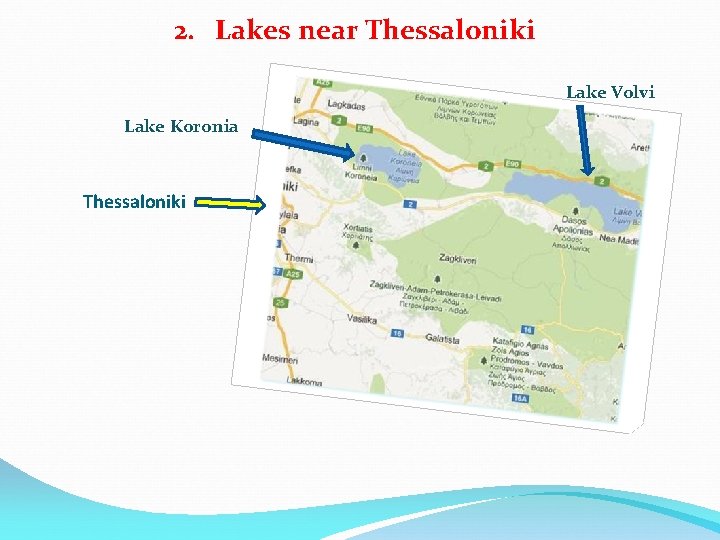
2. Lakes near Thessaloniki Lake Volvi Lake Koronia Thessaloniki
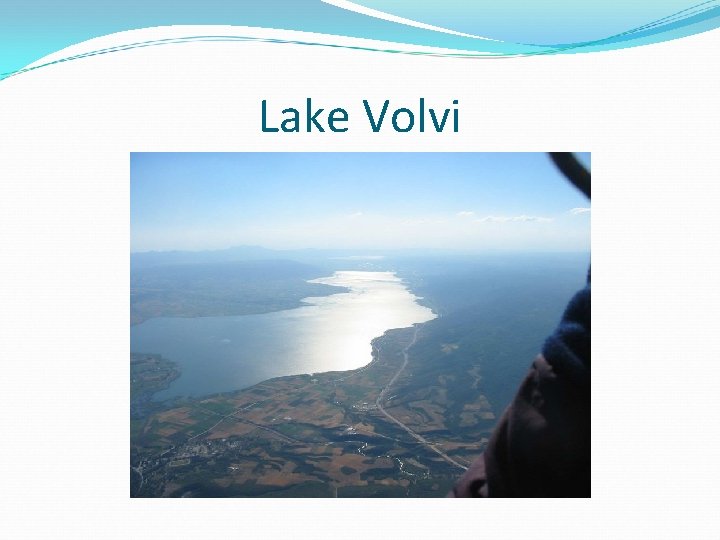
Lake Volvi
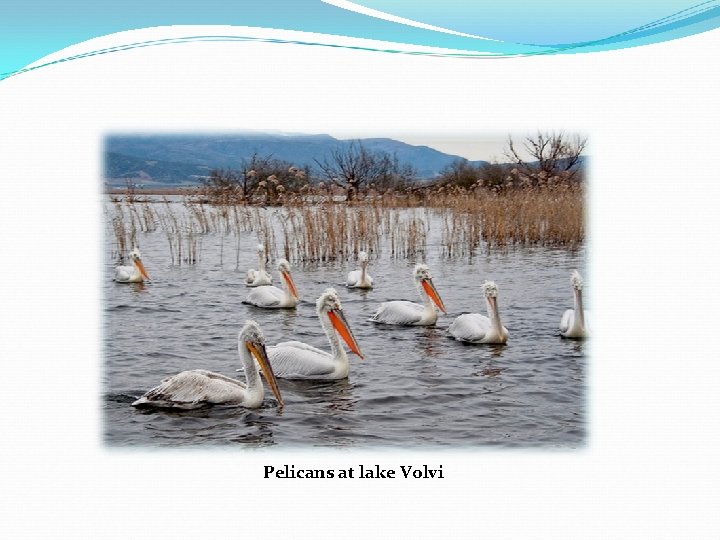
Lake Volvi lake has � rare ecosystems, hydro-habitats, hydrophilous plants and trees. �More than 200 bird species such as storks, egrets, flamingos, herons, etc, (protected by the International Convention Ramsar) spend the winter in these regions.
Pelicans at lake Volvi
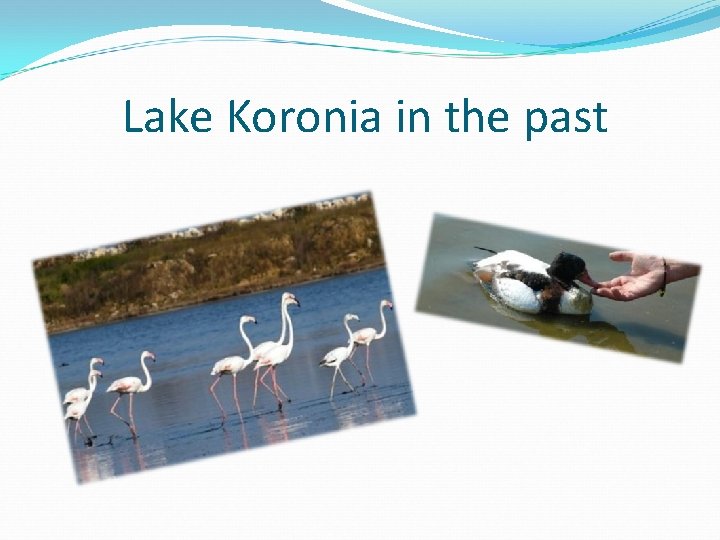
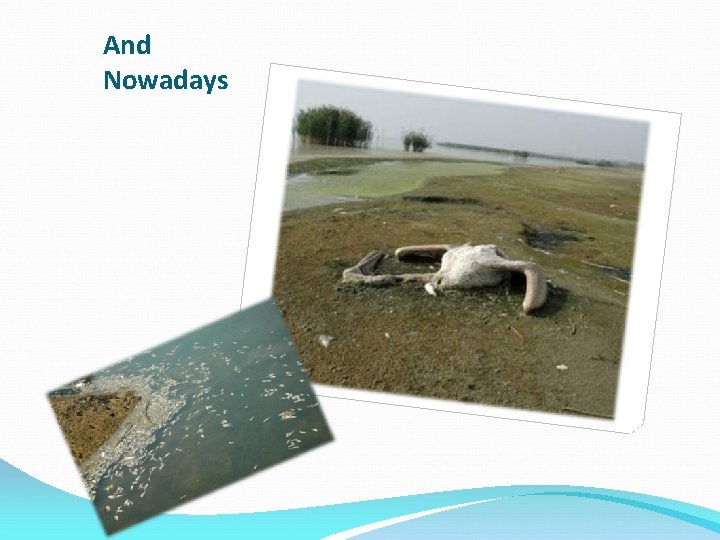
Lake Koronia Lake Koroneia ( Λίμνη Κορώνεια), 12 kilometres east of Thessaloniki, suffers severe environmental damage due to increased irrigation and intensified industry.
Because of �chemical and toxic substances �heavy metals, �microbial load from the sewage �the agricultural waste : intensive use of fertilizers and pesticides �the Industrial wastewater (from sugar factories, clothing, dairies, canneries etc. ) �the washing waste
Lake Koronia in the past
And Nowadays
THE FINAL RECIPIENT OF THE POLLUTED RIVERS AND OF THE URBAN AND INDUSTRIAL WASTE OF THESSALONIKI IS THERMAIKOS GULF.
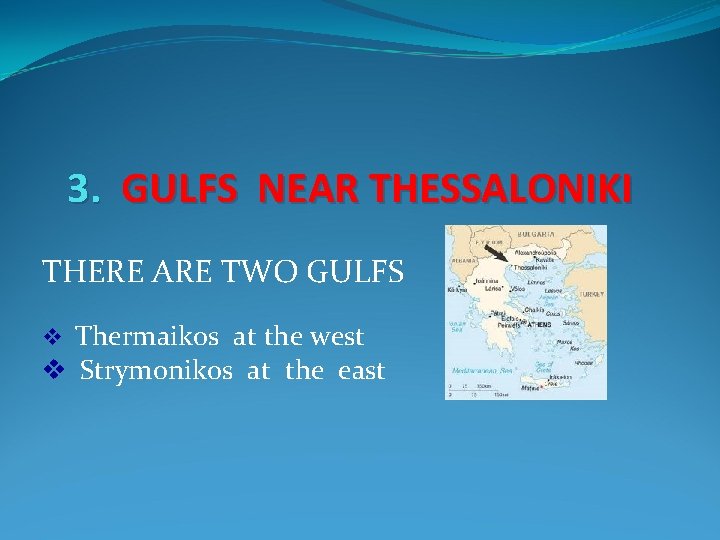
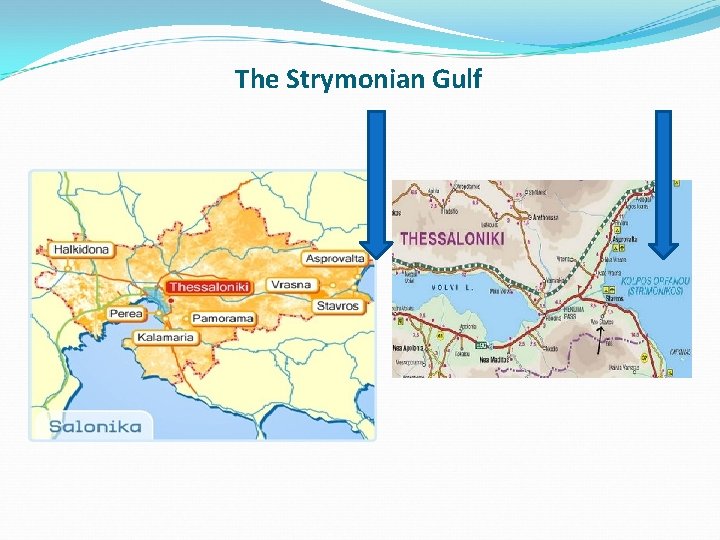
3. GULFS NEAR THESSALONIKI THERE ARE TWO GULFS Thermaikos at the west v Strymonikos at the east v
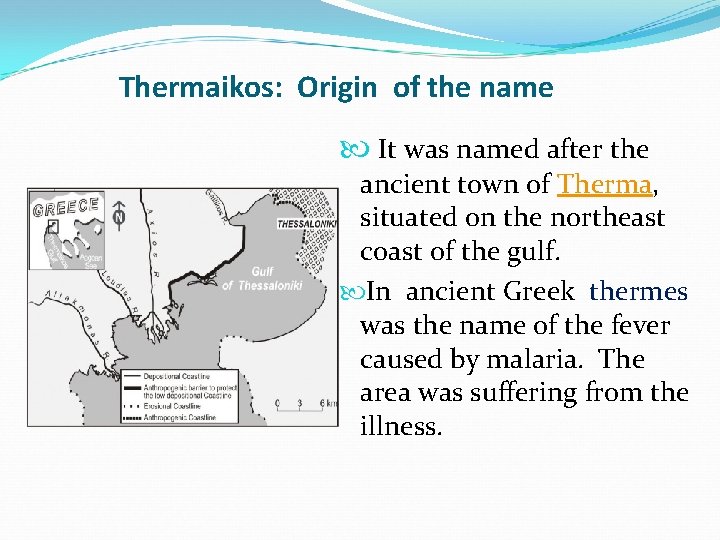
Thermaikos: Origin of the name It was named after the ancient town of Therma, situated on the northeast coast of the gulf. In ancient Greek thermes was the name of the fever caused by malaria. The area was suffering from the illness.
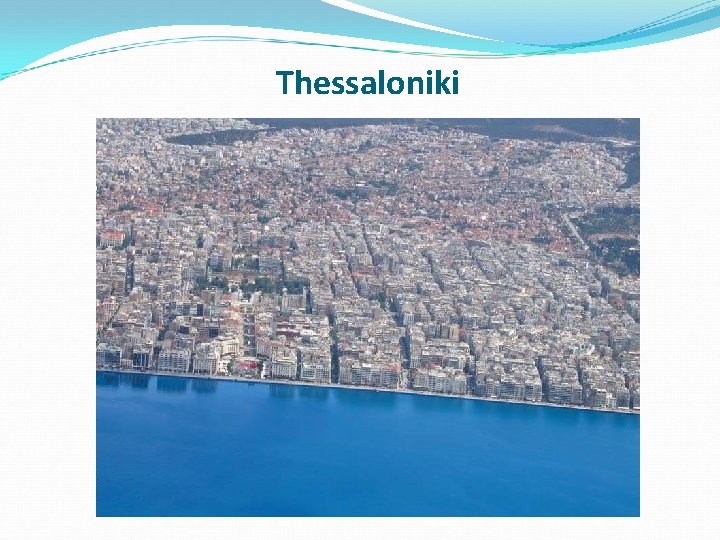
Thessaloniki
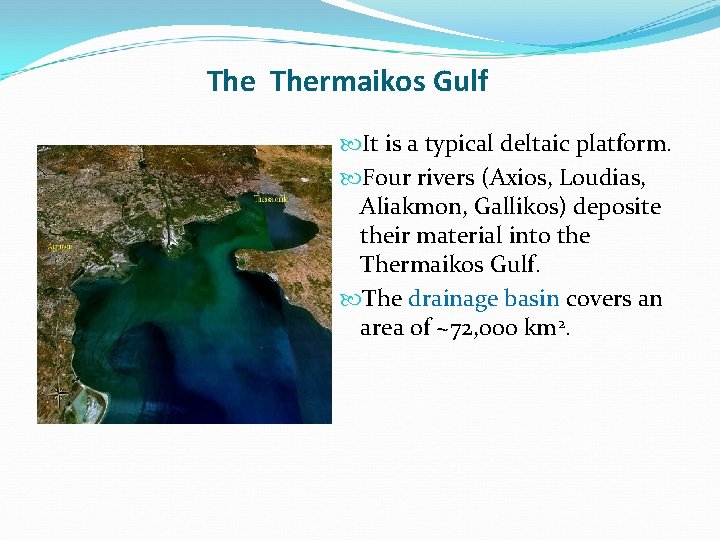
The Thermaikos Gulf It is a typical deltaic platform. Four rivers (Axios, Loudias, Aliakmon, Gallikos) deposite their material into the Thermaikos Gulf. The drainage basin covers an area of ~72, 000 km 2.
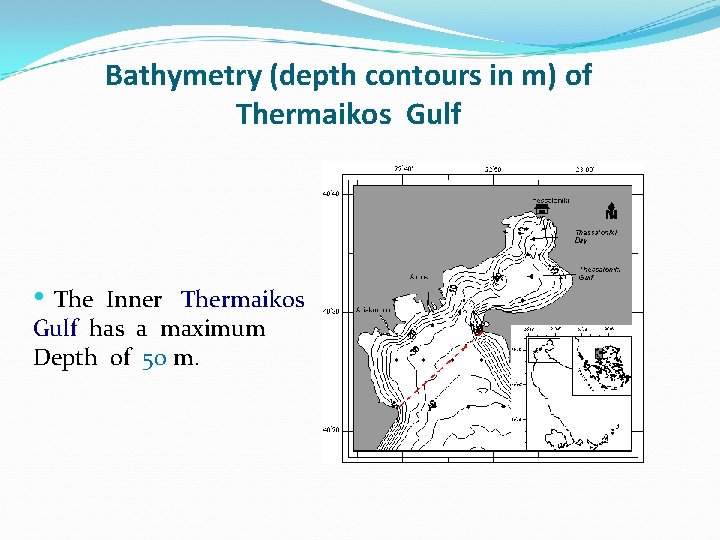
Bathymetry (depth contours in m) of Thermaikos Gulf • The Inner Thermaikos Gulf has a maximum Depth of 50 m.
The Strymonian Gulf
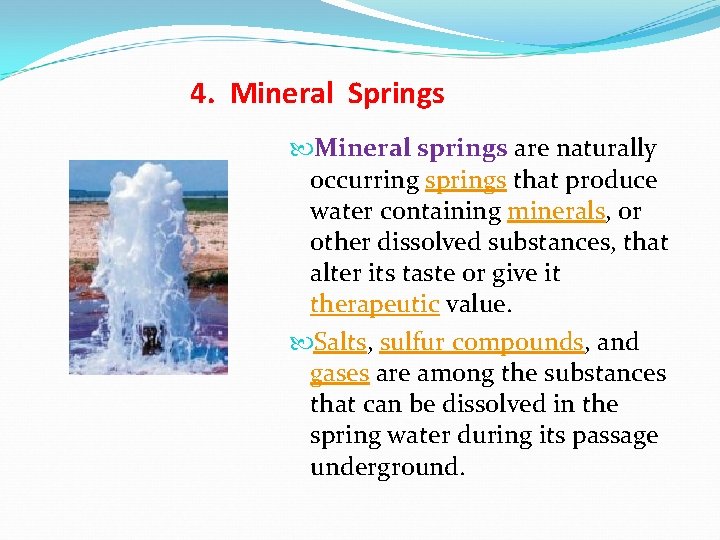
4. Mineral Springs Mineral springs are naturally occurring springs that produce water containing minerals, or other dissolved substances, that alter its taste or give it therapeutic value. Salts, sulfur compounds, and gases are among the substances that can be dissolved in the spring water during its passage underground.
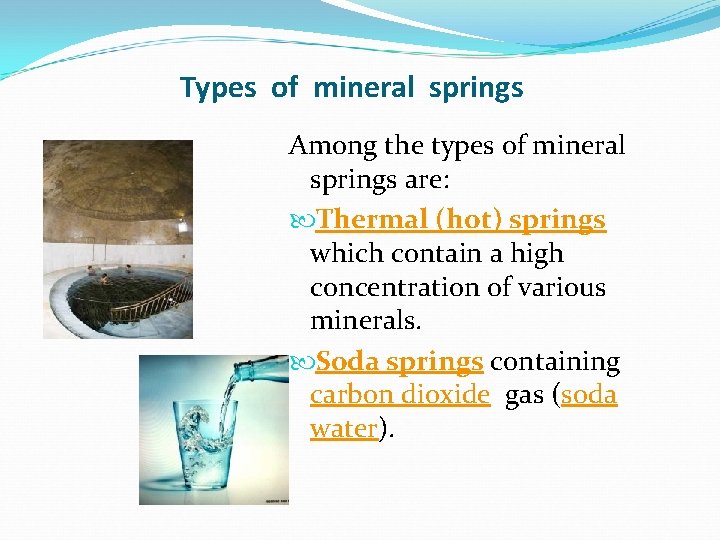
Types of mineral springs Among the types of mineral springs are: Thermal (hot) springs which contain a high concentration of various minerals. Soda springs containing carbon dioxide gas (soda water).
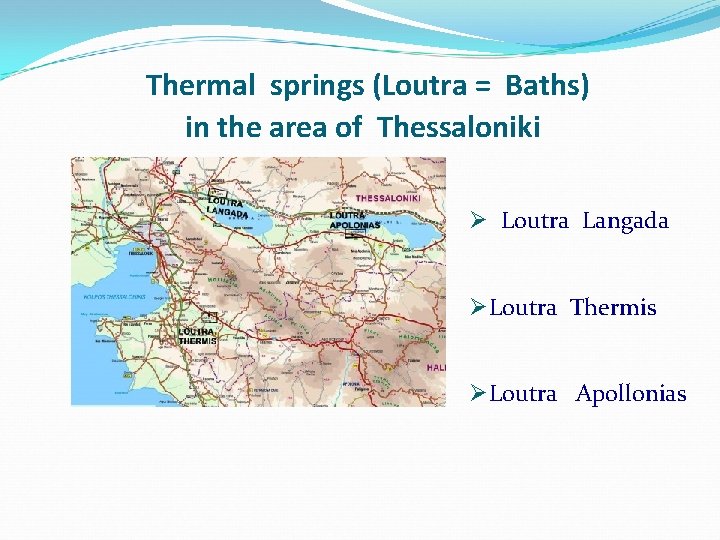
Thermal springs (Loutra = Baths) in the area of Thessaloniki Ø Loutra Langada ØLoutra Thermis ØLoutra Apollonias
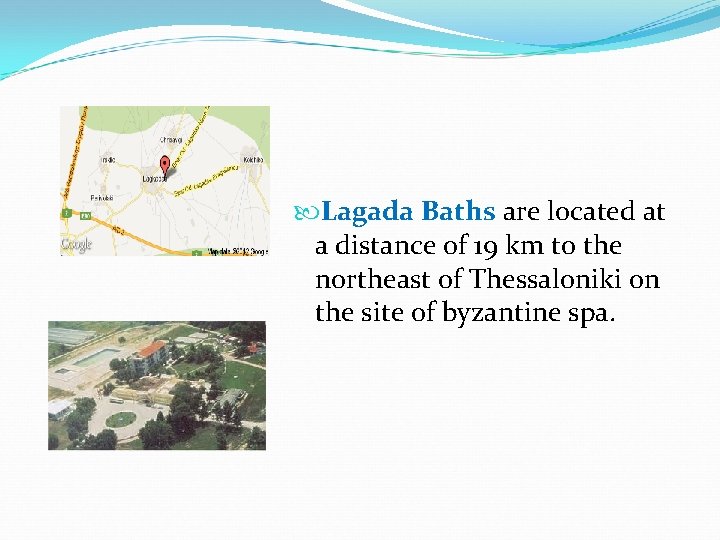
Lagada Baths are located at a distance of 19 km to the northeast of Thessaloniki on the site of byzantine spa.
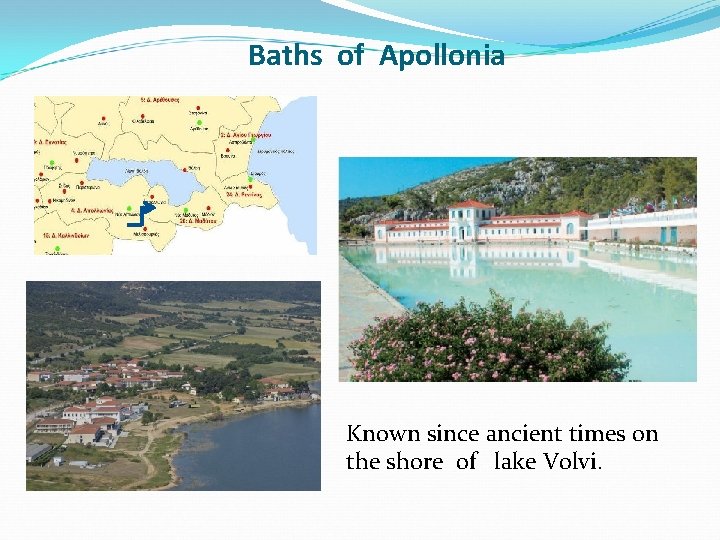
Baths of Apollonia Known since ancient times on the shore of lake Volvi.
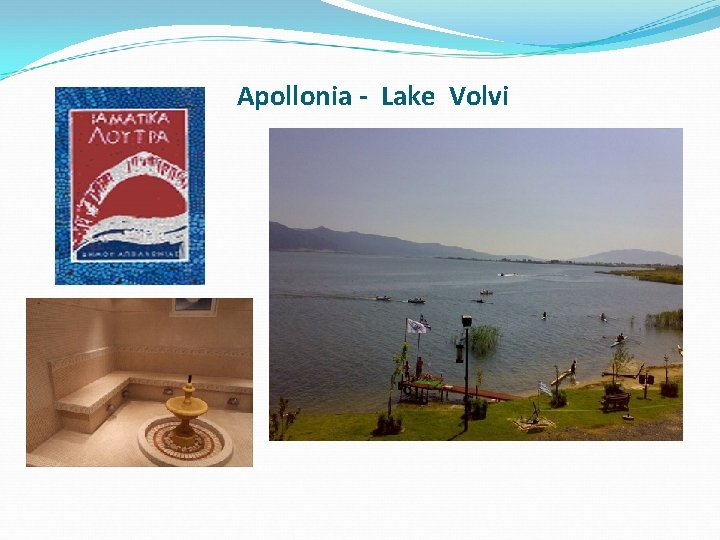
Apollonia - Lake Volvi
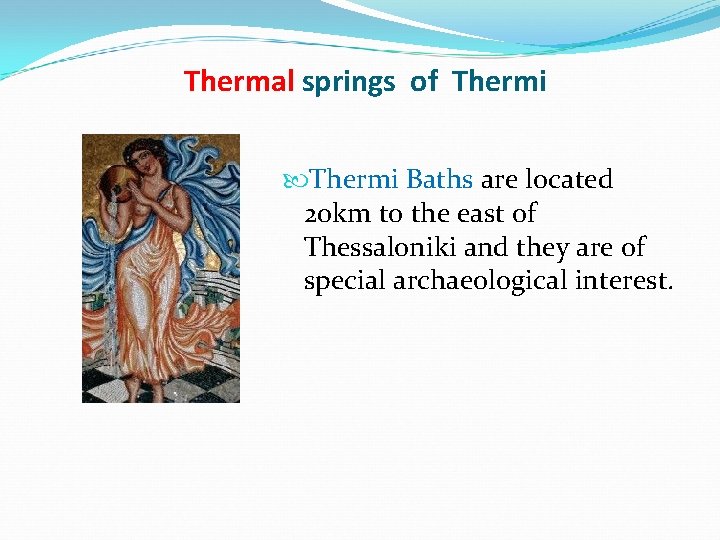
Thermal springs of Thermi Baths are located 20 km to the east of Thessaloniki and they are of special archaeological interest.
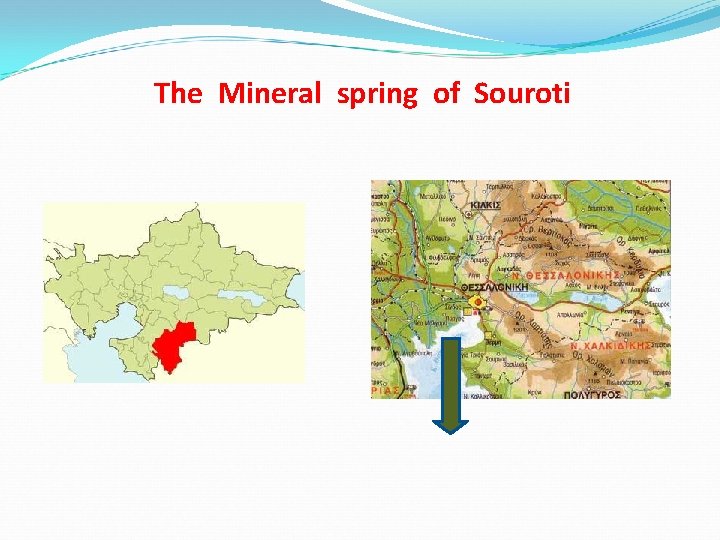
The Mineral spring of Souroti
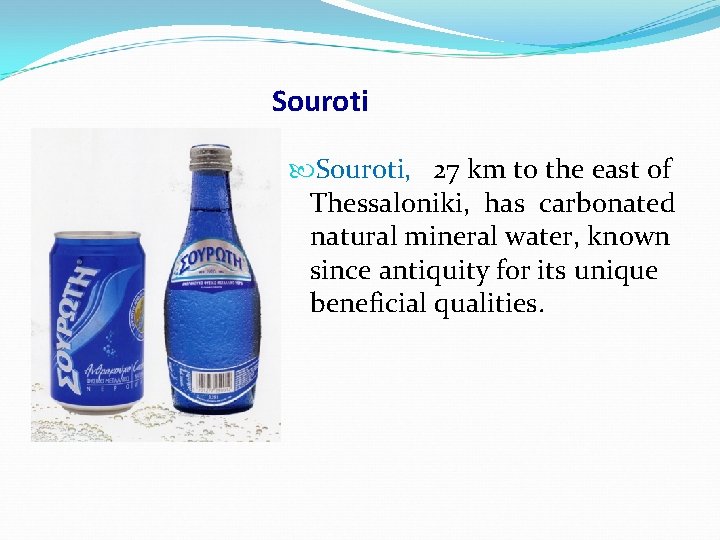
Souroti, 27 km to the east of Thessaloniki, has carbonated natural mineral water, known since antiquity for its unique beneficial qualities.
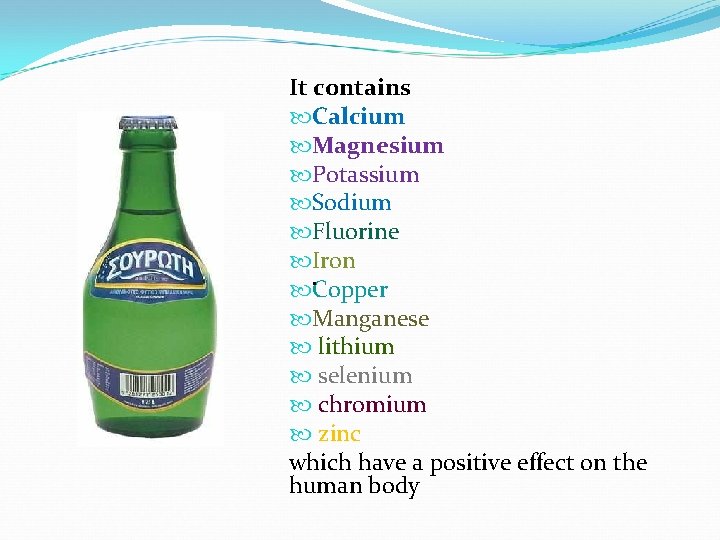
It contains Calcium Magnesium Potassium Sodium Fluorine Iron . Copper Manganese lithium selenium chromium zinc which have a positive effect on the human body