TEACHING ARTICULATING SKILLS NEEDED FOR THE WORKFORCE A
- Slides: 54
TEACHING & ARTICULATING SKILLS NEEDED FOR THE WORKFORCE: A PSYCHOLOGICAL SCIENCE PERSPECTIVE Jaye Van Kirk, M. A. (Psychology), M. A. (Zoology), ABD (Psychobiology) Professor of Psychology jvankirk@sdccd. edu
objectives • Gain new perspective in teaching your course material • Increase awareness of skills you teach that prepare students for workforce • Help articulate skills that employers value • Syllabus • Assignments & activities prepared unprepared
Time to innovate! • How can knowledge and skills from fashion, business, psychology, sustainability, marketing & materials science be integrated into a product (or service) that can: • Influence a person’s psychological state • Respect limited earth resources • Be desired by diverse consumers (culture, SES, gender, age, etc. ) • Evolve with changing trends, resources and needs • Provide people with realistic and healthy perspectives
These disciplines (fashion, business, psychology, sustainability, marketing & materials science) can be applied to… Fashion psychology • https: //careersinpsychology. org/the-emergence-of-fashionpsychology/ • https: //www. businessoffashion. com/articles/careers/six-fashioncareers-of-the-future
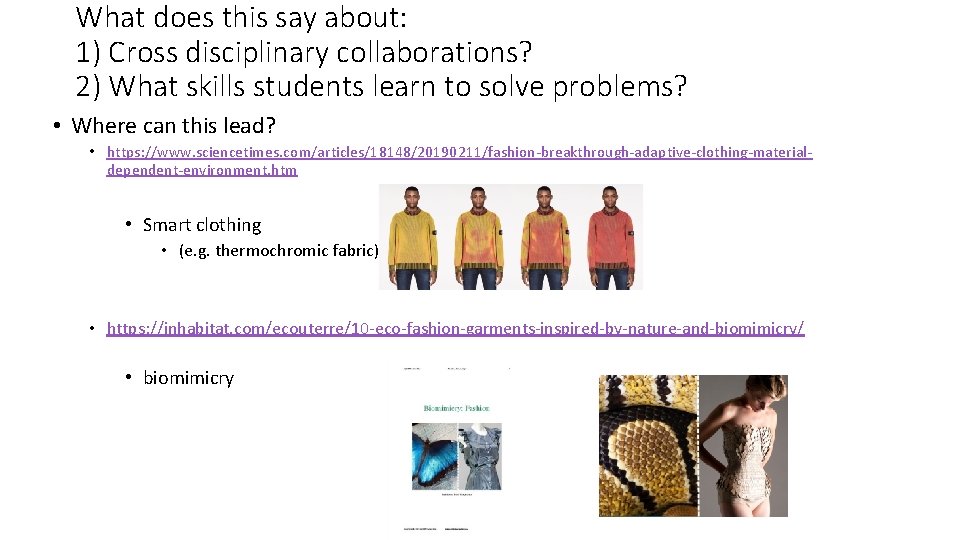
What does this say about: 1) Cross disciplinary collaborations? 2) What skills students learn to solve problems? • Where can this lead? • https: //www. sciencetimes. com/articles/18148/20190211/fashion-breakthrough-adaptive-clothing-materialdependent-environment. htm • Smart clothing • (e. g. thermochromic fabric) • https: //inhabitat. com/ecouterre/10 -eco-fashion-garments-inspired-by-nature-and-biomimicry/ • biomimicry
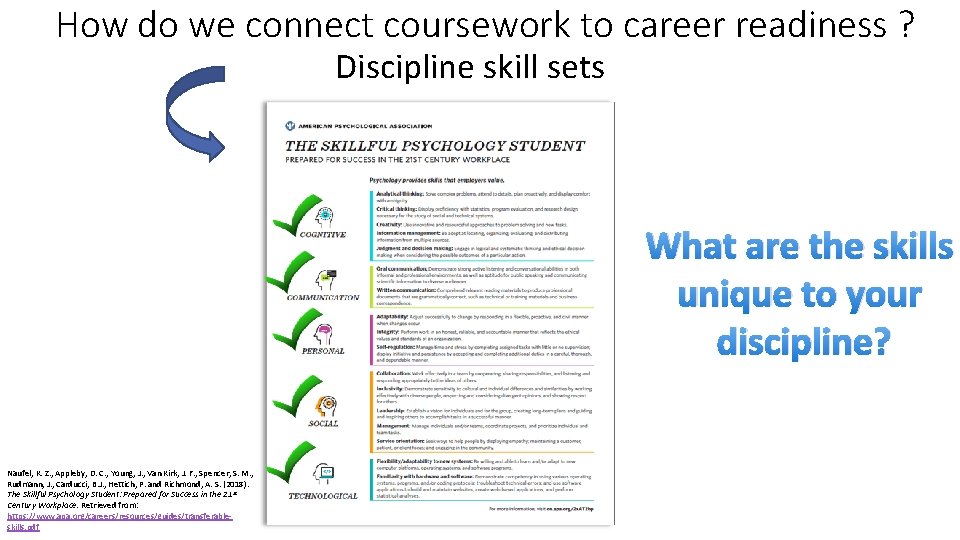
How do we connect coursework to career readiness ? Discipline skill sets What are the skills unique to your discipline? Naufel, K. Z. , Appleby, D. C. , Young, J. , Van Kirk, J. F. , Spencer, S. M. , Rudmann, J. , Carducci, B. J. , Hettich, P. and Richmond, A. S. (2018). The Skillful Psychology Student: Prepared for Success in the 21 st Century Workplace. Retrieved from: https: //www. apa. org/careers/resources/guides/transferableskills. pdf
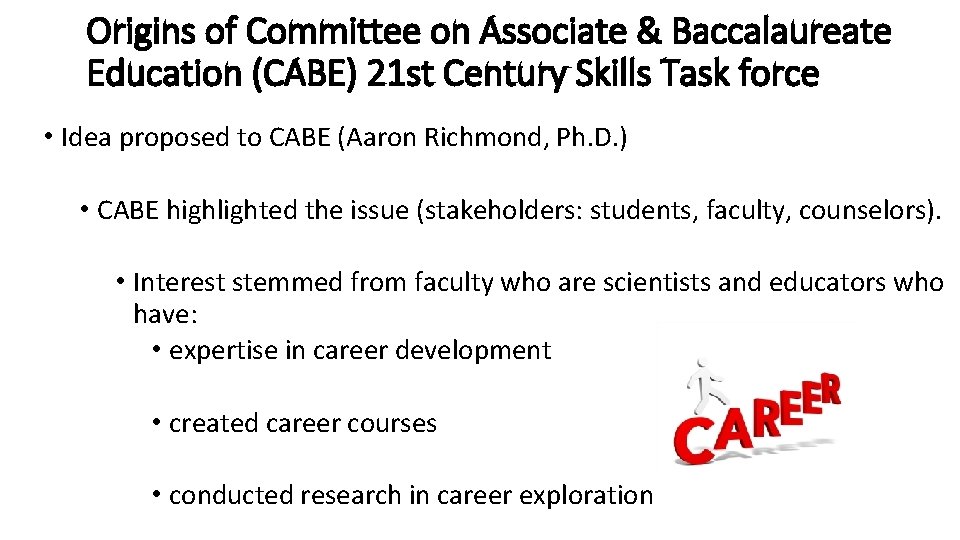
Origins of Committee on Associate & Baccalaureate Education (CABE) 21 st Century Skills Task force • Idea proposed to CABE (Aaron Richmond, Ph. D. ) • CABE highlighted the issue (stakeholders: students, faculty, counselors). • Interest stemmed from faculty who are scientists and educators who have: • expertise in career development • created career courses • conducted research in career exploration
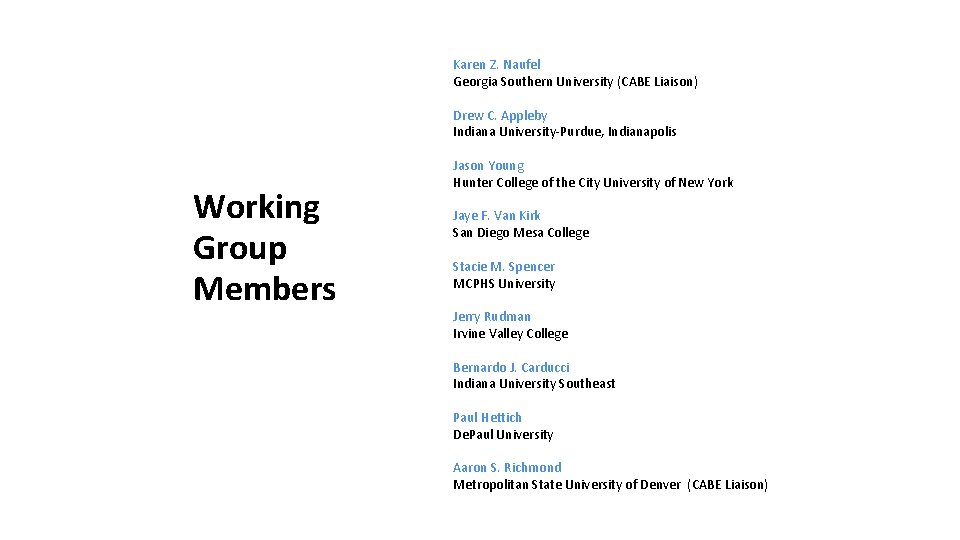
Karen Z. Naufel Georgia Southern University (CABE Liaison) Drew C. Appleby Indiana University-Purdue, Indianapolis Working Group Members Jason Young Hunter College of the City University of New York Jaye F. Van Kirk San Diego Mesa College Stacie M. Spencer MCPHS University Jerry Rudman Irvine Valley College Bernardo J. Carducci Indiana University Southeast Paul Hettich De. Paul University Aaron S. Richmond Metropolitan State University of Denver (CABE Liaison)
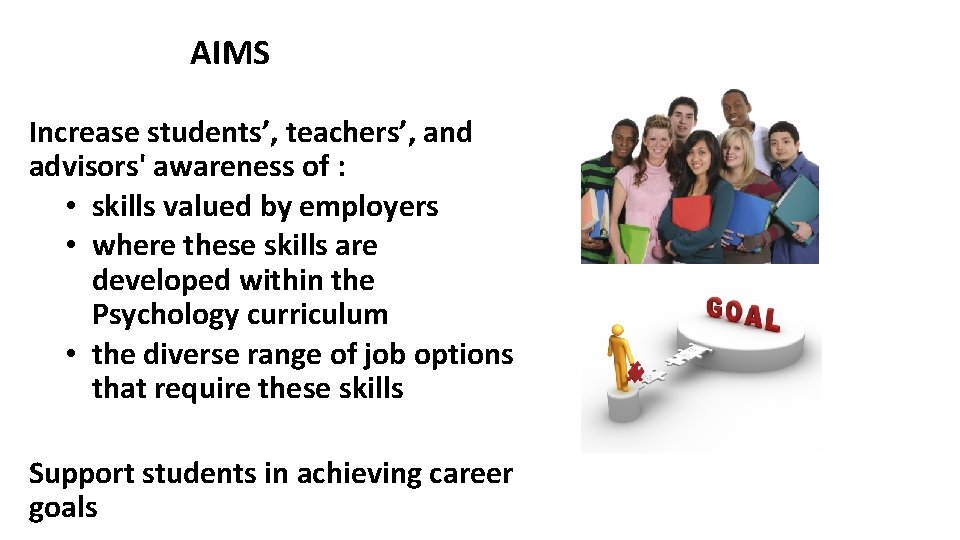
AIMS Increase students’, teachers’, and advisors' awareness of : • skills valued by employers • where these skills are developed within the Psychology curriculum • the diverse range of job options that require these skills Support students in achieving career goals
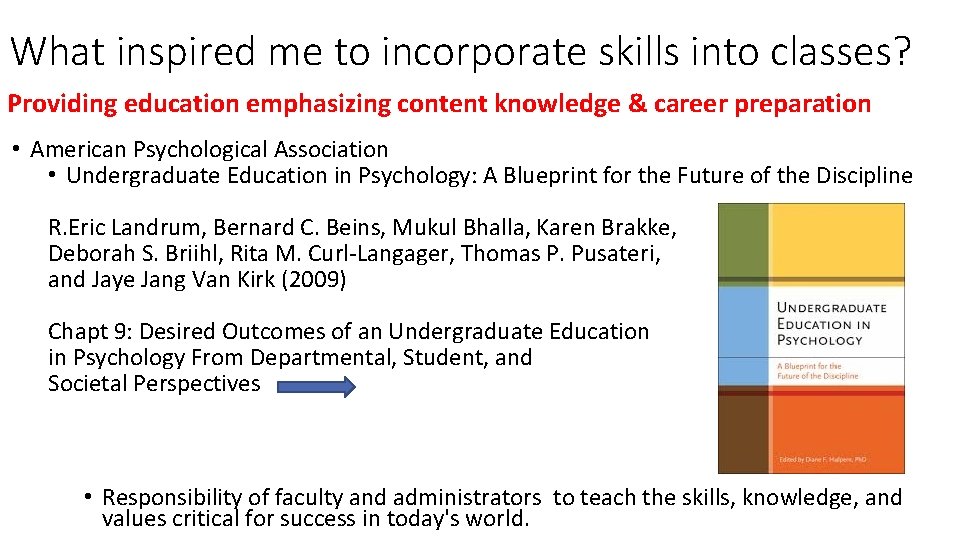
What inspired me to incorporate skills into classes? Providing education emphasizing content knowledge & career preparation • American Psychological Association • Undergraduate Education in Psychology: A Blueprint for the Future of the Discipline R. Eric Landrum, Bernard C. Beins, Mukul Bhalla, Karen Brakke, Deborah S. Briihl, Rita M. Curl-Langager, Thomas P. Pusateri, and Jaye Jang Van Kirk (2009) Chapt 9: Desired Outcomes of an Undergraduate Education in Psychology From Departmental, Student, and Societal Perspectives • Responsibility of faculty and administrators to teach the skills, knowledge, and values critical for success in today's world.
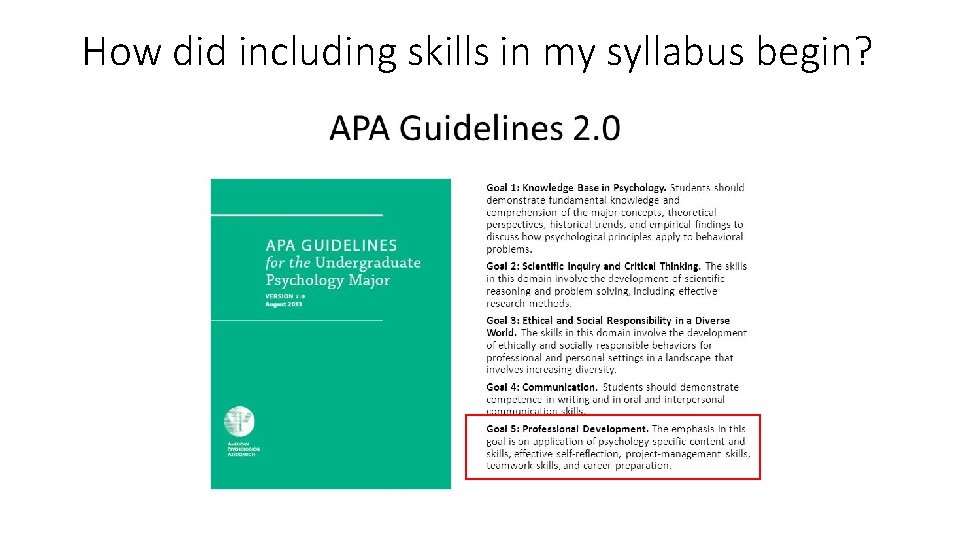
How did including skills in my syllabus begin?
1. IDENTIFYING WORKFORCE SKILLS FOR PSYCHOLOGY MAJORS
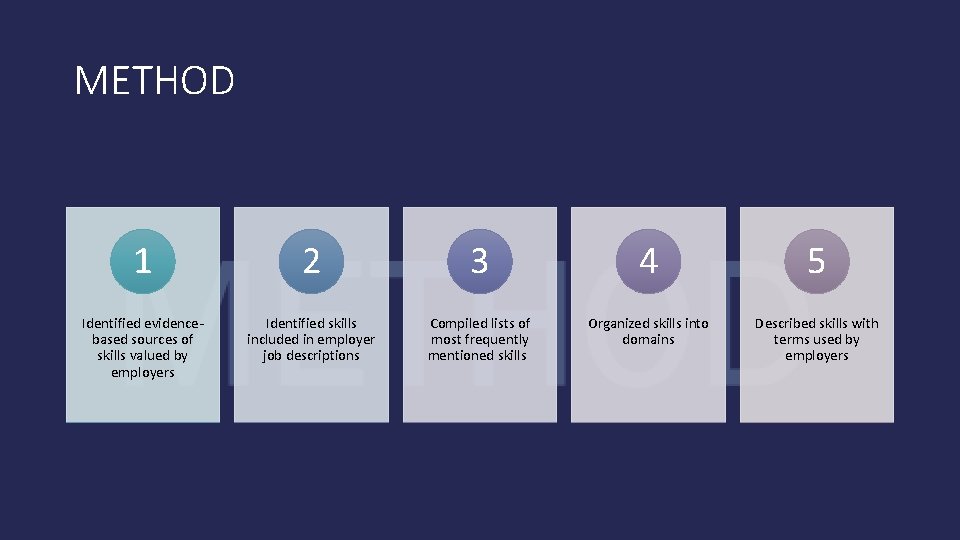
METHOD 1 2 3 4 5 Identified evidencebased sources of skills valued by employers Identified skills included in employer job descriptions Compiled lists of most frequently mentioned skills Organized skills into domains Described skills with terms used by employers
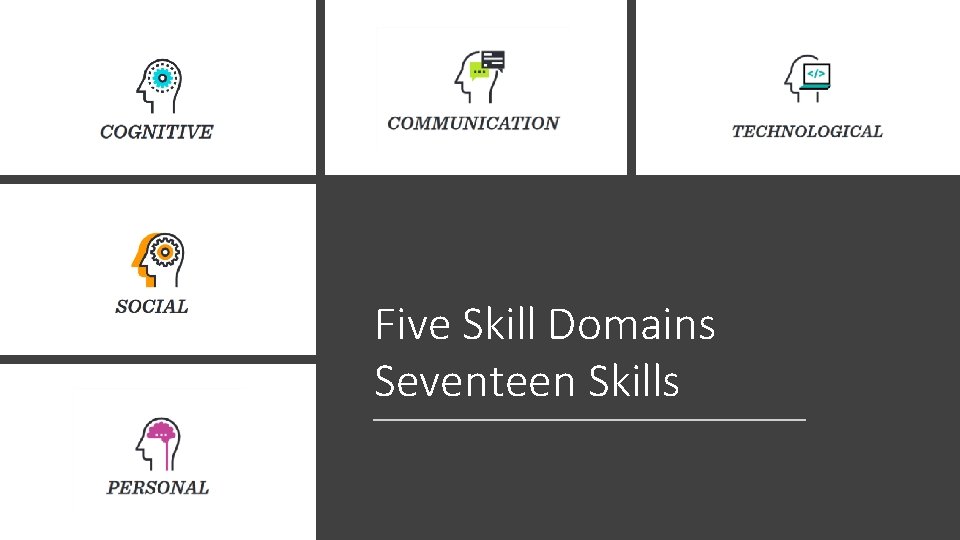
Five Skill Domains Seventeen Skills
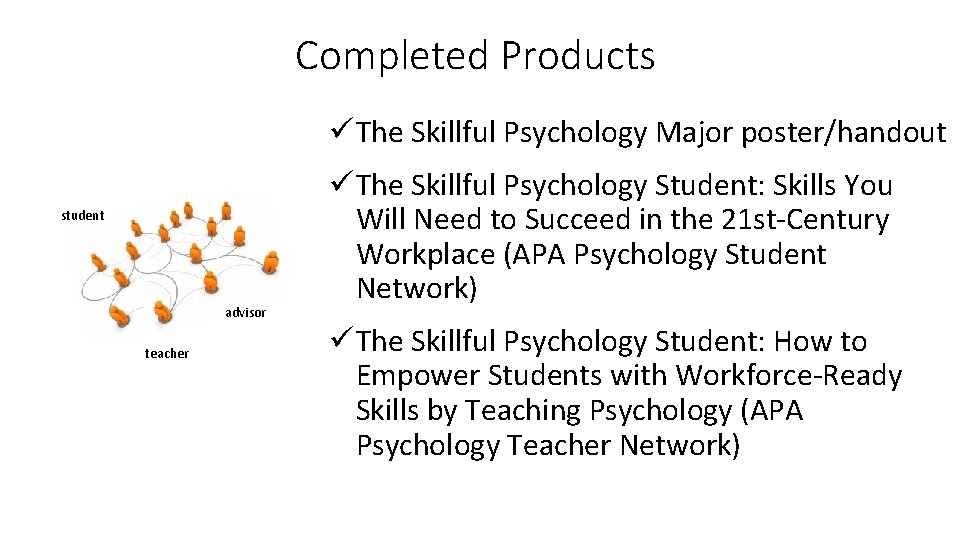
Completed Products ü The Skillful Psychology Major poster/handout student advisor teacher ü The Skillful Psychology Student: Skills You Will Need to Succeed in the 21 st-Century Workplace (APA Psychology Student Network) ü The Skillful Psychology Student: How to Empower Students with Workforce-Ready Skills by Teaching Psychology (APA Psychology Teacher Network)
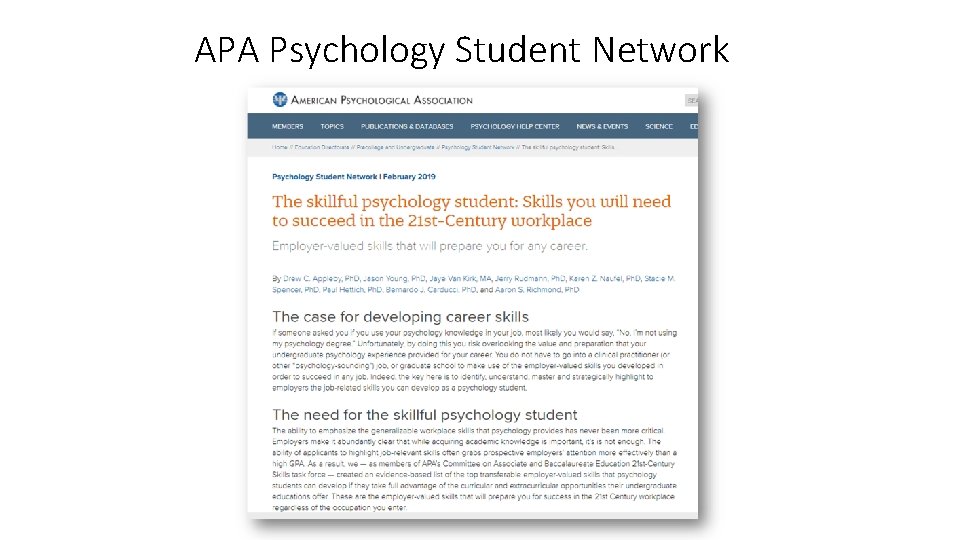
APA Psychology Student Network
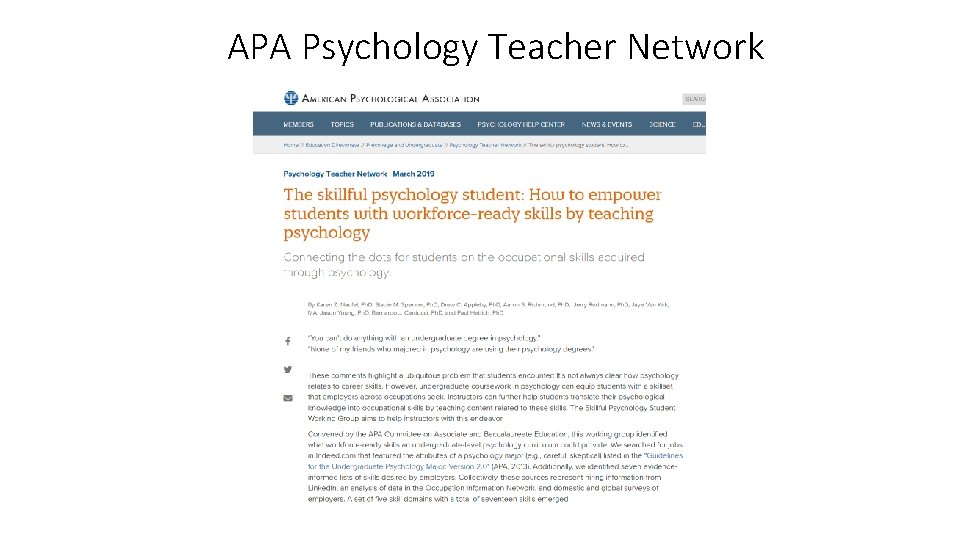
APA Psychology Teacher Network
2: INFUSE COURSES WITH TEACHING STRATEGIES FOR SKILLS ACQUIRED FROM PSYCHOLOGY …or your discipline
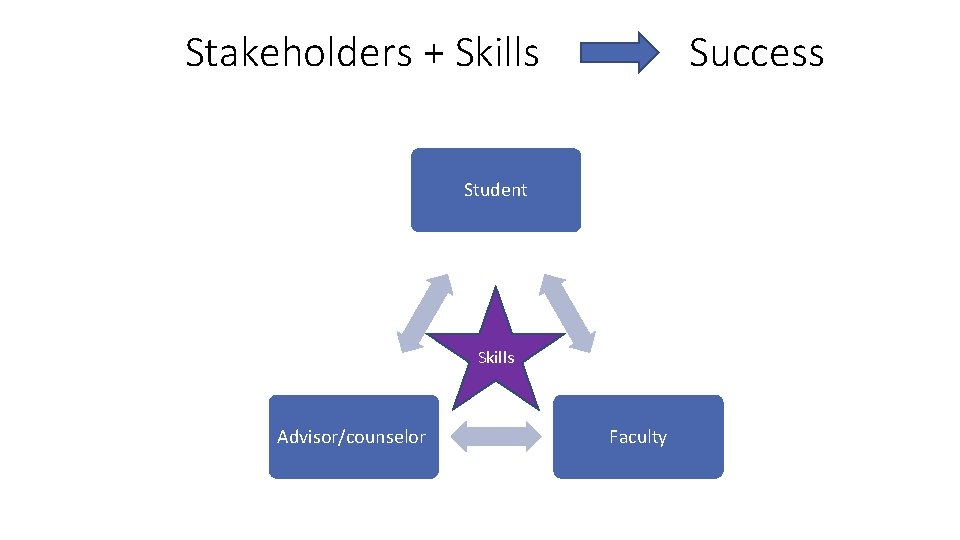
Stakeholders + Skills Success Student Skills Advisor/counselor Faculty
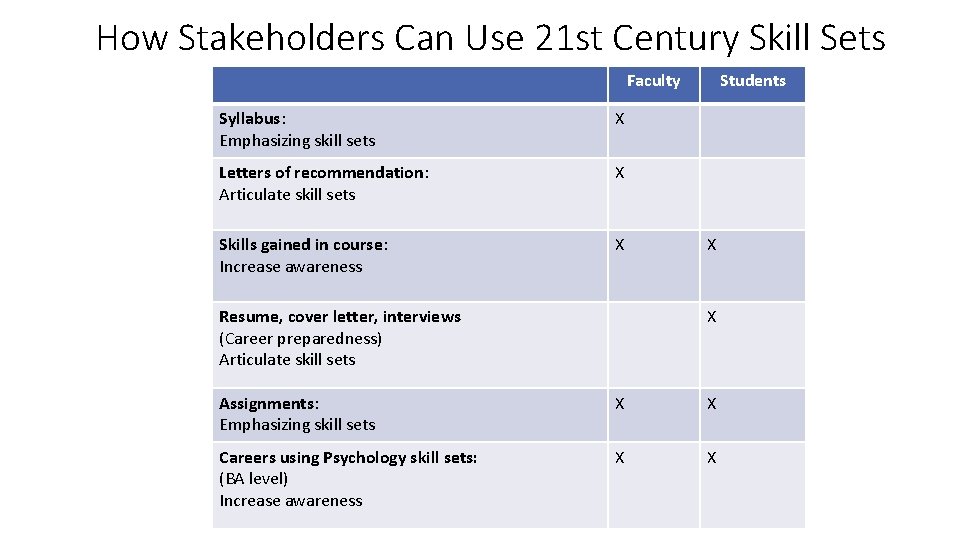
How Stakeholders Can Use 21 st Century Skill Sets Faculty Syllabus: Emphasizing skill sets X Letters of recommendation: Articulate skill sets X Skills gained in course: Increase awareness X Resume, cover letter, interviews (Career preparedness) Articulate skill sets Students X X Assignments: Emphasizing skill sets X X Careers using Psychology skill sets: (BA level) Increase awareness X X
WHY WOULD IT BE IMPORTANT TO KNOW: *THE COMMON SKILLS ACROSS DISCIPLINES? FROM YOUR *UNIQUE SKILLS DISCIPLINE?
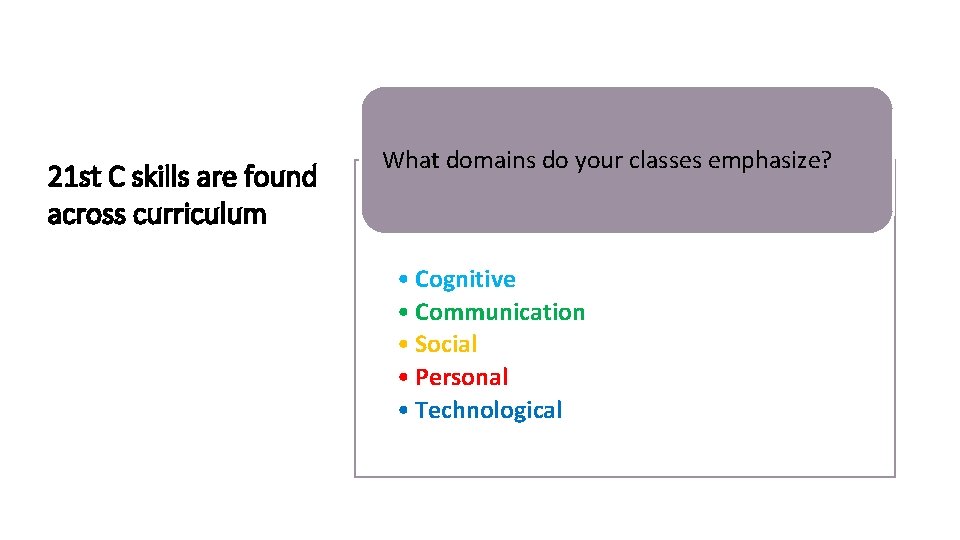
21 st C skills are found across curriculum What domains do your classes emphasize? • Cognitive • Communication • Social • Personal • Technological
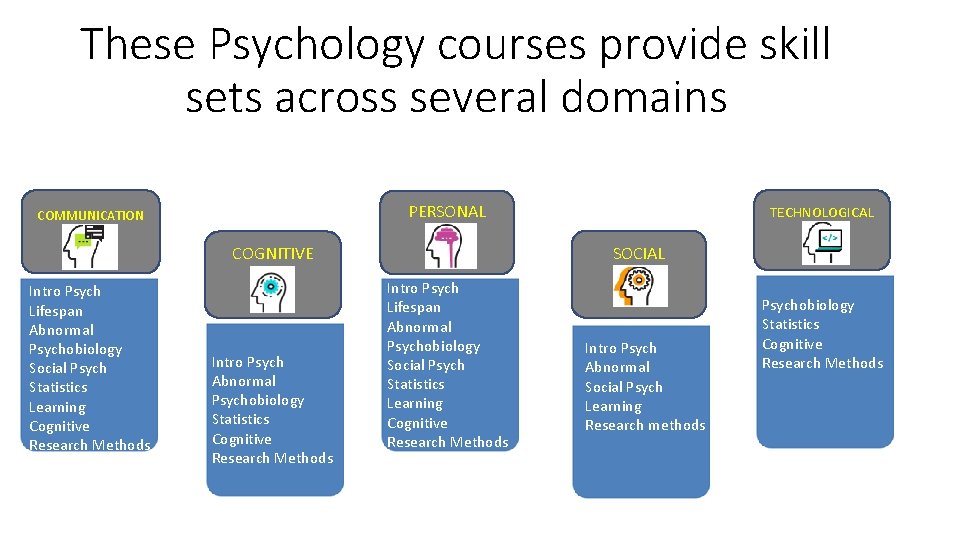
These Psychology courses provide skill sets across several domains PERSONAL COMMUNICATION SOCIAL COGNITIVE Intro Psych Lifespan Abnormal Psychobiology Social Psych Statistics Learning Cognitive Research Methods Intro Psych Abnormal Psychobiology Statistics Cognitive Research Methods TECHNOLOGICAL Intro Psych Lifespan Abnormal Psychobiology Social Psych Statistics Learning Cognitive Research Methods Intro Psych Abnormal Social Psych Learning Research methods Psychobiology Statistics Cognitive Research Methods
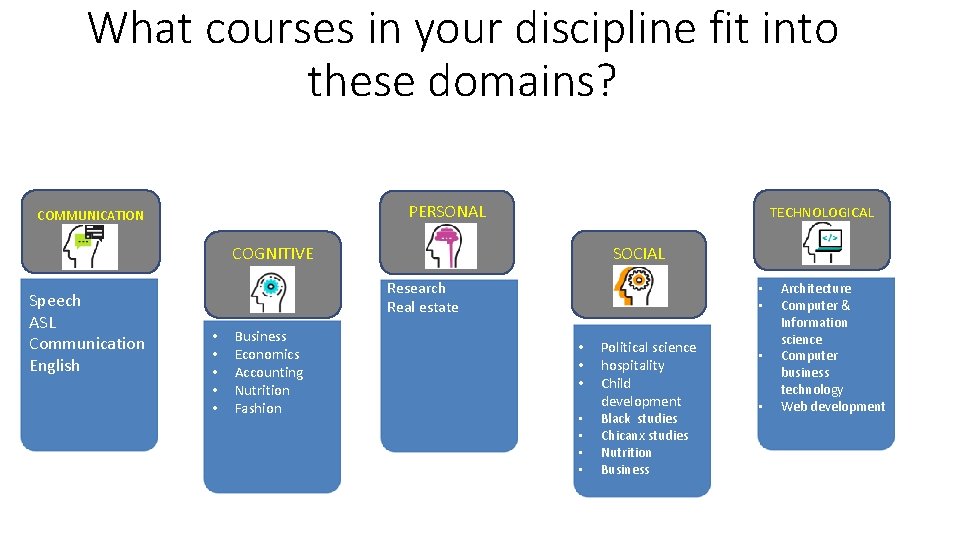
What courses in your discipline fit into these domains? PERSONAL COMMUNICATION TECHNOLOGICAL SOCIAL COGNITIVE Speech ASL Communication English Research Real estate • • • Business Economics Accounting Nutrition Fashion • • • Political science hospitality Child development Black studies Chicanx studies Nutrition Business • • Architecture Computer & Information science Computer business technology Web development
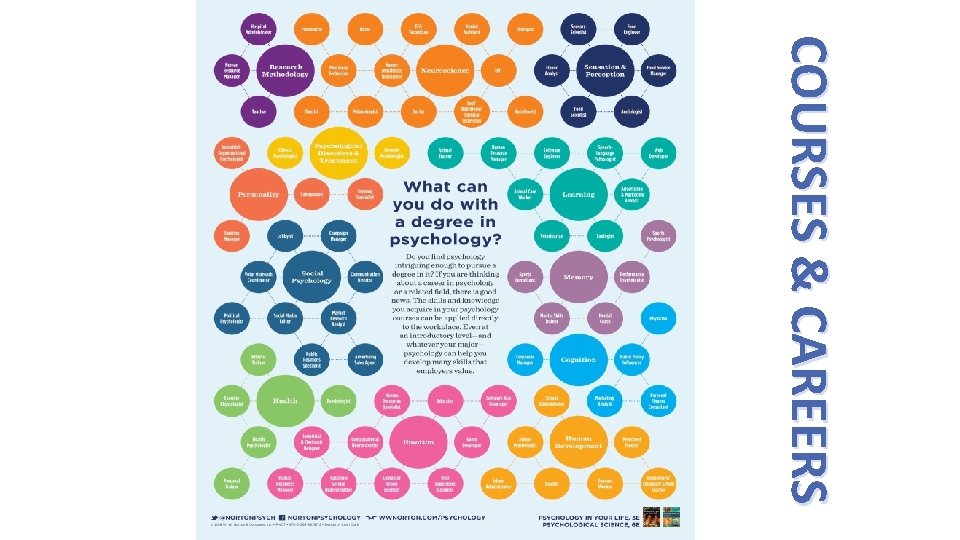
COURSES & CAREERS
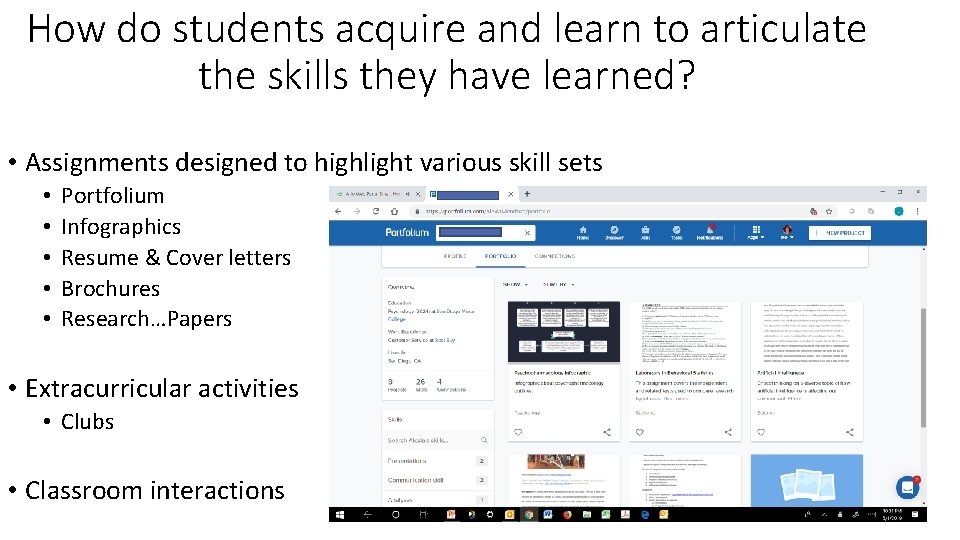
How do students acquire and learn to articulate the skills they have learned? • Assignments designed to highlight various skill sets • • • Portfolium Infographics Resume & Cover letters Brochures Research…Papers • Extracurricular activities • Clubs • Classroom interactions
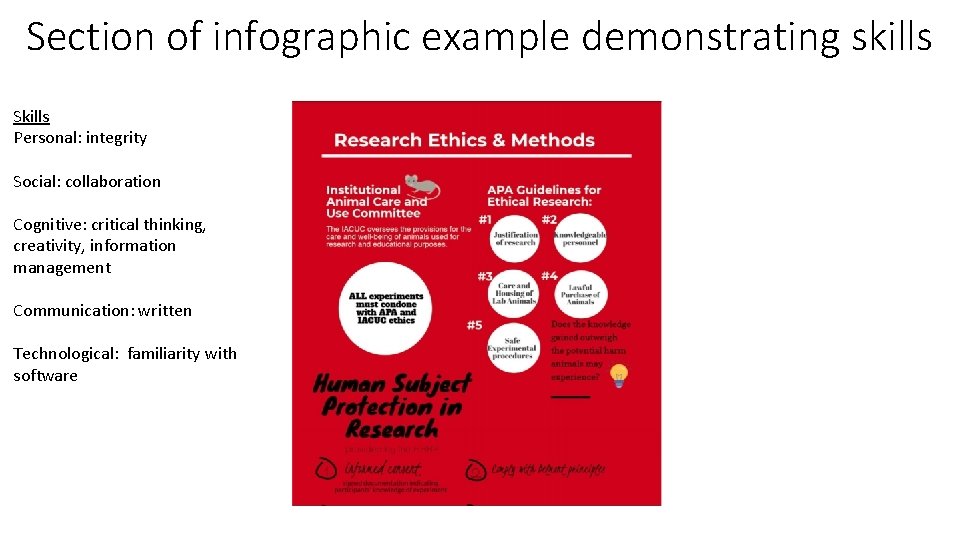
Section of infographic example demonstrating skills Skills Personal: integrity Social: collaboration Cognitive: critical thinking, creativity, information management Communication: written Technological: familiarity with software
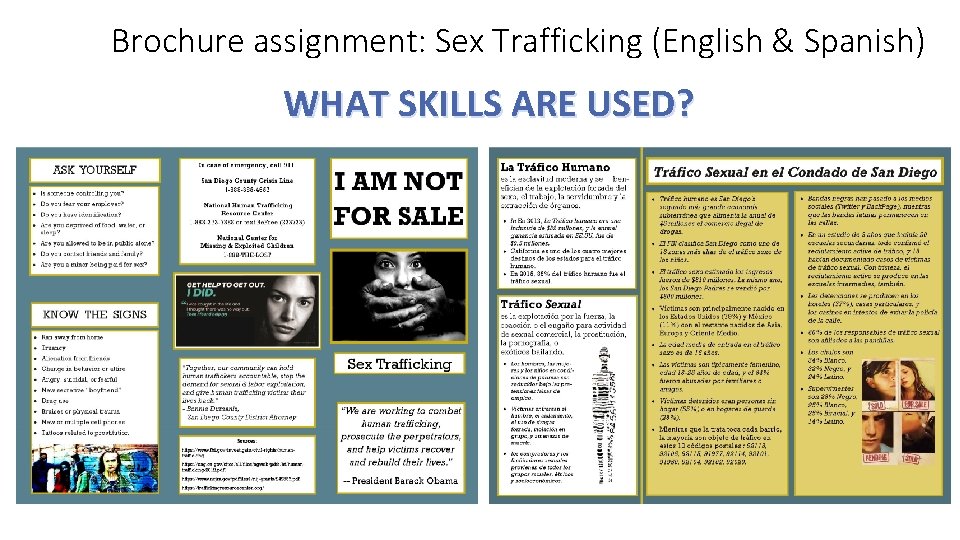
Brochure assignment: Sex Trafficking (English & Spanish) WHAT SKILLS ARE USED?
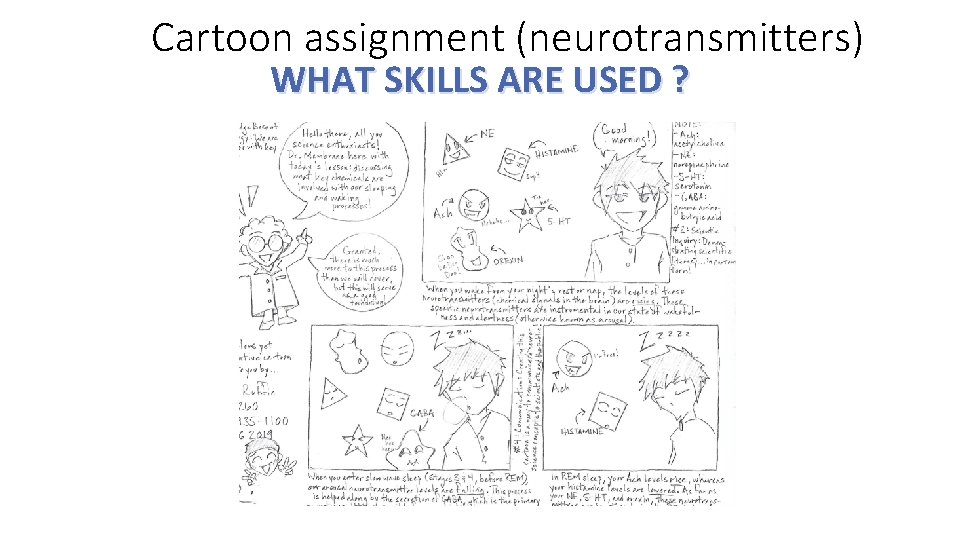
Cartoon assignment (neurotransmitters) WHAT SKILLS ARE USED ?
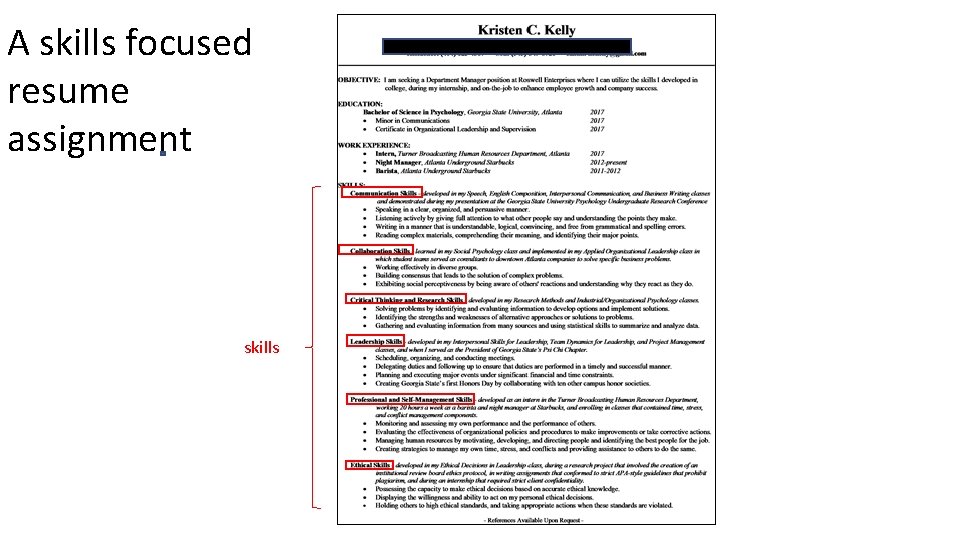
A skills focused resume assignment skills
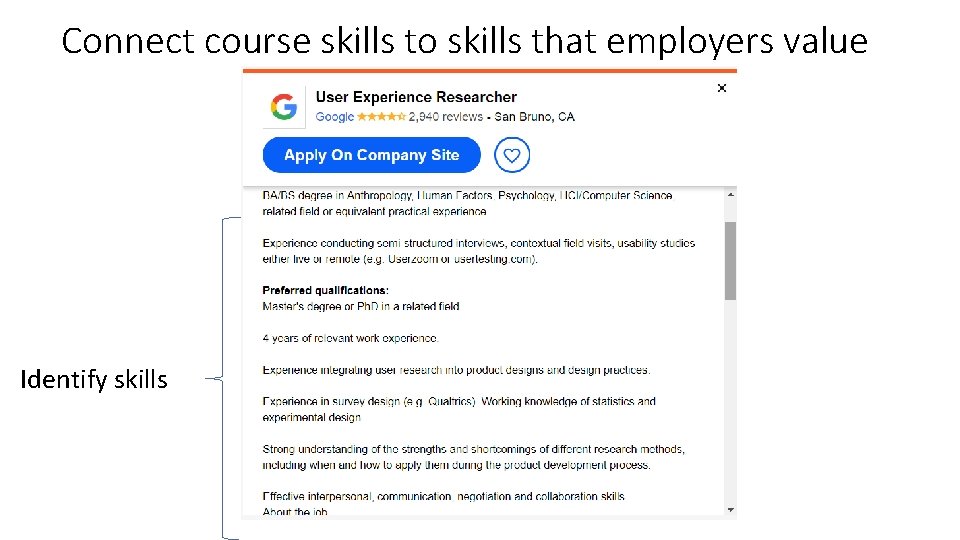
Connect course skills to skills that employers value Identify skills
You’re probably already teaching some very valuable skills Tips: Know the skills developed from your discipline Gain familiarity with the skills that employers value from your discipline. Help increase awareness of connecting skills from your courses to workforce skills
Now that you know these skills are valuable. . .
Let’s highlight skills they will acquire, broaden and strengthen STAY TUNED
3. INCLUDING SKILLS INTO YOUR SYLLABUS
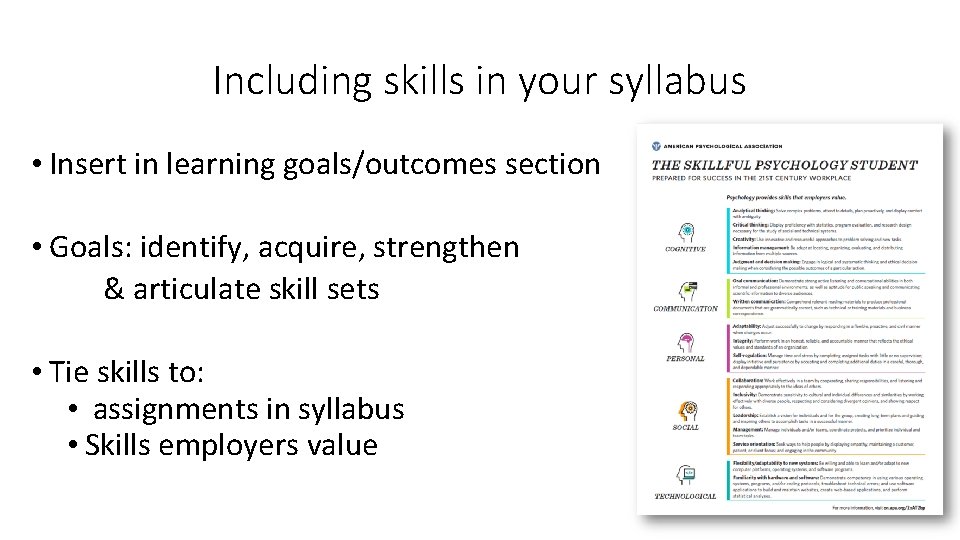
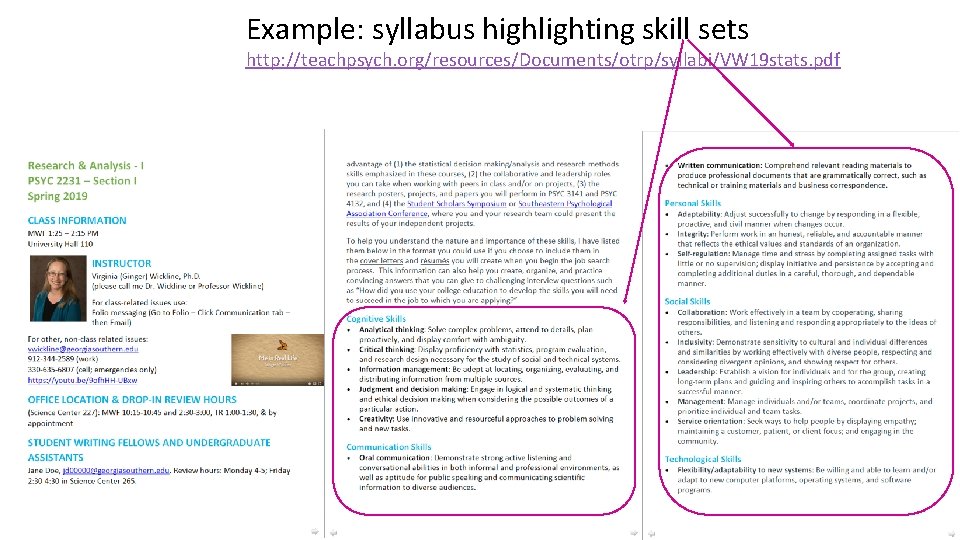
Including skills in your syllabus • Insert in learning goals/outcomes section • Goals: identify, acquire, strengthen & articulate skill sets • Tie skills to: • assignments in syllabus • Skills employers value
Example: syllabus highlighting skill sets http: //teachpsych. org/resources/Documents/otrp/syllabi/VW 19 stats. pdf
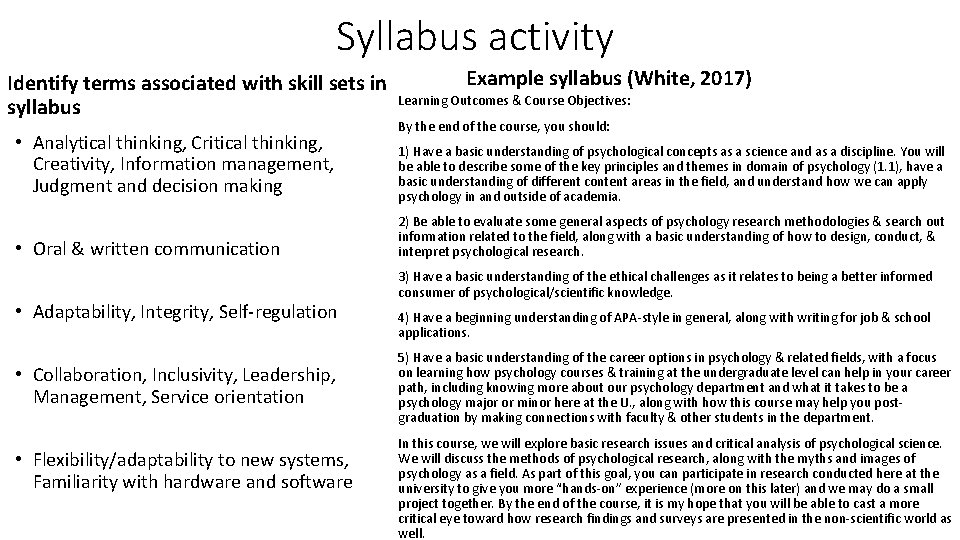
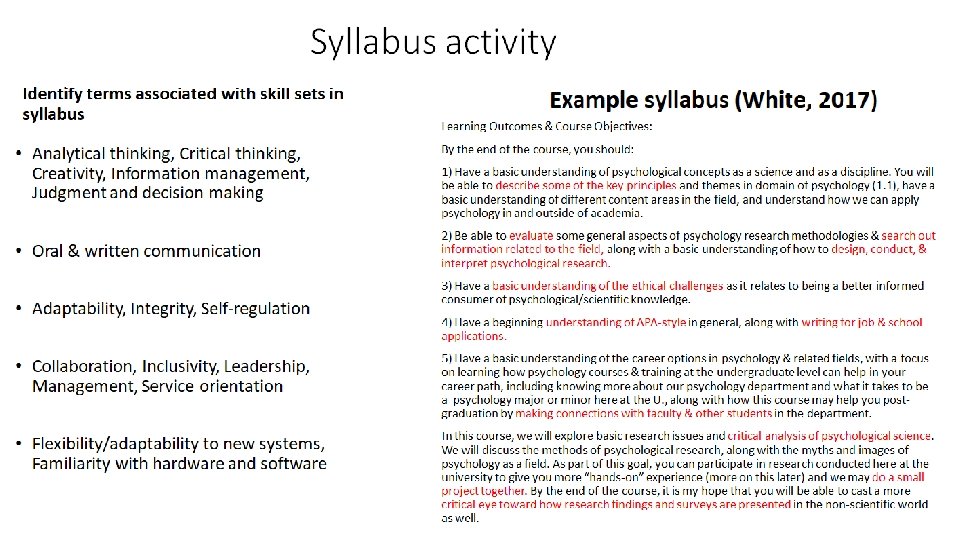
Syllabus activity Example syllabus (White, 2017) Identify terms associated with skill sets in Learning Outcomes & Course Objectives: syllabus • Analytical thinking, Critical thinking, Creativity, Information management, Judgment and decision making • Oral & written communication • Adaptability, Integrity, Self-regulation • Collaboration, Inclusivity, Leadership, Management, Service orientation • Flexibility/adaptability to new systems, Familiarity with hardware and software By the end of the course, you should: 1) Have a basic understanding of psychological concepts as a science and as a discipline. You will be able to describe some of the key principles and themes in domain of psychology (1. 1), have a basic understanding of different content areas in the field, and understand how we can apply psychology in and outside of academia. 2) Be able to evaluate some general aspects of psychology research methodologies & search out information related to the field, along with a basic understanding of how to design, conduct, & interpret psychological research. 3) Have a basic understanding of the ethical challenges as it relates to being a better informed consumer of psychological/scientific knowledge. 4) Have a beginning understanding of APA-style in general, along with writing for job & school applications. 5) Have a basic understanding of the career options in psychology & related fields, with a focus on learning how psychology courses & training at the undergraduate level can help in your career path, including knowing more about our psychology department and what it takes to be a psychology major or minor here at the U. , along with how this course may help you post- graduation by making connections with faculty & other students in the department. In this course, we will explore basic research issues and critical analysis of psychological science. We will discuss the methods of psychological research, along with the myths and images of psychology as a field. As part of this goal, you can participate in research conducted here at the university to give you more “hands-on” experience (more on this later) and we may do a small project together. By the end of the course, it is my hope that you will be able to cast a more critical eye toward how research findings and surveys are presented in the non-scientific world as well.
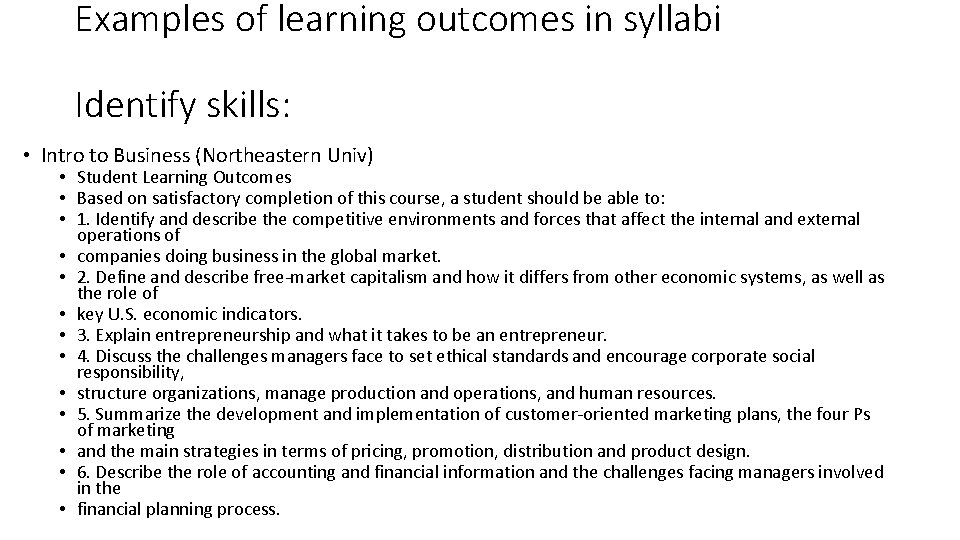
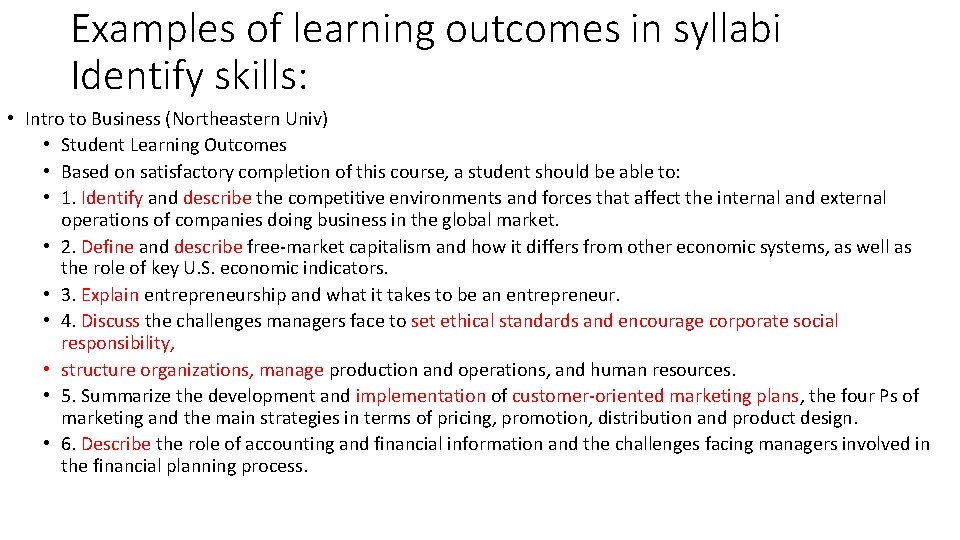
Examples of learning outcomes in syllabi Identify skills: • Intro to Business (Northeastern Univ) • Student Learning Outcomes • Based on satisfactory completion of this course, a student should be able to: • 1. Identify and describe the competitive environments and forces that affect the internal and external operations of • companies doing business in the global market. • 2. Define and describe free-market capitalism and how it differs from other economic systems, as well as the role of • key U. S. economic indicators. • 3. Explain entrepreneurship and what it takes to be an entrepreneur. • 4. Discuss the challenges managers face to set ethical standards and encourage corporate social responsibility, • structure organizations, manage production and operations, and human resources. • 5. Summarize the development and implementation of customer-oriented marketing plans, the four Ps of marketing • and the main strategies in terms of pricing, promotion, distribution and product design. • 6. Describe the role of accounting and financial information and the challenges facing managers involved in the • financial planning process.
Examples of learning outcomes in syllabi Identify skills: • Intro to Business (Northeastern Univ) • Student Learning Outcomes • Based on satisfactory completion of this course, a student should be able to: • 1. Identify and describe the competitive environments and forces that affect the internal and external operations of companies doing business in the global market. • 2. Define and describe free-market capitalism and how it differs from other economic systems, as well as the role of key U. S. economic indicators. • 3. Explain entrepreneurship and what it takes to be an entrepreneur. • 4. Discuss the challenges managers face to set ethical standards and encourage corporate social responsibility, • structure organizations, manage production and operations, and human resources. • 5. Summarize the development and implementation of customer-oriented marketing plans, the four Ps of marketing and the main strategies in terms of pricing, promotion, distribution and product design. • 6. Describe the role of accounting and financial information and the challenges facing managers involved in the financial planning process.
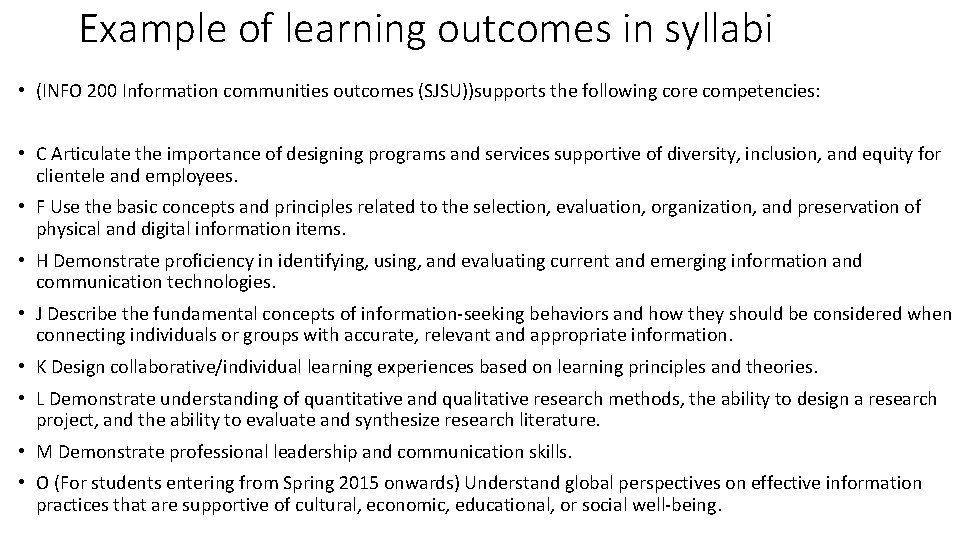
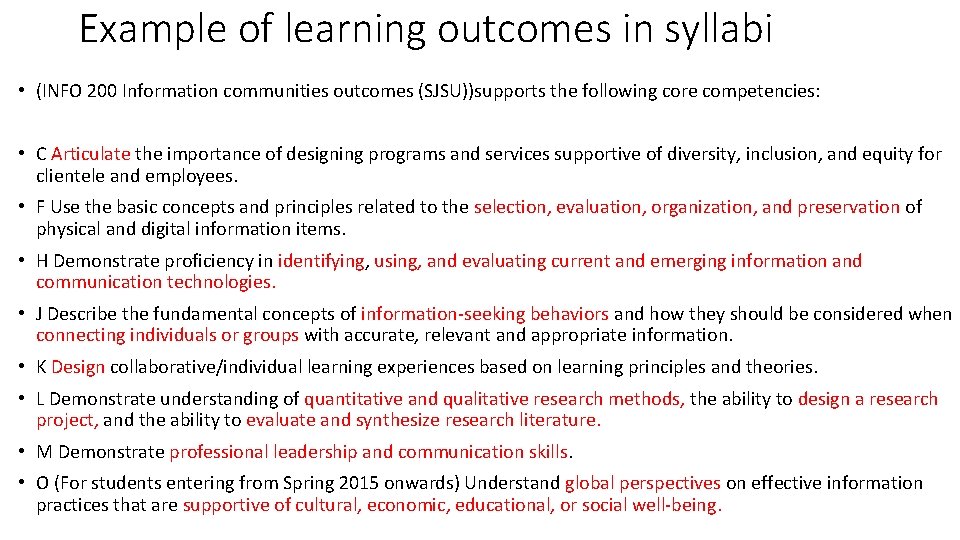
Example of learning outcomes in syllabi • (INFO 200 Information communities outcomes (SJSU))supports the following core competencies: • C Articulate the importance of designing programs and services supportive of diversity, inclusion, and equity for clientele and employees. • F Use the basic concepts and principles related to the selection, evaluation, organization, and preservation of physical and digital information items. • H Demonstrate proficiency in identifying, using, and evaluating current and emerging information and communication technologies. • J Describe the fundamental concepts of information-seeking behaviors and how they should be considered when connecting individuals or groups with accurate, relevant and appropriate information. • K Design collaborative/individual learning experiences based on learning principles and theories. • L Demonstrate understanding of quantitative and qualitative research methods, the ability to design a research project, and the ability to evaluate and synthesize research literature. • M Demonstrate professional leadership and communication skills. • O (For students entering from Spring 2015 onwards) Understand global perspectives on effective information practices that are supportive of cultural, economic, educational, or social well-being.
Example of learning outcomes in syllabi • (INFO 200 Information communities outcomes (SJSU))supports the following core competencies: • C Articulate the importance of designing programs and services supportive of diversity, inclusion, and equity for clientele and employees. • F Use the basic concepts and principles related to the selection, evaluation, organization, and preservation of physical and digital information items. • H Demonstrate proficiency in identifying, using, and evaluating current and emerging information and communication technologies. • J Describe the fundamental concepts of information-seeking behaviors and how they should be considered when connecting individuals or groups with accurate, relevant and appropriate information. • K Design collaborative/individual learning experiences based on learning principles and theories. • L Demonstrate understanding of quantitative and qualitative research methods, the ability to design a research project, and the ability to evaluate and synthesize research literature. • M Demonstrate professional leadership and communication skills. • O (For students entering from Spring 2015 onwards) Understand global perspectives on effective information practices that are supportive of cultural, economic, educational, or social well-being.
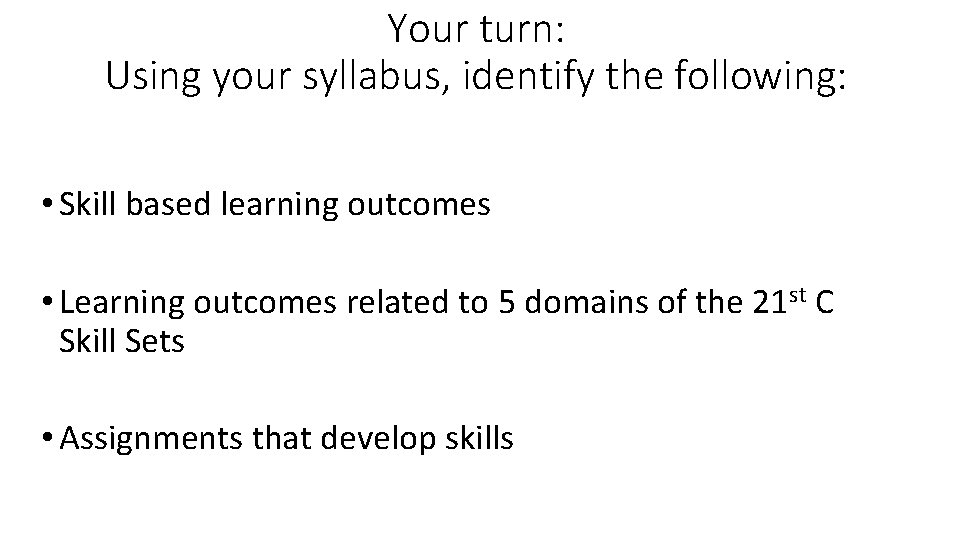
Your turn: Using your syllabus, identify the following: • Skill based learning outcomes • Learning outcomes related to 5 domains of the 21 st C Skill Sets • Assignments that develop skills
• What students should know about their skill development
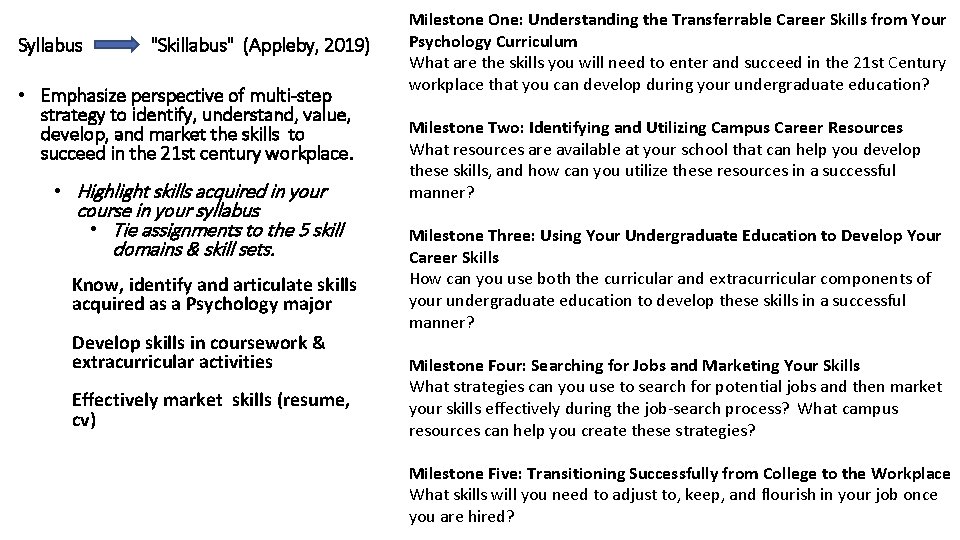
Syllabus "Skillabus" (Appleby, 2019) • Emphasize perspective of multi-step strategy to identify, understand, value, develop, and market the skills to succeed in the 21 st century workplace. • Highlight skills acquired in your course in your syllabus • Tie assignments to the 5 skill domains & skill sets. Know, identify and articulate skills acquired as a Psychology major Develop skills in coursework & extracurricular activities Effectively market skills (resume, cv) Milestone One: Understanding the Transferrable Career Skills from Your Psychology Curriculum What are the skills you will need to enter and succeed in the 21 st Century workplace that you can develop during your undergraduate education? Milestone Two: Identifying and Utilizing Campus Career Resources What resources are available at your school that can help you develop these skills, and how can you utilize these resources in a successful manner? Milestone Three: Using Your Undergraduate Education to Develop Your Career Skills How can you use both the curricular and extracurricular components of your undergraduate education to develop these skills in a successful manner? Milestone Four: Searching for Jobs and Marketing Your Skills What strategies can you use to search for potential jobs and then market your skills effectively during the job-search process? What campus resources can help you create these strategies? Milestone Five: Transitioning Successfully from College to the Workplace What skills will you need to adjust to, keep, and flourish in your job once you are hired?
Project syllabus • National discipline based resource for exemplary syllabi in Psychological Science. • Project Syllabus Best Practices of course objectives: • http: //teachpsych. org/resources/Documents/otr p/syllabi/bpcourseobj. pdf
How can you strengthen the skill sets? • Have students reflect on skills used in the assignments • Include them during lecture • Pose question: “What skills do these issues relate to? ” • Issues discussed
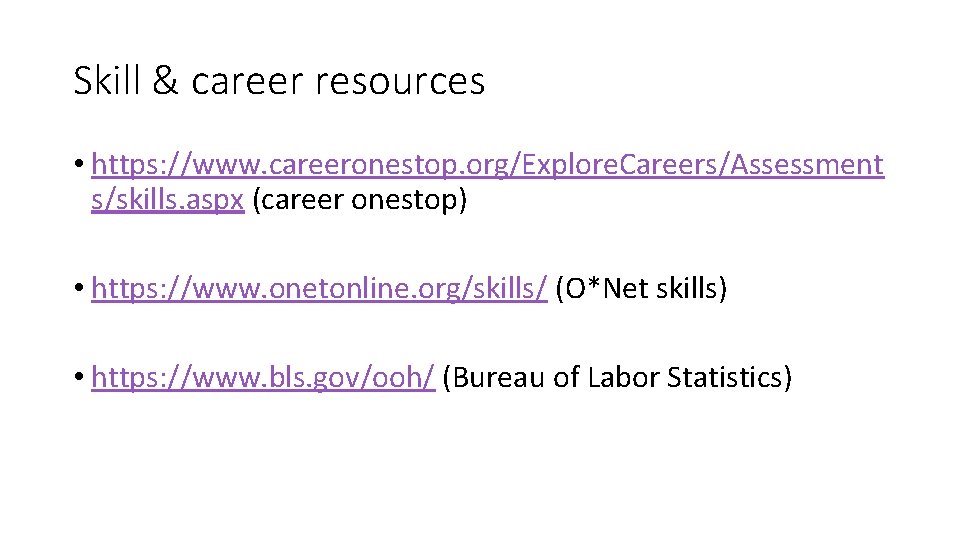
Skill & career resources • https: //www. careeronestop. org/Explore. Careers/Assessment s/skills. aspx (career onestop) • https: //www. onetonline. org/skills/ (O*Net skills) • https: //www. bls. gov/ooh/ (Bureau of Labor Statistics)
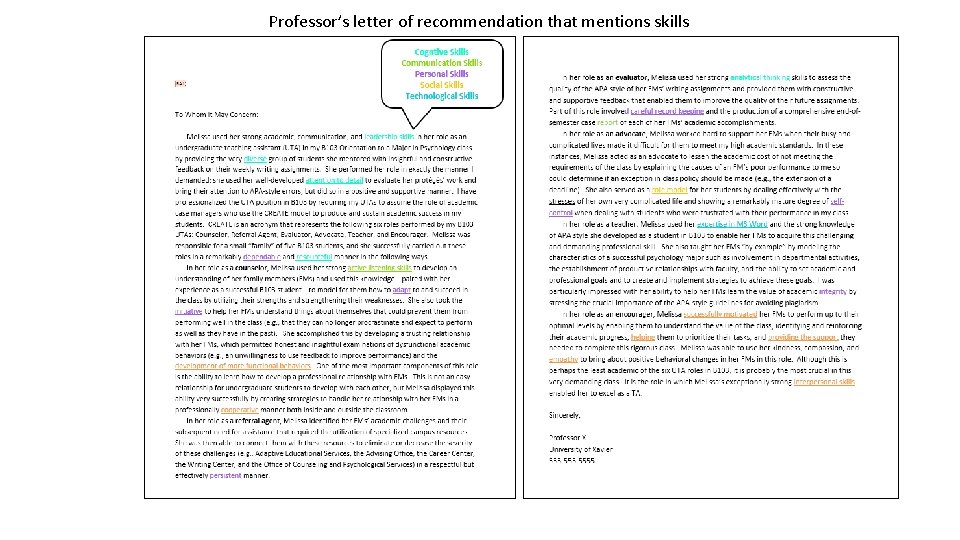
Professor’s letter of recommendation that mentions skills
You’re off to a great start! • What you already have: • Syllabus • Assignments • Lectures • In-class activities
Summary • Increased awareness of skills from your discipline and courses • Incorporating skills into syllabus and course material • Increased awareness of what skills you teach to prepare students for workforce • Increase articulation of skills that employers value in • Syllabus • Assignments & activities
ujuzi Skills nā mākau abilità ﻣﻬﺎﺭﺍﺕ 技能 Thank you! HABILDADES スキル δεξιότητες Kompetenzen