Society Economy Under The Old Regime 18 th
- Slides: 77
Society & Economy Under The Old Regime 18 th Century AP Euro Chapter 15
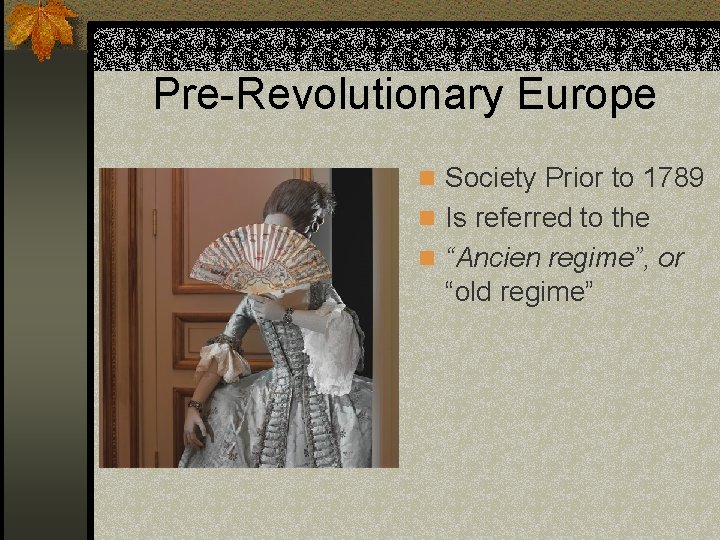
Pre-Revolutionary Europe n Society Prior to 1789 n Is referred to the n “Ancien regime”, or “old regime”
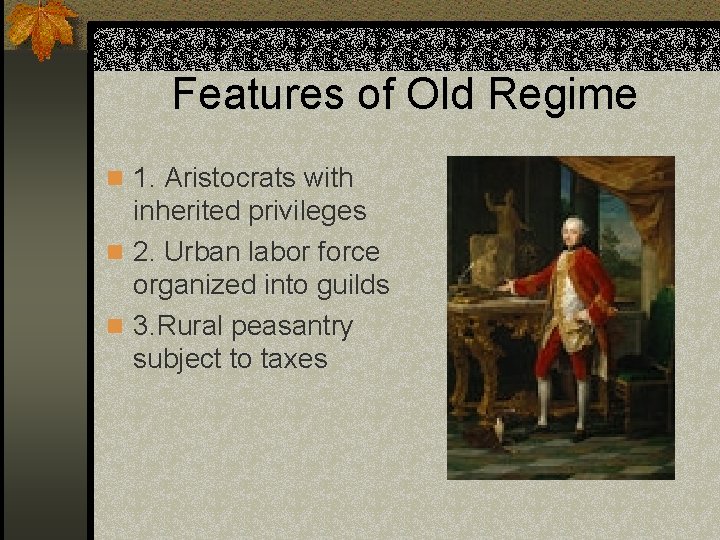
Features of Old Regime n 1. Aristocrats with inherited privileges n 2. Urban labor force organized into guilds n 3. Rural peasantry subject to taxes
Visible Social Hierarchy n 1. Laws dictated what different classes could wear n 2. Rights depended on social class n 3. Not all had to pay taxes n 4. Certain activities restricted to upper class
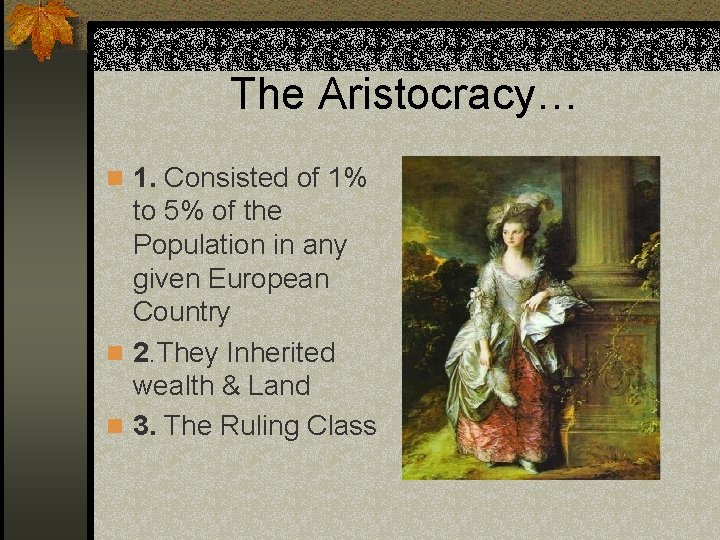
The Aristocracy… n 1. Consisted of 1% to 5% of the Population in any given European Country n 2. They Inherited wealth & Land n 3. The Ruling Class
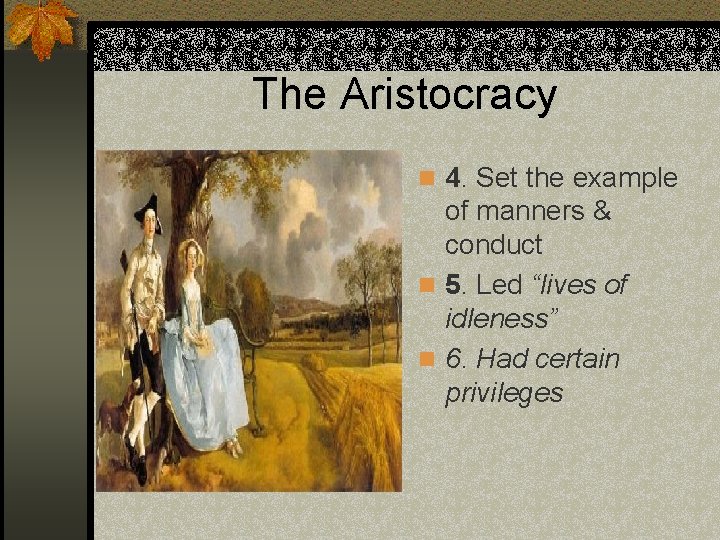
The Aristocracy n 4. Set the example of manners & conduct n 5. Led “lives of idleness” n 6. Had certain privileges
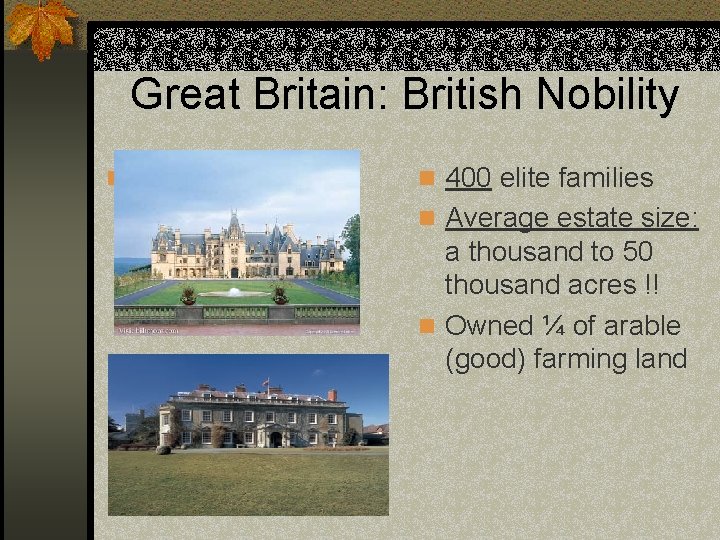
Great Britain: British Nobility n n 400 elite families n Average estate size: a thousand to 50 thousand acres !! n Owned ¼ of arable (good) farming land
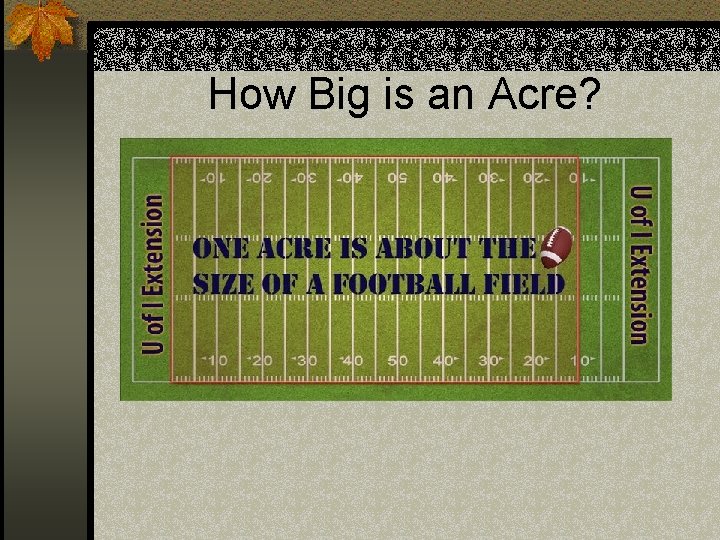
How Big is an Acre?
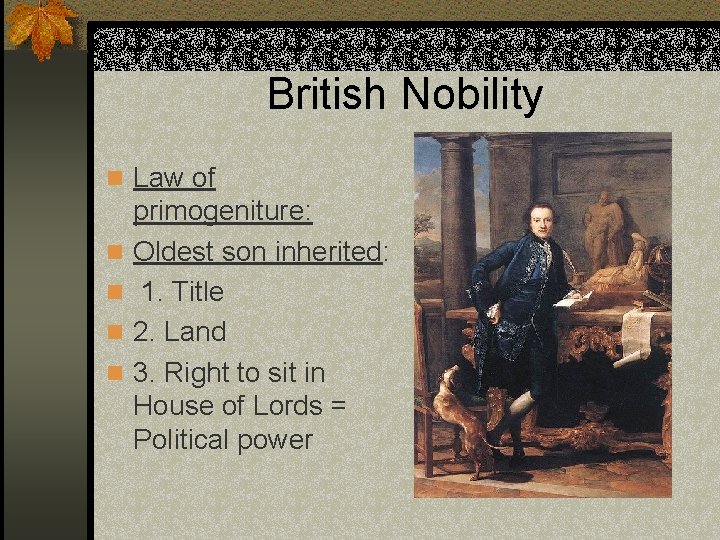
British Nobility n Law of n n primogeniture: Oldest son inherited: 1. Title 2. Land 3. Right to sit in House of Lords = Political power
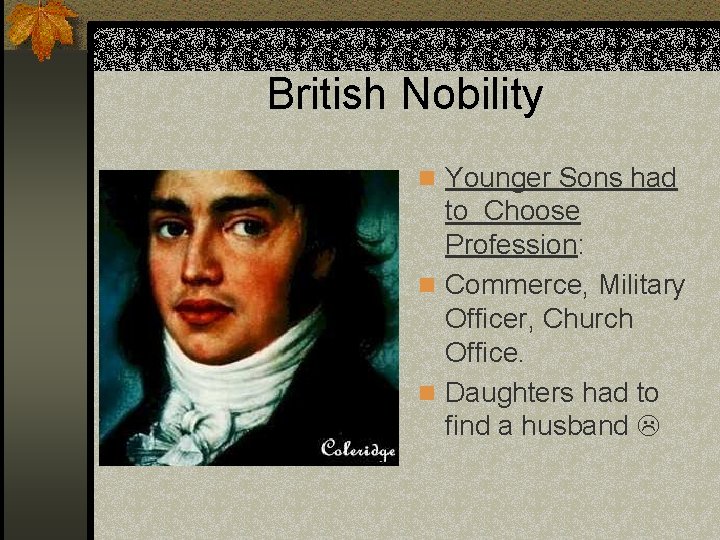
British Nobility n Younger Sons had to Choose Profession: n Commerce, Military Officer, Church Office. n Daughters had to find a husband
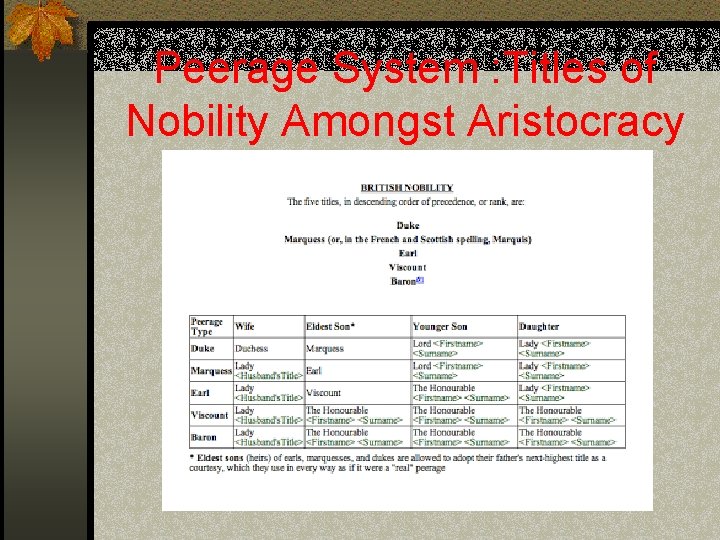
Peerage System : Titles of Nobility Amongst Aristocracy n The peerage a collective term for people who possessed certain titles of honor. n The Titles in The Peerage ( In descending order): n Duke or Duchess n Marquess or Marchioness n Earl or Countess n Viscount or Viscountess n Baron or Lady
Peerage System : Titles of Nobility Amongst Aristocracy
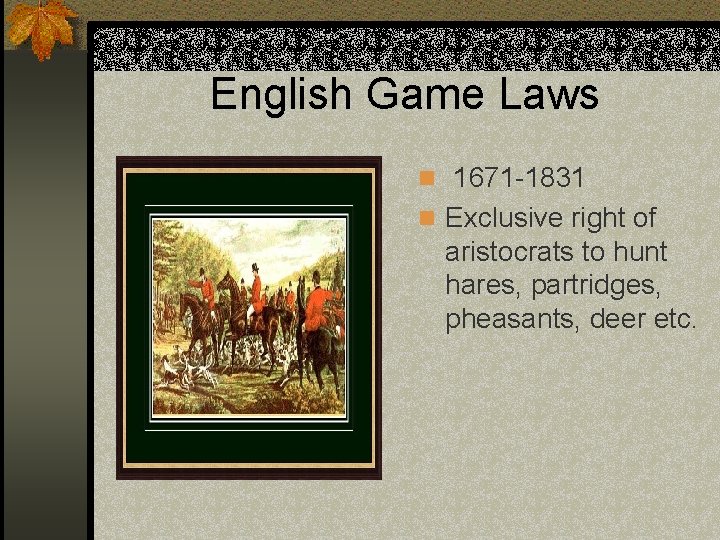
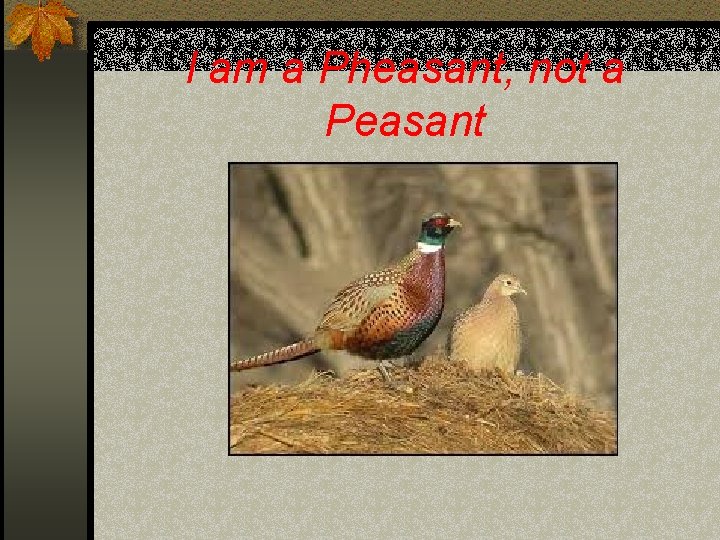
English Game Laws n 1671 -1831 n Exclusive right of aristocrats to hunt hares, partridges, pheasants, deer etc.
I am a Pheasant, not a Peasant
Modern Day Male Heirs to the Aristocracy in Great Britain n https: //www. youtube. com/watch? v=c. IAp FA 4 Oi 80 n Sense of tradition and gender roles…
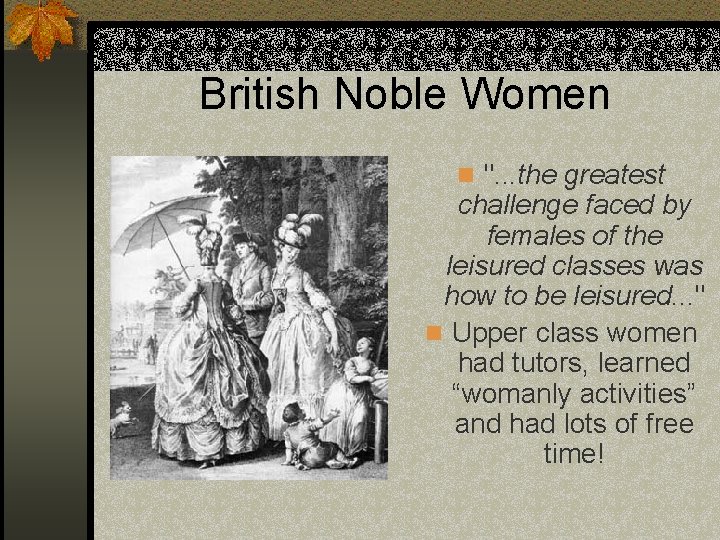
British Noble Women n ". . . the greatest challenge faced by females of the leisured classes was how to be leisured. . . " n Upper class women had tutors, learned “womanly activities” and had lots of free time!
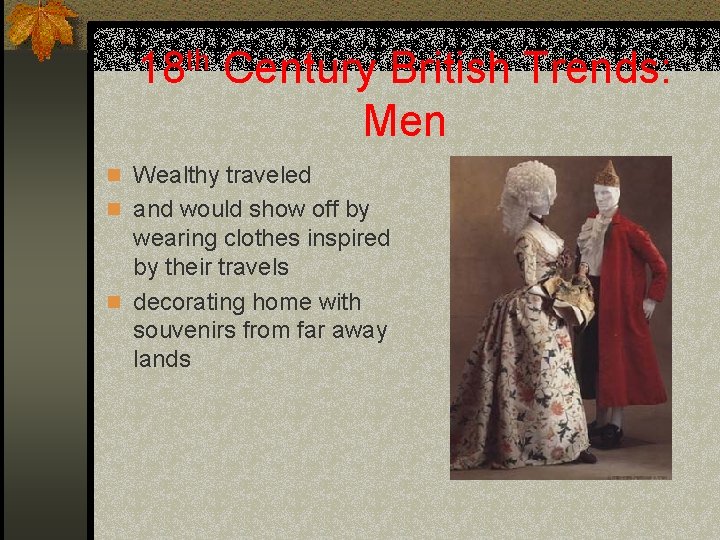
18 th Century British Trends: Men n Wealthy traveled n and would show off by wearing clothes inspired by their travels n decorating home with souvenirs from far away lands
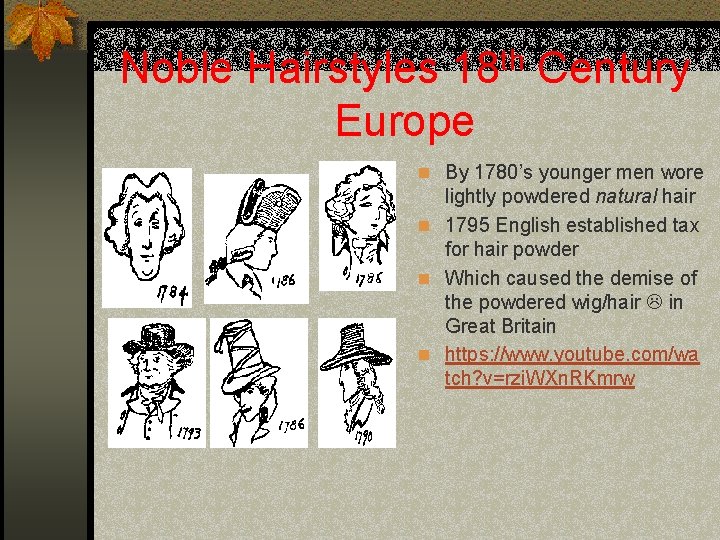
Noble Hairstyles 18 th Century Europe n By 1780’s younger men wore lightly powdered natural hair n 1795 English established tax for hair powder n Which caused the demise of the powdered wig/hair in Great Britain n https: //www. youtube. com/wa tch? v=rzi. WXn. RKmrw
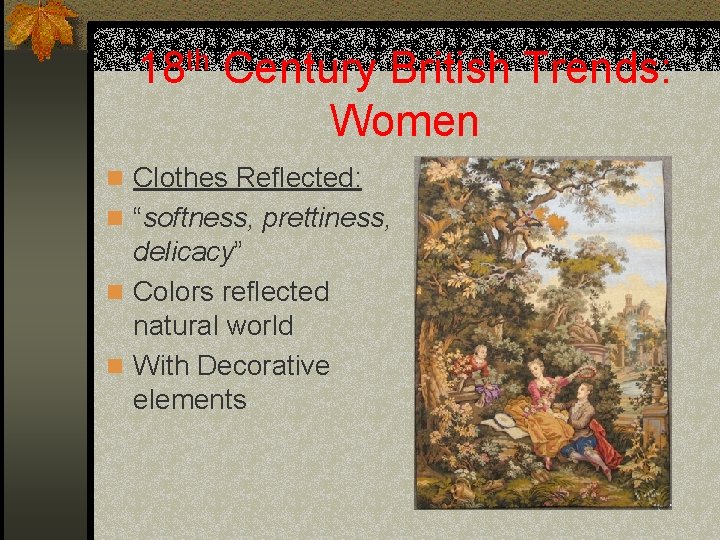
18 th Century British Trends: Women n Clothes Reflected: n “softness, prettiness, delicacy” n Colors reflected natural world n With Decorative elements
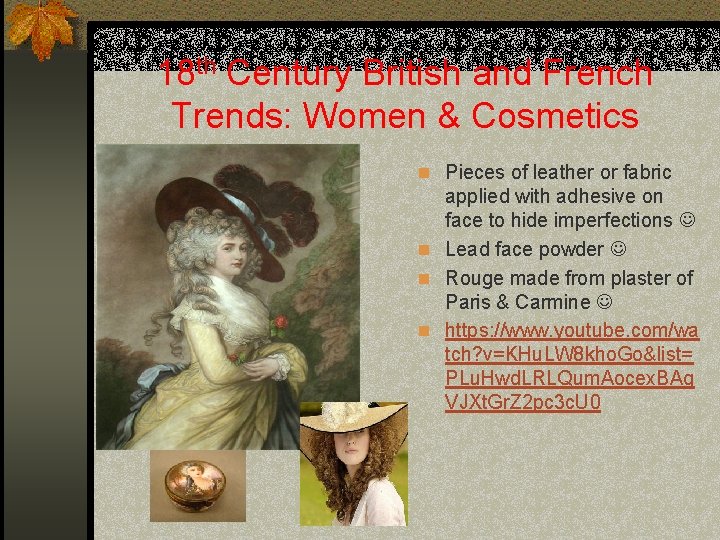
18 th Century British and French Trends: Women & Cosmetics n Pieces of leather or fabric applied with adhesive on face to hide imperfections n Lead face powder n Rouge made from plaster of Paris & Carmine n https: //www. youtube. com/wa tch? v=KHu. LW 8 kho. Go&list= PLu. Hwd. LRLQum. Aocex. BAq VJXt. Gr. Z 2 pc 3 c. U 0
Aristocrats In France n Different From England n Nobility acquired through: n 1. Birth- inherited n 2. office - awarded n 3. “letters”- King’s order
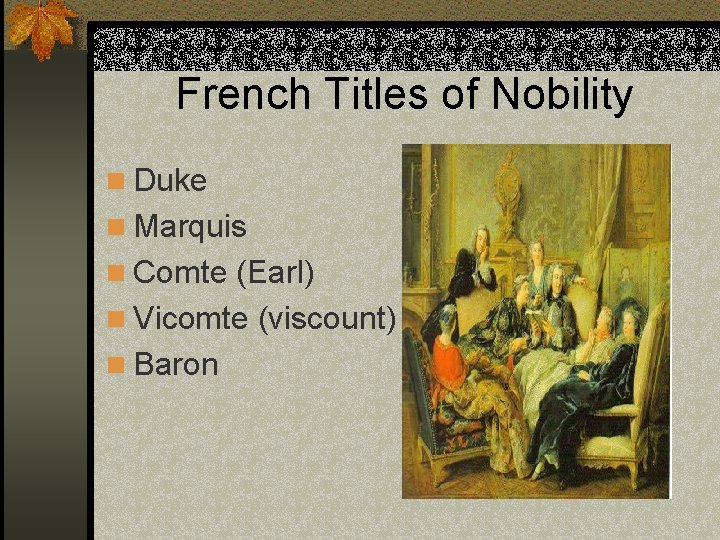
French Titles of Nobility n Duke n Marquis n Comte (Earl) n Vicomte (viscount) n Baron
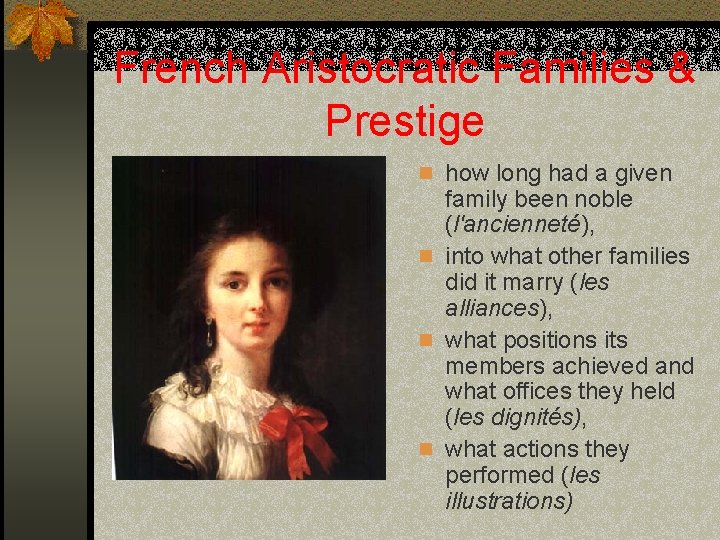
French Aristocratic Families & Prestige n how long had a given family been noble (l'ancienneté), n into what other families did it marry (les alliances), n what positions its members achieved and what offices they held (les dignités), n what actions they performed (les illustrations)
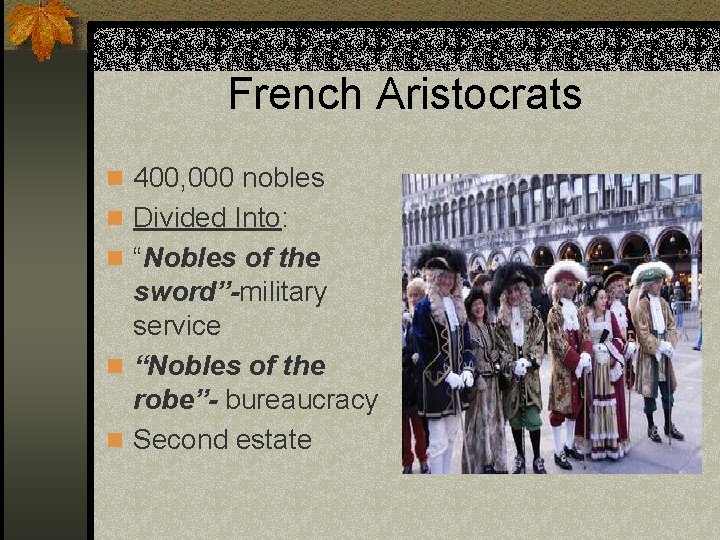
French Aristocrats n 400, 000 nobles n Divided Into: n “Nobles of the sword”-military service n “Nobles of the robe”- bureaucracy n Second estate
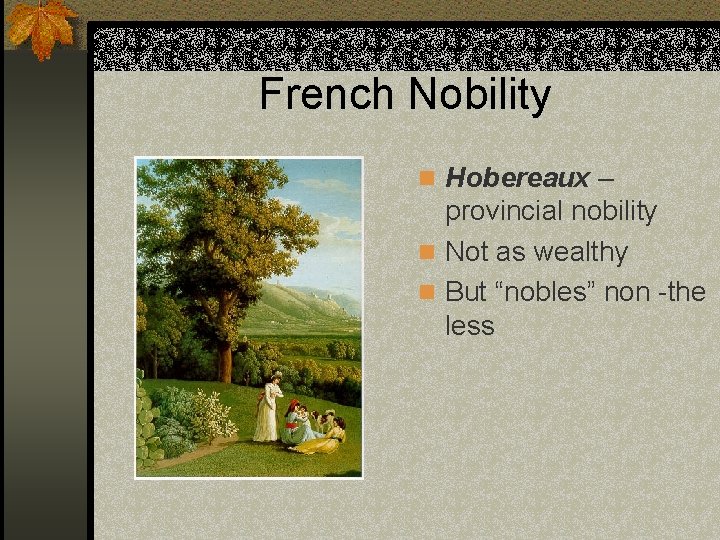
French Nobility n Hobereaux – provincial nobility n Not as wealthy n But “nobles” non -the less
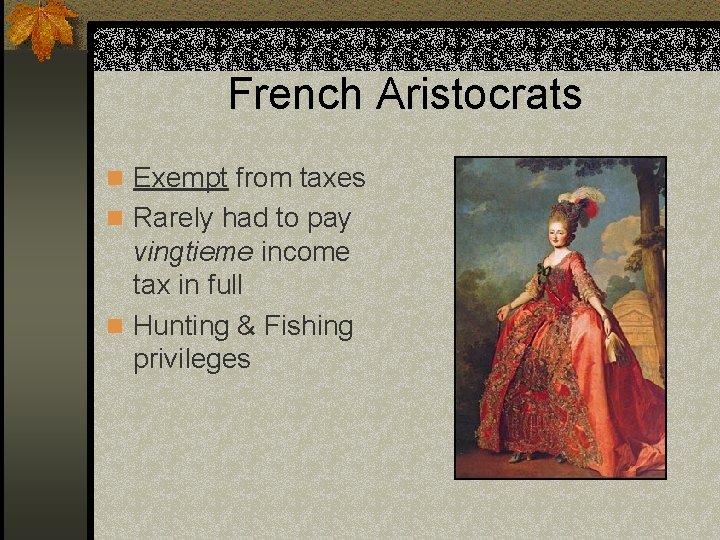
French Aristocrats n Exempt from taxes n Rarely had to pay vingtieme income tax in full n Hunting & Fishing privileges
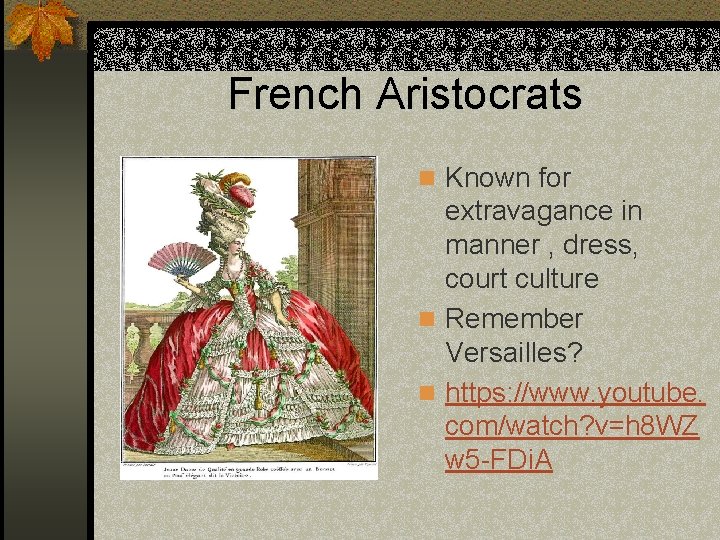
French Aristocrats n Known for extravagance in manner , dress, court culture n Remember Versailles? n https: //www. youtube. com/watch? v=h 8 WZ w 5 -FDi. A
Peasants & Serfs Rural Reality
Key point! n Most Europeans derived their livelihood from agriculture n oriented their lives around the seasons, the village, the manor.
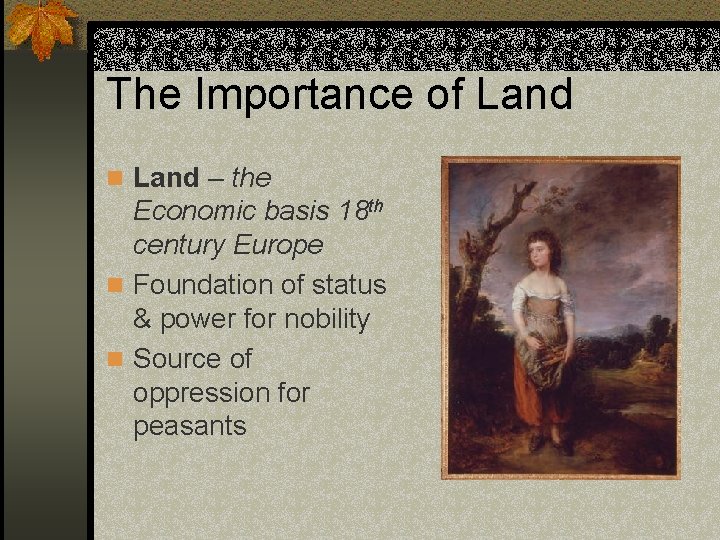
The Importance of Land n Land – the Economic basis 18 th century Europe n Foundation of status & power for nobility n Source of oppression for peasants
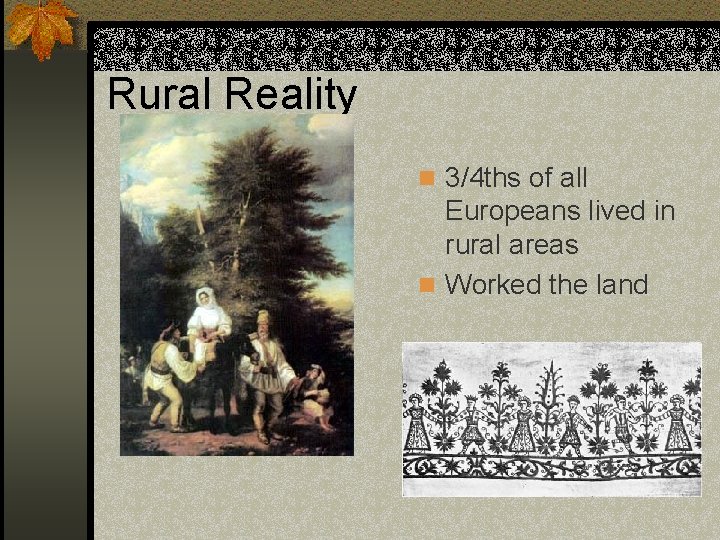
Rural Reality n 3/4 ths of all Europeans lived in rural areas n Worked the land
Peasants & Serfs: What’s the Difference? n Peasants – are “free” tenants (Western Europe) n Serfs- are not free. More like slaves (Eastern Europe)
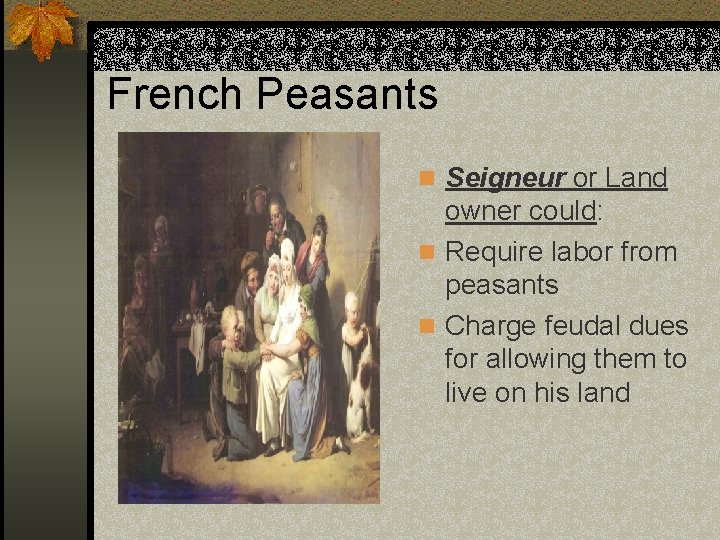
French Peasants n Seigneur or Land owner could: n Require labor from peasants n Charge feudal dues for allowing them to live on his land
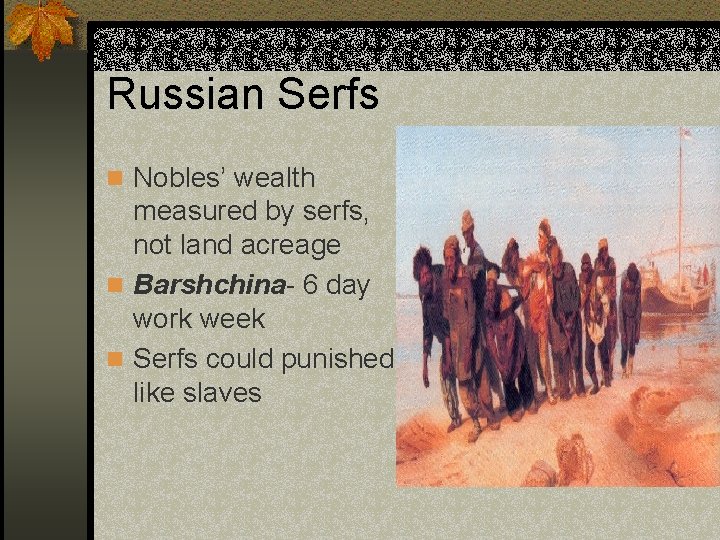
Russian Serfs n Nobles’ wealth measured by serfs, not land acreage n Barshchina- 6 day work week n Serfs could punished like slaves
Russian Serf Rebellions n Over 50 rebellions in 1762 n Pugachev’s Rebellion in Southern Russia (1773 -1775 ) n Emelyan Pugachev Promised Serfs: n land of their own n Freedom from landlord n Russian govt. crushed the rebellion
The Family Economy & The Household Rural Living Pre-Industrial / Pre- Revolution
Key Point! n The family remained the primary social and economic institution of early modern Europe and took several forms, including the nuclear family.
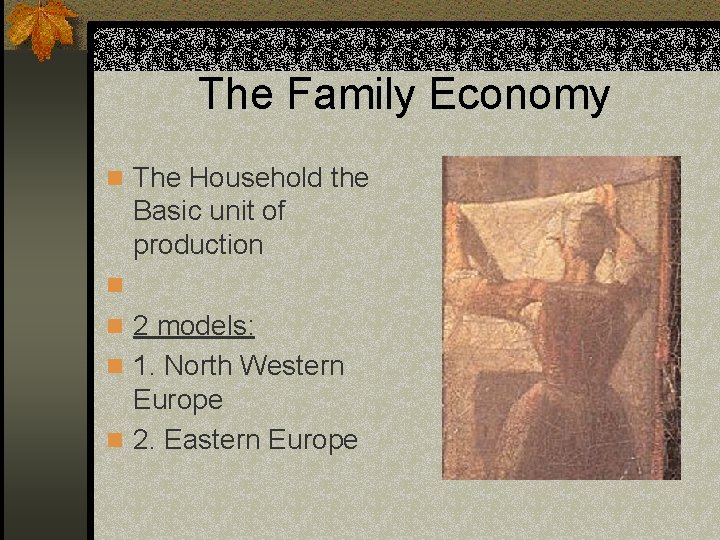
The Family Economy n The Household the n n Basic unit of production 2 models: 1. North Western Europe 2. Eastern Europe
1. North Western Household consisted of the Nuclear Family: n Married couple, children , maybe a servant (younger person, a social equal, works until marriage). n Children lived with parents until teen years
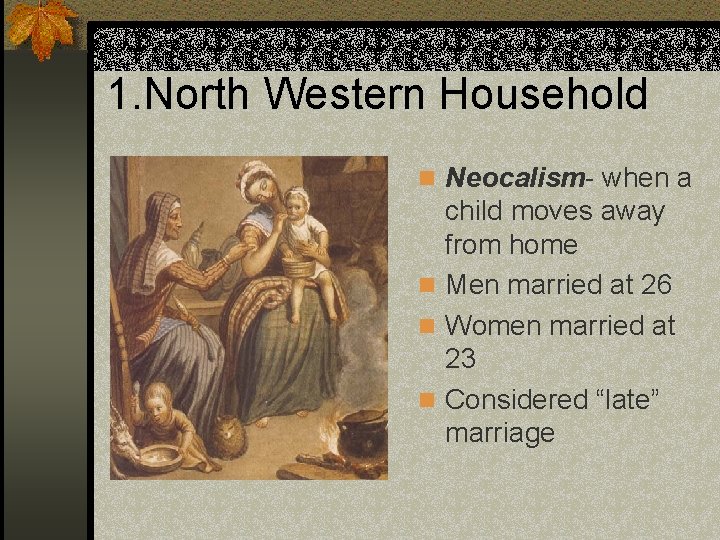
1. North Western Household n Neocalism- when a child moves away from home n Men married at 26 n Women married at 23 n Considered “late” marriage
2. Eastern Europe Household n Household consisted of Extended Family: n Married couple, children, grandparents etc. n Larger households n Younger Parents n Idea is to “add” to household, not leave
The. Family Economy n 1. Impossible for ordinary people to support themselves independently n 2. Everyone in household worked n 3. Goods produced for benefit of household n 4. “self contained” unit n 5. Men and women engaged in separate but complimentary tasks
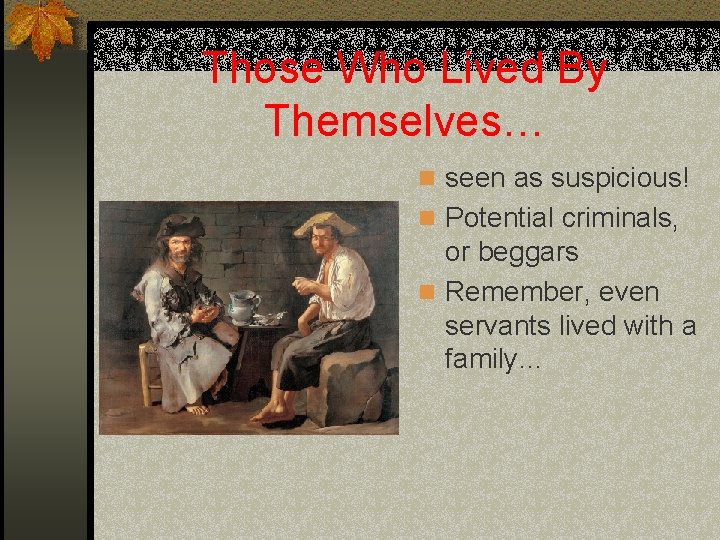
Those Who Lived By Themselves… n seen as suspicious! n Potential criminals, or beggars n Remember, even servants lived with a family…
Women and the Family Economy n Marriage regardless of class, an economic necessity! n Number 1 concern: maintaining house n Number 2 concern : bearing and rearing children
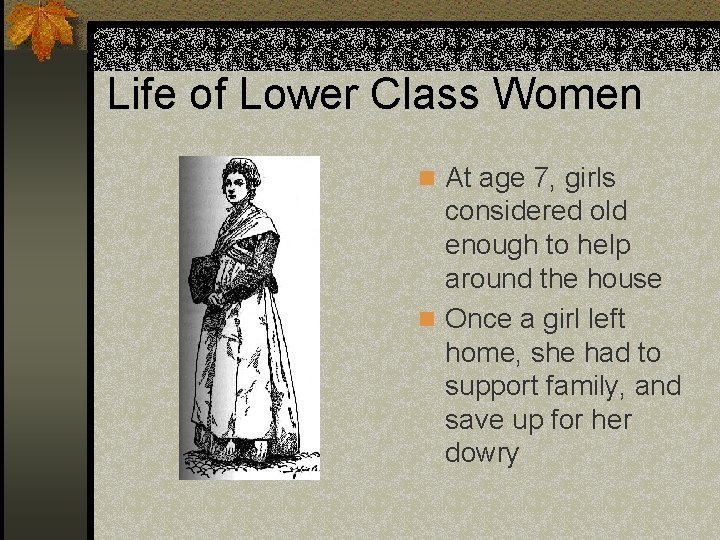
Life of Lower Class Women n At age 7, girls considered old enough to help around the house n Once a girl left home, she had to support family, and save up for her dowry
Women & Children n High mortality rates for children – disease n Unsanitary conditions n The desperately poor sometimes could not afford babies
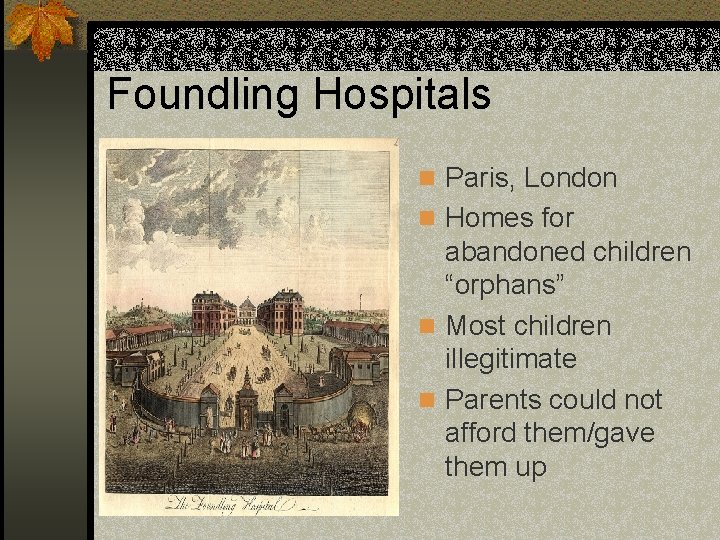
Foundling Hospitals n Paris, London n Homes for abandoned children “orphans” n Most children illegitimate n Parents could not afford them/gave them up
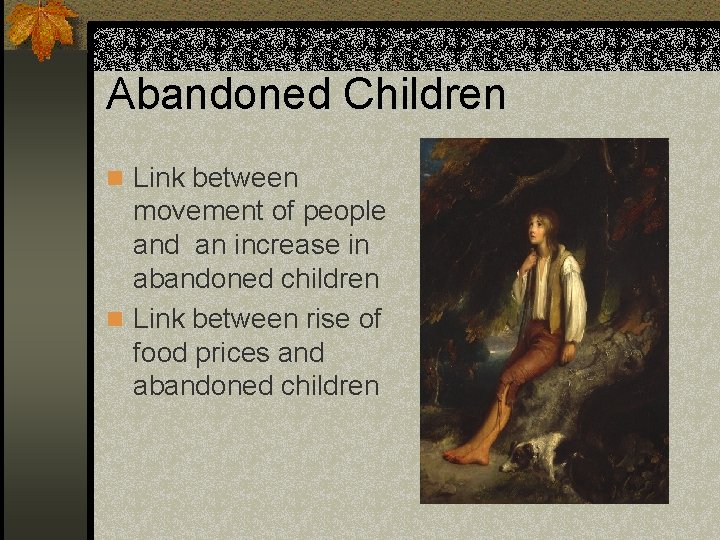
Abandoned Children n Link between movement of people and an increase in abandoned children n Link between rise of food prices and abandoned children
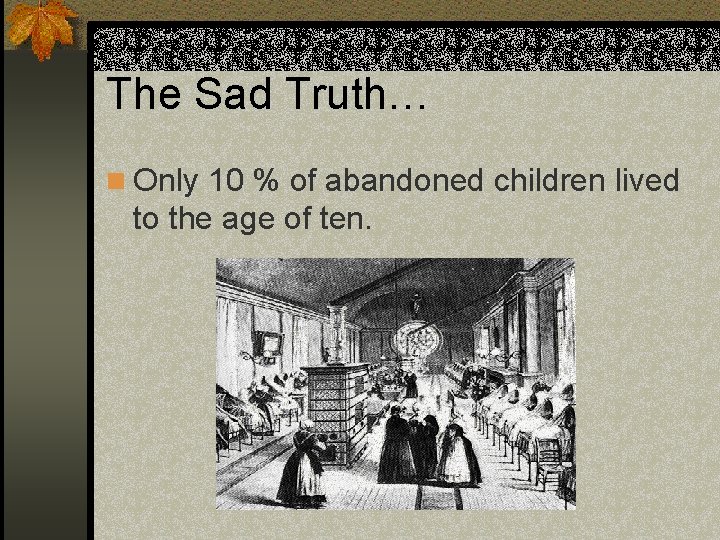
The Sad Truth… n Only 10 % of abandoned children lived to the age of ten.
The Agricultural Revolution Changes in the midst…
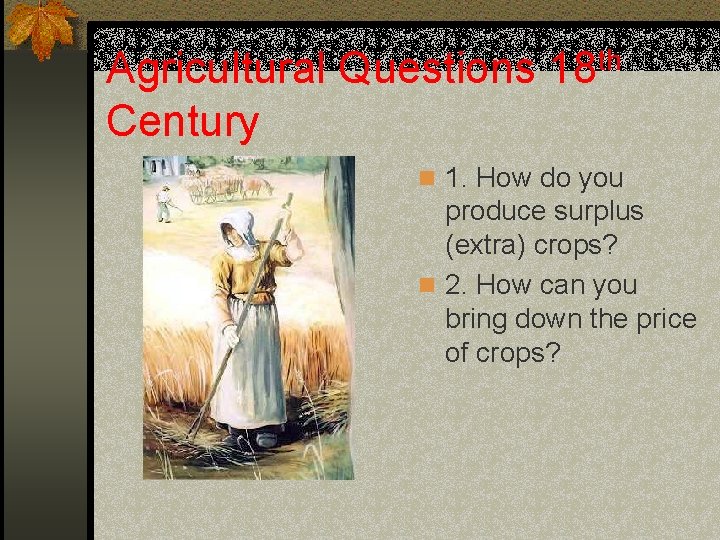
Agricultural Questions 18 th Century n 1. How do you produce surplus (extra) crops? n 2. How can you bring down the price of crops?
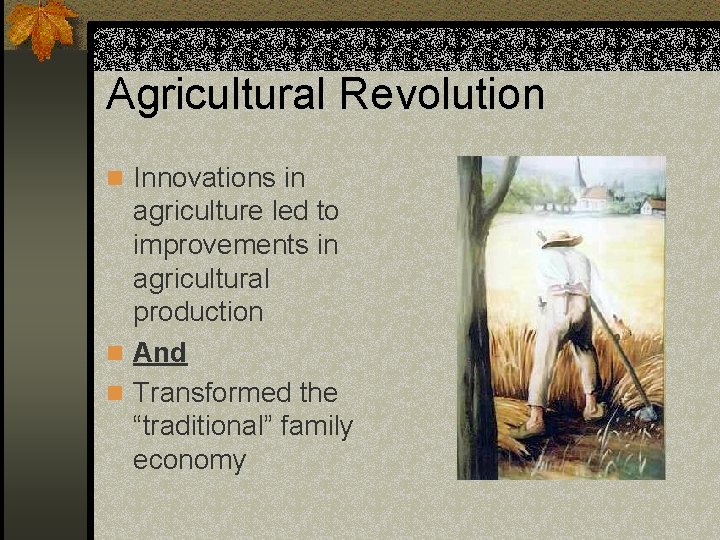
Agricultural Revolution n Innovations in agriculture led to improvements in agricultural production n And n Transformed the “traditional” family economy
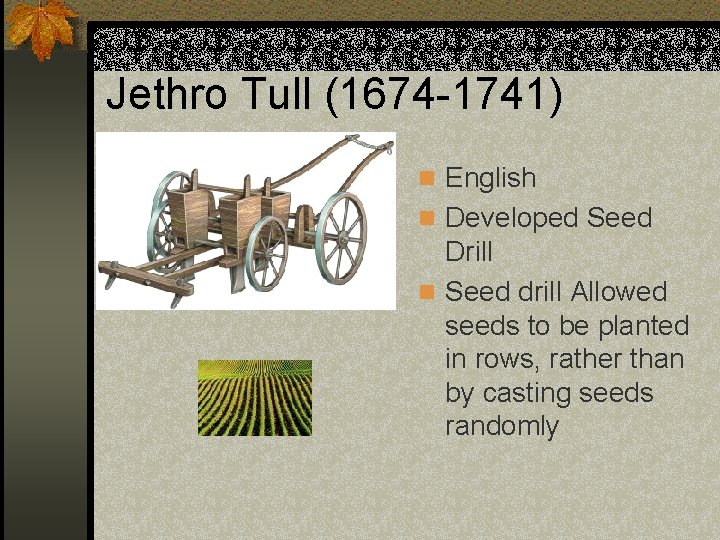
Jethro Tull (1674 -1741) n English n Developed Seed Drill n Seed drill Allowed seeds to be planted in rows, rather than by casting seeds randomly
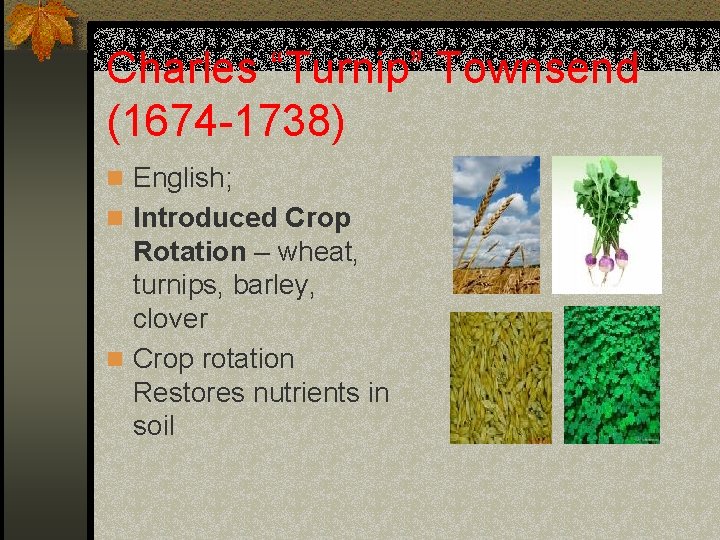
Charles “Turnip” Townsend (1674 -1738) n English; n Introduced Crop Rotation – wheat, turnips, barley, clover n Crop rotation Restores nutrients in soil
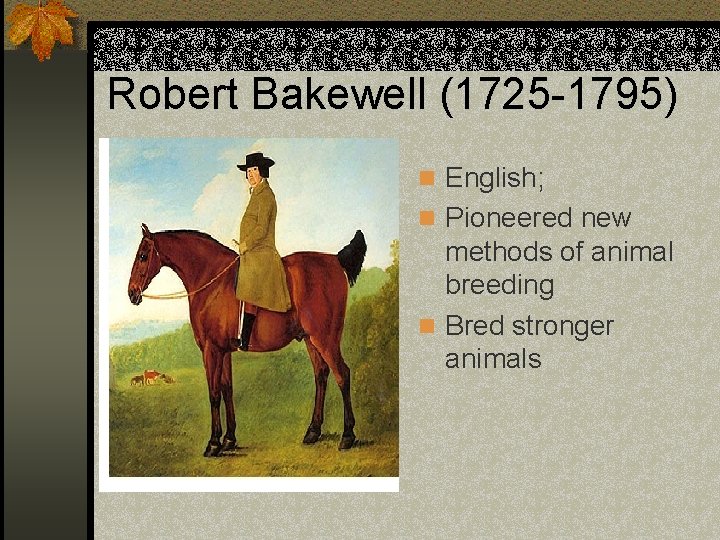
Robert Bakewell (1725 -1795) n English; n Pioneered new methods of animal breeding n Bred stronger animals
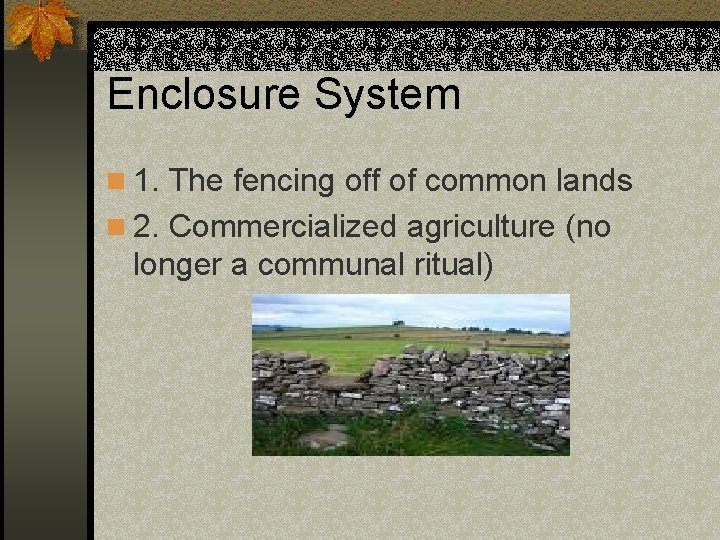
Enclosure System n 1. The fencing off of common lands n 2. Commercialized agriculture (no longer a communal ritual)
Improvements in agriculture n 1. Impacted the food supply in a positive manner n 2. Allow landowners to have a “disposable” income – money left over to purchase manufactured goods, or invest in other business opportunities
Demographic Changes n Europe’s Population Rose n 1700 – 100 and 120 million n By 1800 – 190 million n By 1850 – 260 million n Mortality rates declined due to Changes in food supply
Key Point! n Population shifts and growing commerce caused the expansion of cities n Which became stressed by rapid growth
Industrial Revolution Mid – Late 1700’s From Domestic System to Industrialization
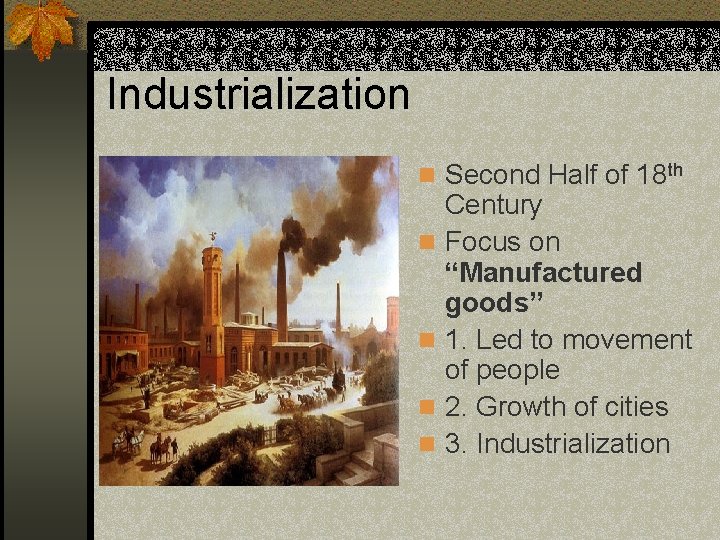
Industrialization n Second Half of 18 th n n Century Focus on “Manufactured goods” 1. Led to movement of people 2. Growth of cities 3. Industrialization
Industrial Revolution Began in Great Britain… Why? n 1. Economic Center n 2. Print Media : Newspapers, Magazines, n n n advertising 3. Good roads & waterways to transport goods 4. Stable banking system 5. Mobile society & Large Population 6. Rich deposits of coal & ore 7. Transformation of Textile Industry
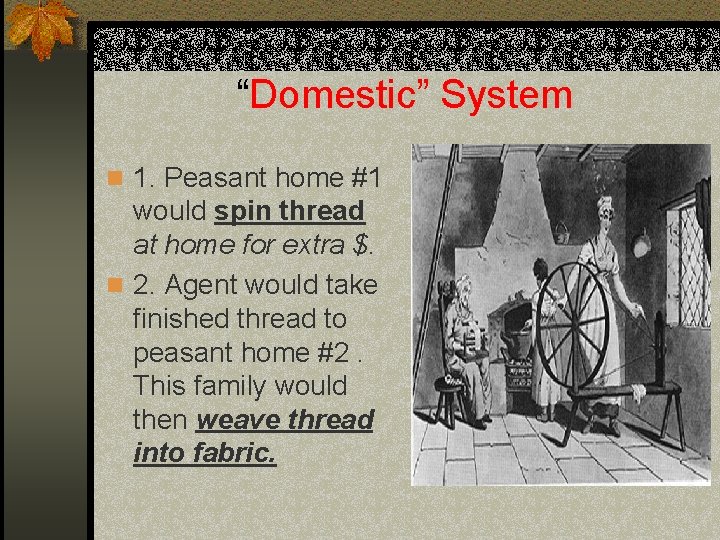
“Domestic” System n 1. Peasant home #1 would spin thread at home for extra $. n 2. Agent would take finished thread to peasant home #2. This family would then weave thread into fabric.
Domestic System of Textile Production n Was basic feature of family economy until Mid 18 th Century n The demand for cotton textiles grew more rapidly than production, n So … n Investors searched for faster ways to produce fabric & clothing n Led to the Birth of factory system
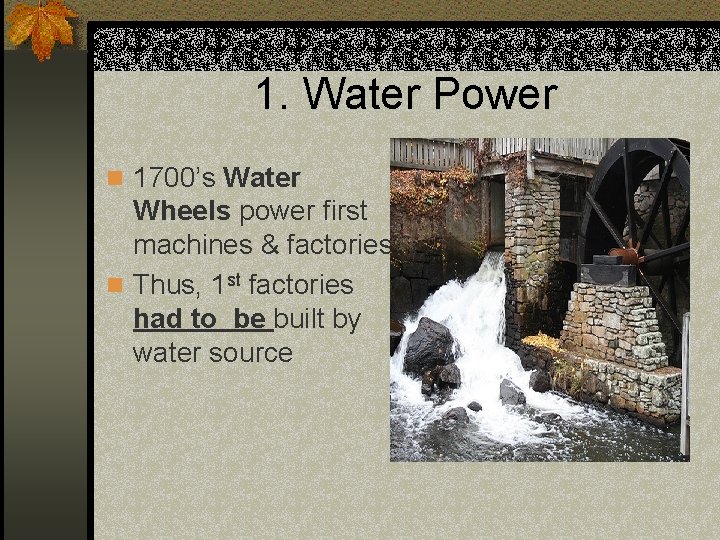
1. Water Power n 1700’s Water Wheels power first machines & factories n Thus, 1 st factories had to be built by water source
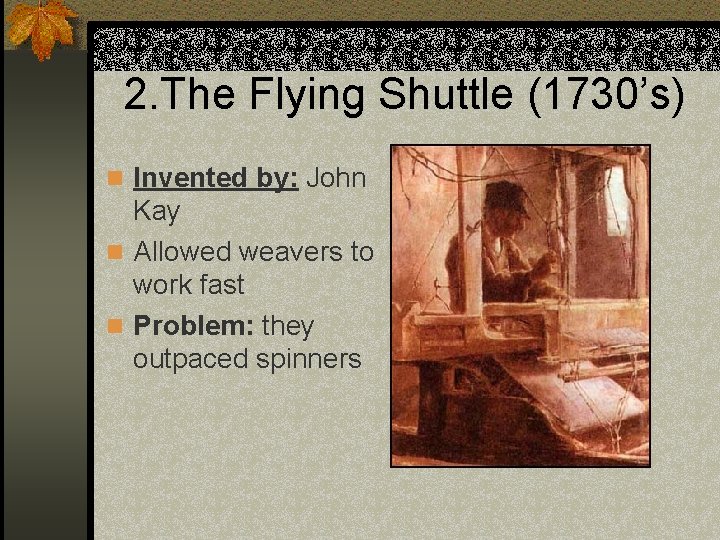
2. The Flying Shuttle (1730’s) n Invented by: John Kay n Allowed weavers to work fast n Problem: they outpaced spinners
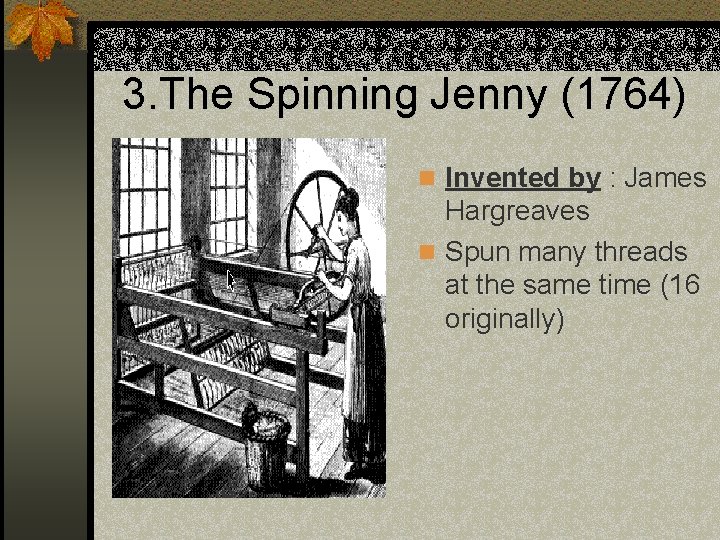
3. The Spinning Jenny (1764) n Invented by : James Hargreaves n Spun many threads at the same time (16 originally)
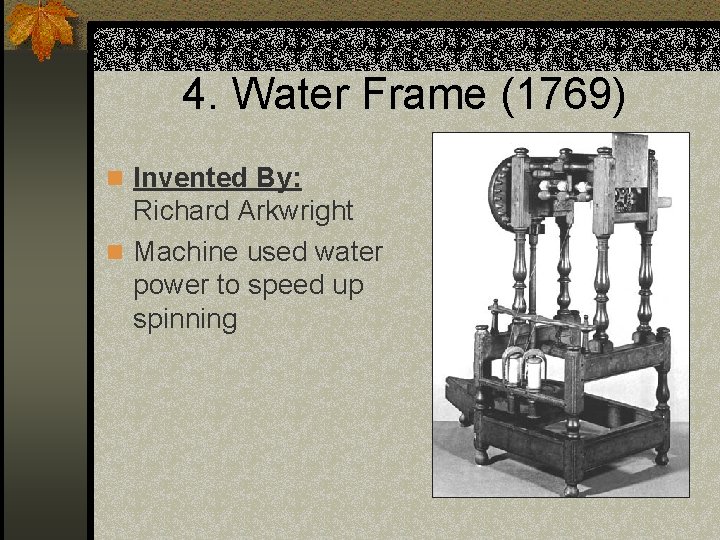
4. Water Frame (1769) n Invented By: Richard Arkwright n Machine used water power to speed up spinning
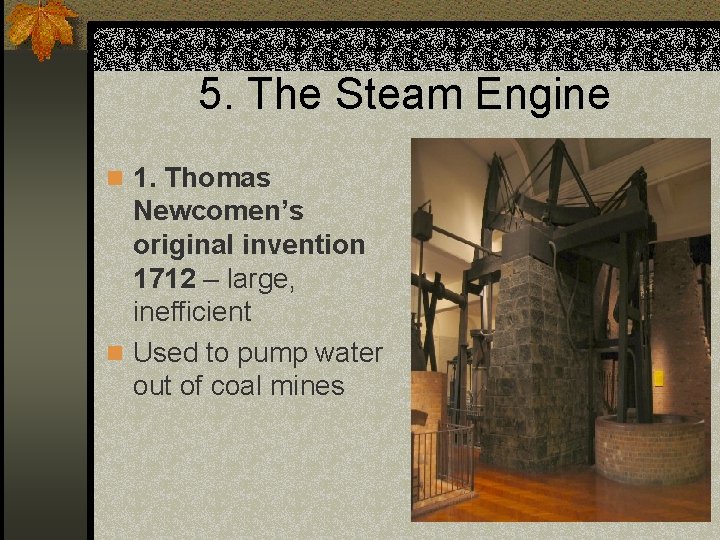
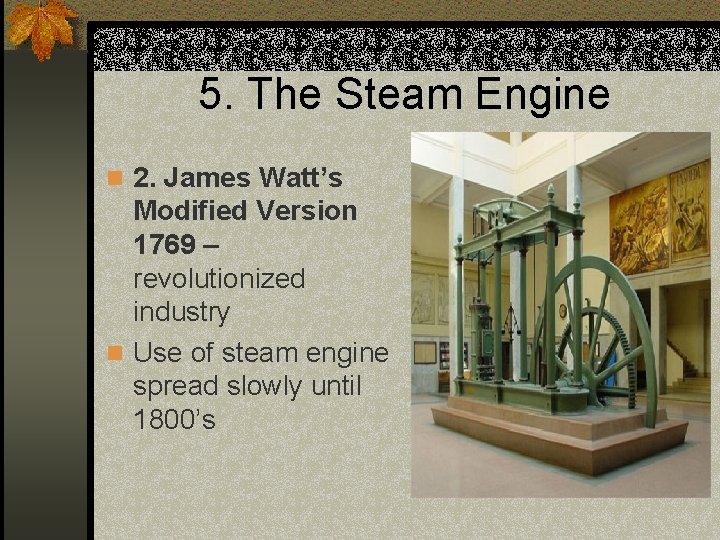
5. The Steam Engine n 1. Thomas Newcomen’s original invention 1712 – large, inefficient n Used to pump water out of coal mines
5. The Steam Engine n 2. James Watt’s Modified Version 1769 – revolutionized industry n Use of steam engine spread slowly until 1800’s
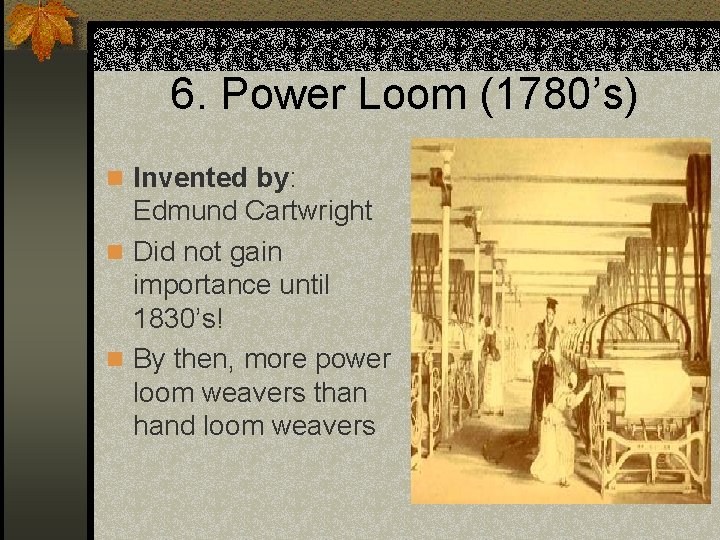
6. Power Loom (1780’s) n Invented by: Edmund Cartwright n Did not gain importance until 1830’s! n By then, more power loom weavers than hand loom weavers
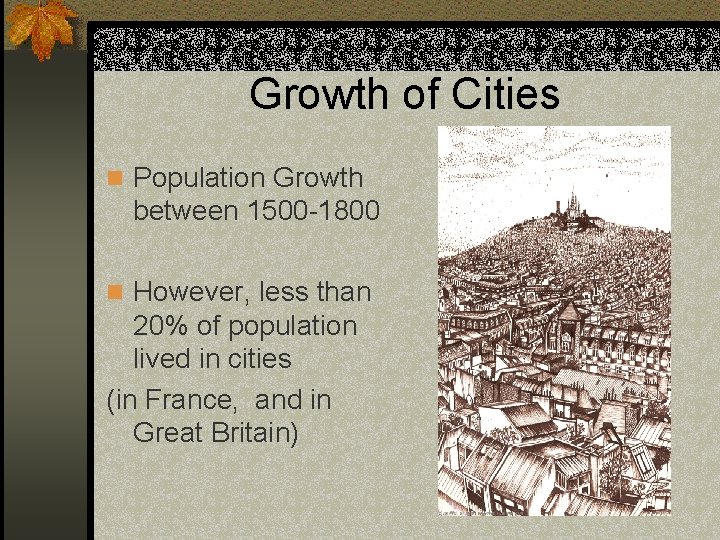
Growth of Cities n Population Growth between 1500 -1800 n However, less than 20% of population lived in cities (in France, and in Great Britain)
Growth of Capitals & Ports (16001750) n 1. Growth of Ports – a reflection of expansion of overseas trade n 2. Growth of Capitals – a reflection of the success of monarchical state
New Cities Emerge, Small Cities Grow (mid 18 th cent) n 1. Innovations in agriculture – improved crop production led to growth of market towns n 2. Factories Near Water – towns “grew” around factory as people moved.
Social Divisions n n differences between rich & poor n Nobles : Attempt to secure & expand privileges. Live “beautiful” lives n Poverty: found in both cities, & countryside. Live “filthy” lives. Lower classes have no rights, no chance at social mobility.
The Middle Class or “Bourgeoisie” n Urban residents n Merchants, trades people, bankers, Lawyers, Professionals n Grow wealthier and wealthier n Wanted political power and Social Prestige
Inequality of the Social Classes Led to… n. The French Revolution 1789 - 1800 n. To be continued…