Oncofertility Preserving the Future Nicole C Rosipal RN


- Slides: 61
Oncofertility Preserving the Future Nicole C. Rosipal, RN, MSN, PNP
Objectives n n n Incidence of cancer and survivorship among Adolescent and Young Adult (AYA) population Survivorship and significance of fertility Effects of cancer and cancer treatment on fertility Assessment of fertility Age appropriate fertility preservation options – Standard and Experimental n Key considerations when discussing fertility with patients and families
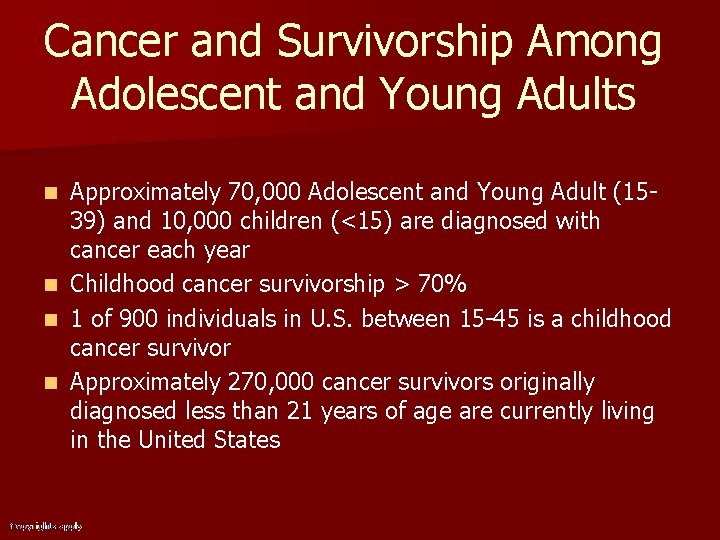
Cancer and Survivorship Among Adolescent and Young Adults Approximately 70, 000 Adolescent and Young Adult (1539) and 10, 000 children (<15) are diagnosed with cancer each year n Childhood cancer survivorship > 70% n 1 of 900 individuals in U. S. between 15 -45 is a childhood cancer survivor n Approximately 270, 000 cancer survivors originally diagnosed less than 21 years of age are currently living in the United States n
Infertility “Inability to conceive after 1 year of intercourse without contraception” n Azoospermia – No measurable level of sperm in semen – Obstructive vs. issue with spermatogenesis n Damage to oocyte, follicles or uterus – Immediate menopause – Premature menopause
Infertility and General Population n Statistics – 6. 1 million Americans – In 2002, 7% of women infertile n Multi-factorial causes – Men – Women – Both § Sexually transmitted diseases § Lifestyle factors – smoking, alcohol, obesity
American Society of Clinical Oncology (ASCO) Guidelines Panel reviewed literature spanning 1997 to 2005 n Fertility preservation is of great importance n Lack of knowledge and comfort of health care team n Effects of infertility resulting from cancer treatment: n – Psychosocial and emotional distress – Loss of masculinity or femininity – Most survivors prefer to have biological children n Survivors as Parents – Experience with illness can enrich their role – High value on family closeness
2006 ASCO Guidelines “Oncologists should address the possibility of infertility with patients treated during their reproductive years and should be considered as early as possible in the treatment planning”
Urban Legends and Caution Males n Azoospermia is potentially for life, not short term n Can still get someone pregnant! – Sperm production can return immediately or many years after cancer treatments n Pubertal development does not equal fertility n Caution! – Sexually transmitted diseases
Urban Legends and Caution Females n A “period” does not define fertility – Amenorrhea is not a definite sign of infertility – Return of a period does not equal fertility n Cancer treatment can take years off of the biological clock n Caution! – STD’s
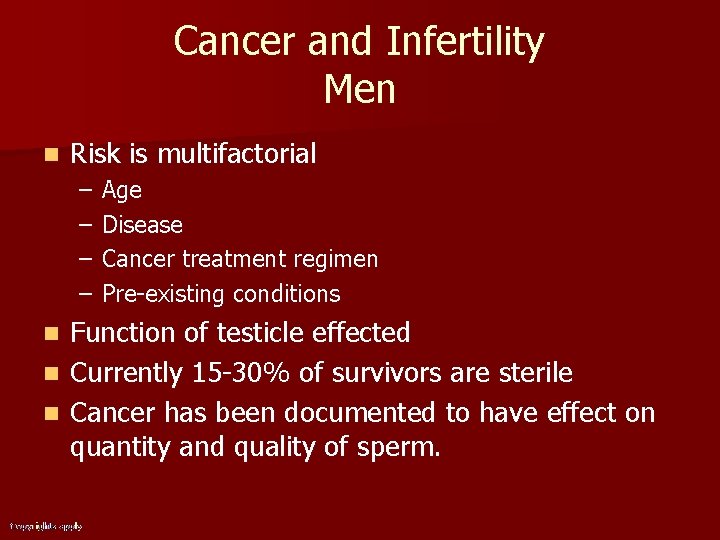
Cancer and Infertility Men n Risk is multifactorial – – Age Disease Cancer treatment regimen Pre-existing conditions Function of testicle effected n Currently 15 -30% of survivors are sterile n Cancer has been documented to have effect on quantity and quality of sperm. n
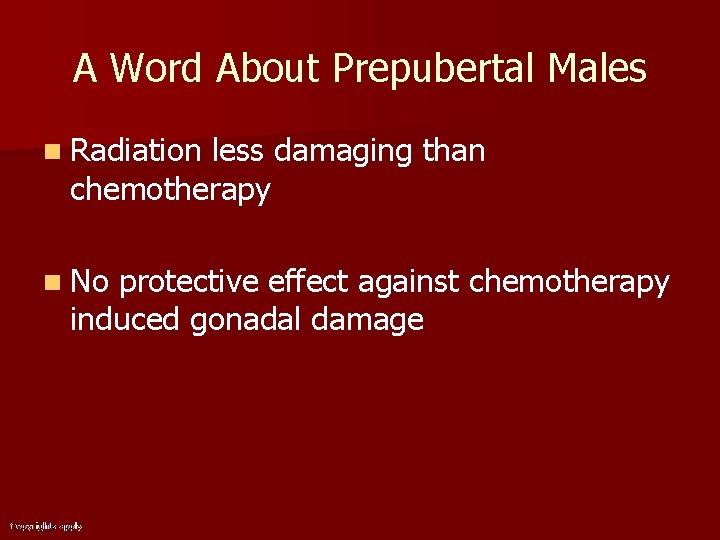
A Word About Prepubertal Males n Radiation less damaging than chemotherapy n No protective effect against chemotherapy induced gonadal damage
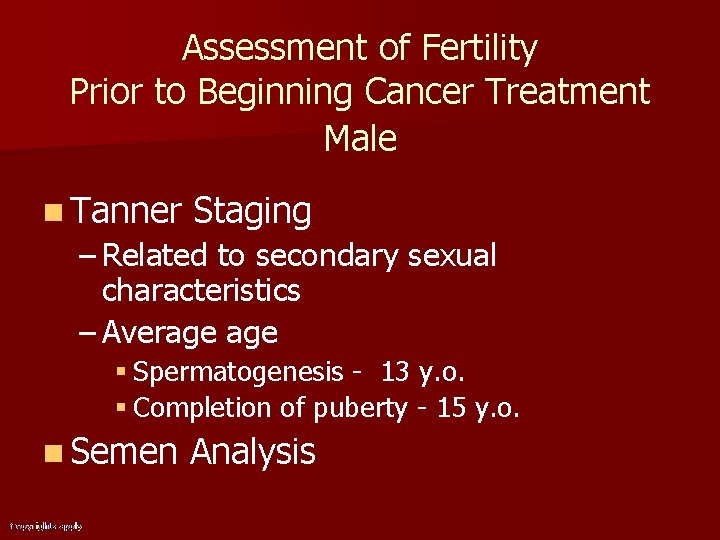
Assessment of Fertility Prior to Beginning Cancer Treatment Male n Tanner Staging – Related to secondary sexual characteristics – Average § Spermatogenesis - 13 y. o. § Completion of puberty - 15 y. o. n Semen Analysis
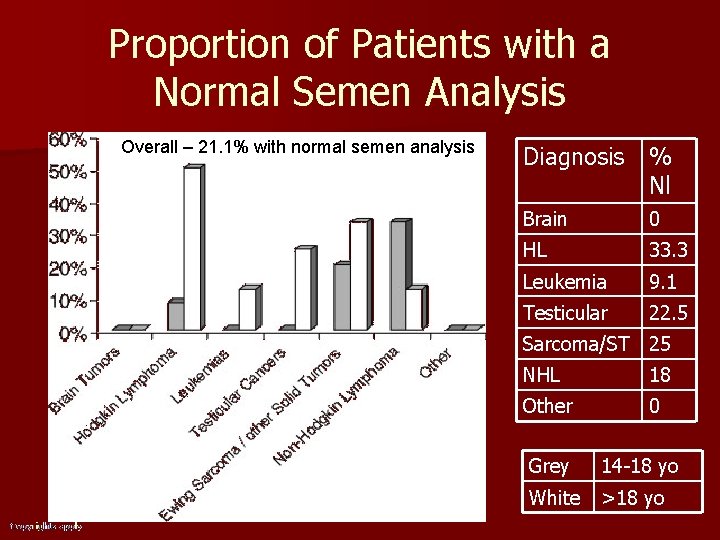
Proportion of Patients with a Normal Semen Analysis Overall – 21. 1% with normal semen analysis Diagnosis % Nl Brain 0 HL 33. 3 Leukemia 9. 1 Testicular 22. 5 Sarcoma/ST 25 NHL 18 Other 0 Grey 14 -18 yo White >18 yo
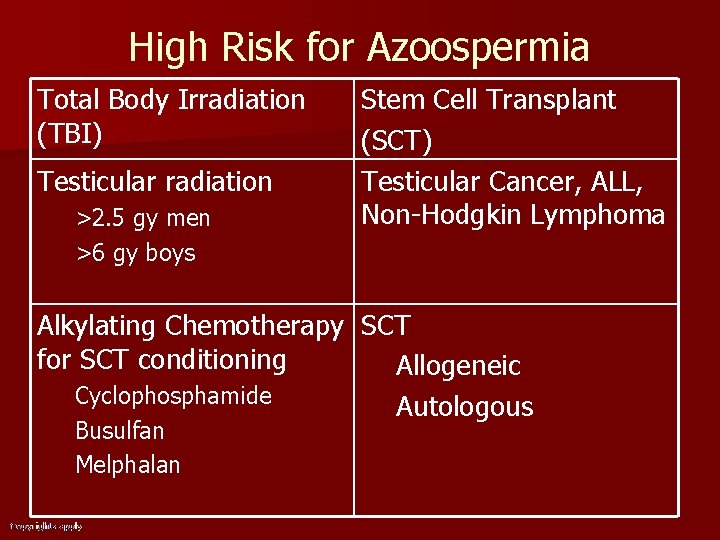
High Risk for Azoospermia Total Body Irradiation (TBI) Testicular radiation >2. 5 gy men >6 gy boys Stem Cell Transplant (SCT) Testicular Cancer, ALL, Non-Hodgkin Lymphoma Alkylating Chemotherapy SCT for SCT conditioning Allogeneic Cyclophosphamide Autologous Busulfan Melphalan
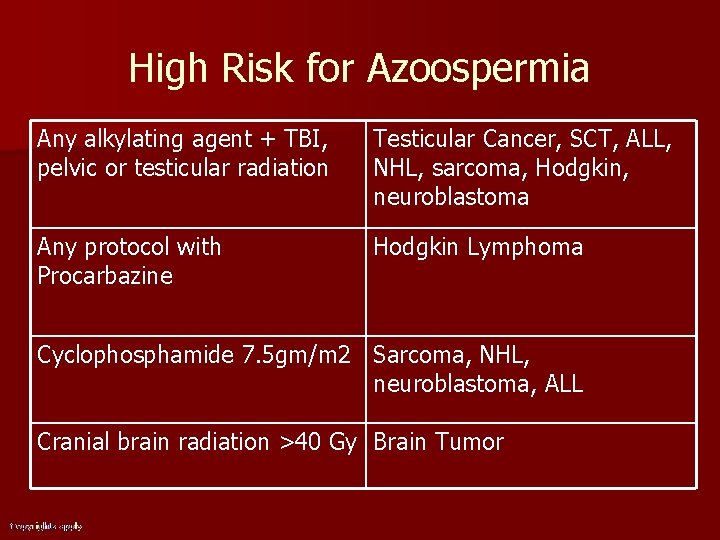
High Risk for Azoospermia Any alkylating agent + TBI, pelvic or testicular radiation Testicular Cancer, SCT, ALL, NHL, sarcoma, Hodgkin, neuroblastoma Any protocol with Procarbazine Hodgkin Lymphoma Cyclophosphamide 7. 5 gm/m 2 Sarcoma, NHL, neuroblastoma, ALL Cranial brain radiation >40 Gy Brain Tumor
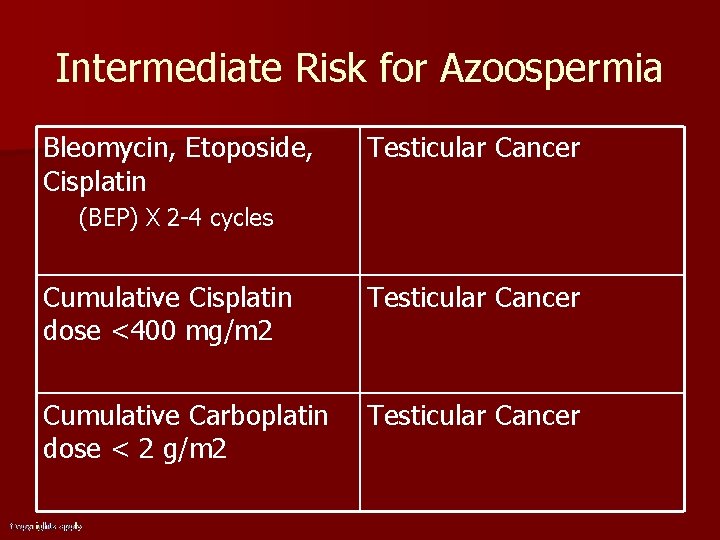
Intermediate Risk for Azoospermia Bleomycin, Etoposide, Cisplatin Testicular Cancer (BEP) X 2 -4 cycles Cumulative Cisplatin dose <400 mg/m 2 Testicular Cancer Cumulative Carboplatin dose < 2 g/m 2 Testicular Cancer
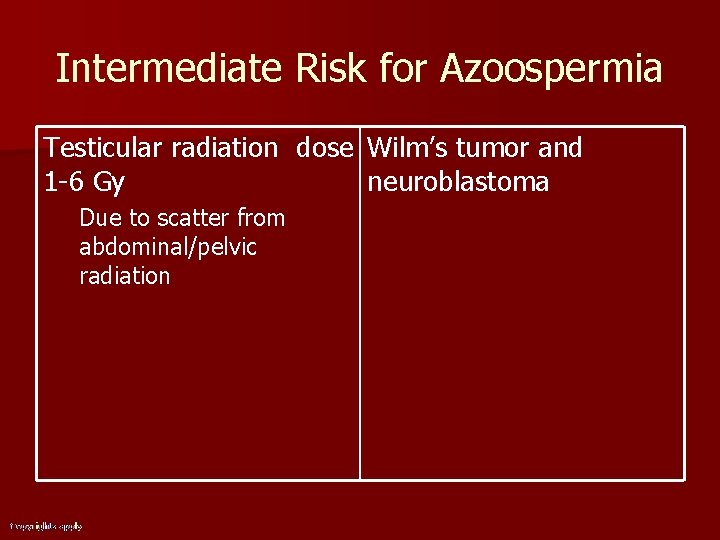
Intermediate Risk for Azoospermia Testicular radiation dose Wilm’s tumor and 1 -6 Gy neuroblastoma Due to scatter from abdominal/pelvic radiation
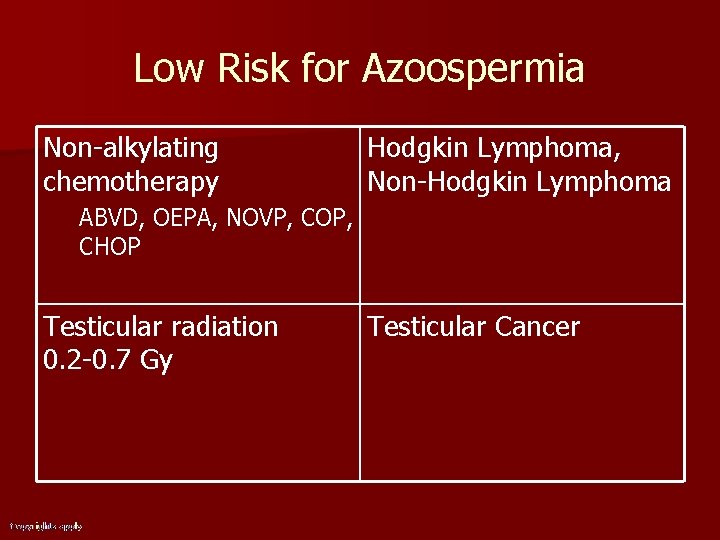
Low Risk for Azoospermia Non-alkylating chemotherapy Hodgkin Lymphoma, Non-Hodgkin Lymphoma ABVD, OEPA, NOVP, COP, CHOP Testicular radiation 0. 2 -0. 7 Gy Testicular Cancer
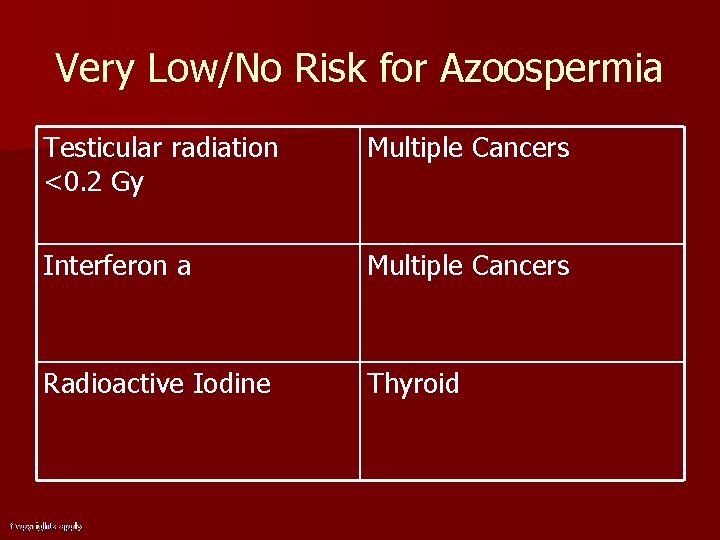
Very Low/No Risk for Azoospermia Testicular radiation <0. 2 Gy Multiple Cancers Interferon a Multiple Cancers Radioactive Iodine Thyroid
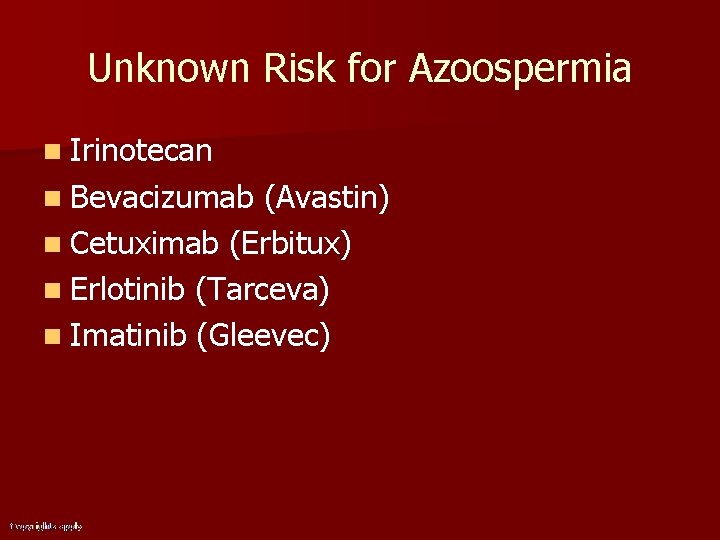
Unknown Risk for Azoospermia n Irinotecan n Bevacizumab (Avastin) n Cetuximab (Erbitux) n Erlotinib (Tarceva) n Imatinib (Gleevec)
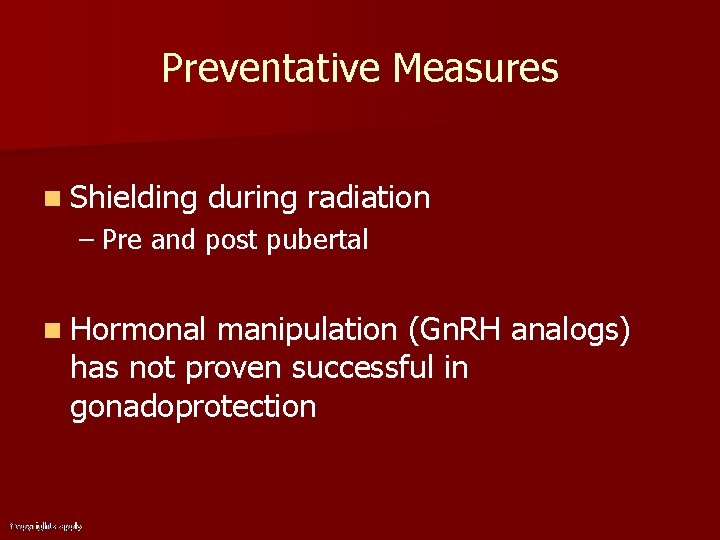
Preventative Measures n Shielding during radiation – Pre and post pubertal n Hormonal manipulation (Gn. RH analogs) has not proven successful in gonadoprotection
Banking Options n Pre vs. Post Pubertal n Standard vs. Experimental
Banking Options: Post Pubertal Male Standard n Sperm Banking: – Most effective – Obtained through masturbation then frozen – Outpatient procedure – Success rate is generally high § Reports of 50% successful pregnancy rate – Potentially compromised sperm count and increased risk of genetic damage after a single treatment
Banking Options: Post Pubertal Males Standard n Sperm Banking Process – MD/APN/PA order – Collection PRIOR to chemotherapy and/or radiation is vital – 2 -3 samples are recommended – A sample can be provided every 24 hours. – Collected in a sterile container § At clinic location, hospital, home § Kept at body temperature and brought to lab within one hour
Sperm Banking Process Continued n Semen Analysis – Sperm count and movement – Morphology – Semen is placed in individual plastic vials for freezing n Cost – $125 -$250 for analysis – $225 -$375 for one year storage
Mandatory Infectious Disease Testing n Serum: – – – – n HIV Hepatitis A, B and C RPR (Syphilis) HTLV 1 and 2 (Human T-lymphotropic virus) CMV Ig. G and Ig. M Gonorrhea and Chlamydia (Ig. G and Ig. M) AST Cost – Approximately $325
Banking Options: Post Pubertal Males Experimental n Electroejaculation – Penile or Rectal § Mechanical vibrator is placed at the base of the penis or in rectum and set to vibrate at a designated frequency and wave amplitude. § Vibration travels along the sensory nerves to the spinal cord and may induce a reflex ejaculation. – Approx 50 - 100% success rate of ejaculation – Cost varies greatly
Banking Options: Post Pubertal Males Experimental n Testicular sperm extraction – Outpatient procedure – Testicular mapping – Success Rate § 30 -70% § 45% of azoospermic ejaculate after cancer treatment – Cost § $4, 000 - $16, 000
Banking Options: Prepubertal Males Experimental Only n Cryopreservation of testicular tissue and stem cells – Tissue obtained via biopsy and frozen – In Vitro culture § Maturation of testicular stem cells – Animal studies only – Autotransplantation § Risk of recurrence?
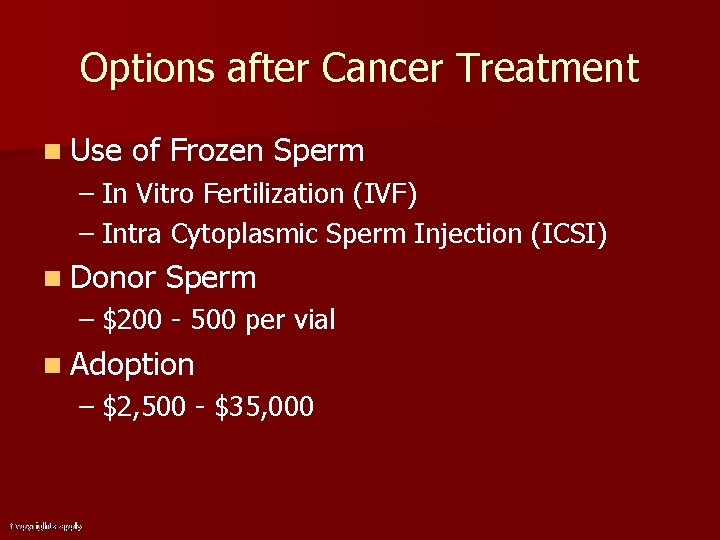
Options after Cancer Treatment n Use of Frozen Sperm – In Vitro Fertilization (IVF) – Intra Cytoplasmic Sperm Injection (ICSI) ( n Donor Sperm – $200 - 500 per vial n Adoption – $2, 500 - $35, 000
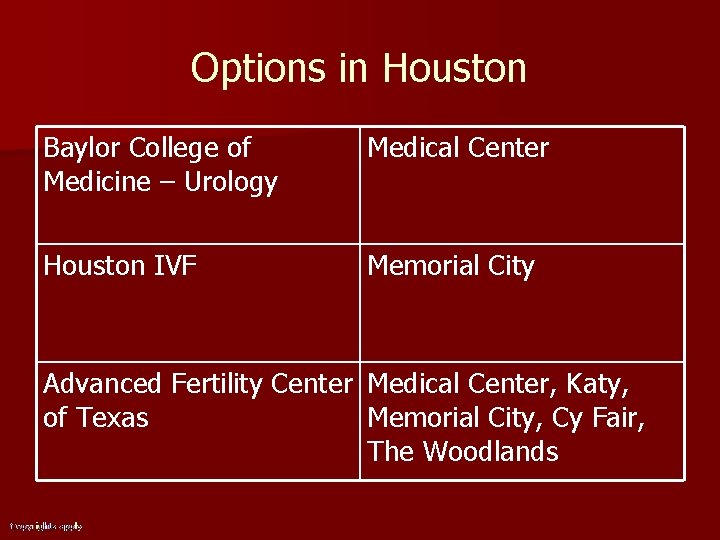
Options in Houston Baylor College of Medicine – Urology Medical Center Houston IVF Memorial City Advanced Fertility Center Medical Center, Katy, of Texas Memorial City, Cy Fair, The Woodlands
Assessment of Fertility After Cancer Treatment n Semen analysis n Blood Work § FSH § Inhibin B
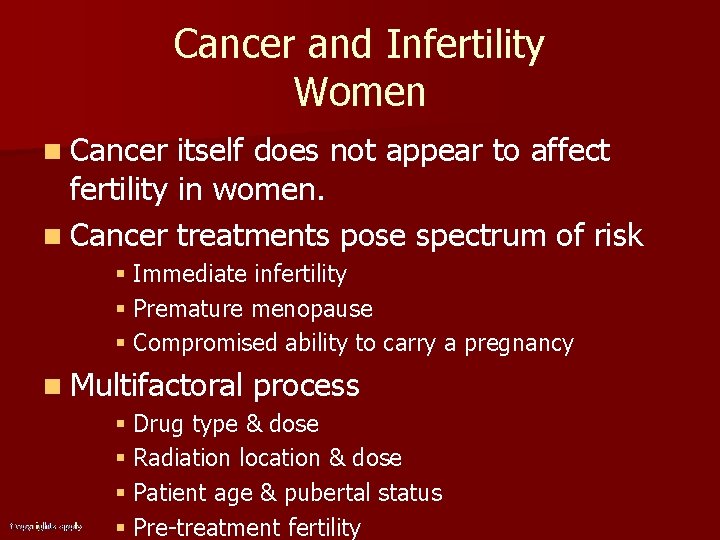
Cancer and Infertility Women n Cancer itself does not appear to affect fertility in women. n Cancer treatments pose spectrum of risk § Immediate infertility § Premature menopause § Compromised ability to carry a pregnancy n Multifactoral process § Drug type & dose § Radiation location & dose § Patient age & pubertal status § Pre-treatment fertility
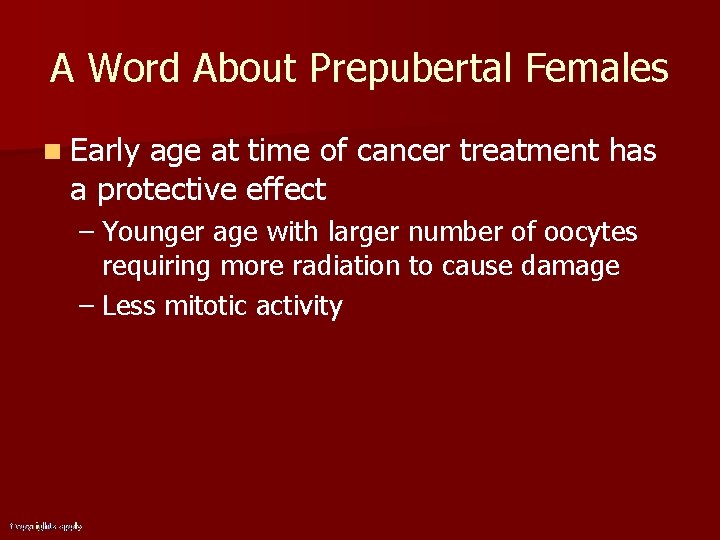
A Word About Prepubertal Females n Early age at time of cancer treatment has a protective effect – Younger age with larger number of oocytes requiring more radiation to cause damage – Less mitotic activity
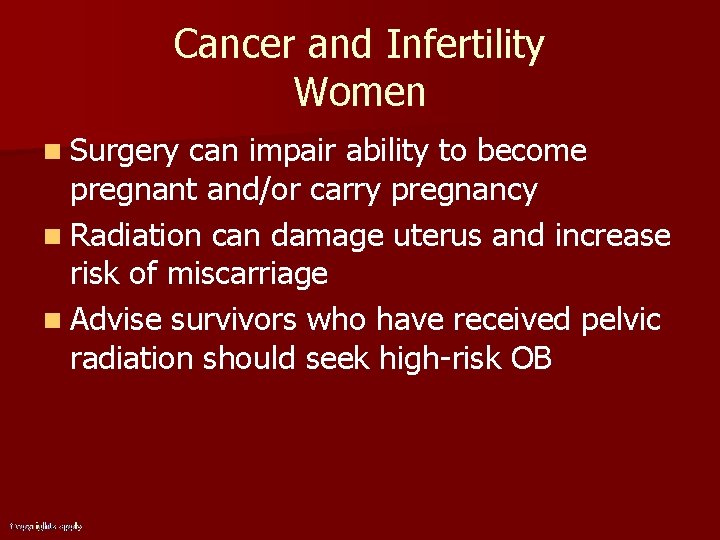
Cancer and Infertility Women n Surgery can impair ability to become pregnant and/or carry pregnancy n Radiation can damage uterus and increase risk of miscarriage n Advise survivors who have received pelvic radiation should seek high-risk OB
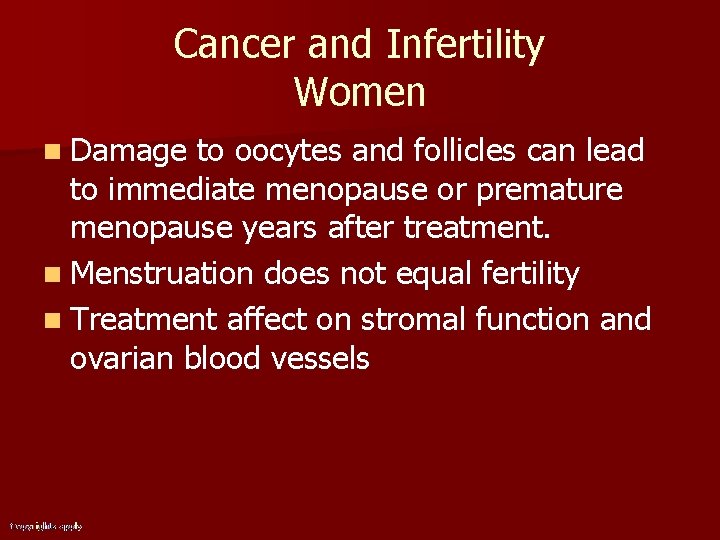
Cancer and Infertility Women n Damage to oocytes and follicles can lead to immediate menopause or premature menopause years after treatment. n Menstruation does not equal fertility n Treatment affect on stromal function and ovarian blood vessels
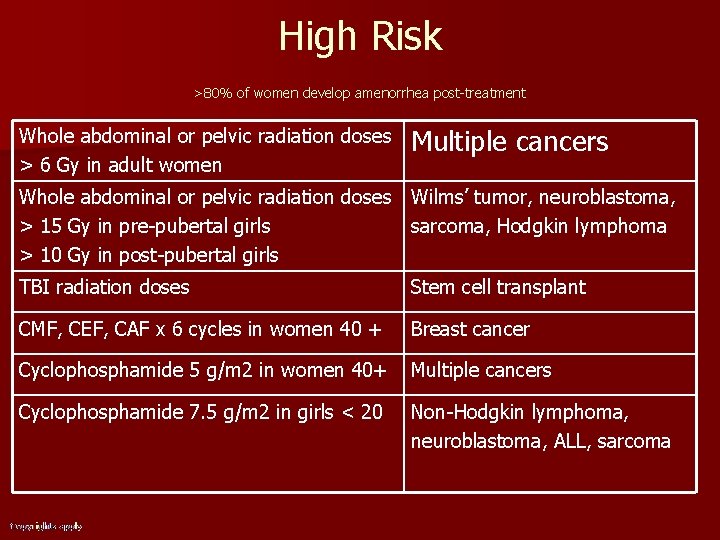
High Risk >80% of women develop amenorrhea post-treatment Whole abdominal or pelvic radiation doses > 6 Gy in adult women Multiple cancers Whole abdominal or pelvic radiation doses Wilms’ tumor, neuroblastoma, > 15 Gy in pre-pubertal girls sarcoma, Hodgkin lymphoma > 10 Gy in post-pubertal girls TBI radiation doses Stem cell transplant CMF, CEF, CAF x 6 cycles in women 40 + Breast cancer Cyclophosphamide 5 g/m 2 in women 40+ Multiple cancers Cyclophosphamide 7. 5 g/m 2 in girls < 20 Non-Hodgkin lymphoma, neuroblastoma, ALL, sarcoma
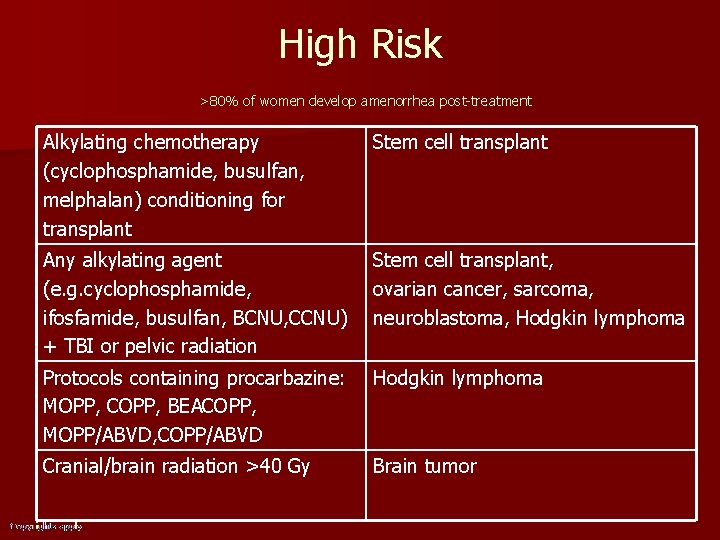
High Risk >80% of women develop amenorrhea post-treatment Alkylating chemotherapy (cyclophosphamide, busulfan, melphalan) conditioning for transplant Stem cell transplant Any alkylating agent (e. g. cyclophosphamide, ifosfamide, busulfan, BCNU, CCNU) + TBI or pelvic radiation Stem cell transplant, ovarian cancer, sarcoma, neuroblastoma, Hodgkin lymphoma Protocols containing procarbazine: MOPP, COPP, BEACOPP, MOPP/ABVD, COPP/ABVD Hodgkin lymphoma Cranial/brain radiation >40 Gy Brain tumor
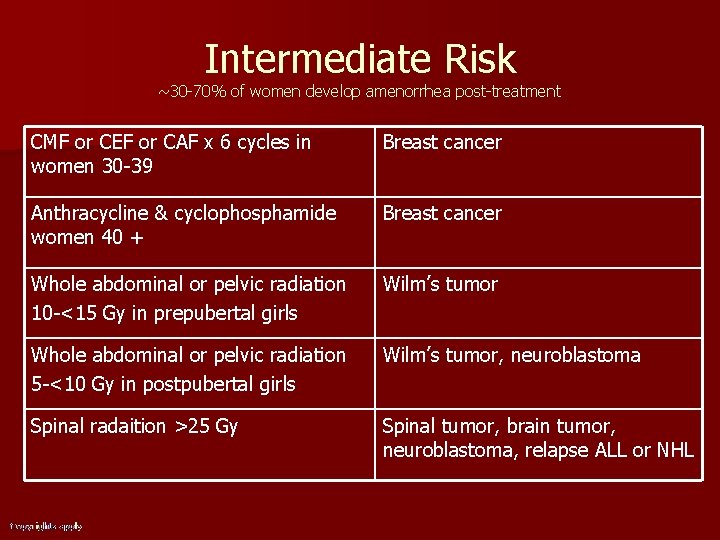
Intermediate Risk ~30 -70% of women develop amenorrhea post-treatment CMF or CEF or CAF x 6 cycles in women 30 -39 Breast cancer Anthracycline & cyclophosphamide women 40 + Breast cancer Whole abdominal or pelvic radiation 10 -<15 Gy in prepubertal girls Wilm’s tumor Whole abdominal or pelvic radiation 5 -<10 Gy in postpubertal girls Wilm’s tumor, neuroblastoma Spinal radaition >25 Gy Spinal tumor, brain tumor, neuroblastoma, relapse ALL or NHL
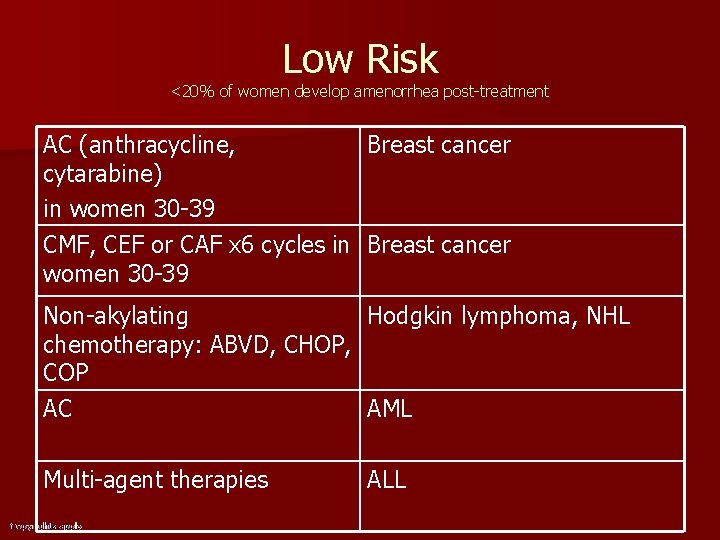
Low Risk <20% of women develop amenorrhea post-treatment AC (anthracycline, Breast cancer cytarabine) in women 30 -39 CMF, CEF or CAF x 6 cycles in Breast cancer women 30 -39 Non-akylating Hodgkin lymphoma, NHL chemotherapy: ABVD, CHOP, COP AC AML Multi-agent therapies ALL
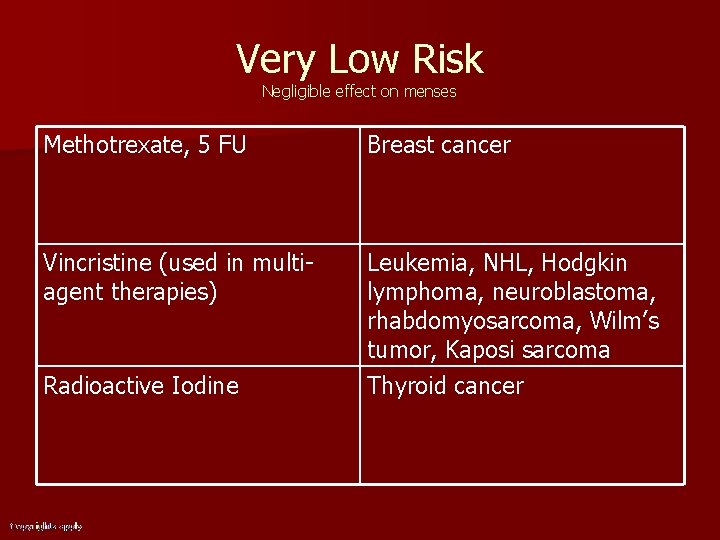
Very Low Risk Negligible effect on menses Methotrexate, 5 FU Breast cancer Vincristine (used in multiagent therapies) Leukemia, NHL, Hodgkin lymphoma, neuroblastoma, rhabdomyosarcoma, Wilm’s tumor, Kaposi sarcoma Radioactive Iodine Thyroid cancer
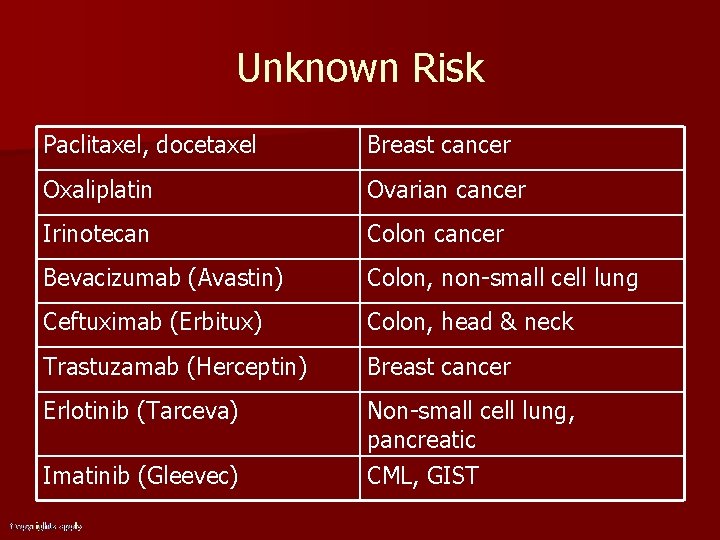
Unknown Risk Paclitaxel, docetaxel Breast cancer Oxaliplatin Ovarian cancer Irinotecan Colon cancer Bevacizumab (Avastin) Colon, non-small cell lung Ceftuximab (Erbitux) Colon, head & neck Trastuzamab (Herceptin) Breast cancer Erlotinib (Tarceva) Non-small cell lung, pancreatic CML, GIST Imatinib (Gleevec)
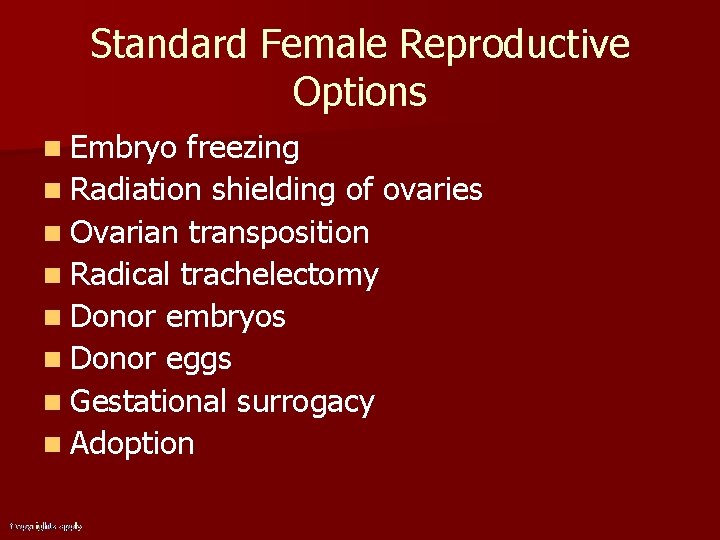
Standard Female Reproductive Options n Embryo freezing n Radiation shielding of ovaries n Ovarian transposition n Radical trachelectomy n Donor embryos n Donor eggs n Gestational surrogacy n Adoption
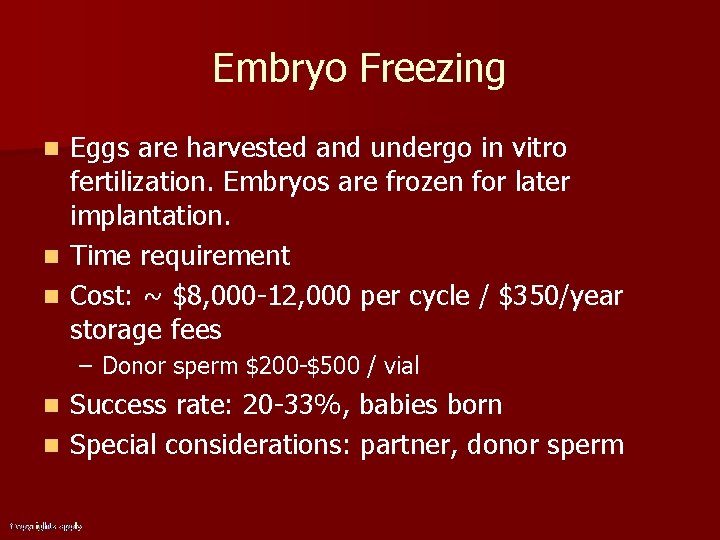
Embryo Freezing Eggs are harvested and undergo in vitro fertilization. Embryos are frozen for later implantation. n Time requirement n Cost: ~ $8, 000 -12, 000 per cycle / $350/year storage fees n – Donor sperm $200 -$500 / vial Success rate: 20 -33%, babies born n Special considerations: partner, donor sperm n
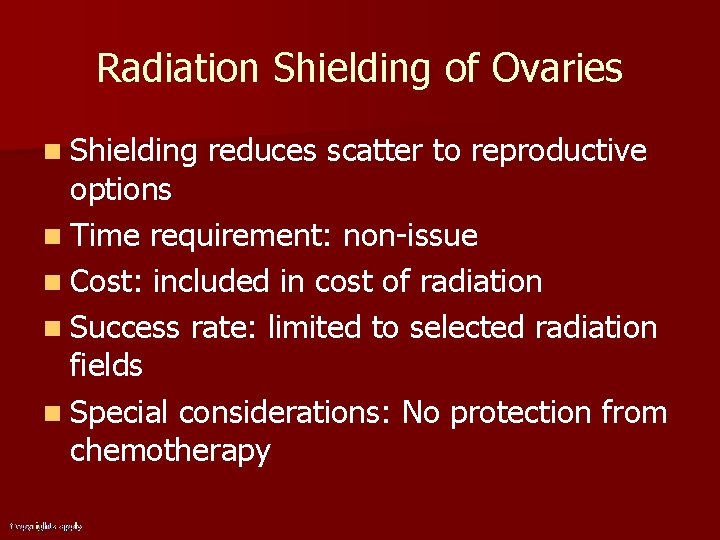
Radiation Shielding of Ovaries n Shielding reduces scatter to reproductive options n Time requirement: non-issue n Cost: included in cost of radiation n Success rate: limited to selected radiation fields n Special considerations: No protection from chemotherapy
Ovarian Transposition n Surgical repositioning of ovaries away from radiation field n Time requirement: Outpatient procedure n Cost: Maybe covered by insurance n Success rate: Approximately 50% n Special considerations: Expertise required
Radical Trachelectomy n Surgical removal of the cervix with preservation of uterus n Time requirement: During treatment n Cost: Included in treatment cost n Success rate: No evidence of higher recurrence rate n Special considerations: Early stage cervical cancer, limited centers
Standard Female Reproductive Options n Donor embryos – Not biologic child n Donor eggs – Offers opportunity for biologic child for father n Gestational surrogacy – Legal implications n Adoption – Inaccessibility to cancer survivors
Experimental Options n Egg/oocyte freezing n Ovarian tissue preservation n Gn. RH
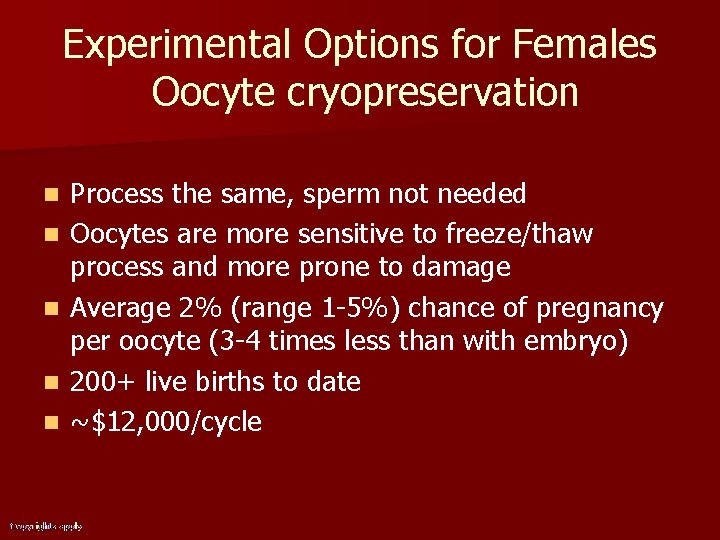
Experimental Options for Females Oocyte cryopreservation n n Process the same, sperm not needed Oocytes are more sensitive to freeze/thaw process and more prone to damage Average 2% (range 1 -5%) chance of pregnancy per oocyte (3 -4 times less than with embryo) 200+ live births to date ~$12, 000/cycle
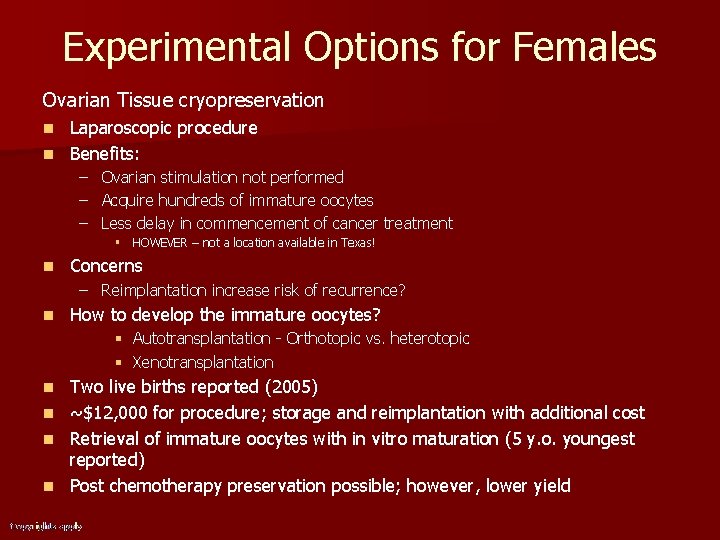
Experimental Options for Females Ovarian Tissue cryopreservation Laparoscopic procedure n Benefits: n – Ovarian stimulation not performed – Acquire hundreds of immature oocytes – Less delay in commencement of cancer treatment § HOWEVER – not a location available in Texas! n Concerns – Reimplantation increase risk of recurrence? n How to develop the immature oocytes? § Autotransplantation - Orthotopic vs. heterotopic § Xenotransplantation Two live births reported (2005) n ~$12, 000 for procedure; storage and reimplantation with additional cost n Retrieval of immature oocytes with in vitro maturation (5 y. o. youngest reported) n Post chemotherapy preservation possible; however, lower yield n
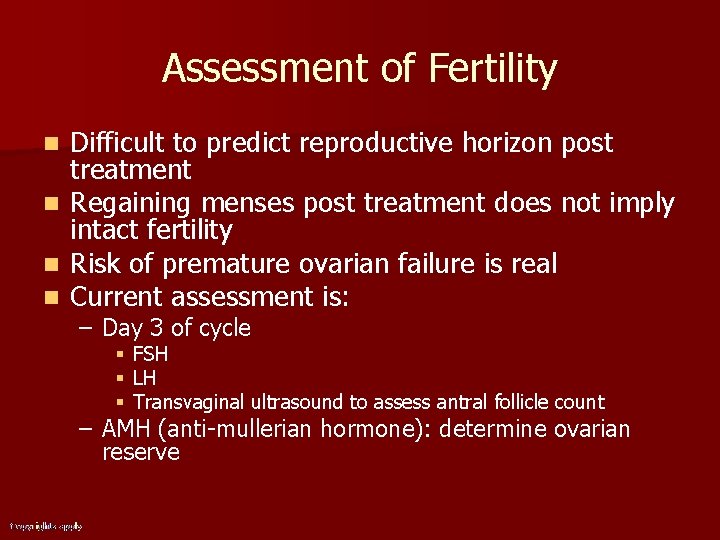
Assessment of Fertility Difficult to predict reproductive horizon post treatment n Regaining menses post treatment does not imply intact fertility n Risk of premature ovarian failure is real n Current assessment is: n – Day 3 of cycle § FSH § LH § Transvaginal ultrasound to assess antral follicle count – AMH (anti-mullerian hormone): determine ovarian reserve
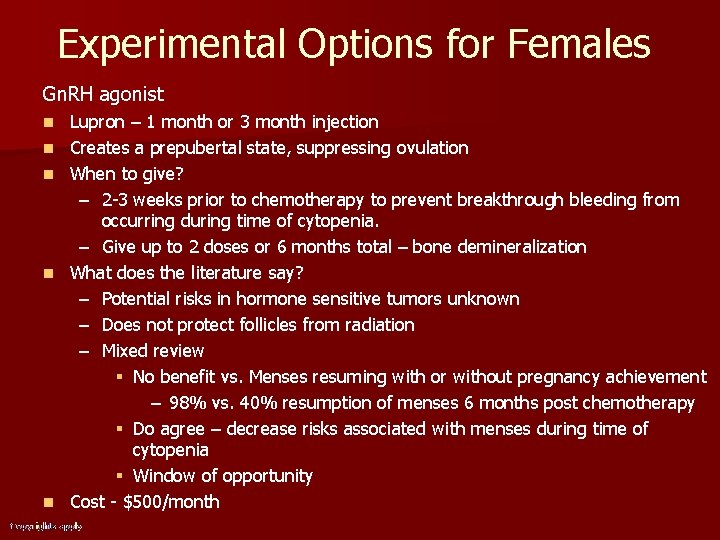
Experimental Options for Females Gn. RH agonist n n n Lupron – 1 month or 3 month injection Creates a prepubertal state, suppressing ovulation When to give? – 2 -3 weeks prior to chemotherapy to prevent breakthrough bleeding from occurring during time of cytopenia. – Give up to 2 doses or 6 months total – bone demineralization What does the literature say? – Potential risks in hormone sensitive tumors unknown – Does not protect follicles from radiation – Mixed review § No benefit vs. Menses resuming with or without pregnancy achievement – 98% vs. 40% resumption of menses 6 months post chemotherapy § Do agree – decrease risks associated with menses during time of cytopenia § Window of opportunity Cost - $500/month
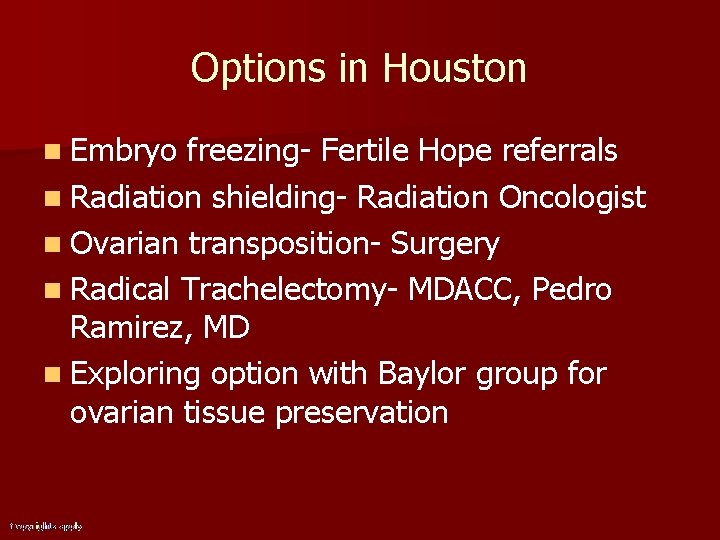
Options in Houston n Embryo freezing- Fertile Hope referrals n Radiation shielding- Radiation Oncologist n Ovarian transposition- Surgery n Radical Trachelectomy- MDACC, Pedro Ramirez, MD n Exploring option with Baylor group for ovarian tissue preservation
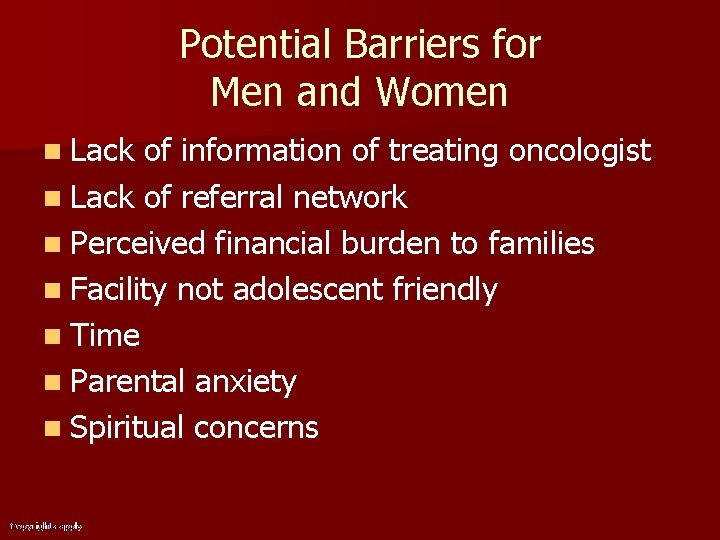
Potential Barriers for Men and Women n Lack of information of treating oncologist n Lack of referral network n Perceived financial burden to families n Facility not adolescent friendly n Time n Parental anxiety n Spiritual concerns
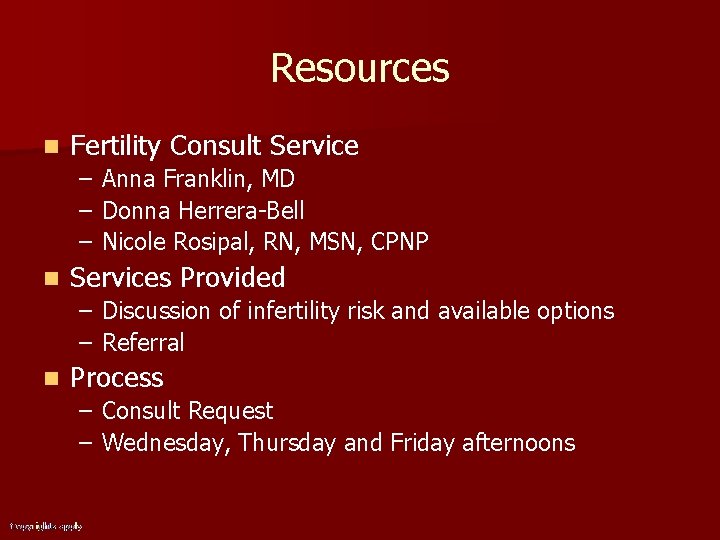
Resources n Fertility Consult Service – Anna Franklin, MD – Donna Herrera-Bell – Nicole Rosipal, RN, MSN, CPNP n Services Provided – Discussion of infertility risk and available options – Referral n Process – Consult Request – Wednesday, Thursday and Friday afternoons
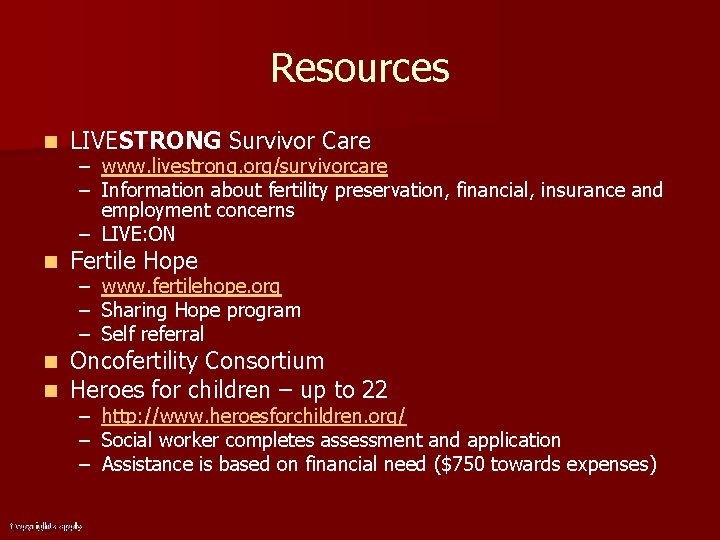
Resources n LIVESTRONG Survivor Care n Fertile Hope n n Oncofertility Consortium Heroes for children – up to 22 – www. livestrong. org/survivorcare – Information about fertility preservation, financial, insurance and employment concerns – LIVE: ON – www. fertilehope. org – Sharing Hope program – Self referral – http: //www. heroesforchildren. org/ – Social worker completes assessment and application – Assistance is based on financial need ($750 towards expenses)
Current Research at MD Anderson n Banking n St. on Fatherhood Jude’s Questionnaire – Attitude about sperm banking
Discussion
References Biro, F. M. , et al. (2010) Normal Puberty. Up to Date. www. uptodate. com n Blumenfeld, Z. (2008). Gn. RH-agoinst in fertility preservation. Curr Opin n n Endocrinol Diabetes Obes, 15, 523 -26. Blumenfeld, Z. & Eckman, A. (2005). J Natl Cancer Inst Monogr, (34), 40 -3. Boss, E. A. , van Golde, R. J. , & Massuger, L. F. (2005). Pregnancy after radical trachelectomy: a real option? Gynecol Oncol, 99(3 supp 1), 152 -6. n Fertility preservation and reproduction in cancer patients. (2005). Fertil Steril, 83(6), 1622 -1628. n Green, D. M. , Sklar, C. A. , Boice, J. D. , Jr. , Mulvihill, J. J. , Whitton, J. A. , Stovall, M. , et al. (2009). Ovarian failure and reproductive outcomes after childhood cancer treatment: results from the Childhood Cancer Survivor Study. J Clin Oncol, 27(14), 2374 -2381. n Lee, S. J. , Schover, L. R. , Partridge, A. H. , Patrizio, P. , Wallace, W. H. , Hagerty, K. , et al. (2006). American Society of Clinical Oncology recommendations on fertility preservation in cancer patients. J Clin Oncol, 24(18), 2917 -2931. n
References n n n n Neal, M. S. , Nagel, K. , Duckworth, J. , Bissessar, H. , Fischer, M. A. , Portwine, C. , et al. (2007). Effectiveness of sperm banking in adolescents and young adults with cancer: a regional experience. Cancer, 110(5), 1125 -1129. Author, A. A. , & Author, B. B. (Year of publication). Late effects of childhood cancer and its treatment. In Pizzo, P. A. & Poplack, D. G. (Eds. ), Prinicples and Practices of Pediatric Oncology (1503 -06). Philadelphia, PA: Lippincott Williams & Wilkins. Revel, A. , Revel-Vilk, S. , Aizenman, E. , Porat-Katz, A. , Safran, A. , Ben-Meir, A. , et al. (2009). At what age can human oocytes be obtained? Fertil Steril, 92(2), 458 -463. Schover, L. R. (1999). Psychosocial aspects of infertility and decisions about reproduction in young cancer survivors: a review. Med Pediatr Oncol, 33(1), 53 -59. www. fertilehope. org www. livestrong. org Zakak, N. N. (2009). Fertility issues of childhood cancer survivors: the role of the pediatric nurse practitioner in fertility preservation. J Pediatr Oncol Nurs, 26(1), 48 -59.