CHAPTER 2 ATOMS MOLECULES AND IONS Copyright The



- Slides: 54
CHAPTER 2 ATOMS, MOLECULES AND IONS Copyright © The Mc. Graw-Hill Companies, Inc. Permission required for reproduction or display.
CHAPTER 2 (P. 4968) Atomic number , mass number and isotopes. The periodic table. Molecules and ions. Chemical formulas. Naming compounds.
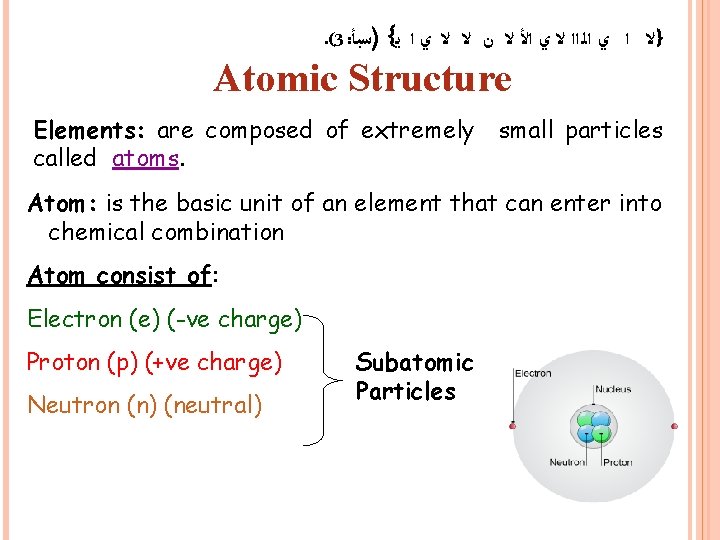
. (3 : }ﻻ ﺍ ﻱ ﺍﻟ ﺍﺍ ﻻ ﻱ ﺍﻷ ﻻ ﻥ ﻻ ﻻ ﻱ ﺍ ﻳ{ )ﺳﺒﺄ Atomic Structure Elements: are composed of extremely small particles called atoms. Atom: is the basic unit of an element that can enter into chemical combination Atom consist of: Electron (e) (-ve charge) Proton (p) (+ve charge) Neutron (n) (neutral) Subatomic Particles
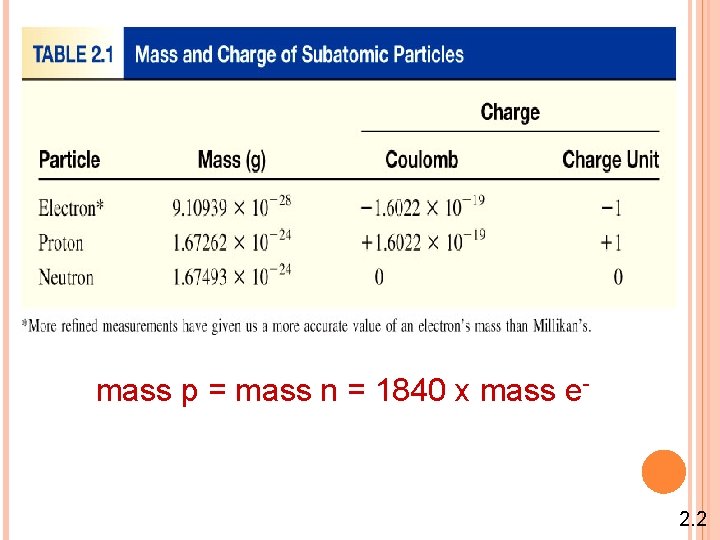
mass p = mass n = 1840 x mass e- 2. 2
2. 3 ATOMIC NUMBER , MASS NUMBER AND ISOTOPES.
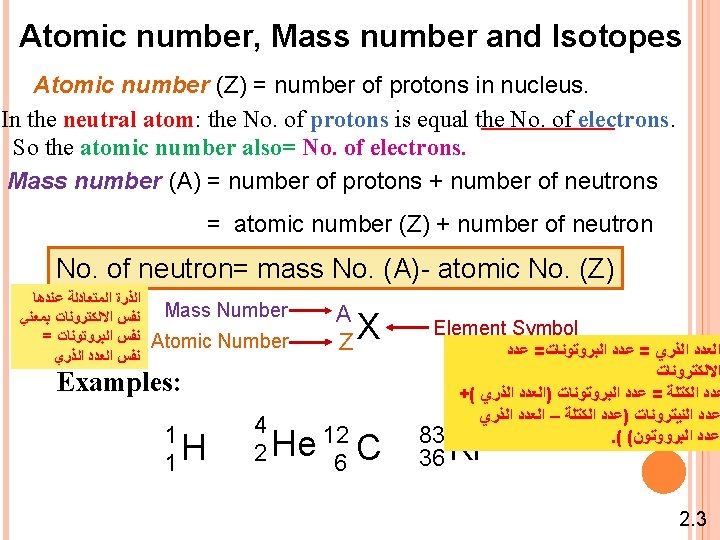
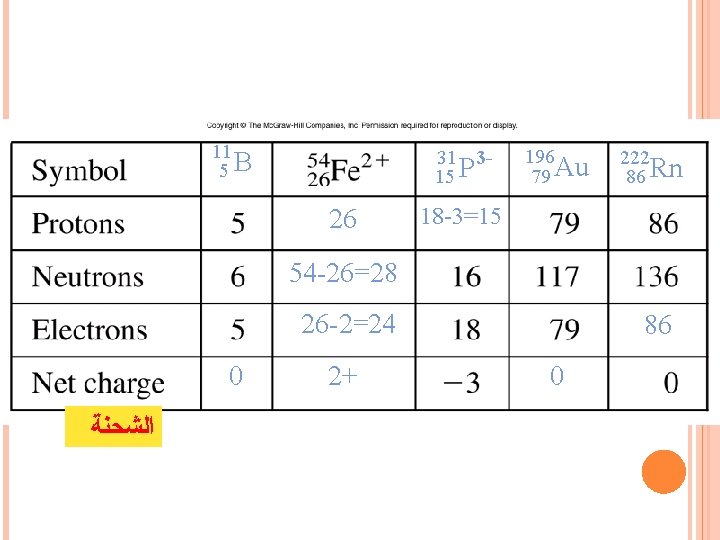
Atomic number, Mass number and Isotopes Atomic number (Z) = number of protons in nucleus. In the neutral atom: the No. of protons is equal the No. of electrons. So the atomic number also= No. of electrons. Mass number (A) = number of protons + number of neutrons = atomic number (Z) + number of neutron No. of neutron= mass No. (A)- atomic No. (Z) ﺍﻟﺬﺭﺓ ﺍﻟﻤﺘﻌﺎﺩﻟﺔ ﻋﻨﺪﻫﺎ ﻧﻔﺲ ﺍﻻﻟﻜﺘﺮﻭﻧﺎﺕ ﺑﻤﻌﻨﻲ = ﻧﻔﺲ ﺍﻟﺒﺮﻭﺗﻮﻧﺎﺕ ﻧﻔﺲ ﺍﻟﻌﺪﺩ ﺍﻟﺬﺭﻱ Mass Number Atomic Number A ZX Examples: 1 1 H 4 12 He 2 6 C Element Symbol ﺍﻟﻌﺪﺩ ﺍﻟﺬﺭﻱ = ﻋﺪﺩ ﺍﻟﺒﺮﻭﺗﻮﻧﺎﺕ= ﻋﺪﺩ ﺍﻻﻟﻜﺘﺮﻭﻧﺎﺕ +( ﻋﺪﺩ ﺍﻟﻜﺘﻠﺔ = ﻋﺪﺩ ﺍﻟﺒﺮﻭﺗﻮﻧﺎﺕ )ﺍﻟﻌﺪﺩ ﺍﻟﺬﺭﻱ ﻋﺪﺩ ﺍﻟﻨﻴﺘﺮﻭﻧﺎﺕ )ﻋﺪﺩ ﺍﻟﻜﺘﻠﺔ – ﺍﻟﻌﺪﺩ ﺍﻟﺬﺭﻱ . ( ( )ﻋﺪﺩ ﺍﻟﺒﺮﻭﻭﺗﻮﻥ 83 36 Kr 2. 3
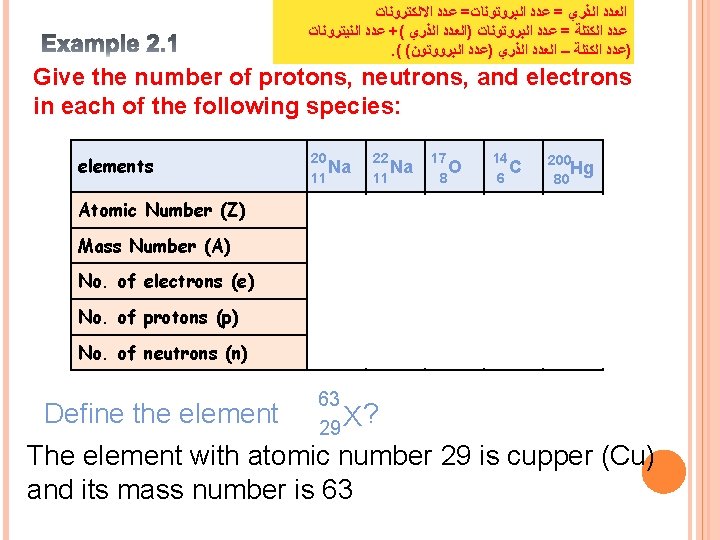
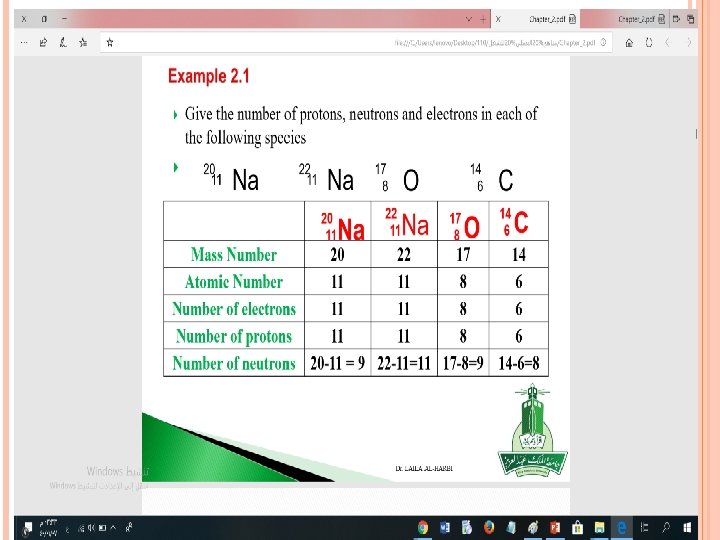
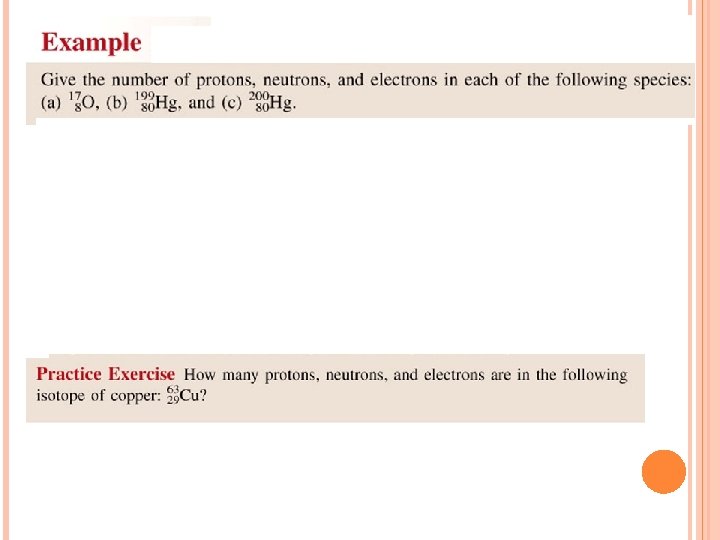
ﺍﻟﻌﺪﺩ ﺍﻟﺬﺭﻱ = ﻋﺪﺩ ﺍﻟﺒﺮﻭﺗﻮﻧﺎﺕ= ﻋﺪﺩ ﺍﻻﻟﻜﺘﺮﻭﻧﺎﺕ ﻋﺪﺩ ﺍﻟﻨﻴﺘﺮﻭﻧﺎﺕ +( ﻋﺪﺩ ﺍﻟﻜﺘﻠﺔ = ﻋﺪﺩ ﺍﻟﺒﺮﻭﺗﻮﻧﺎﺕ )ﺍﻟﻌﺪﺩ ﺍﻟﺬﺭﻱ . ( ( )ﻋﺪﺩ ﺍﻟﻜﺘﻠﺔ – ﺍﻟﻌﺪﺩ ﺍﻟﺬﺭﻱ )ﻋﺪﺩ ﺍﻟﺒﺮﻭﻭﺗﻮﻥ Give the number of protons, neutrons, and electrons in each of the following species: elements 20 Na 11 22 Na 11 17 O 8 14 C 6 200 Hg 80 Atomic Number (Z) 11 11 8 6 80 Mass Number (A) 20 22 17 14 200 No. of electrons (e) 11 11 8 6 80 No. of protons (p) 11 11 8 6 80 No. of neutrons (n) 9 11 9 8 120 Define the element 63 ? 29 X The element with atomic number 29 is cupper (Cu) and its mass number is 63
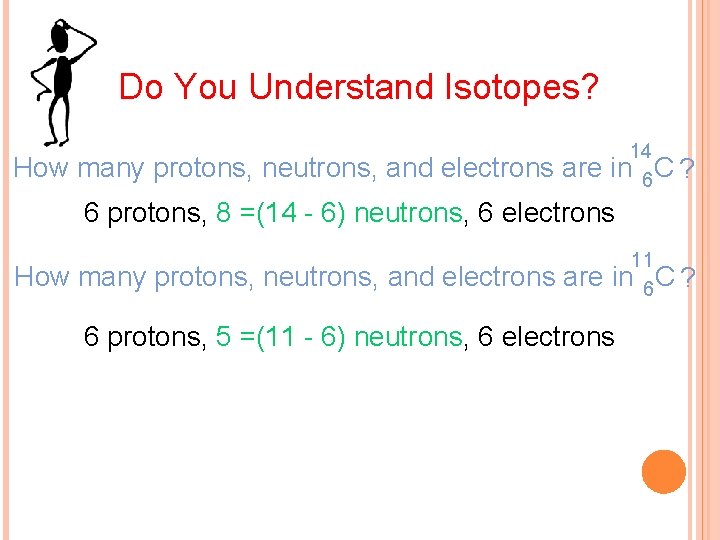
Do You Understand Isotopes? 14 How many protons, neutrons, and electrons are in 6 C ? 6 protons, 8 =(14 - 6) neutrons, 6 electrons 11 How many protons, neutrons, and electrons are in 6 C ? 6 protons, 5 =(11 - 6) neutrons, 6 electrons
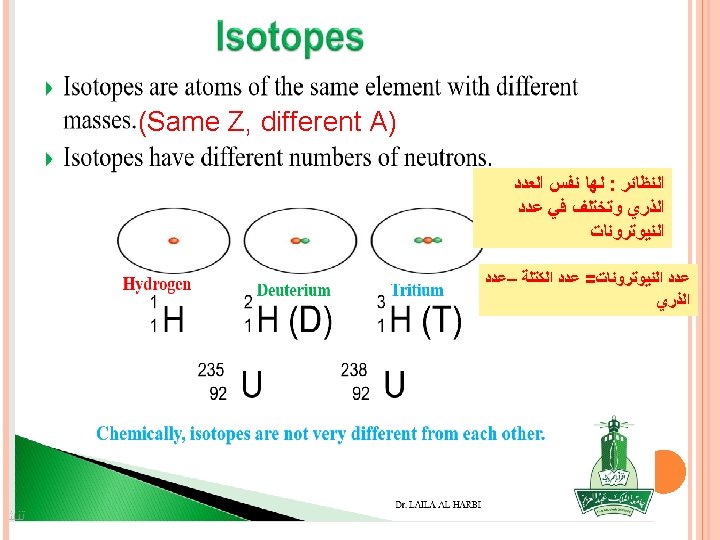
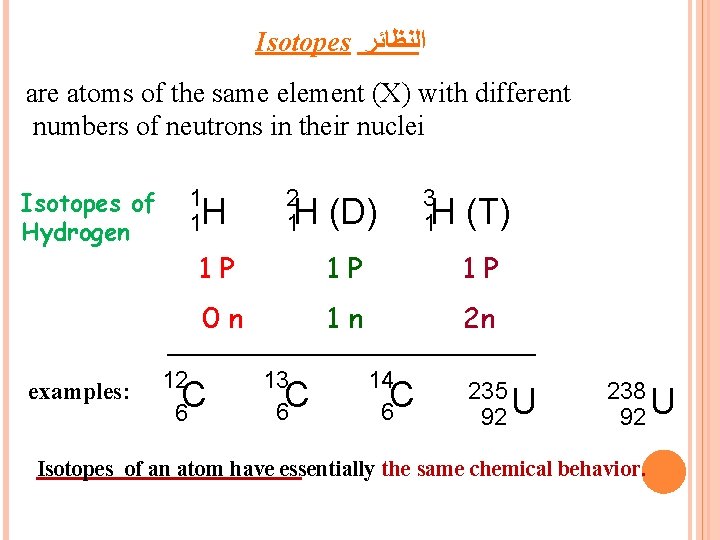
Isotopes ﺍﻟﻨﻈﺎﺋﺮ are atoms of the same element (X) with different numbers of neutrons in their nuclei Isotopes of Hydrogen examples: 1 1 H 2 1 H (D) 3 1 H (T) 1 P 1 P 1 P 0 n 1 n 2 n 12 C 6 13 C 6 14 C 6 235 92 U 238 92 U Isotopes of an atom have essentially the same chemical behavior.
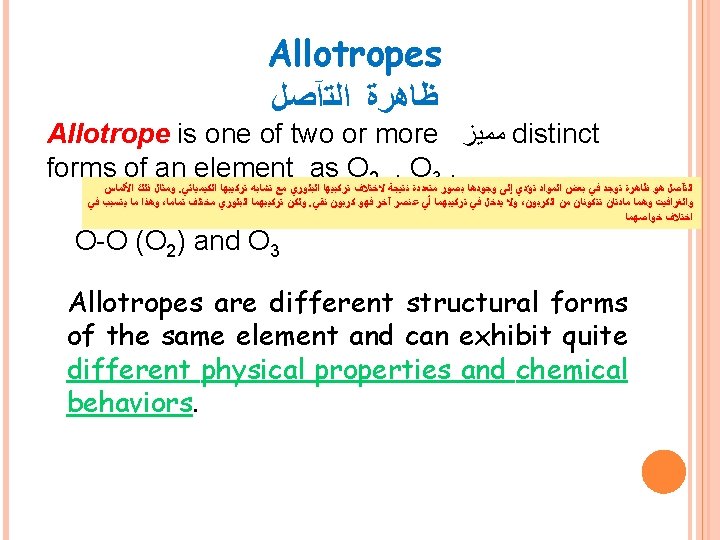
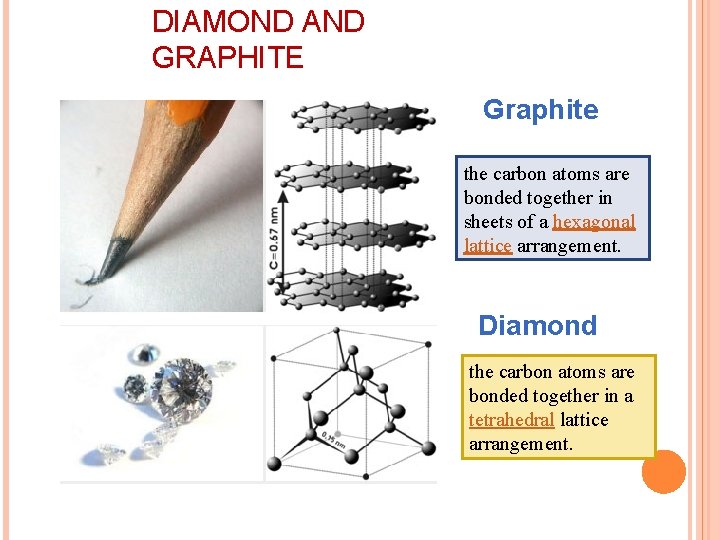
DIAMOND AND GRAPHITE Graphite the carbon atoms are bonded together in sheets of a hexagonal lattice arrangement. Diamond the carbon atoms are bonded together in a tetrahedral lattice arrangement.
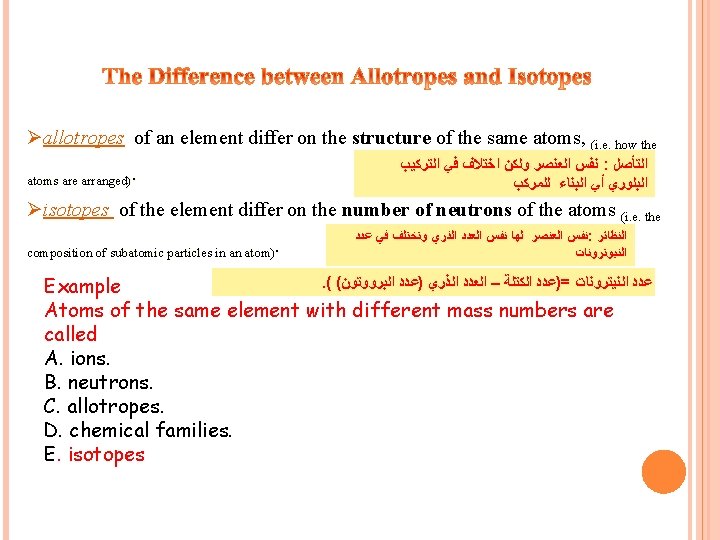
Øallotropes of an element differ on the structure of the same atoms, (i. e. how the atoms are arranged). ﻧﻔﺲ ﺍﻟﻌﻨﺼﺮ ﻭﻟﻜﻦ ﺍﺧﺘﻼﻑ ﻓﻲ ﺍﻟﺘﺮﻛﻴﺐ : ﺍﻟﺘﺄﺼﻞ ﺍﻟﺒﻠﻮﺭﻱ ﺃﻲ ﺍﻟﺒﻨﺎﺀ ﻟﻠﻤﺮﻛﺐ Øisotopes of the element differ on the number of neutrons of the atoms (i. e. the composition of subatomic particles in an atom). ﻧﻔﺲ ﺍﻟﻌﻨﺼﺮ ﻟﻬﺎ ﻧﻔﺲ ﺍﻟﻌﺪﺩ ﺍﻟﺬﺭﻱ ﻭﺗﺨﺘﻠﻒ ﻓﻲ ﻋﺪﺩ : ﺍﻟﻨﻈﺎﺋﺮ ﺍﻟﻨﻴﻮﺗﺮﻭﻧﺎﺕ . ( ( ﻋﺪﺩ ﺍﻟﻨﻴﺘﺮﻭﻧﺎﺕ =)ﻋﺪﺩ ﺍﻟﻜﺘﻠﺔ – ﺍﻟﻌﺪﺩ ﺍﻟﺬﺭﻱ )ﻋﺪﺩ ﺍﻟﺒﺮﻭﻭﺗﻮﻥ Example Atoms of the same element with different mass numbers are called A. ions. B. neutrons. C. allotropes. D. chemical families. E. isotopes
2. 4 THE PERIODIC TABLE.
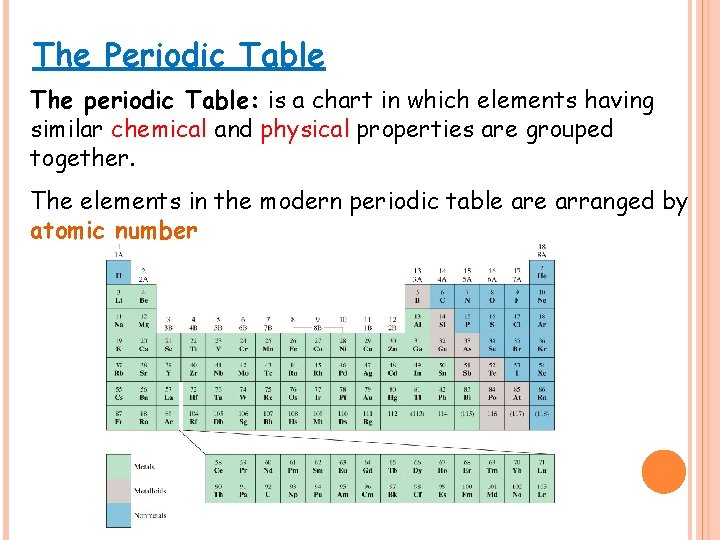
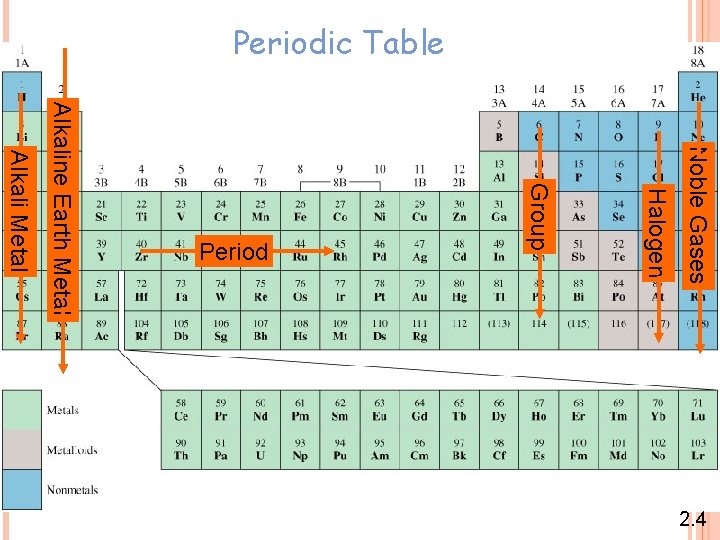
The Periodic Table The periodic Table: is a chart in which elements having similar chemical and physical properties are grouped together. The elements in the modern periodic table arranged by atomic number
Periodic Table Noble Gases Halogen Group Alkali Metal Alkaline Earth Metal Period 2. 4
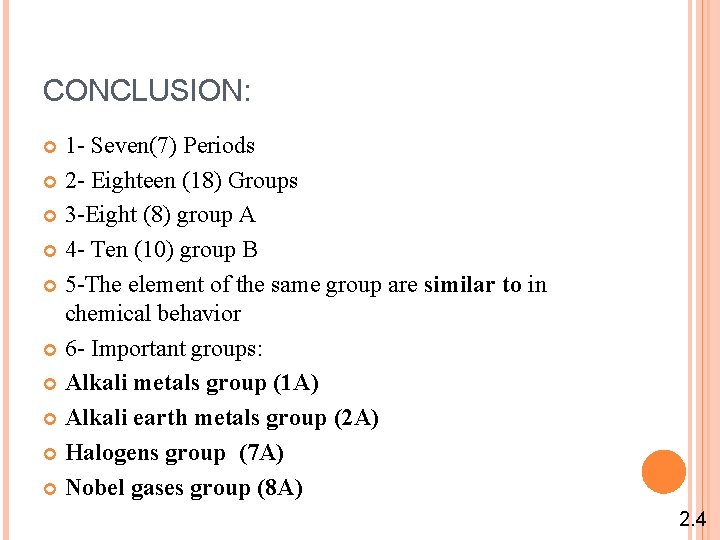
CONCLUSION: 1 - Seven(7) Periods 2 - Eighteen (18) Groups 3 -Eight (8) group A 4 - Ten (10) group B 5 -The element of the same group are similar to in chemical behavior 6 - Important groups: Alkali metals group (1 A) Alkali earth metals group (2 A) Halogens group (7 A) Nobel gases group (8 A) 2. 4
2. 5 MOLECULES AND IONS.
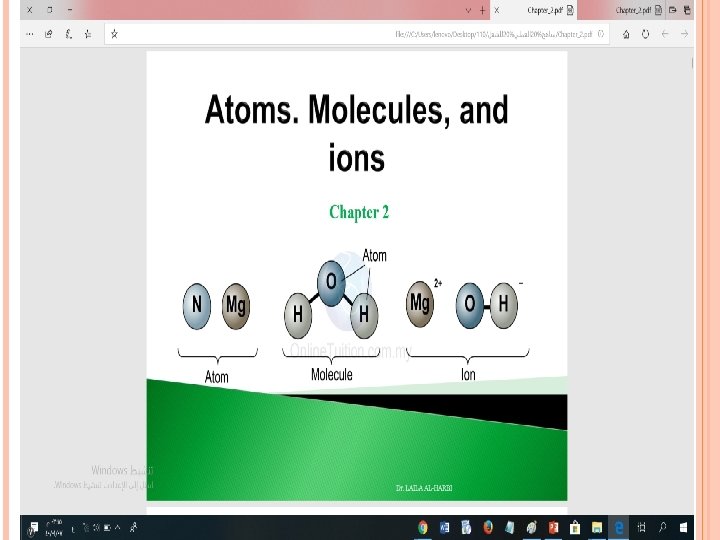
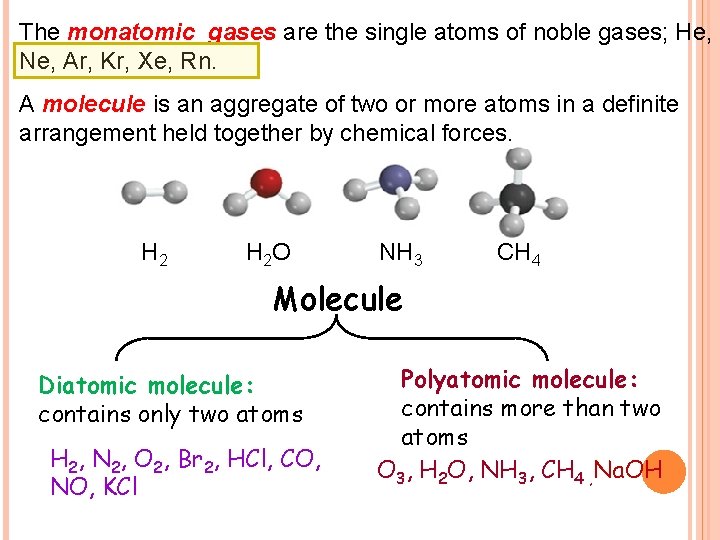
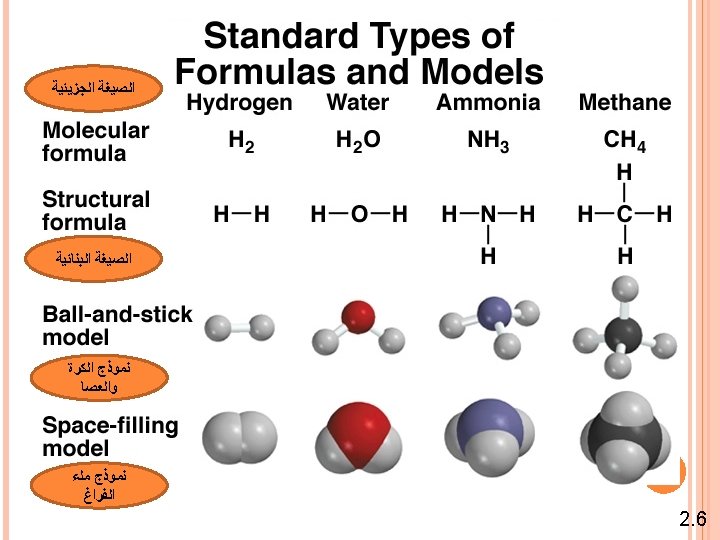
The monatomic gases are the single atoms of noble gases; He, Ne, Ar, Kr, Xe, Rn. A molecule is an aggregate of two or more atoms in a definite arrangement held together by chemical forces. H 2 O NH 3 CH 4 Molecule Diatomic molecule: contains only two atoms H 2, N 2, O 2, Br 2, HCl, CO, NO, KCl Polyatomic molecule: contains more than two atoms O 3, H 2 O, NH 3, CH 4 , Na. OH
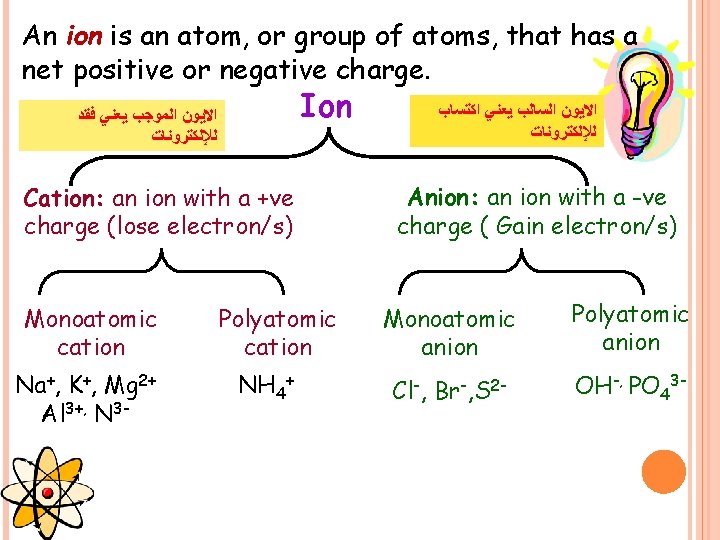
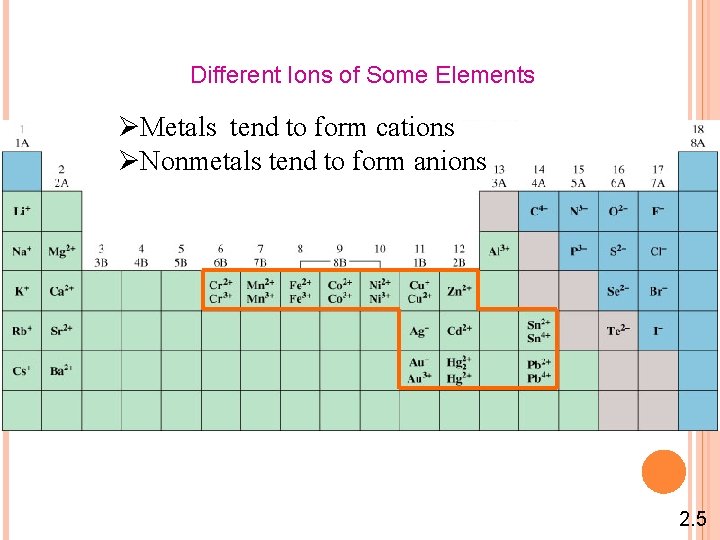
An ion is an atom, or group of atoms, that has a net positive or negative charge. Ion ﺍﻻﻳﻮﻥ ﺍﻟﻤﻮﺟﺐ ﻳﻌﻨﻲ ﻓﻘﺪ ﻟﻺﻟﻜﺘﺮﻭﻧﺎﺕ Cation: an ion with a +ve charge (lose electron/s) Monoatomic cation Na+, K+, Mg 2+ Al 3+, N 3 - Polyatomic cation NH 4+ ﺍﻻﻳﻮﻥ ﺍﻟﺴﺎﻟﺐ ﻳﻌﻨﻲ ﺍﻛﺘﺴﺎﺏ ﻟﻺﻟﻜﺘﺮﻭﻧﺎﺕ Anion: an ion with a -ve charge ( Gain electron/s) Monoatomic anion Polyatomic anion Cl-, Br-, S 2 - OH-, PO 43 -
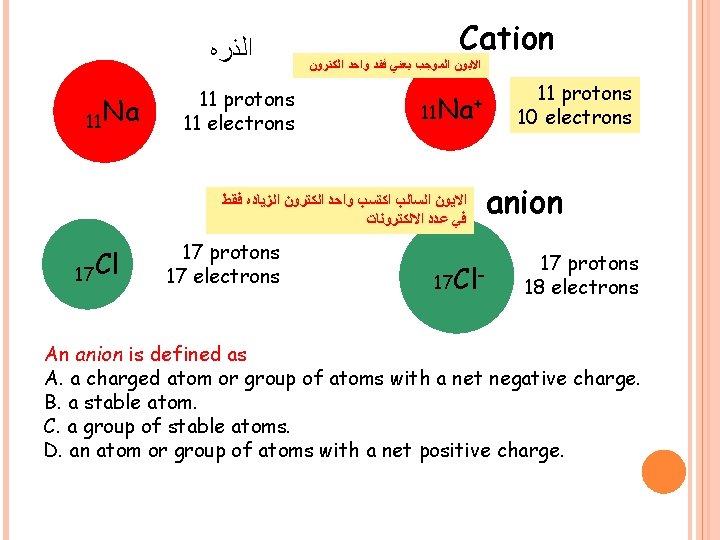
ﺍﻟﺬﺭﻩ 11 Na 11 protons 11 electrons Cation ﺍﻻﻳﻮﻥ ﺍﻟﻤﻮﺟﺐ ﻳﻌﻨﻲ ﻓﻘﺪ ﻭﺍﺣﺪ ﺍﻟﻜﺘﺮﻭﻥ 11 Na+ ﺍﻻﻳﻮﻥ ﺍﻟﺴﺎﻟﺐ ﺍﻛﺘﺴﺐ ﻭﺍﺣﺪ ﺍﻟﻜﺘﺮﻭﻥ ﺍﻟﺰﻳﺎﺩﻩ ﻓﻘﻂ ﻓﻲ ﻋﺪﺩ ﺍﻻﻟﻜﺘﺮﻭﻧﺎﺕ 17 Cl 17 protons 17 electrons 17 Cl- 11 protons 10 electrons anion 17 protons 18 electrons An anion is defined as A. a charged atom or group of atoms with a net negative charge. B. a stable atom. C. a group of stable atoms. D. an atom or group of atoms with a net positive charge.
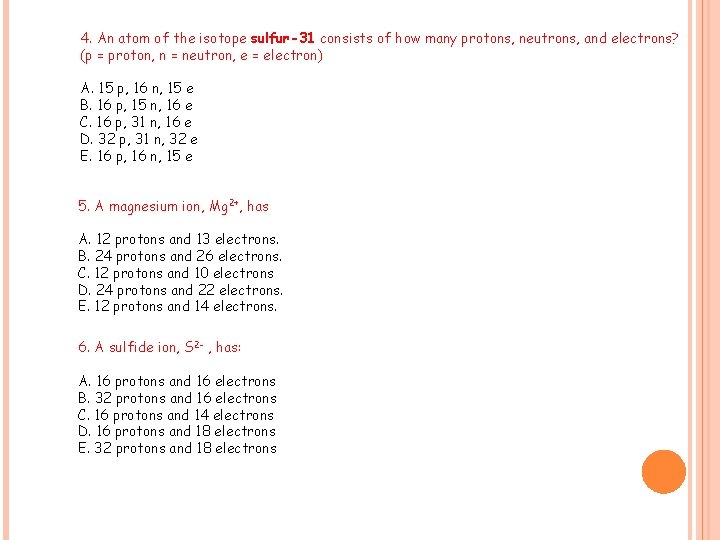
4. An atom of the isotope sulfur-31 consists of how many protons, neutrons, and electrons? (p = proton, n = neutron, e = electron) A. 15 p, 16 n, 15 e B. 16 p, 15 n, 16 e C. 16 p, 31 n, 16 e D. 32 p, 31 n, 32 e E. 16 p, 16 n, 15 e 5. A magnesium ion, Mg 2+, has A. 12 protons and 13 electrons. B. 24 protons and 26 electrons. C. 12 protons and 10 electrons D. 24 protons and 22 electrons. E. 12 protons and 14 electrons. 6. A sulfide ion, S 2 - , has: A. 16 protons and 16 electrons B. 32 protons and 16 electrons C. 16 protons and 14 electrons D. 16 protons and 18 electrons E. 32 protons and 18 electrons
Different Ions of Some Elements ØMetals tend to form cations ØNonmetals tend to form anions 2. 5
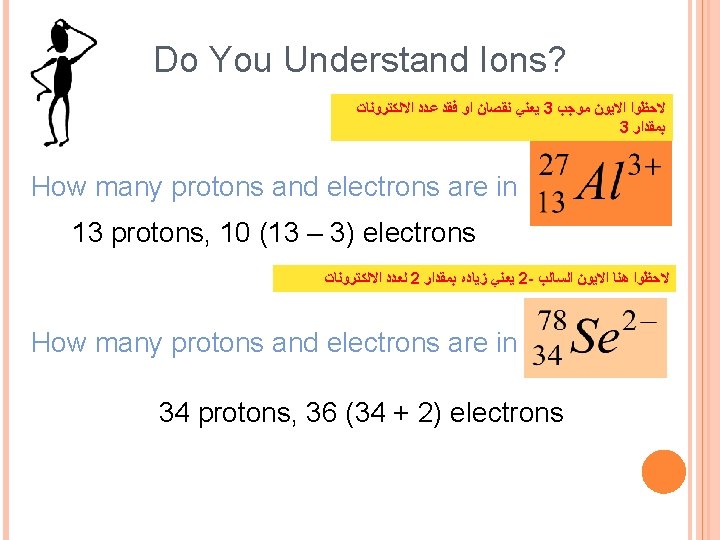
11 5 B 31 315 P 26 196 79 Au 222 86 Rn 18 -3=15 54 -26=28 26 -2=24 0 ﺍﻟﺸﺤﻨﺔ 2+ 86 0
2. 6 CHEMICAL FORMULAS.
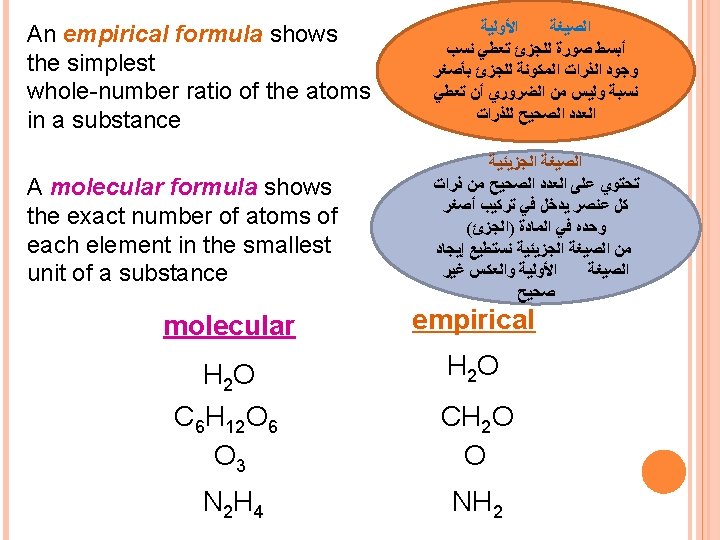
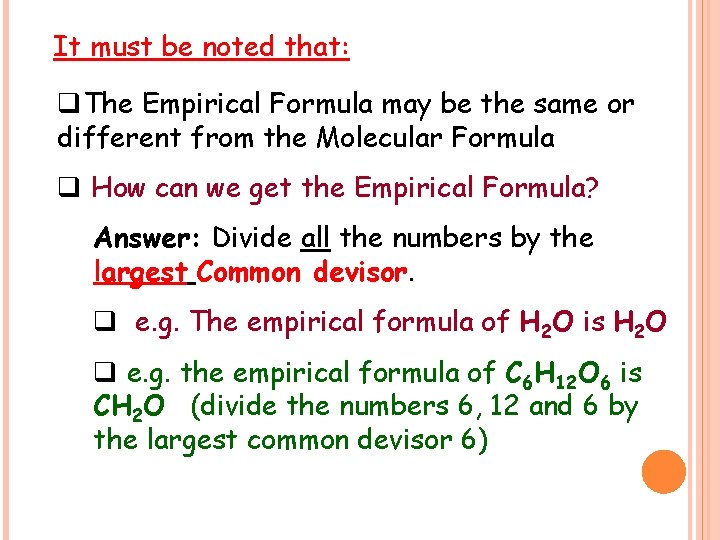
It must be noted that: q. The Empirical Formula may be the same or different from the Molecular Formula q How can we get the Empirical Formula? Answer: Divide all the numbers by the largest Common devisor. q e. g. The empirical formula of H 2 O is H 2 O q e. g. the empirical formula of C 6 H 12 O 6 is CH 2 O (divide the numbers 6, 12 and 6 by the largest common devisor 6)
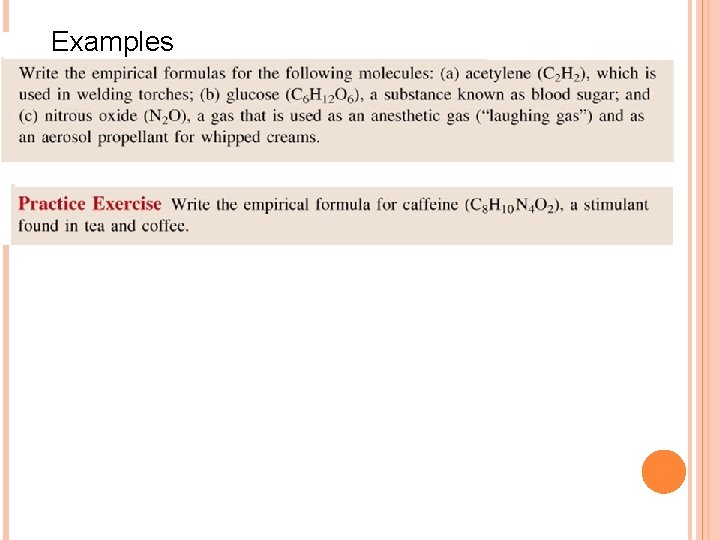
Examples
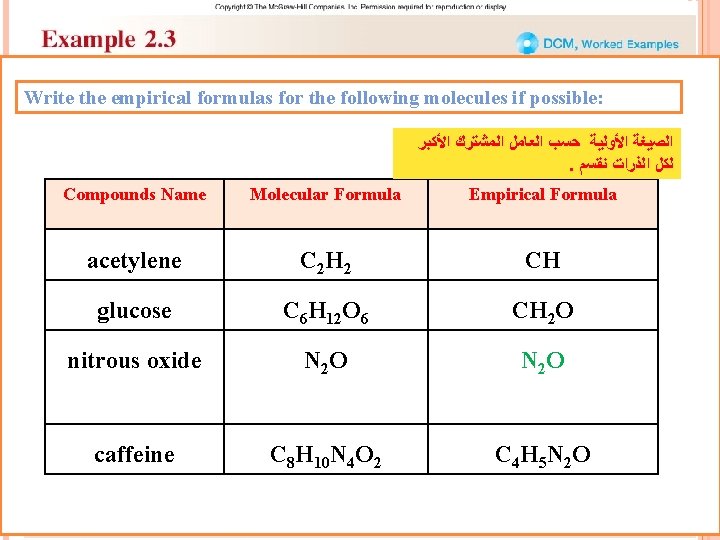
Write the empirical formulas for the following molecules if possible: ﺍﻟﺼﻴﻐﺔ ﺍﻷﻮﻟﻴﺔ ﺣﺴﺐ ﺍﻟﻌﺎﻣﻞ ﺍﻟﻤﺸﺘﺮﻙ ﺍﻷﻜﺒﺮ . ﻟﻜﻞ ﺍﻟﺬﺭﺍﺕ ﻧﻘﺴﻢ Compounds Name Molecular Formula Empirical Formula acetylene C 2 H 2 CH glucose C 6 H 12 O 6 CH 2 O nitrous oxide N 2 O caffeine C 8 H 10 N 4 O 2 C 4 H 5 N 2 O
2. 7 NAMING COMPOUNDS.
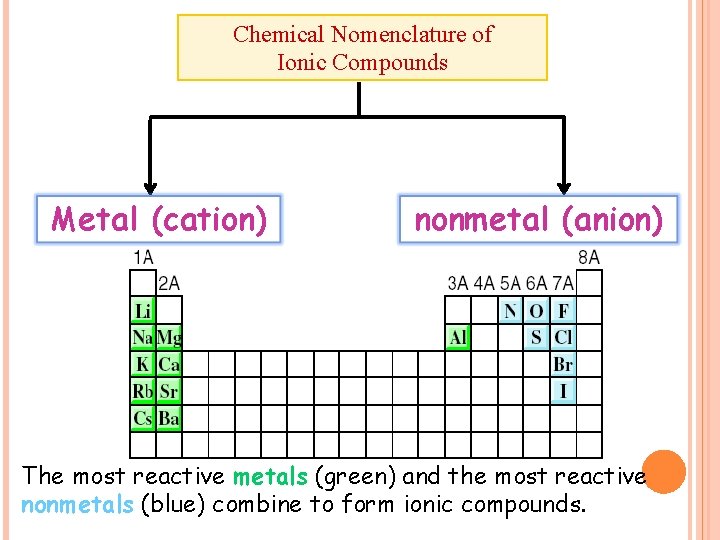
Chemical Nomenclature of Ionic Compounds Metal (cation) nonmetal (anion) The most reactive metals (green) and the most reactive nonmetals (blue) combine to form ionic compounds.
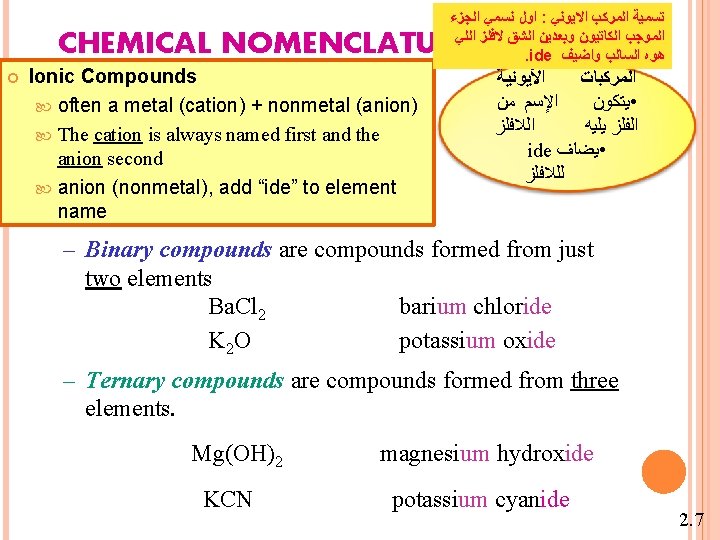
ﺍﻭﻝ ﻧﺴﻤﻲ ﺍﻟﺠﺰﺀ : ﺗﺴﻤﻴﺔ ﺍﻟﻤﺮﻛﺐ ﺍﻻﻳﻮﻧﻲ ﺍﻟﻤﻮﺟﺐ ﺍﻟﻜﺎﺗﻴﻮﻥ ﻭﺑﻌﺪﻳﻦ ﺍﻟﺸﻖ ﻻﻓﻠﺰ ﺍﻟﻠﻲ . ide ﻫﻮﻩ ﺍﻟﺴﺎﻟﺐ ﻭﺍﺿﻴﻒ CHEMICAL NOMENCLATURE Ionic Compounds often a metal (cation) + nonmetal (anion) The cation is always named first and the anion second anion (nonmetal), add “ide” to element name ﺍﻷﻴﻮﻧﻴﺔ ﺍﻟﻤﺮﻛﺒﺎﺕ ﺍﻹﺳﻢ ﻣﻦ • ﻳﺘﻜﻮﻥ ﺍﻟﻼﻓﻠﺰ ﺍﻟﻔﻠﺰ ﻳﻠﻴﻪ ide • ﻳﻀﺎﻑ ﻟﻠﻼﻓﻠﺰ – Binary compounds are compounds formed from just two elements barium chloride Ba. Cl 2 potassium oxide K 2 O – Ternary compounds are compounds formed from three elements. Mg(OH)2 KCN magnesium hydroxide potassium cyanide 2. 7
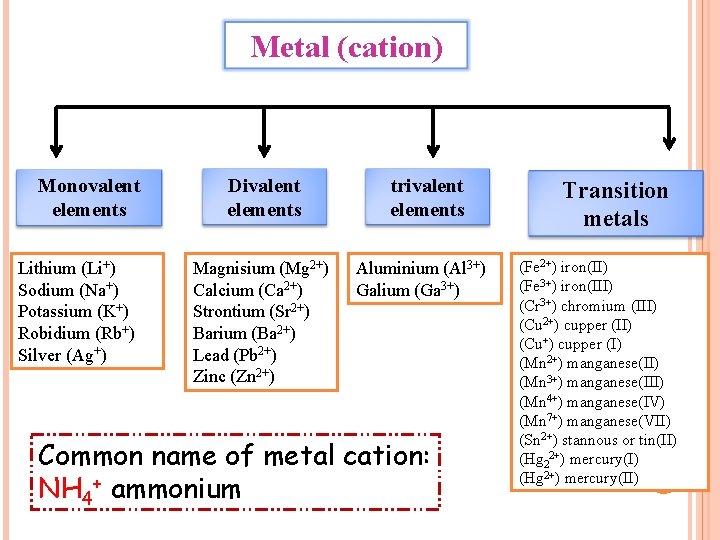
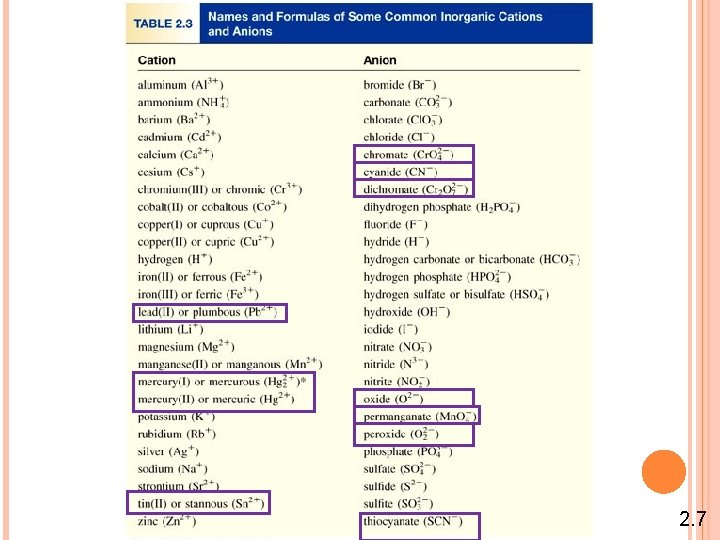
Metal (cation) Monovalent elements Lithium (Li+) Sodium (Na+) Potassium (K+) Robidium (Rb+) Silver (Ag+) Divalent elements Magnisium (Mg 2+) Calcium (Ca 2+) Strontium (Sr 2+) Barium (Ba 2+) Lead (Pb 2+) Zinc (Zn 2+) trivalent elements Aluminium (Al 3+) Galium (Ga 3+) Common name of metal cation: NH 4+ ammonium Transition metals (Fe 2+) iron(II) (Fe 3+) iron(III) (Cr 3+) chromium (III) (Cu 2+) cupper (II) (Cu+) cupper (I) (Mn 2+) manganese(II) (Mn 3+) manganese(III) (Mn 4+) manganese(IV) (Mn 7+) manganese(VII) (Sn 2+) stannous or tin(II) (Hg 22+) mercury(I) (Hg 2+) mercury(II)
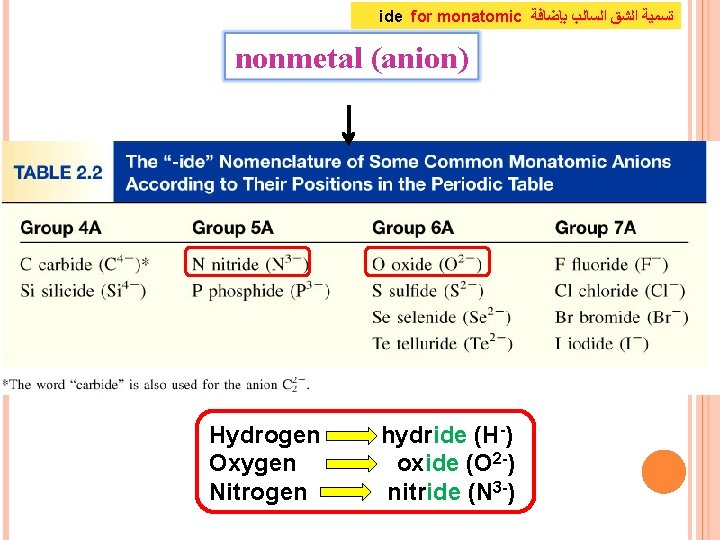
ide for monatomic ﺗﺴﻤﻴﺔ ﺍﻟﺸﻖ ﺍﻟﺴﺎﻟﺐ ﺑﺈﺿﺎﻓﺔ nonmetal (anion) Hydrogen hydride (H-) Oxygen oxide (O 2 -) Nitrogen nitride (N 3 -)
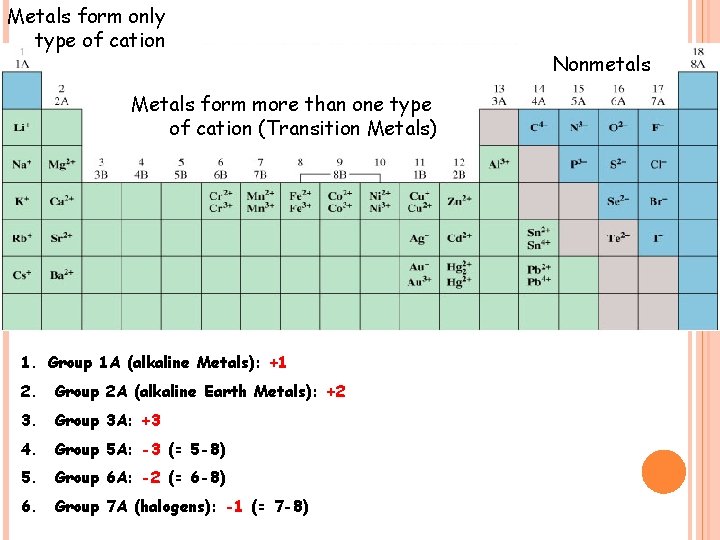
Metals form only type of cation Metals form more than one type of cation (Transition Metals) 1. Group 1 A (alkaline Metals): +1 2. Group 2 A (alkaline Earth Metals): +2 3. Group 3 A: +3 4. Group 5 A: -3 (= 5 -8) 5. Group 6 A: -2 (= 6 -8) 6. Group 7 A (halogens): -1 (= 7 -8) Nonmetals
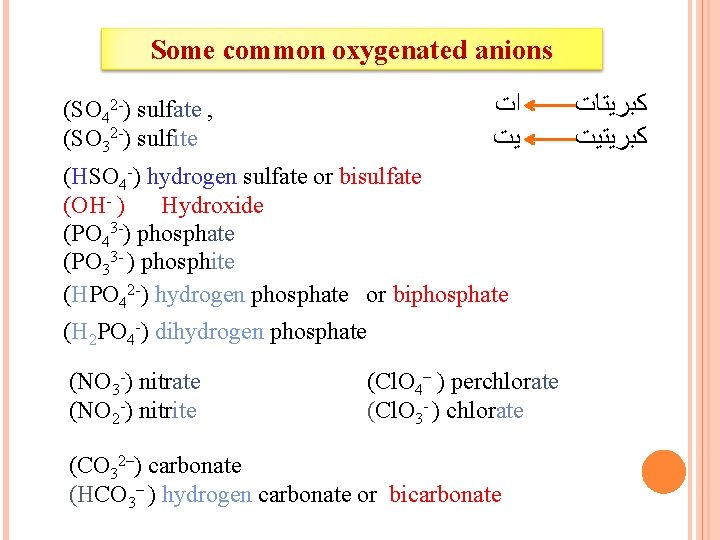
Some common oxygenated anions (SO 42 -) sulfate , (SO 32 -) sulfite ﺍﺕ ﻛﺒﺮﻳﺘﺎﺕ ﻳﺖ ﻛﺒﺮﻳﺘﻴﺖ (HSO 4 -) hydrogen sulfate or bisulfate (OH- ) Hydroxide (PO 43 -) phosphate (PO 33 - ) phosphite (HPO 42 -) hydrogen phosphate or biphosphate (H 2 PO 4 -) dihydrogen phosphate (NO 3 -) nitrate (NO 2 -) nitrite (Cl. O 4– ) perchlorate (Cl. O 3 - ) chlorate (CO 32–) carbonate (HCO 3– ) hydrogen carbonate or bicarbonate
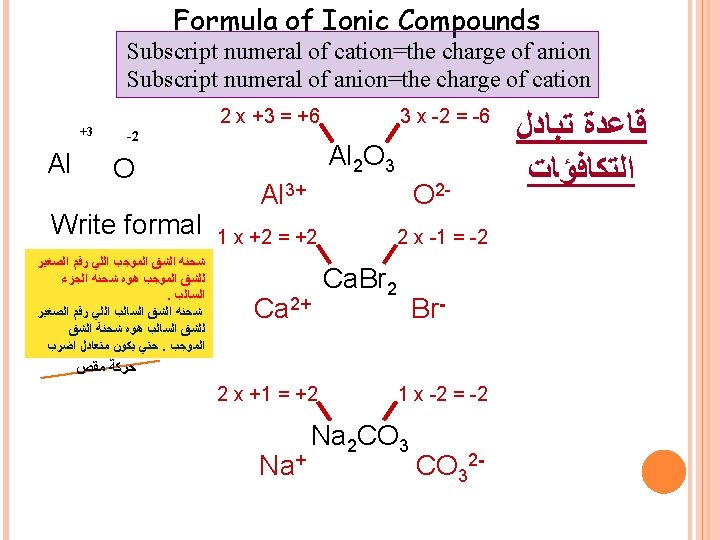
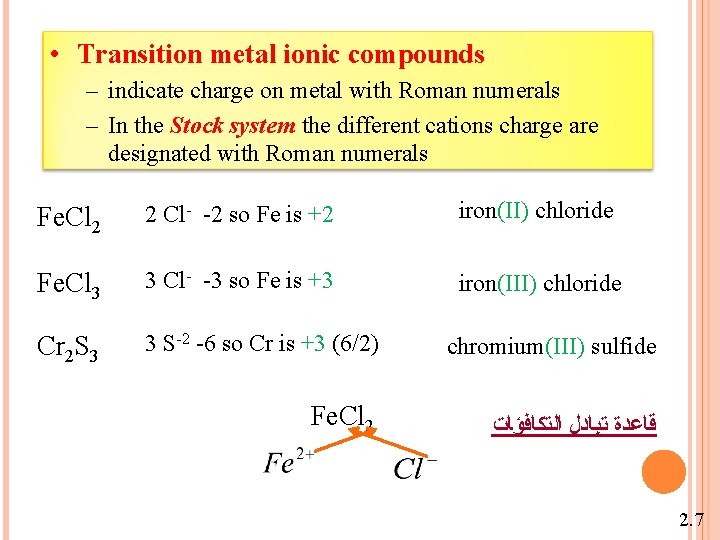
• Transition metal ionic compounds – indicate charge on metal with Roman numerals – In the Stock system the different cations charge are designated with Roman numerals Fe. Cl 2 2 Cl- -2 so Fe is +2 iron(II) chloride Fe. Cl 3 3 Cl- -3 so Fe is +3 iron(III) chloride Cr 2 S 3 3 S-2 -6 so Cr is +3 (6/2) chromium(III) sulfide Fe. Cl 2 ﻗﺎﻋﺪﺓ ﺗﺒﺎﺩﻝ ﺍﻟﺘﻜﺎﻓﺆﺎﺕ 2. 7
2. 7
Name the following ionic compounds: Cu(NO 3)2 Cupper(II) nitrate KH 2 PO 4 Potassium dihydrogen phosphate NH 4 SCN Ammonium thiocyanate Na 2 O 2 Sodium peroxide Li 2 SO 3 Lithium sulfite Ca 3(PO 3)2 Calcium phosphite KMn. O 4 Potassium permenganate Hg 2 Cl 2 Mercury(I) chloride K 2 Cr. O 4 Potassium chromate
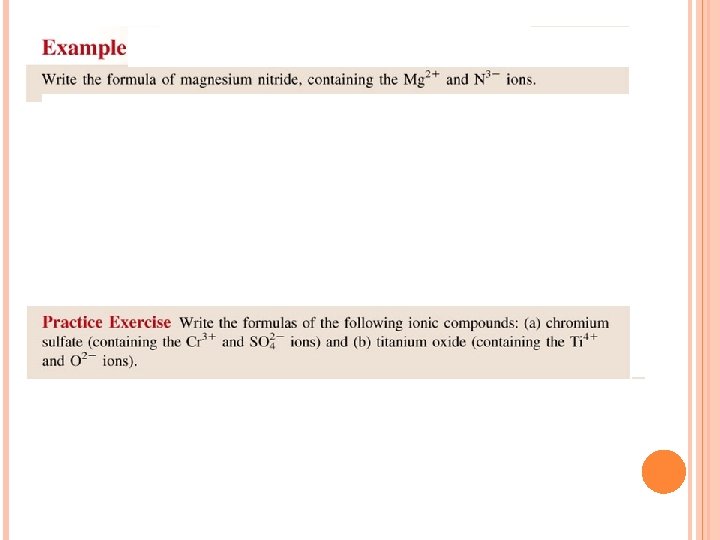
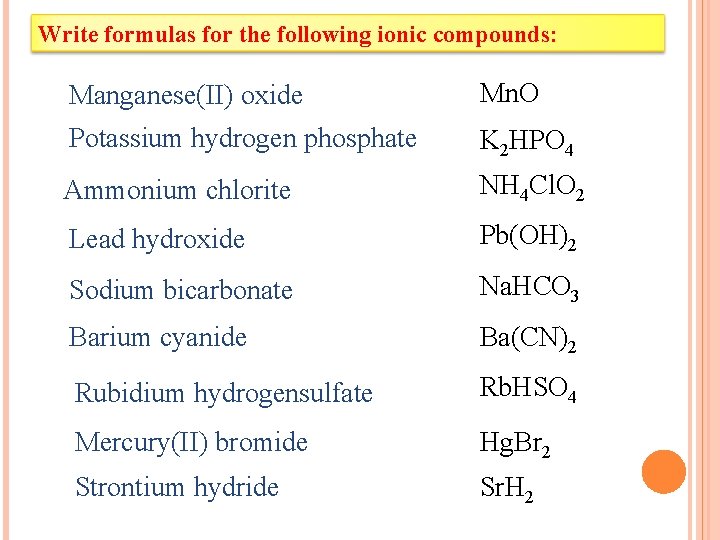
Write formulas for the following ionic compounds: Manganese(II) oxide Mn. O Potassium hydrogen phosphate K 2 HPO 4 Ammonium chlorite NH 4 Cl. O 2 Lead hydroxide Pb(OH)2 Sodium bicarbonate Na. HCO 3 Barium cyanide Ba(CN)2 Rubidium hydrogensulfate Rb. HSO 4 Mercury(II) bromide Hg. Br 2 Strontium hydride Sr. H 2
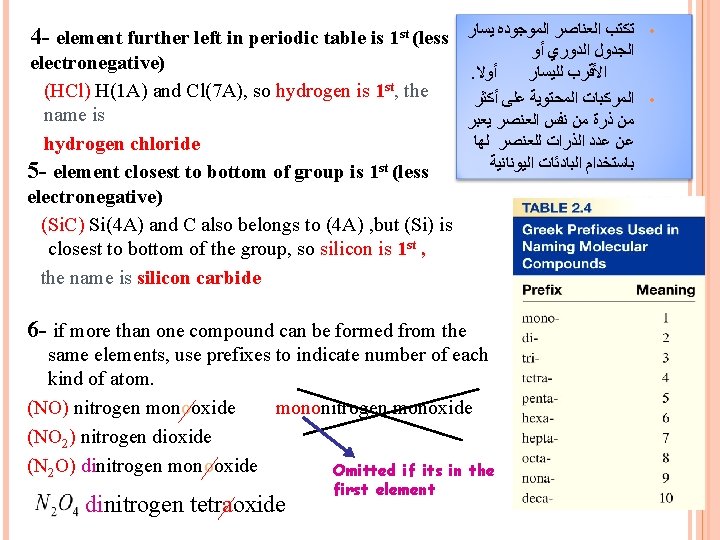
4 - element further left in periodic table is 1 st (less electronegative) (HCl) H(1 A) and Cl(7 A), so hydrogen is 1 st, the name is hydrogen chloride 5 - element closest to bottom of group is 1 st (less electronegative) (Si. C) Si(4 A) and C also belongs to (4 A) , but (Si) is closest to bottom of the group, so silicon is 1 st , the name is silicon carbide • ﺗﻜﺘﺐ ﺍﻟﻌﻨﺎﺻﺮ ﺍﻟﻤﻮﺟﻮﺩﻩ ﻳﺴﺎﺭ ﺍﻟﺠﺪﻭﻝ ﺍﻟﺪﻭﺭﻱ ﺃﻮ . ﺃﻮﻻ ﺍﻷﻘﺮﺏ ﻟﻠﻴﺴﺎﺭ • ﺍﻟﻤﺮﻛﺒﺎﺕ ﺍﻟﻤﺤﺘﻮﻳﺔ ﻋﻠﻰ ﺃﻜﺜﺮ ﻣﻦ ﺫﺭﺓ ﻣﻦ ﻧﻔﺲ ﺍﻟﻌﻨﺼﺮ ﻳﻌﺒﺮ ﻋﻦ ﻋﺪﺩ ﺍﻟﺬﺭﺍﺕ ﻟﻠﻌﻨﺼﺮ ﻟﻬﺎ ﺑﺎﺳﺘﺨﺪﺍﻡ ﺍﻟﺒﺎﺩﺋﺎﺕ ﺍﻟﻴﻮﻧﺎﻧﻴﺔ 6 - if more than one compound can be formed from the same elements, use prefixes to indicate number of each kind of atom. (NO) nitrogen monooxide mononitrogen monoxide (NO 2) nitrogen dioxide (N 2 O) dinitrogen monooxide Omitted if its in the dinitrogen tetraoxide first element
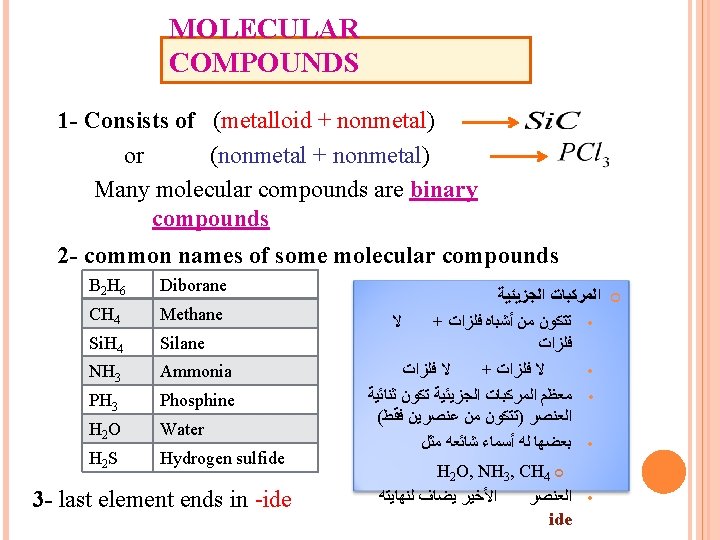
Examples of Molecular Compounds HI hydrogen iodide PF 3 phosphorus trifluoride H 2 O 2 Hydrogen peroxide N 2 O 4 dinitrogen tetraoxide NO 2 nitrogen dioxide N 2 O dinitrogen monooxide ICl 3 Iodine trichloride TOXIC! Laughing Gas 2. 7
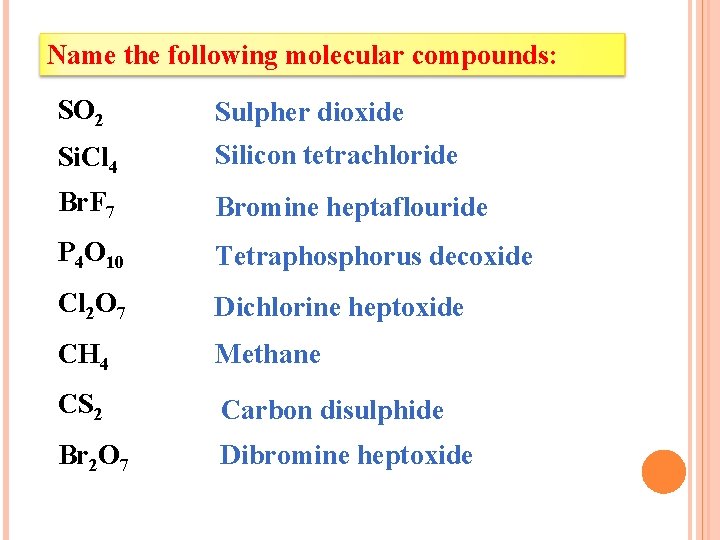
Name the following molecular compounds: SO 2 Sulpher dioxide Si. Cl 4 Silicon tetrachloride Br. F 7 Bromine heptaflouride P 4 O 10 Tetraphosphorus decoxide Cl 2 O 7 Dichlorine heptoxide CH 4 Methane CS 2 Carbon disulphide Br 2 O 7 Dibromine heptoxide
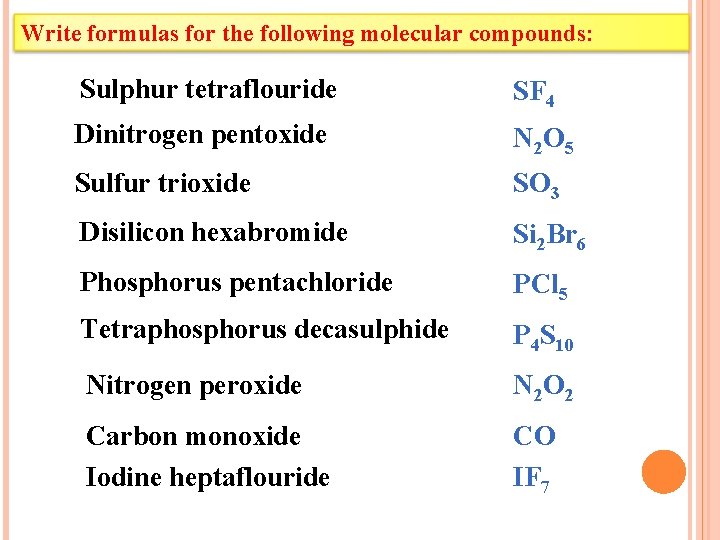
Write formulas for the following molecular compounds: Sulphur tetraflouride SF 4 Dinitrogen pentoxide N 2 O 5 Sulfur trioxide SO 3 Disilicon hexabromide Si 2 Br 6 Phosphorus pentachloride PCl 5 Tetraphosphorus decasulphide P 4 S 10 Nitrogen peroxide N 2 O 2 Carbon monoxide Iodine heptaflouride CO IF 7
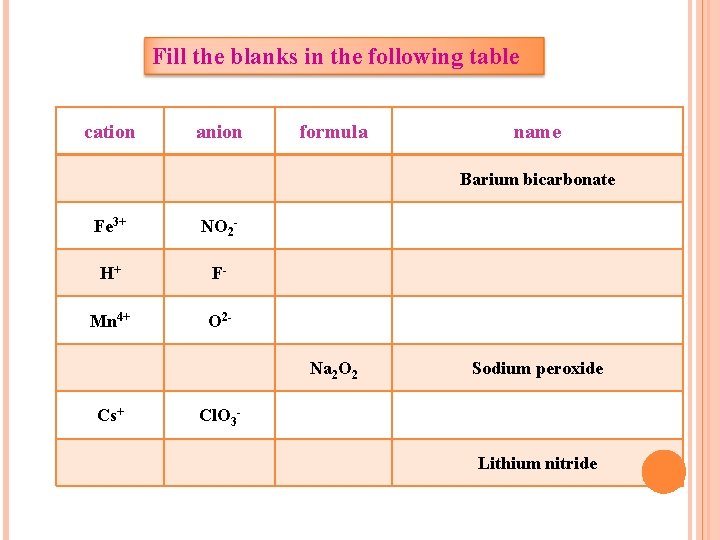
Fill the blanks in the following table cation anion formula name Ba 2+ HCO 3 - Ba(HCO 3)2 Barium bicarbonate Fe 3+ NO 2 - Fe (NO 2)3 Iron(III)nitrite H+ F- HF Hyrdogen flouride Mn 4+ O 2 - Mn. O 2 Manganise(IV)oxide Na+ O 22 - Na 2 O 2 Sodium peroxide Cs+ Cl. O 3 - Cs. Cl. O 3 Cesium chlorate Li+ N 3 - Li 3 N Lithium nitride