The Structure of Atoms Ch 4 Section 2

- Slides: 19
The Structure of Atoms Ch. 4, Section 2
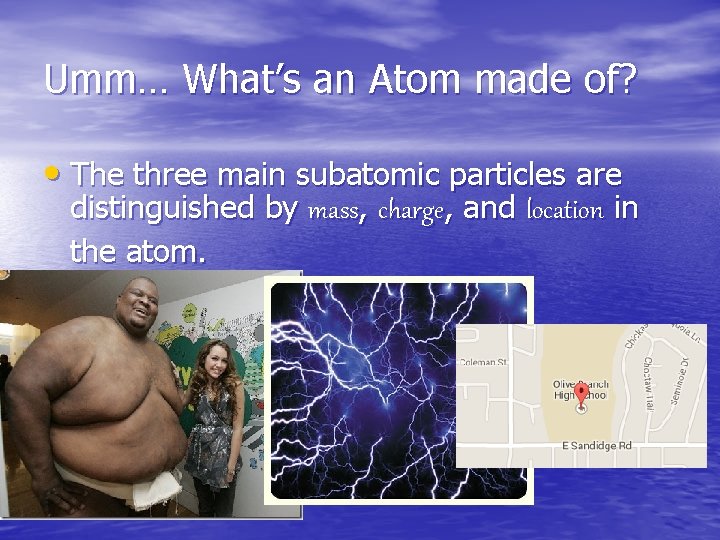
Umm… What’s an Atom made of? • The three main subatomic particles are distinguished by mass, charge, and location in the atom.
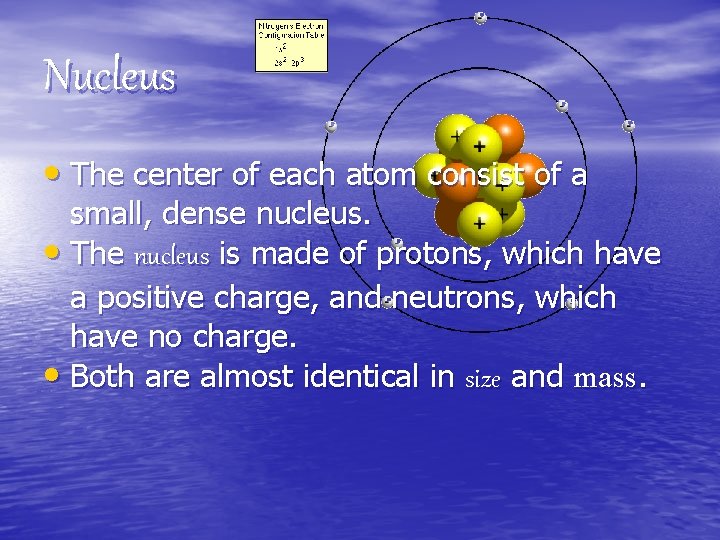
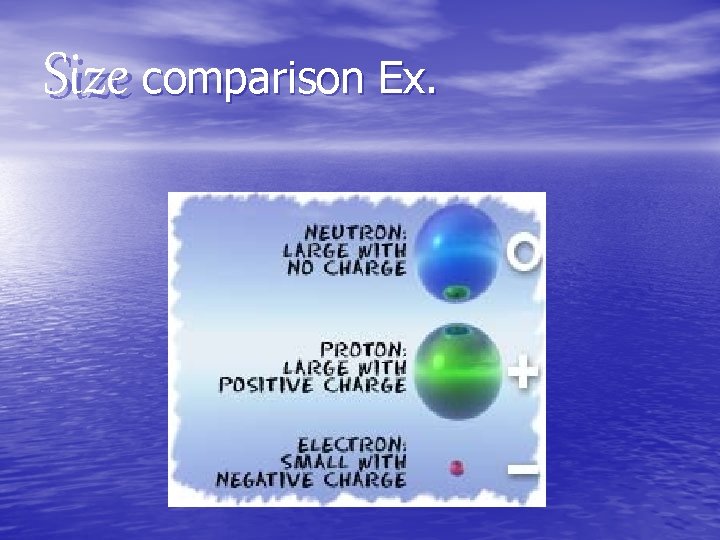
Nucleus • The center of each atom consist of a small, dense nucleus. • The nucleus is made of protons, which have a positive charge, and neutrons, which have no charge. • Both are almost identical in size and mass.
Size comparison Ex.
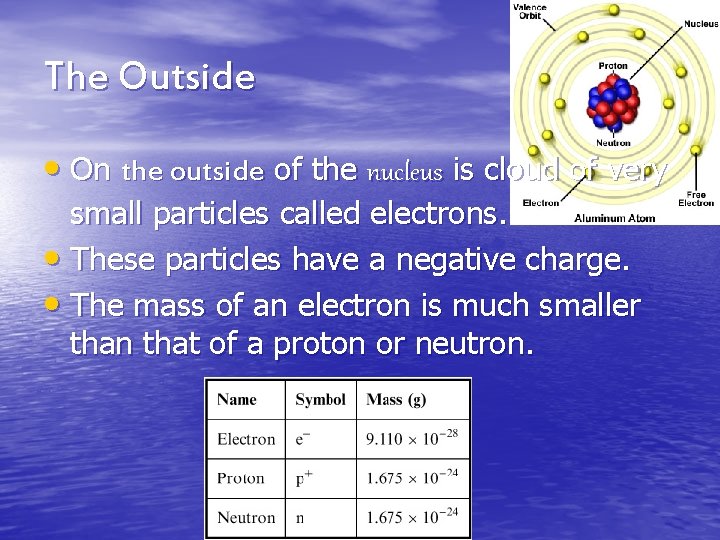
The Outside • On the outside of the nucleus is cloud of very small particles called electrons. • These particles have a negative charge. • The mass of an electron is much smaller than that of a proton or neutron.
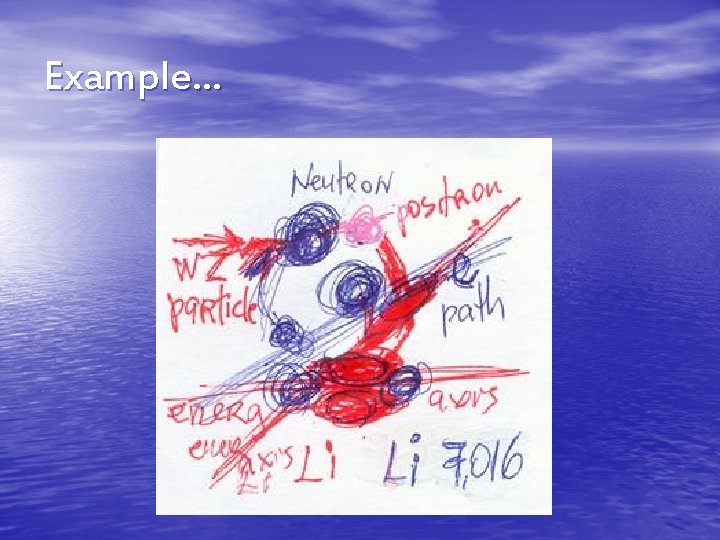
Example…
Protons • Each element has a unique number of protons. • An element is defined by the number of protons in an atom.
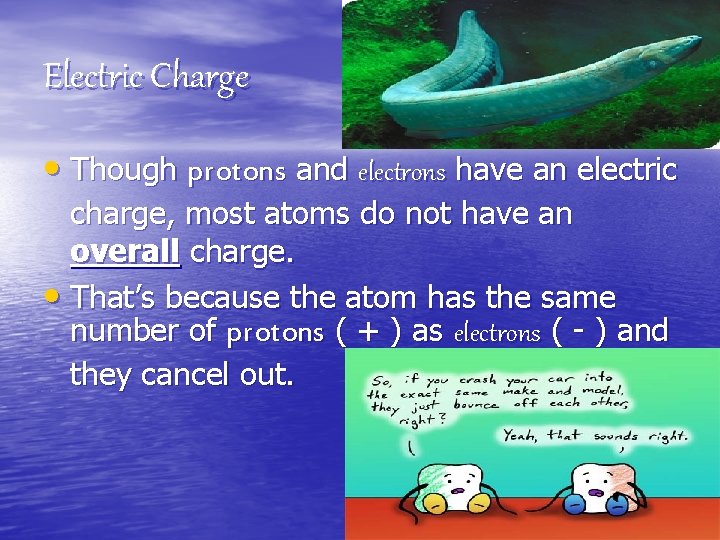
Electric Charge • Though protons and electrons have an electric charge, most atoms do not have an overall charge. • That’s because the atom has the same number of protons ( + ) as electrons ( - ) and they cancel out.
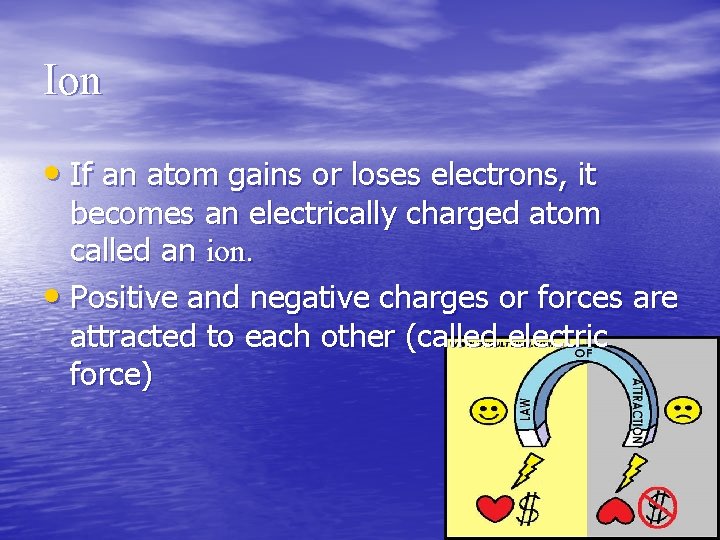
Ion • If an atom gains or loses electrons, it becomes an electrically charged atom called an ion. • Positive and negative charges or forces are attracted to each other (called electric force)
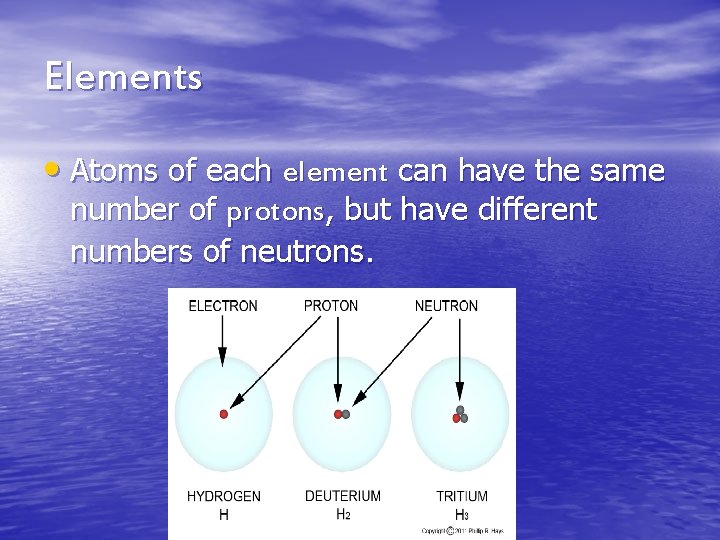
Elements • Atoms of each element can have the same number of protons, but have different numbers of neutrons.
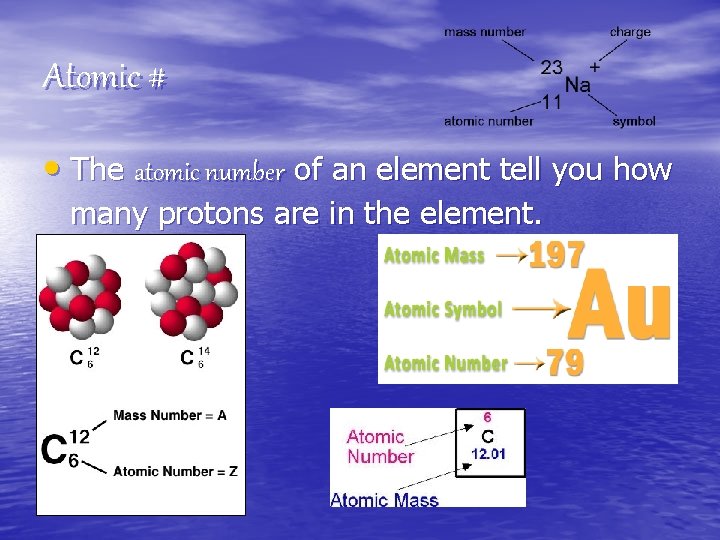
Atomic # • The atomic number of an element tell you how many protons are in the element.
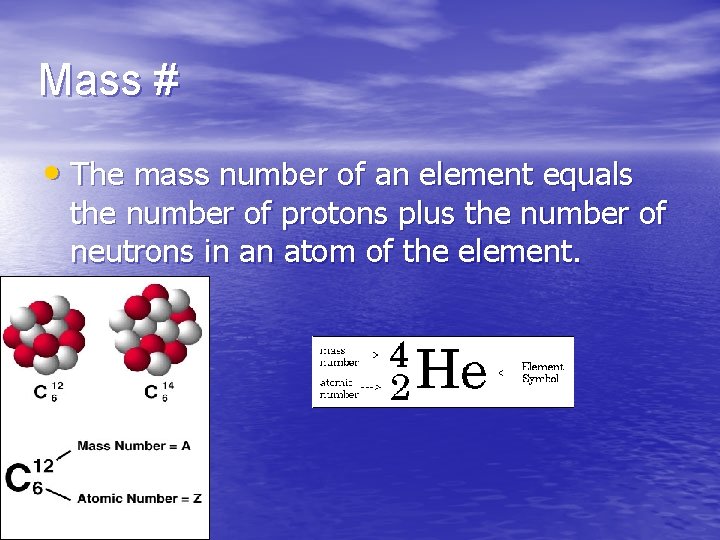
Mass # • The mass number of an element equals the number of protons plus the number of neutrons in an atom of the element.
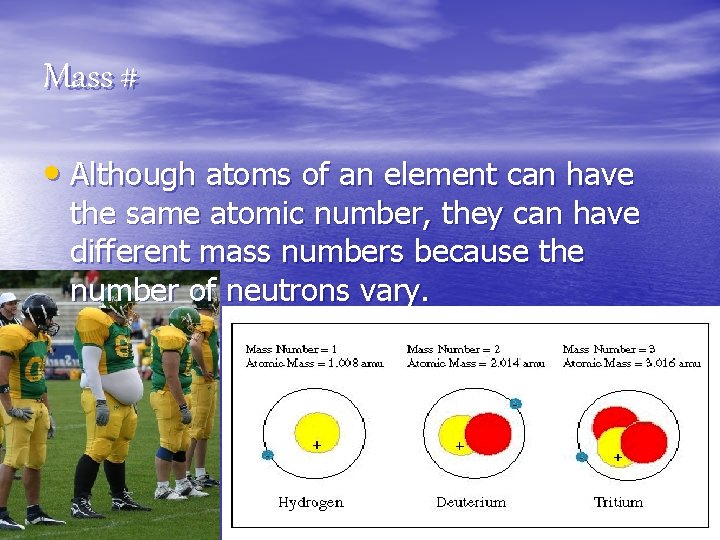
Mass # • Although atoms of an element can have the same atomic number, they can have different mass numbers because the number of neutrons vary.
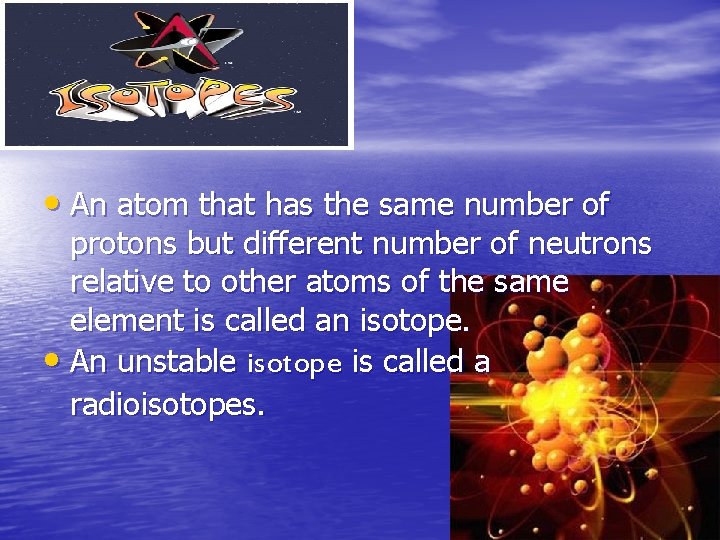
• An atom that has the same number of protons but different number of neutrons relative to other atoms of the same element is called an isotope. • An unstable isotope is called a radioisotopes.
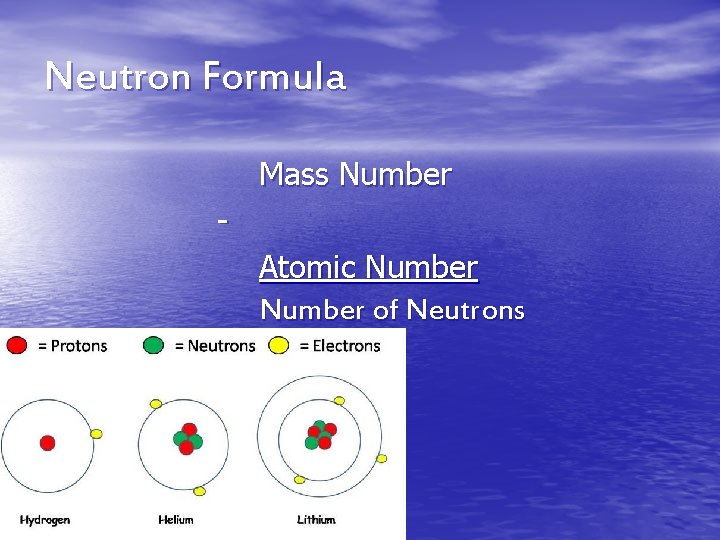
Neutron Formula Mass Number Atomic Number of Neutrons
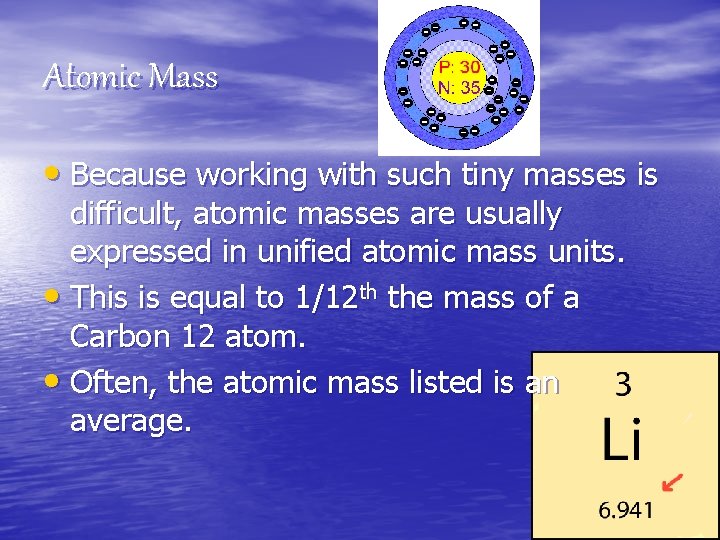
Atomic Mass • Because working with such tiny masses is difficult, atomic masses are usually expressed in unified atomic mass units. • This is equal to 1/12 th the mass of a Carbon 12 atom. • Often, the atomic mass listed is an average.
Mole • A mole is a collection of a very large number of particles. • 1 Mole (mol) = 602, 213, 670, 000, 000 or…
Avogadro’s # 6. 022 x 1023 • This number is called Avogadro’s number • Named after Amedeo Avogadro
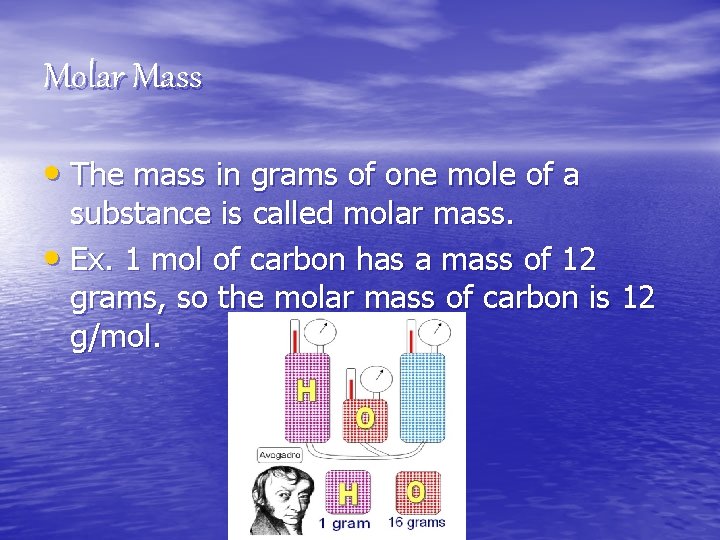
Molar Mass • The mass in grams of one mole of a substance is called molar mass. • Ex. 1 mol of carbon has a mass of 12 grams, so the molar mass of carbon is 12 g/mol.