The 26 th Annual Maureen Kearney Rowley CJA
- Slides: 57
The 26 th Annual Maureen Kearney Rowley CJA Panel Training Seminar May 12, 2017 PROFFERS: PITFALLS OR WINDFALLS? PATRICK J. EGAN, PARTNER, FOX ROTHSCHILD ELIZABETH TOPLIN, ASST. CHIEF, FEDERAL DEFENDER * OFFICE (EDPA)
INTRODUCTION Initial Practical Considerations � Reputation of AUSA � Client’s willingness to disclose facts about his/her involvement. Time is of the Essence � Complaint vs. Indictment � Is client primary target? � Willingness of others to testify Strength of your position � Do you want them or do they want you? � Strong defense? 2
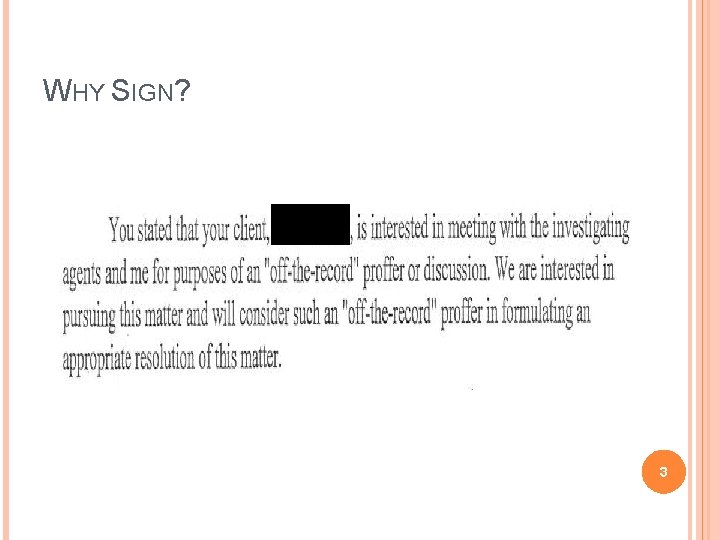
WHY SIGN? 3
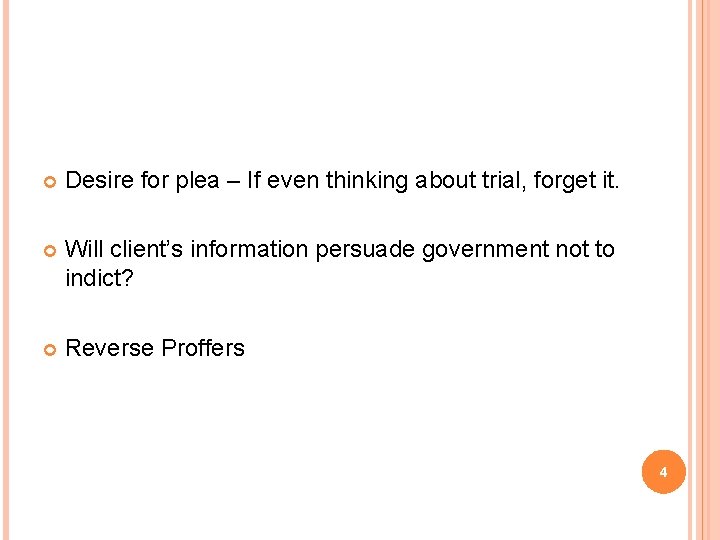
Desire for plea – If even thinking about trial, forget it. Will client’s information persuade government not to indict? Reverse Proffers 4
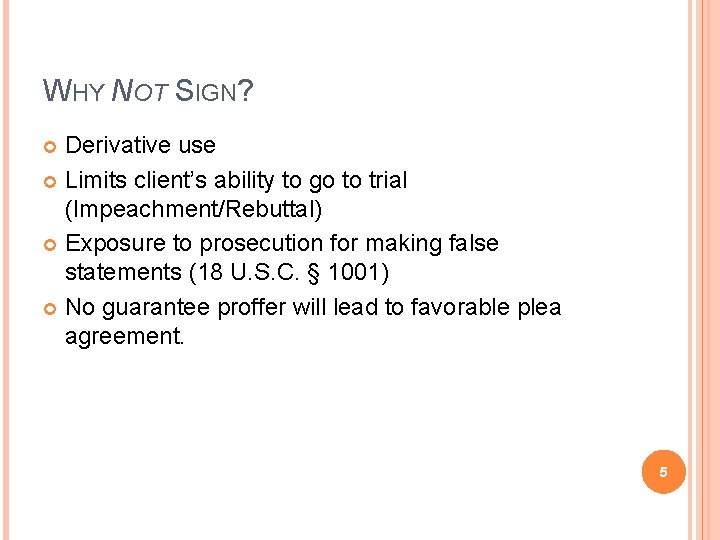
WHY NOT SIGN? Derivative use Limits client’s ability to go to trial (Impeachment/Rebuttal) Exposure to prosecution for making false statements (18 U. S. C. § 1001) No guarantee proffer will lead to favorable plea agreement. 5
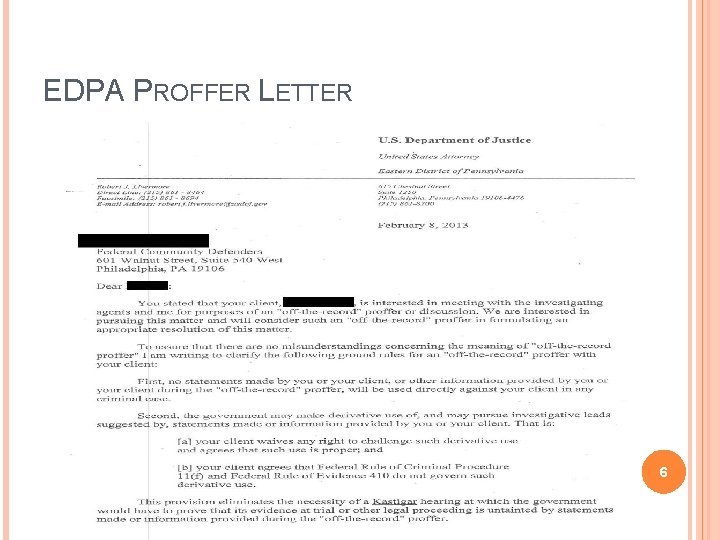
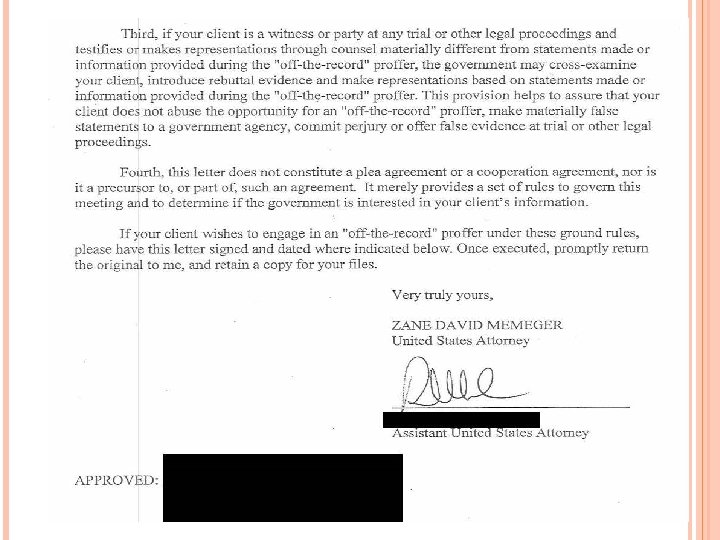
EDPA PROFFER LETTER 6
7
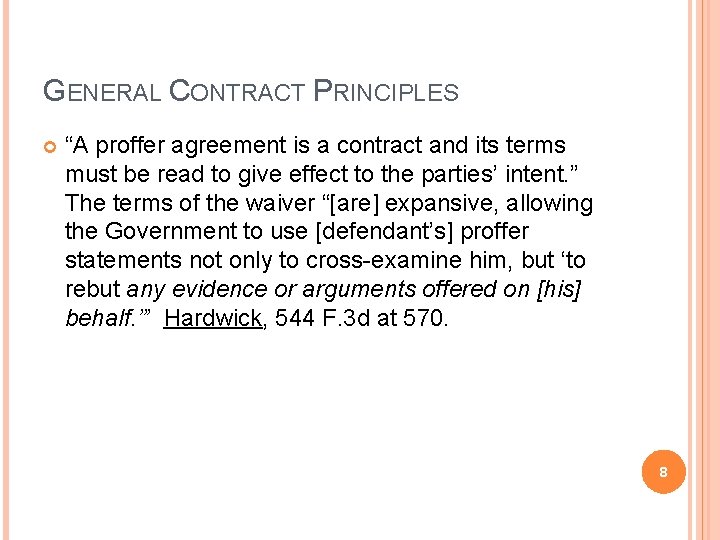
GENERAL CONTRACT PRINCIPLES “A proffer agreement is a contract and its terms must be read to give effect to the parties’ intent. ” The terms of the waiver “[are] expansive, allowing the Government to use [defendant’s] proffer statements not only to cross-examine him, but ‘to rebut any evidence or arguments offered on [his] behalf. ’” Hardwick, 544 F. 3 d at 570. 8
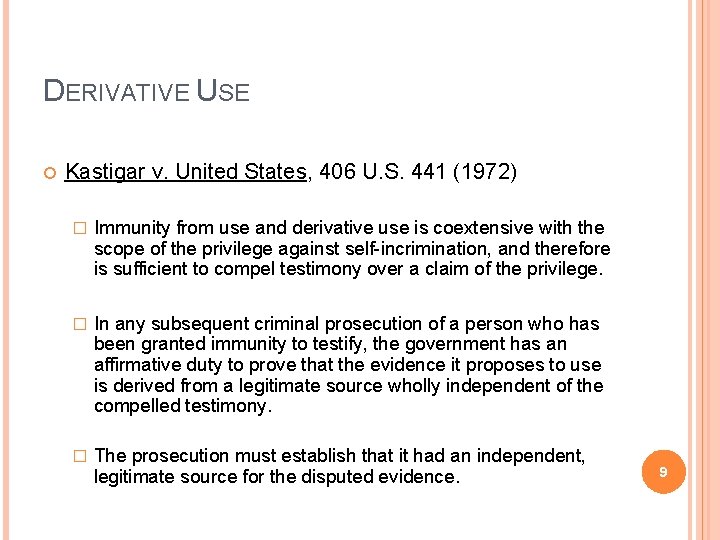
DERIVATIVE USE Kastigar v. United States, 406 U. S. 441 (1972) � Immunity from use and derivative use is coextensive with the scope of the privilege against self-incrimination, and therefore is sufficient to compel testimony over a claim of the privilege. � In any subsequent criminal prosecution of a person who has been granted immunity to testify, the government has an affirmative duty to prove that the evidence it proposes to use is derived from a legitimate source wholly independent of the compelled testimony. � The prosecution must establish that it had an independent, legitimate source for the disputed evidence. 9
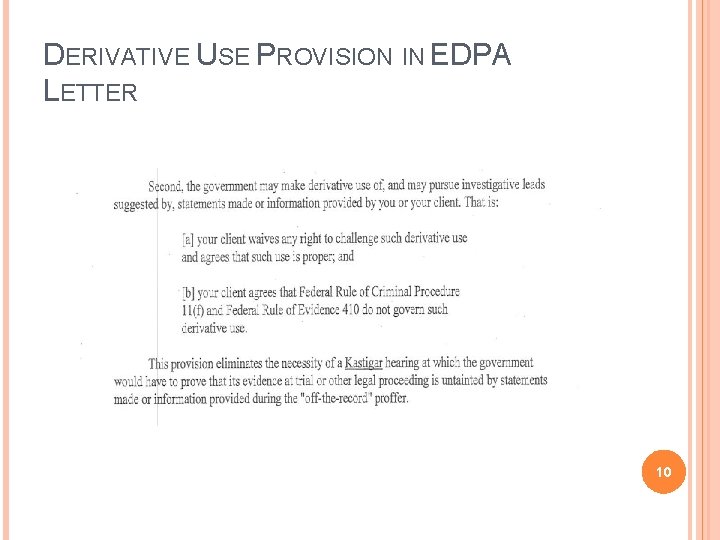
DERIVATIVE USE PROVISION IN EDPA LETTER 10
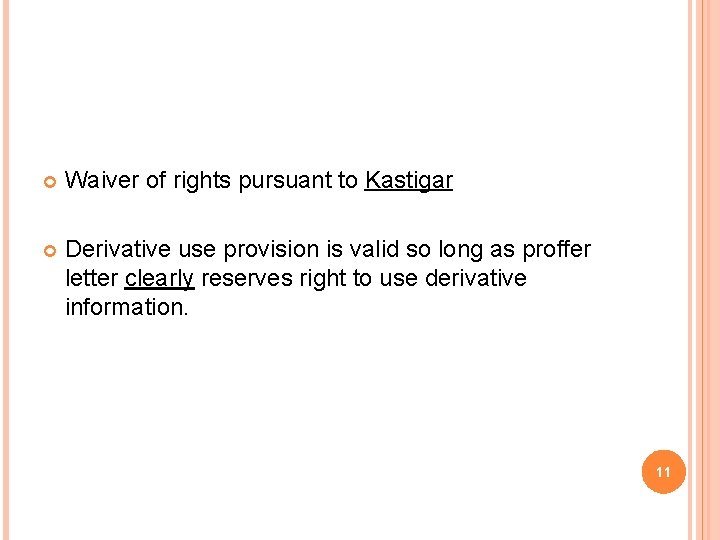
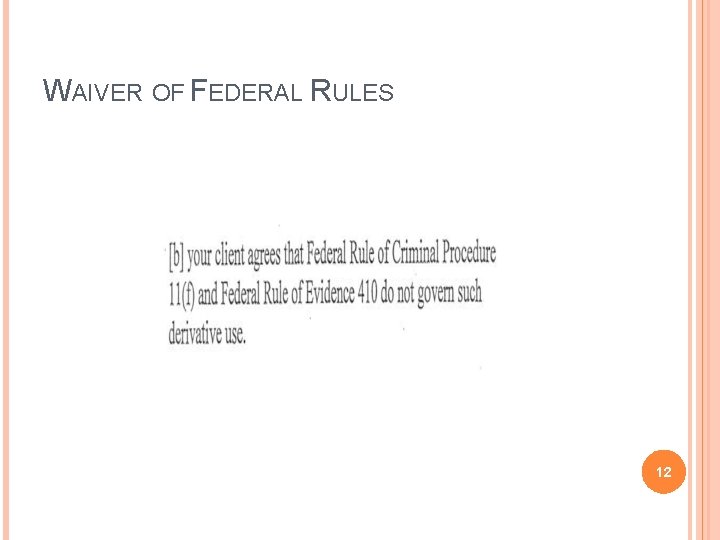
Waiver of rights pursuant to Kastigar Derivative use provision is valid so long as proffer letter clearly reserves right to use derivative information. 11
WAIVER OF FEDERAL RULES 12
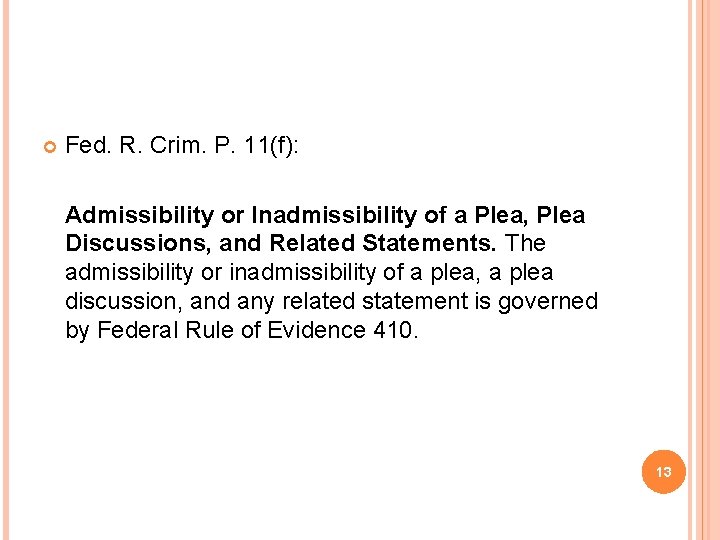
Fed. R. Crim. P. 11(f): Admissibility or Inadmissibility of a Plea, Plea Discussions, and Related Statements. The admissibility or inadmissibility of a plea, a plea discussion, and any related statement is governed by Federal Rule of Evidence 410. 13
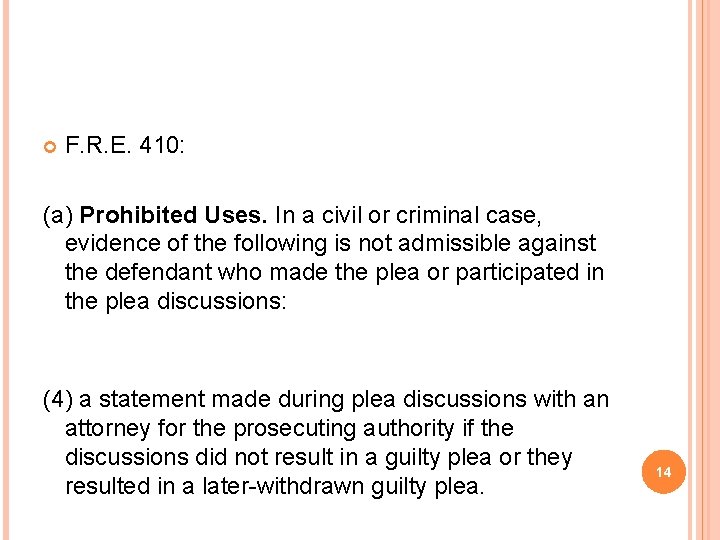
F. R. E. 410: (a) Prohibited Uses. In a civil or criminal case, evidence of the following is not admissible against the defendant who made the plea or participated in the plea discussions: (4) a statement made during plea discussions with an attorney for the prosecuting authority if the discussions did not result in a guilty plea or they resulted in a later-withdrawn guilty plea. 14
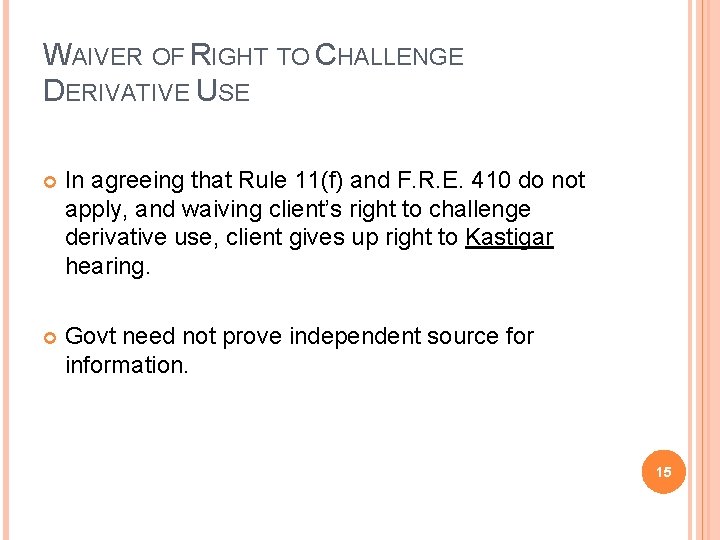
WAIVER OF RIGHT TO CHALLENGE DERIVATIVE USE In agreeing that Rule 11(f) and F. R. E. 410 do not apply, and waiving client’s right to challenge derivative use, client gives up right to Kastigar hearing. Govt need not prove independent source for information. 15
WAIVER CLAUSE ENFORCEABLE US v. Hardwick, 544 F. 3 d 565 (3 d Cir. 2008) (waiver clause in proffer agreement enforceable) 16
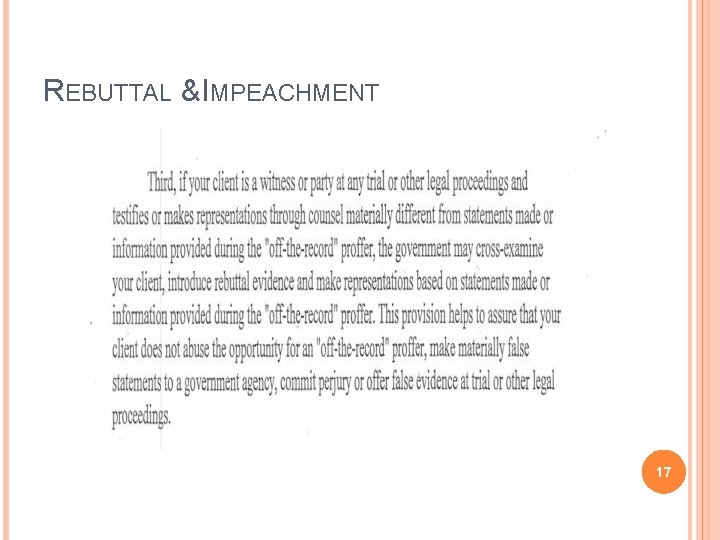
REBUTTAL & IMPEACHMENT 17
OPENING THE DOOR In Hardwick, defendant admitted to planning and participating in the killings of two individuals (Rosa and Allen). But at trial, Murray attempted to shift blame for ordering the deaths of Rosa and Allen. Defense counsel on cross attempted to elicit information to infer that others were responsible for the murders. This line of questioning “open[ed] the door for the Government to invoke the waiver to rebut these attempts. ” 18
Even though he did not testify, defendant triggered the terms of the waiver by shifting the blame for ordering the deaths of Rosa and Allen. 19
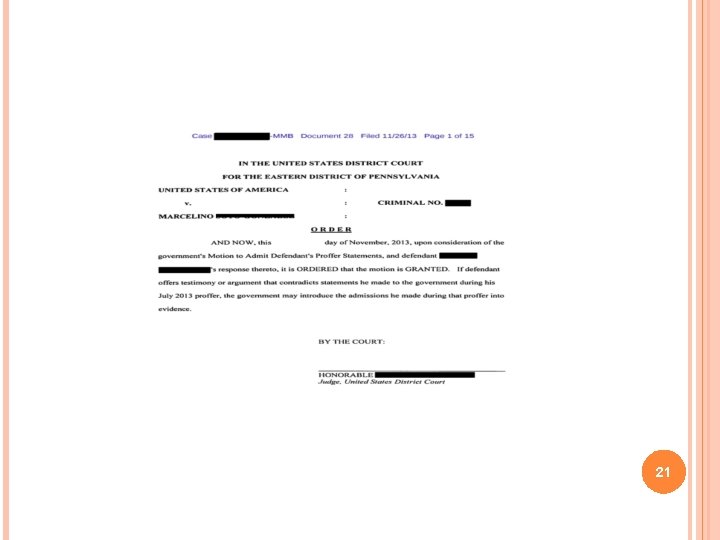
MIL TO ADMIT PROFFER STATEMENTS Government motion to admit proffer statements if defendant offers testimony or argument that contradicts statements made in proffer. 20
21
WAIVER AND DUE PROCESS US v. Burnett, No. 08 -201 -3, 2009 WL 2180373, at *4 (E. D. Pa. Jul. 17, 2009) MIL to Admit Proffer Statements Defendant challenged validity of waiver, arguing that it “muzzl[ed]” counsel and rendered him ineffective. 22
In Burnett, defendant’s first attorney explained that if defendant testified, government could use statements from proffer to impeach his testimony. But he did not explicitly explain that proffer agreement could affect his ability to argue or crossexamine witnesses even if defendant opted not to testify. 23
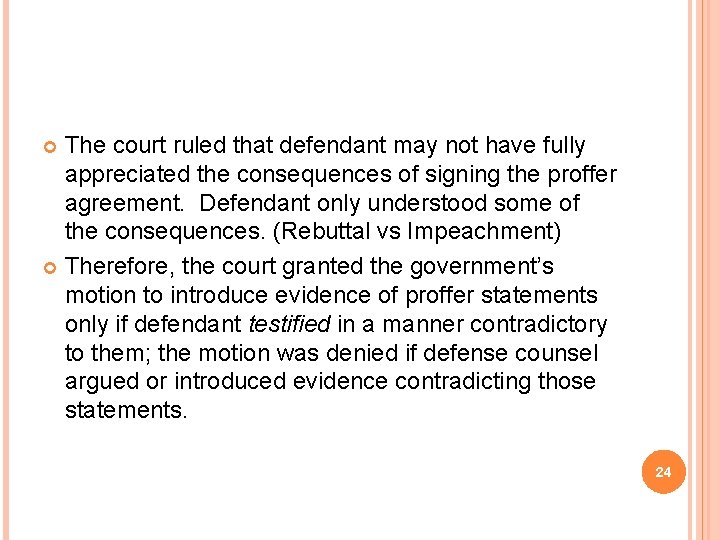
The court ruled that defendant may not have fully appreciated the consequences of signing the proffer agreement. Defendant only understood some of the consequences. (Rebuttal vs Impeachment) Therefore, the court granted the government’s motion to introduce evidence of proffer statements only if defendant testified in a manner contradictory to them; the motion was denied if defense counsel argued or introduced evidence contradicting those statements. 24
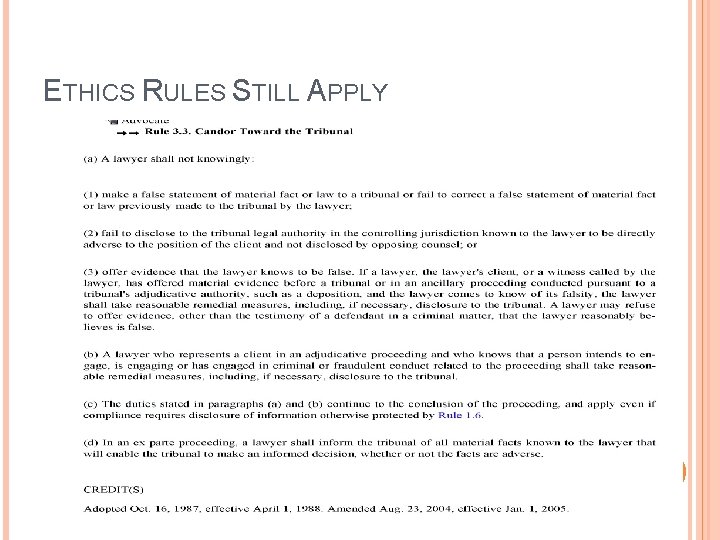
ETHICS RULES STILL APPLY 25
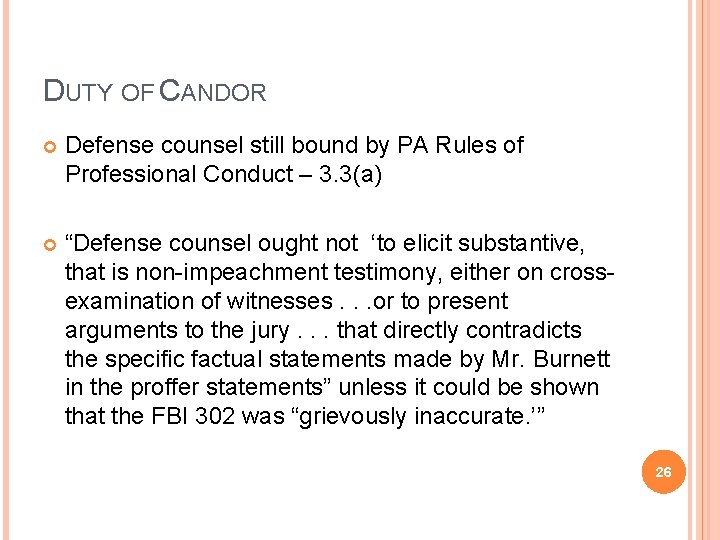
DUTY OF CANDOR Defense counsel still bound by PA Rules of Professional Conduct – 3. 3(a) “Defense counsel ought not ‘to elicit substantive, that is non-impeachment testimony, either on crossexamination of witnesses. . . or to present arguments to the jury. . . that directly contradicts the specific factual statements made by Mr. Burnett in the proffer statements” unless it could be shown that the FBI 302 was “grievously inaccurate. ’” 26
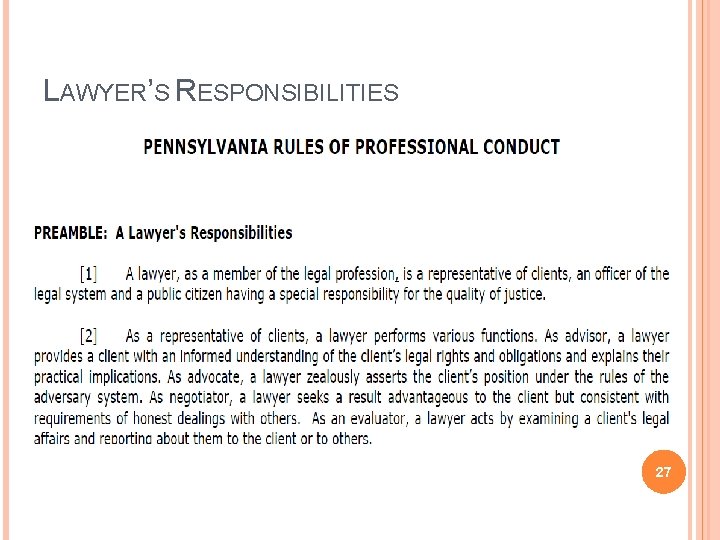
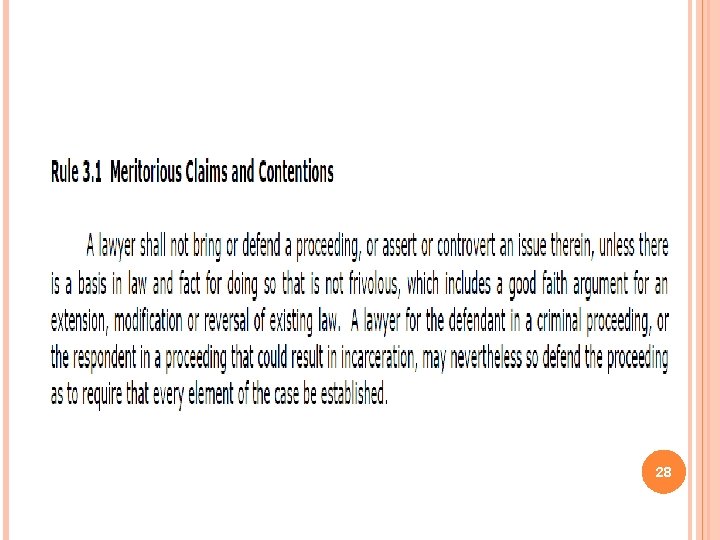
LAWYER’S RESPONSIBILITIES 27
28
JUDICIAL DISCRETION US v. Barrow, 400 F. 3 d 109 (2 d Cir. 2005) Just because a district court is satisfied that the Rule 410 waiver provision has been triggered does not “mandate receipt of the proffer statements in evidence. ” 29
UNFAIR PREJUDICE = HOPE (2 DCIR. ) “A waiver agreement between the parties does not divest a district court of its considerable discretion to exclude relevant evidence that may inject ‘unfair prejudice’ or ‘confusion’ into the jury’s resolution of the issues in dispute. ” 30
The court admitted proffer statements in Barrow, but found that “in appropriate cases, ” other courts might “decide to strike a question or argument, instructing the jury to ignore the factual assertion stated or implied, rather than admit defendant's proffer statements in rebuttal. ” 31
PROFFER W/O SIGNED AGREEMENT U. S. v. Stein, 2005 WL 1377851 (E. D. Pa. June 8, 2005) � Proffer agreement was not signed by defendant (and govt never said discussions were on record) � Court found that statements were made in the course of plea discussions within the ambit of FRE 410 and Fed. R. Crim. P. 11(f) and, therefore, inadmissible � The rules do not, however, require suppression of derivative evidence 32
WHAT ARE “PLEA DISCUSSIONS” UNDER THE RULES? Courts divided on the issue of how to determine whether a statement has been made “during plea discussions. ” Two-part test vs. totality of circumstances 33
TWO-PART TEST Some courts have adopted a two part test and consider: 1. Whether the accused exhibited an actual subjective expectation to negotiate a plea at the time of the discussion; and 2. Whether the accused’s expectation was reasonable given the totality of the objective circumstances. See US v. Robertson, 582 F. 2 d 1356, 1366 (5 th Cir. 1978) 34
TOTALITY OF THE CIRCUMSTANCES Other courts, including the court in Stein, have adopted a totality of the circumstances test to determine whether statements should be excluded under Rules that 11(f) and 410. 35
PROFFERS RECEIVE SOME PROTECTION UNDER THE RULES The rules apply to more than just discussions concerning the terms of the plea itself If not waived, proffer sessions to discuss cooperation are covered by FRE 410 and Fed. R. Crim. P. 11(f) 36
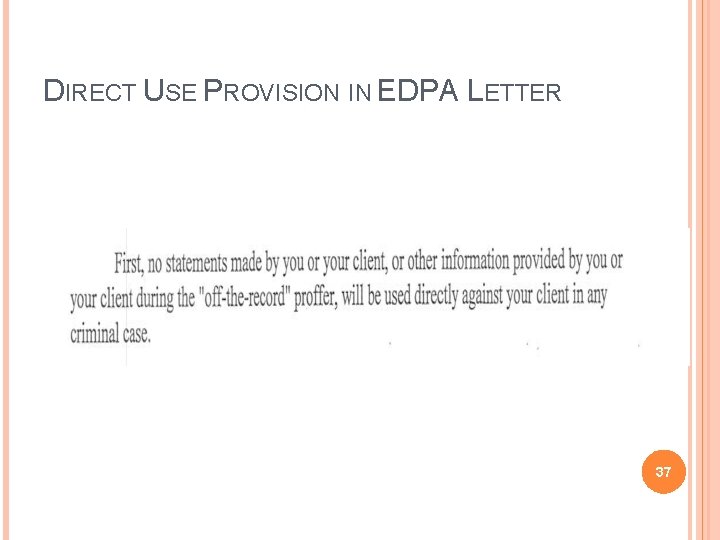
DIRECT USE PROVISION IN EDPA LETTER 37
“[O]R OTHER INFORMATION” US v. Melvin, 730 F. 3 d 29 (1 st Cir. 2013) Contract law requires that “‘whenever possible, contracts should be construed o give effect to every word, clause, and phrase. ’” Thus, the phrase “other information” must mean something different from the term “statements. ” “Any other interpretation would render the phrase ‘other information’ redundant (and, thus, meaningless). ” 38
The interpretation of the phrase “other information” necessarily “encompasses any knowledge the government gained at the proffer session because of the defendant’s presence there. ” 39
“[K]nowledge of the defendant’s voice tone, inflections, and speaking characteristics gleaned from the defendant’s speech at the proffer session is ‘other information’ that cannot be used against the defendant in the government’s case-in-chief. ” 40
CAN’T USE COMPUTER SEARCH DIRECTLY AGAINST DEFENDANT U. S. v. Scott, No. 10 -10264, 2014 WL 1410261 (D. Mass. Apr. 14, 2014) 41
Consent-to-search form signed by defendant after signing proffer agreement did not operate as a waiver or modification of that agreement; Information obtained from defendant ‘s computer as a result of search conducted pursuant to consent form may not be used directly against defendant. 42
The government did not explain to defendant’s attorney, or warn defendant before he signed it, that the consent-to-search form was meant to operate as a waiver or modification of proffer agreement. Unreasonable to expect defendant – without presence of counsel – to understand that he was giving up protections of immunity offer. 43
USE OF PROFFER ADMISSIONS BY OTHERS Other Agencies Other Jurisdictions 44
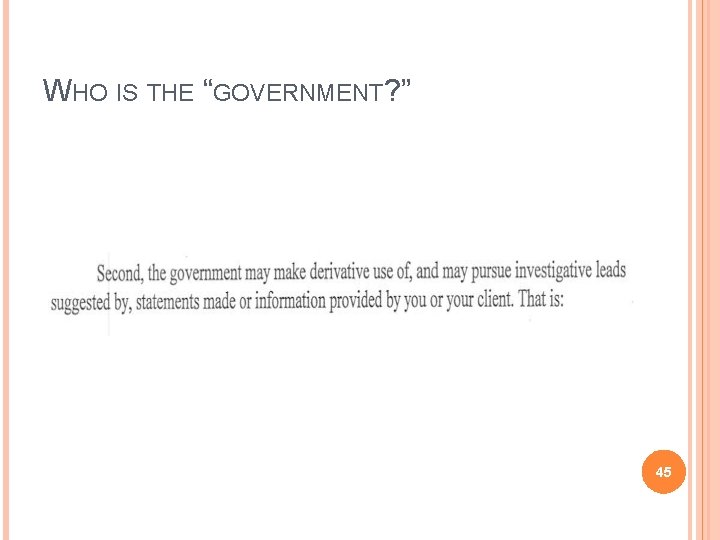
WHO IS THE “GOVERNMENT? ” 45
PROFFERS OUTSIDE THE EDPA What do proffer letters look like in other jurisdictions? Any leverage to negotiate more favorable terms in EDPA? 46
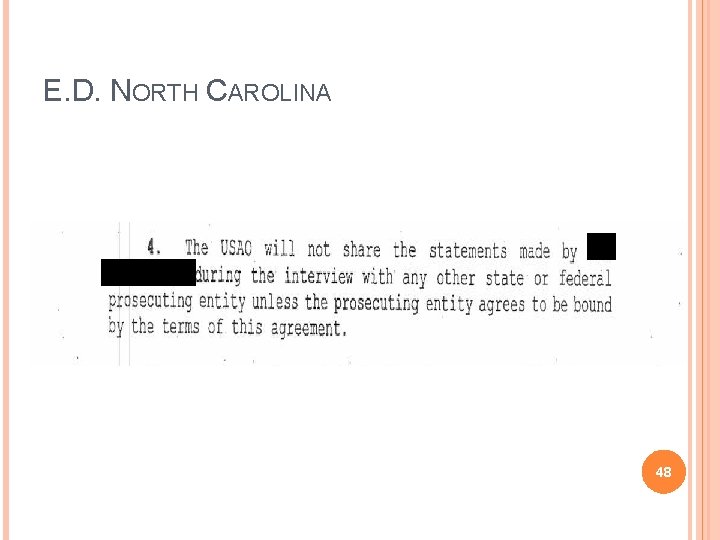
ADDRESS SPECIFICALLY IN PROFFER LETTER US v. Bartko, 728 F. 3 d 327 (4 th Cir. 2003) Proffer letter specifically states that “[t]he USAO will not share the statements made by [suspect] during the interview with any other state or federal prosecuting entity unless the prosecuting entity agrees to be bound by the terms of this agreement. ” 47
E. D. NORTH CAROLINA 48
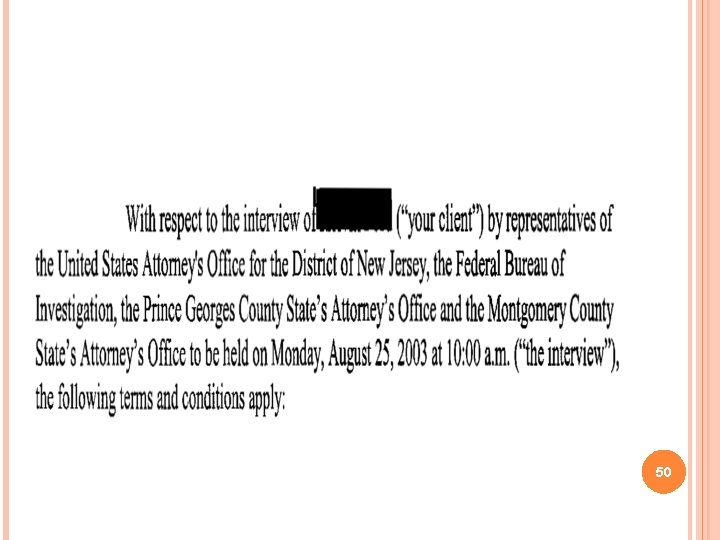
D. NEW JERSEY US v. Ford, 2005 WL 1129497 (D. N. J. 2005) At defendant’s request, second proffer letter drafted, binding MD law enforcement officers to the terms of the initial proffer agreement between defendant and federal government. 49
50
LANGUAGE IN COOPERATION PLEA AGREEMENTS All information and cooperation provided after signing the agreement may be used for any purpose and is not governed by any prior off-therecord proffer letter All information provided under any prior off-therecord proffer letter may be used for any purpose 51
Defendant agrees that the information provided under any off-the-record proffer letter may be used by the government to establish the factual basis for the guilty plea in this case 52
SENTENCING – U. S. S. G. § 1 B 1. 8 (a) Where a defendant agrees to cooperate with the government by providing information concerning unlawful activities of others, and as part of that cooperation agreement the government agrees that self-incriminating information provided pursuant to the agreement will not be used against the defendant, then such information shall not be used in determining the applicable guideline range, except to the extent provided in the agreement. 53
PROFFERS AND § 5 K 1. 1 Sentence reduction resulting from proffers and cooperation. Significance of departure left to the discretion of the court Court must conduct “qualitative, case-by-case analysis” and “examine § 5 K 1. 1’s enumerated factors. ” U. S. v. Torres, 251 F. 3 d 138, 147 (3 d Cir. 2001) 54
FACTORS TO CONSIDER Court’s evaluation of the significance and usefulness of the defendant’s assistance, taking into consideration government’s evaluation of assistance rendered Truthfulness, completeness, and reliability of any information or testimony provided by the defendant 55
The nature and extent of the defendant’s assistance Any injury suffered, or any danger or risk of injury to the defendant or his family resulting from his assistance The timeliness of the defendant’s assistance 56
GOV’T REFUSAL TO FILE § 5 K 1. 1 MOTION Plea agreements are contractual in nature District Court has authority to “examine for ‘good faith’ a prosecutor’s refusal to file a § 5 K 1. 1 motion pursuant to a plea agreement that gives the prosecutor ‘sole discretion’ to determine whether the defendant’s assistance was substantial. ” United States v. Isaac, 141 F. 3 d 477, 483 (3 d Cir. 1998) 57