
DSCOVR Mission Update Adam Szabo Andriy Koval NASA
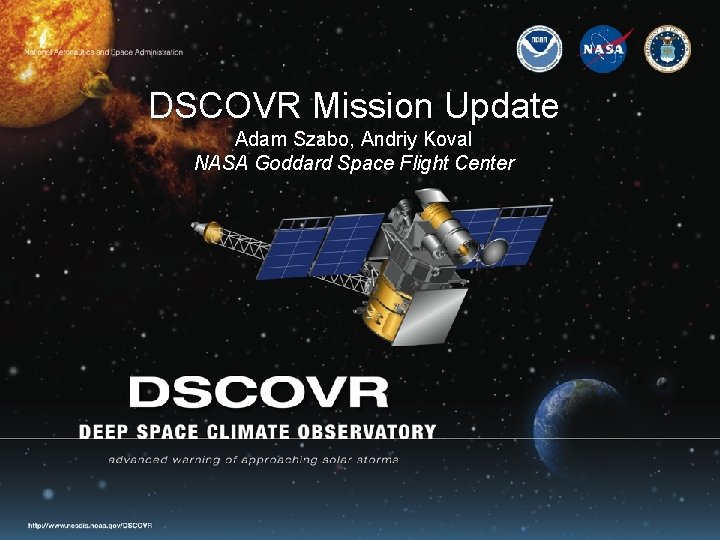
DSCOVR Mission Update Adam Szabo, Andriy Koval NASA Goddard Space Flight Center 1
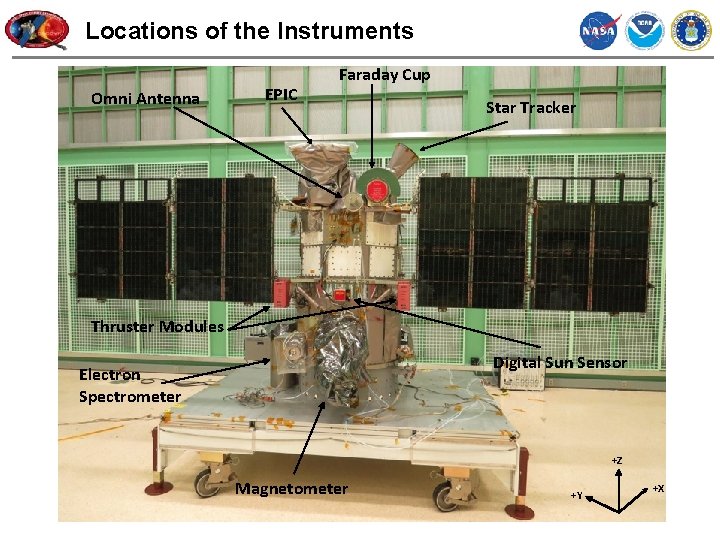
Locations of the Instruments Omni Antenna EPIC Faraday Cup Star Tracker Thruster Modules Digital Sun Sensor Electron Spectrometer +Z Magnetometer +Y +X
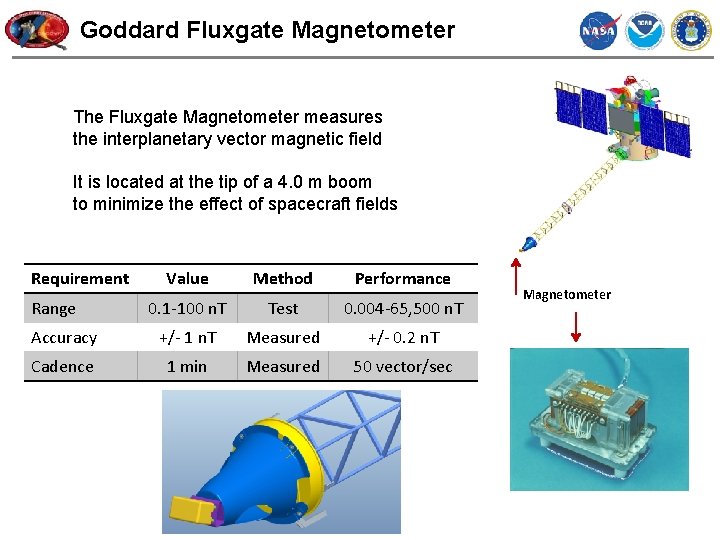
Goddard Fluxgate Magnetometer The Fluxgate Magnetometer measures the interplanetary vector magnetic field It is located at the tip of a 4. 0 m boom to minimize the effect of spacecraft fields Requirement Value Method Performance 0. 1 -100 n. T Test 0. 004 -65, 500 n. T Accuracy +/- 1 n. T Measured +/- 0. 2 n. T Cadence 1 min Measured 50 vector/sec Range Magnetometer
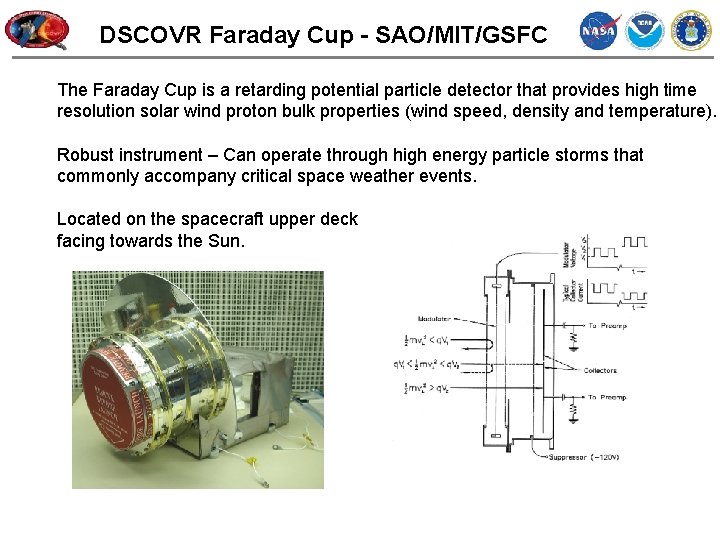
DSCOVR Faraday Cup - SAO/MIT/GSFC The Faraday Cup is a retarding potential particle detector that provides high time resolution solar wind proton bulk properties (wind speed, density and temperature). Robust instrument – Can operate through high energy particle storms that commonly accompany critical space weather events. Located on the spacecraft upper deck facing towards the Sun.
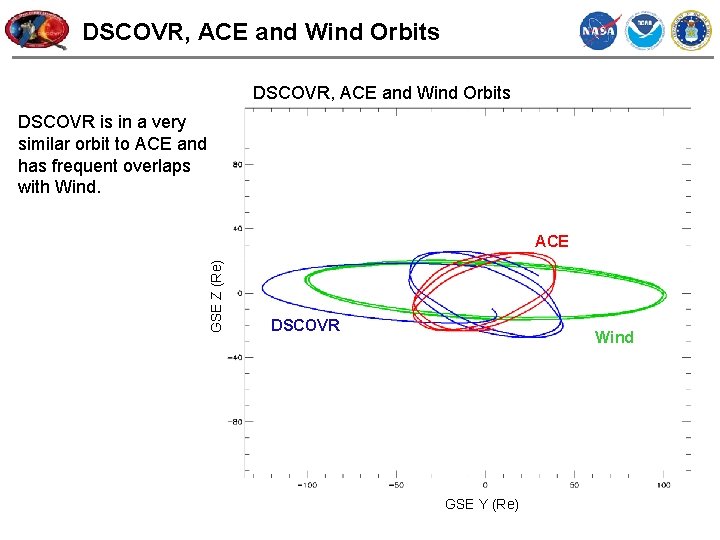
DSCOVR, ACE and Wind Orbits DSCOVR is in a very similar orbit to ACE and has frequent overlaps with Wind. GSE Z (Re) ACE DSCOVR Wind GSE Y (Re)
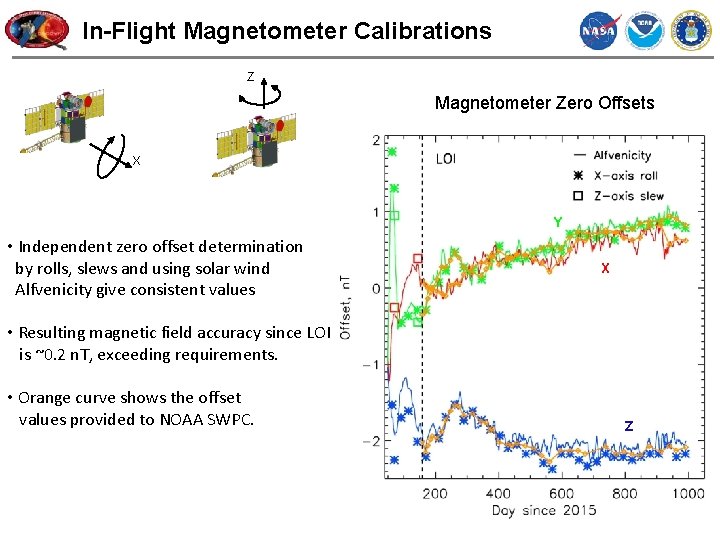
In-Flight Magnetometer Calibrations Z Magnetometer Zero Offsets X Y • Independent zero offset determination by rolls, slews and using solar wind Alfvenicity give consistent values X • Resulting magnetic field accuracy since LOI is ~0. 2 n. T, exceeding requirements. • Orange curve shows the offset values provided to NOAA SWPC. Z
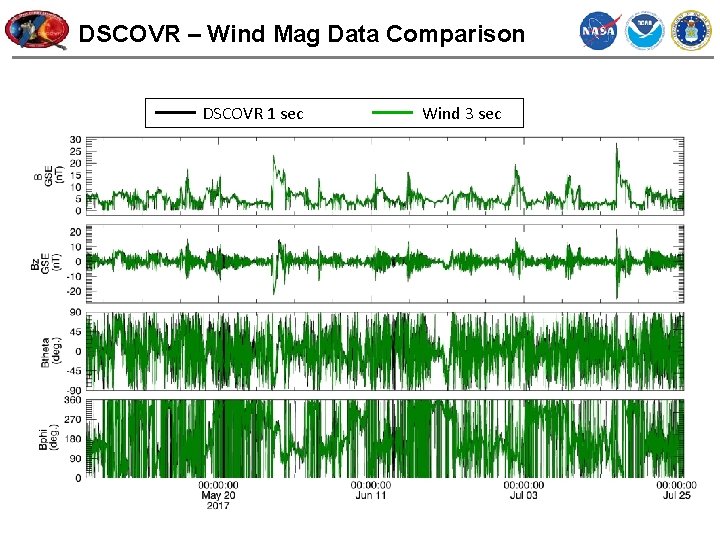
DSCOVR – Wind Mag Data Comparison DSCOVR 1 sec Wind 3 sec 7
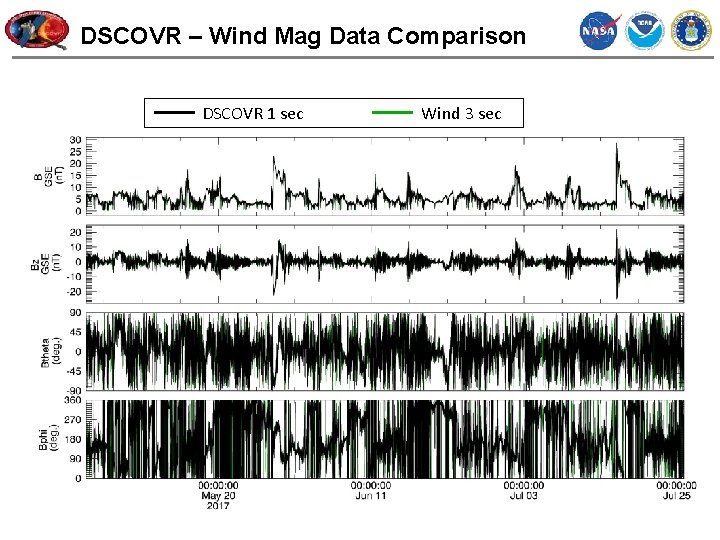
DSCOVR – Wind Mag Data Comparison DSCOVR 1 sec Wind 3 sec 8
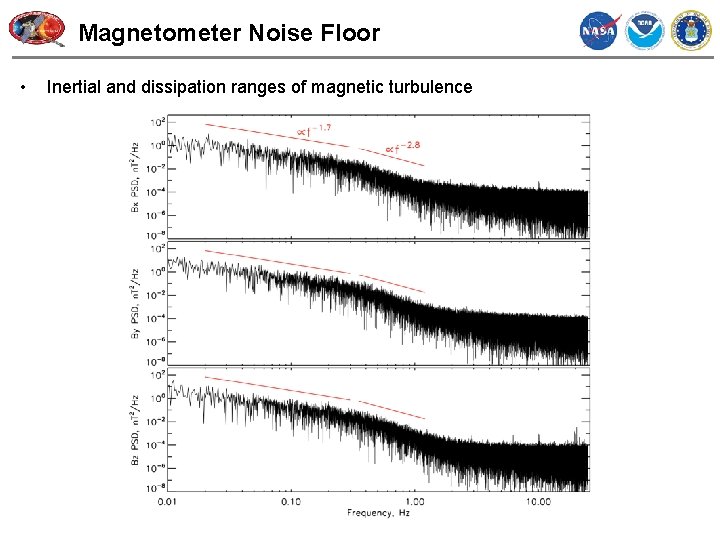
Magnetometer Noise Floor • Inertial and dissipation ranges of magnetic turbulence
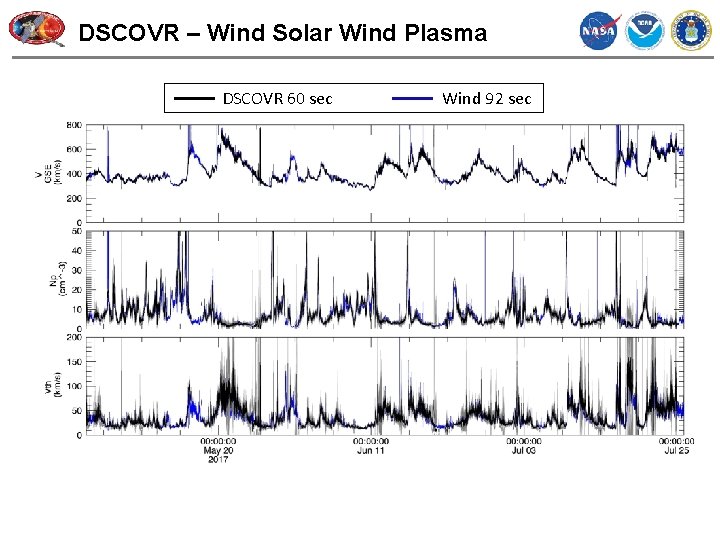
DSCOVR – Wind Solar Wind Plasma DSCOVR 60 sec Wind 92 sec
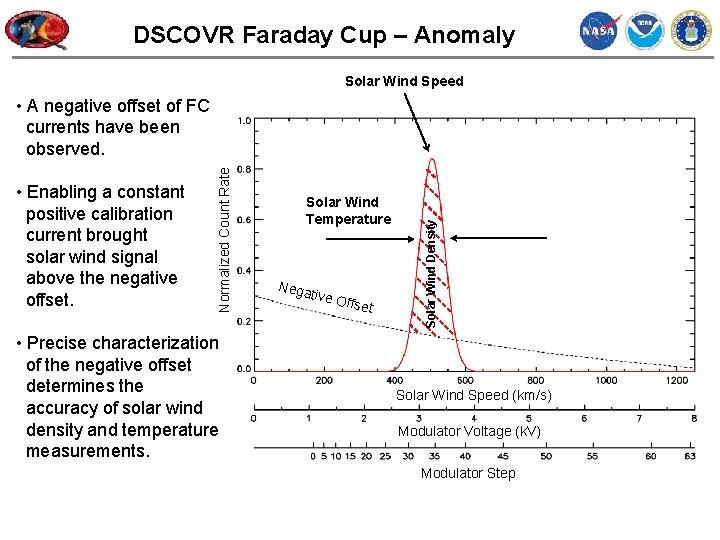
DSCOVR Faraday Cup – Anomaly Solar Wind Speed • Precise characterization of the negative offset determines the accuracy of solar wind density and temperature measurements. Solar Wind Temperature Nega tive O f fset Solar Wind Density • Enabling a constant positive calibration current brought solar wind signal above the negative offset. Normalized Count Rate • A negative offset of FC currents have been observed. Solar Wind Speed (km/s) Modulator Voltage (k. V) Modulator Step
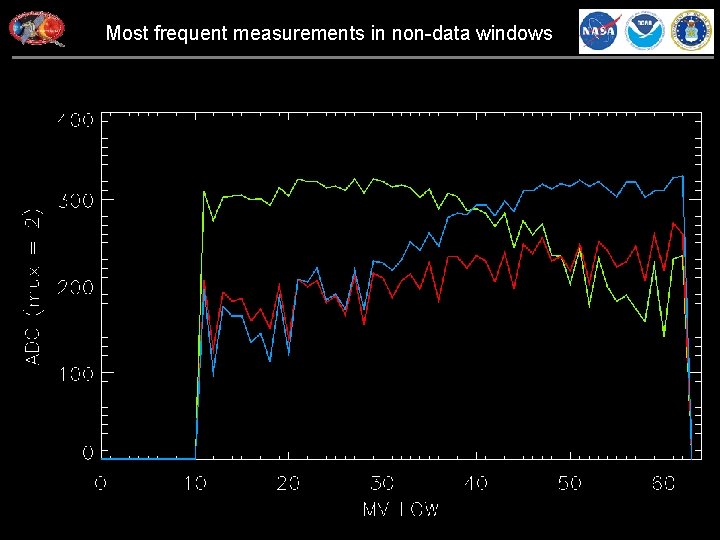
Most frequent measurements in non-data windows
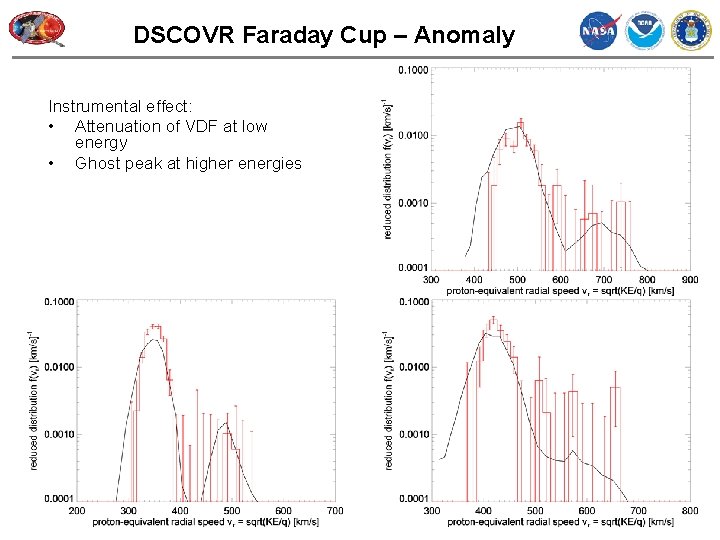
DSCOVR Faraday Cup – Anomaly Instrumental effect: • Attenuation of VDF at low energy • Ghost peak at higher energies
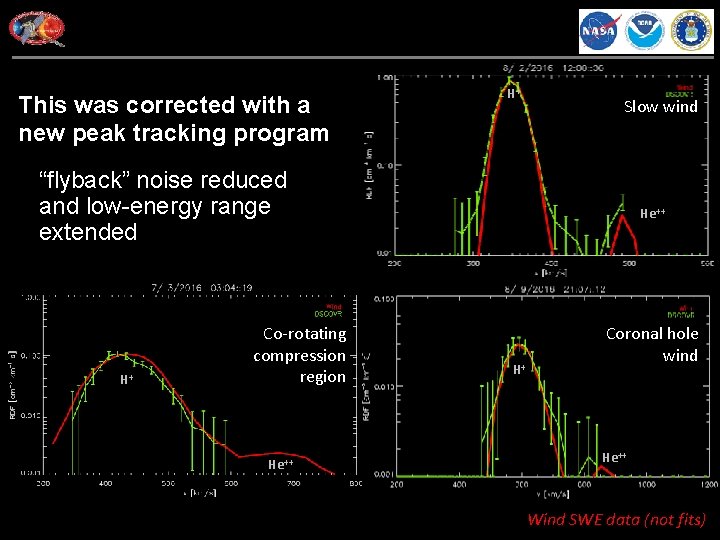
This was corrected with a new peak tracking program H+ Slow wind “flyback” noise reduced and low-energy range extended H+ Co-rotating compression region He++ H+ Coronal hole wind He++ Wind SWE data (not fits)
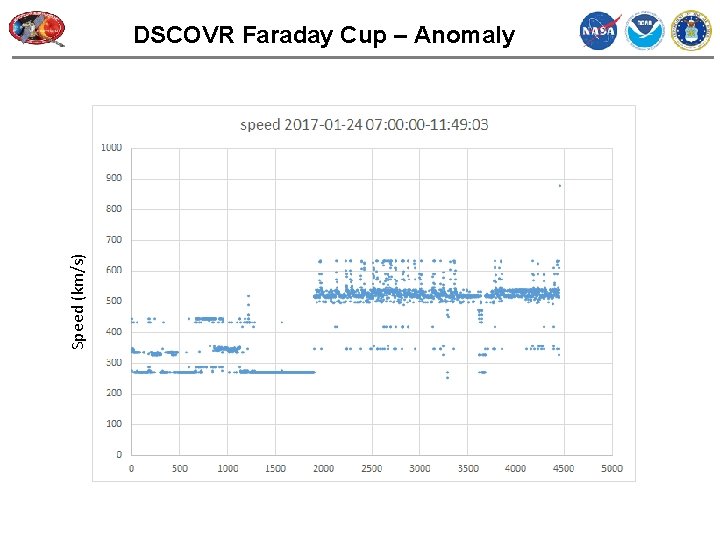
Speed (km/s) DSCOVR Faraday Cup – Anomaly
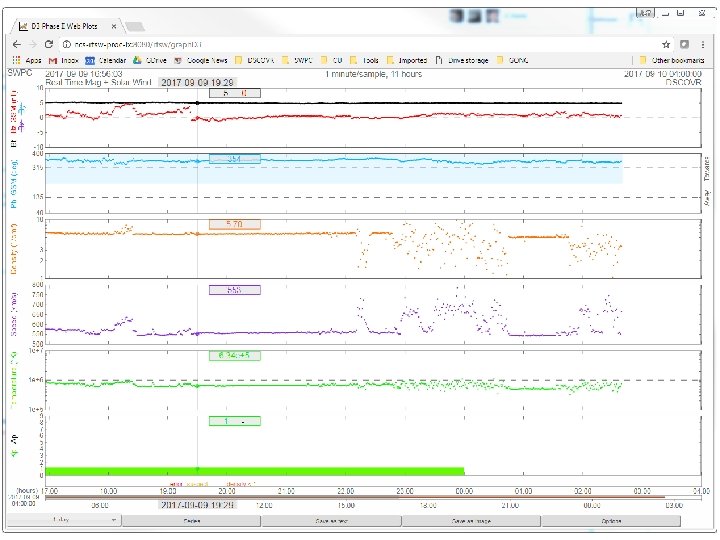
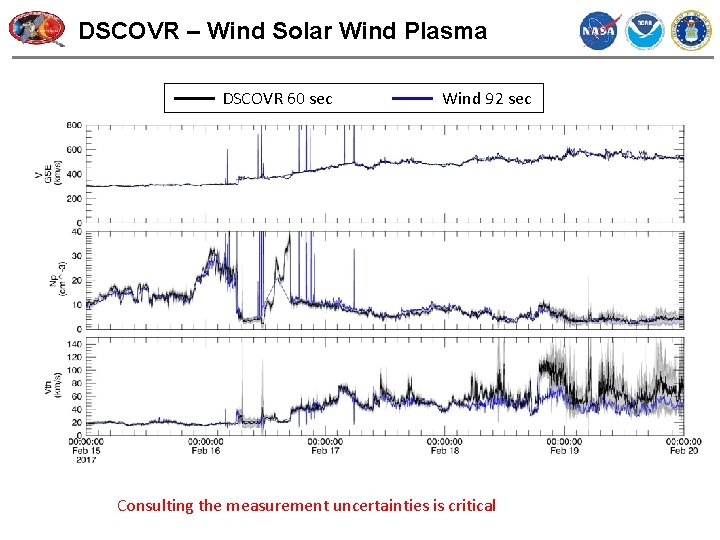
DSCOVR – Wind Solar Wind Plasma DSCOVR 60 sec Wind 92 sec Consulting the measurement uncertainties is critical
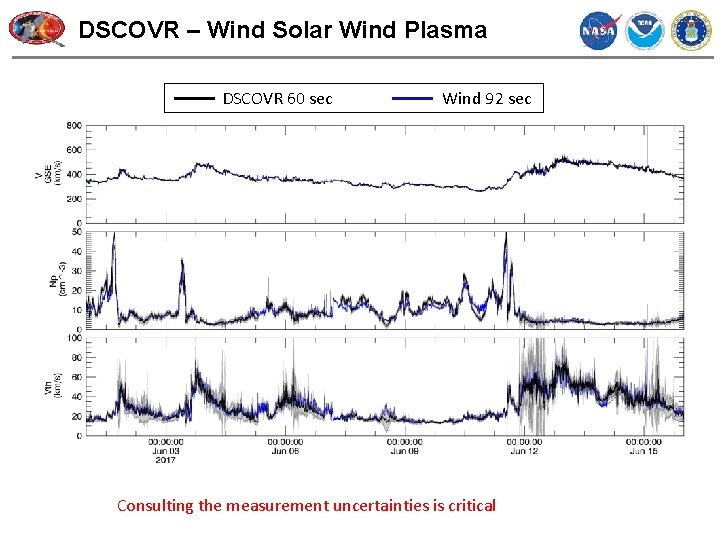
DSCOVR – Wind Solar Wind Plasma DSCOVR 60 sec Wind 92 sec Consulting the measurement uncertainties is critical
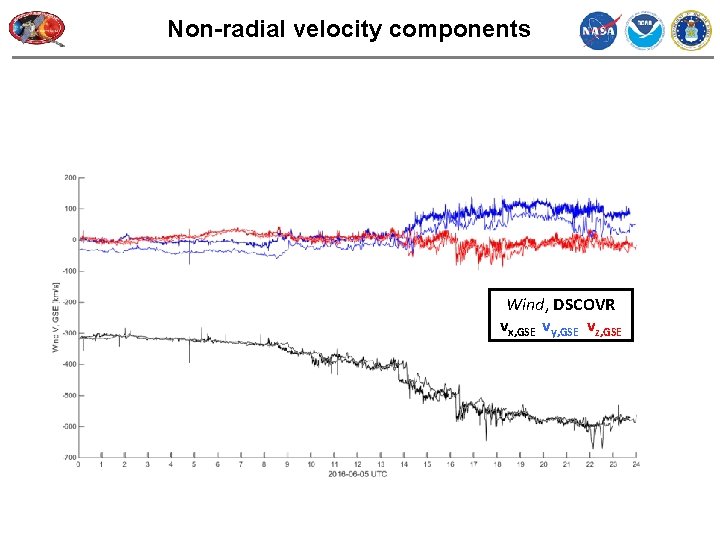
Non-radial velocity components Wind, DSCOVR vx, GSE vy, GSE vz, GSE
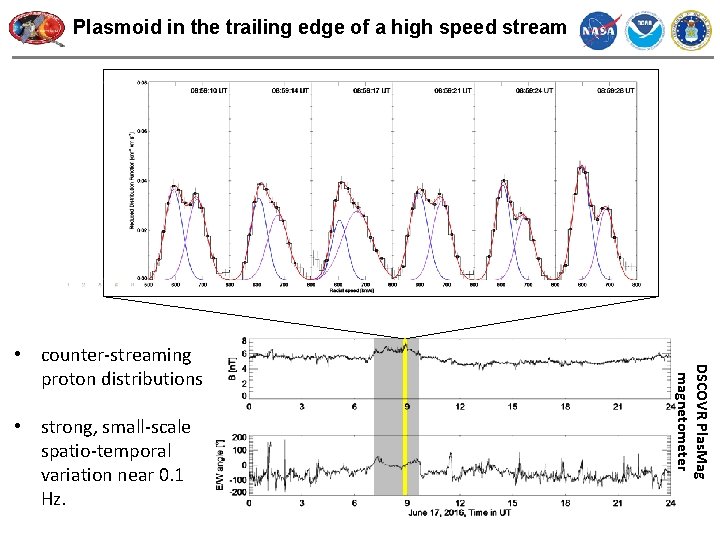
Plasmoid in the trailing edge of a high speed stream • strong, small-scale spatio-temporal variation near 0. 1 Hz. DSCOVR Plas. Mag magnetometer • counter-streaming proton distributions
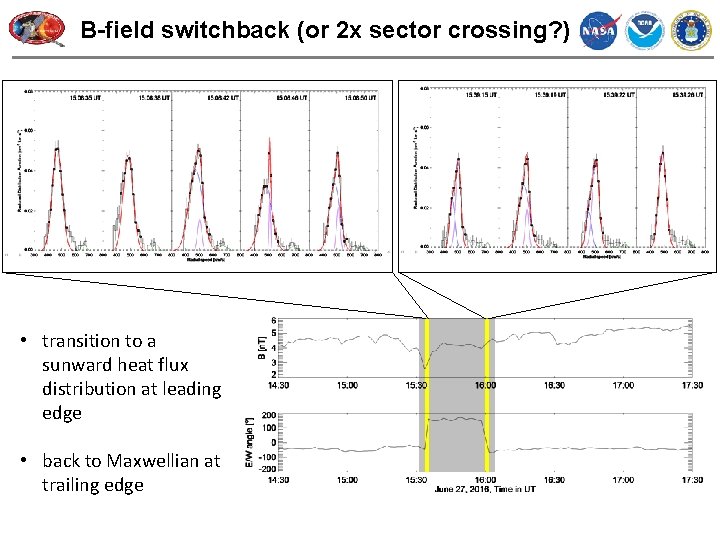
B-field switchback (or 2 x sector crossing? ) • transition to a sunward heat flux distribution at leading edge • back to Maxwellian at trailing edge
Conclusions • DSCOVR magnetometer data exceeds the Level 1 science requirements • DSCOVR FC data in CDAWeb is science quality • Real-time DSCOVR FC data still has occasional anomalies. The team is working to minimize these anomalous intervals.
- Slides: 22