
Competencebased Education Caroline Kearney Senior Education Manager Analyst

Competence-based Education Caroline Kearney Senior Education Manager & Analyst European Schoolnet
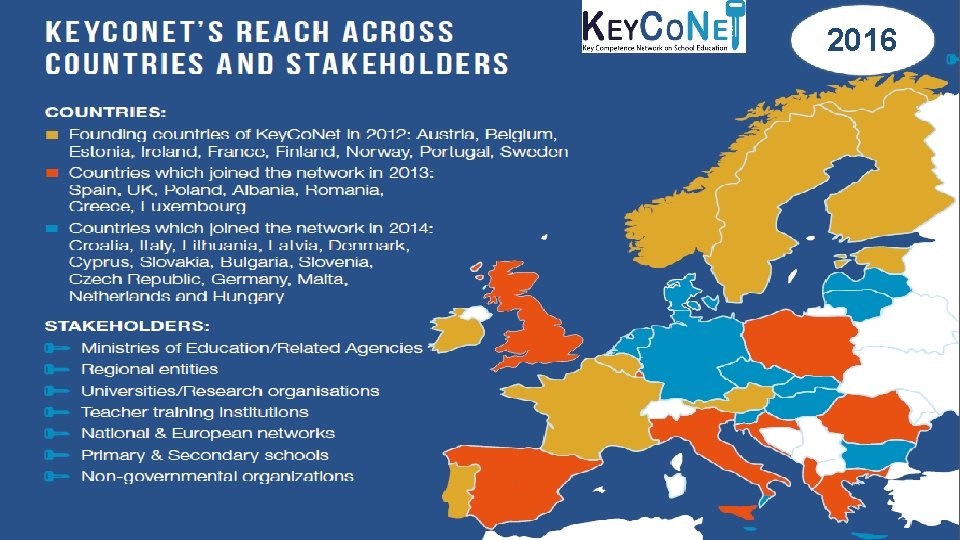
The recent European history of key competence development 2006 Recommendation on Key Competences for Lifelong Learning 2009 Key Competences in Europe Report (comparative overview) 2011 European Commission issued a Call for the establishment of a Europe-wide network of expert organizations and stakeholder groups to cooperate on key competence development 2012 European Schoolnet established Key. Co. Net 2014 Key. Co. Net issued its recommendations to improve the implementation of key competences in school education 2016 EC have just launched a Review of the 2016 Framework
Relevance of key competences to current EU priorities PARIS DECLARATION Cultural awareness & expression Social, civic & intercultural competences INCLUSIVE EDUCATION Competence-based approaches favour inclusive teaching & learning environments C A P A C I T Y B U I L D I N G SKILLS AGENDA Transversal skills (e. g. entrepreneurship) Digital competences MIGRANT EDUCATION Language competences Intercultural competences
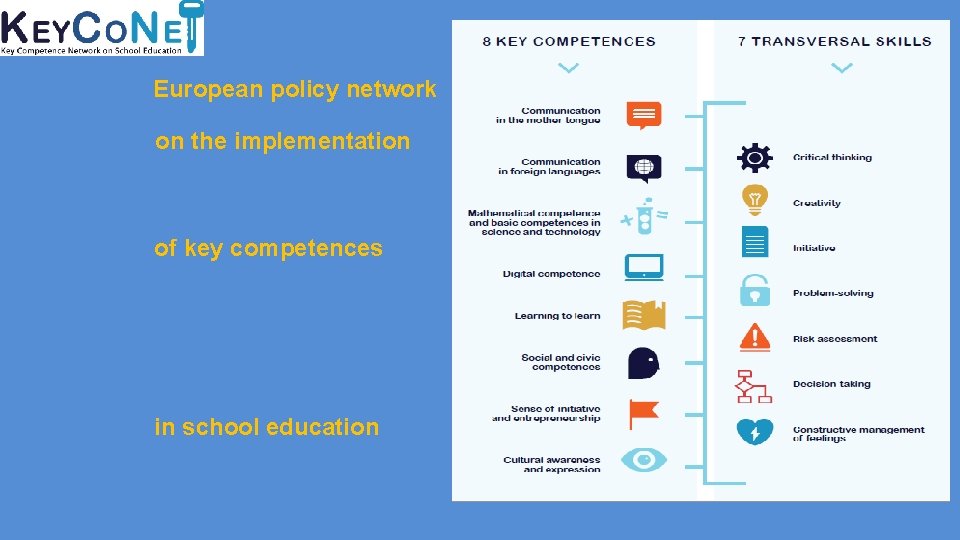
Scope European policy network IMPACT ON POLICIES (recommendations) on the implementation KNOW HOW of key competences in school education PRIMARY & SECONDARY GENERAL EDUCATION
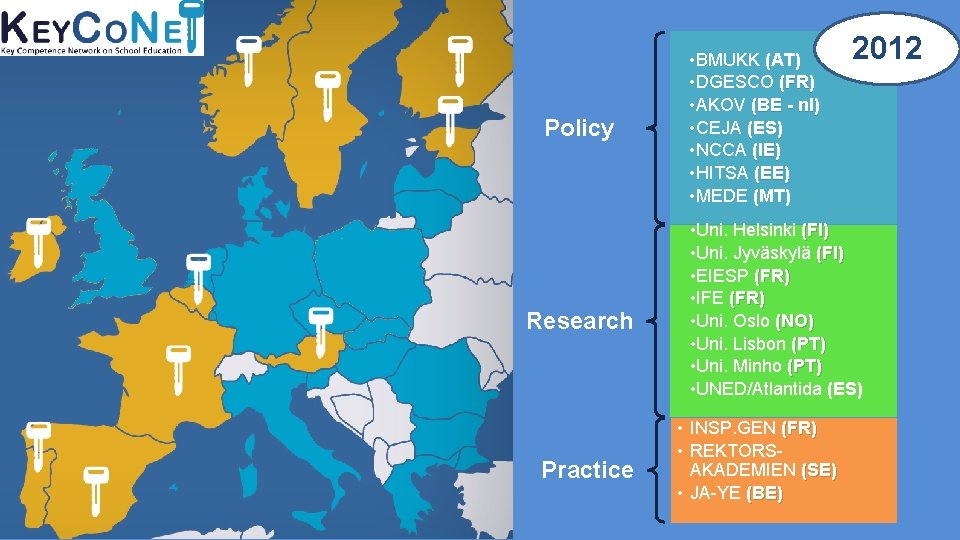
Policy Research Practice • BMUKK (AT) • DGESCO (FR) • AKOV (BE - nl) • CEJA (ES) • NCCA (IE) • HITSA (EE) • MEDE (MT) 2012 • Uni. Helsinki (FI) • Uni. Jyväskylä (FI) • EIESP (FR) • IFE (FR) • Uni. Oslo (NO) • Uni. Lisbon (PT) • Uni. Minho (PT) • UNED/Atlantida (ES) • INSP. GEN (FR) • REKTORSAKADEMIEN (SE) • JA-YE (BE)
2016
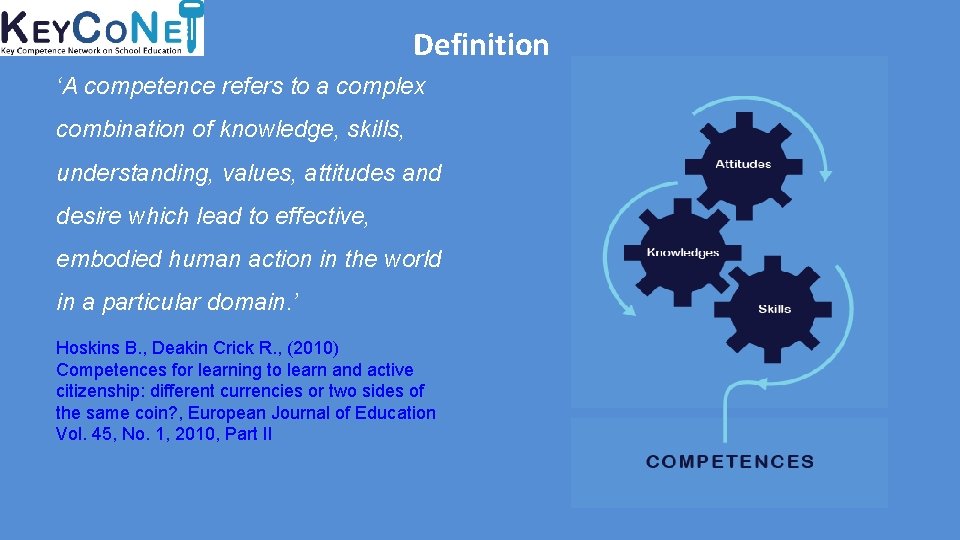
Definition ‘A competence refers to a complex combination of knowledge, skills, understanding, values, attitudes and desire which lead to effective, embodied human action in the world in a particular domain. ’ Hoskins B. , Deakin Crick R. , (2010) Competences for learning to learn and active citizenship: different currencies or two sides of the same coin? , European Journal of Education Vol. 45, No. 1, 2010, Part II
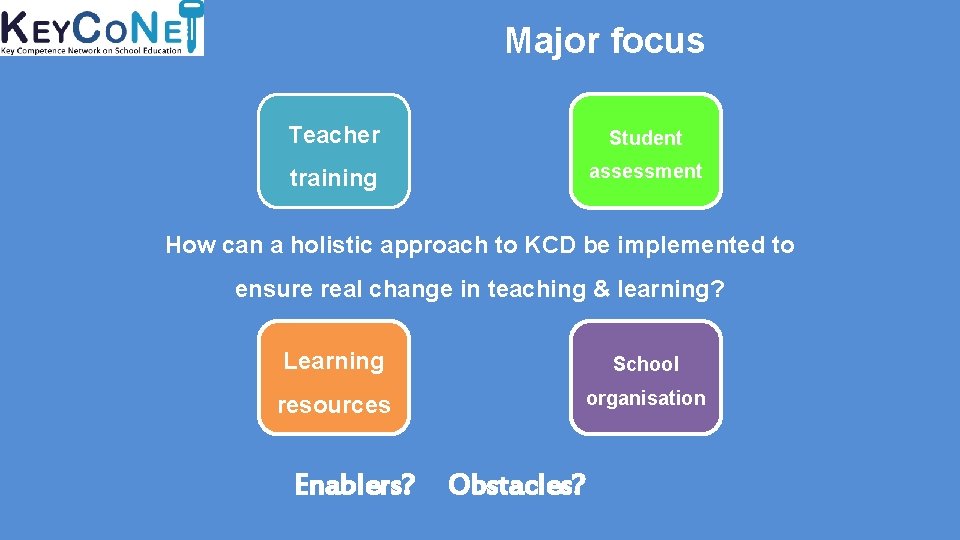
Major focus Teacher Student training assessment How can a holistic approach to KCD be implemented to ensure real change in teaching & learning? Learning School resources organisation Enablers? Obstacles?
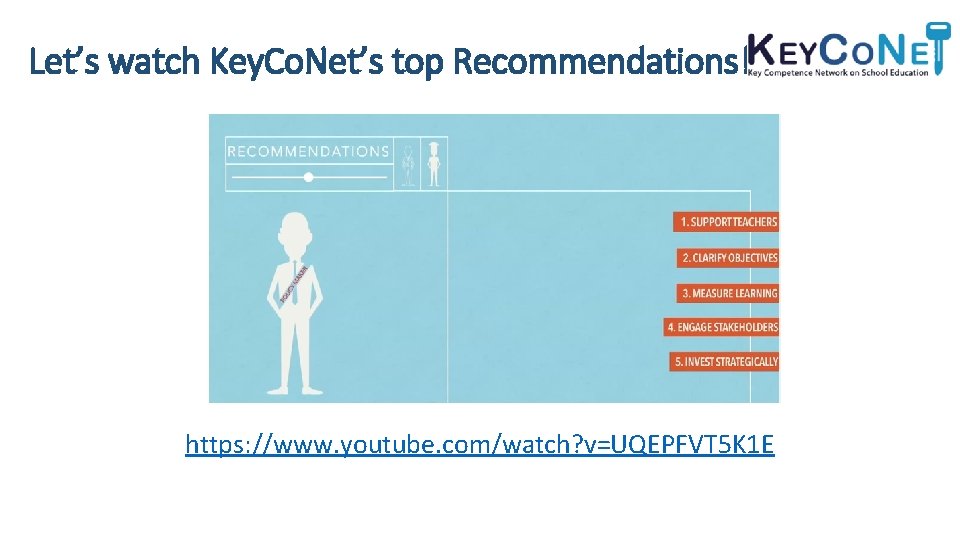
Let’s watch Key. Co. Net’s top Recommendations! https: //www. youtube. com/watch? v=UQEPFVT 5 K 1 E
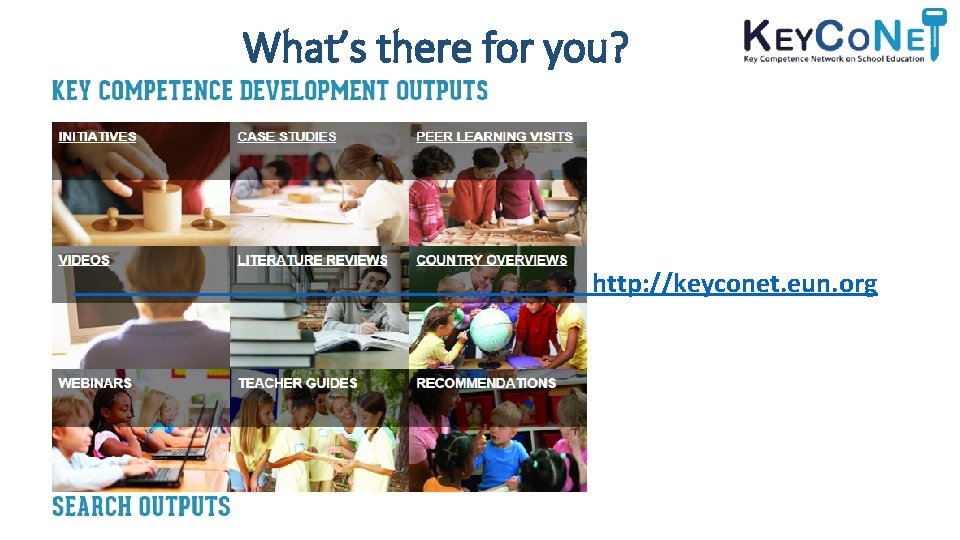
What’s there for you? • http: //keyconet. eun. org
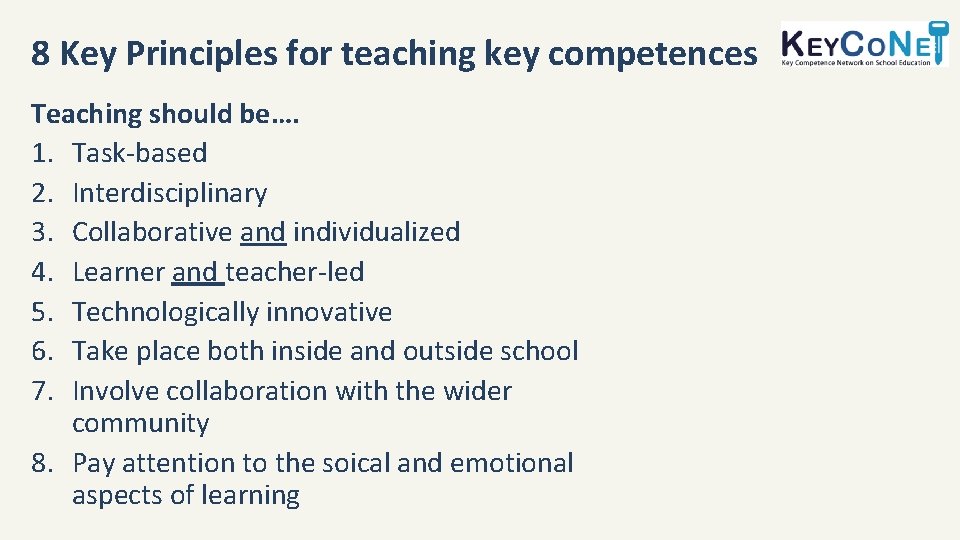
8 Key Principles for teaching key competences Teaching should be…. 1. Task-based 2. Interdisciplinary 3. Collaborative and individualized 4. Learner and teacher-led 5. Technologically innovative 6. Take place both inside and outside school 7. Involve collaboration with the wider community 8. Pay attention to the soical and emotional aspects of learning

Key. Co. Net MOOC: From policy to practice Around 2, 000 teachers have taken course since Nov. 2014 Around 35% new to competence -based education Since taking the course: - 85% have changed teaching & assessment methods; - 75% have changed their classroom set-up 2 nd EDITION OF THE COURSE JUST LAUNCHED - 72% use technology more effectively in the classroom ON TEACHER ACADEMY - 68% collaborate more often 19 SEP - 21 OCT – REGISTER NOW! with colleagues
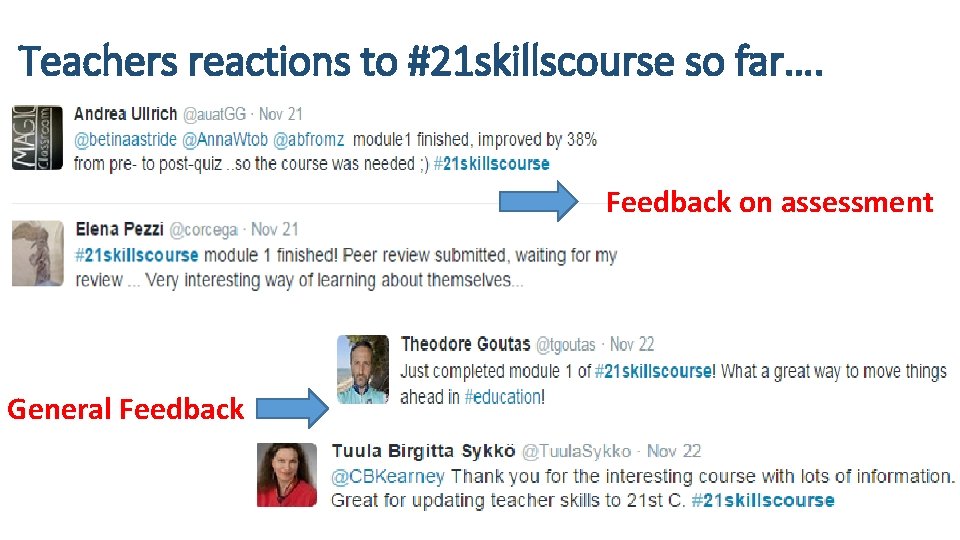
Teachers reactions to #21 skillscourse so far…. Feedback on assessment General Feedback
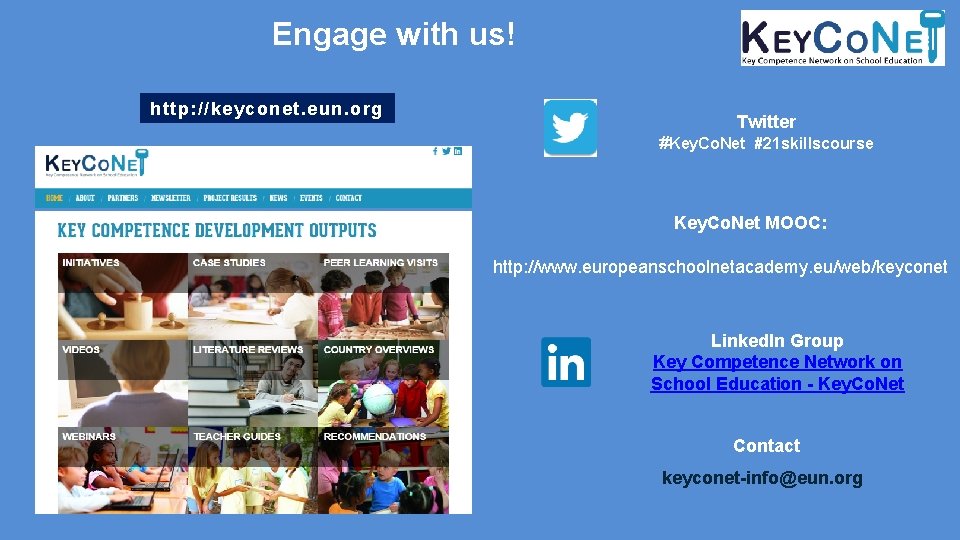
Engage with us! http: //keyconet. eun. org Twitter #Key. Co. Net #21 skillscourse Key. Co. Net MOOC: http: //www. europeanschoolnetacademy. eu/web/keyconet Linked. In Group Key Competence Network on School Education - Key. Co. Net Contact keyconet-info@eun. org

CO-LAB MOOC ONLINE FROM 24 OCT. 2016 caroline. kearney@eun. org

28/01/2009 16
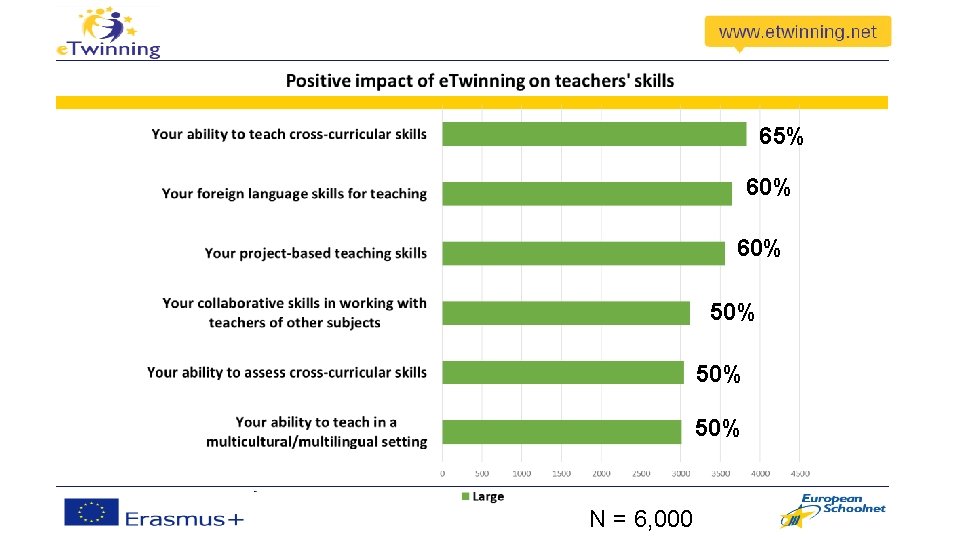
65% 60% 50% 50% N = 6, 000
28/01/2009 18
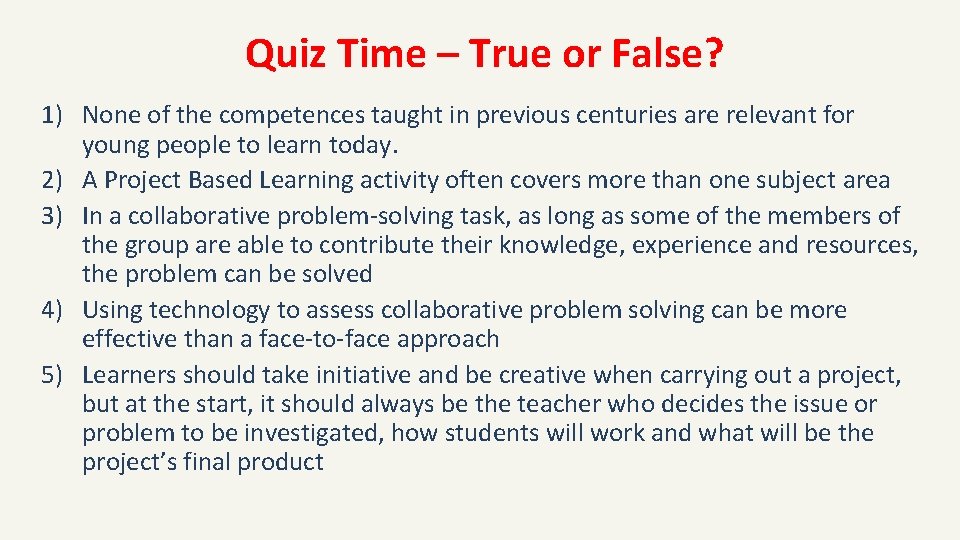
Quiz Time – True or False? 1) None of the competences taught in previous centuries are relevant for young people to learn today. 2) A Project Based Learning activity often covers more than one subject area 3) In a collaborative problem-solving task, as long as some of the members of the group are able to contribute their knowledge, experience and resources, the problem can be solved 4) Using technology to assess collaborative problem solving can be more effective than a face-to-face approach 5) Learners should take initiative and be creative when carrying out a project, but at the start, it should always be the teacher who decides the issue or problem to be investigated, how students will work and what will be the project’s final product
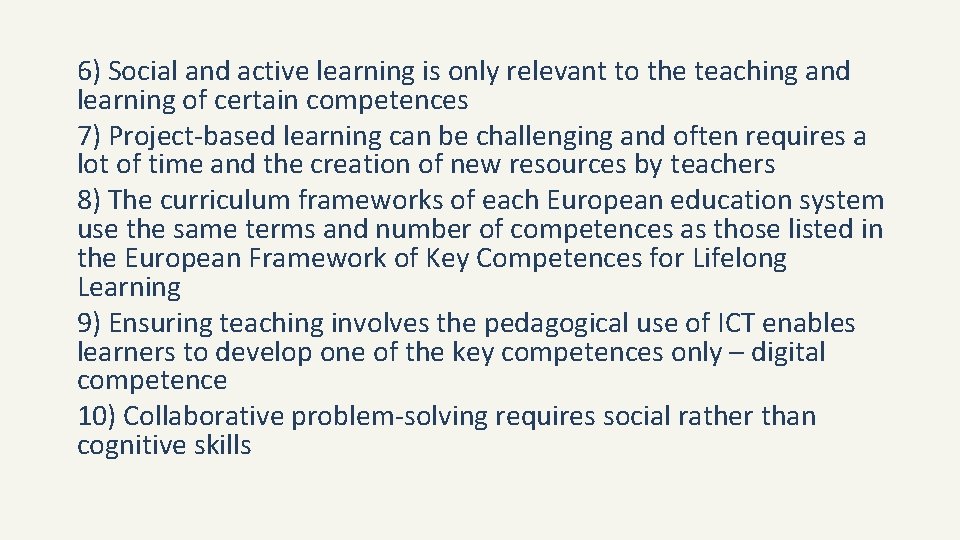
6) Social and active learning is only relevant to the teaching and learning of certain competences 7) Project-based learning can be challenging and often requires a lot of time and the creation of new resources by teachers 8) The curriculum frameworks of each European education system use the same terms and number of competences as those listed in the European Framework of Key Competences for Lifelong Learning 9) Ensuring teaching involves the pedagogical use of ICT enables learners to develop one of the key competences only – digital competence 10) Collaborative problem-solving requires social rather than cognitive skills
- Slides: 20