
Quantum liquids in Nanoporous Media and on Surfaces



- Slides: 46
Quantum liquids in Nanoporous Media and on Surfaces Henry R. Glyde Department of Physics & Astronomy University of Delaware National Nanotechnology Initiative Workshop on X-rays and Neutrons 16 -17 June 2005
Goals Neutron scattering studies of structure and excitations of quantum liquids at nanoscales. Impact of confinement on superfluidity, Bose-Einstein Condensation (BEC), phonon - roton modes and other modes. Reveal the interdependence of Bose. Einstein Condensation (BEC), phononroton excitations and superfluidity. Compare liquid 4 He in bulk and at nanoscales. Structure of 4 He on and in nanotubes.
Science drives tools. High neutron flux High resolution spectrometers Variety of spectrometers Analyze large data sets Science drives materials. Materials for nanoscale confinement. Spectrum of pore sizes. Uniform pore size Large samples
Similar Science Interplay of BEC and Superfluidity Josephson Junction Arrays. Alkali atoms (bosons) in magnetic traps and optical lattices. High Temperature superconductors. Disordered thin films.
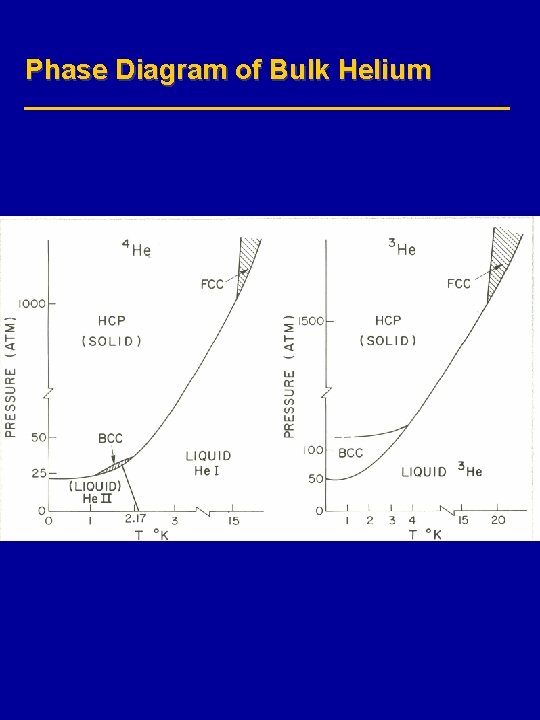
Phase Diagram of Bulk Helium
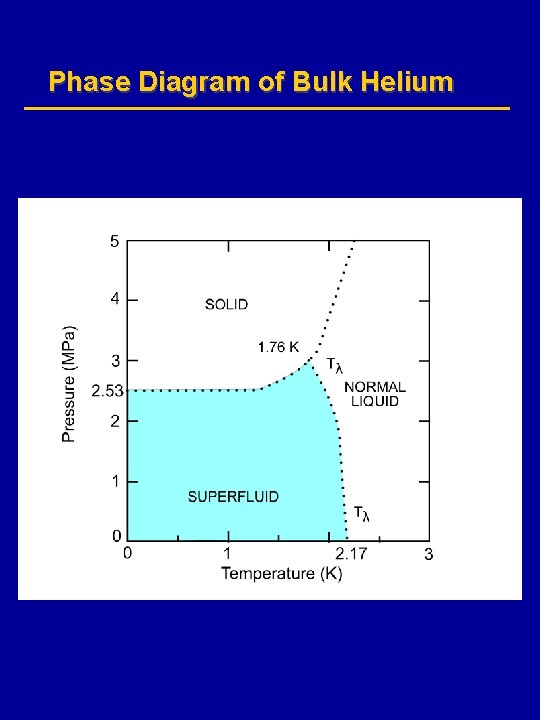
Phase Diagram of Bulk Helium
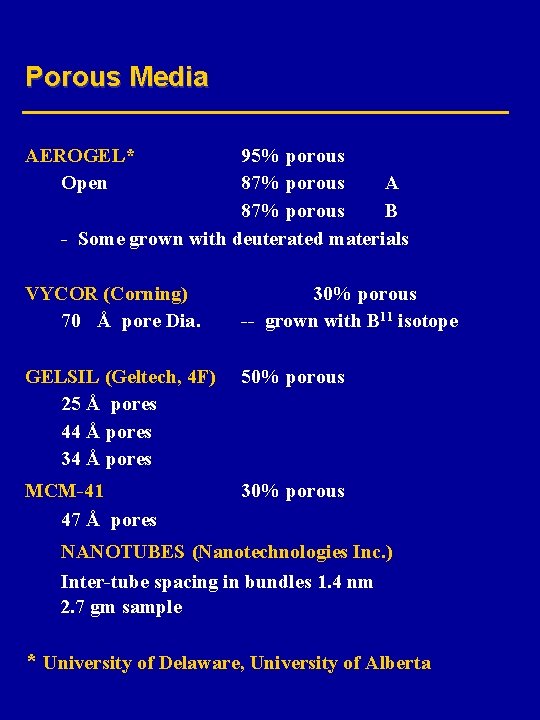
Porous Media AEROGEL* Open 95% porous 87% porous A 87% porous B - Some grown with deuterated materials VYCOR (Corning) 70 Å pore Dia. 30% porous -- grown with B 11 isotope GELSIL (Geltech, 4 F) 25 Å pores 44 Å pores 34 Å pores 50% porous MCM-41 47 Å pores 30% porous NANOTUBES (Nanotechnologies Inc. ) Inter-tube spacing in bundles 1. 4 nm 2. 7 gm sample * University of Delaware, University of Alberta
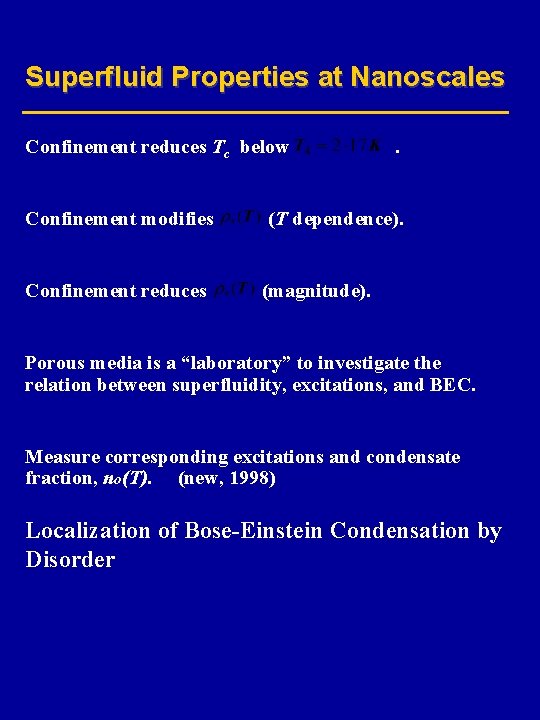
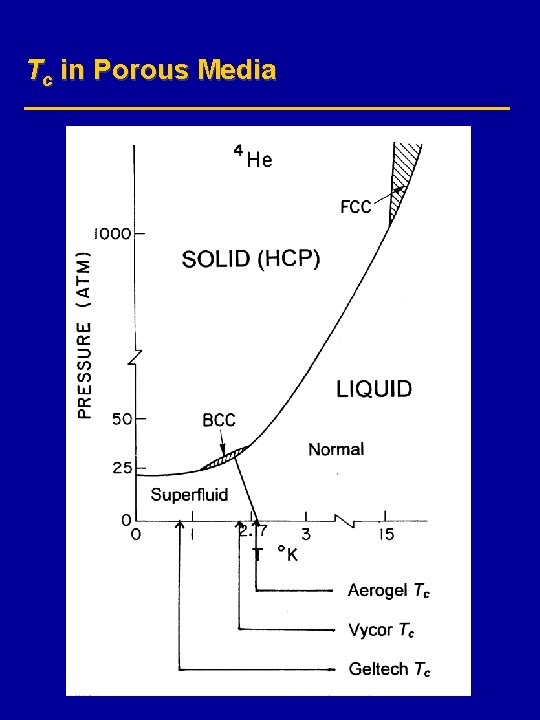
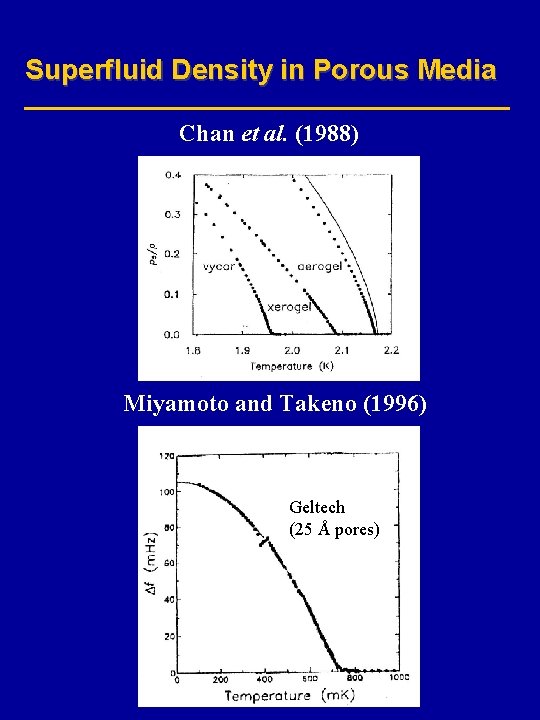
Superfluid Properties at Nanoscales Confinement reduces Tc below Confinement modifies Confinement reduces . (T dependence). (magnitude). Porous media is a “laboratory” to investigate the relation between superfluidity, excitations, and BEC. Measure corresponding excitations and condensate fraction, no(T). (new, 1998) Localization of Bose-Einstein Condensation by Disorder
Tc in Porous Media
Superfluid Density in Porous Media Chan et al. (1988) Miyamoto and Takeno (1996) Geltech (25 Å pores)
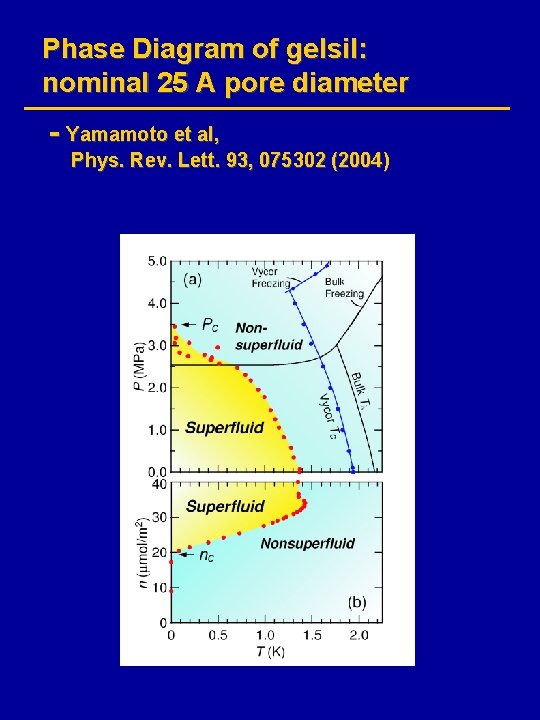
Phase Diagram of gelsil: nominal 25 A pore diameter - Yamamoto et al, Phys. Rev. Lett. 93, 075302 (2004)
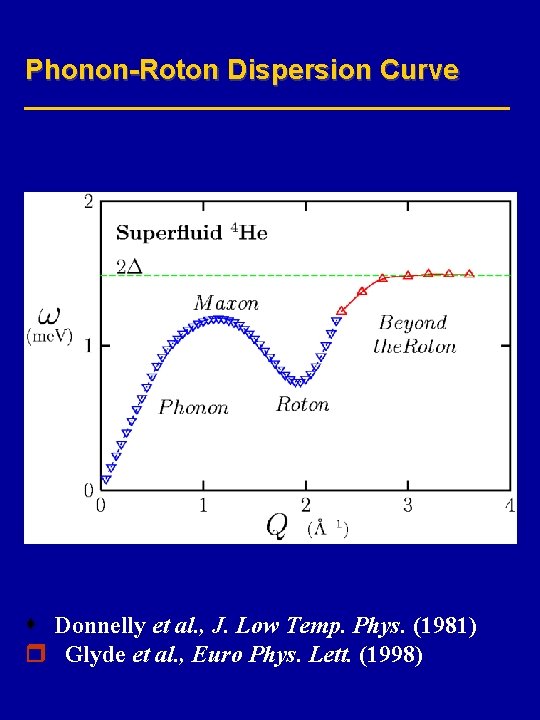
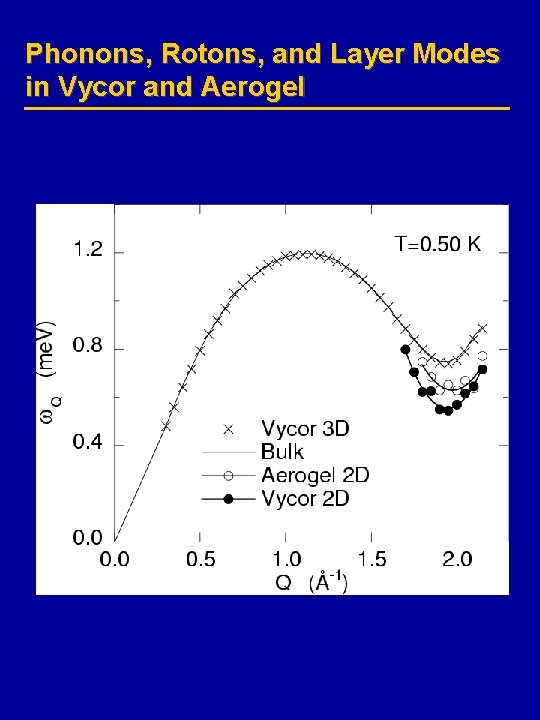
Phonon-Roton Dispersion Curve Donnelly et al. , J. Low Temp. Phys. (1981) Glyde et al. , Euro Phys. Lett. (1998)
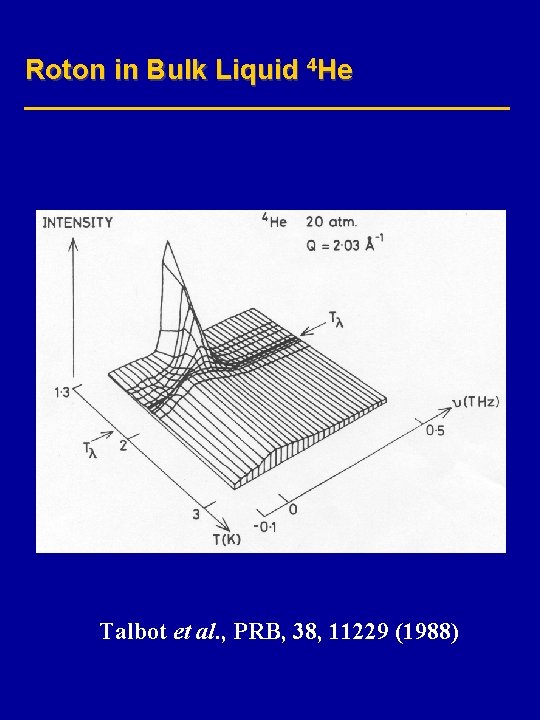
Roton in Bulk Liquid 4 He Talbot et al. , PRB, 38, 11229 (1988)
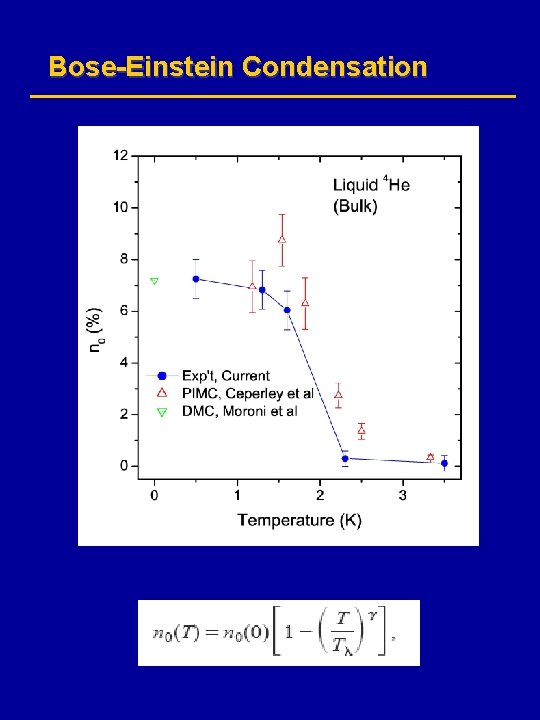
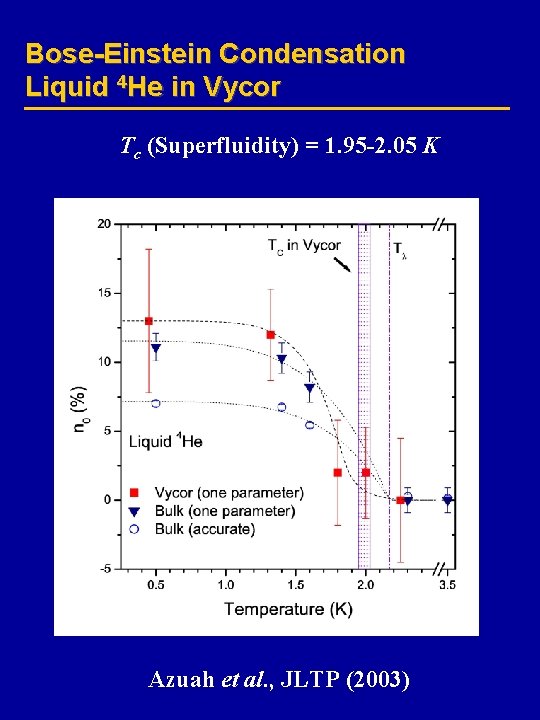
Bose-Einstein Condensation
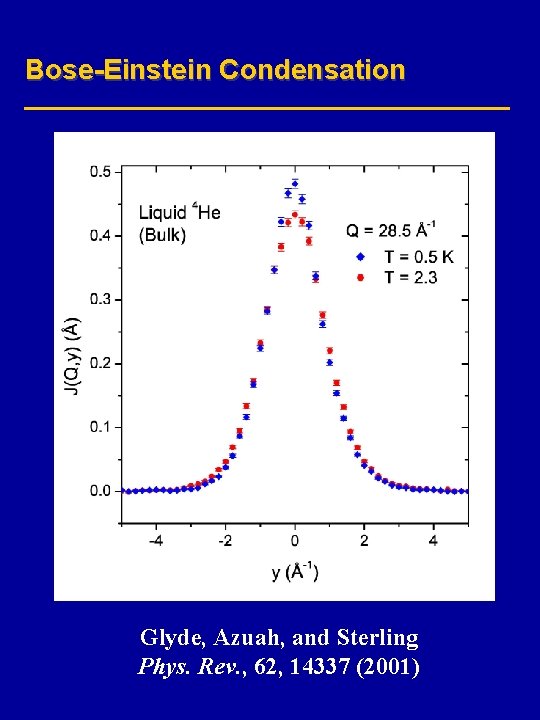
Bose-Einstein Condensation Glyde, Azuah, and Sterling Phys. Rev. , 62, 14337 (2001)
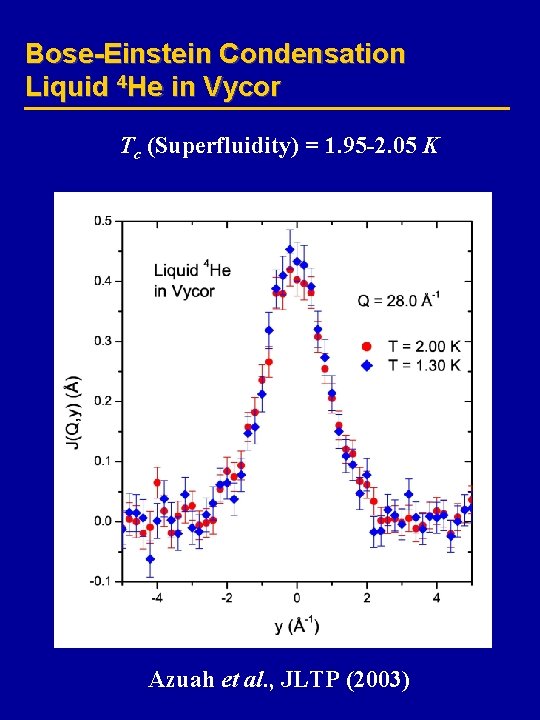
Bose-Einstein Condensation Liquid 4 He in Vycor Tc (Superfluidity) = 1. 95 -2. 05 K Azuah et al. , JLTP (2003)
Bose-Einstein Condensation Liquid 4 He in Vycor Tc (Superfluidity) = 1. 95 -2. 05 K Azuah et al. , JLTP (2003)
Phonons, Rotons, and Layer Modes in Vycor and Aerogel
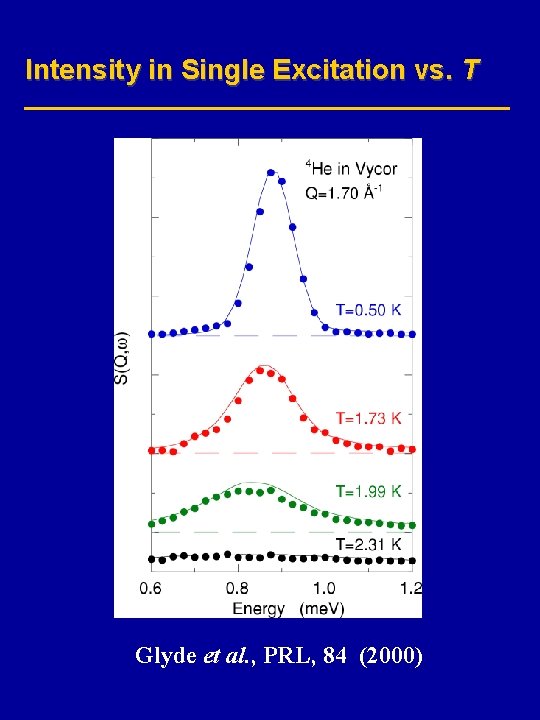
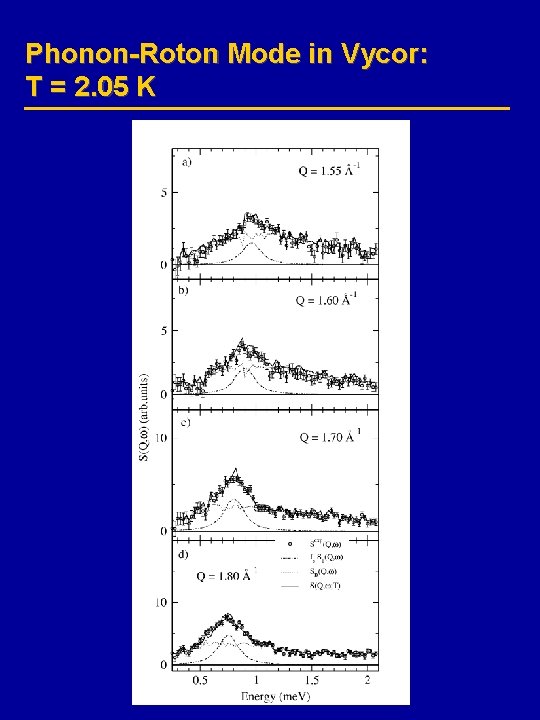
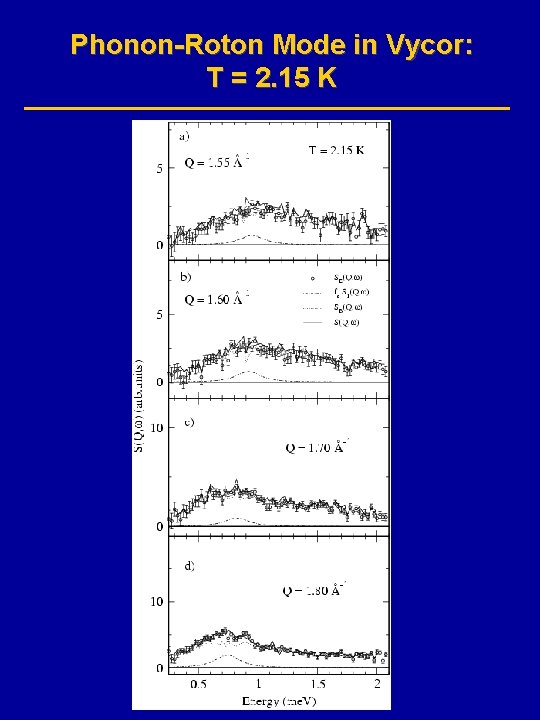
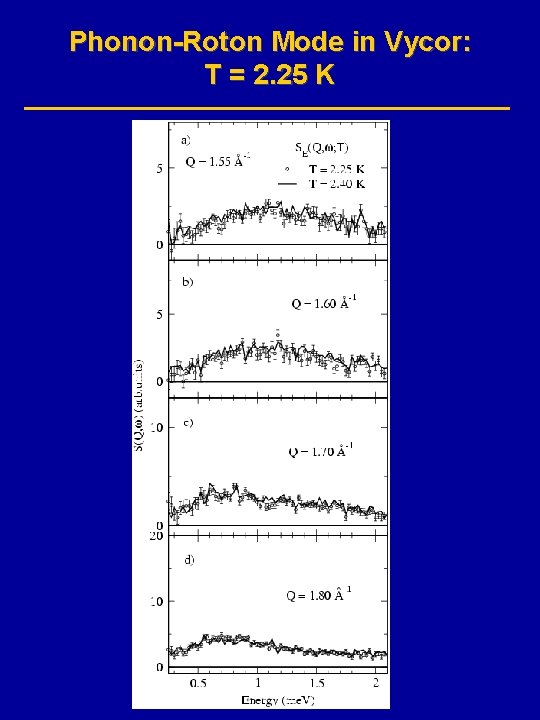
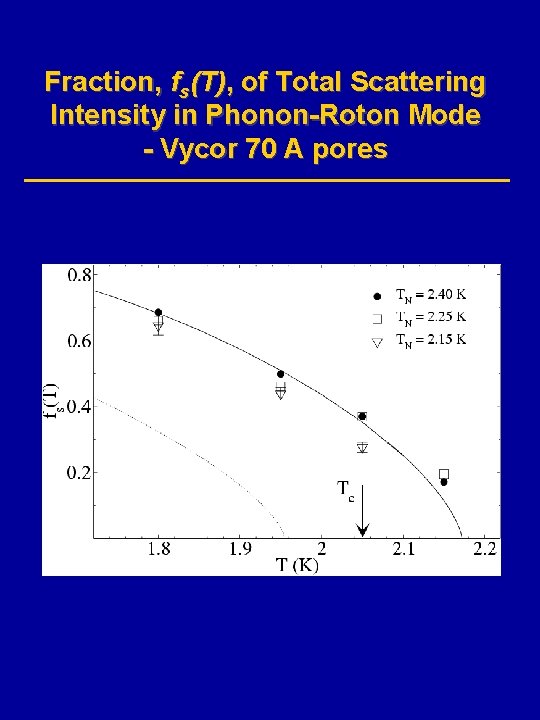
Intensity in Single Excitation vs. T Glyde et al. , PRL, 84 (2000)
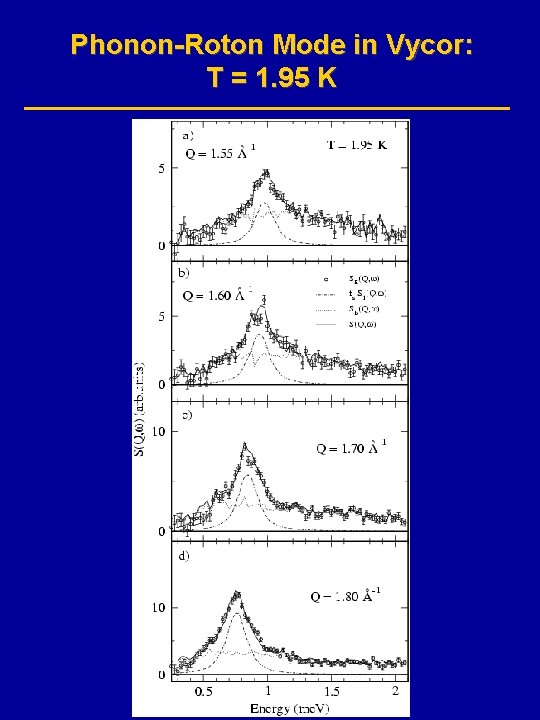
Phonon-Roton Mode in Vycor: T = 1. 95 K
Phonon-Roton Mode in Vycor: T = 2. 05 K
Phonon-Roton Mode in Vycor: T = 2. 15 K
Phonon-Roton Mode in Vycor: T = 2. 25 K
Fraction, fs(T), of Total Scattering Intensity in Phonon-Roton Mode - Vycor 70 A pores
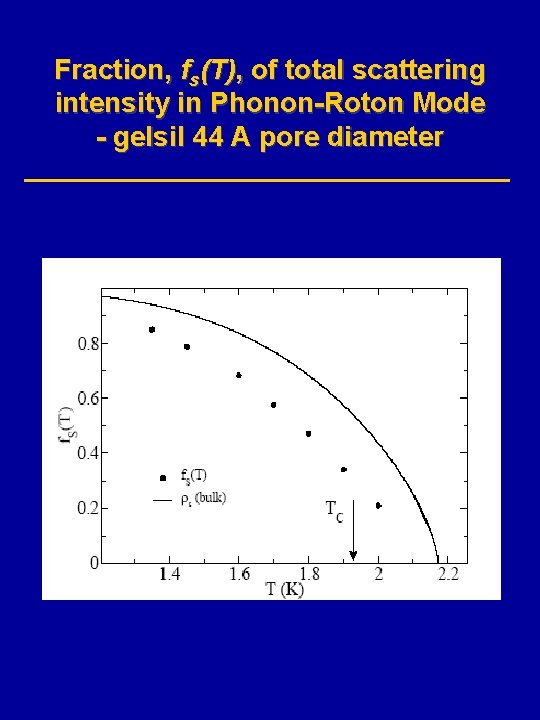
Fraction, fs(T), of total scattering intensity in Phonon-Roton Mode - gelsil 44 A pore diameter
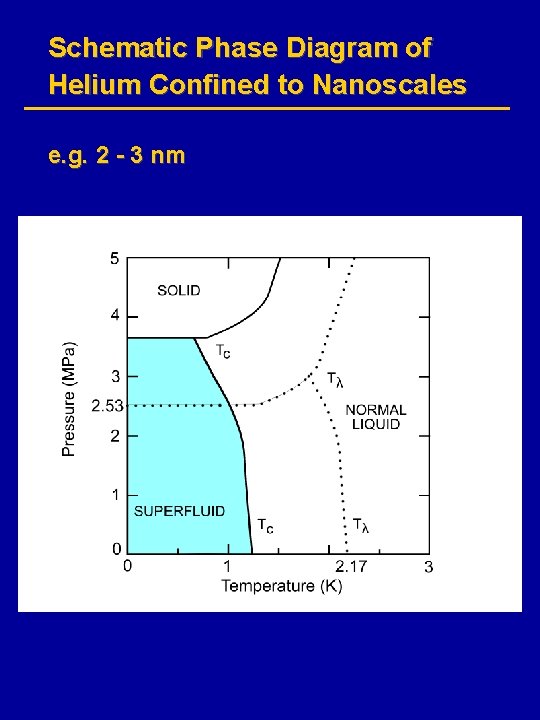
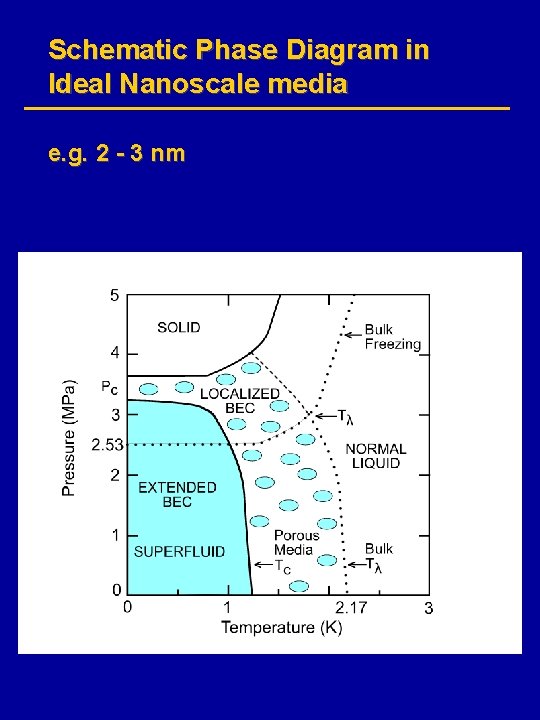
Schematic Phase Diagram of Helium Confined to Nanoscales e. g. 2 - 3 nm
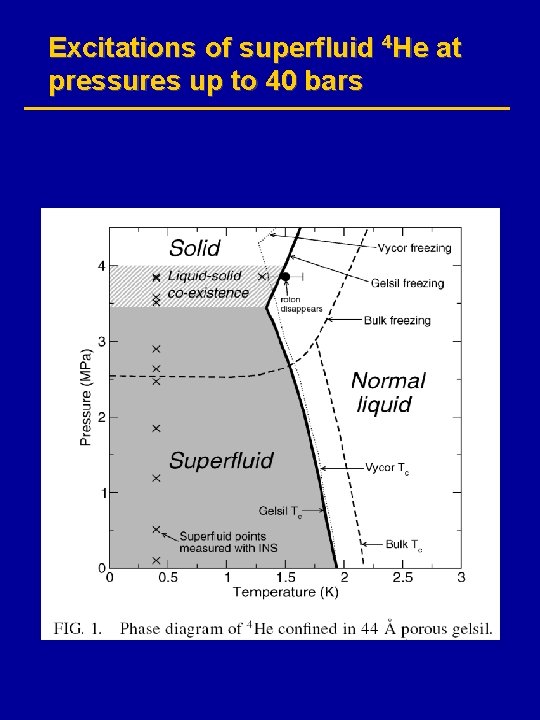
Excitations of superfluid 4 He at pressures up to 40 bars
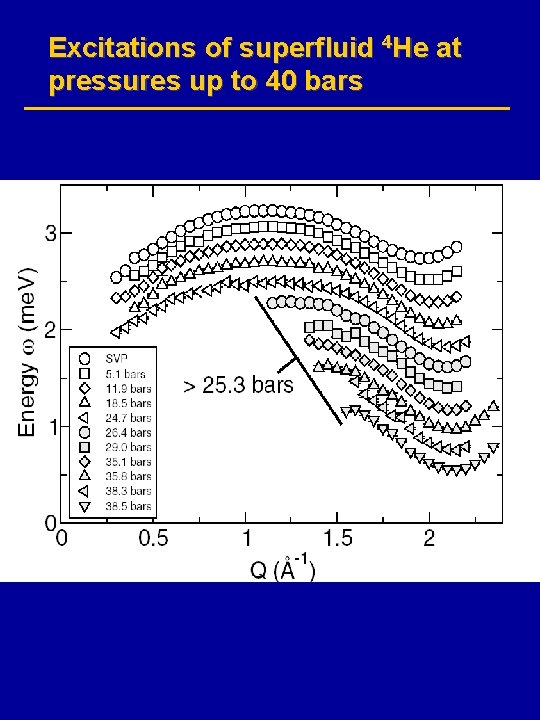
Excitations of superfluid 4 He at pressures up to 40 bars
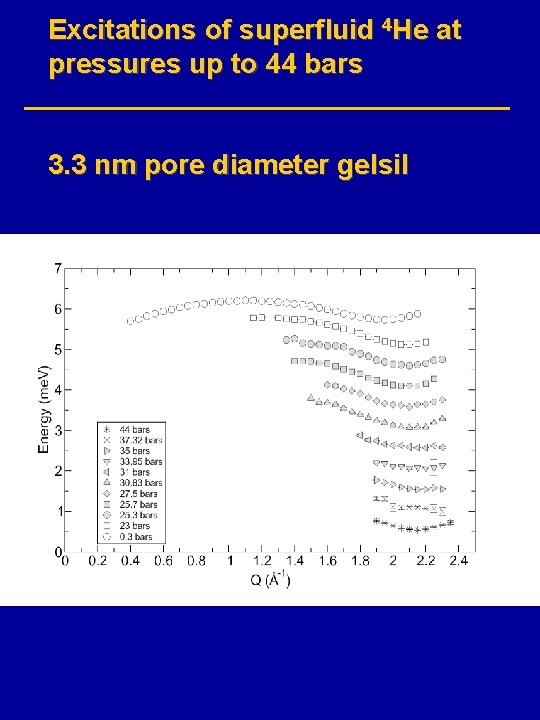
Excitations of superfluid 4 He at pressures up to 44 bars 3. 3 nm pore diameter gelsil
Schematic Phase Diagram in Ideal Nanoscale media e. g. 2 - 3 nm
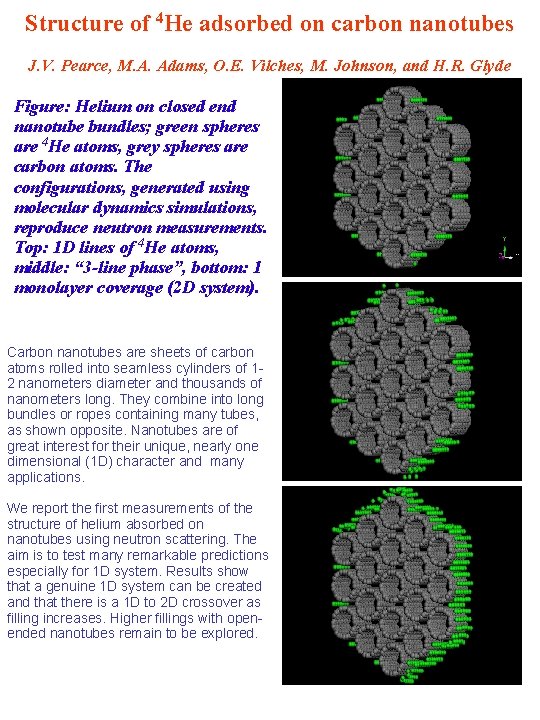
Structure of 4 He adsorbed on carbon nanotubes J. V. Pearce, M. A. Adams, O. E. Vilches, M. Johnson, and H. R. Glyde Figure: Helium on closed end nanotube bundles; green spheres are 4 He atoms, grey spheres are carbon atoms. The configurations, generated using molecular dynamics simulations, reproduce neutron measurements. Top: 1 D lines of 4 He atoms, middle: “ 3 -line phase”, bottom: 1 monolayer coverage (2 D system). Carbon nanotubes are sheets of carbon atoms rolled into seamless cylinders of 12 nanometers diameter and thousands of nanometers long. They combine into long bundles or ropes containing many tubes, as shown opposite. Nanotubes are of great interest for their unique, nearly one dimensional (1 D) character and many applications. We report the first measurements of the structure of helium absorbed on nanotubes using neutron scattering. The aim is to test many remarkable predictions especially for 1 D system. Results show that a genuine 1 D system can be created and that there is a 1 D to 2 D crossover as filling increases. Higher fillings with openended nanotubes remain to be explored.
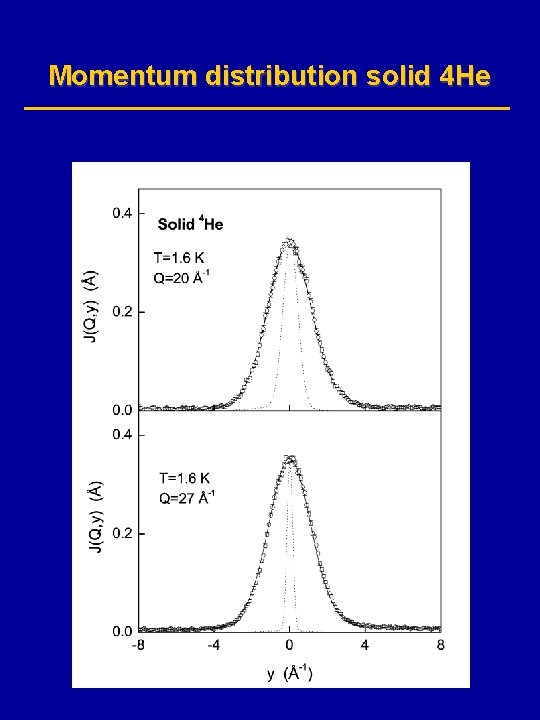
Momentum distribution solid 4 He
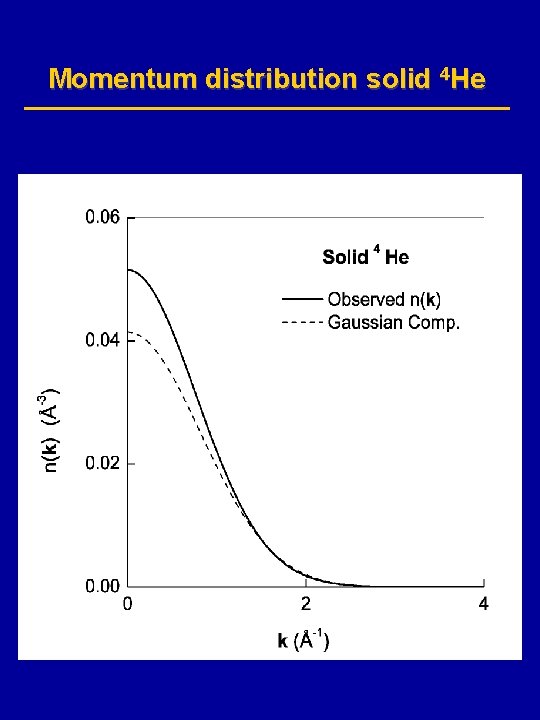
Momentum distribution solid 4 He
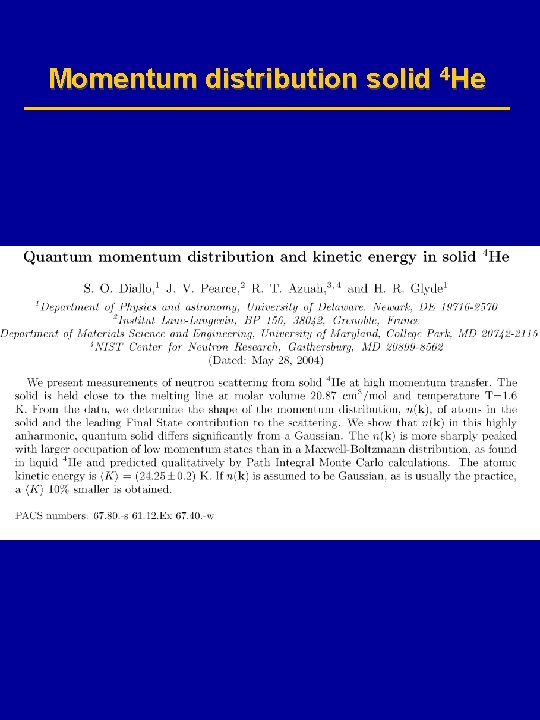
Momentum distribution solid 4 He
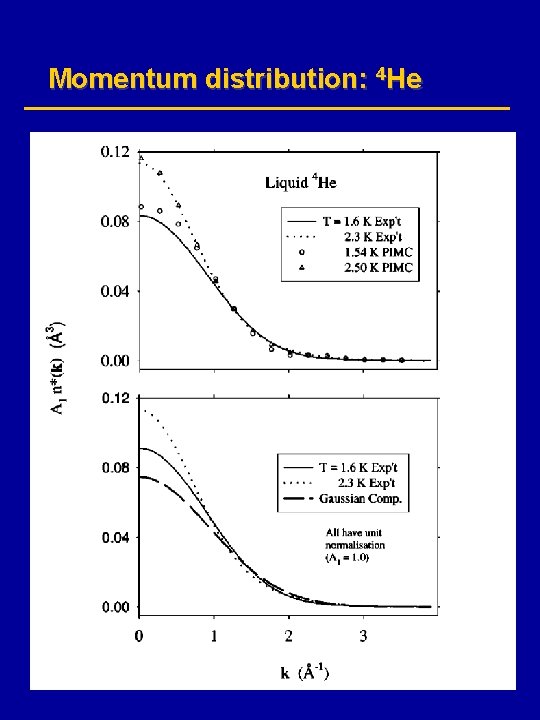
Momentum distribution: 4 He
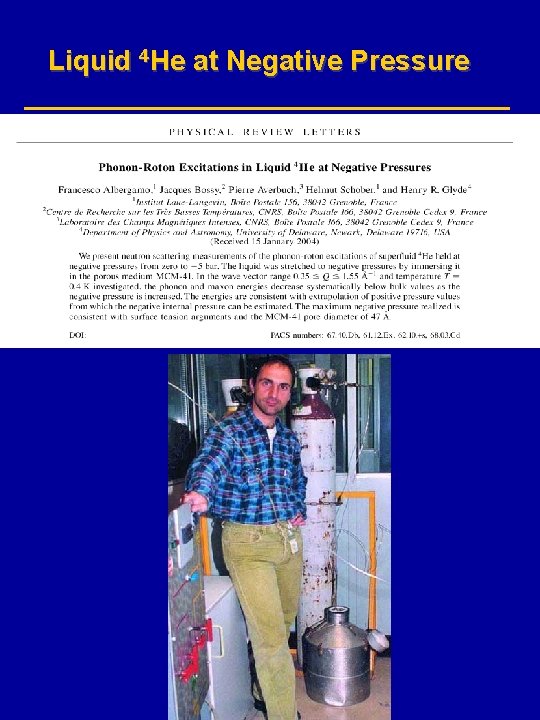
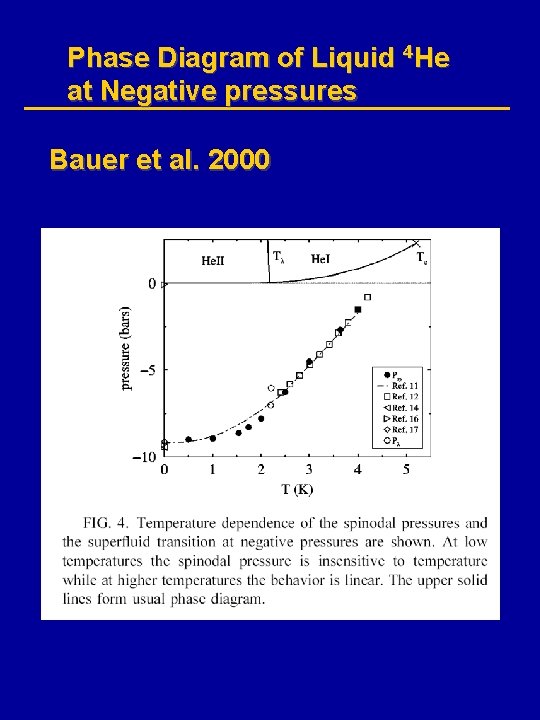
Liquid 4 He at Negative Pressure
Phase Diagram of Liquid 4 He at Negative pressures Bauer et al. 2000
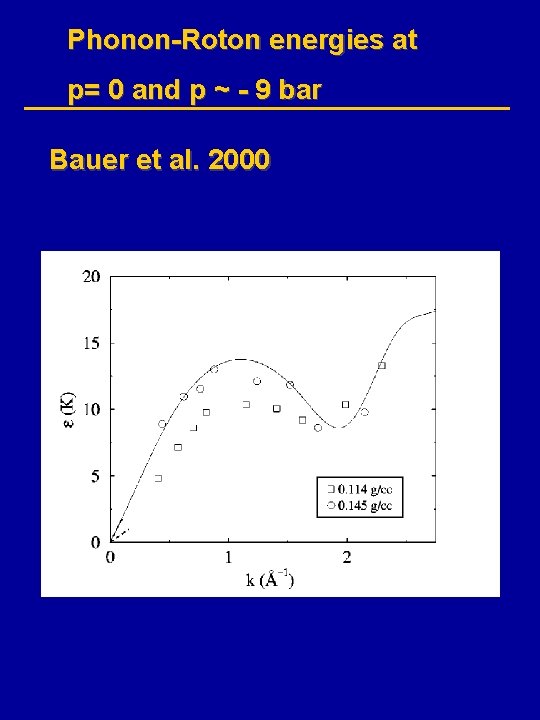
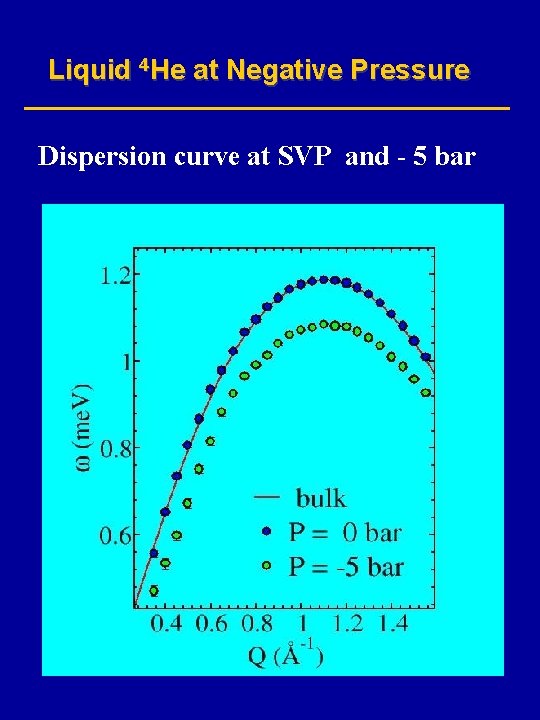
Phonon-Roton energies at p= 0 and p ~ - 9 bar Bauer et al. 2000
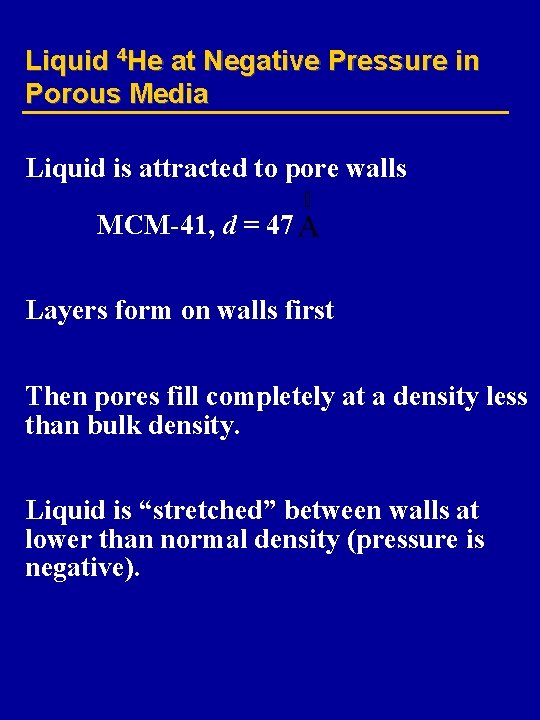
Liquid 4 He at Negative Pressure in Porous Media Liquid is attracted to pore walls MCM-41, d = 47 Layers form on walls first Then pores fill completely at a density less than bulk density. Liquid is “stretched” between walls at lower than normal density (pressure is negative).
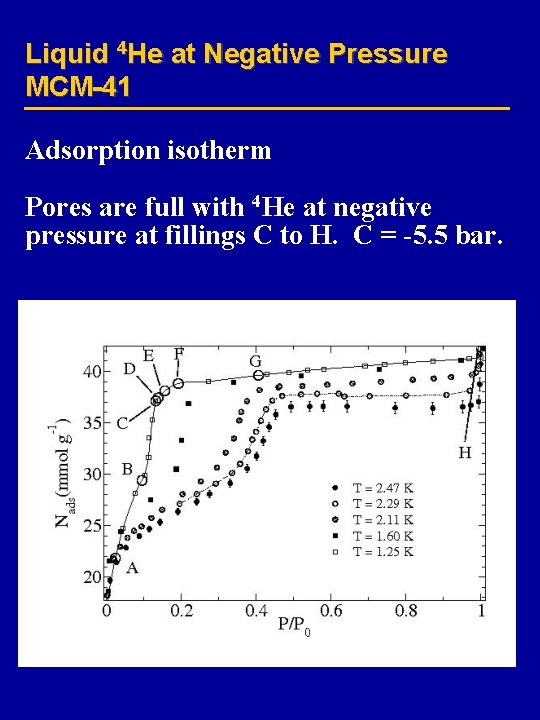
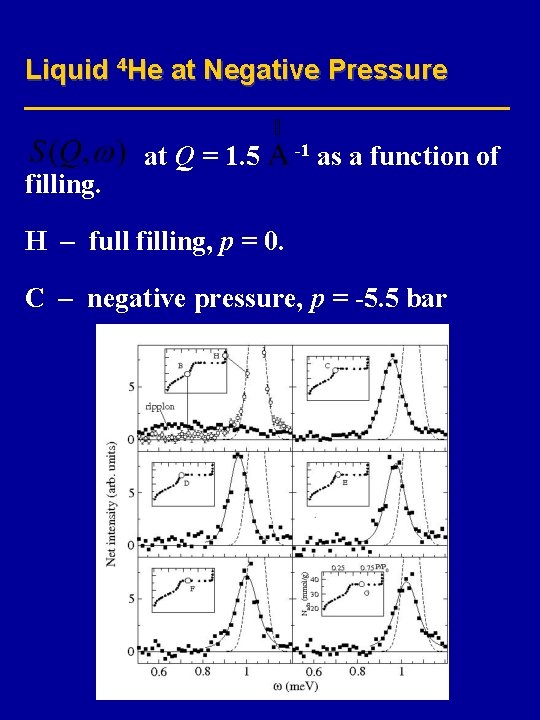
Liquid 4 He at Negative Pressure MCM-41 Adsorption isotherm Pores are full with 4 He at negative pressure at fillings C to H. C = -5. 5 bar.
Liquid 4 He at Negative Pressure filling. at Q = 1. 5 -1 as a function of H – full filling, p = 0. C – negative pressure, p = -5. 5 bar
Liquid 4 He at Negative Pressure Dispersion curve at SVP and - 5 bar
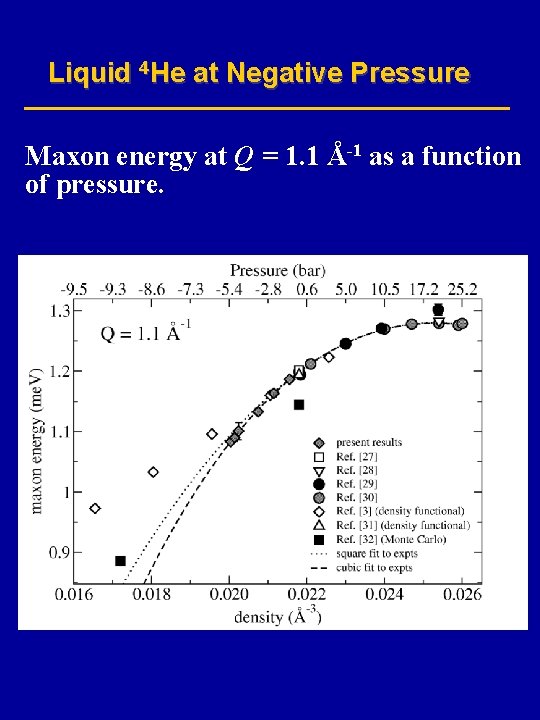
Liquid 4 He at Negative Pressure Maxon energy at Q = 1. 1 Å-1 as a function of pressure.