CS 296 5 Genomes Networks and Cancer http

- Slides: 105
CS 296 -5 Genomes, Networks, and Cancer http: //cs. brown. edu/courses/cs 296 -5/
Course Organization • Seminar style • Grading: – – – 10% participation 30% paper reviews (3) 20% presentations (1 -2) 40% final project Extra credit: 5% for report on visiting seminars (pre -arranged): Maximum 2 • Feb. 1, 4 pm (Beerenwinkel), Feb. 15, 4 pm (E. Myers) • CS requirements: Ph. D, Area B (Algorithms), Sc. M, Theory or Practice • Meeting time
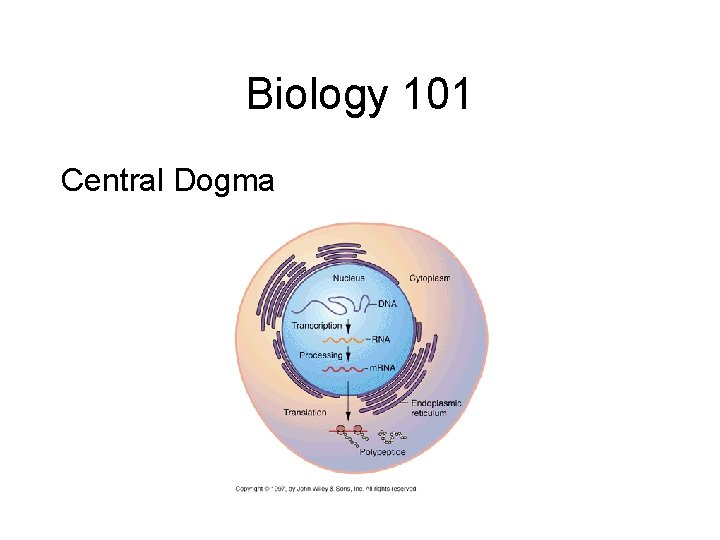
Biology 101 Central Dogma
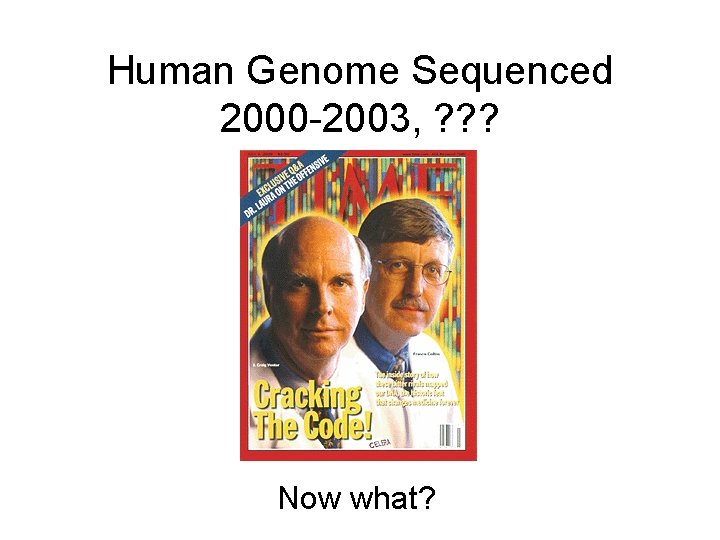
Human Genome Sequenced 2000 -2003, ? ? ? Now what?
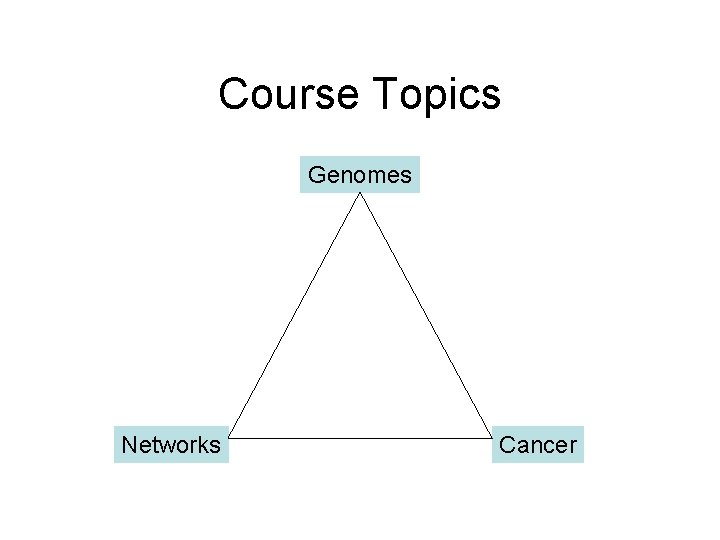
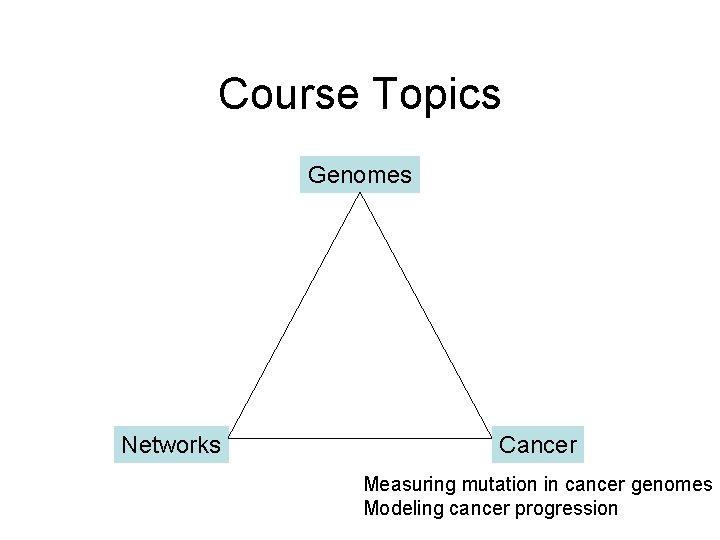
Course Topics Genomes Networks Cancer
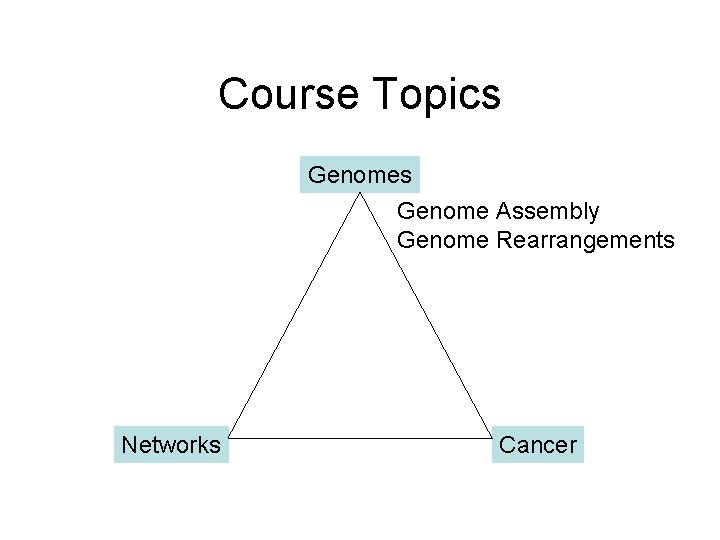
Course Topics Genome Assembly Genome Rearrangements Networks Cancer
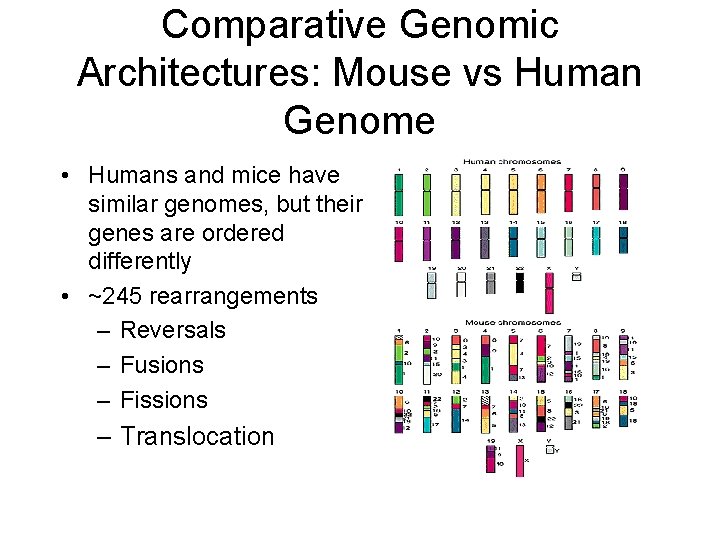
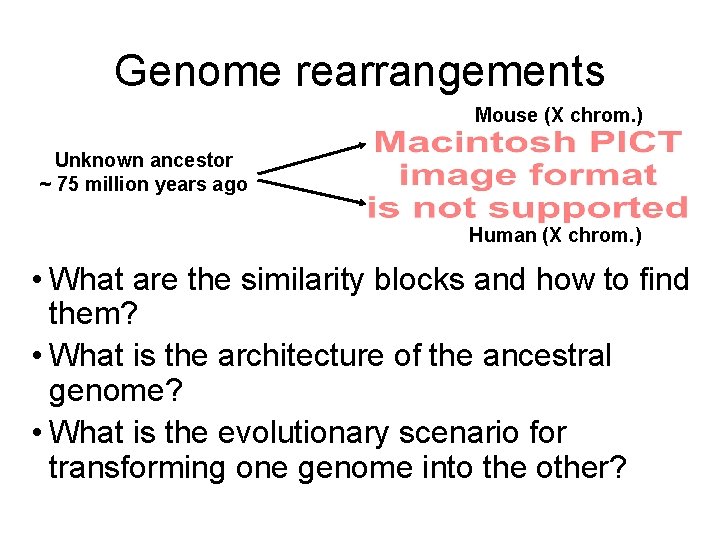
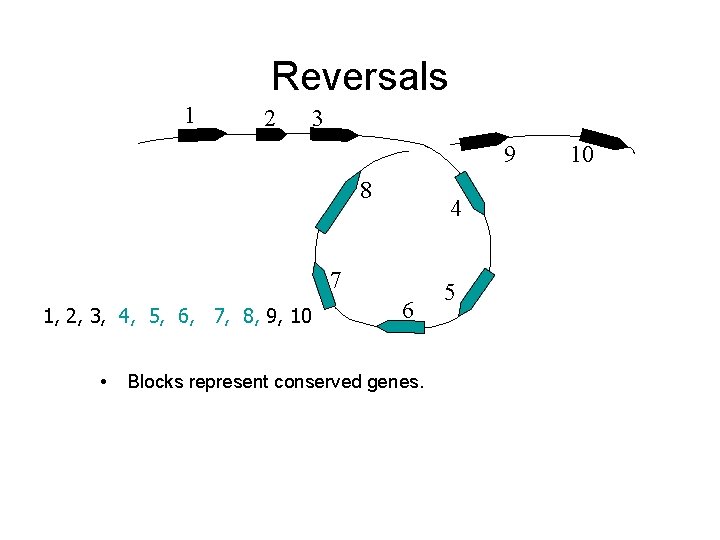
Comparative Genomic Architectures: Mouse vs Human Genome • Humans and mice have similar genomes, but their genes are ordered differently • ~245 rearrangements – Reversals – Fusions – Fissions – Translocation
Genome rearrangements Mouse (X chrom. ) Unknown ancestor ~ 75 million years ago Human (X chrom. ) • What are the similarity blocks and how to find them? • What is the architecture of the ancestral genome? • What is the evolutionary scenario for transforming one genome into the other?
Reversals 1 2 3 9 8 4 7 1, 2, 3, 4, 5, 6, 7, 8, 9, 10 • 6 Blocks represent conserved genes. 5 10
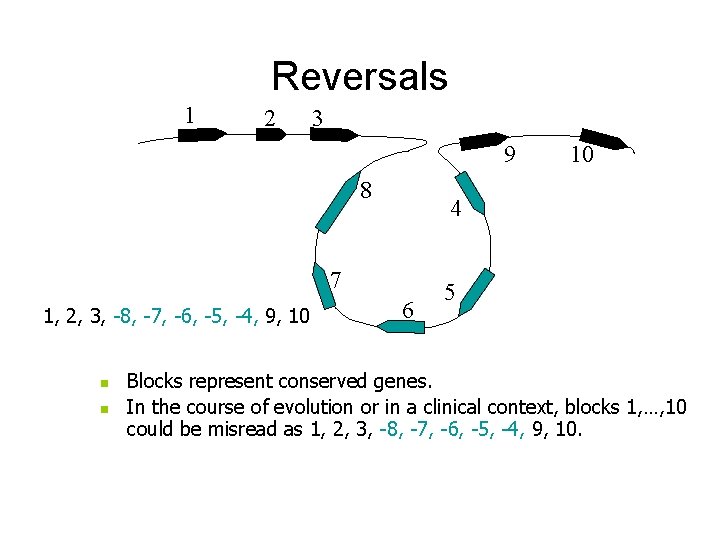
Reversals 1 2 3 9 8 4 7 1, 2, 3, -8, -7, -6, -5, -4, 9, 10 n n 10 6 5 Blocks represent conserved genes. In the course of evolution or in a clinical context, blocks 1, …, 10 could be misread as 1, 2, 3, -8, -7, -6, -5, -4, 9, 10.
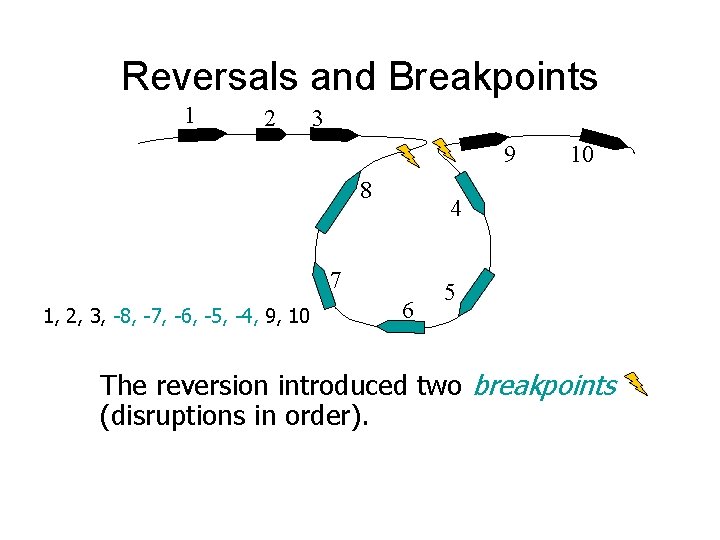
Reversals and Breakpoints 1 2 3 9 8 4 7 1, 2, 3, -8, -7, -6, -5, -4, 9, 10 10 6 5 The reversion introduced two breakpoints (disruptions in order).
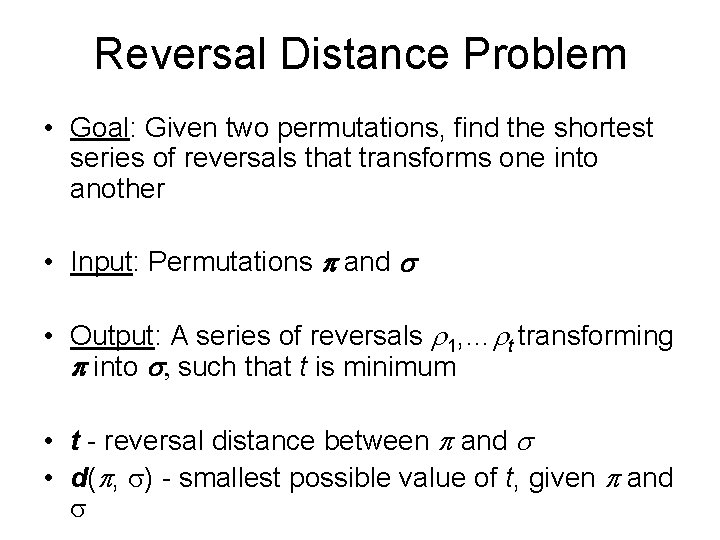
Reversal Distance Problem • Goal: Given two permutations, find the shortest series of reversals that transforms one into another • Input: Permutations p and s • Output: A series of reversals r 1, …rt transforming p into s, such that t is minimum • t - reversal distance between p and s • d(p, s) - smallest possible value of t, given p and s
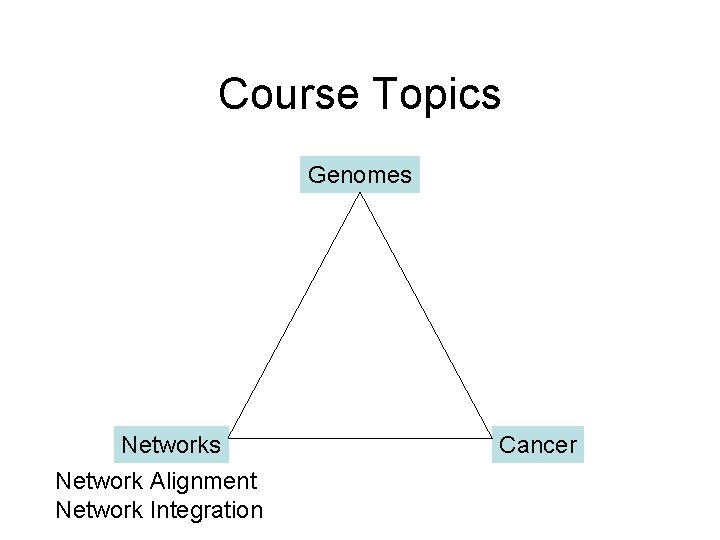
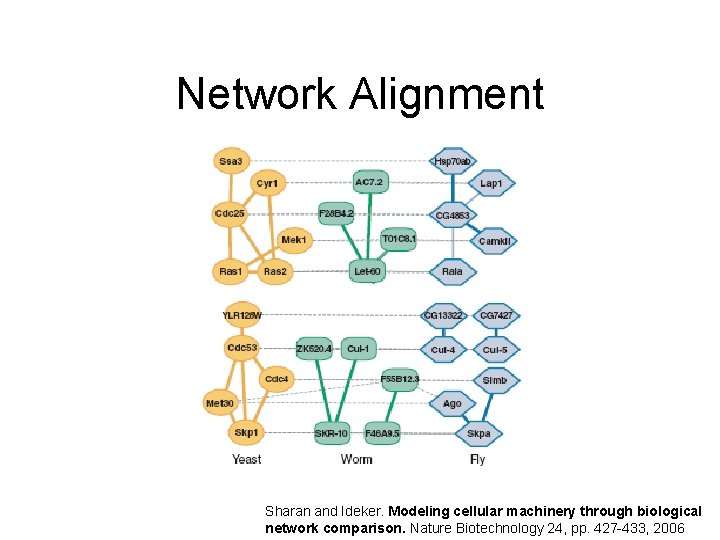
Course Topics Genomes Network Alignment Network Integration Cancer
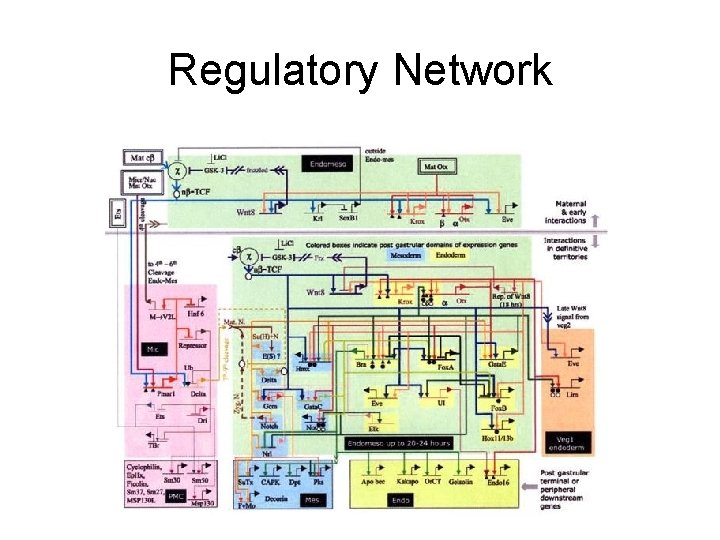
Regulatory Network
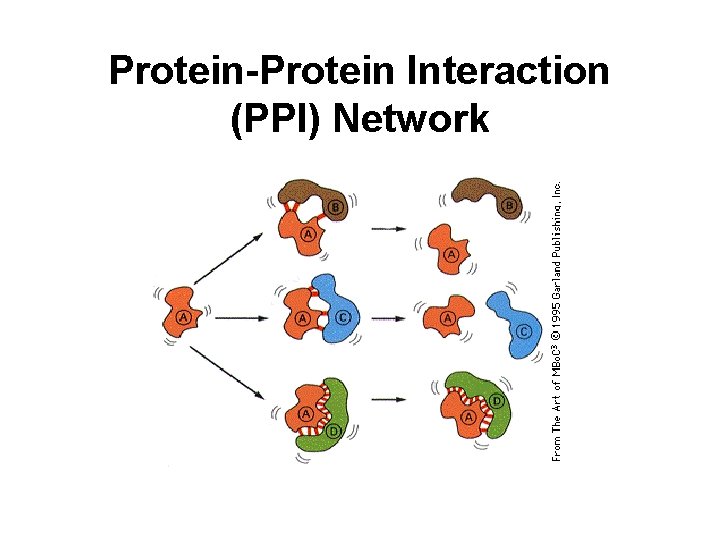
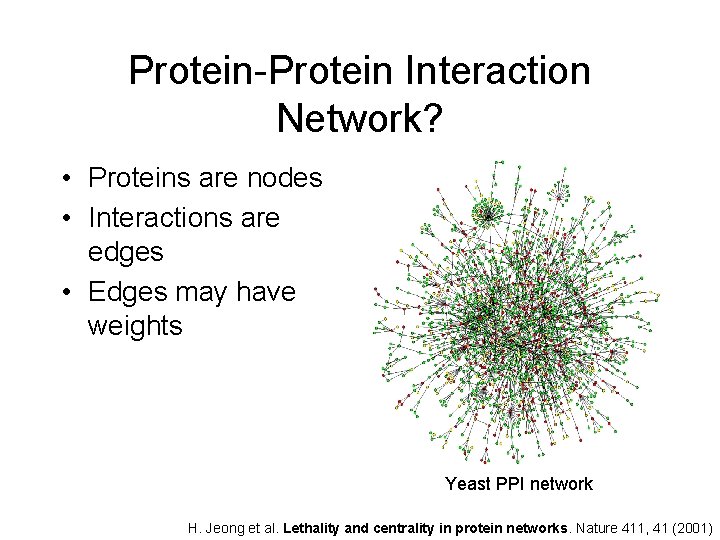
Protein-Protein Interaction (PPI) Network
Protein-Protein Interaction Network? • Proteins are nodes • Interactions are edges • Edges may have weights Yeast PPI network H. Jeong et al. Lethality and centrality in protein networks. Nature 411, 41 (2001)
Network Alignment Sharan and Ideker. Modeling cellular machinery through biological network comparison. Nature Biotechnology 24, pp. 427 -433, 2006
The Network Alignment Problem Given: k different interaction networks belonging to different species, Find: Conserved sub-networks within these networks Conserved defined by protein sequence similarity (node similarity) and interaction similarity (network topology similarity)
Course Topics Genomes Networks Cancer Measuring mutation in cancer genomes Modeling cancer progression
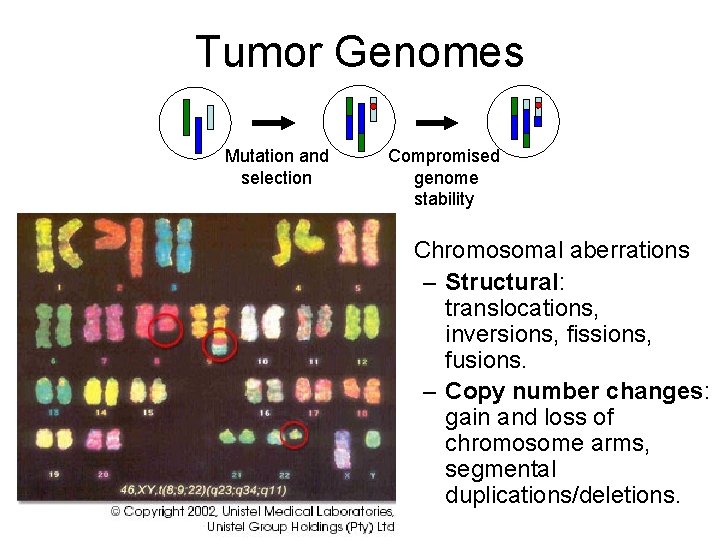
Tumor Genomes Mutation and selection Compromised genome stability • Chromosomal aberrations – Structural: translocations, inversions, fissions, fusions. – Copy number changes: gain and loss of chromosome arms, segmental duplications/deletions.
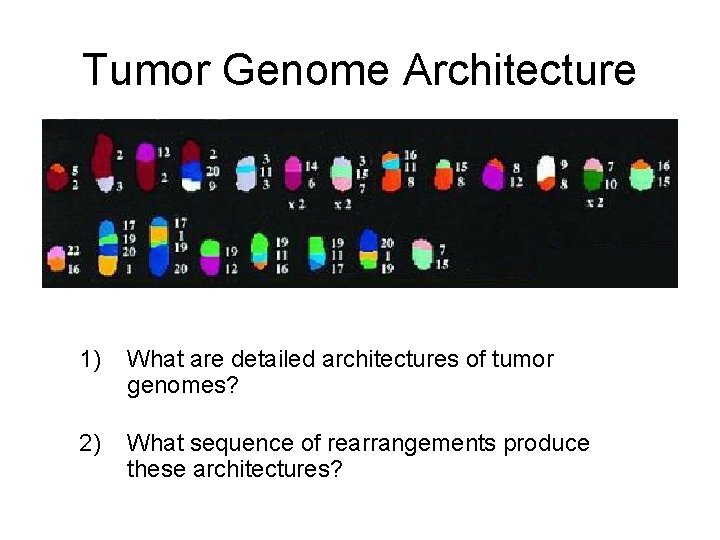
Tumor Genome Architecture 1) What are detailed architectures of tumor genomes? 2) What sequence of rearrangements produce these architectures?
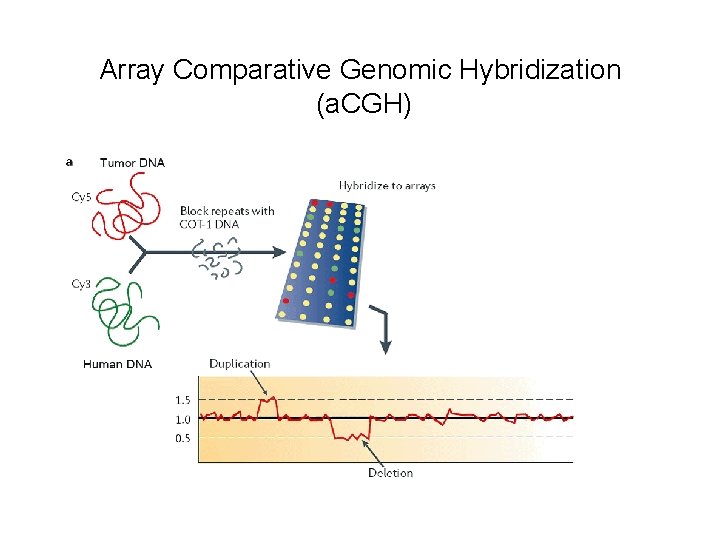
Array Comparative Genomic Hybridization (a. CGH)
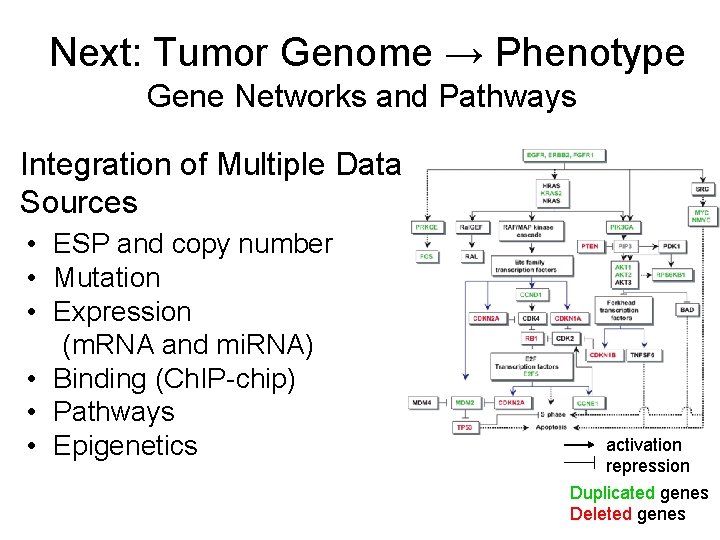
Next: Tumor Genome → Phenotype Gene Networks and Pathways Integration of Multiple Data Sources • ESP and copy number • Mutation • Expression (m. RNA and mi. RNA) • Binding (Ch. IP-chip) • Pathways • Epigenetics activation repression Duplicated genes Deleted genes
Additional Topics: Rearrangements in Genetics • Interaction b/w genome rearrangements and single nucleotide polymorphisms (SNPs) • Detecting Rearrangements Under Selection • Population Substructure
DNA Sequencing
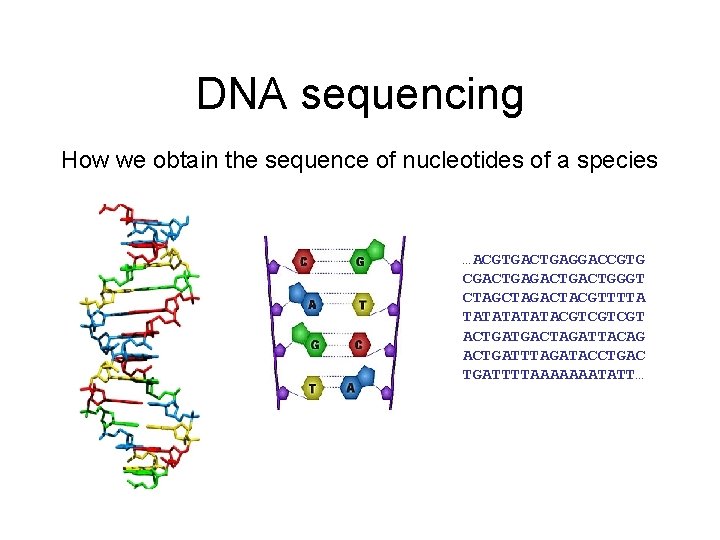
DNA sequencing How we obtain the sequence of nucleotides of a species …ACGTGACTGAGGACCGTG CGACTGACTGGGT CTAGACTACGTTTTA TATATACGTCGTCGT ACTGATGACTAGATTACAG ACTGATTTAGATACCTGAC TGATTTTAAAAAAATATT…
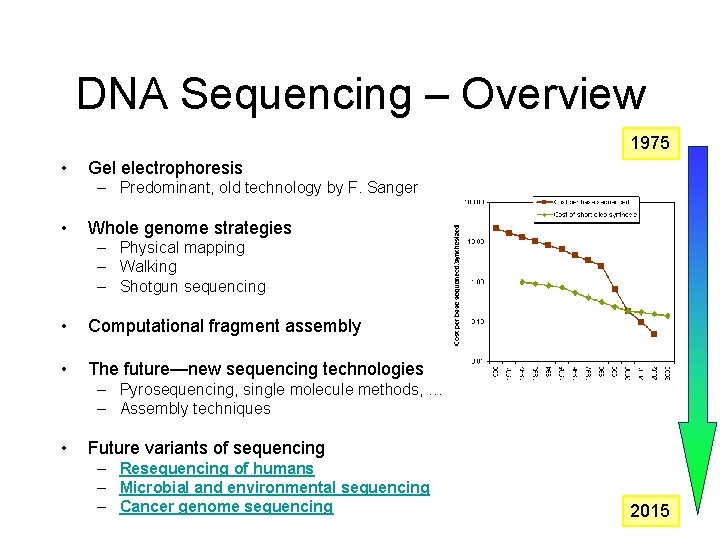
DNA Sequencing – Overview 1975 • Gel electrophoresis – Predominant, old technology by F. Sanger • Whole genome strategies – Physical mapping – Walking – Shotgun sequencing • Computational fragment assembly • The future—new sequencing technologies – Pyrosequencing, single molecule methods, … – Assembly techniques • Future variants of sequencing – Resequencing of humans – Microbial and environmental sequencing – Cancer genome sequencing 2015
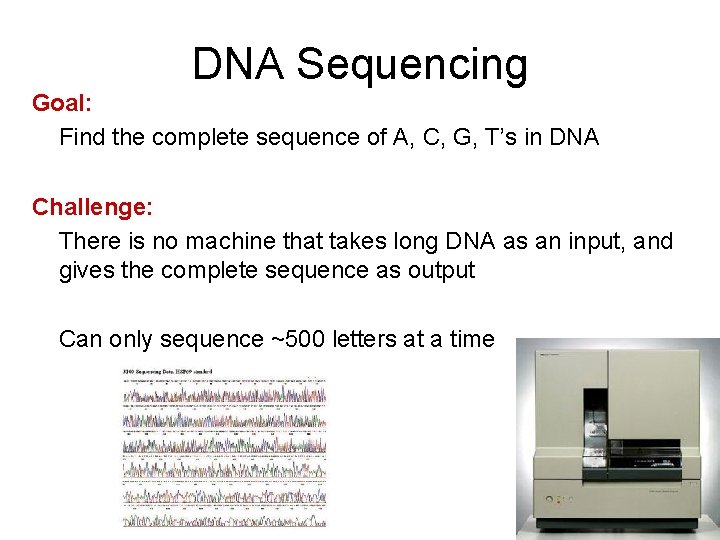
DNA Sequencing Goal: Find the complete sequence of A, C, G, T’s in DNA Challenge: There is no machine that takes long DNA as an input, and gives the complete sequence as output Can only sequence ~500 letters at a time
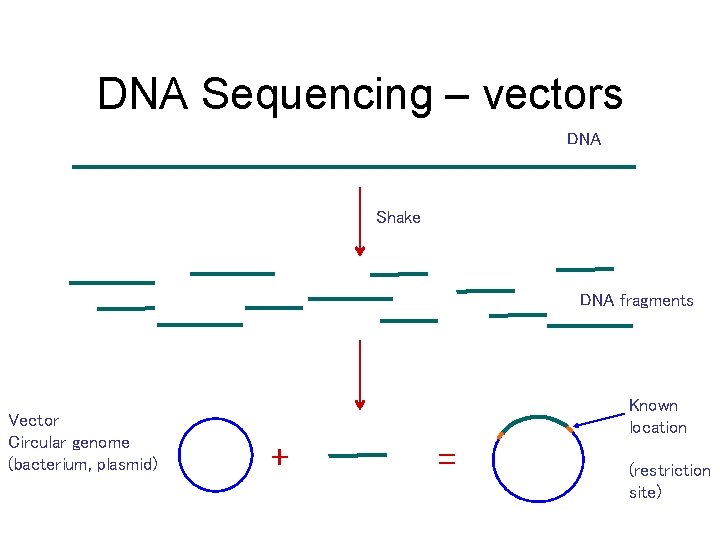
DNA Sequencing – vectors DNA Shake DNA fragments Vector Circular genome (bacterium, plasmid) Known location + = (restriction site)
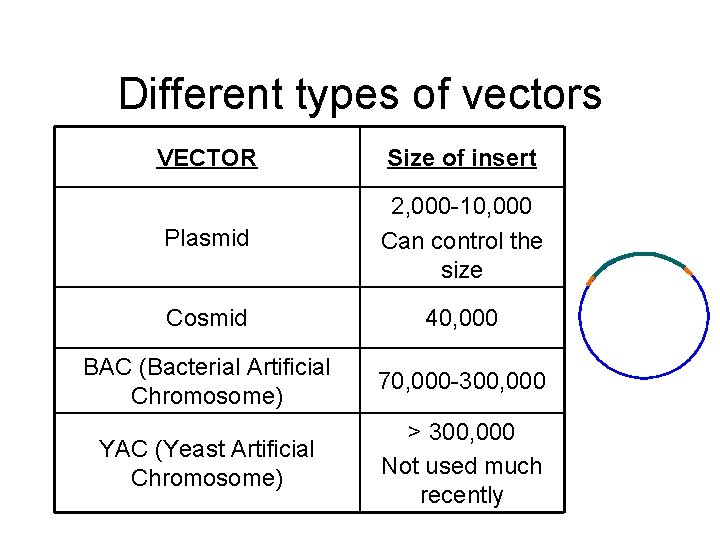
Different types of vectors VECTOR Size of insert Plasmid 2, 000 -10, 000 Can control the size Cosmid 40, 000 BAC (Bacterial Artificial Chromosome) 70, 000 -300, 000 YAC (Yeast Artificial Chromosome) > 300, 000 Not used much recently
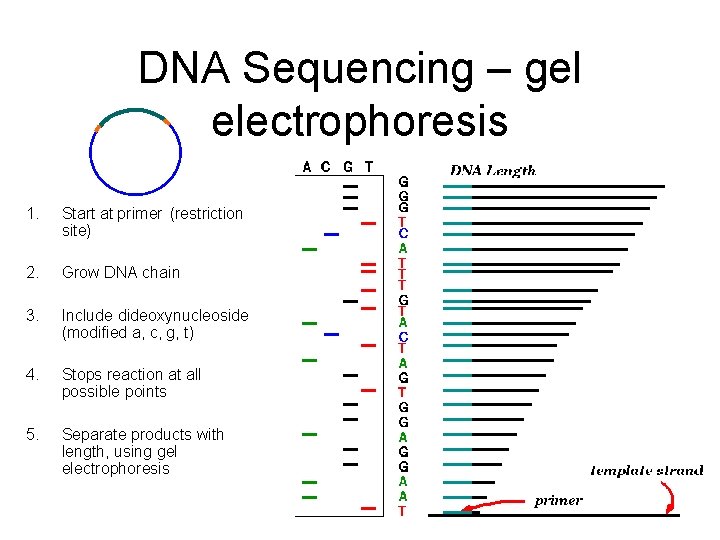
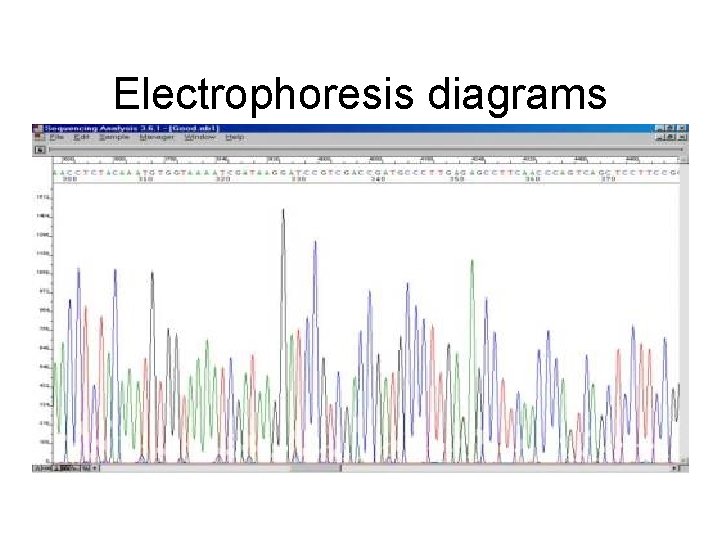
DNA Sequencing – gel electrophoresis 1. Start at primer (restriction site) 2. Grow DNA chain 3. Include dideoxynucleoside (modified a, c, g, t) 4. Stops reaction at all possible points 5. Separate products with length, using gel electrophoresis
Electrophoresis diagrams
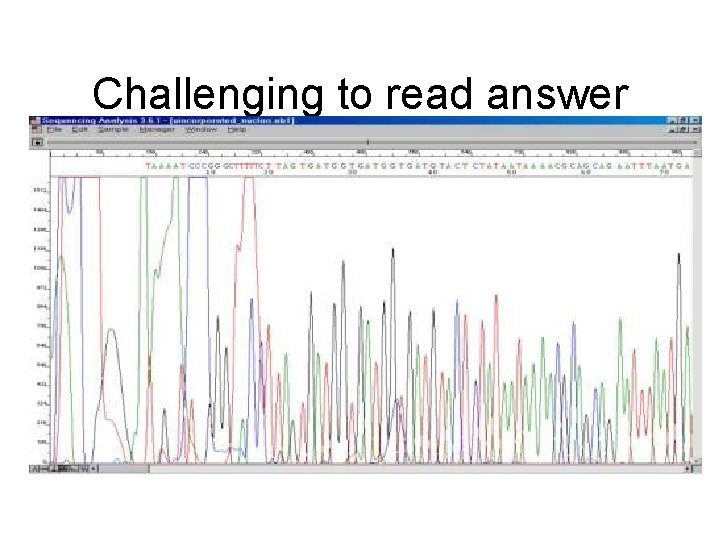
Challenging to read answer
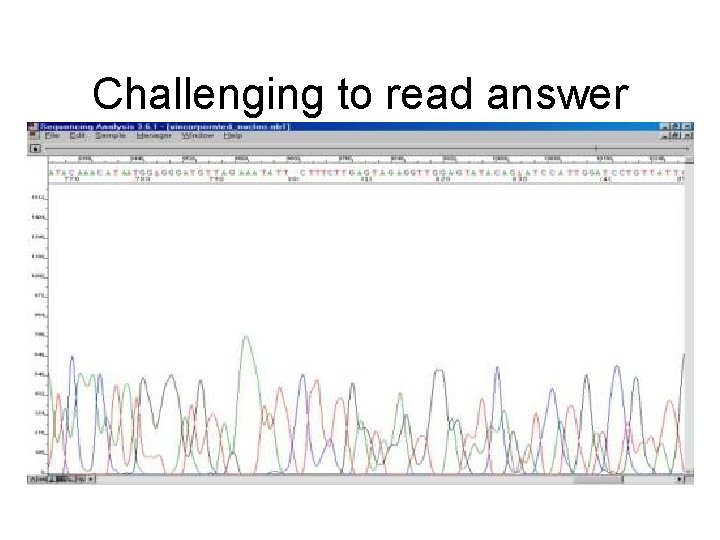
Challenging to read answer
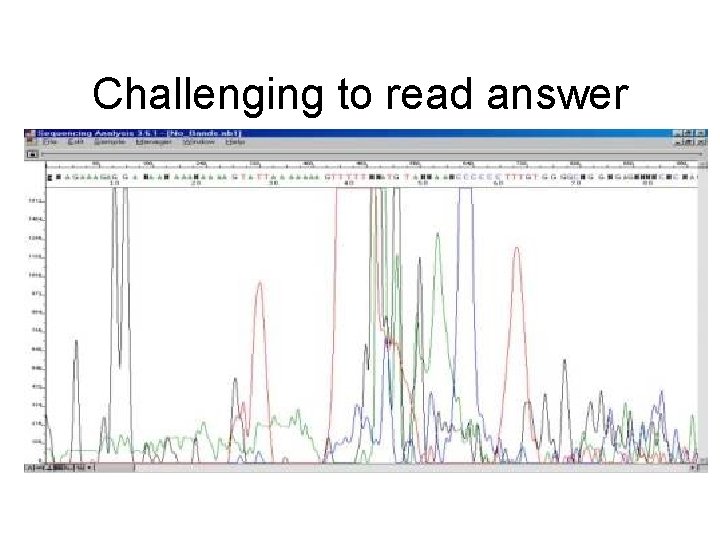
Challenging to read answer
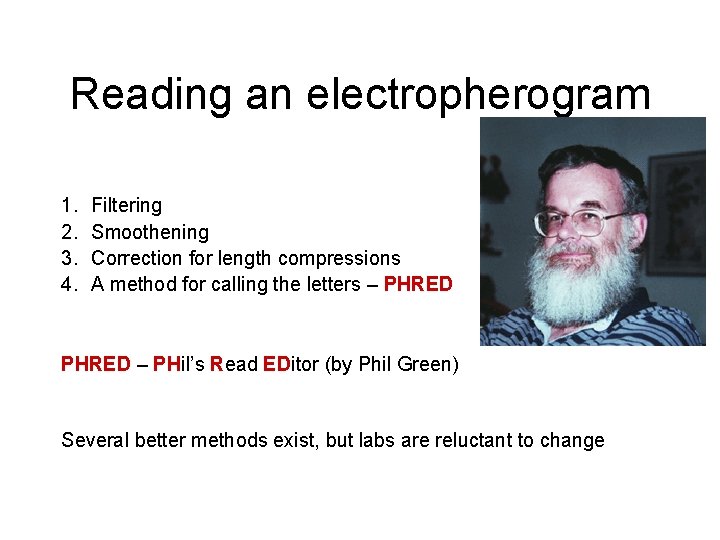
Reading an electropherogram 1. 2. 3. 4. Filtering Smoothening Correction for length compressions A method for calling the letters – PHRED – PHil’s Read EDitor (by Phil Green) Several better methods exist, but labs are reluctant to change
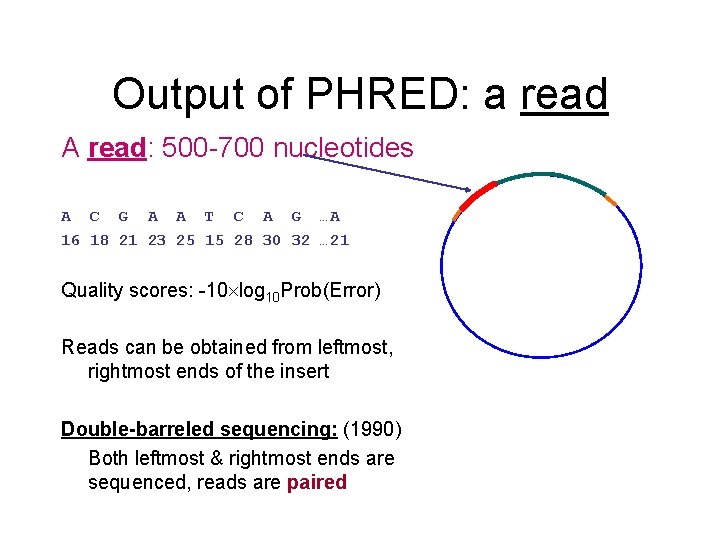
Output of PHRED: a read A read: 500 -700 nucleotides A C G A A T C A G …A 16 18 21 23 25 15 28 30 32 … 21 Quality scores: -10 log 10 Prob(Error) Reads can be obtained from leftmost, rightmost ends of the insert Double-barreled sequencing: (1990) Both leftmost & rightmost ends are sequenced, reads are paired
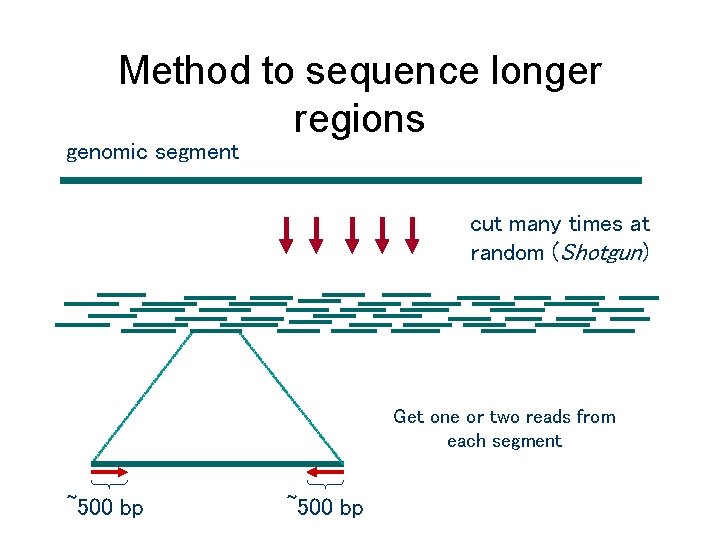
Method to sequence longer regions genomic segment cut many times at random (Shotgun) Get one or two reads from each segment ~500 bp
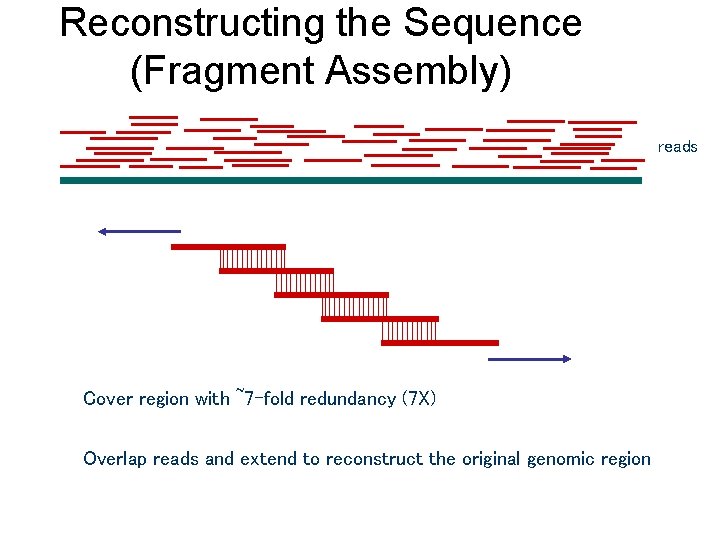
Reconstructing the Sequence (Fragment Assembly) reads Cover region with ~7 -fold redundancy (7 X) Overlap reads and extend to reconstruct the original genomic region
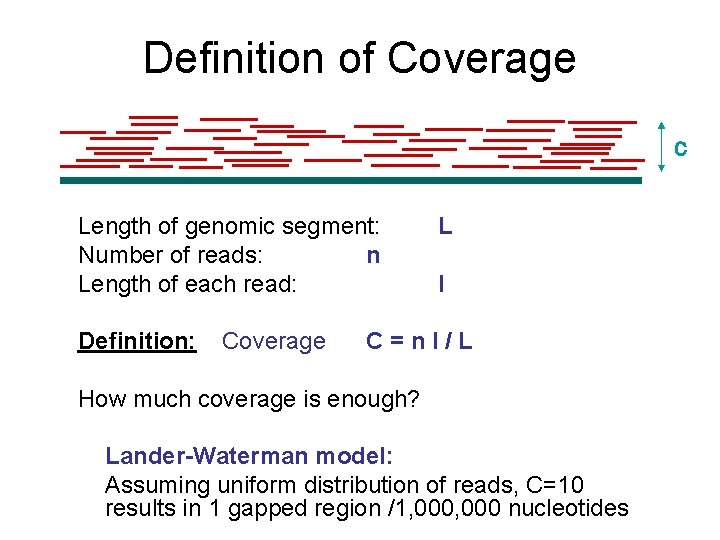
Definition of Coverage C Length of genomic segment: Number of reads: n Length of each read: Definition: Coverage L l C=nl/L How much coverage is enough? Lander-Waterman model: Assuming uniform distribution of reads, C=10 results in 1 gapped region /1, 000 nucleotides
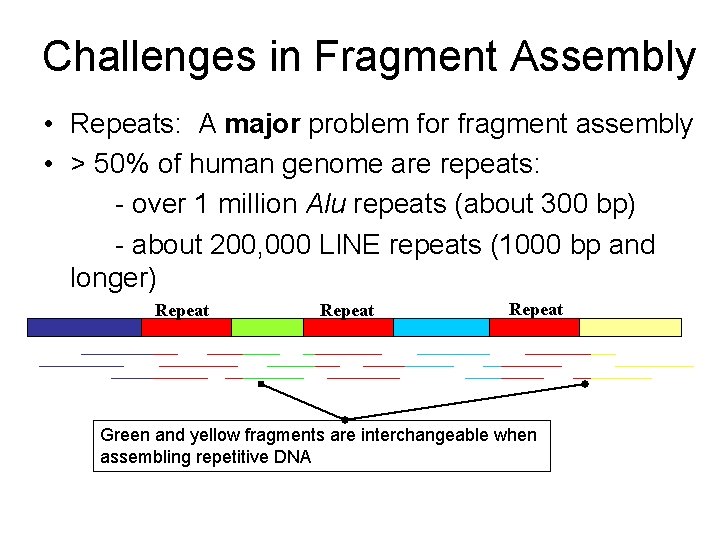
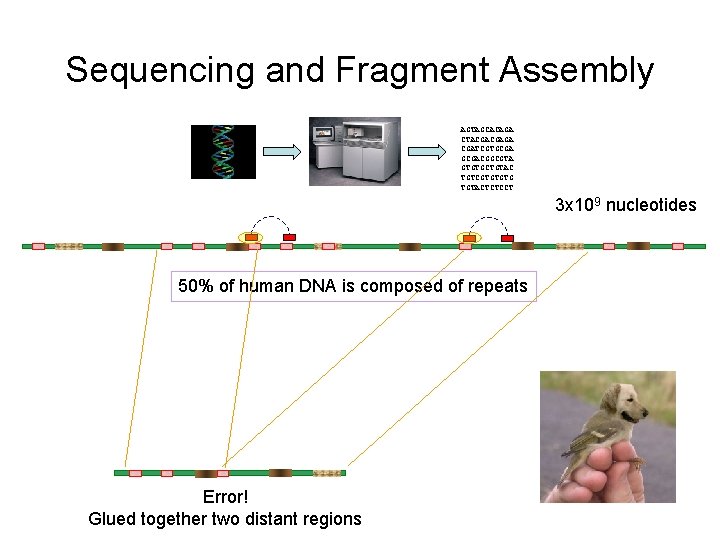
Challenges in Fragment Assembly • Repeats: A major problem for fragment assembly • > 50% of human genome are repeats: - over 1 million Alu repeats (about 300 bp) - about 200, 000 LINE repeats (1000 bp and longer) Repeat Green and yellow fragments are interchangeable when assembling repetitive DNA
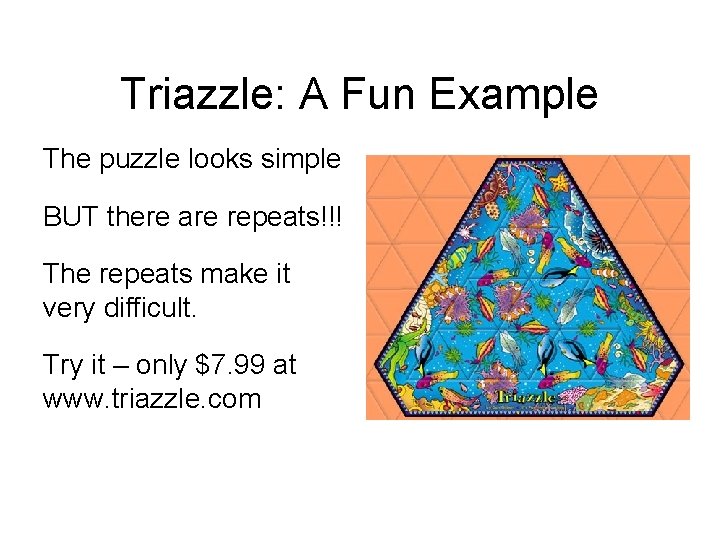
Triazzle: A Fun Example The puzzle looks simple BUT there are repeats!!! The repeats make it very difficult. Try it – only $7. 99 at www. triazzle. com
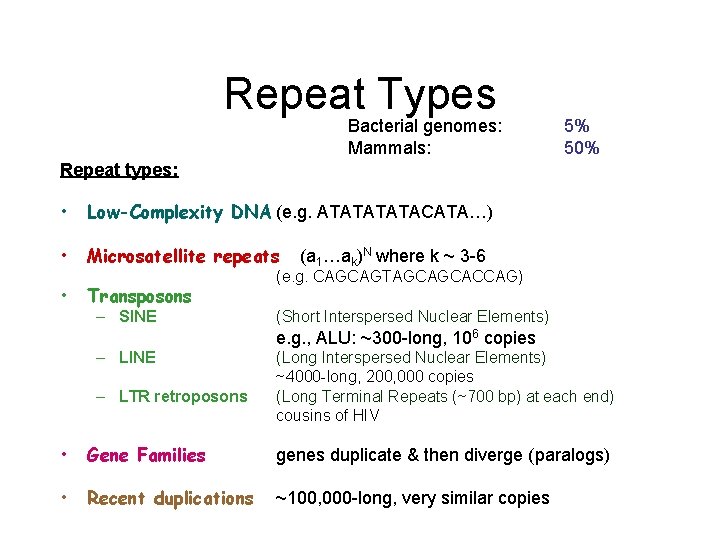
Repeat Types Bacterial genomes: Mammals: 5% 50% Repeat types: • Low-Complexity DNA (e. g. ATATACATA…) • Microsatellite repeats • Transposons – SINE (a 1…ak)N where k ~ 3 -6 (e. g. CAGCAGTAGCAGCACCAG) (Short Interspersed Nuclear Elements) e. g. , ALU: ~300 -long, 106 copies – LINE – LTR retroposons (Long Interspersed Nuclear Elements) ~4000 -long, 200, 000 copies (Long Terminal Repeats (~700 bp) at each end) cousins of HIV • Gene Families genes duplicate & then diverge (paralogs) • Recent duplications ~100, 000 -long, very similar copies
Sequencing and Fragment Assembly AGTAGCACAGA CTACGACGAGA CGATCGTGCGACGGCGTA GTGTGCTGTAC TGTCGTGTGTG TGTACTCTCCT 3 x 10⁹ nucleotides 50% of human DNA is composed of repeats Error! Glued together two distant regions
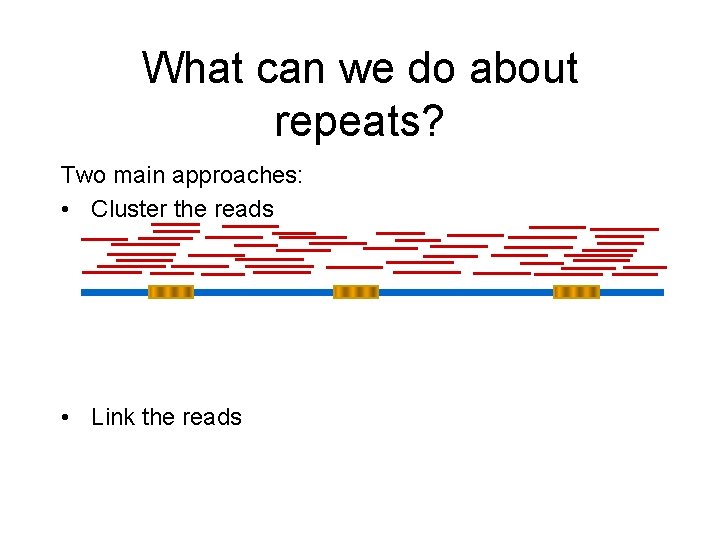
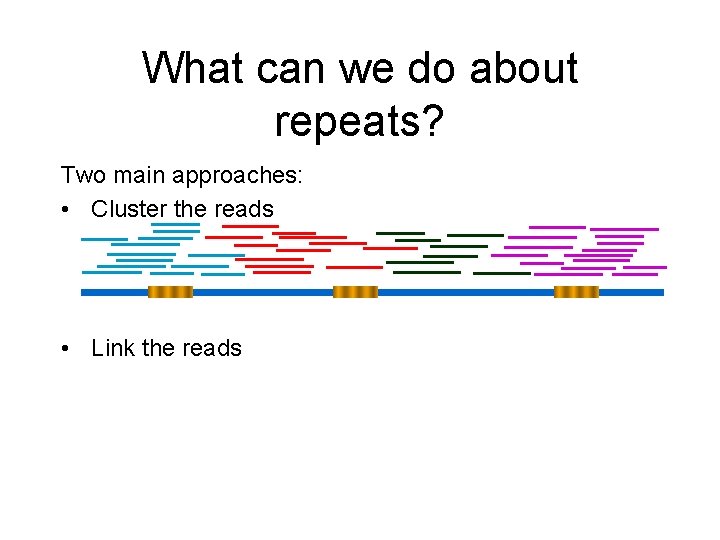
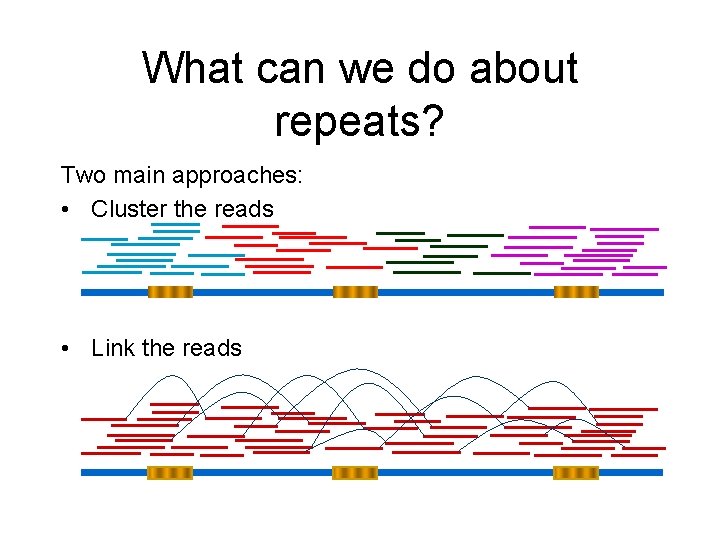
What can we do about repeats? Two main approaches: • Cluster the reads • Link the reads
What can we do about repeats? Two main approaches: • Cluster the reads • Link the reads
What can we do about repeats? Two main approaches: • Cluster the reads • Link the reads
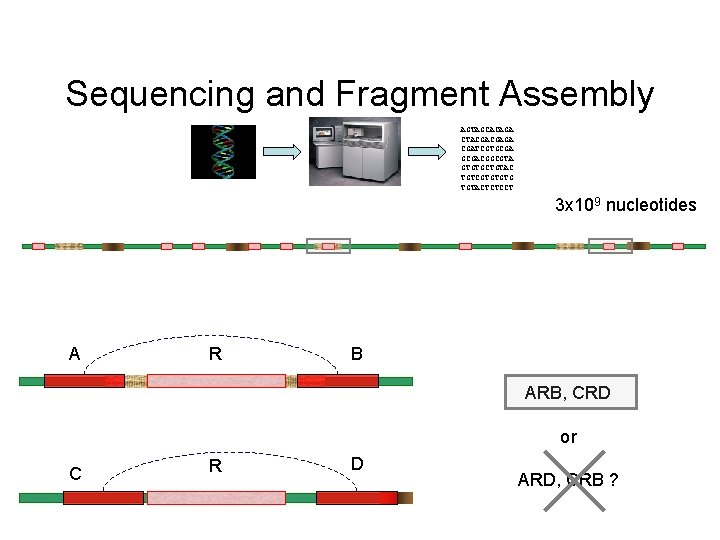
Sequencing and Fragment Assembly AGTAGCACAGA CTACGACGAGA CGATCGTGCGACGGCGTA GTGTGCTGTAC TGTCGTGTGTG TGTACTCTCCT 3 x 10⁹ nucleotides A R B ARB, CRD or C R D ARD, CRB ?
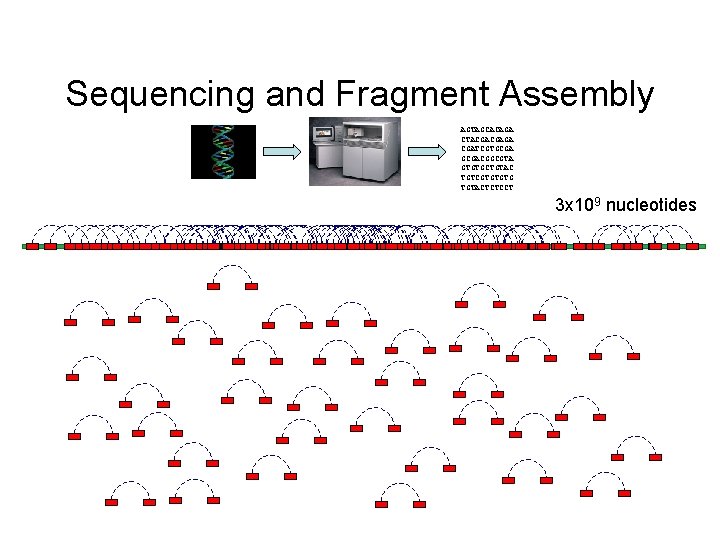
Sequencing and Fragment Assembly AGTAGCACAGA CTACGACGAGA CGATCGTGCGACGGCGTA GTGTGCTGTAC TGTCGTGTGTG TGTACTCTCCT 3 x 10⁹ nucleotides
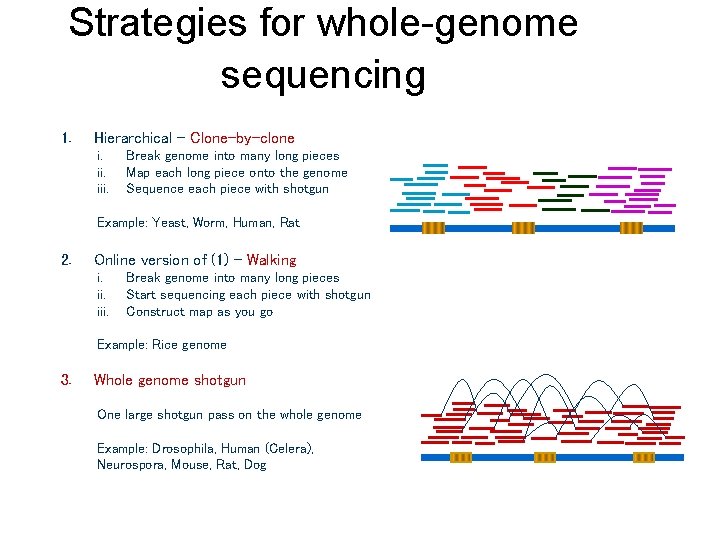
Strategies for whole-genome sequencing 1. Hierarchical – Clone-by-clone i. iii. Break genome into many long pieces Map each long piece onto the genome Sequence each piece with shotgun Example: Yeast, Worm, Human, Rat 2. Online version of (1) – Walking i. iii. Break genome into many long pieces Start sequencing each piece with shotgun Construct map as you go Example: Rice genome 3. Whole genome shotgun One large shotgun pass on the whole genome Example: Drosophila, Human (Celera), Neurospora, Mouse, Rat, Dog
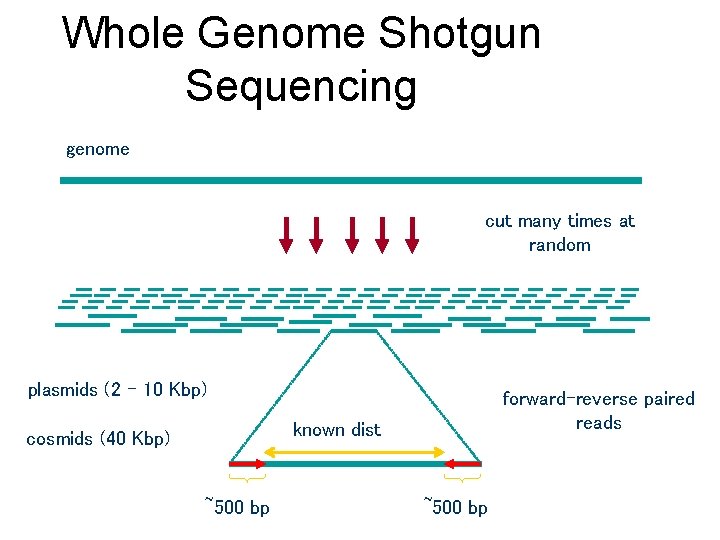
Whole Genome Shotgun Sequencing genome cut many times at random plasmids (2 – 10 Kbp) forward-reverse paired reads known dist cosmids (40 Kbp) ~500 bp
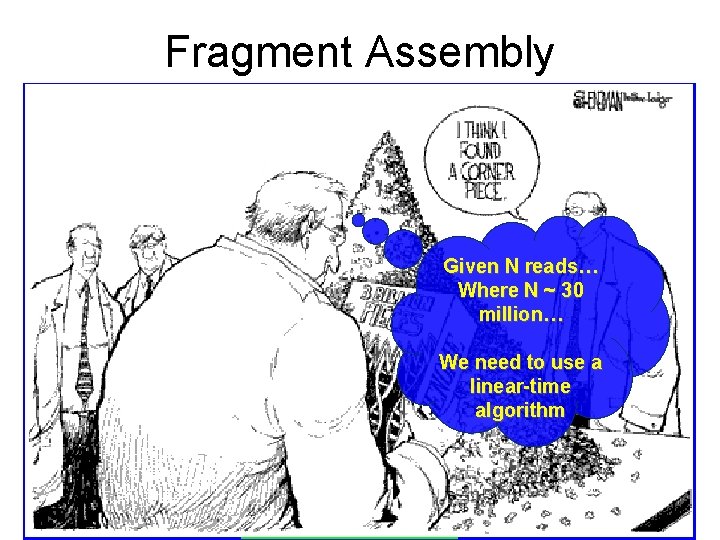
Fragment Assembly Given N reads… Where N ~ 30 million… We need to use a linear-time algorithm
Fragment Assembly • Computational Challenge: assemble individual short fragments (reads) into a single genomic sequence (“superstring”) • Until late 1990 s the shotgun fragment assembly of human genome was viewed as intractable problem
Shortest Superstring Problem • Problem: Given a set of strings, find a shortest string that contains all of them • Input: Strings s 1, s 2, …. , sn • Output: A string s that contains all strings s 1, s 2, …. , sn as substrings, such that the length of s is minimized • Complexity: NP – complete • Note: this formulation does not take into account sequencing errors
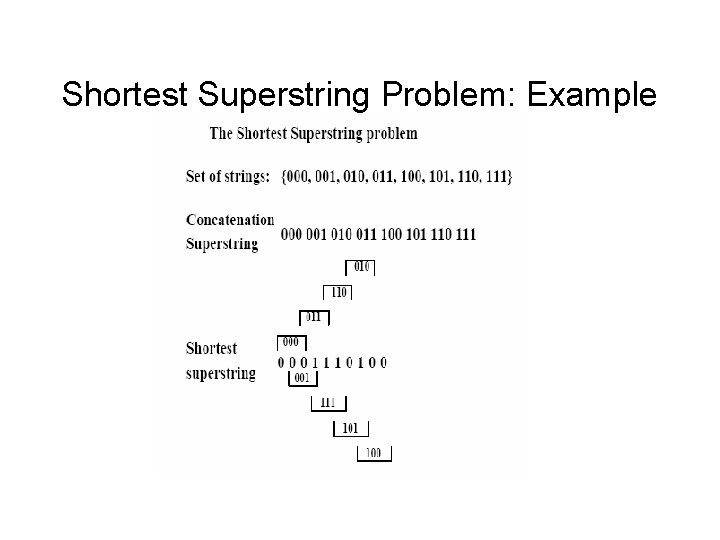
Shortest Superstring Problem: Example
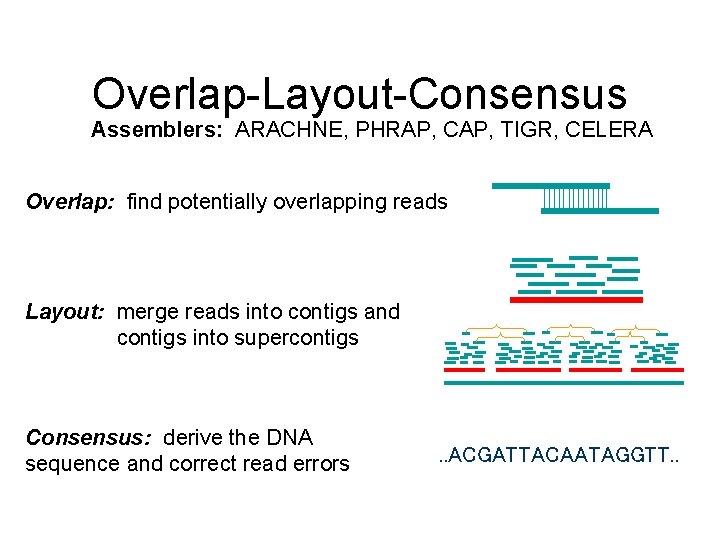
Overlap-Layout-Consensus Assemblers: ARACHNE, PHRAP, CAP, TIGR, CELERA Overlap: find potentially overlapping reads Layout: merge reads into contigs and contigs into supercontigs Consensus: derive the DNA sequence and correct read errors . . ACGATTACAATAGGTT. .
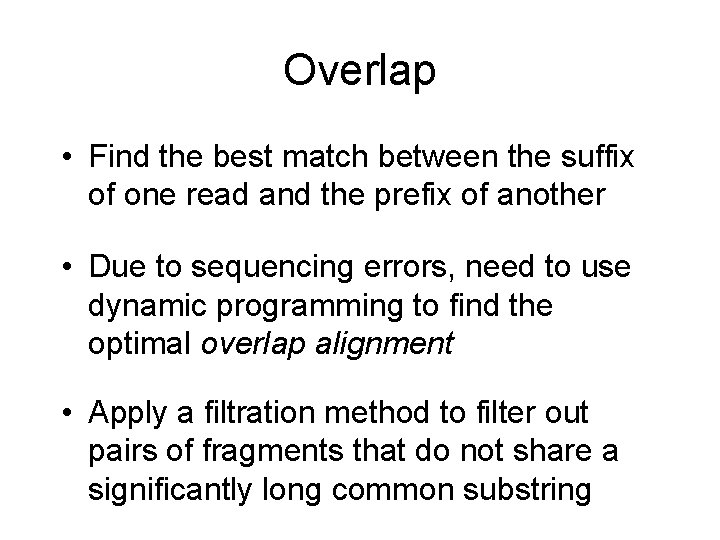
Overlap • Find the best match between the suffix of one read and the prefix of another • Due to sequencing errors, need to use dynamic programming to find the optimal overlap alignment • Apply a filtration method to filter out pairs of fragments that do not share a significantly long common substring
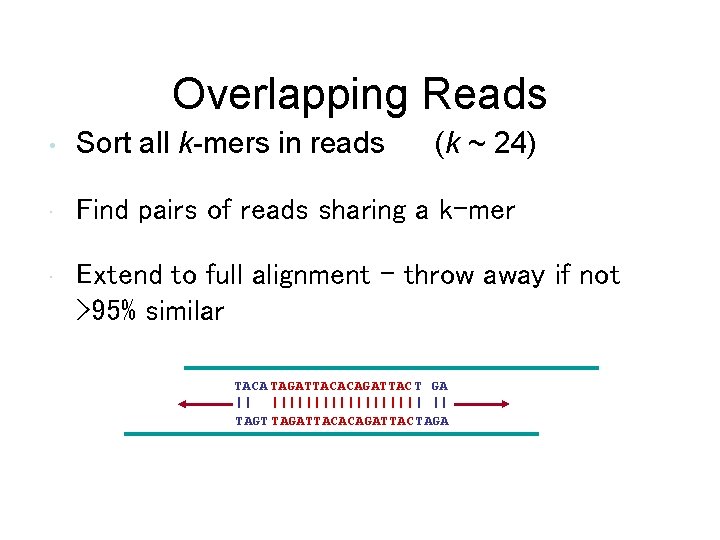
Overlapping Reads • Sort all k-mers in reads (k ~ 24) • Find pairs of reads sharing a k-mer • Extend to full alignment – throw away if not >95% similar TACA TAGATTACACAGATTAC T GA || ||||||||| | || TAGT TAGATTACACAGATTAC TAGA
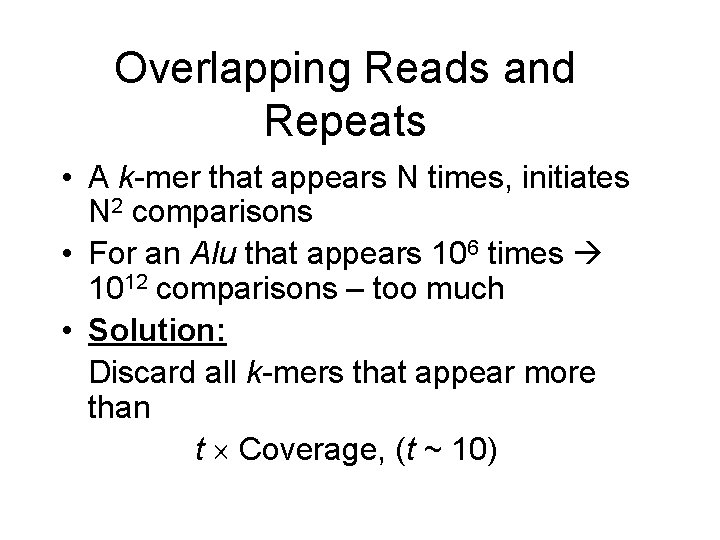
Overlapping Reads and Repeats • A k-mer that appears N times, initiates N 2 comparisons • For an Alu that appears 106 times 1012 comparisons – too much • Solution: Discard all k-mers that appear more than t Coverage, (t ~ 10)
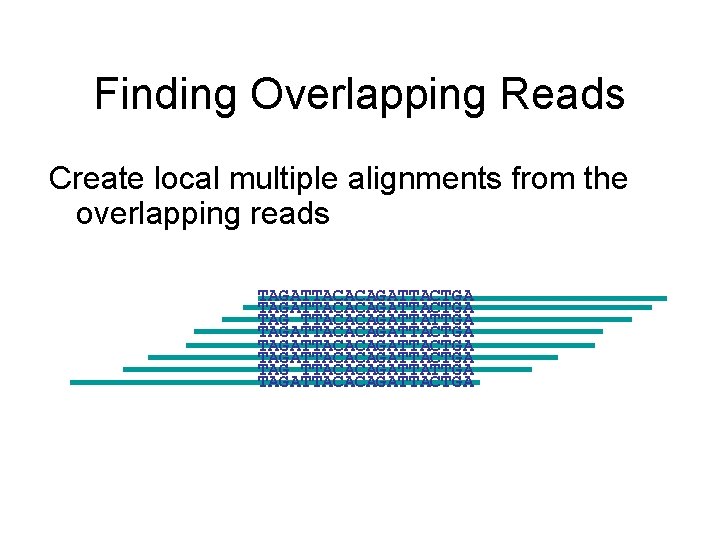
Finding Overlapping Reads Create local multiple alignments from the overlapping reads TAGATTACACAGATTACTGA TAG TTACACAGATTATTGA TAGATTACACAGATTACTGA
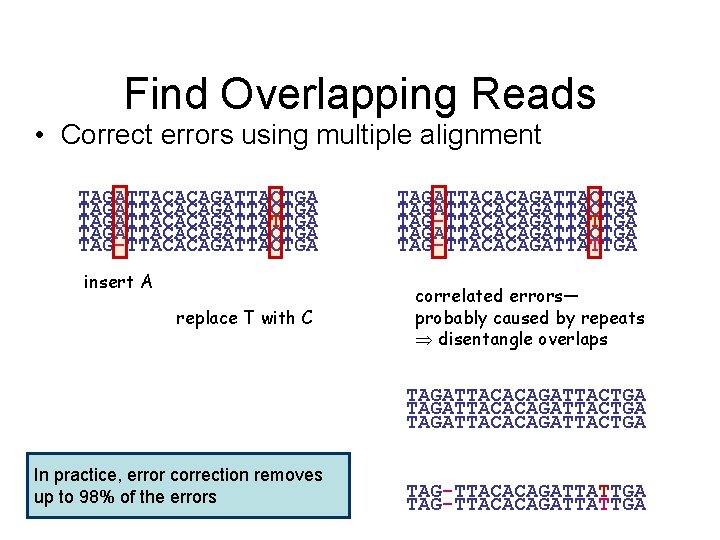
Find Overlapping Reads • Correct errors using multiple alignment TAGATTACACAGATTACTGA TAGATTACACAGATTATTGA TAGATTACACAGATTACTGA TAG-TTACACAGATTACTGA insert A replace T with C TAGATTACACAGATTACTGA TAG-TTACACAGATTATTGA correlated errors— probably caused by repeats disentangle overlaps TAGATTACACAGATTACTGA In practice, error correction removes up to 98% of the errors TAG-TTACACAGATTATTGA
Layout • Repeats are a major challenge • Do two aligned fragments really overlap, or are they from two copies of a repeat? • Solution: repeat masking – hide the repeats!!! • Masking results in high rate of misassembly (up to 20%) • Misassembly means alot more work at the finishing step
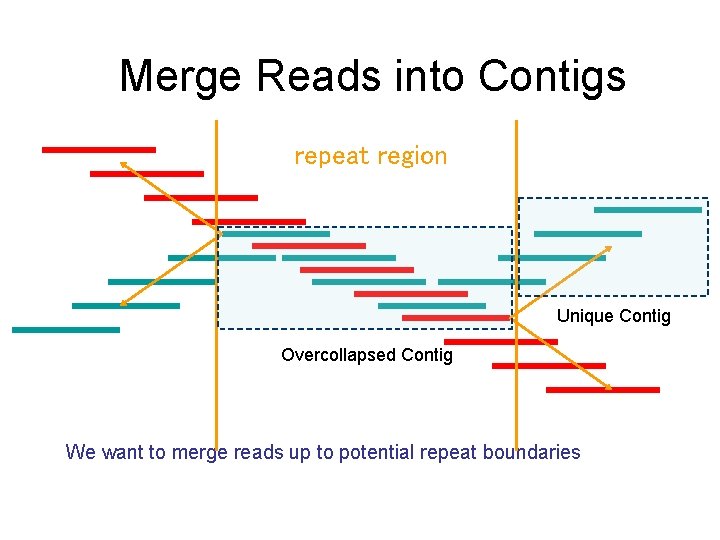
Merge Reads into Contigs repeat region Unique Contig Overcollapsed Contig We want to merge reads up to potential repeat boundaries
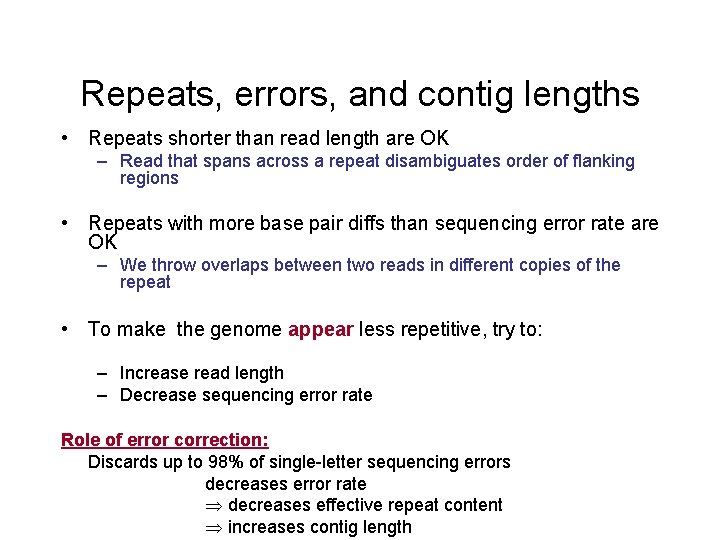
Repeats, errors, and contig lengths • Repeats shorter than read length are OK – Read that spans across a repeat disambiguates order of flanking regions • Repeats with more base pair diffs than sequencing error rate are OK – We throw overlaps between two reads in different copies of the repeat • To make the genome appear less repetitive, try to: – Increase read length – Decrease sequencing error rate Role of error correction: Discards up to 98% of single-letter sequencing errors decreases error rate decreases effective repeat content increases contig length
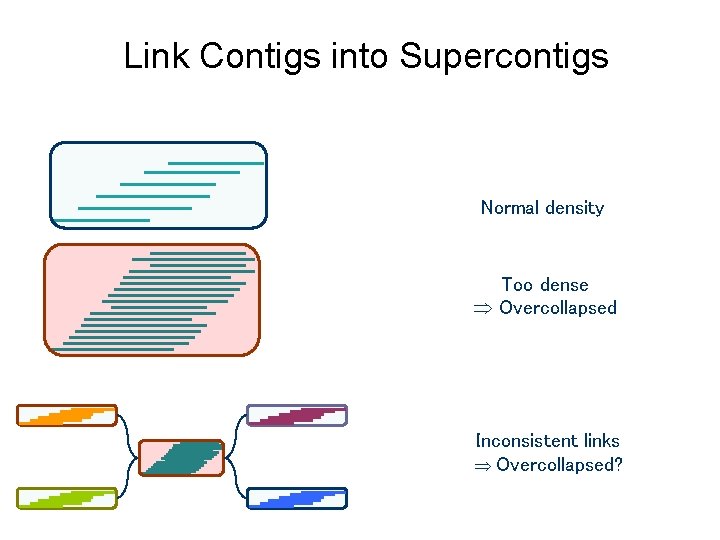
Link Contigs into Supercontigs Normal density Too dense Overcollapsed Inconsistent links Overcollapsed?
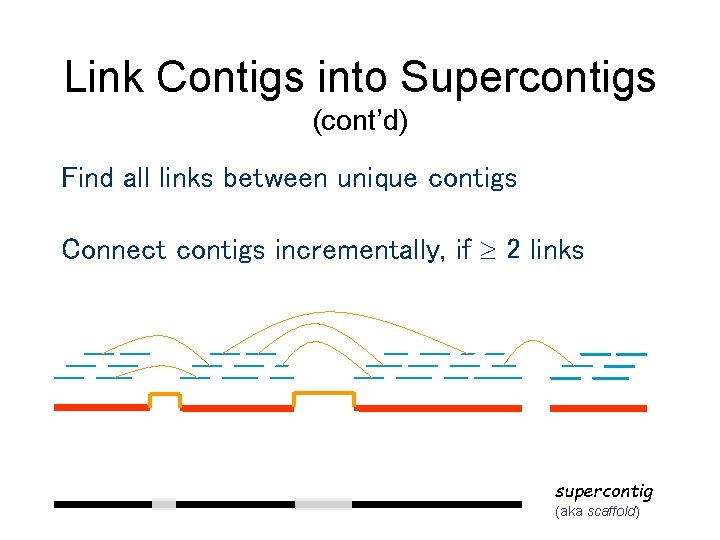
Link Contigs into Supercontigs (cont’d) Find all links between unique contigs Connect contigs incrementally, if 2 links supercontig (aka scaffold)
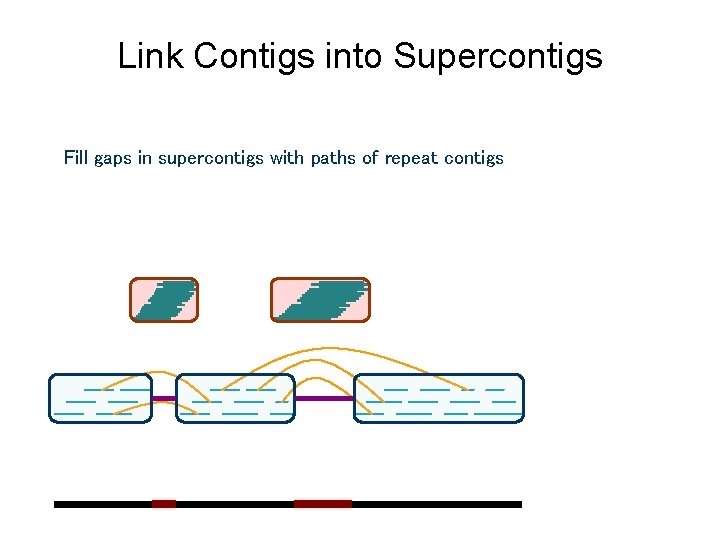
Link Contigs into Supercontigs Fill gaps in supercontigs with paths of repeat contigs
Consensus • A consensus sequence is derived from a profile of the assembled fragments • A sufficient number of reads is required to ensure a statistically significant consensus • Reading errors are corrected
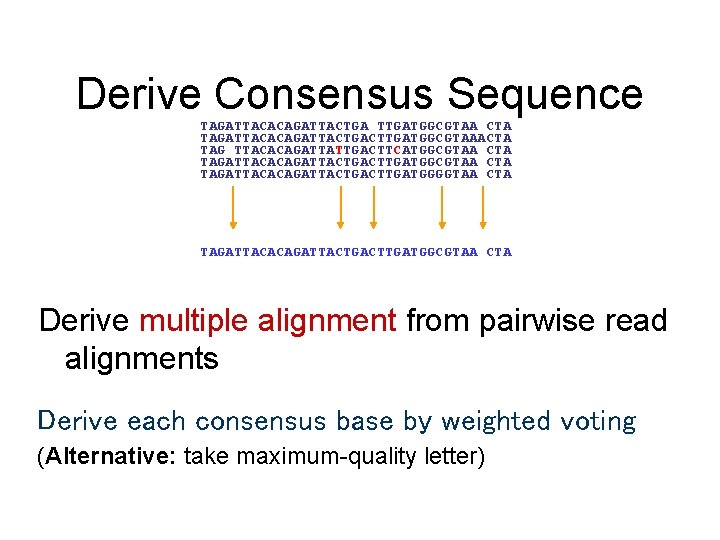
Derive Consensus Sequence TAGATTACACAGATTACTGA TTGATGGCGTAA CTA TAGATTACACAGATTACTGACTTGATGGCGTAAACTA TAG TTACACAGATTATTGACTTCATGGCGTAA CTA TAGATTACACAGATTACTGACTTGATGGGGTAA CTA TAGATTACACAGATTACTGACTTGATGGCGTAA CTA Derive multiple alignment from pairwise read alignments Derive each consensus base by weighted voting (Alternative: take maximum-quality letter)
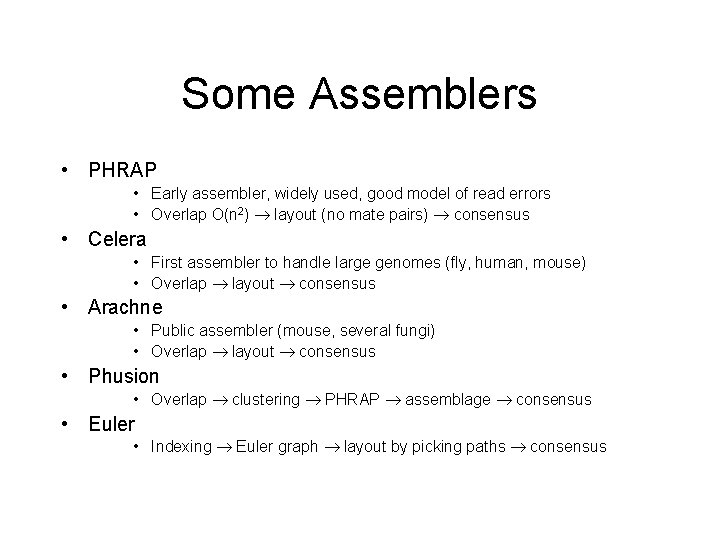
Some Assemblers • PHRAP • Early assembler, widely used, good model of read errors • Overlap O(n 2) layout (no mate pairs) consensus • Celera • First assembler to handle large genomes (fly, human, mouse) • Overlap layout consensus • Arachne • Public assembler (mouse, several fungi) • Overlap layout consensus • Phusion • Overlap clustering PHRAP assemblage consensus • Euler • Indexing Euler graph layout by picking paths consensus
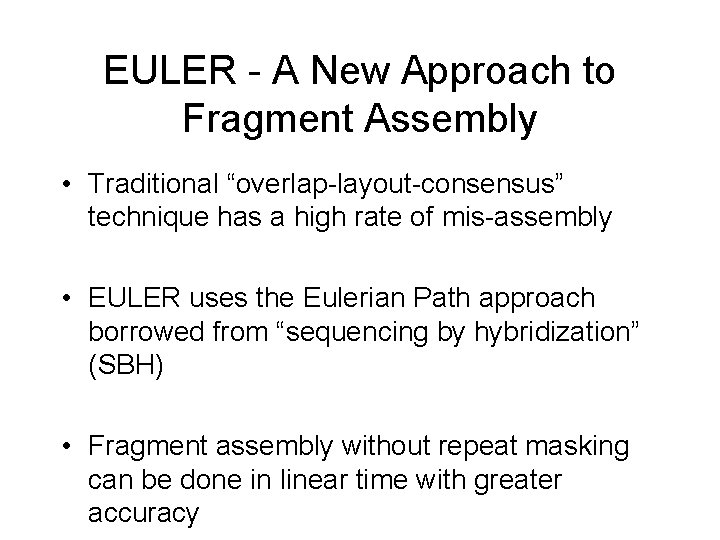
EULER - A New Approach to Fragment Assembly • Traditional “overlap-layout-consensus” technique has a high rate of mis-assembly • EULER uses the Eulerian Path approach borrowed from “sequencing by hybridization” (SBH) • Fragment assembly without repeat masking can be done in linear time with greater accuracy
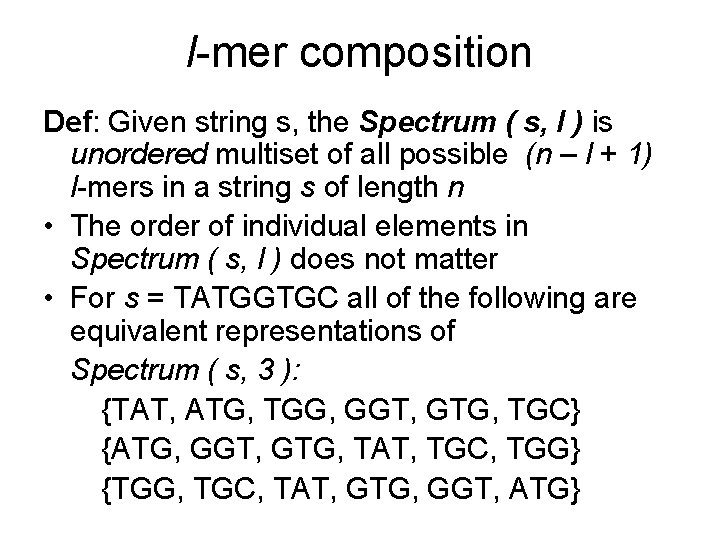
l-mer composition Def: Given string s, the Spectrum ( s, l ) is unordered multiset of all possible (n – l + 1) l-mers in a string s of length n • The order of individual elements in Spectrum ( s, l ) does not matter • For s = TATGGTGC all of the following are equivalent representations of Spectrum ( s, 3 ): {TAT, ATG, TGG, GGT, GTG, TGC} {ATG, GGT, GTG, TAT, TGC, TGG} {TGG, TGC, TAT, GTG, GGT, ATG}
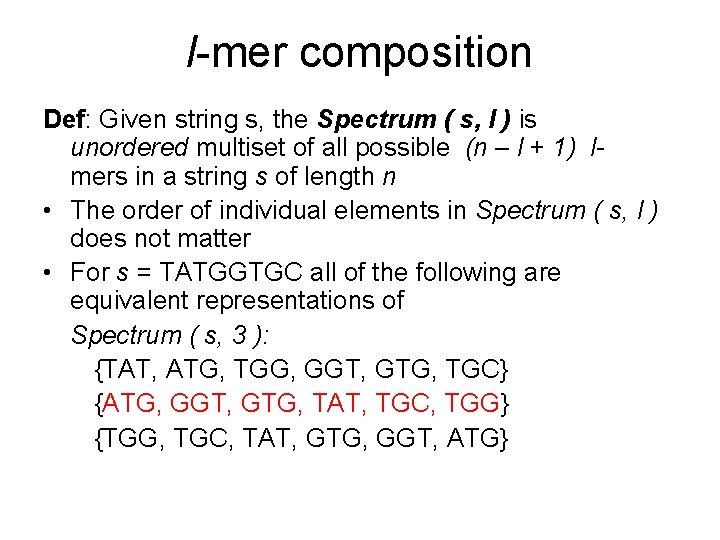
l-mer composition Def: Given string s, the Spectrum ( s, l ) is unordered multiset of all possible (n – l + 1) lmers in a string s of length n • The order of individual elements in Spectrum ( s, l ) does not matter • For s = TATGGTGC all of the following are equivalent representations of Spectrum ( s, 3 ): {TAT, ATG, TGG, GGT, GTG, TGC} {ATG, GGT, GTG, TAT, TGC, TGG} {TGG, TGC, TAT, GTG, GGT, ATG}
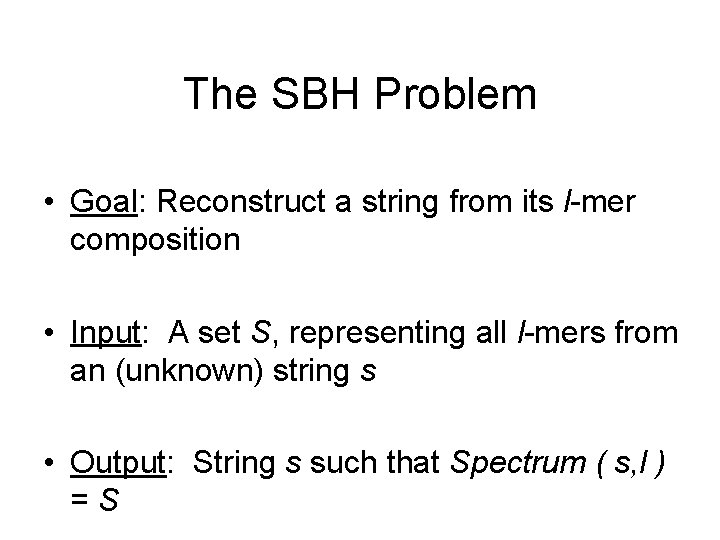
The SBH Problem • Goal: Reconstruct a string from its l-mer composition • Input: A set S, representing all l-mers from an (unknown) string s • Output: String s such that Spectrum ( s, l ) =S
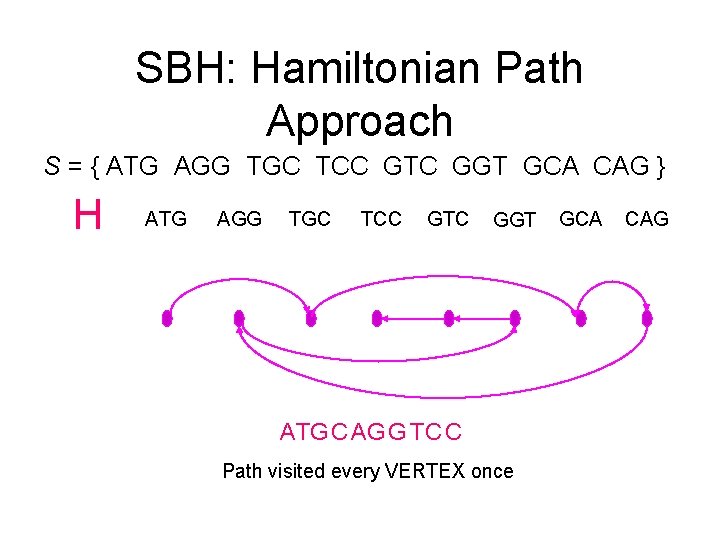
SBH: Hamiltonian Path Approach S = { ATG AGG TGC TCC GTC GGT GCA CAG } H ATG AGG TGC TCC GTC GGT ATGCAGG TC C Path visited every VERTEX once GCA CAG
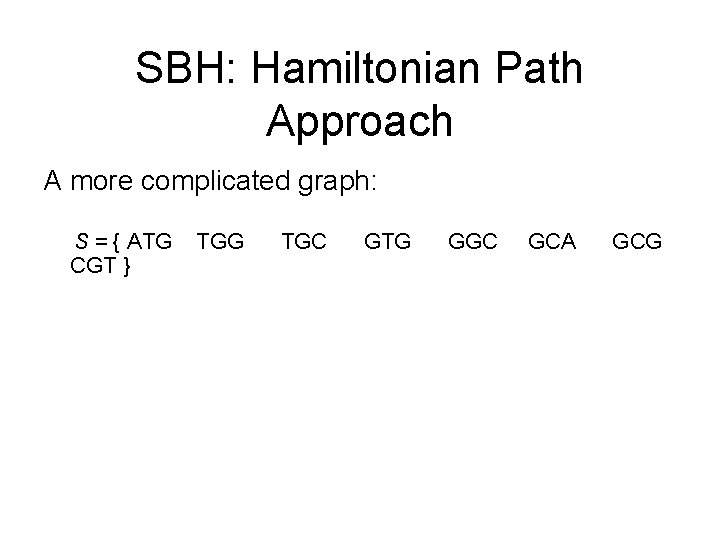
SBH: Hamiltonian Path Approach A more complicated graph: S = { ATG CGT } TGG TGC GTG GGC GCA GCG
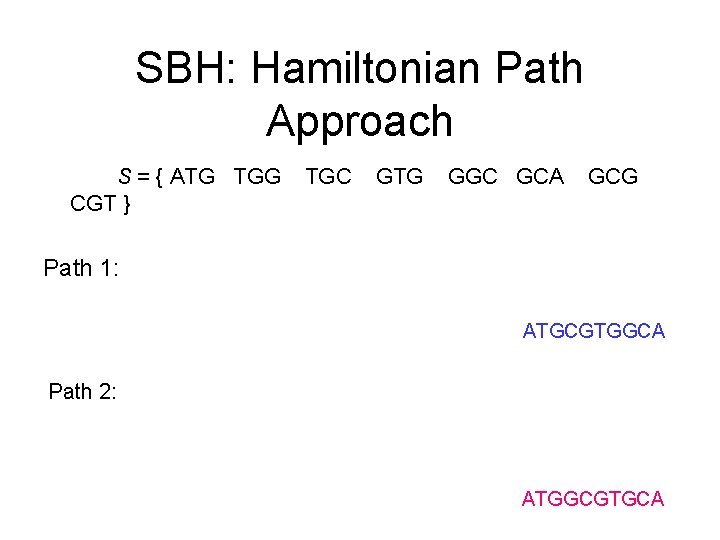
SBH: Hamiltonian Path Approach S = { ATG TGG CGT } TGC GTG GGC GCA GCG Path 1: ATGCGTGGCA Path 2: ATGGCGTGCA
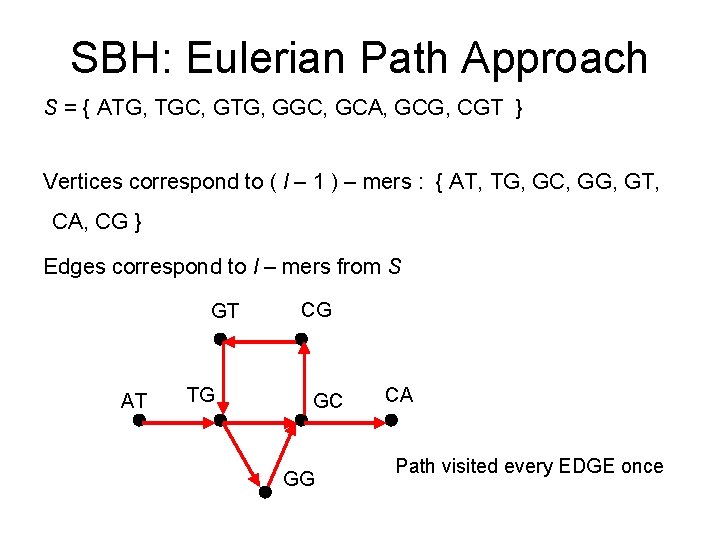
SBH: Eulerian Path Approach S = { ATG, TGC, GTG, GGC, GCA, GCG, CGT } Vertices correspond to ( l – 1 ) – mers : { AT, TG, GC, GG, GT, CA, CG } Edges correspond to l – mers from S GT AT TG CG GC GG CA Path visited every EDGE once
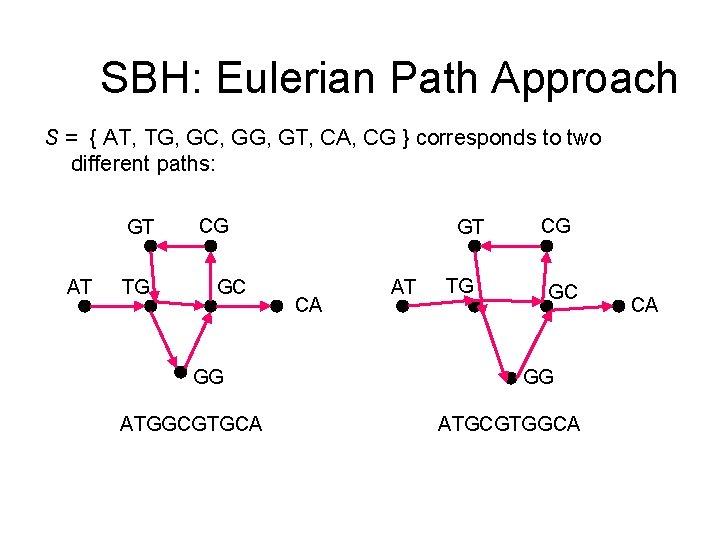
SBH: Eulerian Path Approach S = { AT, TG, GC, GG, GT, CA, CG } corresponds to two different paths: GT AT TG CG GC GG ATGGCGTGCA GT CA AT TG CG GC GG ATGCGTGGCA CA
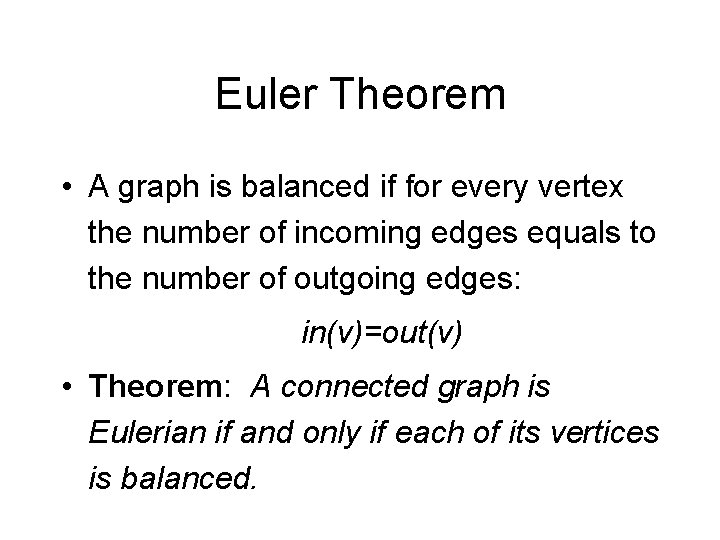
Euler Theorem • A graph is balanced if for every vertex the number of incoming edges equals to the number of outgoing edges: in(v)=out(v) • Theorem: A connected graph is Eulerian if and only if each of its vertices is balanced.
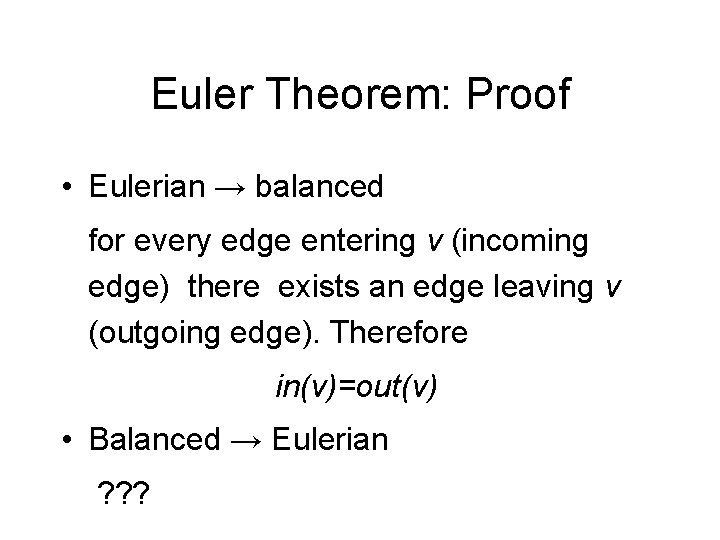
Euler Theorem: Proof • Eulerian → balanced for every edge entering v (incoming edge) there exists an edge leaving v (outgoing edge). Therefore in(v)=out(v) • Balanced → Eulerian ? ? ?
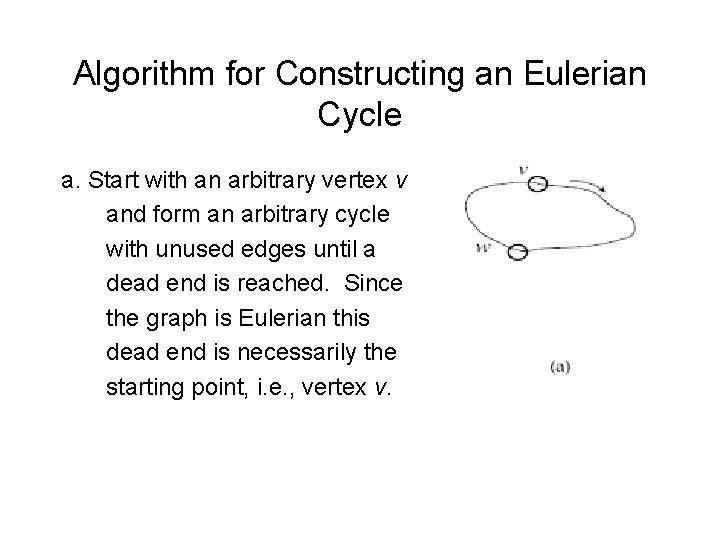
Algorithm for Constructing an Eulerian Cycle a. Start with an arbitrary vertex v and form an arbitrary cycle with unused edges until a dead end is reached. Since the graph is Eulerian this dead end is necessarily the starting point, i. e. , vertex v.
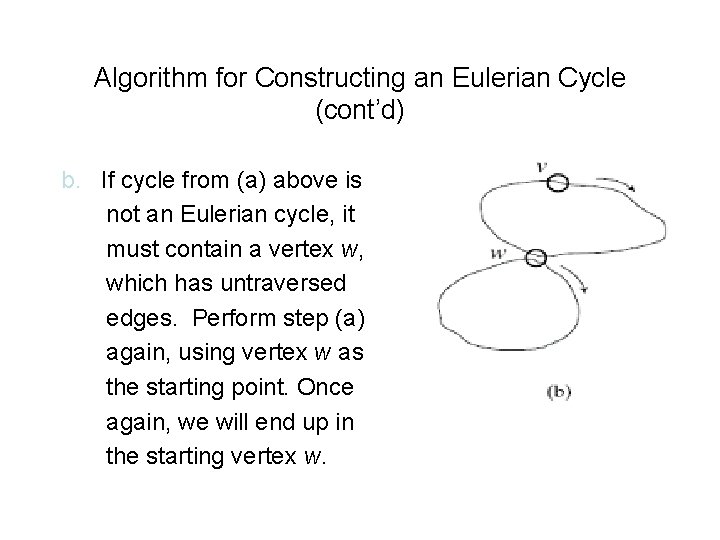
Algorithm for Constructing an Eulerian Cycle (cont’d) b. If cycle from (a) above is not an Eulerian cycle, it must contain a vertex w, which has untraversed edges. Perform step (a) again, using vertex w as the starting point. Once again, we will end up in the starting vertex w.
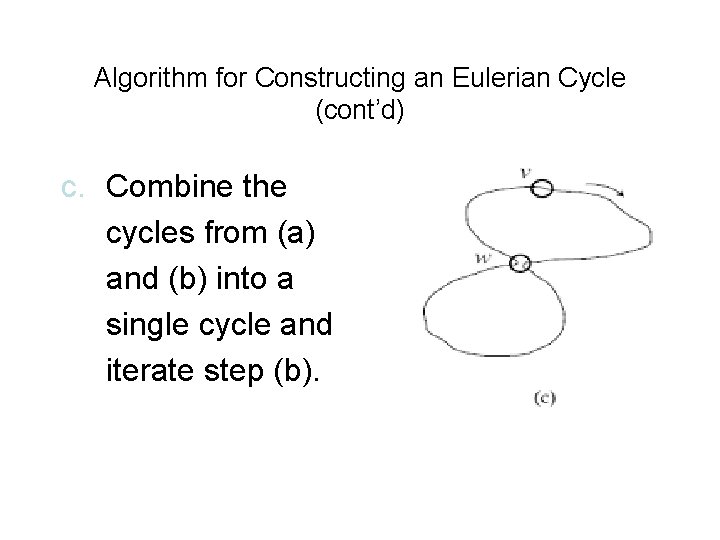
Algorithm for Constructing an Eulerian Cycle (cont’d) c. Combine the cycles from (a) and (b) into a single cycle and iterate step (b).
Euler Theorem: Extension • Theorem: A connected graph has an Eulerian path if and only if it contains at most two semi-balanced vertices and all other vertices are balanced.
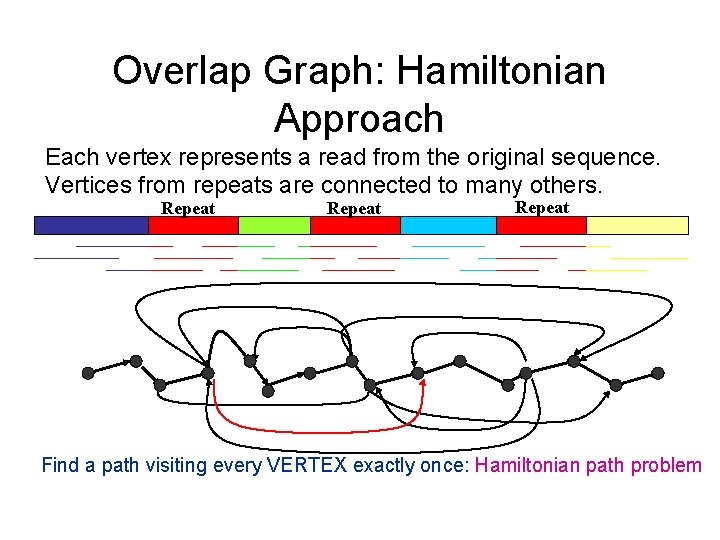
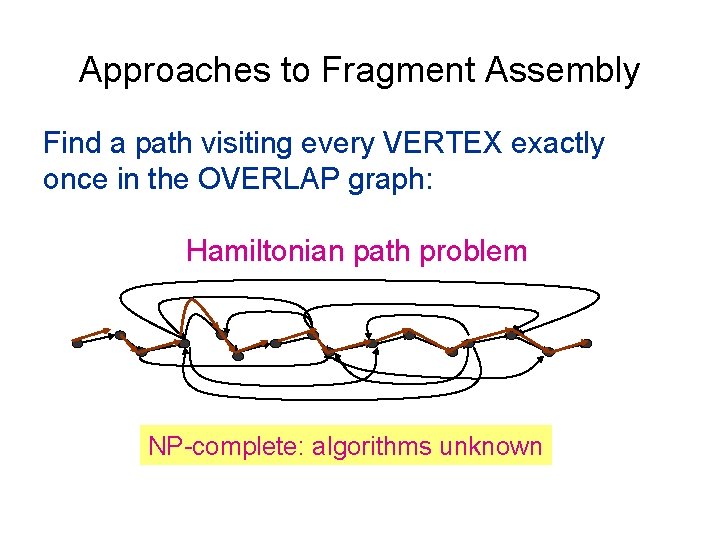
Overlap Graph: Hamiltonian Approach Each vertex represents a read from the original sequence. Vertices from repeats are connected to many others. Repeat Find a path visiting every VERTEX exactly once: Hamiltonian path problem
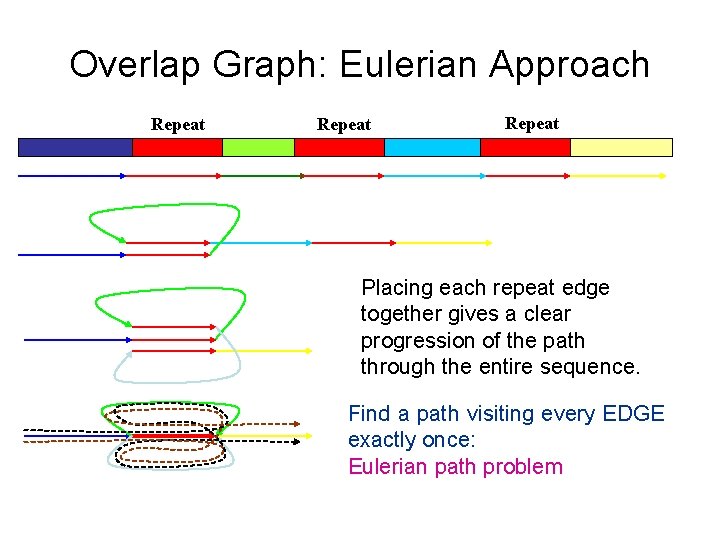
Overlap Graph: Eulerian Approach Repeat Placing each repeat edge together gives a clear progression of the path through the entire sequence. Find a path visiting every EDGE exactly once: Eulerian path problem
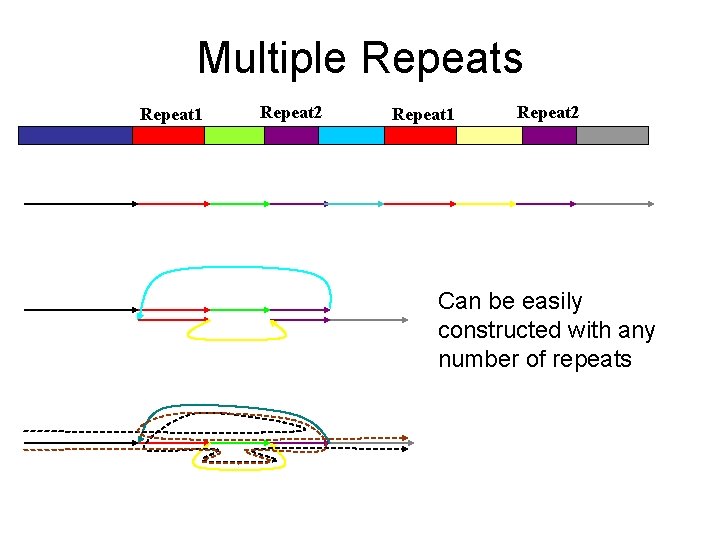
Multiple Repeats Repeat 1 Repeat 2 Can be easily constructed with any number of repeats
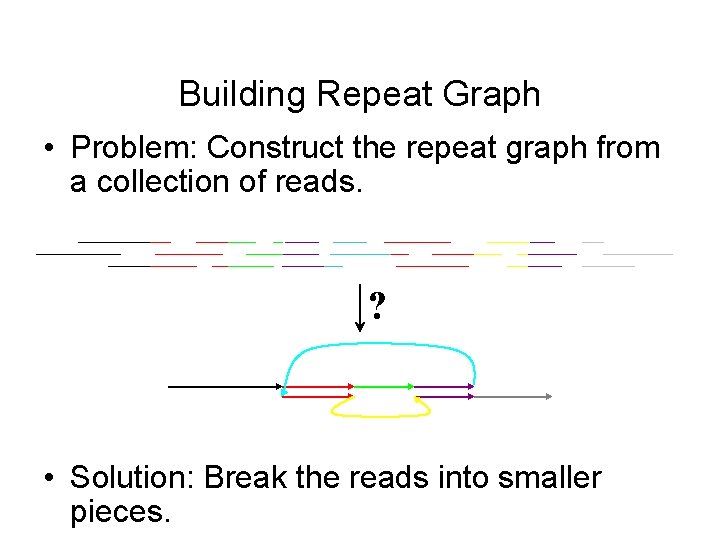
Building Repeat Graph • Problem: Construct the repeat graph from a collection of reads. ? • Solution: Break the reads into smaller pieces.
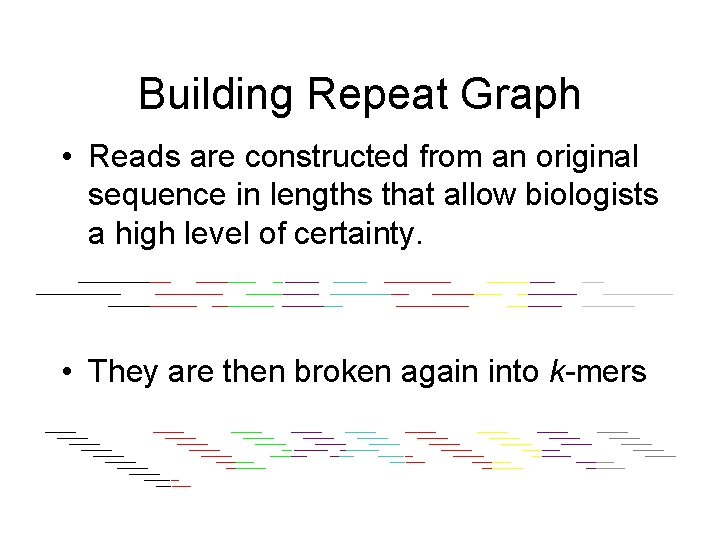
Building Repeat Graph • Reads are constructed from an original sequence in lengths that allow biologists a high level of certainty. • They are then broken again into k-mers
Construction of Repeat Graph (cont’d) • Error correction in reads: “consensus first” approach to fragment assembly. Makes reads (almost) error-free BEFORE the assembly even starts. • Using reads and mate-pairs to simplify the repeat graph (Eulerian Superpath Problem).
Approaches to Fragment Assembly Find a path visiting every VERTEX exactly once in the OVERLAP graph: Hamiltonian path problem NP-complete: algorithms unknown
Approaches to Fragment Assembly (cont’d) Find a path visiting every EDGE exactly once in the REPEAT graph: Eulerian path problem Linear time algorithms are known
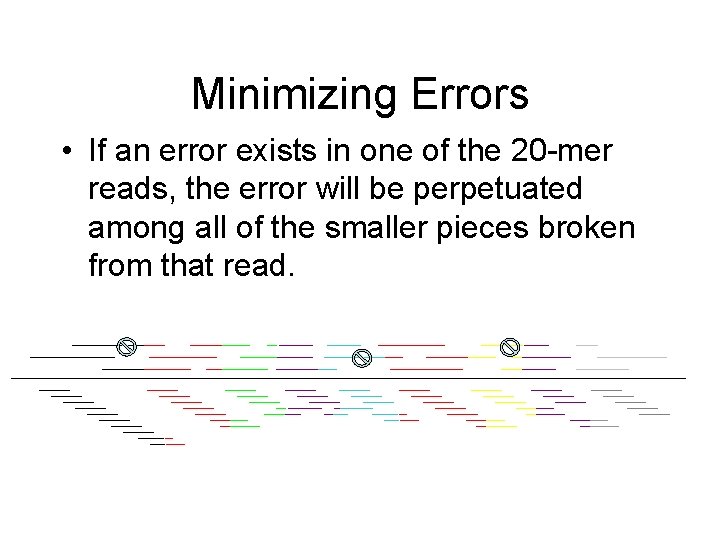
Minimizing Errors • If an error exists in one of the 20 -mer reads, the error will be perpetuated among all of the smaller pieces broken from that read.
Minimizing Errors (cont’d) • However, that error will not be present in the other instances of the 20 -mer read. • So it is possible to eliminate most point mutation errors before reconstructing the original sequence.
Genomes Sequenced • http: //www. genome. gov/10002154
Some new sequencing technologies
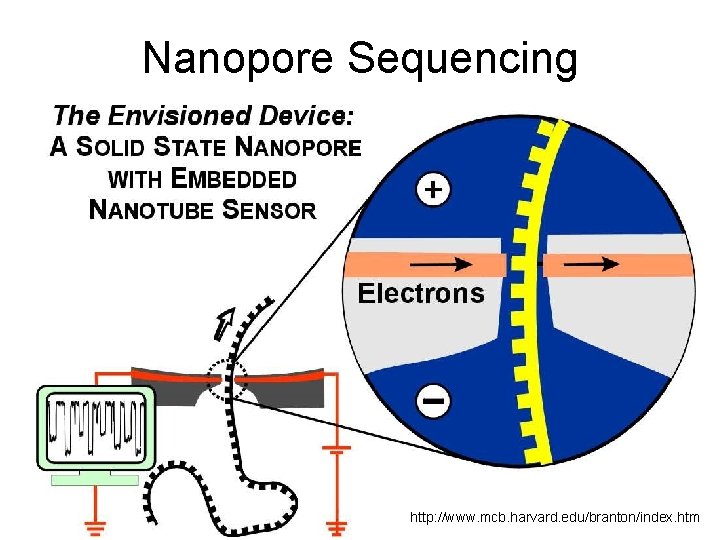
Nanopore Sequencing http: //www. mcb. harvard. edu/branton/index. htm
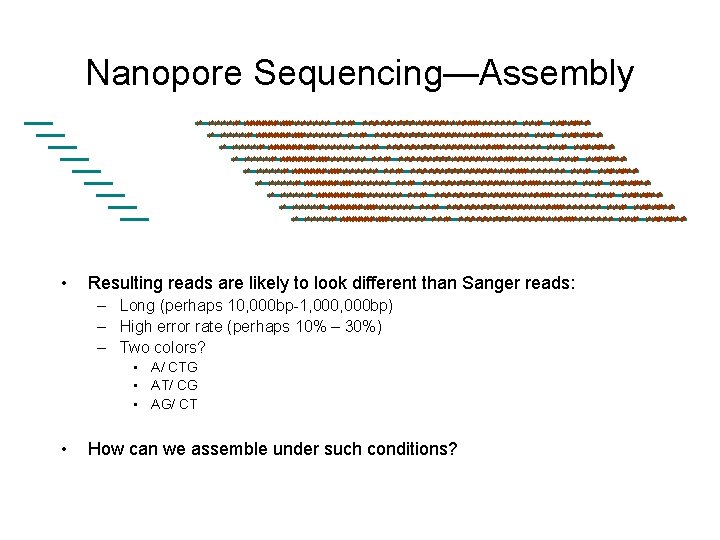
Nanopore Sequencing—Assembly • Resulting reads are likely to look different than Sanger reads: – Long (perhaps 10, 000 bp-1, 000 bp) – High error rate (perhaps 10% – 30%) – Two colors? • A/ CTG • AT/ CG • AG/ CT • How can we assemble under such conditions?
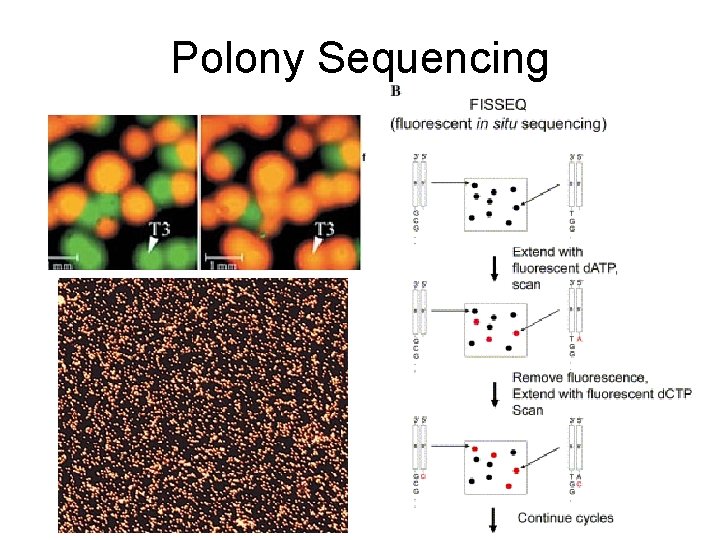
Polony Sequencing
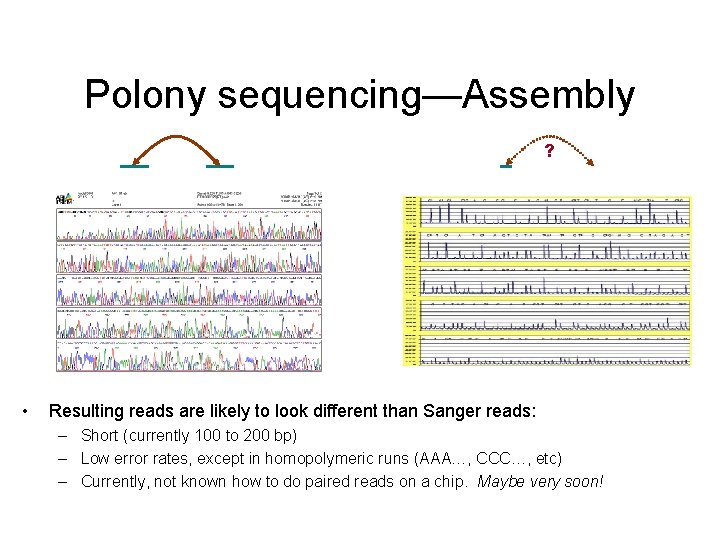
Polony sequencing—Assembly ? • Resulting reads are likely to look different than Sanger reads: – Short (currently 100 to 200 bp) – Low error rates, except in homopolymeric runs (AAA…, CCC…, etc) – Currently, not known how to do paired reads on a chip. Maybe very soon!
Some future directions for sequencing 1. Personalized genome sequencing • • Find your ~1, 000 single nucleotide polymorphisms (SNPs) Find your rearrangements • Goals: • • Link genome with phenotype Provide personalized diet and medicine (? ? ? ) designer babies, big-brother insurance companies Timeline: • • • Inexpensive sequencing: Genotype–phenotype association: Personalized drugs: 2010 -2015 2010 -? ? ? 2015 -? ? ?
Some future directions for sequencing 2. Environmental sequencing • Find your flora: • • • External organs: skin, mucous membranes Gut, mouth, etc. Normal flora: >200 species, >trillions of individuals Flora–disease, flora–non-optimal health associations Timeline: • • organisms living in your body Inexpensive research sequencing: Research & associations Personalized sequencing today within next 10 years 2015+ Find diversity of organisms living in different environments • • Hard to isolate Assembly of all organisms at once
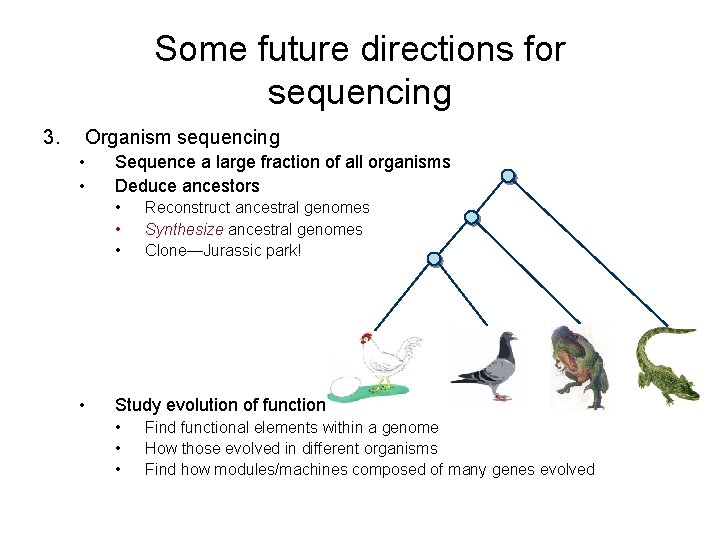
Some future directions for sequencing 3. Organism sequencing • • Sequence a large fraction of all organisms Deduce ancestors • • Reconstruct ancestral genomes Synthesize ancestral genomes Clone—Jurassic park! Study evolution of function • • • Find functional elements within a genome How those evolved in different organisms Find how modules/machines composed of many genes evolved
Sources • http: //bioalgorithms. info • Serafim Batzoglou (Sequencing slides) http: //ai. stanford. edu/~serafim/CS 262_2006/