Alkenes Properties Nomenclature Addition Reactions Ethylene Electron Rich
- Slides: 94
Alkenes Properties Nomenclature Addition Reactions
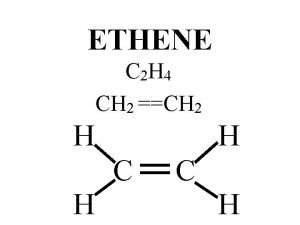
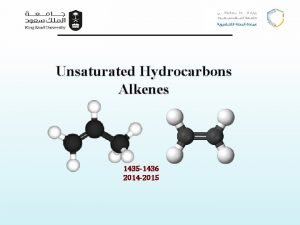
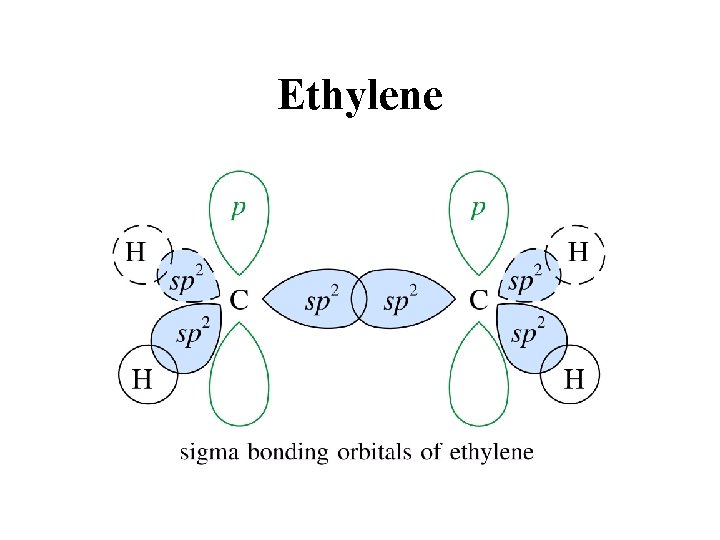
Ethylene
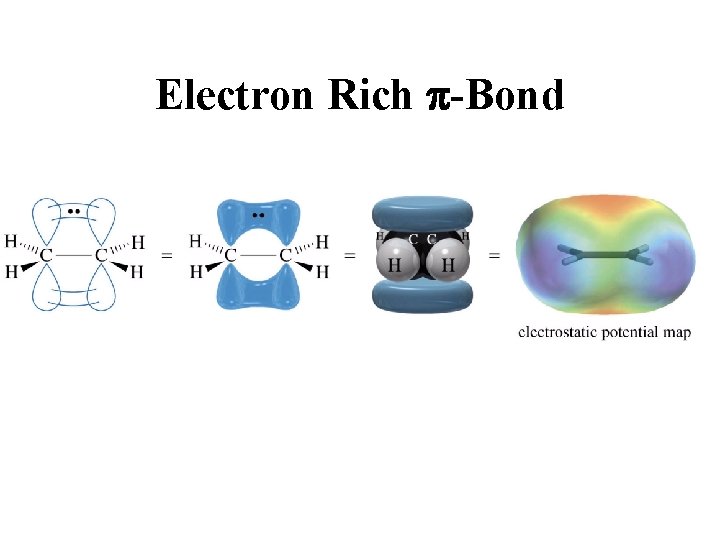
Electron Rich p-Bond
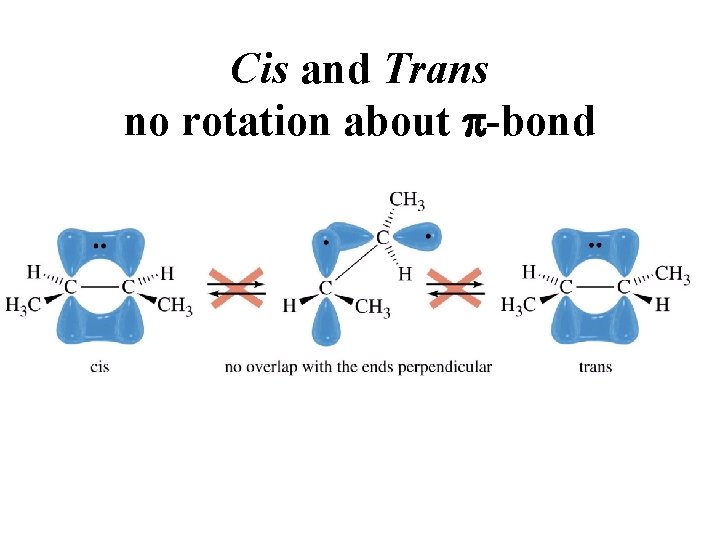
Cis and Trans no rotation about p-bond
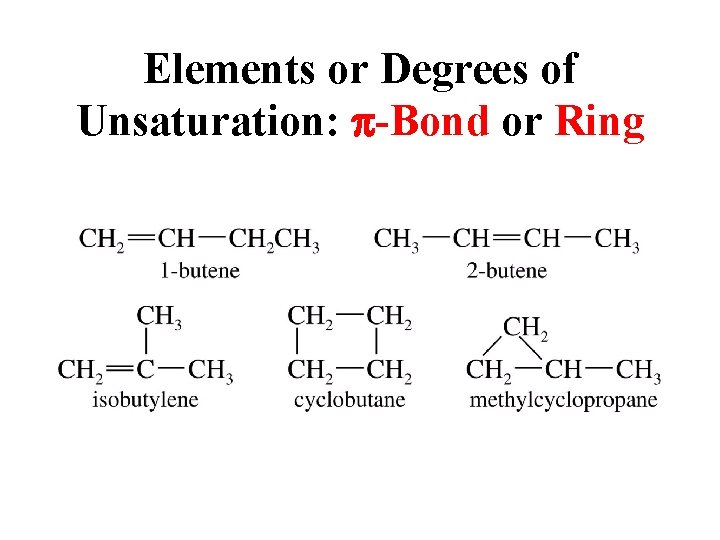
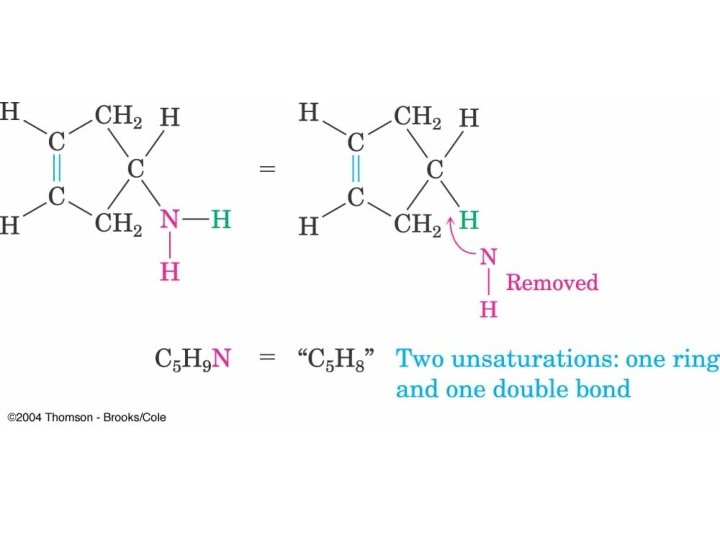
Elements or Degrees of Unsaturation: p-Bond or Ring
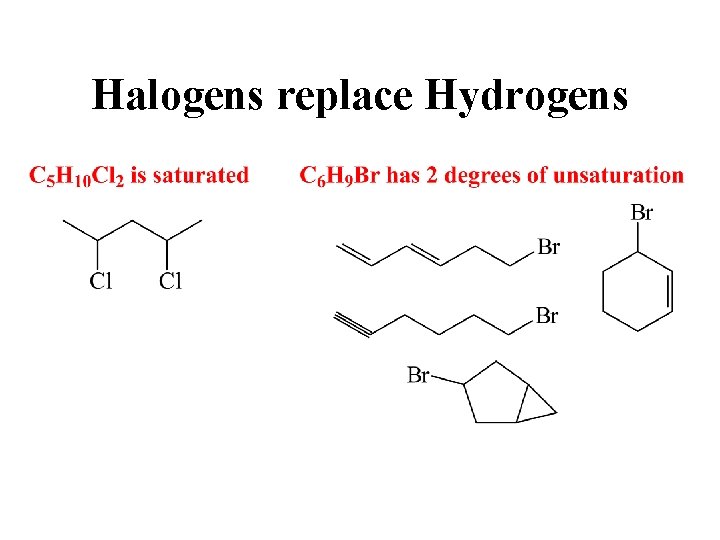
Halogens replace Hydrogens
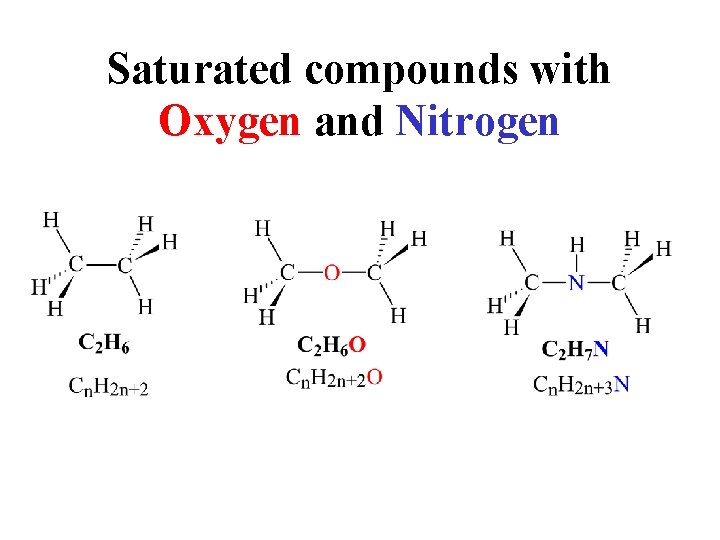
Saturated compounds with Oxygen and Nitrogen
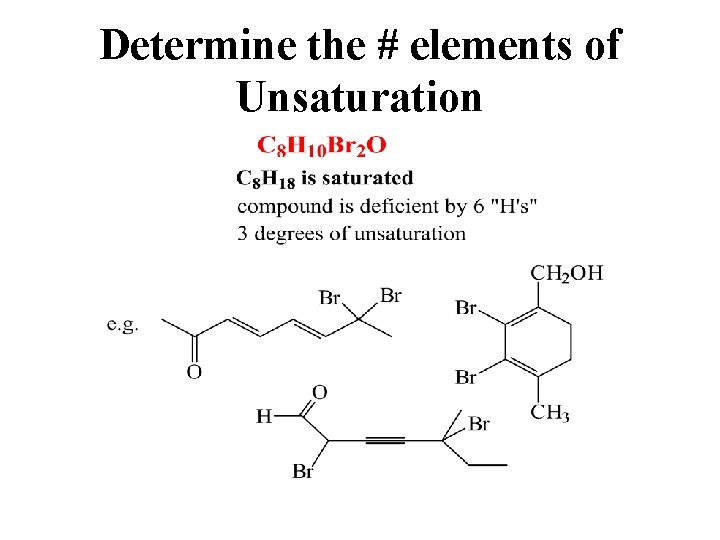
Determine the # elements of Unsaturation
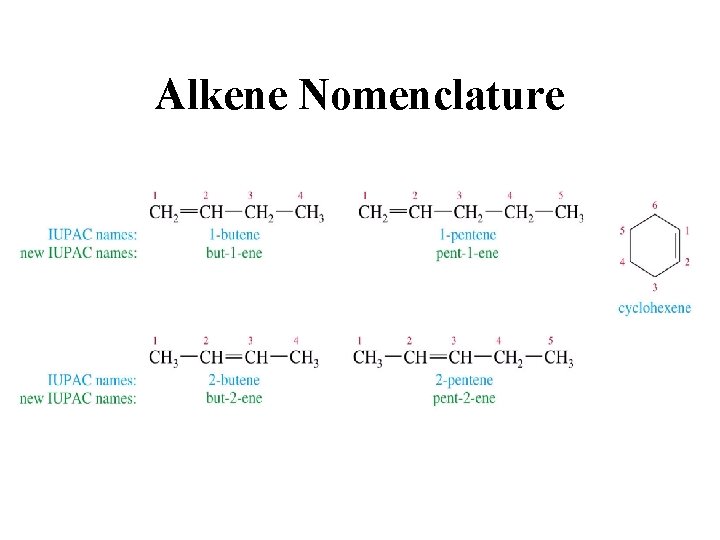
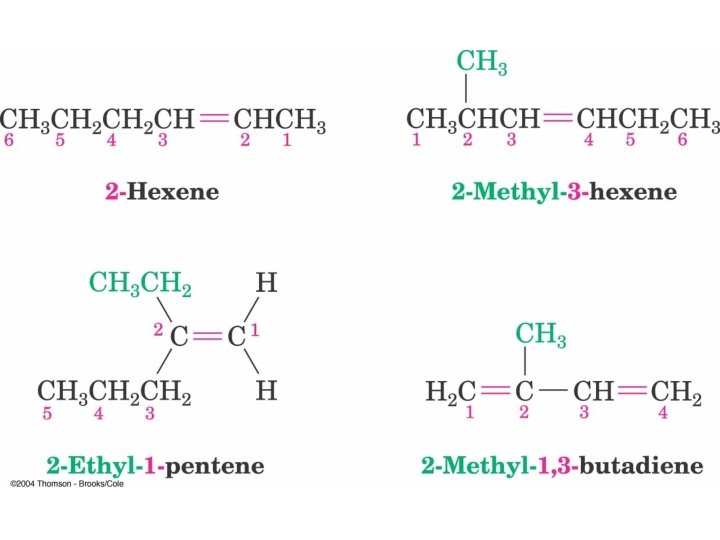
Alkene Nomenclature
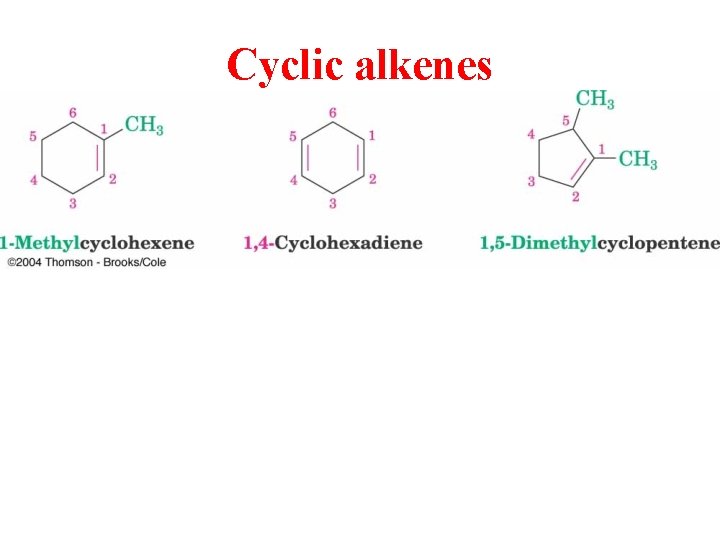
Cyclic alkenes
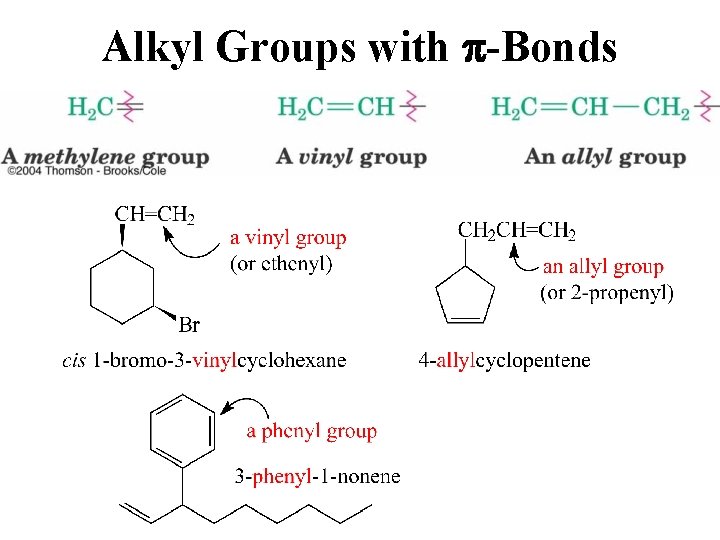
Alkyl Groups with p-Bonds
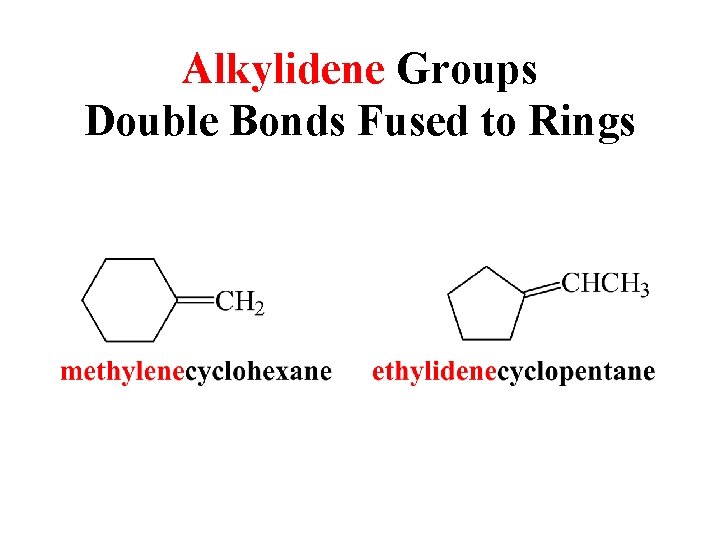
Alkylidene Groups Double Bonds Fused to Rings
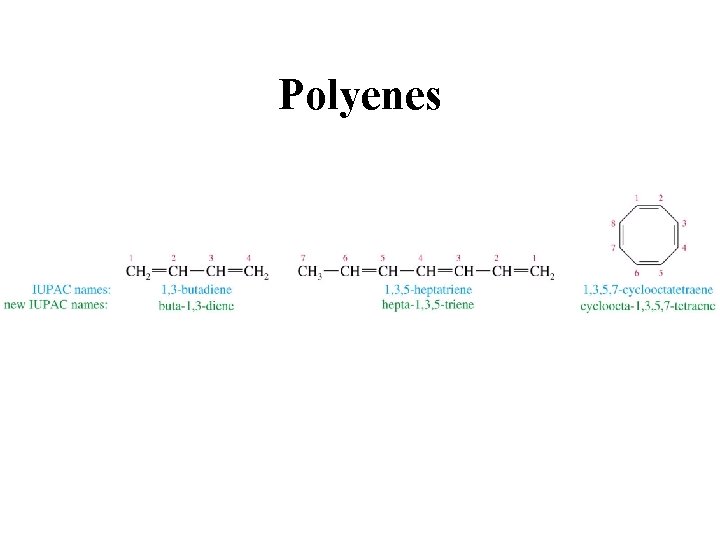
Polyenes
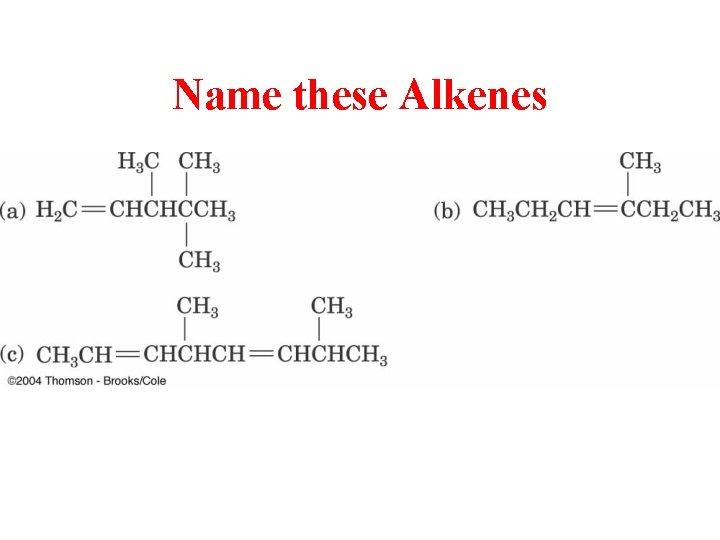
Name these Alkenes
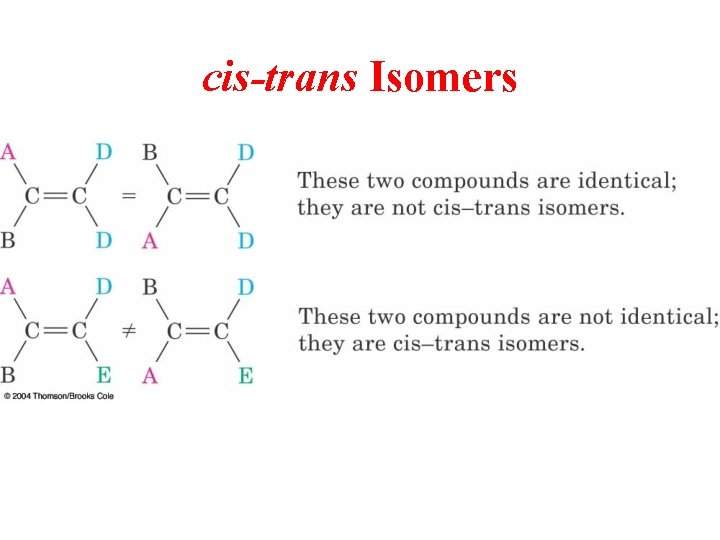
cis-trans Isomers
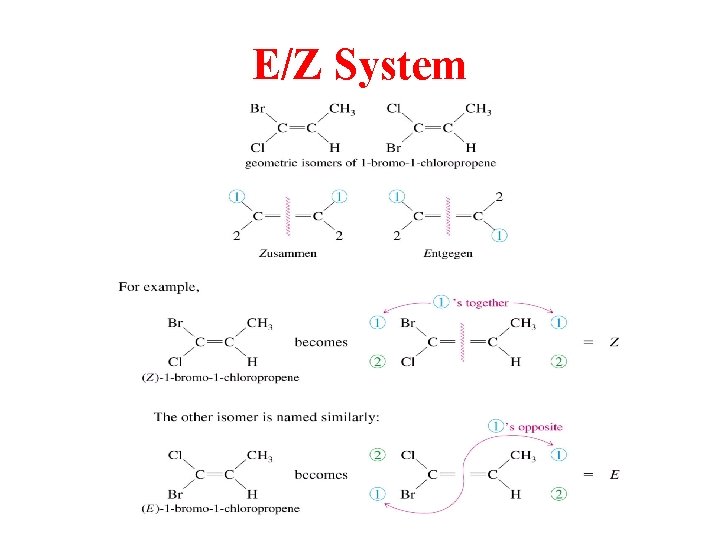
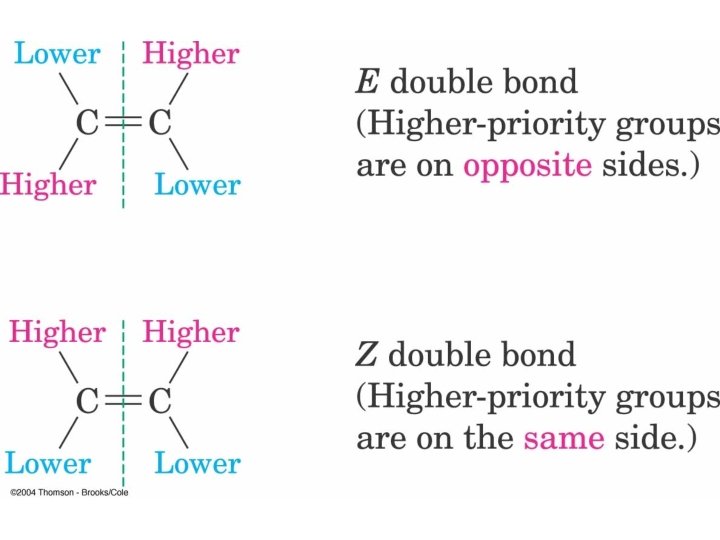
E/Z System
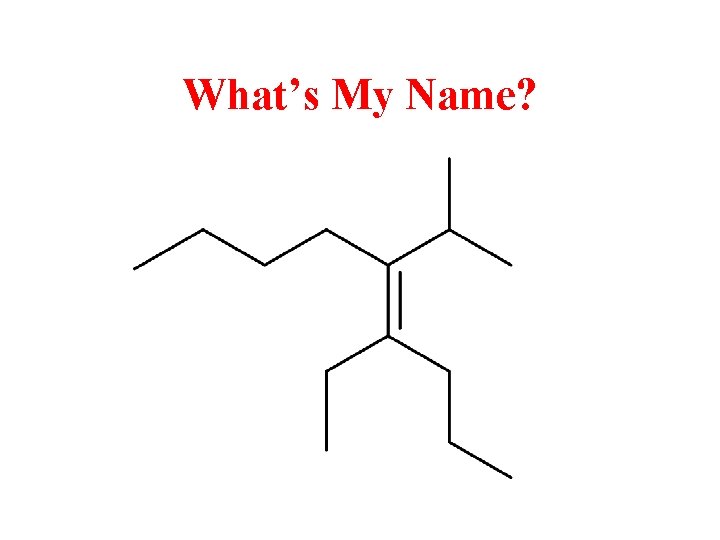
What’s My Name?
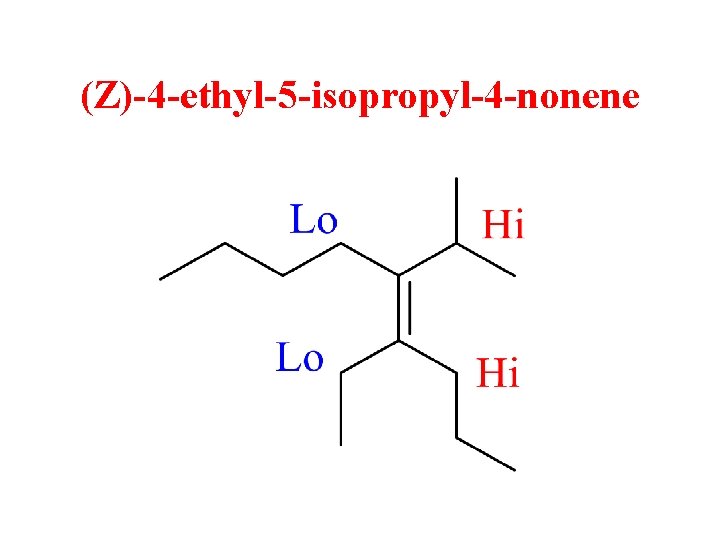
(Z)-4 -ethyl-5 -isopropyl-4 -nonene
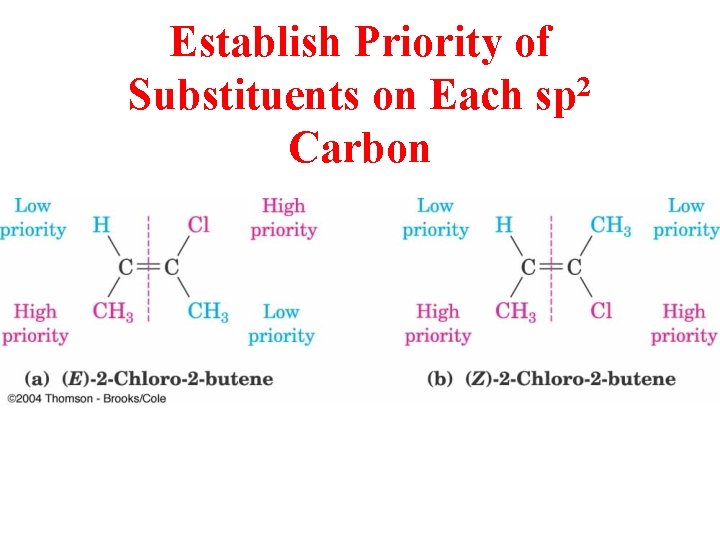
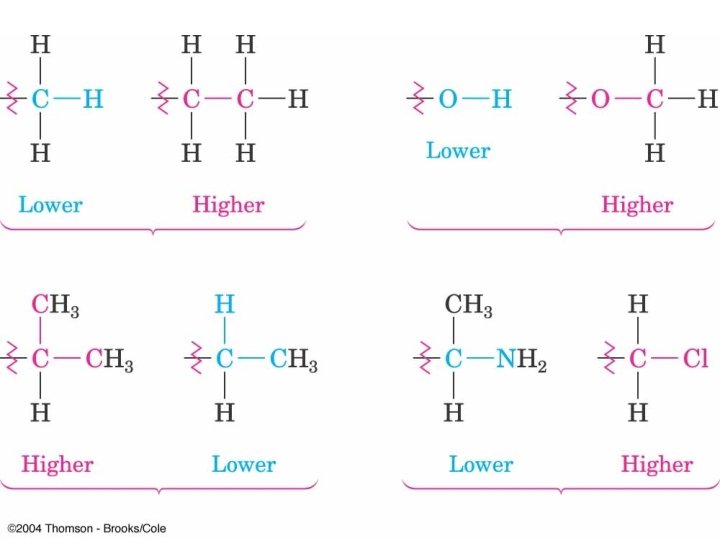
Establish Priority of 2 Substituents on Each sp Carbon
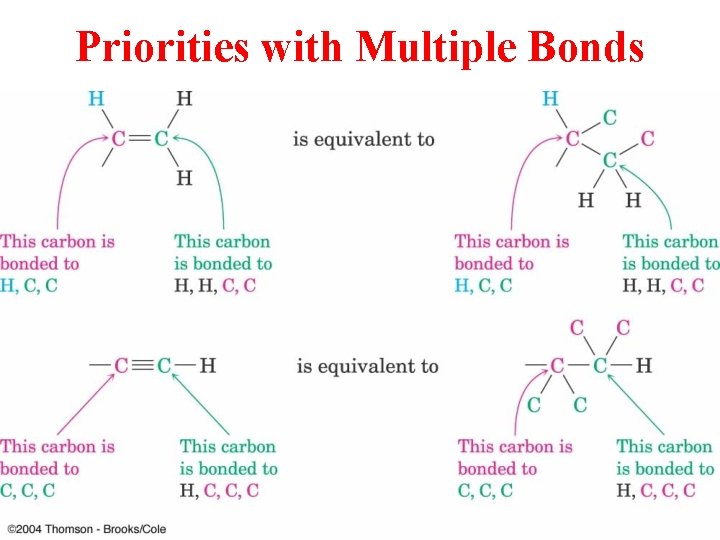
Priorities with Multiple Bonds
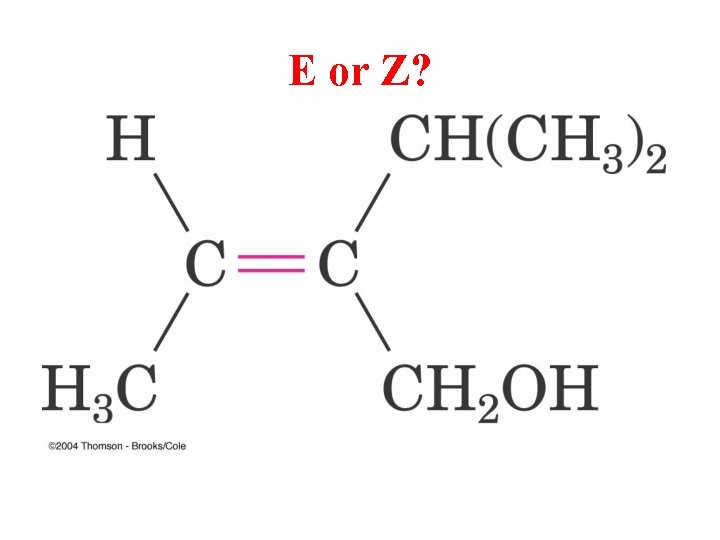
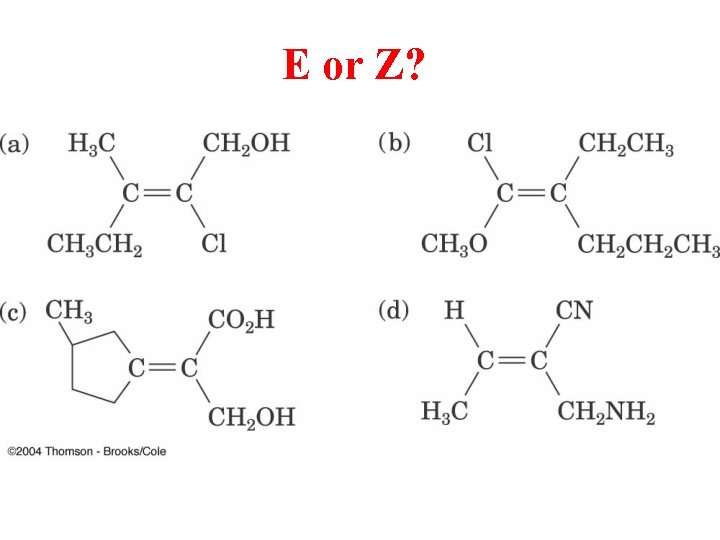
E or Z?
E or Z?
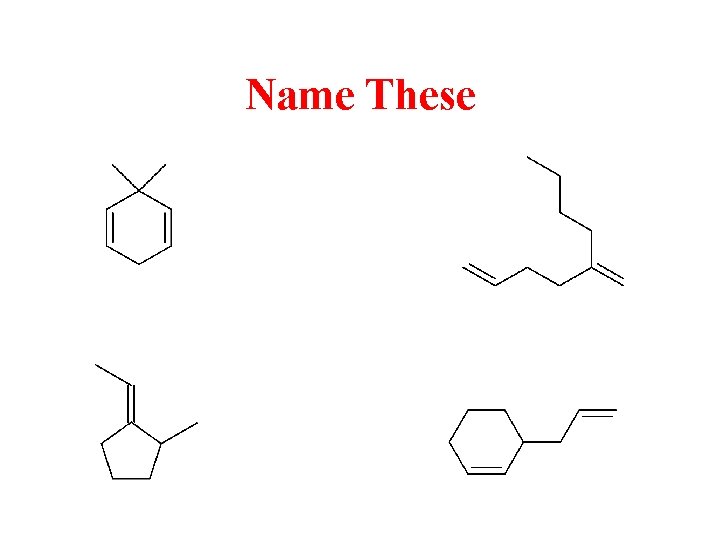
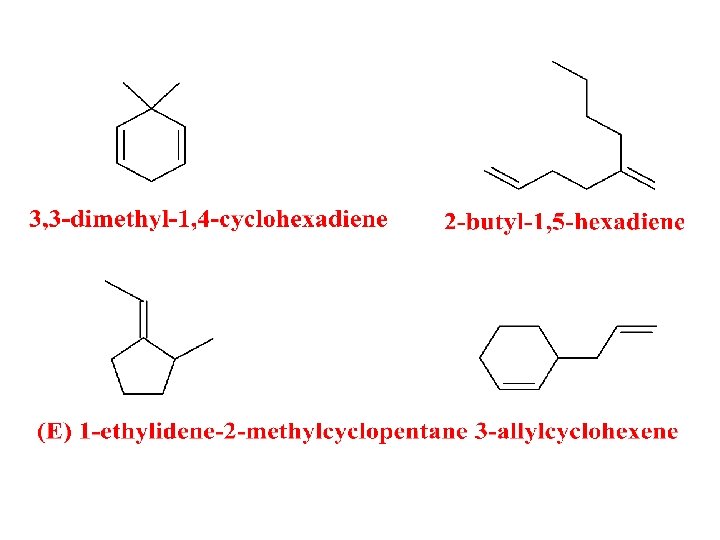
Name These
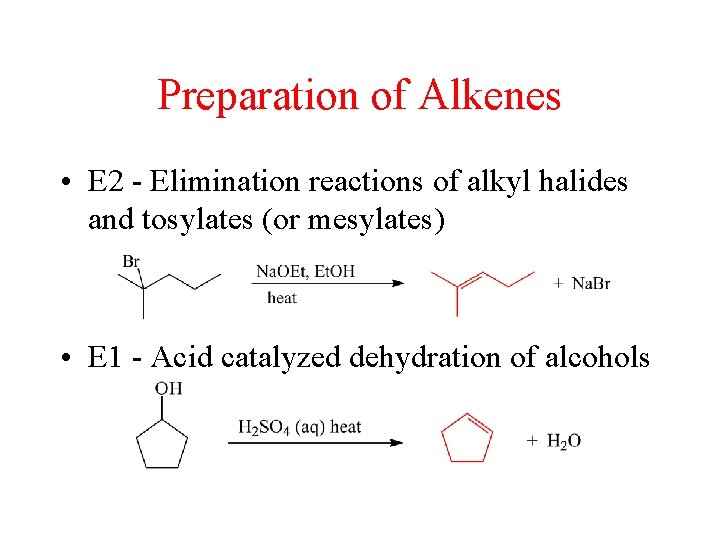
Preparation of Alkenes • E 2 - Elimination reactions of alkyl halides and tosylates (or mesylates) • E 1 - Acid catalyzed dehydration of alcohols
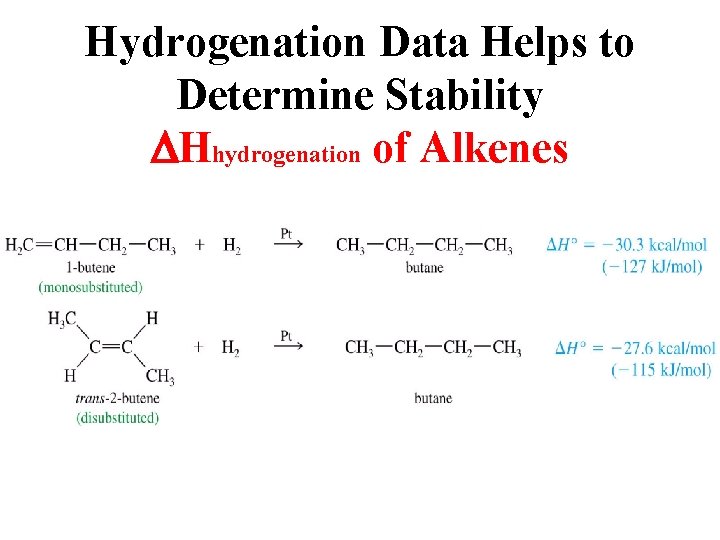
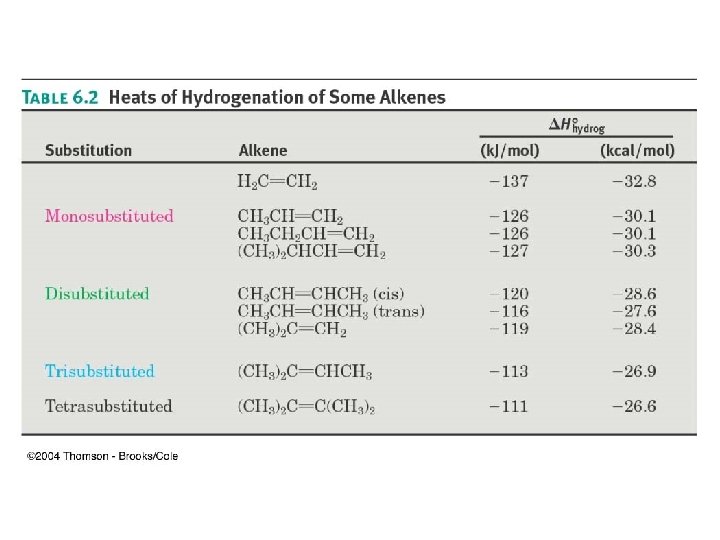
Hydrogenation Data Helps to Determine Stability DHhydrogenation of Alkenes
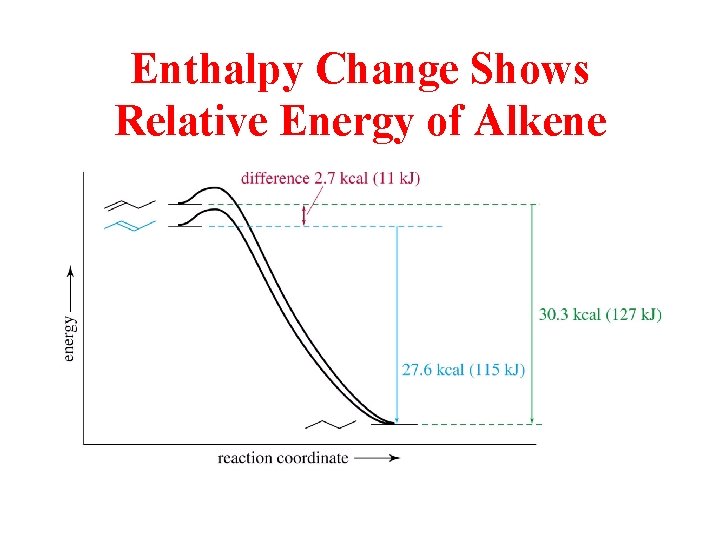
Enthalpy Change Shows Relative Energy of Alkene
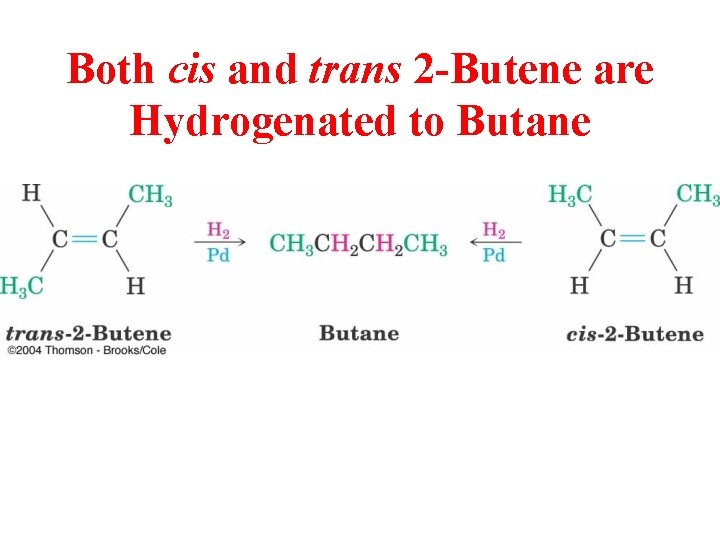
Both cis and trans 2 -Butene are Hydrogenated to Butane
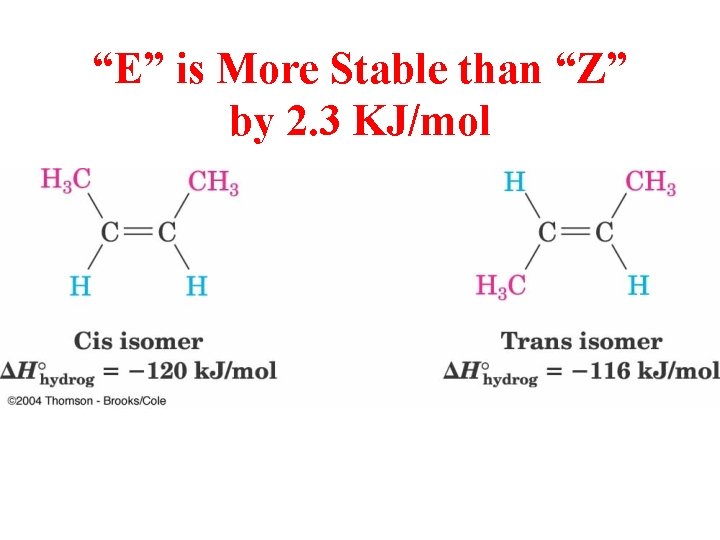
“E” is More Stable than “Z” by 2. 3 KJ/mol
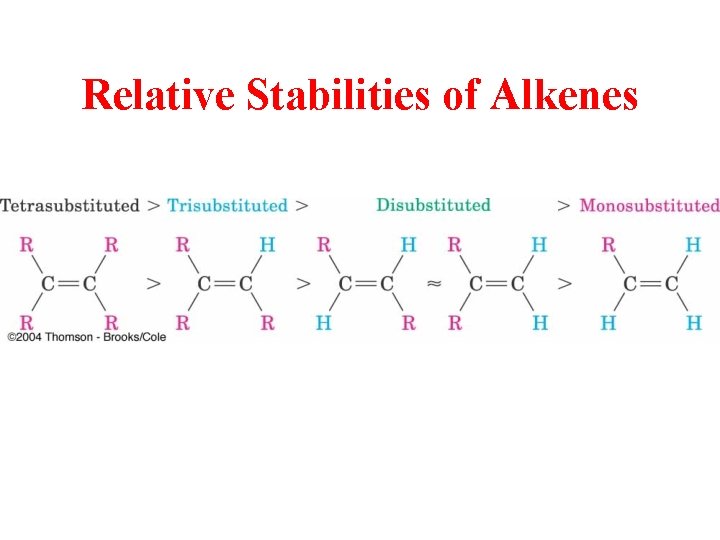
Relative Stabilities of Alkenes
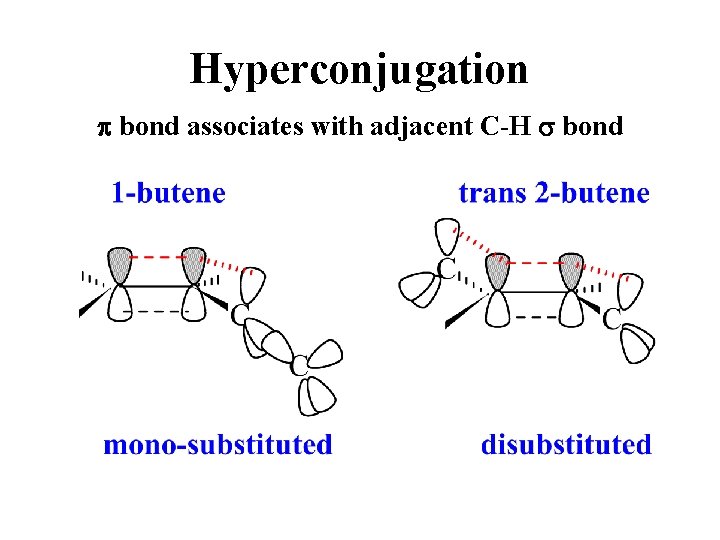
Hyperconjugation p bond associates with adjacent C-H s bond
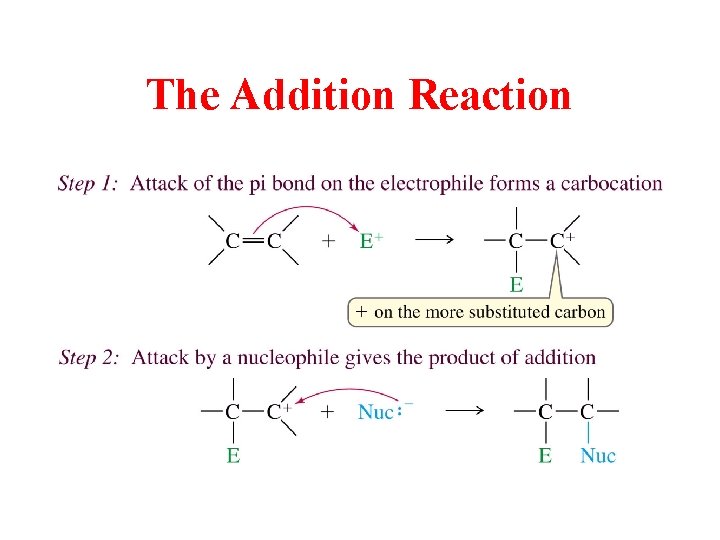
The Addition Reaction
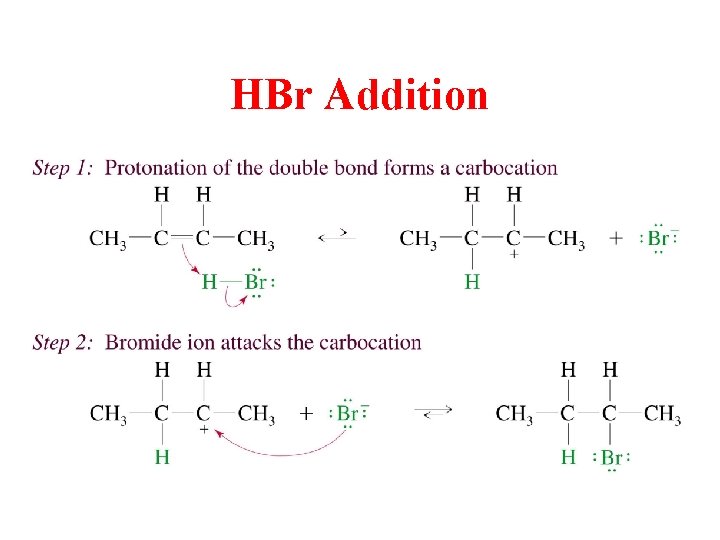
HBr Addition
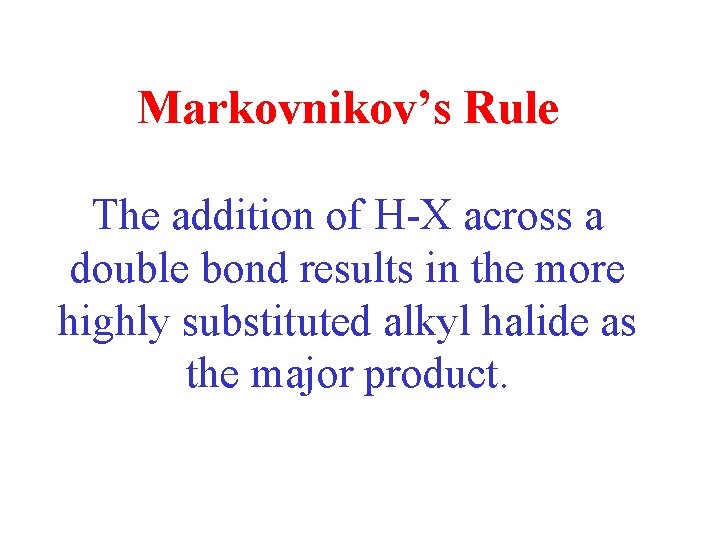
Markovnikov’s Rule The addition of H-X across a double bond results in the more highly substituted alkyl halide as the major product.
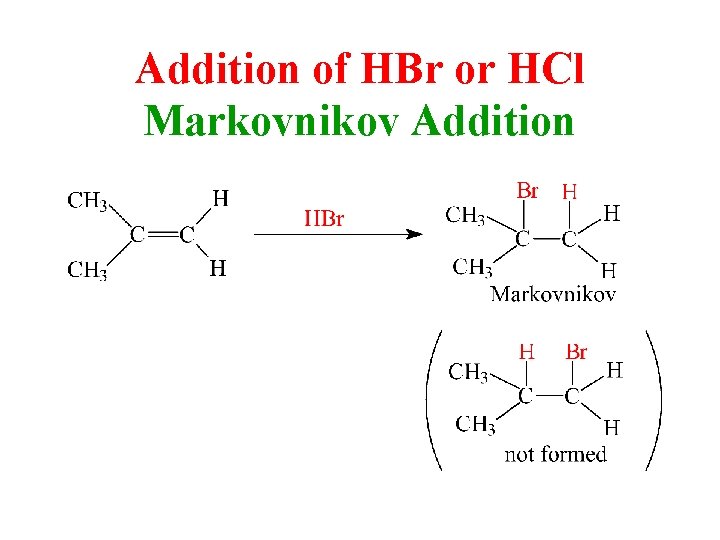
Addition of HBr or HCl Markovnikov Addition
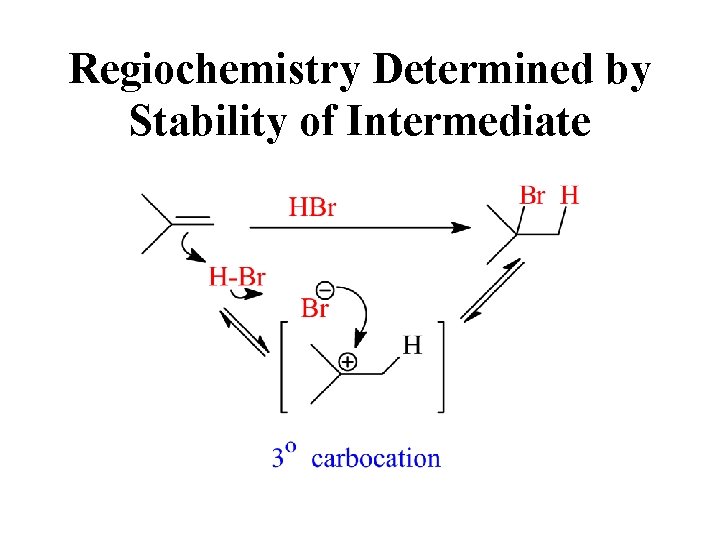
Regiochemistry Determined by Stability of Intermediate
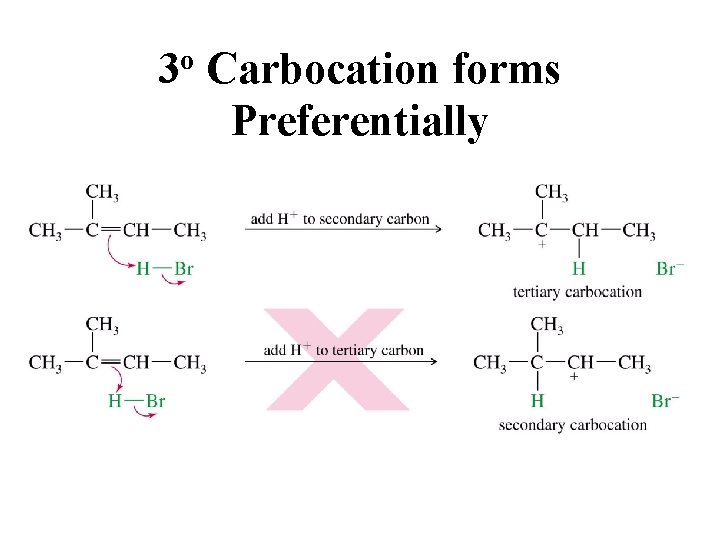
3 o Carbocation forms Preferentially
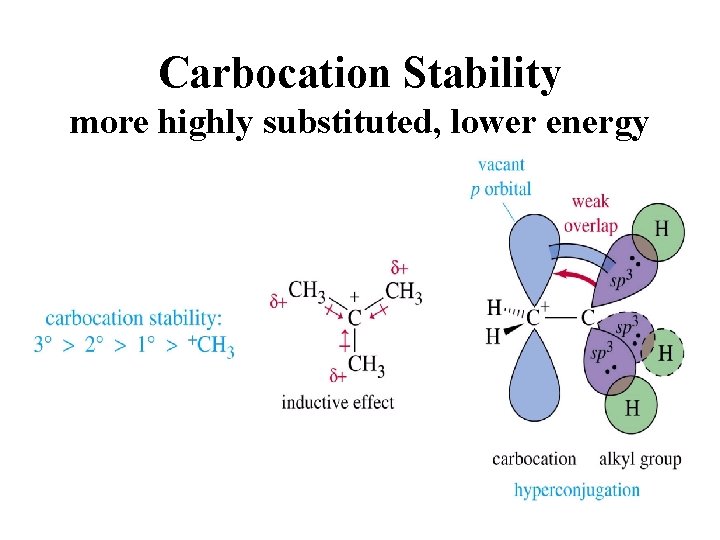
Carbocation Stability more highly substituted, lower energy
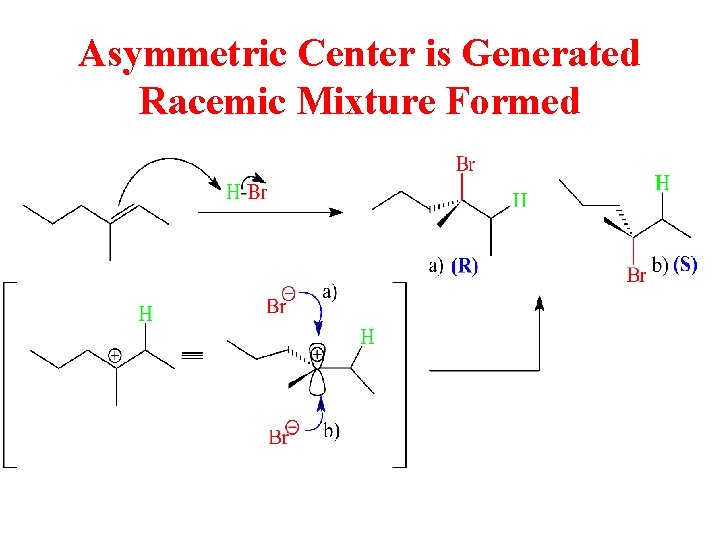
Asymmetric Center is Generated Racemic Mixture Formed
Definitions • Regioisomers – two constitutional isomers that could result from an addition reaction. • Regiospecific – only one regiosisomer forms at the expense of the other. • Regioselective – both regioisomers are formed, but one is formed in preference.
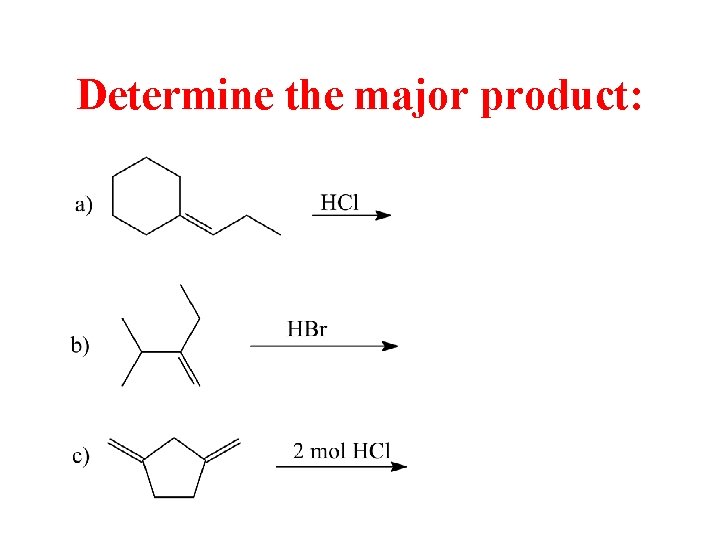
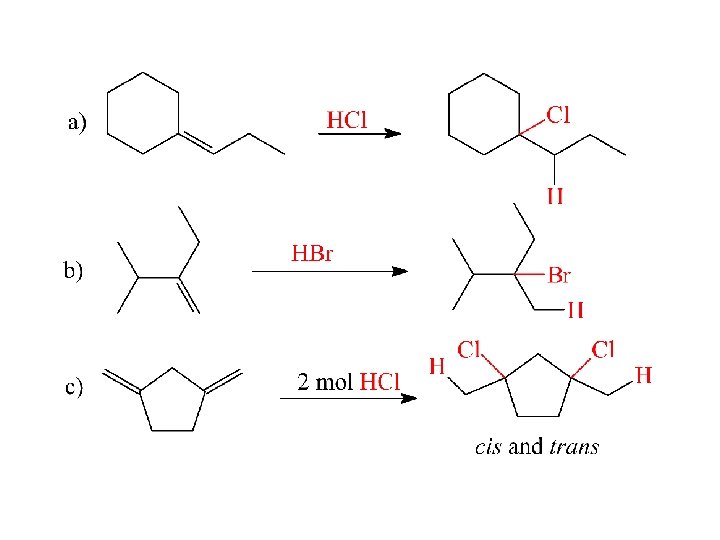
Determine the major product:
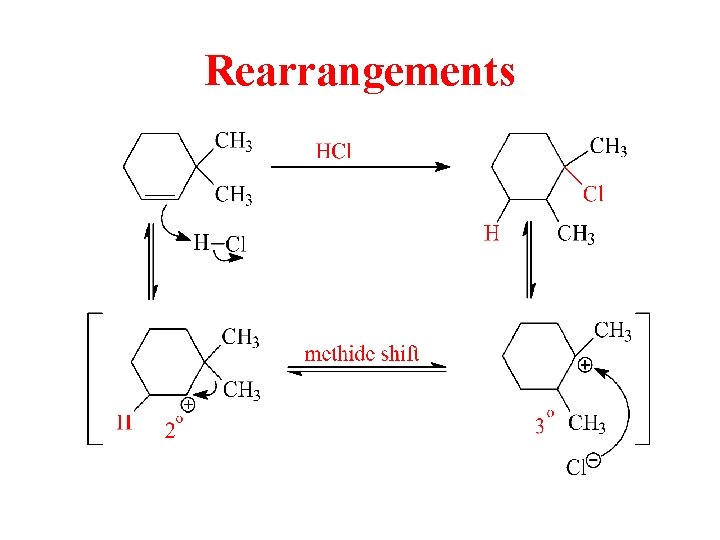
Rearrangements
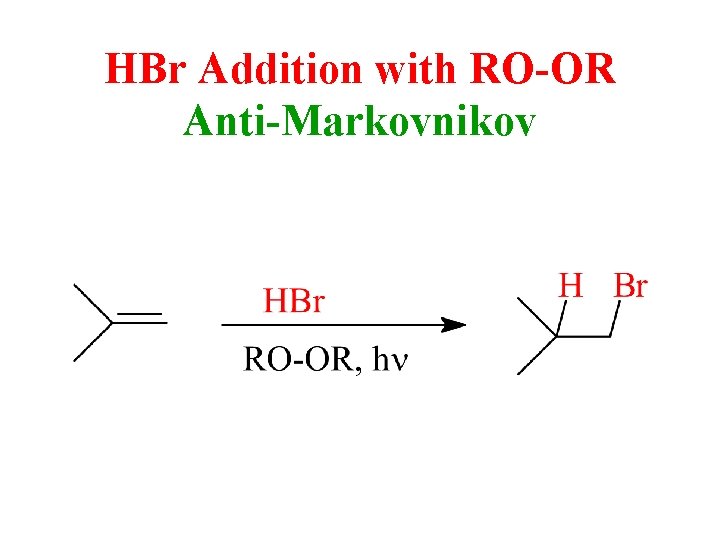
HBr Addition with RO-OR Anti-Markovnikov
Free-Radical Mechanism
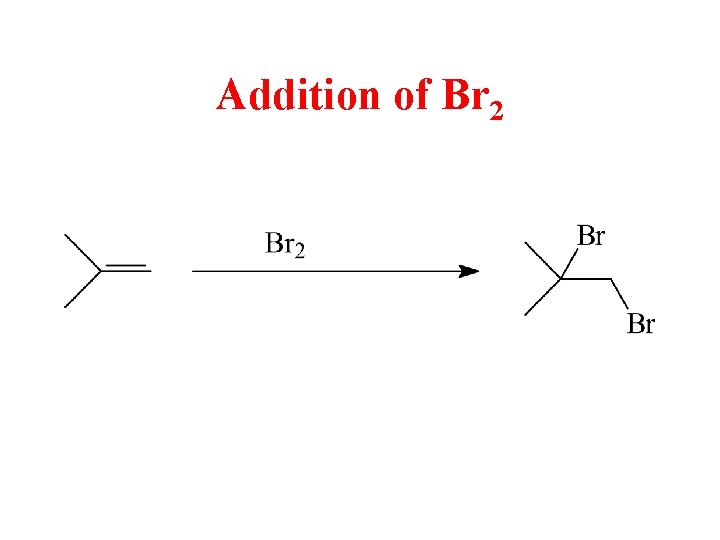
Addition of Br 2
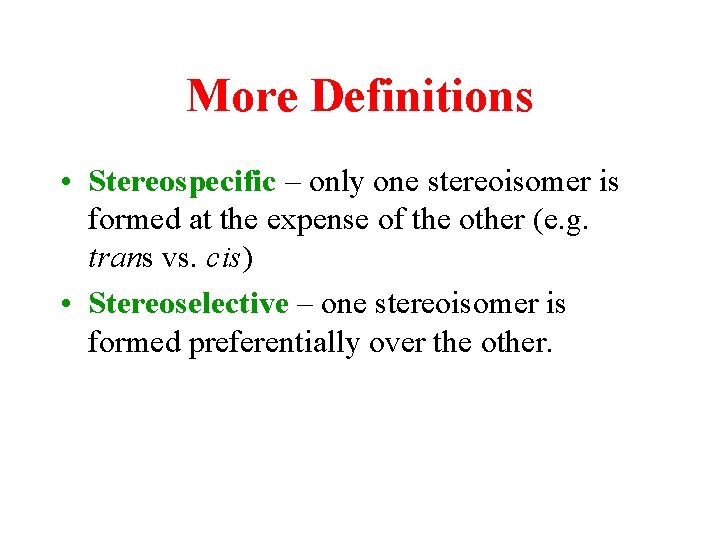
More Definitions • Stereospecific – only one stereoisomer is formed at the expense of the other (e. g. trans vs. cis) • Stereoselective – one stereoisomer is formed preferentially over the other.
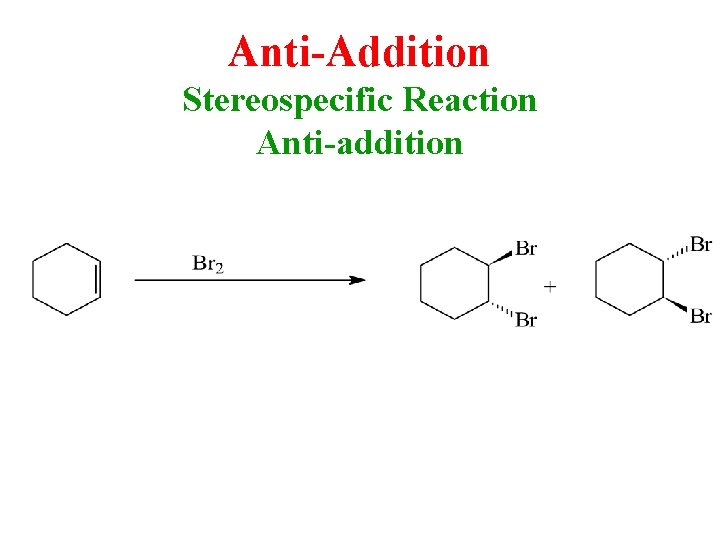
Anti-Addition Stereospecific Reaction Anti-addition
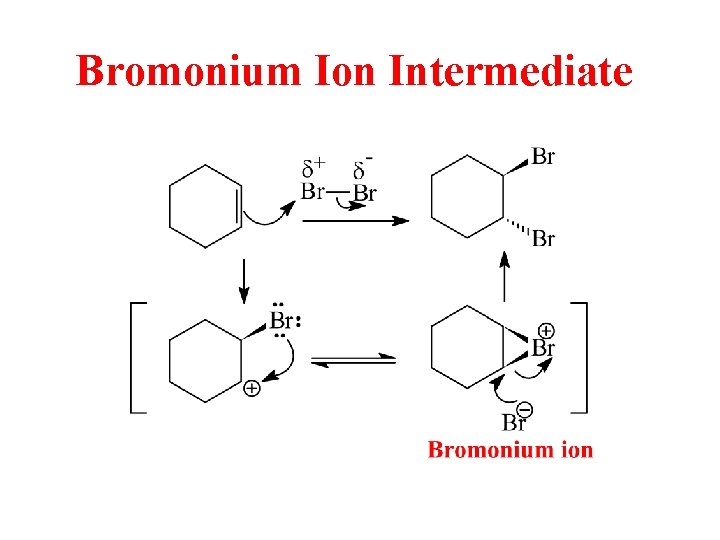
Bromonium Ion Intermediate
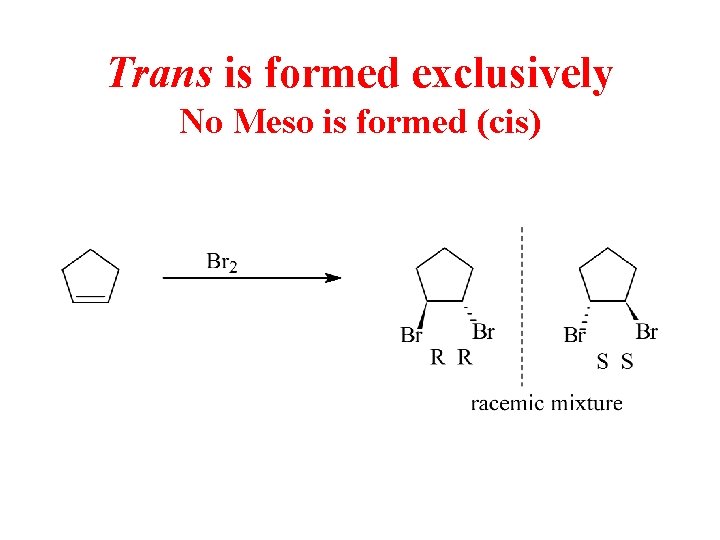
Trans is formed exclusively No Meso is formed (cis)
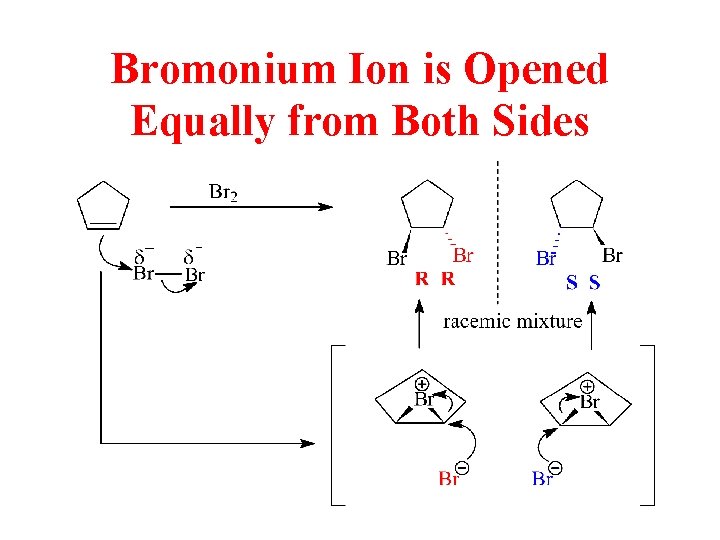
Bromonium Ion is Opened Equally from Both Sides
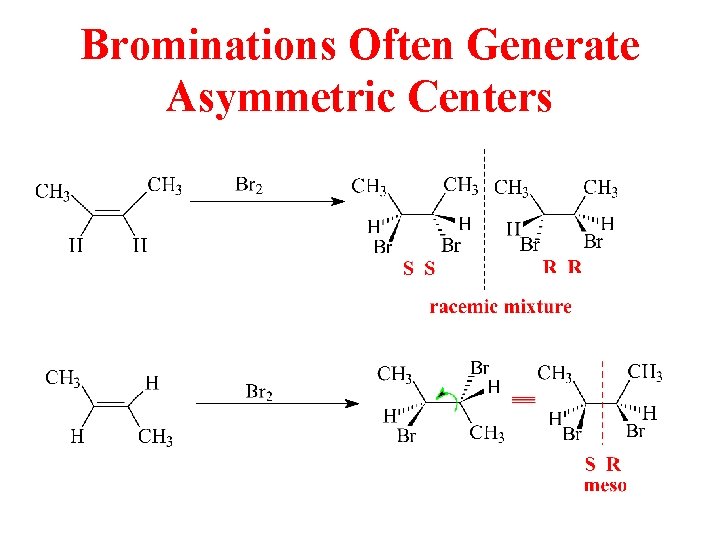
Brominations Often Generate Asymmetric Centers
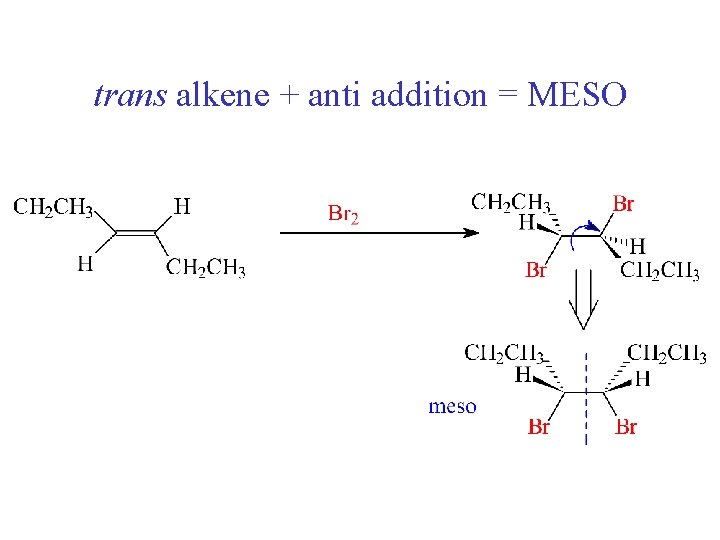
trans alkene + anti addition = MESO
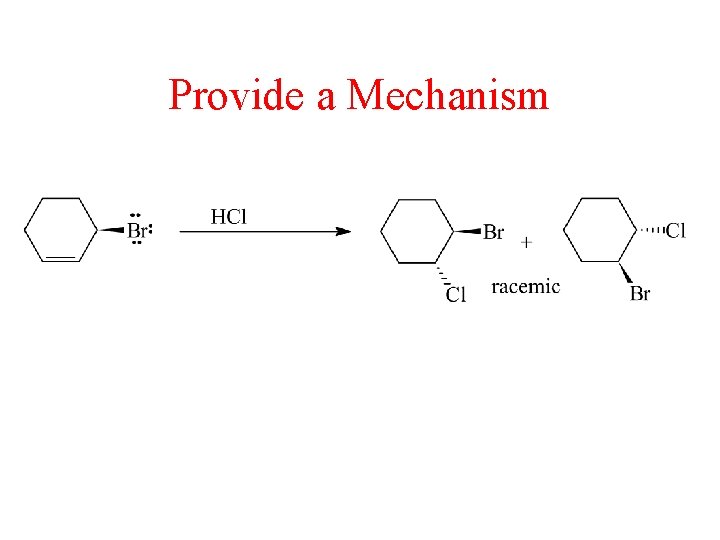
Provide a Mechanism
Halohydrin Formation Addition of Br – OH Stereospecific & Regiospecific
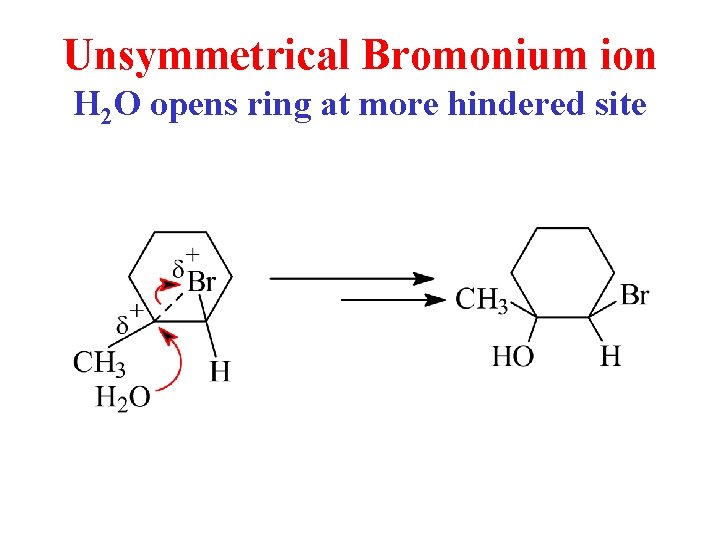
Unsymmetrical Bromonium ion H 2 O opens ring at more hindered site
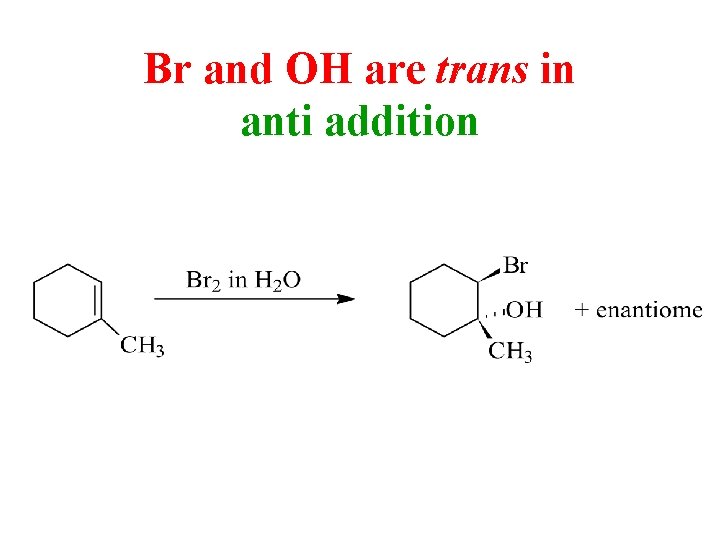
Br and OH are trans in anti addition
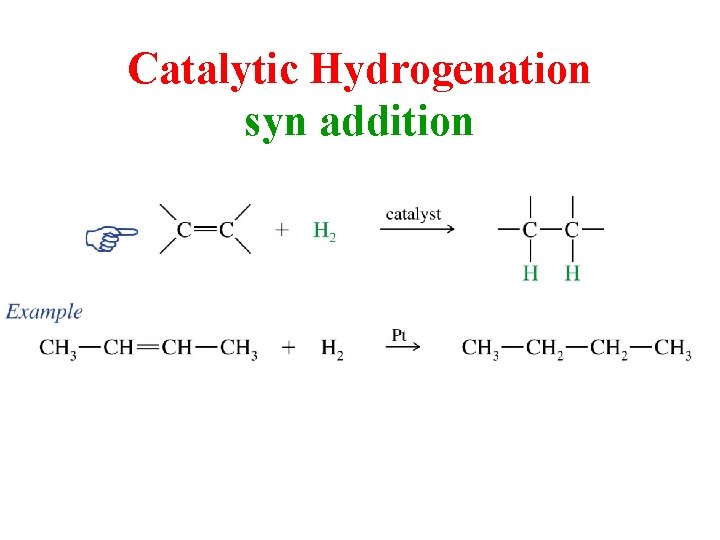
Catalytic Hydrogenation syn addition
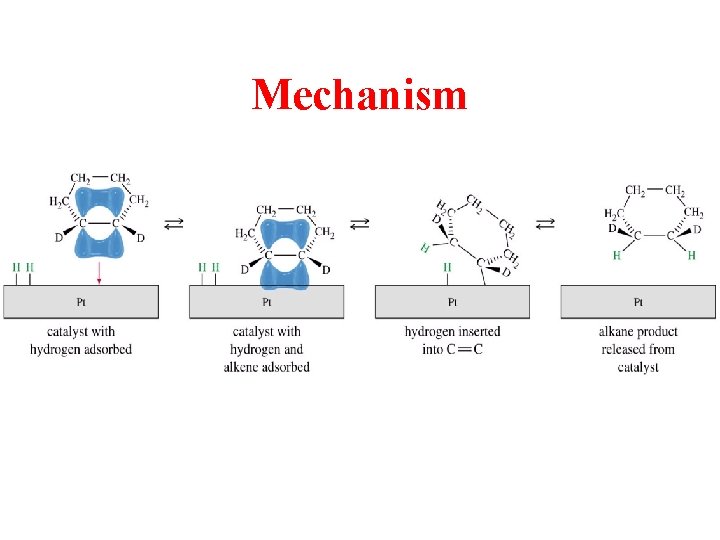
Mechanism
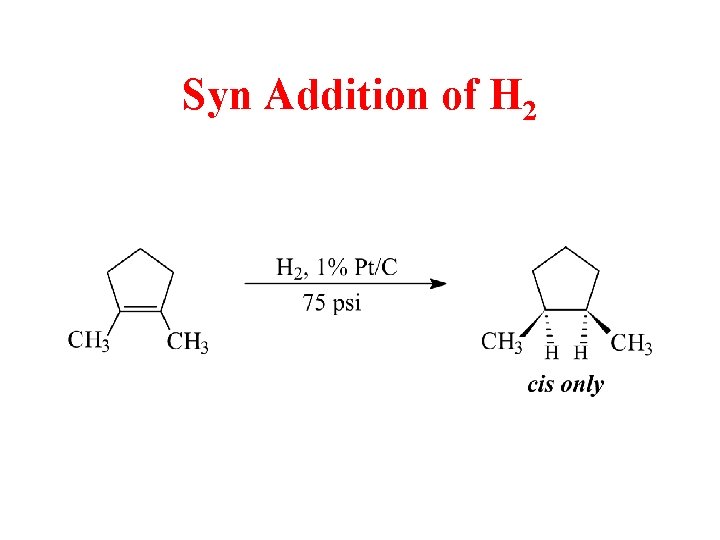
Syn Addition of H 2
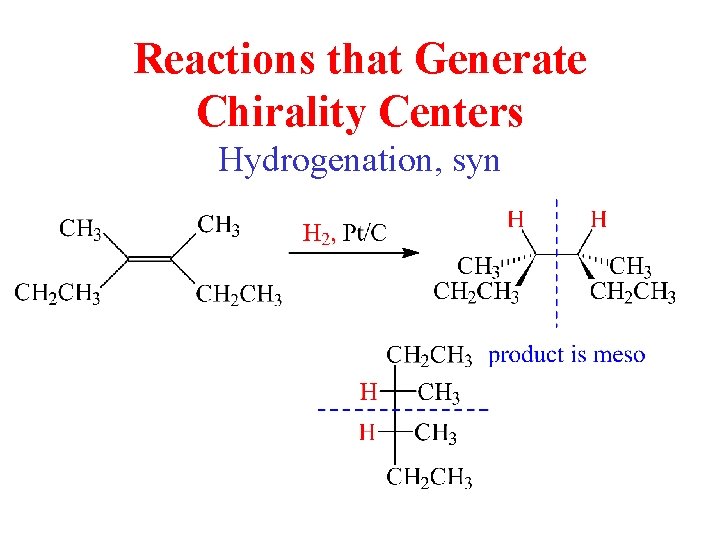
Reactions that Generate Chirality Centers Hydrogenation, syn
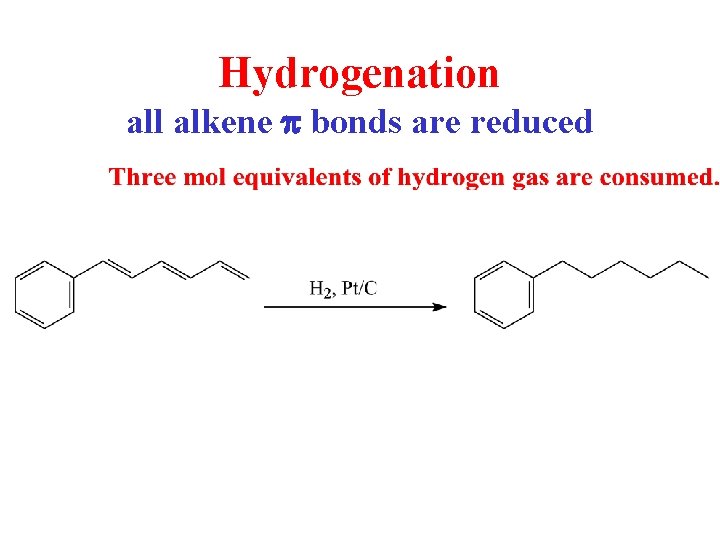
Hydrogenation all alkene p bonds are reduced
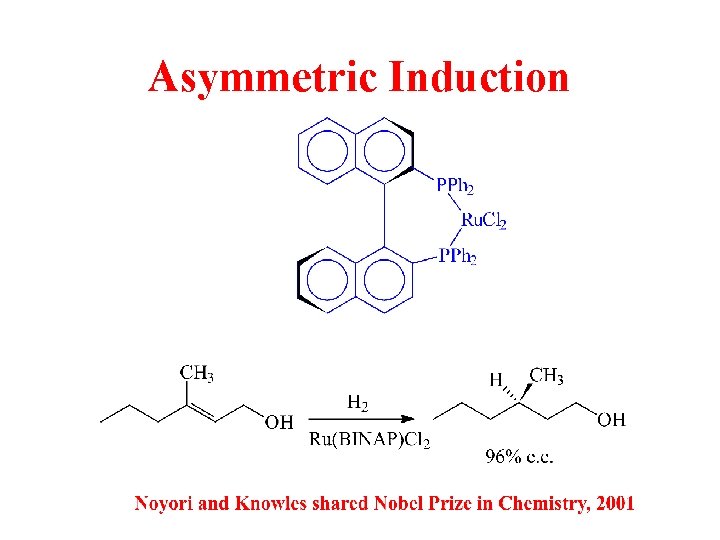
Asymmetric Induction
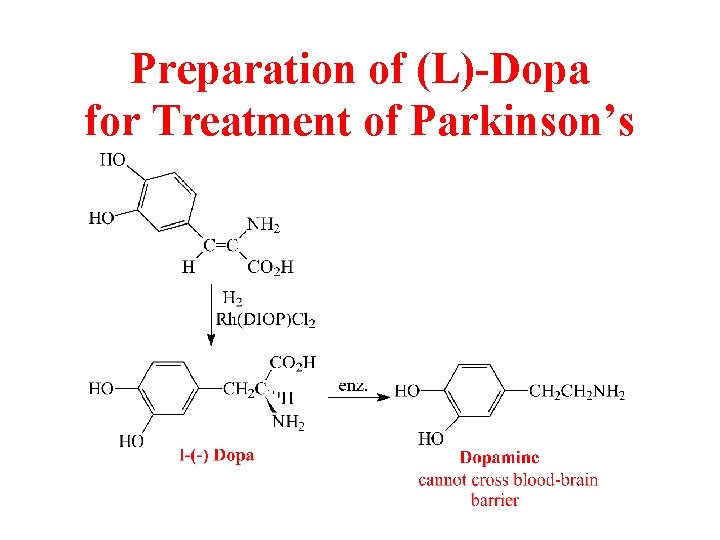
Preparation of (L)-Dopa for Treatment of Parkinson’s
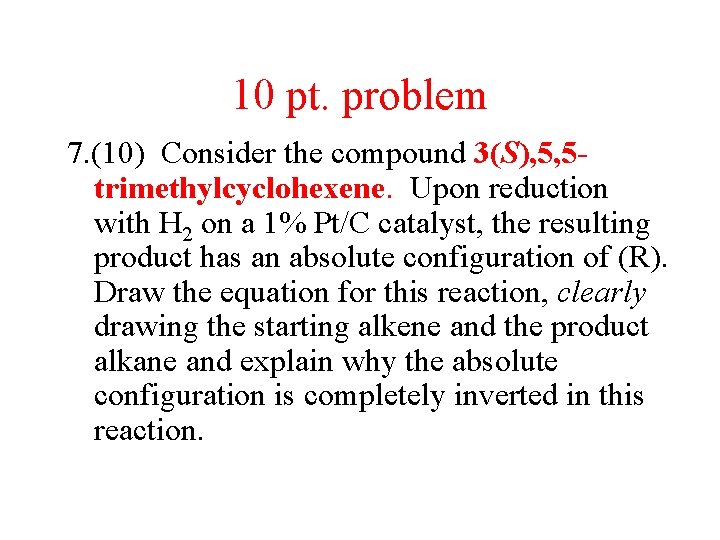
10 pt. problem 7. (10) Consider the compound 3(S), 5, 5 trimethylcyclohexene. Upon reduction with H 2 on a 1% Pt/C catalyst, the resulting product has an absolute configuration of (R). Draw the equation for this reaction, clearly drawing the starting alkene and the product alkane and explain why the absolute configuration is completely inverted in this reaction.
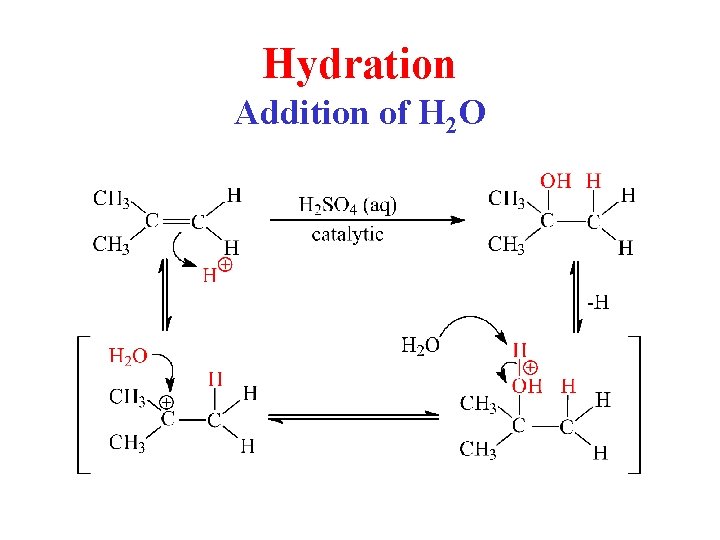
Hydration Addition of H 2 O
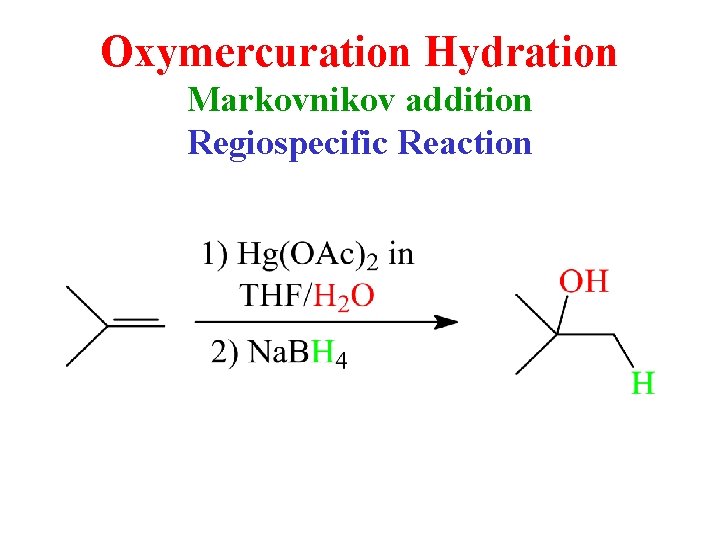
Oxymercuration Hydration Markovnikov addition Regiospecific Reaction
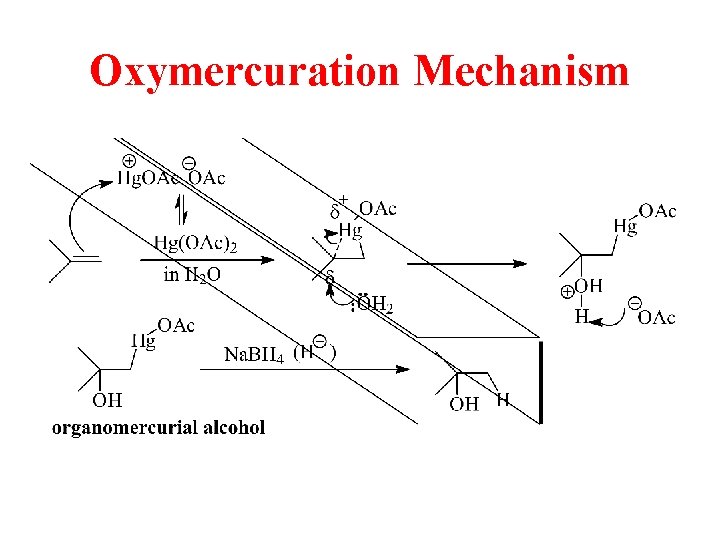
Oxymercuration Mechanism
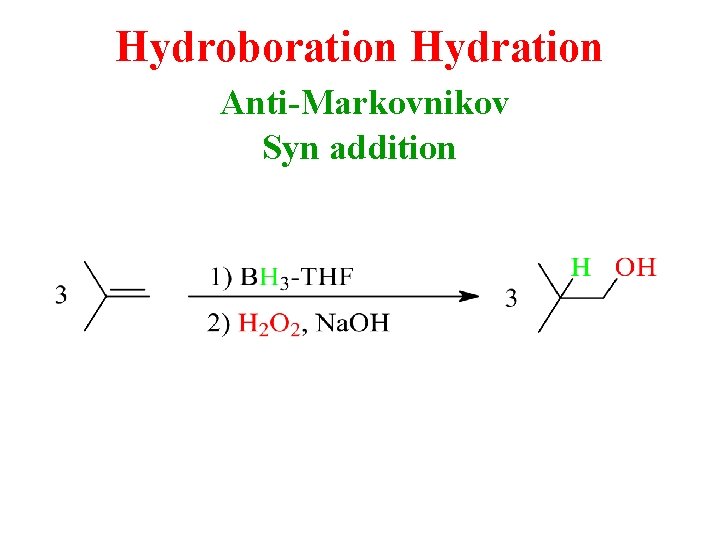
Hydroboration Hydration Anti-Markovnikov Syn addition
Hydroboration
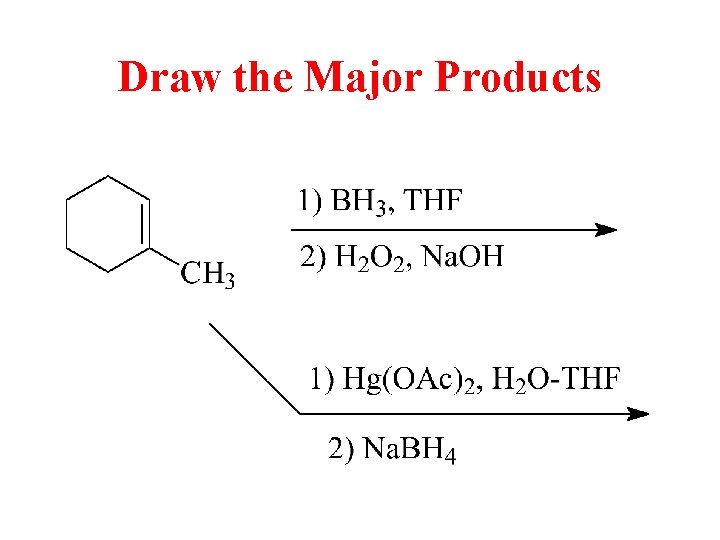
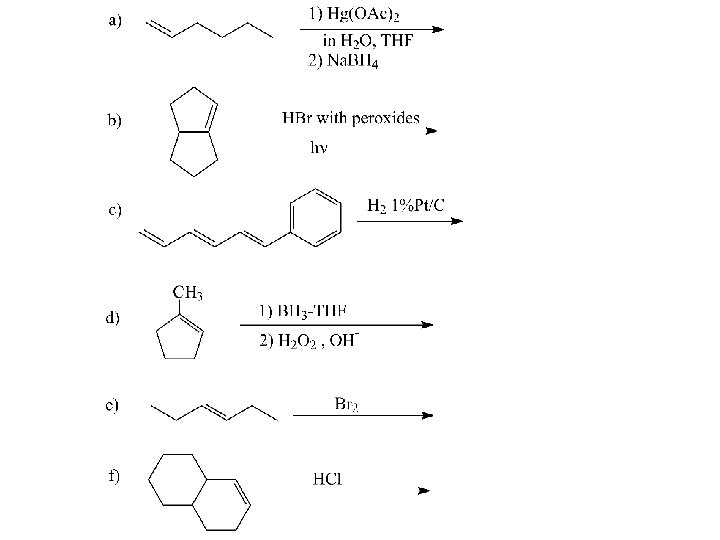
Draw the Major Products
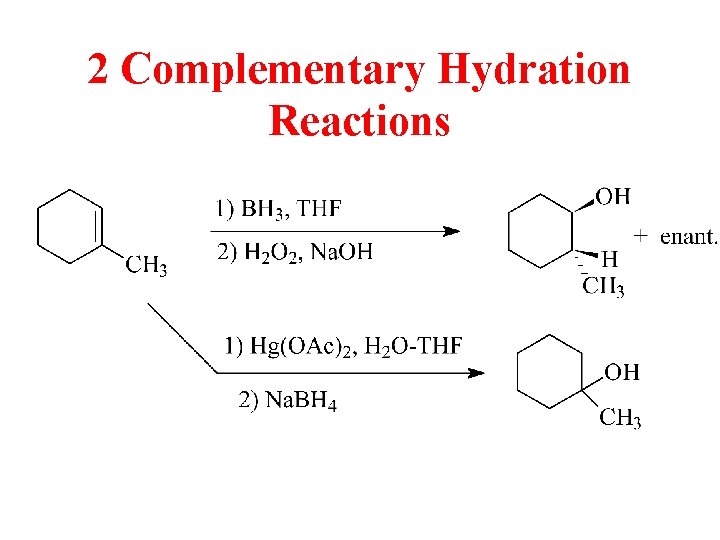
2 Complementary Hydration Reactions
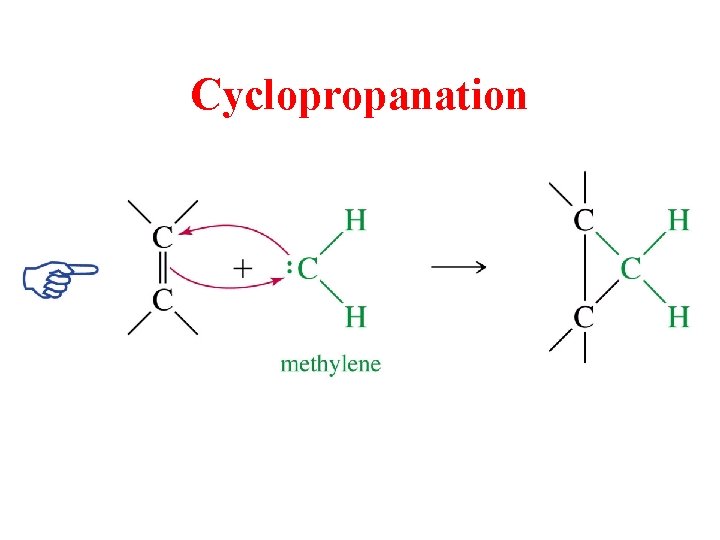
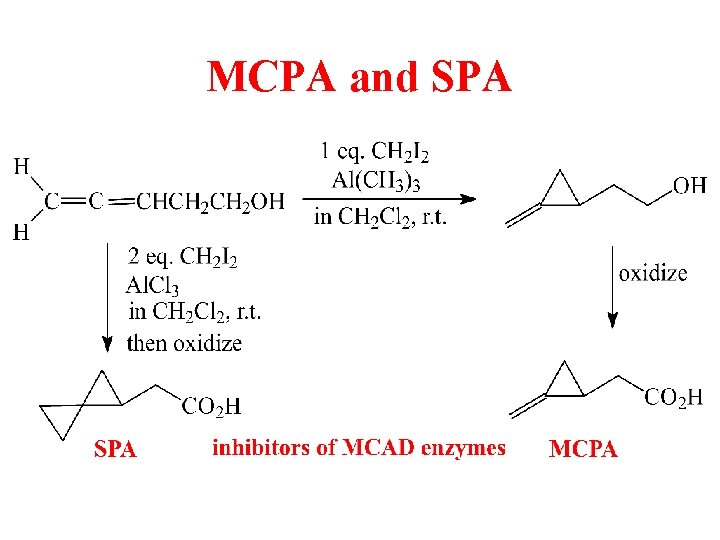
Cyclopropanation
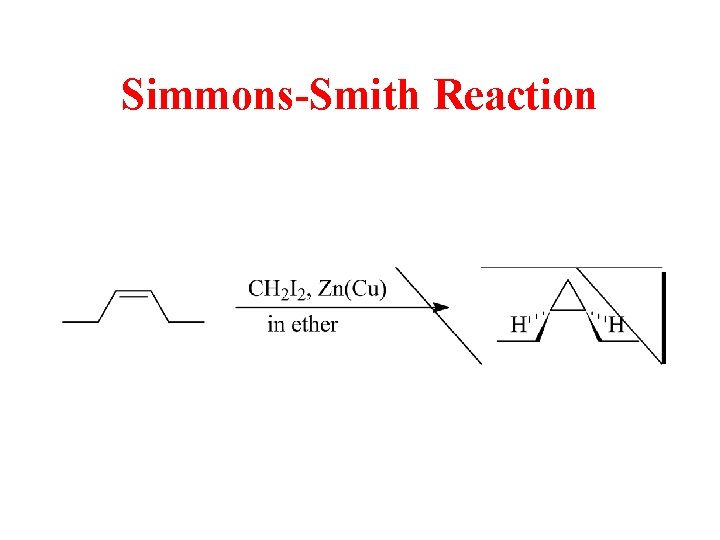
Simmons-Smith Reaction
In situ Preparation of Carbene
Two MCAD Inhibitors
MCPA and SPA
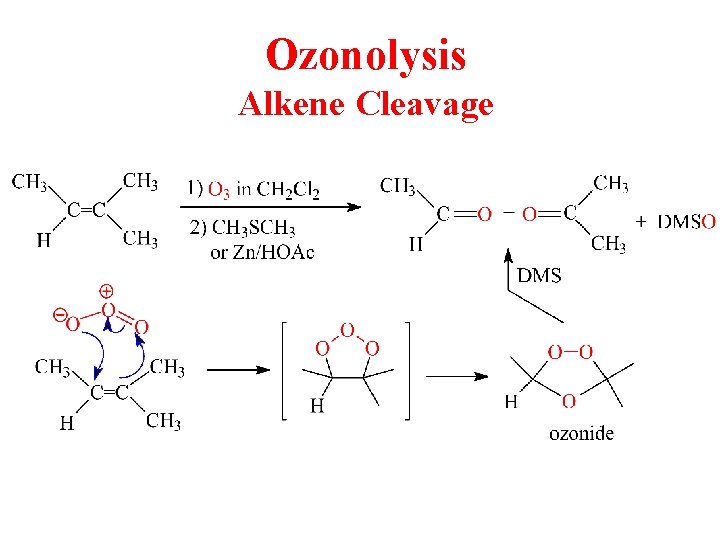
Ozonolysis Alkene Cleavage
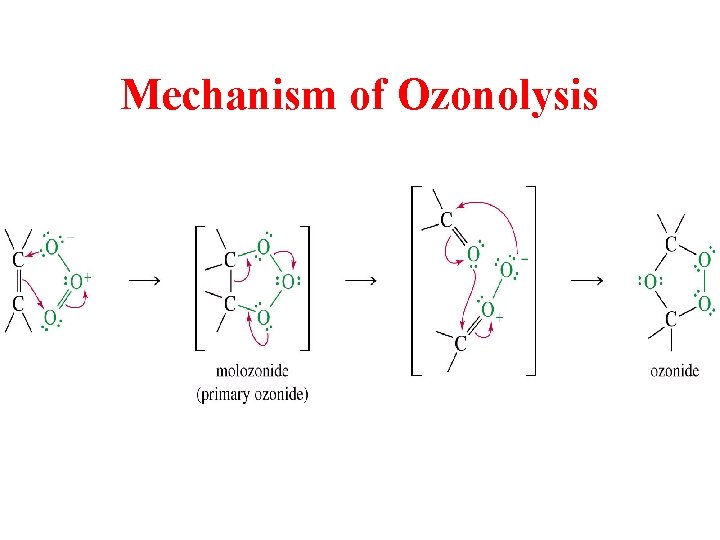
Mechanism of Ozonolysis
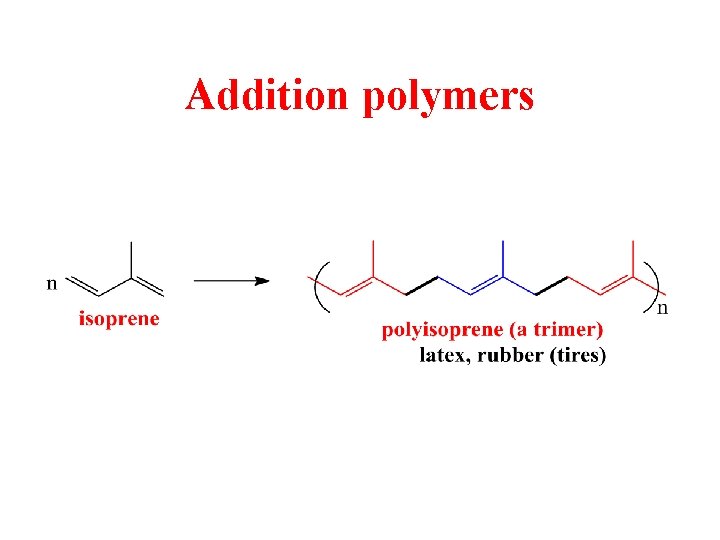
Addition polymers
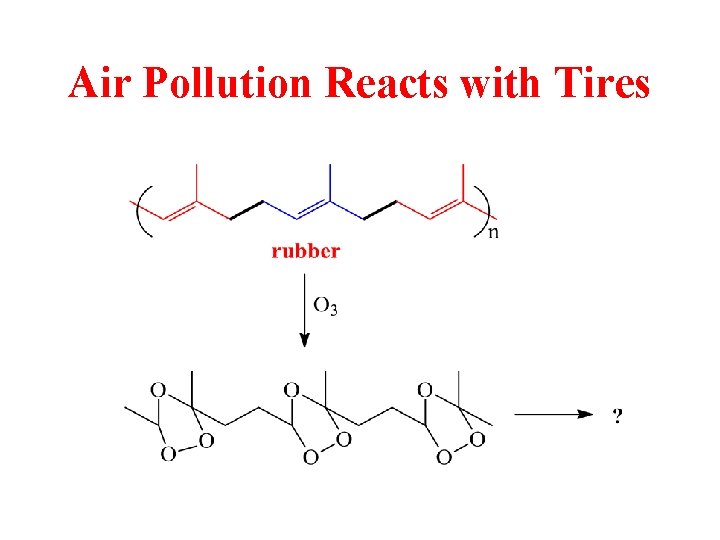
Air Pollution Reacts with Tires
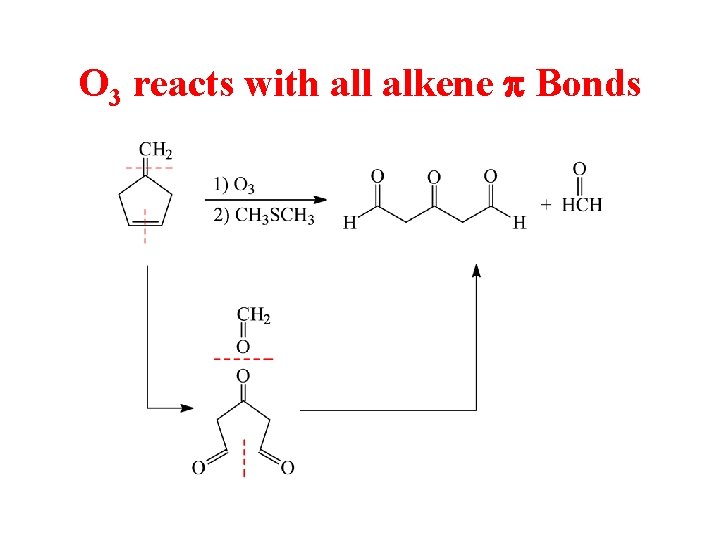
O 3 reacts with all alkene p Bonds
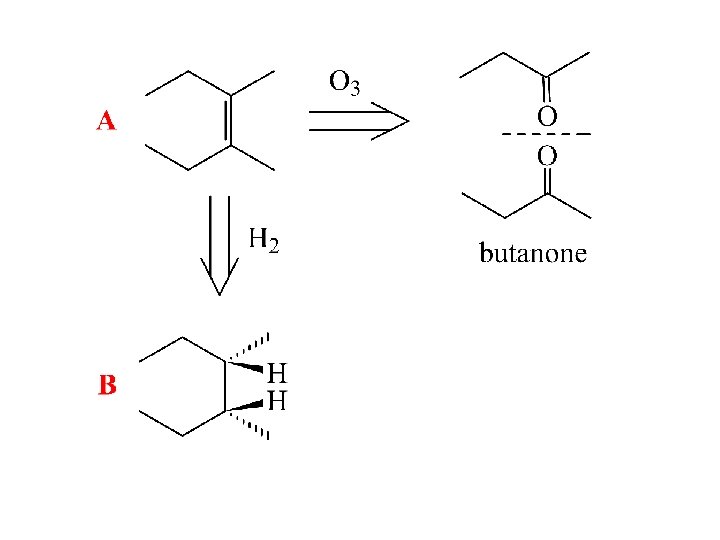
Problem An unknown compound A, C 8 H 16, reacts with H 2 on a 1% Pt/C catalyst to form B (C 8 H 18). B has two chiral centers but is optically inactive due to the presence of an internal plane of symmetry. Treatment of A with O 3 followed by Zn/HOAc affords butanone only. Identify A and B and draw B in a Fischer projection.
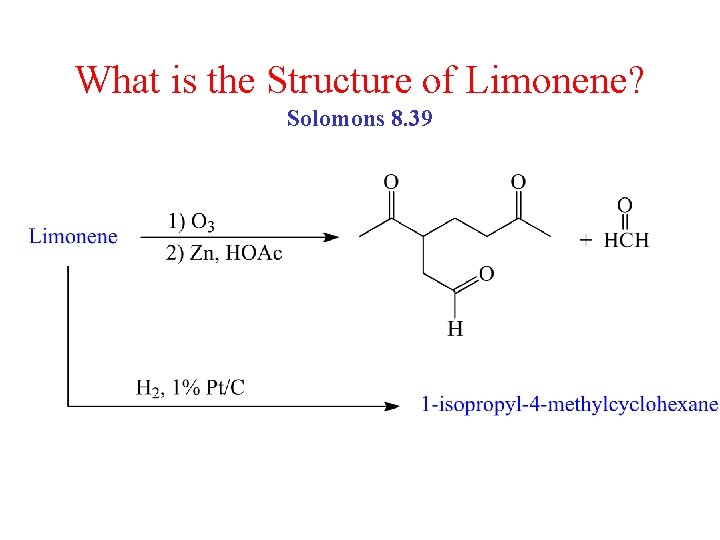
What is the Structure of Limonene? Solomons 8. 39
C=C bonds become carbonyl groups
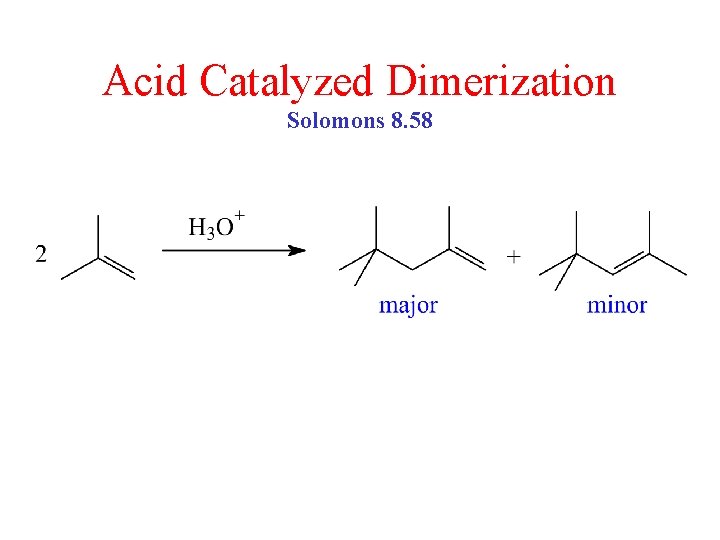
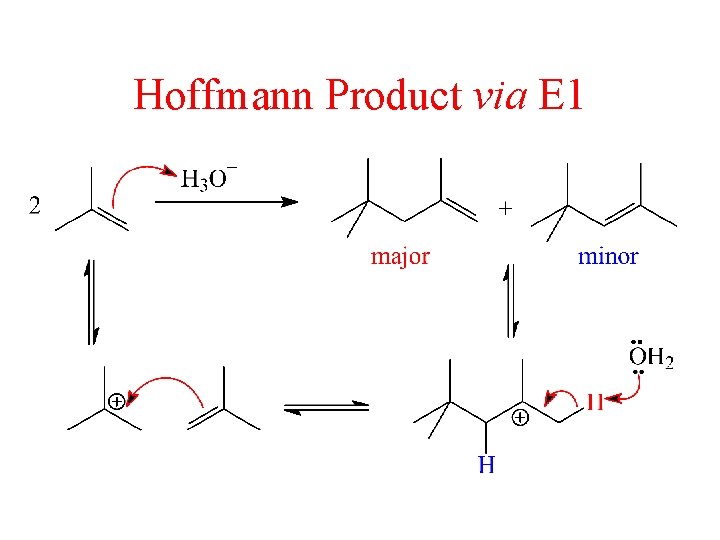
Acid Catalyzed Dimerization Solomons 8. 58
Hoffmann Product via E 1