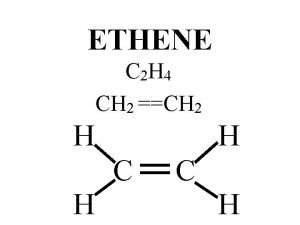
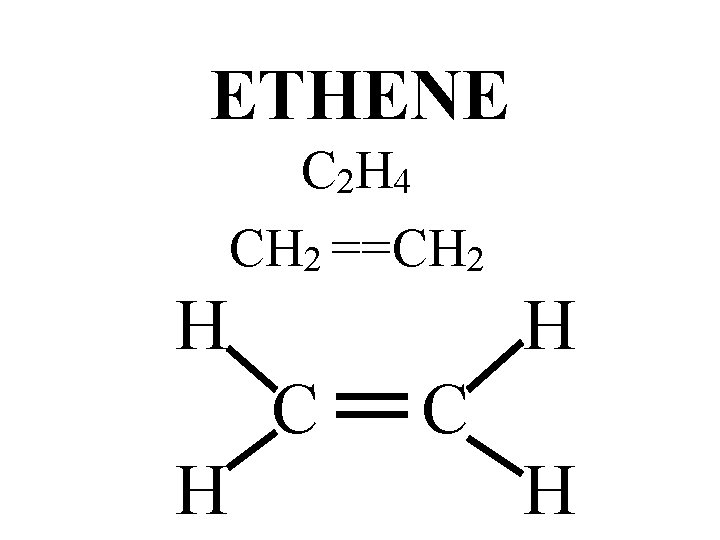
ETHENE C 2 H 4 CH 2 CH
- Slides: 29
ETHENE C 2 H 4 CH 2 ==CH 2 H H C H
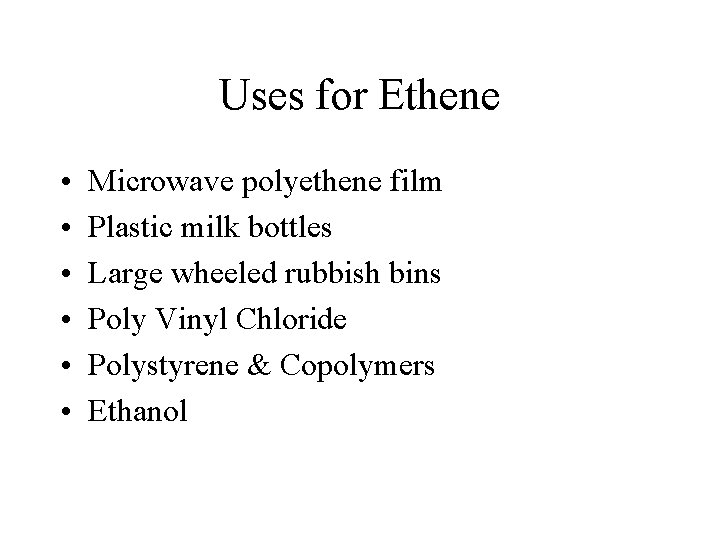
Uses for Ethene • • • Microwave polyethene film Plastic milk bottles Large wheeled rubbish bins Poly Vinyl Chloride Polystyrene & Copolymers Ethanol
Composition of Natural Gas • Mostly methane (CH 4) • <10% Ethane • May contain smaller percentage of alkanes like propane, butane and pentane • May contain small amounts of N 2, CO 2 & H 2 S
Composition of Crude Oil • Mainly of alkanes • A large range of alkanes present (CH 4 – C 70 H 140 in numerous isomeric forms • Small amounts of organic compounds containing S, N and O atoms
A Hydrocarbon • A compound that contains CARBON and HYDROGEN atoms only
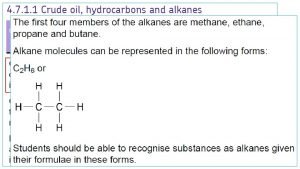
Alkanes • Hydrocarbons with all single C – C bonds • Thus are called Saturated Hydrocarbons • General formula Cn. H 2 n+2
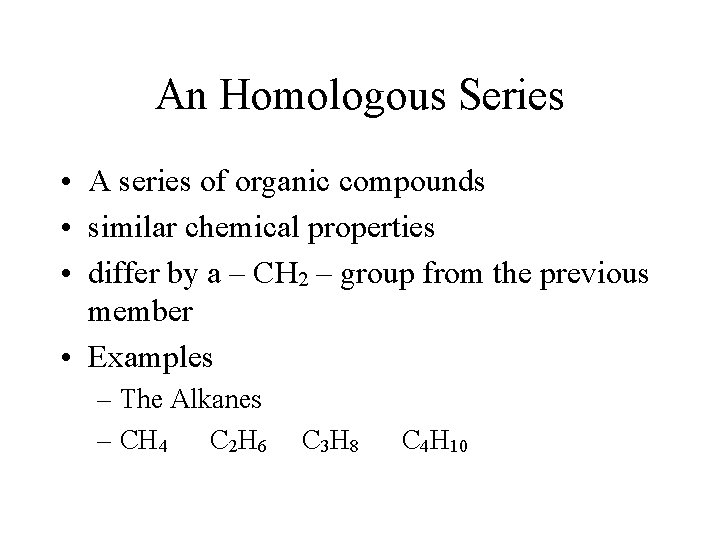
An Homologous Series • A series of organic compounds • similar chemical properties • differ by a – CH 2 – group from the previous member • Examples – The Alkanes – CH 4 C 2 H 6 C 3 H 8 C 4 H 10
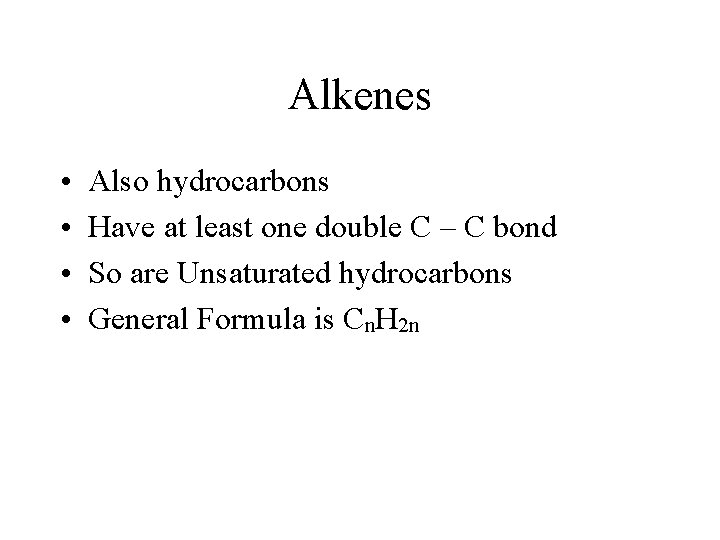
Alkenes • • Also hydrocarbons Have at least one double C – C bond So are Unsaturated hydrocarbons General Formula is Cn. H 2 n
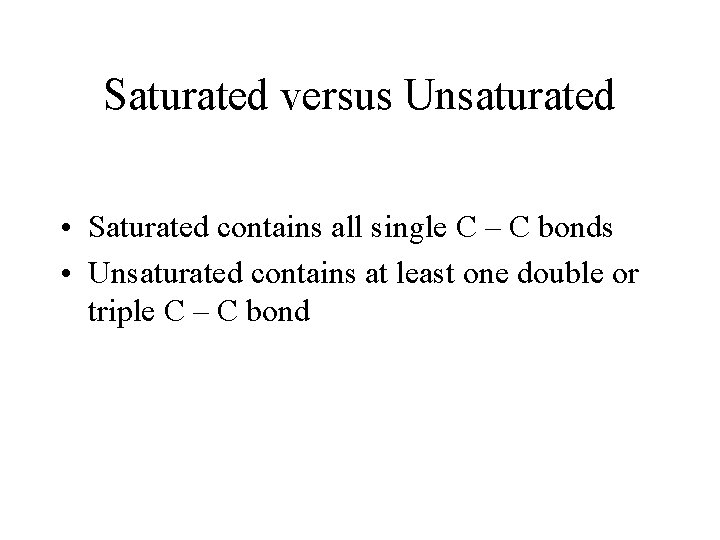
Saturated versus Unsaturated • Saturated contains all single C – C bonds • Unsaturated contains at least one double or triple C – C bond
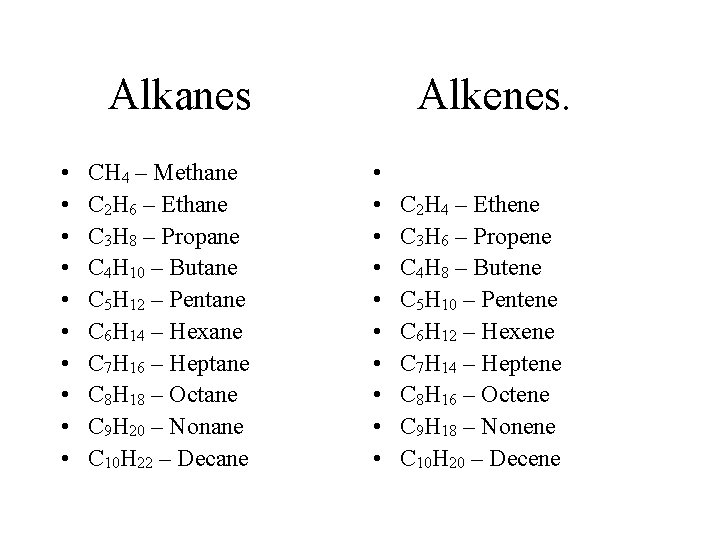
Alkanes Alkenes. • • • CH 4 – Methane C 2 H 6 – Ethane C 3 H 8 – Propane C 4 H 10 – Butane C 5 H 12 – Pentane C 6 H 14 – Hexane C 7 H 16 – Heptane C 8 H 18 – Octane C 9 H 20 – Nonane C 10 H 22 – Decane • • • C 2 H 4 – Ethene C 3 H 6 – Propene C 4 H 8 – Butene C 5 H 10 – Pentene C 6 H 12 – Hexene C 7 H 14 – Heptene C 8 H 16 – Octene C 9 H 18 – Nonene C 10 H 20 – Decene
Production of ethene from crude oil • Two main steps 1. Fractional Distillation 2. Cracking
Fractional Distillation • • Separation of components in crude oil Takes place in a fractionating tower Oil is separated into several fractions Each hydrocarbon in a fraction has a similar boiling temperature
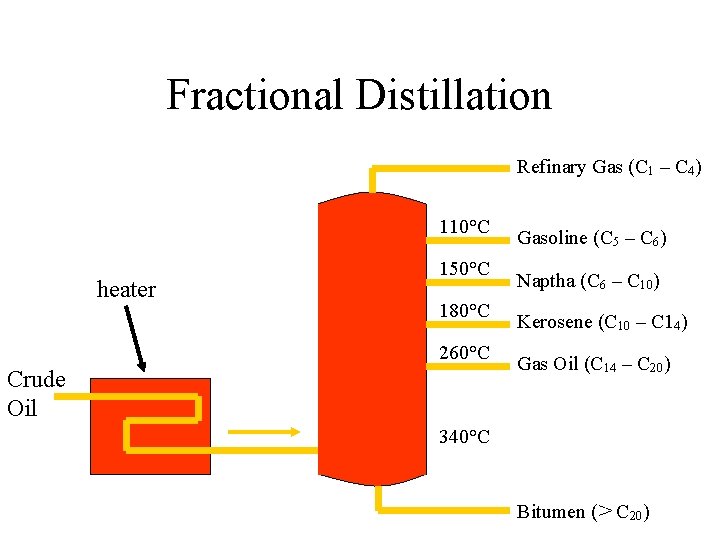
Fractional Distillation Refinary Gas (C 1 – C 4) 110°C heater 150°C 180°C 260°C Crude Oil Gasoline (C 5 – C 6) Naptha (C 6 – C 10) Kerosene (C 10 – C 14) Gas Oil (C 14 – C 20) 340°C Bitumen (> C 20)
Fractional Distillation • The bigger the hydrocarbon molecule, the higher it’s boiling temperature • Due to the dispersion forces holding the molecules together being larger as the molecule gets larger
Cracking process • Two types 1. Thermal Produces unsaturated hydrocarbons such as ethene, used in petrochemical 2. Catalytic To increase amount of lighter fractions recovered from crude oil
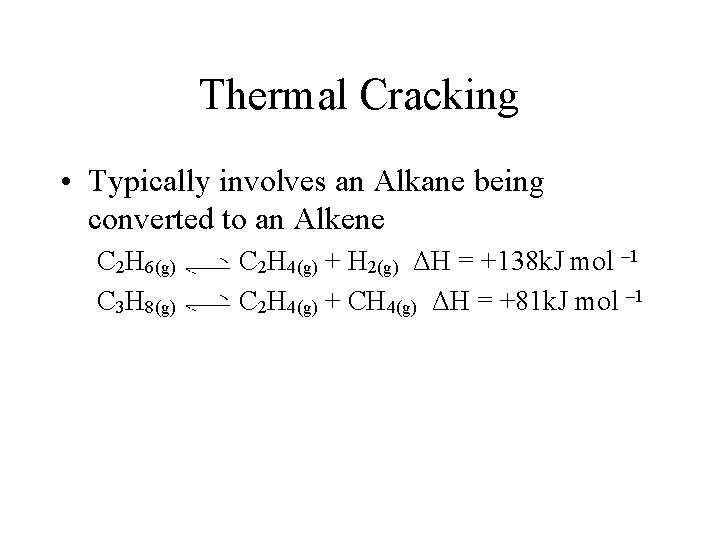
Thermal Cracking • Typically involves an Alkane being converted to an Alkene C 2 H 6(g) C 2 H 4(g) + H 2(g) ΔH = +138 k. J mol – 1 C 3 H 8(g) C 2 H 4(g) + CH 4(g) ΔH = +81 k. J mol – 1
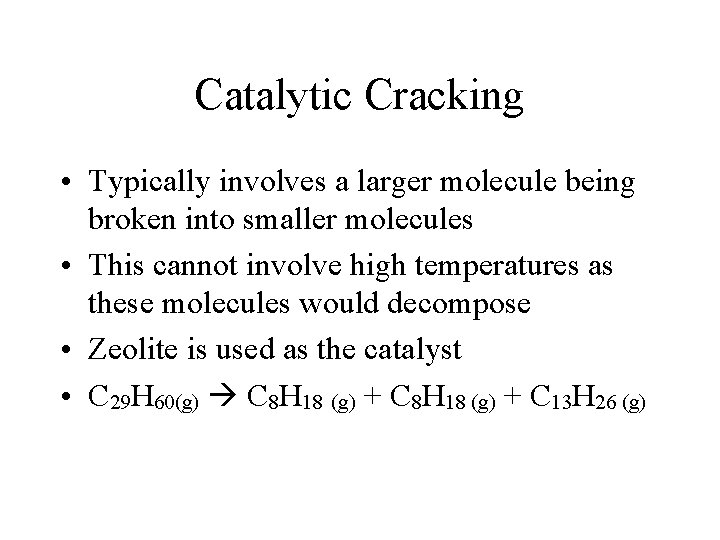
Catalytic Cracking • Typically involves a larger molecule being broken into smaller molecules • This cannot involve high temperatures as these molecules would decompose • Zeolite is used as the catalyst • C 29 H 60(g) C 8 H 18 (g) + C 13 H 26 (g)
Desulfurisation • Is removal of sulfur compounds from crude oil • Sulfur needs to be removed so as to – Minimise emissions of SO 2 – Prevent poisoning of catalysts – Manufacture sulfuric acid
Properties of Ethene • • • Unsaturated Non – polar molecule Insoluble in water (and other polar solvents) A flammable gas Participates in Addition reactions – (test of unsaturation)
Properties of Ethene • Polymerises to form Polyethene • Very low BP (– 104°C) • Double bond makes it very reactive
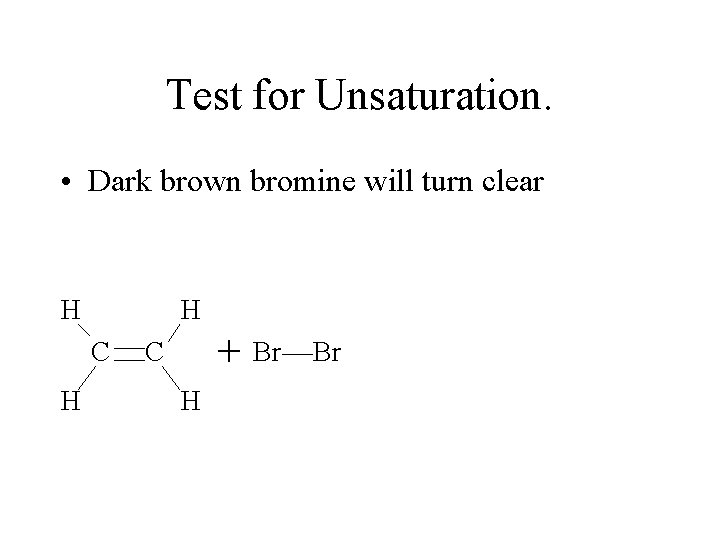
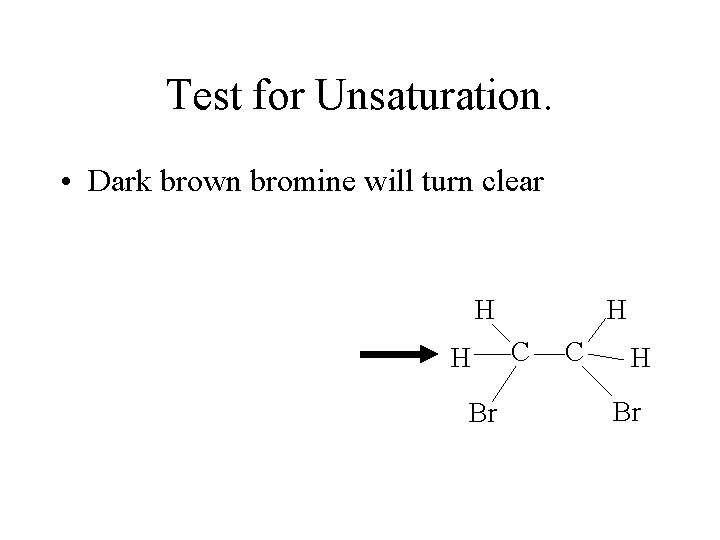
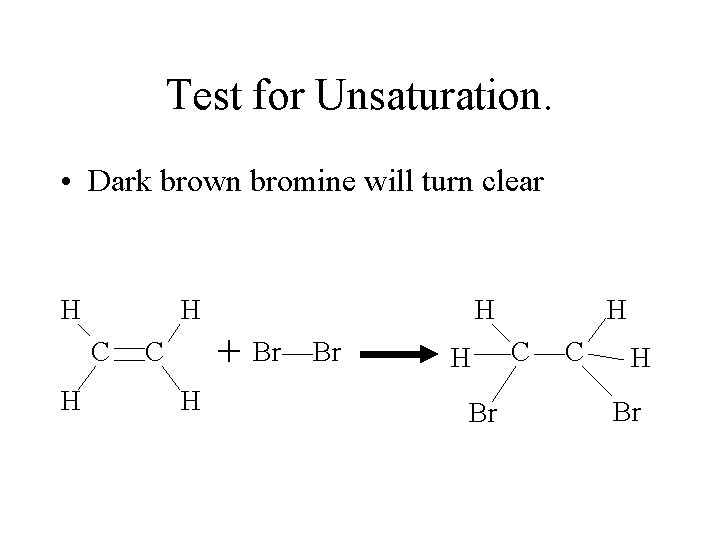
Test for Unsaturation. • Dark brown bromine will turn clear H H C H + C H Br Br
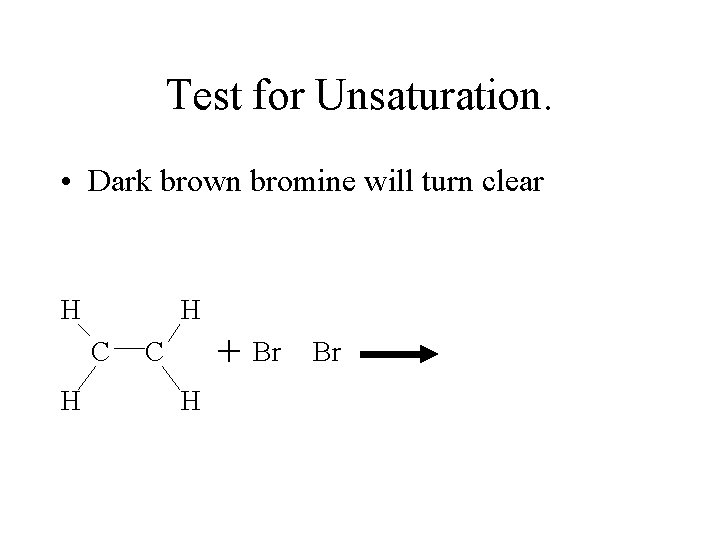
Test for Unsaturation. • Dark brown bromine will turn clear H H C H + C H Br Br
Test for Unsaturation. • Dark brown bromine will turn clear H H Br H C C H Br
Test for Unsaturation. • Dark brown bromine will turn clear H H C H H + C H Br Br H C C H Br
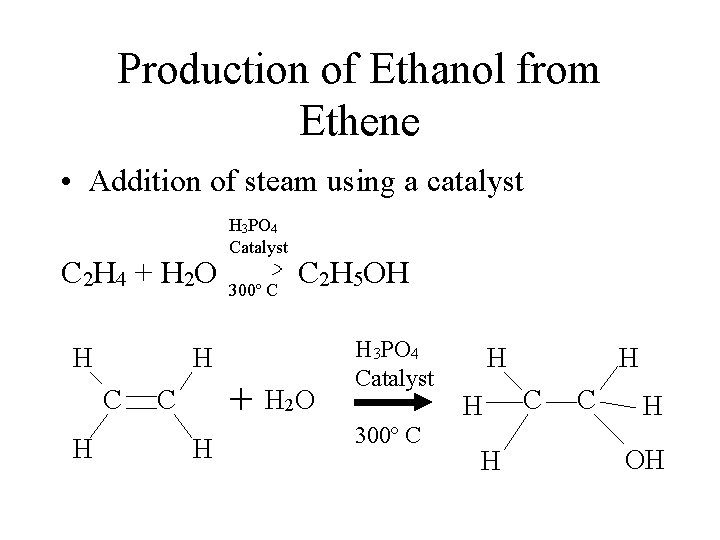
Production of Ethanol from Ethene • Addition of steam using a catalyst H 3 PO 4 Catalyst C 2 H 4 + H 2 O C 2 H 5 OH 300º C H H C H + C H H 2 O H 3 PO 4 Catalyst 300º C H H C C H OH
Production of Ethanol • Fermentation of sugar is still used to make alcoholic beverages – which is ethanol • Ethene method is used for ethanol for industrial purposes like solvents in cosmetics, pharmaceuticals and inks
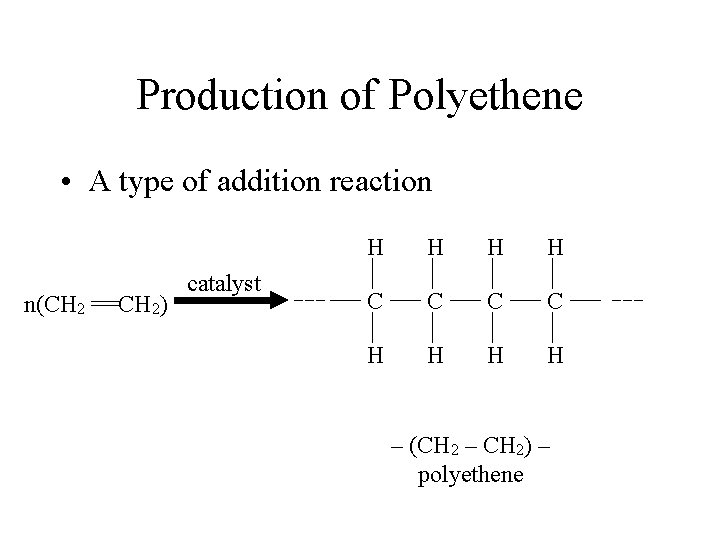
Production of Polyethene • A type of addition reaction n(CH 2 ==CH 2) catalyst H H C C H H – (CH 2 – CH 2) – polyethene
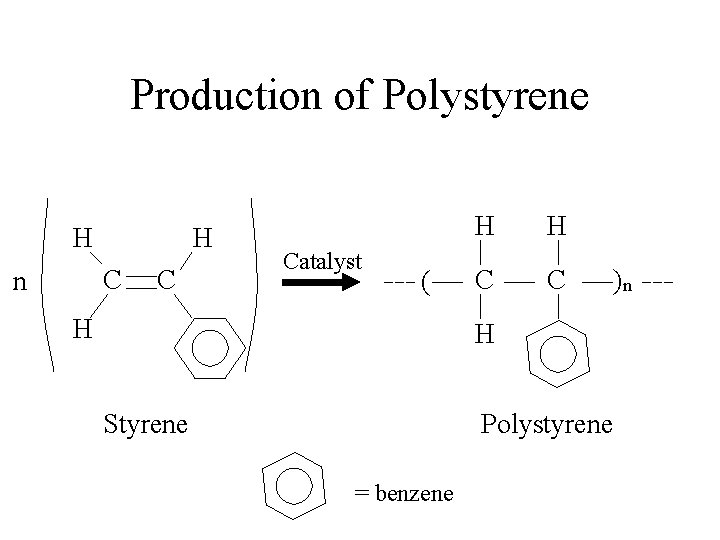
Production of Polystyrene H H C n C Catalyst ( H H H C C )n H Styrene Polystyrene = benzene
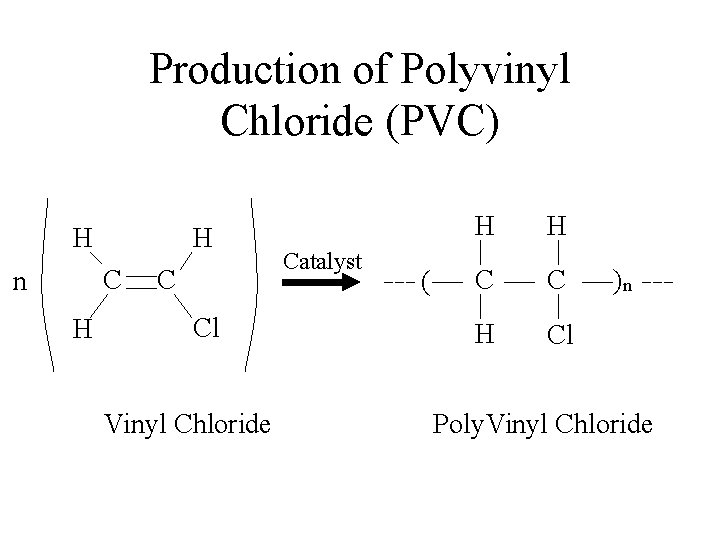
Production of Polyvinyl Chloride (PVC) H H C n H C Cl Vinyl Chloride Catalyst ( H H C C H Cl )n Poly. Vinyl Chloride