
1 of 12 Boardworks Ltd 2009 Making ethanol
1 of 12 © Boardworks Ltd 2009
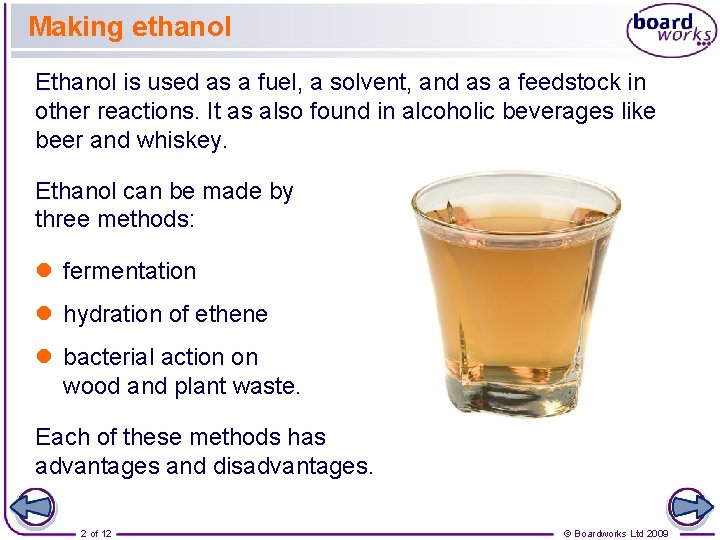
Making ethanol Ethanol is used as a fuel, a solvent, and as a feedstock in other reactions. It as also found in alcoholic beverages like beer and whiskey. Ethanol can be made by three methods: l fermentation l hydration of ethene l bacterial action on wood and plant waste. Each of these methods has advantages and disadvantages. 2 of 12 © Boardworks Ltd 2009
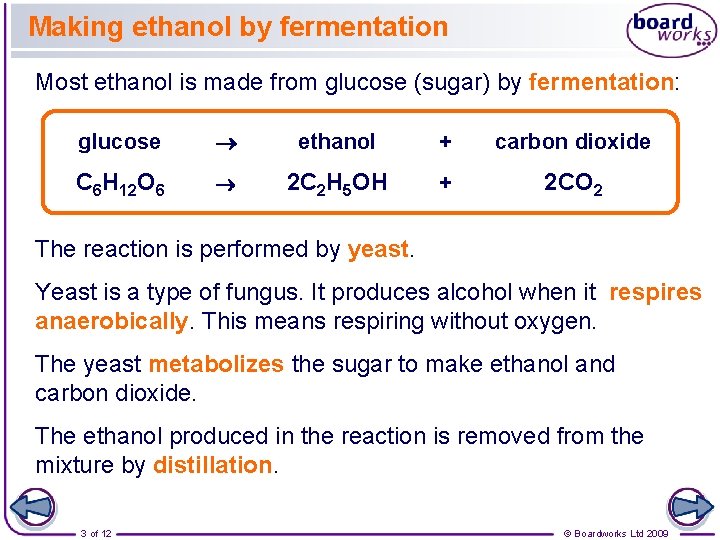
Making ethanol by fermentation Most ethanol is made from glucose (sugar) by fermentation: glucose ethanol + carbon dioxide C 6 H 12 O 6 2 C 2 H 5 OH + 2 CO 2 The reaction is performed by yeast. Yeast is a type of fungus. It produces alcohol when it respires anaerobically. This means respiring without oxygen. The yeast metabolizes the sugar to make ethanol and carbon dioxide. The ethanol produced in the reaction is removed from the mixture by distillation. 3 of 12 © Boardworks Ltd 2009
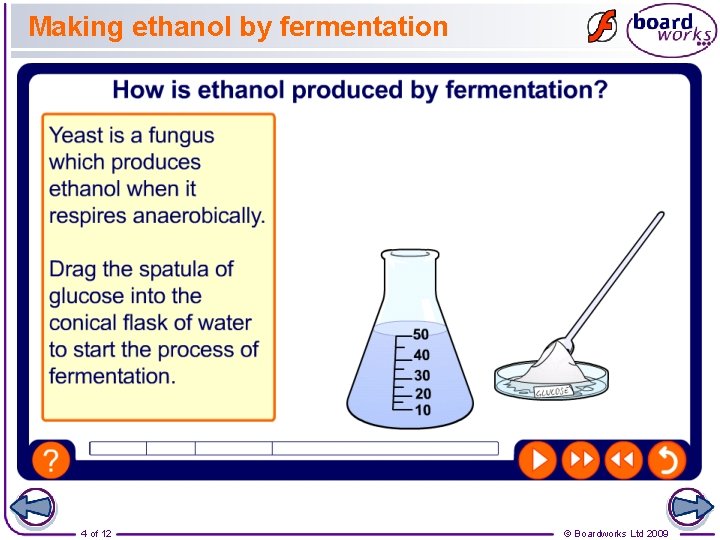
Making ethanol by fermentation 4 of 12 © Boardworks Ltd 2009
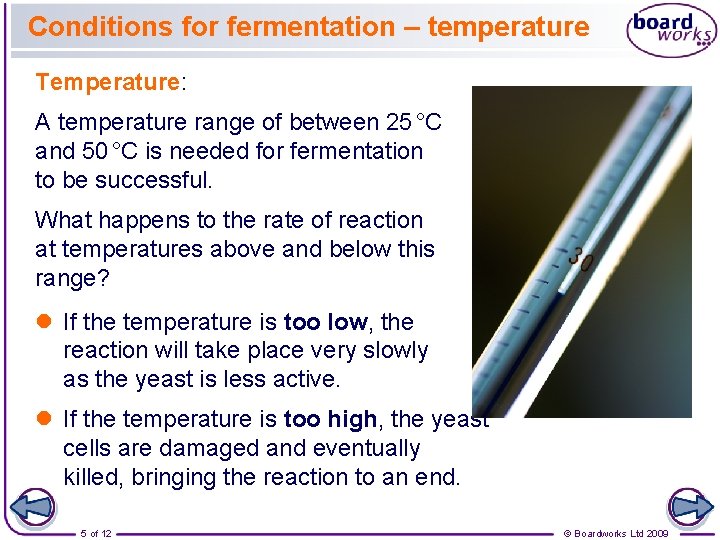
Conditions for fermentation – temperature Temperature: A temperature range of between 25 °C and 50 °C is needed for fermentation to be successful. What happens to the rate of reaction at temperatures above and below this range? l If the temperature is too low, the reaction will take place very slowly as the yeast is less active. l If the temperature is too high, the yeast cells are damaged and eventually killed, bringing the reaction to an end. 5 of 12 © Boardworks Ltd 2009

Conditions for fermentation – oxygen Oxygen: If oxygen is present in the mixture, the yeast will respire aerobically, creating only water and carbon dioxide. The presence of oxygen will also oxidize any ethanol that is made, to form ethanoic acid. Under some circumstances this reaction can be useful, for example, in turning wine into vinegar. 6 of 12 © Boardworks Ltd 2009
Conditions for fermentation 7 of 12 © Boardworks Ltd 2009
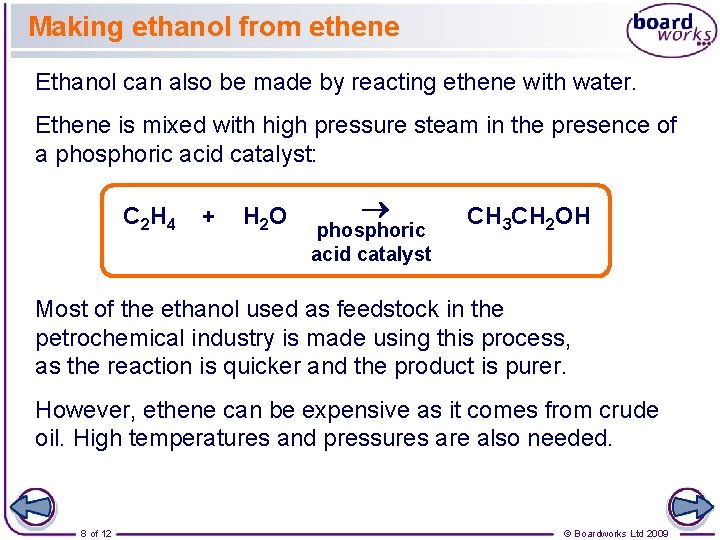
Making ethanol from ethene Ethanol can also be made by reacting ethene with water. Ethene is mixed with high pressure steam in the presence of a phosphoric acid catalyst: C 2 H 4 + H 2 O phosphoric acid catalyst CH 3 CH 2 OH Most of the ethanol used as feedstock in the petrochemical industry is made using this process, as the reaction is quicker and the product is purer. However, ethene can be expensive as it comes from crude oil. High temperatures and pressures are also needed. 8 of 12 © Boardworks Ltd 2009
Making ethanol from ethene 9 of 12 © Boardworks Ltd 2009
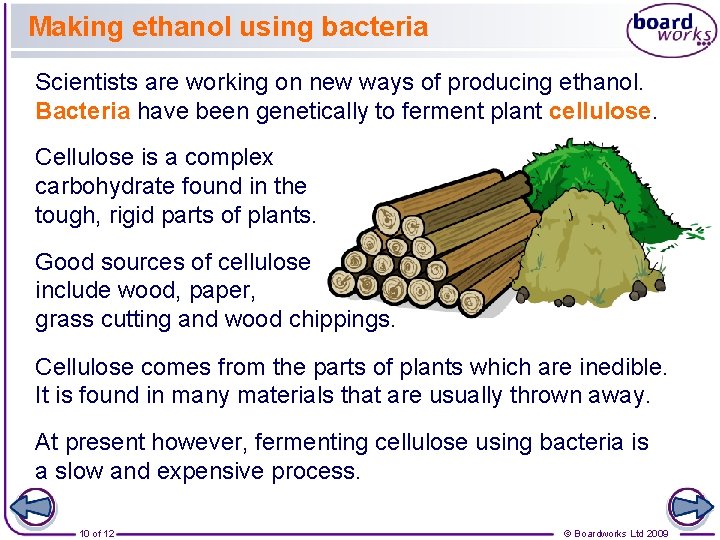
Making ethanol using bacteria Scientists are working on new ways of producing ethanol. Bacteria have been genetically to ferment plant cellulose. Cellulose is a complex carbohydrate found in the tough, rigid parts of plants. Good sources of cellulose include wood, paper, grass cutting and wood chippings. Cellulose comes from the parts of plants which are inedible. It is found in many materials that are usually thrown away. At present however, fermenting cellulose using bacteria is a slow and expensive process. 10 of 12 © Boardworks Ltd 2009
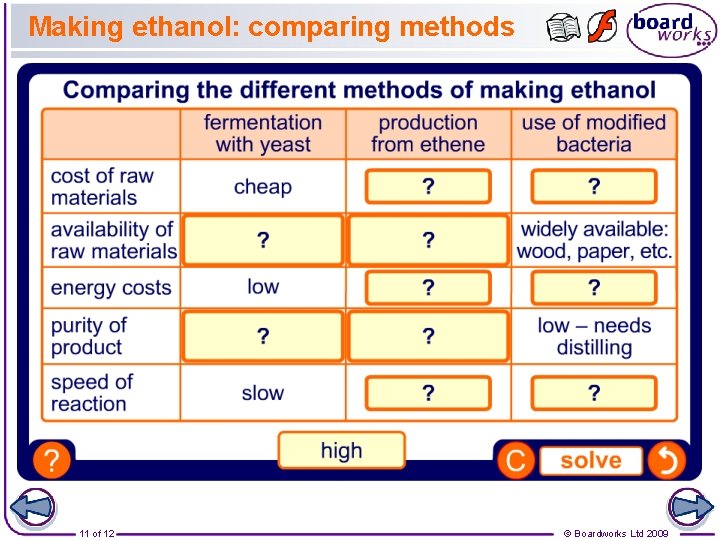
Making ethanol: comparing methods 11 of 12 © Boardworks Ltd 2009
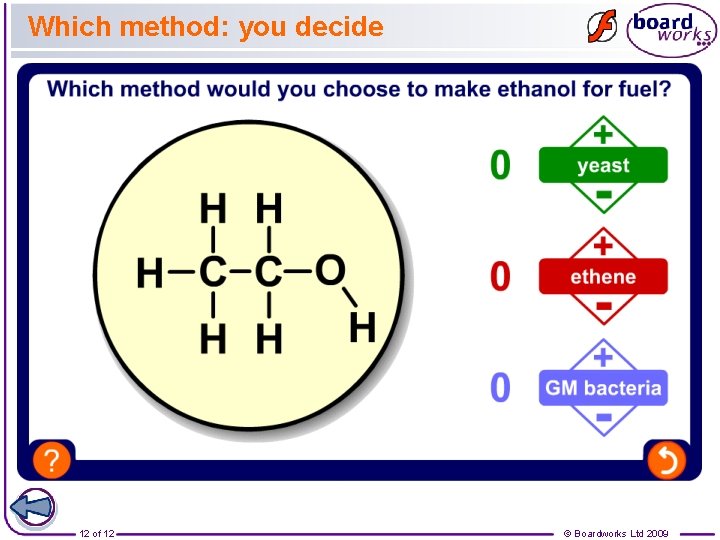
Which method: you decide 12 of 12 © Boardworks Ltd 2009
- Slides: 12