1914 1918 World War I ends the Old













































- Slides: 137
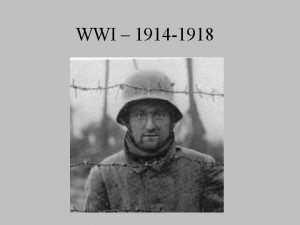
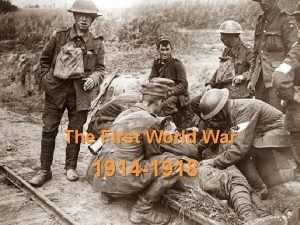
1914 -1918
World War I ends the ‘Old World” in Europe Countries still had ruling dynasties
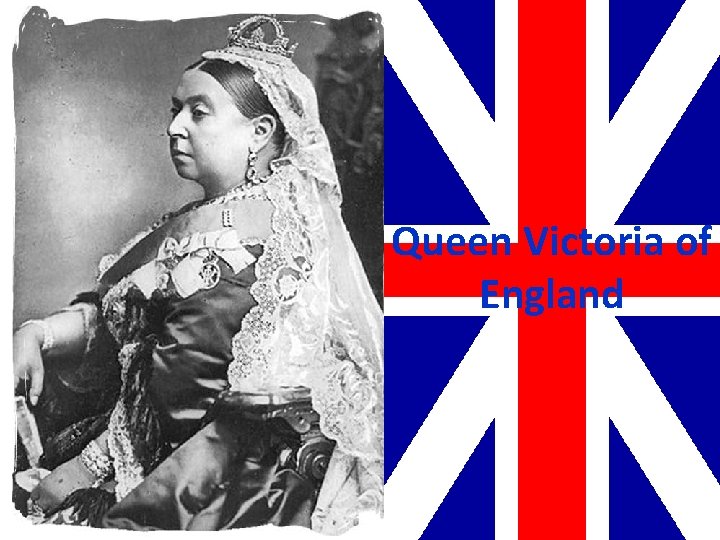
Queen Victoria of England
Victoria’s grandchildren: Maud-Queen of Norway Sophie-Queen of Greece Marie-Queen of Romania Alexandra-Czarina of Russia Wilhelm-Kaiser of Germany George-King of England
Tsar Nicolas and King George
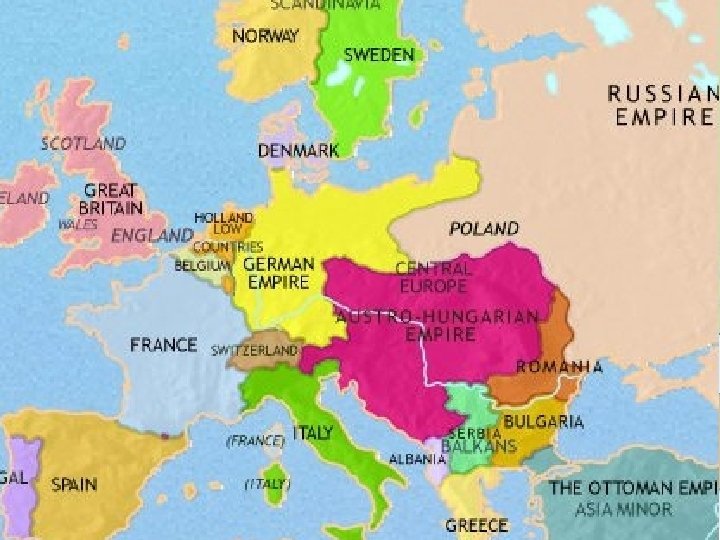
Dynasties that end in WWI Hohenzollern 1614 Prussia/Germany Romanov 1613 Russia Hapsburg 1452 Austria Ottoman Empire 1453 officially 637 unofficially
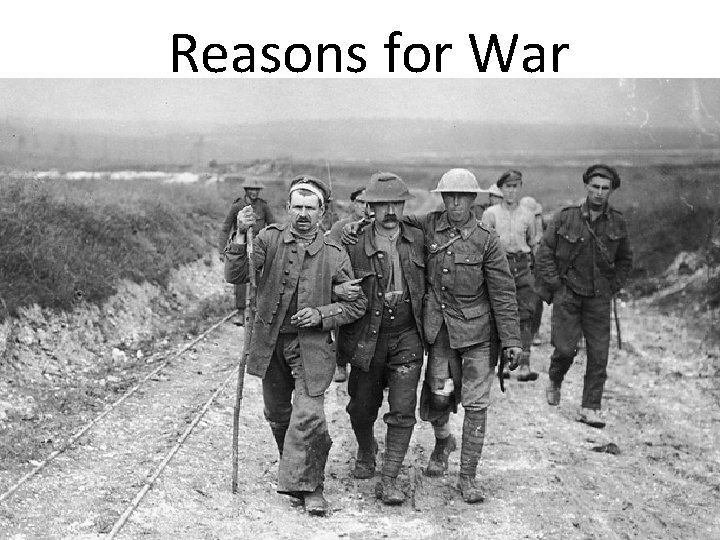
Reasons for War
External Pressures 1. Colonies pressure to gain and control land Africa China
Germany wants: A place in the Sun
2. Rivalries: *Austria vs. Russia-control of Balkans *France vs. Germany-Alsace. Lorraine *England vs. Germany-Navy
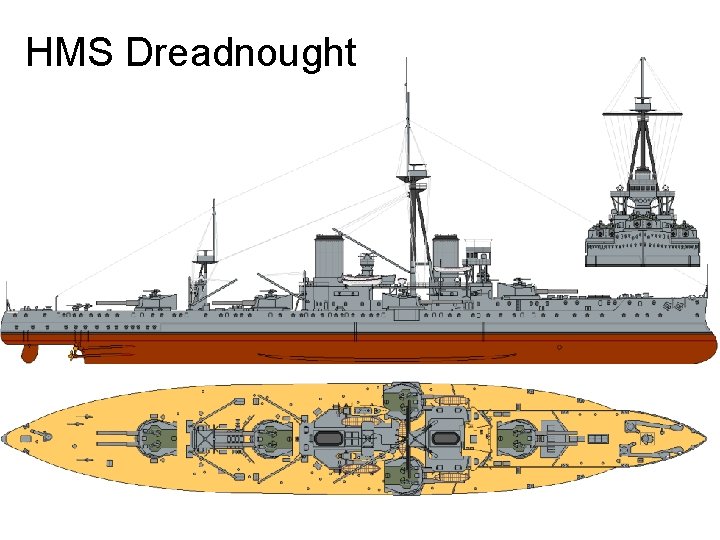
3. Armaments Countries spending 70 -150 million per year on weapons Dreadnought cost £ 4 or $22 m. Largest company in Europe: Krupp Steel
HMS Dreadnought
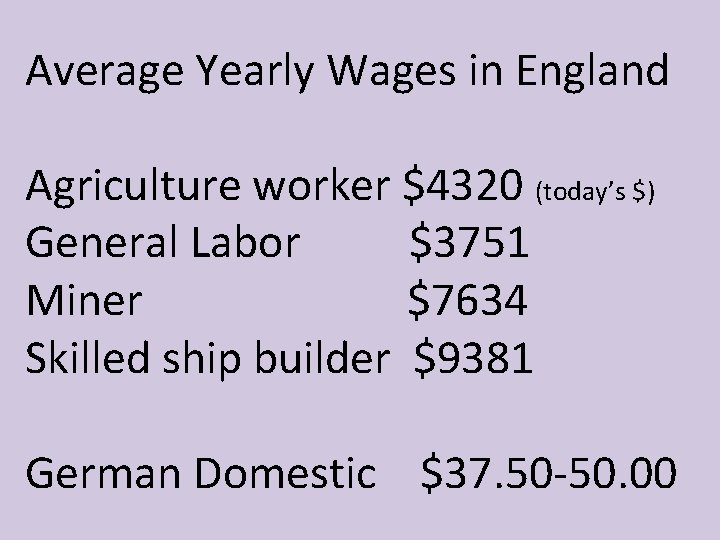
Internal Pressures Class Struggle Industrial Revolution causes great disparity of wealth
Average Yearly Wages in England Agriculture worker $4320 (today’s $) General Labor $3751 Miner $7634 Skilled ship builder $9381 German Domestic $37. 50 -50. 00
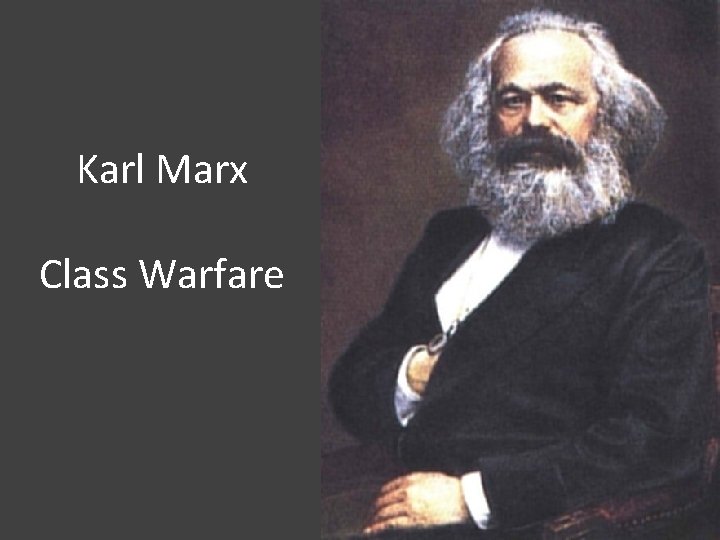
Karl Marx Class Warfare
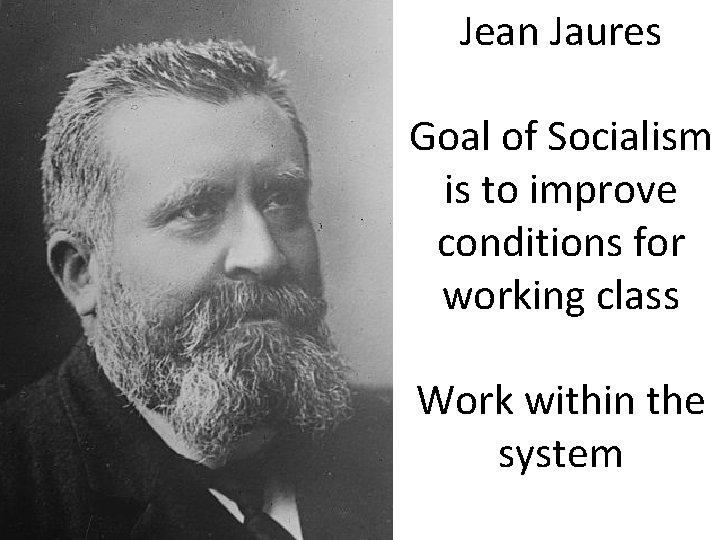
Jean Jaures Goal of Socialism is to improve conditions for working class Work within the system
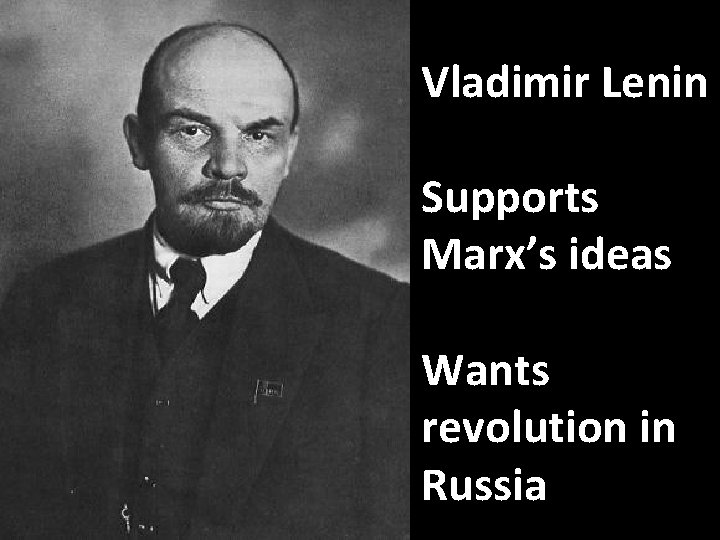
Vladimir Lenin Supports Marx’s ideas Wants revolution in Russia
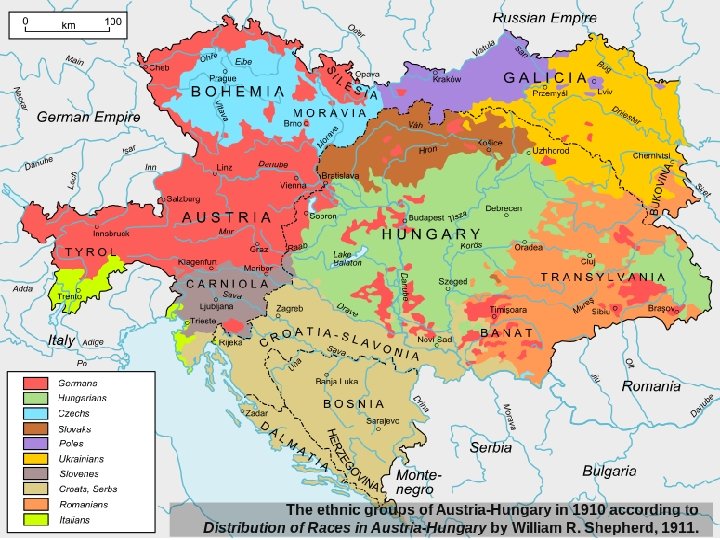
Nationalism: love of country or desire for own country Old World Empires rule other ethnic groups Austria-Hungary has many groups within borders
Serbs in southern A-H want to be part of the country of Serbian separatist group the Black Hand
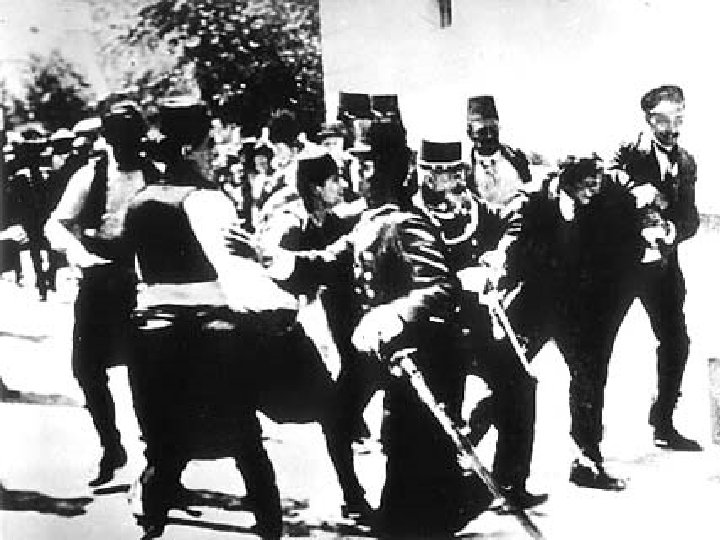
Austrian heir Franz Ferdinand goes to Sarajevo
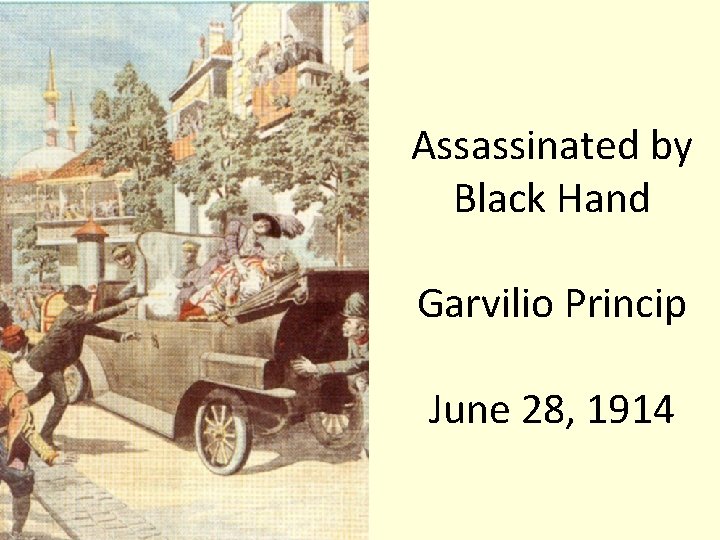
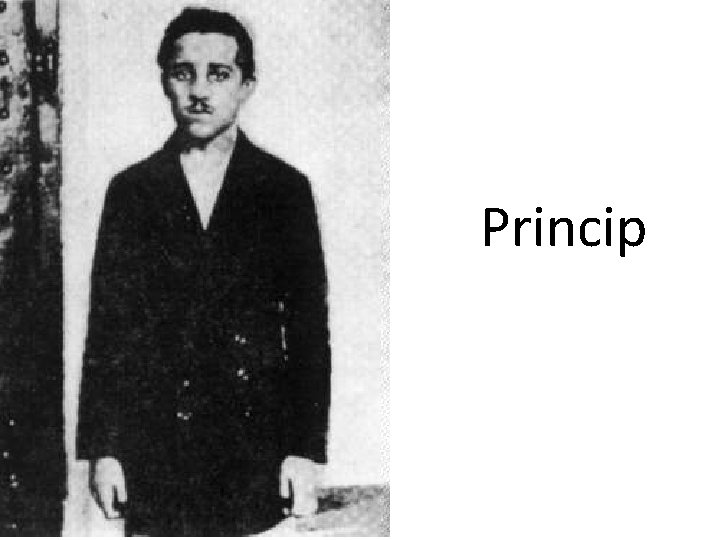
Assassinated by Black Hand Garvilio Princip June 28, 1914
Princip
Austria views this as an opportunity to solve the ‘Serbia problem’ Gets ‘Blank check from Germany’
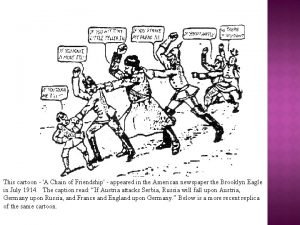
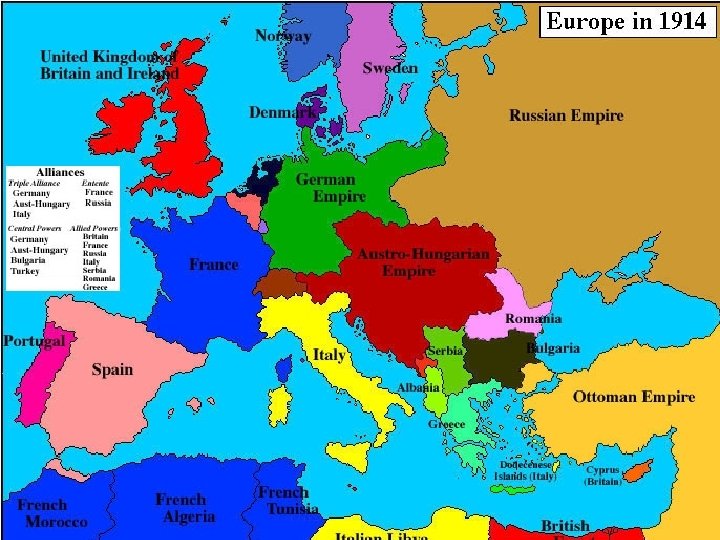
Austria declares war on Serbia Russia declares war on Austria Germany backs up Austria France backs up Russia England waits Italy backs out of the Central Powers
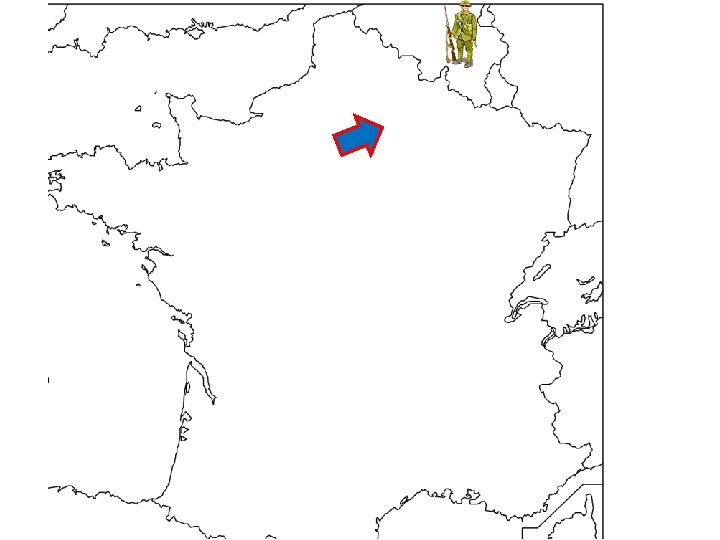
Schiefflen Plan • Hold Russians at bay on the eastern front • Sweep thru neutral Belgium and attack Paris (brings England into war • This should take 6 weeks • After France is defeated, turn attention to Russia.
German Assumptions *Russia needed at least six weeks to mobilize *France could be defeated in six weeks *Belgium would not resist *England not an issue
Leave holding force in East
FRANCE Plan 17 ATTACK!!!!
Elan – spirit Cran - guts
“A victorious army first wins then seeks battle; a defeated army first battles then seeks victory. ” Sun Tzu Art of War
Invasion of Belgium brings England into the war against Germany. England has small army but big navy and the Empire
Right wing of German Army wheels left at an angle that is too sharp. This brings the German in front of Paris instead of behind
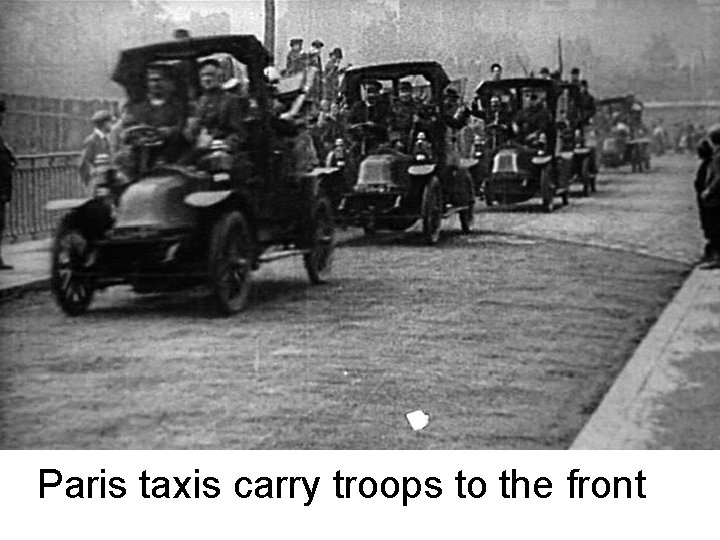
Paris taxis carry troops to the front
Battle of the Marne • September 6 -12, 1914 • Stops German advance to Paris 30 miles short of Paris • Makes the stalemate possible • Destroys Schiefflen plan’s timetable
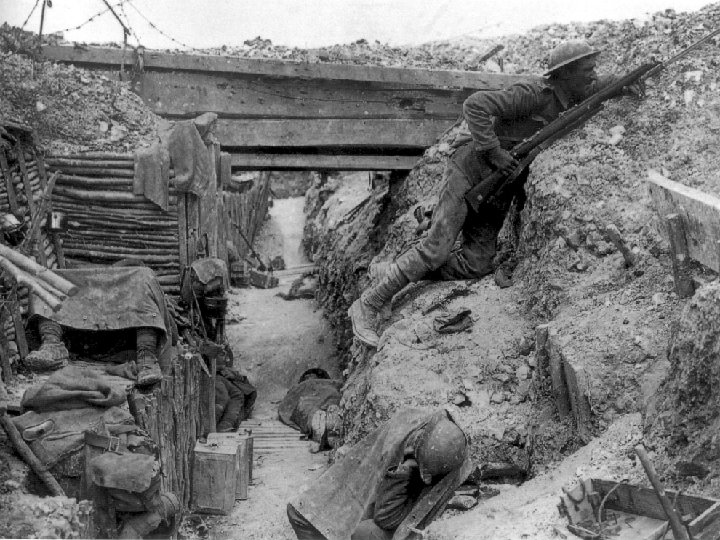
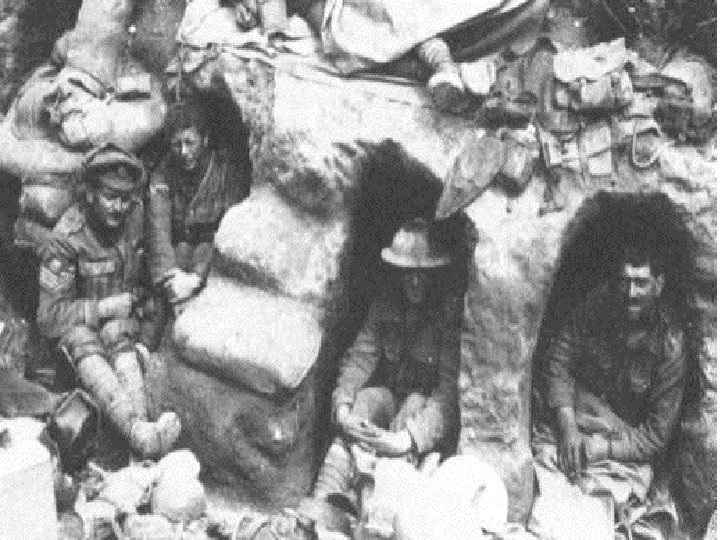
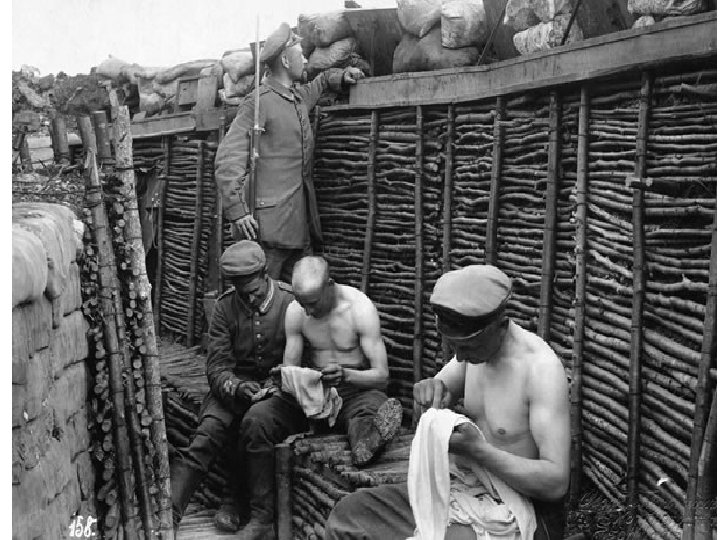
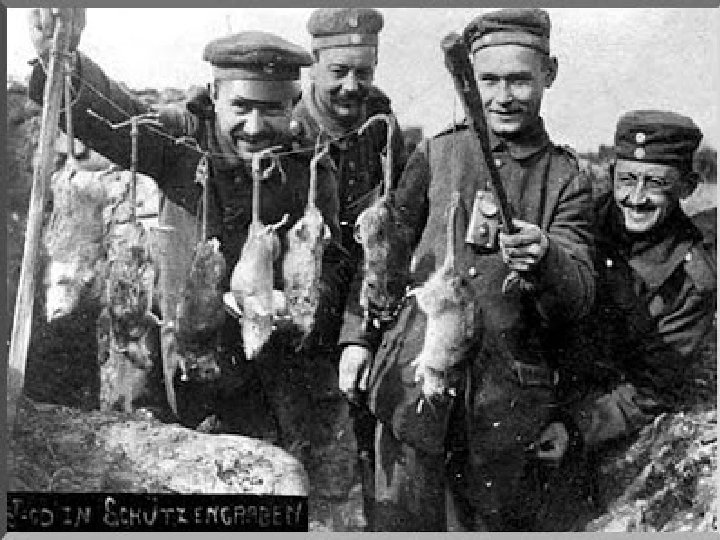
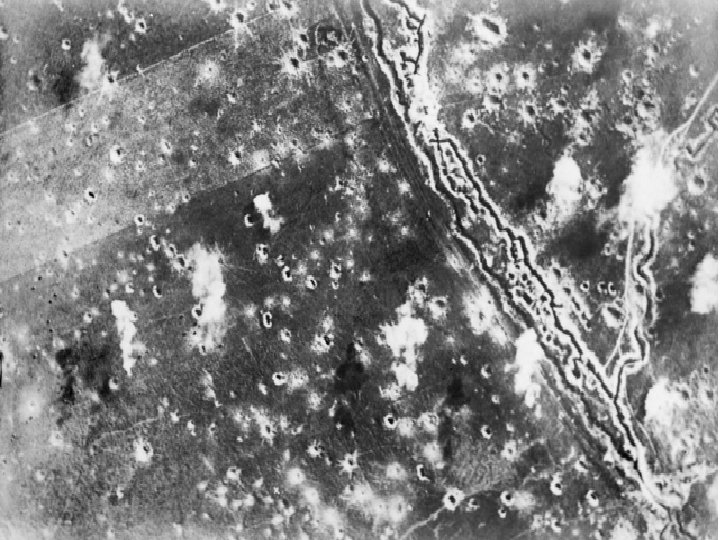
Legacy of the Marne Each side digs a series of trenches from Channel to Switzerland
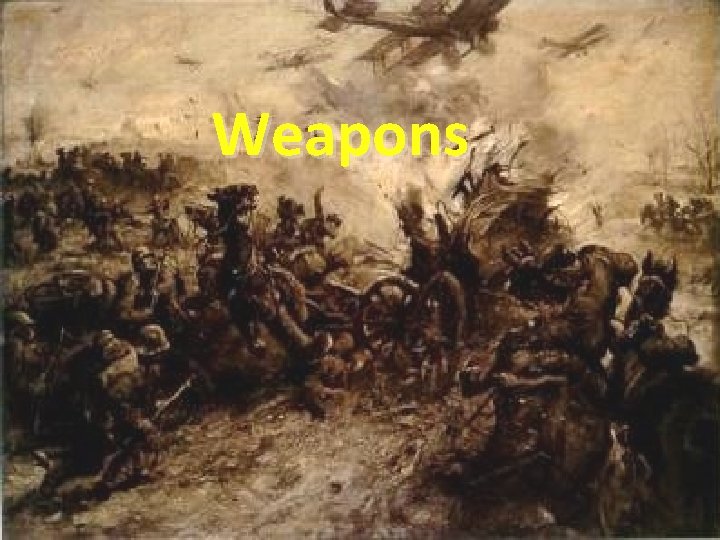
Weapons
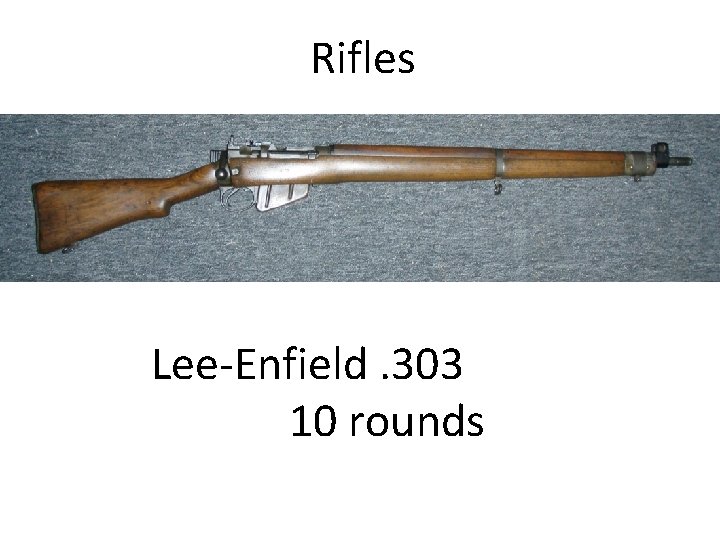
Rifles Lee-Enfield. 303 10 rounds
French Lebel Model 1886 8 rounds
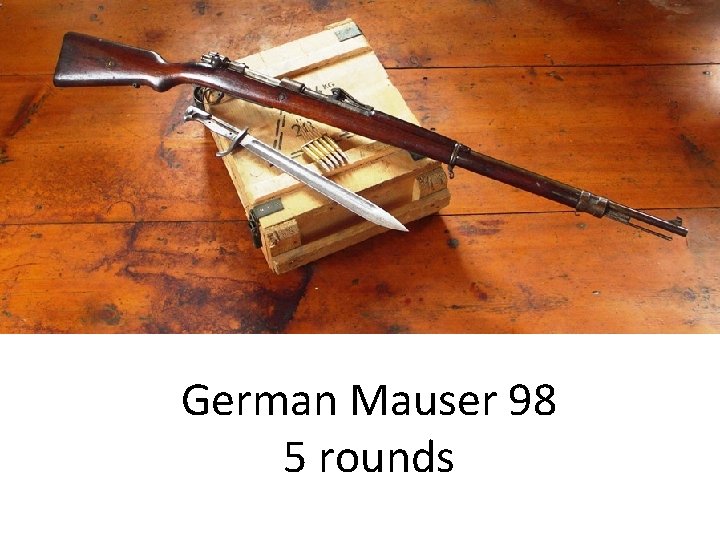
German Mauser 98 5 rounds
Rifles have an effective range of 800 -1000 yards Accurate to 400 yards
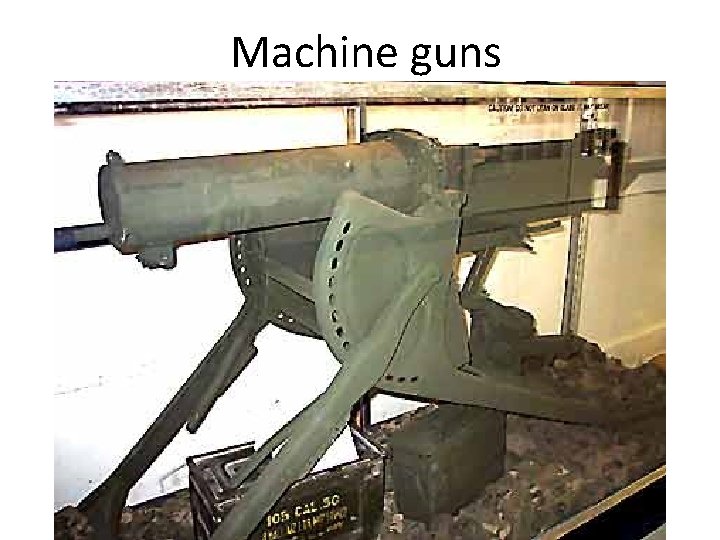
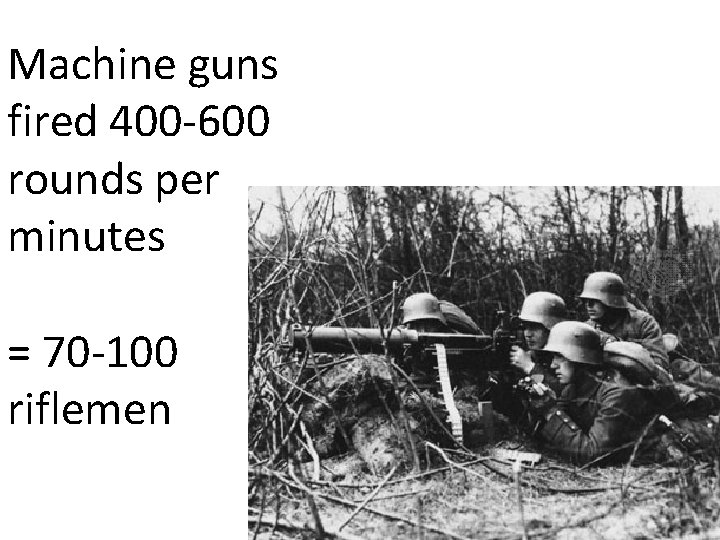
Machine guns
Machine guns fired 400 -600 rounds per minutes = 70 -100 riflemen
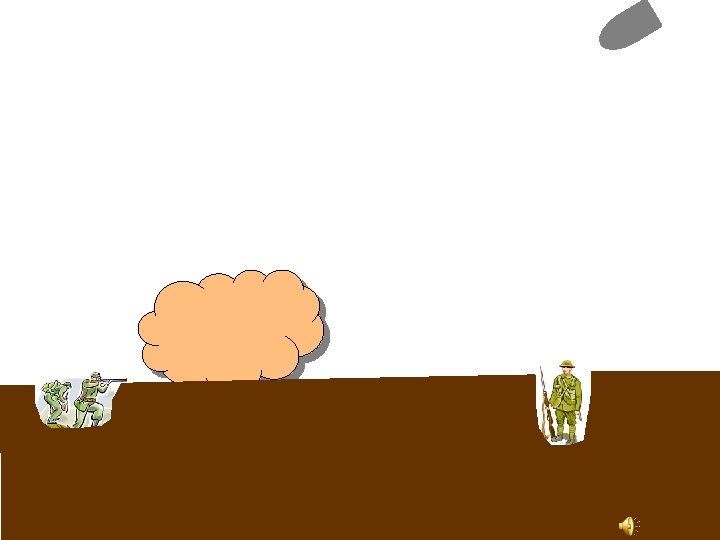
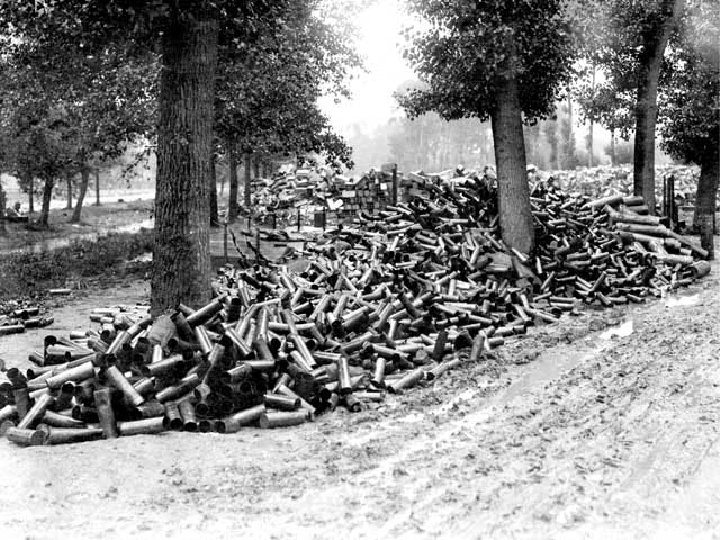
Artillery Range: 300 yards to 9 miles Shells from 15 pounds to 1 ton
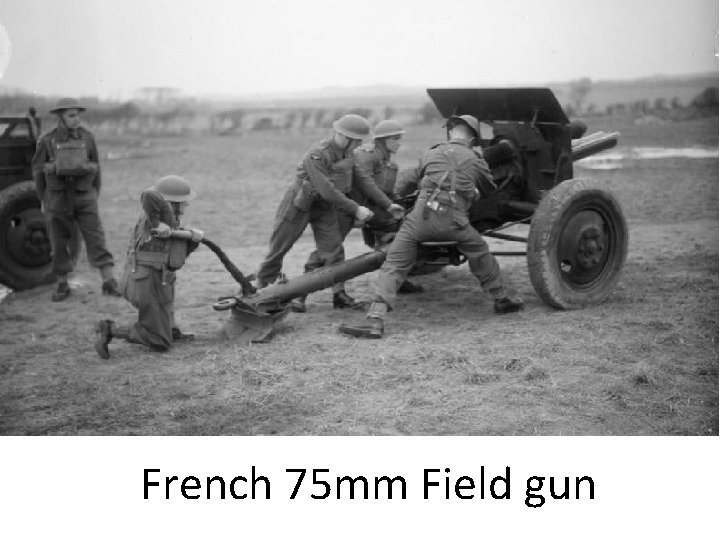
French 75 mm Field gun
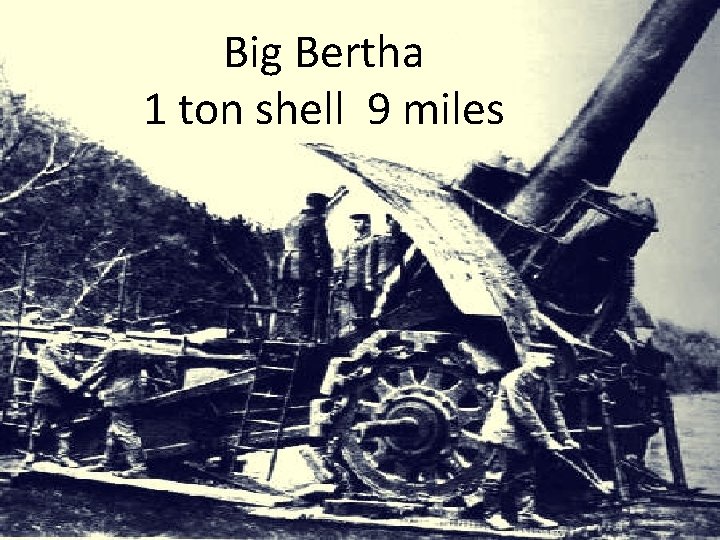
Big Bertha 1 ton shell 9 miles
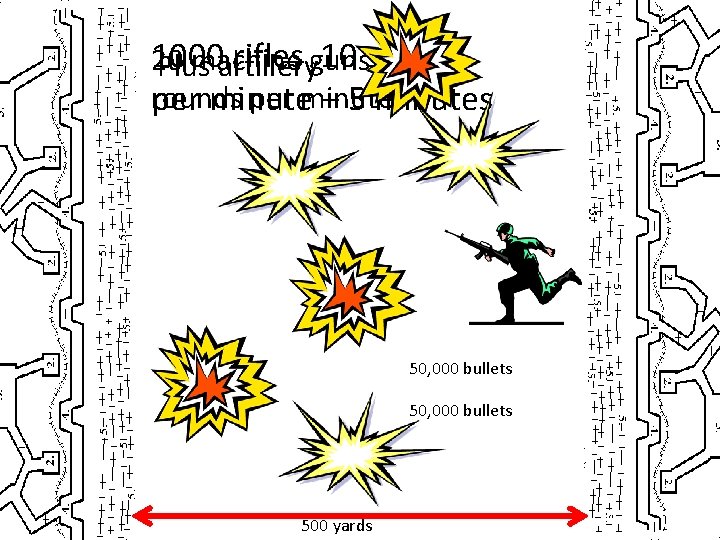
1000 rifles guns 10 shots 20 machine 500 Plus artillery rounds per minute – 5 minutes 50, 000 bullets 500 yards
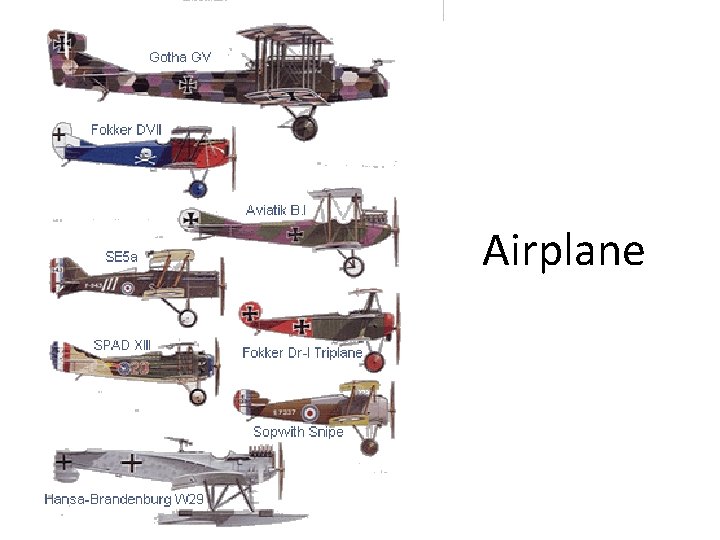
Airplane
Fokker Dr-1 Triplane The Red Baron
Poison gas
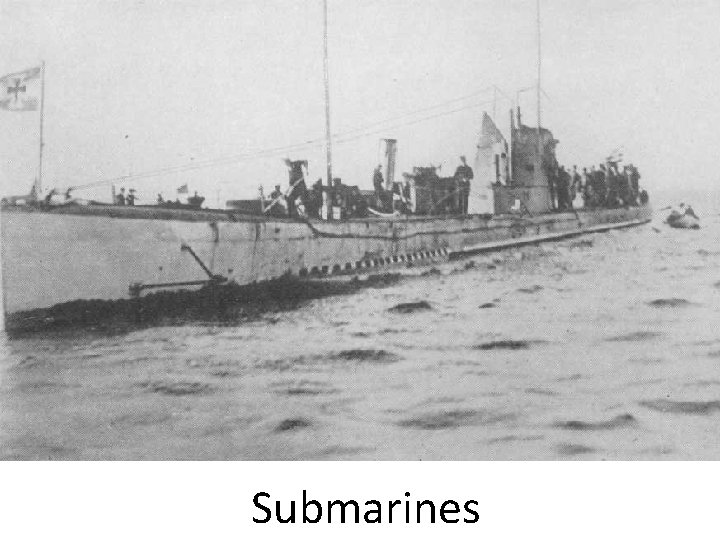
Submarines
Eastern Front • Battle of Tannenberg- August 1914 • Hindenburg and Ludendorff of Germany defeat Samsonov of Russia • Only 10, 000 of 150, 000 Russians escape. • Ends Russia as a major power in World War I
Battle of Verdun • Longest Battle of the War • February 21, 1916: 1, 400 guns on a 8 mile front rain 100, 000 shells an hour on Verdun. • Causalities- French 550, 000, German 434, 000. • Very little territory is exchanged
“It is never beneficial to a nation to have a military operation continue for a long time” Sun Tzu
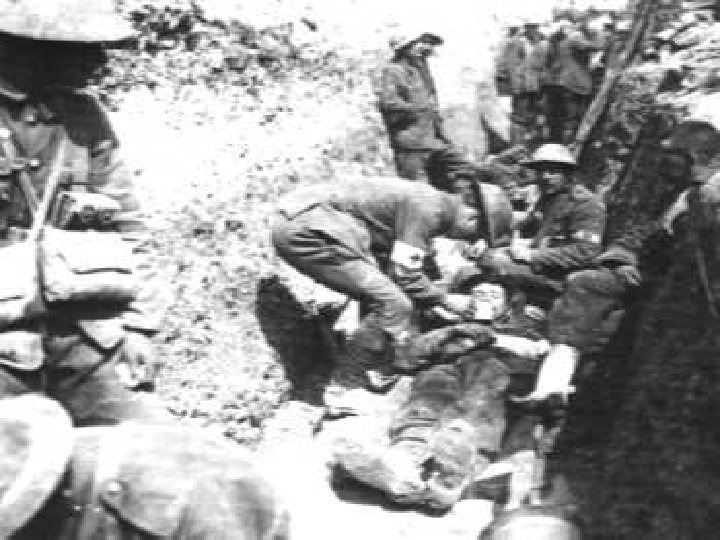
Battle of the Somme *July 1 – Nov 18, 1916 *To take pressure of France at Verdun *58, 000 casualties the first day, mostly in new Pals units
Grimsby Chums 100 of 800 unwounded at the Somme
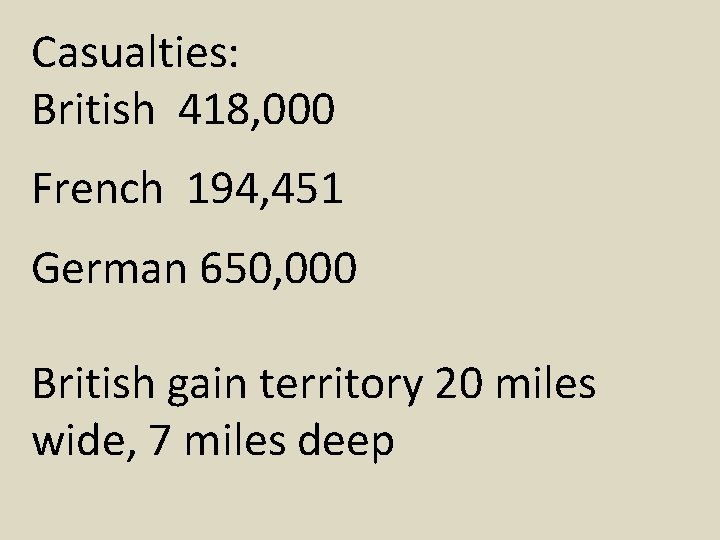
Casualties: British 418, 000 French 194, 451 German 650, 000 British gain territory 20 miles wide, 7 miles deep
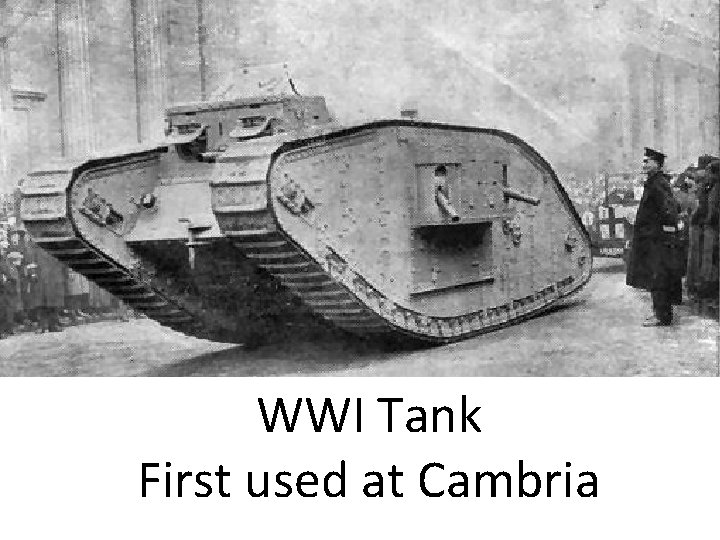
WWI Tank First used at Cambria
England hopes to break stalemate in the West by moves in the East
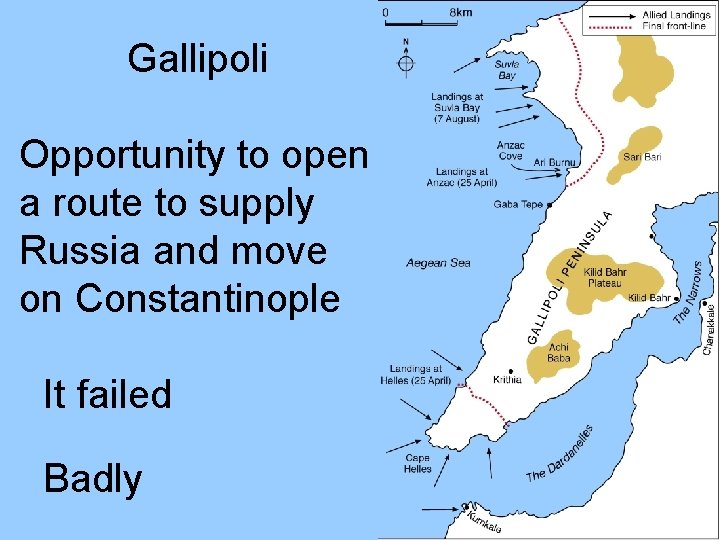
Gallipoli Opportunity to open a route to supply Russia and move on Constantinople It failed Badly
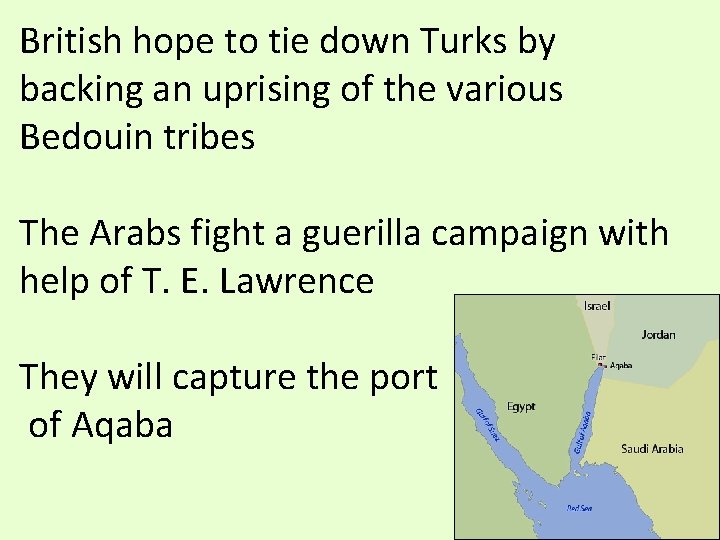
British hope to tie down Turks by backing an uprising of the various Bedouin tribes The Arabs fight a guerilla campaign with help of T. E. Lawrence They will capture the port of Aqaba
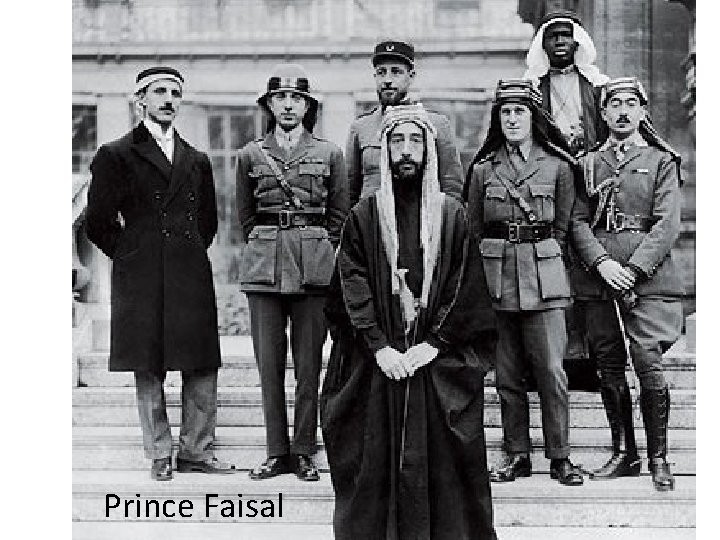
Prince Faisal
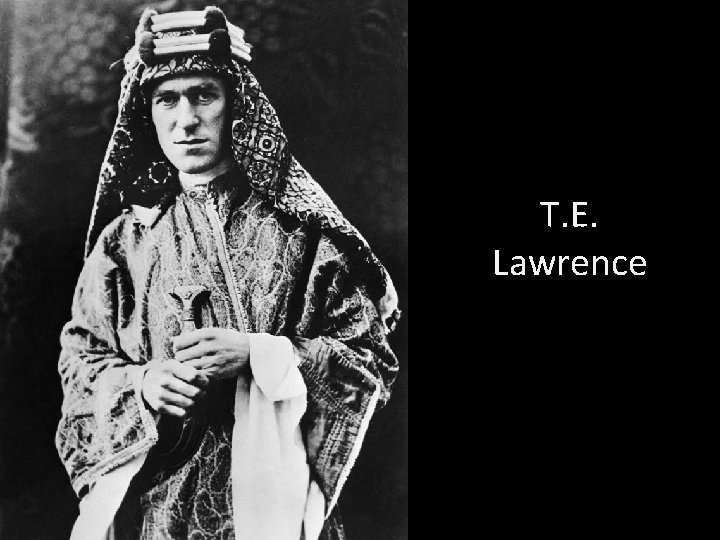
T. E. Lawrence
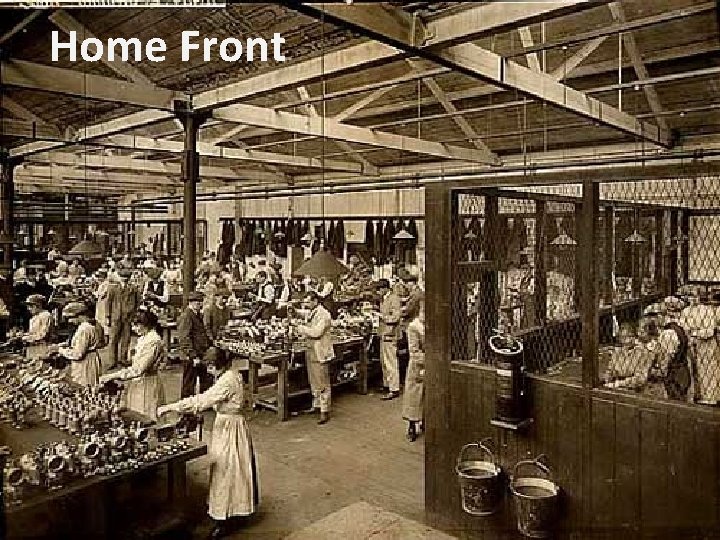
Home Front
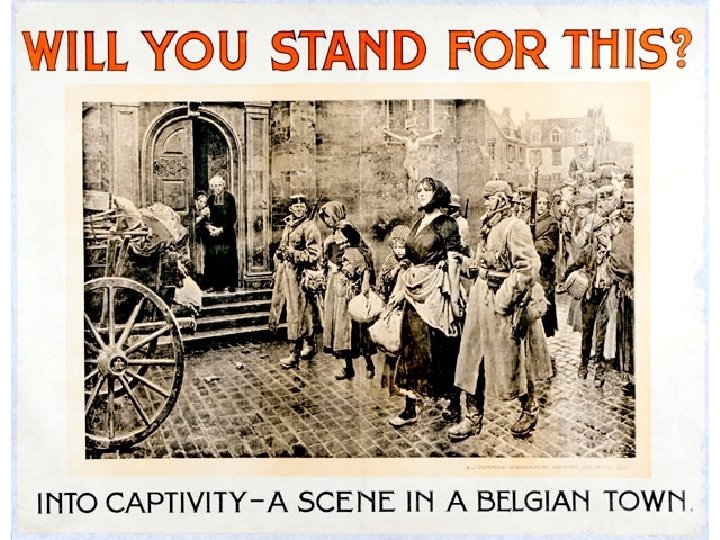
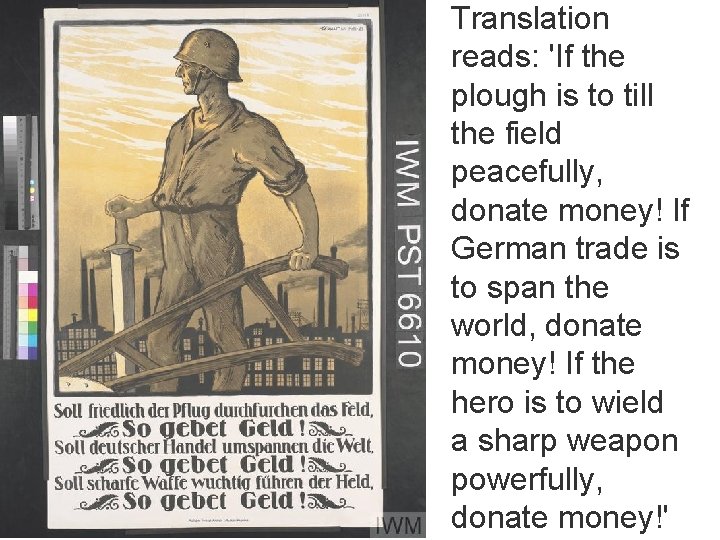
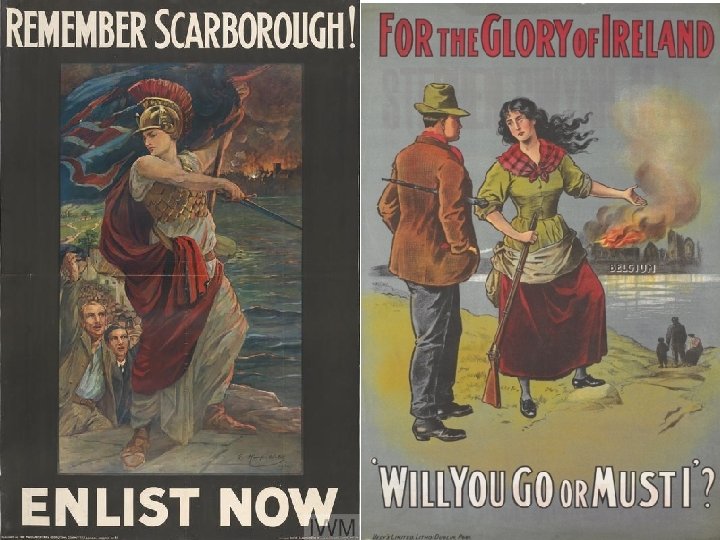
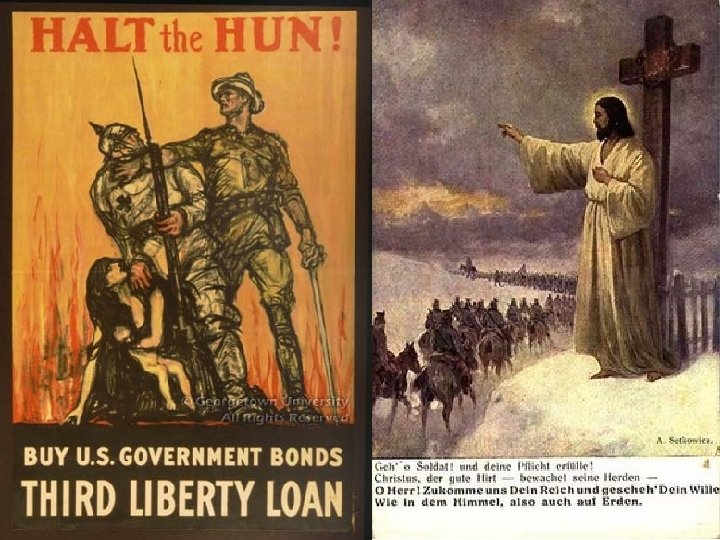
Translation reads: 'If the plough is to till the field peacefully, donate money! If German trade is to span the world, donate money! If the hero is to wield a sharp weapon powerfully, donate money!'
Translation reads: 'If the enemy’s hate and army win, the workplaces will stand empty. Before closed doors, you’ll have to tie up your bundles in hunger. '
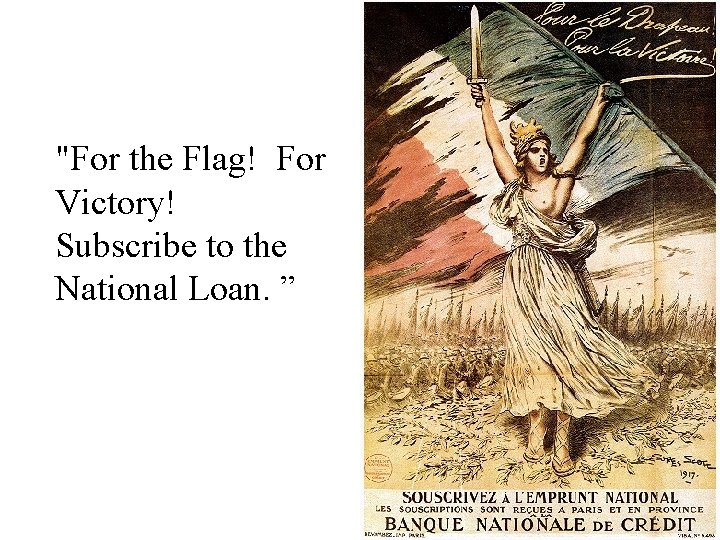
"For the Flag! For Victory! Subscribe to the National Loan. ”
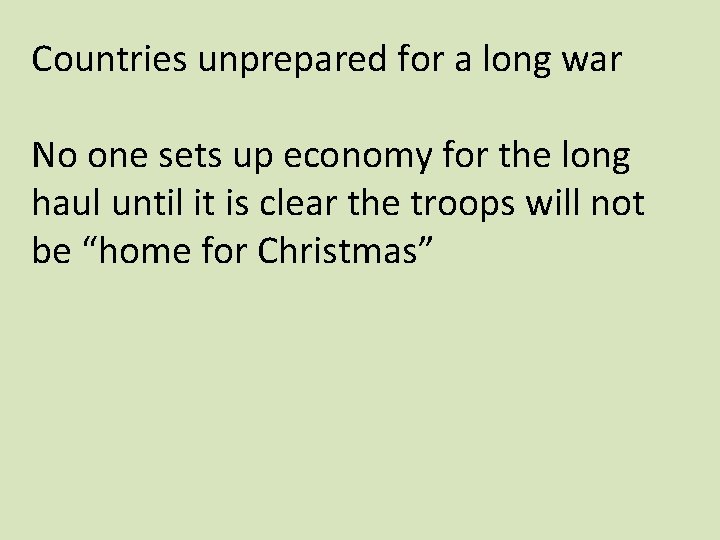
Countries unprepared for a long war No one sets up economy for the long haul until it is clear the troops will not be “home for Christmas”
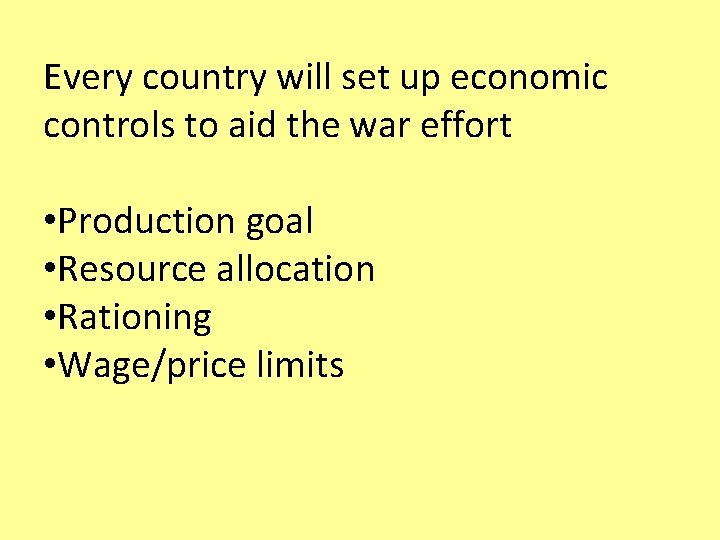
Every country will set up economic controls to aid the war effort • Production goal • Resource allocation • Rationing • Wage/price limits
Germany goes the farthest under the economic leadership of Walter Rathenau
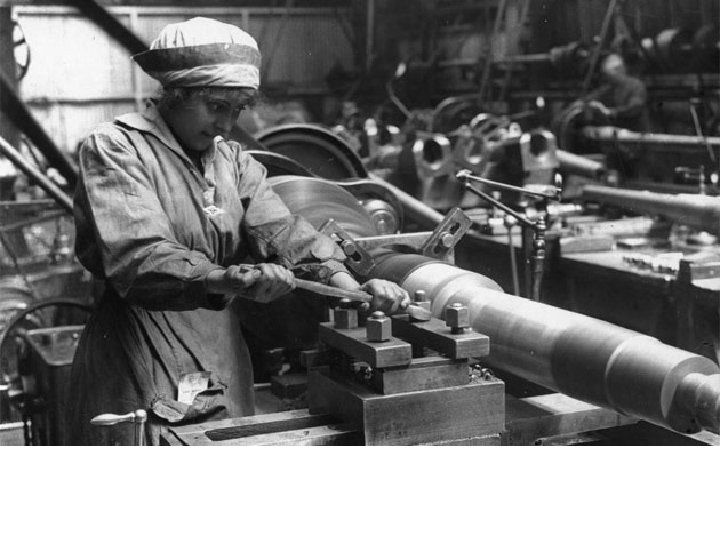
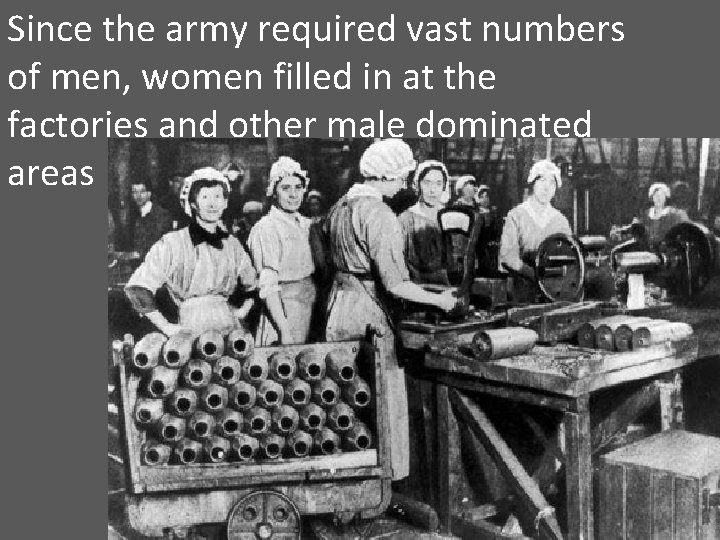
The need for labor greatly expands the role of women in society Go to work in defense plants doing skilled labor Also become more visible in public as bank tellers, post office
Since the army required vast numbers of men, women filled in at the factories and other male dominated areas
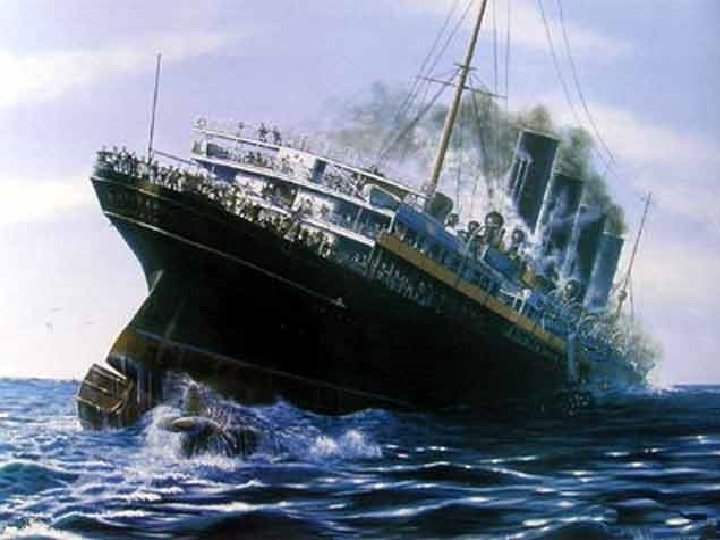
Unrestricted Submarine Warfare
H. M. S. Lusitania
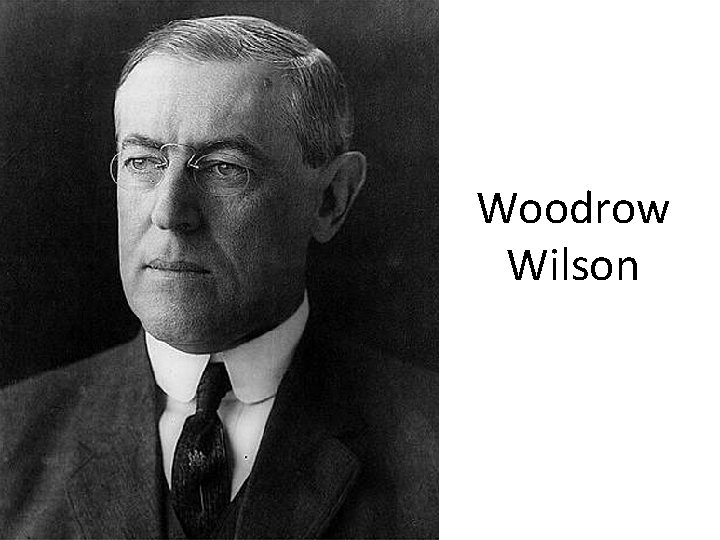
Woodrow Wilson
American Action • The Battle of Chateau-Thierry & Belleau-Wood- June 6 -26, 1918 Stops last German offensive • Attack Argonne on September 26, 1918 • 1 Million Americans fight • Big reason for the armistice
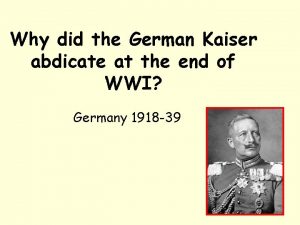
End of War Ludendorf resigns 10/27/18 Mutiny at Kiel 11/3/1918 Uprisings in German cities Kaiser Wilhelm abdicates his throne 11/9/1918 • War ends 11/11/1918 • •
Mutiny at Kiel
Kaiser Wilhelm abdicates and flees to Holland
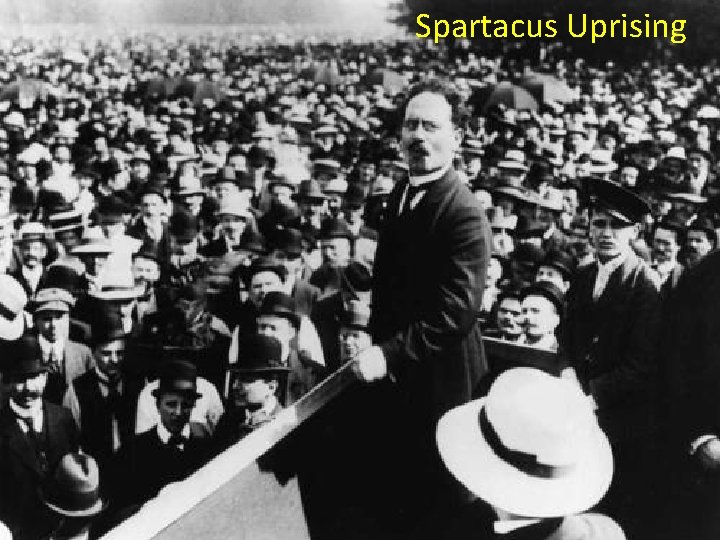
Spartacus Uprising
Peace Conference at Versailles
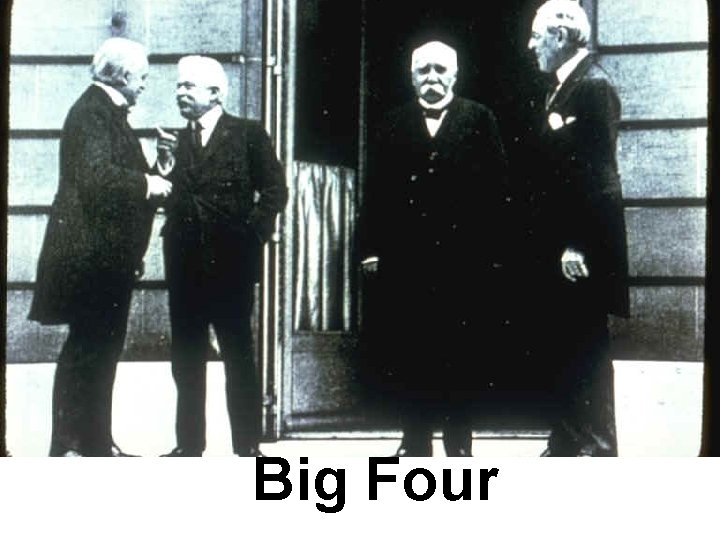
Big Four *David Lloyd George – England *Georges Clemenceau – France *Vittorio Orlando – Italy *Woodrow Wilson - US Germany not invited!!!
Big Four
Clemenceau and Lloyd George want Germany to suffer Need Germany to pay $ to offset cost of war
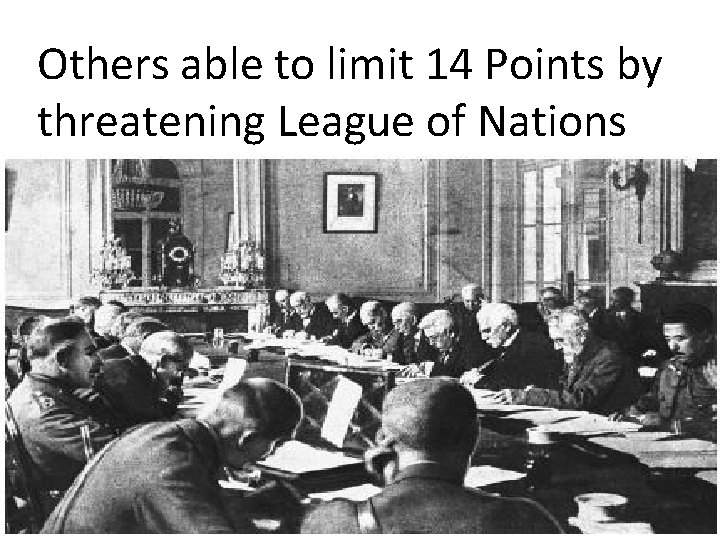
Others able to limit 14 Points by threatening League of Nations
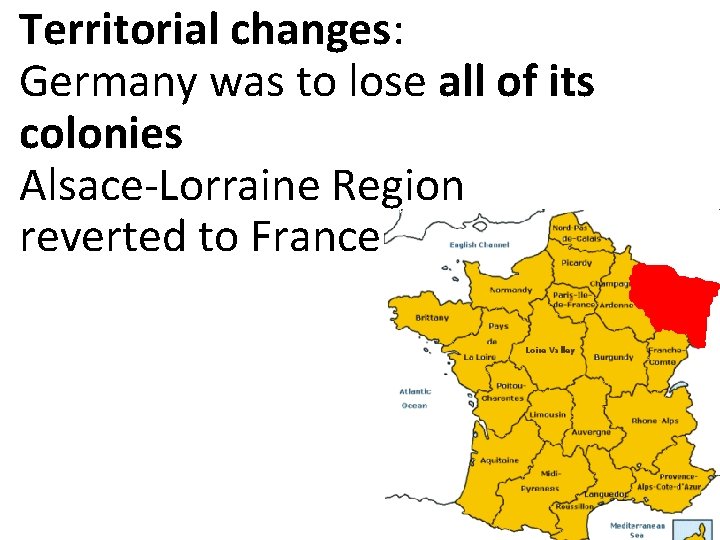
Territorial changes: Germany was to lose all of its colonies Alsace-Lorraine Region reverted to France
New Nations that were created by the Treaty: Yugoslavia-created from Austro-Hungary territory included Serbia and Montenegro. Czechoslovakia-from part of German lands and part of Russian lands Four new nations were created Finland Latvia Estonia Lithuania
War Guilt Clause Germany would accept blame for the starting the war.
Monetary Compensation: Germany was required to pay $5 Billion in reparations within two years and an unnamed sum later
Limitations On Germany Conscription and a reserve army were abolished in Germany Manufacture of heavy artillery, tanks, military airplanes, poison gas, battleships over 10, 000 tons, and submarines was forbidden.
3 MAJOR PROBLEMS CAUSED BY THESE PROVISIONS The first problem resulting from the treaty was the isolation of Russia from Western Europe by buffer states along its western borders this also prevented the rights of remaining national minorities
The second problem was that the treaty left the Germany Economy so weak that people became bitter toward the Weimar Republic and left the door open for a dictator
The third problem was that it eliminated the opportunity to include Germany in the planning stages of the League of Nations which later led to the League's demise
Senate led by Republican Henry Cabot Lodge defeat Treaty Signed separate Peace w/ Germany in 1921 US never joins the League
Versailles ends the war but not the problems Marshall Foch predicted Versailles would only stop the troubles for 20 years
He missed by only a few months
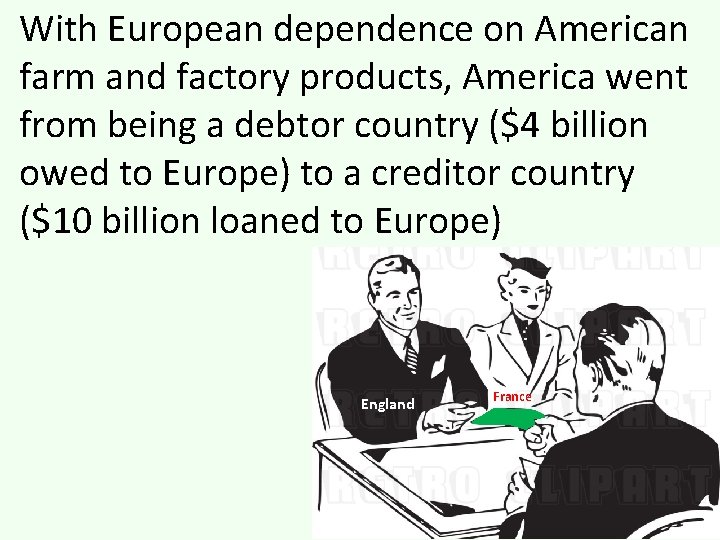
With European dependence on American farm and factory products, America went from being a debtor country ($4 billion owed to Europe) to a creditor country ($10 billion loaned to Europe) England France
Europeans are forced to borrow since no tax system could generate the volume of capital needed to fund the war effort This debt would force taxes to remain high after the war in order to pay off the debt
In the period before and at the start of the war there was burst of nationalistic literature Charles Peguy Rupert Brooke
As the war goes on a feeling of hopelessness and despair is evident in much of the writings, particularly among the war poets like Siegfried Sassoon and Wilfred Owen will write Anthem for Doomed Youth
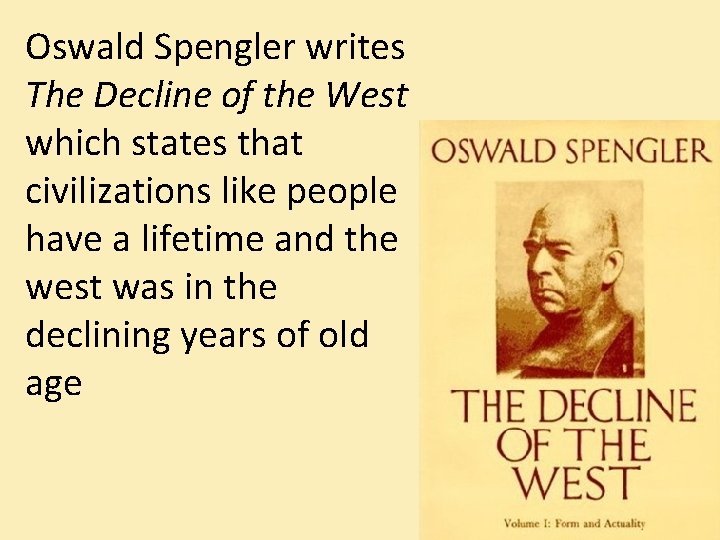
Oswald Spengler writes The Decline of the West which states that civilizations like people have a lifetime and the west was in the declining years of old age
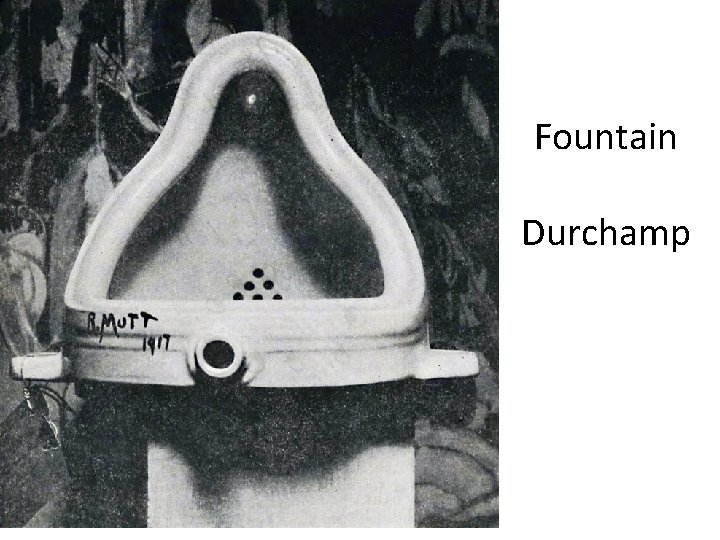
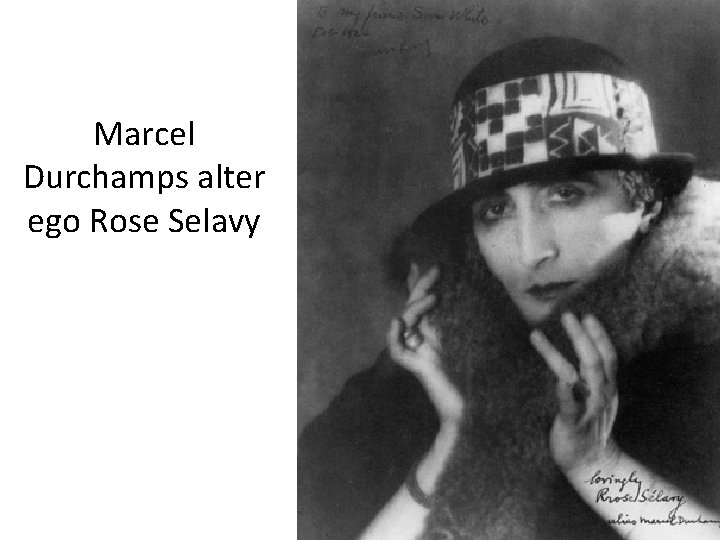
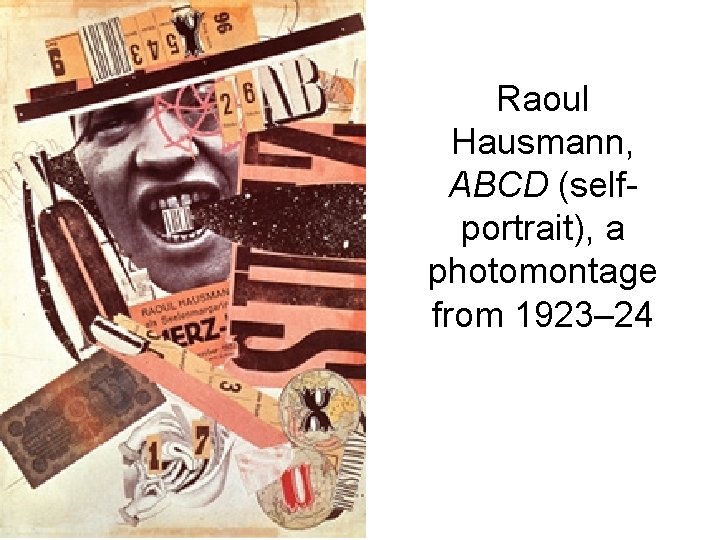
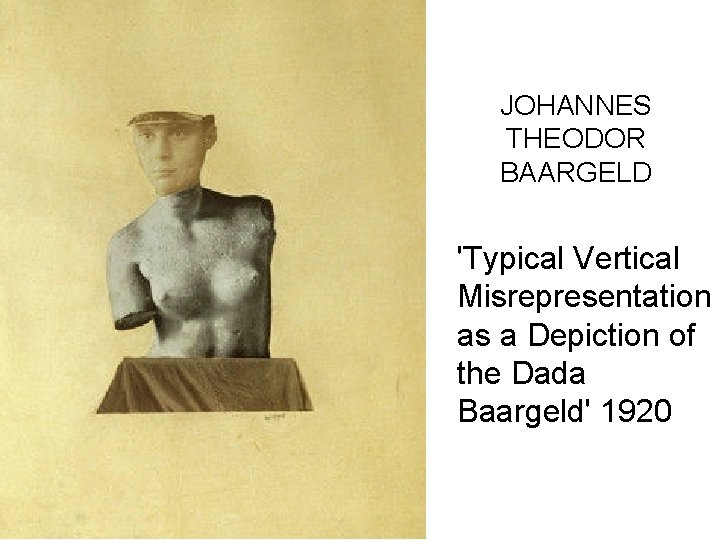
Dadaism Art reaction to the war ‘anti-art’ Shows the meaninglessness of life
Fountain Durchamp
Marcel Durchamps alter ego Rose Selavy
Mechanical Head Hausmenn
Cut with the Dada Kitchen Knife through the Last Weimar Beer-Belly Cultural Epoch in Germany Hannah Hoch
Raoul Hausmann, ABCD (selfportrait), a photomontage from 1923– 24
JOHANNES THEODOR BAARGELD 'Typical Vertical Misrepresentation as a Depiction of the Dada Baargeld' 1920
MAX ERNST 'Murdering Airplane' 1920