Upper GI Disorders Peptic Ulcer Disease 1 2

- Slides: 86
Upper GI Disorders Peptic Ulcer Disease 1
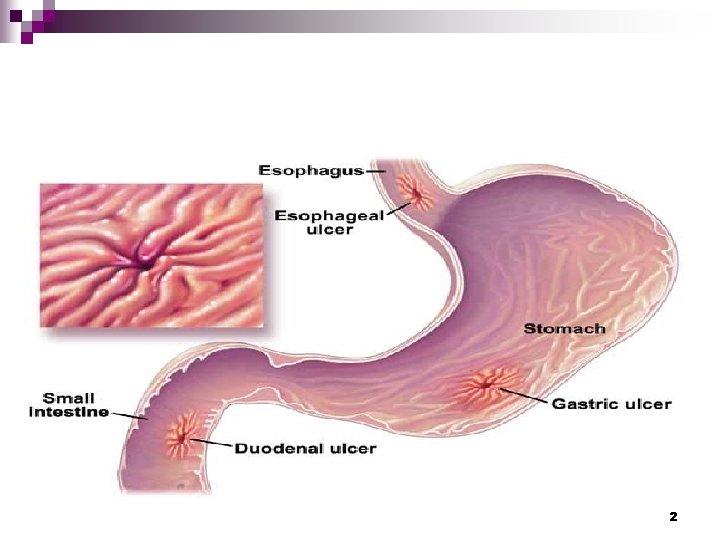
2
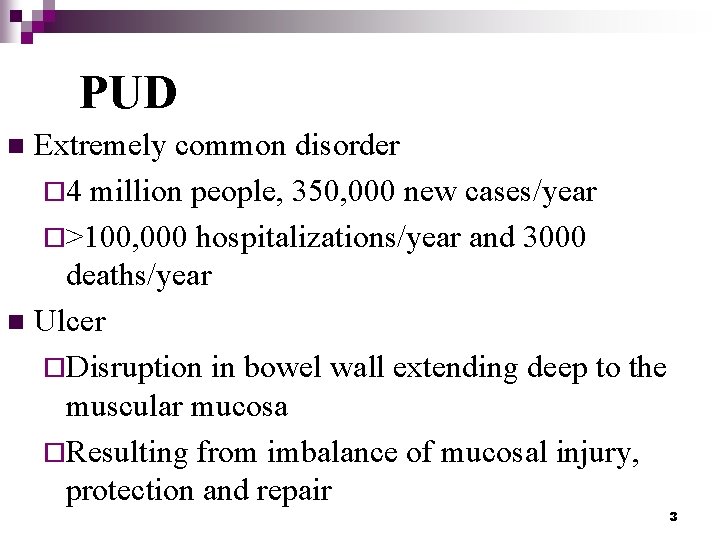
PUD Extremely common disorder ¨ 4 million people, 350, 000 new cases/year ¨>100, 000 hospitalizations/year and 3000 deaths/year n Ulcer ¨Disruption in bowel wall extending deep to the muscular mucosa ¨Resulting from imbalance of mucosal injury, protection and repair n 3
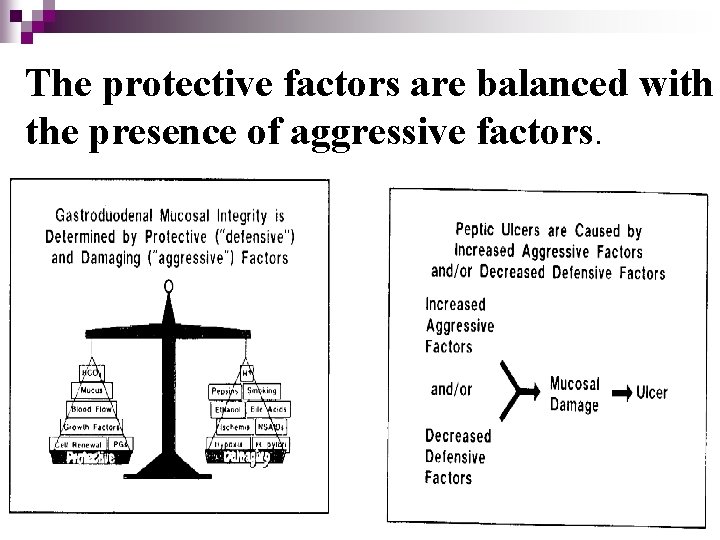
The protective factors are balanced with the presence of aggressive factors. 15
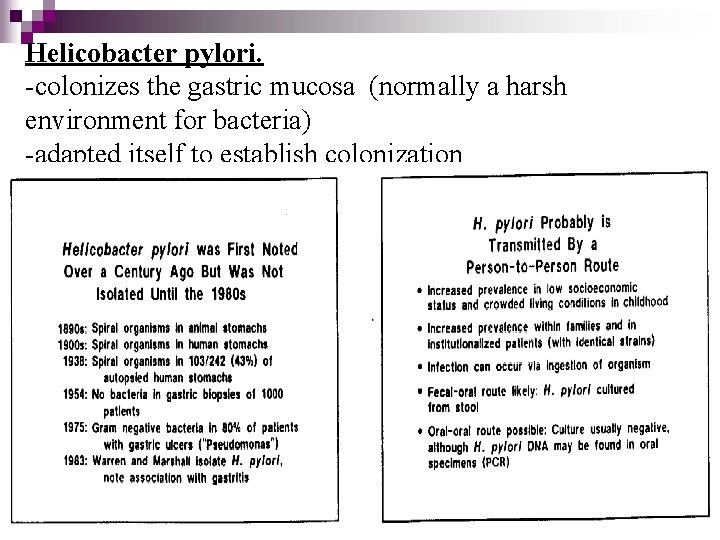
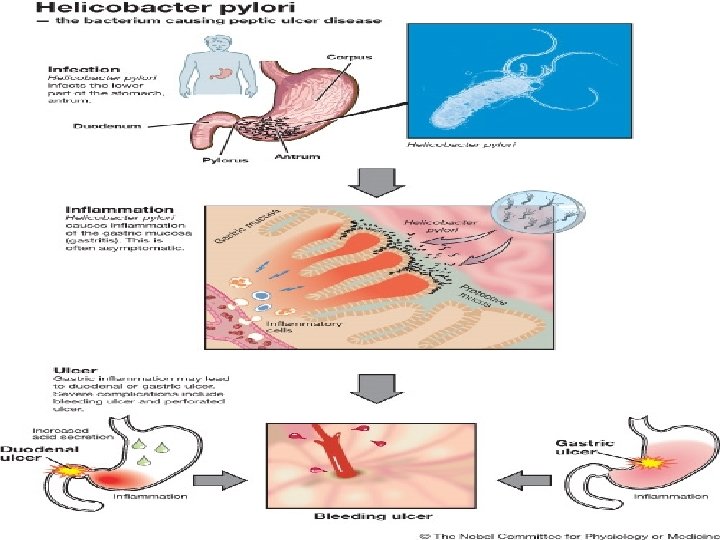
Helicobacter pylori. -colonizes the gastric mucosa (normally a harsh environment for bacteria) -adapted itself to establish colonization 16
17
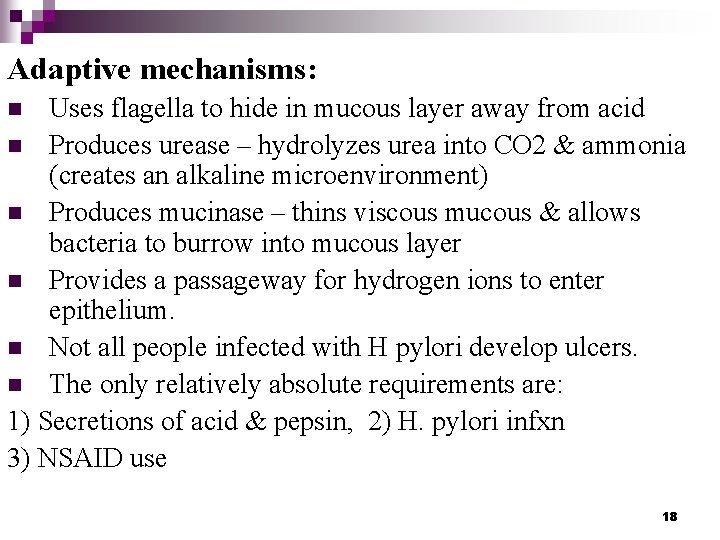
Adaptive mechanisms: Uses flagella to hide in mucous layer away from acid n Produces urease – hydrolyzes urea into CO 2 & ammonia (creates an alkaline microenvironment) n Produces mucinase – thins viscous mucous & allows bacteria to burrow into mucous layer n Provides a passageway for hydrogen ions to enter epithelium. n Not all people infected with H pylori develop ulcers. n The only relatively absolute requirements are: 1) Secretions of acid & pepsin, 2) H. pylori infxn 3) NSAID use n 18
Definitions Peptic Ulcer Disease: A group of disorders characterized by erosion of the mucosa anywhere in the GI tract that is exposed to the erosive action of acid and pepsin n Erosions (more superficial) may be reepithelialized rapidly by a process called restitution. n Ulcers extend into the deeper layers of the mucosa and require a more complex healing process. n 19
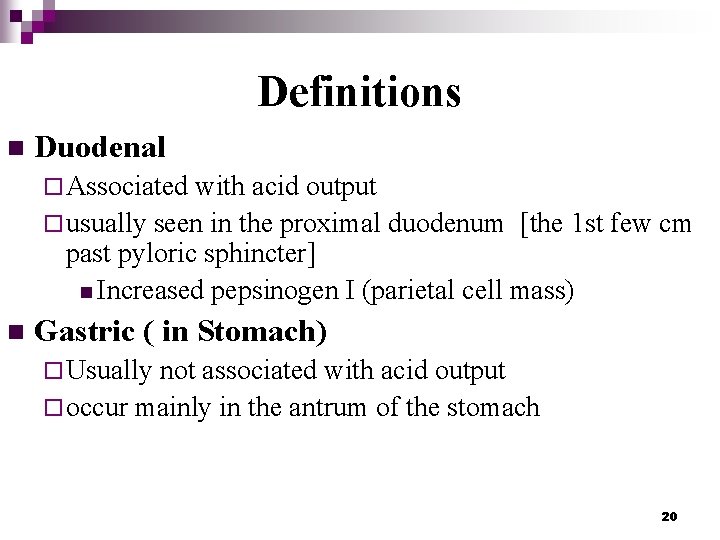
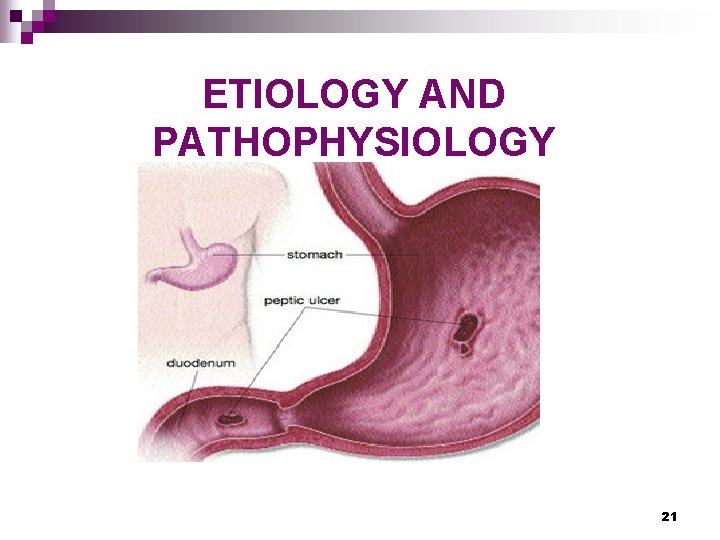
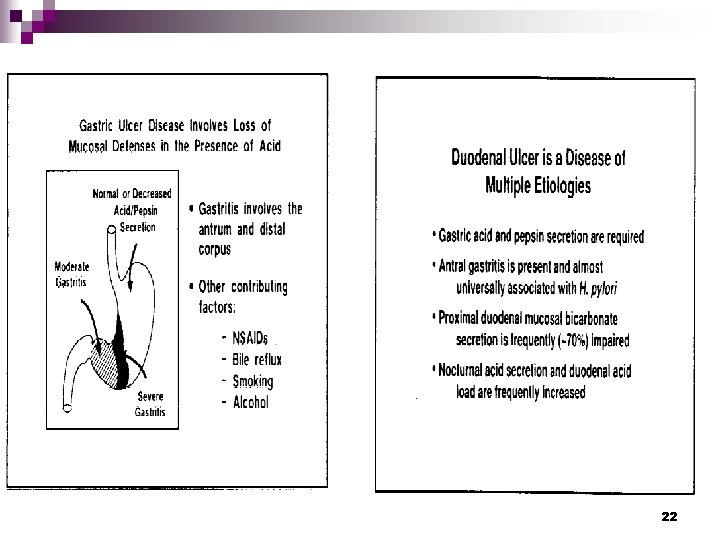
Definitions n Duodenal ¨ Associated with acid output ¨ usually seen in the proximal duodenum [the 1 st few cm past pyloric sphincter] n Increased pepsinogen I (parietal cell mass) n Gastric ( in Stomach) ¨ Usually not associated with acid output ¨ occur mainly in the antrum of the stomach 20
ETIOLOGY AND PATHOPHYSIOLOGY 21
22
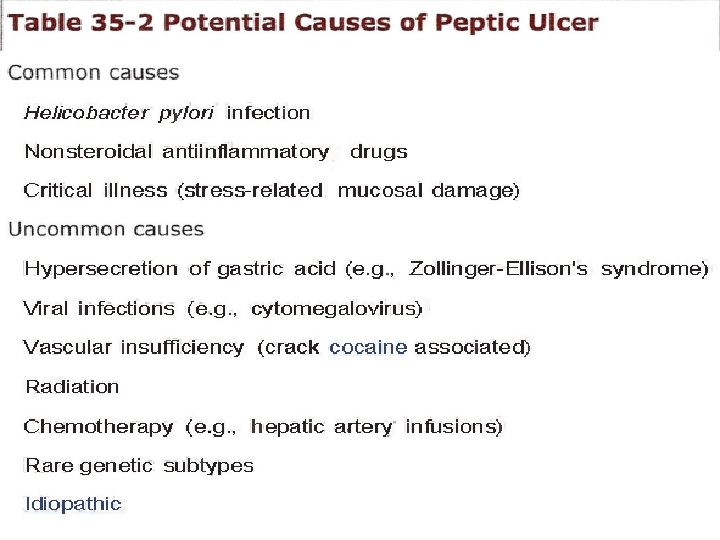
24
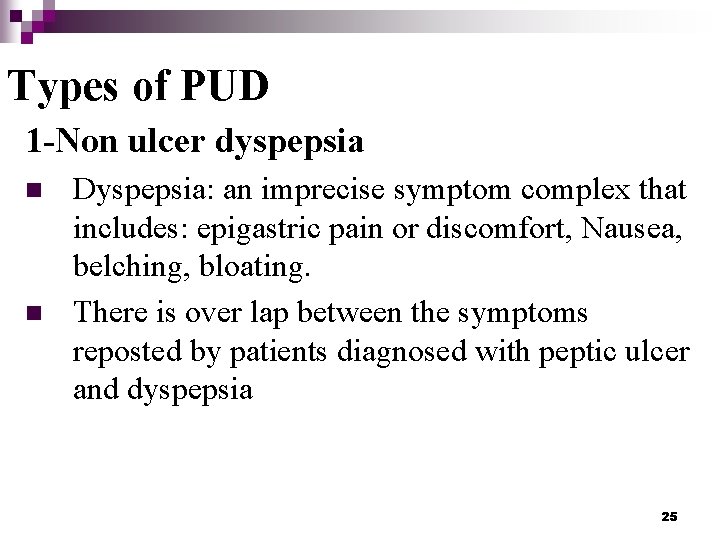
Types of PUD 1 -Non ulcer dyspepsia n n Dyspepsia: an imprecise symptom complex that includes: epigastric pain or discomfort, Nausea, belching, bloating. There is over lap between the symptoms reposted by patients diagnosed with peptic ulcer and dyspepsia 25
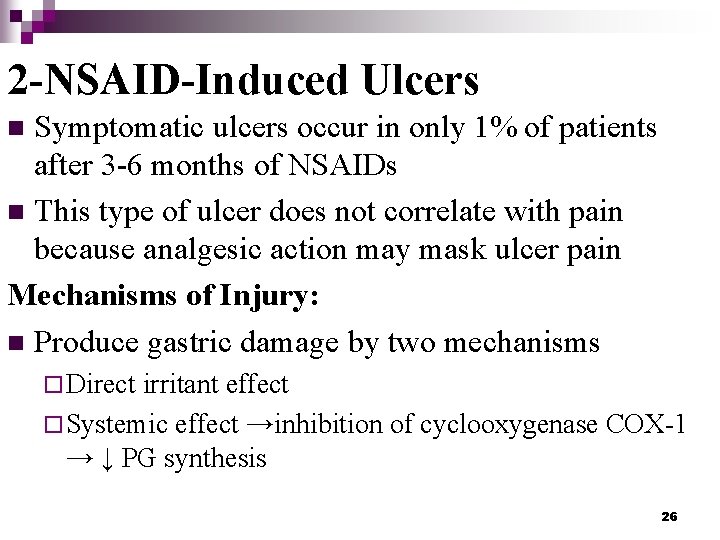
2 -NSAID-Induced Ulcers Symptomatic ulcers occur in only 1% of patients after 3 -6 months of NSAIDs n This type of ulcer does not correlate with pain because analgesic action may mask ulcer pain Mechanisms of Injury: n Produce gastric damage by two mechanisms n ¨ Direct irritant effect ¨ Systemic effect →inhibition of cyclooxygenase COX-1 → ↓ PG synthesis 26
PG protect the GI mucosa by maintaining blood flow & stimulating bicarbonate & mucus n Low PG impair the ability of the gastric mucosa to withstand aggressive factors n COX – 2 inhibitions is responsible for antiinflammatory and analgesic effects n Ulcers occur more frequently in the stomach than in the duodenum. n Many are painless n acute, low-dose NSAID-induced lesions usually heal spontaneously n 27
Risk factors n Age > 60 yrs, n High-NSAID dose OR Use of multiple NSAIDs, n Hx of ulcer/complication, n Co-morbid illness, n Concurrent steroid use, n GI sx in past 6 mos requiring discontinuation of the NSAID or the addition of another drug. n Patients taking anticoagulants n High surgical risk or Debilitated patients 28
3 -Adrenocorticosteroids Association of steroids and PUD is controversial. n Steroids may induce ulcers: ↑ gastric acid secretion, ↓ PG production n May delay or inhibit healing of ulcers caused by NSAIDs. n Patients taking steroids considered at high risk n Recent studies: elderly taking both steroids and NSAIDs are at much higher risk of PUD than those receiving either agent alone (related to dose & duration of therapy) n 29
4 -Disorders of Acid Hypersecretion Increased basal & postprandial acid secretion n Mechanisms: ¨Enhanced sensitivity of the parietal cell to vagal stimulation, ¨Impaired acid inhibitory mechanisms Zollinger-Ellison Syndrome: caused by a gastrinsecreting tumor of the duodenum or pancreas → marked gastric acid hypersecretion & recurrent peptic ulceration. n 2/3 of tumors are malignant. n Found in ~ 0. 1% of patients with duodenal ulcers. n 30
Risk Factors for PUD Cigarette smoking n Genetic factors n Psychological & physiological stress - multiple trauma, sepsis, neurosurgical problems, ICU stresses n Dietary factors n 31
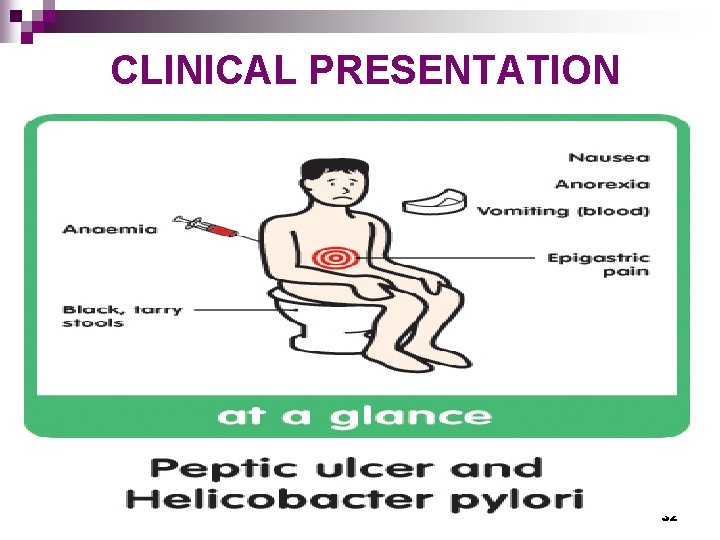
CLINICAL PRESENTATION 32
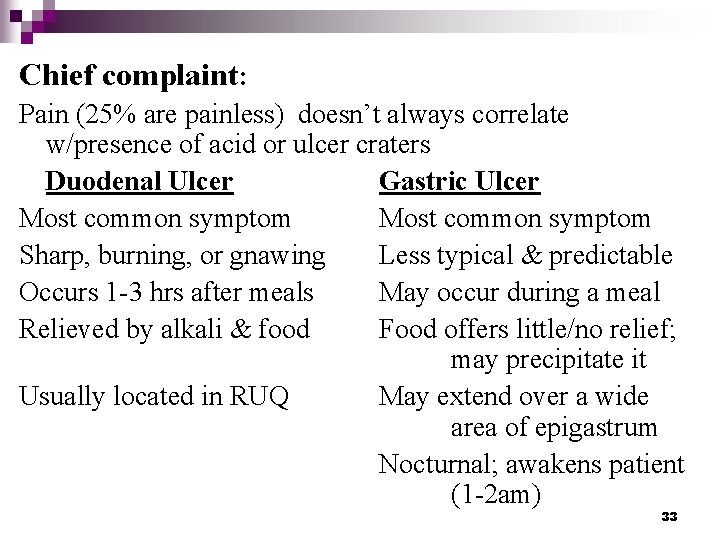
Chief complaint: Pain (25% are painless) doesn’t always correlate w/presence of acid or ulcer craters Duodenal Ulcer Gastric Ulcer Most common symptom Sharp, burning, or gnawing Less typical & predictable Occurs 1 -3 hrs after meals May occur during a meal Relieved by alkali & food Food offers little/no relief; may precipitate it Usually located in RUQ May extend over a wide area of epigastrum Nocturnal; awakens patient (1 -2 am) 33
Clinical presentation of ZE Syndrome Similar to sever PUD n More persistent n Less responsive to standard therapy n Abdominal pain; most common Sx n Diarrhea: because gastrin inhibits sodium and water reabsorption from intestine n 36
Complications Three Major Complications n Hemorrhage n Perforation n Gastric outlet obstruction ¨Initially treated conservatively ¨May require surgery at any time during course of therapy 37
Hemorrhage Most common complication of peptic ulcer disease n Develops from erosion of ¨Granulation tissue found at base of ulcer during healing ¨Ulcer through a major blood vessel n 38
Perforation Most lethal complication of peptic ulcer n Commonly seen in large penetrating duodenal ulcers that have not healed and are n located on posterior mucosal wall n Occurs when ulcer penetrates serosal surface n Size of perforation directly proportional to length of time patient has had ulcer n 39
Gastric Outlet Obstruction n n n Active ulcer formation is associated with edema, inflammation Duodenum can predispose to gastric outlet obstruction ↑ contractile force needed to empty stomach results in hypertrophic stomach wall Obstruction is not totally due to fibrous scar tissue Short duration or absence of pain indicative of a malignant obstruction Vomiting and Constipation are a common complaint 40
Diagnosis Visualization of the ulcer defines the disease 1 -Barium Upper GI Study (X-rays) Can show obstruction, perforation, or penetration Cannot show bleeding 30 -60% of ulcers can be detected 41
2 -Endoscopy Most often used n Superior test for diagnosis n More costly & less patient acceptance n Can visualize the ulcer n Can visualize any bleeding n Can treat bleeding n Determines degree of ulcer healing after treatment n Tissue specimens can be obtained to identify and to rule out gastric cancer n 42
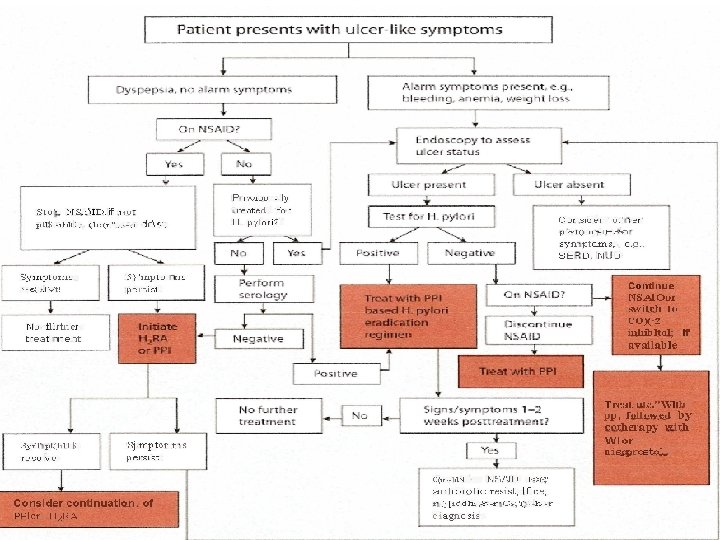
Indications for Endoscopy: New onset dyspepsia in pts > 45 yrs old (to rule out gastric cancer) n Patients with “alarm” symptoms: n ¨ Evidence of GI bleeding, anemia, unexplained weight loss, recurrent ¨ vomiting, decreased appetite, easy fullness, dysphagia, abdominal mass, ¨ lymphadenopathy Patients whose symptoms have failed to respond to initial therapy n Patients with recurrent or difficult to control disease n 43
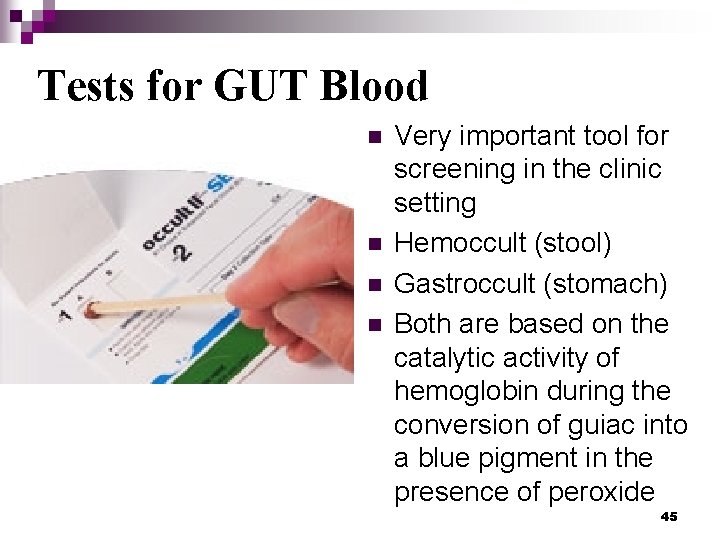
Laboratory tests n n n Guaiac test on stool sample CBC should be done if the patient’s stool is guaiac positive Acute blood loss: Red cell indices: RBC, Hct, Hgb, ¨ Normocytic (MCV), Normochromic (MCH) ¨ n Chronic blood loss: ¨ Iron deficiency: RBC, Hct, Hgb, MCV, MCH 44
Tests for GUT Blood n n Very important tool for screening in the clinic setting Hemoccult (stool) Gastroccult (stomach) Both are based on the catalytic activity of hemoglobin during the conversion of guiac into a blue pigment in the presence of peroxide 45
Diagnosis of ZE syndrome Measurement of gastric acid secretion n >15 mmol/hr in patients with no prior gastric surgery n > 5 mmol/hr in patients with prior gastric surgery n fasting gastrin level > 1000 pg/ml n secretin provocative test: n secretion will cause a marked increase in serum gastrin n 46
H. pylori Testing Indications for H. pylori testing: New onset dyspepsia in patients < 45 years old (with no alarm symptoms) n Active peptic ulcer disease n PMH of documented peptic ulcer, which has not been tested for H. pylori n Gastric lymphoma n 47
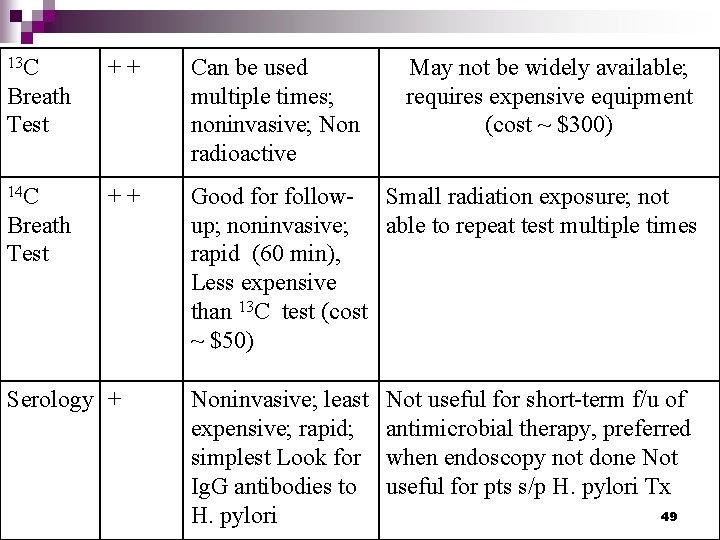
Methods of diagnosis for Helicobacter pylori 48
13 C ++ Can be used multiple times; noninvasive; Non radioactive ++ Good for follow- Small radiation exposure; not up; noninvasive; able to repeat test multiple times rapid (60 min), Less expensive than 13 C test (cost ~ $50) Breath Test 14 C Breath Test Serology + Noninvasive; least expensive; rapid; simplest Look for Ig. G antibodies to H. pylori May not be widely available; requires expensive equipment (cost ~ $300) Not useful for short-term f/u of antimicrobial therapy, preferred when endoscopy not done Not useful for pts s/p H. pylori Tx 49
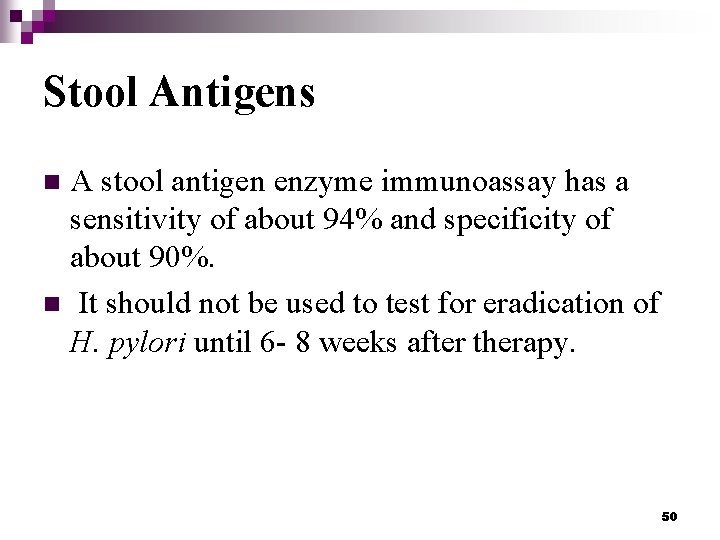
Stool Antigens A stool antigen enzyme immunoassay has a sensitivity of about 94% and specificity of about 90%. n It should not be used to test for eradication of H. pylori until 6 - 8 weeks after therapy. n 50
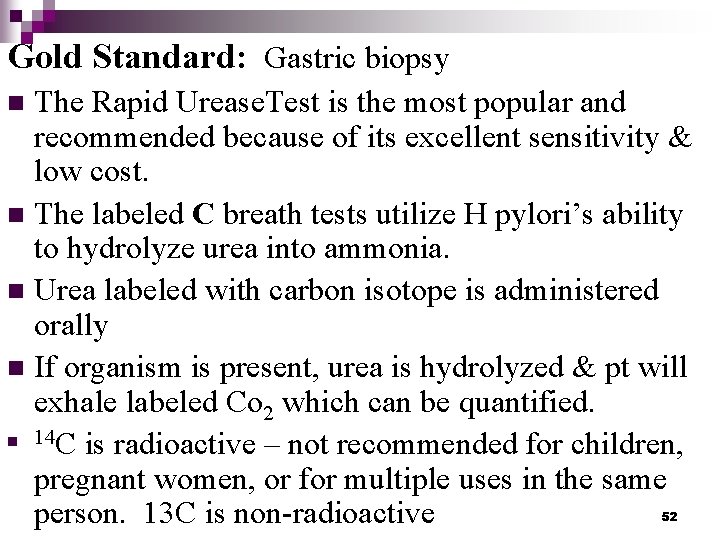
Gold Standard: Gastric biopsy The Rapid Urease. Test is the most popular and recommended because of its excellent sensitivity & low cost. n The labeled C breath tests utilize H pylori’s ability to hydrolyze urea into ammonia. n Urea labeled with carbon isotope is administered orally n If organism is present, urea is hydrolyzed & pt will exhale labeled Co 2 which can be quantified. n 14 C is radioactive – not recommended for children, pregnant women, or for multiple uses in the same person. 13 C is non-radioactive n 52
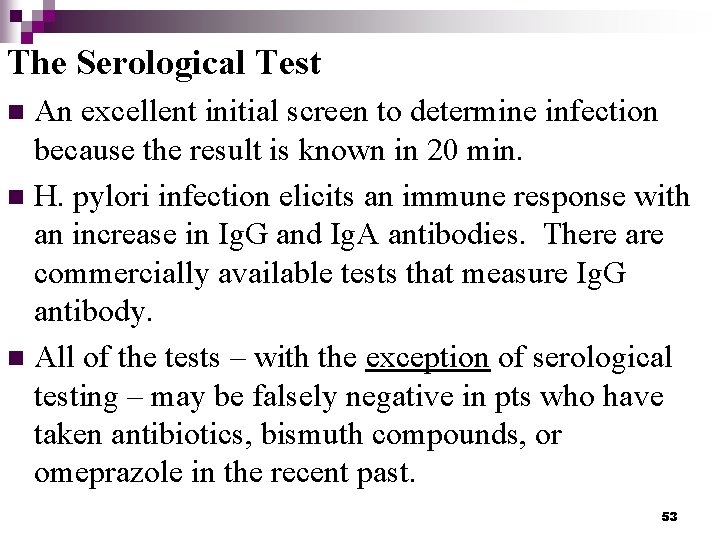
The Serological Test An excellent initial screen to determine infection because the result is known in 20 min. n H. pylori infection elicits an immune response with an increase in Ig. G and Ig. A antibodies. There are commercially available tests that measure Ig. G antibody. n All of the tests – with the exception of serological testing – may be falsely negative in pts who have taken antibiotics, bismuth compounds, or omeprazole in the recent past. n 53
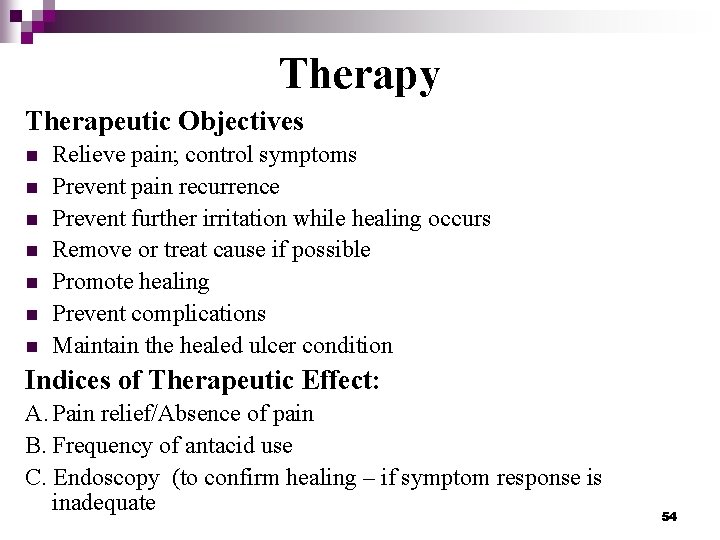
Therapy Therapeutic Objectives n n n n Relieve pain; control symptoms Prevent pain recurrence Prevent further irritation while healing occurs Remove or treat cause if possible Promote healing Prevent complications Maintain the healed ulcer condition Indices of Therapeutic Effect: A. Pain relief/Absence of pain B. Frequency of antacid use C. Endoscopy (to confirm healing – if symptom response is inadequate 54
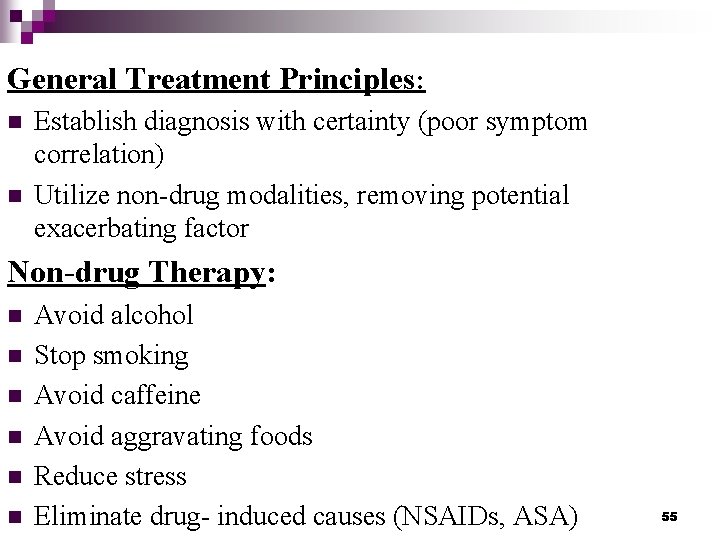
General Treatment Principles: n n Establish diagnosis with certainty (poor symptom correlation) Utilize non-drug modalities, removing potential exacerbating factor Non-drug Therapy: n n n Avoid alcohol Stop smoking Avoid caffeine Avoid aggravating foods Reduce stress Eliminate drug- induced causes (NSAIDs, ASA) 55
56
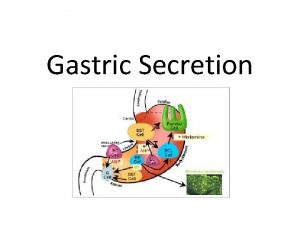
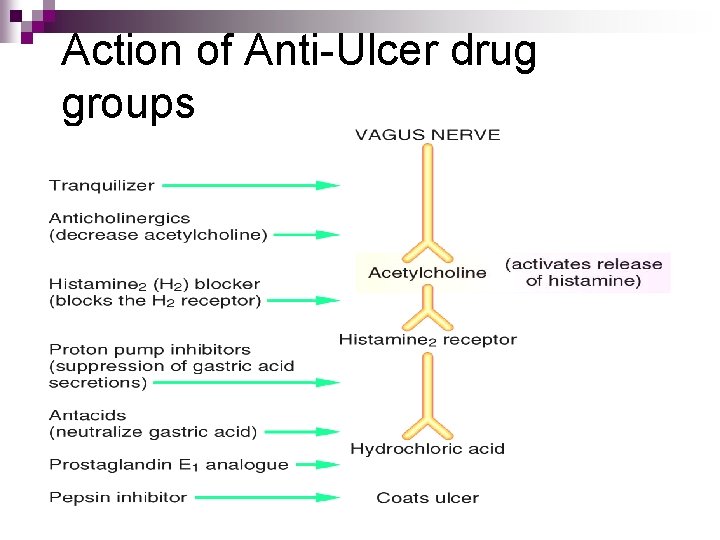
Action of Anti-Ulcer drug groups
MOA H 2 -blockers n. Selectively and competitively Inhibit the action of histamine on H 2 receptors of the parietal cells → reducing basal and stimulated secretion of gastric acid Efficacy Equally Effective for: n. Treatment of acute ulcers in the absence of H. pylori n. Treatment of NSAID-induced ulcers n. Maintenance therapy in patients unable to tolerate a course of antimicrobial therapy to eradicate H. pylori 58
1 -H 2 -blockers Efficacy n 70 -95% heal rate in 4 -8 weeks n. Standard doses inhibit 50 - 80% of 24 -hour acid secretion n. Equal in efficacy to antacid, and sucralfate therapy n. Effective as single therapy in pts with no H pylori infection 59
Side effects n. Safe, Frequency of SE is low n. Common SE: ¨ Diarrhea, constipation, Mental confusion, headache, dizziness, drowsiness, and rashes ¨ Confusion/agitation occurs more frequently in elderly, renal & hepatic dysfxn n. Similar profile (reported more frequently with cimetidine) n. Mental status changes, diarrhea, headache (2 -3%) n. Rare: bone marrow suppression (thrombocytopenia, agranulocytosis) 60
Cimetidine: Prolonged use – gynecomastia, erectile dysfxn, sperm ct (anti-androgen) n Ranitidine: Hepatitis n Famotidine: CNS, headache n Nizatidine: Sweating, itching, hepatic n 61
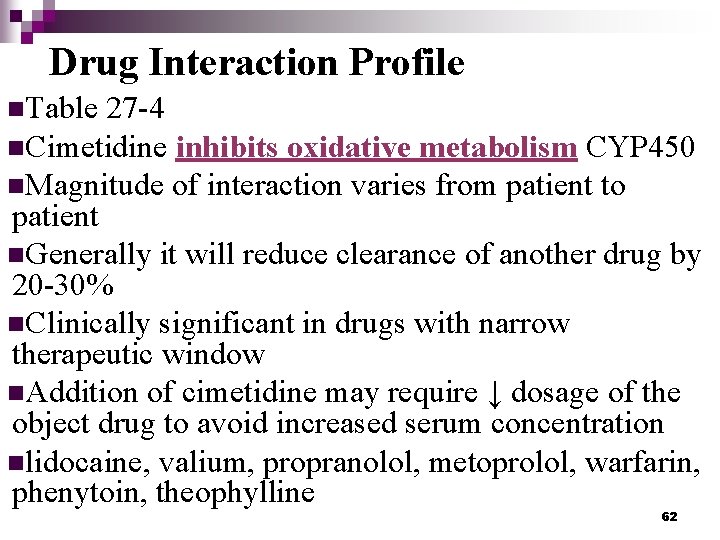
Drug Interaction Profile n. Table 27 -4 n. Cimetidine inhibits oxidative metabolism CYP 450 n. Magnitude of interaction varies from patient to patient n. Generally it will reduce clearance of another drug by 20 -30% n. Clinically significant in drugs with narrow therapeutic window n. Addition of cimetidine may require ↓ dosage of the object drug to avoid increased serum concentration nlidocaine, valium, propranolol, metoprolol, warfarin, phenytoin, theophylline 62
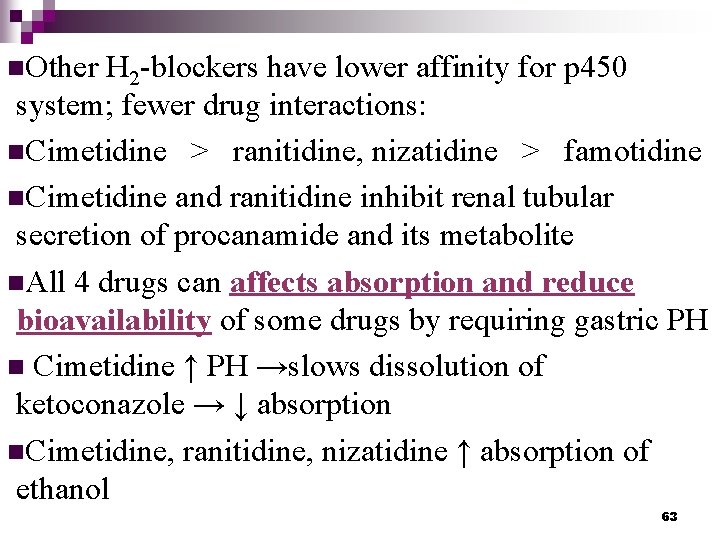
n. Other H 2 -blockers have lower affinity for p 450 system; fewer drug interactions: n. Cimetidine > ranitidine, nizatidine > famotidine n. Cimetidine and ranitidine inhibit renal tubular secretion of procanamide and its metabolite n. All 4 drugs can affects absorption and reduce bioavailability of some drugs by requiring gastric PH n Cimetidine ↑ PH →slows dissolution of ketoconazole → ↓ absorption n. Cimetidine, ranitidine, nizatidine ↑ absorption of ethanol 63
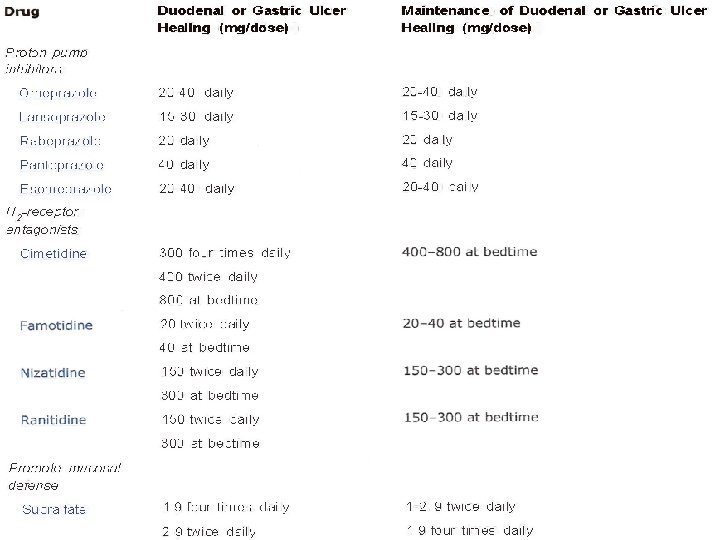
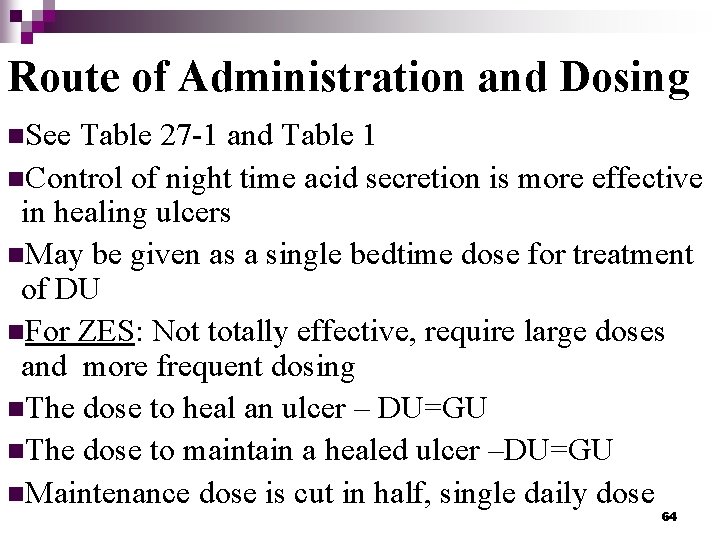
Route of Administration and Dosing n. See Table 27 -1 and Table 1 n. Control of night time acid secretion is more effective in healing ulcers n. May be given as a single bedtime dose for treatment of DU n. For ZES: Not totally effective, require large doses and more frequent dosing n. The dose to heal an ulcer – DU=GU n. The dose to maintain a healed ulcer –DU=GU n. Maintenance dose is cut in half, single daily dose 64
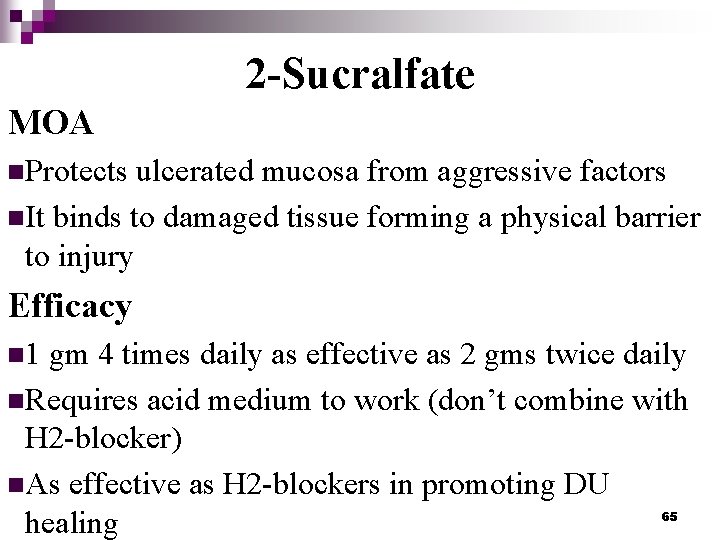
2 -Sucralfate MOA n. Protects ulcerated mucosa from aggressive factors n. It binds to damaged tissue forming a physical barrier to injury Efficacy n 1 gm 4 times daily as effective as 2 gms twice daily n. Requires acid medium to work (don’t combine with H 2 -blocker) n. As effective as H 2 -blockers in promoting DU healing 65
Side effects n. Not absorbed systemically n. Constipation, xerostomia, skin eruptions, nausea, indigestion, dizziness n. Contains aluminum (Al); accumulates in pts with renal dysfxn; n. Neuro toxicity; seizures Drug Interaction profile n. Al dissociates from sucralfate: absorption of TCN, phenytoin, warfarin n. Chelation with other drugs given simultaneously 66
Route of Administration and Dosing Frequency n n n Dosing: 1 gram, four times daily, before meals & at bedtime (compliance) For duodenal ulcer, 2 grams bid (before breakfast & at bedtime) may be as effective Large tablet size – may be difficult to swallow 67
3 -Antacids MOA n. Relive pain and promote healing by providing a cytoprotective effect through stimulation of PG n. Neutralizing gastric acid n. Stimulating restitution of the gastric mucosa Efficacy n. Low to moderate doses may be as effective in healing duodenal ulcers as H 2 blockers if taken multiple times a day n neutralize acid; inhibit pepsinogen to pepsin, bile salts 68
Antacids n n n n High dose as effective as H 2 -blockers May provide less symptom relief than H 2 -blockers High dose: 30 cc po 1 hr before & 3 hrs after each meal & at bedtime (7 doses) May accelerate healing of GU (lack of data to confirm it, but likely) Currently used for symptomatic relief in addition to H 2 blockers or sucralfate Primarily used on as PRN for pain Liquid formulation are more rapid acting 69
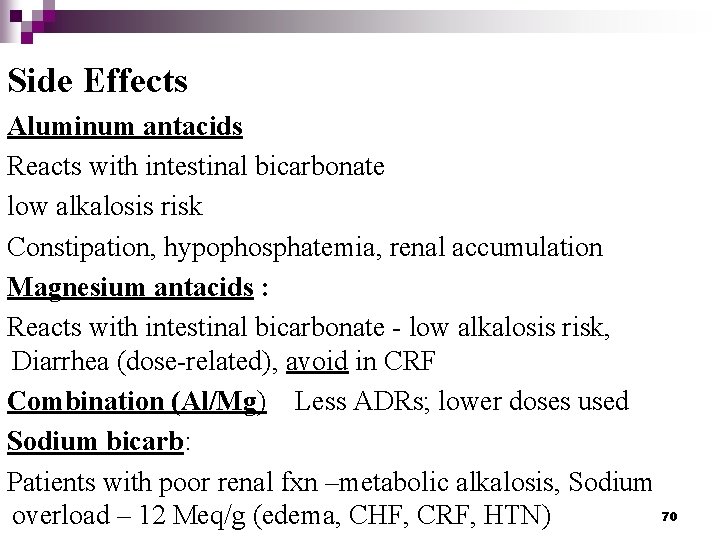
Side Effects Aluminum antacids Reacts with intestinal bicarbonate low alkalosis risk Constipation, hypophosphatemia, renal accumulation Magnesium antacids : Reacts with intestinal bicarbonate - low alkalosis risk, Diarrhea (dose-related), avoid in CRF Combination (Al/Mg) Less ADRs; lower doses used Sodium bicarb: Patients with poor renal fxn –metabolic alkalosis, Sodium 70 overload – 12 Meq/g (edema, CHF, CRF, HTN)
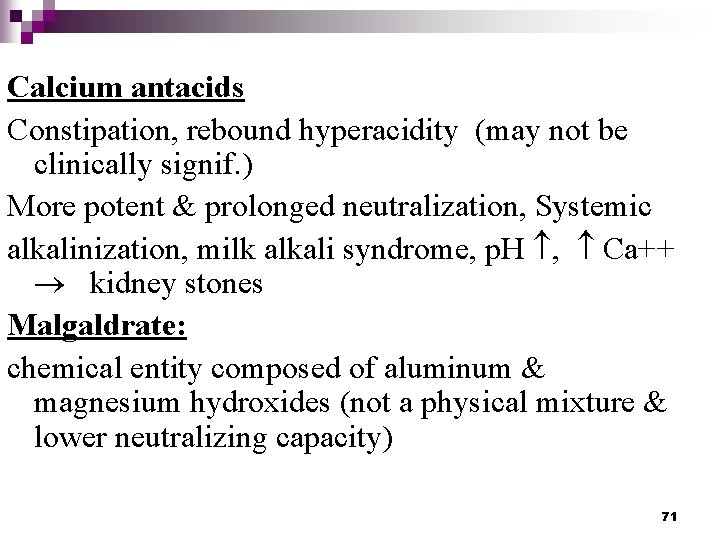
Calcium antacids Constipation, rebound hyperacidity (may not be clinically signif. ) More potent & prolonged neutralization, Systemic alkalinization, milk alkali syndrome, p. H , Ca++ kidney stones Malgaldrate: chemical entity composed of aluminum & magnesium hydroxides (not a physical mixture & lower neutralizing capacity) 71
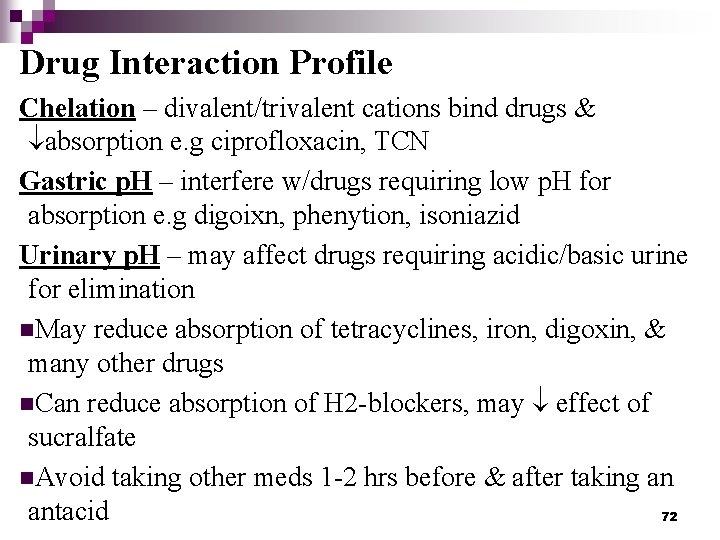
Drug Interaction Profile Chelation – divalent/trivalent cations bind drugs & absorption e. g ciprofloxacin, TCN Gastric p. H – interfere w/drugs requiring low p. H for absorption e. g digoixn, phenytion, isoniazid Urinary p. H – may affect drugs requiring acidic/basic urine for elimination n. May reduce absorption of tetracyclines, iron, digoxin, & many other drugs n. Can reduce absorption of H 2 -blockers, may effect of sucralfate n. Avoid taking other meds 1 -2 hrs before & after taking an antacid 72
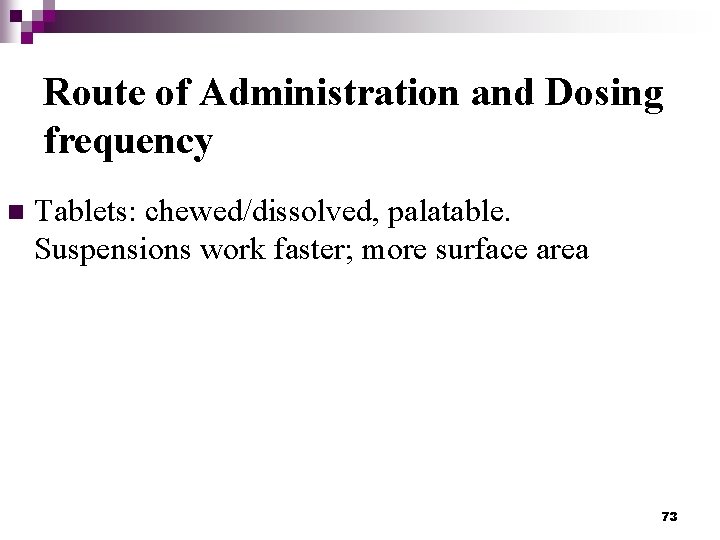
Route of Administration and Dosing frequency n Tablets: chewed/dissolved, palatable. Suspensions work faster; more surface area 73
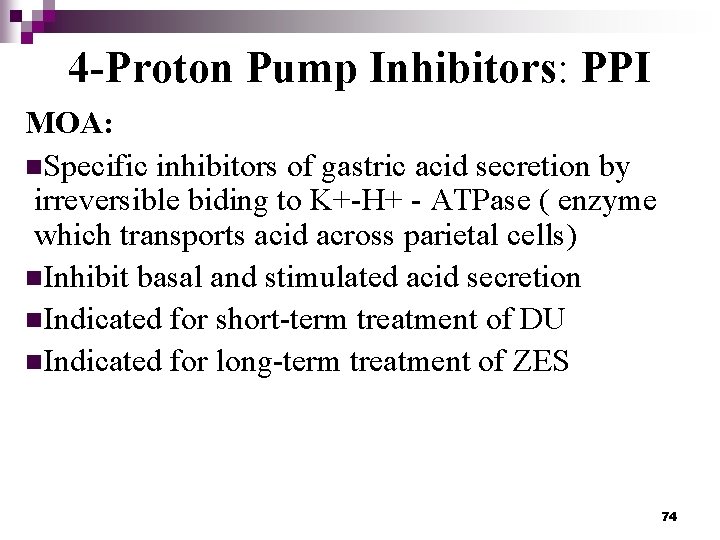
4 -Proton Pump Inhibitors: PPI MOA: n. Specific inhibitors of gastric acid secretion by irreversible biding to K+-H+ - ATPase ( enzyme which transports acid across parietal cells) n. Inhibit basal and stimulated acid secretion n. Indicated for short-term treatment of DU n. Indicated for long-term treatment of ZES 74
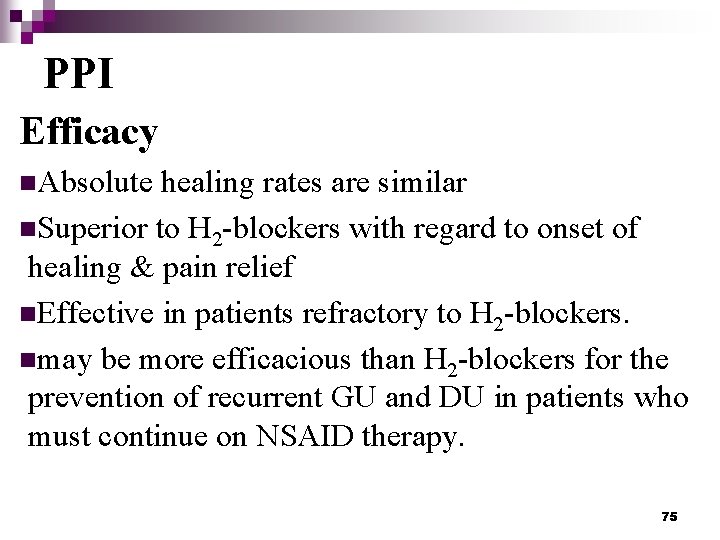
PPI Efficacy n. Absolute healing rates are similar n. Superior to H 2 -blockers with regard to onset of healing & pain relief n. Effective in patients refractory to H 2 -blockers. nmay be more efficacious than H 2 -blockers for the prevention of recurrent GU and DU in patients who must continue on NSAID therapy. 75
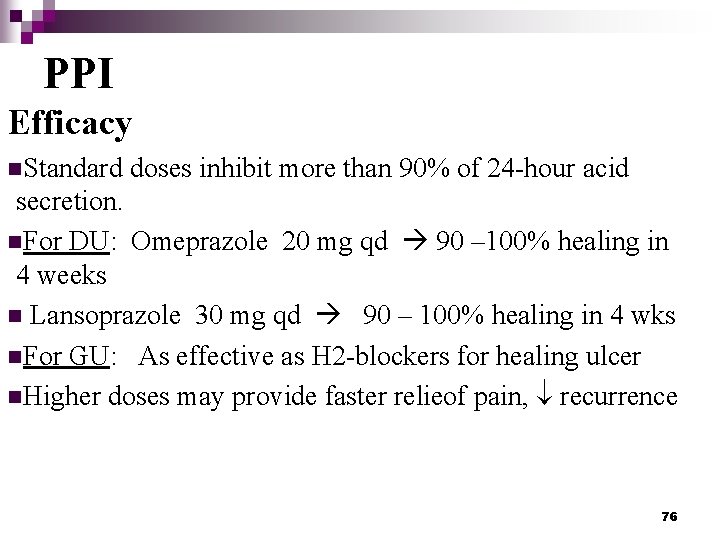
PPI Efficacy n. Standard doses inhibit more than 90% of 24 -hour acid secretion. n. For DU: Omeprazole 20 mg qd 90 – 100% healing in 4 weeks n Lansoprazole 30 mg qd 90 – 100% healing in 4 wks n. For GU: As effective as H 2 -blockers for healing ulcer n. Higher doses may provide faster relieof pain, recurrence 76
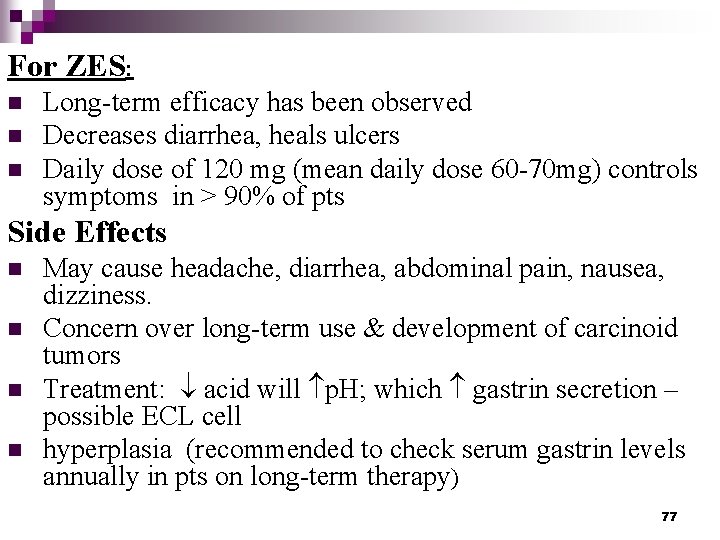
For ZES: n n n Long-term efficacy has been observed Decreases diarrhea, heals ulcers Daily dose of 120 mg (mean daily dose 60 -70 mg) controls symptoms in > 90% of pts Side Effects n n May cause headache, diarrhea, abdominal pain, nausea, dizziness. Concern over long-term use & development of carcinoid tumors Treatment: acid will p. H; which gastrin secretion – possible ECL cell hyperplasia (recommended to check serum gastrin levels annually in pts on long-term therapy) 77
PPI : Drug Interaction Profile n All agents are extensively metabolized by cytochrome p 450 Omeprazole: n Inhibitor of oxidative metabolism by p 450 system n May diazepam, phenytoin, warfarin, etc. n Omeprazole and Clarithromycin → concentration of both drugs Lansoprazole n Metabolized through p 450 system: may clearance of theophylline (10%) Sucralfate n Reduces absorption of PPIs Drugs whose absorption may be impaired from reduced acidity: Ketoconazole, iron, ampicillin, etc. 78
Route of Administration and Dosing n. See table 1 & 2 n. Rabeprazole is available as a 20 mg enteric-coated tablet; dosed once daily. n. Pantoprazole is dosed 40 mg po qd For ZES: n. Longer duration of action so require less frequent dosing n. Large doses are necessary n. Start at 60 mg lansoprazole or 80 mg omeprazole po qd 79
5 -Prostaglandin E 1 Analog MOA n. Inhibits basal & nocturnal gastric acid secretion; n. Enhances mucous & bicarb secretion; n. Reduces pepsin concentration but does not affect histamine stimulated secretion. 80
Prostaglandin E 1 Analog Efficacy For prevention of NSAID-induced gastric ulcers in patients at high risk. n Superior to sucralfate in preventing NSAID-induced gastric ulcers n Superior to H 2 -blockers in reducing mucosal injury, but may relieve pain less rapidly (H 2 -blockers more effective for inhibiting gastric acid output, especially at night) n May be effective in healing H 2 blocker-resistant ulcers n 81
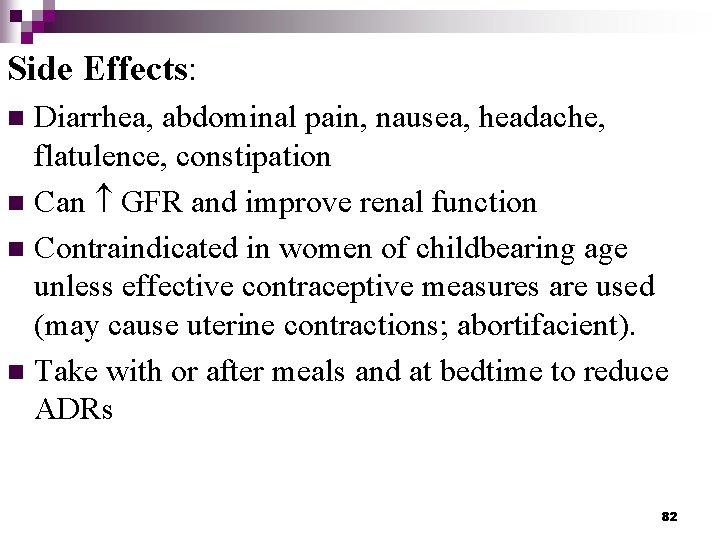
Side Effects: Diarrhea, abdominal pain, nausea, headache, flatulence, constipation n Can GFR and improve renal function n Contraindicated in women of childbearing age unless effective contraceptive measures are used (may cause uterine contractions; abortifacient). n Take with or after meals and at bedtime to reduce ADRs n 82
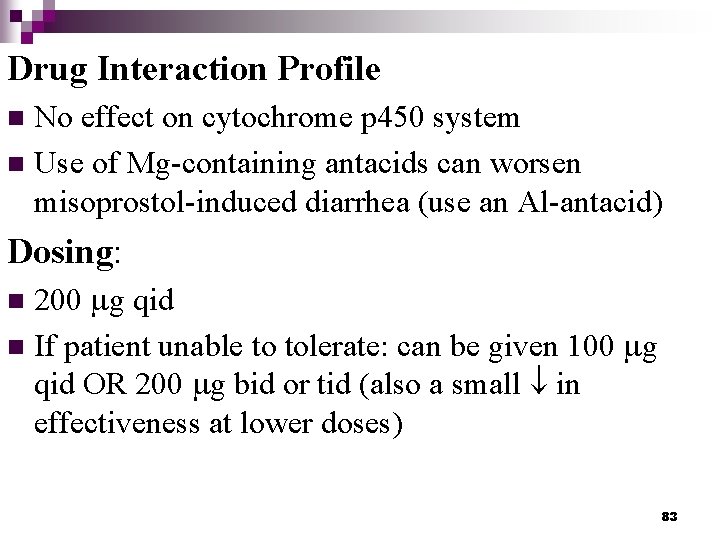
Drug Interaction Profile No effect on cytochrome p 450 system n Use of Mg-containing antacids can worsen misoprostol-induced diarrhea (use an Al-antacid) n Dosing: 200 g qid n If patient unable to tolerate: can be given 100 g qid OR 200 g bid or tid (also a small in effectiveness at lower doses) n 83
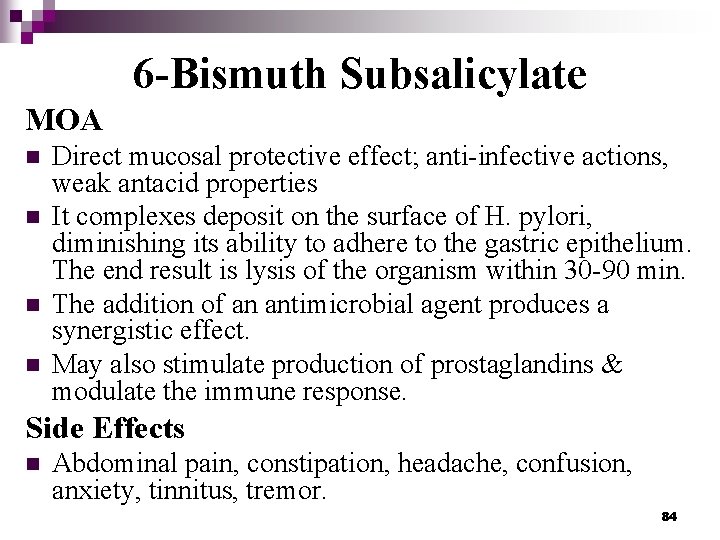
6 -Bismuth Subsalicylate MOA n n Direct mucosal protective effect; anti-infective actions, weak antacid properties It complexes deposit on the surface of H. pylori, diminishing its ability to adhere to the gastric epithelium. The end result is lysis of the organism within 30 -90 min. The addition of an antimicrobial agent produces a synergistic effect. May also stimulate production of prostaglandins & modulate the immune response. Side Effects n Abdominal pain, constipation, headache, confusion, anxiety, tinnitus, tremor. 84
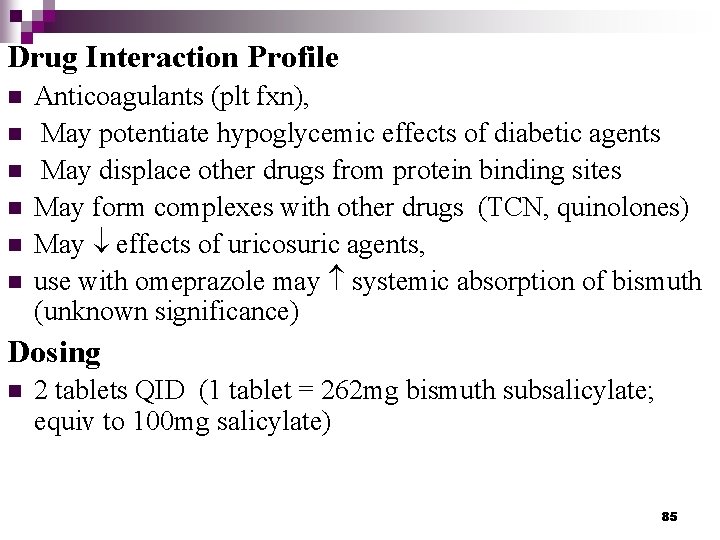
Drug Interaction Profile n n n Anticoagulants (plt fxn), May potentiate hypoglycemic effects of diabetic agents May displace other drugs from protein binding sites May form complexes with other drugs (TCN, quinolones) May effects of uricosuric agents, use with omeprazole may systemic absorption of bismuth (unknown significance) Dosing n 2 tablets QID (1 tablet = 262 mg bismuth subsalicylate; equiv to 100 mg salicylate) 85
7 -Prokinetic Agents: Metoclopramide MOA n n n Increases GI motility and peristalsis Increases LES tone Antagonizes dopamine receptors. Side Effects n Extrapyramidal symptoms Drug Interaction Profile Increased sedative effect of benzodiazepines or alcohol. Dosing n Metaclopramide 5 -15 mg dose, up to 4 times a day (take 30 min before meals). n Single dose of 20 mg may be needed in a provoking 86 situation n
Treatment of NSAID induced ulcer 1 -Stop NSAIDs when possible. 2 - Treat with low dose H-2 antagonist for 8 weeks Prophylactic therapy In patients unable to discontinue NSAIDs and have risk factors for development of ulcer 1 -PPIs: they are preferred if NSAIDs are to be continued 2 -Misoprostol 3 -H 2 antagonist are more effective in healing duodenal ulcer than gastric ulcer n 87
88
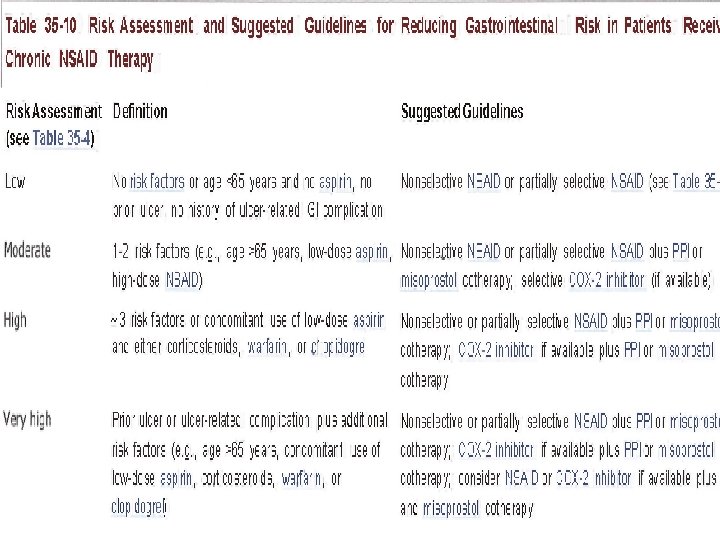
Treatment plan & Monitoring 1. Assess risk factors for NSAID-induced ulcers and ulcer-related complications, and when indicated 2. recommend appropriate strategies for reducing ulcer risk (see Table 35 -10). 3. Recommend eradication treatment for H. pylori-positive patients taking NSAIDs. 89
Treatment plan & Monitoring 4. Monitor patients for signs and symptoms of NSAID-related upper GI complications. 5. Assess and monitor patients for potential drug interactions and adverse effects (especially misoprostol). 90
Treatment plan & Monitoring 6. Provide patient education to patients who are at risk of NSAID-induced ulcers or GI-related complications, including n why cotherapy is used with nonselective NSAIDs; n when and how to take medications; n adverse effects; n alarm symptoms; n when to contact their healthcare provider; n the importance of adherence to drug treatment. 91
Eradication of Helicobacter pylori n. In the past, PUD was considered a chronic disorder because the ulcer tended to recur. n Eradication of H. pylori dramatically reduces ulcer recurrence & cures many patients of their disease. Advantages of eradication: n. Inflammatory changes return to normal n. Restoration of microvilli by 4 months n. Decrease in disease recurrence Problems: n. Eradication may be difficult; nresistance to antibiotics n. Adverse reactions to antibiotics 92
Who should be treated for H. pylori? All pts with established duodenal ulcers with H. pylori. All pts with gastric ulcers with H. pylori. First or recurrent H. pylori infection Who should not be treated for H. pylori Asymptomatic (H. pylori positive or negative) Non-ulcer dyspepsia* (H. pylori positive or negative) Gastric ulcer (H. pylori negative) Duodenal ulcer (H. pylori negative) Gastroesophageal reflux disease Gallbladder or pancreatic disease Irritable bowel or inflammatory bowel disease 93
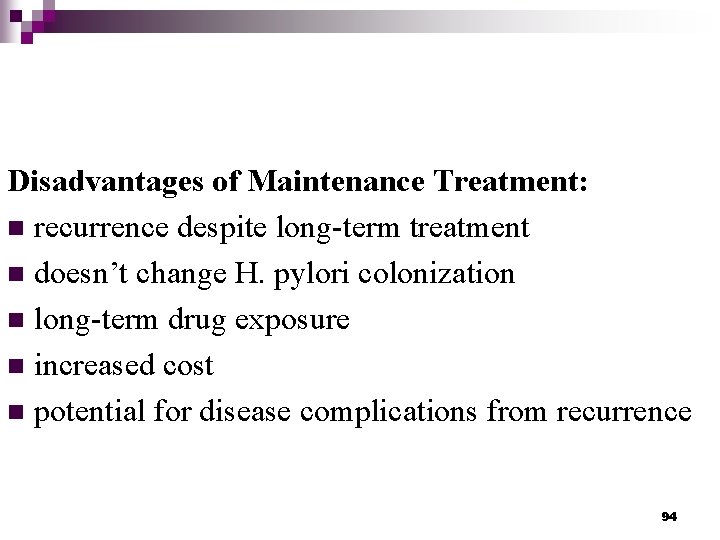
Disadvantages of Maintenance Treatment: n recurrence despite long-term treatment n doesn’t change H. pylori colonization n long-term drug exposure n increased cost n potential for disease complications from recurrence 94
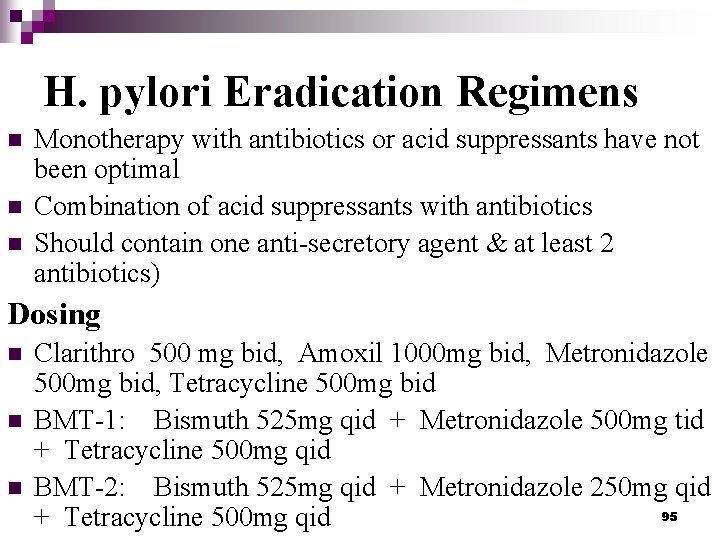
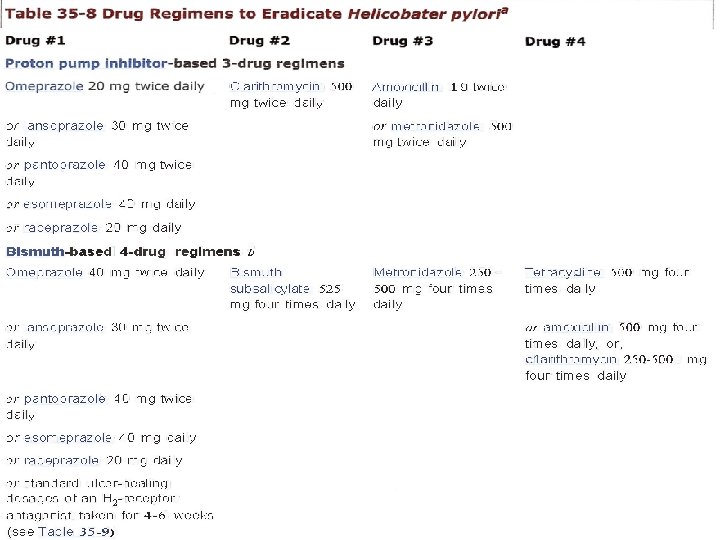
H. pylori Eradication Regimens n n n Monotherapy with antibiotics or acid suppressants have not been optimal Combination of acid suppressants with antibiotics Should contain one anti-secretory agent & at least 2 antibiotics) Dosing n n n Clarithro 500 mg bid, Amoxil 1000 mg bid, Metronidazole 500 mg bid, Tetracycline 500 mg bid BMT-1: Bismuth 525 mg qid + Metronidazole 500 mg tid + Tetracycline 500 mg qid BMT-2: Bismuth 525 mg qid + Metronidazole 250 mg qid 95 + Tetracycline 500 mg qid
96
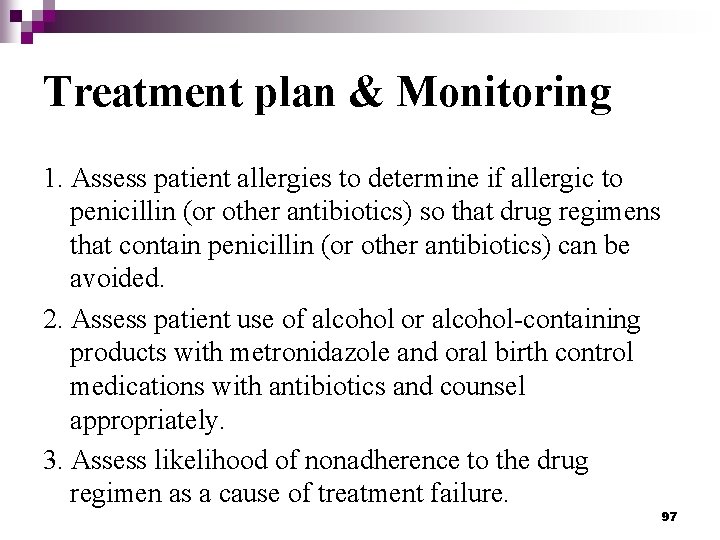
Treatment plan & Monitoring 1. Assess patient allergies to determine if allergic to penicillin (or other antibiotics) so that drug regimens that contain penicillin (or other antibiotics) can be avoided. 2. Assess patient use of alcohol or alcohol-containing products with metronidazole and oral birth control medications with antibiotics and counsel appropriately. 3. Assess likelihood of nonadherence to the drug regimen as a cause of treatment failure. 97
Treatment plan & Monitoring 4. Recommend a different antibiotic combination if H. pylori eradication fails and a second treatment is planned. 5. Inform the patient of change in stool color when bismuth salicylate. 6. Assess and monitor patients for potential adverse effects, especially those associated with metronidazole, c 1 arithromycin, and amoxicillin. 98
Treatment plan & Monitoring 7. Assess and monitor patients for potential drug interactions, especially those receiving metronidazole, clarithromycin, or cimetidine. 8. Monitor patients for salicylate toxicity, especially patients receiving cotherapy with other salicylates, anticoagulants, and patients with renal failure. 9. Monitor patients for persistent or recurrent symptoms within 14 days after completion of a course of therapy. 99
Treatment plan & Monitoring 10. Provide patient education to patients including n why antibiotic and antiulcer combinations are used; n when and how to take medications; n adverse effects; n the importance of adherence to the entire course of drug treatment; n to contact their healthcare provider if alarm symptoms develop (e. g. , blood in the stools, black tarry stools, vomiting, severe abdominal pain), or if symptoms persist or return. 100
101