
Combined Presentation of Pneumonia Pressure Ulcers and Sepsis
Combined Presentation of Pneumonia, Pressure Ulcers, and Sepsis Documentation Compiled and Presented for TAHIMA Meeting on 16 April 2015 Charlene Haslam, CPC, RHIT
Pneumonia Documentation Compiled and Presented by Charlene Haslam CPC, RHIT February 4, 2015
Terminology • “And” can mean “and/or. ” Meaning it can be both or either one. • Excludes 1 – Two conditions that cannot be reported together. • Congenital cannot be coded with acquired form of same condition. • Excludes 2 – Although the excluded condition is not part of the condition it is excluded from, a patient may have both conditions at the same time. • NOS • It may be acceptable to use both codes together if supported my medical documentation. – For use when the information in the medical record is insufficient to assign a more specific code. • NEC – For use when the information in the medical record provides detail for which a specific code does not exist.
Why have detailed documentation? 1) 2) 3) 4) Meet medical necessity criteria 1) Justify and explain need for inpatient services 1) Diagnosis 2) Evaluate 3) Treat Reflect items listed below to receive workload, achieve accurate morbidity and mortality risk scores 1) Specific type 2) Cause 3) Severity 4) Associated Conditions 5) Complications Demonstrate “Best Practice” guidelines Comply with Quality and Performance Measures
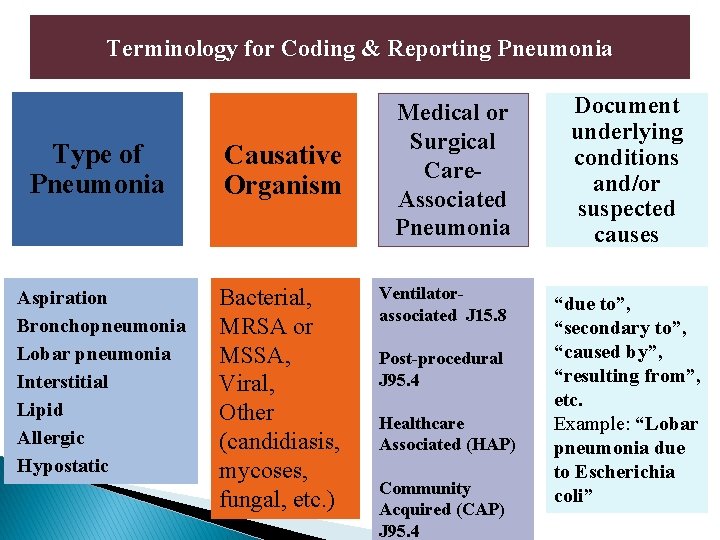
Terminology for Coding & Reporting Pneumonia Type of Pneumonia Causative Organism Aspiration Bronchopneumonia Lobar pneumonia Interstitial Lipid Allergic Hypostatic Bacterial, MRSA or MSSA, Viral, Other (candidiasis, mycoses, fungal, etc. ) Medical or Surgical Care. Associated Pneumonia Ventilatorassociated J 15. 8 Post-procedural J 95. 4 Healthcare Associated (HAP) Community Acquired (CAP) J 95. 4 Document underlying conditions and/or suspected causes “due to”, “secondary to”, “caused by”, “resulting from”, etc. Example: “Lobar pneumonia due to Escherichia coli”
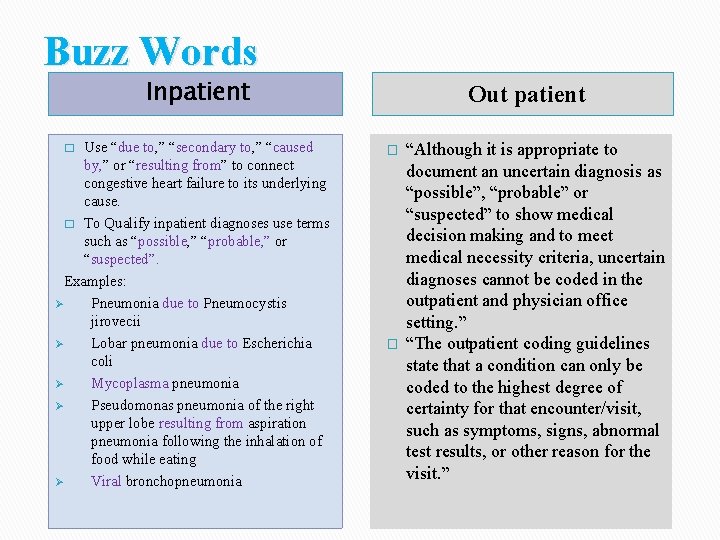
Buzz Words Inpatient Use “due to, ” “secondary to, ” “caused by, ” or “resulting from” to connect congestive heart failure to its underlying cause. � To Qualify inpatient diagnoses use terms such as “possible, ” “probable, ” or “suspected”. Examples: Ø Pneumonia due to Pneumocystis jirovecii Ø Lobar pneumonia due to Escherichia coli Ø Mycoplasma pneumonia Ø Pseudomonas pneumonia of the right upper lobe resulting from aspiration pneumonia following the inhalation of food while eating Ø Viral bronchopneumonia � Out patient � � “Although it is appropriate to document an uncertain diagnosis as “possible”, “probable” or “suspected” to show medical decision making and to meet medical necessity criteria, uncertain diagnoses cannot be coded in the outpatient and physician office setting. ” “The outpatient coding guidelines state that a condition can only be coded to the highest degree of certainty for that encounter/visit, such as symptoms, signs, abnormal test results, or other reason for the visit. ”
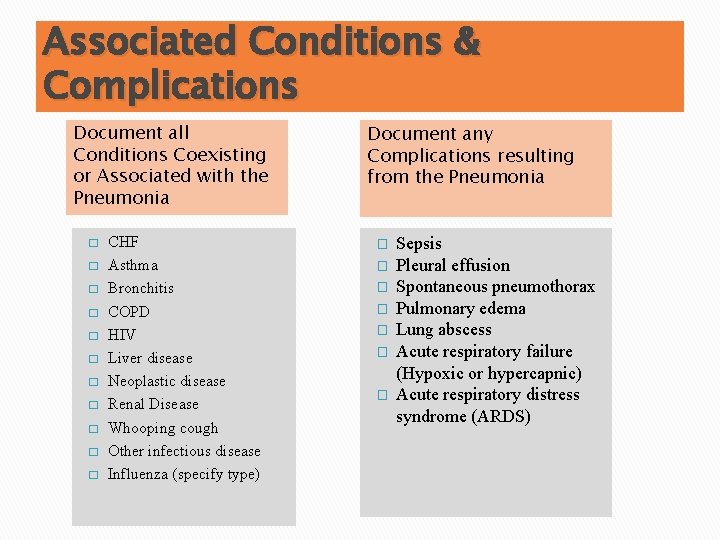
Associated Conditions & Complications Document all Conditions Coexisting or Associated with the Pneumonia � � � CHF Asthma Bronchitis COPD HIV Liver disease Neoplastic disease Renal Disease Whooping cough Other infectious disease Influenza (specify type) Document any Complications resulting from the Pneumonia � � � � Sepsis Pleural effusion Spontaneous pneumothorax Pulmonary edema Lung abscess Acute respiratory failure (Hypoxic or hypercapnic) Acute respiratory distress syndrome (ARDS)
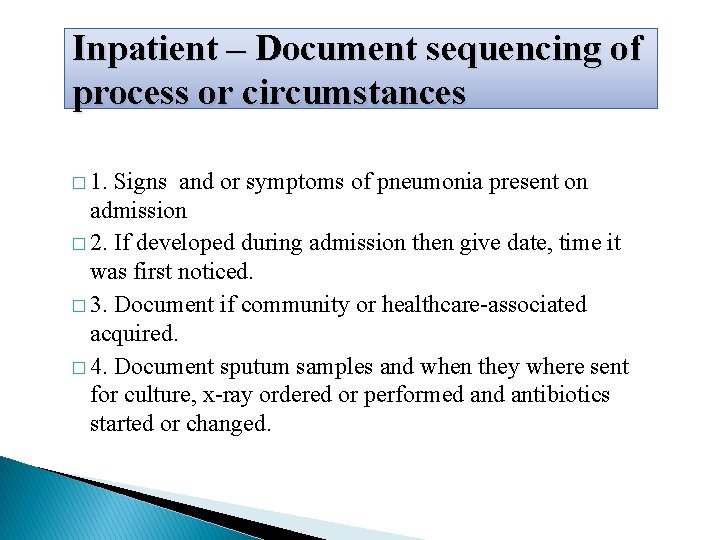
Inpatient – Document sequencing of process or circumstances � 1. Signs and or symptoms of pneumonia present on admission � 2. If developed during admission then give date, time it was first noticed. � 3. Document if community or healthcare-associated acquired. � 4. Document sputum samples and when they where sent for culture, x-ray ordered or performed antibiotics started or changed.
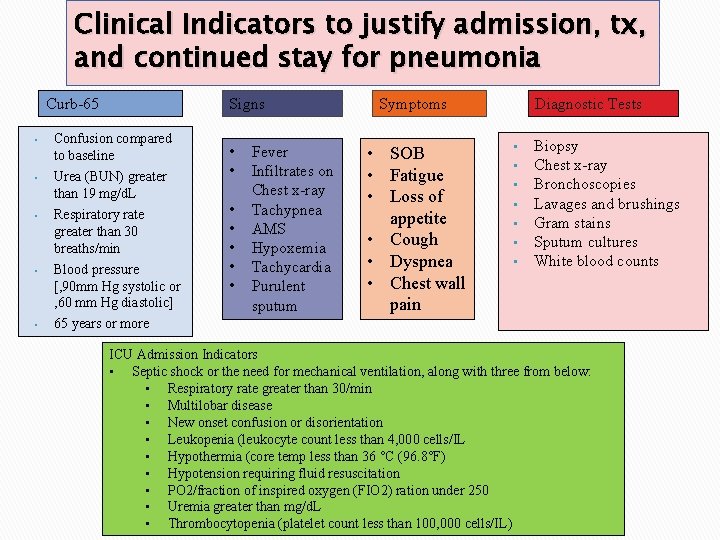
Clinical Indicators to justify admission, tx, and continued stay for pneumonia Curb-65 • • • Signs Confusion compared to baseline Urea (BUN) greater than 19 mg/d. L Respiratory rate greater than 30 breaths/min Blood pressure [, 90 mm Hg systolic or , 60 mm Hg diastolic] 65 years or more • • Fever Infiltrates on Chest x-ray Tachypnea AMS Hypoxemia Tachycardia Purulent sputum Symptoms • SOB • Fatigue • Loss of appetite • Cough • Dyspnea • Chest wall pain Diagnostic Tests • • Biopsy Chest x-ray Bronchoscopies Lavages and brushings Gram stains Sputum cultures White blood counts ICU Admission Indicators • Septic shock or the need for mechanical ventilation, along with three from below: • Respiratory rate greater than 30/min • Multilobar disease • New onset confusion or disorientation • Leukopenia (leukocyte count less than 4, 000 cells/IL • Hypothermia (core temp less than 36 °C (96. 8°F) • Hypotension requiring fluid resuscitation • PO 2/fraction of inspired oxygen (FIO 2) ration under 250 • Uremia greater than mg/d. L • Thrombocytopenia (platelet count less than 100, 000 cells/IL)
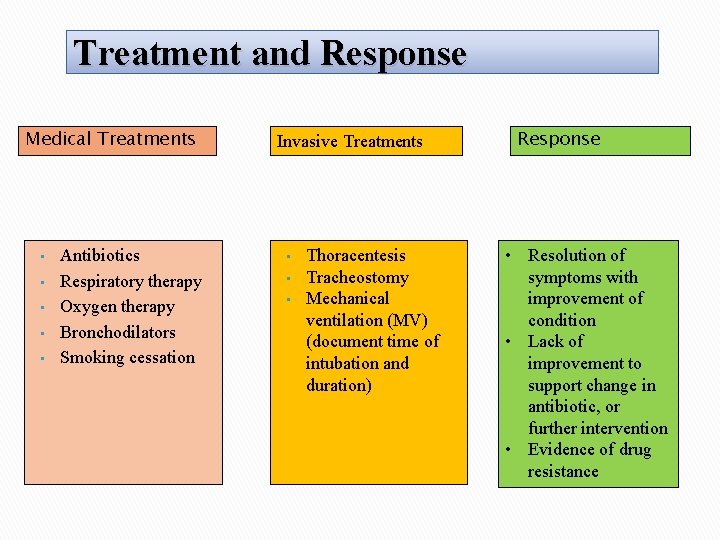
Treatment and Response Medical Treatments • • • Antibiotics Respiratory therapy Oxygen therapy Bronchodilators Smoking cessation Invasive Treatments • • • Thoracentesis Tracheostomy Mechanical ventilation (MV) (document time of intubation and duration) Response • Resolution of symptoms with improvement of condition • Lack of improvement to support change in antibiotic, or further intervention • Evidence of drug resistance
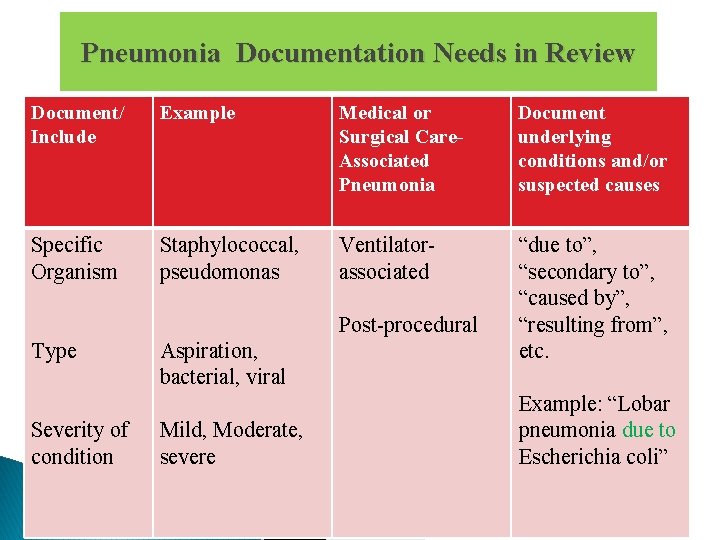
Pneumonia Documentation Needs in Review Document/ Include Example Medical or Surgical Care. Associated Pneumonia Document underlying conditions and/or suspected causes Specific Organism Staphylococcal, pseudomonas Ventilatorassociated “due to”, “secondary to”, “caused by”, “resulting from”, etc. Post-procedural Type Severity of condition Aspiration, bacterial, viral Mild, Moderate, severe Example: “Lobar pneumonia due to Escherichia coli”
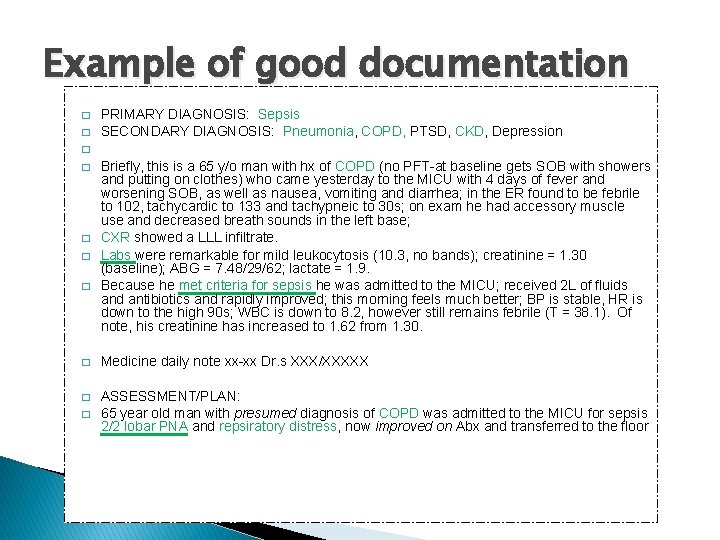
Example of good documentation � � � � PRIMARY DIAGNOSIS: Sepsis SECONDARY DIAGNOSIS: Pneumonia, COPD, PTSD, CKD, Depression Briefly, this is a 65 y/o man with hx of COPD (no PFT-at baseline gets SOB with showers and putting on clothes) who came yesterday to the MICU with 4 days of fever and worsening SOB, as well as nausea, vomiting and diarrhea; in the ER found to be febrile to 102, tachycardic to 133 and tachypneic to 30 s; on exam he had accessory muscle use and decreased breath sounds in the left base; CXR showed a LLL infiltrate. Labs were remarkable for mild leukocytosis (10. 3, no bands); creatinine = 1. 30 (baseline); ABG = 7. 48/29/62; lactate = 1. 9. Because he met criteria for sepsis he was admitted to the MICU; received 2 L of fluids and antibiotics and rapidly improved; this morning feels much better; BP is stable, HR is down to the high 90 s; WBC is down to 8. 2, however still remains febrile (T = 38. 1). Of note, his creatinine has increased to 1. 62 from 1. 30. � Medicine daily note xx-xx Dr. s XXX/XXXXX � ASSESSMENT/PLAN: 65 year old man with presumed diagnosis of COPD was admitted to the MICU for sepsis 2/2 lobar PNA and repsiratory distress, now improved on Abx and transferred to the floor �
References ICD-9 Coding Guidelines, Section 4, I. 2) ICD-10 Coding Guidelines, Section 4, H 3) My. Ve. Hu, ICD-10 Clinical Documentation Improvement for Providers 4) Elsevier, Doc Briefs – Pneumonia 5) VHA – ARC Color VERA 2013 Patient Classification Hierarchy and Final Prices, http: //vaww. arc. med. va. gov/reports/vera 2013_toc. asp 1)
Pressure Ulcers Complied and presented by Charlene Haslam CPC, RHIT March 4, 2015 Charlene. Haslam@VA. gov X 7 -3522

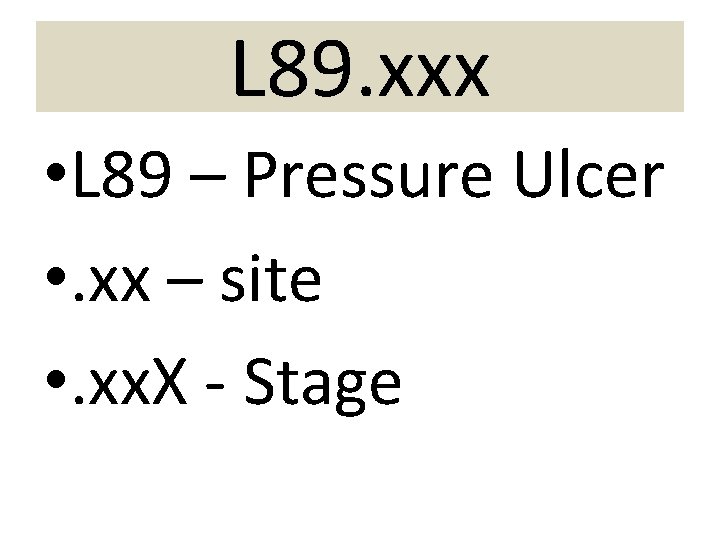
Pressure Ulcers L 89 Anatomic Site Laterality Severity of Stage 1 – Persistent focal erythema. 707. 21 Stage 2 – Partial thickness skin loss involving epidermis, or both. 707. 22 Stage 3 – Full thickness skin loss extending through subcutaneous tissue. 707. 23 Stage 4 – Necrosis of soft tissue extending to muscle and bone. 707. 24
L 89. xxx • L 89 – Pressure Ulcer • . xx – site • . xx. X - Stage
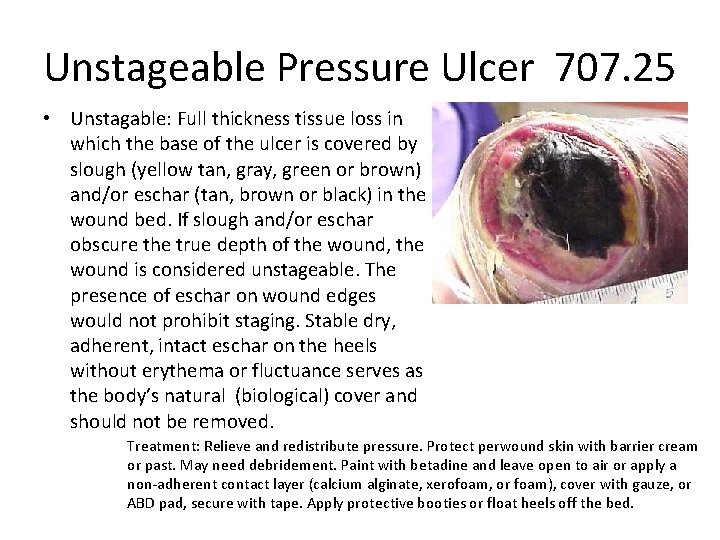
Unstageable Pressure Ulcer 707. 25 • Unstagable: Full thickness tissue loss in which the base of the ulcer is covered by slough (yellow tan, gray, green or brown) and/or eschar (tan, brown or black) in the wound bed. If slough and/or eschar obscure the true depth of the wound, the wound is considered unstageable. The presence of eschar on wound edges would not prohibit staging. Stable dry, adherent, intact eschar on the heels without erythema or fluctuance serves as the body’s natural (biological) cover and should not be removed. Treatment: Relieve and redistribute pressure. Protect perwound skin with barrier cream or past. May need debridement. Paint with betadine and leave open to air or apply a non-adherent contact layer (calcium alginate, xerofoam, or foam), cover with gauze, or ABD pad, secure with tape. Apply protective booties or float heels off the bed.
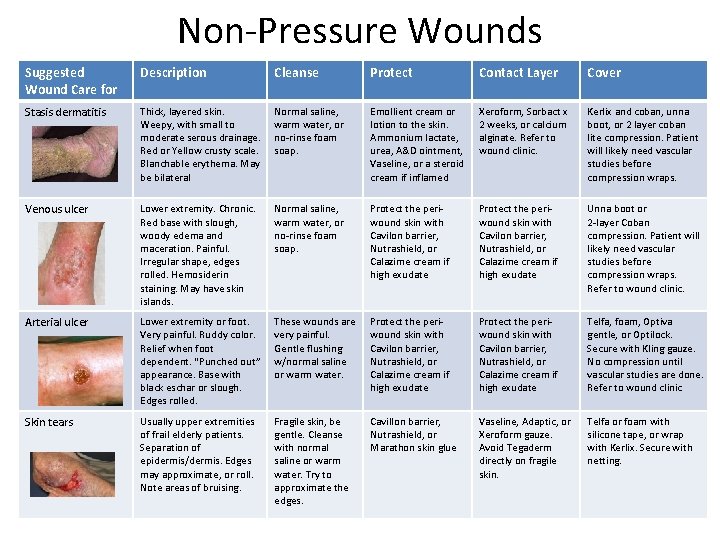
Non-Pressure Wounds Suggested Wound Care for Description Cleanse Protect Contact Layer Cover Stasis dermatitis Thick, layered skin. Weepy, with small to moderate serous drainage. Red or Yellow crusty scale. Blanchable erythema. May be bilateral Normal saline, warm water, or no-rinse foam soap. Emollient cream or lotion to the skin. Ammonium lactate, urea, A&D ointment, Vaseline, or a steroid cream if inflamed Xeroform, Sorbact x 2 weeks, or calcium alginate. Refer to wound clinic. Kerlix and coban, unna boot, or 2 layer coban lite compression. Patient will likely need vascular studies before compression wraps. Venous ulcer Lower extremity. Chronic. Red base with slough, woody edema and maceration. Painful. Irregular shape, edges rolled. Hemosiderin staining. May have skin islands. Normal saline, warm water, or no-rinse foam soap. Protect the periwound skin with Cavilon barrier, Nutrashield, or Calazime cream if high exudate Unna boot or 2 -layer Coban compression. Patient will likely need vascular studies before compression wraps. Refer to wound clinic. Arterial ulcer Lower extremity or foot. Very painful. Ruddy color. Relief when foot dependent. “Punched out” appearance. Base with black eschar or slough. Edges rolled. These wounds are very painful. Gentle flushing w/normal saline or warm water. Protect the periwound skin with Cavilon barrier, Nutrashield, or Calazime cream if high exudate Telfa, foam, Optiva gentle, or Optilock. Secure with Kling gauze. No compression until vascular studies are done. Refer to wound clinic Skin tears Usually upper extremities of frail elderly patients. Separation of epidermis/dermis. Edges may approximate, or roll. Note areas of bruising. Fragile skin, be gentle. Cleanse with normal saline or warm water. Try to approximate the edges. Cavillon barrier, Nutrashield, or Marathon skin glue Vaseline, Adaptic, or Xeroform gauze. Avoid Tegaderm directly on fragile skin. Telfa or foam with silicone tape, or wrap with Kerlix. Secure with netting.
Braden Scale • The Braden Scale is made up of six subscales (sensory perception, moisture, activity, mobility, nutrition, friction/shear) scored from 1 to 4 or 1 to 3 (1 for low level of functioning and 4 for the highest level or no impairment). Total scores range from 6 to 23. A lower Braden Scale score indicates higher levels of risk for pressure ulcer development. Scores of 18 or less generally indicate at-risk status. This threshold may need to be adjusted for the specific patient population on your unit or according to your hospital guidelines. • TX-70 Prevention and Management of Pressure Ulcers Appendix A & B • Braden Scale for Predicting Pressure Sore Risk
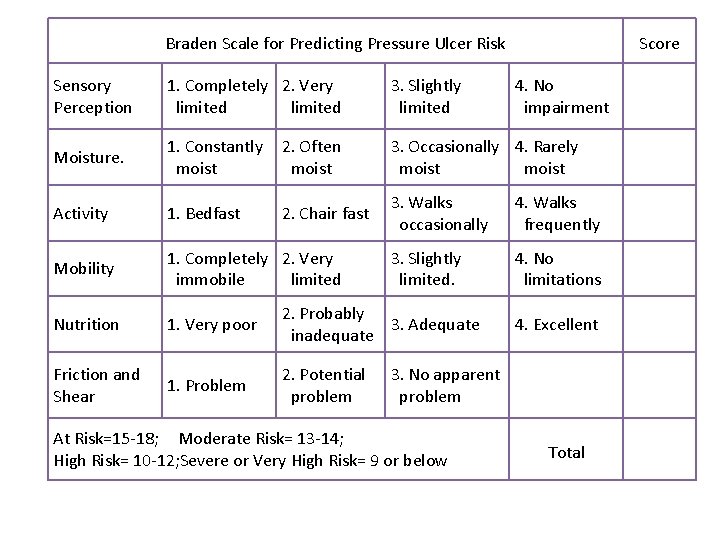
Braden Scale for Predicting Pressure Ulcer Risk Score Sensory Perception 1. Completely 2. Very limited 3. Slightly limited Moisture. 1. Constantly 2. Often moist 3. Occasionally 4. Rarely moist Activity 1. Bedfast 3. Walks occasionally 4. Walks frequently Mobility 1. Completely 2. Very immobile limited 3. Slightly limited. 4. No limitations Nutrition 1. Very poor 2. Probably 3. Adequate inadequate 4. Excellent Friction and Shear 1. Problem 2. Potential problem 2. Chair fast 4. No impairment 3. No apparent problem At Risk=15 -18; Moderate Risk= 13 -14; High Risk= 10 -12; Severe or Very High Risk= 9 or below Total
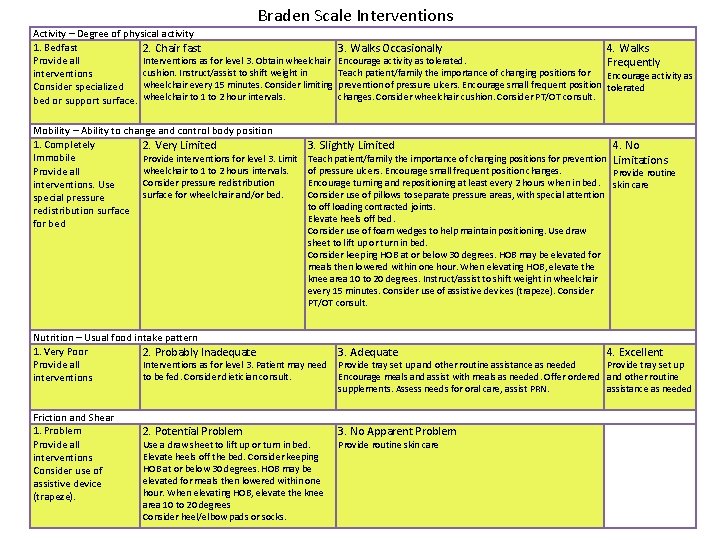
Braden Scale Interventions Activity – Degree of physical activity 1. Bedfast 2. Chair fast 3. Walks Occasionally Provide all Interventions as for level 3. Obtain wheelchair Encourage activity as tolerated. cushion. Instruct/assist to shift weight in Teach patient/family the importance of changing positions for interventions wheelchair every 15 minutes. Consider limiting prevention of pressure ulcers. Encourage small frequent position Consider specialized changes. Consider wheelchair cushion. Consider PT/OT consult. bed or support surface. wheelchair to 1 to 2 hour intervals. Mobility – Ability to change and control body position 1. Completely 2. Very Limited Immobile Provide interventions for level 3. Limit wheelchair to 1 to 2 hours intervals. Provide all Consider pressure redistribution interventions. Use surface for wheelchair and/or bed. special pressure redistribution surface for bed 4. Walks Frequently Encourage activity as tolerated 3. Slightly Limited 4. No Teach patient/family the importance of changing positions for prevention Limitations of pressure ulcers. Encourage small frequent position changes. Provide routine Encourage turning and repositioning at least every 2 hours when in bed. skin care Consider use of pillows to separate pressure areas, with special attention to off loading contracted joints. Elevate heels off bed. Consider use of foam wedges to help maintain positioning. Use draw sheet to lift up or turn in bed. Consider keeping HOB at or below 30 degrees. HOB may be elevated for meals then lowered within one hour. When elevating HOB, elevate the knee area 10 to 20 degrees. Instruct/assist to shift weight in wheelchair every 15 minutes. Consider use of assistive devices (trapeze). Consider PT/OT consult. Nutrition – Usual food intake pattern 1. Very Poor 2. Probably Inadequate 3. Adequate 4. Excellent Provide all Interventions as for level 3. Patient may need Provide tray set up and other routine assistance as needed Provide tray set up to be fed. Consider dietician consult. Encourage meals and assist with meals as needed. Offer ordered and other routine interventions Friction and Shear 1. Problem Provide all interventions Consider use of assistive device (trapeze). 2. Potential Problem Use a draw sheet to lift up or turn in bed. Elevate heels off the bed. Consider keeping HOB at or below 30 degrees. HOB may be elevated for meals then lowered within one hour. When elevating HOB, elevate the knee area 10 to 20 degrees Consider heel/elbow pads or socks. supplements. Assess needs for oral care, assist PRN. assistance as needed 3. No Apparent Problem Provide routine skin care
Puget Sound VA • Listing of stages – Coders can find staging on Nursing Assessment Note • Hospital acquired – If H&P states nothing then day or two later pressure ulcer stated then hospital acquired. • Community acquired – If on H&P ulcer and stage is documented then community acquired
Who Does What • Interdisciplinary Wound Care Committee • Nurses assume primary role in identifying at-risk Veterans and initiating/coordinating the plan of care for prevention. – – Nursing staff assumes a primary role by identifying at-risk Veterans. Initiating and coordinating the plan of care for prevention. Nurses may initiate a Wound and Skin Care Program consult. Wound & skin Care Program Certified wound care nurses and nurse practitioners Perform skin rounds on the units, Respond to inpatient and outpatient consult requests, Conduct outpatient wound clinics, Conduct quarterly pressure ulcer prevalence surveys, Provide education for staff and Veterans and/or the Veteran’s designated family members, surrogates, or authorized decision-makers on the prevention and treatment of pressure ulcers across the continuum of care, and » Order specialized beds and overlays, dressing supplies, turning schedules, and wound care for both inpatients and outpatients. » » »
Who Does What continued • Providers – Education on skin integrity and the prevention and treatment of pressure ulcers is included in orientation and the annual review for all clinicians. – Collaborate in the prevention plan – May initiate Wound and Skin Care Program consults. • Dietitians – – • Nothing by mouth status or clear liquid diet for more than 5 days Less than 75% of food consumed on trays for >3 days Veteran has difficulty chewing or swallowing Significant weight loss of ≥ 5% in 30 days or ≥ 10 % in the previous 180 days. Pharmacists – Analysis of the medication profile, – Product availability – Parenteral nutrition formulation • Rehabilitation &/or SCI staff – Recommends strategies to improve mobility and the use of protective and pressureredistributing or relieving devices
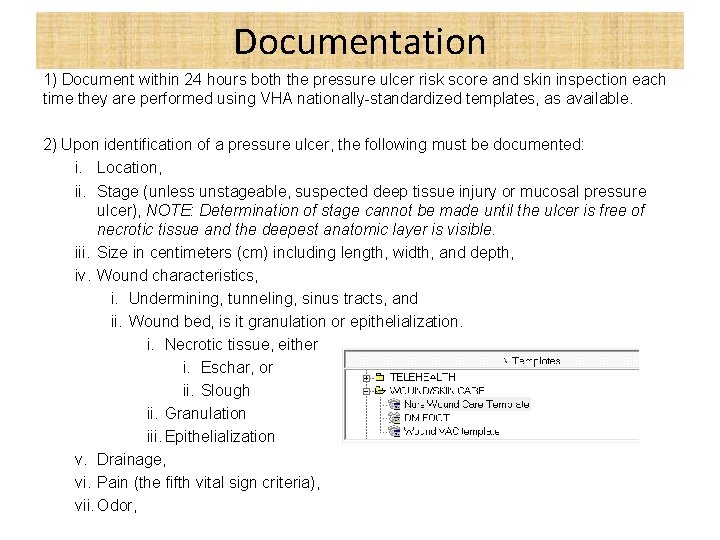
Documentation 1) Document within 24 hours both the pressure ulcer risk score and skin inspection each time they are performed using VHA nationally-standardized templates, as available. 2) Upon identification of a pressure ulcer, the following must be documented: i. Location, ii. Stage (unless unstageable, suspected deep tissue injury or mucosal pressure ulcer), NOTE: Determination of stage cannot be made until the ulcer is free of necrotic tissue and the deepest anatomic layer is visible. iii. Size in centimeters (cm) including length, width, and depth, iv. Wound characteristics, i. Undermining, tunneling, sinus tracts, and ii. Wound bed, is it granulation or epithelialization. i. Necrotic tissue, either i. Eschar, or ii. Slough ii. Granulation iii. Epithelialization v. Drainage, vi. Pain (the fifth vital sign criteria), vii. Odor,
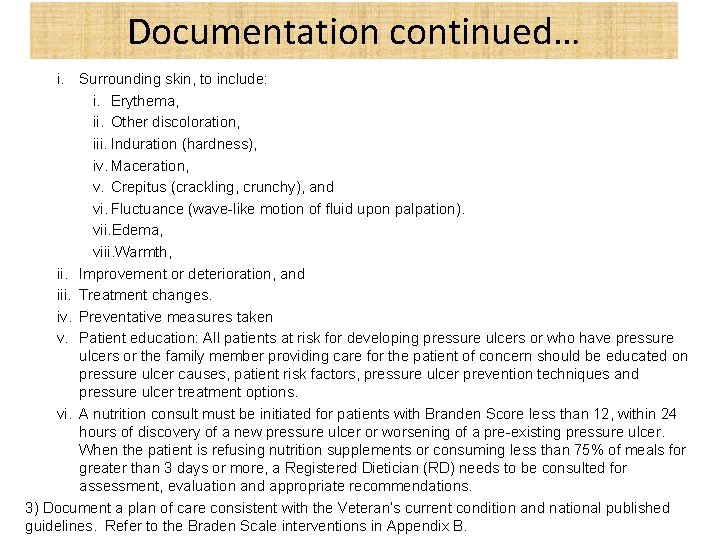
Documentation continued… i. Surrounding skin, to include: i. Erythema, ii. Other discoloration, iii. Induration (hardness), iv. Maceration, v. Crepitus (crackling, crunchy), and vi. Fluctuance (wave-like motion of fluid upon palpation). vii. Edema, viii. Warmth, ii. Improvement or deterioration, and iii. Treatment changes. iv. Preventative measures taken v. Patient education: All patients at risk for developing pressure ulcers or who have pressure ulcers or the family member providing care for the patient of concern should be educated on pressure ulcer causes, patient risk factors, pressure ulcer prevention techniques and pressure ulcer treatment options. vi. A nutrition consult must be initiated for patients with Branden Score less than 12, within 24 hours of discovery of a new pressure ulcer or worsening of a pre-existing pressure ulcer. When the patient is refusing nutrition supplements or consuming less than 75% of meals for greater than 3 days or more, a Registered Dietician (RD) needs to be consulted for assessment, evaluation and appropriate recommendations. 3) Document a plan of care consistent with the Veteran’s current condition and national published guidelines. Refer to the Braden Scale interventions in Appendix B.
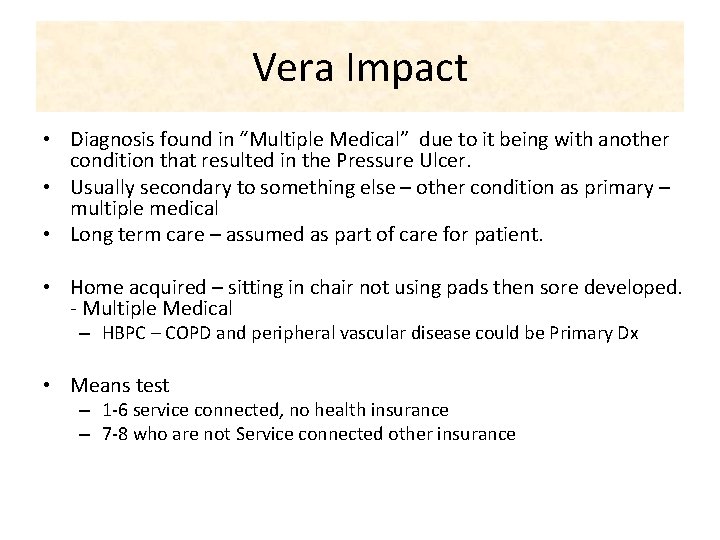
Vera Impact • Diagnosis found in “Multiple Medical” due to it being with another condition that resulted in the Pressure Ulcer. • Usually secondary to something else – other condition as primary – multiple medical • Long term care – assumed as part of care for patient. • Home acquired – sitting in chair not using pads then sore developed. - Multiple Medical – HBPC – COPD and peripheral vascular disease could be Primary Dx • Means test – 1 -6 service connected, no health insurance – 7 -8 who are not Service connected other insurance

ICD-10 CM Coding Guidelines 1) Pressure ulcer stages Pressure ulcer, are combination codes that identify the site of the pressure ulcer as well as the stage of the ulcer. The ICD-10 -CM classifies pressure ulcer stages based on severity, which is designated by stages 1 -4, unspecified stage and unstageable. Can use multiple codes to describe all the pressure ulcers the patient has 2) Unstageable pressure ulcers For pressure ulcers whose stage cannot be clinically determined (e. g. , the ulcer is covered by eschar or has been treated with a skin or muscle graft) and pressure ulcers that are documented as deep tissue injury but not documented as due to trauma. This code should not be confused with the codes for unspecified stage (L 89. --9). When there is no documentation regarding the stage of the pressure ulcer, assign the appropriate code for unspecified stage (L 89. --9). 3) Documented pressure ulcer stage If the documentation does not state the stage then query the provider. 4) Patients admitted with pressure ulcers documented as healed No code is assigned if the documentation states that the pressure ulcer is completely healed. 5) Patients admitted with pressure ulcers documented as healing Pressure ulcers described as healing should be assigned the appropriate pressure ulcer stage code based on the documentation in the medical record. If the documentation does not provide information about the stage of the healing pressure ulcer, assign the appropriate code for unspecified stage. If the documentation is unclear as to whether the patient has a current (new) pressure ulcer or if the patient is being treated for a healing pressure ulcer, query the provider. 6) Patient admitted with pressure ulcer evolving into another stage during the admission If a patient is admitted with a pressure ulcer at one stage and it progresses to a higher stage, assign the code for the highest stage reported for that site.

References • ICD-10 Documentation Pitfalls - Presentation, slide 55; Deborah Meesing, MD, JD and Tina Schumacher, RHIA • TX-70 Prevention and Management of Pressure Ulcers, TX - Care of Patients, VA Puget Sound. • VHA Handbook - 1180. 02 - Assessment and Prevention of Pressure Ulcer. Department of Veterans Affairs, Veterans Health Administration. July 1, 2011. Available online at http: //www 1. va. gov/vhapublications/View. Publication. asp? pub_ID=2422. • http: //www. ahrq. gov/professionals/systems/long-termcare/resources/pressure-ulcers/pressureulcertoolkit/putoolkit. pdf • WSC Program Booklet 2014 pdf. pdf pg. 21 Wound Care non-pressure wounds. http: //center. pugetsound. med. va. gov/nurs/Wound. Care/Staff%20 Education/WSCProgram. Boo klet 2014 pdf. pdf • VERA – Rich Vande. Plasch – telephone call 2/10/15 • ICD-10 -CM Coding Guidelines 2015 https: //www. cms. gov/Medicare/Coding/ICD 10/Downloads/icd 10 cmguidelines-2015. pdf • Coding Clinic, 2009 1 Q, Stage II Pressure Ulcer Deteriorating to Stage III.

How to Document Sepsis Compiled and Presented by Charlene Haslam CPC, RHIT March 26, 2015 253 -583 -3522 or x 7 -3522 30
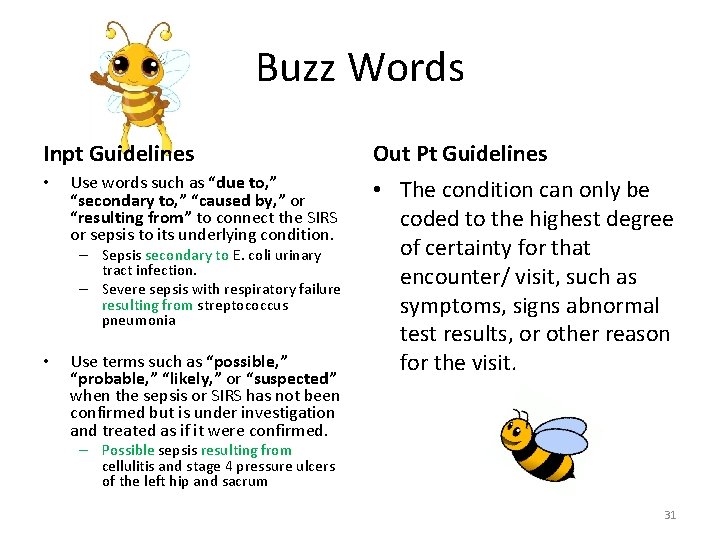
Buzz Words Inpt Guidelines • Use words such as “due to, ” “secondary to, ” “caused by, ” or “resulting from” to connect the SIRS or sepsis to its underlying condition. – Sepsis secondary to E. coli urinary tract infection. – Severe sepsis with respiratory failure resulting from streptococcus pneumonia • Use terms such as “possible, ” “probable, ” “likely, ” or “suspected” when the sepsis or SIRS has not been confirmed but is under investigation and treated as if it were confirmed. Out Pt Guidelines • The condition can only be coded to the highest degree of certainty for that encounter/ visit, such as symptoms, signs abnormal test results, or other reason for the visit. – Possible sepsis resulting from cellulitis and stage 4 pressure ulcers of the left hip and sacrum 31

What is Sepsis? Not Sepsis • • Bacteremia Urosepsis Sepsis syndrome Multiple organ dysfunction syndrome (MODS) Is Sepsis • Systemic Inflammatory Response Syndrome – SIRS • Sepsis • Severe Sepsis Complication of Sepsis • Septic Shock 32
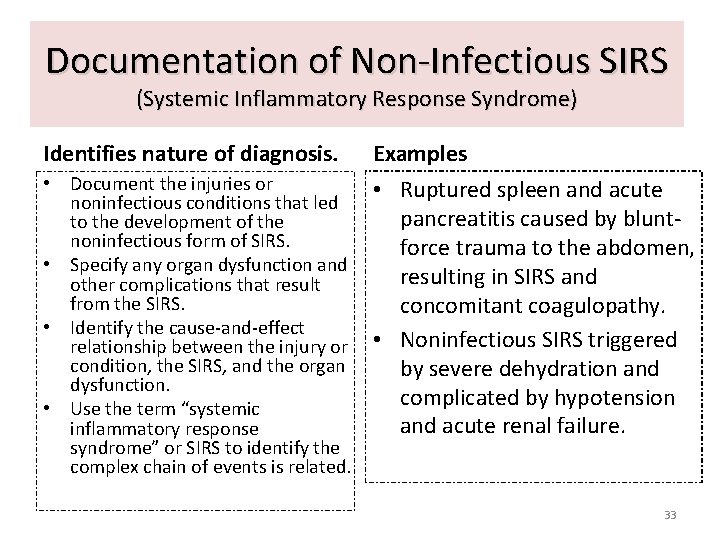
Documentation of Non-Infectious SIRS (Systemic Inflammatory Response Syndrome) Identifies nature of diagnosis. Examples • Document the injuries or • Ruptured spleen and acute noninfectious conditions that led pancreatitis caused by bluntto the development of the noninfectious form of SIRS. force trauma to the abdomen, • Specify any organ dysfunction and resulting in SIRS and other complications that result from the SIRS. concomitant coagulopathy. • Identify the cause-and-effect relationship between the injury or • Noninfectious SIRS triggered condition, the SIRS, and the organ by severe dehydration and dysfunction. complicated by hypotension • Use the term “systemic and acute renal failure. inflammatory response syndrome” or SIRS to identify the complex chain of events is related. 33
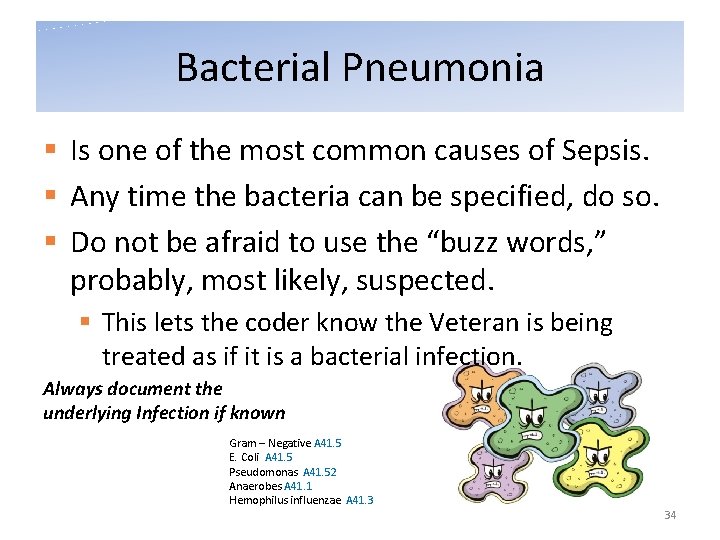
Bacterial Pneumonia § Is one of the most common causes of Sepsis. § Any time the bacteria can be specified, do so. § Do not be afraid to use the “buzz words, ” probably, most likely, suspected. § This lets the coder know the Veteran is being treated as if it is a bacterial infection. Always document the underlying Infection if known Gram – Negative A 41. 5 E. Coli A 41. 5 Pseudomonas A 41. 52 Anaerobes A 41. 1 Hemophilus influenzae A 41. 3 34

SIRS • ICD-9 • SIRS unspecified 995. 90 • SIRS without Organ Failure 995. 91 • ICD-10 SIRS of non-infectious origin – without acute organ dysfunction R 65. 10 – with acute organ dysfunction R 65. 11 • Non-infectious origin Always document the underlying Infection if known – Trauma • may lead to an infection – Burn – Heatstroke Gram – Negative A 41. 5 E. Coli A 41. 5 Pseudomonas A 41. 52 Anaerobes A 41. 1 Hemophilus influenzae A 41. 3 35
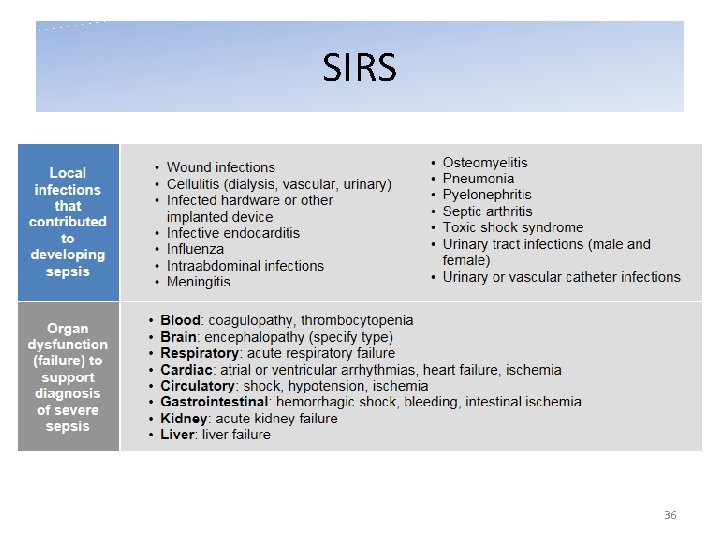
SIRS 36
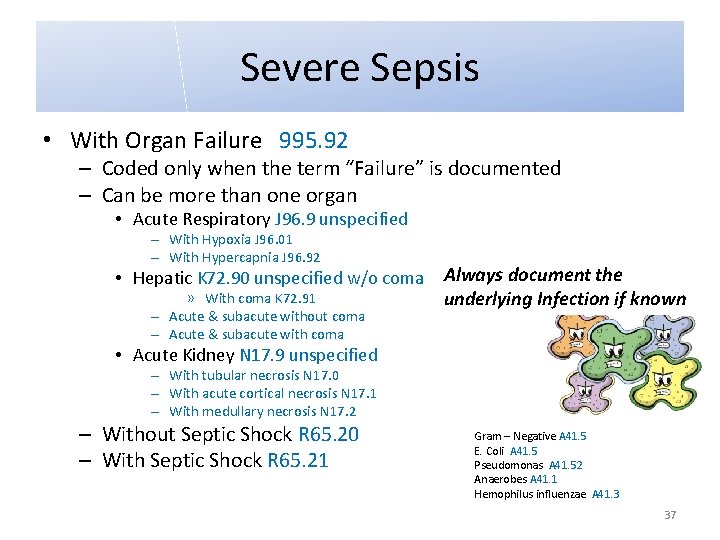
Severe Sepsis • With Organ Failure 995. 92 – Coded only when the term “Failure” is documented – Can be more than one organ • Acute Respiratory J 96. 9 unspecified – With Hypoxia J 96. 01 – With Hypercapnia J 96. 92 • Hepatic K 72. 90 unspecified w/o coma Always document the » With coma K 72. 91 underlying Infection if known – Acute & subacute without coma – Acute & subacute with coma • Acute Kidney N 17. 9 unspecified – With tubular necrosis N 17. 0 – With acute cortical necrosis N 17. 1 – With medullary necrosis N 17. 2 – Without Septic Shock R 65. 20 – With Septic Shock R 65. 21 Gram – Negative A 41. 5 E. Coli A 41. 5 Pseudomonas A 41. 52 Anaerobes A 41. 1 Hemophilus influenzae A 41. 3 37
Documentation for Sepsis and SIRS cases that usually have a cascade of clinical events • Clearly document when the • Document When the Sepsis patient was first determined or any suspected condition to have sepsis. has been ruled out after study. – Present on Admission – Hospital Acquired - if so when. • Document when conditions • ID if any significant localized resolved; also document, in the final note or summary, infections, organ the status of all remaining dysfunction or other conditions at the time of condition preceded the discharge. development of the sepsis or resulted from the sepsis or its progression. 38
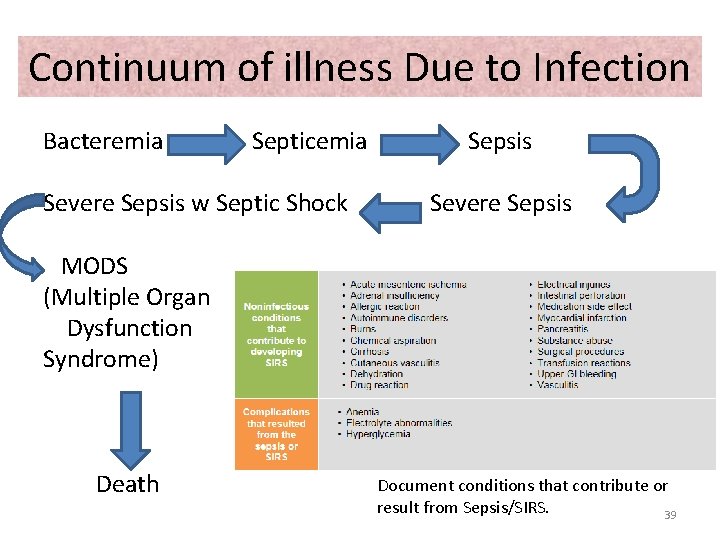
Continuum of illness Due to Infection Bacteremia Septicemia Sepsis Severe Sepsis w Septic Shock Severe Sepsis MODS (Multiple Organ Dysfunction Syndrome) Death Document conditions that contribute or result from Sepsis/SIRS. 39
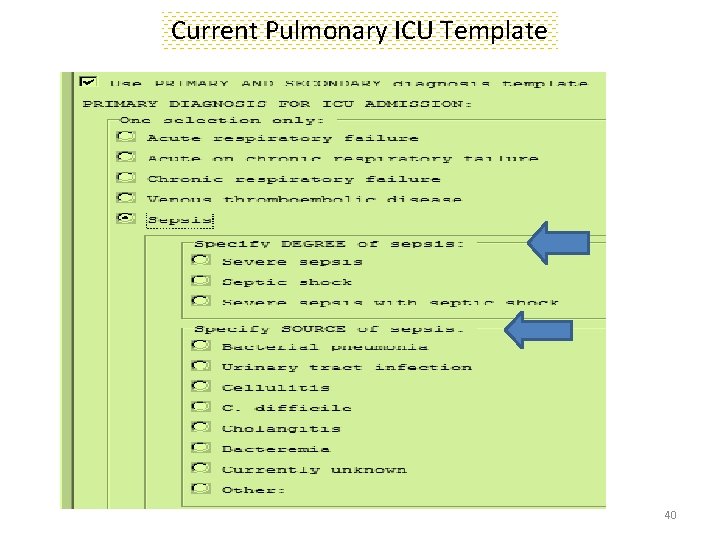
Current Pulmonary ICU Template 40
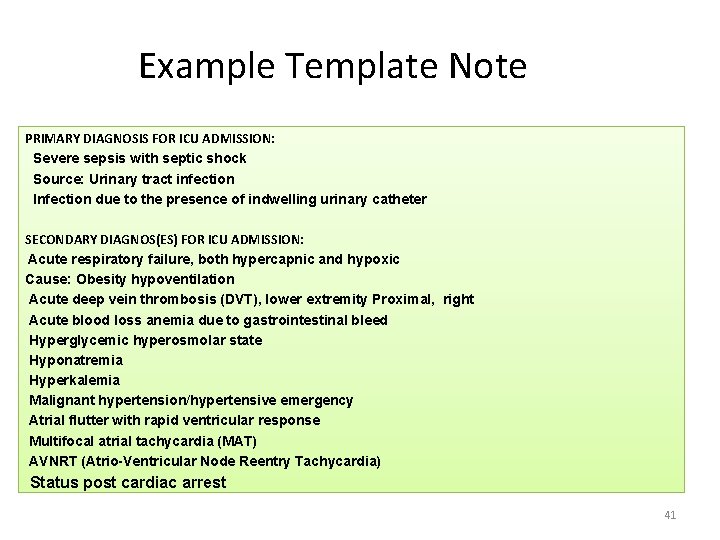
Example Template Note PRIMARY DIAGNOSIS FOR ICU ADMISSION: Severe sepsis with septic shock Source: Urinary tract infection Infection due to the presence of indwelling urinary catheter SECONDARY DIAGNOS(ES) FOR ICU ADMISSION: Acute respiratory failure, both hypercapnic and hypoxic Cause: Obesity hypoventilation Acute deep vein thrombosis (DVT), lower extremity Proximal, right Acute blood loss anemia due to gastrointestinal bleed Hyperglycemic hyperosmolar state Hyponatremia Hyperkalemia Malignant hypertension/hypertensive emergency Atrial flutter with rapid ventricular response Multifocal atrial tachycardia (MAT) AVNRT (Atrio-Ventricular Node Reentry Tachycardia) Status post cardiac arrest 41
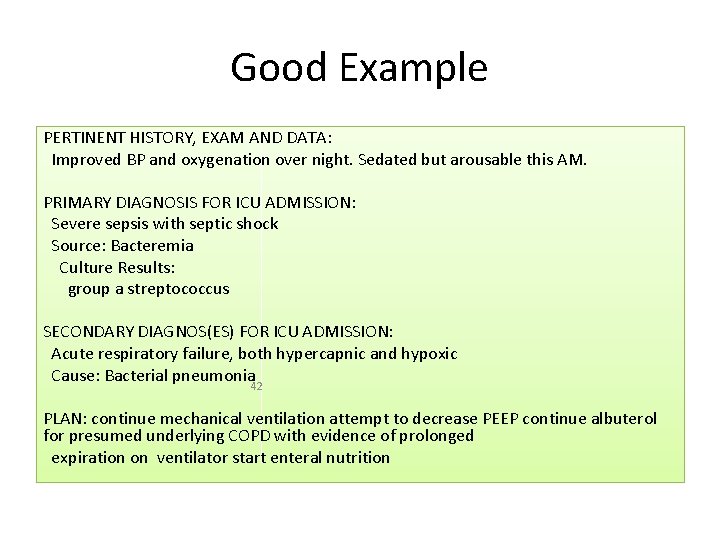
Good Example PERTINENT HISTORY, EXAM AND DATA: Improved BP and oxygenation over night. Sedated but arousable this AM. PRIMARY DIAGNOSIS FOR ICU ADMISSION: Severe sepsis with septic shock Source: Bacteremia Culture Results: group a streptococcus SECONDARY DIAGNOS(ES) FOR ICU ADMISSION: Acute respiratory failure, both hypercapnic and hypoxic Cause: Bacterial pneumonia 42 PLAN: continue mechanical ventilation attempt to decrease PEEP continue albuterol for presumed underlying COPD with evidence of prolonged expiration on ventilator start enteral nutrition

Questions? • Email – Charlene. Haslam@va. gov prefer this method or call 73522. 43
References • ICD-9 -CM, Code Book 2013, Coding Guidelines and codes. • ICD-10 -CM, Draft Code Book, Coding Guidelines and codes. • Stat. Ref, Sepsis – http: //online. statref. com/Popup. Document. arpx? doc. Address=sxw 9 si. Vw M 1 Zo. PLz. S. • Elsevier – DOC Briefs: Sepsis and Systemic Inflammatory Response Syndrome (SIRS) • Wiedemann, Lou Ann. "Coding Sepsis and SIRS. " Journal of AHIMA 78, no. 4 (April 2007): 76 -78. • VERA – 2015 Patient Classification Hierarchy with Prices. http: //vaww. arc. med. va. gov/reports/vera 2015_toc. asp • Merck. Manuals. com • VHA Directive 1082 Patient Care Directive. pdf - http: //vaww. va. gov/vhapublications/View. Publication. asp? pub_ID=309 44 1
- Slides: 44