
ORAL ULCERATION Definition what is an ulcer Full


- Slides: 21
ORAL ULCERATION
Definition – what is an ulcer? Full thickness breach of the mucosal epithelium Exposes nerve endings underlying the lamina propria Typical symptoms – pain, soreness, discomfort when eating spicy, acidic foods Can be superficial or extend into tissues underlying the surface epithelium – to submucosa, muscle or periosteum
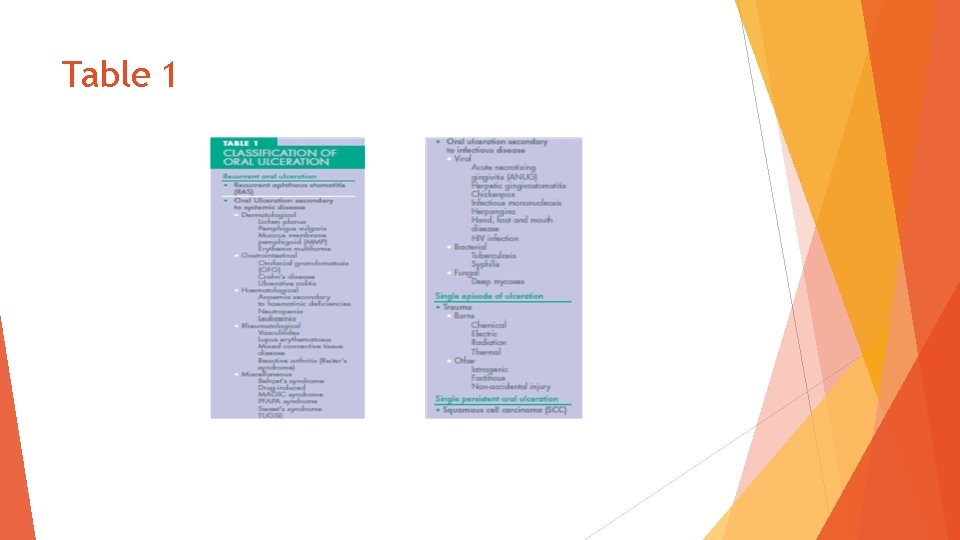
Classification Recurrent Apthous Stomatitis (RAS) Recurrent Oral Ulceration (ROS) – occurring secondary to known or unknown systemic disease/infection Single episodes of ulceration – trauma, burns, iatrogenic, Squamous Cell Carcinoma See Table 1 for basic classification overview
Recurrent Apthous Stomatitis (RAS) Defines recurring episodes of ulceration in healthy individuals 20% prevalence Occurring more commonly up to 30 yrs but can persist >30 yrs 3 sub-types: Minor, Major or Herpetiform – depending on keratanised/nonkeratanised surface and healing characteristics Features vary with sub-type
Recurrent Oral Ulceration (ROU) Patients with systemic disease may present with ROU The aetiology and pathogenesis is directly linked to the underlying disorder Examples: o Crohn’s Disease o Behcet’s Syndrome o Orofacial Granulomatosis o Leukaemia
Table 1
Pathogenesis of RAS Genetic predisposition – positive family history in approx. 1/3 patients Immunological Factors – T Helper cells & Natural Killer cells predominate in early lesions followed by cytotoxic cells & antibody dependant cellular cytotoxicity
Aetiology - RAS Genetic predisposition Immune Deficiency Hormonal link – fall in progesterone levels during menstrual cycle Mucosal Integrity Nutritional/Haematinic Deficiencies – e. g. iron, folate, vitamin B 12 Stress
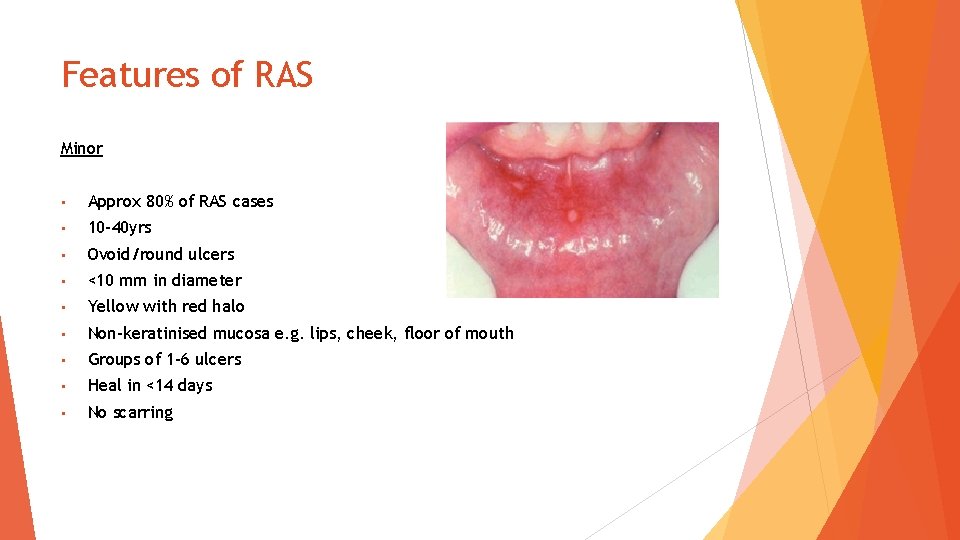
Features of RAS Minor • Approx 80% of RAS cases • 10 -40 yrs • Ovoid/round ulcers • <10 mm in diameter • Yellow with red halo • Non-keratinised mucosa e. g. lips, cheek, floor of mouth • Groups of 1 -6 ulcers • Heal in <14 days • No scarring
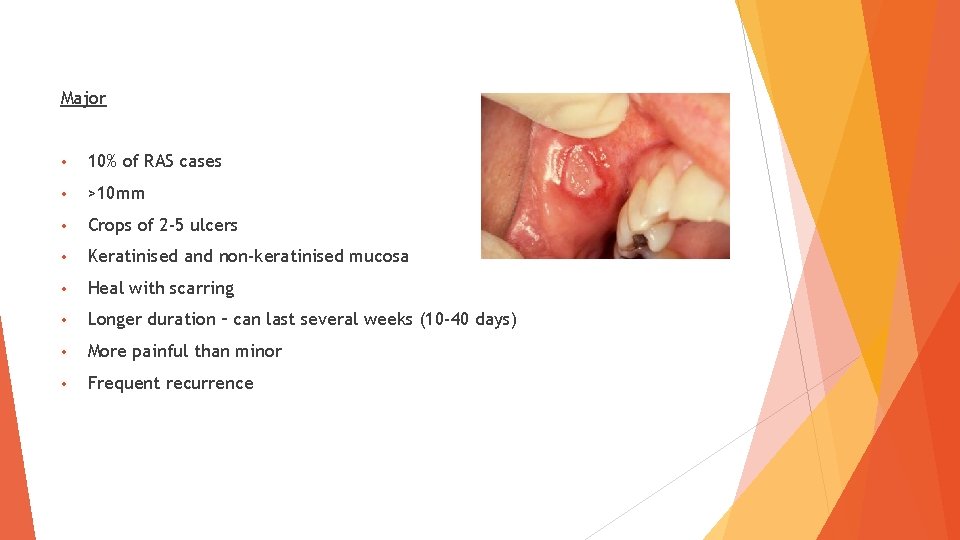
Major • 10% of RAS cases • >10 mm • Crops of 2 -5 ulcers • Keratinised and non-keratinised mucosa • Heal with scarring • Longer duration – can last several weeks (10 -40 days) • More painful than minor • Frequent recurrence
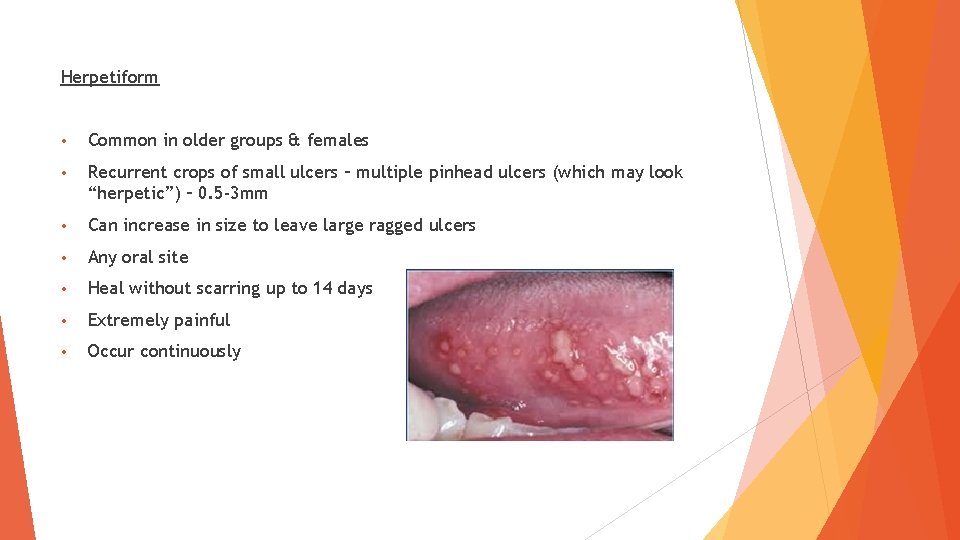
Herpetiform • Common in older groups & females • Recurrent crops of small ulcers – multiple pinhead ulcers (which may look “herpetic”) – 0. 5 -3 mm • Can increase in size to leave large ragged ulcers • Any oral site • Heal without scarring up to 14 days • Extremely painful • Occur continuously
Aetiology - ROU Pathogenesis directly linked to underlying medical disorder Secondary to systemic or infectious disease Haematological – Neutropenia, Leukaemia Rheumatological – Reactive Arthritis Gastrointestinal – Chrons disease, ulcerative colitis, OFG Dermatological – Lichen Planus, Erythema multiforme Viral – HIV, ANUG, Herpetic gingivostomatitis Bacterial – Tuberculosis Behcet’s Syndrome
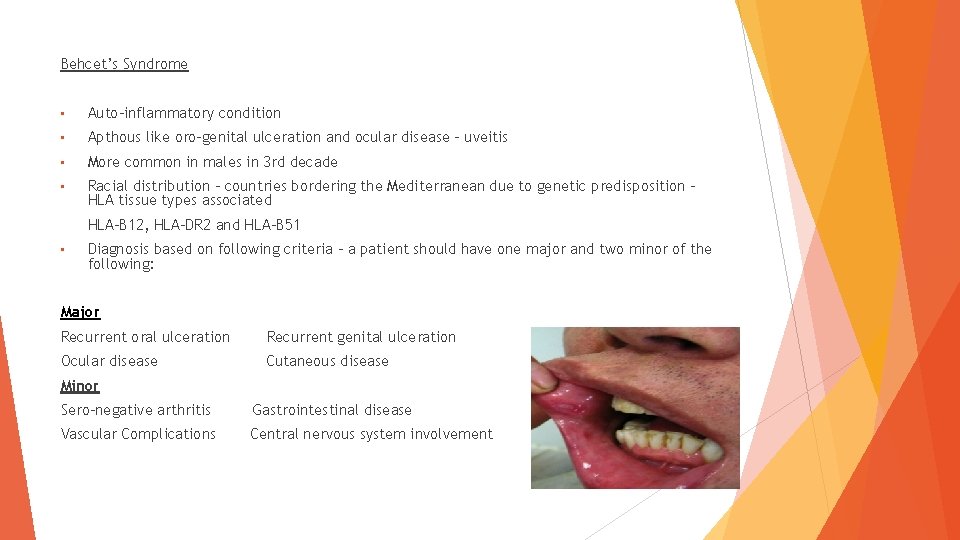
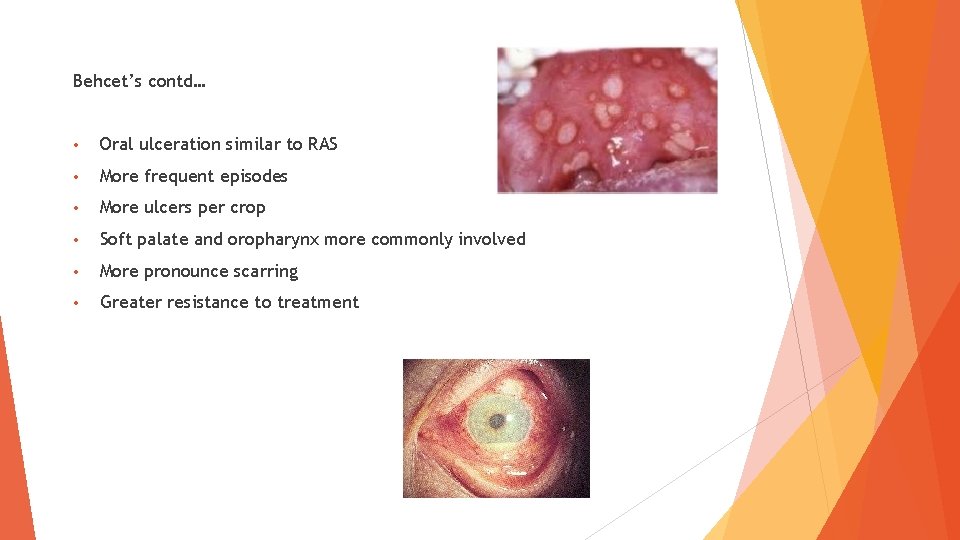
Behcet’s Syndrome • Auto-inflammatory condition • Apthous like oro-genital ulceration and ocular disease – uveitis • More common in males in 3 rd decade • Racial distribution – countries bordering the Mediterranean due to genetic predisposition – HLA tissue types associated HLA-B 12, HLA-DR 2 and HLA-B 51 • Diagnosis based on following criteria – a patient should have one major and two minor of the following: Major Recurrent oral ulceration Recurrent genital ulceration Ocular disease Cutaneous disease Minor Sero-negative arthritis Gastrointestinal disease Vascular Complications Central nervous system involvement
Behcet’s contd… • Oral ulceration similar to RAS • More frequent episodes • More ulcers per crop • Soft palate and oropharynx more commonly involved • More pronounce scarring • Greater resistance to treatment
Reactive Arthritis (Reiter’s Syndrome) Autoimmine condition Inflammation of large joints Inflammation of the eyes – conjunctivitis or uveitis Urethritis Mucocutaneous lesions Patients may present with apthous type ulceration
Single episodes of ulceration Trauma – burns - chemical, thermal Iatrogenic Non-accidental injury Cessation of smoking may aggravate ulceration
Diagnosis Based on history and clinical features To exclude underlying systemic conditions diagnostic testing as follows is required: Full Blood count, Haematinics – ferritin, folate, vitamin B 12 Serological test for coeliac disease - tissue transglutaminase antibody or antiendomysial antibody Clinical Features: site, size, shape, number of ulcers in crop, frequency & duration of episodes, age of onset, any systemic features? Tissue biopsy if SCC suspected
Management & Treatment First Line Therapies Good OH Dispersible Doxycycline (100 mg) & CHX mouthwashes Topical Analgesics – 0. 15% Benzydamine Hydrochloride (Difflam) or 1% Lidocaine ointment Mucosal protectants – carboxymethylcellulose (orobase) Topical Corticosteroids (on prescription) – 2. 5 mg Hydrocortisone muco-adhesive buccal tablet, 0. 5 mg soluble betamethasone phosphate tablets (mouthwash) or Beclometasone Dipropionate Spray Fluticasone propionate spray, mouthwash or ointment (off prescription)
Second Line Therapies Systemic corticosteroid/immunosuppressive treatment for severe cases Azathioprine Clofazimine Colchicine *Only under consultant-led treatment*
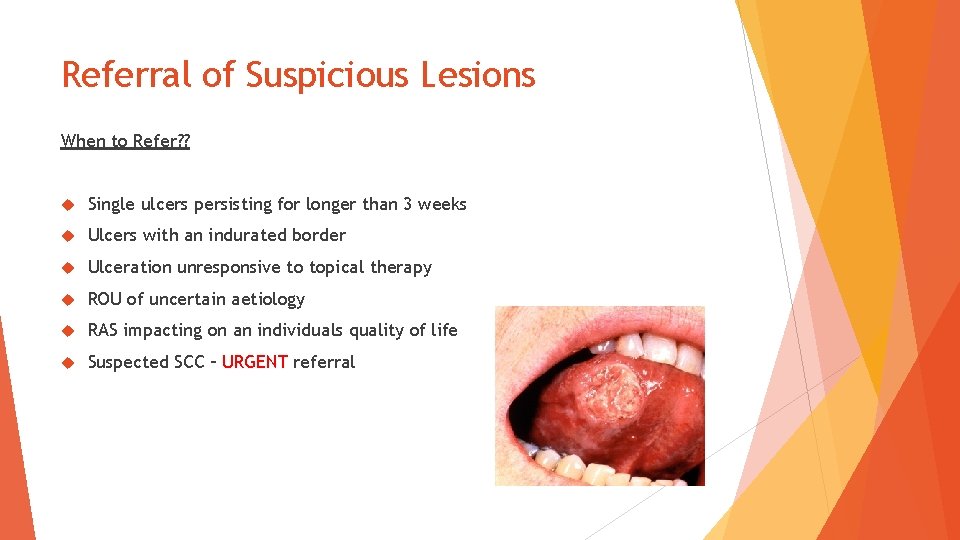
Referral of Suspicious Lesions When to Refer? ? Single ulcers persisting for longer than 3 weeks Ulcers with an indurated border Ulceration unresponsive to topical therapy ROU of uncertain aetiology RAS impacting on an individuals quality of life Suspected SCC – URGENT referral
References ORAL ULCERATION: AN OVERVIEW OF DIAGNOSIS AND MANAGEMENT PRIYA THAKRAR, SHAHID I CHAUDHRY Prim Dent J. 2016; 5(1): 30 -33 Oral Medicine: 1. Ulcers: Aphthous and other Common Ulcers David H Felix, Jane Luker, Crispian Scully Dental Update 2012; 513 -519