Three Approaches to Ethics Found in The Search









- Slides: 62
Three Approaches to Ethics Found in The Search for the Good
Three Approaches to Ethics There are many approaches to ethics These three are chosen because they represent the three stances from which Catholic ethics has most often operated
Aristotle
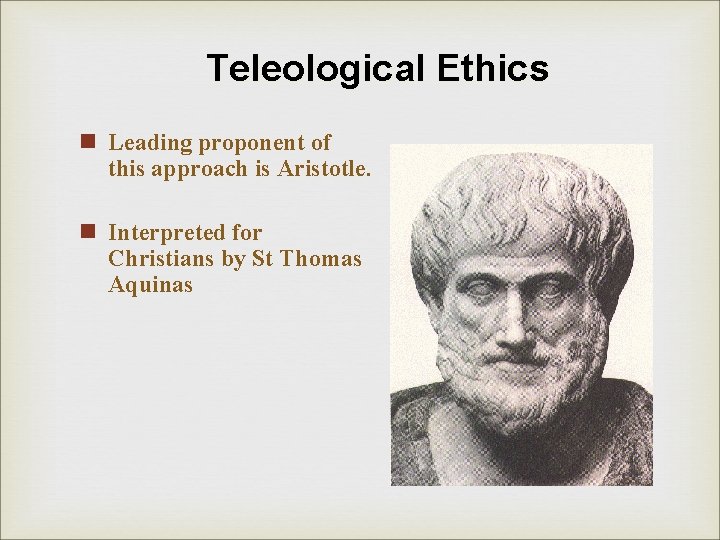
Teleological Ethics n Leading proponent of this approach is Aristotle. n Interpreted for Christians by St Thomas Aquinas
Teleological Ethics Aristotle’s Central Concepts Teleology Virtues (Human Excellences) The Mean The Polis Happiness
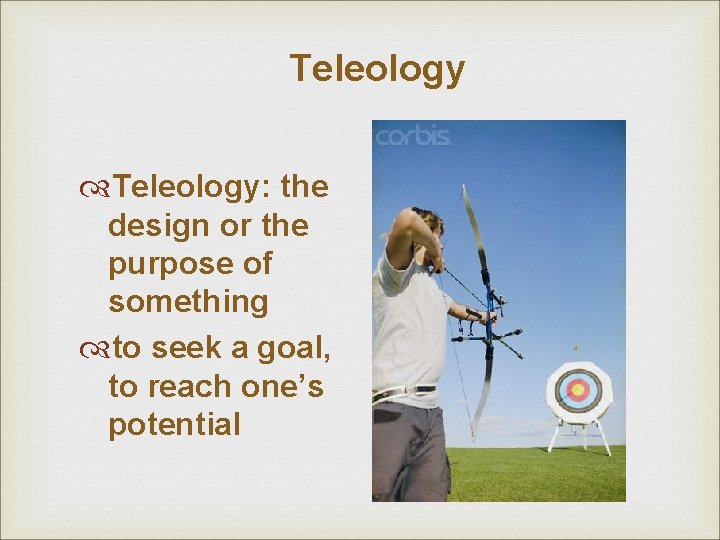
Teleology: the design or the purpose of something to seek a goal, to reach one’s potential
Teleology For Aristotle, the aim of ethics is to discover what is good for us as human beings, what permits us to reach our potential.
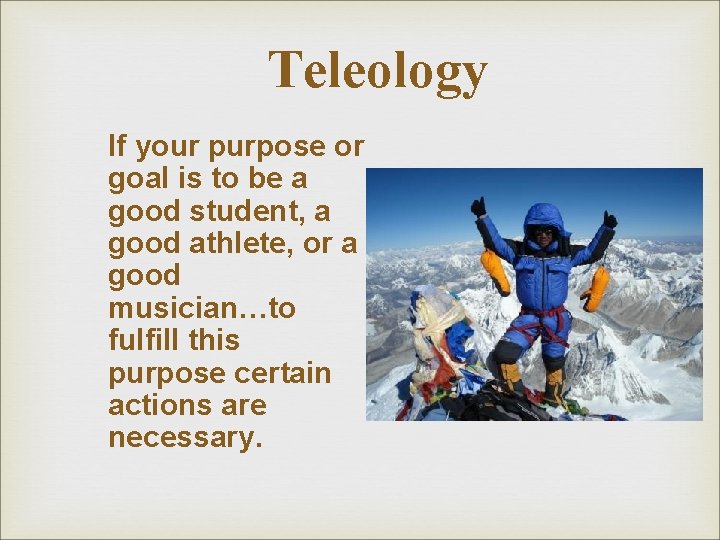
Teleology If your purpose or goal is to be a good student, a good athlete, or a good musician…to fulfill this purpose certain actions are necessary.
Teleology To reach your goals we need to act with virtue – to be a good student you need to study, be persistent
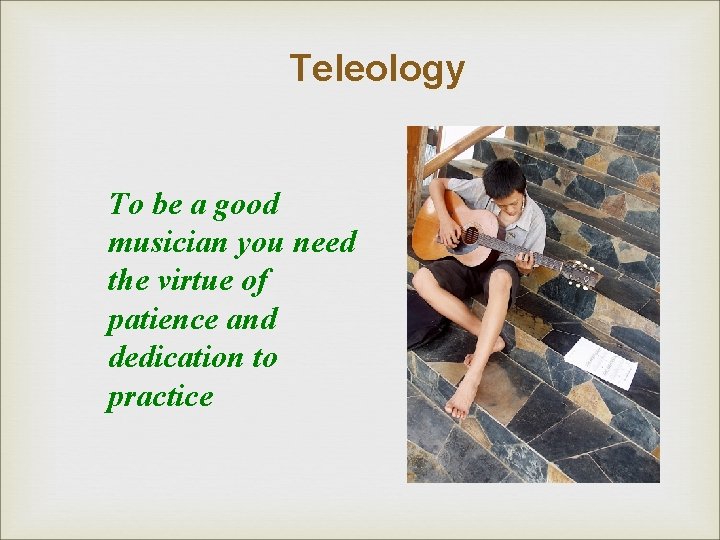
Teleology To be a good musician you need the virtue of patience and dedication to practice
Teleology To be a good athlete you need the virtue of effort.
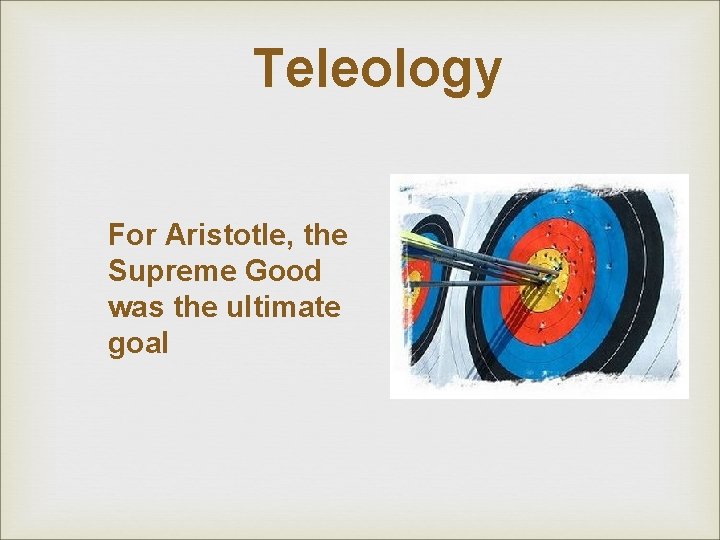
Teleology For Aristotle, the Supreme Good was the ultimate goal
Teleological Ethics n To act ethically is to engage our capacity to reason as we develop good character by acting with virtue n That is the highest form of happiness
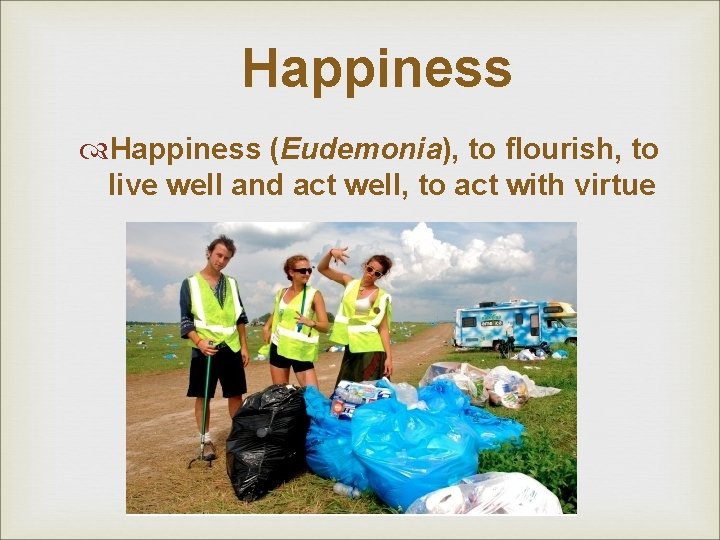
Happiness (Eudemonia), to flourish, to live well and act well, to act with virtue
Happiness An enduring sense of satisfaction, knowing that you have done the right thing
Happiness: to develop habits that represent the best of what it means to be human.
Virtue We become virtuous by choosing continually to do virtuous things these actions become ingrained in us like a habit.
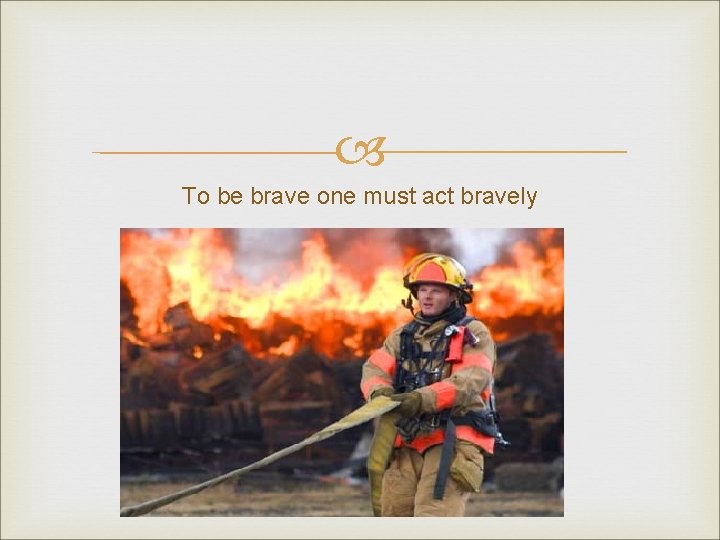
To be brave one must act bravely
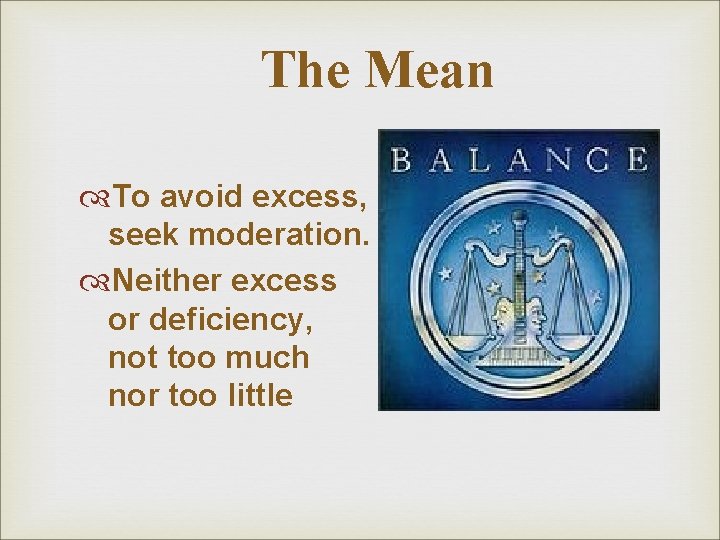
The Mean To avoid excess, seek moderation. Neither excess or deficiency, not too much nor too little
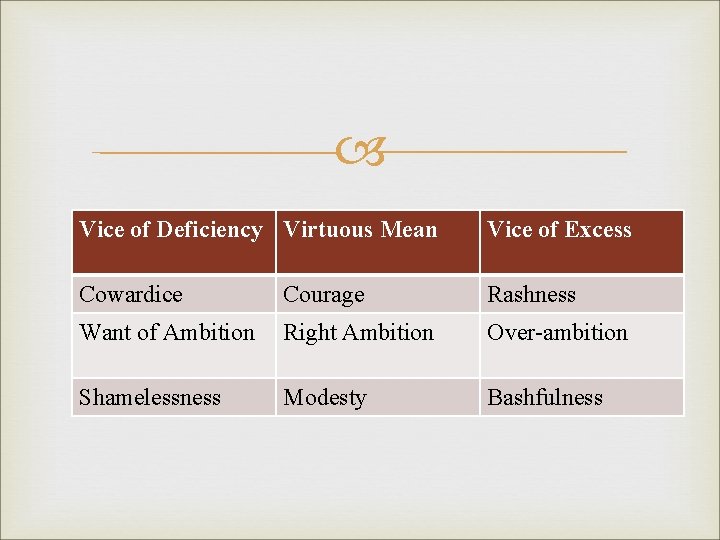
Vice of Deficiency Virtuous Mean Vice of Excess Cowardice Courage Rashness Want of Ambition Right Ambition Over-ambition Shamelessness Modesty Bashfulness
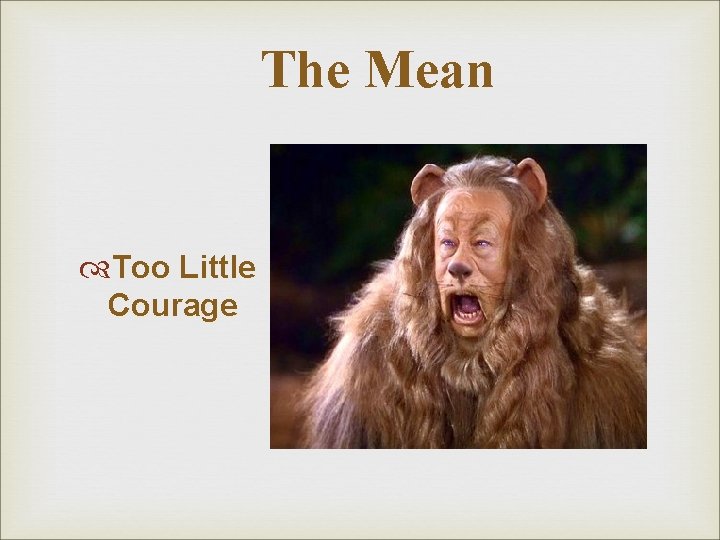
The Mean Too Little Courage
The Mean Too Much Courage – foolhardy
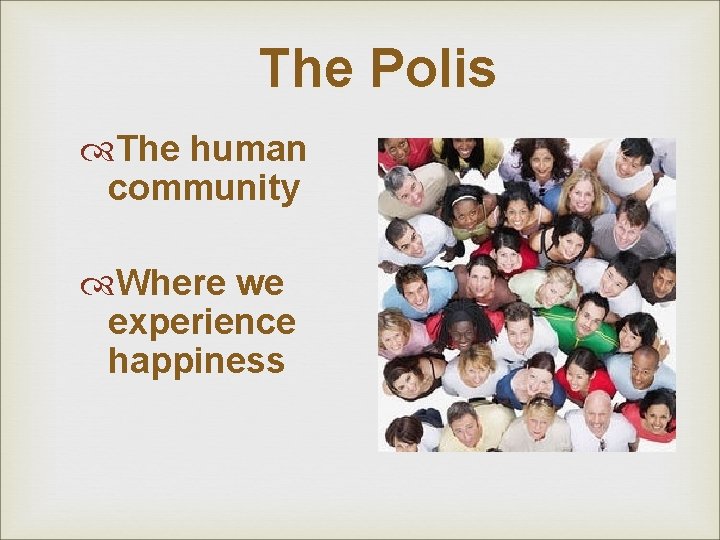
The Polis The human community Where we experience happiness
To participate in the life of the community
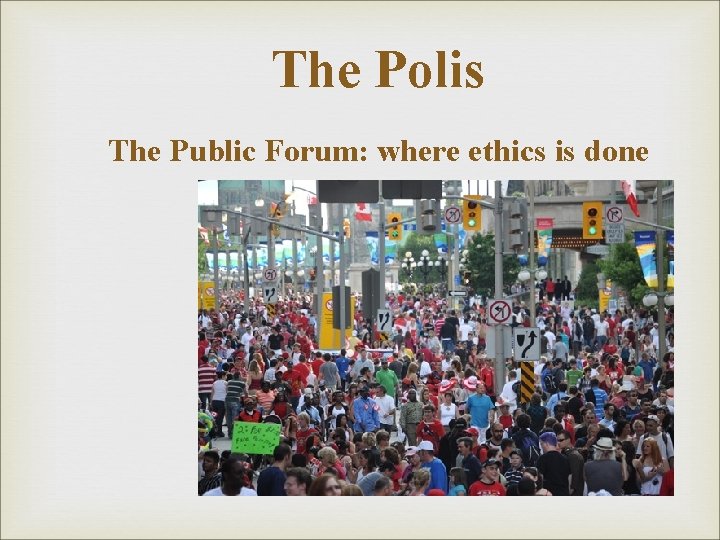
The Polis The Public Forum: where ethics is done
Immanuel Kant
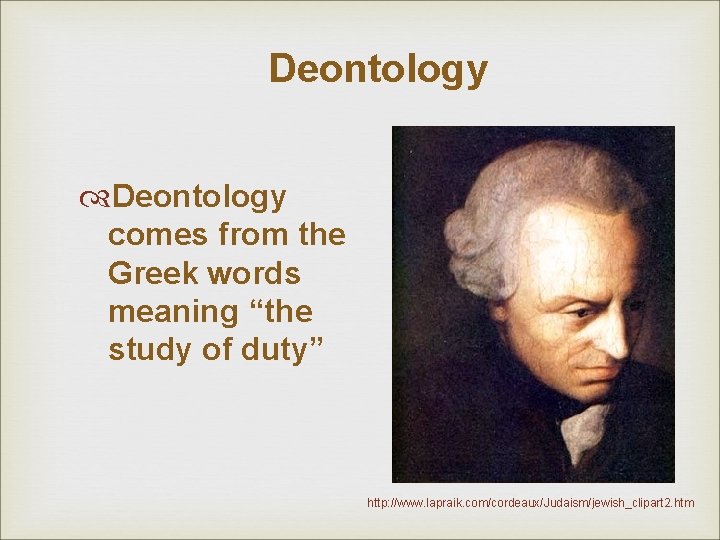
Deontology comes from the Greek words meaning “the study of duty” http: //www. lapraik. com/cordeaux/Judaism/jewish_clipart 2. htm
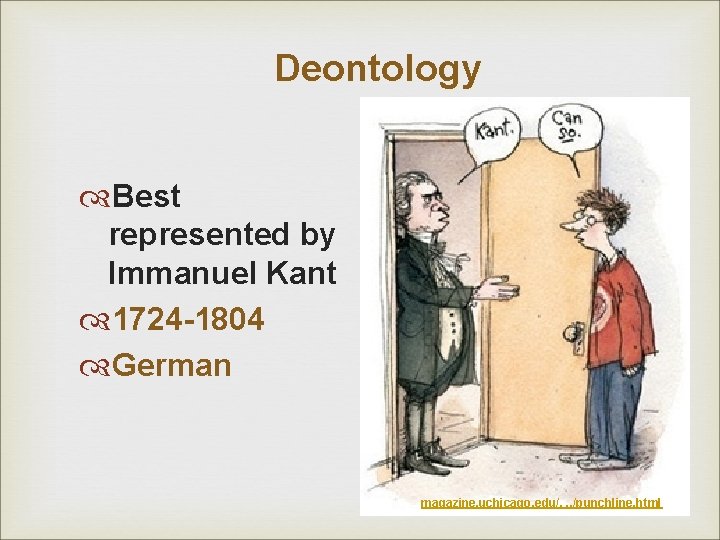
Deontology Best represented by Immanuel Kant 1724 -1804 German magazine. uchicago. edu/. . . /punchline. html
Deontology Kant: the good is the aim of moral life Concerned with moving toward practical certainty in ethics
Deontological Ethics Kant’s Central Concepts Deontology The First Maxim: Universal Law The Second Maxim: Treat others not just as means but also as ends
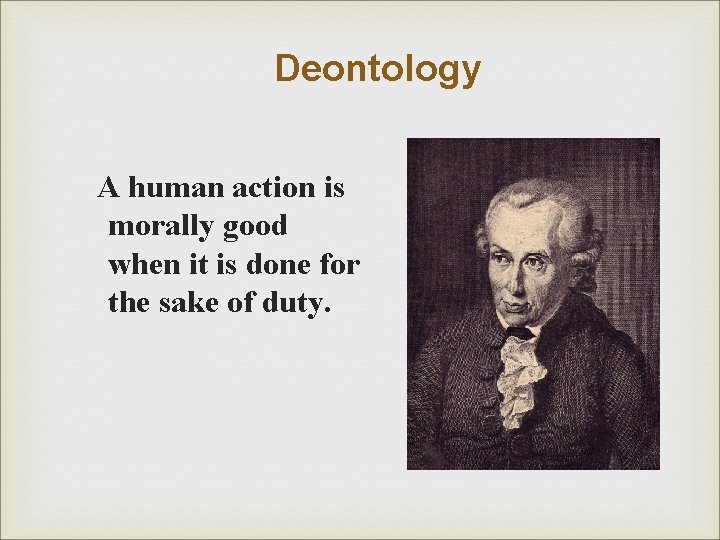
Deontology A human action is morally good when it is done for the sake of duty.
Deontology Duty is not just following orders. At times, there is a higher order of duties. Duty is about“Good Will”, the will to do our duty for no other reason than it is our duty. Impulses and desire draw us away from our duty.
Deontology Human Action is morally good when it is done for the sake of duty: Example: You may not want to go to your great aunt’s funeral, but it is your duty. You chose to go to honour your family. Therefore: Moral worth is not measured by our inclinations but by the motive behind them It is not a language of desires but of “ought. ”
The Maxims Duty is determined by the principles A maxim is a statement of principles
The First Maxim Kant’s most famous maxim: The First Maxim: Universal Law. I should act in a way that I would want everyone else in the world to act. My actions are to be the standard for the actions of all persons in the same situation.
The First Maxim Universal Law An action is only ethical if I can “universalize” that action. To make myself the exception is to act unethically.
The First Maxim Late for a meeting? Don’t run that Light! Unless everyone can run it!
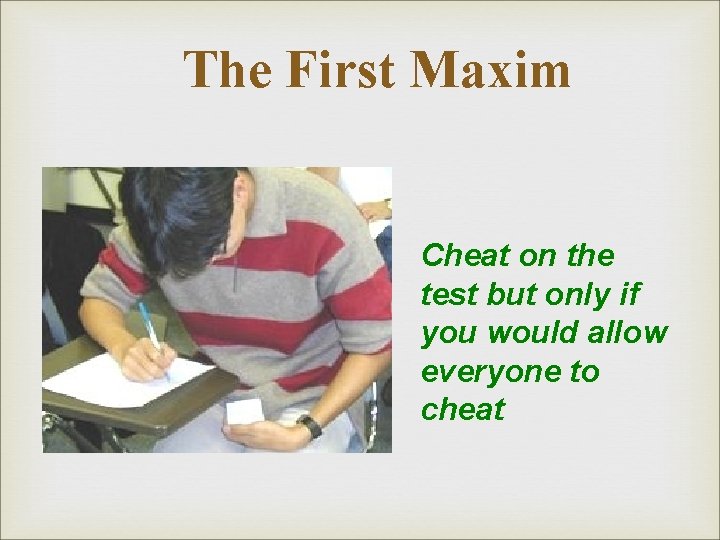
The First Maxim Cheat on the test but only if you would allow everyone to cheat
The First Maxim Warning !!! Don’t confuse the First Maxim with the Golden Rule! The First Maxim is about acting as if your actions were to become the universal standard. The First Maxim is not about how we might want to be treated by others.
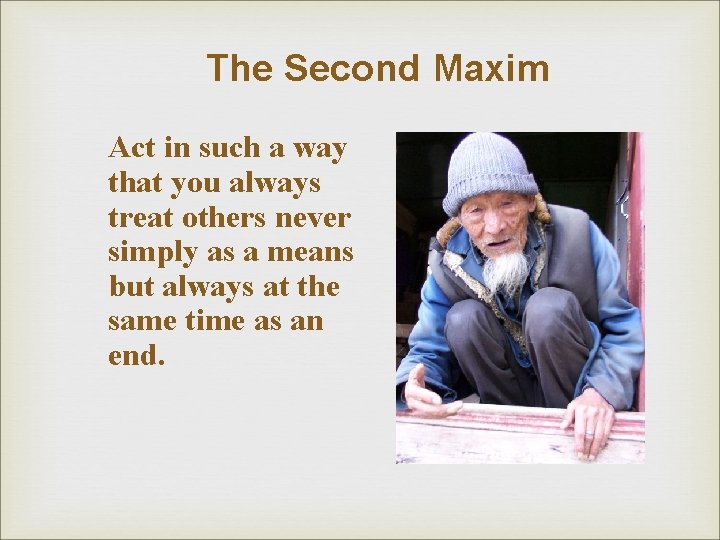
The Second Maxim Act in such a way that you always treat others never simply as a means but always at the same time as an end.
Others must be seen as having value not just as a means for our benefit but as having value in themselves
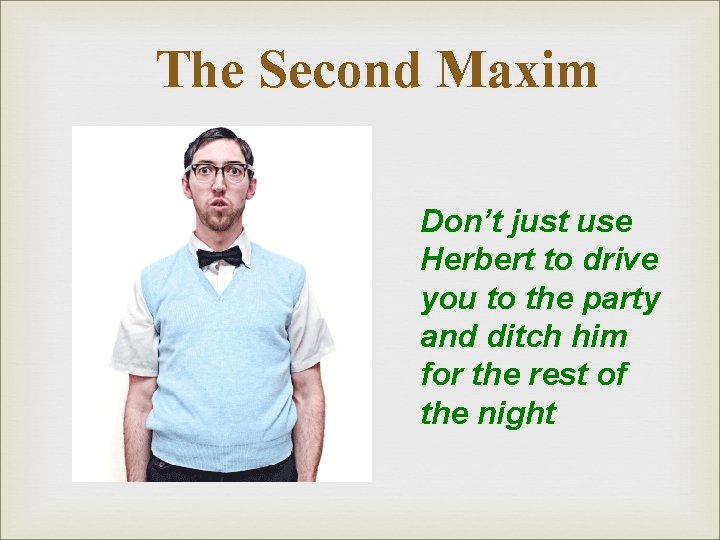
The Second Maxim Don’t just use Herbert to drive you to the party and ditch him for the rest of the night
The Second Maxim Treat workers not just as a means to making profit but as ends, individuals with rights and goals
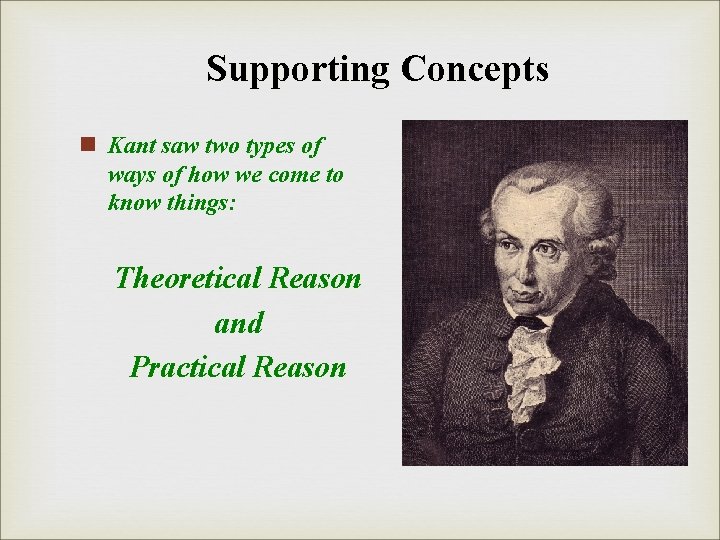
Supporting Concepts n Kant saw two types of ways of how we come to know things: Theoretical Reason and Practical Reason
Supporting Concepts Theoretical Reason How we come to know how laws of nature govern human behaviour Freedom of choice is not an issue Practical Reason People act on a conscious choice based on principles Understand what we ought to do
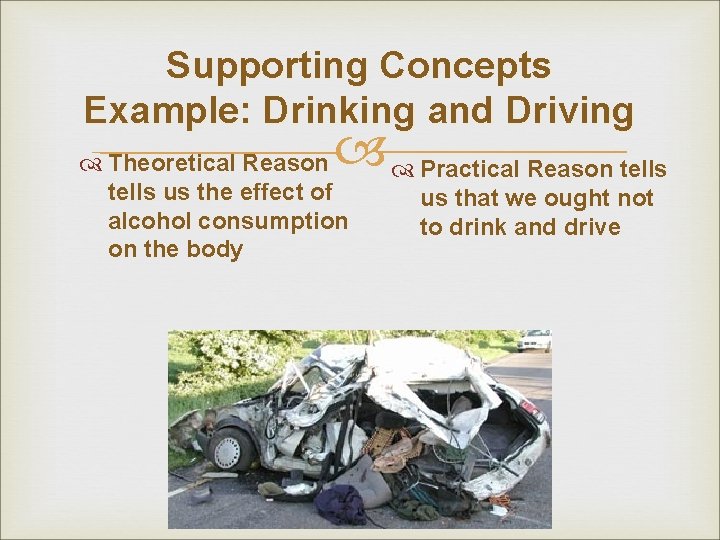
Supporting Concepts Example: Drinking and Driving Practical Reason tells Theoretical Reason tells us the effect of alcohol consumption on the body us that we ought not to drink and drive
Supporting Concepts n Three areas of interest which we need to base our search for the supreme good: n God n Freedom n Immortality
Supporting Concepts God n Because humans cannot achieve the supreme good out of their own power, we need God Freedom n If humans are to achieve the supreme good then they must be able to choose it
Supporting Concepts Immortality n Achieving the supreme good is an immense task, impossible to achieve in this life n In the life beyond we can achieve the supreme good.
Emmanuel Levinas
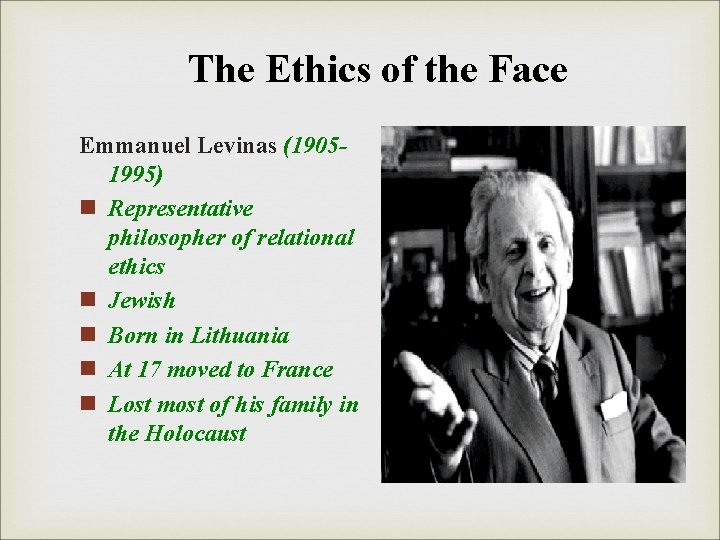
The Ethics of the Face Emmanuel Levinas (19051995) n Representative philosopher of relational ethics n Jewish n Born in Lithuania n At 17 moved to France n Lost most of his family in the Holocaust
The Ethics of the Face Much respected by Pope John Paul II Used similar ideas in The New Millennium Pope invited Levinas to several summer conferences
The Ethics of the Face Levinas’ Central Concepts The Face of the other call me to see him or her as unique The face of the other the one in need calls me to be responsible, to offer hospitality The face of the other the one in need calls me beyond my self-centred concerns
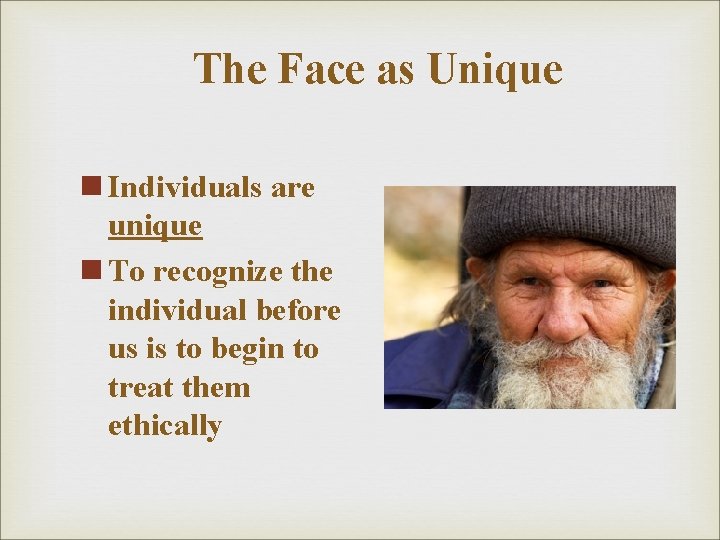
The Face as Unique n Individuals are unique n To recognize the individual before us is to begin to treat them ethically
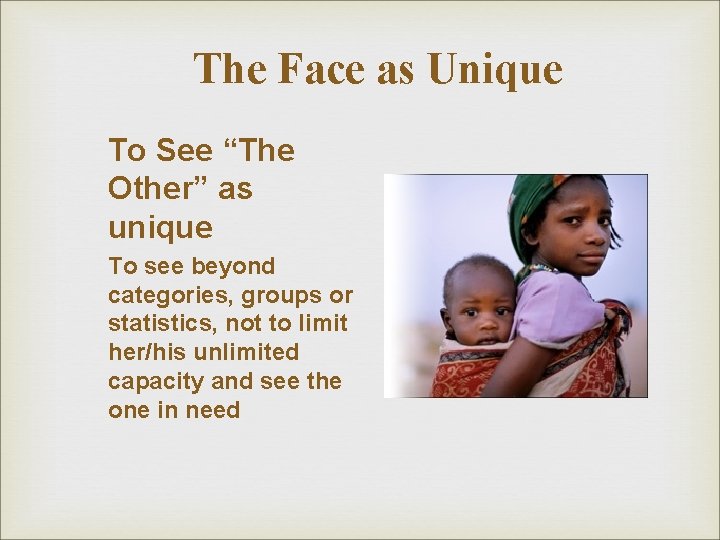
The Face as Unique To See “The Other” as unique To see beyond categories, groups or statistics, not to limit her/his unlimited capacity and see the one in need
The Face as Unique These unique things are traces of God, The Good We do not encounter God directly, but rather the trace of God.
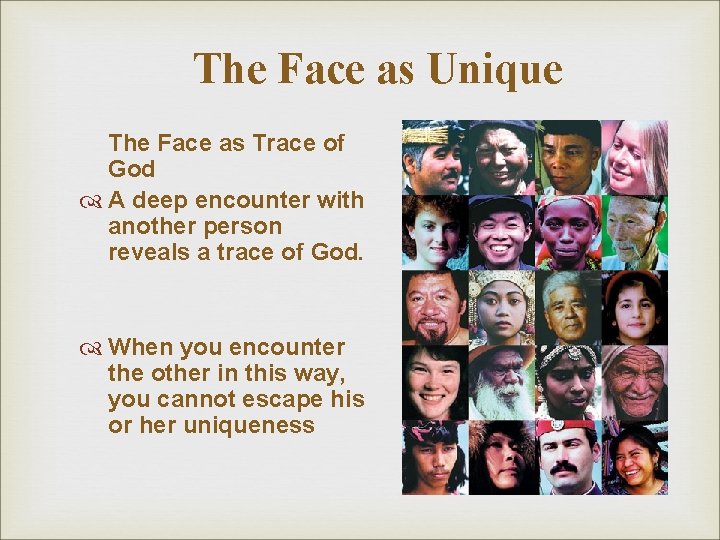
The Face as Unique The Face as Trace of God A deep encounter with another person reveals a trace of God. When you encounter the other in this way, you cannot escape his or her uniqueness
The Face of the other, the one in need calls me to be responsible The face of the other, the one in need calls me to be responsible for them, to offer hospitality, to act ethically The face of the other, the one in need, calls me to become responsible for their wellbeing.
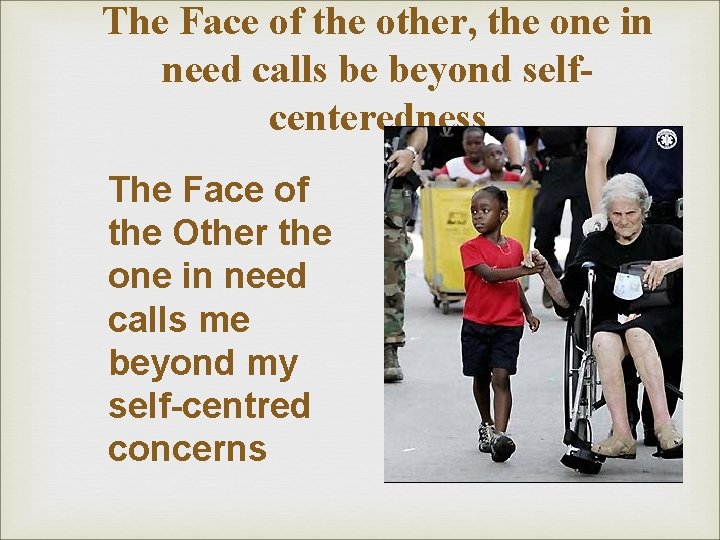
The Face of the other, the one in need calls be beyond selfcenteredness The Face of the Other the one in need calls me beyond my self-centred concerns
The Ethics of the Face The Search for the Good leads to our neighbour God touches us through the face of the Other The needs of the other become more important than my own
Three Approaches to Ethics: Relational: Similarities People are fundamentally ethical All three ethical stances search for the Good All three approaches touch on an aspect of Christian ethics
Three Approaches to Ethics: Relational: Distinguishing Features Teleological: Purpose Driven Deontological: Duty Driven Ethics of the Face: Relationship Driven