Immunotherapy for HCC Whats next Anthony ElKhoueiry MD

- Slides: 52
Immunotherapy for HCC: What’s next Anthony El-Khoueiry, MD Associate Professor of Medicine Director of Hepatobiliary Cancers Research Program Section of Gastrointestinal Cancers Phase I Program Director Medical Director of Clinical Investigations Support Office USC Norris Comprehensive Cancer Center 13 th Annual Conference 20 ► 22 September 2019 Chicago, USA 13 th ILCA Annual Conference 20 ► 22 September 2019 │Chicago, USA
Disclosures • Consultancy/advisory roles: BMS, Bayer, Eisai, Merck, Cytomx, EMD-Serono, Roche-Genentech, Agenus, Pieris • Research Funding: Astex, Astra-Zeneca, Merck 13 th ILCA Annual Conference 20 ► 22 September 2019 │Chicago, USA
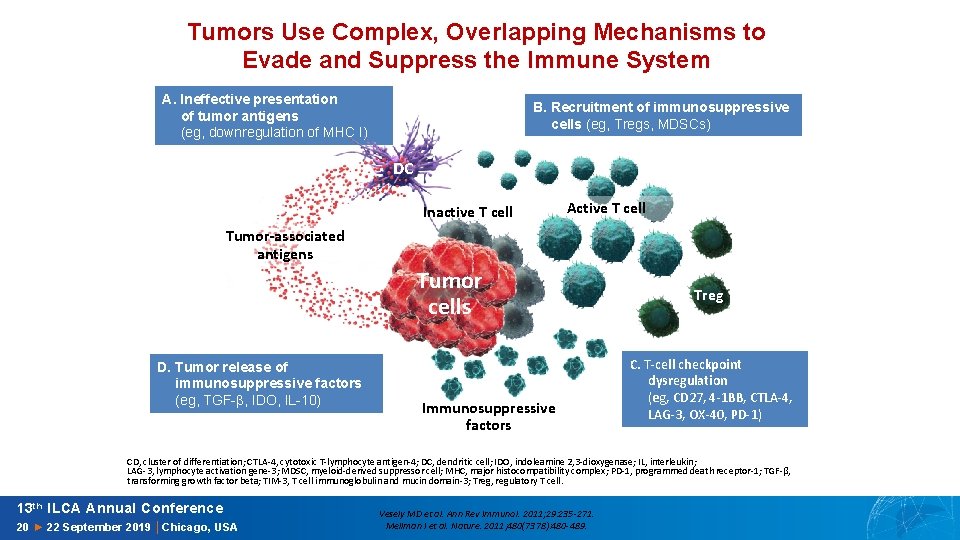
Tumors Use Complex, Overlapping Mechanisms to Evade and Suppress the Immune System A. Ineffective presentation of tumor antigens (eg, downregulation of MHC I) B. Recruitment of immunosuppressive cells (eg, Tregs, MDSCs) DC Inactive T cell Active T cell Tumor-associated antigens Tumor cells D. Tumor release of immunosuppressive factors (eg, TGF-β, IDO, IL-10) Immunosuppressive factors Treg C. T-cell checkpoint dysregulation (eg, CD 27, 4 -1 BB, CTLA-4, LAG-3, OX-40, PD-1) CD, cluster of differentiation; CTLA-4, cytotoxic T-lymphocyte antigen-4; DC, dendritic cell; IDO, indoleamine 2, 3 -dioxygenase; IL, interleukin; LAG-3, lymphocyte activation gene-3; MDSC, myeloid-derived suppressor cell; MHC, major histocompatibility complex; PD-1, programmed death receptor-1; TGF-β, transforming growth factor beta; TIM-3, T cell immunoglobulin and mucin domain-3; Treg, regulatory T cell. 13 th ILCA Annual Conference 20 ► 22 September 2019 │Chicago, USA Vesely MD et al. Ann Rev Immunol. 2011; 29: 235 -271. Mellman I et al. Nature. 2011; 480(7378): 480 -489.
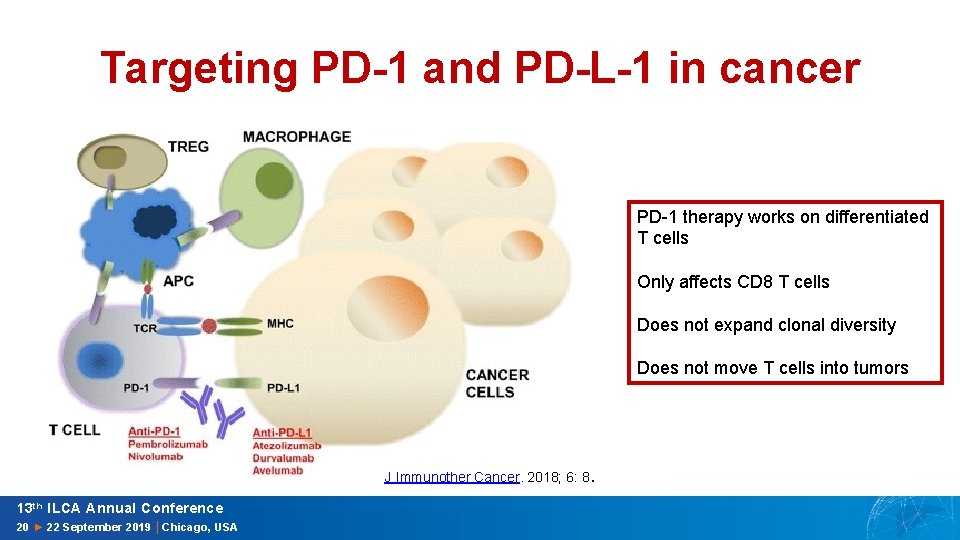
Targeting PD-1 and PD-L-1 in cancer PD-1 therapy works on differentiated T cells Only affects CD 8 T cells Does not expand clonal diversity Does not move T cells into tumors J Immunother Cancer. 2018; 6: 8. 13 th ILCA Annual Conference 20 ► 22 September 2019 │Chicago, USA
Nivolumab in HCC: checkmate 040 ORR by RECIST 1. 1 in expansion cohorts 20% ORR by RECIST 1. 1 In post sorafenib Patients 14. 3% 13 th ILCA Annual Conference 20 ► 22 September 2019 │Chicago, USA El-Khoueiry A et al, Lancet 2017
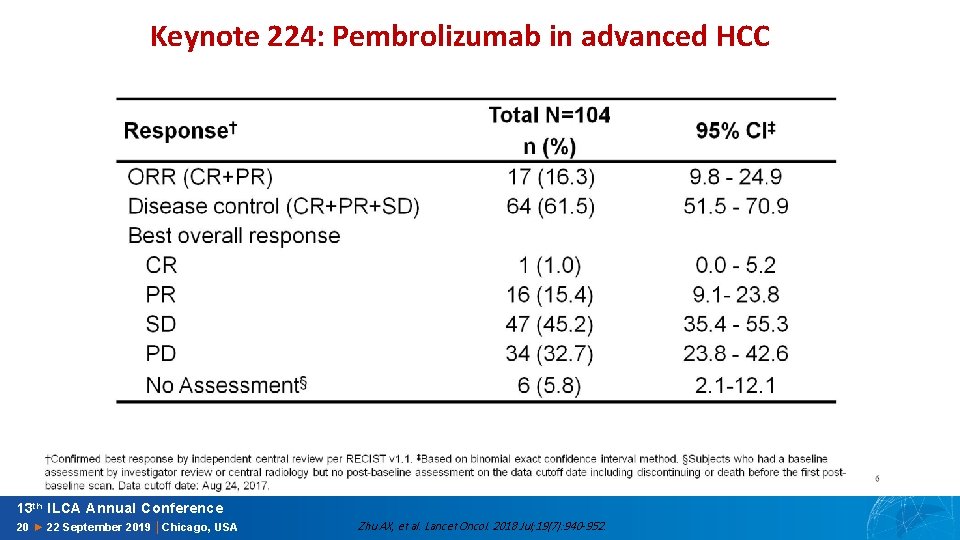
Keynote 224: Pembrolizumab in advanced HCC Slide 6 13 th ILCA Annual Conference 20 ► 22 September 2019 │Chicago, USA Zhu AX, et al. Lancet Oncol. 2018 Jul; 19(7): 940 -952.
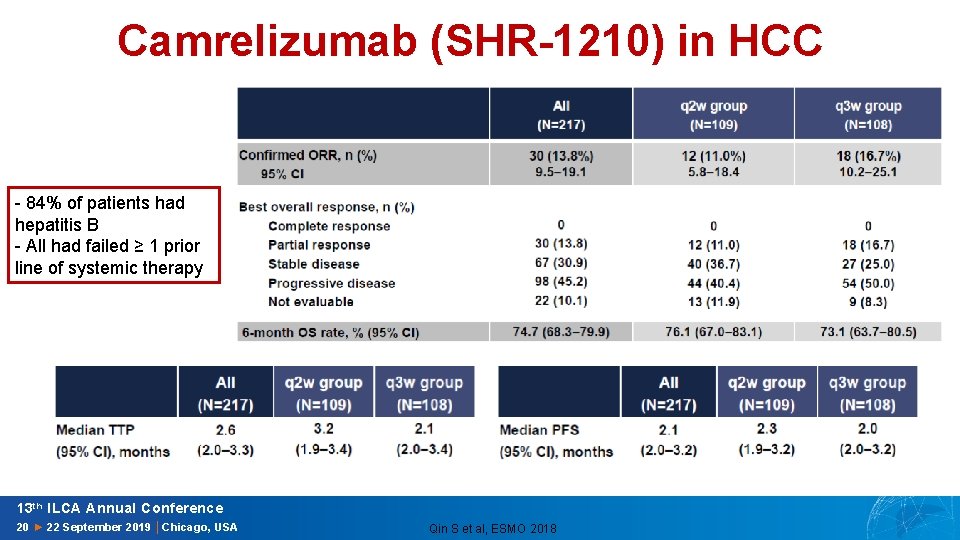
Camrelizumab (SHR-1210) in HCC - 84% of patients had hepatitis B - All had failed ≥ 1 prior line of systemic therapy 13 th ILCA Annual Conference 20 ► 22 September 2019 │Chicago, USA Qin S et al, ESMO 2018
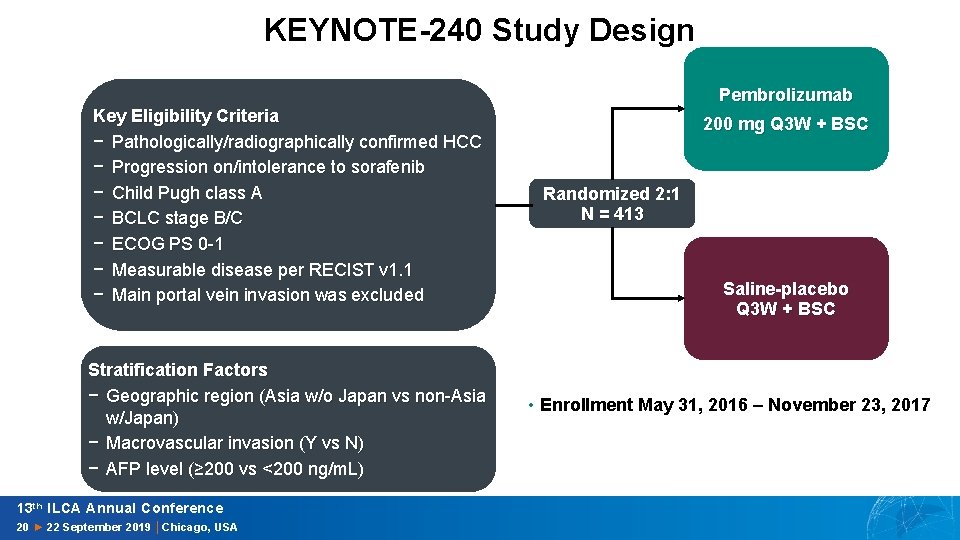
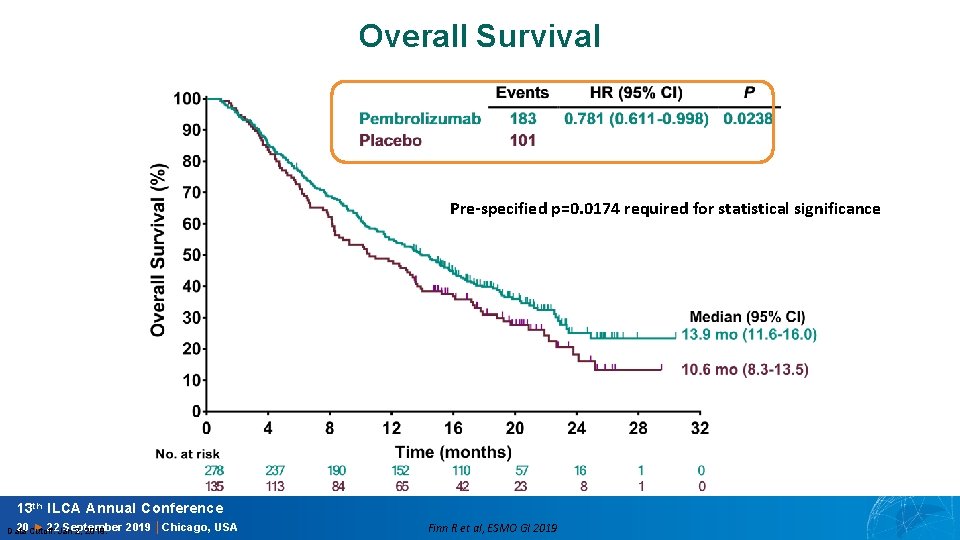
KEYNOTE-240 Study Design Key Eligibility Criteria − Pathologically/radiographically confirmed HCC − Progression on/intolerance to sorafenib − Child Pugh class A − BCLC stage B/C − ECOG PS 0 -1 − Measurable disease per RECIST v 1. 1 − Main portal vein invasion was excluded Stratification Factors − Geographic region (Asia w/o Japan vs non-Asia w/Japan) − Macrovascular invasion (Y vs N) − AFP level (≥ 200 vs <200 ng/m. L) 13 th ILCA Annual Conference 20 ► 22 September 2019 │Chicago, USA Pembrolizumab 200 mg Q 3 W + BSC Randomized 2: 1 N = 413 Saline-placebo Q 3 W + BSC • Enrollment May 31, 2016 – November 23, 2017
Overall Survival Pre-specified p=0. 0174 required for statistical significance 13 th ILCA Annual Conference 20 ► 22 September 2019 │Chicago, USA Data Cutoff: Jan 2, 2019. Finn R et al, ESMO GI 2019
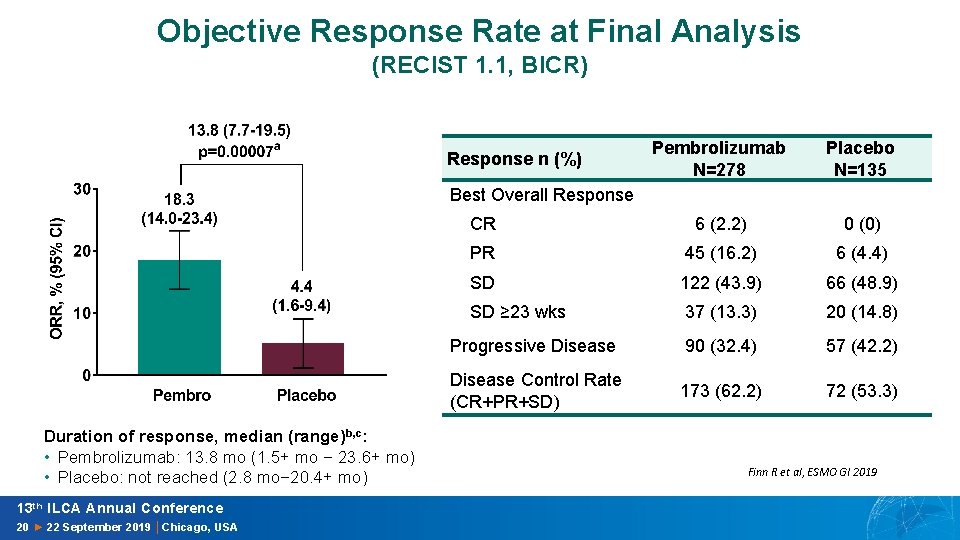
Objective Response Rate at Final Analysis (RECIST 1. 1, BICR) Pembrolizumab N=278 Placebo N=135 CR 6 (2. 2) 0 (0) PR 45 (16. 2) 6 (4. 4) SD 122 (43. 9) 66 (48. 9) SD ≥ 23 wks 37 (13. 3) 20 (14. 8) Progressive Disease 90 (32. 4) 57 (42. 2) Disease Control Rate (CR+PR+SD) 173 (62. 2) 72 (53. 3) Response n (%) Best Overall Response Duration of response, median (range)b, c: • Pembrolizumab: 13. 8 mo (1. 5+ mo − 23. 6+ mo) • Placebo: not reached (2. 8 mo− 20. 4+ mo) 13 th ILCA Annual Conference 20 ► 22 September 2019 │Chicago, USA Finn R et al, ESMO GI 2019
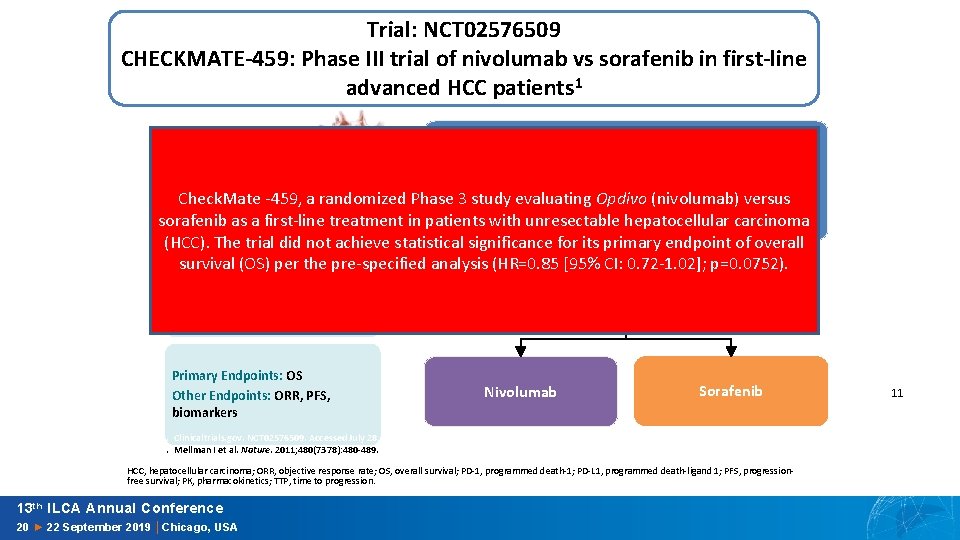
Trial: NCT 02576509 CHECKMATE-459: Phase III trial of nivolumab vs sorafenib in first-line advanced HCC patients 1 Key Eligibility Criteria N=726 • Advanced HCC not eligible for or progressive after surgical and/or PD-L 1 locoregional therapies Check. Mate -459, a randomized Phase 3 study evaluating Opdivo (nivolumab) versus • Child-Pugh A unresectable hepatocellular carcinoma PD-1 sorafenib as a first-line treatment in patients with (HCC). The trial did not achieve statistical significance for its primary endpoint of overall survival (OS) per the pre-specified analysis (HR=0. 85 [95% CI: 0. 72 -1. 02]; p=0. 0752). Adapted from Mellman I et al 2011. 2 R Start Date: November 2015 Primary Endpoints: OS Other Endpoints: ORR, PFS, biomarkers Nivolumab Sorafenib 1. Clinicaltrials. gov. NCT 02576509. Accessed July 28, 2016. 2. Mellman I et al. Nature. 2011; 480(7378): 480 -489. HCC, hepatocellular carcinoma; ORR, objective response rate; OS, overall survival; PD-1, programmed death-1; PD-L 1, programmed death-ligand 1; PFS, progressionfree survival; PK, pharmacokinetics; TTP, time to progression. 13 th ILCA Annual Conference 20 ► 22 September 2019 │Chicago, USA 11
My preliminary thoughts on the negative phase 3 trials • Is it a statistics and design issue? – Co-primary endpoints (Keynote 240) – Split α – Adequate power • Is it a problem of the “median” versus “tail of the curve”? • Is OS a challenge in the age of multiple therapeutic options and cross-over? • Is single agent activity not sufficient? 13 th ILCA Annual Conference 20 ► 22 September 2019 │Chicago, USA
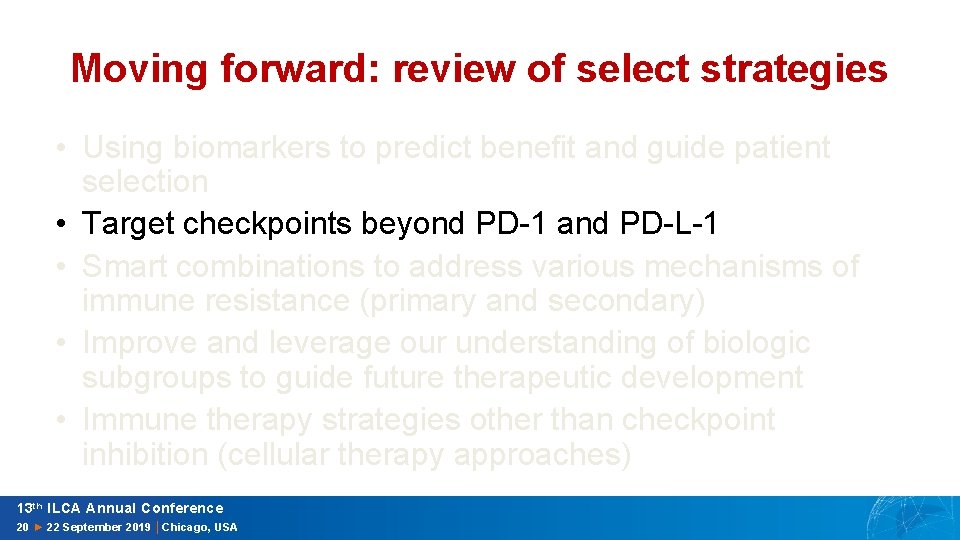
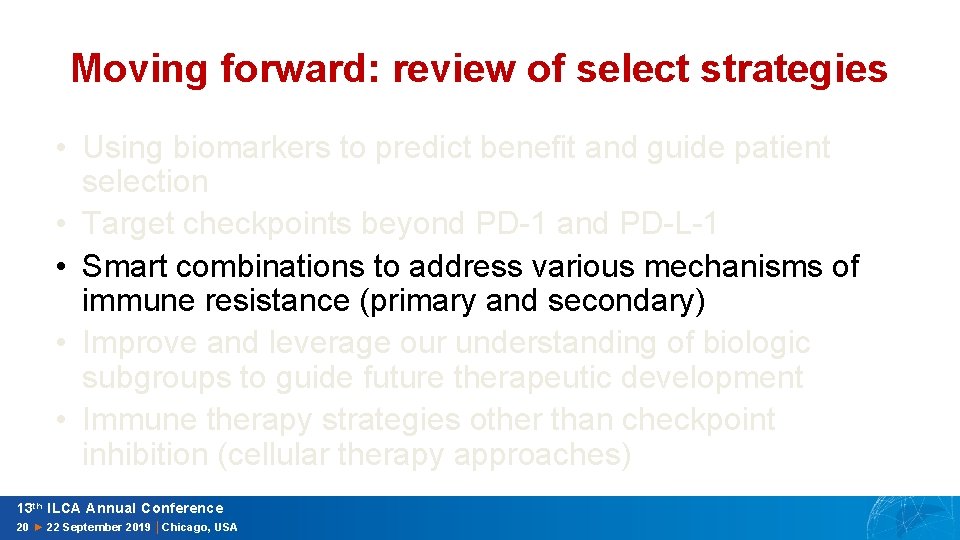
Moving forward: review of select strategies • Using biomarkers to predict benefit and guide patient selection • Target checkpoints beyond PD-1 and PD-L-1 • Smart combinations to address various mechanisms of immune resistance (primary and secondary) • Improve and leverage our understanding of biologic subgroups to guide future therapeutic development • Immune therapy strategies other than checkpoint inhibition (cellular therapy approaches) 13 th ILCA Annual Conference 20 ► 22 September 2019 │Chicago, USA
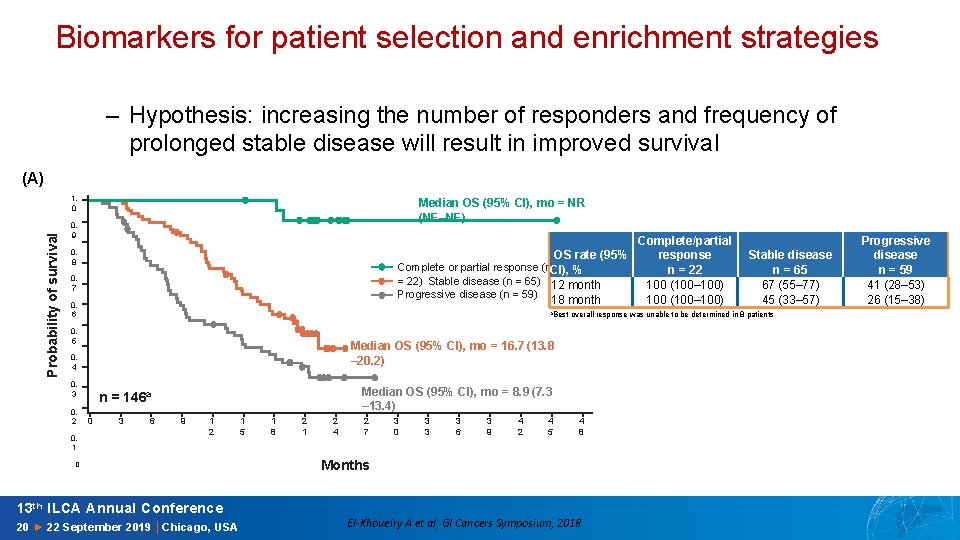
Biomarkers for patient selection and enrichment strategies – Hypothesis: increasing the number of responders and frequency of prolonged stable disease will result in improved survival (A) Probability of survival 1. 0 Median OS (95% CI), mo = NR (NE–NE) 0. 9 0. 8 OS rate (95% Complete or partial response (n CI), % = 22) Stable disease (n = 65) 12 month Progressive disease (n = 59) 18 month 0. 7 0. 6 Median OS (95% CI), mo = 16. 7 (13. 8 – 20. 2) 0. 4 0. 3 0. 1 Stable disease n = 65 67 (55– 77) 45 (33– 57) a. Best overall response was unable to be determined in 8 patients 0. 5 0. 2 Complete/partial response n = 22 100 (100– 100) Median OS (95% CI), mo = 8. 9 (7. 3 – 13. 4) n = 146 a 0 3 6 9 1 2 0 1 5 1 8 2 1 2 4 2 7 3 0 3 3 3 6 3 9 4 2 4 5 4 8 Months 13 th ILCA Annual Conference 20 ► 22 September 2019 │Chicago, USA El-Khoueiry A et al, GI Cancers Symposium, 2018 Progressive disease n = 59 41 (28– 53) 26 (15– 38)
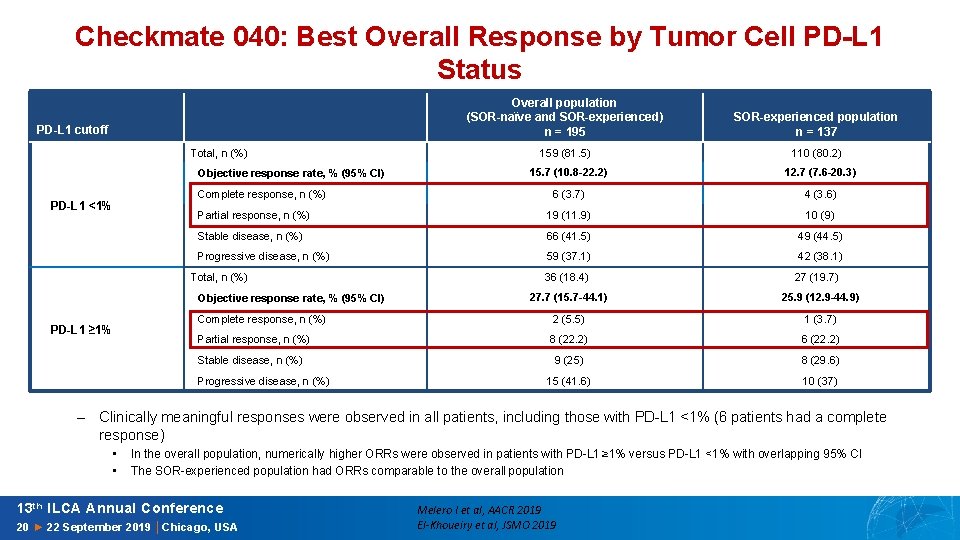
Checkmate 040: Best Overall Response by Tumor Cell PD-L 1 Status PD-L 1 cutoff Total, n (%) 159 (81. 5) 110 (80. 2) 12. 7 (7. 6– 20. 3) 6 (3. 7) 4 (3. 6) Partial response, n (%) 19 (11. 9) 10 (9) Stable disease, n (%) 66 (41. 5) 49 (44. 5) Progressive disease, n (%) 59 (37. 1) 42 (38. 1) Complete response, n (%) Total, n (%) 36 (18. 4) 27 (19. 7) 27. 7 (15. 7– 44. 1) 25. 9 (12. 9– 44. 9) Complete response, n (%) 2 (5. 5) 1 (3. 7) Partial response, n (%) 8 (22. 2) 6 (22. 2) 9 (25) 8 (29. 6) 15 (41. 6) 10 (37) Objective response rate, % (95% CI) PD-L 1 ≥ 1% SOR-experienced population n = 137 15. 7 (10. 8– 22. 2) Objective response rate, % (95% CI) PD-L 1 <1% Overall population (SOR-naïve and SOR-experienced) n = 195 Stable disease, n (%) Progressive disease, n (%) – Clinically meaningful responses were observed in all patients, including those with PD-L 1 <1% (6 patients had a complete response) • • In the overall population, numerically higher ORRs were observed in patients with PD-L 1 ≥ 1% versus PD-L 1 <1% with overlapping 95% CI The SOR-experienced population had ORRs comparable to the overall population 13 th ILCA Annual Conference 20 ► 22 September 2019 │Chicago, USA Melero I et al, AACR 2019 El-Khoueiry et al, JSMO 2019
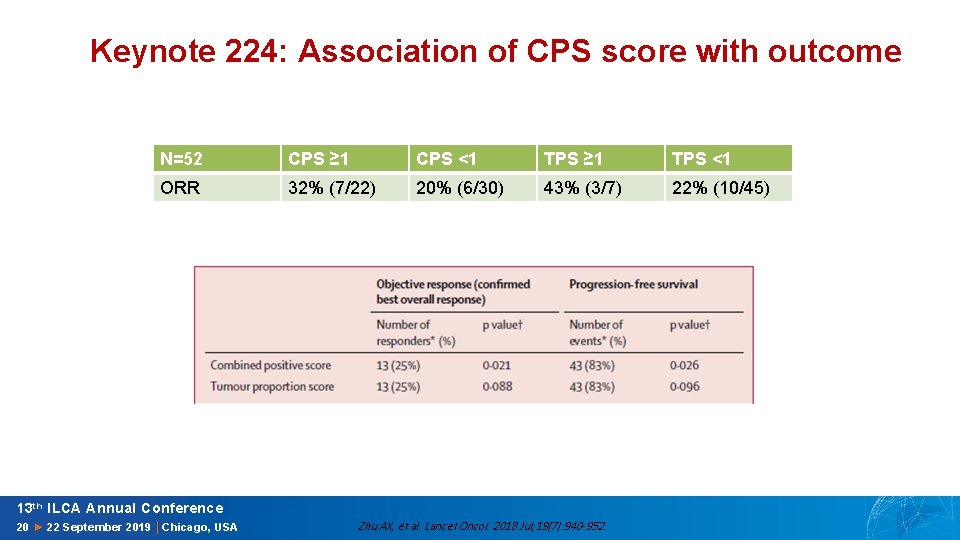
Keynote 224: Association of CPS score with outcome N=52 CPS ≥ 1 CPS <1 TPS ≥ 1 TPS <1 ORR 32% (7/22) 20% (6/30) 43% (3/7) 22% (10/45) 13 th ILCA Annual Conference 20 ► 22 September 2019 │Chicago, USA Zhu AX, et al. Lancet Oncol. 2018 Jul; 19(7): 940 -952.
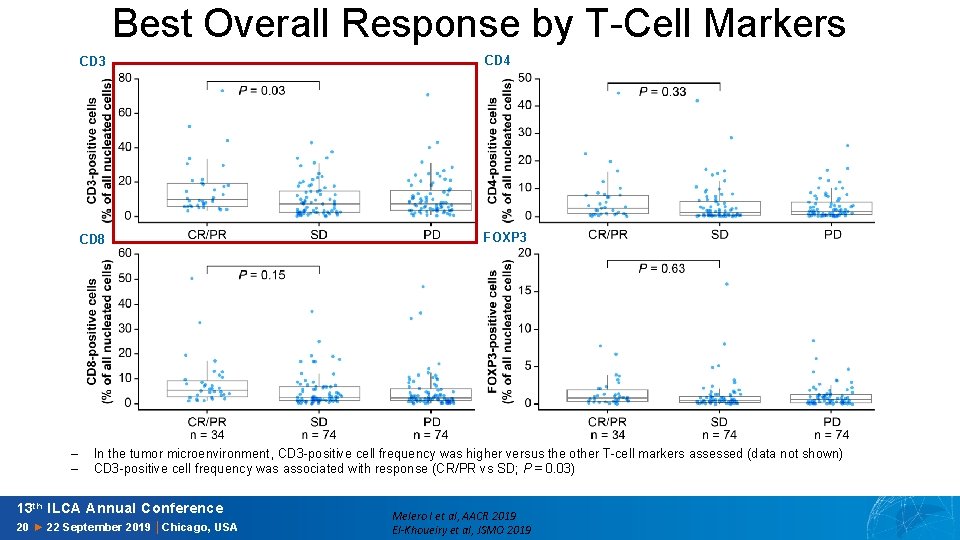
Best Overall Response by T-Cell Markers – – CD 3 CD 4 CD 8 FOXP 3 In the tumor microenvironment, CD 3 -positive cell frequency was higher versus the other T-cell markers assessed (data not shown) CD 3 -positive cell frequency was associated with response (CR/PR vs SD; P = 0. 03) 13 th ILCA Annual Conference 20 ► 22 September 2019 │Chicago, USA Melero I et al, AACR 2019 El-Khoueiry et al, JSMO 2019
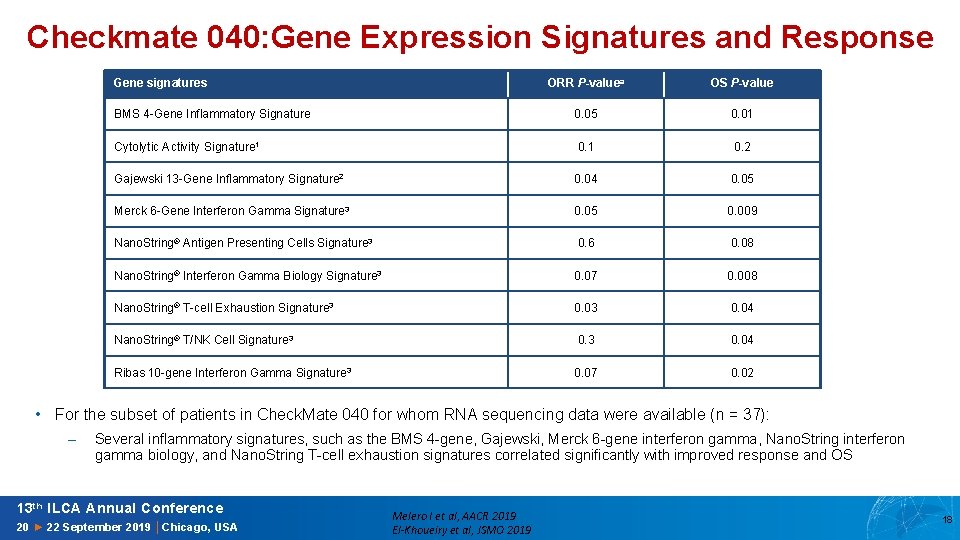
Checkmate 040: Gene Expression Signatures and Response Gene signatures ORR P-valuea OS P-value BMS 4 -Gene Inflammatory Signature 0. 05 0. 01 Cytolytic Activity Signature 1 0. 2 Gajewski 13 -Gene Inflammatory Signature 2 0. 04 0. 05 Merck 6 -Gene Interferon Gamma Signature 3 0. 05 0. 009 Nano. String® Antigen Presenting Cells Signature 3 0. 6 0. 08 Nano. String® Interferon Gamma Biology Signature 3 0. 07 0. 008 Nano. String® T-cell Exhaustion Signature 3 0. 04 Nano. String® T/NK Cell Signature 3 0. 04 Ribas 10 -gene Interferon Gamma Signature 3 0. 07 0. 02 • For the subset of patients in Check. Mate 040 for whom RNA sequencing data were available (n = 37): – Several inflammatory signatures, such as the BMS 4 -gene, Gajewski, Merck 6 -gene interferon gamma, Nano. String interferon gamma biology, and Nano. String T-cell exhaustion signatures correlated significantly with improved response and OS 13 th ILCA Annual Conference 20 ► 22 September 2019 │Chicago, USA Melero I et al, AACR 2019 El-Khoueiry et al, JSMO 2019 18
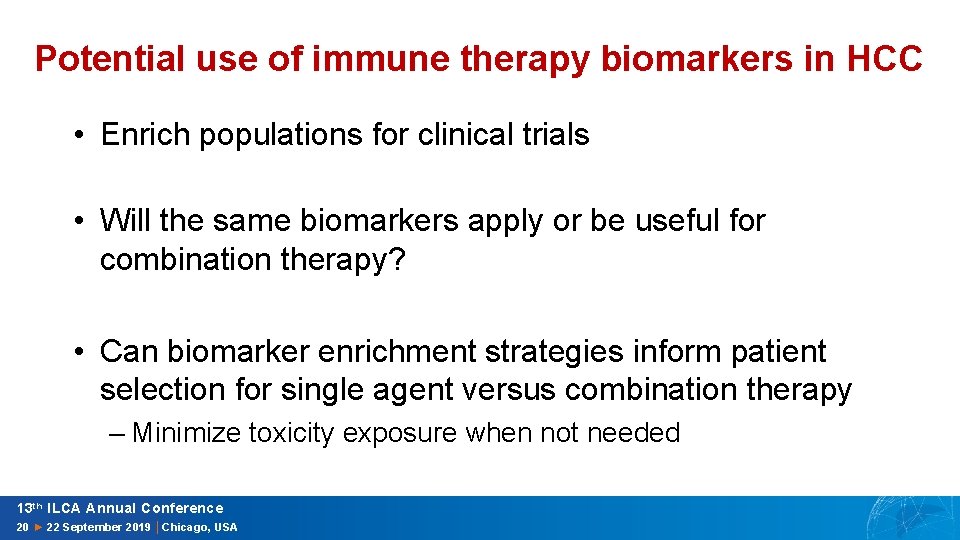
Potential use of immune therapy biomarkers in HCC • Enrich populations for clinical trials • Will the same biomarkers apply or be useful for combination therapy? • Can biomarker enrichment strategies inform patient selection for single agent versus combination therapy – Minimize toxicity exposure when not needed 13 th ILCA Annual Conference 20 ► 22 September 2019 │Chicago, USA
Moving forward: review of select strategies • Using biomarkers to predict benefit and guide patient selection • Target checkpoints beyond PD-1 and PD-L-1 • Smart combinations to address various mechanisms of immune resistance (primary and secondary) • Improve and leverage our understanding of biologic subgroups to guide future therapeutic development • Immune therapy strategies other than checkpoint inhibition (cellular therapy approaches) 13 th ILCA Annual Conference 20 ► 22 September 2019 │Chicago, USA
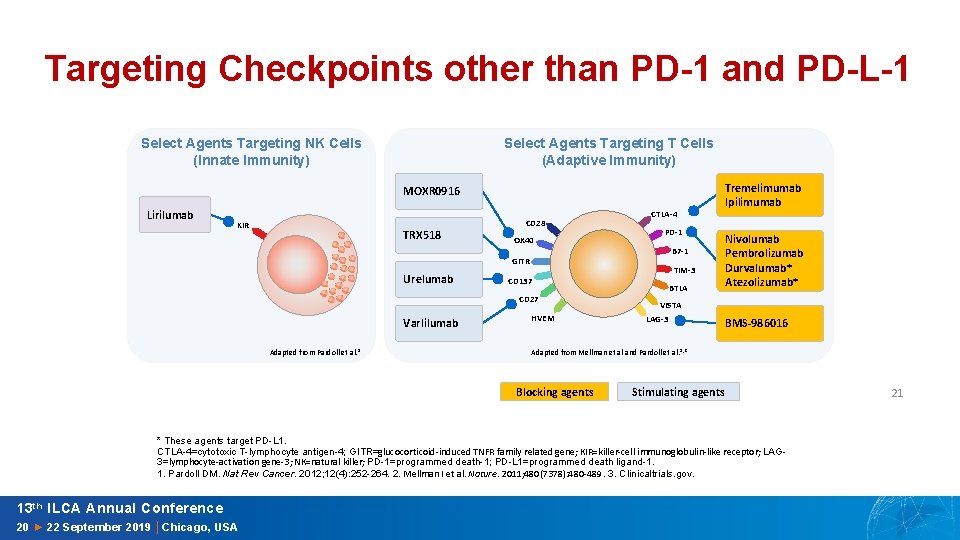
Targeting Checkpoints other than PD-1 and PD-L-1 Select Agents Targeting NK Cells (Innate Immunity) Select Agents Targeting T Cells (Adaptive Immunity) MOXR 0916 Lirilumab KIR TRX 518 PD-1 OX 40 GITR Urelumab CTLA-4 CD 28 B 7 -1 T cell CD 27 Varlilumab Adapted from Pardoll et al. 1 TIM-3 CD 137 HVEM BTLA Tremelimumab Ipilimumab Nivolumab Pembrolizumab Durvalumab* Atezolizumab* VISTA LAG-3 BMS-986016 Adapted from Mellman et al and Pardoll et al. 1, 2 Blocking agents Stimulating agents * These agents target PD-L 1. CTLA-4=cytotoxic T-lymphocyte antigen-4; GITR=glucocorticoid-induced TNFR family related gene; KIR=killer-cell immunoglobulin-like receptor; LAG 3=lymphocyte-activation gene-3; NK=natural killer; PD-1=programmed death-1; PD-L 1=programmed death ligand-1. 1. Pardoll DM. Nat Rev Cancer. 2012; 12(4): 252 -264. 2. Mellman I et al. Nature. 2011; 480(7378): 480 -489. 3. Clinicaltrials. gov. 13 th ILCA Annual Conference 20 ► 22 September 2019 │Chicago, USA 21
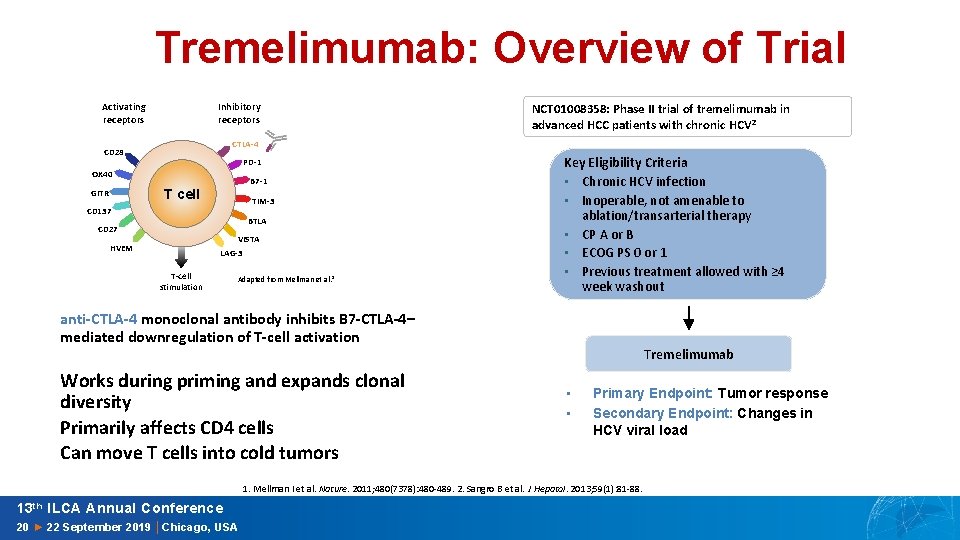
Tremelimumab: Overview of Trial Activating receptors Inhibitory receptors CTLA-4 CD 28 PD-1 OX 40 B 7 -1 T cell GITR NCT 01008358: Phase II trial of tremelimumab in advanced HCC patients with chronic HCV 2 TIM-3 CD 137 BTLA CD 27 VISTA LAG-3 HVEM T-cell stimulation Adapted from Mellman et al. 1 Key Eligibility Criteria • Chronic HCV infection • Inoperable, not amenable to ablation/transarterial therapy • CP A or B • ECOG PS 0 or 1 • Previous treatment allowed with ≥ 4 week washout anti-CTLA-4 monoclonal antibody inhibits B 7 -CTLA-4– mediated downregulation of T-cell activation Works during priming and expands clonal diversity Primarily affects CD 4 cells Can move T cells into cold tumors Tremelimumab • • Primary Endpoint: Tumor response Secondary Endpoint: Changes in HCV viral load 1. Mellman I et al. Nature. 2011; 480(7378): 480 -489. 2. Sangro B et al. J Hepatol. 2013; 59(1): 81 -88. 13 th ILCA Annual Conference 20 ► 22 September 2019 │Chicago, USA
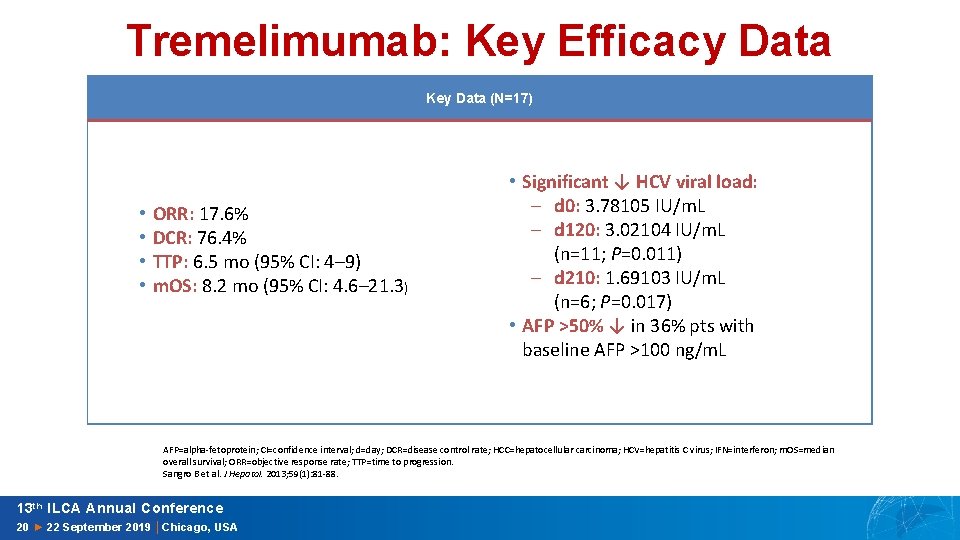
Tremelimumab: Key Efficacy Data Key Data (N=17) • • ORR: 17. 6% DCR: 76. 4% TTP: 6. 5 mo (95% CI: 4– 9) m. OS: 8. 2 mo (95% CI: 4. 6– 21. 3) • Significant ↓ HCV viral load: ‒ d 0: 3. 78105 IU/m. L ‒ d 120: 3. 02104 IU/m. L (n=11; P=0. 011) ‒ d 210: 1. 69103 IU/m. L (n=6; P=0. 017) • AFP >50% ↓ in 36% pts with baseline AFP >100 ng/m. L AFP=alpha-fetoprotein; CI=confidence interval; d=day; DCR=disease control rate; HCC=hepatocellular carcinoma; HCV=hepatitis C virus; IFN=interferon; m. OS=median overall survival; ORR=objective response rate; TTP=time to progression. Sangro B et al. J Hepatol. 2013; 59(1): 81 -88. 13 th ILCA Annual Conference 20 ► 22 September 2019 │Chicago, USA
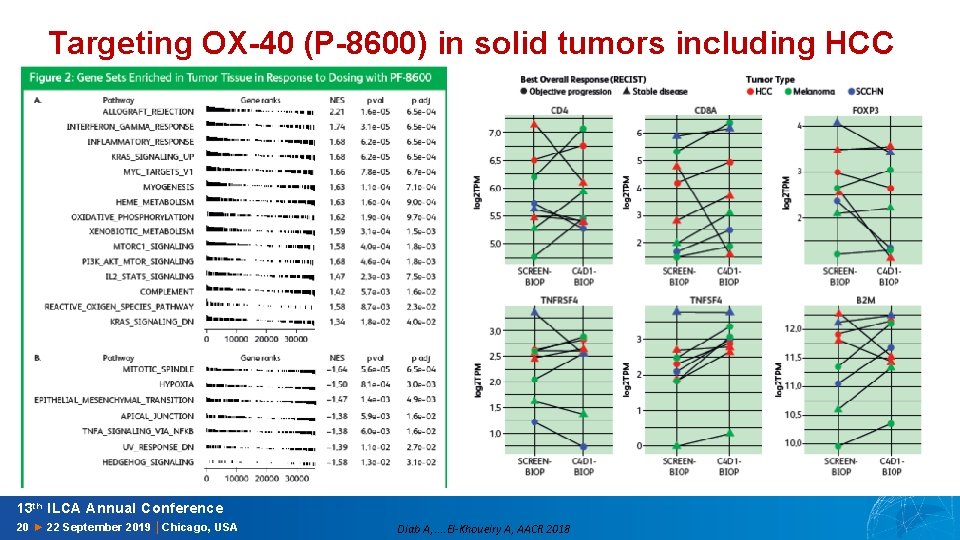
Targeting OX-40 (P-8600) in solid tumors including HCC 13 th ILCA Annual Conference 20 ► 22 September 2019 │Chicago, USA Diab A, …. El-Khoueiry A, AACR 2018
Moving forward: review of select strategies • Using biomarkers to predict benefit and guide patient selection • Target checkpoints beyond PD-1 and PD-L-1 • Smart combinations to address various mechanisms of immune resistance (primary and secondary) • Improve and leverage our understanding of biologic subgroups to guide future therapeutic development • Immune therapy strategies other than checkpoint inhibition (cellular therapy approaches) 13 th ILCA Annual Conference 20 ► 22 September 2019 │Chicago, USA
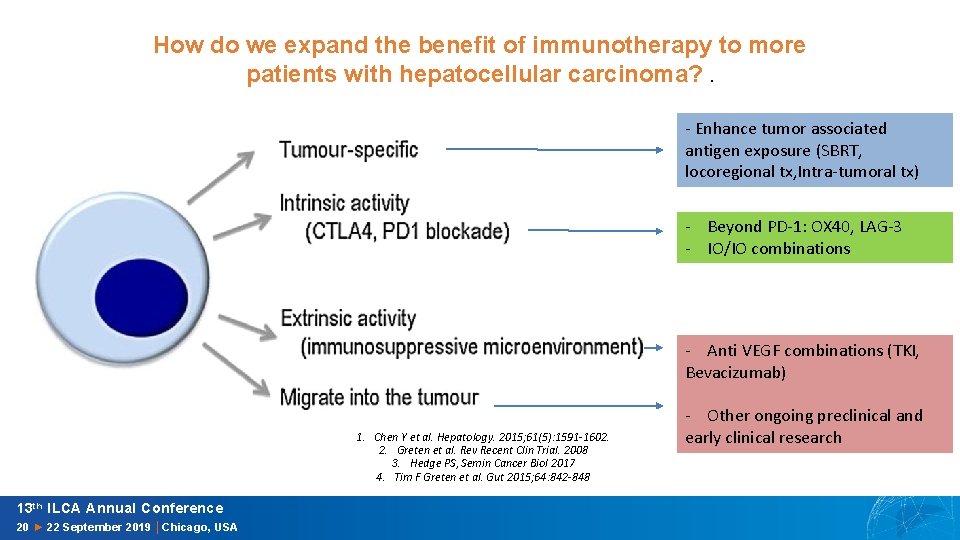
How do we expand the benefit of immunotherapy to more patients with hepatocellular carcinoma? . - Enhance tumor associated antigen exposure (SBRT, locoregional tx, Intra-tumoral tx) - Beyond PD-1: OX 40, LAG-3 - IO/IO combinations - Anti VEGF combinations (TKI, Bevacizumab) 1. Chen Y et al. Hepatology. 2015; 61(5): 1591 -1602. 2. Greten et al. Rev Recent Clin Trial. 2008 3. Hedge PS, Semin Cancer Biol 2017 4. Tim F Greten et al. Gut 2015; 64: 842 -848 13 th ILCA Annual Conference 20 ► 22 September 2019 │Chicago, USA - Other ongoing preclinical and early clinical research
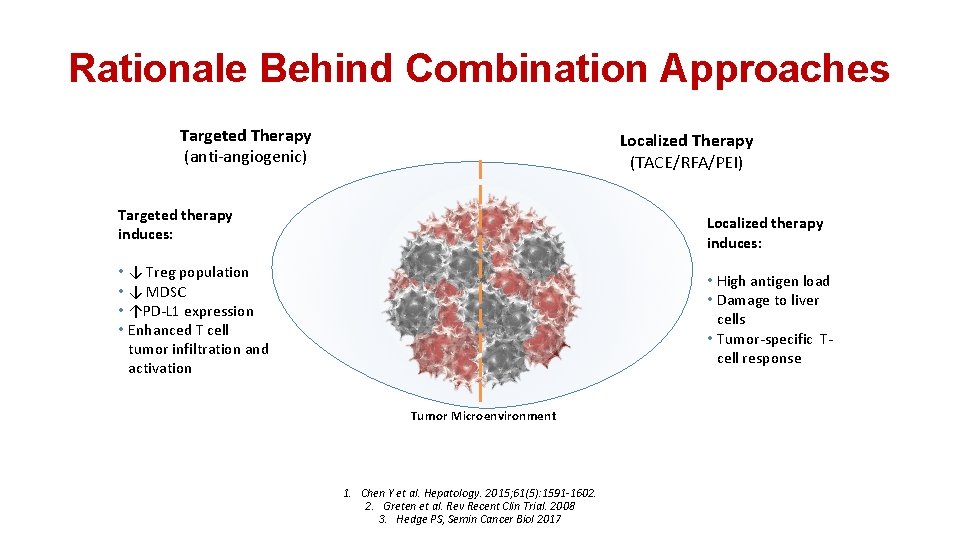
Rationale Behind Combination Approaches Targeted Therapy (anti-angiogenic) Localized Therapy (TACE/RFA/PEI) Targeted therapy induces: Localized therapy induces: • ↓ Treg population • ↓ MDSC • ↑PD-L 1 expression • Enhanced T cell tumor infiltration and activation • High antigen load • Damage to liver cells • Tumor-specific Tcell response Tumor Microenvironment 1. Chen Y et al. Hepatology. 2015; 61(5): 1591 -1602. 2. Greten et al. Rev Recent Clin Trial. 2008 3. Hedge PS, Semin Cancer Biol 2017
Example of IO and liver directed therapy 13 th ILCA Annual Conference 20 ► 22 September 2019 │Chicago, USA
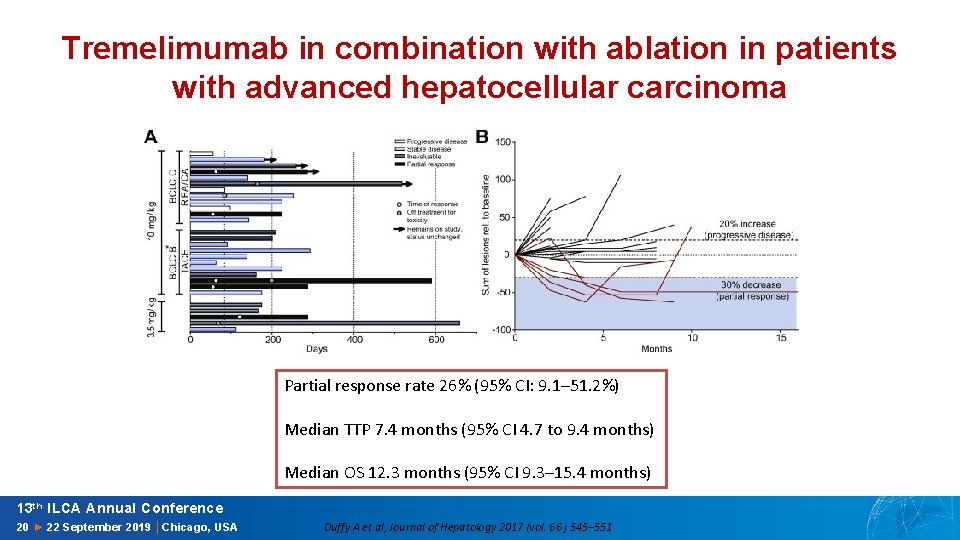
Tremelimumab in combination with ablation in patients with advanced hepatocellular carcinoma Partial response rate 26% (95% CI: 9. 1– 51. 2%) Median TTP 7. 4 months (95% CI 4. 7 to 9. 4 months) Median OS 12. 3 months (95% CI 9. 3– 15. 4 months) 13 th ILCA Annual Conference 20 ► 22 September 2019 │Chicago, USA Duffy A et al, Journal of Hepatology 2017 (vol. 66 j 545– 551
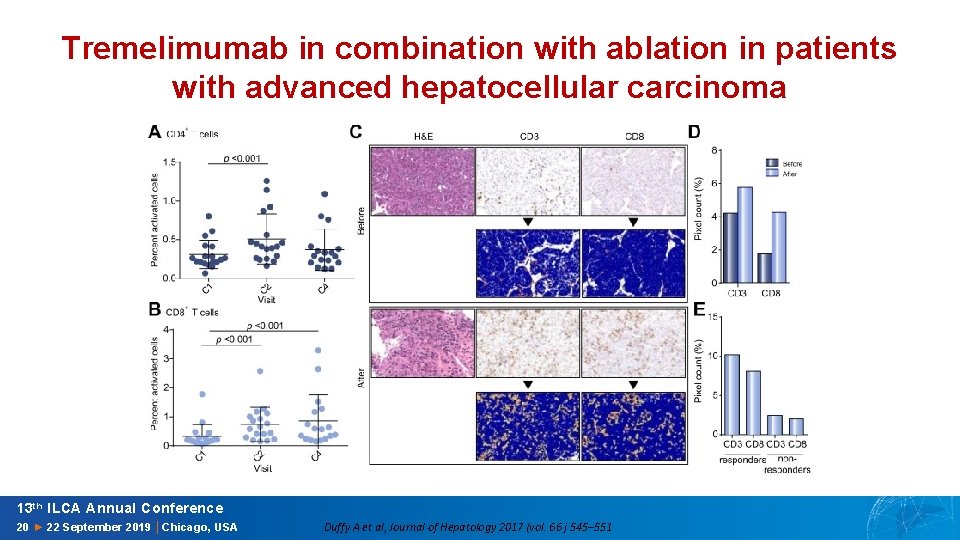
Tremelimumab in combination with ablation in patients with advanced hepatocellular carcinoma 13 th ILCA Annual Conference 20 ► 22 September 2019 │Chicago, USA Duffy A et al, Journal of Hepatology 2017 (vol. 66 j 545– 551
Examples of IO and TKI or anti VEGF therapy 13 th ILCA Annual Conference 20 ► 22 September 2019 │Chicago, USA
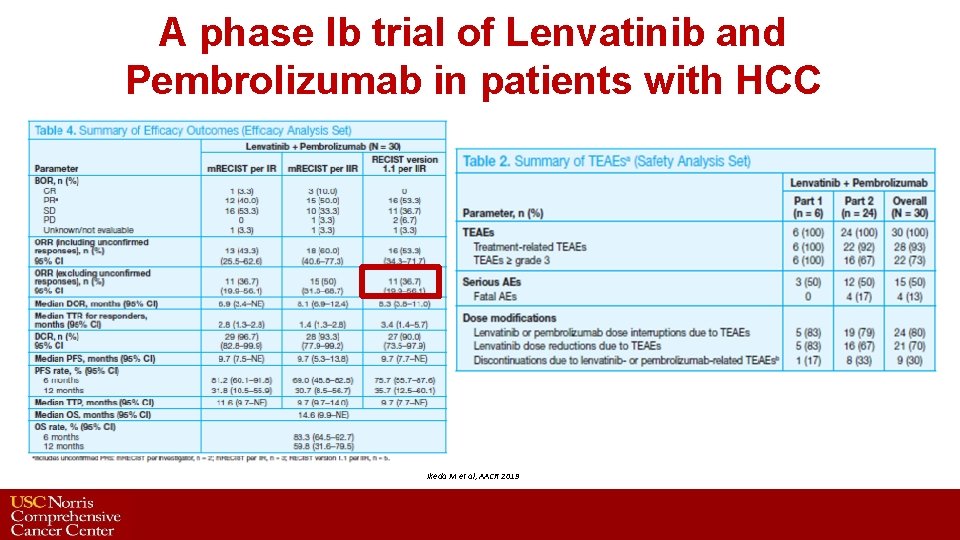
A phase Ib trial of Lenvatinib and Pembrolizumab in patients with HCC Ikeda M et al, AACR 2019 13 th ILCA Annual Conference 20 ► 22 September 2019 │Chicago, USA
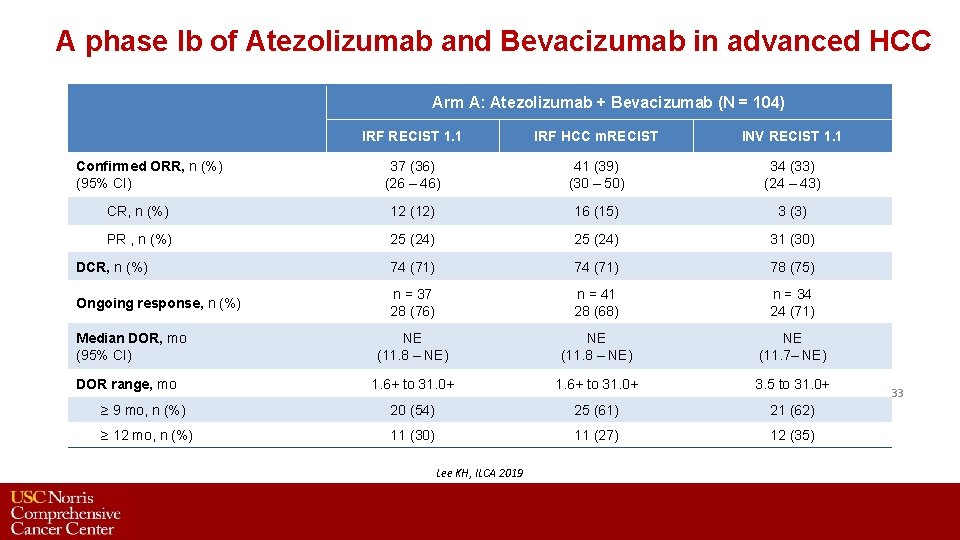
A phase Ib of Atezolizumab and Bevacizumab in advanced HCC Arm A: Atezolizumab + Bevacizumab (N = 104) IRF RECIST 1. 1 IRF HCC m. RECIST INV RECIST 1. 1 37 (36) (26 – 46) 41 (39) (30 – 50) 34 (33) (24 – 43) CR, n (%) 12 (12) 16 (15) 3 (3) PR , n (%) 25 (24) 31 (30) DCR, n (%) 74 (71) 78 (75) Ongoing response, n (%) n = 37 28 (76) n = 41 28 (68) n = 34 24 (71) NE (11. 8 – NE) NE (11. 7– NE) DOR range, mo 1. 6+ to 31. 0+ 3. 5 to 31. 0+ ≥ 9 mo, n (%) 20 (54) 25 (61) 21 (62) ≥ 12 mo, n (%) 11 (30) 11 (27) 12 (35) Confirmed ORR, n (%) (95% CI) Median DOR, mo (95% CI) Lee KH, ILCA 2019 13 th ILCA Annual Conference 20 ► 22 September 2019 │Chicago, USA 33
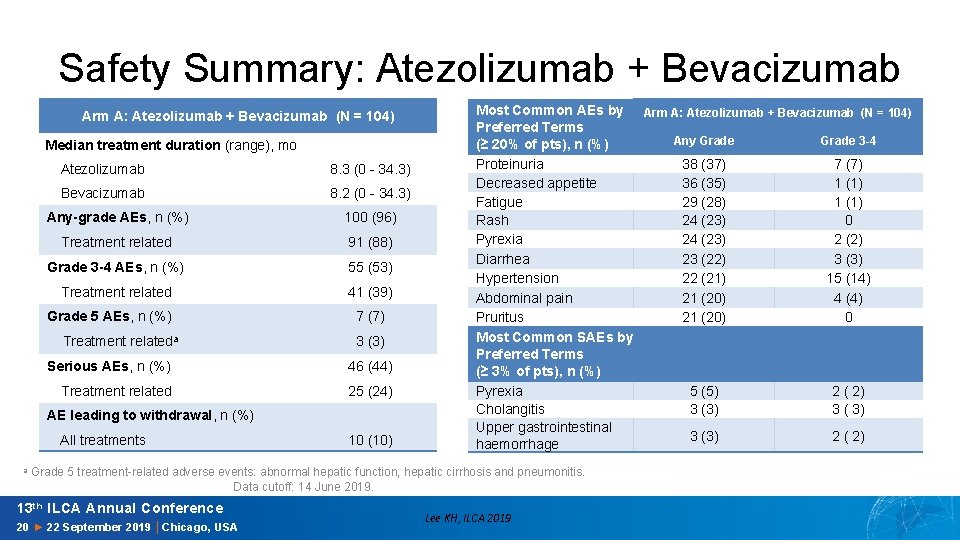
Safety Summary: Atezolizumab + Bevacizumab Arm A: Atezolizumab + Bevacizumab (N = 104) Median treatment duration (range), mo Atezolizumab 8. 3 (0 - 34. 3) Bevacizumab 8. 2 (0 - 34. 3) Any-grade AEs, n (%) 100 (96) Treatment related 91 (88) Grade 3 -4 AEs, n (%) 55 (53) Treatment related 41 (39) Grade 5 AEs, n (%) 7 (7) Treatment relateda 3 (3) Serious AEs, n (%) 46 (44) Treatment related 25 (24) AE leading to withdrawal, n (%) All treatments 10 (10) Most Common AEs by Arm A: Atezolizumab + Bevacizumab (N = 104) Preferred Terms Any Grade 3 -4 (≥ 20% of pts), n (%) Proteinuria 38 (37) 7 (7) Decreased appetite 36 (35) 1 (1) Fatigue 29 (28) 1 (1) Rash 24 (23) 0 Pyrexia 24 (23) 2 (2) Diarrhea 23 (22) 3 (3) Hypertension 22 (21) 15 (14) Abdominal pain 21 (20) 4 (4) Pruritus 21 (20) 0 Most Common SAEs by Preferred Terms (≥ 3% of pts), n (%) Pyrexia 5 (5) 2 ( 2) Cholangitis 3 (3) 3 ( 3) Upper gastrointestinal 3 (3) 2 ( 2) haemorrhage a Grade 5 treatment-related adverse events: abnormal hepatic function, hepatic cirrhosis and pneumonitis. Data cutoff: 14 June 2019. 13 th ILCA Annual Conference 20 ► 22 September 2019 │Chicago, USA Lee KH, ILCA 2019
Examples of IO/IO combinations 13 th ILCA Annual Conference 20 ► 22 September 2019 │Chicago, USA
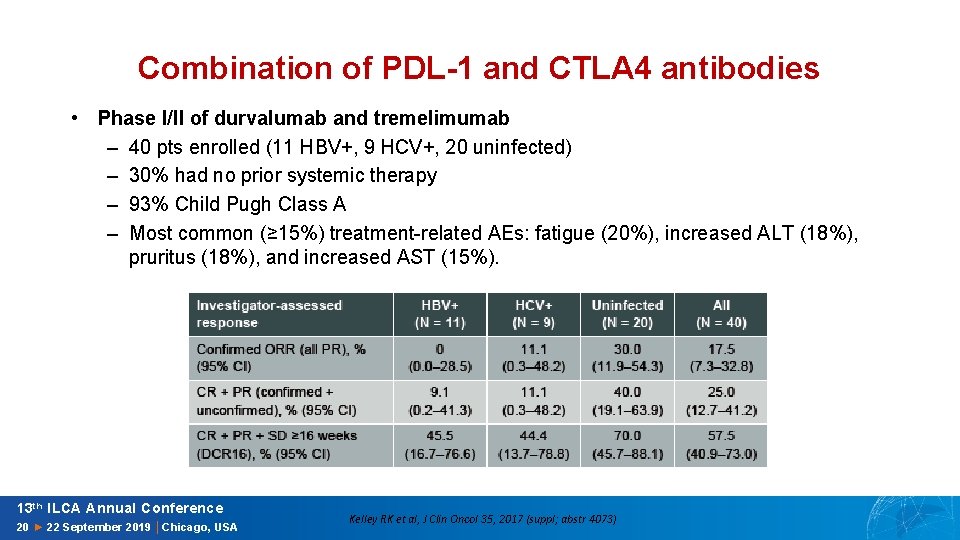
Combination of PDL-1 and CTLA 4 antibodies • Phase I/II of durvalumab and tremelimumab – 40 pts enrolled (11 HBV+, 9 HCV+, 20 uninfected) – 30% had no prior systemic therapy – 93% Child Pugh Class A – Most common (≥ 15%) treatment-related AEs: fatigue (20%), increased ALT (18%), pruritus (18%), and increased AST (15%). 13 th ILCA Annual Conference 20 ► 22 September 2019 │Chicago, USA Kelley RK et al, J Clin Oncol 35, 2017 (suppl; abstr 4073)
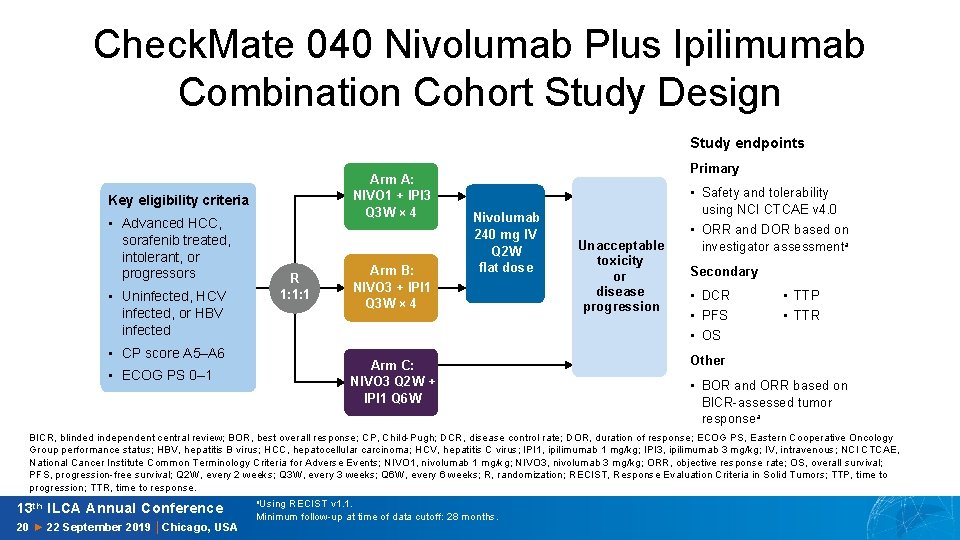
Check. Mate 040 Nivolumab Plus Ipilimumab Combination Cohort Study Design Study endpoints Arm A: NIVO 1 + IPI 3 Q 3 W × 4 Key eligibility criteria • Advanced HCC, sorafenib treated, intolerant, or progressors • Uninfected, HCV infected, or HBV infected • CP score A 5–A 6 • ECOG PS 0– 1 R 1: 1: 1 Arm B: NIVO 3 + IPI 1 Q 3 W × 4 Primary Nivolumab 240 mg IV Q 2 W flat dose • Safety and tolerability using NCI CTCAE v 4. 0 Unacceptable toxicity or disease progression • ORR and DOR based on investigator assessmenta Secondary • DCR • PFS • TTP • TTR • OS Arm C: NIVO 3 Q 2 W + IPI 1 Q 6 W Other • BOR and ORR based on BICR-assessed tumor responsea BICR, blinded independent central review; BOR, best overall response; CP, Child-Pugh; DCR, disease control rate; DOR, duration of response; ECOG PS, Eastern Cooperative Oncology Group performance status; HBV, hepatitis B virus; HCC, hepatocellular carcinoma; HCV, hepatitis C virus; IPI 1, ipilimumab 1 mg/kg; IPI 3, ipilimumab 3 mg/kg; IV, intravenous; NCI CTCAE, National Cancer Institute Common Terminology Criteria for Adverse Events; NIVO 1, nivolumab 1 mg/kg; NIVO 3, nivolumab 3 mg/kg; ORR, objective response rate; OS, overall survival; PFS, progression-free survival; Q 2 W, every 2 weeks; Q 3 W, every 3 weeks; Q 6 W, every 6 weeks; R, randomization; RECIST, Response Evaluation Criteria in Solid Tumors; TTP, time to progression; TTR, time to response. 13 th ILCA Annual Conference 20 ► 22 September 2019 │Chicago, USA a. Using RECIST v 1. 1. Minimum follow-up at time of data cutoff: 28 months.
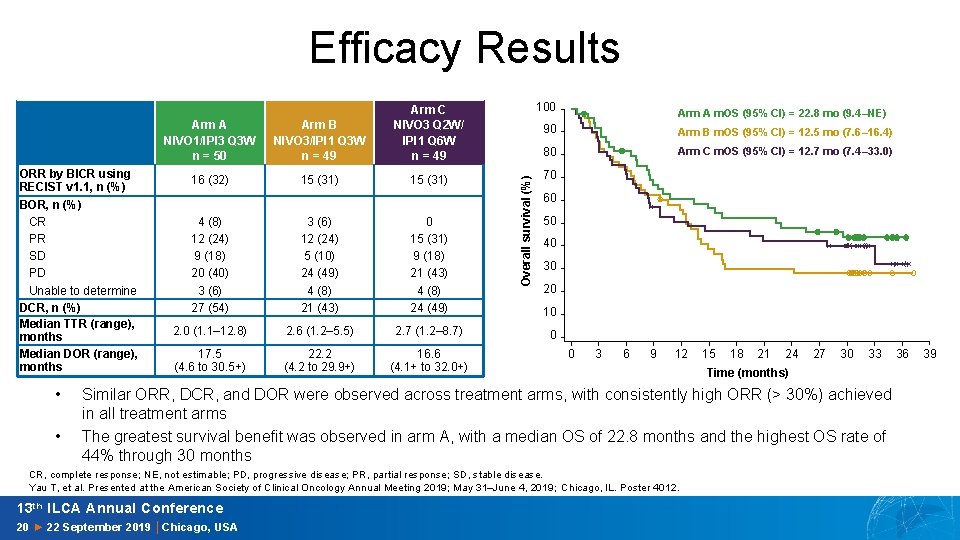
ORR by BICR using RECIST v 1. 1, n (%) BOR, n (%) CR PR SD PD Unable to determine DCR, n (%) Median TTR (range), months Median DOR (range), months • • Arm A NIVO 1/IPI 3 Q 3 W n = 50 Arm B NIVO 3/IPI 1 Q 3 W n = 49 Arm C NIVO 3 Q 2 W/ IPI 1 Q 6 W n = 49 16 (32) 15 (31) 4 (8) 12 (24) 9 (18) 20 (40) 3 (6) 27 (54) 3 (6) 12 (24) 5 (10) 24 (49) 4 (8) 21 (43) 0 15 (31) 9 (18) 21 (43) 4 (8) 24 (49) 2. 0 (1. 1– 12. 8) 2. 6 (1. 2– 5. 5) 2. 7 (1. 2– 8. 7) 17. 5 (4. 6 to 30. 5+) 22. 2 (4. 2 to 29. 9+) 16. 6 (4. 1+ to 32. 0+) Overall survival (%) Efficacy Results 100 70 Arm A m. OS (95% CI) = 22. 8 mo (9. 4–NE) 90 Arm B m. OS (95% CI) = 12. 5 mo (7. 6– 16. 4) 80 Arm C m. OS (95% CI) = 12. 7 mo (7. 4– 33. 0) 60 50 40 30 20 10 0 0 3 6 9 12 15 18 21 24 27 30 33 36 Time (months) Similar ORR, DCR, and DOR were observed across treatment arms, with consistently high ORR (> 30%) achieved in all treatment arms The greatest survival benefit was observed in arm A, with a median OS of 22. 8 months and the highest OS rate of 44% through 30 months CR, complete response; NE, not estimable; PD, progressive disease; PR, partial response; SD, stable disease. Yau T, et al. Presented at the American Society of Clinical Oncology Annual Meeting 2019; May 31–June 4, 2019; Chicago, IL. Poster 4012. 13 th ILCA Annual Conference 20 ► 22 September 2019 │Chicago, USA 39
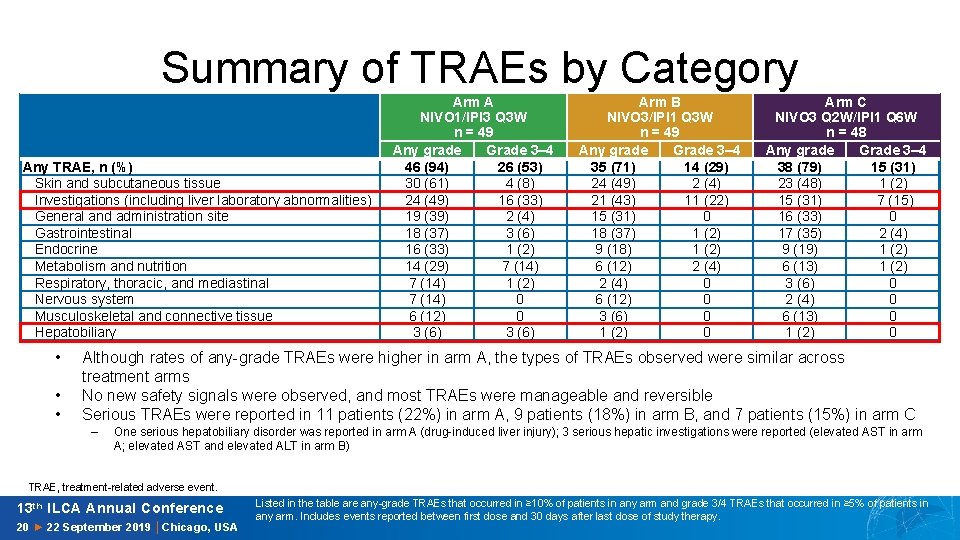
Summary of TRAEs by Category Any TRAE, n (%) Skin and subcutaneous tissue Investigations (including liver laboratory abnormalities) General and administration site Gastrointestinal Endocrine Metabolism and nutrition Respiratory, thoracic, and mediastinal Nervous system Musculoskeletal and connective tissue Hepatobiliary • • • Arm A NIVO 1/IPI 3 Q 3 W n = 49 Grade 3– 4 Any grade 46 (94) 26 (53) 30 (61) 4 (8) 24 (49) 16 (33) 19 (39) 2 (4) 18 (37) 3 (6) 16 (33) 1 (2) 14 (29) 7 (14) 1 (2) 7 (14) 0 6 (12) 0 3 (6) Arm B NIVO 3/IPI 1 Q 3 W n = 49 Grade 3– 4 Any grade 35 (71) 14 (29) 24 (49) 2 (4) 21 (43) 11 (22) 15 (31) 0 18 (37) 1 (2) 9 (18) 1 (2) 6 (12) 2 (4) 0 6 (12) 0 3 (6) 0 1 (2) 0 Arm C NIVO 3 Q 2 W/IPI 1 Q 6 W n = 48 Grade 3– 4 Any grade 38 (79) 15 (31) 23 (48) 1 (2) 15 (31) 7 (15) 16 (33) 0 17 (35) 2 (4) 9 (19) 1 (2) 6 (13) 1 (2) 3 (6) 0 2 (4) 0 6 (13) 0 1 (2) 0 Although rates of any-grade TRAEs were higher in arm A, the types of TRAEs observed were similar across treatment arms No new safety signals were observed, and most TRAEs were manageable and reversible Serious TRAEs were reported in 11 patients (22%) in arm A, 9 patients (18%) in arm B, and 7 patients (15%) in arm C – One serious hepatobiliary disorder was reported in arm A (drug-induced liver injury); 3 serious hepatic investigations were reported (elevated AST in arm A; elevated AST and elevated ALT in arm B) TRAE, treatment-related adverse event. 13 th ILCA Annual Conference 20 ► 22 September 2019 │Chicago, USA Listed in the table are any-grade TRAEs that occurred in ≥ 10% of patients in any arm and grade 3/4 TRAEs that occurred in ≥ 5% of patients in any arm. Includes events reported between first dose and 30 days after last dose of study therapy.
Examples of IO combinations with novel agents to potentiate immune response 13 th ILCA Annual Conference 20 ► 22 September 2019 │Chicago, USA
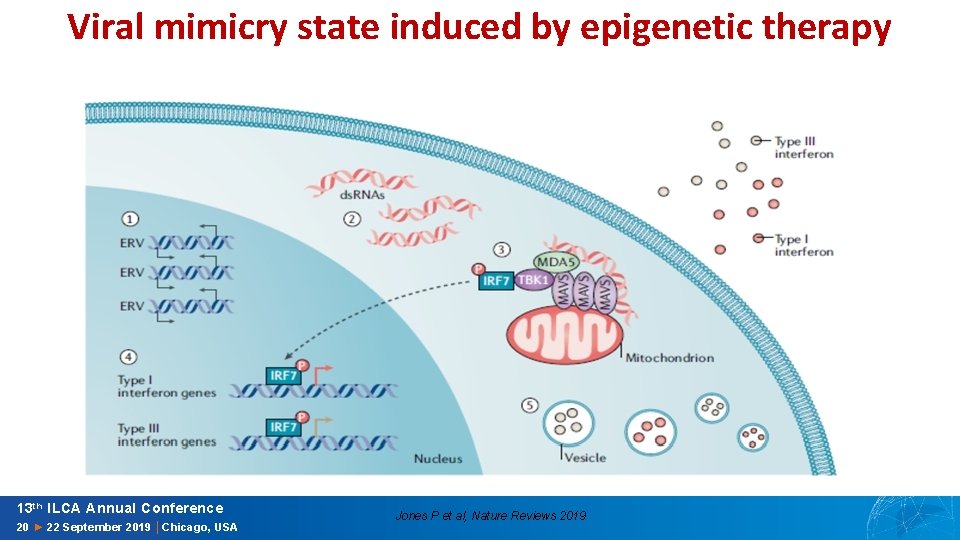
Viral mimicry state induced by epigenetic therapy 13 th ILCA Annual Conference 20 ► 22 September 2019 │Chicago, USA Jones P et al, Nature Reviews 2019
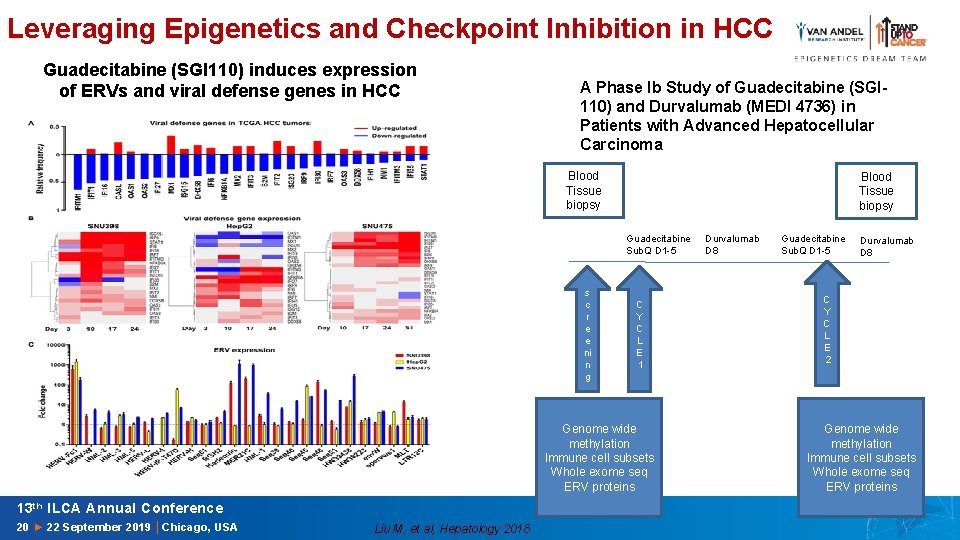
Leveraging Epigenetics and Checkpoint Inhibition in HCC Guadecitabine (SGI 110) induces expression of ERVs and viral defense genes in HCC A Phase Ib Study of Guadecitabine (SGI 110) and Durvalumab (MEDI 4736) in Patients with Advanced Hepatocellular Carcinoma Blood Tissue biopsy Guadecitabine Sub. Q D 1 -5 s c r e e ni n g C Y C L E 1 Genome wide methylation Immune cell subsets Whole exome seq ERV proteins 13 th ILCA Annual Conference 20 ► 22 September 2019 │Chicago, USA Liu M, et al, Hepatology 2018 Durvalumab D 8 Guadecitabine Sub. Q D 1 -5 Durvalumab D 8 C Y C L E 2 Genome wide methylation Immune cell subsets Whole exome seq ERV proteins
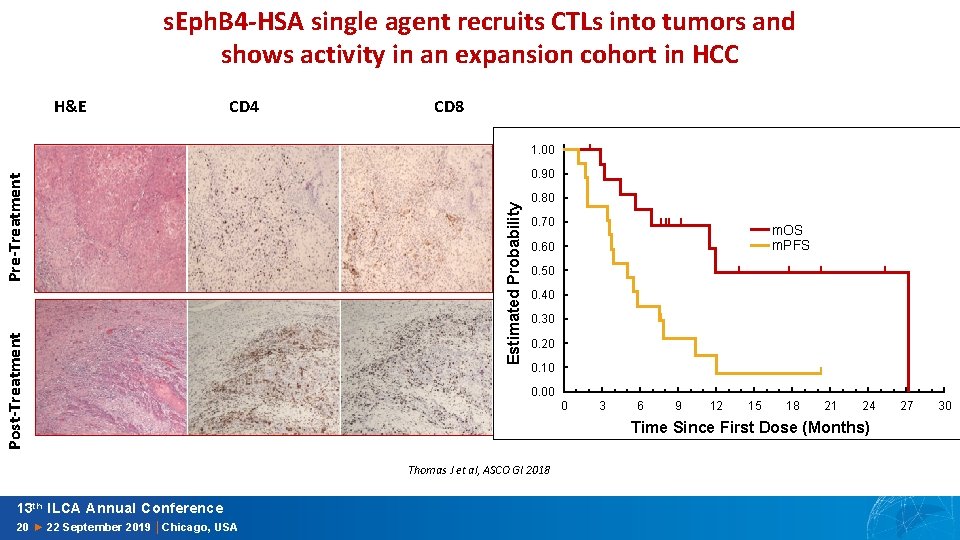
s. Eph. B 4 -HSA single agent recruits CTLs into tumors and shows activity in an expansion cohort in HCC H&E CD 4 CD 8 0. 90 Estimated Probability Post-Treatment Pre-Treatment 1. 00 0. 80 0. 70 0. 60 0. 50 0. 40 0. 30 0. 20 0. 10 0. 00 0 20 ► 22 September 2019 │Chicago, USA 3 6 9 12 15 18 21 24 Time Since First Dose (Months) Thomas J et al, ASCO GI 2018 13 th ILCA Annual Conference m. OS m. PFS 27 30
Thoughts regarding combination therapies • Is combination therapy needed for all patients up-front? • Therapeutic index of the combinations: toxicity versus efficacy • What magnitude of benefit would justify the additional toxicity • Could we achieve the same benefit by sequencing therapies • In what patients • If multiple combinations show efficacy, how will we chose the best combination for a specific patient? • Biomarkers? • Toxicity differences? 13 th ILCA Annual Conference 20 ► 22 September 2019 │Chicago, USA
Moving forward: review of select strategies • Using biomarkers to predict benefit and guide patient selection • Target checkpoints beyond PD-1 and PD-L-1 • Smart combinations to address various mechanisms of immune resistance (primary and secondary) • Improve and leverage our understanding of biologic subgroups to guide future therapeutic development • Immune therapy strategies other than checkpoint inhibition (cellular therapy approaches) 13 th ILCA Annual Conference 20 ► 22 September 2019 │Chicago, USA
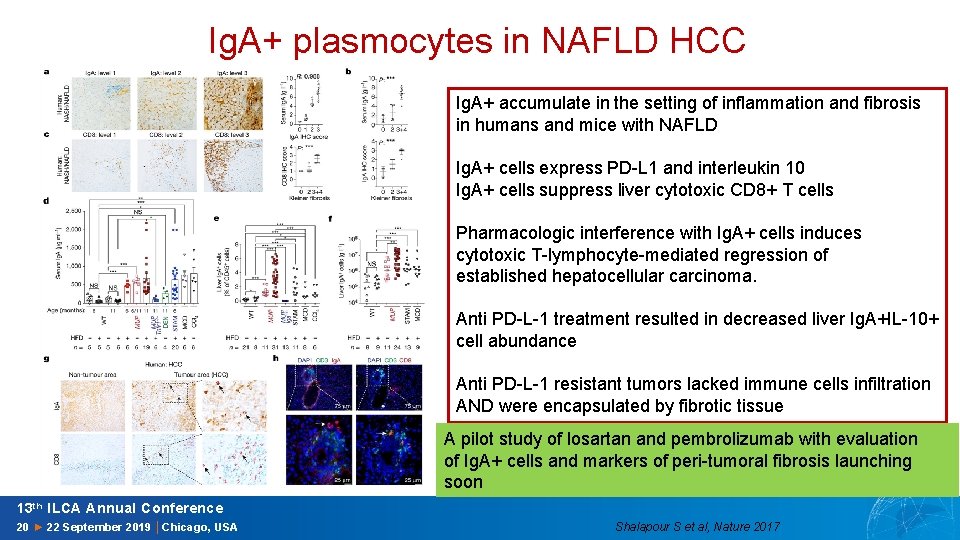
Ig. A+ plasmocytes in NAFLD HCC Ig. A+ accumulate in the setting of inflammation and fibrosis in humans and mice with NAFLD Ig. A+ cells express PD-L 1 and interleukin 10 Ig. A+ cells suppress liver cytotoxic CD 8+ T cells Pharmacologic interference with Ig. A+ cells induces cytotoxic T-lymphocyte-mediated regression of established hepatocellular carcinoma. Anti PD-L-1 treatment resulted in decreased liver Ig. A+IL-10+ cell abundance Anti PD-L-1 resistant tumors lacked immune cells infiltration AND were encapsulated by fibrotic tissue A pilot study of losartan and pembrolizumab with evaluation of Ig. A+ cells and markers of peri-tumoral fibrosis launching soon 13 th ILCA Annual Conference 20 ► 22 September 2019 │Chicago, USA Shalapour S et al, Nature 2017
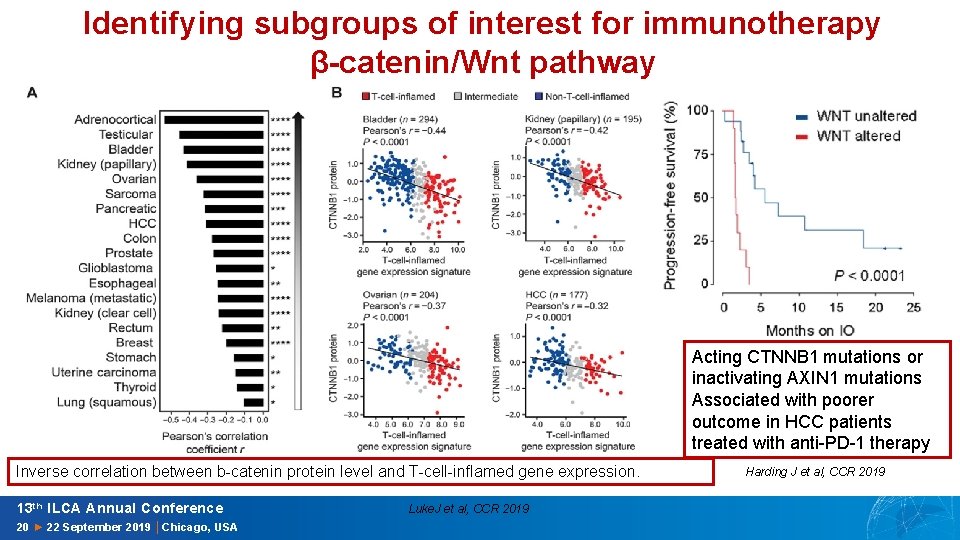
Identifying subgroups of interest for immunotherapy β-catenin/Wnt pathway Acting CTNNB 1 mutations or inactivating AXIN 1 mutations Associated with poorer outcome in HCC patients treated with anti-PD-1 therapy Inverse correlation between b-catenin protein level and T-cell-inflamed gene expression. 13 th ILCA Annual Conference 20 ► 22 September 2019 │Chicago, USA Luke. J et al, CCR 2019 Harding J et al, CCR 2019
Moving forward: review of select strategies • Using biomarkers to predict benefit and guide patient selection • Target checkpoints beyond PD-1 and PD-L-1 • Smart combinations to address various mechanisms of immune resistance (primary and secondary) • Improve and leverage our understanding of biologic subgroups to guide future therapeutic development • Immune therapy strategies other than checkpoint inhibition (cellular therapy approaches) 13 th ILCA Annual Conference 20 ► 22 September 2019 │Chicago, USA
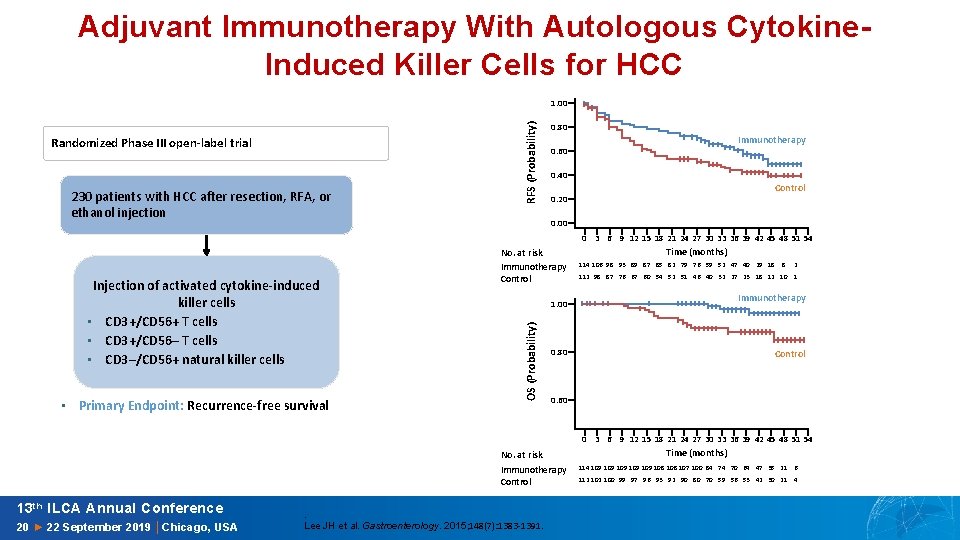
Adjuvant Immunotherapy With Autologous Cytokine. Induced Killer Cells for HCC Randomized Phase III open-label trial 230 patients with HCC after resection, RFA, or ethanol injection RFS (Probability) 1. 00 0. 80 Immunotherapy 0. 60 0. 40 Control 0. 20 0. 00 0 3 6 9 12 15 18 21 24 27 30 33 36 39 42 45 48 51 54 • Primary Endpoint: Recurrence-free survival Time (months) 114 106 98 93 89 87 85 82 79 76 59 52 47 40 29 18 8 2 112 98 87 76 67 60 54 52 51 46 40 32 27 23 18 12 10 1 Immunotherapy 1. 00 OS (Probability) Injection of activated cytokine-induced killer cells • CD 3+/CD 56+ T cells • CD 3+/CD 56– T cells • CD 3–/CD 56+ natural killer cells No. at risk Immunotherapy Control 0. 80 Control 0. 60 0 3 6 9 12 15 18 21 24 27 30 33 36 39 42 45 48 51 54 No. at risk Immunotherapy Control 13 th ILCA Annual Conference 20 ► 22 September 2019 │Chicago, USA . Lee JH et al. Gastroenterology. 2015; 148(7): 1383 -1391. Time (months) 114 109 109 109 108 107 100 84 74 70 64 47 35 21 6 112 100 99 97 96 93 92 90 80 70 59 56 53 42 30 21 4
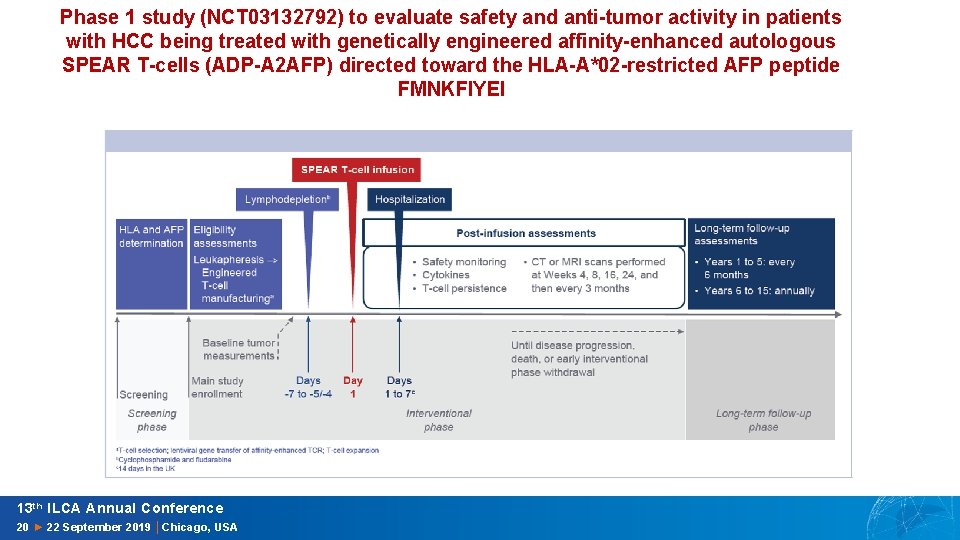
Phase 1 study (NCT 03132792) to evaluate safety and anti-tumor activity in patients with HCC being treated with genetically engineered affinity-enhanced autologous SPEAR T-cells (ADP-A 2 AFP) directed toward the HLA-A*02 -restricted AFP peptide FMNKFIYEI 13 th ILCA Annual Conference 20 ► 22 September 2019 │Chicago, USA
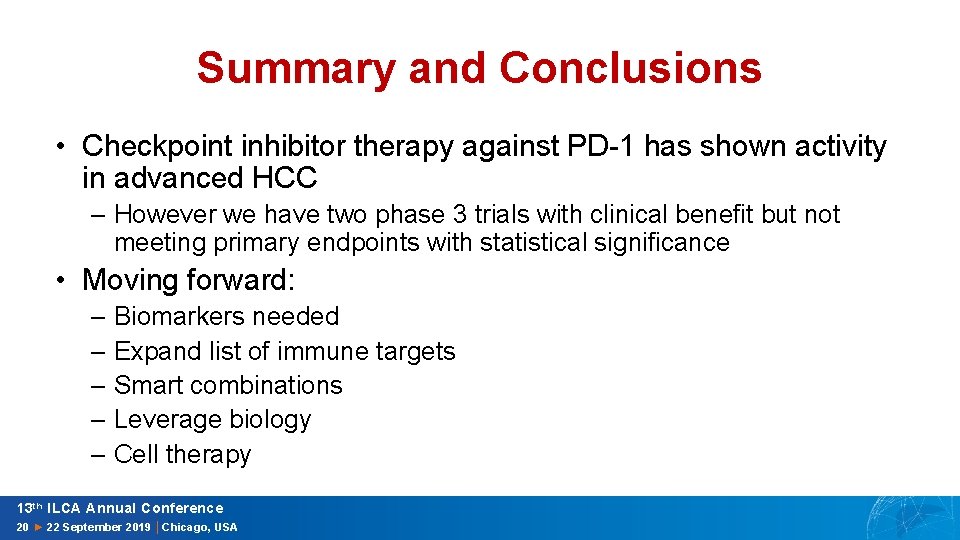
Summary and Conclusions • Checkpoint inhibitor therapy against PD-1 has shown activity in advanced HCC – However we have two phase 3 trials with clinical benefit but not meeting primary endpoints with statistical significance • Moving forward: – Biomarkers needed – Expand list of immune targets – Smart combinations – Leverage biology – Cell therapy 13 th ILCA Annual Conference 20 ► 22 September 2019 │Chicago, USA
Immunotherapy for HCC: What’s Next? 13 th ILCA Annual Conference 20 ► 22 September 2019 │Chicago, USA